




Abstract
This paper explores public servants’ public service motivation through the prism of the circumplex model of affect (CMA). The application of CMA to work, and specifically public sector contexts, is relatively novel, and the framework helps explain how multiple states of affect (i.e., comprised of underlying feelings, emotions, and moods) cluster together and are shaped by one’s work environment. The mixed method paper begins with a qualitative study of Australasian public servants, presenting evidence of the CMA and its connection to PSM. The subsequent quantitative analysis of 222 survey respondents offers four distinct latent profiles of public servants’ PSM and associated circumplex states of affect. The research builds on the state and trait proposition of PSM, showing how PSM and associated states of affect, shape and are shaped by public servants’ underlying psychology and their work environment.
Keywords
Introduction
Public Service Motivation (PSM) is commonly conceptualized as a motivating force, particularly in the context of public service workers, underpinned by altruistic values, attitudes, and actions beyond one’s self and organization, and directed toward the community and broader public (Perry et al., 2010). PSM, now in its fourth decade of scholarship, is maturing as a concept, and recent research has begun to build a more nuanced understanding of the degree to which it is an embedded personality trait (as originally conceptualized by Alonso & Lewis, 2001), or a state that fluctuates in response to a person’s organizational environment (Christensen et al., 2017; Ng et al., 2023; Perry, 2021). Christensen et al. (2017) offer a robust harmonization of the PSM state and trait arguments, noting that public sector organizations (PSOs) can act to identify and attract people possessing high levels of PSM as a trait, and then work to cultivate this (state) further through a conducive employment experience.
That PSOs can realistically select their workforce, possessing traits of high PSM, and can also subsequently create states and experiences conducive to strengthening this is aspirational and may be quite rare in reality. This is particularly important to note against the very established body of public sector scholarship articulating significant environmental, management and/or leadership challenges within PSOs broadly, and particularly in the widely ascribed, resource-constrained and austere, new public management (NPM) model that proliferates across many Western political economies. Recent research has also claimed the potential for PSM to have a “dark side”—where a public servant, driven by their PSM trait and state conditions, experiences a range of negative outcomes, including: work stress, resigned satisfaction in the face of red tape, turnover, lower satisfaction, burnout and increased presenteeism (e.g., Giauque et al., 2012; Jensen et al., 2019; van Loon et al., 2015). Research has also uncovered that employees with lower levels of PSM can react negatively to PSO’s exhortations to enact it by committing workplace deviance or misconduct (Ripoll et al., 2023; Weißmüller et al., 2022). Noting the significant body of literature articulating PSM’s benefits, and also research pointing to its potential dark side, the paper herein seeks to understand how PSM clusters together alongside other key affective states to form profiles of public servants; and how these profiles are shaped by individual and environmental conditions.
The definitions of, and distinction between feelings, emotions, attitudes, moods, affective states (sometimes referred to as affective experiences), and motivation is at best confusing, and at worst—frequently confused (Gable & Dreisbach, 2021; Paul et al., 2020). Simply put, the vast majority of research uses the terms “emotions” and “affective states” interchangeably. However, Alexander et al. (2021, p. 229) note that affective states comprise “emotions” and “moods”; and, Paul et al. (2020, p. 750) note that emotions are “quick onset, shorter duration, and a specific target. . .” which, “can also be distinguished from slow-onset, long-duration, diffused affective states like moods.” While not consistently applied across the literature then, for the purposes of this paper, affective states can constitute emotions and/or moods; and through the lens of the circumplex model of affect (CMA), frequently comprise both, simultaneously, and multiples of (Posner et al., 2005).
The CMA is underpinned by two propositions. First, that “individuals do not experience, or recognize, emotions as isolated, discrete entities, but that they rather recognize emotions as ambiguous and overlapping experiences” (Posner et al., 2005, p. 719). This view contrasts the “basic emotions theory” which implied that each emotion comprised a unique neurophysiological state—such that one facial expression could consistently connote one kind of emotional expression—which has been empirically challenged since (Paul et al., 2020; Posner et al., 2008). The circumplex model then is useful for explaining how, for example, emotions like fear, can co-occur alongside mood states like anxiety and depression. The second element of the CMA is that all affective states (emotions and moods) can be situated along two axes—arousal and valence (Posner et al., 2008). Arousal is the degree to which an affective state prompts activity in the individual (ranging from activation to deactivation), and valence captures whether the experience is pleasurable or unpleasant.
Importantly, the CMA notes that affective states can co-occur, however, they do not co-occur for all individuals all the time. Posner et al. (2008) note the case of anxiety and depression which frequently co-occur in individuals. Anxiety sits above depression in terms of arousal (i.e., it can prompt individuals to want to act, and the opposite for depression), but both are not pleasurable. In this way, the two states of affect are connected, and can even overlap, creating a more complex emotional state—rather than being conceived of as wholly separate, mood states. This complex circumplexity is important to consider in relation to the research presented in the paper herein, as different affective states related to one’s work experience are clustered alongside each other.
Important also in the theoretical composition of this paper is the distinction between motivation and affective states. Hereto, these terms are sometimes used interchangeably in the research; indeed, Gable and Dreisbach (2021) note that motivation—the impetus to do something, is an essential part of affect. Motivation can also be situated on the dual axes of the circumplex model (valence and pleasure). However, unlike affect, in extreme cases motivation does not always need to be proximally associated with emotions on the valence and arousal axes. For example, the emotional feeling of loneliness or social isolation can correspond with a low motivation to embrace social activity; however, extreme feelings of loneliness can prompt action (Gable & Dreisbach, 2021). The subtle distinction between affective states and motivation is important in this paper owing to its consideration of public service motivation - which is connected to but separate from the work attitudinal and affective states of job satisfaction, affective commitment and turnover intention.
Job satisfaction, turnover intention and affective commitment have previously been associated with PSM (Bland et al., 2023; Campbell & Im, 2016; Vandenabeele, 2009). Previous research using CMA as a theoretical lens consider job attitudes as affective states, such as the work by Bakker and Oerlemans (2011) on job satisfaction, and as well as that by Zanfirescu et al. (2017) on job satisfaction, burnout, workaholism and work engagement. We contend that affective commitment, and turnover intentions also bear the properties sufficient to class them as affective states in that they can be situated along valence and pleasure axes, and can nest alongside other states, moods and emotions, such that they can be expressed and subjectively experienced. Through a CMA lens, the study examines how these states of affect and motivation correlate, and cluster as a result of work experiences, to propose a series of (latent) “profiles” of public servants.
The first study presented in this paper draws from qualitative, interview data with Australasian public servants to explore how work-related affective states present alongside each other, shaping public servants’ overall sentiment and behavior. Complementing this with a quantitative frame, the second study uses latent profile analysis to examine different profiles of public servants’ PSM and related affective states. The second study also considers how perceived organizational support (POS) and work pace, as environmental conditions, shape a person’s state of PSM and related circumplex affective experiences. These two connected studies are guided by the following research questions:
Research Question: (1) how does PSM cluster alongside other states of affect for public servants?
Research Question: (2) how do public servants’ work environments shape their PSM and associated circumplex affective states?
This research is important for two primary reasons. Firstly, in practice, PSOs, acknowledging gaps in the NPM model of service delivery (particularly by way of employee experience), are seeking to rebuild internal capability in their workforce by focusing on PSM elements. In New Zealand, for instance, policy makers have sought to strengthen the “spirit of service” across the public sector workforce through strengthening legislation and leadership in response to an over-reliance on NPM principles (Scott & Hughes, 2023). Australia has also sought to further stimulate workers’ PSM by rebuilding internal capability in the public service while simultaneously reducing the use of consultants and outsourcing (Goldfinch & Halligan, 2024). Notwithstanding these efforts, debate connected with the public values movement notes that PSOs, in general, continue to emphasize efficiency in employee management frameworks, potentially thwarting efforts which are more wholistically aligned (Dunlop et al., 2020). Arguably then, noting the primacy of the efficiency narrative, these efforts by Australian and New Zealand PSOs, may fall short, with potential to have an ultimately deleterious influence on PSM, and related affective states. Alternatively, as noted above, such efforts may even cultivate the “dark side” of PSM in some employees. Building on this line of inquiry the paper herein, in highlighting how PSM connects with other affective states and is shaped by one’s work environment, postulates that a sole focus on boosting PSM, to the exclusion of consideration for other states of affect, may be wasteful or deleterious. On the other hand, efforts to holistically boost PSM—which would also be coupled with meaningful endeavors to remedy other related states of affect (such as job satisfaction, or turnover intention), are likely to be more impactful.
The second contribution this paper offers is theoretical in nature. Acknowledging the trait and state debate surrounding PSM, and Christensen et al.’s (2017 harmonization of this debate, the research highlights how one’s PSM experience is a) connected with other affective states, and b) thwarted, enabled or otherwise, by certain work environment factors. In effect, the paper seeks to highlight how states of PSM are shaped by work environment considerations.
The paper begins by presenting key literature regarding CMA, PSM and other key variables. It then presents the methodological approach underpinning the two studies. The analysis of the two studies are offered sequentially (qualitative and quantitative respectively). The paper concludes with a detailed discussion of the paper’s findings, its limitations and implications for future research.
Literature Review
Circumplex Model of Affect (CMA)
The CMA has its origins in psychological research of the 1980s (Russell, 1980). At its core, it suggests that individuals do not experience, or recognize, emotions as discrete, isolated entities (Yik et al., 2011). Rather, as outlined by Posner et al. (2005), emotions are considered overlapping and ambiguous experiences. More recently, affective states have also become a central topic of interest in research on organizational behavior (Madrid et al., 2014). Specifically, the CMA has been drawn on to better understand job-related affects such as, for example, job satisfaction, work engagement, burnout and workaholism (Bakker & Oerlemans, 2011; Zanfirescu et al., 2017). Warr (1990) suggests that such affective states, when viewed as an outcome, are essential elements of psychological well-being in the workplace. To date, research has focused on how differences in valence of affect explain work-related outcomes, while paying less attention to how the activation of affect (arousal) impacts these correlations. As such, this paper is a novel application of the CMA to complex concepts such as PSM in the public sector context.
Public Service Motivation (PSM) and Associated Affective States
PSM concerns an “individual’s predisposition to respond to motives grounded primarily or uniquely in public institutions and organizations” (Perry & Wise, 1990, p. 368). It is often associated with altruism, employees working toward a greater good (Perry & Hondeghem, 2008). It has been conceptualized as part of an employee’s identity or self-concept (Breaugh et al., 2018; Wehrle & Fasbender, 2019) and linked to a broad range of organizational and individual outcomes including commitment, job satisfaction, organizational citizenship behavior, and individual and organizational performance (Ritz et al., 2016). PSM, which is associated with positive activation, is characterized by an enhanced focus on desirable outcomes and elevated expectations of reward resulting from the allocation of effort (e.g., Seo et al., 2004). For high-PSM individuals specifically this motivation would involve implicit or explicit anticipation of satisfaction, as behavior is energized and directed to achieve the desired positive outcomes (Warr & Inceoglu, 2012).
As such, PSM also has a dark side. It can frustrate and be distressing for those who want to serve but cannot realize this goal (Ripoll et al., 2023) or justify integrity violations that are seen to promote the public interest. These studies point to its trait like stability as a motivator, as well as its ability to influence a diverse range of good and bad behaviors in response to dynamic and changing environmental circumstances. But it can also be fostered through supportive practices such as performance management, recognition and supportive job design such as workload management (Piatak & Holt, 2021) or negated by unsupportive or demanding work environments.
PSM is the individual-level internalization of an organization’s public values, an indicator of environmental influences (Ng et al., 2023; Vandenabeele, 2014). If, however, organizational and personal values are incongruent then outcomes are potentially harmful, an indicator of its trait like nature. In sum, while the trait like aspects of PSM might get people hired, its state like aspects make it malleable to a degree and shapeable by work environments. Its state like aspects mean that in unrewarding environments PSM can be harmful and responded to in a variety of ways that depend on person / work interactions. However, PSM does not necessarily reduce or disappear in contexts that do not encourage or support its maintenance or expression. It likely remains, but its nature and how employees experience it changes, leading to different outcomes.
Recent examinations of its darker side have identified employees’ frustrations about low societal impact (J. Taylor, 2014), red-tape and other bureaucratic constraints as contextual factors that shape the effects of PSM (Giauque et al., 2012; Quratulain & Khan, 2015). Presenteeism has been found to mediate the relationship between PSM and absenteeism, indicating a gradual process of disengagement and loss of personal resources (Jensen et al., 2019). In this sense, the frustration associated with constraints on enacting PSM is a gradual, even subtle, experience that may not be easily detectable and rectifiable by managers, or employees themselves. Thus, thwarted PSM may be a particularly insidious phenomenon requiring a careful method of identification and prevention.
Extant PSM research predicts a range of outcomes, often positive (Brewer & Selden, 1998; Naff & Crum, 1999). But such research assumes that the motivation to serve automatically predicts a set of associated behaviors. It does not recognize that a high level of motivation or activation in itself may not predict behavior, particularly if an environment is not conducive to the enactment of that motivation. Studies on motivation recognize that conditions, or opportunities to enact a motivation tangibly and visibly through behavior are needed (Hull, 1943; Kasten et al., 2019). That is, motivation or a desire to enact motivated behaviors, may exist separately from the expected enactment of that motivation in a given environment, particularly when the environment thwarts that motivation (Leander & Chartrand, 2017).
Toward a Person-Centered Approach to PSM
The person, rather than variable centered approach, seeks to unravel how PSM, or its absence, is manifested among public servants across a broad range of job experiences. Beyond differentiating between high- and low-PSM, this approach explores heterogeneity among individuals with the same or very similar levels of PSM, who may have distinctly different work experiences. In addition, a person-centered approach can identify whether high PSM individuals have markedly better work outcomes, or whether there are other profiles of PSM experience. From a practical point of view, such an approach may provide evidence to public sector managers and organizations on how certain workplace factors shape how PSM is not only experienced, but also enacted, by public employees. Essentially, while public servants may be motivated to serve the public, they may also be thwarted in doing so.
J. Taylor (2008, p. 72) acknowledges that “the work environment of employees can act as a facilitator or constraint to the realization of their altruistic needs.” Although not yet empirically explored, we can expect that when one’s PSM is eroded, made “dormant,” deactivated or suppressed by contextual factors, it cannot positively influence work processes (Wright et al., 2016). Furthermore, in their efforts to serve others without appropriate and supportive organizational resources they may draw on and deplete their personal resources (Jensen et al., 2019). These individuals might find their PSM to be consequently thwarted; that is, their motivation very much exists, but it does not transpire into reality as desired. Alternatively, PSM-enactment would refer to individuals who have PSM and are able to engage positively with the public sector environment in which they are operating. Of course, there are also public servants who lack PSM, and who are neither thwarted nor enacted in their PSM, so likely comprise a separate profile associated with low PSM (Naff & Crum, 1999).
Methods
We adopted a sequential mixed-method approach for this study, drawing on 29 semi-structured interviews and a quantitative survey (n = 222). Mixed method research adds breadth and scope to studies, mitigates deficiencies or biases that may arise from one method (Abro et al., 2015), and is appropriate for investigating the behavior and motivation of public servants (Raimondo & Newcomer, 2017).
Respondents in Study 1 were public servants from Australia and New Zealand, while the second comprised public servants from only New Zealand. It is important to note that both Australia and New Zealand share very similar characteristics in relation to the structure and function of the public service. Indeed, talent mobility between both countries, for senior and frontline public servants, is common, and in some cases, highly encouraged (such as recent efforts by Australian police agencies to employ New Zealand police officers). Service, frontline and policy are core functions in the public sector and were chosen as focal occupations to study because of their representativeness of the wider public service (Te Kawa Mataaho Public Service Commission, 2023). Survey and interview responses were not linked in this exploratory study. In Study 1, we sought to validate the CMA applied to PSM, specifically observing what other kinds of affect were observed when PSM was in frame. In the second, quantitative study, our survey used scales of PSM, affective commitment, turnover intention, job satisfaction, work pace, perceived organizational support and a range of demographic variables, and through analysis we sought to identify different configurational, latent profiles of these.
Study 1
In the qualitative component of this study, participants were approached according to their employment within a public service organization (PSO). To encourage participation, an organizational email to all staff was distributed by the relevant PSOs inviting participation. Individuals who indicated that they would be willing to share their experiences and narratives with the researchers were then invited to participate. Of focus in these interviews were their expressions of PSM and related experiences. Some of the lines of inquiry related to why they had chosen to work in the public sector; the reasons they choose to remain working as public servants; and, a reflection on the challenges created by their daily work. Of the interviewees, 7 were employed as policy analysts, 10 were frontline service workers (9 of these were working in emergency services, whilst 1 was in animal [veterinary] services), 9 were in operations services and 3 were in managerial roles. We interviewed a diverse sample of public servants in order to challenge traditional heterogeneity of public servant samples present in previous PSM research (see e.g., Perry & Hondeghem, 2008), to more broadly explore their expressions and experiences of PSM.
To analyze the qualitative data collected, thematic analysis (Braun & Clarke, 2006) was employed. This process consists of six phases—familiarization, generation of initial codes, searching for themes, reviewing the identified themes, defining, and naming these, and assembling the report. Transcription of the interviews was undertaken by two of the researchers to establish familiarization with the collected data (Braun & Clarke, 2006). Coding was completed manually, which is appropriate for transcripts of less than 500 pages of text (J. W. Creswell, 2013). The researchers subsequently drew on the applied codes to create themes, such as, in this case, factors which shape PSM in PSOs, and evidence of the CMA in relation to PSM. Next, to improve the credibility and trustworthiness of the research the identified themes were reviewed and defined by members of the research team to ensure agreement on the meaning of the data, proposed themes, frequency, and emerging theory (Barber & Walczak, 2009).
Study 2
The quantitative survey was administered in a large PSO (2000+ employees) in New Zealand. Access to the organization was gained through email contact and subsequent meetings with senior management. Meetings with the organization established that there would be mutual benefits gained from the research. Five hundred employees were contacted in six different functional departments. Purposive sampling was chosen to ensure a rich distribution of perspectives (J. Creswell & Clark, 2017). The criteria for the purposive sampling were a mix of individuals with and without managerial responsibilities, a distribution of individuals from the organization’s different functional departments, and a relatively even distribution across genders. The survey yielded a 44% response rate (final n = 222), consistent with the benchmark for organizational research for final sample sizes to be within one SD of 50% (Baruch & Holtom, 2008). Of the respondents, 47.3% were male, 52.0% were within the age range of 35 to 54, and 80.2% had no managerial responsibilities. Professional (legal and policy analysts) and inspection/regulation workers comprised the majority of respondents (57.7%).
Latent Profile Analysis
LPA, the key analytical approach taken in the quantitative element of this study, is well suited as it captures unobserved heterogeneity in participants’ experiences (Spurk et al., 2020). It identifies sub-groups of a population who share similar responses to particular variables (Bergman & Magnusson, 1997; Grunschel et al., 2013). While variable-centered analyses (i.e., correlation, regression) emphasize linear relationships among variables, with moderation analyses allowing some non-linear relationships, such analysis may fail to detect distinct subgroups that exhibit unique patterns of the relevant variables (Gabriel et al., 2015). The ideal (or best-fitting) number of classes is not known prior to engaging in LPA and is identified after different models and their fit indices are examined and compared to one another.
The primary objective of the LPA was to generate a set of profiles of public servants, based on patterns of PSM and associated circumplex affect. The LPA was conducted with the tidylpa package in R. Noted above, the variables we included in the LPA, in addition to PSM, were affective commitment, job satisfaction, and turnover intentions.
We evaluated the models’ comparative fit using the following information criteria, the LL (log-likelihood), AIC (Akaike information criterion), BIC (Bayesian information criterion), CAIC (consistent AIC), SABIC (Sample size-adjusted BIC), Entropy, BLRT (Bootstrapped likelihood ratio test; Spurk et al., 2020). An increase in model fit was partly determined through a decrease in both BIC and AIC when an additional profile was generated. A good model fit was also established when the probability value for the BLRT was below <.05, and the Entropy was above .70 (Tein et al., 2013; Wang & Wang, 2019). We also considered theoretical relevance when comparing the different models, recognizing that “model selection is an art—informed by theory, past findings, past experience, and a variety of statistical fit indices” (Ram & Grimm, 2009, p. 8).
Measures
PSM was measured using the five items used by Pandey et al. (2008), based on Perry’s (1996) research. An example item is “Meaningful public service is very important to me.” The Cronbach’s alpha for PSM was .73. We utilized a single item global measure for job satisfaction: “Overall, how satisfied are you with your job?” (Wanous et al., 1997). Affective commitment and turnover intentions were measured using the scales by Allen and Meyer (1990) and Bluedorn (1982), respectively. The Cronbach’s alpha for affective commitment was .92 and .90 for turnover intentions.
Per the paper’s primary research question, which explores the impact of one’s work environment on their PSM and associated circumplex affect, we also measured selected variables to use in multinomial logistic regression analyses to predict profile membership (Frndak et al., 2016). Two exogenous workplace variables were chosen: perceived organizational support (POS; Eisenberger & Stinglhamber, 2011), and work pace (Kristensen et al., 2005). POS was chosen due to its well-established role in predicting employee experiences, and more recently so in public sector contexts (Franken & Plimmer, 2019). It also has a relational underpinning in that it captures how individuals perceive their relationship to be with others inside the organization, including supervisors, which may play a role in shaping internal motivation (Gillet et al., 2013). POS was measured using the shortened six-item scale developed by Eisenberger and colleagues (1986). This scale was also measured by level of agreement with the item statement (e.g., 1 = strongly disagree, 7 = strongly agree). An example item is “My organization strongly considers my goals and values.” The Cronbach’s alpha for POS was .91. Work pace was chosen as it is a concrete and tangible aspect of public sector work environments (Coffey et al., 2009; Marcatto et al., 2016). Work pace captures the nature of work experience itself and was measured using the work pace subscale of the quantitative demands at work scale (Copenhagen Psychosocial Questionnaire; Kristensen et al., 2005). The Cronbach’s alpha for work pace was .90.
Findings and Results
Findings – Study 1
Among the qualitative responses two main themes were identified: circumplex states of affect and experiences associated with PSM, and the complexity of working environments and how these shape PSM and related sentiments. Data informing the first theme consisted of narratives of the clustering of multiple affects associated with PSM, such as, for example, job satisfaction and affective commitment.
In exploring the second research question, the qualitative data presented below offers support for the CMA with additional sentiments identified clustered around PSM. For example, one ambulance logistics officers described his workplace as “one of the best workplaces” where “the work makes him feel proud.” Other expressions linked to a level of job satisfaction expressed by respondents were that they found the work “rewarding,” “satisfying,” and “meaningful” because of the way in which they perceived they were helping the community. These excerpts highlight how PSM, when enacted and viewed through the lens of the CMA, is characterized by high valence and high arousal. This sentiment was also expressed by a female fire service employee who reported that,
“I guess [I get] pleasure and satisfaction from helping the community and I have always wanted to be in that kind of job”
A second theme, related to the first, gave insight into when work environment considerations actually shaped, or in some cases, thwarted positive sentiment and PSM. In some cases, respondents were able to enact their PSM, such as the below respondent (a female policy advisor) who reported that she and her organization were “working toward the greater good sort of thing.” Similarly, another policy advisor explained the meaning she associates with her work, particularly around changing the lives of Māori (New Zealand’s indigenous peoples):
“So, we work with Māori to improve their land productivity and improve their kind of base and I just feel that we do some really important on the ground work in changing their lives.”
However, individuals also gave insights into how work environment considerations shaped, or in some cases, thwarted PSM. Specifically, PSM was not always enacted, and sought public outcomes were not always realized. In these cases, while respondents reported high arousal, they were unable to enact this in a satisfactory way resulting in reduced valence. Some of the factors impacting the enactment of PSM identified related to the inhibiting role of bureaucracy, the reactive nature of public organizations, and the volatility of the environment as demonstrated in the quotations below. When respondents’ desire to serve the public was impacted by organizational factors, they described a range of subjective psychological outcomes, such as experiencing a “struggle,” feeling frustrated, and self-blaming. One respondent specifically reported subsequently experiencing low job satisfaction, further demonstrating the circumplex nature of affect.
Another female policy analyst reported that, despite her desire to improve processes and practices, the organization tended to operate more reactively, rather than proactively, which inhibited her sense of public service. She also stated that a lack of collective impetus was an issue,
“I guess it can be more difficult when you are trying to do something outside of a crisis. So just because you think ‘oh something in this area could really use a revamp or, this is not quite working right.’ But if you don’t have that impetus to make it other people’s priority as well, it does not go quite so well!”
A male policy analyst indicated that they had unmet expectations of what their role was going to be like, and what they would achieve. They felt thwarted by their inability to meaningfully engage in the role. This employee was, as a result, frustrated, and described a high level of arousal, but a reduction in valence as a result of the struggles experienced,
“So, one of the things I struggled with for a long time was that I came in and expected to go into a role and that did not happen and so I was left with relatively low job satisfaction for a long time. I felt like there was a lack of structure with what they were going to do with me. It is like the inefficiencies of the public sector where they can afford to have someone whose kind of running on idle for a little while so that was frustrating.”
As previously noted, public sector reforms and continuous change were also found to thwart employees’ enactment of PSM, and, according to some of the respondents, limiting involvement in work was a needed coping strategy. This thwarting of PSM, exacerbated by the short, 3-year election cycle in New Zealand, was described by a female policy advisor below:
“You cannot really become so involved in your work that a change of minister who has. . . who wants to scrap it, would be kind of like for you, the end of your. . . you feel devastated. You have to be adaptive all the time because you know that the government changes quite a lot and that is not really how the public sector should work. But it does work that way unfortunately.”
A manager working in frontline emergency services recognized that some of their staff were blaming themselves for negative outcomes, which were ultimately determined by factors outside their control. They expressed that:
“I say every day to my people, you know . . . you’re not at fault, the system is at fault, and you don’t need to go home and worry about it because you did everything you could do, and you exercised the system to the best of your ability. The system is what’s broken. No, that’s not how they see it; not how they see it at all.”
The qualitative findings suggest that PSM experiences for public servants were also associated with other (circumplex affect) sentiments and emotions, and specifically meaning, satisfaction and pleasure. It also found support for the second research question, particularly that certain public sector work environments can quell, thwart or supress such sentiments, leading to frustration for those who were driven by their own PSM. While brief, the two themes presented highlight the applicability of the CMA model to PSM and associated affects; and also shines a light on the trait and state PSM dynamic. This formative analysis is further elaborated on in the next section. Building from this, the LPA (quantitative) analysis below expands on both of these lines of inquiry, and specifically seeks to answer the first research question—what common latent profiles of PSM and related circumplex affect exist for public servants?
Findings – Study 2
Preliminary Analyses and Results
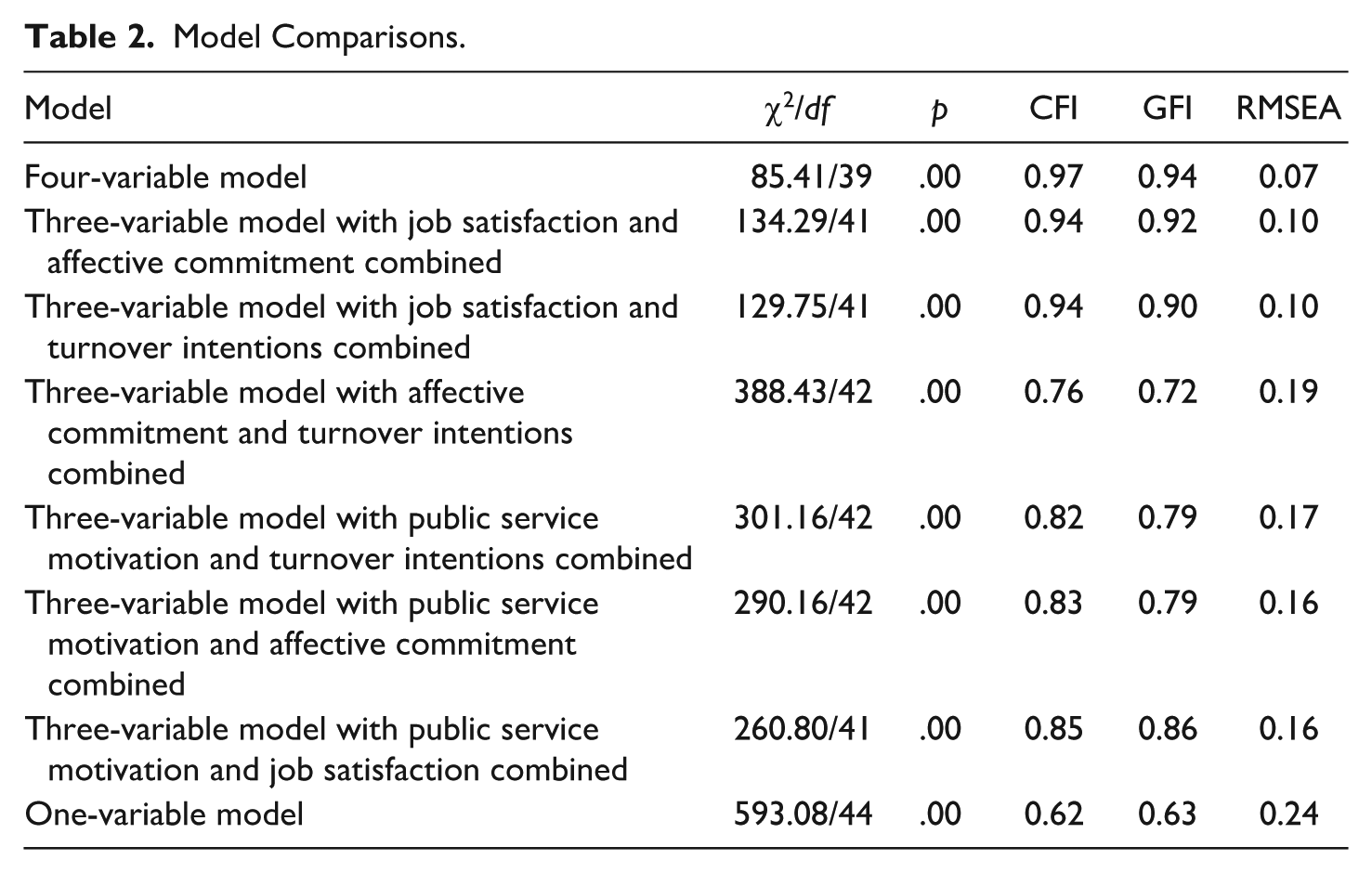
Table 1 provides the intercorrelations, means, and internal reliabilities of the study variables. We ran several confirmatory factor analyses (CFAs) to test four-factor model of the LPA (list the factors). The four-factor model fit the data well (χ2/df = 85.41/39, p = .00; CFI = 0.97; GFI = 0.94; RMSEA = 0.07). Table 2 presents alternate models yielding inferior fit compared to the four-factor model.
Correlations and Descriptive Statistics.
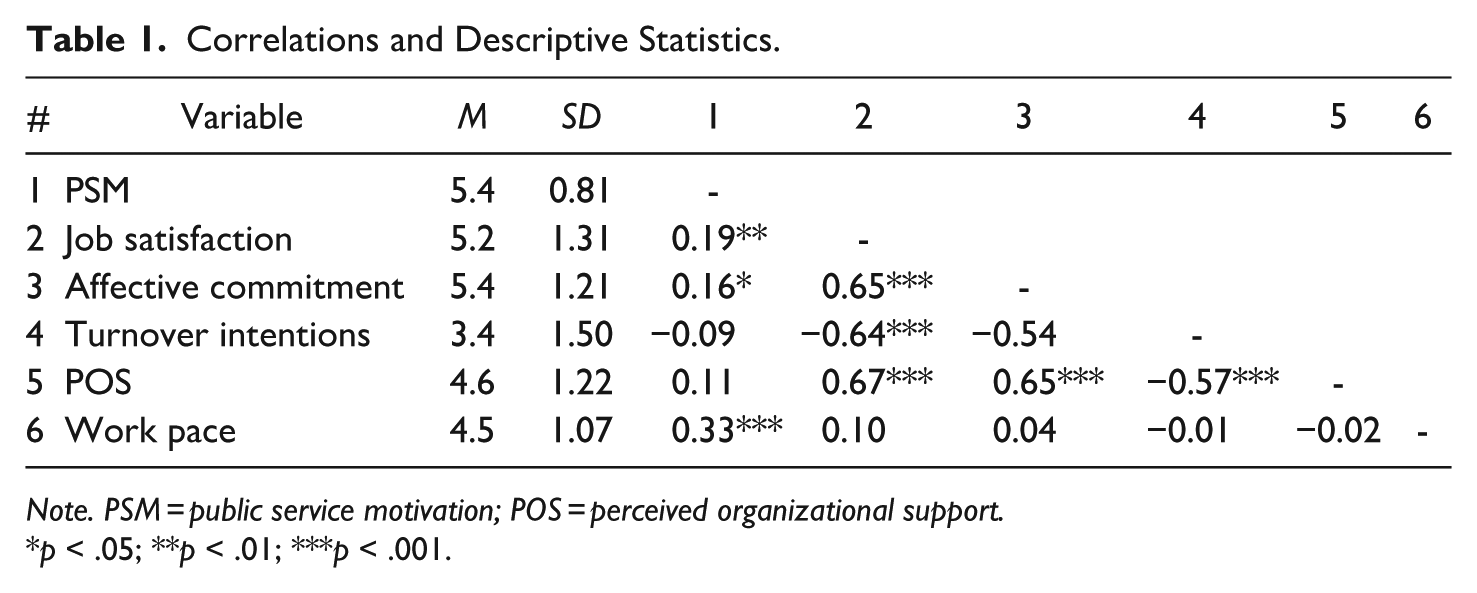
Note. PSM = public service motivation; POS = perceived organizational support.
*p < .05; **p < .01; ***p < .001.
Model Comparisons.
LPA Results
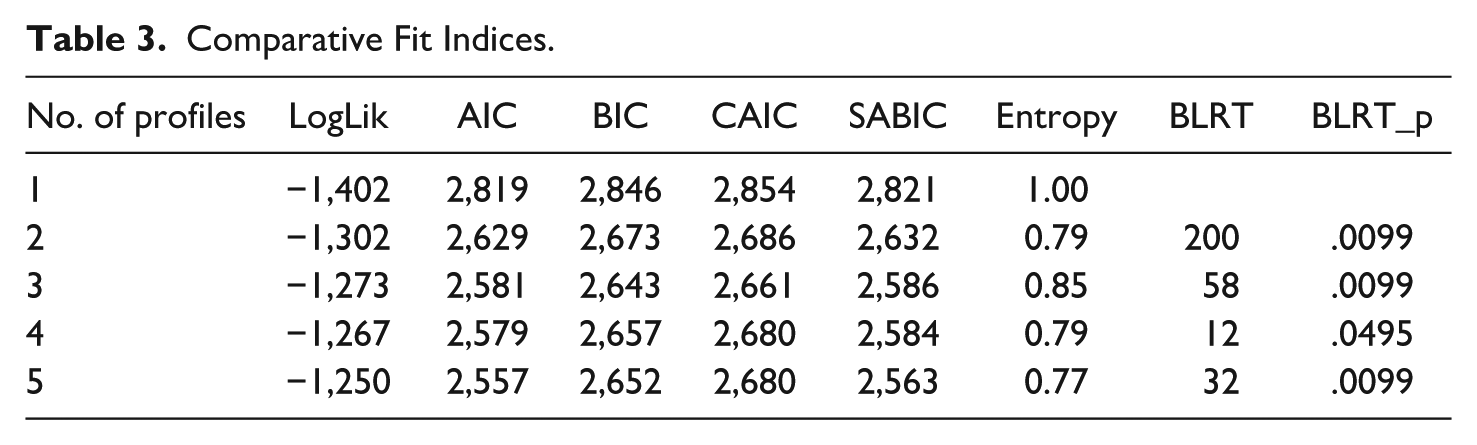
To examine the profiles of PSM and related circumplex affect, we conducted LPA. We began by comparing fit indices across five different profiles (from one profile to five profiles).
In assessing the data shown in the table above, we noted that the four- and five-profile models were more illustrative of the potentially complex nature of PSM but were statistically weaker than the three-profile solution. Overall, the four-profile solution generated the most theoretically and conceptually distinct profiles, and had an adequate model fit overall (Ram & Grimm, 2009). Table 3 below shows the mean scores across the profile variables, for each profile within the four-profile solution. This table reveals the name given to each profile, to reflect differences in experiences identified between groups (Table 4).
Comparative Fit Indices.
Means Per Profile.
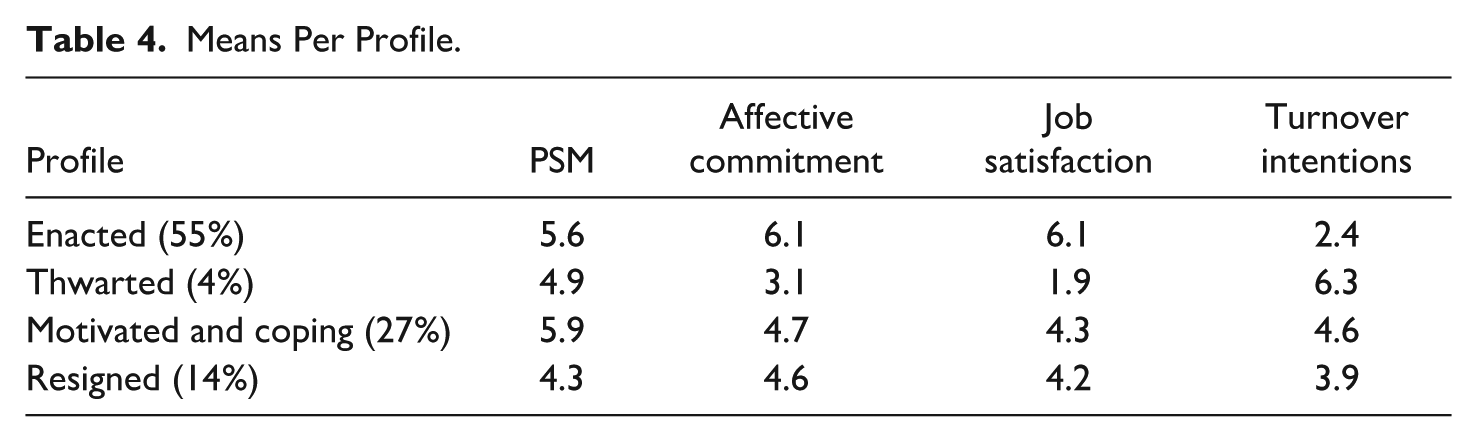
The largest profile (shared by 55% of the sample) was titled “Enacted” to reflect the high PSM, and positive attitudes to the job and organization (in high job satisfaction and affective commitment, and low turnover intentions overall) among the individuals included in this profile.
The second and smallest, but still clearly distinct, group is referred to as “Thwarted,” since respondents still have relatively good levels of PSM, but very negative low affective commitment and job satisfaction, and high turnover intention (work attitudes) compared to the other profiles. These individuals appear motivated, but their employers hinder their ability to fulfill their desire to serve the public. Sentiments reflective of this profile were presented in the qualitative results (above).
The third profile is titled “Motivated and Coping” and is shared by 27% of respondents. These individuals are the most motivated of all profiles but have considerably more negative attitudes than the Enacted group. We therefore identify these individuals as an at-risk group—whereby they could become Thwarted quite easily, or, on the other hand, become more fulfilled and Enacted with the right environmental affordances.
This final group is named “Resigned.” These individuals have the lowest PSM of all profiles, and work-related attitudes close to the mid-range. They seem to be “getting-by” more effectively than their Thwarted counterparts, perhaps because their PSM is lower—and there is less “at-stake” in this regard.
Multinomial Logistic Regression
Multinomial logistic regression analysis was used to estimate respondents’ likelihood of belonging to each profile. The variables included in this stage were the control variables of age and gender, and the exogenous workplace variables of POS and work pace.
The results from this analysis show that the Thwarted, Motivated and Coping, and Resigned profiles, all have significantly lower POS than the Enacted profile, which is the reference group in this analysis. The Resigned profile also has significantly lower work pace than the reference group. This suggests that the Enacted profile is more likely to have higher POS than the other profiles, and higher work pace than the Resigned profile. The control variables, age and gender, are not significant in predicting membership to any of the profiles. This point (of control) is important to note, as the analysis would suggest that it is a public servant’s work environment, more so than their demographic features (perhaps age specifically), which shapes their profile membership—by extension, their PSM and related affect. Table 5 below presents this data with further detail.
Multinomial Regression Results.
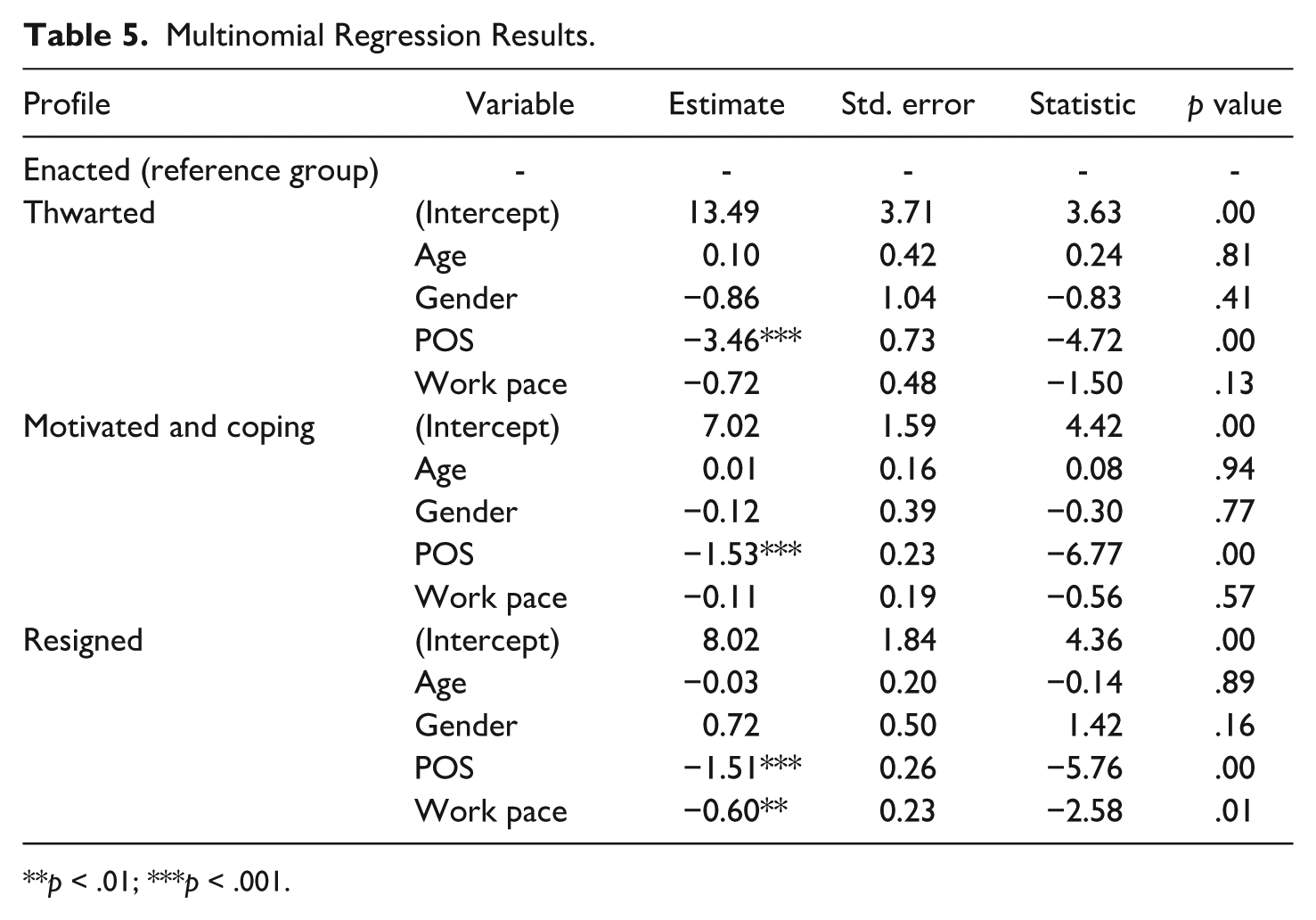
**p < .01; ***p < .001.
To better understand the role of workplace contexts in shaping profiles, a post-hoc analysis was performed on the multinomial models generated through multinomial regression analysis. The MNLpred package in R (Neumann, 2021) was used to generate plottable predictions of each profile (based on simulated draws of regression estimates), for both POS and work pace (Rodríguez, 2015; Figure 1).
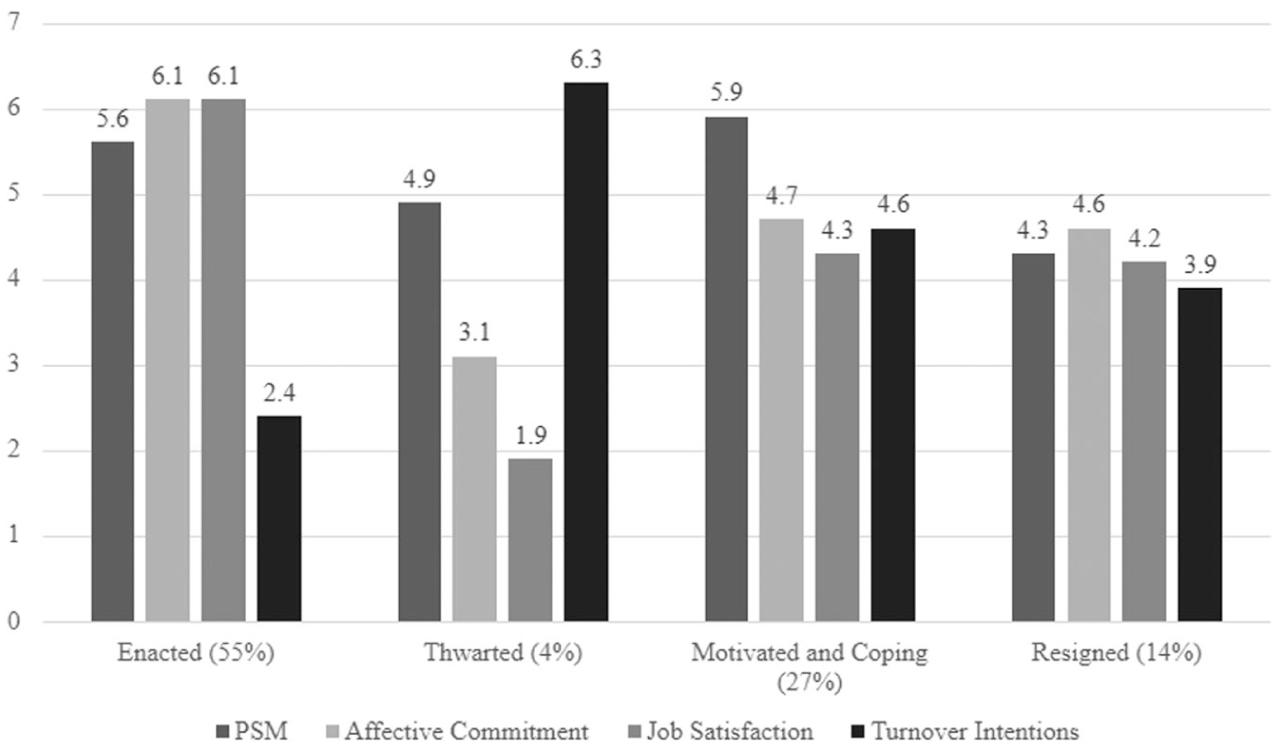
Graph of mean scores for each profile.
Figures 2 and 3 below show the differences between profiles regarding POS(Figure 2) and work pace (Figure 3). Specifically, the Enacted profile is more likely to experience highPOS, whilst the Thwarted profile is more likely to experience lowPOS. Interestingly, a high work pace seems to be more likely for both Enacted and Motivated and Coping profiles, whilst the Resigned profile reports lower (or slower) work pace.
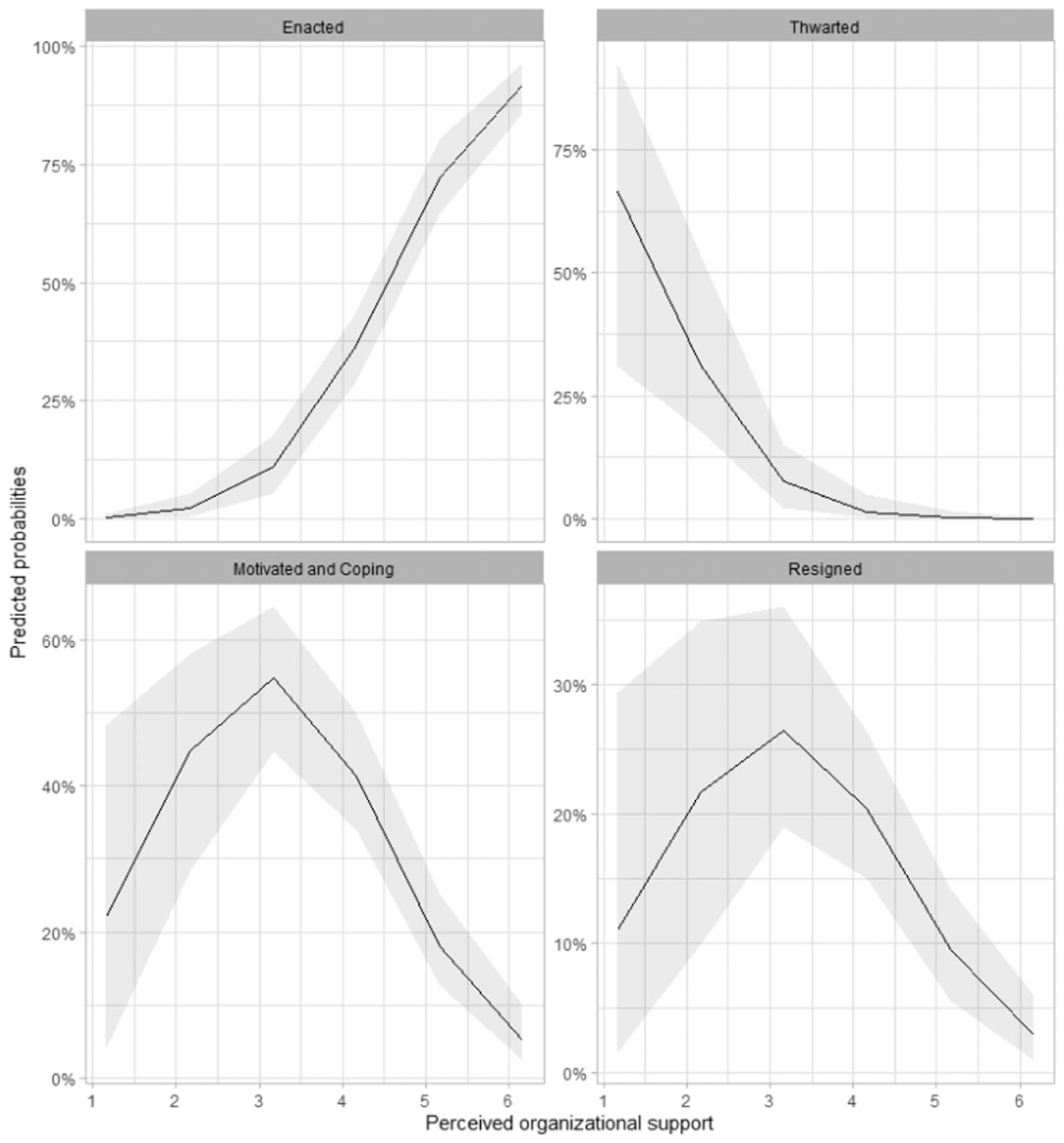
Predicted probabilities for perceived organizational support.
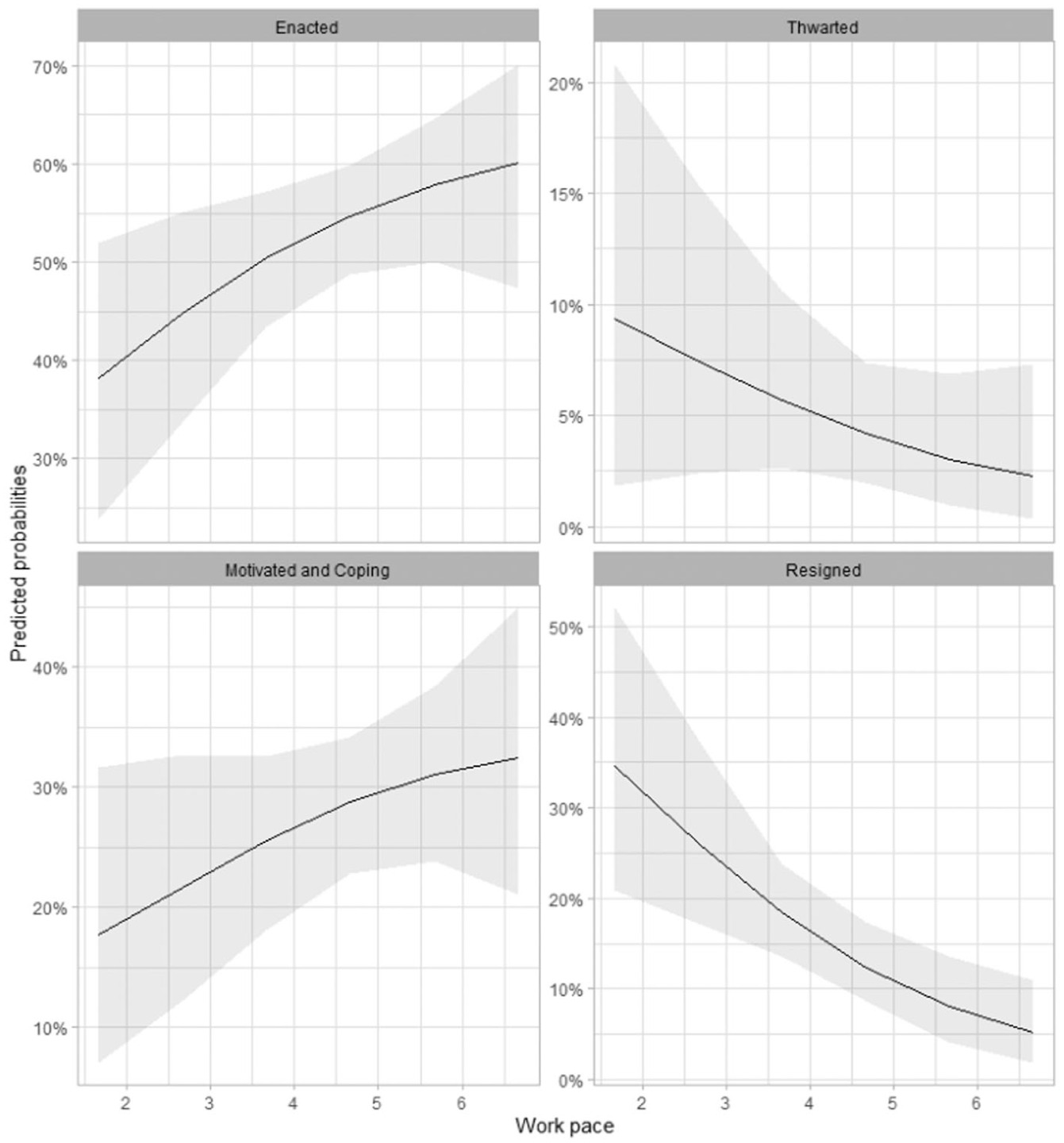
Predicted probabilities for work pace.
Discussion
This study is novel in its application of the CMA to the context of public servants’ PSM and related states of affect—job satisfaction, affective commitment and turnover intention. The initial, qualitative study validated the application of this model and demonstrated that PSM appears alongside other states of affect. The second, quantitative study presented four latent profiles of public servants’ PSM and related states of affect. In combination, these two elements answer the first research question regarding how states of affect cluster around PSM. The final, multinomial models highlighted how a public servant’s POS and work pace, as environmental variables, are significant in determining membership to one of the four profiles—Enacted, Thwarted, Motivated and Coping, and Resigned. This element of the study responds to the second research question which sought to understand the role of work environment in shaping PSM and associated states of affect.
This research, we feel, has a multitude of implications for how public servants are managed, and the stewardship of public servants’ PSM, and associated circumplex affect, by their managers and PSO leaders. In effect, it is hoped that the results herein demonstrate how PSOs can live up to the challenge, posed by Christensen et al. (2017), that they can be effective in identifying employees with high PSM, and then work to increase this through a conducive environment. This analysis has shown that states of PSM, and associated affect, correspond with particular environmental conditions, namely POS and work pace, and this is true irrespective of a public servant’s age or gender. Indeed, the ideal state—Enacted—where a person has high PSM, affective commitment, and job satisfaction, and low turnover intention, is very much shaped by perceived levels of organizational support (and high work pace). The Enacted group then, do demonstrate the ideal and virtuous state proposed by Christensen et al. (2017), of people with high PSM, experiencing a work environment conducive to its ongoing growth.
A second group—Motivated and Coping, whom also have high PSM (indeed higher on average than those in the Enacted group), demonstrate what happens when PSM is high, but POS is low. The result for this group is a decreased but still moderate levels of satisfaction and affective commitment, but clearly, with high turnover intentions, they would be experiencing low valence, and high arousal driving them to explore alternate employment opportunities for enacting their PSM. The Thwarted group require particular attention, characterized by low POS and low work pace, demonstrating potentially a waste of good PSM—where this passion and arousal go to waste in the face of, potentially, poor management support and work targets. With lower, and perhaps “beaten down” levels of PSM, albeit still in a positive range, further research is needed to look at whether events such as a break of psychological contract have worked to diminish PSM for those in the Thwarted group.
For those in the Resigned profile, this group does not appear to be burdened by a high desire to serve (Wentzel & Brysiewicz, 2014) and so can manage their experiences at work. Specifically, according to the CMA, their arousal levels are generally lower. Noting that the states of affect cluster, PSOs may consider interventions that work—beyond POS alone, to stimulate valance and arousal in the affective disposition of these employees
The profiles presented herein offer a new prism of understanding regarding how to select and manage public servants. Specifically, the notion of profiles of public servants, grouped by PSM and associated circumplex affect, allows for a move away from unidimensional action, reasonably implied by previous quantitative studies and associated approaches. Such an approach might challenge unidimensional actions like, for example, “strengthening the spirit of service” rhetoric per the case of the Australian and New Zealand public service current efforts. As an alternative, PSO leaders and managers can consider their employees, not as a homogenous group possessing singular states and traits of unconnected affect and motivation, but rather as a group bearing heterogenous patterns, who dynamically shape and are shaped by their work environment, and whose states of affect and motivation are interconnected. For PSM scholarship, and public administration and management debate more broadly, it is hoped that this paper helps progress research through a CMA lens. In this regard, there is clearly much more research to do to look at other states of circumplex affect related to PSM. From the qualitative research presented in this paper, suitable future research directions include sense of meaning/purpose, positive affect such as joy and pleasure; but also states of affect which might be linked to mental health and wellbeing.
While care was taken with this research, and particularly in the selection of respondents for the quantitative latent profile analysis, the studies have limitations. Most notably, the quantitative data is cross-sectional, and local to one public administration jurisdiction, and as such, the study is presented as exploratory in nature (Spector, 2019). Future research is encouraged that may look at how latent profiles of PSM and associated circumplex affect are similar or different across different public management jurisdictions. One key benefit of the CMA applied to this research is that it is accepted that a person’s mental state is not fixed, but is (at least in theory) dynamic, and will change over the short to medium term. As such, the paper acknowledges that public servants’ states of affect change over time and are the result of a reaction to their workplace environment (the latter point of which has been presented in the analysis herein).
Conclusion
The CMA proposes that types of emotions and affects cluster together and are experienced as a collective. Through interviews, support for circumplex experiences connected to PSM were identified. Specifically, this paper has applied the CMA to PSM and the identified related affective states of job satisfaction, affective commitment and turnover intention Through subsequent latent profile analysis of survey data, four profiles of public servant PSM and associated affect were identified, being Enabled, Thwarted, Motivated and Coping, and Resigned. These profiles were found to be significantly influenced by POS and work pace, supporting the idea that a public servant’s work environment shapes their PSM, and associated circumplex affect. The research finds support for Christensen et al.’s (2017) harmonization principle of PSM’s state and trait properties, noting that the majority of those profiled belonged in the Enacted group—where high PSM and related positive affect exist within a supportive organizational environment, potentially in a virtuous and interconnected loop. Yet, the research also identified, in both the qualitative and quantitative analysis, profiles of public servants who possessed high PSM, but operated in an unsupportive environment, bearing less positive affective states for job satisfaction, affective commitment, and turnover intention.
The person-centered approach adopted in this paper emphasizes that, unless employees are afforded the ability to enact their PSM and contribute positively to their communities, this initially considered positive personal characteristic, may expose its dark side. In that situation, one’s PSM may be counterproductive, and result in negative individual and organizational outcomes, such as lower job satisfaction and increased turnover intentions. Overall, this study further advances our understanding of the complexity of PSM, highlighting the importance of organizations creating supportive environments in which PSM can be enacted, rather than primarily relying on individuals’ innate levels of PSM, to draw on its many individual, organizational and societal benefits. This research calls for a more nuanced and heterogenous appreciation for the profiles of different public servants which may occupy a PSO, acknowledging that PSM remains a definitive consideration, but interconnected with other key affective states.
Footnotes
Declaration of Conflicting Interests
The authors declared no potential conflicts of interest with respect to the research, authorship, and/or publication of this article.
Funding
The authors received no financial support for the research, authorship, and/or publication of this article.
