



Abstract
Global political and economic instability have highlighted the importance of resilient governments capable of managing rapid change. However, continuous changes can overwhelm civil servants, leading to change fatigue. While prior studies have explored the impact of perceived frequent change on civil servants’ stress levels, little attention has been given to reverse causality in public management research. Psychological and neuroscience studies suggest that stress can influence individuals’ perceptions of workplace changes. To address this gap, we examine the relationship between chronic stress and civil servants’ perceptions of organizational change frequency. We analyze hair cortisol as a measure of chronic stress and survey data on change perceptions. Data were collected from 43 municipal civil servants at three points in time, offering a total of 129 observations. We find a significant effect of stress on perceptions of change frequency, shedding light on how stress shapes civil servants’ perception of organizational change.
Introduction
“The turbulent COVID era, as well as global political and economic instability, have been putting governments to the test. Increasingly, we hear calls for more resilient governance capable of dealing with complex and disruptive problems (cf. Ansell et al., 2021).” To achieve such resiliency, the capacity to deal successfully with rapid change is vital. Meanwhile, scholars and practitioners have warned that such a frequently changing work environment may exceed civil servants’ capacity to adapt, causing widespread change fatigue (de Vries & de Vries, 2023). This is supported by a growing body of public management research linking perceptions of frequent change to various negative outcomes, both at the individual and organizational level (Wynen et al., 2017, 2020, 2022). Scholars have sought to explain this by drawing on theories such as Lazarus and Folkmans’ (1984) model of stress and coping and threat-rigidity theory (Staw et al., 1981). Both theories emphasize the importance of perception, proposing that the extent to which employees perceive events as threatening will determine if—and to what degree—they experience stress, and what their subsequent coping behaviors will be. Accordingly, authors have argued that civil servants will perceive frequent organizational change as threatening, leading to chronic stress and (often) maladaptive coping behaviors (e.g., Terry & Callan, 2000; Wynen et al., 2022). Meanwhile, research from cognitive psychology and neuroscience indicates this relationship may also exist in reverse, since stress often leads to a distorted view of reality and affects our perception of workplace events, including change (Bar-tal et al., 2013; Epel et al., 2018; Vernooij et al., 2022). This urges us to consider if chronic stress in civil servants may also distort their perceptions of the frequency at which change occurs.
Certain studies have already indicated that employee’s subjective experience of change does not necessarily align with objective measures of change exposure (Loretto et al., 2010; Rafferty & Griffin, 2006; Rafferty & Jimmieson, 2017). Authors have explained these discrepancies by arguing that objective measures do not capture how employees perceive and interpret change (e.g., Rafferty & Jimmieson, 2017). Accordingly, any objective measurement of employee exposure to change will be insufficient to understand or predict employees’ reactions to it (Rafferty & Jimmieson, 2017). Meanwhile, change management strategies are often developed based on such objective accounts of change, leading to uniform strategies for managing employee responses (Kotter & Schlesinger, 2008). The low success rate of public sector change indicates that such a one size-fits-all approach to change management is not delivering the desired results (Andrews et al., 2006). Since an adaptable workforce will be crucial for achieving resilient governments that thrive in turbulent times, it seems paramount to deepen our understanding of the factors that affect civil servants’ perceptions of ongoing change. Therefore, we examine the impact of chronic stress on civil servants’ perceptions of change frequency. Data were gathered from five local government organizations. To measure chronic stress, we used a physiological measurement of the stress hormone cortisol present in the hair. These data were linked with survey responses capturing the workplace changes civil servants experienced. Using a physiological measurement of stress enables us to mitigate common-method bias issues.
By examining if chronic stress impacts civil servants’ perceptions of organizational change frequency, we contribute to the change management and public management literature in several ways. First, if our results confirm that chronic stress biases civil servant perceptions of the frequency at which change occurs, this offers an important empirical contribution. While previous studies highlighted variability in civil servants’ value judgments about change, on its substantive impact and the way it is managed (e.g., Kleiman et al., 2022; Kleizen et al., 2023), such variability in perceived frequency of change remains underexposed. Second, such findings would bear important implications for the practice of public sector change management. It would indicate that chronic stress in civil servants makes it difficult to inform and engage all of them with a single change strategy, highlighting the need for more personalized change management interventions. If left unaddressed, chronic stress may even exacerbate differences in perceived change to the point that these become extremely difficult to manage. Ongoing efforts to help civil servants manage their stress levels are then a strategic necessity to allow for effective change management and to strengthen civil servants’ overall ability to deal with organizational change .
In the next section, we present our theoretical framework starting with Conservation of Resources-theory (Hobfoll, 1989) to explain how chronic stress develops through resource depletion. Then, we draw from literature on cognition to examine how individuals make judgements about change, and how these judgements may become biased due to the resource depletion associated with chronic stress. The sample and data collection methods are described in the Data section, followed by a description of the results. In the Discussion and Conclusion sections we discuss our main findings and reflect on the implications for practice.
Theoretical Framework
Chronic Stress—A COR Framework
Public sector employment, characterized by its distinct pressures and expectations, inherently involves significant levels of stress. This stress arises not only from the demanding nature of public service, with its high accountability and significant bureaucratic constraints that often limit the autonomy of public servants (e.g., Bersch & Fukuyama, 2023), but also from the public’s expectations for efficient and uninterrupted services during any crisis, including increased demands during health crises or natural disasters (Fraser-Moleketi, 2012) Stress in public sector environments is further exacerbated during times of exceptional public crises, such as pandemics or economic downturns, when public organizations find themselves under increased scrutiny and operational demands (Boin et al., 2016). Such periods highlight and amplify existing workplace stressors, significantly impacting the mental health and overall well-being of public employees (Barboza-Wilkes et al., 2024). For instance, public health workers and local government officials often face elevated stress levels due to increased workloads, uncertainty, and the need to swiftly adapt to new operational guidelines (Comfort et al., 2018). Research shows that organizational culture and the availability of mechanisms for managing change and uncertainty play pivotal roles in how stress impacts public sector employees (e.g., Bordia et al., 2004). Moreover, the ability of public sector organizations to manage stress effectively is critical, not just for employee well-being but also for the overall resilience of these institutions (Plimmer et al., 2022).
Increasing performance expectations add another layer of stress in public sector employment. The pressure to meet or exceed these standards, often amidst resource constraints and public scrutiny, can lead to heightened anxiety and stress among civil servants (Bouckaert & Halligan, 2007). Performance evaluations in the public sector frequently entail not only assessments of individual and team outputs but also the effectiveness of service delivery to the public, which can fluctuate based on factors beyond the control of individual employees (Curristine et al., 2007). This situation is compounded by public officials’ dual accountability to both superiors and the public (Romzek & Dubnick, 1987), adding to the multifaceted nature of public service stress.
While public sector work environments are inherently complex, dynamic, and frequently stressful, they have become even more turbulent in the current era characterized by new and disruptive problems (Cristofoli et al., 2022; Walinga & Rowe, 2013). Evidence from research and practice reveals that civil servants find it increasingly difficult to cope with this workplace turbulence and associated stress (de Vries & de Vries, 2023; Smollan et al., 2010; Smollan, 2015; Spicer, 2018; van der Meer et al., 2024). Growing accounts of excessive workplace stress and deteriorating employee wellbeing throughout government organizations indicate that stress is increasingly becoming chronic. In the UK for instance, the number of stress and mental health-related sick days taken by civil servants reportedly rose by 38% in 2022 (Campbell, 2023). Similar observations arise from Belgium; where civil servant sick days due to stress had also risen over the course of 2021 and 2022. The Belgian data further reveals that 72.1% of the 8,108 civil servants who were absent from work due to stress in 2017 had relapsed at least once since then (Taylor, 2023), pointing at a persistent, chronic prevalence of stress. Chronic stress is typically defined as a type of stress resulting from longer-term or repeated exposure to stressful conditions, in which demands and pressures exceed available coping resources (Demerouti et al., 2001). In the context of this study, a measure of chronic stress is therefore preferable as it more closely aligns with the contemporary work environment of civil servants, characterized by a growing prevalence of stress. In addition, chronic stress has been found to better capture stress-related effects in individuals and organizations (Baum et al., 1993; Ganster, 2008).
To understand how chronic stress develops, COR theory offers a useful framework. The theory was first developed by Hobfoll (1989) and has since been widely studied and applied in various fields, including psychology, sociology, and organizational behavior. COR describes how individuals strive to acquire, protect, and preserve their resources in order to cope with stressors and achieve personal goals, in all facets of life (i.e., personal and professional). Resources have been broadly defined as anything that is valued by an individual, such as time, energy, money, social support, and personal characteristics (e.g., self-esteem, persistence, control, . . .) (Hobfoll et al., 2018). Hence, in the context of work, the more resources an employee has, the better he or she is expected to cope with challenging work circumstances. As such, individuals will strive to acquire new resources and to avoid any resource loss. COR posits that, when resources are threatened or are actually lost, individuals will experience stress (Hobfoll et al., 2018).
COR theory further specifies that resource loss is disproportionately more salient than resource gain, which is referred to as the “primacy of loss principle.” This principle implies that individuals will place greater importance on preventing resource loss compared to the acquisition of new resources, especially when they have few resources left (Halbesleben & Bowler, 2007; Hobfoll, 1989, 2001). The second principle underpinning COR-theory is that individuals must invest resources in order to protect against (further) resource loss, to recover from previous losses, and to gain additional resources (cf. “resource investment principle”; Hobfoll, 1989; Hobfoll et al., 2018). However, Hobfoll also explains that as individuals lose resources, investment becomes increasingly difficult. These reinforcing dynamics of resource loss and the inability to re-gain resources may cause individuals to become trapped in a resource loss spiral (Hobfoll et al., 2018).
These key principles of COR-theory can help us understand how chronic stress develops in civil servants. Meeting increasing performance expectations and adapting constantly to new systems, procedures, and policies places heavy resource demands on civil servants. When individuals face such high demands for extended periods of time their coping resources risk becoming depleted (Hobfoll, 1989; Westman et al., 2004). Following the COR principles, civil servants will then invest their energy in protecting the resources they have left, rather than trying to (re)gain additional resources. This increases their chances of ending up in a vicious cycle of resource loss. When individuals constantly lose or fear to lose resources, chronic stress is likely to develop (Clifton & Feeny, 2015; Hobfoll et al., 2018). The notion that chronic stress goes hand in hand with resource depletion will be essential to understand how chronic stress affects change perceptions, which is discussed next.
How Chronic Stress Leads to Biased Perceptions of Change Frequency
Extant research has demonstrated that civil servants can have different opinions on the outcomes or the impact of change events (e.g., Kleiman et al., 2022; Kleizen et al., 2023). Even when confronted with the same changes, they can still have different perceptions of the value these changes bring. Meanwhile, we would still expect them to perceive the same amount of change. However, research indicates that certain factors cause a bias or “error” in people’s perception of events (Kreitner & Kinicki, 2008). With bias, we refer to a systematic (i.e., non-random and thus predictable) deviation from rationality in judgment or decision-making (Baron, 2008). Bias can therefore be distinguished from common subjectivity, since it distorts perceptions in a particular direction and is irrational in nature (Baron, 2008). Hence, any specific deviations in perceived frequency of change in individuals who have been exposed to the same changes, indicates a bias is at play. This is because there is no “rational” basis for differences in perceived frequency of change.
Stress is one of the most well-researched factors known to elicit bias (Yu, 2016). Authors have explained this using a dual-process model, which proposes that people make judgements via two possible routes: a fast route labeled System 1 and a slow route labeled System 2 (Evans, 2008; Kahneman, 2011). System 1 operates quickly and automatically with little effort, and leads to intuitive decisions and judgements (Kahneman, 2011). It relies on mental rules of thumb (“heuristics”) and often result in thinking biases (Kahneman, 2011). On the other hand, System 2 runs slowly and in an effortful manner, requiring complex deliberation. In normal situations, the intuition system initiates a default judgement, and the reasoning system checks whether such a judgement is compatible with the current environment (Yu, 2016). That is, intuition proposes first and reasoning decides whether to approve or modify it (Yu, 2016). However, research has revealed an over-reliance on type 1 thinking when perception occurs under taxing or resource-depleting conditions (Macrae et al., 1994). Accordingly, when under stress, the reasoning system may not check intuitive default responses and may fail to correct any errors that occur. This is because intuitive responses are fast and require fewer cognitive resources to execute than System 2 (Kahneman, 2011). Consequently, stress will make people more prone to bias, because of an over-reliance on fast and intuitive thinking rather than deliberative thinking (Yu, 2016).
In public administration, the concept of bias is often addressed through the lens of bounded rationality, a framework introduced by Simon (1947). This framework contends that decision-making is not an outcome of purely rational processes; rather, individuals make choices within the limits of their cognitive capacities, which are influenced by the organizational context and the information available to them (Simon, 1947, 1955). Simon’s notion of satisficing—making decisions that are good enough rather than optimal—can be seen as a result of System 1’s influence as described by Kahneman (2011), where individuals opt for a satisfactory solution that is reached quickly and without extensive cognitive strain. This is particularly pertinent within public administration, where decision-making is often complex, multifaceted, and characterized by a degree of urgency (Shafran et al., 2020). Hence, bounded rationality also suggests that civil servants may rely on heuristics and cognitive shortcuts, leading to biases in their perception and judgment (cf. Battaglio et al., 2019). Bounded rationality adds to Kahneman’s model by shedding more light on the contextual factors that influence the degree to which civil servants are bias-prone, including time- and information-constraints as well as the broader institutional environment. Kahneman’s theory, on the other hand, offers a more detailed examination of the cognitive processes behind Simon’s bounded rationality. It provides a psychological foundation for understanding the cognitive limitations that bounded rationality describes (Petracca, 2021). Since our study focusses on the underlying cognitive psychological processes rather than contextual factors, we build on Kahneman’s model for the remainder of our theoretical framework. Nonetheless, we acknowledge the value of the bounded rationality perspective for understanding how certain organizational factors may contribute to bias in civil servants’ perceptions of organizational change.
Next, we will explore what type of bias we can expect in people who suffer from chronic stress, building on insights from Epel et al. (2018). In their transdisciplinary model of stress they explain how chronic stress exposure impacts individuals’ cognitive appraisal of events, taking into account that stress is experienced on the psychological and physiological level. Such a model seems preferable, since our measurement of stress is a physiological one, based on cortisol levels present in the hair. Cortisol, like other steroid substances, is incorporated in hair growth. Analyzing the concentration of hair cortisol provides us with a measure of stress accumulated over the past 3 months, offering an indication of “chronic stress” (as opposed to acute stress). Interestingly, cortisol has been identified as an important stress marker causing a shift from deliberate, reflective cognition (system 2) toward automatic, reflexive information processing (system 1) (Margittai et al., 2016).
Epel et al. (2018) posit that the physiological expression of chronic stress (such as raised cortisol) will be accompanied with psychological effects. Specifically, it will impact people’s “mental filter,” the lens through which they see the world. In case of excessive past and ongoing exposure to stressful circumstances, “one’s mental filter is prone to habitually amplify cognitive and emotional responses to stressful stimuli leading to exaggerated threat appraisals” (Epel et al., 2018, p. 149). Put differently, individuals who suffer from chronic stress will tend to overestimate the threatening nature of events. Moreover, these intuitive perceptions of threat are unlikely to be corrected by deliberate (system 2) thinking, as noted earlier. The notion that chronic stress will lead to exacerbated perceptions of threat has been supported by several studies in cognitive psychology and neuroscience (e.g., Bar-tal et al., 2013; Yu, 2016). Korte (2001) and Sapolsky (2000), for instance, found that chronic stress promotes selective attention to negative precedents and consequently produces a tendency to find threat and risk where none exist. Psychologists Bar-tal et al. (2013) have argued that persistent stress will cause employees to appraise their coping resources as less adequate while at the same time increasing their need for certainty and control. This in turn will make them more likely to appraise situations as threatening. This reasoning is supported by neuroscience research linking raised cortisol levels (indicating chronic stress) to a decrease in resources such as self-esteem and internal locus of control, and negative self-beliefs overall (e.g., Pruessner et al., 2005; Thomas & Larkin, 2020). Similarly, other authors have found that stress undermines individuals’ sense of control and—by endangering the perception of controllability—fosters perceptions of threat (e.g., Friedland et al., 1992). Hence, resource depletion not only explains how chronic stress is created and sustained (cf. Hobfoll’s COR-theory), it also plays a crucial role in the emergence of biased thinking, specifically a negative bias that creates exacerbated perceptions of threat.
While several studies thus have suggested a reversal of the threat-stress relationship (e.g., Bar-tal et al., 2013; Epel et al., 2018), this study is one of the first to examine what this means for employee perceptions of change. When we apply these insights to the context of organizational change, we find that chronic stress can bias employees’ perceptions of change by making them more likely to think of changes as being threatening to them personally. Exacerbated perceptions of threat will also introduce other related errors in people’s judgement of organizational change. Attentional bias, for instance, is another type of cognitive error stemming from increased threat appraisals. It refers to the tendency to focus excessively on certain stimuli while ignoring others (Vernooij et al., 2022). Research across various disciplines indicates that stress -both acute and chronic- is one of the main factors that induces attentional bias (Andreotti et al., 2015; McHugh et al., 2010). Specifically, stressed individuals appear to have a disproportionate amount of attention for threatening events, objects, or people (e.g., Bar-Haim et al., 2007; Mogg et al., 1990; Tsumura & Shimada, 2012). Since we already noted that stressed individuals are more likely to perceive organizational change as threatening, this suggests they are also likely to spend a disproportionate amount of attention towards the (potential) occurrence of change events (cf. Bar-tal et al., 2013; Mogg et al., 1990).
In summary, we find that the resource-depleting nature of chronic stress can cause employees to have stronger threat appraisals of organizational change. Consequently, this also increases their selective attention for change, and they will more consciously pick up on change events (whether they are directly affected by them or not). These reinforcing dynamics between chronic stress, threat appraisals of change, and attentional bias toward threat, may lead chronically stressed employees to systematically perceive more frequent change compared to their colleagues with lower levels of stress. We arrive at the following hypothesis: Higher levels of chronic stress among civil servants are positively associated with an increased perceived number of organizational changes.
Data
This study explores employee perceptions of workplace changes in five municipal organizations in Flanders, Belgium. The five municipalities are similar in terms of rural location and population size (having approximately 10.000 inhabitants [min: 8,014, max: 12,576]). The municipal organizations themselves are also similar in size, each one employing approximately 60 white-collar employees in total (min: 47, max: 72). Due to the state structure and regulations, these municipal organizations have identical competences which they have to meet with similar resources.
Within these municipal organizations, we invited civil servants to complete a survey about the workplace changes they experienced, and to provide a hair sample in order to measure their stress levels. We repeated this process every 3 months for a total of 9 months. In total, 102 civil servants participated in each of the three waves of our project, leading to a balanced panel structure. The response rate for each wave was around 33%, whereby the attrition rate between waves was negligible. Due to strict anonymity requirements imposed by the municipalities, we were unable to obtain comprehensive population data. We only have information on the gender distribution within the population, where 80% are female and 20% are male. We note that our initial sample has a (slight) bias towards women (82.35%. See appendix, Table A1). Since we were not able to fully test the representativeness of our sample, we warn the reader that we cannot generalize the findings that will follow.
Measuring Change Frequency in the Work Environment
The survey asked respondents to indicate which of the following types of changes they had experienced in the past 12 months (first wave) or past 3 months (second and third waves). The selection of these changes was made in consultation with the management of each organization and pilot surveys were conducted to ensure that the questions were accurate. Respondents could answer yes or no to the following changes. However, since we asked about changes of the prior year, we deleted respondents (total of 9 observations) who had a tenure of less than 1 year, or who changed work unit or role in the past year.
▪ Physical change: A change to the physical environment of the workplace, such as a renovation, move, or redecoration.
▪ Structural change: A change to the organizational structure, such as a change in the reporting lines or the division of responsibilities.
▪ Change in management team: A change to the management team, such as the hiring of a new manager or the departure of an existing manager.
▪ Change in direct leader: A change to the direct supervisor, such as the hiring of a new supervisor or the departure of an existing supervisor.
▪ Change in function: A change to the job role, such as a change in the tasks and responsibilities of the job.
▪ Change in processes: A change to the way work is done, such as a new way of handling customer complaints or a new way of processing orders.
▪ Hiring: An increase in the number of employees.
▪ Downsizing: A decrease in the number of employees.
For each respondent and wave, we calculated a total score to indicate the number of changes they perceived. This score could range from 0 (no changes perceived) to 8 (all changes perceived).
Measuring Chronic Stress
Stress is often measured with survey items that tap into a respondents’ subjective appraisal of their feelings of distress in the workplace (Ganster, 2008). This approach has limitations to measure chronic stress as it is a “snapshot” and is responsive to individual changes in the short-term, like moods or affective states. They are therefore more likely to capture acute feelings of stress, but often fail to capture the underlying stress-related processes leading to longer-term outcomes (Ganster, 2008). Additionally, using self-report survey items can introduce classic threats to validity like social desirability bias and common method variance (Podsakoff et al., 2012). To overcome these issues, this paper introduces Hair Cortisol Concentration (HCC) analysis.
Cortisol has emerged as one of the most-used biological stress markers in management research and is directly linked to negative, stress-related health outcomes (Ganster & Rosen, 2013; Juster et al., 2010; McEwen & Stellar, 1993). Recent methodological advancements in the field of endocrinology capitalize on the presence of cortisol in hair growth that allow to measure the concentration of cortisol over several months (Diebig et al., 2016; Stalder et al., 2017). Accumulated evidence confirms the validity of HCC as an index of long-term systemic cortisol levels, its reliability across repeated assessments, and its relative robustness to a range of potential confounding influence (see Stalder & Kirschbaum, 2012, p. 1019).
A strand of hair (at least 3 cm, approx. pencil thick) was collected of each participant from the back of their head (posterior vertex) after they completed the survey. This hair sample was used to measure the concentration of cortisol. By obtaining a hair sample of the 3 cm of hair closest to the scalp, we can measure the accumulated cortisol secretion of the past 3 months (since human hair grows about 1 cm per month; Staufenbiel et al., 2013). Hence, it allows to capture long-term stress levels within individuals (Greff et al., 2019). By taking a longer time perspective, this approach thus overcomes the variability of cortisol levels and of self-reported stress measurements within individuals (e.g., differences linked to time of day) and the effect of acute influences (e.g., sickness). Moreover, hair sampling is non-invasive, easily conducted and generally well tolerated by participants (Greff et al., 2019). Medical professionals of a University Hospital were involved throughout the research project, including the design of the survey, organization and support of data gathering, analysis of hair samples and interpretation of the results. Scalp hair collection was performed in accordance with guidelines published by the Society of Hair Testing (Cooper et al., 2012).
Our HCC analyses result in an objective indicator for stress levels which the respondent has experienced during the 3 months prior to each survey moment (see Figure 1). The analysis is done using a liquid chromatography-tandem mass spectrometry assay developed in-house in the laboratory of the University Hospital. For a critical review of HCC analysis, we refer to Stalder et al. (2017). A detailed description of the HCC analysis can be found in appendix.
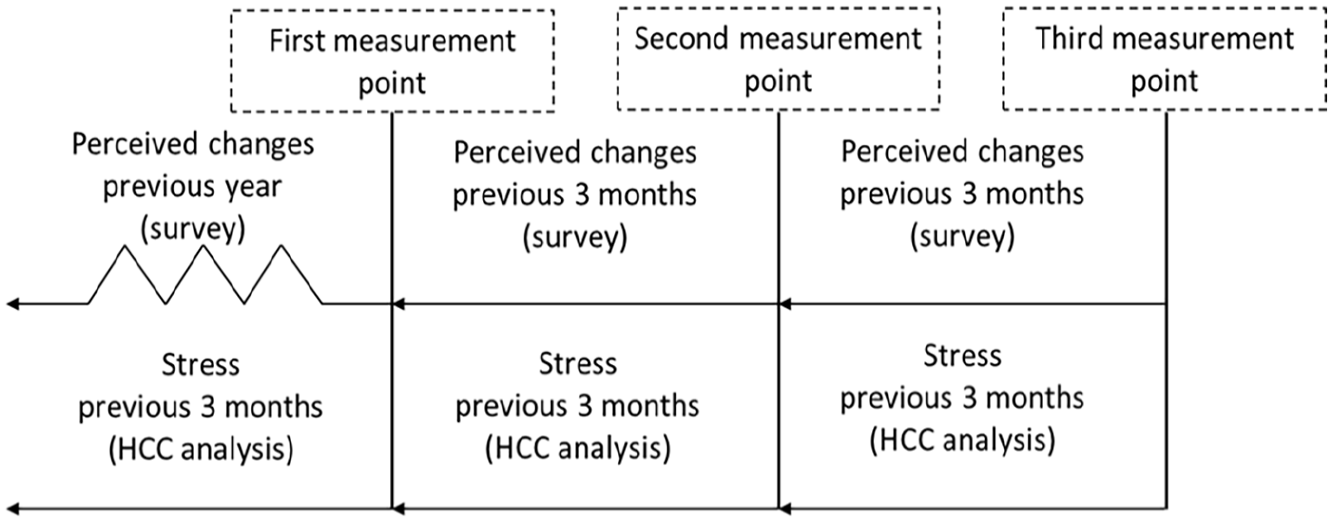
Overview of the research design.
Cortisone use can disrupt cortisol secretion, which can cloud the relationship between cortisol and change perceptions. Therefore, we excluded observations from participants who used cortisone during the 9 months of our research study. We also excluded observations from participants with extremely high cortisol levels (above 31 pg/mg hair), as this is a threshold used to indicate a risk of Cushing syndrome, a disease that severely disrupts cortisol secretion. These restrictions led to a final sample of 43 civil servants who were followed over a period of 9 months with data collected every 3 months (see Table A1 in appendix for a comparison of the demographic characteristics of our final regression sample with the initial sample, demonstrating that the distribution remains stable across both samples).
Our analysis of hair cortisol concentration is unable to differentiate between stress originating from work-related factors and stress caused by private factors such as family or financial issues.
For the purposes of our study, we assume that differences in perceived frequency of workplace change are associated with stress-induced bias, irrespective of the origin of stress. This is supported by extant research showing that both personal life stress and work-related stress trigger an increase in cortisol (e.g., Cropley et al., 2015; Shrout et al., 2020). Hence, this assumption is a simplification that allows us to focus on the correlation between overall stress and change perceptions without delving into the complexities of stress source differentiation. We acknowledge this as a limitation of our method and suggest that future research could explore these distinctions further. Furthermore, the distribution of different stress sources across our sample is expected to be random. There is no reason to believe that family problems causing stress, for example, would be more prevalent in one municipality compared to another. Therefore, any potential variations in stress sources across municipalities are unlikely to significantly influence our findings or conclusions.
All participants provided explicit informed consent, which included the collection of hair samples for analysis. The participants did not receive any compensation for their involvement. However, as an incentive to participate in the study and to reduce attrition, respondents were offered a personalized report with their individual stress measurements when they participated in at least three data gatherings. It is also important to mention that the hair samples were analyzed exclusively on cortisol and cortisone levels and were destroyed after analysis. The participants’ employer has not and will never receive individual data, not on survey answers nor on their employees’ cortisol or cortisone levels. Only aggregated data were reported to the organizations. This study approach was approved by the relevant ethics committee of our university (approved by UZA Medical Ethics Committee under project ID 0647, on 25/04/2022).
Descriptive Statistics
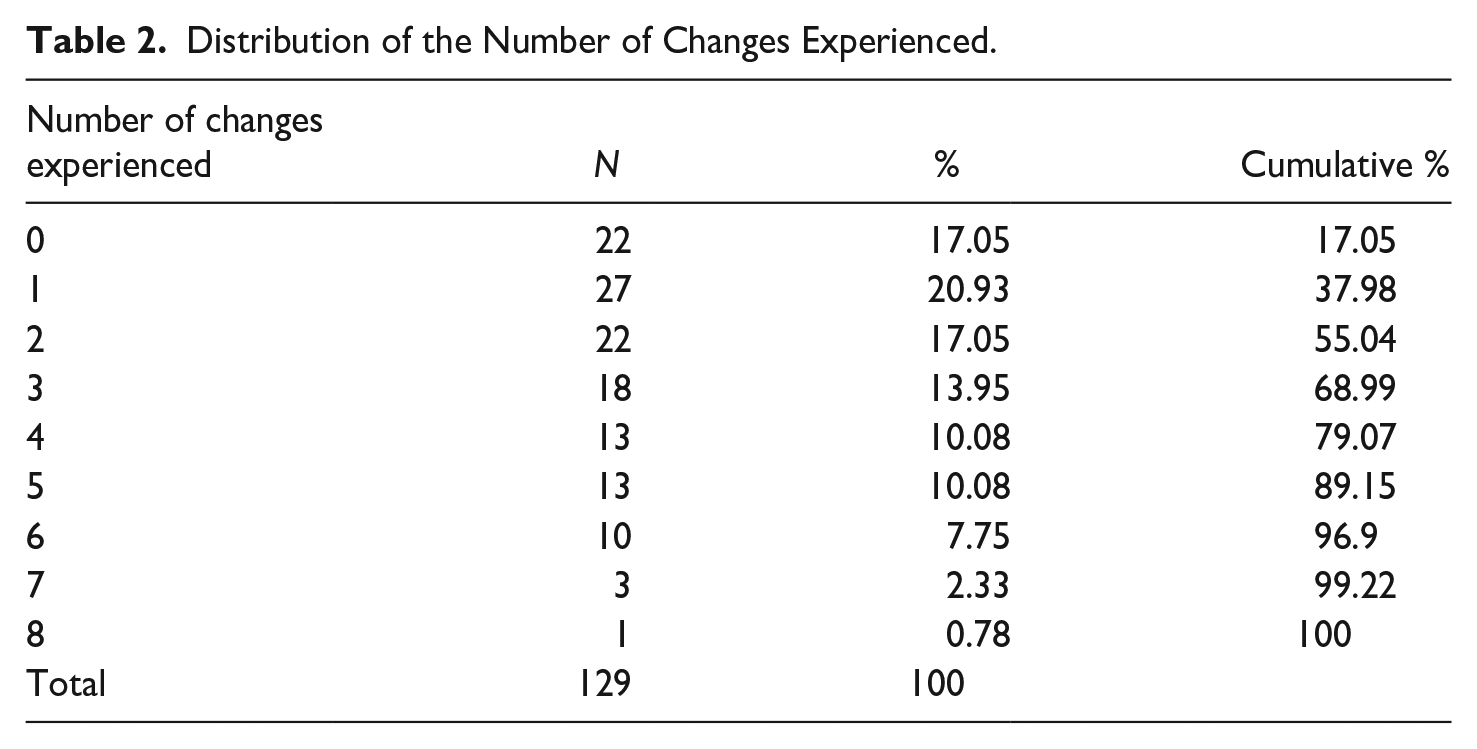
Table 1 shows the summary statistics for our variables, including both within-person and between-person variation. Within-person variation refers to change over time or within a given individual, while between-person variation refers to differences between individuals. Interestingly, we notice that there is more variation within a given individual (or over time) for both the total changes perceived and stress, compared to variation across individuals. The table also includes the specific changes separately. Based on the table, it is clear that change in processes and hiring were the most frequently reported changes. Table 2 offers more detail about the total sum of changes experienced over the total of three waves, and provides more detail about the distribution of the perception of changes experienced, our dependent variable. In Figure 2, the distribution over municipality and wave is depicted, with the municipality number indicated before the comma and the wave number indicated after the comma. The figure reveals significant variation in the changes perceived by civil servants, despite the fact that we did not explicitly inquire about subjective judgments. Instead, we focused solely on capturing the specific objective changes they experienced. This variation is particularly noteworthy considering the relatively small size of our municipal organizations, each consisting of approximately 60 white-collar employees. The findings suggest that individual interpretations and perceptions of change frequency may go beyond the scope of objective events. The observed variation in the data hints at the involvement of subjective factors that influence an individual’s perception.
Panel Summary Statistics: Within and Between Variation.
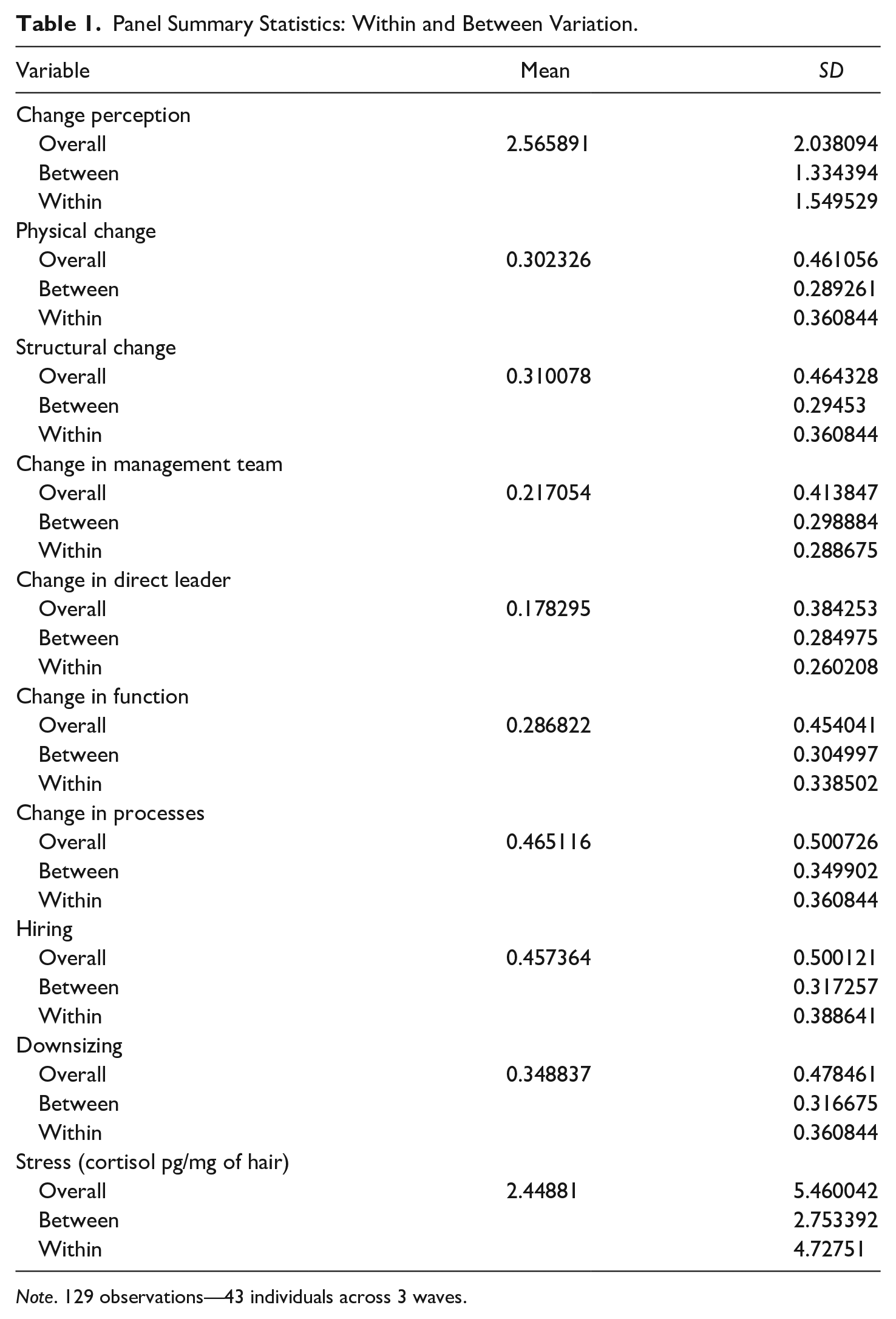
Note. 129 observations—43 individuals across 3 waves.
Distribution of the Number of Changes Experienced.
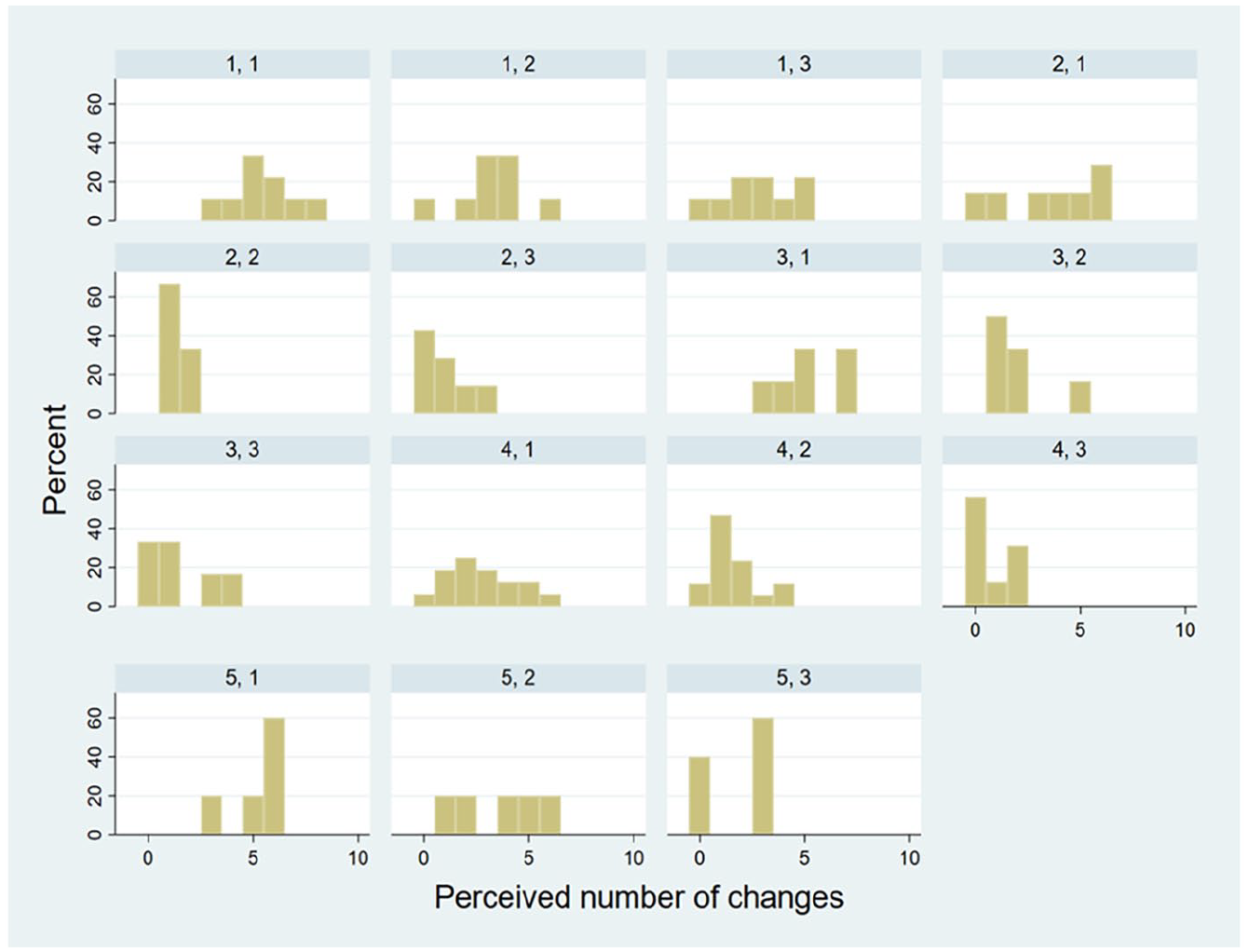
Overview of the perceived number of changes, by municipality (number before the comma), and wave (number after the comma).
To explore the relationship between perceived changes and cortisol levels, we created a scatterplot of the two variables (see Figure 3). This allowed us to visualize the data and see if there was any apparent correlation between the two variables.
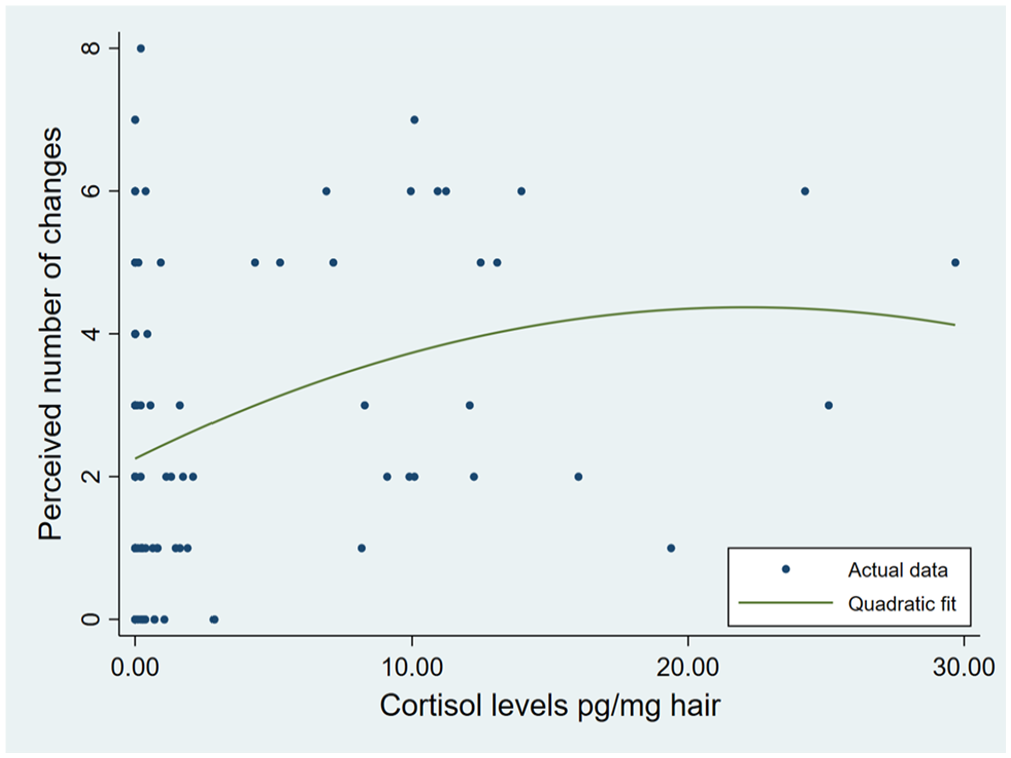
Overall variation: perceived number of changes versus cortisol levels.
Figure 3 illustrates individual-wave pairs, with each point representing a specific pair. The solid line represents the quadratic fit obtained through ordinary least squares (OLS) regression, depicting the potential inverted U-shaped relationship between changes experienced and stress levels (measured by cortisol). Notably, the graph reveals a significant proportion of zeros in our primary independent variable, cortisol levels. This occurrence arises because our cortisol analysis fails to detect extremely low cortisol concentrations, which are automatically assigned a value of zero. In fact, out of our 129 observations, approximately 53% exhibit a cortisol level of zero. 1
The dependent variable, the number of perceived changes, demonstrates more diversity (see also Table 2). The majority of observations perceived 1 to 3 changes. Analyzing the scatterplot, we observe that a transition from 0 to 10 cortisol pg/mg of hair does not yield a comparable impact on perceived changes as a transition from 10 to 20 cortisol pg/mg of hair. This observation suggests the existence of diminishing returns to increased cortisol levels, indicating that the effect on perceived changes weakens as cortisol levels rise. Interestingly, starting from a cortisol level of 20 pg/mg of hair, the effect seems to diminish slightly.
Analysis and Results
Prior to commencing the analysis, we performed a log transformation on our variable measuring cortisol levels to better capture the nuanced effects of cortisol on the perceived number of changes, as illustrated in Figure 3. The log transformation ensures that a percentage increase in cortisol levels corresponds to a constant effect.
Furthermore, examining the relationship between changes experienced and stress levels introduces a potential issue of causality. It is plausible that changes themselves can lead to increased stress. However, our primary interest lies in investigating the impact of stress on perceived changes, rather than the reverse. To address this concern, we will incorporate the lagged value of stress in the subsequent analyses. Specifically, we will consider the stress levels experienced in the 3 months preceding the three-month period in which respondents reported changes. Since the changes have not yet occurred during the objective stress measurement period, they would not have influenced the cortisol levels at that particular measurement point. This approach strengthens our claim of causality, as we are specifically examining the influence of stress on perceived changes, rather than the other way around. Figure 4 visually represents this methodology.
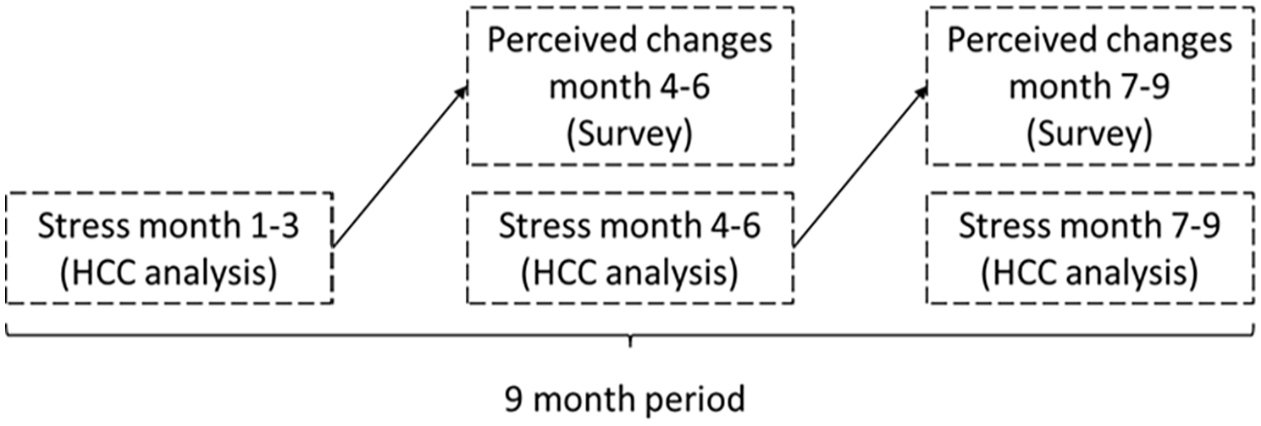
Analytical strategy.
We start our analysis to the effect of lagged cortisol levels and perceived changes with a fixed effects OLS regression (within estimator). The rationale behind selecting fixed effects relates to the substantial within-individual variation observed in both changes experienced and stress, as highlighted in Table 1. Furthermore, a robust Hausman test (see Cameron & Trivedi, 2010, p. 268) was conducted, and the null hypothesis was rejected (χ²(1) = 2.884*), indicating that a fixed effects model is preferable over a random effects model in order to obtain consistent estimates.
To estimate the fixed effects panel model, the regression analysis focuses on the within-individual variations over time. This is done by taking the differences within each individual between different time periods. By subtracting the individual-specific mean or average from each observation, we effectively remove the individual-specific effects from the regression equation. This differencing process allows us to isolate the time-varying effects of the independent variables on the dependent variable while controlling for individual-specific factors that do not change. As a result, it is not necessary to include elements such as gender, personality traits, or other individual-level characteristics, as these factors remain fixed over the 9-month observation period. Similarly, the same principle applies to fixed organizational characteristics, such as culture or other enduring organizational traits. Importantly, the fixed effects analysis also absorbs any work-unit level differences in objective frequency of change.
This is because the unit and municipality participants worked at were fixed characteristics in our sample (participants did not change municipality, unit, or role during the data collection period). We can assume that at the granular level of the work unit, employees are exposed to the same change events. Consequently, the fixed effects approach enables us to control for the possibility that some participants worked in a unit that effectively experienced more or less changes than others during the period of data collection. Another common analytical approach is to include dummies for the unit or municipality in which respondents work. Such dummies could be incorporated in a cross-sectional regression and would have provide us with more detailed information on the unit-level (such as, working in unit A is associated with higher perceptions of change frequency). However, in a fixed effects regression with panel data, adding such dummies would not be useful since these dummy-scores would remain fixed for our participants across the research period. Hence, the effect of these dummy variables is automatically controlled for by the panel fixed effects method applied in this study. In addition, Figure 2 still provides more detailed information on differences in perceived change at a unit-level. By including the individual-specific fixed effects, the model effectively accounts for these stable factors and focuses on capturing the variations within individuals over time, enabling us to identify the specific time-varying effects of the independent variable (cortisol) on the dependent variable (perceived change frequency).
We conducted two regression models to examine the relationship between stress and perceived changes. The first model included only the lagged stress variable, while the second model incorporated a squared term to account for the potential inverted U-shaped relationship observed in Figure 3. This relationship suggested a slight decline in the effect of cortisol levels above 20 pg/mg of hair on perceived changes. The results of the regression models are displayed in Table 3. In the first column, the inclusion of the lagged stress variable reveals a positive and (marginally) significant effect on perceived changes. This suggests that higher levels of stress are associated with a greater likelihood of perceiving additional changes in the workplace. Introducing a squared term, however, does not lead to a notable improvement in model performance. Intriguingly, the model explains approximately 9% of the variation in perceived changes, indicating that stress plays a role in shaping individuals’ perceptions of workplace changes.
Regression Results.
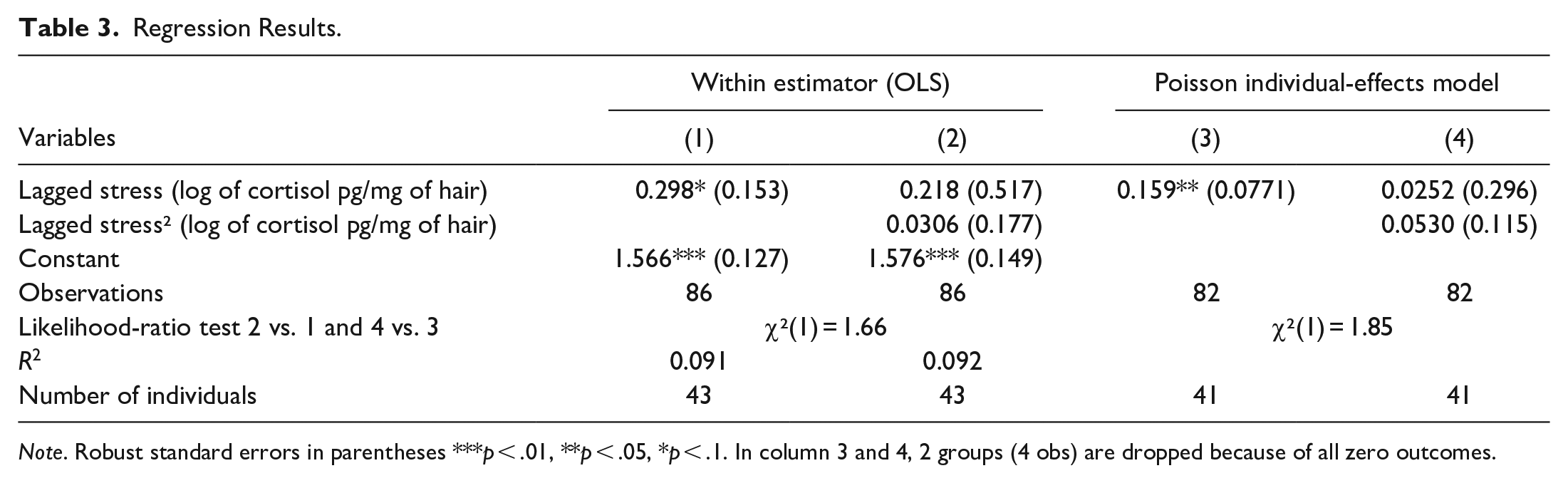
Note. Robust standard errors in parentheses ***p < .01, **p < .05, *p < .1. In column 3 and 4, 2 groups (4 obs) are dropped because of all zero outcomes.
However, in order to enhance our analysis, we recognize that our dependent variable, the perceived number of changes, exhibits right-skewness. This is evident from the fact that the mean (2.56) exceeds the median (2). Moreover, it is important to note that the dependent variable represents a count of the number of changes experienced. Given these characteristics, it is appropriate to switch to a Poisson model. A Poisson model is a statistical approach specifically designed for analyzing count data. It accounts for the discrete nature of the data and accommodates the constraint that counts cannot be negative. The Poisson distribution assumes random occurrence of events and independence between the events. Consequently, applying a Poisson model enables us to capture the unique properties of count data. In light of these considerations, we utilize a Poisson model with fixed effects, also known as a Poisson individual-effects model, to analyze the data. The results of this model are presented in columns 3 and 4 of Table 3. Based on the findings from column 3, the Poisson model reaffirms that stress has a positive and statistically significant impact on the likelihood of perceiving a change. This suggests that higher levels of stress are associated with an increased perception of changes in the workplace. However, the inclusion of the squared term in column 4 does not yield support, indicating that the relationship between stress and perceived changes is not best characterized by an inverted U-shape.
In summary, our results indicate that an elevated level of stress is linked to a higher perception of changes. Therefore, we can conclude that increased stress levels have an influence on how individuals perceive changes in the workplace. 2
Discussion and Conclusion
The aim of this study was to shed light on the impact of civil servants’ chronic stress levels on how they perceived objective change events in their workplace environment. Over a period of 9 months spanning three data collection moments, we collected and analyzed hair cortisol measurements and survey data on change perceptions among civil servants of five municipalities in Belgium. Our findings reveal a significant association between chronic stress levels of civil servants and their perception of change frequency.
We contribute to the literatures on public sector change and employee stress and resilience in several ways. First, our analysis uncovered substantial variation among civil servants in their perceptions of the frequency of organizational changes that affect them. This finding aligns with previous research suggesting that subjective judgments on the value and impact of organizational changes can differ significantly among individuals (e.g., Kleiman et al., 2022; Kleizen et al., 2023). However, it is noteworthy that even when considering “objective measures,” such as the number and type of change events individuals experienced, a significant amount of variation persists. This observation highlights the complex nature of organizational changes and the multifaceted factors that contribute to individuals’ interpretations and assessments of change frequency. This finding provides empirical support for the argument that any objective measure of change exposure will be inadequate to accurately predict civil servant responses to change (Loretto et al., 2010; Rafferty & Griffin, 2006; Rafferty & Jimmieson, 2017).
Second, we examined whether chronic stress is a factor that contributes to this unexpected variation in perceived frequency of change. Based on insights from COR-theory (Hobfoll et al., 2018) and the dual-process model of cognition (Kahneman, 2011), we argued that the resource depleting nature of chronic stress increases the chance of bias occurring in civil servant’s judgement of change, since it causes an over-reliance on intuitive (system 1) thinking. Specifically, literature suggests a bias toward exacerbated threat appraisals of change, making those who suffer from stress more prone to overestimate the occurrence of change (cf. Bar-tal et al., 2013; Epel et al., 2018; Mogg et al., 1990). Our results show that chronic stress indeed increases civil servants’ likelihood to perceive organizational change, confirming our hypothesis. While our findings resonate with extant literature on stress and its cognitive repercussions (e.g., Bar-tal et al., 2013; Epel et al., 2018), further research is necessary to confirm the causal mechanisms involved. In addition, the analyses reveal that the chance of stress-induced bias increases relatively quickly, as soon as chronic stress levels start to rise from low to moderate levels.
This finding adds specifically to the public sector change literature, which had developed a strong body of evidence on the accumulative effects of (particularly intense) change processes on employee stress and stress-related outcomes (Kleizen et al., 2018; Taylor, 2023; Wynen et al., 2020), yet remained largely silent on how accumulated and chronic stress levels impact employees’ perceptions of ongoing change initiatives. Our results hint at the potential of a mutually destructive and cyclical relationship between chronic stress and organizational change. Intense change may instill stress in civils servants which makes them more likely to overestimate—and hence negatively appraise (Lazarus & Folkman, 1984)—the frequency and impact of ongoing change, further adding to existing stress levels, etc. Furthermore, since extant literature has demonstrated the negative effects of change-related stress on a variety of outcomes such as absenteeism, defensive silence, turnover intentions, innovation etc. (Wynen et al., 2021), a precise understanding of the change-stress dynamic becomes even more paramount.
This brings us to the implications for the practice of change management in the public sector. When civil servants’ have differing opinions on aspects of change typically considered to be objective (i.e., frequency), it becomes increasingly difficult to inform and engage all of them with a single change strategy. Managing factors that fuel this subjectivity can be one possible strategy to facilitate change management. This study shows that chronic stress is a factor that contributes significantly to variations in change perceptions, and more specifically, that it causes a bias in civil servants’ perception of change frequency. While a certain degree of subjectivity is inherent to our interpretation of events and is not necessarily problematic, a systematic bias in perceptions is more likely to cause problems. This is because bias “distorts” perceptions in one particular -often negative- way, and is irrational in nature (i.e., not a logical consequence of circumstance; Baron, 2008). Consequently, most change managers may be unaware such bias exists and are likely to overlook this issue when developing change interventions. While bias is in its nature irrational, we should note that the resulting attitudes and behaviors are not always irrational or maladaptive (Marshall et al., 2013). In certain conditions, cognitive biases can influence our thought process in a positive way and help us make optimal decisions. However, in case of chronic stress and persistent bias toward threat, this is more likely to become maladaptive and detrimental to individuals’ functioning and wellbeing at work (Epel et al., 2018). Moreover, by causing bias, chronic stress may add to the natural variation in individual’s change perceptions to the point that these differences become extremely difficult to manage. Hence, ongoing efforts to help civil servants manage their stress levels can be essential in preventing that differences in change perceptions become unmanageable. Such efforts could consist of improving work-life balance by providing flexible work arrangements, offering civil servants more opportunities to balance demands at work and at home (Haley & Miller, 2015). Walinga and Rowe (2013) also noted the value of stress-reappraisal techniques to strengthen civil servants’ capacity to deal with the complexity of public sector work settings. By investing in trainings or workshops that teach civil servants to reappraise stressful sources or to adopt a “stress is enhancing” mindset, they can learn to focus more on positive information, thereby improving their long-term well-being and overall functioning (Walinga & Rowe, 2013). Stress reappraisal techniques could therefore also be instrumental in preventing stress-induced, negative bias in civil servant perceptions of organizational change. Finally, strategies for stress management can also contribute to a more holistic change management approach and complement specific change management interventions that often tend to be more ad hoc and remedial in nature (Burnes & Jackson, 2011).
Meanwhile, individual differences in change perceptions cannot be avoided entirely and will always exist to some extent. Therefore, it seems necessary to also implement more personalized change management strategies. In practice, we can notice some efforts to tailor change management strategies based on the department, role, or job level employees hold (DiLeonardo et al., 2020). Yet, our results show that - even when we control for such factors through fixed effects analysis- employees’ perception of change events still differed significantly. Hence, this study suggests that change management strategies should also be personalized on a more fundamental level, based on the way employees perceive change. Communication and participation requirements will likely differ for employees depending on how they habitually view organizational change. Those employees that by default view change as threatening may benefit primarily from interventions that address uncertain aspects of change, rather than interventions requiring active participation in change trajectories. Such insights could be gathered from periodic employee surveys, or through annual evaluations that incorporate employees’ assessment of workplace changes.
In addition to its practical implications, this article makes a valuable methodological contribution by incorporating a physiological measurement of stress (cortisol). By employing this objective measure, the study helps address concerns related to common-method bias.
However, it is important to acknowledge some limitations of this research. First, our measure of change frequency captures the number of different types of change respondents perceived, but it does not account for specific types of change occurring more than once. However, since the time frame between measurements is short (3 months), it is unlikely for any type of change to have occurred more than once. Additionally, it should be noted that this measure does not cover the perceived impact of changes. We acknowledge that the absence of data on the perceived impact somewhat limits the scope of our conclusions, particularly regarding the subjective stress that specific changes might engender. However, our objective was to investigate whether chronic stress, as an underlying condition, biases the perception of change frequency itself rather than the specific impact of individual changes. Future research may explore the impact dimension to verify whether stress / cortisol impacts both the perceived frequency of workplace changes as well as their perceived impact. We also acknowledge the larger presence of women in our sample and the potential implications for our findings on stress and perceptions of workplace changes. The fixed effects model employed in our analysis is crucial in this regard, as it controls for all time-invariant traits of individuals, including those gender-specific traits and baseline stress levels that could confound the relationship between stress (cortisol levels) and perceived frequency of workplace changes. By using this approach, our model should account for differential impacts and coping mechanisms associated with gender (Allison, 2009). However, future studies may further explore gender differences in stress / cortisol levels and resulting biases.
Second, the generalizability of our results remains limited due to the small sample size, which is a consequence of the chosen method of hair cortisol analysis (HCC). We chose this method as it provides the most accurate and objective measurement of chronic stress currently available. The HCC method in combination with our longitudinal research design offers an important contribution to the literature. However, the HCC method is also inherently time-intensive and costly, resulting in smaller sample sizes. In addition, the exclusion of participants using cortisone or with Cushing’s disease further reduced our sample size. Therefore, while our findings provide valuable insights, they should be interpreted with caution regarding their applicability to the broader population. Finally, one of the main limitations of our study is the potential endogeneity between chronic stress and perceived organizational changes. While we used a fixed panel structure approach to control for unobserved heterogeneity and included a lagged variable for stress to introduce a temporal dimension, these methods do not fully address the endogeneity issue. Our use of lagged variables suggests a potential causal relationship between chronic stress and perceived organizational changes. However, this approach is not as robust as Granger causality tests, which require more waves of data. Nevertheless, it should be noted that this study is one of the first in its kind to apply HCC analysis over an extended time period (i.e., 3 waves), offering unique insight into how chronic stress develops in individuals over time. Future research may aim to create even longer panel data to test the causal direction between chronic stress and change perceptions more rigorously.
Footnotes
Appendix
Declaration of Conflicting Interests
The author(s) declared no potential conflicts of interest with respect to the research, authorship, and/or publication of this article.
Funding
The author(s) disclosed receipt of the following financial support for the research, authorship, and/or publication of this article: This research was supported by Bijzonder Onderzoeksfonds (BOF) under Grants 41466 (“Do structural reforms undermine organizational adaptability? A study of the impact of continuous reforms on decision-making within public organizations”) and 42338 (“Avoiding repetitive change injury: Can leadership behaviors mitigate the damaging side-effects of repetitive reforms?”).
