




Abstract
Over the past few decades, social, economic, and political developments have forced public organizations to continuously adapt to changing circumstances, casting them in ongoing cycles of organizational change. The continuous introduction of various types of change in an employee’s work environment may generate substantial levels of role ambiguity, which in turn could hamper performance and satisfaction. Given the increasing degree of change complexity in the public sector, it is surprising that no research has investigated whether more complex change is associated with greater reductions in role clarity. To gain a better understanding of how change complexity impacts organizations and their employees, we analyze survey data from the Australian Public Service Employee Census using propensity score matching. Results indicate that increasing levels of change complexity results in greater reductions of role clarity, suggesting that change trajectories sometimes exceed employees’ capability to adapt.
Introduction
Over the past few decades, social, economic, and political developments have forced public organizations to continuously adapt to their changing environment, leading to ongoing cycles of reform (Damanpour & Gopalakrishnan, 1998; Pollitt, 2007; Valle, 1999). More recently, novel developments such as Brexit, the rise of social media and artificial intelligence (AI), and the ongoing COVID 19-pandemic can be expected to inspire yet another series of reform, targeting public organizations’ strategies, structures, and practices (Lewis & Cho, 2011; Tursunbayeva, et al., 2017; Vann, 2004). Paradoxically, while public organizations increasingly turn to organizational change in attempt to improve their adaptability and performance, the opposite might be achieved in terms of impact on employees (Brunsson, 2009). In particular, studies indicate organizational change can negatively impact the extent of role clarity employees experience (Jimmieson et al., 2004; Kahn et al., 1964; Katz & Kahn, 1978; Lyons 1971). Kahn et al. (1964) explain that organizational change can hinder role clarity in different ways, for instance through changed work procedures or through personnel changes, which all produce increasing ambiguities for the employees involved.
While these studies have explored the impact of organizational change on role clarity (e.g., Jimmieson et al., 2004; Kahn et al., 1964; Lyons, 1971), they devoted surprisingly little attention to the conceptualization of change and the increasing incidence of change in public organizations, potentially overlooking any aggregated effects of ongoing change. Therefore, this study takes a novel perspective by focusing on the impact of change complexity, accounting for the simultaneous occurrence of various types of change (such as changes in work procedures, leadership, job tasks, and organizational structures) in a short period of time. Since public organizations are confronted with increasingly rapid change processes, with one type of change often instigating or impacting another (i.e., a merger spurring personnel reductions and a location change), it seems imperative to study the aggregated effects of the occurrence of different types of organizational changes (McMurray, 2007; Pollitt, 2007) over short periods of time.
Organizational changes typically bring along a phase of transition, a period of organizational drift characterized by uncertainty and ambiguities concerning organizational structures, roles, and procedures (Bordia et al., 2004, Seo & Hill, 2005; Smollan, 2005). This in turn can cause significant turbulence for individual employees at the work-unit level. Specifically, a lack of role clarity has been identified as a key stressor for employees (Gilboa et al., 2008; Kim et al., 2014; Ngo et al., 2005; Slattery et al., 2008; Tubre & Collins, 2000). In the specific context of public organizations, Tummers et al. (2009) postulate it might even lead to policy alienation among civil servants, a situation in which they begin to feel disassociated from policy implementation processes and goals due to a lack of clarity on the type of responsibilities and tasks they are expected to execute.
To better capture the current reality of public organizations being swamped by change, we examine the impact of change complexity, accounting for the simultaneous occurrence of various types of change over a short period of time. While we can expect most change processes to be characterized by a certain degree of complexity, we argue there can be significant variations in the degree of complexity. A change trajectory comprising a multifaceted change process—such as a major strategic change entailing various procedural and structural changes—will likely be more complex and cause more turbulence for employees at the work unit-level, compared to a change in leadership. When employees are confronted with a period of high change complexity, in which they experience a high number of diverse types of changes in a short timeframe, it not only leaves them with little time to recover in between changes (Seo & Hill, 2005) but it can also make it increasingly difficult for them to build resilience for subsequent changes (Dougall et al., 2000). We therefore expect that, as employees deal with more diverse types of changes affecting their roles (i.e., high change complexity), this will lead to a further decrease in role clarity.
By analyzing data of the Australian Public Service Employee Census, we examine if we can find evidence of decreased role clarity in individuals who experienced a period of high change complexity. This article seeks to contribute to the extant literature on organizational psychology, public administration, and human resources management (HRM) by focusing on the impact of diverse types of changes that have occurred within a relatively short timeframe. Prior research traditionally defined and studied change as single, isolated events. We maintain these fields would benefit from a more holistic approach to the study of organizational change and its impact on employees. Because of their (implicit or explicit) conceptualization of change as isolated events, earlier studies may have failed to capture how different changes interact with one another, and what cumulative impact diverse changes have on employees. Consequently, by studying the impact of change complexity, we intend to fill this gap in extant literature by accounting for the potential accumulating effects of diverse changes experienced over a short period of time. The remainder of this article is organized as follows: Section 2 theoretically links role clarity and organizational change and elaborates on the dynamics of role clarity in the context of high change complexity. The data and analyses are presented in Section 3, followed by a discussion of the main findings and concluding remarks in Section 4.
Literature Review
Linking Organizational Change and Role Clarity
To meet ever-increasing citizen demands and address novel challenges, public organizations increasingly turn to organizational change (MacCarthaigh, 2012). This often leads organizations to undergo periods of fast-paced change, with change trajectories that become increasingly complex. These change trajectories can consist of different (potentially overlapping) change initiatives or of a series of “sub-changes” that form part of a larger multifaceted change initiative (for instance in the case of a merger entailing subsequent lay-offs, structural changes, and changes in leadership). Organizations in the middle of such change trajectories will usually find themselves in a transitional phase, in which new roles and structures are only partially established while old structures and roles are already being made redundant (Smollan, 2005). Hence, organizational changes often bring along—at least temporary—uncertainty and ambiguities in organizational structures, roles, and procedures (Bordia et al., 2004, Smollan, 2005). As change trajectories become more complex and encompass more diverse types of changes, the more ambiguities are likely to arise.
While employees are likely to experience uncertainty over many different facets of a changing work environment (Jimmieson et al., 2004), our focus is on the impact of change on role clarity. Role clarity can be defined as the extent to which individuals clearly understand the duties, tasks, objectives, and expectations of their work roles (Katz & Kahn, 1978). It has also been referred to as a lack of role ambiguity, which can be considered the opposite of and inversely interchangeable with role clarity (Rizzo et al., 1970). The harmful impact of role ambiguity (or lack of role clarity) on organizations and their employees has already been well documented in extant literature (e.g., Gilboa et al., 2008). For individual employees, the absence of role clarity has been identified as an important stressor that is negatively associated with several relevant organizational outcomes such as employee performance (Gilboa et al., 2008; Tubre & Collins, 2000), organizational commitment and job satisfaction (Kim et al., 2014; Ngo et al., 2005; Slattery et al., 2008).
Bordia et al. (2004)—who distinguish between three different types of change related uncertainty: strategic, structural, and job-related uncertainty—classify role ambiguity as a type of job-related uncertainty. Importantly, they found that job-related uncertainty has the most profound impact on employees’ ability to deal with organizational change, which can be explained by the fact that such job-related issues will have the greatest impact on employees at the work unit-level (Klein, 1996). Interestingly, Bordia et al. (2006) also highlight the impact of rumors in contributing to employee concerns during organizational change. They explain that even the mere announcement of planned changes can already lead to perceived uncertainty about what someone’s role in that changing organization will be (Bordia et al., 2006; Seo & Hill, 2005). Even though we cannot control for this aspect in our research, we should take into consideration this could also manifest itself in an anticipatory form of role ambiguity.
In times of change, role clarity is often low or absent with employees not knowing how changes will affect their roles, which can be particularly stressful (Bordia et al., 2004). Berger (1987) attributes this to the observation that people have two fundamental needs: (1) predictive needs, concerned with the ability to predict what is going to happen next and (2) explanatory needs, concerned with the ability to explain why things are as they are, both of which are frequently compromised during organizational change. Even though management usually strives to address this uncertainty through communication and dedicated change management, these attempts often fall short (DiFonzo & Bordia, 1998). In the context of organizational change, role clarity has been identified as a key resource for employees in coping with change and its implications. Various scholars have found that it can mitigate the negative effects of high job demands, which frequently arise during organizational change (Bakker & Demerouti, 2017; Bliese & Castro, 2000; Saksvik et al., 2007) However, as previously mentioned, change trajectories are usually characterized by a period of inherent uncertainty, which can compromise role clarity. Accordingly, Kahn et al. (1964) identified organizational change as a key factor contributing to greater role ambiguity (or lesser role clarity). Change trajectories that require frequent restructuring of work practices have been found to hinder role clarity and thus increase role ambiguity (Jimmieson et al., 2004; Lyons, 1971). Thus, paradoxically, while role clarity is an important coping resource during times of organizational change, such change will often lead to the exact opposite, being role ambiguity.
Role Clarity in a Context of High Change Complexity
As mentioned, a number of studies have already addressed the negative impact change can have on role ambiguity (Jimmieson et al., 2004; Kahn et al., 1964; Lyons, 1971), a type of uncertainty that can be particularly prevalent in changing organizations. However, the conceptualization of organizational change has received relatively little attention in literature so far, resulting in fairly simplistic conceptions of change. In addition, few studies have accounted for the observation that organizations increasingly face diverse types of changes rapidly succeeding or even overlapping each other in time. Moreover, Smollan (2015) found that organizational change effects can persist even after a change has been formally completed, supporting the notion that organizational change can be seen as a continuous process, with different types of changes overlapping one another and where the outcomes and impact of one change can influence those of another set of changes (Brunsson, 2009; Wynen et al., 2019). We expect that, as change trajectories become more complex and encompass more diverse types of changes in shorter periods of time, the more role ambiguity is likely to arise.
We arrive at this proposition by drawing on insights from the literature on exposure to repeated stressors, in our case, exposure to repeated organizational change. Interestingly, two models exist that each predict opposite effects of exposure to repeated stressors: On the one hand, the stress-accumulation model posits that stress and uncertainty will accumulate and will negatively affect individuals’ coping resources, ultimately harming the individual (Moore et al., 2004). Accordingly, Moore et al. (2004) and Grunberg et al. (2008) found that work-related stressors, including role ambiguity, accumulated in employees who experienced multiple changes. On the other hand, the resilience model states that individuals who have experienced repeated stressors are strengthened by these experiences and are better prepared to face subsequent stressors (Dougall et al., 2000). While evidence for both models is mixed and points at the relevance of contextual factors, Dougall et al. (2000) argue the resilience model has validity when individuals are confronted with repeated but similar stressors, while the stress-accumulation model will be valid in situations of varied types of stressors. Drawing the parallel to our line of research, we expect that individuals who experience more diverse types of change in a short timeframe will report significantly lower levels of role clarity, since constant exposure to new types of change might prevent them from building resilience toward change (cfm. Dougall et al., 2000). In Figure 1, a schematic representation of our main theoretical arguments is presented.
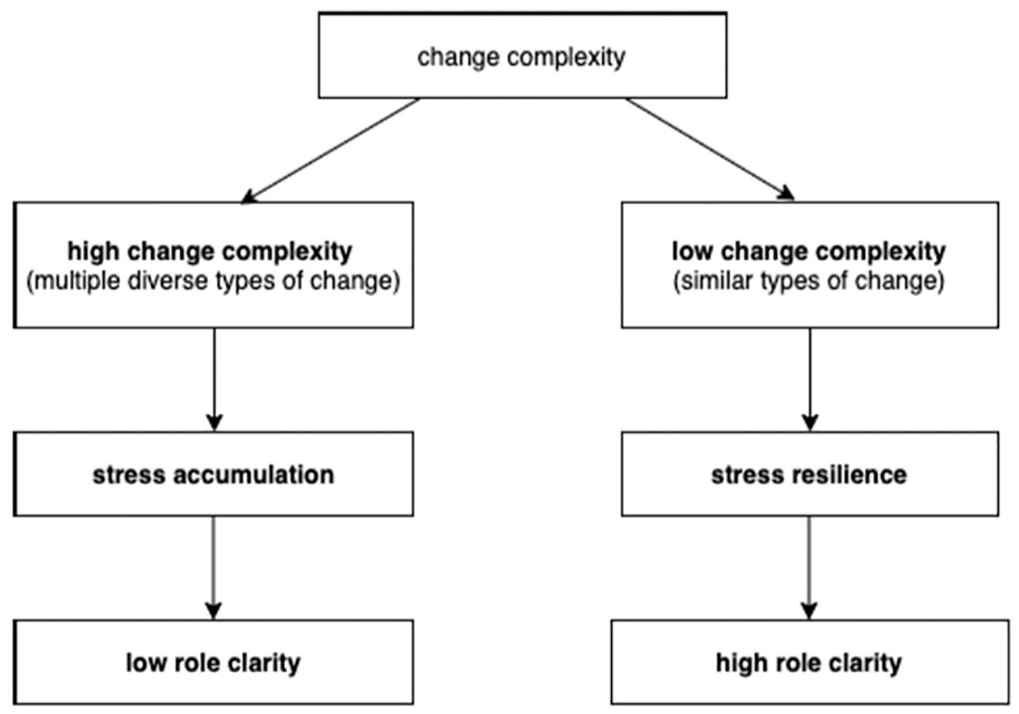
Theoretical framework.
Based on the exploration of the above-mentioned theoretical models and the findings from Dougall et al. (2000), we thus expect the stress accumulation model will be applicable to individuals who have been confronted with a situation of high change complexity, causing them to experience less role clarity. We can formulate the following hypothesis:
H1: Respondents who have experienced a period of high change complexity will report significantly lower levels of role clarity, compared to those who have experienced a period of low change complexity.
Data and Methodology
To explore the effect of change complexity on role clarity, we make use of data from the Australian Public Service (APS). The APS is the federal civil service of the Commonwealth of Australia, which comprises all departments and agencies where staff members are employed under the Public Service Act of 1999. The Australian context provides an interesting setting to study the effect of high change complexity on employee outcomes. Through the APS Reform Committee, there is a constant emphasis on rethinking the role of government and the need for change. In its 2013 to 2014 State of the Service Report, the Australian Public Service Commission noted that organizational change has become a pervasive characteristic of APS organizations (APSC, 2015). For instance, in 2013, the amendments to the Administrative Arrangements Order resulted in widespread structural and functional change for dozens of organizations, affecting more than 13,000 employees in the process (APSC, 2015).
We rely on data from the APS 2014 employee census (which includes responses from 99,392 employees from 89 public agencies). The survey captures attitude and opinion data on important issues such as wellbeing, innovation, leadership, learning and development, and the engagement of the APS workforce (APSC, 2015). The 2014 wave of the census offers a unique glimpse into the diversity of workplace changes experienced by civil servants combined with detailed information about the individual (more recent survey waves include much less individual-level information). While surveys are often directed at top- and middle management level and biased toward particular types of organizational changes (Demircioglu & Audretsch, 2019), the APS census was sent to employees at all job levels and captures a wide variety of change ranging from machinery of government changes to a change in work priorities.
The sample was compared to the overall APS population on gender, classification, location, and employment category, and no significant difference could be detected. The sample was further reduced to 76,275 observations due to item non-response. Although such a large sample size can have its advantages, it can also lead to erroneous results. A large sample size is likely to make the standard errors extremely small, in turn making even minuscule distances between the estimate and the null hypothesis statistically significant (Lin et al., 2011). To avoid mislabeling results as statistically significant, we relied on a randomly selected sample of 10% from the available observations. To ensure that this did not introduce any bias, a chi-square goodness of fit test was conducted to compare sub-samples values (7,627) with values from the initial sample (e.g., gender, age, and classification level; 99,392 employees). The subsample is similar to the initial sample. 1
Measuring Role Clarity
Role clarity is measured using the question: I am clear what my duties and responsibilities are. Respondents were offered the following answer categories; Never, Rarely, Sometimes, Often or Always. This item aligns very closely with the 6-item scale from Rizzo et al. (1970), a commonly used operationalization of role clarity in literature (e.g., items includes “I know exactly what is expected of me” and “I know what my responsibilities are”). Descriptive analysis shows most civil servants report to often (47.88%) or always (34.43%) have role clarity. However, 13.32% of respondents indicate to only have role clarity sometimes. About 3.44% Of respondents report experiencing role clarity rarely, while 0.93% indicate they never have role clarity.
Measuring Change Complexity
For our subsequent analyses of change complexity—which we described as the number of diverse types of change experienced in short period of time—we build on the following question: Which of the following changes impacted your work group in the last 12 months. Respondents were not limited to one specific change but could indicate several or even all of them. They were offered the 11 possible answer categories: change in physical workplace, machinery of government change, relocation to a new city, structural change, functional change, change in work priorities, decrease in staffing numbers, increase in staffing numbers, change in SES leadership, change in supervisor, and others. Figure 2 offers an overview of the number of different changes employees experienced.
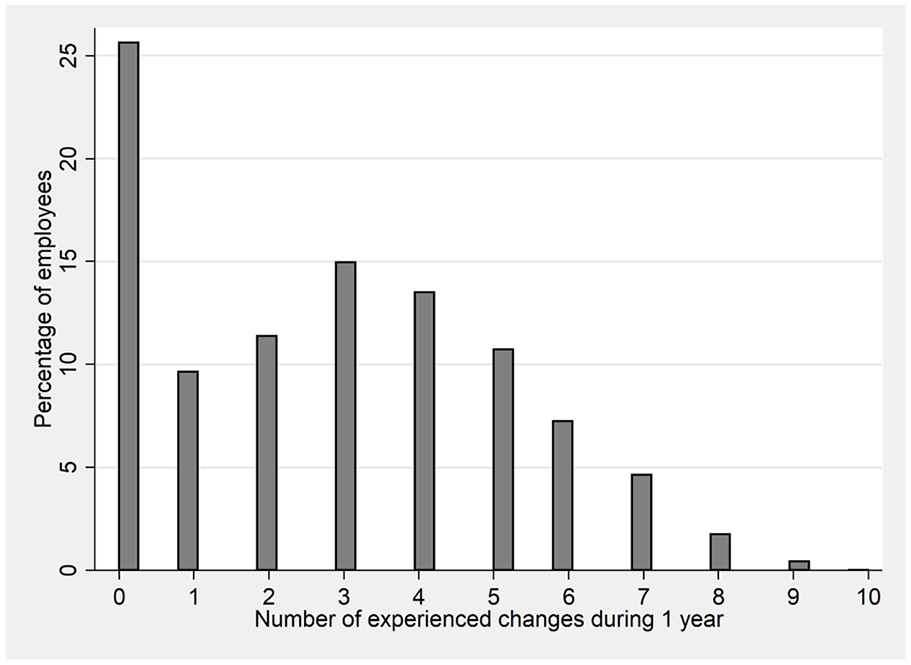
Overview number of different changes experienced.
When studying Figure 2, we notice that roughly 25% of respondents did not experience any change while the remaining 75% experienced at least one type of workplace change in the previous year. Interestingly, roughly 25% of the respondents in our sample experienced more than four different changes during this period. On average they experienced more than one specific change every 3 months. This high diversity of experienced changes points to a period of high change complexity. We should note that a wide definition of organizational change is applied here, which encompasses large-scale and fundamental transformations, such as downsizing and restructurings, as well as smaller changes, such as moving offices or a change in manager (see Kiefer et al., 2015). The main benefit of this conceptualization is its deliberate focus on the employee (work-unit) level to measure how employees experienced change within the organization.
Admittedly, not all change is equal, some types of change will have a stronger impact on individuals and consequently lead to stronger negative side-effects on role clarity. This is an issue we cannot account for as it purely depends on an individual’s evaluation of change, making it impossible to make general claims (Biggs et al., 2017; Lazarus & Folkman, 1984; Wynen et al., 2019). The same organizational change may be minor for one work unit or individual within a work unit, and major for another unit or individual. For instance, it is impossible to state whether a change in work priorities leads to stronger negative feelings compared to a change in supervisor or even a machinery of government change. For what follows, we therefore consider all change events as equal and purely focus on the perception of the number of diverse changes experienced as a proxy for change complexity.
As mentioned earlier, theory suggests that role clarity is strongly related with the number of diverse changes experienced. To test this hypothesis, we conduct a Kruskal Wallis test, which is the non-parametric version of ANOVA and a generalized form of the Mann-Whitney test method since it permits two or more groups. This approach allows to test for differences in the means of the number of different changes experienced (change complexity) broken down by the levels of role clarity. Our results show that the mean of the amount of different changes experienced differs significantly among the levels of role clarity (χ2(4) = 153.422*** and 157.641*** with ties): respondents who indicated never having role clarity experienced on average 3.845 different changes; those who rarely have role clarity reported on average 3.771 different changes; respondents indicating they sometimes have role clarity reported on average 3.338 different changes; those indicating they often have role clarity reported experiencing on average 2.798 different changes; and those stating they always have role clarity experienced on average 2.450 different changes. This seems to be in line with our hypothesis: the more different types of changes are experienced; the lower role clarity.
However, this finding can be misguiding as organizational change is often introduced to alleviate existing organizational problems (Brunsson, 2009), while these problems are likely to simultaneously undermine role clarity (Abrahamson, 2004). Is the observed, reduced role clarity a reaction to pre-existing problems or a reaction to the changes that are aimed to solve these problems? The application of a propensity score matching estimator is employed to reveal if and to what extent these differences can be attributed to high change complexity (e.g., Heckman et al., 1997). How role clarity would have been affected in case individuals did not experience complex change is a counterfactual situation that is not observable and, hence must be estimated. Using propensity score matching, this potential outcome of individuals who experienced complex change is constructed from a control group of individuals who did not experience complex change. The matching essentially relies on the idea to balance the sample of individuals who experienced complex change and those who did not experience such change. Remaining differences in the outcome variable (role clarity) between both groups are then attributed to the treatment (complex change; Heckman et al., 1997).
To apply this technique, we construct two different groups (one control and one treatment group). For what follows the control group exists out of those individuals who experienced no changes or those that experienced changes but less than the average (the mean of the number of diverse changes experienced equals 3.7). The treatment group (i.e., the group that experienced high change complexity) consists out of those individuals that experienced more than three different changes over the course of 1 year.
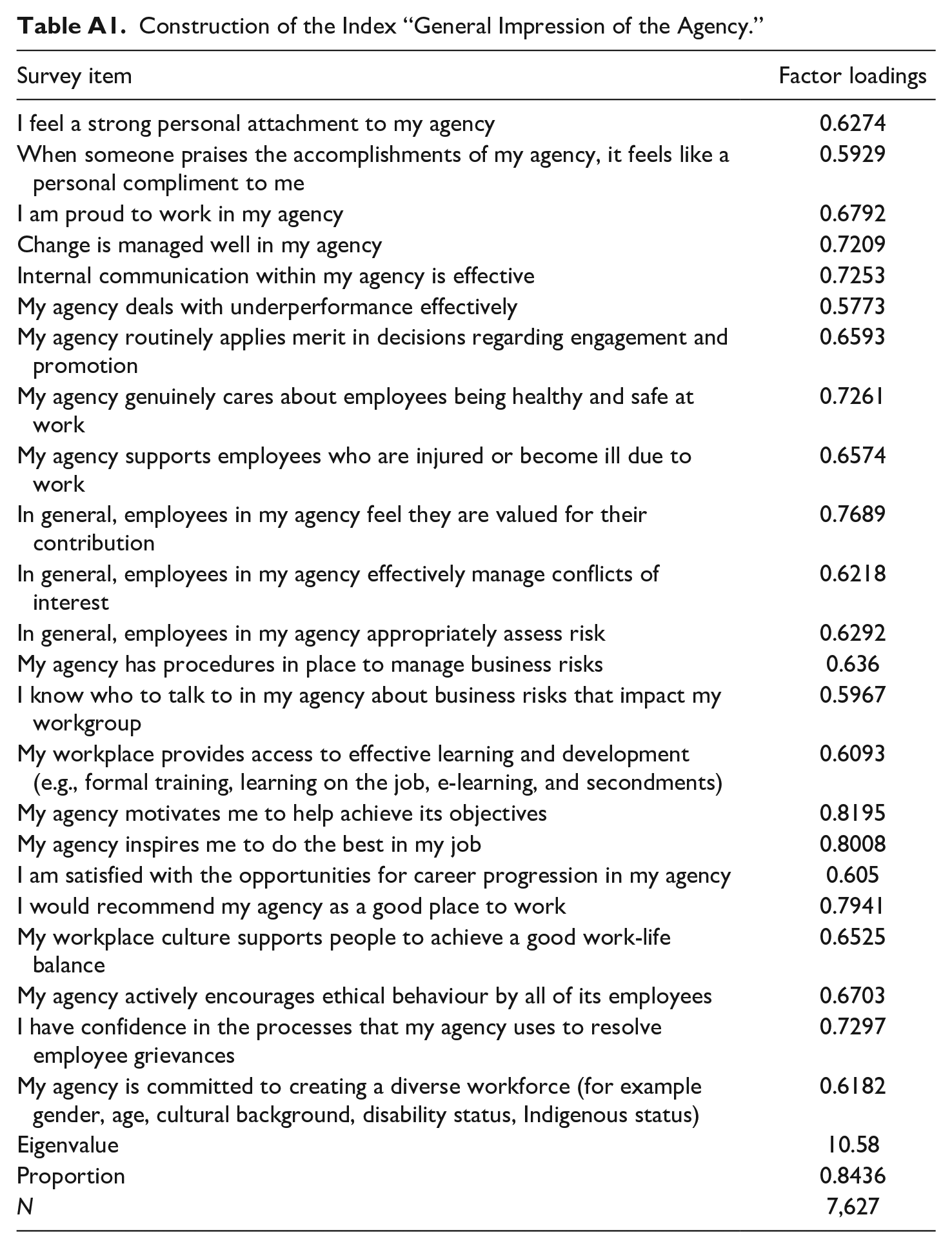
We start the matching procedure by conducting a logit estimator to obtain the predicted probability of experiencing high change complexity (dependent is the dummy, having experienced high change complexity or not). To do so, we included multiple variables that can affect the likelihood of experiencing workplace changes. First, we included each employee’s perception of the agency’s working environment. The APS survey includes a section “General impressions: Agency,” in which respondents were asked to rate their level of agreement with statements a wide range of underlying concepts ranging from change management to the culture of the work unit. The variable used in the analysis is a factor score based on a total of 23 questions (which are reversed coded) regarding the agency’s working environment. The full list of variables, factor loadings, and eigenvalues is available in the Appendix (Table A1). The higher the score, the less satisfied the employee is with the agency’s working environment. A drawback of this cumulative approach is the relative lack of substantive coherence. However, we want to point out here that the index does have coherence: not in the sense that it captures items related to similar processes (e.g., performance management, change management) or actors (e.g., leadership, colleagues), but in the sense that it captures an underlying overall sentiment toward the organization (Lee & Van Ryzin, 2019). It is the sentiment that connects the items (as shown by the satisfactory factor loading) and which is expected to reflect a widespread negative perception toward the organization across organizational processes.
Given that employee dissatisfaction with the current state of affairs is recognized as an important instigator of change (Brunsson, 2009; De Vries & Balazs, 1999), we expect that more widespread dissatisfaction across organizational processes will be related to more diverse changes. In addition, we include the agency’s functional cluster to account for the primary functions of the organization. This includes specialist organizations providing specialist support to government, regulatory organizations involved in regulation and inspection, policy organizations involved in the development of public policy, smaller operational organizations with less than 1,000 employees involved in the implementation of public policy, and finally, larger operational organizations with 1,000 employees or more involved in the implementation of public policy. Finally, and as we rely on an individual’s perception of change, we control for individual characteristics such as gender, education (Year 12, Vocational, Tertiary), and the classification level of each respondent (Trainee/Grad/APS1–6; EL/SES). The descriptive statistics are presented in Table 1. As one can see, these variables differ significantly across both the control and treatment group. When focusing on our variable of interest, role clarity, we notice that large differences exist between both our groups. For instance, individuals within our control group (low change complexity) are 8% more likely to always have role clarity compared to those in our treatment group (high change complexity).
Descriptive Statistics.
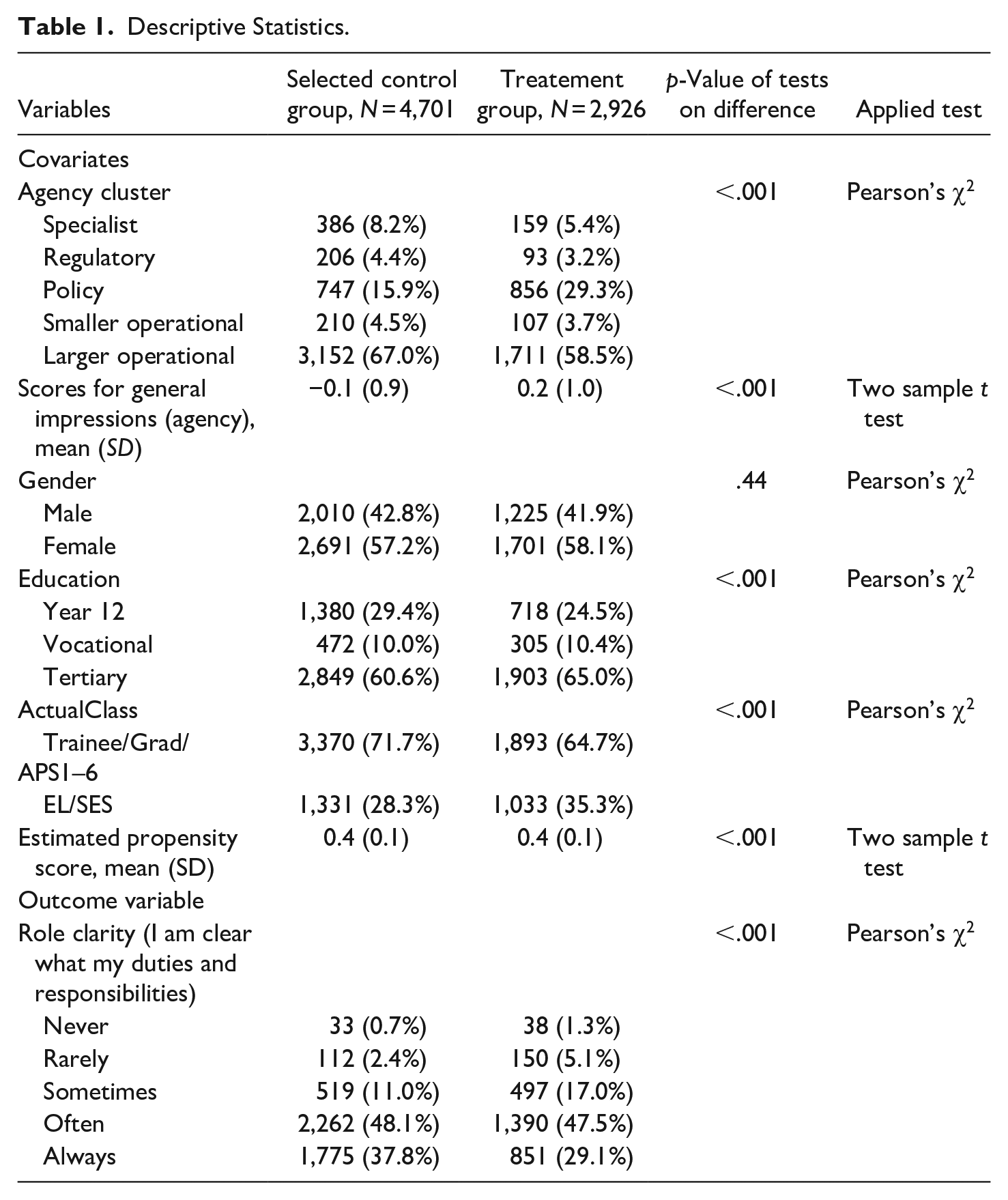
The results (odds ratios) of our analysis on the likelihood of being in a control or treatment group (experiencing high change complexity) are presented in Table 2. Cluster, education, and classification level appear to significantly affect the likelihood of experiencing high change complexity. However, and in line with the literature (Brunsson, 2009), perceptions regarding the agency’s working environment appear to play a pivotal role. This index appears to be a strong indicator of experiencing high change complexity. Using these results, we calculate propensity scores (see the significant difference in average scores in Table 1). Based on the estimated propensity scores, the nearest neighbor is selected out of the group of individuals who did not experience high change complexity (control group) for those who did experience high change complexity (treatment group). Individuals from the control group are matched to those in the treatment group; see Czarnitzki and Lopes-Bento (2012) for more detail regarding the matching protocol (“hybrid matching”).
Logit Estimation on Having Experienced Complex Change or Not.
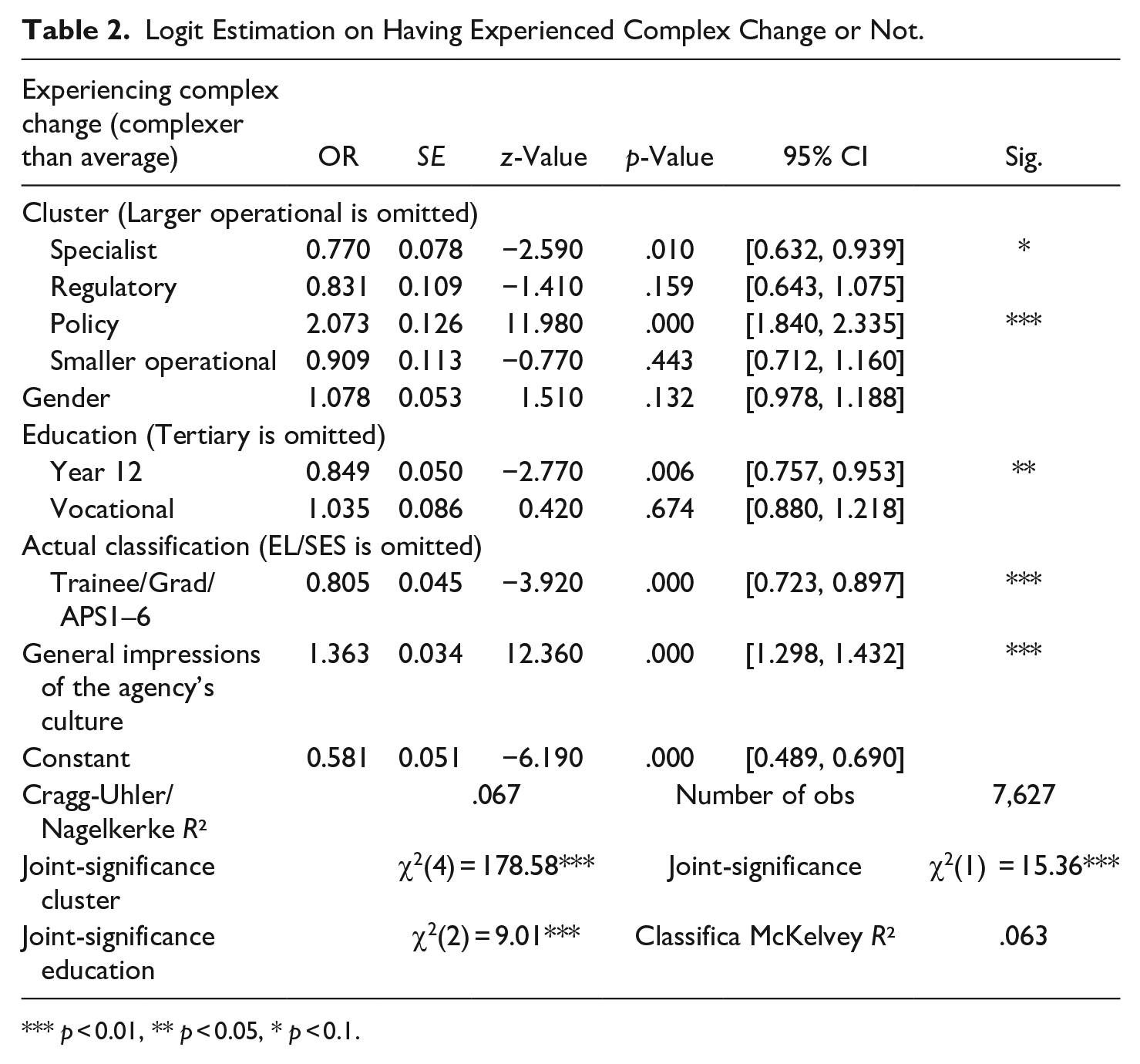
p < 0.01, ** p < 0.05, * p < 0.1.
The Kernel density estimations of the matching arguments, the propensity scores, and perceptions regarding the working environment, before and after the matching, are presented in Figure 3. When focusing on both variables before the matching procedure, we notice their distributions are not similar across both the treatment and control group and appear to differentiate strongly. After the matching procedure, we notice that the distributions of the propensity score and the impressions regarding the organizational environment are more closely aligned across employees having experienced high change complexity (treated) and those who did not experience this (control). Both groups of employees are now well balanced with respect to the matching arguments after performing the estimation (see Table 3). When looking at our main variables of interest, role clarity, we notice that their values remain significantly different across both groups; differences that can be assigned to the treatment (experiencing high change complexity over the period of 1 year). However, it is also clear that the impact is now less pronounced. For instance, for those having indicated to always have role clarity, the difference between both groups dropped from 8% to 5%. Although still a significant and important difference, it shows that part of our initial effect can be attributed to pre-existing problems. The issue hence seems to be more nuanced: pre-existing problems cause a lower role clarity, however, when organizations start to (over) react, it makes the problem worse.
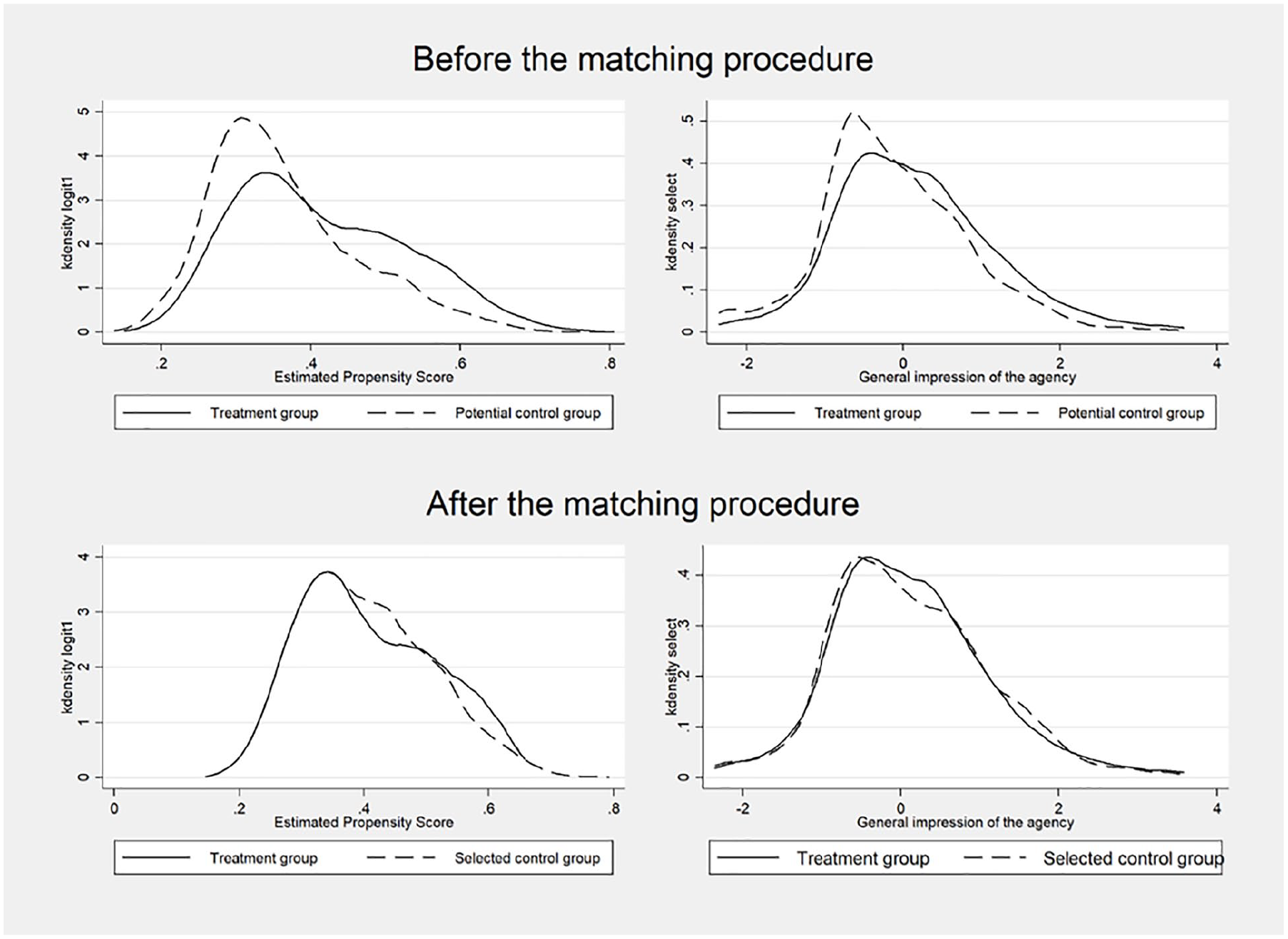
Kernel density estimates of the propensity score and the general impressions of the agency.
Matching Results.
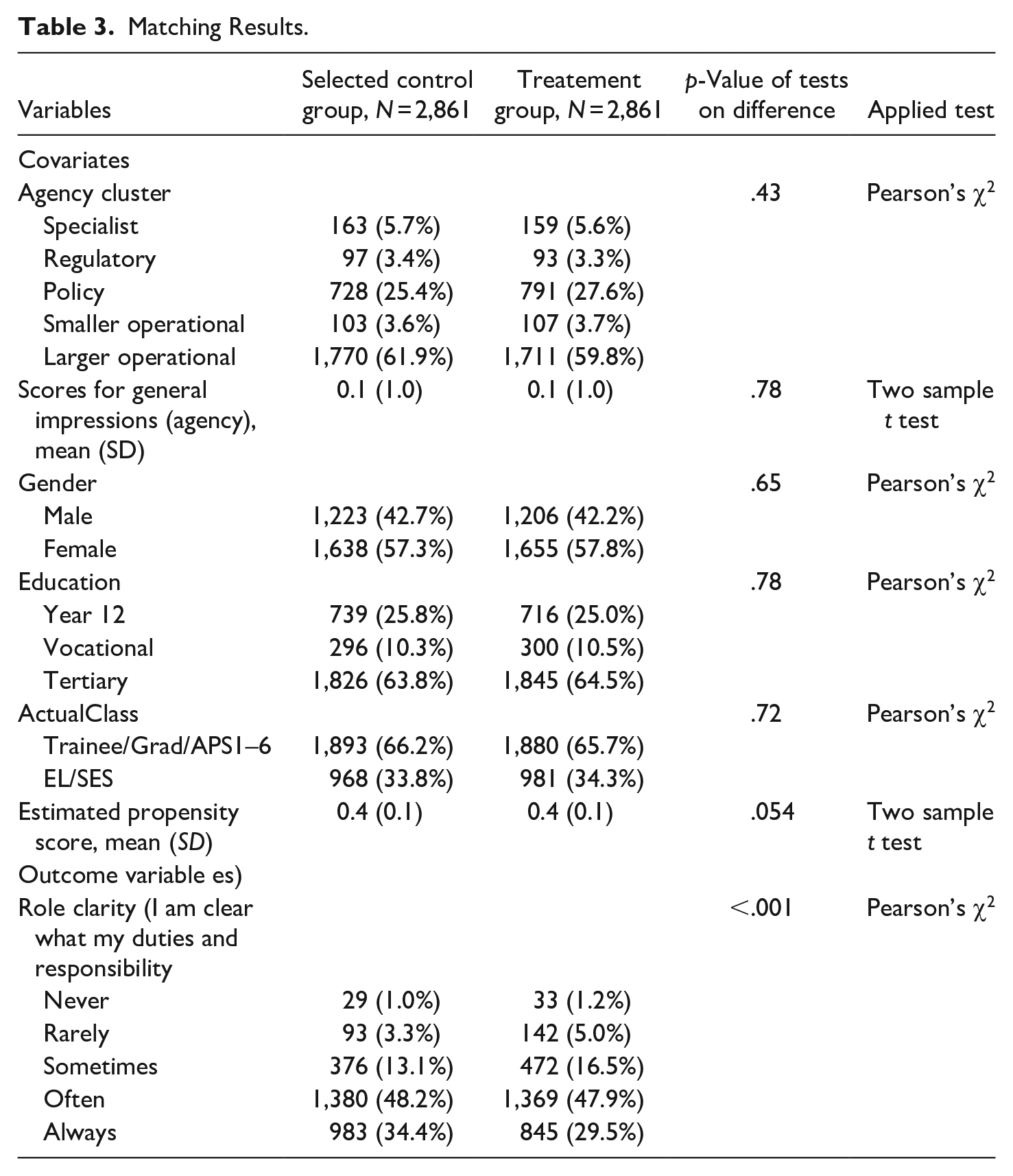
However, it is still unclear how this treatment effect evolves when change complexity increases (i.e., how or whether this effect changes as the amount of diverse types of changes experienced increases). As presented in Figure 2, it is not unlikely that respondents experience more than four changes. This makes it interesting to test whether the estimated treatment effect increases with the number of changes experienced or whether we witness a decrease in effect, indicating that when change complexity is already high, an extra change event does not matter. To test this, we regress the estimated treatment effect, α, on the number of different changes an individual experienced. As presented in Table 4, we notice that an increase in change will not reduce the negative effects on role clarity. The opposite is true, even when change complexity is already high, extra change events will further undermine role clarity.
Regression on the Treatment Effect on the Number of Different Changes Experienced.
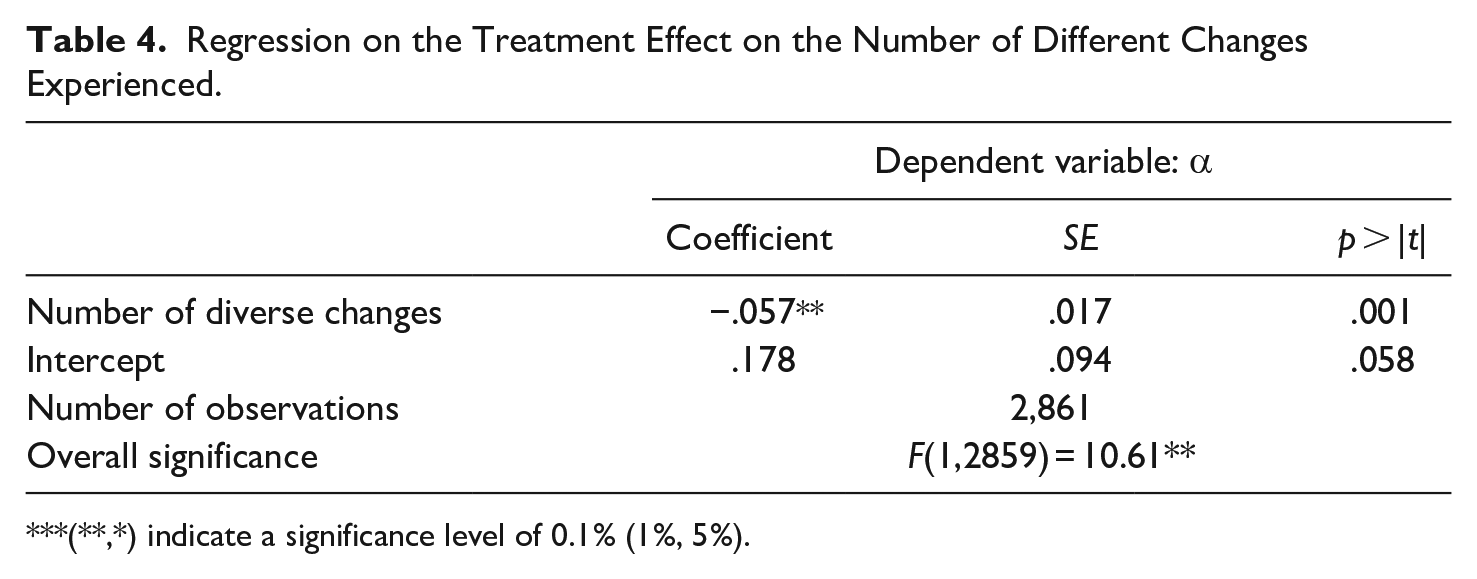
(**,*) indicate a significance level of 0.1% (1%, 5%).
Discussion and Conclusion
Our results suggest that complex change is positively associated with perceived role ambiguity, ambiguity regarding an employee’s duties and responsibilities. It seems that introducing simultaneous change initiatives that affect an employees’ work environment, for instance regarding supervision, tasks, working procedures, working location, team structures, performance evaluation criteria (e.g., when leadership changes), and strategic priorities, can substantially affect employee role perceptions. Several explanations could exist for such phenomena. First, managers developing and introducing change usually suffer from at least some degree of bounded rationality, implying they are frequently incapable of fully predicting up front how a change process should and will be implemented at frontline civil servant levels (Saksvik et al., 2007; Seo & Hill, 2005). Simultaneously, the definition and roll-out of a change process itself is frequently an emerging process subject to iterative phases of redefinition (see, e.g., garbage can models of change, which see organizational decision-making as a process of continually reoccurring rearrangements (Cohen et al., 1972)). This means that change processes—even during their implementation stages—are frequently unclear regarding their implications for the duties and roles that civil servants are expected to perform (Seo & Hill, 2005). The resultant lack of understanding employees may experience over these changing factors may lead to perceived role ambiguity, a state in which employees experience a lack of understanding regarding (the future direction of) their duties and responsibilities (Allen et al., 2007; Saksvik et al., 2007).
The primary added value of the article, however, lies in its finding that more complex change trajectories result in higher levels of role ambiguity than less complex change trajectories. Measuring change complexity as the diversity of change that a respondent has experienced over the past year (Wynen et al., 2020), our results suggest that increasing the number of simultaneously occurring types of change further increases perceptions of role ambiguity. This result has intuitive appeal and coincides with Abrahamson’s (2004) notion of initiative overload, with the presence of multiple change types having a compounded and negative effect on the degree to which a respondent is still capable of clearly understanding his/her duties and responsibilities within the organization. This is shown not only by our findings on the effect of experiencing a higher-than-average level of change complexity (at least four change types) on role ambiguity, but also by subsequent regression results, which suggest that increasing change complexity to sometimes up to seven or eight simultaneously occurring change types will further increase experienced levels of role ambiguity. Accordingly, our findings support the argument that the effects of multiple, simultaneously introduced change types may accumulate (Moore et al., 2004; Wynen et al., 2020).
These results hold implications regarding both civil servant well-being and their functioning within public sector organizations. It has already been observed that ambiguity regarding the duties and responsibilities that should be performed can be a profoundly stressful experience for individuals (Allen et al., 2007; Hansen & Høst, 2012; Seo & Hill, 2005). Consequently, organizational-psychological research on the effects of reduced role clarity suggests that ambiguous work environments contribute to factors such as reduced job satisfaction and reduced performance (Abramis, 1994; Hansen & Høst, 2012; Tarrant & Sabo, 2010; Tubre & Collins, 2000). By introducing uncertainty regarding roles, complex change trajectories may therefore hamper civil servant well-being. This implies that addressing the consequences of complex change is a relevant area of attention for HRM, as it indicates organizational change should be paced carefully to safeguard employee wellbeing and allow for sufficient recuperation time in between changes (Wynen et al., 2020). Moreover, with extant research observing that role clarity is an important coping resource during organizational change processes, the finding that those very same processes could reduce role clarity implies a need for change management to reduce ambiguities where possible (Saksvik et al., 2007).
Our results also hold implications for discussions in public administration on policy alienation, a state of disassociation between a policy and the civil servant that implements it. Tummers et al. (2009) have already described how role conflict—a form of strain related to but analytically separate from role clarity and role ambiguity—may result in policy alienation, as civil servants are increasingly confronted by opposing logics in their work environment. We speculate that, in addition to role conflict generated by opposing logics (a topic which was not studied here), a lack of clarity on the role that a civil servant should perform in his/her work and policy environment may similarly lead to policy alienation. As civil servants become unclear on the type of responsibilities they are expected to execute and the methods by which these tasks should be performed, they may not internalize the importance of certain roles. In turn, they may begin to feel increasingly disassociated from policy implementation processes and corresponding goals. Civil servants may wonder what societal and organizational meanings to assign to new policies and may lack the necessary clarity to exert influence over policies, generating the feeling that executing newly introduced but (from the perspective of civil servants) ill-defined roles is meaningless (Tummers, 2012). The resultant disassociation of civil servants from changing policies may in turn hamper the quality of services being provided at the organizational-level (Van Engen et al., 2016), implying that change—despite often being aimed at improving the organization’s functioning—may paradoxically hinder performance in some cases (Allen et al., 2007; Wynen et al., 2017). Follow-up research should therefore investigate whether reduced role clarity generated by complex change may also affect components of the policy alienation framework, such as feelings of meaninglessness and powerlessness among affected civil servants.
This article makes a noteworthy methodological contribution by adopting a method of countering simultaneity not frequently used in public administration. Cross-sectional survey research is frequently confronted with simultaneity issues, situations in which the independent and the dependent influence one another, leading to overestimations of effect sizes when left uncorrected. In our case, such an effect could arise if change complexity is the result of organizational efforts to counter pre-existing role ambiguity within the organization, for instance in the context of prior underperformance of the organization. By using propensity score matching, it is possible to compare respondents that are similar on all variables but change complexity. By balancing covariates through this matching procedure, the impact that simultaneity has on our results could be mitigated (Thoemmes & Kim, 2011). As expected in the presence of simultaneity, our effect sizes drop somewhat after implementing such corrections. Nevertheless, results remained significant and effect sizes remained relatively sizeable (experiencing more than four changes on average yields a reduction of 5 percent in perceived role clarity). Finally, the applicability of our findings should not remain limited to the APS or Australia but can be extended to other settings as well. We have reason to assume that the underlying psychological mechanisms (uncertainty, stress accumulation) that lie at the basis of our findings are universal, and findings will therefore be similar across different organizations and countries that also experience the same condition of ongoing change. Moreover, extant literature on the psychological mechanisms of stress also finds similar outcomes across different countries and cultures (e.g., Burke, 2010).
At the same time, it is necessary to point out remaining limitations. First, although we would argue that our item on role clarity closely aligns with the most used definition of role clarity (cfm. Rizzo et al., 1970), utilizing a multi-item, validated measure may be preferable in future studies. Concerning our measurement of change complexity, we should note that the 11 change categories defined by the APS may not be strictly mutually exclusive. What might be viewed as one major change will in reality often consist of several smaller changes, and might also be experienced by employees as such. This could have caused employees to count one change multiple times, if it consisted of several “subchanges” in their experience (for instance a merger could be counted as several different changes: structural change, functional change, change in physical workplace, etc.). However, this should not impact the validity of our measurement of change complexity: if employees perceived—and counted—one major change as several (smaller) changes, then this can be considered a direct reflection of their perception of change complexity which represents the main interest of this study. This approach also aligns with recent findings from Hollister and Watkins (2018), who note that there often exists “impact blindness” in organizations that are dealing with a multitude of change initiatives. They explain this can lead to “initiative overload,” with management being unaware of all the initiatives that are under way and what their true impact is on the organization and its employees. This supports our focus on employee perceptions of change complexity, rather than objective counts of change events (as defined by management), as management’s perception of change complexity might not as be as far-reaching and adequate as the perception of employees. Finally, when performing our analyses, we have accounted for the possibility that pre-existing problems can also lead to reduced role clarity. However, since we use cross-sectional data, we were not able to filter out endogeneity issues as would be possible with a panel structure.
We can distill several points for practitioners and areas for further study from our research. Regarding practitioners, our results illustrate the value of maintaining clarity and preventing high change complexity within public organizations. Although introducing changes in areas such as leadership, working procedures, tasks, and IT-systems are likely inevitable, steps can be taken to ensure that civil servants remain capable of completing adjustment phases to new duties and responsibilities before introducing additional changes in other areas. Moreover, by designing change management in a way that clearly conveys where the organization is heading, it may be possible to mitigate role ambiguity among civil servants to at least some degree. At the same time, more research is necessary to distill how organizational change is related to role strain, including role clarity/role ambiguity. Although psychological research has for instance clearly demonstrated the potential negative effects of role ambiguity, it remains unclear how organizational change precisely produces such ambiguities. With most role strain research being quantitative in nature, a relevant new step may be to add qualitative research on the exact causal path through which change generates ambiguity.
Footnotes
Appendix
Construction of the Index “General Impression of the Agency.”
| Survey item | Factor loadings |
|---|---|
| I feel a strong personal attachment to my agency | 0.6274 |
| When someone praises the accomplishments of my agency, it feels like a personal compliment to me | 0.5929 |
| I am proud to work in my agency | 0.6792 |
| Change is managed well in my agency | 0.7209 |
| Internal communication within my agency is effective | 0.7253 |
| My agency deals with underperformance effectively | 0.5773 |
| My agency routinely applies merit in decisions regarding engagement and promotion | 0.6593 |
| My agency genuinely cares about employees being healthy and safe at work | 0.7261 |
| My agency supports employees who are injured or become ill due to work | 0.6574 |
| In general, employees in my agency feel they are valued for their contribution | 0.7689 |
| In general, employees in my agency effectively manage conflicts of interest | 0.6218 |
| In general, employees in my agency appropriately assess risk | 0.6292 |
| My agency has procedures in place to manage business risks | 0.636 |
| I know who to talk to in my agency about business risks that impact my workgroup | 0.5967 |
| My workplace provides access to effective learning and development (e.g., formal training, learning on the job, e-learning, and secondments) | 0.6093 |
| My agency motivates me to help achieve its objectives | 0.8195 |
| My agency inspires me to do the best in my job | 0.8008 |
| I am satisfied with the opportunities for career progression in my agency | 0.605 |
| I would recommend my agency as a good place to work | 0.7941 |
| My workplace culture supports people to achieve a good work-life balance | 0.6525 |
| My agency actively encourages ethical behaviour by all of its employees | 0.6703 |
| I have confidence in the processes that my agency uses to resolve employee grievances | 0.7297 |
| My agency is committed to creating a diverse workforce (for example gender, age, cultural background, disability status, Indigenous status) | 0.6182 |
| Eigenvalue | 10.58 |
| Proportion | 0.8436 |
| N | 7,627 |
Declaration of Conflicting Interests
The author(s) declared no potential conflicts of interest with respect to the research, authorship, and/or publication of this article.
Funding
The author(s) disclosed receipt of the following financial support for the research, authorship, and/or publication of this article: This work was supported by the Research Foundation Flanders (FWO) [Project ID G085819N: “Slow-healing wounds? How continuous structural reforms in the public sector reduce levels of job satisfaction and slow the recovery of job satisfaction in the long term.”], and Bijzonder Onderzoeksfonds (BOF) [Project ID 41466: “Do structural reforms undermine the adaptability of organizations? A study of the impact of continuous reform on decision-making within organizations.”]. This paper has also benefited from interaction with the GOVTRUST consortium.

Supplemental Material
Supplemental material for this article is available online.
Notes
Author Biographies
References
Supplementary Material
Please find the following supplemental material available below.
For Open Access articles published under a Creative Commons License, all supplemental material carries the same license as the article it is associated with.
For non-Open Access articles published, all supplemental material carries a non-exclusive license, and permission requests for re-use of supplemental material or any part of supplemental material shall be sent directly to the copyright owner as specified in the copyright notice associated with the article.
