




Abstract
Public personnel management should strive to balance the needs of employees, employers, and society, but there is insufficient empirical research to conclude whether such goals conflict or coincide. Using longitudinal data from multiple independent sources, this study analyzes the relationship between employee voice opportunity in personnel management (employee rights), organizational performance (employer interest), and competing demands from citizens (societal objectives). The results showed that public agencies encouraging employees to voice their rights outperformed their counterparts when faced with high or very high levels of competing demands from citizens after controlling for various factors. However, this appreciation for employee voice does not always yield positive-sum organizational outcomes when the competing demands on work are lower. These findings suggest that treating employees fairly and empowering them may lead to better long-term organizational performance in the face of high levels of competing demands from stakeholders, but the benefits of this approach may not always outweigh the costs, potentially due to the substantial expenses or risks associated with the promised payoffs.
Introduction
Voice opportunities enable employees (collectively and/or individually) to influence (formally and/or informally) organizational practices and work-related issues (Morrison, 2023; Wilkinson et al., 2020, p. 5). Respecting employee voice opportunities such as a process for grievances and treating employees fairly are key principles in the public sector (Hassan, 2013; Waldo, 1952), with growing recognition of their importance for employee well-being (Brooks & Wilkinson, 2021), quality decision-making (Argyris & Schon, 1978; Burris, 2012; Morrison & Milliken, 2000; Wilkinson & Fay, 2011), and fostering diversity (Z. Jiang et al., 2022). However, little public sector research has considered how voice opportunities or employee well-being can help organizations achieve their performance goals (Hameed et al., 2022).
Public employees make crucial contributions to performance and change implementation (Petersen et al., 2019, p. 103), while responding to the varying needs of citizens (Maynard-Moody & Musheno, 2022) and divergent demands from constitutional superiors (Rohr, 2002). Hybrid systems in today’s public management, partly the legacy (or leftovers) of New Public Management (NPM) reforms in the 1990s, have placed various expectations on government workers, including the development of “softer” relational skills (Dickinson, 2016). NPM reforms further facilitated the integration of high-performance work systems, borrowed from the private sector, to harness employee voice, such as labor-management participation, quality of work life programs, quality circles, and grievance procedures, while public employees persist in managing the challenges of coordinating competing demands (Reiter & Klenk, 2019).
Despite its recognized importance (Almeida et al., 2020), the impact of voice opportunities on employee well-being and organizational performance remains largely unexplored, with inconclusive empirical findings (Plimmer et al., 2019; Scheid, 2008; Smith & Tracey, 2016)—while scholars have emphasized its significance, empirical evidence is insufficient. To address this research gap, this study analyzes multi-year administrative data from public sector agencies to examine the relationship between employee voice opportunities and organizational performance, while considering the influence of competing demands on this relationship.
Literature Review
Employee Voice as Personnel Management Practices
Studies on employee voice spans multiple disciplines, including industrial relations, applied psychology, legal studies, political science, HRM, and organizational behavior research (Wilkinson et al., 2020), creating an elastic definition. The concept of “voice” originates from Hirschman’s (1970) exit-voice-loyalty model, which posits that individuals or groups dissatisfied with a current situation either speak out (voice) in an effort to improve it or choose to withdraw entirely (exit). Employees who feel they can meaningfully exercise their voice are less likely to leave the organization, indicating that turnover may be one of the key mechanisms through which access to employee voice opportunities can improve organizational efficiency (Withey & Cooper, 1989). Since the 1980s, a set of analyzes has studied this behavior by examining employees’ responses to job dissatisfaction (Kaufman, 2014, p. 13; Morrison, 2014, p. 176), building an extensive literature on employee voice (Wilkinson et al., 2020, p. 472).
While traditional industrial relations research has focused on the Hirschman’s notion of voice, organizational behavior research has shifted away from this perspective after mid-1990s (LePine & Van Dyne, 2001)—this new perspective emphasizes the individual, informal, and relational aspects of employee voice that support organizational improvement (Barry & Wilkinson, 2022). This behavioral approach acknowledges that voice may be met with “silence,” not just opposition through exit as in Hirschman’s tradition, highlighting that employees may not always feel comfortable or able to speak out about their concerns, even if they have access to grievance procedures or participation in HR decision-making (Morrison & Milliken, 2000). The notion of “silence” challenges the conventional idea that employees only have two options when dissatisfied: leaving the organization (exit) or voicing their concerns to seek improvement (voice). Silence implies that employees may opt to stay with the organization but remain silent about their concerns (Morrison, 2014), which highlights the importance for organizations to create an environment that encourages employee voice.
Freeman and Medoff (1984) emphasized the significance of voice opportunities institutionalized by trade unions for both employers and employees. However, as union membership declines, alternative voice mechanisms such as communication behavior have gained prominence (Gollan et al., 2010, p. 305), sparking debates about their legitimacy compared to unionized activities (Ruck et al., 2017, p. 906). Scholars from various disciplines have explored these debates (Wilkinson et al., 2020, p. 472), with organizational behaviorists considering voice as a micro-level discretionary behavior (Morrison, 2023; Van Dyne & LePine, 1998) and employment relations scholars concentrating on formal bodies such as trade unions (Patmore, 2020). The late 1990s saw HRM literature integrating these perspectives, broadening the concept of voice to include multiple channels of employee representation (Dundon et al., 2004, p. 1151). Employers have since incorporated alternative forms of voice in high-performance work systems (Batt et al., 2002, p. 574), extending the concept to organizational decision-making (Barry & Wilkinson, 2016).
From this multi-channel perspective, McCabe and Lewin (1992, p. 120) identified two dimensions of employee voice: formal grievance procedures (guidelines for written filings, appeal steps, coverage, and eligibility) and participation practices in decision-making (employee involvement in autonomous work teams, quality-of-working-life, quality circles, joint labor-management committees, and total quality management programs). Dundon et al. (2004, p. 1152) expanded these to four dimensions (see Appendix A), including articulation of individual dissatisfaction (such as grievance procedure or speak-up program) and the contribution to management decision-making (such as quality circles or team working). In addition, D. E. Guest (2017) proposed five sets of HR practices, including voice and organizational support, from an alternative HRM approach focused on employee well-being (see Appendix A).
Employee Voice as “High-Performance” Work Systems Paradigm
Strategic HRM emphasizes the connection between HR practices and organizational-level performance, aiming to optimize overall effectiveness (Sowa, 2020, p. 331). Within this framework, employee voice opportunity is recognized as a crucial element of high-performance work systems (HPWS), driving positive outcomes at the firm level (Huselid, 1995)— organizations may provide employees with voice platforms to express their views, proactively addressing concerns before they escalate, aligned with Hirschman’s exit-voice-loyalty model (Barry & Wilkinson, 2022).
Moreover, HR practices that foster employee commitment are found to be instrumental in driving organizational performance, while employee psychological well-being is positively associated with enhanced task productivity (Edgar et al., 2015; Hameed et al., 2022; Judge et al., 2001; T. A. Wright & Cropanzano, 2004). Employee voice opportunities have been shown to increase engagement levels in the context of public organizations as well (Conway et al., 2016). Notably, the implementation of high-performance HR practices has been found to transform traditionally adversarial labor-management relationships into collaborative partnerships, promoting trade union renewal (Appendix A).
However, scholars hold contrasting views on the performance impact of “high-performance” HR practices that shift power to employees. Cappelli and Neumark (2001) argued that these practices might escalate labor costs without notable productivity enhancements, while Godard (2004) observed minimal gains or even detrimental effects. Several other studies further underscored the increased costs (Barker, 1993; Godard, 2001; Parker & Slaughter, 1995), which may reflect higher wages, more training expenditures, potential inefficiencies arising from participatory/inclusive (but slow) decision processes, and other resource requirements for maintaining high employee involvement (Godard, 2004, p. 367). Moreover, encouraging employee voice is not without risks, as it involves stimulating new ideas that may not always yield the desired outcomes—in cases where the implementation of these ideas falls short, negative performance consequences may arise.
Ambiguity and uncertainty surrounding the benefits of “high-performance” HR practices have caused skepticism among researchers. Godard (2004) and Levine (2001) demonstrated their limited faith in studies endorsing the positive influence of “high-performance” HR practices—they pointed out methodological shortcomings such as an over-reliance on single respondent data and a tendency to neglect empirical results that challenge the dominant positive effect paradigm to appease journal reviewers.
Lacking consensus on the benefits of “high-performance” HR practices, some scholars have suggested a series of moderators, the so-called “black box” of HRM, that complicate their relationship with organizational performance (Hameed et al., 2022; P. M. Wright & Gardner, 2003). Suh and Battaglio (2022) added to this debate by suggesting that the influence of strategic HRM practices hinges on the degree of alignment between internal and external contingencies (see Appendix A). Although scholars have investigated these contingencies in relation to employee voice opportunities (Harney & Dundon, 2006; Wilkinson & Fay, 2011), the mechanism through which voice yields a desirable outcome is still enigmatic (Townsend et al., 2020, p. 2). To address this, Townsend et al. (2020) conceptualized a “voice pathway,” mapping the progression from initiation to outcome across six distinct grievance voice cases. In this view, the link between the implementation of voice-friendly HR practices and achieving organizational performance may not follow a straightforward path—instead, the voice impact could be rerouted through a maze of contexts, adding layers of complexity to its impacts.
Speaking Up in Demanding Public Sector Workplaces
In today’s resource-scarce environment, public personnel decisions often lack the crucial element of strategic foresight (Chun & Rainey, 2005; Gilman et al., 2015; Sowa, 2020). This situation is exacerbated by the public’s dwindling willingness to financially support government bureaucracy, leading to tighter budgets that may subsequently impact performance (Sowa, 2020). The consequences of these financial constraints include changes in the nature of public employees’ work and potential risks to their overall well-being (Borst et al., 2020; Hesketh & Cooper, 2017; Tummers et al., 2015). To compound matters, the current trend of market-based reforms in public management has relegated opportunities for employee voices to an unnecessary luxury, further diminishing their presence. This trend results in the marginalization of voice platforms such as trade unions, significantly curtailing the expression of employee voices within public organizations.
As Fountain (2001) suggested, increasing interactions with citizens and stakeholders can introduce additional complexity to the situation. Public servants are required to perform emotional labor, responding to demands from troubled citizens while adhering to equity rules and regulations (Brunetto et al., 2014; Dudau & Brunetto, 2020). Stakeholders expect government employees to co-design policies but also to bear the responsibility for its outcome (van der Wal, 2020), putting immense pressure on public servants (Borst & Knies, 2023). The emphasis on customer sovereignty has led to unrealistic expectations and subject public employees to mistreatment (Mastracci, 2022). Such situations may potentially trigger stress, burnout, and emotional fatigue (Berry et al., 2022; Hsieh, 2014; Maslach & Jackson, 1981). To mitigate these issues, Mastracci (2022) advocated for the integration of a care ethics approach within public organizations, particularly for those employees engaged in strenuous “dirty work.”
The adoption of New Public Management (NPM) reforms, including downsizing, outsourcing, and other strict business strategies, has threatened job security and diminished employee well-being (Kiefer et al., 2015; Piatak, 2019; van der Voet & Van de Walle, 2018). Furthermore, these reforms impose radical workplace changes, often with inadequate employee support in place, further escalating the stress and discomfort (Kleizen et al., 2023; Oreg et al., 2011). Simultaneously, these changes have led to the emergence of hybrid formations of old and new (business-lie) practices (Colley et al., 2012)—these hybrid practices, drawing upon multiple institutional logics (Jay, 2013), generate conflicting or competing demands (Smith & Tracey, 2016), potentially depleting the organization’s problem-solving capabilities (Pache & Santos, 2013).
The negative effects of NPM-driven prescriptions have also sparked a renewed interest in the exit-voice-loyalty model among researchers studying “dissatisfied” public servants (Whitford & Lee, 2015). Although dissatisfaction may serve as a catalyst for growth in some cases, they also risk driving away valuable talent. While Zhou and George (2001) argued that such challenging circumstances can inspire employees to devise creative solutions and galvanize employees to think outside the box, the same pressures can lead dissatisfied individuals to seek opportunities elsewhere, robbing the organization of their potential improvements (Morrison, 2023). For those who choose to stay, possibly due to the high costs of job transitions, their allegiance may be born out of necessity rather than alignment with the organization’s vision or values—this absence of genuine commitment can have a dampening effect on productivity (Wilkinson et al., 2020).
This underscores the importance of affording employees the opportunity to voice their concerns. By opening up channels for voice, organizations can turn dissatisfaction from a corrosive force into a catalyst for positive change. This strategy not only paves the way for identifying existing problems, but it may also nurture a culture of open dialogue and mutual respect (Zhou & George, 2001). Moreover, Whitford and Lee (2015) demonstrated that the likelihood of an employee quitting diminishes when management actively encourages employees to have a say in decision-making.
The role of employee voice extends beyond just a channel for dissatisfaction—it is also a form of social support. Studies have suggested that social support can buffer against burnout and compassion fatigue (Feeney & Collins, 2001; Kaul & Lakey, 2003; Kristensen et al., 2005). Furthermore, perceptions of management care have been found to improve employee outcomes (Linos et al., 2021; Prati & Pietrantoni, 2010; Shrout & Bolger, 2002). Social support as a job resource may increase organizational commitment (Borst et al., 2019; Cohen & Wills, 1985; Eldor, 2018), enhance self-efficacy (Benight & Bandura, 2004), and serve as a direct response to problematic situations (Farrell, 1983; Rusbult et al., 1988). In this regard, Almeida et al. (2020) demonstrated that Australia’s public hospitals used voice mechanisms to better meet patient demand, while mitigating negative outcomes that may obstruct productivity gains.
Voice opportunities may also act as a compass, facilitating cognitive resource allocation and signaling priorities (Ashford & Northcraft, 2003; Locke & Latham, 1990). Engaged employees often become champions of dialogue (Fountain, 2001), playing a pivotal role in communicating ideas and needs, a process that translates into productivity gains (Farndale et al., 2011). Smith (2014) emphasized that strategic management teams could effectively harness and integrate diversity of demands by encouraging employees to speak up.
In summation, the benefits associated with voice as “high-performance” HR practices are more likely to outweigh the costs or risks when competing demands are high. In other words, empowering employees voice could be a strategic move amidst these demanding circumstances. Conversely, the costs might overshadow the benefits when competing demands are low. Hence, considering these competing demands as contextual factors, the hypothesis is formulated as follows:
Hypothesis: Under higher levels of competing demands, employee voice opportunities in personnel management is positively associated with a public organization’s performance.
Method
Our study employed administrative and archival data from three independent sources: the Ministry of Economy and Finance (MOEF)in South Korea, the Research Centre for Organizational Diagnosis and Evaluation (CODE), and the “Alio” archive. 1 The MOEF’s Evaluation of Management Performance (EMP) annually records performance data for public agencies as mandated by the Act on the Management of Public Institutions. These agencies are autonomous state-run organizations, distinct from the government’s cabinet departments, and they operate on principles rooted in the market-based mechanisms (Kim, 2002, p. 98). These hybrid entities are usually funded by a mix of MOEF grants and their own revenue, with the ratio between the two varying. 2
In addition to the MOEF data, we also integrated data from CODE’s annual report which features comprehensive organization-level qualitative metrics of public agencies, encompassing areas such as managerial strategies, structure, leadership, and HR practices. Obtained through face-to-face interviews with senior managers from each agency’s HR and financial departments, this data provides insight into the agencies’ HR practices and financial performance. 3 To verify the validity of measurements, CODE collected data from the informants with an average job tenure of 8.6 and 9.5 years for HR and finance departments, respectively—this suggests respondents were likely knowledgeable about the measured variables. The data included public agencies with over 40 full-time-equivalent (FTE) employees, and the average three-year response rate was 66.57%.
Our dependent variable, organizational performance, was measured using two metrics for a robust evaluation: performance grade (from EMP) and total revenue (from Alio). Mandated by Article 47 of the Act, public agencies submit annual performance reports for evaluation by a minister-appointed expert committee (Article 48, Clause 6). Following thorough evaluation, the committee assigns a final grade on a five-point scale (A–E). 4 The MOEF uses these grades for reward or penalty decisions. The highest-scoring agencies are eligible for substantial merit pay increases, while low scorers receive no increase. 5 Total revenue also serves as a valid performance indicator, with several bureaucratic theories linking greater resource to organizational success (Barney, 1991, p. 101; Lee & Whitford, 2013, p. 690). MOEF’s recent EMP lays emphasis on financial resources, doubling the weightage of fiscal sustainability in the overall performance rating.
This study measured employee voice opportunities based on two HRM processes: employee grievance procedures and participation in HR decisions (Huselid, 1995, p. 646; McCabe & Lewin, 1992, p. 120). Using CODE’s informant survey data, we measured employee grievance procedure using the question “what is the proportion of the workforce who can access formal grievance procedures and/or complaint resolution systems?” The scale ranged from 1 (0%–20%) to 5 (81%–100%). The measure of participation in HR decisions came from a survey questionnaire that asked “what is the proportion of the workforce who participates in Quality of Work Life (QWL) programs, Quality Circles (QC), formal information sharing programs, and/or labor-management participation teams?” The scale was the same as the previous metric from 1 (0%–20%) to 5 (81%–100%).
The survey questions used in this study were inspired by Huselid’s (1995) suggestion (p. 645) that such items can measure the importance employers assign to employee well-being and the degree of institutionalization of their HR practices—out analysis supports this measure, illustrating varied levels of workforce access to voice opportunities. 6 Article 18 of Management Guidelines 7 mandates that top managers establish systems for addressing complaints and involving employees in HR decision-making, but it does not provide detailed instructions for implementation: as a result, the level of implementation and practice of these systems may vary among employers. To address this ambiguity, the National Assembly passed the Act on the Promotion of Employee Participation and Cooperation in 2022.
Competing demand was measured using the item “to what extent does your organization deal with multiple and competing demands from constituencies?” The responses were coded on a five-point Likert scale (1 = not at all, 3 = to a certain extent, 5 = to a great extent), modified from Plimmer et al. (2019) and Chun and Rainey (2005). The control variables in this study are staff size (logged), size of financial capital (logged), agency type, 8 formalization, 9 leadership, 10 internal management, 11 and organizational age. These variables were selected based on previous relevant research: Bozeman and Scoot (1996), Bycio et al. (1995), Favero et al. (2014), Howell and Avolio (1993), Lan and Rainey (1992), Ogbonna and Harris, (2000), O’Toole and Meier (2009), and Sine et al. (2006). The exact wording of the items used to measure these variables can be found in Appendix B, and summary statistics are provided in Table 1.
Descriptive Statistics.
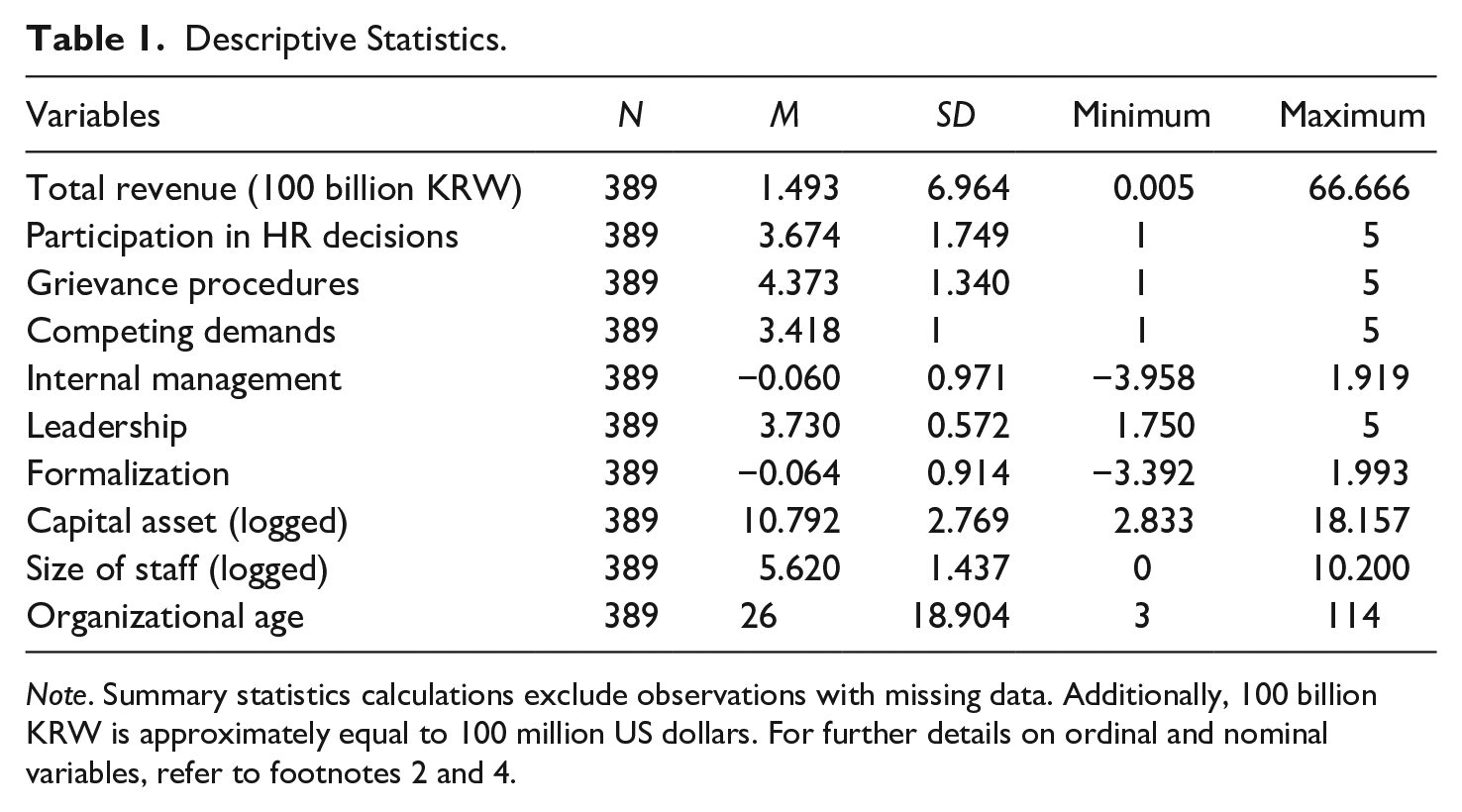
Note. Summary statistics calculations exclude observations with missing data. Additionally, 100 billion KRW is approximately equal to 100 million US dollars. For further details on ordinal and nominal variables, refer to footnotes 2 and 4.
Given the nature of our data and the scales of the measures we used, we employed a random-effect ordered logistic model for the performance grade variable and a random-effect linear (panel) regression model for the total revenue. The performance grade variable has ordered categories, making the use of traditional ordinary least-squares (OLS) regression inappropriate (Long, 1997; McCullagh, 1980; Winship & Mare, 1984). Additionally, employing random-effect models is more suitable for estimating unobserved parameters since the random error term can account for the effects of unobserved factors (Jalayer et al., 2018, pp. 131–132).
Findings
Figure 1 shows a histogram illustrating the distribution of competing demands among public agencies. The figure clearly indicates that public agencies encounter varying degrees of competing demands, with few experiencing low or negligible levels (1 = not at all), while many face high or very high levels (5 = to a great extent). Therefore, our findings may hold particular value for public agencies grappling with higher levels of demand, providing empirical insights for addressing the challenges associated with such demanding circumstances.
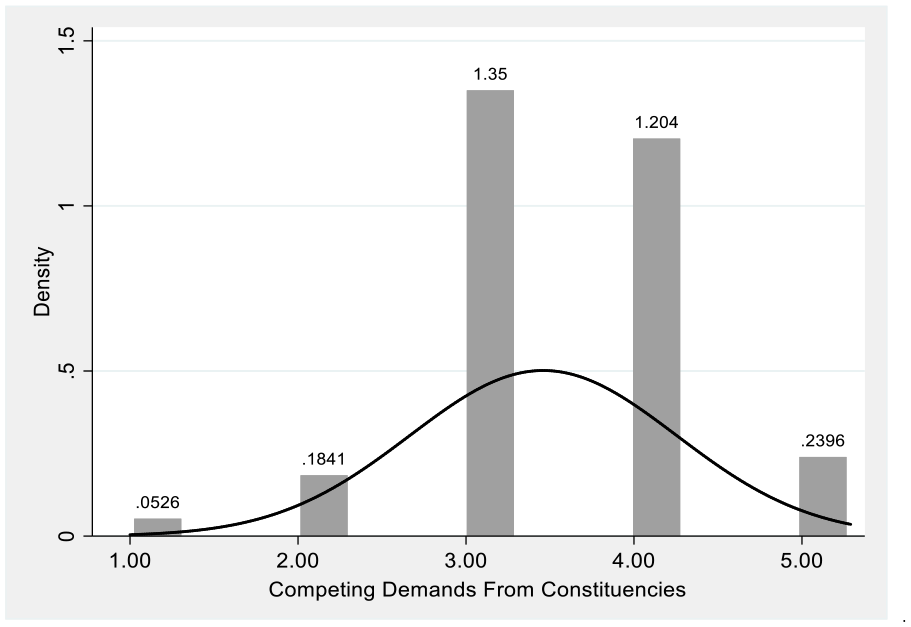
Histogram: competing demands from constituencies.
Table 2 presents the findings of a random-effect ordered logit analysis concerning the overall performance grade. The results show the interaction between employee participation in HR decisions and competing demands is positively associated with higher performance grades, at a significance level of .01. Similarly, the interaction between grievance procedures and competing demands was also found to be positively related to higher performance grades, at a significance level of .001. The table also demonstrates that variables related to employee voice opportunities (participation in HR decisions and grievance procedures) and competing demands themselves are negatively linked to higher performance ratings—however, the negative effect of these factors on performance is moderated by their interaction with each other. This suggests that competing demands do not necessarily undermine overall productivity when voice opportunities are present within the organization— Offering employees the chance to engage in HR decision-making and utilize grievance procedures can assist organizations in maintaining their ability to resolve internal issues in the face of external challenges. The results may also suggest that that the costs associated with implementing HR practices conducive to voice opportunities can be offset by creating a demanding yet motivating work environment.
Results of Ordered Logit Analysis for Overall Performance (Grade).
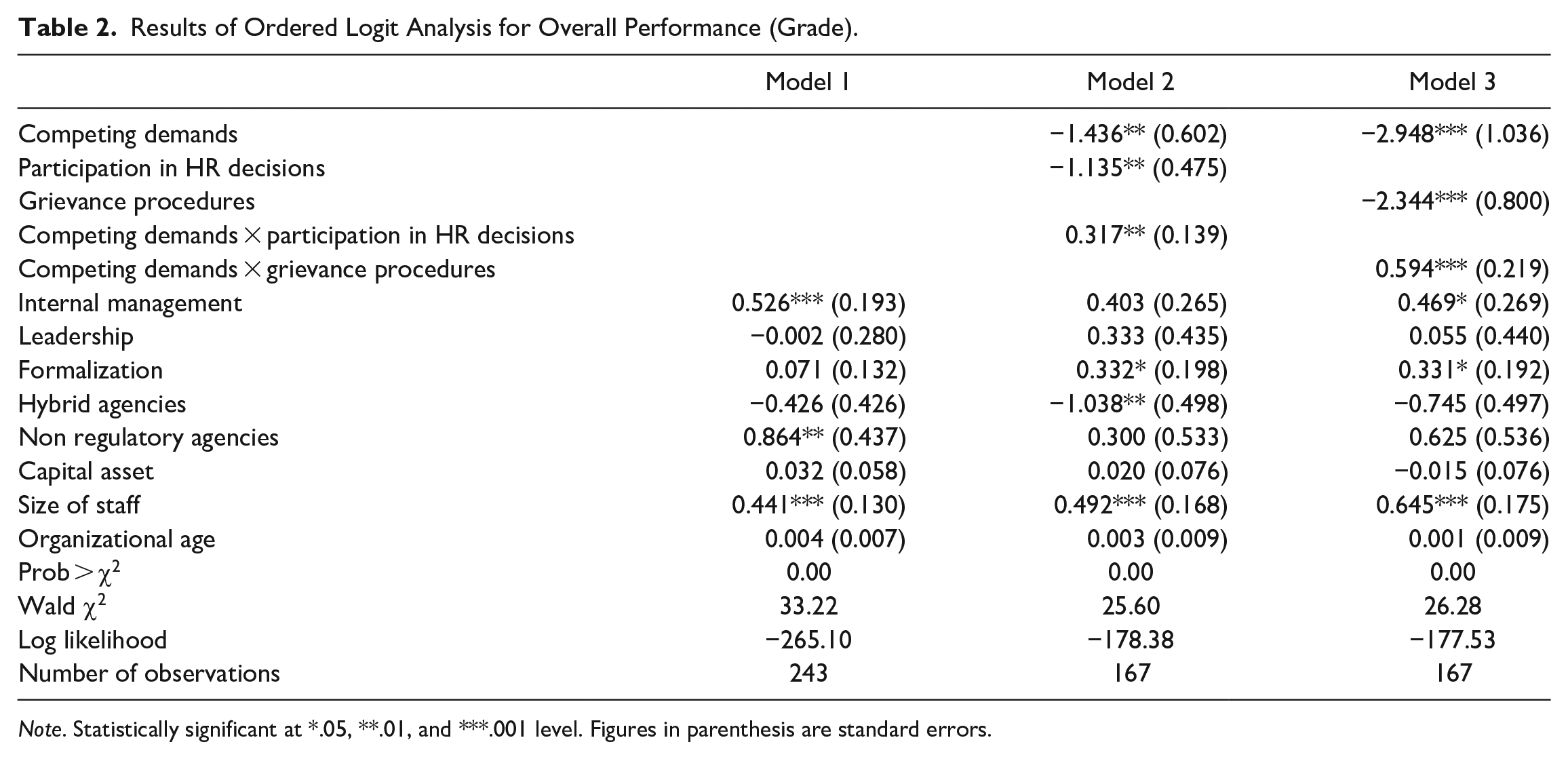
Note. Statistically significant at *.05, **.01, and ***.001 level. Figures in parenthesis are standard errors.
Figure 2 shows that that when employees have a greater say in HR decision-making (voice opportunities) and the organization confronts higher competing demands, higher performance ratings are more likely. The figure presents the predicted cumulative probabilities of improved performance based on employee participation in HR decision-making (voice opportunities) across three performance classifiers: “A,” “B” or higher, and “C” or higher. The data shows that in the presence of high external competing demands, increased employee voice opportunities correlate with a heightened probability of enhanced performance. However, when competing demands are low, the predicted probability of improved performance diminishes as employee voice opportunities increase, particularly for performance grades “B” or higher 12 —this decline is most pronounced within the mid-range of employee voice opportunities. Our measurements indicate that the threshold lies approximately between 60% and 80%, suggesting that even under low competing demands, up to 60% to 80% of staff can engage in the employee voice mechanism without incurring substantial cost. Moreover, at intermediate levels of competing demands, employee voice opportunities also tend to reduce the predicted probabilities of achieving higher performance grades, albeit with a less pronounced vertical shift compared to low or high demands.
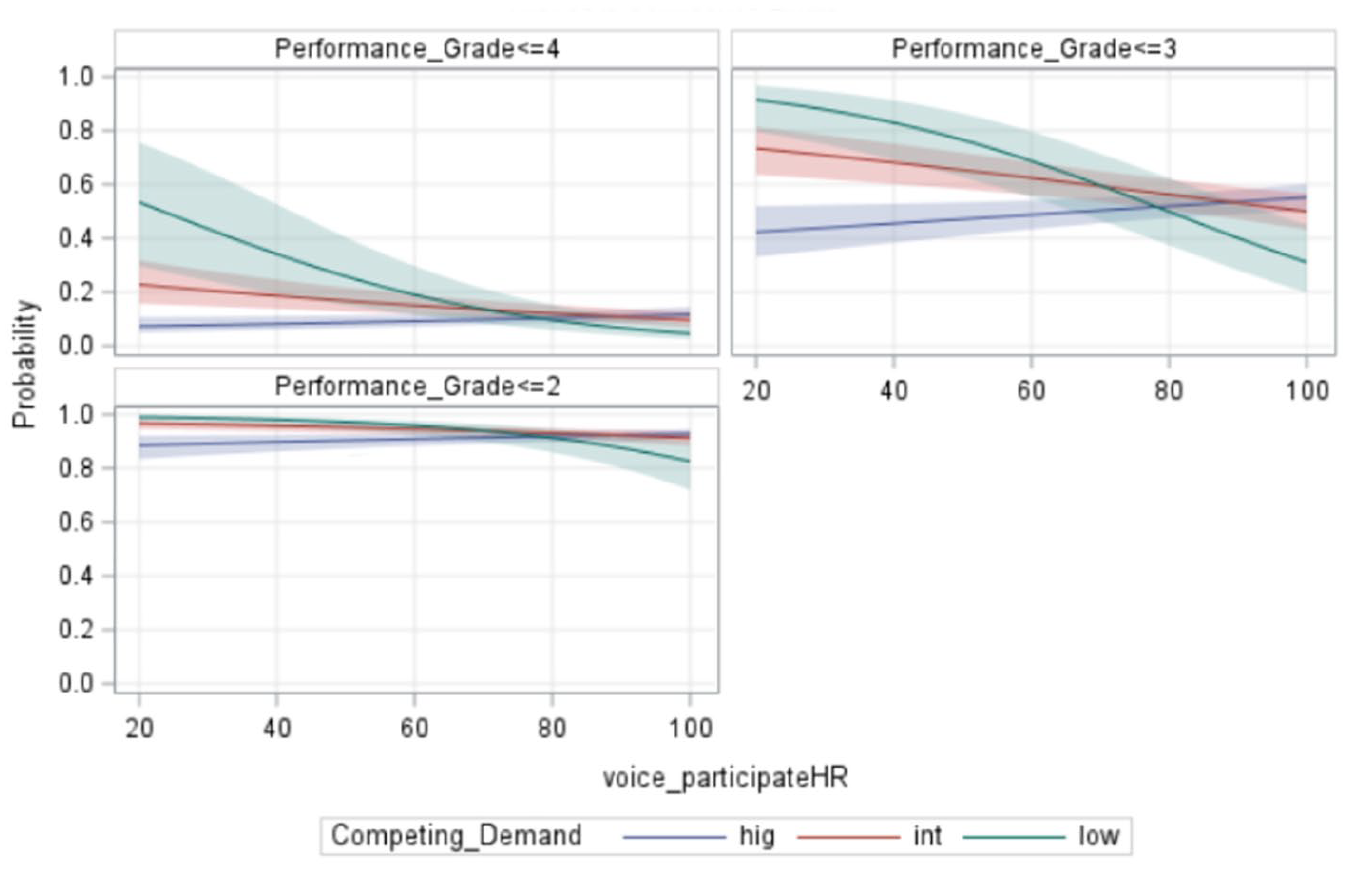
Moderating effects of employee voice: participation in HR decisions.
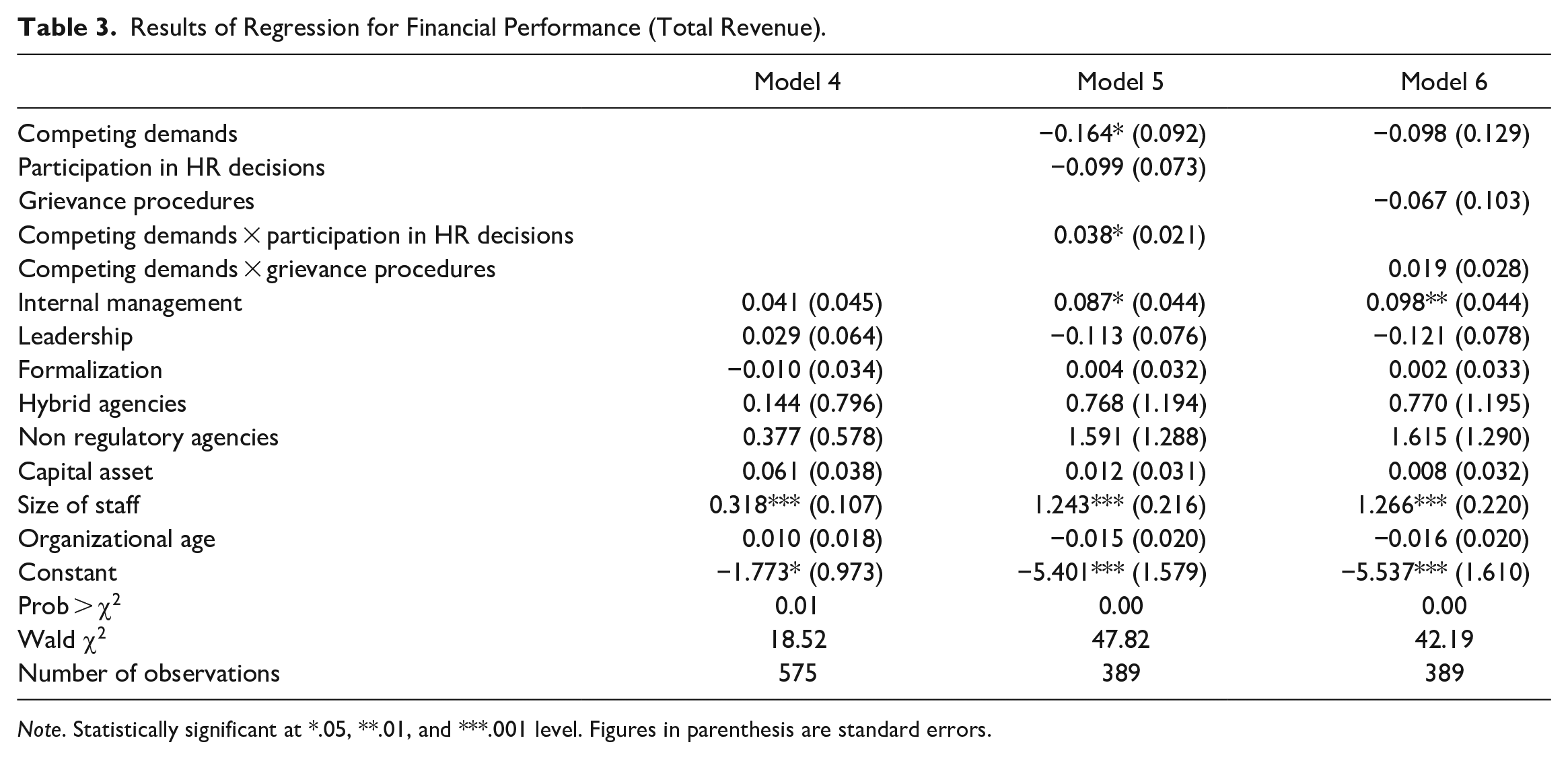
Table 3 shows a positive coefficient for the interaction term between employee participation in HR decisions and financial performance, as observed in the regression results for total revenue. This implies that organizations that encourage employee involvement in HR decisions may have the potential to mitigate the negative impact of competing demands on their financial performance. This finding is in line with the results obtained from the ordered logit analysis of overall performance grade. 13 On the other hand, both employee participation in HR decisions and competing demands themselves were negatively associated with total revenue, consistent with the performance grade ordered logit regression.
Results of Regression for Financial Performance (Total Revenue).
Note. Statistically significant at *.05, **.01, and ***.001 level. Figures in parenthesis are standard errors.
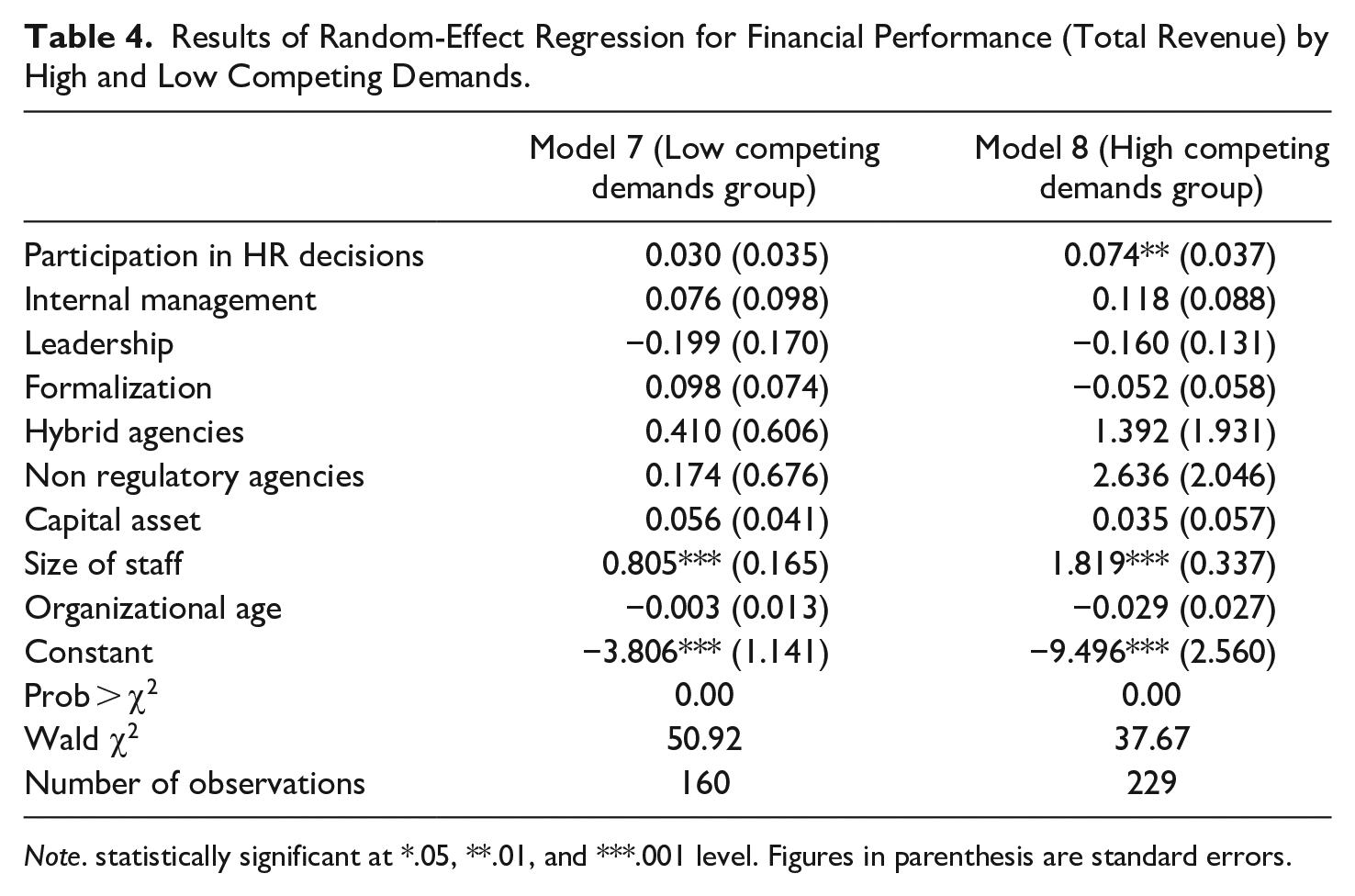
To further investigate the moderating effect of competing demands, we divided our dataset into two groups based on the average level of competing demands (3.498). This division yielded a low competing demands group (Model 7) consisting of 131 public agencies, and a high competing demands group (Model 8) comprising 170 public agencies. In Table 4, the results demonstrate that only the group facing high competing demands exhibits a significant positive association between employee participation in HR decisions and financial performance. This suggests that, within our dataset, employee voice opportunities generally do not confer an overall advantage. However, they can be beneficial in organizations that experience high levels of competing pressure from their constituencies.
Results of Random-Effect Regression for Financial Performance (Total Revenue) by High and Low Competing Demands.
Note. statistically significant at *.05, **.01, and ***.001 level. Figures in parenthesis are standard errors.
Discussion
In the public sector, multifaceted demands originating from a multitude of stakeholder interests often precipitate significant challenges (Ashford & Northcraft, 2003; Fountain, 2001; D. Guest & Conway, 2011; Park & Nawakitphaitoon, 2018)—these challenges extend to the public organizations themselves and their employees (Berman, 1978; Chun, 2003, p. 42; Chun & Rainey, 2005, p. 7; Matland, 1995). Our research posits that public organizations that value employee input, through avenues such as employee voice opportunities, are better positioned to navigate these complex demands efficiently—the role of formal grievance procedures and employee involvement in HR decision-making processes is found to be effective in managing competing pressures.
Model 5 indicates that a unit increase in perceived competing demands could decrease an organization’s total revenue by up to 161,000 million KRW (around 16 million USD). However, when these demands are coupled with employee participation in HR decisions, the adverse impact on total revenue can be moderated by about 38,000 million KRW (roughly 3.9 million USD). Likewise, Models 2 and 3 further highlight that the tested variables somewhat dramatically affect the predicted probability of greater overall performance grades, as shown in Figure 2, with substantive implications—in South Korea, organizations with an A grade are authorized to distribute performance pay to their employees (ranging from 10,000 to 20,000 USD per person on average), while organizations with consistently low grades (often D or E for two consecutive years) must appoint new executive leaders as per a performance review committee’s mandate.
We should also note that employee voice doesn’t always translate into positive performance outcomes, as evidenced by the negative coefficients or nonsignificant effects in Tables 2 and 3—this might be due to the fact that HR practices fostering employee voice often escalate costs. Allowing employees to have a say in decision-making through mechanisms such as employee voice can bring benefits to organizations, but it also carries risks. Consequently, organizations adopting unsuccessful employee-proposed ideas could face performance setbacks, especially if they are not already under significant challenges.
Amid the fluid economic environment, the impact of HR practices on an organization’s financial health is paramount. South Korea provides a clear illustration, with major public agencies recovering less than 90% of their expenses through revenue—this gap imposes an additional financial burden on taxpayers, find themselves obliged to cover the remainder. Complications arise when government interventions, such as KEPCO’s electricity price freeze, exacerbate these fiscal challenges in spite of rising production costs. According to Sowa (2020, p. 335), such resource limitations can obstruct strategic planning. As a result, a troubling cycle can emerge where financial constraints in public agencies influence the efficacy of HR practices. The elevated costs associated with these practices risk overshadowing their benefits, potentially harming the organization’s performance. This underscores the critical need for a strategic alignment between employee-focused HR policies, societal demands, and organizational pragmatism.
Conclusion
This study adds a two-pronged contribution to the scholarly conversation. Firstly, it empirically probes the contentious yet crucial relationship between employee voice opportunities and organizational performance. While public sector studies often focus on employee voice’s role in individual performance metrics such as employee engagement, this research broadens the lens to include organization-centric outcomes. Secondly, it examines the contexts that heighten the importance of competing demands in workplaces and the various mechanisms through which employee voice opportunities can steer organizational outcomes. Tapping into theoretical insights, this research pioneers an empirical exploration of the interplay between competing demands and employee voice opportunities, as well as their collective impact on organizational performance.
As Sowa (2020, p. 333) underscores, there’s no universal blueprint for strategic HR management in public agencies. The focus, therefore, should be on mapping the strategic journey—spotlighting successful practices and the contextual factors that shape them. While existing literature on HRM-performance relationships identifies a link between broader use of HR practices and various organizational performance indicators, it leaves a gap in explaining the process that underpins this connection (D. E. Guest & Conway, 2011, p. 1686).
In the current landscape, public sector management across countries is characterized by a multitude of competing stakeholder demands. Scholars posit that bolstering employee well-being through inclusive HRM practices is a crucial step for public agencies aiming to effectively respond to the growing demand for public services. In light of the high demands emanating from complex and uncertain environments, our research underscores the potential of employee voice as a strategic tool to navigate these competing demands in the public sector.
This study advocates for further research on employee voice opportunities in HRM, particularly its interplay with various contextual factors. Given the unique attributes of public agencies, considerations beyond competing demands could lead to diverse organizational outcomes. Future research needs to delve into these contextual variables in examining employee voice topics. There’s also a need to gauge other facets of organizational performance that the current study may not have captured. As public agencies generate a wealth of performance indicators across various levels and dimensions, upcoming research can help pinpoint the elements linked with employee voice opportunities in HRM. This study assessed the level of staff access to formal structures or HR policies, but future inquiries could look into the impact of informal supports that encourage employees to voice their ideas.
Footnotes
Appendix
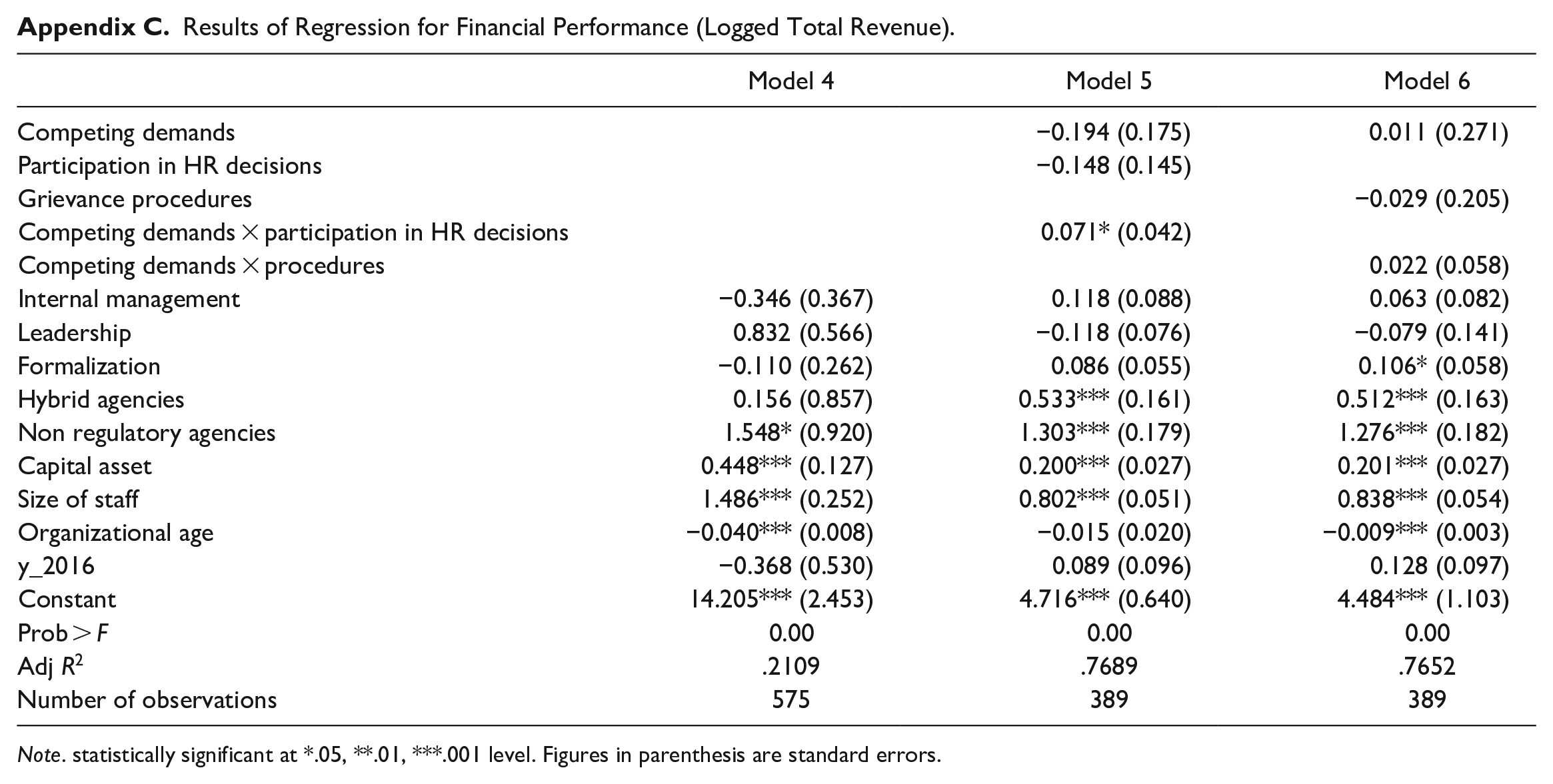
Results of Regression for Financial Performance (Logged Total Revenue).
| Model 4 | Model 5 | Model 6 | |
|---|---|---|---|
| Competing demands | −0.194 (0.175) | 0.011 (0.271) | |
| Participation in HR decisions | −0.148 (0.145) | ||
| Grievance procedures | −0.029 (0.205) | ||
| Competing demands × participation in HR decisions | 0.071* (0.042) | ||
| Competing demands × procedures | 0.022 (0.058) | ||
| Internal management | −0.346 (0.367) | 0.118 (0.088) | 0.063 (0.082) |
| Leadership | 0.832 (0.566) | −0.118 (0.076) | −0.079 (0.141) |
| Formalization | −0.110 (0.262) | 0.086 (0.055) | 0.106* (0.058) |
| Hybrid agencies | 0.156 (0.857) | 0.533*** (0.161) | 0.512*** (0.163) |
| Non regulatory agencies | 1.548* (0.920) | 1.303*** (0.179) | 1.276*** (0.182) |
| Capital asset | 0.448*** (0.127) | 0.200*** (0.027) | 0.201*** (0.027) |
| Size of staff | 1.486*** (0.252) | 0.802*** (0.051) | 0.838*** (0.054) |
| Organizational age | −0.040*** (0.008) | −0.015 (0.020) | −0.009*** (0.003) |
| y_2016 | −0.368 (0.530) | 0.089 (0.096) | 0.128 (0.097) |
| Constant | 14.205*** (2.453) | 4.716*** (0.640) | 4.484*** (1.103) |
| Prob > F | 0.00 | 0.00 | 0.00 |
| Adj R2 | .2109 | .7689 | .7652 |
| Number of observations | 575 | 389 | 389 |
Note. statistically significant at *.05, **.01, ***.001 level. Figures in parenthesis are standard errors.
Declaration of Conflicting Interests
The author(s) declared no potential conflicts of interest with respect to the research, authorship, and/or publication of this article.
Funding
The author(s) disclosed receipt of the following financial support for the research, authorship,and/or publication of this article: This research was supported by the Center for Organizational Diagnosis(CODE), Graduate School of Public Administration(GSPA), Seoul National University(SNU) in Korea.
