



Abstract
This article reports on the largest randomized control trial (with followup) to examine the effects of mindfulness among police officers and staff. The benefits of mindfulness for wellbeing are established, but less is known about long-term impact on employee wellbeing and the implications of individual outcomes at organizational level. In the RCT, both the wellbeing and performance of users of two mindfulness apps over 24 weeks improved as compared to a control group. In responding to calls for consideration of relevance alongside rigor in public administration field experiments, the study also investigated how a large-scale wellbeing intervention was implemented and applied cost-effectiveness methodology to link individual and organizational outcomes and demonstrate cost savings. This additional contextualization showed how to improve implementation of wellbeing interventions for public personnel and demonstrated a method for rigorously assessing whether interventions deliver on both an individual and organizational level.
Keywords
Introduction
In public administration research, two growing areas of debate concern effective management for employee performance and wellbeing (Steijn & Giauque, 2021) and the usefulness of field experiments (Hansen & Tummers, 2020). Uniting these literatures is the need to balance experimental rigor with relevance to human resource management (HRM) (Boselie, Van Harten & Veld, 2021; Peccei & Van De Voorde, 2019). Intervention studies must go further than psychological enquiry to bridge the gap between assessing individual outcomes, discerning their organization-wide implications, and understanding how they work in context (see Skivington et al., 2021). This article offers a model for achieving the desired rigor and relevance, by contextualizing a large-scale randomized control trial (RCT) with process evaluation and cost-effectiveness analysis.
Front-line public sector work involves organizational stressors from how public services are managed (Purba & Demou, 2019) and cycles of politicized reform (Brunetto & Beattie, 2020). Burnout and reduced engagement are associated with demands such as organizational restructuring, dealing with aggression, the increased complexity of public service leading to pressures on integrity, and demands from technical innovation (Borst & Knies, 2021). In policing, an area of front-line work with significant stress, there have been increasing concerns over stress-related absences and loss to service of experienced staff, due to work intensification from increasing societal demands (Phythian et al., 2021). Early evidence suggests the coronavirus pandemic has further increased psychological distress and burnout for public sector employees (e.g., Huang et al., 2021; Pérez-Luño et al., 2022). The pandemic, on top of already high levels of post-traumatic stress disorder in police workforces and the cultural barriers that remain in tackling mental health issues, make the need to understand police wellbeing timelier than ever (Edwards & Kotera, 2021). When considering how to address the wellbeing of workers, such contextual factors have implications for police workforce planning at organizational level, where there are concerns over the mental and physical health of an ageing workforce (Hales, 2017). To justify reforms in the workplace and to ensure the relevance of research on wellbeing interventions in the public sector, producing rigorous evidence on both organizational and individual effects is important.
Evidence from varied public sector workforces (e.g., Awa et al., 2010; Linos et al., 2022; West et al., 2016) indicates there are interventions that can improve psychological wellbeing. However, this evidence mainly draws on small sample sizes and short time horizons, therefore limiting inferences regarding widespread implementation and persistence of effects. The present study addresses these concerns by offering multiple analyses (of short and longer-term outcomes, cost-effectiveness, and implementation) around a large-scale intervention targeted at enhancing workers’ capacity to self-regulate their wellbeing through online mindfulness training.
Training for the development of personal resources—such as mindfulness—can be effective for individual workplace wellbeing (Watson et al., 2018) and potentially organizational performance indicators (Guy & Lee, 2015). Public personnel capable of mindful “reflection-in-action” were able to provide the intense emotional labor that is part of public service work (Mastracci et al., 2011), whilst also attending to self-care during the coronavirus pandemic (Berry et al., 2022, p. 16). However, work intensification and an increasingly demanding public service context may impact the extent that wellbeing interventions at individual level can be implemented and make a difference at organizational level for the sustainability of services (Fletcher et al., 2020).
Mindfulness-based interventions (MBIs)—programs of training in mindfulness practice—have received little attention in public personnel administration, despite evidence of positive outcomes for front-line or “street level” bureaucrats (e.g., Christopher et al., 2016; Eby et al., 2019; Spinelli et al., 2019; West et al., 2016). One reason for this omission may be concerns about the relevance of field experiments that only focus on individual outcomes, without contextualizing findings within public service contexts, including influences on public service delivery and costs (Margetts, 2011).
Our study aimed to determine the effectiveness, relevance, and cost-effectiveness of app-based MBIs for the policing context—extending the findings beyond individual outcomes to organizational impact. The overarching research question was: Can online MBIs improve individual wellbeing and organizational performance within the delivery context and cost constraints of policing? Our three sub-questions focused on: impact, process, and cost-effectiveness. For impact evaluation, we conducted a three-armed RCT with a control group and a larger sample size than most mindfulness trials, to evaluate two different mindfulness apps (mobile or online computer applications). A 24-week follow-up allowed us to examine the persistence of the effects. The sample size provided good statistical power as well as the chance to examine an intervention implemented at scale. The qualitative process evaluation allowed for exploration of the implementation of both apps in a public service context. Cost-effectiveness analysis used implementation costs for the MBIs and changes in productivity to judge whether the MBIs were worthwhile at an organizational level. The article contributes to the field by providing robust evidence of the relevance of mindfulness for bureaucrats, whilst also providing insight on organizational enablers and barriers.
Mindfulness-Based Interventions
Mindfulness relates to being non-judgmentally attentive to and aware of the present, encompassing both the self and external environment (Brown & Ryan, 2003). MBIs aim to cultivate this awareness via teaching meditative breathing and body scan exercises as well as strategies for focus, acceptance, and self-regulation in particular circumstances—for example, sleep, eating, high stress, and more (Howarth et al., 2019). Training can be delivered in-person or online and in a workplace setting can vary considerably in dose and content (Bartlett et al, 2019).
Mindfulness practice is expected to improve attention and awareness, in turn improving self-regulation, which then influences wellbeing (Good et al., 2016). Participation in mindfulness interventions is associated with improved resilience (Donaldson-Feilder et al., 2019) and efficacy in regulating emotions (Janssen et al., 2018). Relationships with work performance are less clear as there are too few well-designed studies to draw definitive conclusions on performance (Bartlett et al., 2019). Yet, there are indications that for occupations involving high interaction with co-workers or the public, MBIs may lead to performance benefits via stronger prosocial and interpersonal behaviors (Lomas et al., 2017).
Research Questions
RQ1: Are there beneficial outcomes of MBI apps in a public service context?
Extrapolating from prior research, we anticipate positive effects on wellbeing, personal resilience (Lomas et al., 2017), work performance (Good et al., 2016), and reduced sickness behaviors (Heckenberg et al., 2018). We have four classes of outcome variables, those related broadly to positive indicators of psychological wellbeing, those related to self-regulatory ability (i.e., resilience), those related to stress-related behaviors, specifically sickness behaviors, and those related to performance (see Table 1). Following Peccei and Van De Voorde (2019) amongst the first three are markers of “happiness” and health-related wellbeing. Sickness behaviors can also be performance indicators, in so far that they represent reduced productivity (e.g., via sickness absence).
Measures Used in the Study.
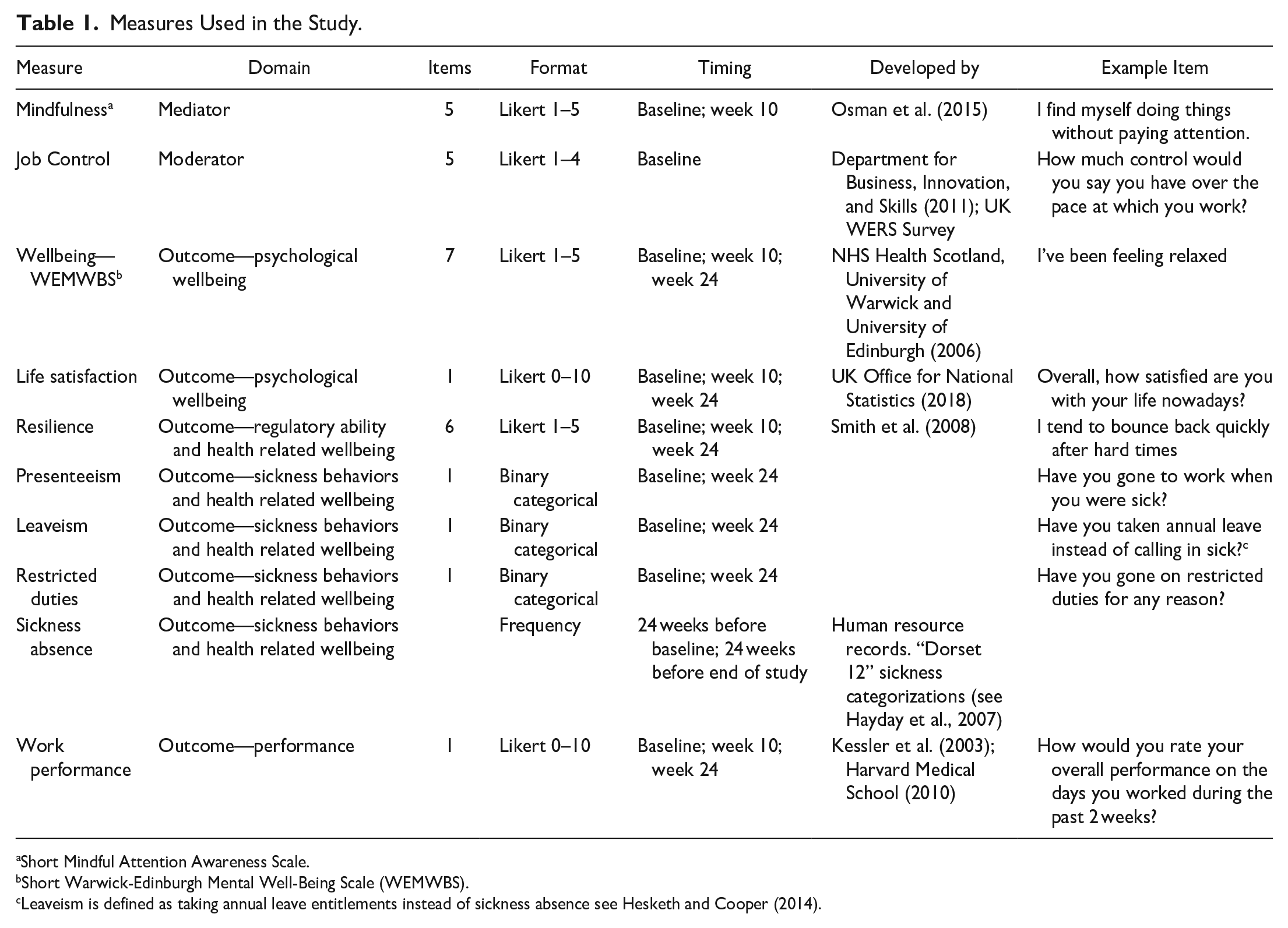
Short Mindful Attention Awareness Scale.
Short Warwick-Edinburgh Mental Well-Being Scale (WEMWBS).
Leaveism is defined as taking annual leave entitlements instead of sickness absence see Hesketh and Cooper (2014).
A critical assumption is that MBIs confer benefits through increasing mindfulness (Jamieson & Tuckey, 2017), that is, mindfulness mediates effects. However, three public service studies question this (Braganza et al., 2018; Christopher et al., 2016; Lilly et al. 2019).
H1: MBIs will improve wellbeing, resilience, work performance, and reduce sickness behaviors. Each of these improvements will be mediated by improved mindfulness.
A recent RCT of a commercial mindfulness app (Headspace®, www.headspace.com) found benefits at 8 and 16-week follow-up (Bostock et al., 2019). Whilst commercial apps may benefit from continued development for content, usability, and appearance, they are also likely to be generic to appeal to a wider market. One important factor may be the extent to which apps are able to address context-specific issues. We evaluated a generic app (Headspace) and one tailored for policing (Mindfit-Cop). Headspace users are invited to complete a basic training package, then explore topics such as sleep, difficult conversations, exercise, eating, and more. Mindfit-Cop invites users to understand the relevance of basic training in mindfulness to the stressors of policing. It offers police-specific examples of how mindfulness supports better performance and wellbeing, such as approaching high risk situations or dealing with vulnerable people. The tailoring of exercises to occupation-specific issues familiar to users could improve the effectiveness of the intervention.
H2: A bespoke online MBI will improve wellbeing, resilience, performance, and sickness behaviors more effectively than a generic MBI.
The extent to which workers can exercise control over aspects of their work may influence differential effectiveness of MBIs. Job control reflects the extent to which workers can influence how, when, and where they perform their work and has been found to interact with training in health and wellbeing skills to produce relevant benefits (Daniels et al., 2017). This is because workers with greater job control have the flexibility to put into practice self-regulation strategies at a time and manner suited to them (Karasek & Theorell, 1990).
H3: Job control moderates the effectiveness of online MBIs on mindfulness and mindfulness mediates the effect of the interaction between job control and online MBIs on wellbeing, resilience, performance, and sickness behaviors.
There have been few process evaluations of MBIs, limiting understanding of implementation and sustainability. Implementation barriers include workplace cultures and inconducive physical environments for applying learnt (mindfulness) skills (Bartlett et al. 2017; van Berkel et al., 2014). Considering limited evidence on factors facilitating or hindering scalable mindfulness app implementation, we ask:
RQ2: What factors influence the implementation and effectiveness of online MBIs?
Evidence is also lacking on whether MBIs are cost-effective in employment contexts (Doyle et al., 2019). Klatt et al. (2016) concluded MBIs can reduce health care utilization costs amongst workers. Kuyken et al. (2022) report a high probability (83%) that school based MBIs were cost effective in terms of quality adjusted life years. Two studies of care workers evidenced that MBIs achieved significant cost savings through reduced absence at work (Singh et al., 2015, 2016). In response to calls to use more diverse and vigorous methods on people issues in public administration (Steijn & Knies, 2021), the limited number of studies on the cost-effectiveness of MBIs in employment contexts, and the absence of evidence on savings generated through improved performance, we ask:
RQ3: To what extent are online MBIs cost-effective?
Methods
The research consisted of three work packages: trial, process evaluation, and cost-effectiveness analysis. These three work packages provide robust data on key aspects of the apps (cf. Skivington et al., 2021): the effectiveness of the apps (trial), quality of implementation and factors affecting implementation/effectiveness (process evaluation), and whether the apps provide value for money given resources expended during implementation (cost-effectiveness analysis). The trial involved a three-arm parallel randomized control trial (RCT). The RCT compared participant outcomes for two mindfulness apps at 10 and 24-weeks post-baseline to a waitlist control. Semi-structured qualitative interviews provided feedback on barriers and enablers and informed a process evaluation. Cost-effectiveness analysis was based on the RCT findings, applying the method outlined in Bryce et al. (2020). Ethical approval was granted both through the College of Policing (UK) and University of East Anglia reviews.
Trial
Sample
All employees of five police forces in England and Wales (19,688 police officers, staff and volunteers, Home Office, 2017) were invited to participate in the trial. Of 1,414 applicants, 1,337 met the eligibility criteria. There were 1,301 usable surveys completed before the intervention, 703 at week 10 and 588 at week 24. Our analysis included anyone that completed the baseline survey and either or both follow-up surveys, resulting in 350 participants in the control group, 255 with access to Headspace and 204 with access to Mindfit-Cop. Some 67.24% of the sample were female. The ratio was similar for each condition (68.29% females in the control group, 66.67% for Headspace, and 66.18% for Mindfit-Cop) and each police force (ranging from 62.75% to 76.06%).
Design
The three conditions were: Headspace; Mindfit-Cop; and inclusion on a 6-month waiting list to receive mindfulness instruction. Randomization was conducted at the individual participant (employee) level. Equal proportions of the eligible participants were allocated to each arm of the study. After baselining and randomization, the participants received email instructions for registering to their MBI at the relevant site. Use of each app was self-guided, following the outline determined by the application providers. Those in the control group received a link to a video explaining the need for control groups.
Quantitative data on outcome measures were collected using an online survey. A CONSORT flowchart is available as Supplemental Figure S1. Sickness absence data (days and spells) was collected directly from human resource (HR) departments with informed consent.
Measures
Unless otherwise stated, measures were assessed at baseline, week 10, and week 24. The instruments and example items are summarized in Table 1. Descriptive statistics are shown in Table 2.
Means, Standard Deviations, and Reliabilities (Cronbach’s Alpha).
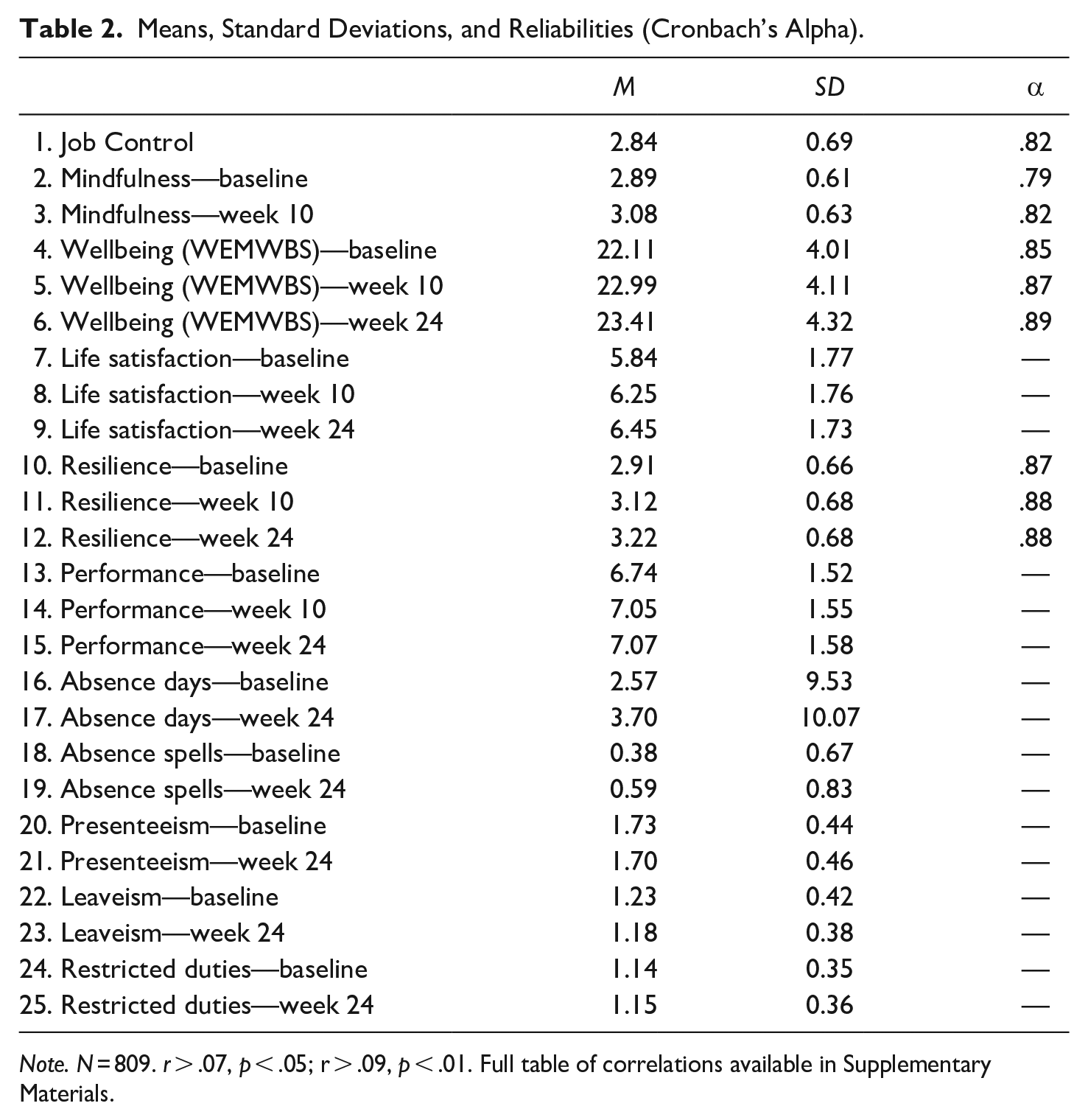
Note. N = 809. r > .07, p < .05; r > .09, p < .01. Full table of correlations available in Supplementary Materials.
Data Analysis
We adopted a Bayesian approach to test the hypotheses as a single model (see Supplemental Figure S2). The model evaluated the effect of the online MBIs on outcomes measured at weeks 10 and 24, and whether the effects at weeks 10 or 24 were mediated by mindfulness. We estimated the indirect effects to evaluate mediation and the index of moderated mediation and conditional indirect effects to evaluate moderated mediation of each intervention by job control (Wang & Preacher, 2015). Control variables in the analyses included values of the criterion variable collected at baseline, gender, and role. Controlling for baseline values of the criterion variable allows the analyses to assess changes over time in the criterion. Gender and role were controlled because preliminary analyses indicated differences on at least one of the criterion variables but did not appear to show any systematic patterns. As there were no differences by age or participating police force these variables were removed. Gender and role were gathered from HR records and police terminology was used to classify levels of seniority—all levels of seniority, as well as a mix of staff and officers were represented.
Process Evaluation
Telephone interviewees were selected from respondents to the 10-week survey who had given informed consent to be contacted. A semi-structured interview protocol included questions on individual context, expectations, barriers and enablers, impact, and the potential sustainability of learnt behaviors. Fifteen Headspace and 14 Mindfit-Cop users were interviewed between 14 and 20 weeks after baseline. Feedback was gathered from each treatment group from participants (a) who had consented to take part but did not access the resource in the first 10 weeks (8), (b) who had used the resource for less than 30 minutes (7), (c) who had used the resource for between 30 minutes and 2 hours (7), and (d) who had used the resource for more than 2 hours (7). Interviews were recorded and transcribed. Data were analyzed using the framework approach (Gale et al., 2013). Emerging themes were based on common points of response, but importance was not decided solely on frequency. Highlights were determined based on their relevance for future implementation.
Cost-Effectiveness Analysis
A cost-effectiveness ratio (CER) was calculated based on the benefits of additional years of life satisfaction and the net costs of the intervention (e.g., allowing for any benefits in productivity, reductions in absence, Layard, 2016). The approach utilizes difference in difference analysis, comparing differences in wellbeing (measured in terms of life satisfaction) and differences in productivity (measured by days of absence and improvements in performance) between the intervention and control groups, before and after the intervention. The CER is calculated as the net cost of improving life satisfaction by one point (on a 0–10 scale) per year. Interventions with a lower CER are more cost-effective. Interventions with a negative CER deliver savings.
The costs of each MBI include the value of time spent engaging with the app, delivery costs associated with rolling out the trial, and license/development costs. Participation costs are estimated in terms of time spent by staff in different salary bands engaging in each intervention (a total of £11,239.50 for the 96 participants who completed all three surveys in the Mindfit-Cop condition {i.e., £117.08 per participant} and a total of £17,480.25 for 149 participants who completed all three surveys in the Headspace condition {i.e., £117.32 per participant}). Mindfit-Cop is a bespoke app that was developed specifically for police contexts, and this implies a much higher total cost (£38,000 development costs compared with £12,000 license costs for Headspace). Further costs (£1,599.19) were incurred with Mindfit-Cop because participants needed to be supported through the download and enrolment process. The improvements in productivity are monetized using the average salary (based on average working hours) for any differences in changes in days of sickness and any differences in reported levels of productivity between the intervention and the control group before and after the intervention. Therefore, the analysis is based on the sample who responded to all three surveys (control = 232, Headspace = 149, Mind-fit Cop = 96). Layard (2016) recommends a threshold of £2,500 for a cost-effective intervention that provides one extra point of life satisfaction per year (if life satisfaction is measured on a 0–10 scale) for UK public policy wellbeing decisions. The net costs are compared against this threshold.
Results
RQ1: Are There Beneficial Outcomes of MBIs in a Public Service Context?
H1: Main Effects of Mindfulness Apps
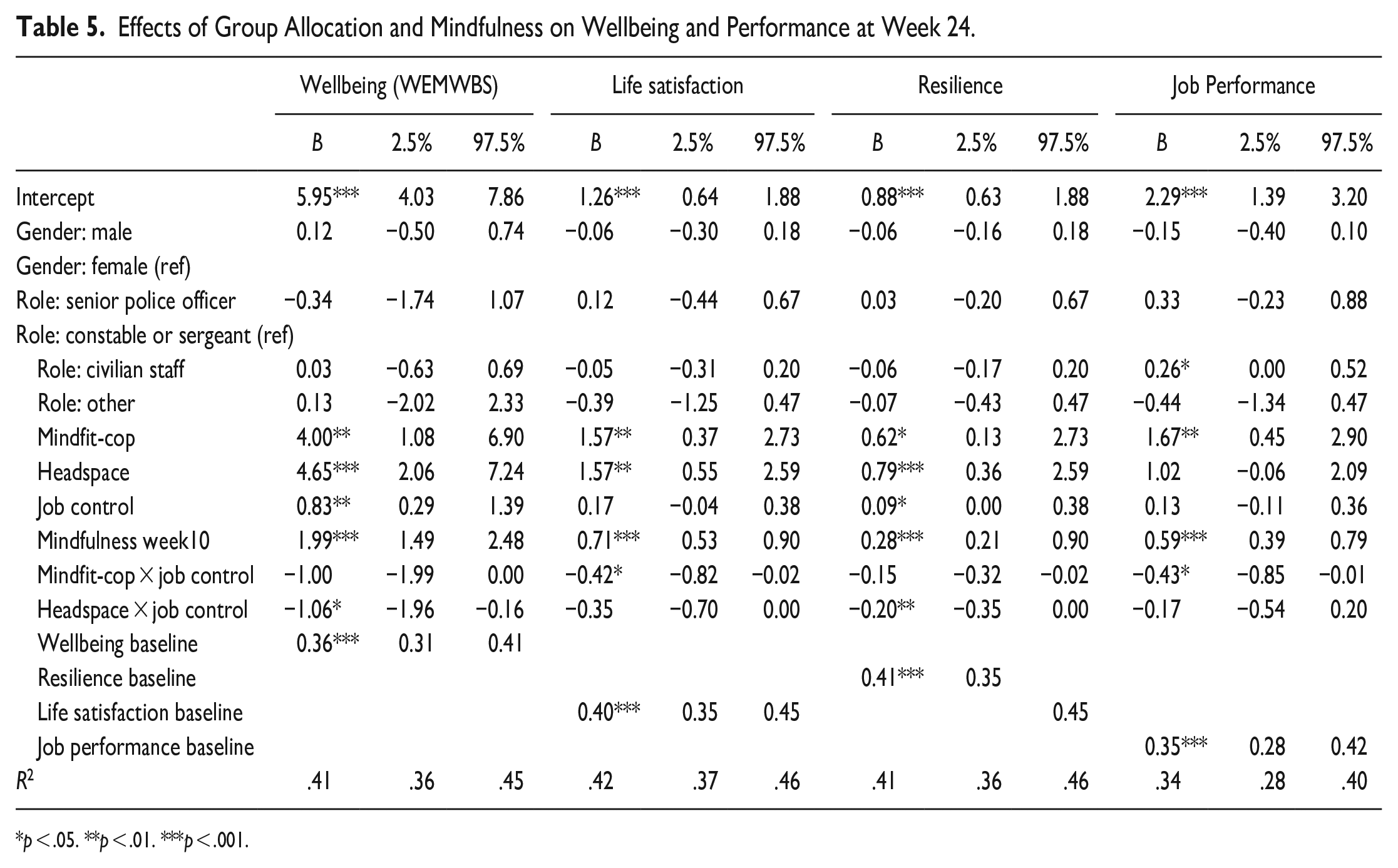
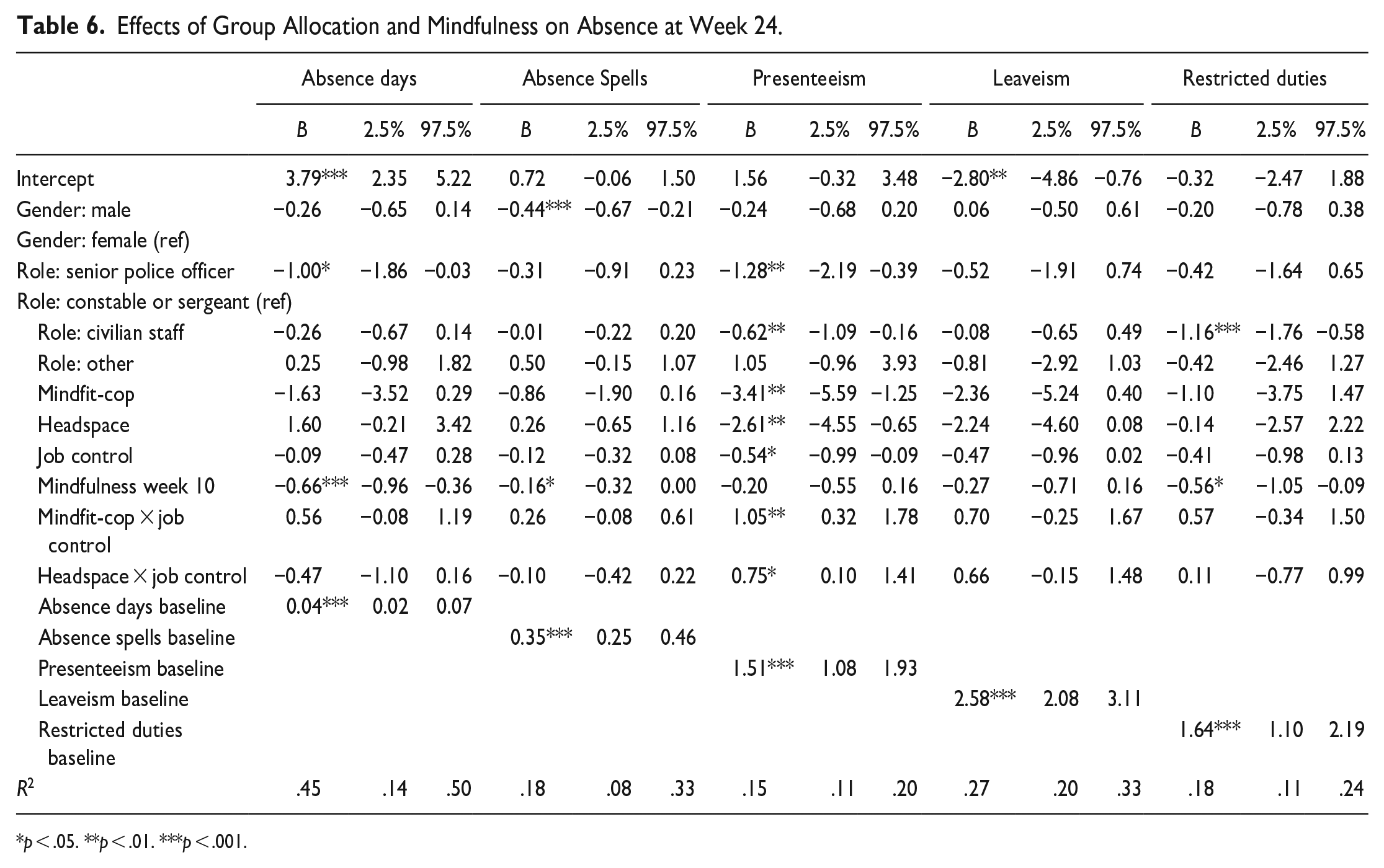
We tested if the two MBIs were related to mindfulness at 10 weeks after controlling for baseline levels of mindfulness. The results indicate a significant effect only for Headspace (Table 3). Mindfulness was hypothesized to influence all the outcomes examined. Mindfulness had a significant relationship with wellbeing (WEMWBS), life satisfaction, resilience, and performance after 10 weeks (Table 4) and after 24 weeks (Table 5). At 24 weeks, mindfulness also had a significant effect on some sickness behaviors (absence days/spells, restricted duties, Table 6). To evaluate the mediating effect of mindfulness, we estimated the indirect and total mediation paths for all the relationships (Supplemental Table S2). The indirect paths were significant for Headspace for wellbeing (WEMWBS), life satisfaction, resilience, and performance at weeks 10 and 24 and absenteeism (days and spells) and restricted duties at week 24. There were no indirect paths from Mindfit-Cop via mindfulness for week 10 or week 24 outcomes.
Effects of Group Allocation on Mindfulness at Week 10.
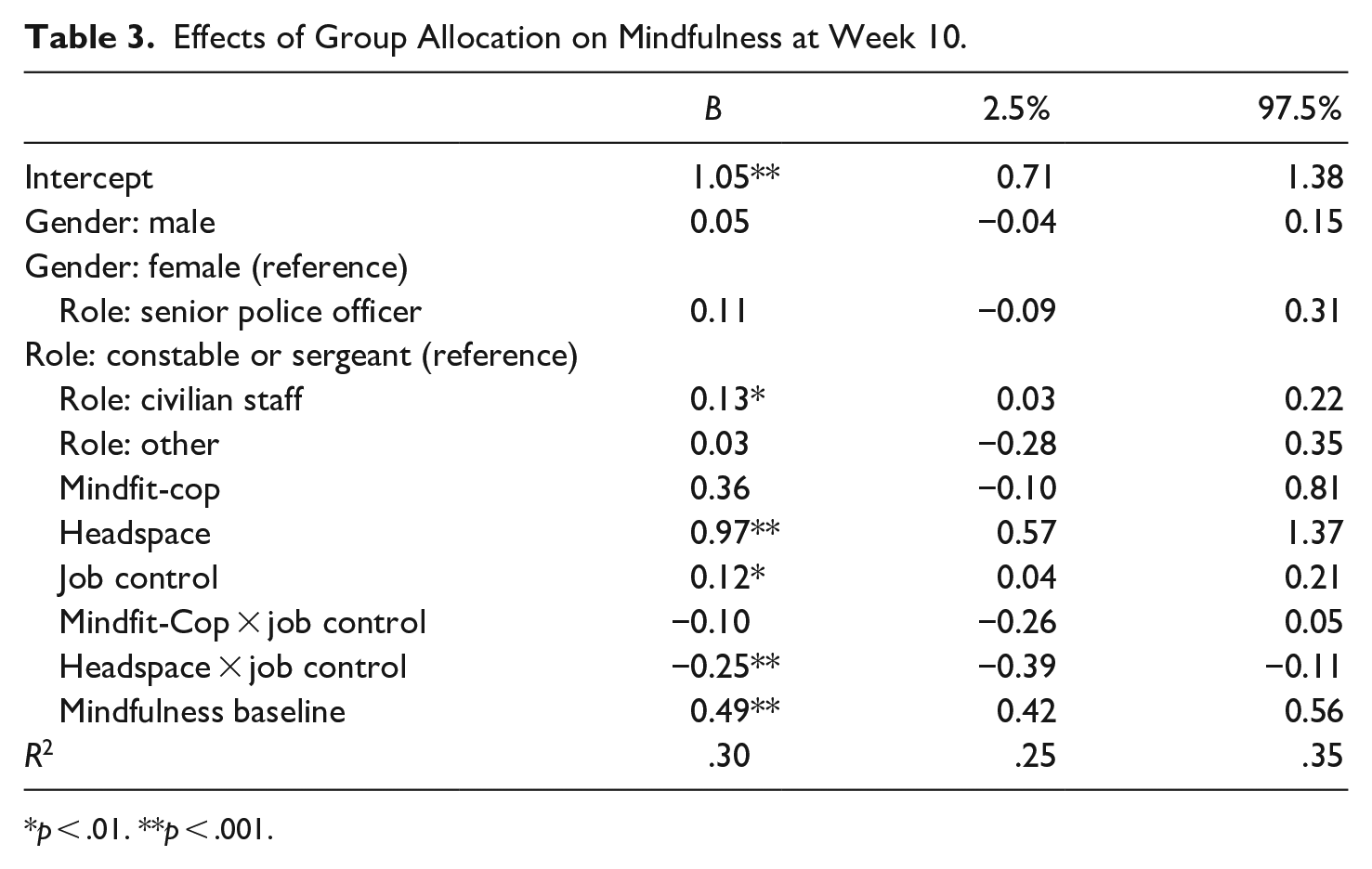
p < .01. **p < .001.
Effects of Group Allocation and Mindfulness on Wellbeing and Performance at Week 10.
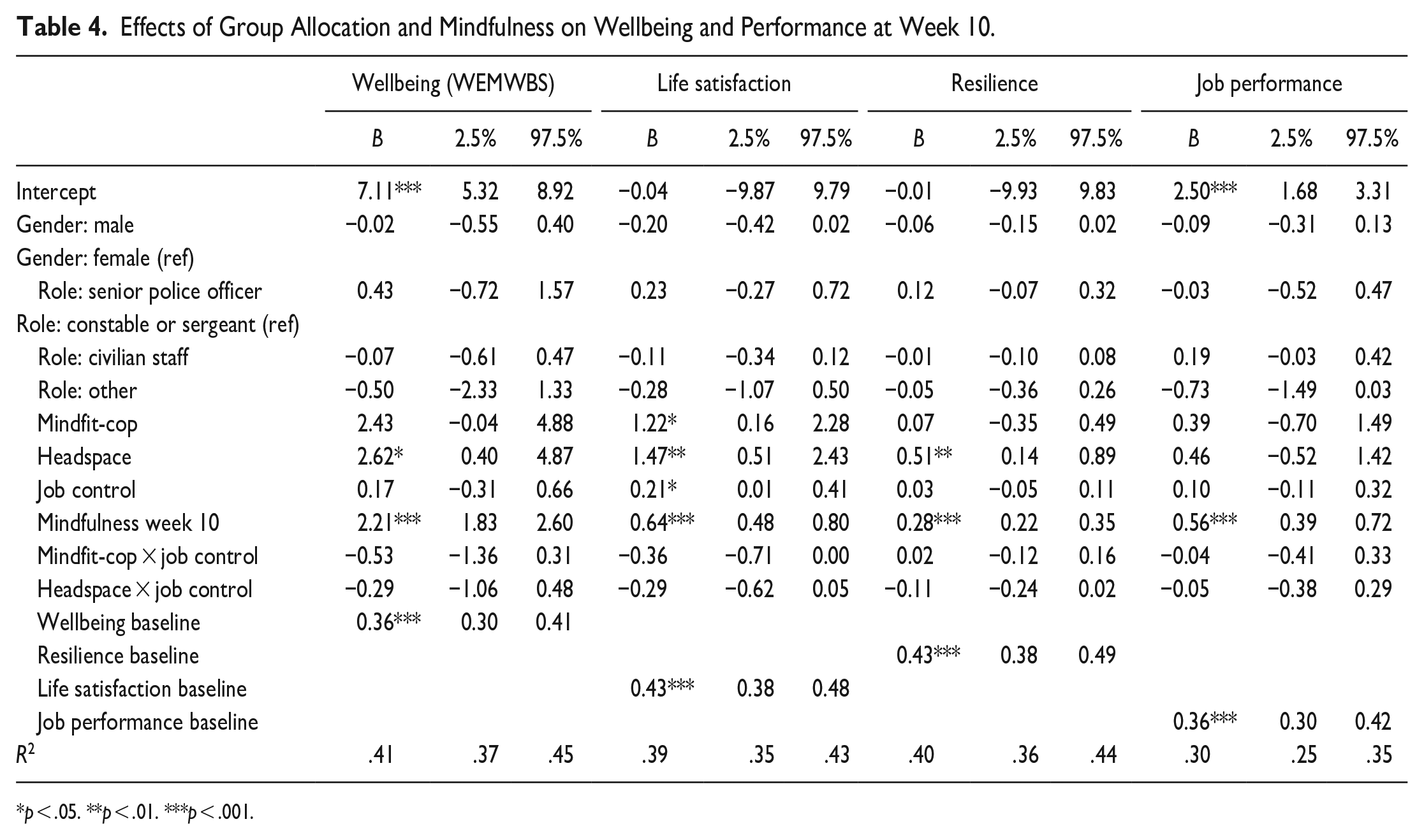
p < .05. **p < .01. ***p < .001.
Effects of Group Allocation and Mindfulness on Wellbeing and Performance at Week 24.
p < .05. **p < .01. ***p < .001.
Effects of Group Allocation and Mindfulness on Absence at Week 24.
p < .05. **p < .01. ***p < .001.
Although the mediation effect was significant only for Headspace, at week 10, Mindfit-Cop was directly related to life satisfaction, and Headspace to wellbeing (WEMWBS), life satisfaction, and resilience (Table 4). By week 24, both Headspace and Mindfit-Cop had direct relationships with wellbeing (WEMWBS), life satisfaction, resilience, and presenteeism and Mindfit-Cop had an additional positive direct relationship with performance (Tables 5 and 6). These effects were estimated whilst controlling for mindfulness, indicating that the interventions may have influenced outcomes through mechanisms other than mindfulness. Thus, H1 is fully supported for only one of the two online MBIs, although both interventions conferred benefits at week 24 and not all benefits were mediated by improvements in mindfulness.
H2: Differential Effects of Mindfulness Apps
To evaluate H2, we combined the direct and the mediated effects to examine and contrast the total effects of the two interventions (Supplemental Table S2). The results indicate that both interventions were associated with increased wellbeing (WEMWBS) and life satisfaction at week 10, and Headspace also with resilience and performance at week 10. These effects were strengthened by week 24 so that both Mindfit-Cop and Headspace were associated with higher wellbeing (WEMWBS), life satisfaction, resilience, and performance, and both with reduced presenteeism. However only Headspace was related to leaveism and neither influenced restricted duties.
A comparison of the estimates of the two interventions showed that in most cases there was no significant difference between Mindfit-Cop and Headspace (i.e., the estimates were within the confidence intervals of each other). The only exceptions to this were the results for resilience at week 10, and absence days and absence spells at week 24. For resilience, Headspace had a significantly stronger positive effect than Mindfit-Cop, but this was equalized by week 24. In contrast, Mindfit-Cop was significantly better at reducing absenteeism than Headspace but neither Mindfit-Cop nor Headspace had a significant total effect on absence days or spells. Thus, contrary to our prediction, Headspace had a stronger effect at week 10 but Mindfit-Cop had equalized by week 24. Therefore, H2 is not supported.
H3: Mindfulness Apps Moderated by Job Control
We added interaction effects between job control and both apps. The interaction with Headspace was significant but the one for Mindfit-Cop was not. Nevertheless, the direction of the effect was not as expected. The effect of job control on mindfulness is positive for the control group; it is almost neutral for Mindfit-Cop and negative for Headspace. Supplemental Figure S3 shows the form of the interaction. Instead of job control boosting the effect of the intervention on mindfulness, it appears that the Headspace intervention buffered the negative effects of low job control. Therefore, H3 was not supported. Similarly, indirect effects of Headspace through mindfulness were significant for mean and low values of job control, but the mediation effect disappeared when job control was high (Supplemental Table S3).
RQ2: What Factors Influence the Implementation and Effectiveness of Online MBIs?
Evidence suggests that physical environments and organizational cultures could act as barriers to uptake and usage. Our process evaluation highlighted similar themes for how the context at organizational level may influence individual outcomes and thereby influence the level of organizational productivity gains from such initiatives. These include participants’ requiring suitable physical space (i.e., not an open plan office), interpersonal acceptance (i.e., not being made to feel embarrassed by the prevailing culture for taking time out), and scheduled time to complete mindfulness practice. Some participants felt able to make time at work, with many choosing to use the resources at home instead. Willingness to engage at home did not appear to relate to job role or workload.
The finding that many users accessed resources from home helps explain why job control did not moderate either intervention as expected. Participants bypassed the need to have enough control at work to make time for the intervention by completing mindfulness exercises at home. One outcome of using the resources was participants reflecting more on their own thoughts/actions and less of being on “autopilot.” Where police employees feel they have little job control, it is potentially because their work is highly reactive (to incidents occurring) and/or clearly defined by protocol and the law. However, adding time for reflection in general, and chances to pause specifically in stressful situations, offered some participants a greater sense of control. One participant explained: We do all work really really hard and sometimes relentless [sic] and just reminding people that you’ve got to stop and pause and think about yourself for a moment if you’re going to be effective in what you do, it’s a good thing. . . (Mindfit-Cop user)
We found the bespoke app to be less effective after 10 weeks, but effects equalized after 24 weeks. The interview data indicated that the initial delay related to difficulty accessing Mindfit-Cop due to issues with the interface design. Mindfit-Cop was an entirely new resource. In the trial, many users experienced problems with registering and/or logging in. Problems included not receiving registration emails and undetected user error. All users were offered technical support to register, but the delay was off-putting for some.
In addition, Mindfit-Cop was offered as a website and a “web app” (website accessible via mobile phone) requiring the participant to login, whereas Headspace could be used as a phone app, accessible without login once the app was downloaded and the license activated. The attractively designed, small, standalone packages of Headspace contrasted with the sequential, more official-looking course outlined by Mindfit-Cop. Headspace’s approach offered users more choice and flexibility of how to approach mindfulness practice. The technical barriers and design choices may have contributed to the difference in effectiveness and ability to improve mindfulness at 10 weeks into the trial. Additionally, the process evaluation highlighted the importance of the Headspace sleep package for participant wellbeing. Its use as a practical and reusable sleep aid may have contributed to Headspace’s higher effectiveness after 10 weeks.
The effectiveness analysis indicated that not all the positive effects of the apps could be attributed to improved mindfulness. The interview data indicated that being offered access to the apps prompted many participants to consider other ways to support their wellbeing. Participants did not even have to have used the apps to be prompted to pay more attention to self-care. Examples included engaging more in exercise they enjoy (running, walking) and finding simple ways to prevent stress from escalating (one participant reported, for the first time, going home with a bad headache instead of remaining at work).
RQ3: To What Extent Are Online MBIs Cost-Effective?
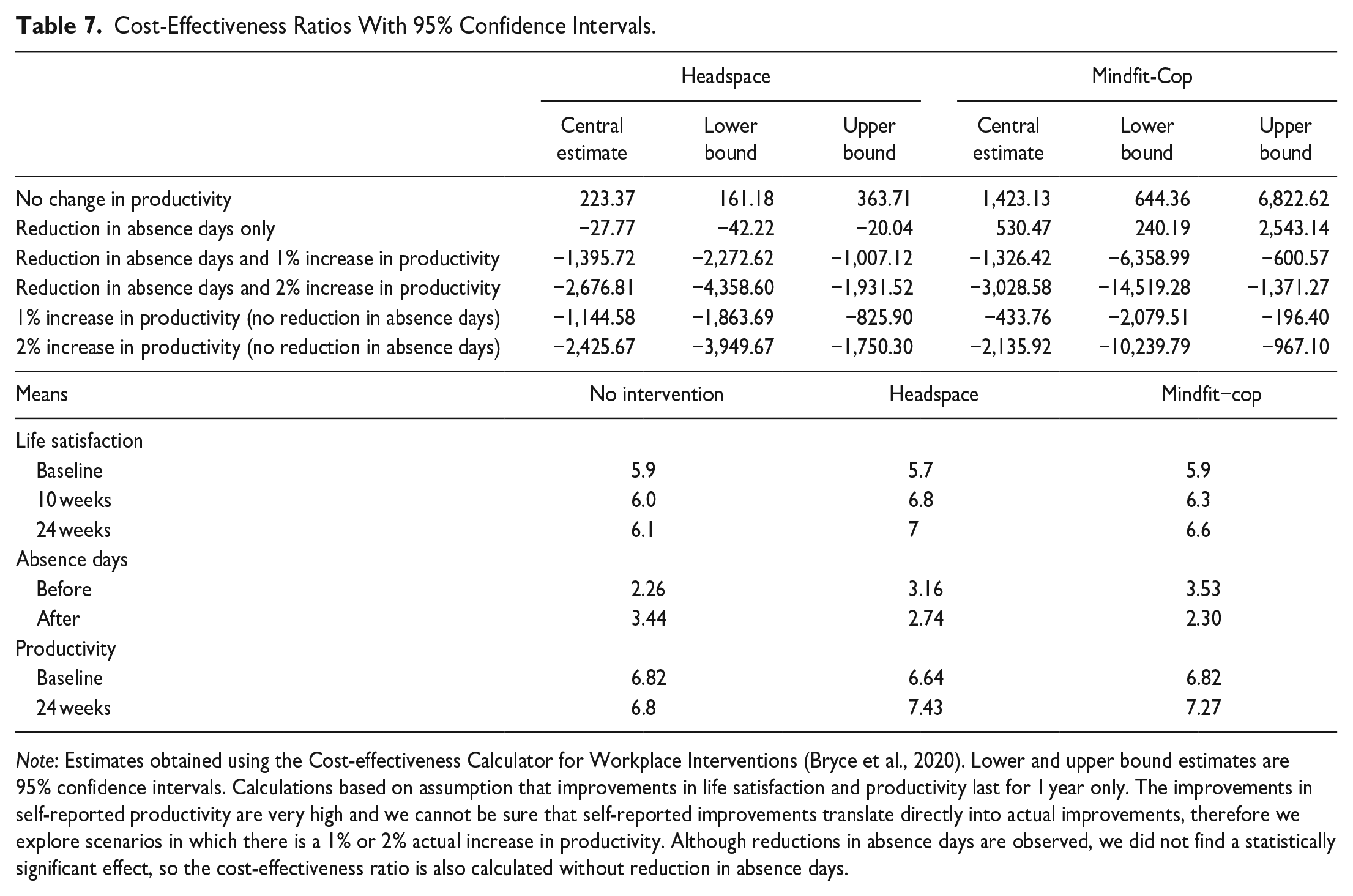
The average cost per participant was £197.85 for Headspace and £529.57 for Mindfit-Cop. Table 7 shows the cost-effectiveness ratios, the net cost of improving life satisfaction by one point (on a 0–10 scale) per year, with 95% confidence intervals under different assumptions of the effects of the apps on performance and the average differences in life satisfaction, days of absence, and productivity (for the sample who responded to the baseline and both follow-up surveys).
Cost-Effectiveness Ratios With 95% Confidence Intervals.
Note: Estimates obtained using the Cost-effectiveness Calculator for Workplace Interventions (Bryce et al., 2020). Lower and upper bound estimates are 95% confidence intervals. Calculations based on assumption that improvements in life satisfaction and productivity last for 1 year only. The improvements in self-reported productivity are very high and we cannot be sure that self-reported improvements translate directly into actual improvements, therefore we explore scenarios in which there is a 1% or 2% actual increase in productivity. Although reductions in absence days are observed, we did not find a statistically significant effect, so the cost-effectiveness ratio is also calculated without reduction in absence days.
Both apps are cost-effective, falling below Layard’s (2016) acceptability threshold (i.e., less than £2,500 per extra point of life satisfaction measured on a 0–10 scale per year). Table 7 indicates savings might be made even with modest improvements in productivity (as low as a 1% improvement in productivity and no change in sickness absence days). The costs of using Headspace include recurring license fees and Mindfit-Cop includes one-off development costs. Therefore, Mindfit-Cop might prove the more cost-effective in an evaluation over a longer period (>1 year) and/or when made available to the entire population of police officers and staff in the UK. The development cost of Mindfit-Cop was less than £0.20 per person across the total workforce of the police in England and Wales.
Discussion
Guy and Lee (2015) suggested that improving public service workers’ self-regulation of emotions can have organizational benefits. Shorter-term studies on mindfulness in public service (Christopher et al., 2016; Eby et al., 2019; Spinelli et al., 2019; West et al., 2016) indicated the individual benefits, but more robust evidence was required to link individual and organizational results. The major contribution of our study is to provide this evidence, via a research process appropriate to the assessment of a complex intervention at multiple levels.
The trial element of our study showed that two online MBIs were associated with improvements in a range of personal (wellbeing) and organizational (performance and potential cost savings) benefits. The findings reinforce the importance of wellbeing skills interventions for high-risk public service groups where primary prevention of exposure to stressors may be intractable (e.g., police). We found the interventions buffer the effects of low job control and the process evaluation suggests reasons for this unexpected finding. Some participants indicated they felt unable to practice mindfulness in the workplace. In this instance, job control is not a resource, but lack of job control is a demand, perhaps related to curtailed ability of public servants to apply professional discretion (Musheno & Maynard-Moody, 2016). Mindfulness practice outside of work may buffer any curtailed discretion.
Wellbeing interventions, provided they are adequately resourced and part of a wider organizational approach to wellbeing, can signal organizational concern for employee wellbeing, and in so doing improve wellbeing through improving mental health awareness and perceived support from the organization (Daniels et al., 2022). Signaling official permission to pay attention to wellbeing is particularly important in policing, where self and other-stigma around mental “weakness” remains prevalent (Edwards & Kotera, 2021).
For some, embarrassment within this culture was one of the reasons they felt unable to practice mindfulness in the workplace, although perceptions of needing to keep up with the heavy and ever-increasing workload (Phythian et al, 2021) were implicated by more respondents. Policing has a tendency toward overwork as a career and colleague expectation (Silvestri, 2017). Either way, this reticence may have undermined the intended extra effectiveness hoped for in the bespoke app. However, research in the public service setting has suggested there can be significant emotional spillover between work and personal life (Barboza-Wilkes et al., 2022), which would account for stated benefits accruing to in-work performance as well as general wellbeing—via better personal resources and emotional self-regulation in both settings. Participants found Headspace’s sleep module particularly useful. The module is especially applicable to policing given that shift work, high workload and exposure to traumatic situations are associated with poor sleep quality (Ma et al., 2019).
We found both interventions to be cost-effective at 24 weeks, although Headspace was found to be more cost-effective. Cost-effectiveness estimates were negative (i.e., savings) for both apps even if only modest improvements in performance were included in the estimates. We included development costs in our cost-effectiveness analyses. The extent to which development costs are offset by cost savings through enhanced performance increases monotonically by the size of the eventual population reached, which may justify investing further in the look, feel, and usability of a bespoke app.
It may be the case that improved mindfulness does reduce absenteeism (indirect effect), but that improved awareness of wellbeing (direct effect) also encourages people to take sickness absence when they are feeling ill, rather than attending work whilst ill (presenteeism) or taking annual leave instead of sickness absence. Future research may therefore explore a wider range of potential mediators of MBIs than has been the case to date (Reb et al., 2020), because our results indicate that some mediating mechanisms might be specific to threats to wellbeing with a given sample (e.g., shift work) and others may apply to a range of interventions targeted at improving self-regulation.
Limitations and Future Research Agenda
The RCT analysis carried out for this research was intentionally an “intention-to-treat” rather than “per protocol” analysis. Therefore, the findings presented here show the impact of the full process of resource access, take-up and use for each online intervention, in a real-life context, which is the strength of “intention-to-treat” approaches (Gupta, 2011). In this context, the finding that simply providing the mindfulness intervention produced wellbeing benefits, without the need to complete or even engage with the course, is a positive finding not a limitation. This finding indicates the importance of interventions as signaling authentic organizational concern for employees’ wellbeing (Nayani et al., 2022).
Under the trial conditions, the Mindfit-Cop website was new and suffered some technical access issues that have since been addressed, and the Headspace app was initially accessed via specific research access codes, which is not the usual form of access for Headspace more generally. The process evaluation reported here was able to highlight the existence of these issues with the app-user interface and ways in which the implementation of wellbeing initiatives is a more complex issue than commonly identified in intervention studies (Daniels et al., 2017). Other limitations include a 45% attrition of the original participants by week 24 and a mainly female sample. However, given the size of the overall cohort and the proportion of male volunteers (roughly a third), we can still draw confident conclusions.
We acknowledge that the performance data was drawn from a single self-report item and not from managerial or colleague reports. Previous mindfulness and productivity studies (e.g., Shiba et al., 2015) have justified this approach and it was drawn from a recognized source: the World Health Organization Health and Work Performance Questionnaire. Performing similar research with multiple objective reports of performance would provide an interesting avenue for future research. However, research indicates more robust relationships between organizational performance indicators and employee wellbeing when aggregated to the level of the workplace or organizational unit (Ostroff, 1992), suggesting our findings in respect to overall organizational performance might be underestimated.
The lack of detail and continuity in sickness absence data collected within policing, across different forces prevented sub-analyses that may have shed light on whether the organizational benefits accrue for mental-health related absence or absence related to other conditions. Finally, future research could explore differences between self-reported wellbeing and performance at different time points and locations (work/home; during/after work).
Conclusion and Practical Implications
In the presentation of an RCT, process evaluation and cost-effectiveness analysis, this article offers rigor and relevance in exploring public sector wellbeing and performance interventions. While acknowledging the importance of addressing the wellbeing of individual public sector workers (who undertake substantial emotional labor and encounter increasing operational and organizational stressors), we link individual and organizational outcomes to ensure the wider public administration consequences of wellbeing interventions are apparent. We extend understanding of the possible aggregate and knock-on effects of targeted wellbeing interventions (MBIs) for organizational performance in the public sector at a time when new, cost-effective solutions are required, especially after the COVID pandemic.
Decisions on which wellbeing interventions to deploy within public administration, and how to do so, must be evidence-based—not only on proven intervention efficacy, but also understanding whether cultural or managerial changes are required to implement initiatives successfully in context and on the cost-effectiveness of options relative to the time taken to convey benefits. For instance, our process analyses reinforce findings from prior research that cultural norms can impede wellbeing interventions in workplaces (Eby et al., 2019). Yet, our research has shown that even in cultures where some may potentially resist wellbeing interventions, implementing MBIs can not only improve individual wellbeing but also appear to improve individual work performance and reduce costs to the public sector at the organizational level. These savings outweigh the upfront investment, so employee-focused wellbeing interventions offer an alternative to the task and target focus of New Public Management in delivering organizational improvements in the public sector.
Supplemental Material
sj-docx-1-rop-10.1177_0734371X231155794 – Supplemental material for Mindfulness for Performance and Wellbeing in the Police: Linking Individual and Organizational Outcomes
Supplemental material, sj-docx-1-rop-10.1177_0734371X231155794 for Mindfulness for Performance and Wellbeing in the Police: Linking Individual and Organizational Outcomes by Helen Fitzhugh, George Michaelides, Kevin Daniels, Sara Connolly and Emike Nasamu in Review of Public Personnel Administration
Footnotes
Acknowledgements
We gratefully acknowledge the support and contribution of Catherine Hutchinson and other members of the project implementation team at the College of Policing and in the forces involved.
Data Availability
The legal agreement means any data sharing with third parties requires permission from our primary funders (College of Policing).
Declaration of Conflicting Interests
The author(s) declared no potential conflicts of interest with respect to the research, authorship, and/or publication of this article.
Funding
The author(s) disclosed receipt of the following financial support for the research, authorship, and/or publication of this article: This work was supported by the College of Policing, Innovate UK under Grant KTP011122 and the Economic and Social Research Council under Grant ES/N003586/1.

Supplemental Material
Supplemental material for this article is available online.
Author Biographies
References
Supplementary Material
Please find the following supplemental material available below.
For Open Access articles published under a Creative Commons License, all supplemental material carries the same license as the article it is associated with.
For non-Open Access articles published, all supplemental material carries a non-exclusive license, and permission requests for re-use of supplemental material or any part of supplemental material shall be sent directly to the copyright owner as specified in the copyright notice associated with the article.
