




Abstract
Despite the emotional intensity that accompanies crises, rarely is emotional labor explicitly discussed as a required aspect of crisis response work. We explore the emotional toll of COVID-19 crisis on local government employees. We introduce a dynamic mixed-methods approach to the study of emotional labor during times of crisis and highlight the utility of diary research designs in public human resource management scholarship. By combining waves of survey data, semi-structured interviews, and daily diary prompts, we provide evidence of how changes in workload, exogenously imposed fears, and emotional spillover blur the work-home boundaries of local government officials during the pandemic. We also show how isolation from peers and the public can lead to conflict and search for social support from both external and internal sources. We highlight how the application of the job demands-resources (JD-R) theory gives insight to the burnout and disengagement faced by local government employees during the COVID-19 stay-at-home order.
Introduction
On March 11, 2020, the World Health Organization (WHO, 2021) declared COVID-19 as a global pandemic. With over 520,000,000 cumulative cases and over 6,200,000 cumulative deaths worldwide as of May 2022 (WHO, 2022), the COVID-19 pandemic has created considerable work-related challenges (Rudolph et al., 2021). Whether it is changes in workload, transitioning to remote work, or work roles adapting to meet the changes in the broader economy, there were many unknowns with respect to how COVID-19 influenced the emotional and psychological well-being of the workforce (Gabriel et al., 2021). At the time of this study, conducted in the early spring of 2020, the unknowns were heightened as there was no clear sense of the length of the pandemic, vaccine development, or the looming economic fallout, making it a particularly important time to study the emotional experiences of employees in a public health crisis and state of uncertainty.
In April 2020, just as California initiated its first stay-at-home order in response to COVID-19, we launched a mixed methods research project designed to explore the emotional labor embedded in responding to the pandemic among local government employees in the Southern California region. The COVID-19 pandemic and stay-at-home order have been linked to increased emotional distress including feelings of fear, anxiety, and depression generally, but less is known about the psychological impacts in the workplace specifically (Pfefferbaum & North, 2020). Guy et al. (2013) argue that despite the emotional intensity that accompanies crises, rarely is emotional labor explicitly discussed as a required aspect of crisis response work. Times of heightened uncertainty and anxiety are likely to drain emotional and psychological resources, particularly for local government employees on the front lines responsible for managing the public health and economic crises. Bakker (2015) advocates for exploring both individual and organizational resources in job-demands and resources (JD-R) theory to understand employee engagement and burnout; as such, we use the JD-R framework to explore emotional demands and resources in this study.
While most empirical evidence in support of JD-R theory uses cross-sectional and longitudinal surveys, research also shows that employees experience daily fluctuations in both job demands and resources, necessitating additional methods to respond to daily events and changes (Bakker, 2015). Additionally, Grimmelikhuijsen et al. (2017) argue “the field of public management is methodologically underdeveloped as compared to other disciplines,” and would benefit greatly from methodological innovations (p. 7). We used methodological triangulation through a diary method research design and accompanying semi-structured exit interviews, through which we gain a fuller understanding of local government employees’ emotional experiences and labor during the onset of the pandemic through (Jick, 1979). Given the dynamic nature of emotions, a triangulated approach allows for the weaknesses of cross-sectional survey work to be counterbalanced by the strengths of experience sampling approaches and interview methods, and vice versa.
In this article, we argue that diary method designs, as a component of a broader mixed-methods research design, are particularly useful for studying public organizations during times of crisis and uncertainty. Diary studies can capture variations in employee behaviors, attitudes, and emotions that influence employee experiences as circumstances change to meet the demands of the moment. Thus, a diary design as a component of a broader mixed-methods approach allows for the study of adaptation to the onset of COVID-19, and meticulously tracks employee experience through subsequent aftershocks as uncertainty sets in and the crisis unfolds.
While diaries allow researchers to show quantitative variability within and between individuals over time as the context of their work environment changes from exogenous shock(s), the regular communication with respondents that diary studies require allows researchers to refine protocols over the course of the data collection period by incorporating elements of relevant subject experience that emerge. Exit interviews complement diaries by allowing researchers to probe into specific emotional episodes and patterns revealed over time and offering an alternative mechanism for expressing oneself for those who find written responses to be cumbersome and survey options too limited. In combining these methods, we describe in rich detail the emotional labor demanded of local government employees, both at work and at home, as they navigate the unique conditions of the COVID-19 crisis. Additionally, we show how the sociopolitical environment beyond the workplace complicates the emotional experiences of employees across the work-home boundaries and influences the support that employees can (or cannot) access under those conditions.
We begin with a review of JD-R Theory and highlight how the performance of emotional labor can deplete psychological resources. Building upon the robust emotional labor literature, we highlight the potential consequences for burnout. Next, we outline our research design and analytical approach to combining quantitative and qualitative insights across multiple sequential methods. We then review the key findings and discuss the implications for public management and human resource management (HRM) during times of disruption. We find the pandemic produced daily fluctuations in emotional job demands and psychological resources for public servants, straining the extent to which even highly motivated public servants were able to weather the increasing demands of the public health crisis and prevent exhaustion.
Emotional Demands and Resources: A Review of JD-R Theory
JD-R theory provides a functional model for understanding how organizational and environmental changes resulting from the COVID-19 crisis affected local government employees emotionally. JD-R theory proposes that when the demands of the job exceed the individual resources an employee has, there is a heightened risk of burnout (Bakker & de Vries, 2021; Demerouti et al., 2001). According to Demerouti et al. (2001), the JD-R model follows a two-step process. First, employees experience increased job demands that lead to exhaustion; then, a lack of job resources leads to their disengagement and withdrawal from work. Job demands are defined as the physical, social, or organizational components of the job that necessitate continuous physical and/or mental effort, which means they are associated with physiological and psychological costs (Bakker & Demerouti, 2017). By contrast, job resources are defined as the physical, psychological, social, or organizational components of the job that might help in the: (a) achievement of work goals; (b) reduction of job demands and associated physiological and psychological costs; and (c) stimulation of personal growth or development (Bakker & Demerouti, 2017).
Bakker and de Vries (2021) find that increased job demands and decreased job resources contribute to high stress that leads to burnout. Whether or not the increased stress leads to burnout depends upon the recovery opportunities that employees have to mitigate the effects or extent of that stress (Rodriquez-Munoz et al., 2012). Understanding recovery opportunities is key to developing organizational practices that can prevent employee burnout and disengagement resulting from increased job demands and decreased job resources. Importantly, recovery opportunities can happen both in the workplace and at home. With school closures and job-loss, many people saw their personal life responsibilities change over the course of the pandemic, necessitating a deeper exploration of how certain tasks in the home environment (e.g., caretaking) might inhibit someone’s ability to recover from stress on the job.
Research on work-home boundaries has explored how individuals manage and construct those boundaries (Allen et al., 2014; Clark, 2000). This work distinguishes integration and segmentation behaviors: integration being when subjects combine work and nonwork, and segmentation being when subjects attempt to separate the two domains (Golden & Geisler, 2007; Kreiner et al., 2009). While research has found that both segmentation and integration have their own benefits and drawbacks (Allen et al., 2014; Dumas & Sanchez-Burks, 2015), little is known about these behaviors and their relation to emotional labor in times of crisis. Indeed, recent work illuminates the importance of incorporating the co-creation of boundaries by not just the employees, but by “outsiders and organizations within a relational system” (Beckman & Stanko, 2020, p. 411). The COVID-19 pandemic provides a peculiar case for identifying these behaviors and the external and internal dynamics that contribute to them. This is particularly so for local government workers who are charged with the responsibility of marshalling local lockdowns and providing services during such an unusual time of crisis. Given the anxieties about the virus extend beyond the work domain to include fear for physical safety and the safety of loved ones, a more in-depth exploration of both emotional resources and emotional demands is needed.
Emotional Labor as a Job Demand
Hochschild (1983) defines emotional labor (EL) as “the management of feeling to create a publicly observable facial or bodily display for a wage” (p. 7). As a form of emotion regulation, defined by Gross (1998) as an individual process for influencing which emotions are had, when they are had, and how they are experienced and expressed, emotional labor is often a necessary component of successful job completion, making it a type of skilled labor (Hochschild, 1983). Drawing upon emotion regulation theory (Gross, 1998), Grandey (2000) builds upon Hochschild’s original definition by adding that EL includes “the process of regulating both feelings and expressions for the organizational goals” (p. 97), and proposes managing observable expressions (surface acting), managing feelings (deep acting), and regulating the expression of genuine emotions in organizational settings as the working definition of EL.
Extending EL to the public service context, Guy et al. (2008) argue EL would be better described as artful affect to represent the personal and interpersonal skill, affective sensitivity, and affective flexibility required when engaging the community. When interacting with residents and constituents, Guy et al. (2008) describe the need for rapid-fire execution of: (1) emotive sensing, 1 (2) analyzing and comparing affective states between individuals, (3) judging and selecting alternative responses, and (4) suppressing or expressing an emotion in order to elicit a desired response. While traditional administrative language is largely adopted from scientific management—span of control, hierarchy, authority, and division of labor—Guy et al. (2008) suggest that managers and researchers, alike, must acknowledge and account for the relational component of public service jobs.
Jeung et al. (2018) note that interpersonal stressors are especially powerful sources of stress because they pose as a threat to self-image, and surface acting as an interpersonal tactic (whether through faking or suppressing emotions) heightens the experience of inauthenticity while depleting personal resources (Bono & Vey, 2005). As a fundamental demand of public service, emotional labor has the potential to deplete psychological resources, particularly during times of crisis when uncertainty and emotions are running high among colleagues and the public. We anticipate that during times of crisis, the emotions of residents/constituents will be heightened, necessitating additional emotional effort from public servants working on the front lines to manage the emotions of others along with their own. Thus, to better understand the emotional toll of COVID-19 on the public sector workforce, this study measures and describes the emotional labor occurring during the pandemic to get a sense of the emotional resources being demanded and depleted.
Mixed-Methods Research Design
Our triangulated strategy for data collection involved waves of surveys to identify broad patterns, a diary design blending open- and closed-ended questions for daily granularity surrounding key constructs, and semi-structured interviews to gain additional insights into emotional experiences in participants’ own voices. Each of these methods has assets and liabilities, and the triangulated approach is aimed at augmenting the assets of each, while neutralizing, rather than compounding, the liabilities (Jick, 1979).
Baseline and Onboarding Panel Data
Participants for this study were recruited from a 2018 research project (N > 6,000) that surveyed local government employees across municipalities in Los Angeles County (the largest county in the United States, comprised of 88 independent city governments). By recruiting from a pool of previous participants, we already had access to demographic data, attitudinal variables (e.g., prosocial motivation, self-efficacy, job satisfaction, burnout, and attitudes toward the public), and job-characteristics (e.g., autonomy, discretion, perceived red-tape, perceived fairness, frequency and type of citizen engagement, and external collaboration) all before the onset of the COVID-19 pandemic. An onboarding survey was used primarily to introduce participants to the research project, providing instructions and guidance to set expectations for the diaries, while also collecting some additional pandemic-specific information such has telecommute status, attitudes, and preferences surrounding the integration of personal and professional boundaries, workload, workplace climate, and updated measures of job satisfaction and burnout.
Diary Data
To complement this panel data, daily diary entries were designed to capture the emotional experience of employees for each workday. As a compliment to cross-sectional surveys, diary studies that capitalize on major events and transitions help to model the processes underlying psychological change and “are powerful because they target periods when people and their environments are in flux, and they yield fine-grained data on mediating variables during such periods” (Bolger et al., 2003, p. 588). A key benefit of the diary method is the ability to examine reported events and experiences in their natural context while also dramatically reducing the likelihood of retrospection biases by minimizing the amount of time elapsed between an experience and the account of this experience (Bolger et al., 2003). For Ohly et al. (2010) diary methods as a component of a mixed-methods approach to organizational research “can capture changes in and correlates of employees’ performance, mood, and other states as well as changes in the work situation that become obvious within relatively short-time intervals” (p. 85). Where previous research on emotional labor in public administration relies mainly on cross-sectional survey data, this study leverages a diary study to uncover the day-to-day experiences with emotional events alongside semi-structured interviews that give agency to participants to share their experiences in their own words. The use of a diary design can provide an improvement over current public management research into emotional labor due to its relatively high internal and ecological validity. Public sector organizations are regularly subject to environmental shocks that require employee adaptation and updating. Hence, a diary study that accommodates such shocks provides a contribution to the HRM knowledge base when accommodating times of significant change and uncertainty.
Participants received diary prompts asking about their interpersonal interactions with close friends, family, co-workers, and professional colleagues, as well as interactions with citizens/residents. The Discrete Emotions Emotional Labor Scale (DEELS) was used to operationalize genuine, faked, and suppressed positive and negative emotional experiences (Glomb & Tews, 2004). Additionally, several open-ended prompts allowed participants to share their experience managing emotions across their personal and professional lives in their own words. The data was collected successively April 13th through 30th, 2020. Respondents were asked to fill in a daily questionnaire for a period of three workweeks, with weekend responses being optional. The questionnaire was sent to the respondents toward the end of the working day at 4:00 pm using an Qualtrics online survey. Respondents were instructed to fill in the diary on the day it was sent to them, and daily entries were closed after a period of 24-hours. Prior to the start of the research, the respondents were briefed by the first author in order to explain the research process and improve compliance. The DEELS instrument was analyzed to look at the mean frequency of the expression, suppression, and amplification of discrete emotions in aggregate and in terms of daily fluctuations. The open-ended prompts were analyzed inductively using Atlas.ti software.
Semi-Structured Qualitative Exit Interviews
The data from the diary study were supplemented with data from 60 qualitative exit interviews. Exit interviews complement the diaries by offering an alternative mechanism for expressing oneself for those who find written responses to be cumbersome. The interview protocols were developed after collecting the diary data and were designed to expand upon some of the emerging themes from the diaries. Specifically, the interview questions were designed to (1) get additional context surrounding salient emotional episodes, (2) better understand challenges across the work-home boundary, and (3) reflect on the research process itself. All interview subjects had previously participated in the diary study. The exit interviews were transcribed verbatim. Interview data was analyzed using a multi-step process of qualitative content analysis that involved (1) reading each interview in its entirety, (2) applying a priori codes developed considering the research goals line-by-line, and (3) applying open codes developed naturally from the text line-by-line. Once coding was complete, labels and categories for codes were created to look for larger patterns and linkages across categories that inform relationships and themes (Braun & Clarke, 2006; Yin, 2006). Supplemental Table A1 provides the open-ended questions we analyze in this study. Supplemental Table A2 provides the semi-structured interview instrument, organized by their respective substantive themes.
Key Considerations for Diary Implementation
Sampling strategy and attrition
Recruitment best practices
For tracking changes over time, fewer participants are needed than traditional cross-sectional survey designs (Ohly et al., 2010). In their review, Ohly et al. (2010) found previous diary studies in high-ranking journals sampled at least 100 persons focusing on predictors at the person level, and at least 5 days per person focusing on predictors at the day level (p. 87). Roughly 20% attrition is common in diary studies (Ohly et al., 2010), so we initially aimed to recruit a sample larger than 100 as a buffer against drop offs. To minimize the threat of attrition, our recruitment outreach included a detailed explanation of the aims of the study and the utility of accurate responding, and participants were personally emailed daily by the research team to provide the next survey link and enhance participants’ feeling of involvement (Ohly et al., 2010; Scollon et al., 2003).
Sample characteristics
Participants were recruited from a list of respondents in a previous research study who had indicated a willingness to participate in future studies. In total 253 respondents responded to our initial recruitment inquiry and of that group, 181 working from over 10 distinct municipal governments spanning 39 departments in Los Angeles County municipalities filled in at least one of the daily questionnaires resulting in a total of 1,563 completed daily surveys. A large percentage of the participants in the study across departments took on temporary Disaster Service Workers (DSW) appointments, making it inappropriate to analyze the responses at the department level because so many roles were changed throughout the study period. The sample consists of 94 (51.93%) women and 87 (48.07%) men. The gender distribution does not correspond with the sex ratio in the workforce, with women being oversampled in our study. In terms of race and ethnicity the sample is 52% white, and 48% nonwhite. Only two members of the sample were elected officials and 10 were appointed, meaning most of the sample represents career public servants. The sample is highly educated with 39% holding a postgraduate degree, 31% holding a 4-year college degree, and an additional 25% holding either a 2-year college degree or attending some college. Women, especially, were highly educated with 84% of White women and Non-White women holding at least a 4-year college degree or postgraduate degree.
Response rates and attrition
Not all respondents filled in the questionnaire every day; the response rate of the daily questionnaire varied between 38% and 77% of respondents depending on the day. These percentages are consistent with previous scholarship using this method, in which typically between 40 and 120 respondents are included, filling in daily questionnaires for a period of 5 to 10 days (Ohly et al., 2010). It is important to note that attrition during times of crisis might not be directly comparable to previously established norms in social science research given the extreme demands placed on individuals during the pandemic. Some respondents who fell out of the study before completion contacted the research team to inform us of truly heartbreaking circumstances including COVID diagnoses for spouses, the need to move their place of residence to accommodate the financial hardship of family members, and other acute mental health issues experienced either personally or in their immediate circles.
Results
Quantifying Emotional Labor
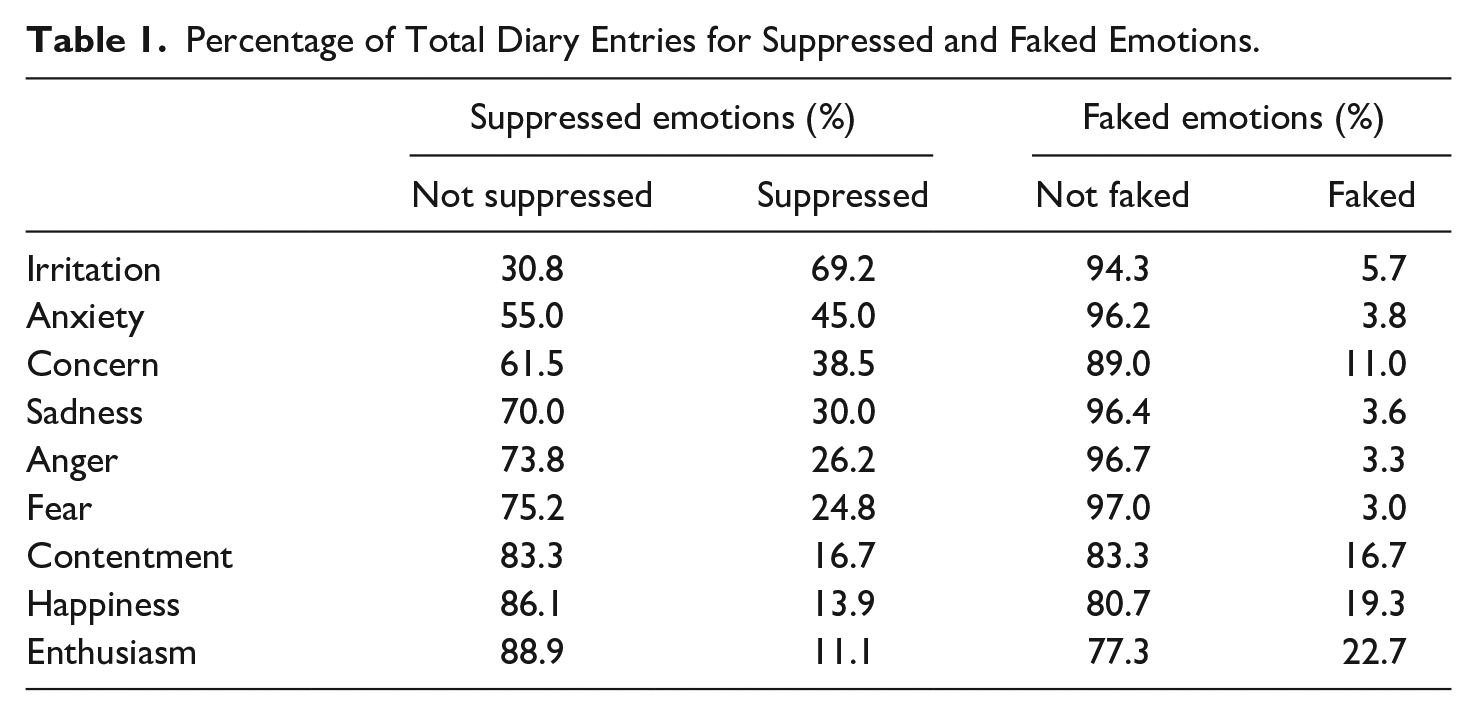
In aggregate, results from the DEELS instrument embedded in the daily diaries revealed high levels of emotional suppression over the course of the 3-week data collection period (see Table 1). Across all diary entries, 69.2% indicated suppressed feelings of irritation on the job. It was more common for socially undesirable emotions (i.e., anxiety, concern, sadness, anger, and fear) to be suppressed (ranging from 24.8% to 69.2%) compared to feelings of contentment (16.7%), happiness (13.9%), and enthusiasm (11.1%). Artificially amplifying or “faking” emotions in aggregate occurred at much lower levels. Contrary to emotional suppression, faking emotions was much more common among the socially desirable cluster of enthusiasm (22.7%), happiness (19.3%), and contentment (16.7%).
Percentage of Total Diary Entries for Suppressed and Faked Emotions.
Given that emotional suppression occurred at higher rates, we explored day-to-day variability in the frequency a discrete emotion was suppressed (see Figure 1). Consistent with our expectations, we observed considerable day to day variability in the suppression of all emotions over the course of the study. Discrete emotions were suppressed at different rates with different standard deviations over the course of the study. This variability over time suggests that the emotional demands of the job were changing daily, creating fluctuations in the extent to which emotional labor was needed as a part of local government employees’ work. To understand the drivers of these fluctuations, we turn to the qualitative diary responses.
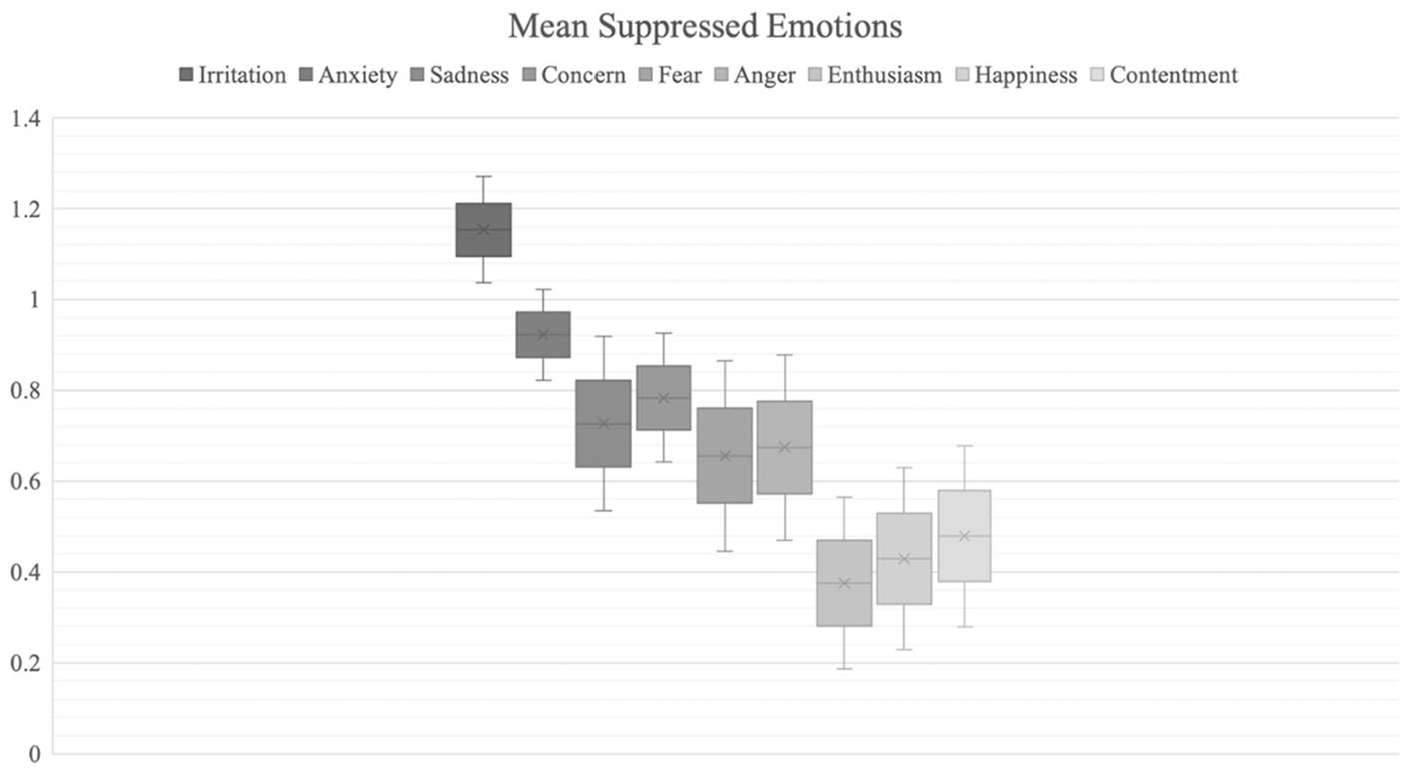
Means for suppressed emotions.
Qualitative Analysis of Emotional Episodes
Our qualitative analysis of the open-ended diary responses was intended to describe the emotional experiences over time and whether employees were able to express what was genuine or felt, what they were forced to either suppress or amplify, and their emotions in interpersonal interactions. Our inductive qualitative analysis of diaries revealed two overarching themes that encompass the patterns of emotional experiences described by respondents: (1) Work-Home Boundaries and (2) Isolation and Social Support. For Work-Home Boundaries, we found three contributing sub-themes: (1) Emotional Spillover, (2) Changing Workload, and (3) Exogenously Imposed Fear/Anxiety. For Isolation and Social Support, we organized three sub-themes of (1) Isolation, (2) External Social Support and Conflict, and (3) Internal Social Support and Conflict. In the following sections, we included observation frequencies and quotes to illustrate the themes found most consistently across the data.
The qualitative data from semi-structured interview transcripts offered alternative mechanisms for participants to express themselves, which included specifying a broader range of emotions and detailing the antecedents and consequences of emotional episodes in their own words. Below we present the key themes inductively derived primarily from the open-ended diaries, and add important context provided from semi-structured interviews throughout.
Work-home boundaries
Emotional spillover
Based on diary responses, there was significant emotional spillover from professional life to personal life and personal life to professional life. The living situation of public employees and their family dynamics created heightened emotional demands that consumed emotional resources necessary for their work on the job. We see unique exhaustion dynamics for those with caretaking responsibilities (both child care and elder care) as well as unique isolation dynamics for those who live alone without a social outlet. In our sample over 50% of respondents live with a spouse or partner, and among that group almost 80% also live with children.
Struggling with work-life balance is heightened with a home environment that includes others, even more so for respondents living with children. For instance, one interviewee mentioned that some of the work-life difficulties they face include “figuring out how to balance homeschooling with the reality of emotions my kids are going through. Then trying to be present for my work team and helping them navigate their workload with the reality of their emotions.” For parents in particular, the ability to set a routine for a full family who are all newly confined to the home presented real challenges, and we saw those routines change over the course of the 3-week study. As an example, one mother explained in her interview, “In the beginning, I had all those plans like, from this time to this time we’ll let her watch TV, we’ll allow that [. . .] two days a week we’ll try and do dance with YouTube, and these two days a week we’ll do this. And just two weeks, and it was like, that’s out the window.”
Beyond keeping children pacified and entertained, diary responses revealed there was a pressure to meet their educational and emotional needs as their kids missed their friends and major social milestones like graduations. Particularly for mothers in the workforce, the inability to balance professional obligations alongside the multifaceted needs of their children contributed to a sense of “mom guilt.” In one participant’s interview response:
“Moms talk about having a lot of mom guilt. That has been exacerbated. My son just learned how to say ‘work.’ He was like ‘no more work mom, no more work, no more work’ and he’s right you know. Sometimes he just wants my attention, but I have a 6pm call, so I have to close the door and he’s crying because he wants me to go outside and play. It’s really sad. And I think the stress of work has really gotten to me too because I feel this responsibility to do work because obviously we’re in a crisis. I don’t have the luxury of not working. We’re trying to manage the crisis. I take that responsibility really seriously but then where does it end?”
The physical, mental, and emotional toll of parenting through a pandemic also impacted relationships between partners. When asked who they turn to for social support, one diary respondent described needing to find new support systems beyond their spouse, sharing, “there have been days when my wife goes to bed because my kids go to bed. The amount that I can turn to her has definitely decreased.” Parents describe leaning on other parents as support, feeling more and more isolated from their friends and colleagues without children. One respondent described parents with kids of similar ages as a safe place where “we are all venting to each other and trying to cope with having multiple kids at home.” For others, fellow parents are not in their immediate social circle, leading to a sense of isolation. One interview participant described feeling increasingly disconnected from the friends they do have, describing “part of the reason I don’t reach out to my friends is I’m pretty much the only parent in the group [..] so I’m kind of on my own with that just because of the luck of the draw of my friend group as it is.”
The relative balance between home and work responsibilities was explicitly probed in daily diary entries and exit interviews. Participants described changes to their workload and the pressures of responding directly to the public as mentally and emotionally exhausting on top of the demands of their personal lives where they often play a social support role for others. Emotional spillover is evident as subjects struggle to balance these dimensions. This specific lament emerged in over 30% of all diary entries. Participants described difficulty with the lack of a routine and a changing work environment. For those recently transitioned to telecommuting, many employees referenced that they had to learn to set boundaries around when to stop working when they were working from home. Many employees described their old commute to work as a routine to prepare for the transition from home-mode to work-mode, and in the absence of that routine there was a feeling of a lack of healthy boundaries. Some went so far as to describe needing to put on a work “mask” or work “attitude” even when physically at home that is new and unpleasant.
While the theme of work-life balance difficulty emerged for most respondents, some participants expressed that they prefer remote work, saying it is easier to take breaks, tend to household issues more flexibly, and spend additional time with family. Regardless of preference of working remotely or in the office, the transition to working from home was a reported added stressor for respondents who lacked dedicated space and resources to execute their job in their home environment.
Changing workload
Overwhelmingly, employees express a much higher workload than they could realistically manage in each workday. Respondents described “getting increasingly slammed at work” and noted the same for their colleagues, making collaborative work especially challenging. They assumed this was to be the nature of their work, given the crisis at hand, but they described struggling to experience a sense of satisfaction or fulfillment. One diary respondent described the almost three-fold increase in their workload as “running a marathon at a sprinter’s pace.” Whether or not hours were formally changing, the expectations from managers were increasing leading to a work environment where “migraines are up and everyone is stressed out all the time.”
There were more than twice the number of increased workload mentions than there were decreased workload mentions. In addition, when respondents described a “lighter” day, it typically described a break from an increased, overwhelming workload rather than a reduction from pre-pandemic levels. For a small percentage of employees, their workload decreased dramatically due to the transition to virtual. They indicated that they were not working with the public as much and were in a state of “figuring it out” or “waiting it out.” Generally, the mention of dramatic decrease in workload was temporary, lasting 1 to 3 days of the diary study, whereas the increased workloads were more consistent and long-lasting across the 3-week time span.
Fear for physical and financial well-being
There was an overwhelming amount of fear and anxiety for their own personal safety (health) among the employees who were considered essential and still had to physically go into work. The theme of concern for workplace safety and its effect on physical well-being emerged in over 73% of respondents. The fear was especially pronounced among those who live with others, where there was an added layer of stress worrying about potentially being exposed to COVID-19 while at work and then bringing it home to loved ones. Participants described concern for adequate safety equipment and practices for interacting with both colleagues and constituents. As an example, one diary participant said “I wish my workplace had [personal protection equipment] (PPE) and disinfecting supplies. It makes going to work very stressful not being able to have clean work areas and equipment” while another added “Every time I leave my home, I am putting my household at risk particularly, my father who has diminished lung capacity and for which COVID-19 is a very real health concern for me.”
Over the course of the 14-day diary, the tendency to express fear for their physical health hinged largely on the employee’s access to PPE as well as the behavioral compliance of coworkers and members of the public with whom they interacted. Respondents in management level positions expressed concerns for maintaining workplace safety but lamented that they did not have the resources to make the workplace safer.
In addition to physical health concerns, there was tremendous economic anxiety among respondents around how the pandemic would impact their pay and job security. Without directly probing about economic anxieties, concern over budget cuts and furloughs emerged in over 50% of diary responses. Many were reminded of the painful and long-lasting cuts made after the financial crisis of 2008. Talk of budget deficits created considerable anxiety as employees thought through what that would mean for their employment prospects, the financial well-being of their families, and ability to meet the needs of constituents. Participants described concern for job safety and the impact that furloughs would have on their personal finances, all while being told by management and leadership they are “essential.” As an example, one respondent named feelings of “fear, anxiety, anger, and irritation” over Mayor Garcetti’s proposed budget announcement which included a call for 26 furlough days in FY 2020-21, amounting to a 10% reduction in pay. Another diary participant stated “I don’t think we should be furloughed for 26 days if we’re considered to be first responders. That doesn’t show much appreciation for the hard work and sacrifice we’re giving to the city.”
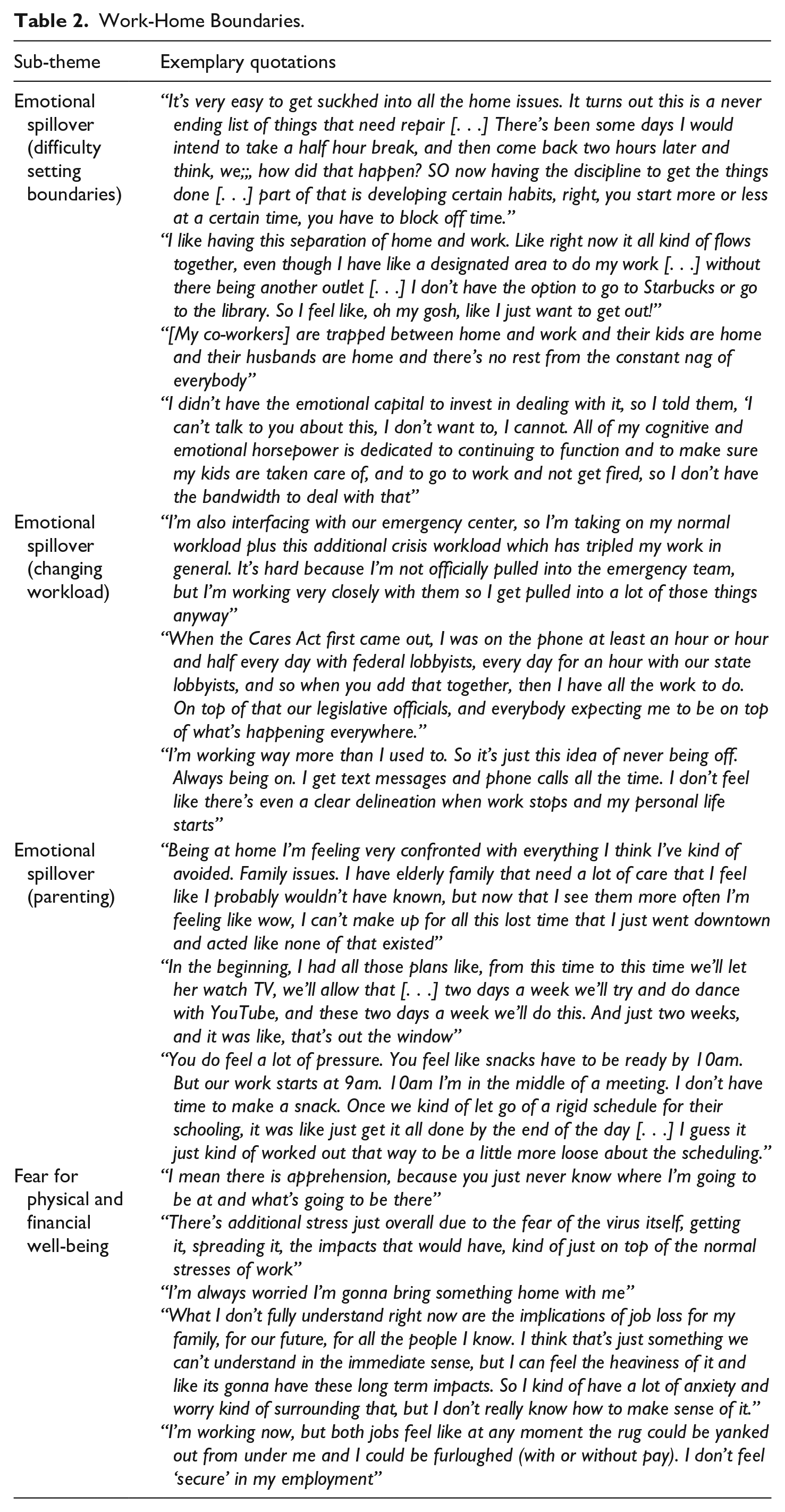
The method of information sharing about the budget cuts and furloughs was mixed and varied over time, and the lack of direct communication and transparency was a source of stress for many. For example, one respondent mentioned “my boss texted all of us another story about budget cuts and told us the pay cuts are coming” while another stated “the mayor’s state of the city address and the mayor’s budget because of course now I’m going to be furloughed after I’ve been told that I’ve been essential employee.” Over the course of the 14-day diary, there were mixed statements about how respondents learned about the budget cuts and furloughs, and the method of information sharing affected the stress that employees experience. When employees heard the news of cuts and furloughs from external news coverage rather than from internal managers and supervisors, they expressed feelings of disappointment and cynicism about leadership in their diaries (Table 2).
Work-Home Boundaries.
Isolation, social support, and conflict
The combination of transitioning to remote or hybrid work for some in tandem with a news environment reinforcing the dangers of social encounters contributed to a sense of isolation among a majority of respondents. In addition to the isolation, the sense of a loss of control over their environment led many to cope by emphasizing controllable behaviors, reminding themselves of their prosocial motivation, and engaging in socially supportive relationships.
Isolation
Several respondents who continued to work in the field as essential workers shared their isolating experiences living in hotel rooms to keep their families safe. Participants described missing interactions with their coworkers as well as their friends and family. As an example, one participant said, “living alone, and loss of daily interaction with colleagues has been one of my biggest challenges;” while another added feeling “a general sense of isolation, which can make it more difficult to stay motivated about work.” Respondents reported that experiencing meaningful encounters with colleagues or personal relationships has a positive impact on their morale and emotional well-being in the workplace and at home. For example, one participant shared in their interview,
“I realized how much I miss the co-workers who have been working from home. This week, one of them, my favorite, came in for one day. Just knowing that she was in the office did a lot to lift the spirits I didn’t know were sagging.”
Respondents were feeling isolated whether they worked onsite or at home and it was taking a toll on their motivation and emotions. Over time, respondents also mentioned ways that they learned to conduct meaningful connections with folks they have been missing with the “new normal.”
External social conflict
In addition to the elevated workload, those who worked in an environment with a customer service/“the customer is always right” set of emotional expectations experienced exacerbated strain during the pandemic. The heightened emotions of the public in many cases led to verbally and emotionally abusive language, and employees had very little institutional protection against this kind of mistreatment. In many cases employees shared in the fears and frustrations of members of the public but lacked the answers or authority to solve the problem at hand yet were still expected to display “professionalism” that required considerable emotional discipline. In their interview, a respondent newly assigned to a customer service function shared:
“for the last couple weeks, we’ve gotten a lot more abusive calls, where I’ve been threatened a couple times [. . .[ we’re getting those [calls] more frequently because people are really frustrated with the lockdown [. . .] and I feel sometimes almost a degree of compassion fatigue.”
This increase in verbal abuse from residents was paired with what some said felt like a lack of appreciation for their efforts and general distrust of government. One interviewee shared:
“People really don’t trust you. If you say ‘I work for the Department,’ they really don’t trust you or they think you’re part of this big hoax [..] people basically try to accuse you of lying on the phone.”
“The city” was described by some employees as a particular kind of work environment with the embedded assumption that it’s a highly professional atmosphere where you are expected to repress certain emotions as a function of the job. This emotional self-suppression comes easier to some than others. One respondent attributed their comfort level in putting on a “public face” as a function of experience: “I’m a 20-year employee with the city so I’ve learned to curb my emotions when it comes to dealing with the public.”
Search for social support
Motivation to support the public while not being reciprocally supported themselves was a consistent theme. While some employees were able to lean on family, neighbors, and friends to help with emotional needs, many respondents felt like they did not have enough support. This was particularly true for those working from home with others who were out of work or on a different schedule. Another common theme was missing the support of family members during difficult life events. In particular, the social isolation and COVID-19 protocols had an outsized effect on those with sick or dying family members. One diary respondent described her emotional experience that day as, “more difficult today as my grandmother is in the last days of her life and we cannot get together as a family to support her and each other.” What would normally be a critical moment of mutual support and coping through grief was absent. Another participant wrote, “my 97-year-old grandmother died this morning and not being able to be with family to support each other is difficult.” The close relationships that participants might typically rely on in a time of mourning were made more distant because of the restrictions imposed by the pandemic.
Some participants had a difficult time with the new stress that COVID-19 placed on their normally supportive relationships. For some, social media and telecalls with loved ones were a helpful coping mechanism. However, for others technologically mediated interactions increased their sense of disconnection. One interviewee suggested video calls were no substitute for the companionship and support of seeing their parents in person, sharing
“I haven’t seen my parents since the beginning of March so I am really heartbroken about it. I do FaceTime them daily but we are a really tight knit family that not being able to visit them is definitely affecting me [. . .] having technology is a nice buffer, but it’s no substitute for face to face interactions and hugs.”
Further research may provide insights into which respondents shifted their emotional reliance toward their immediate household or a widened their support network through social media and technology.
In addition to seeking social and emotional support, many respondents indicated that they themselves were a source of support for others in their personal lives. While some described this social support role as burdensome, most respondents suggested that supporting others was energizing, helped them feel a stronger sense of connection, and created a sense of purpose. One diary respondent shared that playing a support role for others was “more rewarding than anything” with another adding “it’s always nice to feel needed.” Others described supporting others as “energizing” and wishing they could do more because of the “sense of fulfillment” they were able to derive from doing nice for someone else.
Despite the psychological benefits of supporting others, managing the fear of family members was described as especially challenging. One respondent described a spouse who has a mental health diagnosis that manifests in being incredibly cautious and risk-averse, which leads to extra stress about everyday activities like grocery shopping. Another described navigating the anxieties of an adult child in their interview:
“It breaks my heart [be]cause I can’t do anything to fix it. Just thinking about it now makes me want to cry because he suffers from anxiety to start with, and he has a temper that gets out of hand sometimes and it escalates and it’s like don’t yell at me, I didn’t do this. It’s really hard to answer the questions he has.”
Others were mindful that they often find themselves playing the support role both personally and professionally without much support from others in return. As an example, when asked who they turn to for social and emotional support, one respondent shared, “I’m always the one that people come to [. . .] I’m the oldest daughter of nine children. I was always like the second mom and I’ve grown up being that so when I struggle with things, I honestly don’t.” Another shared that the act of helping others “makes me feel good, and then sometimes it makes me more aware [. . .] do I have someone like that or me? It’s like, wait, is anybody asking how I’m doing? It’s made me more cognizant of that.”
Internal social support and conflict
Having a supportive colleague where you can let your guard down emotionally was described as especially helpful for replenishing depleted resources from emotionally taxing experiences throughout the day. Emotionally supportive leaders were highly valued, though employees in larger departments more often described support coming from peers in the same or similar job function. Respondents mentioned making a proactive effort to check in with their colleagues about their general well-being. When colleagues were able to connect and show their support to one another, it was overwhelmingly described as having a positive impact on respondents’ emotions and outlook.
For many respondents there was something fundamentally different about having a co-worker as a support system, compared to someone in their personal life. At the root of the difference was their understanding of the work context and what it means to work in the public sector, so there was less explaining necessary when you need to vent to a colleague. As an example, one respondent described their inability to turn to their family for support because “my parents probably wouldn’t understand what I do anyways.” That same respondent added “I do talk to [my girlfriend] a lot because she also works for the city, so we’re able to have discussions.” Another respondent added, “It’s not overt emotional support from my colleagues, it’s more just like we all kind of without having to say anything kind of get it.” Even for those who live with family, there was still an isolation from the specific support they derive from their colleagues. One respondent said, “After a couple of weeks I started realizing, man, I have no one to tell things to. I have no one. My daughter was home and my husband was home, but it’s not the same as being able to tell your coworker about your job, you know?” For those who were able to maintain their relationships with their colleagues, many expressed feeling that the relationship was strengthened as they navigated the adversity together. As an example, one respondent detailed in their interview:
“I feel like we got a little bit closer. You know she understands me on a little bit more personal level. We were really close as it was prior too, so that’s why I go to her. She kind of knows the ins and outs of everything I deal with at work as well as at home. So if anything, [the relationship] just grew stronger. The friendship grew stronger.”
For other subjects, internal conflict at the workplace emerged as a more salient factor, particularly as it reflected the growing partisan divide in the general public around the pandemic. Several employees described feeling a fundamental shift in the nature of their relationships with their peers and the workplace climate as political ideology began to surface into noticeable behavioral cleavages. Prior to COVID, employees described feeling that their ideological differences from their peers were not consequential because they all considered themselves to be neutral bureaucrats in their roles.
Those ideological differences became much more apparent in the behavioral choices of colleagues around masking and social distancing. These differences were made even more salient when the differences stemmed from leadership, where the tone set can be consequential for the health and wellbeing of the workplace. As an example, one respondent worried, “You wonder if they’re in a supervisory role, if their sort of casual attitude, purposefully casual [. . .] is a subordinate going to take note of that and do the same thing and expose themselves to the disease?” Behavioral choices to mask or not exposed fundamental ideological differences between colleagues who previously worked well together and made little mention of their partisan differences. In the words of one interviewee, “I think there was a certain pressure that hinged on our political differences and how we approached COVID. [In the past] you know we could make fun of each other, but once COVID became a factor [. . .] I had to pay more attention to not making any of those snide remarks because they quite often were misinterpreted or taken defensively”
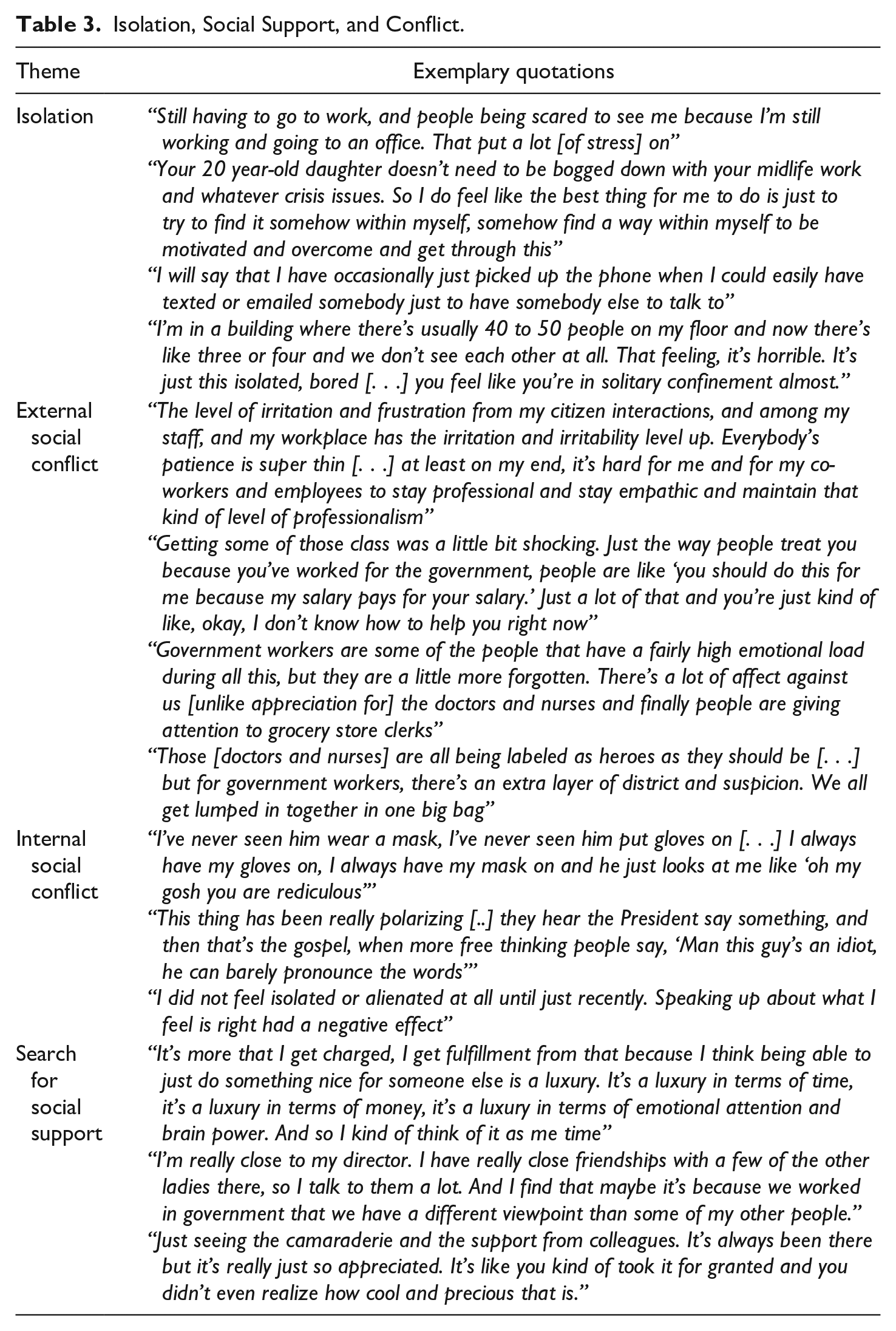
For another respondent, the relationships they have been able to maintain hinge on ideological solidarity. In describing a coworker with whom they are comfortable, the employee elaborated in their interview (Table 3),
“I hate to say it, it’s probably that we’re on the same page regarding the pandemic [. . .] unfortunately I guess that means we’re talking politics too. We’re on the same political spectrum somewhat and that helps. I mean it shouldn’t matter at work but I think more and more it’s getting revealed”
Isolation, Social Support, and Conflict.
Discussion
We applied JD-R theory to understand how daily fluctuations in job demands and resources have unique and combined effects on job stress and motivation during the COVID-19 pandemic. As evidenced in the frequency of emotional labor reported as well as the qualitative descriptions, emotional demands on the job created a source of stress for employees, particularly those who struggled to replenish depleted emotional resources. We explored the social and psychological demands of engaging in emotionally demanding interactions with colleagues and members of the public. Additional job demands experienced by participants of our study included increased job tasks or duties related to COVID-19 response, reported stress about physical wellbeing related to job tasks, and increased tasks in transitioning to a home office.
Additionally, participants in our study saw their resources depleted, whether in the form of low supply of physical PPE, frustration with non-functional IT infrastructure, or decreased in-person social interactions with colleagues for social support. At the organization-level, several studies indicate that job resources like social support, autonomy, and opportunities for personal development can buffer against some of the strain imposed by work pressure and emotional demands (Bakker & Demerouti, 2014). We certainly found evidence that social support is a key mechanism for recovering from the demands of emotional labor. A more recent extension of the original JD-R model is the inclusion of personal resources, such as self-efficacy and positive self-evaluations that have been connected to resiliency in the face of a stressful environment (Bakker & Demerouti, 2014). While not necessarily indicative of self-confidence, the results of this study combining the diary study and the survey results finds that employees who proactively participated in self-care strategies, such as taking a break for a walk outdoors, physical exercise, or meditation, reported lower burnout even when tasked with additional job demands.
When there is an accumulation of job strain, Bakker and de Vries (2021) warn of the potential to develop maladaptive self-regulation strategies, inflexible coping mechanisms, and ultimately burnout. Our findings suggest that a combination of both organizational resources and personal resources need to be stabilized during times of crisis to help weather the fluctuations in emotional demands of public service work. Research by Fredrickson (2003) has shown that employees under strain who experience more negative emotions (e.g., anger, sadness, and irritation) have narrowed thought-action repertoires, which impairs their ability to engage in healthy coping mechanisms. This means public organizations need to think proactively about how to institutionalize opportunities for social support and recovery when their employees are exposed to high job strain and increased job demands. Particularly when job functions are changing, making it difficult for employees to access personal resources of self-efficacy and job confidence in new roles, it becomes increasingly important for organizations to stabilize organizational resources like social support opportunities among colleagues.
Additionally, organizations should proactively invest in developing the emotional skills and competence of their workforce to help buffer against periods of heightened emotional demands. Emotionally intelligent and competent workers have been shown to select more effective emotion regulation strategies on the job, so they are minimally taxed by emotional labor demands (Bakker & de Vries, 2021; Grandey & Melloy, 2017). Emotional Competence (EC) is defined as the configuration of seven proficiencies in interpersonal situations: (1) empathic skills, (2) strategic self-presentation of emotions, (3) convincing targets of communication that one’s emotional reactions are genuine and not self-serving, (4) lack of guilt when using emotions strategically, (5) fostering self-authenticity, (6) developing an ironic perspective, and (7) incorporating one’s moral code into the self-regulation of emotions (Bagozzi, 2003; Fredrickson, 2003). Druskat and Wolff (2001) argue effective teams build emotionally intelligent norms that foster behaviors conducive to building trust among members, a sense of group identity, and group efficacy. For Druskat and Wolff (2001) establishing group norms for confrontation, caring, self-evaluation, and feedback, build upon interpersonal perspective-taking skills at the individual level to help develop trust and a sense of group identity among members. Group norms are instrumental in fostering an affirmative environment that builds a group’s ability to proactively problem solve when responding to novel and emotionally challenging situations (Druskat & Wolff, 2001).
Conclusion
This study aimed to explore emotional labor as a required aspect of crisis response work through a triangulated multi-method design. By combining waves of survey data, diary entries, and semi-structured interviews, we showcase emotional complexities across the work-home boundary for local government officials during the pandemic. We highlight how emotional demands in both personal and professional domains increased for employees while their own emotional resources and organizational resources were being simultaneously depleted. Changing workloads combined with fears about the physical health of loved ones blurred work-home boundaries in ways that contributed to a sense of isolation, particularly for those who were asked to telework. In these new remote work configurations, it becomes challenging to access social support; and with heightened emotions among colleagues, conflict becomes more difficult to manage. While many of these conditions might be difficult for public managers to anticipate, we point to opportunities for leaders of public organizations to adapt practices to help buffer against the emotional demands of crisis response work.
Researchers find that organizations can proactively structure job design in a way that supports burnout prevention through “setting realistic goals and challenges, optimizing job demands, and by providing sufficient job resources” (Bakker & de Vries, 2021). To explicitly build emotional resources, we recommend public organizations invest in providing their employees with opportunities for emotional authenticity through social support mechanisms and train its workforce in emotional competence skills to help buffer against times of disruption and heightened emotion. An increased emphasis on social support and emotional competence would help increase the psychological resources of teams and individual employees, helping to make the local government workforce more resilient during times of crisis. The fact that our study found such significant variability in emotional demands on the job suggests that it may be difficult to constrain the interpersonal scope of most roles, particularly during unprecedented times; but bolstering the organizational and individual resources to address these emotional demands is a viable strategy to mitigate their effects.
With respect to study limitations, the breadth of departments covered in this study provides some insight into general trends in public service. Future research should do a deeper case-based exploration into specific job types to better understand nuanced differences based on department and job characteristics that our sample did not allow. This approach would require a different sampling strategy targeting specific job types with similar characteristics, and comparisons between job types would provide useful nuance to the insights presented here. Additionally, a larger sample would allow for a greater exploration of gender and racial difference in emotional experiences. More specifically, we recommend future scholars adopt an intersectional approach to exploring the emotional labor of local public servants, particularly during times of disruption and crisis.
Despite its advantages over cross-sectional data, diary designs are still limited by the social desirability biases, cognitive biases, and cultural norms that limit self-reports, and Scollon et al. (2003) recommend supplementing diaries with other non-self-report measures in a multi-method design. Nonetheless, the qualitative insights we gather from our triangulated data sources provide a rich description of a previously opaque set of workplace demands and resources during a time of incredible uncertainty and change. We describe different emotional episodes for individuals, helping us understand emotional labor as a dynamic process rather than a static construct. Ultimately, this mixed-methods research design illuminated the depth and diversity of emotional experience for local government employees as they navigate the challenges of the pandemic and lays the groundwork for additional research at the intersection of emotional labor and public management scholarship.
Additionally, we know little about the effect of diary completion itself on participants’ experience or responses, but Bolger et al. (2003) note reactance, habituation, increased complexity, and gradual entrainment should all be explored. Of particular interest, reactance described a change in participant’s experience or behavior due to participation in the study, but there is little evidence that reactance poses a threat to diaries’ validity (Bolger et al., 2003, p. 592). Said differently, diary designs may lead people to pay unusual attention to their internal states and behavior, increasing their baseline levels of self-monitoring, and little is known about the effects of such research designs on a person’s subjective experience (Scollon et al., 2003). Additionally, participant’s understanding of the construct being studied may change over time with repeated exposure to a diary questionnaire (Bolger et al., 2003). Bolger et al. (2003) suggests participants may (1) develop a more complex understanding of the construct in ways that enhance the retrieval of domain-relevant information; (2) entrain their conceptualization of the construct to fit within the parameters measured in the study; and/or (3) experience therapeutic outcomes from the self-reflective recollection process.
Within clinical psychology, cognitive behavioral therapists often make use of journals and diaries as therapeutic tools to address anxiety and a range of mental health issues (Thiele et al., 2002). Across the 60 participants who engaged in exit interviews, when probed explicitly about the experience of completing the diaries, roughly one third described the process as burdensome while the other two thirds characterized the diary experience as either positive or “therapeutic.” This suggests that the study itself may have operated like an additional demand or helped replenish psychological resources through the process of reflection, depending on the perspective of the individual. Whether they characterized the experience as positive or negative, all but four interviewees shared that they had increased their own emotional awareness through the process and learned new things about themselves which they attributed to increased self-reflection.
Many described being more aware of their feelings because they knew they would be asked about it, and several indicated surprise at how often they find themselves suppressing their emotions in service of presenting as “professional.” Others described learning “to be a little bit more forgiving of myself, especially when stressed” and developed more empathy for the emotions of others because of their attention to emotional experience across work and personal boundaries. Others found themselves reinforcing and iterating upon their self-care routines and coping mechanisms for managing stress and emotions because of the expectation that they would be asked about it. As an overarching theme, the research process provided an opportunity for respondents to be more mindful of their experience, in some cases describing the process itself as a form of “accountability” or reminder to take care of themselves. This suggests that research incorporating diaries can be both insightful for researchers, and compassionately designed for participants to find benefits themselves, particularly during challenging times.
Supplemental Material
sj-docx-1-rop-10.1177_0734371X221108501 – Supplemental material for The Emotional Toll of the COVID-19 Crisis on Local Government Workers
Supplemental material, sj-docx-1-rop-10.1177_0734371X221108501 for The Emotional Toll of the COVID-19 Crisis on Local Government Workers by Cynthia Barboza-Wilkes, Esther Gonzalez, William Resh and Stephanie Wong in Review of Public Personnel Administration
Footnotes
Declaration of Conflicting Interests
The author(s) declared no potential conflicts of interest with respect to the research, authorship, and/or publication of this article.
Funding
The author(s) disclosed receipt of the following financial support for the research, authorship, and/or publication of this article: This work was supported by the Civic Leadership Education and Research (CLEAR) Initiative of the University of Southern California’s Sol Price School for Public Policy and through a grant by the Dora and Randolph Haynes Foundation of Southern California.

Supplemental Material
Supplemental material for this article is available online.
Notes
Author Biographies
References
Supplementary Material
Please find the following supplemental material available below.
For Open Access articles published under a Creative Commons License, all supplemental material carries the same license as the article it is associated with.
For non-Open Access articles published, all supplemental material carries a non-exclusive license, and permission requests for re-use of supplemental material or any part of supplemental material shall be sent directly to the copyright owner as specified in the copyright notice associated with the article.
