




Abstract
This article systematically reviewed the body of literature concerning work engagement in public organizations, aiming to examine the antecedents of work engagement in the public sector. Web of Science and Scopus, two prominent journal databases, were utilized to identify relevant literature. Adopting the Preferred Reporting Items for Systematic Reviews and Meta-Analyses (PRISMA) approach, a final of 48 articles were systematically analyzed as research samples. The review identified five main themes: organizational and team factors, perceived leadership, job-related experience, individual, and organizational intervention factors. Generally, most studies reviewed emphasized individual and job-design-related factors as antecedents of work engagement in the public sector. Only minimal emphasis has been placed on organizational intervention compared to the other factors. This study also found that most literature addressed a single or a few themes of work engagement antecedents instead of a comprehensive work engagement model comprising all related aspects. This systematic review ends with directions for future studies to aid future scholars.
Introduction
Recent years saw a rise of interest toward the concept of work engagement among research and practitioners due to its significant impact on organizational performance (Bakker & Demerouti, 2008; Macey & Schneider, 2008; Shuck et al., 2011). The concept emerged around 30 years ago when Kahn (1990) published the first paper on “personal engagement” and argued employees chose to invest themselves entirely in their roles based on their working experiences. Later, Maslach and Leiter (1997) reintroduced the concept of work engagement as an energetic state at work that opposed burnout. Engaged employees are seen as more energetic and they view work as a challenge; this is different from employees who are burnout, where they are stressed and view work as demanding. Thus, the work engagement concept rose to prominence, leading to a vast range of definitions, concepts, measurements, and engagement theories (Macey & Schneider 2008).
Existing studies stipulate that employees who are engaged tend to be more proactive, committed, dedicated, and strive toward achieving organizational goals. Schaufeli et al. (2002) defined an engaged employee as one with a positive and fulfilled work-related state of mind, characterized by vigor, dedication, and absorption. These employees have been proven to be highly proactive, committed, and dedicated than their less engaged or disengaged counterparts. Other terms used interchangeably with work engagement in the current literature are employee engagement and job engagement. Although there are slight differences between the concept of work engagement and employee engagement, however, based on the findings, researchers in this field used both terms interchangeably in their studies and majority used the same instrument to measure the construct. The job demands-resources (JD-R) model forms the theoretical foundations of the work engagement construct (Bakker & Demerouti, 2008), distinguishing between two major areas of job characteristics: job demands and job resources. JD-R asserts that all jobs, regardless of being in public or private organizations, have demands and resources. Job demands such as work overload, job insecurity, role ambiguity, work pressure, and role conflict are all job characteristics that may cause strain. High job demands impair work engagement due to mental stress, emotional, and physical fatigue and may become job stressors when meeting the required demand, and sustaining a projected level of performance takes a lot of significant effort. On the other hand, job resources refer to working conditions that provide resources and support for employees, such as salary, career opportunities, job security, feedback, role clarity, and decision-making participation. Job resources reduce job demands and related physiological and psychological costs, functioning toward achieving work goals and stimulating personal growth, learning, and development (Demerouti et al., 2001). All these factors will increase work engagement by building both intrinsic and extrinsic motivation. Due to JD-R covering all the job aspects to improve work performance, the theory has been vastly used to identify antecedents of work engagement in organizations in many studies. Furthermore, empirical studies are required to comprehend if employee work engagement is affected by the interaction of alternative demands and resources (Cooke et al., 2019). Hence, identifying antecedents of work engagement is recommended since it is specific to the job, organization, or group (Saks, 2006).
Work engagement as a concept is paramount to the public sector. Increasing engagement and productivity among public servants is crucial because government agencies are the center of responding to many crises (Worldbank, 2020). Although many studies on work engagement have been published related to its antecedents and the positive outcomes it brings to organizations, only a few studies were conducted within the public sector context, and literature on work engagement within the public sector is still limited (Vigoda-Gadot et al., 2013). Therefore, sound knowledge in this field remains inadequate. Scopus and Web of Science database search also revealed a dearth of studies on antecedents of public sector work engagement despite the importance of the public sector performance in economic growth.
The efforts to systematically review work engagement studies remain scarce though engagement is an important topic. Fletcher et al. (2020) state none of the recent reviews and meta-analyses on work engagement specifically explore work engagement within a sectoral framework. Robinson et al. (2004) argue that despite similar engagement drivers between organizations, levels of engagement might vary depending on demographic and job-related factors. Therefore, organizations from all sectors, whether private or public, should identify factors that could enhance employees’ work engagement in order to achieve their organizational goals.
Borst et al. (2019), in their recent meta-analysis, found the correlations between work engagement and other job-related attitudes are higher for public sector employees than private-sector employees. Hence, there is a compelling need to narrow said gaps to gain more understanding of work engagement in the public sector. A comprehensive assessment of the factors that influence work engagement will add to the body of knowledge of work engagement studies. In order to gain a clear grasp of work engagement within government organizations, researchers, and practitioners must identify more work engagement antecedents at work.
Hence, this systematic literature review examines some of the most recent work engagement studies related to the public sector. The definition of public sector varies between countries. In this article, the term public sector refers to organizations owned and operated by the government, including federal, state, or local government and semi-government organizations that aim to serve the citizens’ needs. Public sector agencies provide services to the public include health care, national defense, education, and water management. Organizations in the public sector, like those in the non-profit sector, do not attempt to make a profit.
Systematic search evidence in this study focuses on the following questions:
(i) What are the recent findings of antecedents of public sector employee work engagement?
To answer the research question, firstly, we identify the findings from the current studies on work engagement in the public sector. Then, a systematic review of research in identifying antecedents of work engagement has been discussed further. Finally, a reflection of research on work engagement was conducted, with limitations and directions for future studies indicated.
Methodology
Method
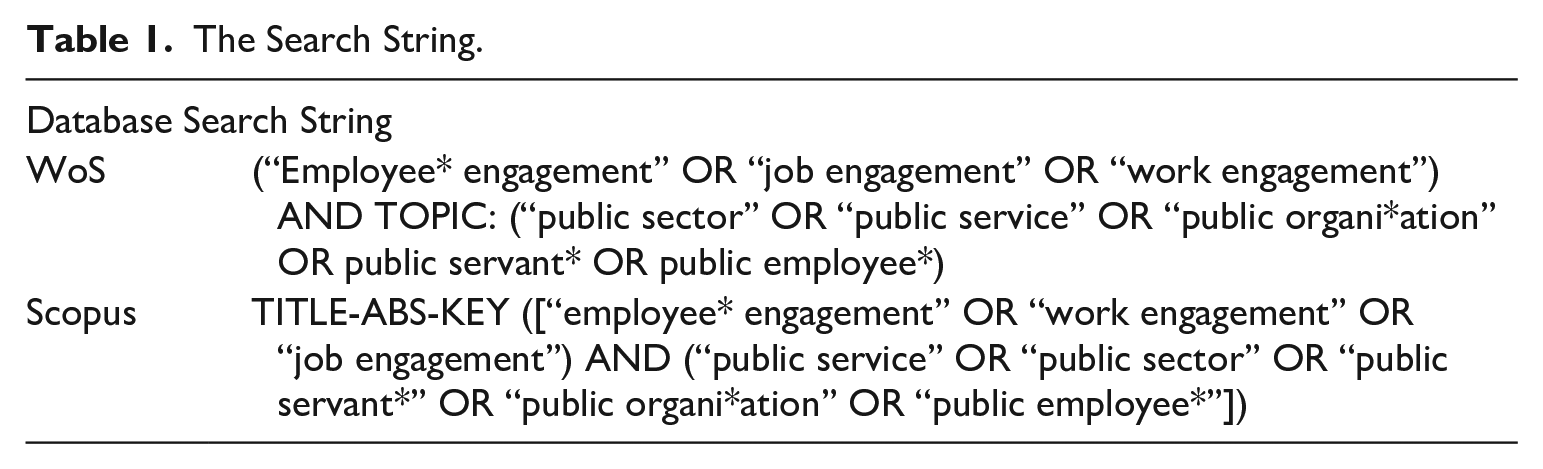
The methodology for this systematic review involved four key steps in accordance with the Preferred Reporting Items for Systematic Reviews and Meta-Analyses (PRISMA); identification, screening, eligibility, and inclusion. Different keywords were used individually and in combination to identify posts (see Table 1).
The Search String.
Research Design and Strategy
Systematic review literature was conducted to promote critical thinking to examine antecedents of work engagement among public sector employees. The review includes literature published between January 2016 and December 2020. The latest 5-year relevant articles were selected to identify the research trends and evolution in the last 5 years and address the research gaps in this area. The quality of review is assured through the availability of comprehensive, up-to-date, and interdisciplinary materials. Hence two prominent databases, Web of Science (WoS) and Scopus, were used to search for relevant journal articles, as both are reputable for high-quality and interdisciplinary content. WoS provides an overview of worldwide research findings and covers vast areas of study related to interdisciplinary social sciences, social issues, environmental studies, as well as development and planning. WoS also contains Clarivate Analytics with extensive backfile and citation data, ranking them through three different measures; citations, papers, and citations per article. The second database used is Scopus, which possesses the largest abstract and citation database, besides accommodating numerous journals from publishers worldwide. Scopus comprises a wide range of subjects, including social sciences, sciences, and arts and humanities. The selection policy and international selection board have been clearly defined to meet high expectations of research. However, it is important to note that no database is completely perfect and comprehensive, WoS and Scopus included. Although there are other databases that also provide relevant articles in this area, the selection of WoS and Scopus was made in this study to ensure that all studies included are from reputable and high-quality journals.
Materials
The following section covers all materials utilized within this systematic review, which include PRISMA, systematic analysis process, resources, inclusion and exclusion requirements, and abstraction and analysis of the data used in current research.
PRISMA: Preferred reporting items for systematic reviews and meta-analyses
The PRISMA framework, developed by Moher et al. (2009), is a published set of guidelines to aid systematic literature reviews, critical literature analyses, and meta-analyses, among other types of research. Published guidelines play an important role in directing authors and providing them with important information to examine and evaluate the quality and accuracy of a study. The PRISMA tool or framework offers various methods to systematically search for papers and literature in review-based studies. PRISMA also focuses on the formulation of inclusion and exclusion criteria. Systematic quality assessment of selected literature helps determine whether it will be included or excluded. PRISMA also allows for time-range specification when exploring vast scientific literature within a database, promoting accuracy when searching for terms relevant to work engagement in the public sector.
Identification
Selecting relevant articles for the present systematic review involved three main stages. The first stage is identifying keywords, followed by a search process to identify similar and related terms according to the thesaurus, dictionaries, encyclopedia, and past research. A systematic search for literature on the WoS and Scopus database via search string was conducted in October 2021 upon identifying relevant keywords (refer Table 1). Besides work engagement, we include other keywords (i.e., job engagement and employee engagement), as these three terms have been used interchangeably in work engagement studies. Furthermore, we also include public service in the search string as public service is part of the public sector. As a result, during the identification stage, 868 articles were retrieved from both databases.
Screening
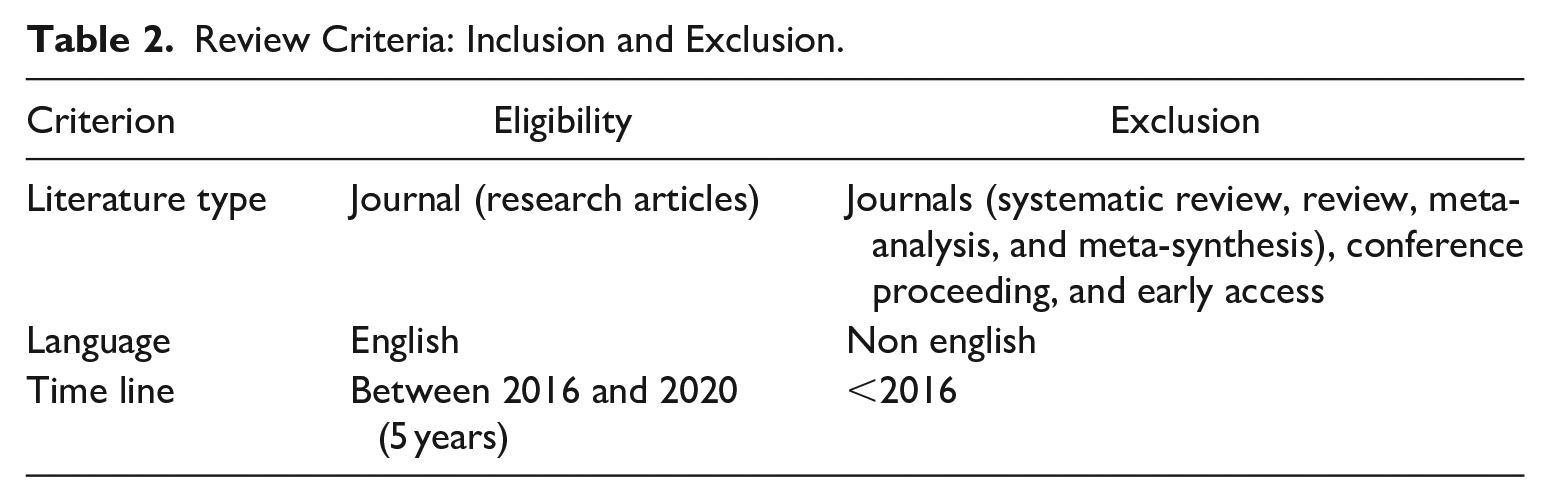
The second stage intended to remove duplicate papers, from which 34 articles were excluded. The remaining 834 articles were filtered based on the researcher’s inclusion and exclusion criteria. This analysis focuses entirely on research papers due to the fact that research papers are primary sources providing empirical evidence. Therefore, this systematic literature review implies the exclusion of review papers, meta-analyses, meta-syntheses, books, and conference proceedings. It should also be noted that only papers written in English were included in order to avoid any misunderstanding and translation difficulties. Therefore, the searching efforts excluded non-English publications and focused articles published in English. The time-range set was between 2016 and 2020 (5-year duration) to ensure that only recent studies were selected in this article to determine the most recent trends in work engagement studies and research gaps. In order to maximize the probability of attaining more relevant articles, this systematic literature review includes all papers published in any subject area (Table 2).
Review Criteria: Inclusion and Exclusion.
Eligibility
The third and final stage of PRISMA was eligibility. At this juncture, the research titles, abstracts, and key contents of the remaining papers were thoroughly examined to ensure they met the inclusion criteria. From the papers examined, 118 were excluded because they were not empirical studies. Another exclusion factors are that the studies did not focus on work engagement antecedents in the public sector; work engagement was not a dependent variable, antecedents did not directly correlate with work engagement in the studies, and articles have a combined result of public and other sectors. In addition, some studies have a combined result of two or more dependent variables (work engagement was one of the dependent variables), which resulted in the findings not being included, leaving 48 papers to be examined (see Figure 1).
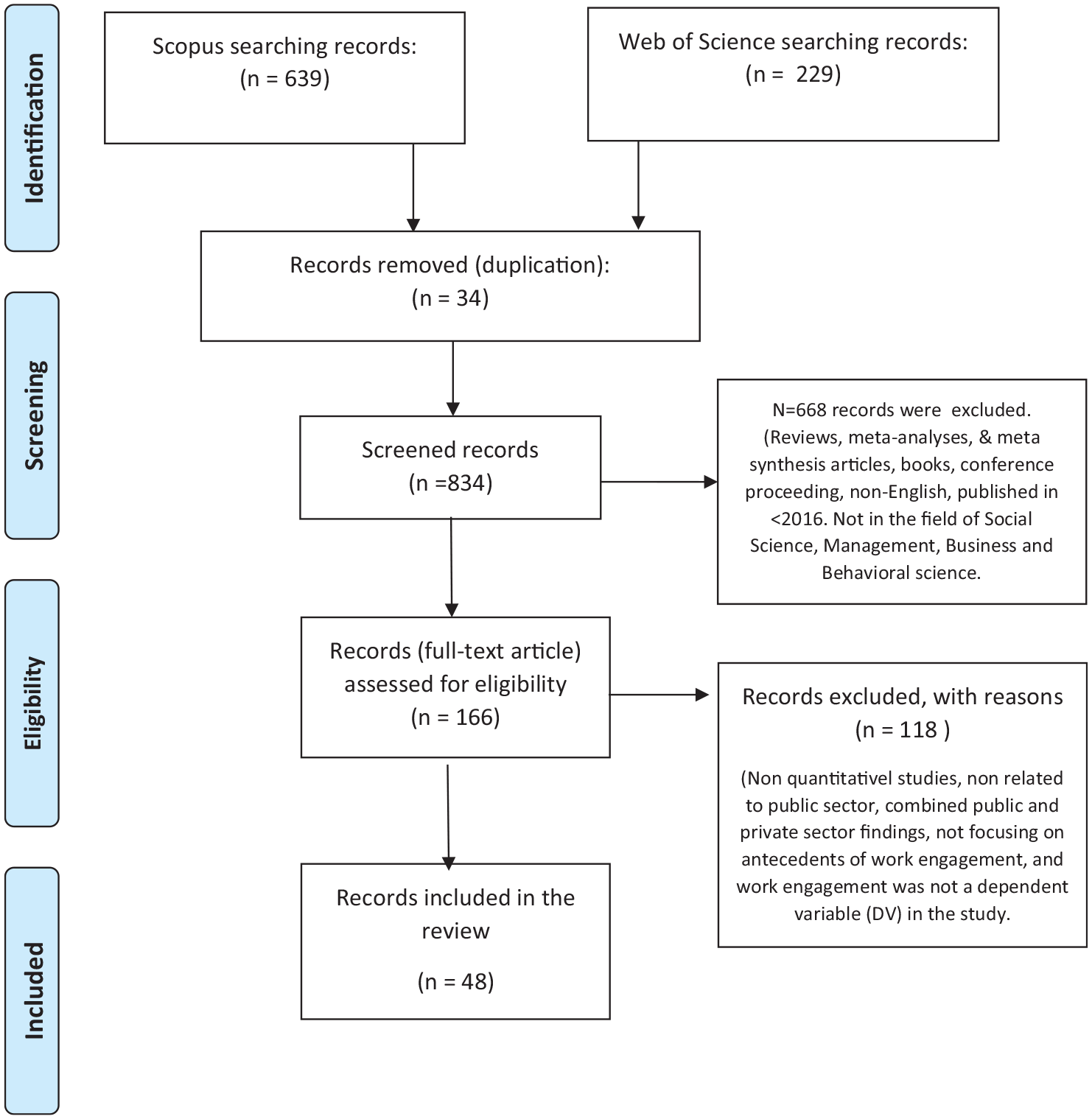
PRISMA flow diagram.
Results
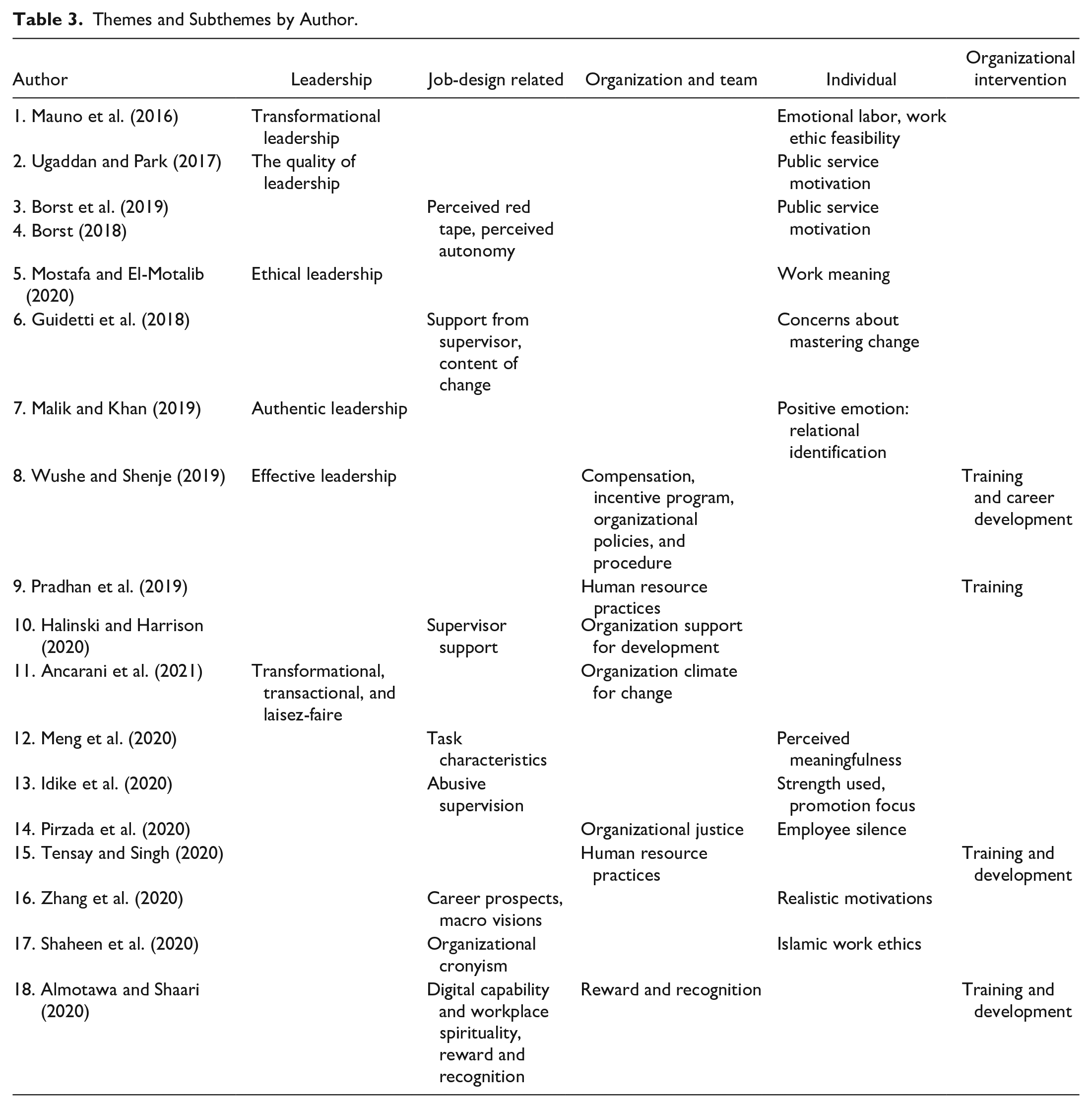
A total of 48 articles were analyzed upon examination of abstract, full-text review, and inclusion criteria as part of the systematic review process. From which all were quantitative studies, with 38 cross-sectional studies (e.g., Ancarani et al.,2021; Gyensare et al., 2017; Malik & Khan, 2019) while the remaining 10 were longitudinal and time-lagged studies (e.g., Eldor, 2018; Hernaus et al., 2017; Malik & Khan, 2019). The use of data collected from multiple sources in a longitudinal design at multiple levels can reduce common method bias (Favero & Bullock, 2015; Podsakoff et al., 2003) that has the potential to jeopardize the research findings validity. In this review, public sector work engagement’s antecedents were divided into five main themes, adapted Bailey et al.’s (2017) approach in their narrative evidence synthesis method study that grouped antecedents based on their commonalities in attributes. The five main themes identified were individual psychological states, experienced job-design-related factors, perceived leadership and management, individual perceptions of organizational and team factors, and organizational interventions or activities.
It is also important to note that some articles (18 studies) addressed more than one theme in their study (see Table 3).
Themes and Subthemes by Author.
Geographic analysis of the work engagement studies found most studies were from Italy, India, China, the United States of America, and Pakistan. Five studies were from Italy, India, and China. Four articles were from the United States and Pakistan. Meanwhile, other studies came from various countries; two articles from Netherland, Finland, South Korea, and Nigeria. Furthermore, one study covered public work engagement in Ireland, Australia, Greece, Spain, Argentina, Canada, Turkey, Malta, Croatia, Malaysia, Saudi Arabia, Ethiopia, Zimbabwe, Egypt, and Israel. Overall, research was conducted in 26 different countries (see Figure 2).
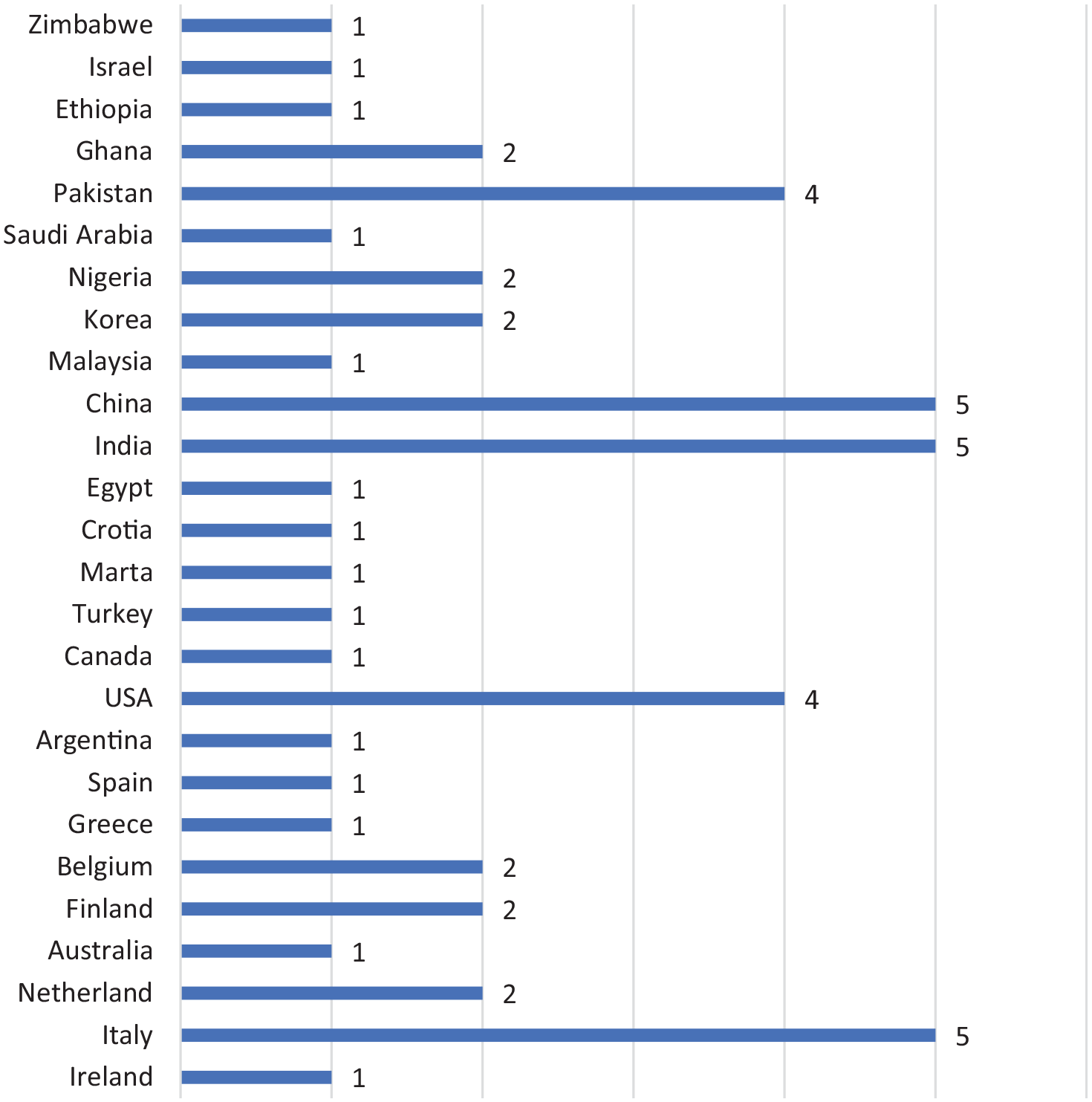
Countries of research studies.
In terms of year of publication, the number of quantitative research in the field of work engagement has risen dramatically in 2020 compared to previous years. Twenty four articles reviewed were published in 2020 (e.g., Ancarani et al., 2021; Brunetto et al., 2020; Halinski & Harrison, 2020; Rai & Maheshwari, 2021; Uhunoma et al., 2020), eight articles were published in 2017 (e.g., Borst et al., 2019; Gyensare et al., 2017; Hernaus et al., 2017; Ugaddan & Park, 2017), and six were published in 2019 (e.g., Malik & Khan, 2019; Pradhan et al., 2019; Obuobisa-Darko, 2020; Wushe & Shenje, 2019) and 2018 (e.g., Borst, 2018; Eldor, 2018; Mostafa & El-Motalib, 2020) respectively, Lastly, four articles were published in 2016 (e.g., Conway et al., 2016; De Simone et al., 2016; Jin & McDonald, 2016) (see Figure 3).
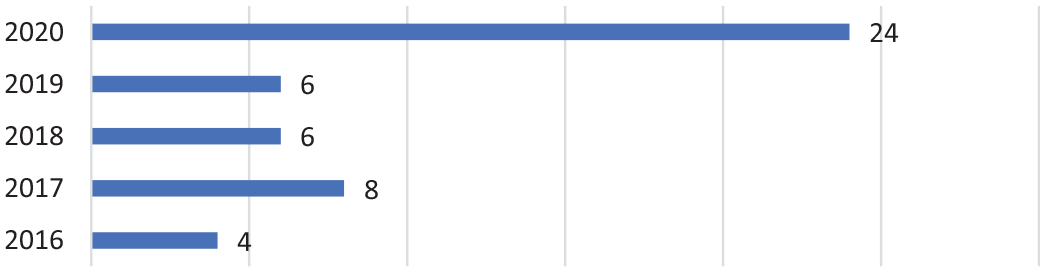
Year of publication.
Antecedents of public sector work engagement
Forty-eight studies relevant to the review were extracted based on the identification, screening, and eligibility stages. Each article was analyzed and the antecedents identified were grouped into five main themes based on commonalities in attributes adapted from Bailey et al. (2017), namely individual psychological states, experienced job-design-related factors, perceived leadership and management, individual perceptions of organizational and team factors, and organizational interventions or activities.
Based on the findings, the Social Exchange Theory (SET) and JD-R were used as the underpinning theories in most studies reviewed on work engagement. Nineteen studies utilized SET to conceptualize and operationalize the research constructs (e.g., Brunetto et al., 2020; Jin & McDonald, 2016; Rai & Maheshwari, 2021; Pradhan et al., 2019; Wushe & Shenje, 2019). The selection of SET as the underpinning theory is based on the assumption that work engagement is influenced by the interaction between various parties in the organization, such as the employers, leaders, and employees. The studies hypothesized that employees would be more engaged at work if a favorable relationship between them and their employers had been established.
Another 18 studies centered on the relationship between job resources, job demands, and work engagement within the framework of the JD-R (e.g., Ancarani et al., 2021, Borst, 2018; Borst et al., 2019; Halinski & Harrison, 2020). JD-R posits that antecedents of work engagement were divided into two categories: job demands and job resources. Job demands have a negative effect on work engagement. In contrast, job resources have a positive effect on work engagement by reducing the impact of job demands on work engagement and, at the same time, increasing work engagement. A wide range of job resources was examined based on the JD-R theory, including organizational support, supervisory support, management support, perceived autonomy, perceived leadership, and training and development. Meanwhile, job demands examined include perceived high workloads, abusive supervision, organizational cronyism, and workplace incivility.
Studies by Ancarani et al. (2021), Borst et al. (2019), and Borst (2018) examined the association between job demands (i.e., perceived red tape and organizational climate for change) and work engagement. Results obtained from the studies were inconclusive. For instance, Borst et al. (2019) found no association between perceived red tape and work engagement among Dutch public servants. Thus, the result did not align with the JD-R notion that job demands were supposed to affect work engagement negatively. However, the study by Idike et al. (2020), in their hierarchical multiple regression analysis, revealed that employees with a high perception of abusive supervision reported lower work engagement behavior, which conformed with the JD-R model.
Finally, other theories used to explain the recent work engagement studies included such theories as equity theory, ability, motivation and opportunity (AMO) theory, transactional theory, and expectancy theory. It is also important to note that some studies did not identify which theories were employed.
Individual psychological states
Individual psychological states theme encompasses employees’ constructs, states, conditions, behaviors, and experiences that were found to be the basis for the development of work engagement framework in many studies. This theme includes individual’s positive or negative mental states or perceptions toward their job, organizations, teams, personal strength, and ability. Positive psychological conditions such as motivation, positive emotion, strength used, perceived meaningfulness, and psychological ownership were found to be positively associated with engagement (Chai et al., 2020; Malik & Khan, 2019; Meng et al., 2020). On the other hand, the outcomes of negative individual psychological states such as employee silence, obsolescence, perceived stress showed a significant and negative relationship with work engagement (Miranda et al., 2020; Pirzada et al., 2020; Singh & Kumar, 2019). Another negative psychological state, which is challenge stressors, showed a positive effect on work engagement (Jiang et al., 2020), which contradicts the JD-R theory that postulates job demands to have a detrimental impact on work engagement.
Of all the individual factors examined, public service motivation (PSM) was the only factor exclusively related and focused on the public sector. PSM was identified as an antecedent of work engagement in four of the research papers examined and was found to have a positive effect on work engagement in every research (e.g., Borst, 2018; Borst et al., 2019; De Simone et al., 2016; Ugaddan & Park, 2017), which was consistent with the previous research (Bakker, 2015). However, Borst (2018) found that a dimension of PSM, which is the attraction to public policy, did not have a significant effect on work engagement among people-changing organizations (e.g., education and health care). Still, it is shown to have a significant positive effect among people-processing organizations. A possible reason is that public servants who worked in people-changing organizations perceived their work as their true calling; hence, they are less attracted to public policy.
Perceived leadership: Leadership style and quality of leaders
Perceived leadership was found to be among the most significant antecedents of public sector employees’ work engagement. In particular, attributes of a leader and employee perception toward their leaders were essential in increasing employee outcomes. Well-respected, trusting leaders who motivate their employees while showing care and concern drive their employees to reciprocate and contribute their best toward achieving organizational goals.
From this systematic review, 12 studies were found to have focused on leadership, with 8 studies, in particular, focused on leadership styles. Transformational leadership style was found as the most studied antecedent of work engagement (four studies). Other studies (seven studies) addressed other leadership styles: ethical leadership (three studies), transactional leadership (two studies). Authentic leadership and laissez-faire were addressed by one study respectively. Furthermore, other factors under this theme were the quality of leadership, effective leadership, and development of leadership were addressed by one study each.
A total of eight studies discussed leadership styles in the public sector that influence work engagement among public employees. Of these studies, four studies examined the transformational leadership styles (Ancarani et al., 2021; Gyensare et al., 2017; Mauno et al., 2016; Obuobisa-Darko, 2020). All studies found a positive association between transformational leadership and work engagement in the public sector. According to the findings, leaders who exhibit a transformational leadership style can maintain a high-quality relationship with their followers, which can increase their level of engagement and lead toimproved performance. Two studies examined the relationship between transactional leadership and work engagement in the public sector. A study by Obuobisa-Darko (2020) found a positive association between transactional leadership and work engagement. However, public leaders who exhibited the transformational leadership style had a more substantial effect than those who exhibited the transactional leadership style. Another study by Ancarani et al. (2021) found that contingent reward and management by example (passive), which are the attributes of transactional leadership, have an insignificant direct effect on work engagement. However, management by example (Active) indicates a small negative significant effect on work engagement. The other studies found links between authentic leadership, ethical leadership, laissez-faire, and work engagement in the public sector. A study by Malik and Khan (2019) found that authentic leadership correlates positively with work engagement. A positive correlation was also found between ethical leadership and work engagement in the public sector (Mostafa & El-Motalib, 2020). Furthermore, laissez-faire leadership was found to have an insignificant effect on work engagement (Ancarani et al., 2021).
Besides leadership style, a few studies addressed different leadership aspects, such as the quality of leadership and effective leadership. Ugaddan and Park (2017), who examined the quality of political and administrative leadership on work engagement among federal United States employees, finding a significant positive relationship between the two variables. Meanwhile, Wushe and Shenje’s (2019) study also found a positive relationship between effective leadership and work engagement. In conclusion, all positive leadership behaviors and styles positively affect employee outcomes, including work engagement, as explained in SET, which posits the paramount relationship between leaders and employees. On the other hand, the leader’s factor is considered job resources that reduce job demands and increase work engagement.
Job-design related experiences
Other work engagement researchers were interested in finding the relationship between job-related experiences and work engagement. As a result, 17 studies reviewed focused on job-related experiences, such as perceived autonomy, perceived organizational support, supervisory support, job characteristics, job re-design, abusive supervisor, organizational cronyism, perceived high workload, and red tapes.
Three studies found a positive association between perceived supervisor support (including compassion from the supervisor) and work engagement (Eldor, 2018; Halinski & Harrison, 2020; Jin & McDonald, 2016). Jin and McDonald (2016) indicated that perceived oganizational support positively correlated with work engagement in the public sector. Job characteristics (Rai & Maheshwari, 2021), job re-design (Hernaus et al., 2017), and work meaningfulness (Mostafa & El-Motalib, 2020) were discussed in three studies. These factors were also found to positively influence work engagement in the public sector. A study by Conway et al. (2016) examined the experience of employees pertaining to performance management and employee voice. It indicated that the experience of performance management had a negative association with work engagement and a positive association with employee exhaustion (the opposite of engagement), respectively. Employees who experienced performance management showed lower levels of work engagement than those who did not. Alternatively, in the same study, employee voice experience was found to be positively related to work engagement in public sector organizations in Ireland.
Negative antecedents under this theme, all of which are considered job demands such as abusive supervisors, organizational cronyism, perceived heavy workload, and red tapes, have a negative association with work engagement (Borst, 2018; Idike et al., 2020; Shaheen et al., 2020; Ugwu & Onyishi, 2020) which is in line with JD-R theory.
Organizational and team factors
At the organizational and team levels, 12 studies addressed employee perception in various areas such as human resource (HR) practices, organizational support for development, organization culture, and organizational justice. According to SET, people make decisions by assessing the costs and rewards of a relationship or activity and maximizing their reward at the end. As a result, it is assumed factors that benefit employees have a good effect on work engagement. Two studies addressed reward, recognition, compensation, and incentive program (Almotawa & Shaari, 2020; Wushe & Shenje, 2019). Wushe and Shenje (2019) found a positive correlation between compensation and incentive programs and employee engagement. However, Almotawa and Shaari (2020) study discovered that incentive and recognition are negatively and insignificantly associated with employee engagement, which contradicts the SET.
Three studies found organizational justice (including distributive, procedural, and interactional justice) has a positive and significant effect on work engagement (Lamprakis et al., 2018; Özer et al., 2017; Pirzada et al., 2020). Lamprakis et al. (2018) found distributive, procedural, and interactional justice have a positive relationship with work engagement but at a different degree (strong, mediocre, and weak). Two studies found a positive correlation between human resource management and work engagement (Pradhan et al., 2019; Tensay & Singh, 2020). In addition, organizational support, organizational culture, and organizational learning (Halinski & Harrison, 2020; Özer et al., 2017; Uhunoma et al., 2020) also have a positive effect on work engagement. Relevantly, Ancarani et al. (2021) found two attributes of organizational climate for change, readiness to change and goal orientation were positively associated with work engagement in the public sector. On the other hand, another attribute, operational efficiency, was negatively related to work engagement. Another antecedent that affected work engagement negatively is workplace incivility (Alias et al., 2020).
Organizational interventions
Organizational intervention is the aspect of work engagement that has received the least attention in recent studies. Based on the findings, individual perceptions of organizational interventions, such as training and development programs, were only studied in four research papers. Prior studies found that training and development programs influence work engagement (Nawaz et al., 2014; Rana & Chhabra, 2011; Sundaray, 2011). Wushe and Shenje (2019), Pradhan et al. (2019), and Tensay and Singh (2020) studies found that training and development have a significant and positive relationship with work engagement. However, Almotawa and Shaari (2020) study discovered that training and development negatively and insignificantly affect work engagement.
Bridging it together: Antecedents of public sector work engagement
From the 48 studies examining antecedents of work engagement, the majority (22) studies focused on individual factors. Within this category, researchers focused on positive or negative psychological states and behavioral. Positive psychological states examined in the studies are work meaningfulness, psychological capital, motivation, relational identification, psychological ownership, and work ethics. Meanwhile, negative psychological states highlighted were perceived stress, employee silence, obsolescence, and challenge stressor. Job design-related (18), organizational and team factors (12), and leadership (12) were the other most significant categories of work engagement antecedents. Of all the studies, only four focused on how employees responded to organizational interventions such as training or development programs aimed at boosting work engagement. Given the dominance of the JD-R framework and SET in the theorization of the work engagement concept, these findings were expected.
The majority of these studies found positive antecedents such as positive psychological states, positive perceptions of leaders, teams and organizations, job resources, and organizational intervention are antecedents that have a positive effect on work engagement. In contrast, negative antecedents, such as negative psychological states, job demand, bad leadership, and abusive supervision are linked to lower levels of engagement. However, several studies were found to contradict the JD-R Theory and SET. For example, job resources (incentive and recognition) were found insignificantly associated with work engagement in a study by Almotawa and Shaari (2020). The study also discovered that training and development have a negative and insignificant association with work engagement. Another study by Borst (2018) found that attraction to public policy (PSM dimension) did not have a significant effect on work engagement among people-changing organizations. On the other hand, it was discovered that negative psychological states and job demands do not entirely have a detrimental effect on work engagement. Negative psychological states such as emotional demands and challenge stressors showed a positive effect on work engagement (Jiang et al., 2020; Martinez et al., 2020), which contradicts the JD-R theory that postulates that job demand has a negative effect on work engagement. In addition, Borst et al. (2019) found no association between job demand (perceived red tape) and work engagement among Dutch public servants.
Most studies used a cross-sectional method. Self-report measures were utilized among 38 studies reviewed, where questions for all the factors discussed were probed within the same survey, increasing the possibility of common method bias. Causal inferences related to the findings presented could not be interpreted due to the cross-sectional nature of the studies. From the findings, only 10 studies used the longitudinal method or complex model that allowed for causality evaluation. The longitudinal studies described job resources, Hernaus et al. (2017) indicated a positive influence between job re-design (job characteristics, task interdependence, workload, task identity, task significance, and supervisor support) and work engagement. Evidence from a study by Eldor (2018) found compassion from supervisors to be positively associated with a sense of work engagement. Malik and Khan (2019) administered questionnaires at varying intervals to avoid common method bias. In the first phase of the study, participants responded to authentic leadership and engagement. Two months later during the second phase, participants responded to relational identification. Whereas 1 week later, in the last phase, participants responded to positive emotions. The study also found a positive association between authentic leadership and relational identification with work engagement.
The findings reveal that a majority of 41 studies used the Utrecht Work Engagement Scale (UWES) developed by Wilmar Schaufeli and Arnold Bakker as an instrument to determine work engagement. Regardless of the term used to refer to engagement (i.e., work engagement, job engagement, or employee engagement), most studies adopted UWES to measure the construct. Furthermore, it shows that these three different terms have been used interchangeably in this field of study. Hence, based on the findings, UWES was found to be a reliable and valid scale to assess academic work engagement. There were also other forms of instrumentation used by additional studies, such as the Gallup 12-item questionnaire, the work engagement survey and the Chartered Institute of Personnel and Development (CIPD) emotional engagement survey.
Discussion
This systematic literature review aimed to gather the latest data on antecedents of engagement in the public sector. Despite an extensive systematic and iterative search of the two main databases involved (i.e., Web of Science and Scopus), the probability of missing out on specific and significant papers cannot be ruled out. Though 166 publications (within the pre-defined quality range) about work engagement were identified, not all fulfilled the research question. In addition, findings from additional studies within the related field were included, especially for the discussion and background segment. Thus, the literature review is inevitably subjective in nature. However, the analysis represents a well-balanced selection important, prominent studies in the area courtesy of rigorous systematization. Bias was reduced to a minimum by explicitly identifying steps required for the review process prior to beginning the review (Brereton et al., 2007).
The concept of work engagement has been dominated by the Utrecht Group’s frame of reference. UWES was used as an instrument in most of the articles examined in this review although they were using different terms of work engagement (employee engagement and job engagement). Thus, findings on antecedents of engagement are implicitly influenced by the said interpretation of the framework of engagement construct. Furthermore, the rise of several other conceptualizations aside from the heavy influence of the Utrecht approach leads to a lack of comparability, down to the interpretation of engagement, making it hard to generalize findings.
This systematic literature review paper thoroughly examined antecedents of engagement to fulfill the research question at hand. Then, findings relevant to antecedent were broken down and analyzed separately before being grouped into themes and sub-themes. It should be noted, nonetheless, that most studies have generally examined a number of antecedents and that in certain cases, the antecedents have been examined within the same study. Based on the result, engagement is often interpreted as a mediator, or an effect, depending on the emphasis of the study. In view of the range and complexities involved, in-depth exploration of these holistic models lies beyond the scope of this review. As mentioned earlier in the article, many studies on public sector work engagement placed engagement as a mediator of related work attitude factors (in this study; task performance, turnover intention, and job satisfaction), whereas other studies position engagement as the outcomes.
Nonetheless, it remains unclear if the structures in question are causally related to work engagement since only a few studies were longitudinal and time-lagged. Most of the studies were cross-sectional. This systematic review, on the other hand, presents several implications for practice. The fact that there is compelling research to suggest that public sector employees who have a high level of engagement are more likely to contribute to positive individual and organizational outcomes indicate that public organizations should consider strategies and approaches that would assist in increasing engagement levels among public sector employees. Although studies suggest several criteria of engagement antecedents relevant to individual psychological states, leadership, individual factors, job-related, and organizational levels, all of which improve engagement levels, however, based on the result, most studies only focused on job resources as antecedents of work engagement.
There are very few studies that emphasize job demand in the public sector and how it can affect the public sector work engagement level. The intriguing part is that some findings were against the JD-R assumption that high job demand reduces work engagement. In these studies, job demand was found to affect work engagement in the public sector positively. Therefore, more job demand factors in the public sector should be examined to see their effect on work engagement. In addition, future studies should clarify the relationship between job demands and work engagement in the public sector.
The majority of mainstream work engagement literature focused on the private sector. On the other hand, a dearth of studies is undertaken to examine the public sector antecedents that influence work engagement among public employees. Exploring the specific public sector antecedents of work engagement is therefore crucial. Furthermore, it will contribute to understanding work engagement in the public sector to improve public service delivery. Of all antecedents reviewed, PSM was the only specific public sector antecedent addressed in the work engagement literature. Numerous research studies have examined and established the significance of PSM as a determinant of work engagement in the public sector. PSM was found to affect work engagement in every study analyzed positively (Borst, 2018; Borst et al., 2019; De Simone et al., 2016; Ugaddan & Park, 2017). Another work engagement antecedent relevant to the public sector is red tape; nonetheless, it has a detrimental impact on work engagement. However, while PSM is seen as a resource in the JD-R (Bakker, 2015) and positively affects work engagement in various public sector studies, it can also be considered a factor in adding to demands according to studies by Giauque et al. (2012) and Quratulain and Khan (2015). These studies found that higher levels of PSM exacerbated the negative impact of red tape on employees’ negative attitudes and behavior, and these effects are conveyed through the resigned satisfaction mechanism. As a result, public sector employees with a high level of PSM may become discouraged and demoralized when they encounter red tape while attempting to contribute significantly to the public interest. Therefore, further studies focusing on the indirect effect of PSM (e.g., PSM as moderating or mediating variable) are needed to add to the body of knowledge of public sector work engagement.
Furthermore, the study found that most studies reviewed concentrated on one or two antecedents of work engagement, although various factors can influence work engagement based on previous findings. Therefore, future research should consider taking a comprehensive approach that includes every theme of work engagement antecedents rather than focusing on a single theme or subset of antecedents for work engagement. In addition, based on the review, organizational intervention receives far less attention than other factors. Therefore more research needs to include organizational intervention in work engagement studies to establish the findings.
This systematic review paper also carries significant value toward effective public sector administration on account of the fact that this paper compiled all recent studies on the scarcely researched antecedents of public sector work engagement. Quantitative findings from past research are synthesized, based on which discusses contributions to the public sector offers recommendations to improve public sector work engagement.
The analysis found that individual factors such as positive psychological states, emotions, motivation toward public service, and employee loyalty positively and significantly correlate with work engagement in the public sector. This is in line with prior research that found employees with high motivation toward public service remain highly committed to the interest of the public, are willing to sacrifice, and offer more compassion. They are less likely to be drawn by extrinsic rewards and are more inclined to intrinsic rewards than private sector employees (Park & Word, 2012). Employees with high motivation toward public service are more attracted to work in the public sector as they find it rewarding (Perry & Wise, 1990). The mentioned scenario is parallel to a construct within the work engagement framework introduced by Kahn (1990); meaningfulness. Thus, recruiting someone with positive psychological states, emotions, behavior, motivation toward public service (high level of PSM), and loyalty is great for improving public sector work engagement.
Public organizations could also enhance work engagement by improving leadership skills among public leaders. It can be achieved by recognizing and discerning how each leadership style contributes to improving engagement among employees in the public sector. Since positive individual values and high motivations have been identified as primary contributors in determining engagement levels among public employees, it is recommended that the public sector organizations improve their recruitment system and promotion strategies. Recruiting and promoting leaders with positive values, high motivation, and effective leadership styles are imperative to enhance public sector work engagement as they are the key enablers of employee engagement (Chamberlain, 2012) as engaged managers will spend more time and effort engaging their teams.
Recent studies found that transformational leadership is a leadership style that has a consistent positive effect on public sector work engagement based on the study by Ancarani et al. (2021), Gyensare et al. (2017), and Obuobisa-Darko (2020), given a positive relationship exists between transformational leaders and their followers. Transformational leadership features include idealized influence, intellectual stimulation, inspirational motivation, and individualized consideration, which help build a better relationship with subordinates, consequently increasing their will to perform better and more effectively. Transformational leadership is valuable for public organizations (Moynihan et al., 2012). It emphasizes incorporating employees toward achieving organizational goals and its ability to transform norms and values among employees (Ancarani et al., 2021). Transformational leaders offer support and trust toward their employees, therefore inclined to grant them work autonomy. Individualized consideration as a characteristic allows leaders to connect with their subordinates, adapting to their uniqueness and interest while addressing them individually. Hence satisfying the needs of employees, causing an increase in work engagement and resultantly obtaining desired organizational outcomes. Engaged employees will feel obligated to provide more effort in carrying out assigned tasks while striving for higher task performance (Obuobisa-Darko, 2020).
Other antecedents related to leadership factors found in this study that positively correlate with work engagement are supervisor and management support, compassion from the supervisor, and perceived autonomy. Therefore, to enhance employee engagement in public organizations, public administrators need to necessitate positive and effective leadership styles (e.g., transformational, ethical, and authentic leaders) as a requirement for high-level positions in government agencies, as suggested by empirical evidence.
The cruciality of improving work engagement among public officers cannot be stressed upon enough; therefore, public administrators should provide appropriate intervention measures like enhancing employee training and development programs.Developing effective leadership styles such as transformational, ethical, and authentic leadership styles among public leaders is crucial to improving public sector work engagement. Public leaders, including middle managers, are essentially the organizational central nervous system (Guth & Mcmillan, 1986). Equipping them with positive leadership attributes such as transformational leadership will enable them to be a visionary and people-centric leader. In addition, various theories such as the SET, JD-R, and the new public sector management model contend that leaders embodying transformative behavior could result in an increase in individual outcomes.
Researchers found that employees’ positive emotions and values, such as work motivation, meaningfulness, and work ethics, play an essential role in enhancing public employees’ efforts based on the examination. Therefore, public administrators need to give more focus to developing intervention programs aimed at increasing these values among public employees. Andrews (2016), in his study, found that public service motivation is a dynamic feature that can be enhanced. The role of training, mentoring programs, and social events are significant to raise positive values among public employees. Therefore, it is recommended that public administrators provide sufficient intervention programs to develop positive individual behaviors and values among public employees to raise their work engagement level.
Limitations and Future Study
Within the evidence base, a set of limitations can be established. First, many studies focused on fixed time-point, resulting in the inability to determine causality direction. The cross-sectional approach tends to neglect time lags between variables because data were obtained at the same time point. It leads to the biased estimation of effect as the causal relationship between two variables (e.g., the effect of job resources and task performance on engagement levels) takes time to develop. Therefore, the relationships found in this type of study are correlational and cannot be assumed as causal relationships. Despite the variables being related, we cannot determine which one is the cause and effect in the relationship. However, these cross-sectional studies justify the immediate effect, which does not appear logical. In addition, variables from a previous interval that could impact the same variable being examined at the present interval are not taken into consideration by the cross-sectional model. For instance, the previous level of engagement may affect the current levels of work engagement. Furthermore, cross-sectional studies do not specify the study length of time, which is questionable as the size of the impact is likely to be varied at different times.
Second, some studies employed convenience sampling, which is not representative of all public servants. Thus, a more representative and diversified sample is required for effective comparison and generalization of the findings. Third, studies based on self-reported measures raising the probability of common method bias (CMB) and common method variance (CMV) in the findings. This measurement error negatively affected the conclusions drawn of the relationship between variables by undermining the validity of the study. Hence in the absence of longitudinal evidence, the findings of said studies draw irresolute conclusions. Associations could also attribute to a structural error if the study uses the same rater or medium, where responses to two constructs are recorded by the same person or measurements. Therefore, studies using objective data or multiple respondents on performance outcomes could be more decisive in determining the actual effects of engagement. Future research should delve deeper into causal relationships through longitudinal or complex methods, despite the fact that the CMB and CMV were examined for potential bias.
Fourth, the results in most of the studies were not distinguished by demographic factors such as employment position, job category, level of education, and job scope since the outcomes may vary depending on the respondent’s education level and job category. Hence, future research could compare findings across job categories to discover if there are any major differences.
Fifth, there is a possibility of a “file drawer problem” when numerous results, particularly negative findings, remain unpublished. In light of the results of this study, only a few studies were found to have provided negative findings that were in direct contradiction to the underlying theories.
Conclusion
To summarize, as we present a systematic assessment of work engagement literature that focuses on contextualization in the public sector, we discovered that despite a lot of knowledge on relevant and reliable antecedents of engagement, there appears to be a recurrence of the antecedents being studied and a significant lack of attention to intervention programs and other relevant factors that may affect work engagement in the public sector. Therefore, researchers in this area of study must be more critical when researching antecedents of work engagement to explore different facets that may significantly influence work engagement in the public sector, such as social factors (i.e., family, economic, health, and religious), organizational cultural, and political factors.
Footnotes
Declaration of Conflicting Interests
The author(s) declared no potential conflicts of interest with respect to the research, authorship, and/or publication of this article.
Funding
The author(s) received no financial support for the research, authorship, and/or publication of this article.
