



Abstract
This article aims to analyze workplace dynamics in the public sector under highly disruptive environments. Survey data collected from 1,430 public employees in South Korea reveal that workload and work intensity have increased 13% to 15% on average compared to pre-pandemic conditions. Yet this impact on working conditions seems to be unevenly distributed across the public sector; the proportion of pandemic-affected workforce in each public organization ranged from 10% to 80%. More than 70% reported flexible work arrangements in place to alleviate the disruption, though less than 20% enjoyed access to occupational health and safety consultation to handle this change. We found that baby boomer men, who have the fewest family responsibilities, are most satisfied with flexible work arrangements, while millennial women, with the most domestic commitments, are least satisfied, leaving ample room for improvement. Results of a randomized survey experiment showed that resilience-enhancing Human Resource Management (HRM) practices such as special leave assistance programs influenced civil servants’ perceptions of workload and work intensity. Higher levels of satisfaction with resilience-enhancing HRM were found to be associated with lower levels of turnover intention, though this relationship was weaker among employees whose work became too intense or heavy (“numbing effect”) under the pandemic.
Introduction
Government employees often work under thankless circumstances. Many public servants are also asked to navigate layered protocols with high levels of uncertainty within a time-bound or disruptive environment (Borry & Henderson, 2020). The ongoing pandemic has impacted public sector workplaces, increasing job demands, and disrupting job routines and personnel administration practices (Berry et al., 2022; Elias & D’Agostino, 2020; Knepple Carney et al., 2021). Under such large-scale emergencies, governments are called upon to effectively address myriad challenges, such as securing public health and safety and alleviating negative economic impacts (Schuster et al., 2020; Shaw et al., 2020), and public sector workplaces must navigate disruptions in established practices to do so (Sowa, 2020).
Crisis reminds us of the importance of public service quality—pandemic response requires a well-functioning government with an agile, innovative, and productive workforce. Governments’ pandemic responses rely heavily on the professionalism and contributions of public employees, and well-managed workplaces are necessary for those workers to meet increased demands (Ansell et al., 2021; Christensen & Lægreid, 2020). Under large-scale national emergencies, governments with poor internal management may provide less robust responses (Ansell et al., 2021): a vicious cycle can link inadequate personnel management to poor capacity to a crisis of governance legitimacy (Christensen & Lægreid, 2020). In a world where this pandemic has changed work tasks, workloads, and non-work demands (Schuster et al., 2020), flexible and person-centered human resource management (HRM) is more critical than ever for government service delivery, of both pandemic responses and routine services (Berry et al., 2022; Perry & Mankin, 2005).
Public sector HRM has long been criticized for ineffectiveness, inefficiency, and failures to invest in its people, within a global climate of right-sizing or downsizing reforms that change the nature of the employment relationship (Jacobson & Sowa, 2016; Truss, 2013). Despite these pressures to scale down the government workforce, HRM must still maintain skilled employees (Levine & Scorsone, 2011) to manage rising expectations of public service quality, increasing demands for emergency and disaster management, and increasingly fragmented and privatized public service delivery. On the other hand, public personnel administration faces a supply-demand gap for talented and skillful workers, as the job expectations of millennials change.
Major disruptions that highlight the importance of load management and supportive personnel programs are increased workload and intensity (Berry et al., 2022); these stressors can lead to detrimental organizational outcomes, such as high turnover (Britt et al., 2016; Kim, 2021). Since public agencies cannot lessen the amount or intensity of work during a crisis, at least not without growing the bureaucracy, HRM with supportive workplace strategies may be crucial in improving workers’ resilience. Lost talent or worker burnout in the public sector could affect its ability to effectively resolve wicked problems during such crises or to provide routine services consistently and reliably (Moon et al., 2021).
Government ministries and public agencies are adopting new tools on-the-go, sometimes alongside outdated procedures and practices—very little is known about whether (or not) these “accidentally agile” HRM practices work (OECD, 2020). Therefore, further research should address how new HR procedures and protocols governing strategies such as flexible work schedules, telework, employee involvement in workplace changes, and occupational health and safety management can help public employees do their jobs effectively and safely (Sowa, 2020).
This study explores public workplace dynamics during the pandemic, using survey data collected in early June 2020 from public employees in South Korea, particularly how employee resilience-enhancing HRM practices are associated with employee outcomes, such as turnover intention; the Ministry of Personnel Management in South Korea has focused on employee resilience after its 2014 “split relocation” of administrative capital, and recently introduced HRM policies aiming for employee wellbeing and work efficiency. Based on theoretical insights from the Job-Demands-Resources (JD-R) model, social exchange theory, and signaling theory, this article investigates the following questions: have workload and work intensity changed during the pandemic in the public workplace? Do resilience-enhancing HRM practices lead public employees to stay in their jobs, continuing to contribute to public service delivery? How does public HRM deal with the impact of pandemic on the workplace? We expect the answers to these research questions to yield theoretical and practical implications that advance our understanding of the disruptive work environment in the public sector.
Crisis and the Disrupted Workplace
The pandemic has precipitated one of the most abrupt workplace disruptions in decades, forcing organizations and employees into unprecedented uncertainty. Madhav et al. (2017) suggest that pandemics cause significant economic, social, and political disruptions. Such disasters disrupt the nature of work, creating ambiguity and shifting priorities for individuals and organizations (Donnelly & Proctor-Thomson, 2015), which changes employees’ perceptions of their work environment and conditions (Berry et al., 2022). In such situations, governments respond by adapting various HRM practices and business continuity strategies—organizations and employees must react not only to the public health crisis itself, but also to various HR-related issues such as work overload and burnout.
An event of this magnitude and its associated changes can affect the physical and psychological state of employees (Hamouche, 2020; Holmes et al., 2020; Sanchez et al., 1995; Shigemura et al., 2020), caretakers, family, and friends (Kim et al., 2015; Prati et al., 2011), increasing stress, anxiety, depression, and other negative feelings (Taha et al., 2014; Teasdale et al., 2012). A recent poll reported worsening mental health during the COVID-19 lockdown (Angus Reid Institute, 2022), 1 and a general population survey 2 in England, Wales, and Scotland revealed that 39% of respondents had experienced a related mental health issue.
Many government employees have experienced workplace issues as well, such as higher work stress, burnout, and pressures to manage emotions (Moazzami et al., 2020; Murphy et al., 2020; Varela Castro et al., 2022; World Health Organization, 2020), as public agencies work overtime to provide emergency response in addition to routine services. It is important to identify the perceived pandemic-related workloads and work intensity of public officials by department and formulate appropriate HR responses.
South Korea introduced resilience-enhancing practices to the public sector relatively recently, following the relocation of most of its central government agencies from Seoul to Sejong City, the new administrative capital (Hur et al., 2019). Of the nation’s 400 public or state-run organizations, around 170 remained in Seoul, creating a geographical dispersion that led to bureaucratic inefficiency. Public officials faced commuting difficulties, compromises regarding interdepartmental collaboration, and poor policy communication, all of which increased workplace stress. In response, the South Korean government introduced remote work, flex work, work-life balance programs, and counseling.
The pandemic has led individual public employees to adapt work and personal time to meet family and caring commitments while managing increased workload and work intensity (Berry et al., 2022), and South Korea is no exception—a 2020 survey found that a majority of central government officials have experienced substantial increases in remote-working (59.9%), video-conferencing (46.7%), and mobile sign-off systems (8.9%) (Korea Institute of Public Administration, 2020). In terms of work-related mental health, frontline healthcare workers in South Korea’s government reported worrying levels of burnout and exhaustion due to increased workload/work-intensity (Korean Health & Medical Workers’ Union, 2021). 3 To sum, South Korea’s existing resilience-enhancing practices seem to fall short of the goal of positive psychological outcomes in the face of the pandemic.
These pandemic impacts appear unevenly across the workforce. For example, Collins et al. (2021) reported women tend to contribute more to childcare and household labor than men, even if both parents telecommute. Meyer et al. (2021) found women experience more exhaustion while working from home without sufficient childcare support. HRM practices that offer more flexibility in work hours and location may create opportunities to increase workplace gender equality: since women are more likely to prioritize family responsibilities over professional advancement, flex work may remove the need to sacrifice one for the other, and fathers may be more available for household chores and childcare. However, as Collins et al. (2021) and Meyer et al. (2021) illustrated, remaining inequalities call for a closer look. For example, Yu (2021) suggested that many mothers concerned about loss of future promotional opportunities might not take full advantage of work-life programs.
Generational differences can also complicate divergent public sector job outcomes under pandemic-led disruptions. Baby Boomers (b. 1946–1964), Generation X (b. 1965–1980), Millennials (b. 1981–2000), and Generation Z (b. 2001–2020) bring different expectations, communications styles, and perspectives to the shared pursuit of organizations goals (Seoh & Yoon, 2021). Ignoring the needs of any one generational group may affect productivity and job satisfaction, a leading HR challenge for the post-pandemic era. This trend persists in South Korea: rapid social changes over the last half century have left a huge generation gap (Im et al., 2014).
While generation categories generally follow the Western definition, South Korea faces some specific cohort experiences. Baby Boomers lived through the Korea War as children, with its development of an authoritarian administration and subsequent shift to democracy; Generation X was exposed to the 1990s economic boom and competitive market system; Millennials experienced globalization, accompanied by financial crisis, resulting in individualism; Generation Z, as “digital natives,” freely express their feelings, especially on social media, and have enjoyed more exposure to diverse international cultures (Gentina, 2020; Ju & Jin, 2019). Hence, resilience developed through a variety of HRM practices might be uneven across generations as well as genders. We hypothesize that satisfaction with resilience-enhancing HRM practices would differ across gender and generation, as would the impact of disruption.
Generational or gender disparity calls for a review of the literature on job resources to address the job demands of a disrupted workplace. The field has produced literature on a range of workplace disruptions, from unexpected events like natural disasters (Zakour & Harrell, 2004) to casual distractions such as instant messaging (Garrett & Danziger, 2007). Work disruption has been generally found to affect employees’ psychological well-being (De Vos et al., 2004; Knepple Carney et al., 2021; Shaw et al., 2020), causing stress and frustration (Kim et al., 2015; Prati et al., 2011; Taha et al., 2014), which in turn may lead to adverse organizational outcomes (Garrett & Danziger, 2007; Gillie & Broadbent, 1989). In the pandemic-disrupted workplace, employees may suffer from reduced social engagement and decreased collegial support without the implementation of appropriate HRM policies (Jamal et al., 2021). Therefore, organizations should manage workload and work intensity and provide adequate job resources (Demerouti & Peeters, 2018; Holman & Axtell, 2016).
Job Resources
The Job Demands-Resources (JD-R) model can be a useful heuristic framework to understand the organizational and individual dynamics of disruptive workplaces and how to adjust HRM practices accordingly. JD-R theory focuses on job strain that results from an imbalance between demands on individuals and resources to deal with those demands (Fernet et al., 2012; Halbesleben & Buckley, 2004). Job demands are workplace stressors that require sustained effort or skills; excessive job demands can lead to physical and/or psychological costs such as impaired health problems or exhaustion (Bakker & Demerouti, 2007; Bakker et al., 2003). Job resources, or physical, psychological, social, or organizational factors that help achieve goals, support personal growth and learning, and reduce stress, promote work-related engagement and motivation (Bakker et al., 2003; Demerouti et al., 2001). Schuster et al. (2020) highlight how the pandemic has changed the nature of public employees’ demands at and beyond work, creating the need for additional workplace resources.
The JD-R model is marked by “dual processes,” with demands linked to strain and resources to motivation (Bakker & Demerouti, 2007). Chronic job demands exhaust individuals’ psychological and physical resources, which may cause burnout, impaired health problems, and poor work performance (stress process), while job resources help fulfill basic human needs such as autonomy, competence, and relatedness to create a supportive work environment and engagement (motivational process). The relationship between the two can be contrasting or parallel: while not all job demands are negative, they do require adequate coping resources (Jamal et al., 2021).
Empirical studies reflect these underlying dual processes by showing a strong positive relationship between job demands and exhaustion and a strong negative relationship between resources and disengagement (Schaufeli & Bakker, 2004). However, more recent development of JD-R theory suggests an “interaction effect,” in which (sufficient) job resources “buffer” the impact of job demands on strain (Bakker & Demerouti, 2007; Lewig et al., 2007). For instance, Xanthopoulou et al. (2007) found that job resources such as autonomy and opportunities for professional development could buffer the relationship between job demands (i.e., emotional/physical demands and workload) and burnout, although empirical findings on buffering effects have been mixed (Bakker et al., 2004; Bonenberger et al., 2014; Knudsen et al., 2009). Recent JD-R studies also suggest that insufficient resources in the presence of increased demands lead to higher inputs of work efforts, causing job strain, which ultimately brings deleterious organizational outcomes (Fernet et al., 2012).
Meanwhile, studies have shown that excessive workload and job stress lead to higher turnover rates (Bertelli, 2007; Bonenberger et al., 2014; Glaser et al., 1999; Moynihan & Landuyt, 2008; Qureshi et al., 2013). The JD-R model implies that increased job demands cause turnover intention by aggravating employee burnout or emotional exhaustion (Knudsen et al., 2009), while job resources lead to involvement, which may lower turnover levels (Bakker et al., 2003). For example, Schaufeli and Bakker (2004) found that resources such as performance feedback, support from colleagues, and supervisory coaching decreased turnover intention; a supportive workplace environment also produces this effect (Sabharwal et al., 2019).
Still, few studies have explored JD-R dynamics in the context of a disruptive work environment. Based on theoretical insight from the JD-R model, this study assesses pandemic-disrupted workplace dynamics in the public sector: we analyze changes in job demand by measuring workload and work intensity and test whether job resources, such as resilience-enhancing HRM practices, can make a difference. We hypothesize that resilience-enhancing HRM practices would leave public employees more satisfied, which can be gauged by fewer turnover intentions.
HRM and Employee Resilience
Under large-scale crises, public sector HR managers must implement adaptive workplace policies and business continuity strategies to protect employees while preserving essential functions. Under such circumstances, HR managers are expected to respond to the mental and material needs of their employees, in the role of “change agent” and “organizational empowerer” (Hutchins & Wang, 2008; Plimmer et al., 2021; Watkins, 1989). Good managers will develop interventions that help employees better cope with the consequences of crises, thus reducing adverse effects on shared beliefs, values, and sense-making processes (Pearson & Clair, 1998).
The concept of employee resilience can anchor HR strategy in these turbulent times. Resilience has been defined as the psychological ability or capacity to endure and recover from significantly disruptive events that threaten the stability and continuity of psychological functioning (Kuntz et al., 2017; Linnenluecke, 2017; Youssef & Luthans, 2007), and as “the capability to utilize resources to continually adapt and flourish at work, even when faced with challenging circumstances” (Kuntz et al., 2016, p. 460; Plimmer et al., 2021). Resilient employees are better equipped to cope with risks and change (Bardoel et al., 2014; Shin et al., 2019; Tugade & Fredrickson, 2004), can form resilient organizations able to bounce back from stressful events (Lengnick-Hall et al., 2011), and better manage network leveraging, environmental adaptations, and learning new organizational goals and interaction skills (Plimmer et al., 2021; Tonkin et al., 2018).
HRM practices related to enhancing employee resilience support the robust continuation of “essential” public services (Donnelly & Proctor-Thomson, 2015) and efficiently restore and ensure operational capacity in complex environments (Alvaro et al., 2011; Donnelly & Proctor-Thomson, 2015). Resilience-enhancing HRM can deliver a competitive advantage to organizations in rapidly changing and dynamic situations (Bardoel et al., 2014); as a capacity to be developed, as opposed to an inborn trait (Vogus & Sutcliffe, 2007), it marks growth and progress. Contemporary work emphasizes the role of organizations in supporting this development (Baumeister & Alghamdi, 2015; Fletcher & Sarkar, 2013; Southwick et al., 2014)—Kuntz et al. (2017) argue that resilience-building interventions are necessary for unexpected challenges, effective response to crises, and risk mitigation. Other scholars have developed and recommended resilience-enhancing practices for first responders (Britt et al., 2016; Everly & Flynn, 2006; Mitchell & Everly, 2000).
Such work often calls on theoretical foundations from social exchange theory and signaling theory via the JD-R model. According to social exchange theory, and signaling theory, when employees feel commitment from their employing organization, they develop “psychological links” between organizational and employee goals (Gould-Williams & Davies, 2005), even attributing human-like characteristics to workplaces. HRM practices can reinforce this benevolent cycle (Baumeister & Alghamdi, 2015), affecting employee perceptions of job demands.
Meng et al. (2019) linked workplace mechanisms of resilience to social exchange perspective, specifically through leader-member exchange and team-member exchange. Britt et al. (2016) proved the effect of resilience-building programs such as Hardiness Training, PsyCap Training, and Comprehensive Soldier Fitness, and Vanhove et al. (2015) found significant immediate effects on performance and mental health outcomes. HRM policies such as High-Performance Work Systems (HPWS) can function as a job resource to enhance employee resilience (Cooke et al., 2019), which can mediate and prevent costly turnover intentions through work adjustment and a climate of organizational inclusion (Davies et al., 2016). However, Liu et al. (2019) recommend further study, as empirical evidence is insufficient in this newer domain. And Valcour et al. (2011) show that higher work hours and work overload were associated with perceptions that the organization was less supportive of work–life integration, which implies conditional or contingent approaches to how resilience-enhancing programs work.
A social exchange view suggests that if the rewards of the relationship are lower than the cost, then the relationship may be abandoned (Karasek, 1979; Rousseau, 1995; Siegrist, 1996). If the employer fails to provide appropriate job resources, the worker may terminate the employment relationship. By contrast, if employers provide HRM practices that enhance resilience, employees may feel intrinsically satisfied and realize their self-worth, which initiates “voluntary actions” to benefit the organization (Dasgupta et al., 2013). This reciprocal employee-employer relationship buffers external shocks and prevents potential turnovers.
Signaling theory is a useful framework to explain behaviors between two parties, such as an individual and an organization, in situations of information asymmetry (Spence, 1978). Employees interpret the organization’s observable actions as signals of unobservable characteristics, forming impressions about the organization’s attitude toward its members. Casper and Harris (2008) argued that policies like flexible work arrangements “signal” perceived organizational support. Organizations and employees may transact in a mutually supporting manner; managers and supervisors are critical agents tasked with delivering “goodwill” toward employees (Blau, 1964; Gouldner, 1960; Graen & Scandura, 1987). These proven dynamics support the value of promoting employee resilience programs in organizations. Ryan and Kossek (2008) suggest that implementation attributes, such as supervisor support for work-life practices, are “perceived” by employees as signals of organizational support.
These signals are vital: scholars have long agreed that sound communication leads to sound performance (Pandey & Garnett, 2006), both generally and across various organizational outcomes such as subordinate performance, job satisfaction, commitment, empowerment, and interpersonal and institutional trust (Aryee et al., 2002; Cho & Park, 2011; Wat & Shaffer, 2005; Wright, 2004). Valcour et al. (2011) shows signaling that the organization cares about their work–life balance shapes employee perceptions of organizational support—they found that flexible work options available to them were positively associated with perceptions of organizational work–life support. We hypothesize that resilience-enhancing practices, both in and of themselves and as a positive organizational signal of care, lead to perceptions of lower workload/work intensity.
Data and Methods
Our survey respondents included 1,430 public employees in the central government of South Korea—the survey data was collected from May to June 2020. We allocated samples of 45 respondents to each of the 29 central ministries (Supplemental Appendix 1) through the square-root proportional allocation, by rank (grade 3–5 and grade 6–9). This data collection had both exploratory and explanatory goals. Therefore, the survey consisted of items that reflect workplace dynamics under the pandemic, such as current and previous workload/work intensity, level of support at work, and turnover intention.
Our measures of (perceived) workload and work-intensity were modified from scales used by previous studies, such as Belle and Cantarelli (2015). Respondents were asked to report changed levels (%) of each job demand (workload/work intensity) after the outbreak of COVID-19 (response of 100 = no change). We measured satisfaction with employee resilience using five items adopted from Bardoel et al. (2014), modifying them to reflect the COVID-19 pandemic situation: flexible work arrangements, employee involvement in decision-making about pandemic-related changes in working conditions, occupational health and safety management systems, performance counseling, and special leave assistance programs (1 = “completely dissatisfied,” 7 = “completely satisfied”). To measure turnover intention, respondents were asked on a seven-point scale to which extent they agree (1 = “strongly disagree,” 7 = “strongly agree”) with the statement “I often think of quitting my current job.” The detailed version of our survey items is shown in Supplemental Appendix 2.
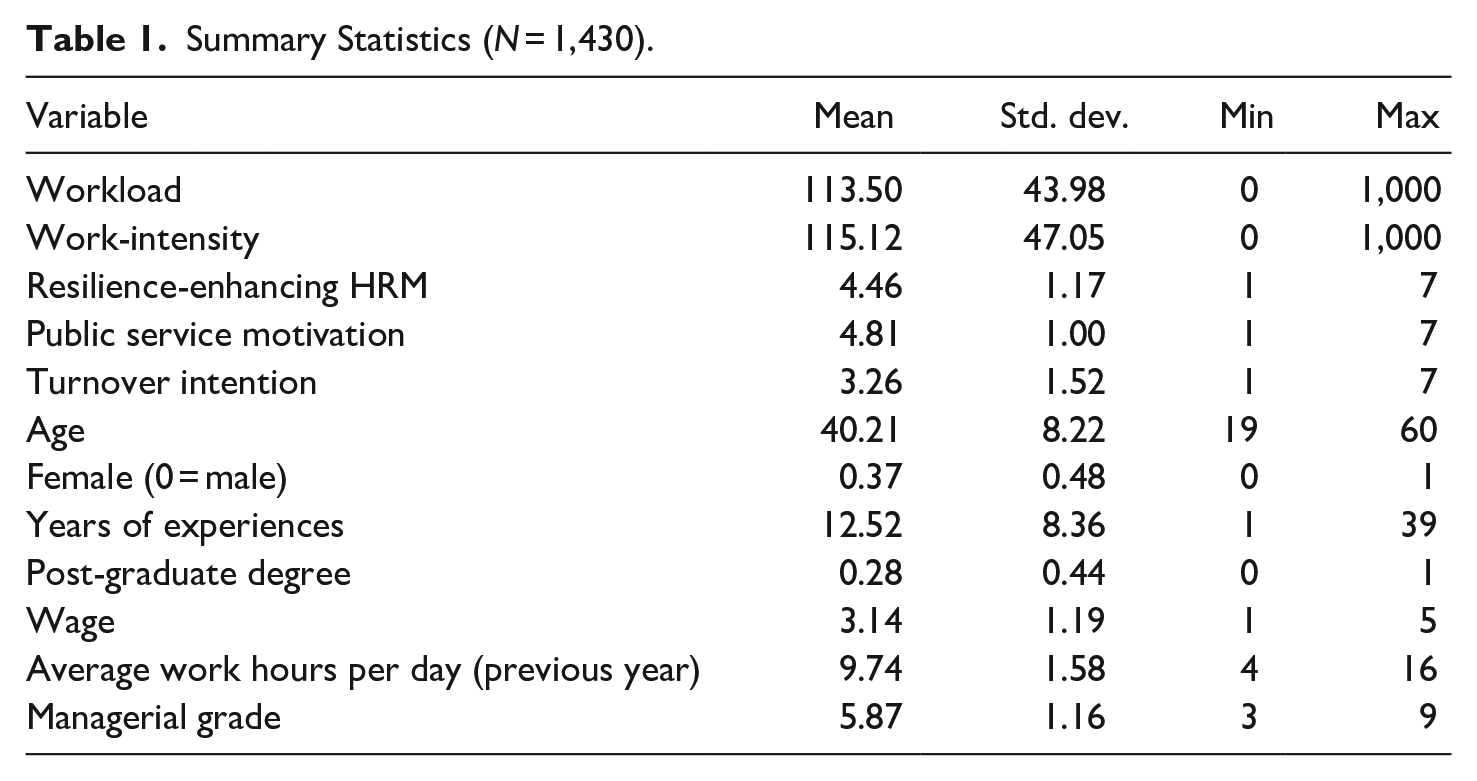
We also measured demographic characteristics (age, gender, and education/post-graduate degree), work-related individual characteristics (years of experiences, wage, average work hours, and managerial grade), and public service motivation. Table 1 shows the summary statistics. Approximately 63% of respondents were male, average age was around 40, and the average years of experience was 12. In terms of managerial grade, ninth grade (administrative assistant) to sixth grade (administrative officer) accounted for roughly 60% of respondents while fifth grade (middle manager) to third grade (senior manager) accounted for around 40%.
Summary Statistics (N = 1,430).
Endogeneity issues may arise when examining the effect of recalling/signaling employee-resilience HRM practices. While survey method limitations, as Favero and Bullock (2015) pointed out, can only be addressed using independent sources of data, we expect randomized survey experiments to rule out extraneous sources of variation that could bias the exposure effect estimates—random assignment can obtain more accurate estimates of causal relationships between the exposure (recalling/signaling) to employee-resilience HRM and perceived workload/work intensity. We designed a treatment to randomly change the question order of resilience-related items (flex work arrangements, employee involvement in changes in working conditions, and occupational health and safety management systems), based on insights from question order survey experiments in various disciplines (e.g., Andersen & Hjortskov, 2016; Cohn et al., 2014; Meyer-Sahling et al., 2019; Oldendick, 2008; Van de Walle & Van Ryzin, 2011).
The core idea is that the preceding questions generate the context in which participants respond to the following survey items, and changing the context produces different survey results (Oldendick, 2008). The earlier questions “prime” respondents to think about the issues covered in those questions, which affects the responses to the subsequent survey items. We asked the participants in the treatment group five successive questions about resilience-enhancing HRM; the time spent on these items reminded the participants about their organization’s existing (or missing) support for work disruption. This reminder, in turn, may affect their perceptions on workload and work intensity.
We randomized whether respondents were asked resilience HRM questions before or after the outcome variables of interest. All survey respondents were first asked the same questions about organizational affiliation and randomly assigned into two groups, as shown in Figure 1. The same number of respondents were assigned to each group within an organization, allowing for findings on organizational-level averages without a differing treatment effect between organizations. A two-sample t-test confirmed that randomization achieved covariate balance as designed. After the random assignment to each group, the treatment group (Group II) was asked to recall their satisfaction with employee resilience practices in their organizations. The control group (Group I) and the treated group (Group II) answered the same survey questions about changes in workload and intensity under the pandemic crisis, but in different orders. To estimate the statistical significance of the treatment effect (between-subjects effect of exposure to resilience-enhancing HRM items), we conducted t-test, ANOVA, and logistic regressions.
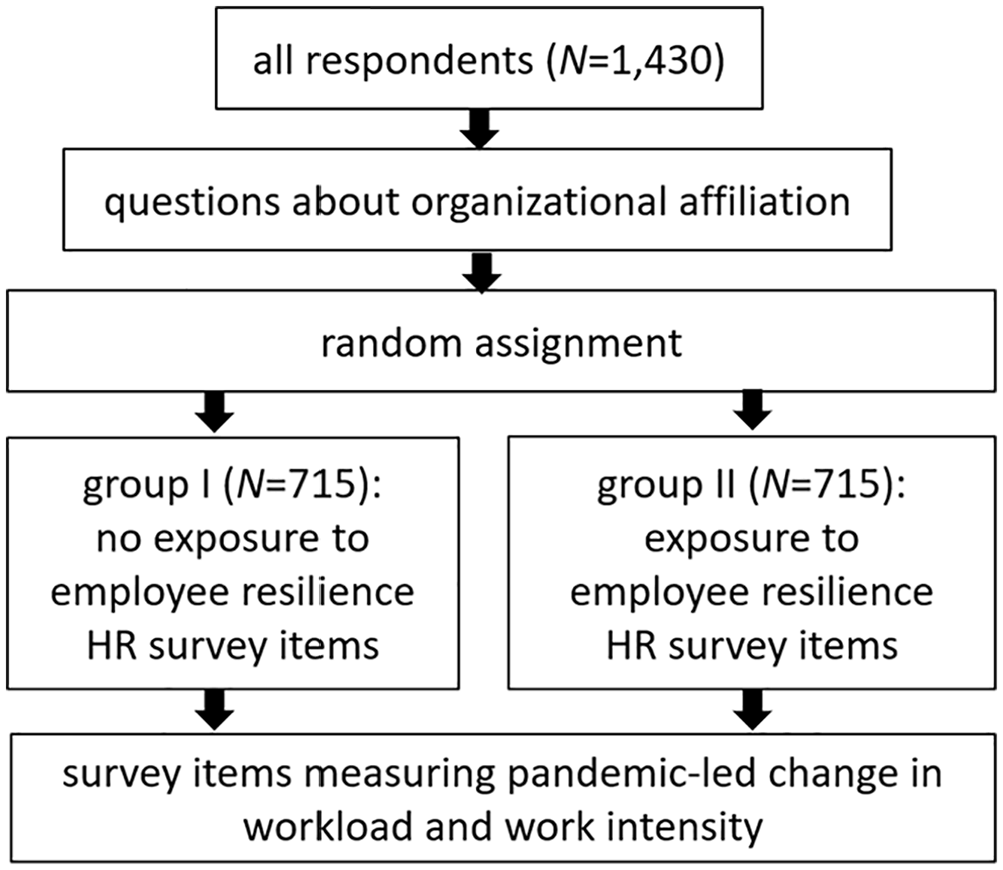
Question order in the survey experiment.
We extended our analysis by investigating the relationship between satisfaction with employee-resilience HRM and turnover intention. We created a binary turnover intention variable to run, binary logistics regression, by recoding “strongly disagree” to “moderately disagree” as “absence of turnover intention (0),” and “moderately agree” to “strongly agree” as “existence of turnover intention (1).” For ordered logistic regression, the turnover intention variable was used as the (original) ordinal scale. We tested the possibility of common method bias by employing Harman’s single factor test; the common latent factor did not seem to exist, as the single factor accounted for only 29.46% for workload model specification and 29.42% for work-intensity model, respectively. Given the recent findings on conditional effects of job demands and job resources on outcome variables such as Valcour et al. (2011) and Bakker and Demerouti (2007), we estimated the moderating relationships.
Results
Figure 2 presents the histogram of individual respondents’ perceived level of workload and work intensity after the outbreak. About half of the respondents reported increased job demands after COVID-19 outbreak—44.8% reported increased workload and 45.5% reported increased work-intensity. Only about 10% reported a decrease. About two out of five public employees identified no change in job demands. On average, as shown in Table 1, workload and work-intensity of public employees have increased 13% and 15%, respectively, compared to the pre-pandemic past. Among resilience-enhancing HRM practices, flex work arrangements were found to have the highest level of satisfaction (80.8% responded “satisfied” or “very satisfied”) and 70.8% responded that they were either “satisfied” or “very satisfied” with employee involvement in decision-making about changes in working conditions; flexible work arrangements were in place, though less than 20% were able to access occupational health and safety consultation. Occupational health and safety management systems (40.6%) and special leave assistance program (44.8%) showed moderate levels of satisfaction.
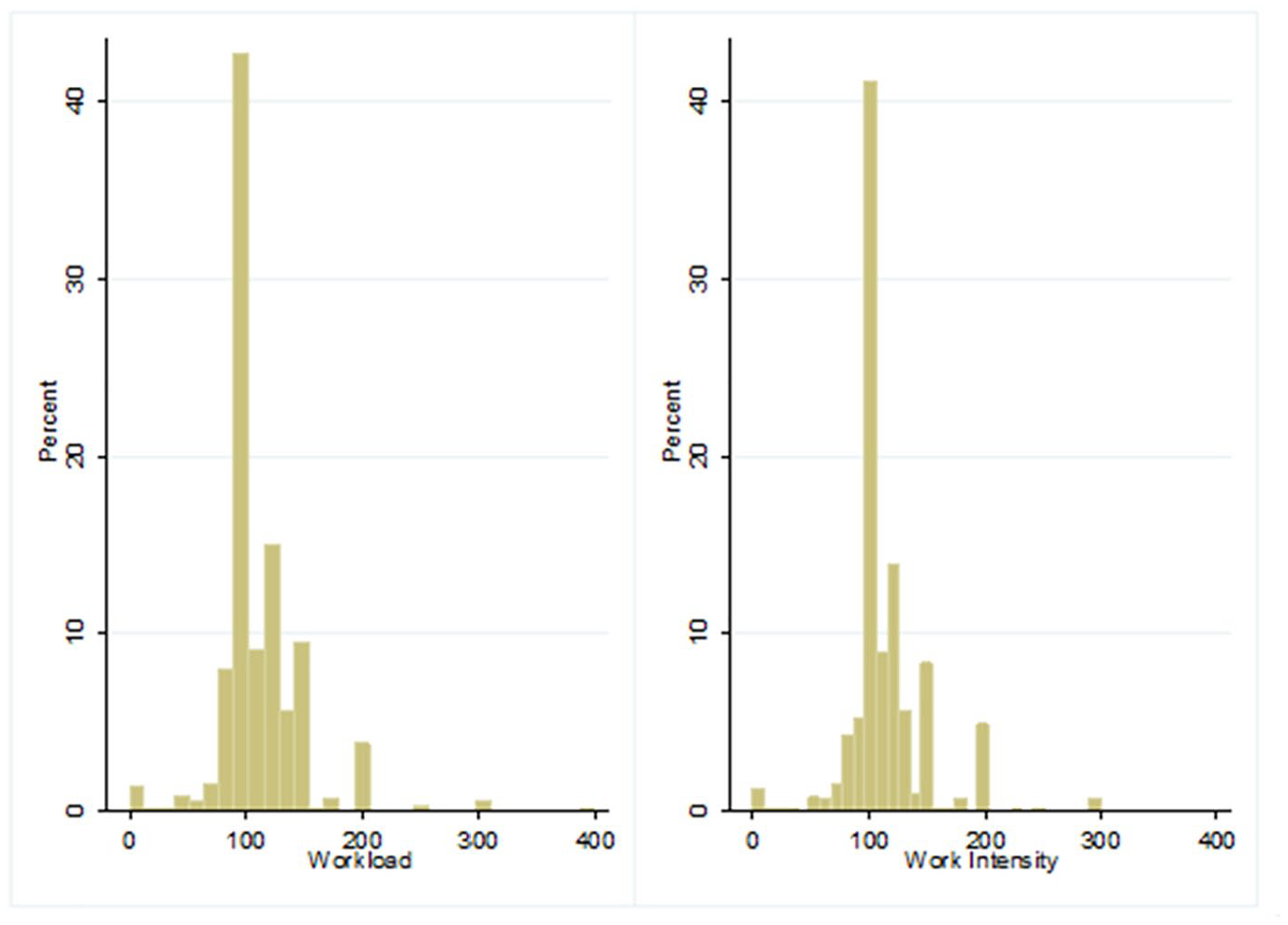
Perceived workload and work-Intensity after the outbreak of COVID-19. We excluded observations that exceeded 500 in workload(n = 3) and work-intensity(n = 5).
Figure 3 shows the proportion of pandemic-affected workforce by ministry, presenting an uneven distribution across the public sector. The proportion of public employees with increased workloads after the outbreak of COVID-19 in each ministry ranged from 10.42% (Rural Development Administration) to 80% (Ministry of Health and Welfare) on average—the proportion of employees with increased work intensity ranged from 14.58% to 80%. Workforces in the Ministries of Health and Welfare (80%), Food and Drug Safety (73%–78%), Education (55%–61%), Strategy and Finance (55%–61%), and Employment and Labor (68%) were found to be heavily affected by the pandemic in terms of increased job demands. On the other hand, the Ministry of Unification, the Korea Meteorological Administration, and the Rural Development Administration showed slightly decreased overall workload and work-intensity on average, with the lowest proportions of employees with increased job demands post-outbreak.
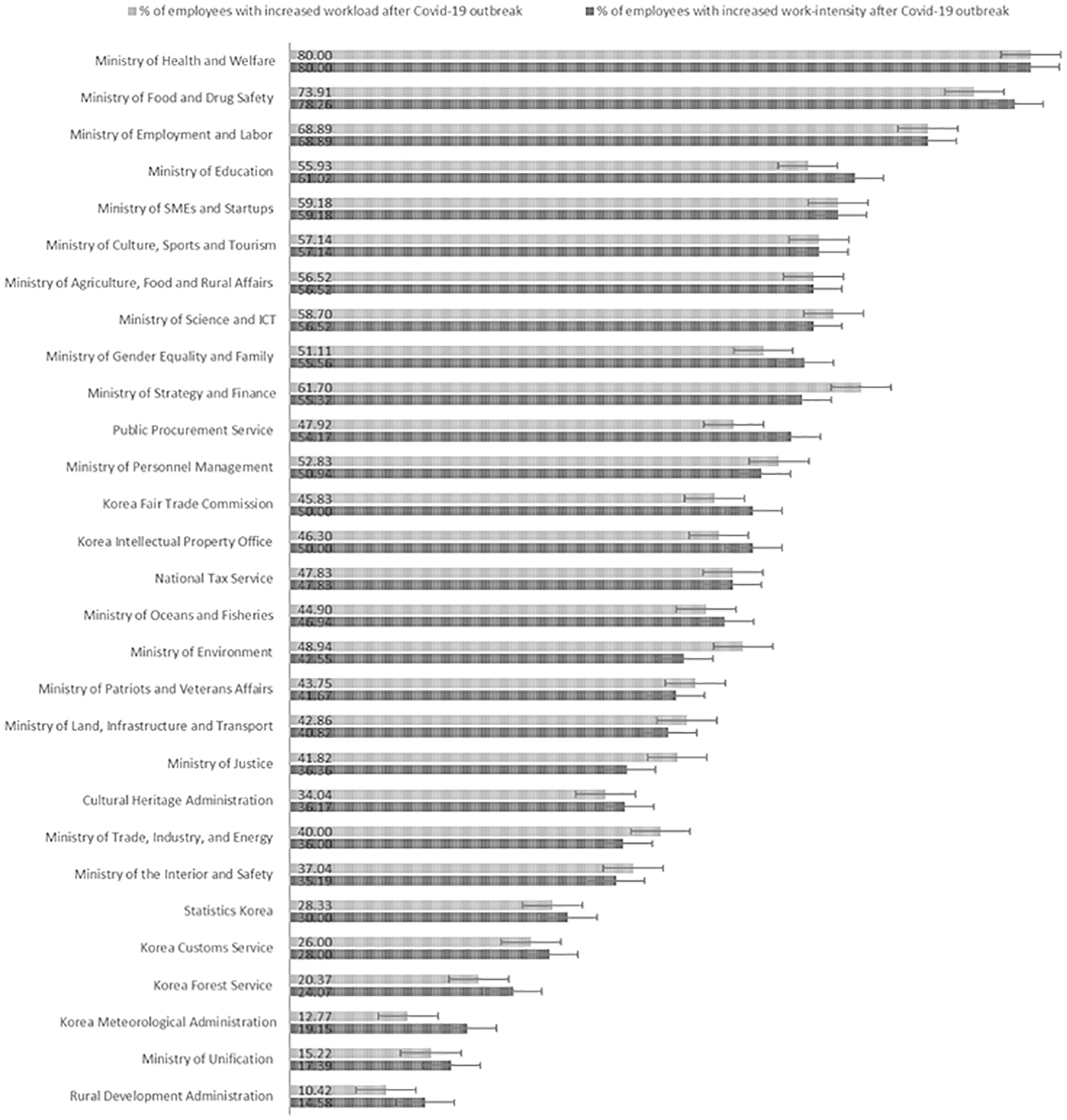
Proportion of COVID-affected workforce by ministry. Spikes indicate standard deviation.
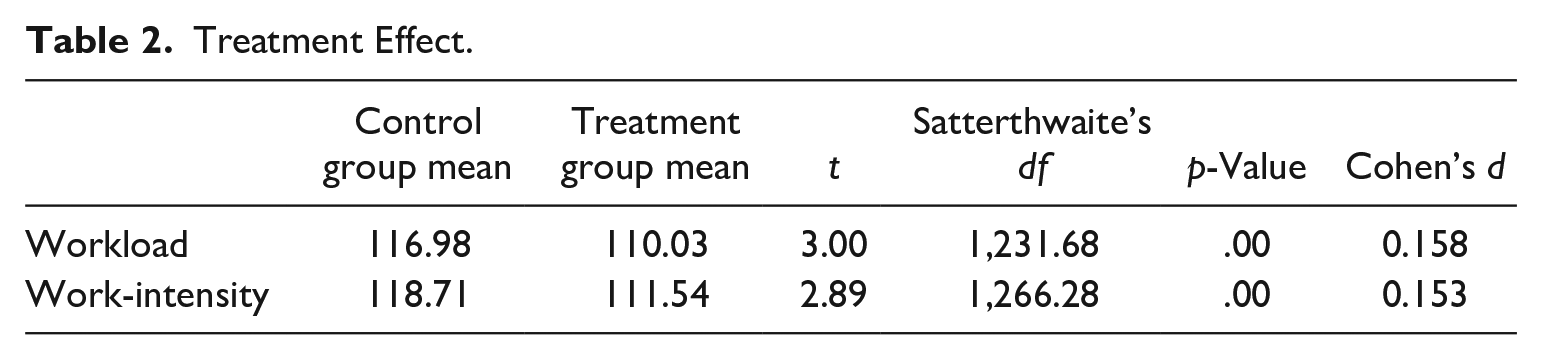
Table 2 and Figure 4 show the average treatment effect in the randomized treatment testing the exposure/reminder effect of employee-resilience HRM. The mean differences between treated and control groups were 6.95 for workload (SDcontrol = 52.84, SDtreatment = 33.96) and 7.17 for work intensity (SDcontrol = 54.64, SDtreatment = 37.59), and the differences were statistically significant both for workload (Mcontrol = 116.98 vs. Mtreatment = 110.03, t = 3.00, p < .001) and for work intensity (Mcontrol = 118.71 vs. Mtreatment = 111.54, t = 2.89, p < .001). Cohen’s d of approximately 1.5 and partial eta squared in Table 3 show that the effect size is small (Cohen, 1988), although social science research rarely produces large or even medium effect sizes (Murnane & Willett, 2011). Survey experiments, especially question order designs, often have very small effect sizes, as the treatment effect easily wears off.
Treatment Effect.
Tests of Between-Subjects Effects.
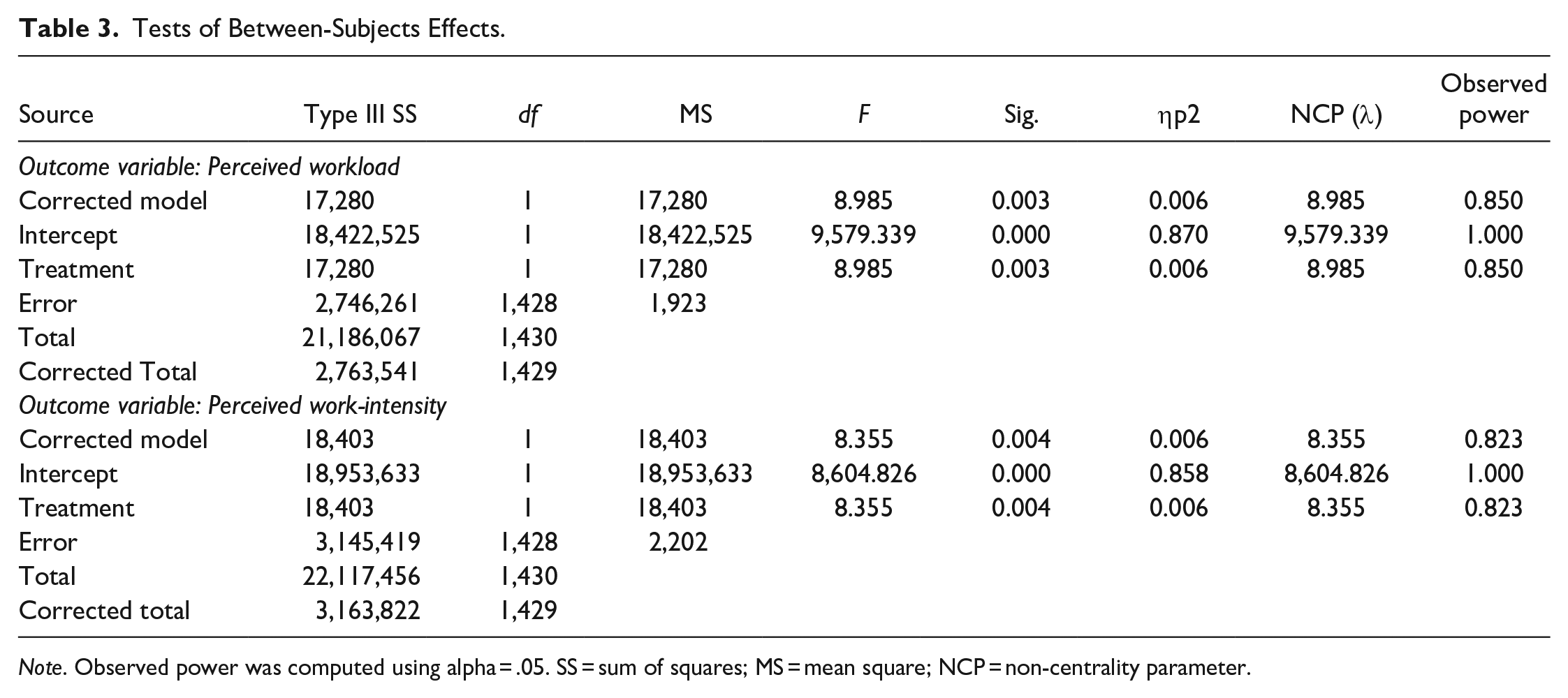
Note. Observed power was computed using alpha = .05. SS = sum of squares; MS = mean square; NCP = non-centrality parameter.
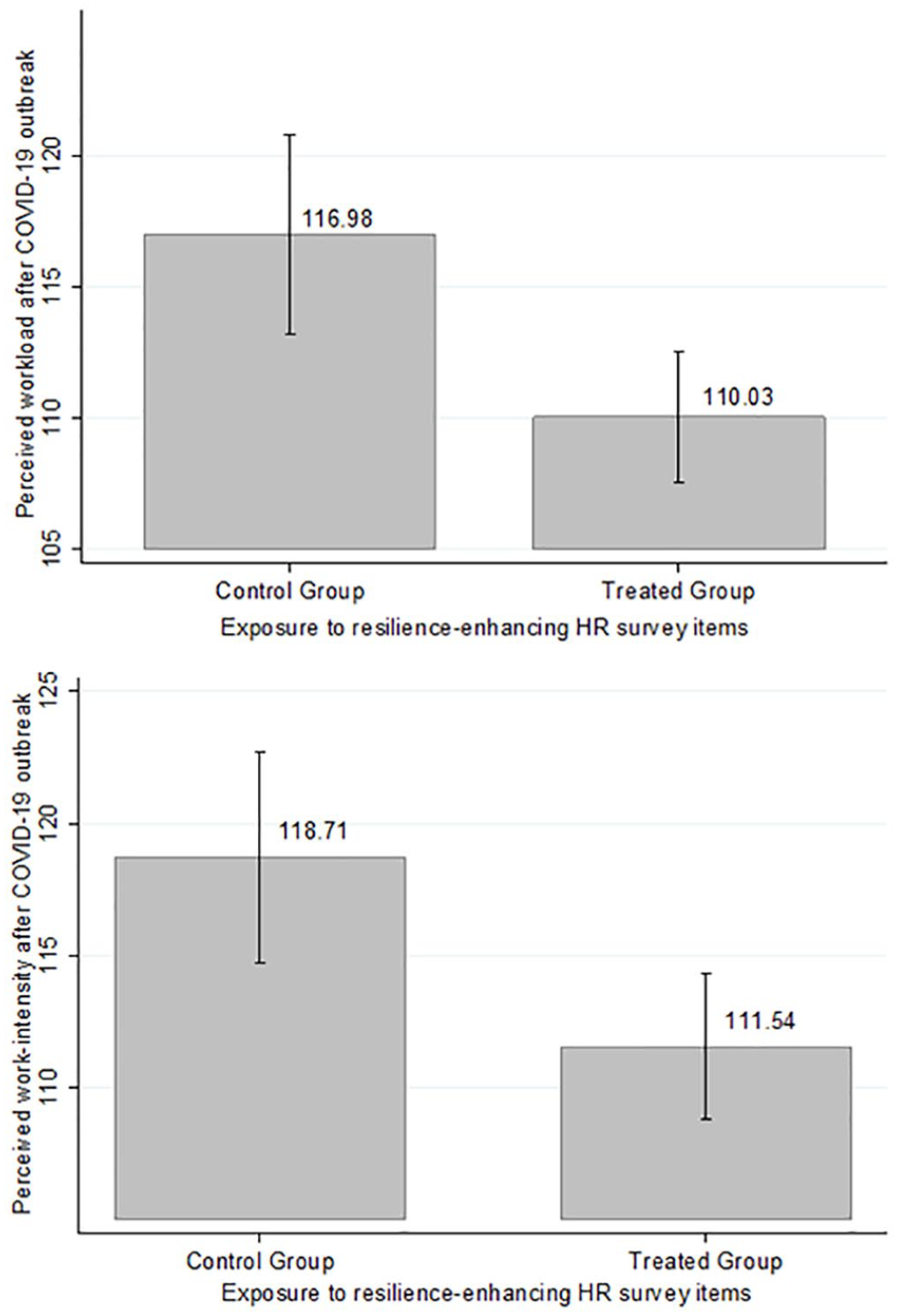
Perceived workload/work-intensity (%) by experiment group. Spikes indicate 95% confidence intervals.
Figure 5 presents coefficients of variables in logistics regression by the confidence level of 99, 95, 90, 80, and 70 percentages, as suggested by Harrell (2015). Negative coefficients of the treatment effect were found to be statistically significant, with a conservative level of confidence interval (99%) after controlling for age, post-graduate degree, work hours, years of experience, and managerial grade. Table 3 presents the between-subjects effects. The treatment had a statistically significant effect on perceived workload (F = 8.985, p < .01) and perceived work intensity (F = 8.355, p < .01), both with observed power higher than .8 threshold at alpha .05.
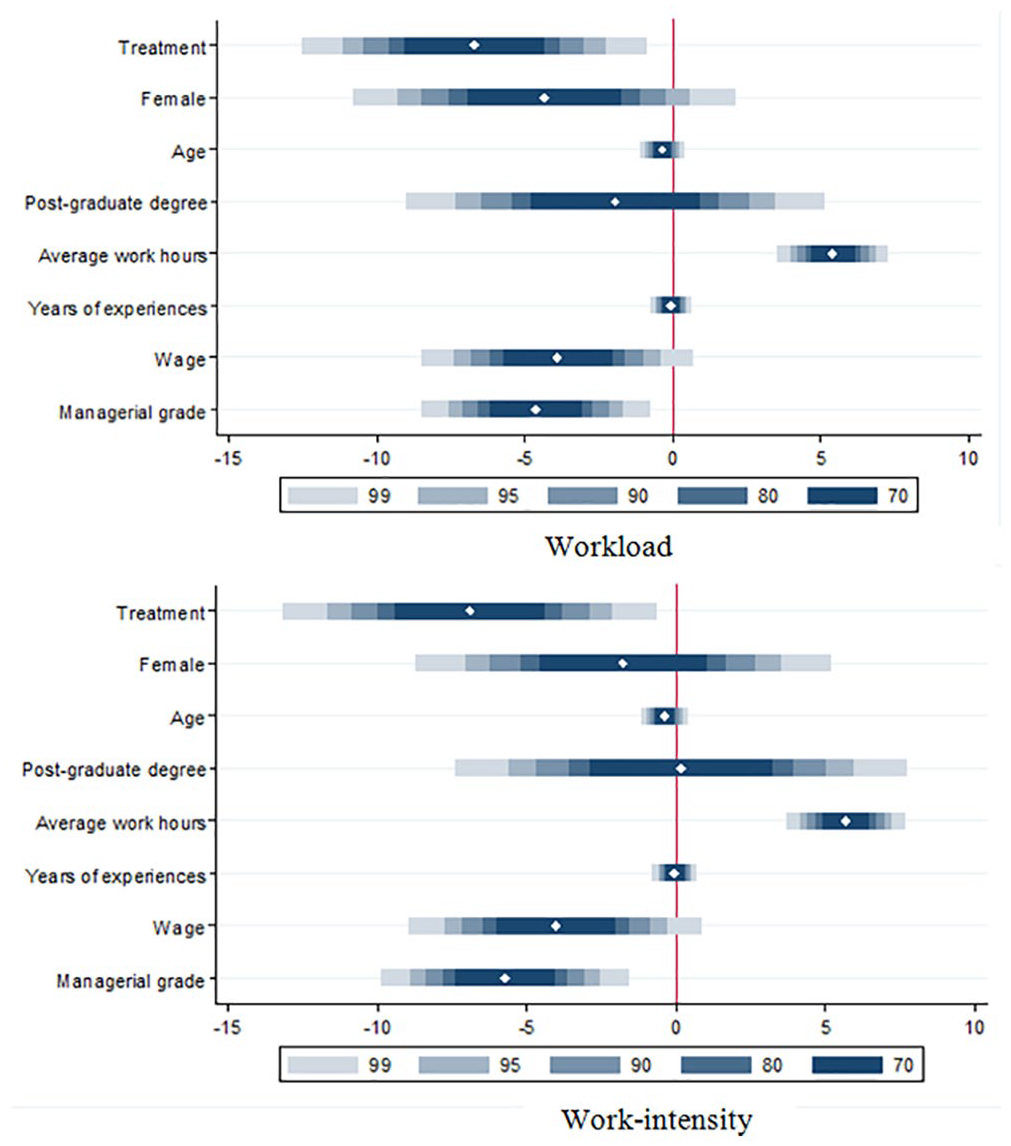
Regression coefficients by 70% to 99% confidence interval.
Figure 6 shows the difference in satisfaction with employee-resilience-enhancing programs by gender and generation group. 4 In the itemized satisfaction, the histogram of men seemed to be more left-skewed/right-leaning (more satisfied), indicating that women workers have lower levels of satisfaction with current practices of flexible work arrangements, employee involvement in decision making, occupational health and safety counseling, performance counseling, and special leave assistance programs. Female public servants tend to show lower modal values of satisfaction level with employee-resilience enhancing programs than men. In terms of generational differences, the figure shows that gender gap in satisfaction with employee-resilience-enhancing programs occurs mostly among Baby Boomers and Generation X. In other words, the distribution of satisfaction level among Millennials and Gen Z is similar between men and women. Gender differences across generations become particularly noticeable in terms of flexible work arrangements and occupational health and safety counseling—our data show that Baby Boomer men are most satisfied with these, while Millennial women are least satisfied. This result seems ironic: Baby Boomer men likely have the fewest family responsibilities at home, while Millennial women likely bear the most.
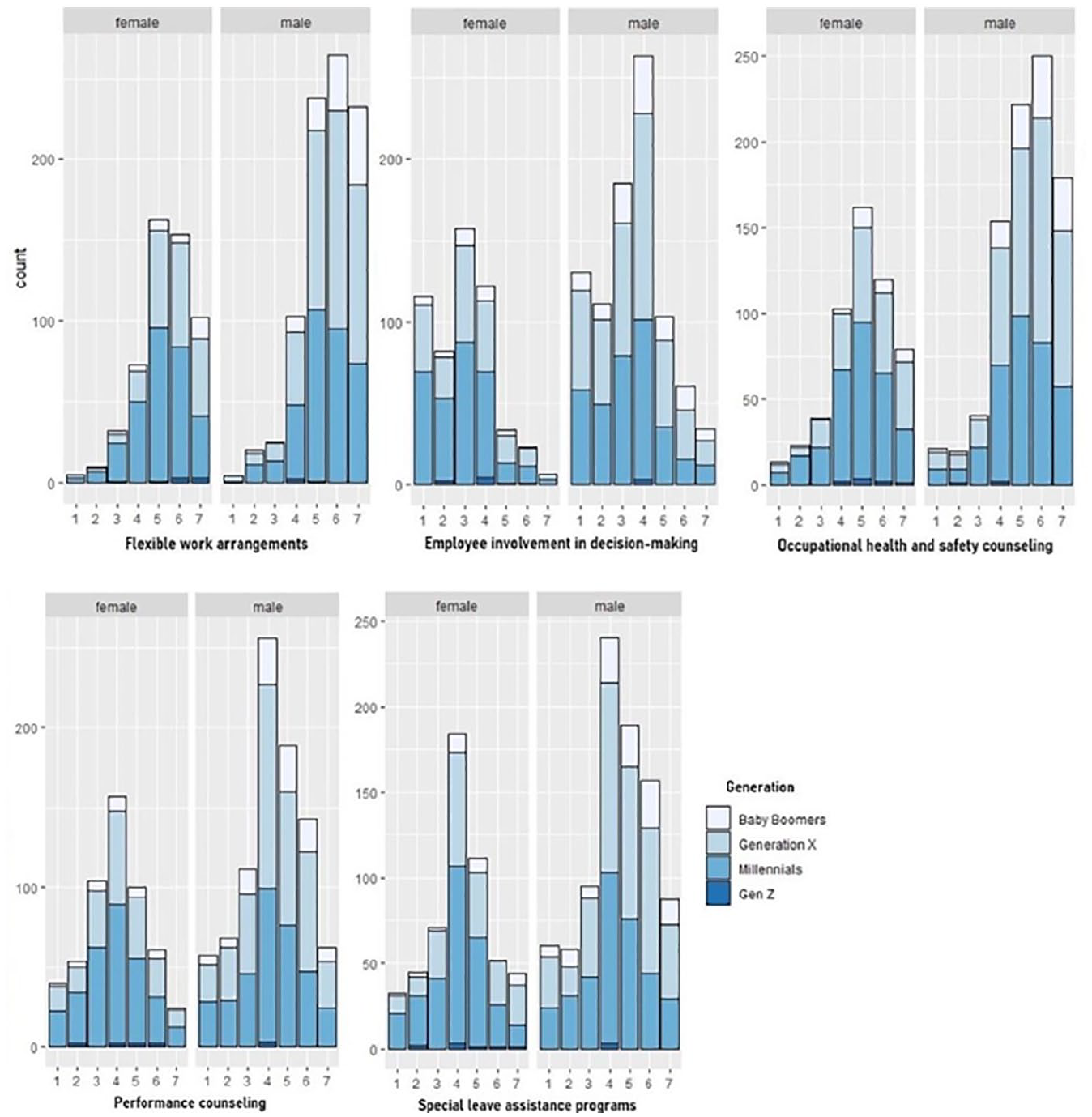
Employee satisfaction with resilience-enhancing programs (by gender and by generations). Satisfaction levels range from 1 (very dissatisfied) to 7 (very satisfied).
Table 4 shows the results of logistic regression models for turnover intention. Satisfaction with resilience-enhancing HRM practices and turnover intention were negatively (odds ratio < 1.0) associated in both the binary logistics model and the ordered logistics model, while workload and work intensity did not present statistically significant relationships with turnover intention after controlling for various factors: individuals who are more satisfied with their organizations’ resilience-enhancing HRM programs are less likely to intend to leave their jobs. Higher levels of public service motivation were also found to be associated with lower levels of turnover intention (odds ratio < 1.0), which is generally consistent with findings in the literature (Bright, 2008; Piatak et al., 2021).
Logistic Regression for Turnover Intention.
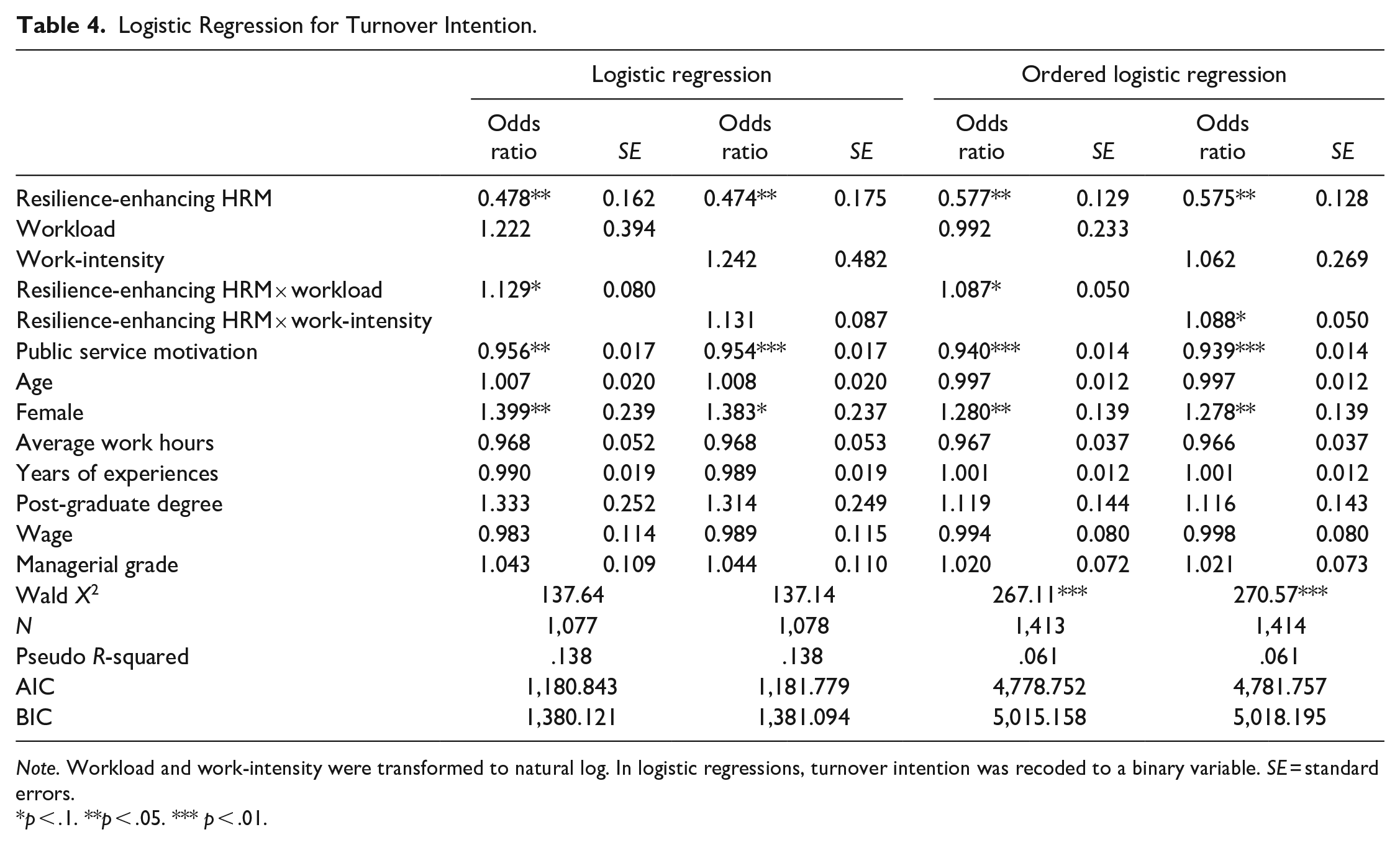
Note. Workload and work-intensity were transformed to natural log. In logistic regressions, turnover intention was recoded to a binary variable. SE = standard errors.
p < .1. **p < .05. *** p < .01.
Although workload and work intensity were not directly associated with turnover intention, these factors moderated the negative relationship with satisfaction with resilience-enhancing HRM practices, as shown in the interaction terms. The interaction terms between satisfaction with resilience-enhancing HRM practices and workload present a positive (odd ratio < 1.0) and significant association with turnover intention in both binary and ordinal logistic regressions. Interaction terms between satisfaction with resilience-enhancing HRM and work intensity were positively related to turnover intention, but only in the ordered logistics model. This means that the negative association between satisfaction with resilience-enhancing HRM and turnover intention was weaker among employees whose workload/work intensity levels were higher.
Discussion
While the field has shown great interest in COVID-19′s impact on the public sector, and workload and work intensity have risen by 10% during the pandemic, few studies have investigated the potential consequences to workplaces and public personnel administration. To address this gap, we measured the changes in perceived/self-reported levels of public employees’ workload and work intensity in the public sector and compared them by ministry. The impact of COVID-19 outbreak on workplaces seems to vary greatly across the public sector, which calls for more effective coordination from the whole-of-government perspective (World Health Organization, 2020). The legal and institutional environment of public sector HRM does not easily permit the flexible deployment of workers from one ministry to another on this basis, as job expectations may be quite different. Therefore, employee resilience depends upon organizational support for affected employees.
We found that resilience-enhancing programs played a key role in improving perceptions of those increased job demands. These results imply that job resources may influence work motivations, but only until job demands become too high: HRM programs that nudge workers to accept and deal with workload/work-intensity may be less effective in particularly challenging environments. This finding is consistent with the reasoning by Valcour et al. (2011) that illustrated that higher work hours and work overload were associated with perceptions that the organization was less supportive of work–life integration. We should note that less accommodating organizations with heavy workload culture may also tend to discourage their employees from making use of (superficially available) flexible work arrangements. Our findings contribute to the literature by confirming the “dual processes” of job demands (strain process) and job resources (motivation process), while also providing new insights on exceptionally challenging and uncertain circumstances, as shown in Figure 7, such as pandemic-led disruptions. While we revisit buffering effect of job resources on strain process from signaling theory perspective, our results also show that strain caused by high job demands can produce a “numbing effect” on motivation process, by decreasing job resources’ positive effect on motivations. As apparent in Figure 7, perception of heavy workload and intense work may interfere with the delivery of organizational benefits.
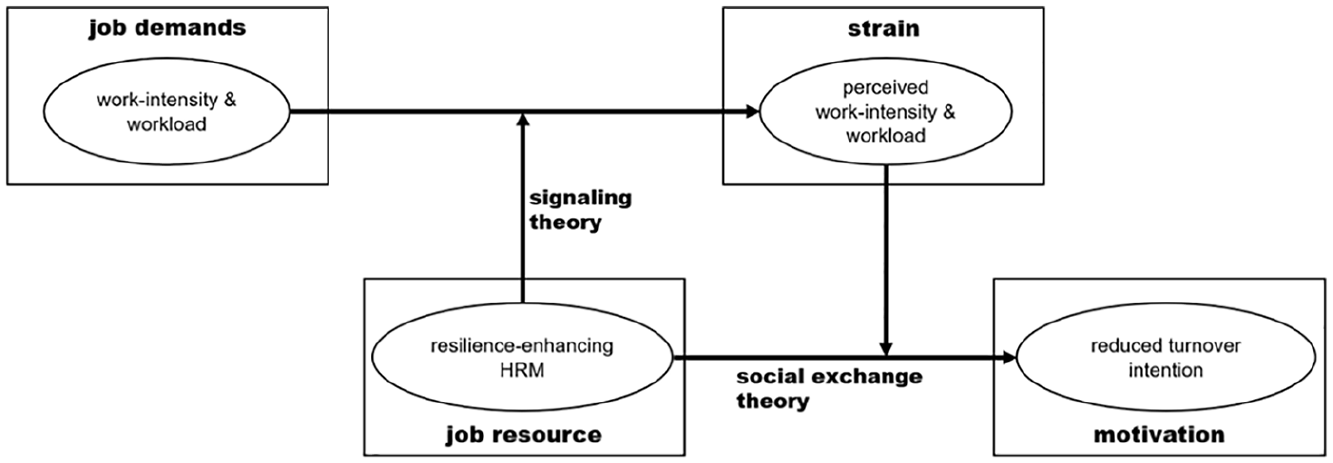
Three strands of theories integrated.
Resilience-enhancing HRM practices have long maintained public employees’ contribution to public service delivery (Bardoel et al., 2014; Donnelly & Proctor-Thomson, 2015). Our analysis shows that employees satisfied with their resilience programs are less likely to contribute to negative employee outcomes, such as high turnover, implying that public sector workplaces should facilitate flexible work arrangements, improve employee involvement in decision-making about changes in working conditions, support occupational health and safety management systems, provide performance counseling, and offer special leave assistance programs to pandemic-disrupted public organizations. This is in line with previous research based on the JD-R model showing that job resources can reduce adverse outcomes by making employees feel motivated and protected (Schaufeli & Bakker, 2004). The social-exchange theory centers the exchange of social and material resources as a fundamental form of human interaction (Dasgupta et al., 2013; Rousseau, 1995), suggesting workplace/employee interdependence. If an employer appropriately interact with employees, showing concern for employees via favorable work environment and benefits, then they will feel obligated to reciprocate and react more positively toward the organization. Our findings show that a positive social exchange between organizations and employees may trigger a virtuous cycle, promoting mutual benefits during states of crisis (Lengnick-Hall et al., 2011).
While satisfactory resilience-enhancing HRM program may be the one of the best responses to the stresses of a disruptive workplace, signaling support is also vital, especially when existing support mechanisms are under-used or when resource constraints limit the scope of HRM programs. Our survey experiment results showed that reminding/recalling the organizations’ resilience-enhancing HRM program had a statistically significant effect on lowering the perceived level of workload/work intensity, in line with earlier research on signaling which suggests that employees perceive an organization to be more favorable to them upon receipt of such positive signals (Casper & Harris, 2008; Eisenberger et al., 1990; Gouldner, 1960). Therefore, under challenging circumstances, public managers should carefully frame and communicate the relationship between the organization and employees to affect their perceptions of increased workload and work-intensity.
Resilience-enhancing HRM practices may not always be effective: our moderator analysis implies that their benefits are limited for employees whose workloads are too heavy or too intense (“numbing effect”). Our observations on these interactive relationships show the importance of a situational approach to the demands-resources relationship—while job resources are generally known to help counteract high job demands (Demerouti et al., 2001), in such an exceptional situation, resilience-enhancing HRM programs may have to involve actual changes in work conditions. Expecting adjustments to an inevitable “new normal” may not be effective: managers in this situation may need to look to environmental solutions, such as job rotation, job scheduling, and load management.
Conclusion
Our experiences with the COVID-19 pandemic show the importance of an effective government response, which depends upon high quality public personnel who can effectively deal with the unprecedented problems while juggling workplace uncertainty. The roles of HR managers and HRM practices, symbols of organizational wellbeing in the best of times, becomes much more essential in crisis (Mankin & Perry, 2003).
This article analyzed public sector workplace dynamics under the disruptive pandemic environment. Our survey data, collected from public servants across South Korean ministries in the public sector, show that, on average, workload and work intensity increased 13% to 15% after the outbreak, while the proportion of employees with increased workload/work intensity in each public organization varied from 10% to 80%. Signaled support matters: our randomized survey experiment found exposure to resilience-enhancing HRM practices to have a statistically significant effect on employees’ perception of workload/work intensity (though the effect size may be relatively small), confirming and expanding anecdotal reports of JD-R. The logistic regression results showed that satisfaction with resilience-enhancing HRM lowers turnover intention. However, this relationship is weaker for civil servants who experienced a heavier workload/work intensity after the outbreak, which invites an alternative explanation for the “numbing effect” in such a crisis. In short, job resources have a positive impact on job motivation until strain caused by high job demands exceed an acceptable level.
While the body of knowledge on employee resilience is growing (Näswall et al., 2015; Plimmer et al., 2021), little is known about how HRM practices may enhance employee resilience and achieve positive employee outcomes. Pandemic-level workplace crises can illustrate how resilience-enhancing programs can support individual workers’ positive adaptation (Fikretoglu & McCreary, 2012) while avoiding negative consequences, such as high turnover. As this article is exploratory in nature, future studies should investigate the different characteristics of workplace disruption, its consequences, and effective management responses, and track the its differing impacts on male and female workers, as the contribution of women in public administration is of growing academic interest (D’Agostino, 2017; Viswanath & Mullins, 2020). Meanwhile, despite our contribution, there are limitations in our methodology that future research may address. Our survey data was collected in the relatively early stages of the pandemic, and the public sector response may change with new challenges, such as procuring and distributing vaccines, that inevitably affect the work of public employees. Further research is needed to provide more data points. Finally, our randomized survey experiment itself is limited, as the method inherently measures self-reported perceptions or intentions rather than actual behavior or objectively observable outcomes. The survey experiment also has limited generalizability to wider contexts. We suggest that future studies measure actual behavioral outcomes observable under disruptive environments, and test the hypothesis generated in this article.
Supplemental Material
sj-docx-1-rop-10.1177_0734371X221095399 – Supplemental material for Workplace Disruption in the Public Sector and HRM Practices to Enhance Employee Resilience
Supplemental material, sj-docx-1-rop-10.1177_0734371X221095399 for Workplace Disruption in the Public Sector and HRM Practices to Enhance Employee Resilience by Phil Kim, Wonhyuk Cho and In Yang in Review of Public Personnel Administration
Footnotes
Declaration of Conflicting Interests
The author(s) declared no potential conflicts of interest with respect to the research, authorship, and/or publication of this article.
Funding
This study was supported by a National Research Foundation of Korea Grant from the Korean Government (NRF-2017S1A3A2065838).

Supplemental Material
Supplemental material for this article is available online.
Notes
Author Biographies
References
Supplementary Material
Please find the following supplemental material available below.
For Open Access articles published under a Creative Commons License, all supplemental material carries the same license as the article it is associated with.
For non-Open Access articles published, all supplemental material carries a non-exclusive license, and permission requests for re-use of supplemental material or any part of supplemental material shall be sent directly to the copyright owner as specified in the copyright notice associated with the article.
