




Abstract
The COVID-19 crisis has affected numerous areas of civil servants’ working life. We investigate, using the JD-R model, the impact of the current crisis on civil servants’ wellbeing. Furthermore, we argue that the COVID-19 pandemic might have different consequences for civil servants with various role perceptions. We distinguish between traditional, NPM, and NPG civil servants. A longitudinal survey (N = 569) has shown that: (a) wellbeing decreased over a 6-months period; (b) job demands, including work pressure and work-life disbalance, negatively influence wellbeing; and job resources, including autonomy, task variety, and social support, positively influence wellbeing. In terms of personal resources, self-efficacy positively influences wellbeing; and (c) civil servants’ role perception directly influences wellbeing. Although the effect is small, we found an interaction effect in the relation between leader support and burnout for NPG civil servants. The consequences of these findings for HR strategies related to civil servants’ wellbeing are discussed.
Introduction
By early 2020, our world was facing a huge crisis as the COVID-19 pandemic was rapidly spreading. To prevent the spread, governments issued compulsory restrictions, such as social distancing, closing schools and daycare facilities, and encouraging working from home. The COVID-19 crisis has affected numerous areas of civil servants’ working lives (Gerson & Mulligan, 2020). They have to work in new ways because the pandemic has changed the way information is shared, and how work is organized and coordinated (Rudolph et al., 2020; Schuster et al., 2020). Moreover, to facilitate remote working, possessing digital competencies has become a priority (Gerson & Mulligan, 2020). This raises the question as to what extent these challenges affect civil servants’ wellbeing (Caligiuri et al., 2020). From an HR perspective, ensuring civil servants’ wellbeing is important for the functioning of public services since a decrease in employee wellbeing might lead to less effort being put into the job and an increased turnover of qualified employees (Rudolph et al., 2020; Van der Voet & Vermeeren, 2017).
Researchers have extensively studied wellbeing in combination with the job demands-resources (JD-R) model (Bakker & Demerouti, 2007). The JD-R model suggests work environments can be broken down into job demands, job resources, and personal resources that can either negatively or positively affect wellbeing (Bakker et al., 2014). Given that the COVID-19 pandemic has increasingly affected civil servants’ work environment, it is important to find out how this affects their wellbeing. The JD-R model is one of the main models used in organizational psychology to understand wellbeing. However, to date, the JD-R model has received only limited attention by public administration scholars (Borst et al., 2019; Steijn & Giauque, 2021). In addition, the JD-R model pays little attention to the way civil servants understand their roles in government organizations.
The sudden outbreak of the COVID-19 pandemic might have different consequences for civil servants depending on how they perceive their roles. The public administration literature has recognized that traditional public organizations have been influenced by New Public Management (NPM) and later by New Public Governance (NPG) principles. Consequently, civil servants now hold different interpretations of their role (Kruyen & Van Genugten, 2020; Van der Wal, 2017). There are civil servants who focus on rules and protocols in interpreting their role and can be characterized as “bureaucrats.” With the rise of NPM, more attention was paid to civil servants who realize public values in an entrepreneurial way. In recent years, with the rise of NPG, civil servants are expected to identify themselves in a role as networkers who connect different stakeholders (Van der Steen et al., 2018). While these different civil servant role perceptions are distinguished in the literature (Brandsen & Honingh, 2013), our study empirically addresses whether such civil servants deal differently with the COVID-19 pandemic. Employees might differ, based on their role perception, in how they experience job demands, but also in how they recognize available resources (Saha, 2008). In examining civil servants’ wellbeing, we therefore use civil servants’ role perception as a moderator between job demands and resources, and wellbeing and distinguish between the traditional civil servant, the NPM civil servant, and the NPG civil servant.
This study thus answers the following research question: What is the impact of the particular working conditions during the COVID-19 pandemic on civil servants’ wellbeing, and to what extent does a civil servant’s role perception influence this relationship?
This research question is answered in relation to civil servants employed in a single large municipality in the Netherlands. A longitudinal survey (April 2020 through to September 2020) was used to examine the impact of COVID-19 over time (N = 569).
This article is structured as follows. In the next section (Section 2), we discuss the literature on the JD-R model and civil servants’ role perception in the context of the COVID-19 pandemic. Based on these insights, hypotheses are formulated. Thereafter, we elaborate on the research method in Section 3. Subsequently, we present our analysis in Section 4, followed by a discussion of the findings and conclusions in Section 5.
Theoretical Framework
JD-R Model in the Context of the COVID-19 Pandemic
According to the JD-R theory, employees’ wellbeing is affected by a range of workplace characteristics that can be classified into two categories, namely job demands and job resources (Bakker & Demerouti, 2007). Job demands refer to factors that take energy to deal with, such as high work pressure or role conflicts, while job resources are factors that help individuals to deal with these demands, such as task variety and autonomy (Bakker et al., 2014; Xanthopoulou et al., 2007).
In addition, the JD-R model also distinguishes personal resources since human behavior is also a result of the interaction between personal and environmental factors (Xanthopoulou et al., 2007). Personal resources are considered “psychological characteristics or aspects of the self that are generally associated with resilience and refer to the ability to control and affect one’s environment successfully” (Xanthopoulou et al., 2007, p. 124). Essentially, the JD-R model suggests that job resources and personal resources promote wellbeing through a motivational process, whereas job demands negatively influence wellbeing through an energy-draining effect (Crawford et al., 2010). In this study, we focus on work engagement and burnout as indicators of wellbeing. Work engagement is defined as a positive, fulfilling work-related state of mind, characterized by vigor, dedication, and absorption (Schaufeli et al., 2002). Of these, we focus on vigor, which is known to provide positive energy at work (Tummers et al., 2018). Burnout is defined as a state of exhaustion and cynicism toward work (Bakker & Demerouti, 2007). Given the current state of the crisis, both health and the motivational processes might be under pressure. The JD-R model helps in recognizing the contributions of work demands and resources, and these demands and resources are important predictors of performance (Bakker, 2015). For these reasons, the JD-R model is a highly relevant model to analyze wellbeing.
In our study, the JD-R model is applied in a public sector context by integrating insights from the public administration literature. In particular, the constantly changing public sector context, the bureaucratic procedures and administrative regulations perceived as unmanageable, and the specific motivations to work as a civil servant are likely to influence employees’ wellbeing (Lavigna, 2015). Consequently, civil servants’ role perceptions, red tape, and Public Service Motivation (PSM), as typical public sector concepts, are used to reflect these aspects of the particular public sector context in this study (Cooke et al., 2019; Van der Steen et al., 2018).
This study took place during the COVID-19 pandemic. An increasing amount of research has focused on the effects of COVID-19 on civil servants’ wellbeing (e.g., Ren et al., 2020). For example, evidence from New Zealand suggests that civil servants have reported higher rates of mental distress during the pandemic (the lockdown group) than before the pandemic (the pre-lockdown group) (Sibley et al., 2020). Similarly, Zacher and Rudolph (2020) found that the COVID-19 pandemic could be associated with declines in key facets of people’s subjective wellbeing. In this study, we anticipated that the sudden outbreak of COVID-19 would have affected wellbeing. Below, it is argued that job demands, job resources, personal resources, and the role perceptions of civil servants all influence burnout and engagement. The conceptual model reflecting these assertions is presented in Figure 1.
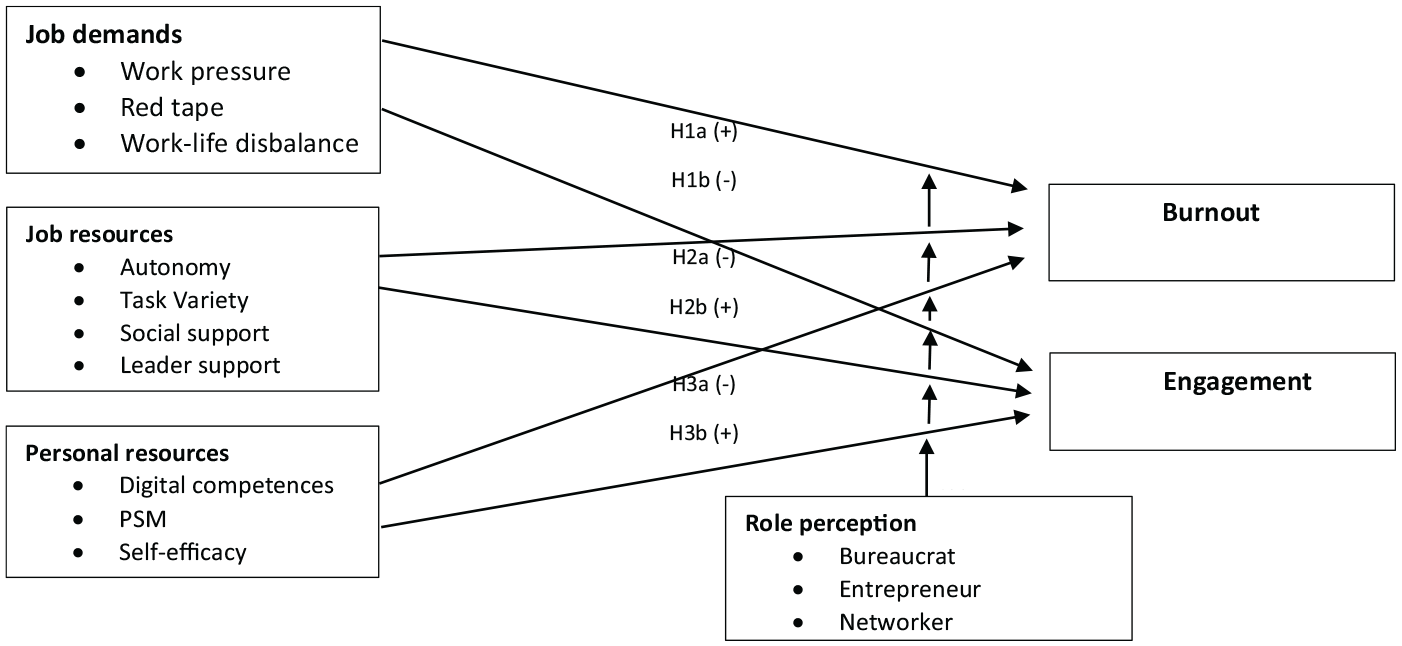
Conceptual model.
Job demands
Work pressure, or, in other words, the sense of having too much work to do in the time available (Demerouti et al., 2004), is routinely included as a demand in the JD-R model (Boyd et al., 2011). Research has already shown that work pressure increases anxiety, psychological distress, and also burnout symptoms (Boyd et al., 2011). Several researchers have argued that for some employees, the changes in working conditions during the COVID-19 pandemic have increased work pressure (Carnevale & Hatak, 2020; Yerkes et al., 2020). For instance, the study of Yerkes et al. (2020) indicated that the first lockdown led to an increase in work pressure for one-third of the respondents. Nevertheless, scholars also report differences in perceived work pressure between employees depending on their job (Van Den Heuvel et al., 2021). Hence, we expect that work pressure will be an important predictor of wellbeing.
Furthermore, the public administration literature has shown that employees in the public sector have to deal with burdensome rules and protocols, also known as red tape (Walker & Brewer, 2008). Red tape refers to a set of rules that “entails a compliance burden without advancing the legitimate purpose they were intended to serve” (Bozeman, 2000, p. 12). These rules and protocols can be experienced as pointless and are therefore identified as a hindering demand (Quratulain & Khan, 2015). However, a better understanding of red tape as a demand in the JD-R model is needed (Borst et al., 2019). To date, public administration scholars have argued that, when civil servants encounter red tape in their work, they become alienated from their work, less creative, less productive, and have less pride (Cooke et al., 2019; Steijn & Van der Voet, 2019). During events such as the COVID-19 pandemic, the ability to respond quickly is crucial for a public organization. Red tape that delays responding will then be experienced as hindrance by civil servants (Mascio et al., 2020). Hence, we expect red tape to negatively influence civil servants’ wellbeing.
The final, and perhaps the most significant, impact of the COVID-19 pandemic will be the increased pressure on the work-life balance of civil servants. Many civil servants have been required to work from home and, in addition, schools and daycare centers were closed in the Netherlands during the first part of the COVID-19 pandemic. Hence, the boundaries between private and professional lives could have become blurred (Caligiuri et al., 2020; Carnevale & Hatak, 2020). Work-life balance is defined as “the overall contentment resulting from an assessment of one’s degree of success at meeting work and family role demands” (Valcour, 2007, p. 1512). We focus here on work-life disbalance, in which employees experience the lack of a harmonious balance between work and family demands. Given that research has shown that a work-life disbalance causes stress (Johari et al., 2018), we anticipate that a work-life disbalance will increase burnout and decrease engagement.
Based on the above, high work demands, red tape, and a work-life disbalance all take energy to address, and will therefore impact on burnout and engagement. This results in the following hypotheses:
Hypothesis 1a: Job demands, specifically work pressure, red tape, and work-life disbalance, will increase burnout.
Hypothesis 1b: Job demands, specifically work pressure, red tape, and work-life disbalance, will decrease engagement.
Job resources
The relationship between job autonomy and wellbeing has been extensively studied and reported in the public administration literature (Tummers et al., 2018). Autonomy refers to discretionary powers and freedom with respect to work goals, setting priorities, shaping task elements, and determining the order and pace in which tasks are executed (Runhaar et al., 2013). Research has shown that perceived job autonomy is positively related to wellbeing because autonomy gives civil servants energy by allowing them to act upon their deep-seated values, goals, and interests (Boyd et al., 2011; Tummers et al., 2018). During the COVID-19 pandemic, civil servants must deal with many restrictions. Experiencing autonomy in their work can therefore be considered as an important resource in equipping them to use their potential. Job autonomy will thus positively influence wellbeing (Carnevale & Hatak, 2020; Schuster et al., 2020).
In addition to job autonomy, we further expect task variety to decrease burnout and increase engagement. Task variety is defined as the degree to which a job requires the employee to perform a wide range of tasks (Morgeson & Humphrey, 2006). Research has shown that task variety is linked to job satisfaction and performance because it challenges employees to successfully exercise their various skills (Hui et al., 2010; Zaniboni et al., 2013). During this period of virtual working, task variety is expected to be a relevant resource that can boost civil servants’ wellbeing.
Furthermore, social support at work is widely reported in the literature as a motivating factor that increases employees’ wellbeing (Karasek, 1985). Research on remote working also shows that support from co-workers and leaders increases wellbeing (Dawson-Howard et al., 2013). Given the ambiguity of the current COVID-19 pandemic situation, receiving social support might be even more critical. The sudden separation from the workplace, from colleagues, and from leaders severely limits opportunities for social interaction and networking (Rudolph et al., 2020; Schuster et al., 2020). Employees are therefore more likely to need a supportive environment in which they can maintain communication with co-workers and leaders, for instance by organizing regular virtual team meetings (Caligiuri et al., 2020). In this study, we distinguish between social support from co-workers and leader support but expect both to increase civil servants’ wellbeing.
To summarize, job autonomy, task variety, social support, and leader support are all considered to be motivational factors that increase civil servants’ wellbeing. This results in the following hypotheses:
Hypothesis 2a: Job resources, specifically autonomy, task variety, social support, and leader support, will decrease burnout.
Hypothesis 2b: Job resources, specifically autonomy, task variety, social support, and leader support, will increase engagement.
Personal resources
Previous research has identified self-efficacy as an important personal resource in the JD-R model (Chen et al., 2001; Xanthopoulou et al., 2007). Self-efficacy is defined as “beliefs in one’s capabilities to mobilize the motivation, cognitive resources, and courses of action needed to meet given situational demands” (Wood & Bandura, 1989, p. 408). We would expect, especially during the COVID-19 pandemic, that an individual’s perception of their strong abilities, in other words self-efficacy, will increase wellbeing (Ren et al., 2020).
In addition to self-efficacy, we argue that digital competencies play an important role during the COVID-19 pandemic. Although public administration scholars have long emphasized the importance of civil servants’ digital competencies (Dickinson et al., 2019; Dunleavy et al., 2006), the changing working conditions during the current pandemic have highlighted this even further. Today, most civil servants are using new technologies and new ways of working to carry out their jobs. Digital competencies are increasingly necessary to effectively deliver public services, and especially so when working from home as many civil servants do during the pandemic (Gerson & Mulligan, 2020).
Finally, in the public administration literature, PSM is seen as a “key psychological resource” (Bakker, 2015, p. 729) that influences both burnout and engagement (Borst et al., 2019; Cooke et al., 2019; Lavigna, 2015). PSM is a personality trait of those individuals who wish to serve the public interest (Perry & Hondeghem, 2008). Although recent research has started to integrate PSM in the JD-R model, the actual effects have not been fully determined (Borst et al., 2019). PSM provides a motive to use all one’s available energy and dedication to serve the public (Bakker, 2015; Quratulain & Khan, 2015). On this basis, PSM is a resource that directly influences wellbeing. Although scholars also point to a possible dark side of PSM, as it can also lead to frustration if having little societal impact (Van Loon et al., 2015), in general, the literature emphasizes the positives of PSM (Borst et al., 2019; Cooke et al., 2019). Therefore, we consider PSM to be a personal resource that directly decreases burnout and increases engagement.
The three personal resources mentioned above are all expected to directly influence engagement and burnout. This results in the following hypotheses:
Hypothesis 3a: Personal resources, specifically self-efficacy, digital competencies, and PSM, will decrease burnout.
Hypothesis 3b: Personal resources, specifically self-efficacy, digital competencies, and PSM, will increase engagement.
The Moderating Relationship of Civil Servants’ Role Perceptions
Public administration scholars have argued that civil servants operate in a public sector context that has significantly changed in recent decades (Dickinson et al., 2019; Rhodes, 2016). Traditionally, civil servants worked in bureaucratic organizations where they were expected to follow the rules and procedures of the organization and to serve the common interest (Considine & Lewis, 2003; Wilson, 1887). Under NPM, the focus of public organizations shifted to service quality with the assumption that this would increase the efficiency and effectiveness of public organizations (Hood, 1991). The work of civil servants was then guided by performance measurements and targets set by managers (Osborne, 2006). Recently, a further shift toward NPG can be witnessed because neither the traditional nor the NPM perspective seemed able to capture the complex reality of public services in the 21st century. NPG is based on the idea of a plural state in which multiple actors contribute to the delivery of public services (Klijn et al., 2010; Osborne, 2006).
Related to these three public administration perspectives, different perceptions of the role of civil servants can be distinguished (Kruyen et al., 2019; Van der Steen et al., 2018). First, there are the “traditional” civil servants who focus on rules and protocols in interpreting their role. These civil servants are characterized as bureaucrats. The rise of NPM saw civil servants who consider citizens as customers and who want to realize public values in an entrepreneurial way. These civil servants are characterized as entrepreneurs. More recently, with the introduction of NPG, we see networkers who bring together different stakeholders and who are responsive to individual needs.
Both the NPM and the NPG role perceptions foresee civil servants as having an entrepreneurial orientation, characterized as involving a degree of risk taking, proactiveness, and the use of partnerships (Deslatte & Swann, 2020; Shockley & Frank, 2011). However, the meaning of “entrepreneurial” behavior is different for the NPM and the NPG civil servant. NPM civil servants will behave in line with management expectations. The extent of the proactiveness is therefore determined within fixed frameworks and is largely internally focused. Conversely, NPG civil servants are proactive because they want to go out and organize collaborations as part of a governance strategy. These civil servants are looking for tailor-made solutions which can go beyond the NPM fixed frameworks (Van der Steen et al., 2018). Here, the entrepreneurial behavior of NPG civil servants is externally focused.
Some scholars have argued that rather than such complete shifts taking place, public organizations are influenced by multiple government perspectives, known as the layering of perspectives (Kruyen & Van Genugten, 2020; Van der Steen et al., 2018). Because of this layering, civil servants could have multiple interpretations of their roles within the municipality investigated.
Scholars have increasingly recognized the importance of studying employees’ role perceptions (Robbins & Judge, 2017). Role perceptions involve individuals giving meaning to their work environment by selecting from and interpreting their impressions. Role perceptions are heavily influenced by personal attitudes, values, and past experiences, but also by external factors such as time, work, and social setting (Robbins & Judge, 2017). Given that employees act upon their role perception, this influences their behavior and in turn individual performance. Clark et al. (2014), for instance, found that employees’ role perception influences the relationship between safety climate and organizational citizenship. Furthermore, it has been argued that employees’ role perception acts as moderator in determining wellbeing (Saha, 2008). Employees, based on their role perceptions, can differ in how they fulfill their organizational role, but also in what they need to enhance their wellbeing. Therefore, civil servants with different role perceptions are likely to differ in how they experience job demands and, also in how they recognize available resources, thus influencing their wellbeing. For example, a civil servant following the traditional government perspective might view red tape as more functional than entrepreneurs and networkers in handling the changing working conditions during the pandemic (Walker & Brewer, 2008). The impact of red tape on a bureaucrat’s wellbeing would then be smaller than that on civil servants who perceive their role as an entrepreneur or a networker. In contrast, for the networker, job autonomy might be especially relevant in looking for new ways to develop projects with stakeholders from home (Kruyen & Van Genugten, 2020). If this is the case, the effect of job resources on wellbeing will be greater for the networker.
Although several authors have studied the moderating mechanism of employees’ role perceptions in a model of employees’ attitudes and behavior, little is known about role perceptions related to the changing public sector context. Therefore, we are explorative regarding the relationships between civil servants’ role perception and wellbeing rather than test specific hypotheses. We do not posit the directions of the relationships since the literature does not provide a clear direction for the relationship between role perceptions and wellbeing. Specifically, we propose that civil servants with different role perceptions will deal differently with job demands, job resources, and personal resources.
Method
Procedure and Respondents
We collected data using one intake questionnaire (at T0) and two follow-up questionnaires (at T1 and T2) over a 6-month period in 2020 (April to September). The participants were all civil servants working for a large municipality in the Netherlands. On April 22, 2020 (T0), we sent the intake questionnaire by email to all civil servants (13,287) employed by this municipality and 5,604 were returned (response rate = 42.2%). Background information and the dependent variables (burnout and engagement) were measured. This intake questionnaire was distributed about 1 month after the Netherlands had for the first time shut down large parts of economic and social life through a so-called “intelligent lockdown.” This involved a number of restrictions: schools and childcare facilities were closed, there was a shutdown of restaurants, people were required to work from home and encouraged to avoid close physical contact with others. In the intake questionnaire, we also asked whether respondents were interested in signing up for a follow-up study. In total, 1,535 respondents assented to this follow-up study. The first follow-up questionnaire was sent on May 25, 2020 (T1), after primary schools and daycares centers partly reopened, and 1,080 respondents (70.4%) completed this first follow-up study. The second follow-up questionnaire was distributed on September 21, 2020 (T2), after COVID-19 infections were again increasing in the Netherlands and regional measures were being taken. In the municipality investigated, restaurants, and cafes had to close at 1 a.m., and the number of people who were allowed to gather together indoors was set at a maximum of six. This time, 850 respondents completed the questionnaire. In total, 709 respondents provided full responses at all three time points. Of these, we only retained employees who were in non-supervisory positions, which resulted in a final sample of 569 participants.
Of the respondents, 58% were female, the predominant age range was 51 to 55 (18.9%) and the predominant educational level was higher vocational (41.1%). The sample broadly reflected the municipality’s data on their staff characteristics although only 49.2% of the overall population of civil servants in this municipality were women and the predominant age range was 56 to 60 (15.7%). The predominant tenure range was between 10 and 20 years (18.3%). Almost all respondents fully or partially worked from home (98%). The employees had various jobs within the municipality and were categorized into the following groups: advisory positions (35.7%), implementation (20.2%), business operation (14.4%), project/program management (14.1%), policymaking (9.7%), research (3.8%), and regulatory control and enforcement (2.1%). The final sample reasonably reflects the respondents to the intake questionnaire, although the division of jobs was slightly different in the intake questionnaire: advisory positions (24.4%), implementation (34.7%), business operation (15.6%), project/program management (10.9%), policymaking (5.9%), research (3.9%), and regulatory control and enforcement (4.5%).
The respondents were guaranteed complete confidentiality and anonymity, and the data were managed in accordance with the Dutch Personal Data Protection Act. Further, this research has been approved by the faculty’s ethics committee.
Measures
The items in all the scales are listed in Appendix.
Dependent variables: Burnout and engagement
Burnout and engagement were both measured at T0, T1, and T2. A seven-point Likert scale ranging from “never” (1) to “always” (7) was used. Burnout was measured using three items from the Utrecht Burnout Scale (Schaufeli et al., 2002). Cronbach’s alphas were α = .87 (T0), α = .88 (T1), and α = .89 (T2). Engagement was measured using three items measuring vitality from the Utrecht Work Engagement Scale (Schaufeli et al., 2002). Cronbach’s alphas were α = .91 (T0), α = .91 (T1), and α = .92 (T2).
Job demands
Job demands in the form of work pressure, red tape, and work-life disbalance were measured at T2. We measured work pressure using the three-item Dutch version of Karasek’s (1985) job content questionnaire on a five-point Likert scale ranging from “never” (1) to “always” (5) (α = .85).
A single measure by Pandey and Scott (2002) was used to measure red tape. Given that the term “red tape” is not commonly used in the Netherlands, the item was contextualized as “Some people deal with a high degree of administrative rules and procedures in their organization that could have negative effects on the organization’s effectiveness. How would you assess the degree of such rules and procedures in your organization?” (Steijn & Van der Voet, 2019). It was measured using an answer scale ranging from 0 to 10, where 10 indicates a high degree of such rules and procedures.
To measure work-life disbalance, we used three items from the original five-item work-life balance satisfaction scale developed by Valcour (2007). We followed Abendroth and Den Dulk (2011) by including one item related to resources to meet work and family demands and two items related to satisfaction with combining work and personal life. We reversed the items in order to measure work-life disbalance. Hence, responses ranged from 1 to 5 (5 = “very dissatisfied”) (α = .93).
Job resources
Job resources in the form of job autonomy, task variety, social support, and leader support were measured at T2. The measure of job autonomy was based on four items from the VBBA scale developed by Van Veldhoven and Meijman (1994) . Responses were given on a five-point Likert scale ranging from “never” (1) to “always” (5) (α = .82).
The measure for task variety was also based on the VBBA scale and consisted of four items, again measured on a five-point Likert scale ranging from “never” (1) to “always” (5) (α = .89).
Social support and leader support were both measured on five-point Likert scales (5 = “fully agree”). Social support was measured with four items from the scale by Peeters et al. (1995) (α = .84). Leader support was measured with five items from the scale of Van der Doef and Maes (1999) (α = .93).
Personal resources
The personal resources of self-efficacy, digital competencies, and PSM were measured at T2. Self-efficacy was measured using four items from the scale by Schwarzer and Jerusalem (1995) measured on a five-point Likert scale (5 = “fully agree”) (α = .91).
Digital competencies were measured by asking civil servants to what extent they possessed basic, average, and excellent digital competencies on a scale from “not good” (1) to “very good” (5) (α = .73).
We used the short version of Vandenabeele and Penning de Vries (2016) measure of PSM. This consists of four items on a five-point Likert scale (5 = “fully agree”) (α = .83).
Role perception
The civil servants’ role perceptions were measured at T1. Here, we used the statements that Van der Steen et al. (2018) had developed for their Q-methodology to cluster civil servants in terms of the different government perspectives. We transformed these statements into survey questions. The traditional civil servant perspective is measured with the item “I see myself as a civil servant who implements the rules in the interest of the inhabitants of the municipality,” while the NPM aspects are reflected in the item “I see myself as a civil servant who is enterprising and wants to realize public values.” Finally, the NPG approach is measured with the item “I see myself as a civil servant who, as a networker, connects different stakeholders.” We asked respondents to respond to each item on a scale from “fully disagree” (1) to “fully agree” (5). In this way, respondents could identify with multiple role perceptions, which has been observed elsewhere in the public administration literature (Van der Steen et al., 2018).
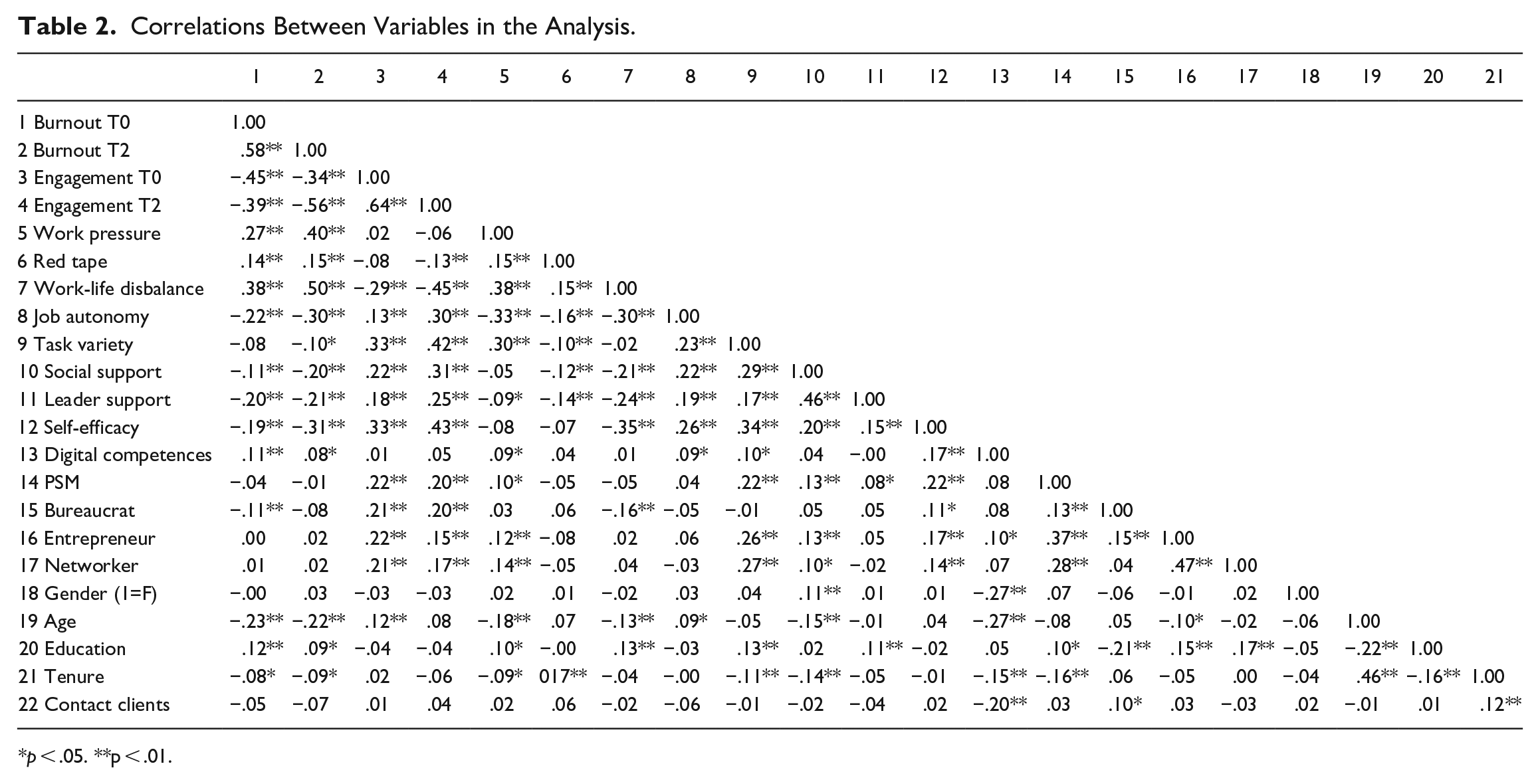
We calculated the correlations between these three roles (Table 2) and the correlation coefficients of the various role perceptions ranged between .04 and .47. This indicates that the variables do indeed measure three different role perceptions.
Controls
Five control variables were used. We dummy coded gender (0 = male, 1 = female). Age was categorized into nine cohorts (1 = younger than 25, 2 = 26–30 years, 3 = 31–35 years, 4 = 36–40, 5 = 41–45, 6 = 46–50 years, 7 = 51–55 years, 8 = 56–60 years, 9 = 60 years and older). Tenure was categorized into six cohorts (1 = less than 1 year, 2 = 1–3 years, 3 = 3–5 years, 4 = 5–10 years, 5 = 10–20 years, 6 = more than 20 years). We also included education as a control variable, which was subdivided into six categories, reflecting the Dutch educational system (1 = primary education, 2 = secondary vocational education, 3 = senior general secondary education and pre-university education, 4 = vocational education, 5 = higher vocational education, 6 = university education). Furthermore, we dummy coded whether respondents have direct contact with clients in their work (0 = no direct contact, 1 = direct contact).
Analysis
By collecting data from three surveys spread over time, this study is longitudinal in nature. Given the rapidly changing context during the COVID-19 pandemic, we considered the 5-month time interval between T1 and T2 as too long to identify a causal effect of job demands and resources on wellbeing. We therefore measured both the dependent and independent variables, except for role perceptions, at T2, but we controlled for the dependent variables at T0 in order to control for wellbeing at the start of the pandemic. Other studies have used the same rationale, for instance the highly cited articles of West et al. (2006) and Perry et al. (2001). Due to restrictions imposed, we were not able to measure role perceptions at T2 and therefore instead included the scores at T1. We consider this to be acceptable because role perceptions should be relatively stable over time, as they are characteristics of the self. Other control variables were measured at T0. The advantage of this lagged model over cross-sectional designs is that it provides a time sequence which is essential for establishing causality. This approach to data collection should also minimize common source bias (George & Pandey, 2017). The analysis to test our hypotheses was carried out using IBM SPSS version 26.
Results
The analysis consists of three parts. First, the descriptive statistics and correlations are presented. Second, the dependent variables (burnout and engagement), as measured over time, are reported. Third, a regression analysis is presented to test the study’s hypotheses, including the interaction effects of civil servants’ role perceptions.
Descriptive Statistics and Correlations
Table 1 shows the descriptive statistics of the main variables. On average, civil servants scored 2.92 on a scale from 1 to 7 for burnout at T2. This indicates that burnout symptoms are reasonably low within this municipality. The score of 4.03 for engagement at T2 is slightly above the scale mean.
Descriptive Statistics of Variables.
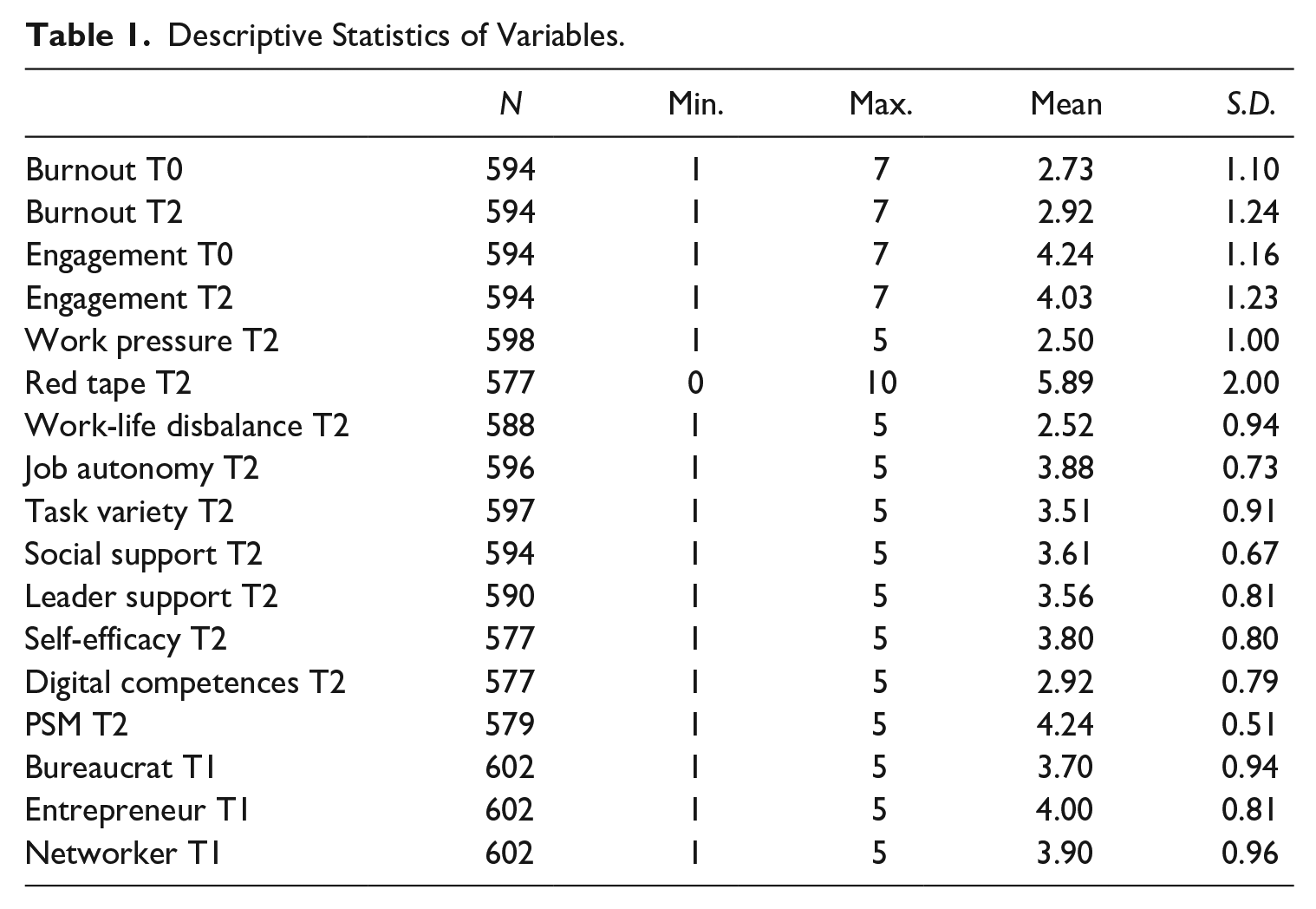
Table 2 presents the correlations between the variables. Most of the correlations between the variables proposed in the hypotheses are statistically significant and in the anticipated direction. Table 2 furthermore indicates that there are significant differences between civil servants depending on their role perceptions. Civil servants who see themselves in the traditional role of a bureaucrat have significantly less burnout symptoms and a better work-life balance than entrepreneurs and networkers who also experience more work pressure, social support, and task variety. Furthermore, entrepreneurs significantly possess more digital competencies.
Correlations Between Variables in the Analysis.
p < .05. **p < .01.
Changes in Burnout and Engagement Over Time
In the second step of the analysis, we measured how the dependent variables (engagement and burnout) had changed by comparing the values at T0, T1, and T2. The results are summarized in Table 3.
Changes in Burnout and Engagement.
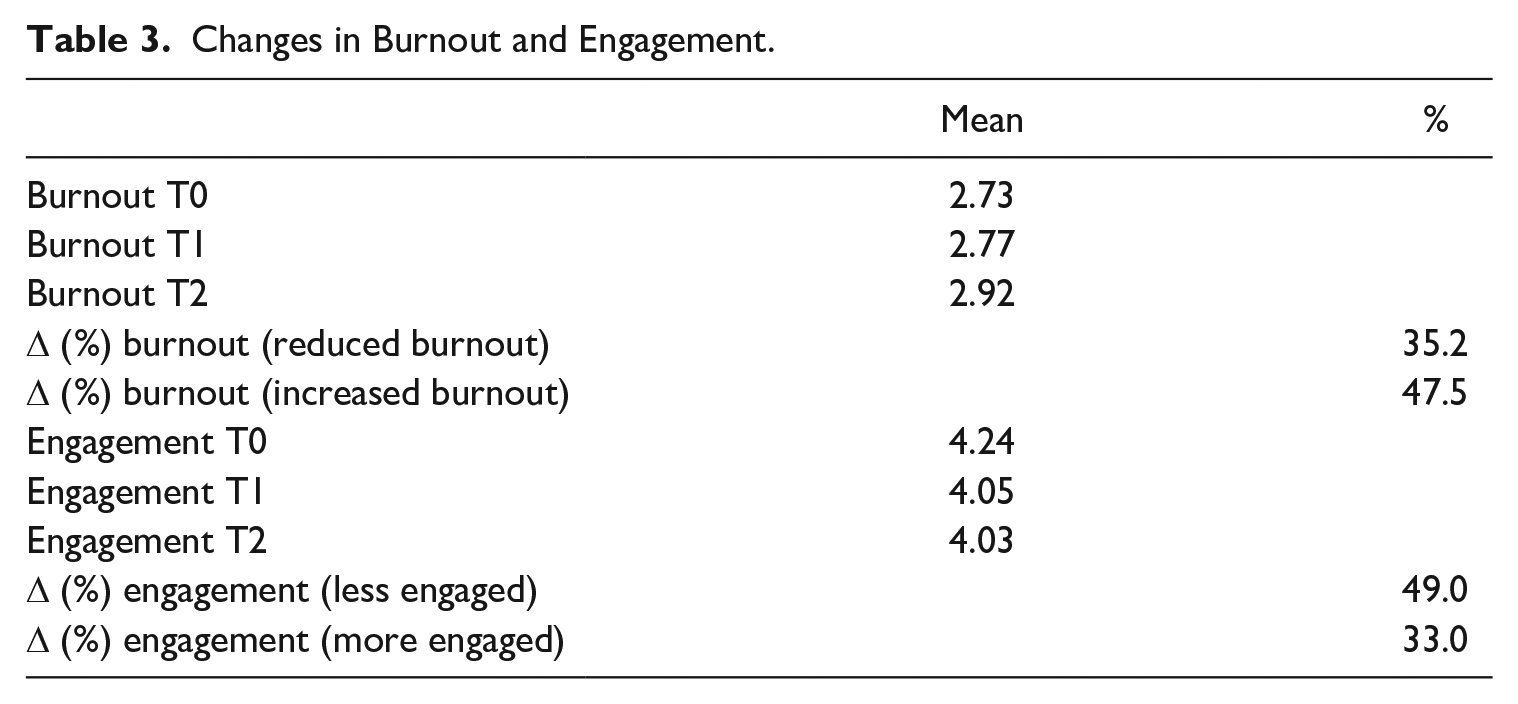
A one-way repeated-measures ANOVA was conducted to test whether significant differences exist between burnout and engagement over time. Results indicate significant changes in burnout and engagement: Wilks’ Lambda for burnout = .97 (F(2, 586) = 9.11, p = .000) and for engagement = .95 (F(2, 586) = 17.02, p = .000). Further comparisons indicate that burnout at T1 (M = 2.77, SD = 1.22) does not significantly differ from that at T0 (M = 2.73, SD = 1.10), whereas burnout at T2 (M = 2.92, SD = 1.24) significantly differs from that at T0 and at T1. Similar comparisons for engagement indicated that engagement at both T1 (M = 4.05, SD = 1.18) and T2 (M = 4.03, SD = 1.23) significantly differ from that at T0 (M = 4.24, SD = 1.16) and that engagement at T2 does not significantly differ from that at T1. These findings indicate that engagement decreased early in the COVID-19 pandemic, while burnout increased after a couple of months.
Overall, nearly half (47.5%) of the respondents reported stronger feelings of burnout at the end of the 6-month period than at the start, and a similar number (49%) were less engaged in their work. The wellbeing of the civil servants within this municipality had thus, on average, decreased over this period.
Regression Analyses and Interactions
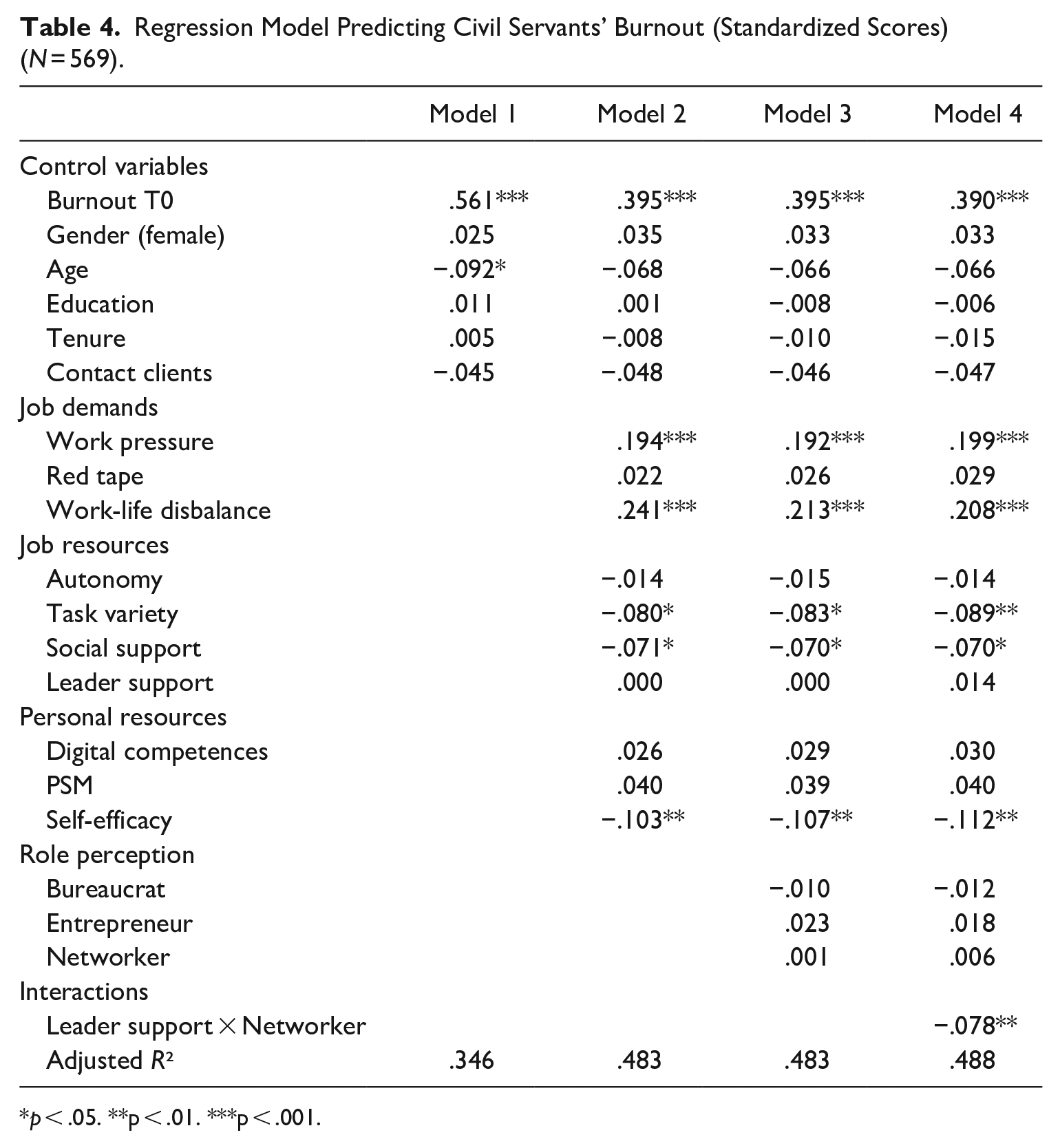
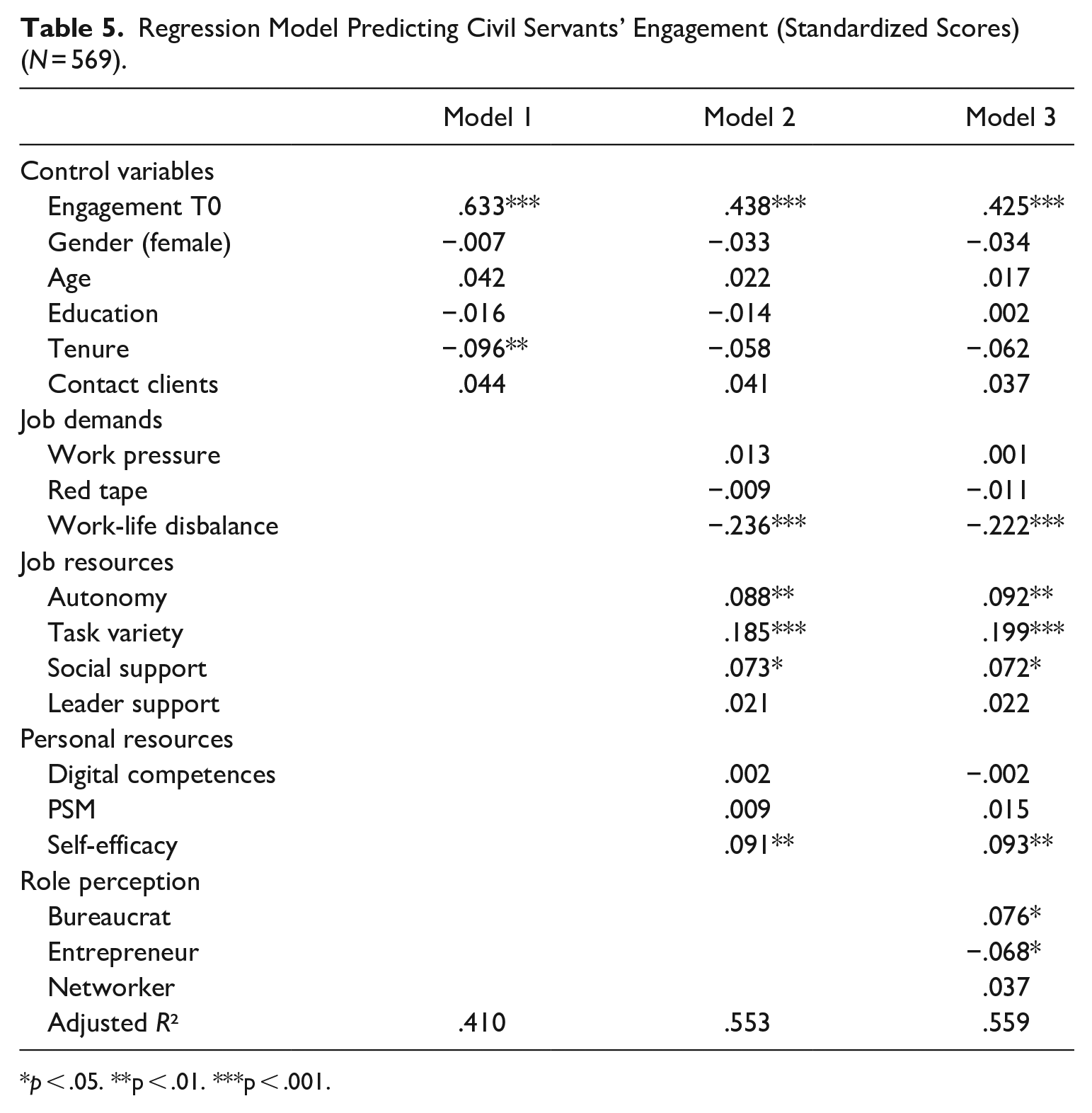
In the third step, regression analyses were performed. Separate regression models were calculated for burnout (Table 4) and for engagement (Table 5).
Regression Model Predicting Civil Servants’ Burnout (Standardized Scores) (N = 569).
p < .05. **p < .01. ***p < .001.
Regression Model Predicting Civil Servants’ Engagement (Standardized Scores) (N = 569).
p < .05. **p < .01. ***p < .001.
Hypotheses 1a and 1b anticipated that work pressure, red tape, and work-life disbalance would increase burnout (H1a) and decrease engagement (H1b). Model 4 in Table 4 shows that both work pressure and work-life disbalance do indeed increase burnout. However, the perceived level of red tape does not appear to influence burnout. Hypothesis 1a is therefore only partially supported. Model 3 in Table 5 indicates that work-life disbalance decreases engagement. However, we did not find any effect of work pressure or red tape on engagement. Hypothesis 1b is thus also only partially supported.
Hypotheses 2a and 2b posit that autonomy, task variety, social support, and leader support will decrease burnout (H2a) and increase engagement (H2b). The results from Model 4 in Table 4 indicate that, of these, only social support and task variety decrease burnout. Hypothesis 2a is therefore partially supported. The results from Model 3 in Table 5 show that autonomy, social support, and task variety increase engagement whereas leader support had no significant effect. Hypothesis 2b is thus also only partially supported.
Hypotheses 3a and 3b posited that personal resources, in the form of self-efficacy, digital competencies, and PSM, would decrease burnout (3a) and increase engagement (3b). Tables 4 and 5 indicate that, of these, only self-efficacy influences burnout and engagement in the expected directions. Hypotheses 3a and 3b are thus also partially supported.
Although we had not anticipated a direct effect of the various role perceptions on either burnout or engagement, Model 3 revealed two direct effects (see Table 5). Civil servants who identified their role as that of a bureaucrat were significantly more engaged, while civil servants adopting an entrepreneurial role were significantly less engaged.
In this study, we were interested in whether civil servants’ role perceptions moderate the relation between demands and resources on the one hand and burnout and engagement on the other. Therefore, for each independent variable, we calculated the interaction effect with the civil servants’ role perceptions. For example, in one model, we measured the interaction effect of job autonomy on burnout for the bureaucrat, entrepreneur, and networker. Although we did not find any interaction effects for engagement, we did find one significant interaction effect for burnout. Model 4 in Table 4 only shows the significant interaction effect, but the interaction effect leader support for the bureaucrat and leader support for the entrepreneur were also included in the analysis. As Model 4 in Table 4 shows, in the public organization studied, there was a negative interaction effect between leader support and those civil servants who perceive their role to be a networker. To make the interaction effect clearer, the results are plotted in Figure 2. This shows that the more civil servants identify themselves as a networker, the stronger the relation between leader support and burnout. As such, the support of the supervisor as a way to decrease burnout symptoms is more important for civil servants who identify themselves as networkers than for those who see themselves as filling entrepreneurial or bureaucratic roles.
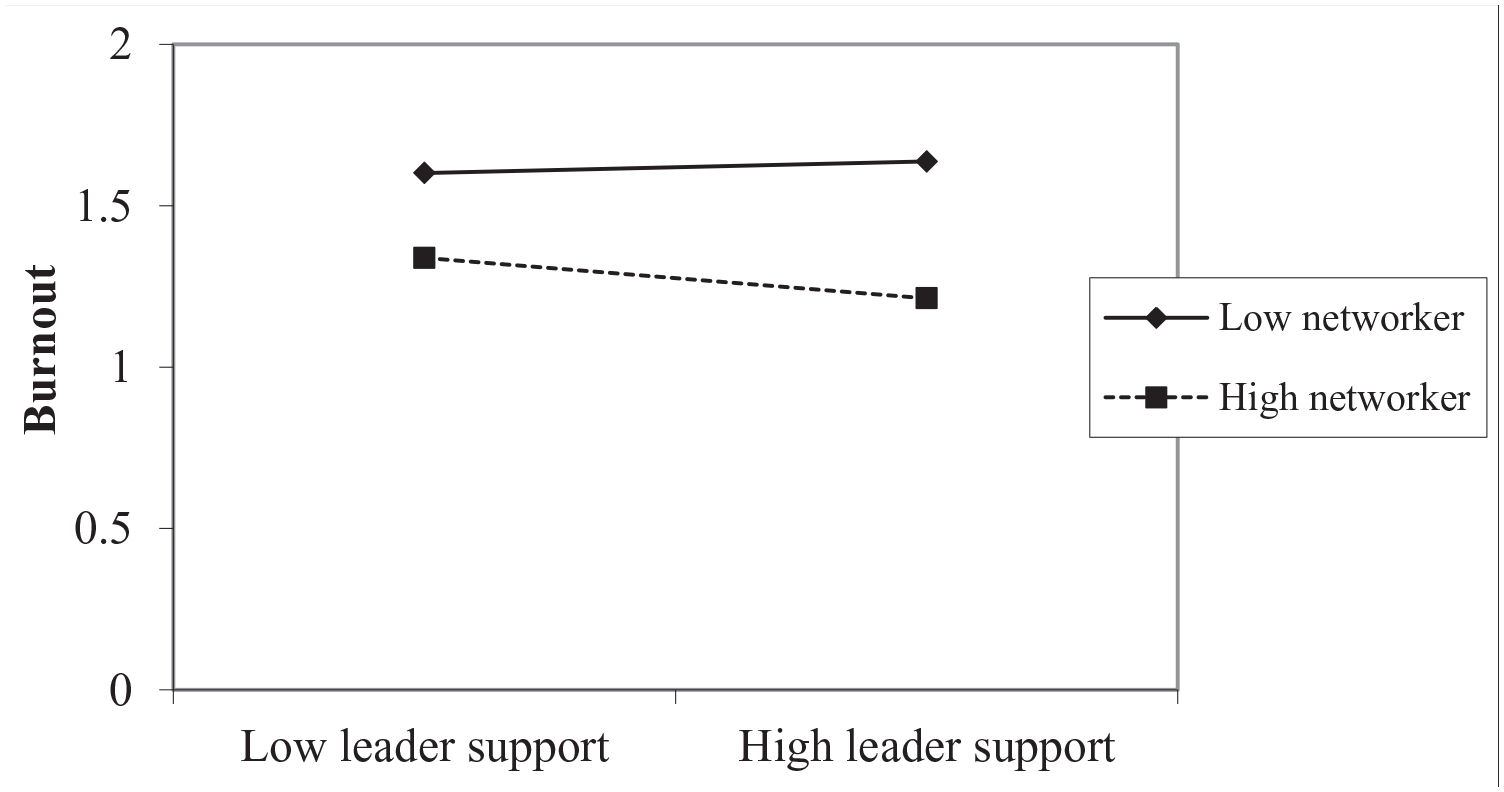
Interaction effect of leader support and networker on burnout.
Conclusions
The COVID-19 pandemic has increasingly affected numerous areas of civil servants’ working lives. The aim of this study was to examine civil servants’ wellbeing in the context of the COVID-19 pandemic and the extent to which role perceptions function as a moderator. The JD-R model has been adapted to the public sector context by including red tape, PSM, and civil servants’ role perceptions.
We employed a longitudinal survey and the data indicate that, on average, burnout increased and engagement decreased between April and September 2020. This identified decrease in average wellbeing during the COVID-19 pandemic is in accordance with other studies (e.g., Sibley et al., 2020; Zacher & Rudolph, 2020) and supports the view that the COVID-19 pandemic is not only a major medical and economic crisis, but also a psychological crisis (Zacher & Rudolph, 2020).
Further, we found that job demands (work pressure and work-life disbalance) negatively influenced wellbeing whereas job resources, including autonomy, task variety, and social support, positively influenced wellbeing. Perhaps surprisingly, supervisor support did not influence civil servants’ wellbeing. Possibly, if civil servants experienced a supportive working environment with their co-workers, then the support of their supervisor was less important during the pandemic. Self-efficacy, a personal resource, positively influenced wellbeing. We also found one significant interaction effect of civil servants’ role perception: the more that civil servants perceive their role to be as a networker, the stronger the relation between leader support and burnout. For such networkers, the support of their supervisor is more important in decreasing burnout symptoms than for civil servants who adopt entrepreneurial or bureaucratic roles. Interestingly, we also found a direct effect of civil servants’ role perception on one aspect of wellbeing. Civil servants who rely on the traditional bureaucratic role perception were more engaged, whereas entrepreneurial civil servants were less engaged during the COVID-19 pandemic. A possible explanation may be that bureaucrats are less affected by the COVID-19 pandemic, even though their working conditions have changed. Bureaucrats might simply follow the new rules and protocols that emerged and, in this way, adjust to the current situation. Conversely, entrepreneurs might be more sensitive to changes as it might be more difficult for them to achieve results during the COVID-19 pandemic.
Our findings contribute in three ways to the literature. First, our findings contribute to the relevance of the JD-R model by showing that this model is very appropriate for studying wellbeing during a crisis. The COVID-19 pandemic can be considered as a crisis as it is a highly unpredictable and uncertain event, disrupting society and challenging the public sector (Mascio et al., 2020). By identifying job demands, job resources, and personal resources that influenced wellbeing during this crisis, we show the broad applicability of the JD-R model to crisis situations such as this one. Furthermore, by adopting the JD-R model, we were able to show that engagement decreased at the beginning of the COVID-19 pandemic, whereas burnout only increased after a couple of months. It could be that there is a causal relationship between engagement and burnout such that a high level of engagement protects the individual against burnout (Maricuțoiu et al., 2017). Future research should explore this possible longitudinal relationship between burnout and engagement further.
Second, our study contributes to the public administration field by applying the JD-R model in a public sector context. To date, the JD-R model has received only limited attention by public administration scholars (Borst et al., 2019; Steijn & Giauque, 2021). However, contrary to previous studies that have applied the JD-R model in the public sector (e.g., Borst, 2018), we did not find evidence that red tape and PSM influence wellbeing. This could be because our study took place in the particular context of the COVID-19 pandemic where other demands and resources may have become more pertinent. In this study, we found that red tape was negatively correlated with job resources. This suggests that even though civil servants were confronted with red tape that made their work environment more demanding (Walker & Brewer, 2008), job resources could help in dealing with this red tape (Quratulain & Khan, 2015). Moreover, since PSM positively correlates with civil servants’ role perception, it could be that when civil servants have a clear role perception, they achieve meaning and identity in their work, resulting in an enhanced PSM (Perry & Hondeghem, 2008).
Third, our findings provide empirical evidence on how civil servants interpret their role, and how their different role perceptions influence wellbeing (Brandsen & Honingh, 2013; Kruyen & Van Genugten, 2020). Our results suggest that public organizations have become “mixed zones” of civil servants with different role perceptions not only between, but also within individual civil servants (Van der Steen et al., 2018). Moreover, we show that these various role perceptions affect the attitudes of civil servants. Although we expected a civil servant’s role perception to have a moderating effect on their wellbeing, we only found one statistically significant moderated relationship. However, we also found a direct effect. More research is therefore needed to understand how civil servants’ role perceptions influences wellbeing. One could consider a civil servant’s role perception to be a personal resource in relation to wellbeing. From this perspective, a role perception is a psychological characteristic of the self that can be used to deal with the changing public sector context. Civil servants who have a clear role perception will have a better sense of what they value and what they are good at. Moreover, we found that all three role perceptions were significantly and positively related to self-efficacy, a concept that is generally acknowledged to be a personal resource (Akkermans et al., 2013). Xanthopoulou et al. (2007) noted that personal resources may change over time and are open to development, a characterization supported by the research of Kruyen and Van Genugten (2020) who argue that role perceptions can change and that, for instance, training can help civil servants learn and reflect on their own role and position.
Notwithstanding these findings, our study has some limitations. First, our data come from a single municipality in the Netherlands. As such, the sample is selective, and the findings may not be generalizable to other public organizations, especially in other countries. Future research should explore whether these findings are consistent across other organizations.
Second, this study was conducted during the rapidly changing context of the COVID-19 pandemic. Even though we controlled for some effects, the contexts surrounding each of the three surveys differed given that, for instance, schools and daycare centers were closed during the first survey in April.
Third, the study design did not allow a comparison of before and during the COVID-19 pandemic. Although we are thus unable to compare the situation during the COVID-19 pandemic with the situation before, we are, because of our longitudinal design, able to study changes during the first 6 months of the pandemic.
Fourth, additional analyses indicated that the respondents to the intake questionnaire (at T0) who signed up for follow-up questionnaires were significantly more engaged than those who did not sign up for follow-up questionnaires. In contrast, there were no significant differences in terms of burnout. Employees who are more engaged might be more willing to contribute to the organization. Contrary, employees who are in more difficult situations do not have time to participate in a survey like this. In this study we show that burnout increased, and engagement decreased during the COVID-19 pandemic. Given that the sample is not representative in this respect, the results should be interpreted with some caution and the current results may be even too favorable.
Fifth, the correlation between the items used to identify NPM and NPG civil servants is quite high (.47). As such, more research is needed to further develop items that measure these role perceptions in which discriminant validity of the broader constructs should be examined. It should also be noted that we only measured role perceptions at one particular moment in time. More research is needed to find out whether role perceptions are stable characteristics or dynamic and changeable over time. Finally, due to size restrictions of the questionnaires, we were not able to measure all variables within each questionnaire.
Based on the findings presented above, we make two recommendations for the HR profession. First, we believe that the COVID-19 pandemic requires action by HR to help civil servants adjust to the current crisis (Rudolph et al., 2020). This study shows that their wellbeing decreased over the 6-month period studied and, hence, HR practices should give attention to boosting civil servants’ wellbeing. We found that a work-life disbalance was increasingly, and negatively, influencing wellbeing (Carnevale & Hatak, 2020; Rudolph et al., 2020). This is an important aspect for HR to address, and one recommendation would be to train managers in how to support employees struggling with a deteriorating work-life balance.
A second recommendation for HR is to take into account our finding that civil servants interpret their roles in different ways. For example, civil servants who see their role as being an entrepreneur seem to be most affected by the COVID-19 pandemic in terms of engagement. Consequently, measures to support civil servants not only during, but also after, COVID-19 should be able to differentiate among civil servants (Van Veldhoven & Van Gelder, 2020). If public organizations take the different needs into account, civil servants will be better able to fulfill their organizational role and task requirements. Subsequently, having a mix of civil servants with various role perceptions can become a strength.
Footnotes
Appendix
Measurement scales
Wellbeing
Burnout
Answer categories: seven-point Likert scale ranging from “never” to “always”
Engagement
Answer categories: seven-point Likert scale ranging from “never” to “always”
Job demands
Work pressure
Answer categories: five-point Likert scale ranging from “never” to “always”
In the past 2 weeks. . .
Red tape
Answer categories: scale ranging from 0 to 10
Work-life disbalance
Answer categories: five-point Likert scale ranging from “very satisfied” to “very dissatisfied”
Job resources
Autonomy
Answer categories: five-point Likert scale ranging from “fully disagree” to “fully agree”
In the past 2 weeks. . .
Task variety
Answer categories: five-point Likert scale ranging from “never” to “always”
In the past 2 weeks. . .
Social support
Answer categories: five-point Likert scale ranging from “fully disagree” to “fully agree”
In the past 2 weeks. . .
Leader support
Answer categories: five-point Likert scale ranging from “fully disagree” to “fully agree”
In the past 2 weeks. . .
Personal resources
Self-efficacy
Answer categories: five-point Likert scale ranging from “never” to “always”
In the past 2 weeks. . .
Digital skills
Answer categories: five-point Likert scale ranging from “not good” to “very good”
To what extent do you possess. . .
PSM
Answer categories: five-point Likert scale ranging from “fully disagree” to “fully agree”
Role perception
Answer categories: five-point Likert scale ranging from “fully disagree” to “fully agree”
Declaration of Conflicting Interests
The author(s) declared no potential conflicts of interest with respect to the research, authorship, and/or publication of this article.
Funding
The author(s) disclosed receipt of the following financial support for the research, authorship, and/or publication of this article: This study is part of a PhD project that was supported by a Dutch municipality, based on a collaboration with the Erasmus University Rotterdam.
