




Abstract
The current study investigated perfectionism and procrastination from the trait and cognitive perspectives and addressed how they relate to components of a personal orientation toward failure. A sample of 327 undergraduate students completed three perfectionism measures (i.e., Frost Multidimensional Perfectionism Scale, Hewitt–Flett Multidimensional Perfectionism Scale, and Perfectionism Cognitions Inventory), two procrastination measures (i.e., Lay Procrastination Scale and Procrastinatory Cognitions Inventory), and measures of fear of failure and overgeneralizing failure. Correlational analyses showed that the composite trait dimension of perfectionistic concerns and the cognitive dimension of perfectionistic automatic thoughts had modest links with trait procrastination but much stronger links with the cognitive measure of procrastinatory automatic thoughts. All perfectionism and procrastination measures were significantly correlated with fear of failure and overgeneralization of failure. More extensive analyses showed that fear of failure mediated trait and cognitive pathways between perfectionism and procrastination, and the overgeneralization of failure mediated most pathways. Other evidence supported a sequential mediation between perfectionism and procrastination (i.e., fear of failure followed by the overgeneralization of failure). Overall, the results suggest that procrastinating perfectionists have a cognitive hypersensitivity to failure and a potentially debilitating form of perfectionistic reactivity characterized by overgeneralizing failures to the self. The theoretical and practical implications are discussed.
Introduction
Perfectionism is a complex construct that was originally conceptualized as a diathesis that is triggered by the experience of stress, including the experience of threatening personal failures (see Hewitt & Flett, 1991). The vast literature on perfectionism has shown that it is associated with a wide range of negative costs and consequences, including a decline in well-being (Curran & Hill, 2019), and negative mental health outcomes, such as depression, anxiety, and even suicidality (Flett et al., 1998; Smith et al., 2018); however, there are also indications that certain facets of perfectionism can sometimes be a positive force reflected in higher levels of achievement. Nonetheless, one overarching theme is that perfectionists are constantly under pressure and when the pressure becomes too much or the standards and expectations become too high, it is then that perfectionism can be very costly and consequential (see Flett & Hewitt, 2022).
When it comes to students who are not served well by their perfectionism, one highly problematic combination is when perfectionism is combined with procrastination. There are case accounts that make it clear that the combination of perfectionism and procrastination when experienced at the personal level can be debilitating and can result in significant alteration to the person’s life (see Flett et al., 2004). The procrastinating perfectionist, or alternatively the perfectionistic procrastinator, is someone who seems well-defined by the approach-avoidance conflict that Covington (2000) has used to describe the trials and tribulations of over-strivers; here, drive and determination to be perfectly successful accounts for the approach orientation, but this drive is defensively fueled by a fear of failure that accounts for the avoidance orientation. One way of explaining the seemingly relentless drive and excessive striving is that it is a compulsive form of striving designed to ward off failure and shame in the moment. The renewal of this compulsive striving after a success reflects the tendency for perfectionists to be focused on the next accomplishment with little chance to enjoy successes that come their way, due to the possibility of future failures and the shame and embarrassment that would accompany being a failure. When the perfectionist feels that being perfect is an imperative that must be obtained, this can qualify the sense that procrastination is a needless voluntary delay (see Pychyl, 2013) because the procrastinating perfectionist can feel a sense of being internally and externally controlled by pressures.
The current research project had two main interconnected goals. First, we sought to further understand the association between perfectionism and procrastination and gain further insights about how and when this combination becomes problematic. Previous studies have established the association between these constructs (e.g., Sirois et al., 2017) mainly using trait-driven measures, failing to account for underlying thought processes. Thus, we examined the relationship between perfectionism and procrastination, using both trait and cognitive measures.
Second, we also sought to gain a better understanding of how and when perfectionism combines with procrastination to be a potent source of vulnerability. We did so by considering how perfectionism and procrastination relate to a failure orientation marked by a cognitive preoccupation with the possibility of failure (reflected by fear of failure) and a hypersensitivity to over-react and amplify failures by overgeneralizing them (i.e., a failure is a failure of the self).
Past research on perfectionism and procrastination is now briefly summarized below, and this is followed by a summary of research conducted thus far that links perfectionism and procrastination with fear of failure and overgeneralization of failure. It will be seen that initial research focused exclusively on perfectionism and procrastination from a trait perspective, while more recent work has begun to include an emphasis on the cognitive aspects of perfectionism and procrastination.
Perfectionism
Perfectionism is a personality trait that encompasses the tendency to set excessively high standards for performance and engage in critical evaluations of one’s own behaviors (Frost et al., 1990; Hewitt & Flett, 2004). Research suggests trait perfectionism is best conceptualized as a multidimensional construct (Frost et al., 1990; Hewitt & Flett, 1991; Smith et al., 2016). Currently, the two most widely used and researched multidimensional measures of trait perfectionism are the Frost Multidimensional Perfectionism Scale (FMPS; Frost et al., 1990) and Hewitt and Flett’s (1991) Multidimensional Perfectionism Scale (HFMPS). Collectively, in their original framework, these two approaches together delineated nine trait dimensions of perfectionism. Factor analytic evidence suggests that five trait dimensions of these scales fall under two overarching trait factors called Perfectionistic Strivings (PS) and Perfectionistic Concerns (PC) (see Frost et al., 1993; Stoeber & Otto, 2006). PS is composed of two dimensions: personal standards (PST) and self-oriented perfectionism (SOP); PC is composed of three dimensions: concerns over mistakes (CM), doubts about actions (DA), and socially prescribed perfectionism (SPP). PS describes the tendency to set excessively high standards for oneself, while PC reflects the tendency to be overly concerned with making mistakes and receiving negative evaluations (Stoeber & Otto, 2006). Traditionally, PS and PC have demonstrated differential associations with positive and negative outcomes. For instance, whereas PS appears to correlate positively with positive affect, confidence, and goal-driven behaviors (Frost et al., 1993; Stoeber & Otto, 2006), PC is typically correlated with negative affect, anxiety, and depression (Flett et al., 1998; Frost et al., 1993). In line with these findings, some researchers have also referred to the two composites of PS and PC as Pure Personal Standards and Maladaptive Evaluative Concerns, respectively (see DiBartolo et al., 2008). However, the adaptive nature of PS is highly debatable and is clearly context-dependent, given that PS has also predicted longitudinal increases in depression and is associated with anxiety, eating disorders, early mortality, and even suicidality (Franco-Paredes et al., 2005; Fry & Debats, 2009; Smith et al., 2016, 2018).
In the present study, we focused on the two trait perfectionism composites (i.e., perfectionistic strivings and perfectionistic concerns). This approach has its advantages, including adding clarity for readers, but it may also be problematic in the sense that potent individual dimensions, such as socially prescribed perfectionism, have their unique contributions obscured when they are assessed as one facet of a broader perfectionistic factor. Moreover, these broad factors do not consider the cognitive aspects of perfectionism. Cognitive factors play a significant role in perfectionism, often in the form of negative self-appraisals (Flett et al., 2007, 2016b, 2018). Hewitt and Genest (1990) contend that perfectionists have two distinct self-schemas: the current self-schema and the ideal self-schema, drawing attention to deficits in the current self. Though self-schemas exist for all individuals, the ideal self-schema is highly activated in perfectionists (Hewitt & Genest, 1990), resulting in excessive self-critical thoughts about one’s self-perceived flaws. Thus, in addition to measuring perfectionism using the trait factors described above, the current study also entails an additional focus on perfectionistic automatic thoughts.
Perfectionism and Procrastination
Procrastination is “the tendency to postpone that which is necessary to reach some goal” (Lay, 1986, p. 475). It occurs when an individual voluntarily delays starting or completing a task, despite knowing that this delay will eventually lead to detrimental consequences (Lay, 1986; Steel, 2007). As there is no “good reason” for procrastination, it is often termed an “irrational” delay (Steel, 2007), resulting in “self-damaging behavior” (Flett et al., 2016b). Procrastination is damaging indeed, having been linked with maladaptive consequences, including increased levels of stress (Flett et al., 1995), depression (Stainton et al., 2000), and suicidality (Klibert et al., 2011). Like perfectionism, procrastination is often conceptualized as a trait and numerous scales have been devised to assess the behavioral tendencies related to procrastination. However, as with perfectionism, trait measures do not capture the thoughts associated with these behaviors. Individuals who frequently engage in procrastinatory behaviors are likely to experience automatic, negative thoughts about themselves and the task; over time, these thoughts become an integral component of procrastinators’ self-schema (Stainton et al., 2000).
Perfectionism and procrastination are significantly correlated (see Sirois et al., 2017). Both constructs can be regarded as forms of self-regulation failure (Sirois et al., 2017), especially when the person with these tendencies cannot stop procrastinating or trying to be perfect. Several investigations of multidimensional trait perfectionism and trait procrastination clarified that socially prescribed perfectionism (i.e., the perception that others demand perfection from the self; a trait dimension underlying PC) was positively associated with trait procrastination, while self-oriented perfectionism (i.e., demanding perfection from the self; a trait dimension underlying PS) was either unrelated to procrastination or negatively related to procrastination (e.g., Martin et al., 1996). Flett et al. (1992) found that in 131 university students, trait and academic procrastination were correlated with elevated levels of socially prescribed perfectionism and with scores on the Burns (1980) Perfectionism Scale (BPS).
Furthermore, Sirois et al. (2017) found a medium, positive average effect size (r = .23) between the trait composite of PC and trait-procrastination, and a medium negative average effect size (r = −.22) between the trait composite of PS and trait procrastination. The key caveat here is that the Sirois et al. (2017) findings are based on a variable-centered perspective to this association. When this pattern is viewed from a person-centered perspective, people with extreme perfectionism tend to be high in both features of perfectionistic concerns and perfectionist strivings. It should be evident that whether these perfectionism trait composites relate to more procrastination or less procrastination will depend, in part, on the situational circumstances, task demands, and performance outcomes. Procrastination and perfectionism are particularly problematic when the circumstances promote avoidance and disengagement.
There is much less research on perfectionism and procrastination from a cognitive perspective. In fact, a significant limitation of the most recent meta-analysis on the perfectionism-procrastination association (see Sirois et al., 2017) is that both variables were assessed solely from a trait perspective, resulting in an analysis that did not address the role of cognitions in this association. The line of research that addresses the cognitive elements of perfectionism and procrastination was made possible by conceptualizing and measuring individual differences in automatic thoughts involving the need to be perfect (see Flett et al., 1998) and automatic thoughts related to urges and tendencies to procrastinate and engage in dilatory behavior (see Stainton et al., 2000). In both instances, people prone to frequent automatic thoughts are also prone to distress and other forms of rumination (see Besser et al., 2020; Flett et al., 2011; Flett et al., 2016a). It is generally believed that these thoughts reflect the cognitive experience, awareness of, and preoccupation with falling short of goals, standards, or expectations in terms of what should be done or ought to be done. When it comes to perfectionism, the cognitive ruminations related to perfectionism have been incorporated into broad conceptual analyses and models that emphasize supplementing a trait approach by adding an emphasis on the frequent experience of automatic perfectionistic thoughts (about needing to be perfect and ruminating about mistakes) (see Flett et al., 2016b, 2018).
Limited research has examined the relationship between perfectionistic automatic thoughts and procrastinatory automatic thoughts. Indeed, some evidence indicates that, at the cognitive level, these dimensions have a stronger link than they do at the trait level. For instance, while Sirois et al. (2017) found small-to-medium relationships between measures of trait perfectionism and procrastination, Flett et al. (2012) reported that the two automatic-thoughts measures were substantially correlated (r = .55) in a sample of 94 undergraduate students. To add, more recent research on mistake rumination by Flett et al. (2020) showed that scores on the Procrastinatory Cognitions Inventory (Stainton et al., 2000) were correlated significantly with mistake rumination (r = .58), self-oriented perfectionism (r = .33), and socially prescribed perfectionism (r = .49). More frequent thoughts related to procrastination were also strongly linked with ruminative brooding and depression in the university student participants.
Fear of Failure and Overgeneralization of Failure as Mediators of Traits and Cognitions
Fear of failure (FF) is a state of concern about the possibility of failure and about the adverse consequences associated with failing (Birney et al., 1969; Conroy et al., 2002). In contrast to fear of failure, overgeneralization of failure (OGF) is a self-critical cognitive process that occurs when an individual experiences a failure and overgeneralizes this failure to his/her self-concept, leading to a reduced sense of self-worth (Carver & Ganellen, 1983). Beck (1976) introduced the construct of OGF in his cognitive theory of depression, encompassing the tendency for depressed patients to generalize failures to their sense of self. Why focus on fear of failure and overgeneralization of failure? Recently, Flett and Hewitt (2022) proposed expanding the Comprehensive Model of Perfectionistic Behavior (see Hewitt et al., 2017) to include a hypersensitivity to failure and a hypersensitivity to mistakes. It was postulated that these hypersensitivities underscore all perfectionism dimensions involving an emphasis on the self, and that the FMPS trait dimension of concern over mistakes has item content that reflects both a mistake sensitivity (e.g., I should be upset if I make a mistake) and failure sensitivity (e.g., If I do not do as well as other people, it means I am a failure as a human being). Failure sensitivity was defined as “…. a dispositional tendency to anticipate possible failures, readily perceive failures even when ambiguous feedback is available and overreact in a variety of ways to personal failures and failures shared with others” (Flett & Hewitt, 2022, p. 71). The notion of failure sensitivity is in keeping with earlier work by Clifford (1984, 1988) documenting individual differences in levels of failure tolerance among children. Flett and Hewitt (2022) further noted that failure sensitivity and mistake sensitivity are more salient today and are on the rise due to the amount of exposure to social media among young people.
In the current research, failure sensitivity is assessed in terms of fear of failure (FF) and overgeneralization of failure (OGF). FF has been significantly and positively correlated with both perfectionism and procrastination (Flett et al., 1995). Solomon and Rothblum (1984) found that FF constituted a large proportion of the reported causes of procrastination. Similarly, Frost and colleagues (1990) discovered that FF was correlated with three trait dimensions of the FMPS, including concerns over mistakes (i.e., having an overly negative appraisal of one’s own mistakes, such that even minor shortfalls are perceived as failures; a trait dimension underlying PC), doubt about action mistake (i.e., doubting one’s own performance; a trait dimension underlying PC), and personal standards (i.e., setting high expectations on the self; a trait dimension underlying PS). Further, Conroy et al. (2007) found that FF most strongly correlated with socially prescribed perfectionism (compared to other trait dimensions of the HFMPS), indicating that FF may be especially salient to those perfectionists who are deeply concerned with others’ evaluations. In addition, Flett et al. (1992) found that a fear of failure measure from an academic measure of procrastination was associated with all trait dimensions of the HFMPS (self-oriented, other-oriented, and socially prescribed perfectionism) and with scores on perfectionism assessed by the BPS. From a cognitive perspective, Flett et al. (2012) found that the two automatic thoughts measures representing perfectionism and procrastination were both linked with FF (r’s of .44 in each instance) in a sample of university students. The need to consider these variables from a conceptual basis is illustrated by the observation from Flett et al. (2004) that “fears of failure are very salient among perfectionistic procrastinators” (p. 188). The current research re-examines these associations in a much larger sample of university students. Parenthetically, the current research is also novel in that relatively few investigations of any type whatsoever have thus far utilized the Procrastinatory Cognitions Inventory, which assesses automatic procrastinatory thoughts.
As for the links with overgeneralization of failure, to our knowledge, there is no published research thus far evaluating the possible association between OGF and procrastination. OGF was linked with trait perfectionism in earlier research that established its association with socially prescribed perfectionism in university students (see Hewitt & Flett, 1991) and both self-oriented and socially prescribed perfectionism in clinical patients (Hewitt et al., 1991). A significant association (r = .43) between OGF and perfectionistic automatic thoughts was also found in a small sample of 43 undergraduate students (Flett et al., 1998).
The current research was a more comprehensive assessment of the perfectionism and procrastination constructs as they relate to FF and OGF. The first goal was to re-examine the relationship between perfectionism and procrastination using both trait and cognitive measures. The main hypothesis based on past research and conceptualization was that trait and cognitive measures of procrastination would be significantly associated with the trait composite of perfectionistic concern and with cognitive measure of perfectionistic automatic thoughts. It was further hypothesized that perfectionistic automatic thoughts would predict significant variance in procrastinatory automatic thoughts beyond the variance attributable to trait perfectionism.
As for the links between the failure-related measures and perfectionism and procrastination, it was hypothesized that the perfectionism and procrastination in general, but especially the cognitive measures of perfectionism and procrastination, would be associated with FF and OGF. More sophisticated analyses were also conducted to test the likelihood that FF and OGF would mediate all potential (trait and cognitive) pathways between perfectionism and procrastination, in keeping with the overarching premise that one key element that ties together these constructs is their shared linked with failure sensitivity.
Method
Participants
The sample was composed of 327 undergraduate students (73.4% female) who participated as part of their introductory psychology course requirement. Ages ranged from 18 to 27 years (M = 18.86, SD = 2.67). The ethnic composition of the sample was 45.9% White/European, 34.3% East Asian, 6.1% Middle Eastern, 4.0% South Asian, 2.8% Black, and 6.9 % other.
Measures
Perfectionistic Strivings (PS) and Perfectionist Concerns (PC)
PS and PC were measured using subscales from the Frost Multidimensional Perfectionism Scale (FMPS; Frost et al., 1990) and the Hewitt–Flett Multidimensional Perfectionism Scale (HFMPS; Hewitt & Flett, 1991, 2004). The FMPS is a 35-item self-report measure that assesses perfectionistic tendencies, across six subscales including personal standards (PST; e.g., “It is important to me that I am thoroughly competent in everything I do”), concerns over mistakes (CM; e.g., “If I fail partly, it’s as bad as being a complete failure”), and doubts about actions (DA; e.g., “Even when I do something very carefully, I often feel that it is not quite right”). The other three subscales including parental expectations (PE), parental criticism (PCR), and Organization (O) were often not used in these composite measures of perfectionism. Participants responded to CM, DA, and PST items using a 5-point scale from 1 (strongly disagree) to 5 (strongly agree). Across multiple studies, the FMPS demonstrated good reliability and internal consistency; across multiple studies, alpha coefficients for PST, CM, and DA ranged from .70 to .89 (Frost et al., 1990; Rice & Mirzadeh, 2000).
The HFMPS assesses three trait perfectionism dimensions: self-oriented perfectionism (SOP; e.g., “One of my goals is to be perfect in everything I do”), socially prescribed perfectionism (SPP; e.g., “The people around me expect me to succeed at everything I do”), and other-oriented perfectionism (OOP; e.g., “If I ask someone to do something, I expect it to be done flawlessly”). Participants responded to SOP and SPP items using a 7-point scale from 1 (disagree) to 7 (agree). Good internal consistency and test–retest reliability for the HFMPS have been reported across multiple studies. In a sample of 1106 students, alpha coefficients were α = .89 (SOP) and α = .86 (SPP) (Hewitt & Flett, 1991). In a separate study, reliability coefficients were r = .88 (SOP) and r = .75 (SPP) (Hewitt & Flett, 1991).
Factor analytic findings of the FMPS and HFMPS yielded in the superordinate dimensions of PS and PC (Bieling et al., 2004), which have been used in previous research to assess trait-perfectionism. Based on past research, we assessed PS as a composite of PST and SOP, and PC as a composite of CM and DA and SPP.
Perfectionistic Cognitions
The Perfectionism Cognitions Inventory (PCI; Flett et al., 1998) is a 25-item questionnaire that measures the presence of reoccurring perfectionistic thoughts that become activated when a person perceives a discrepancy between his/her actual self and ideal self (e.g., “No matter how much I do, it’s never enough”). Participants responded to items using a 5-point scale from 0 (not at all) to 4 (all the time). The PCI demonstrated excellent internal consistency across samples, with Cronbach’s alphas of .90 or greater (see Flett et al., 2012). Good test–retest reliabilities, of .67 and .85, were reported for student and clinical samples, respectively (Flett et al., 1998).
Trait-Procrastination
Trait-procrastination was assessed with the 20-item General Procrastination Scale (GPS; Lay, 1986), which measures the extent to which individuals identify with procrastination behaviors (e.g., “I often find myself performing tasks that I had intended to do days before”). Responses are rated using a 5-point scale from 1 (extremely uncharacteristic) to 5 (characteristic). This measure demonstrated good internal consistency and test–retest reliability (Lay, 1986).
Procrastinatory Cognitions
The Procrastinatory Cognitions Inventory (ProcCI; Stainton et al., 2000) is an 18-item questionnaire that assesses automatic thoughts that become activated in response to task-delay, such as “No matter how much I try, I still put things off.” The ProcCI assesses the frequency of procrastinatory cognitions on a 5-point scale, from 0 (not at all) to 4 (all the time). This measure has shown excellent internal consistency (α = .93) (Flett et al., 2012) and good test–retest reliability (r = .76) (Stainton et al., 2000).
Fear of Failure (FF)
Fear of failure was measured using the multidimensional Performance Failure Appraisal Inventory (PFAI-Revised; Conroy et al., 2002). The PFAI assesses five domains that underlie FF: fear of experiencing shame and embarrassment (e.g., “when I am failing, I worry about what others think about me”), fear of devaluing one’s self-estimate (e.g., “when I am failing, it is often because I am not smart enough to perform successfully”), fear of having an uncertain future (e.g., “When I am failing, I believe that my future plans will change”), fear of important others losing interest (e.g., “When I am not succeeding, people are less interested in me”), and fear of upsetting important others (e.g., “when I am failing, it upsets important others”). Responses are rated using a 5-point scale from −2 (Do Not Believe At all) to 2 (Believe 100% of the Time). The PFAI has demonstrated adequate internal consistency with alpha coefficients ranging from .74 to .81 across the five subscales and .82 for the total score (Conroy et al., 2002).
Overgeneralization of failure (OGF)
Overgeneralization of failure was measured using the 7-item OGF subscale, from the Attitudes Towards Self Scale (ATS; Carver & Ganellen, 1983), which assesses three areas of self-regulatory cognitions (high standards, self-criticism, and OGF). The OGF subscale taps “interpreting a specific failure as reflecting upon the totality of one’s self-worth” (p. 331). Thus, the failure here is a failure of the self and this is reflected in the scale item content (e.g., “I often change from feeling extremely good about myself to seeing only the bad and feeling like a failure. When even one thing goes wrong I begin to feel bad and wonder if I can do well at anything at all”). Responses were recorded using a 5-point scale from 1 (extremely untrue) to 5 (extremely true). OGF has demonstrated good internal consistency, with an alpha coefficient of .82 (Carver & Ganellen, 1983). Scores on this measure are strongly correlated (r = .69) with a measure of failure perseveration with item content such as “A bad outcome will often preoccupy me for a long time afterward” and “If I fail at something, I think about that particular failure for a long time afterward” (see Carver et al., 1988). Both failure overgeneralization and failure perseveration are elements that reflect the perfectionistic reactivity tied to the proposed failure sensitivity.
Results
Descriptive Statistics and Correlation Analyses
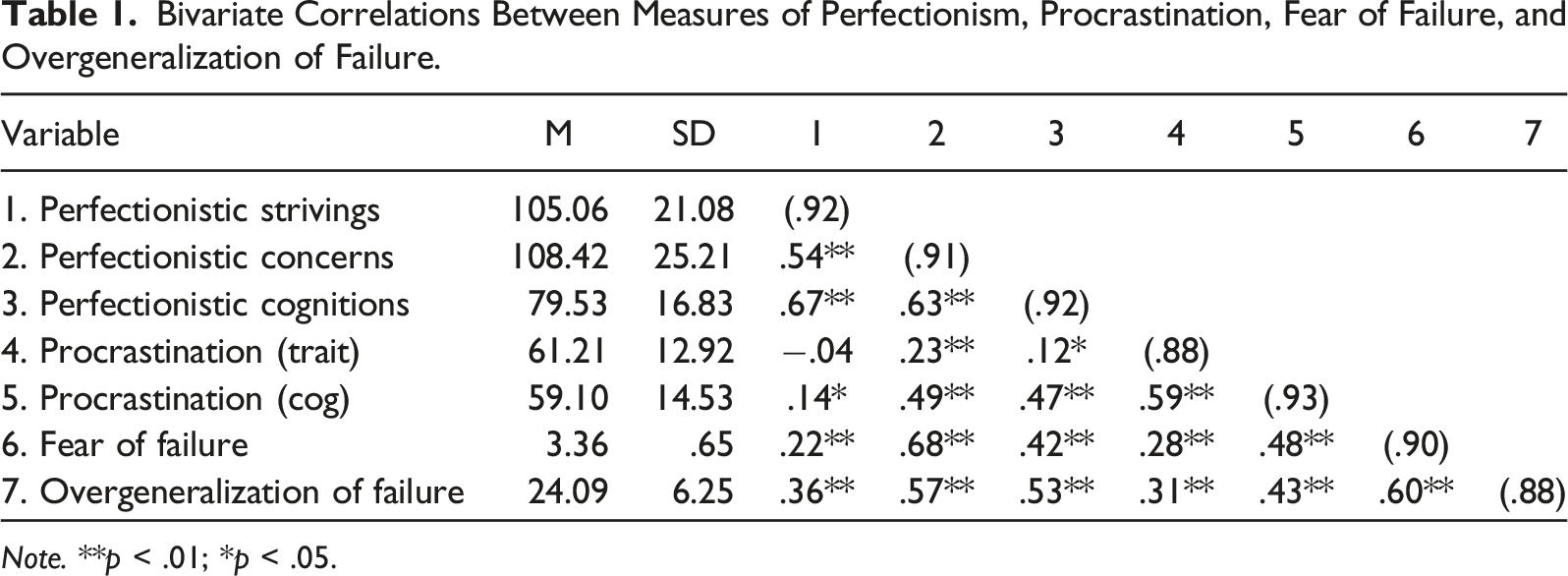
Bivariate Correlations Between Measures of Perfectionism, Procrastination, Fear of Failure, and Overgeneralization of Failure.
Note. **p < .01; *p < .05.
Both FF and OGF significantly and positively correlated with all trait and cognitive measures of perfectionism and procrastination. The strongest associations were with trait PC, but all of the correlations were statistically significant.
Hierarchical Regression Analysis
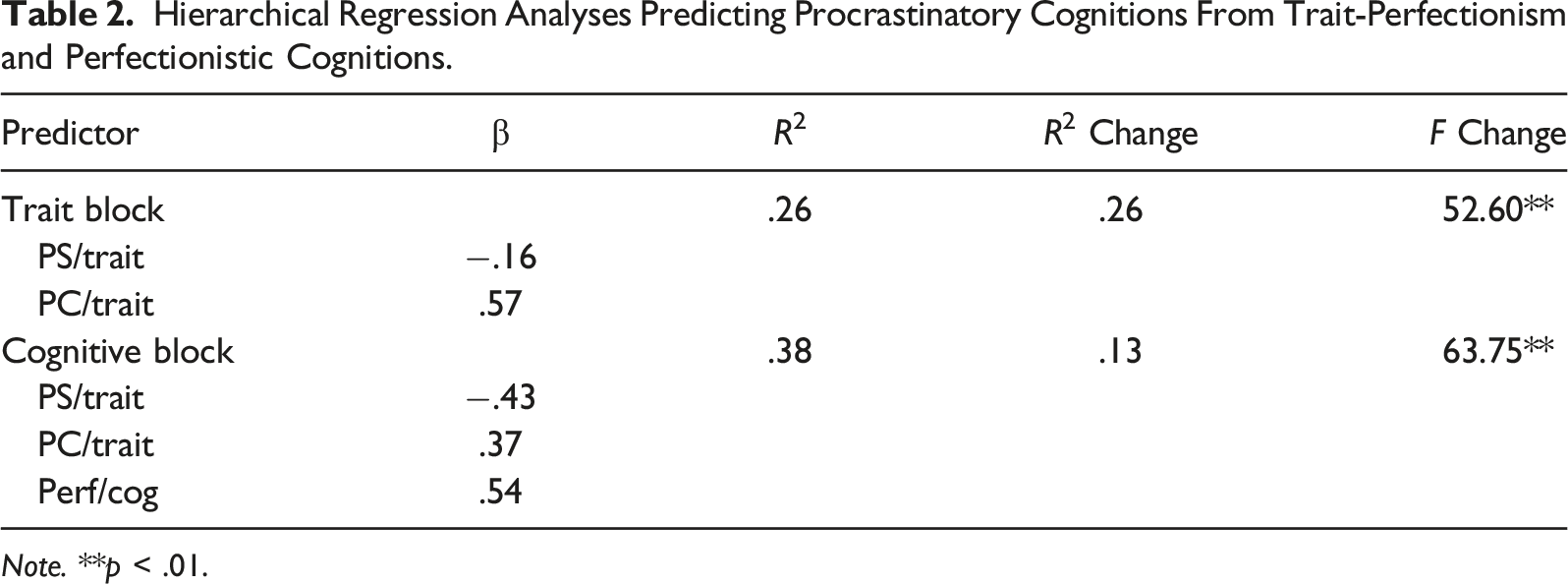
Hierarchical Regression Analyses Predicting Procrastinatory Cognitions From Trait-Perfectionism and Perfectionistic Cognitions.
Note. **p < .01.
Mediation Analyses
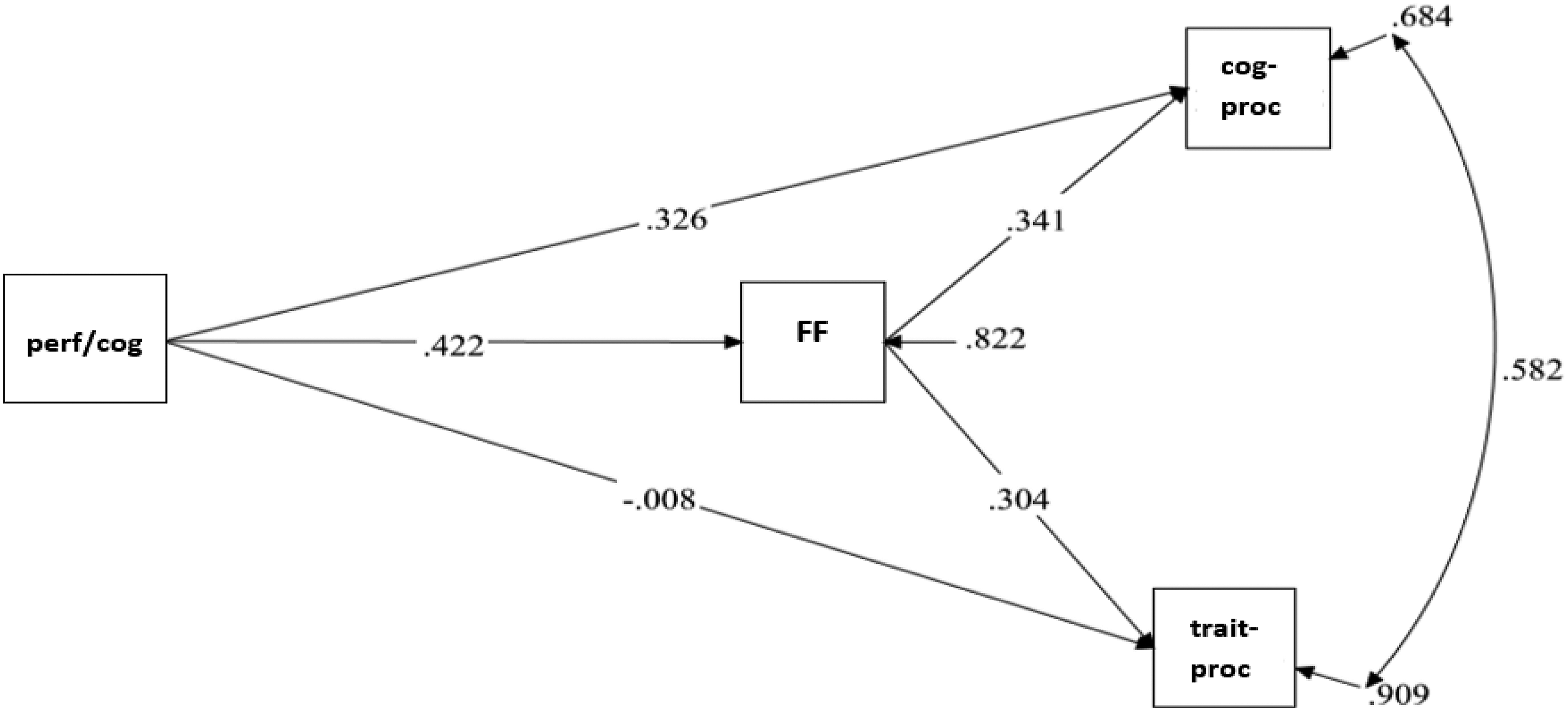
Next, the mediating role of FF was examined using two mediation models, with perfectionistic traits (PS and PC) as predictors in one model (Figure 1) and perfectionistic automatic thoughts as predictors in another model (Figure 2); both models contained FF as the mediating variable and both measures of procrastination as the outcome variables. Mediation model with trait-perfectionism (PS/trait and PC/trait) as the predictor variable, fear of failure as the mediating variable, and trait-procrastination and cog-procrastination as the outcome variables. All regression coefficients are standardized. Pathways not statistically significant: PC/trait to trait-procrastination (β = .191, p = .06, 95% CI [−.065, .429]); PS/trait to cog-procrastination (β = −.115, p = .05, 95% CI [−.266, .043]). Mediation model with perfectionistic cognitions as the predictor variable, fear of failure as the mediating variable, and trait-procrastination and cog-procrastination as the outcome variables. All regression coefficients are standardized. Pathways not statistically significant: perf/cog to trait-procrastination.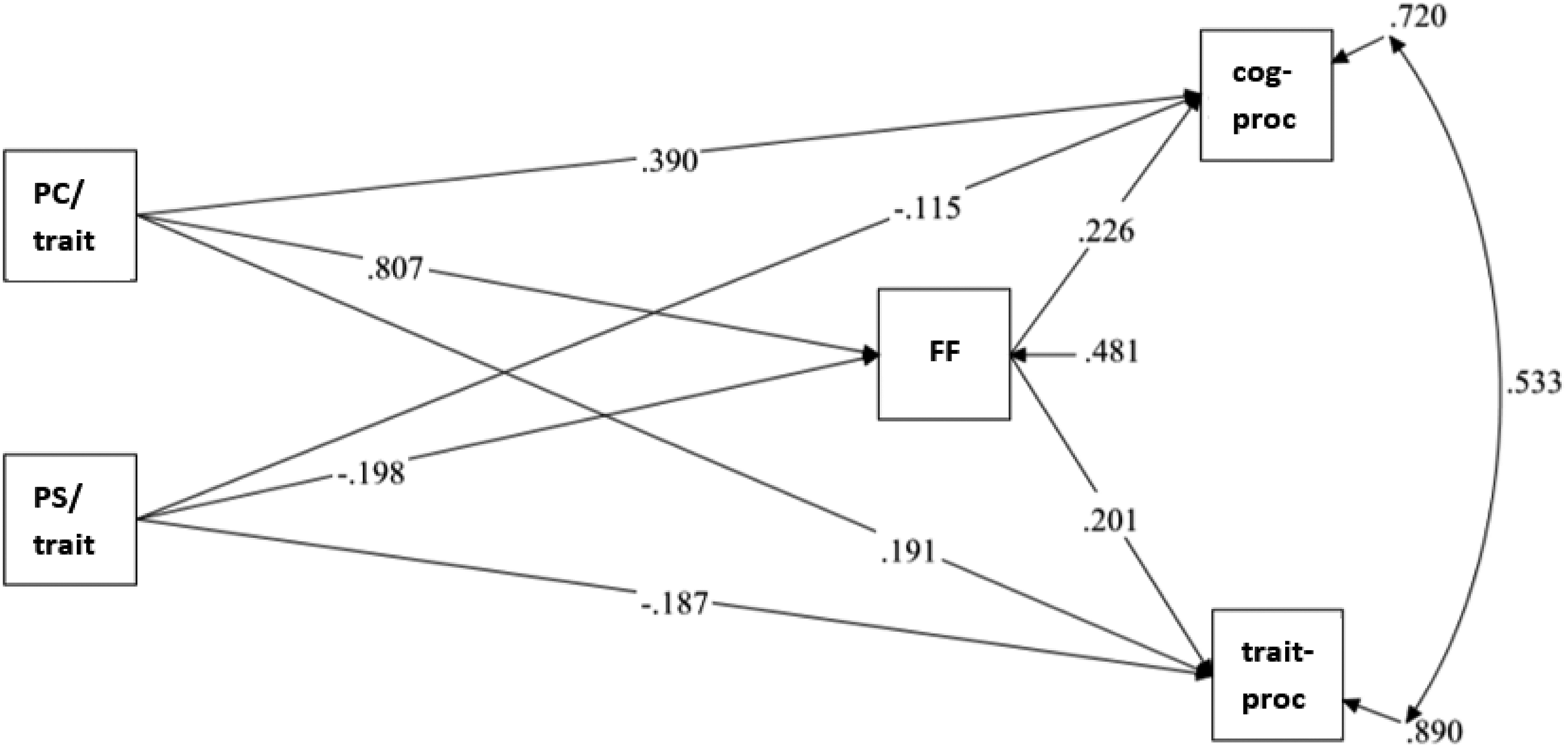
Indirect Effects for the FF-Mediation Models With Trait-Perfectionism (PS/Trait and PC/Trait) as the Predictor Variables in Model 1 and Perf/Cog as the Predictor Variable in Model 2, Fear of Failure as the Mediating Variable, and Trait-Procrastination and Cog-Procrastination as the Outcome Variables.
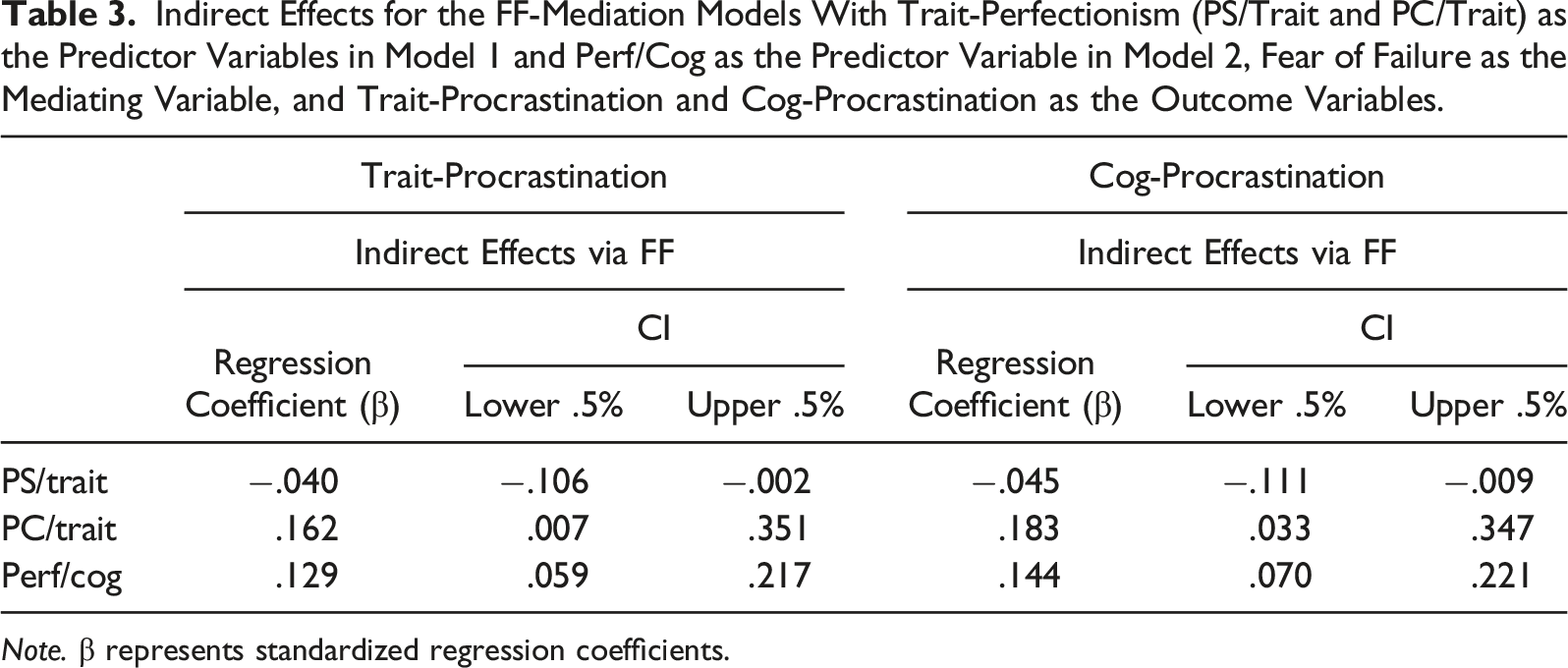
Note. β represents standardized regression coefficients.
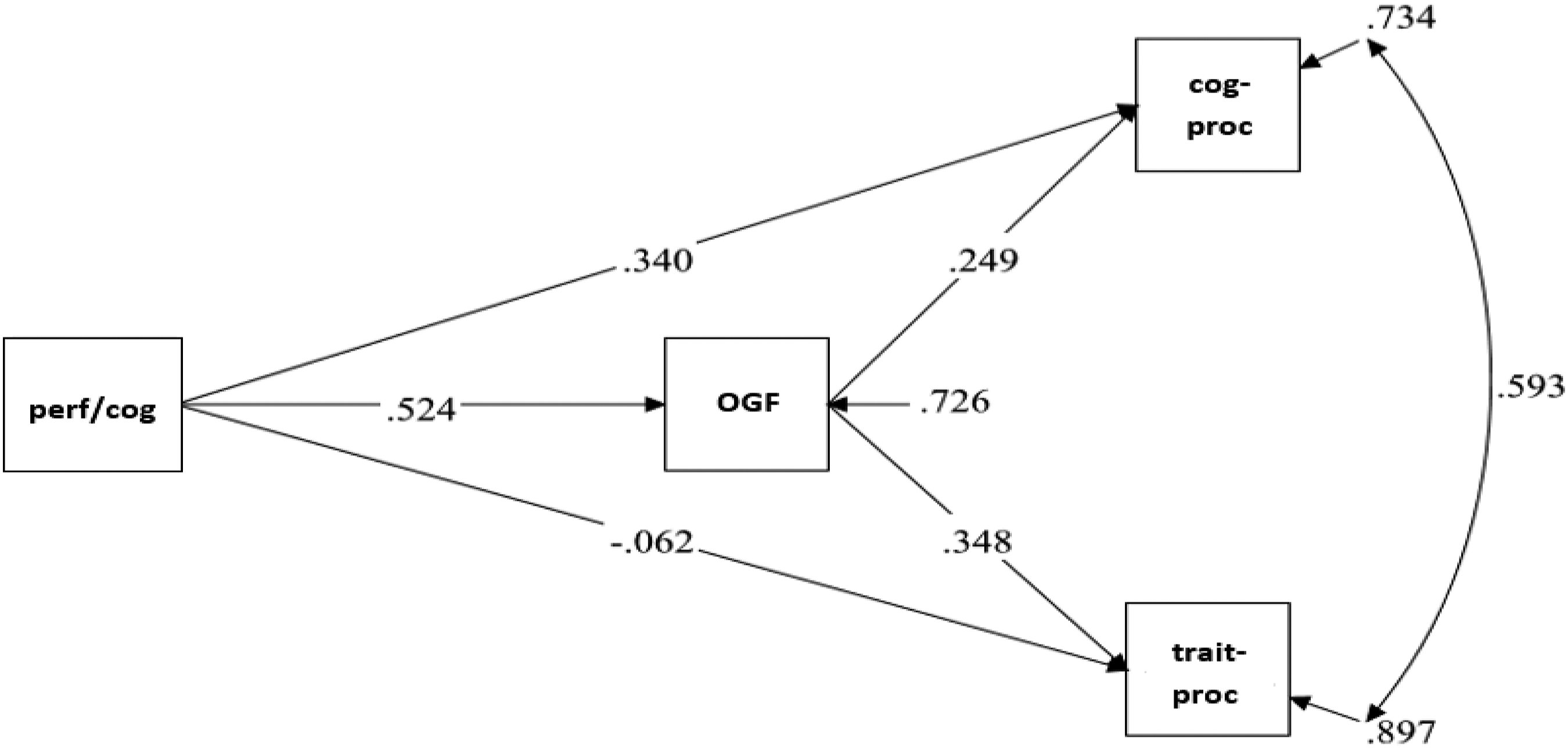
The mediating role of OGF was examined using two models, with perfectionistic traits (PS and PC) as predictors in one model (Figure 3) and perfectionistic automatic thoughts as predictors in another model (Figure 4); both models contained OGF as the mediating variable and both measures of procrastination as the outcome variables. Mediation model with trait-perfectionism (PS/trait and PC/trait) as the predictor variable, overgeneralization of failure as the mediating variable, and trait-procrastination and cog-procrastination as the outcome variables. All regression coefficients are standardized. Pathways not statistically significant: PC/trait to trait procrastination; PS/trait to OGF Mediation model with perfectionistic cognitions as the predictor variable, overgeneralization of failure as the mediating variable, and trait-procrastination and cog-procrastination as the outcome variables. All regression coefficients are standardized. Pathways not statistically significant: perf/cog to trait procrastination.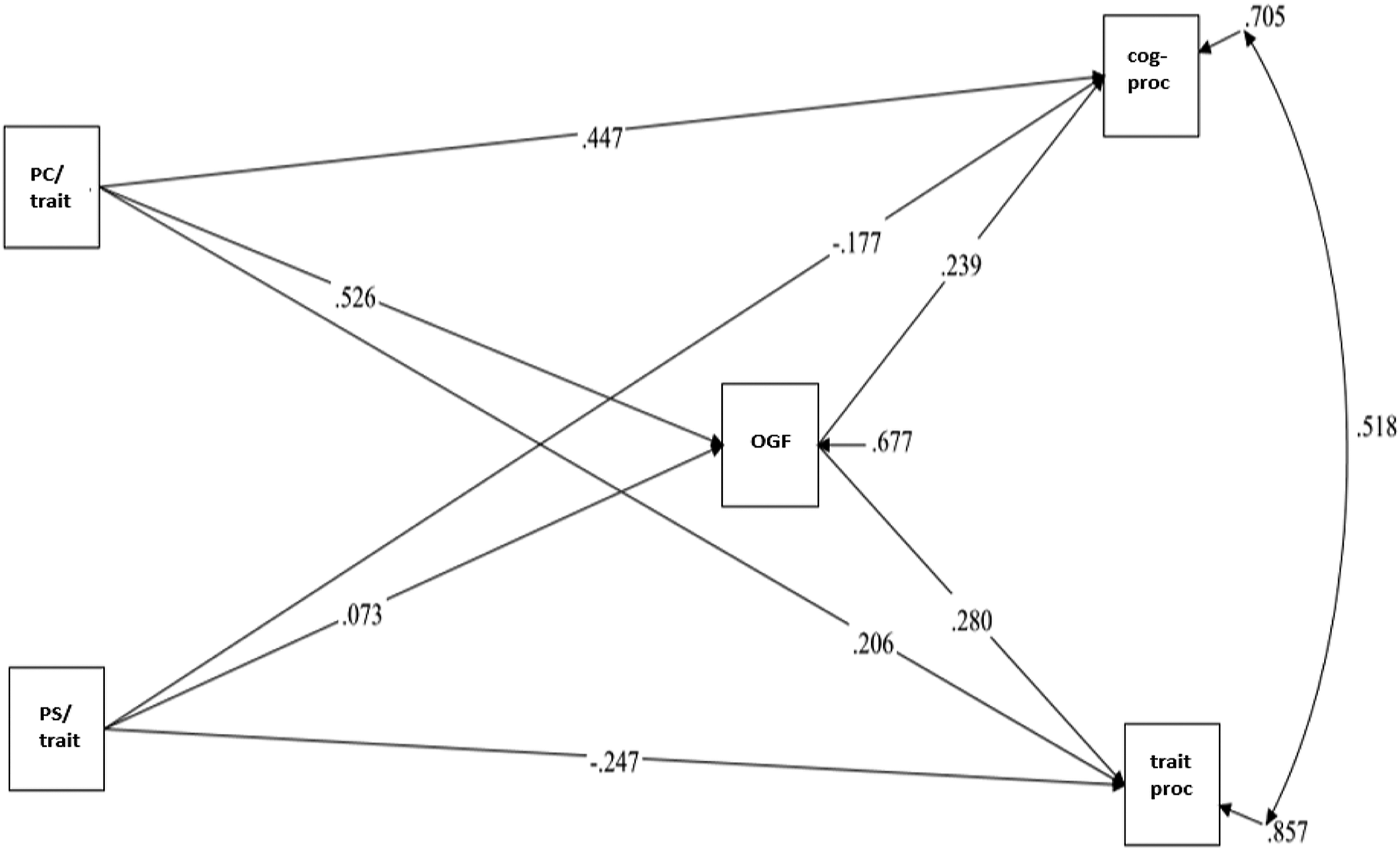
Indirect Effects for the OGF-Mediation Models With Trait-Perfectionism (PS/Trait and PC/Trait) as the Predictor Variables in Model 1 and Perf/Cog as the Predictor Variable in Model 2, Overgeneralization of Failure as the Mediating Variable, and Trait-Procrastination and Cog-Procrastination as the Outcome Variables.
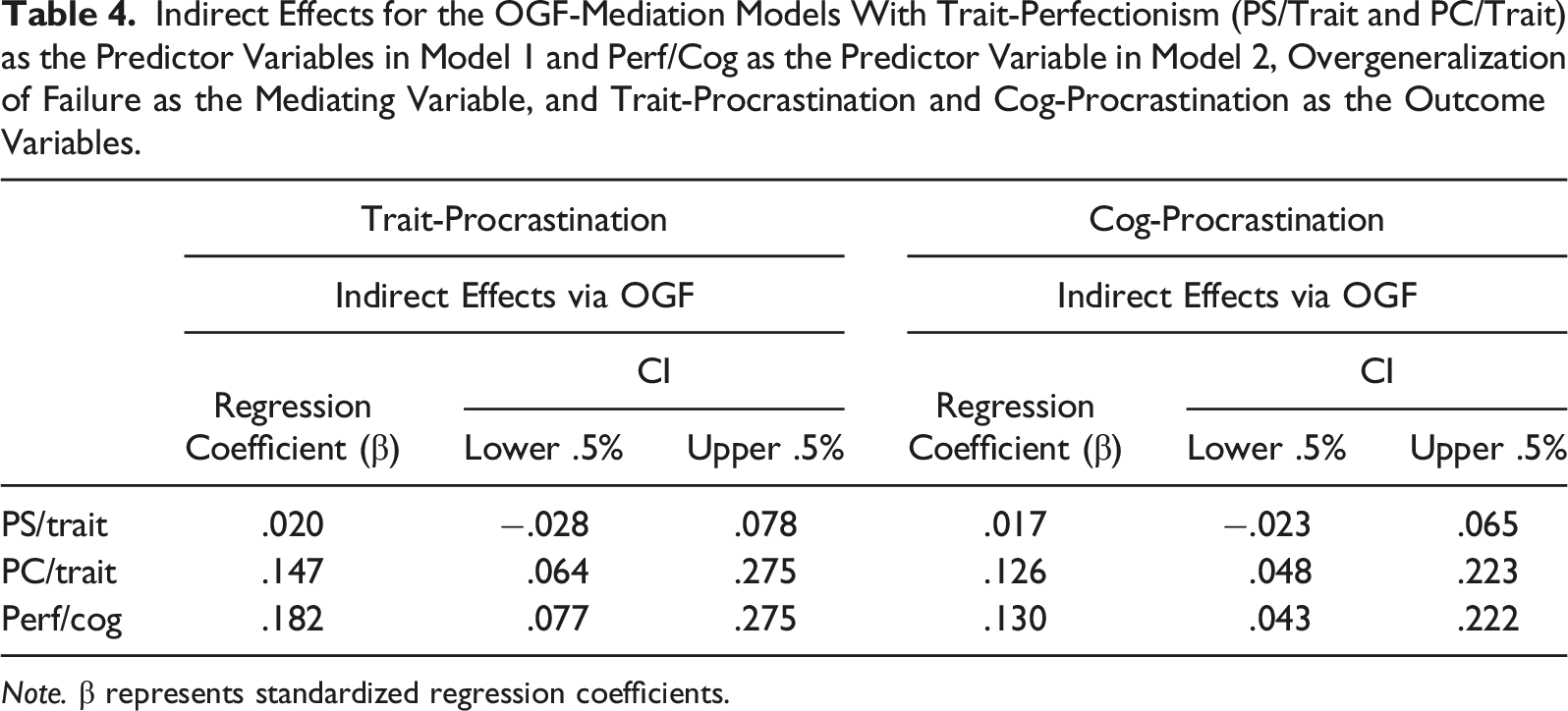
Note. β represents standardized regression coefficients.
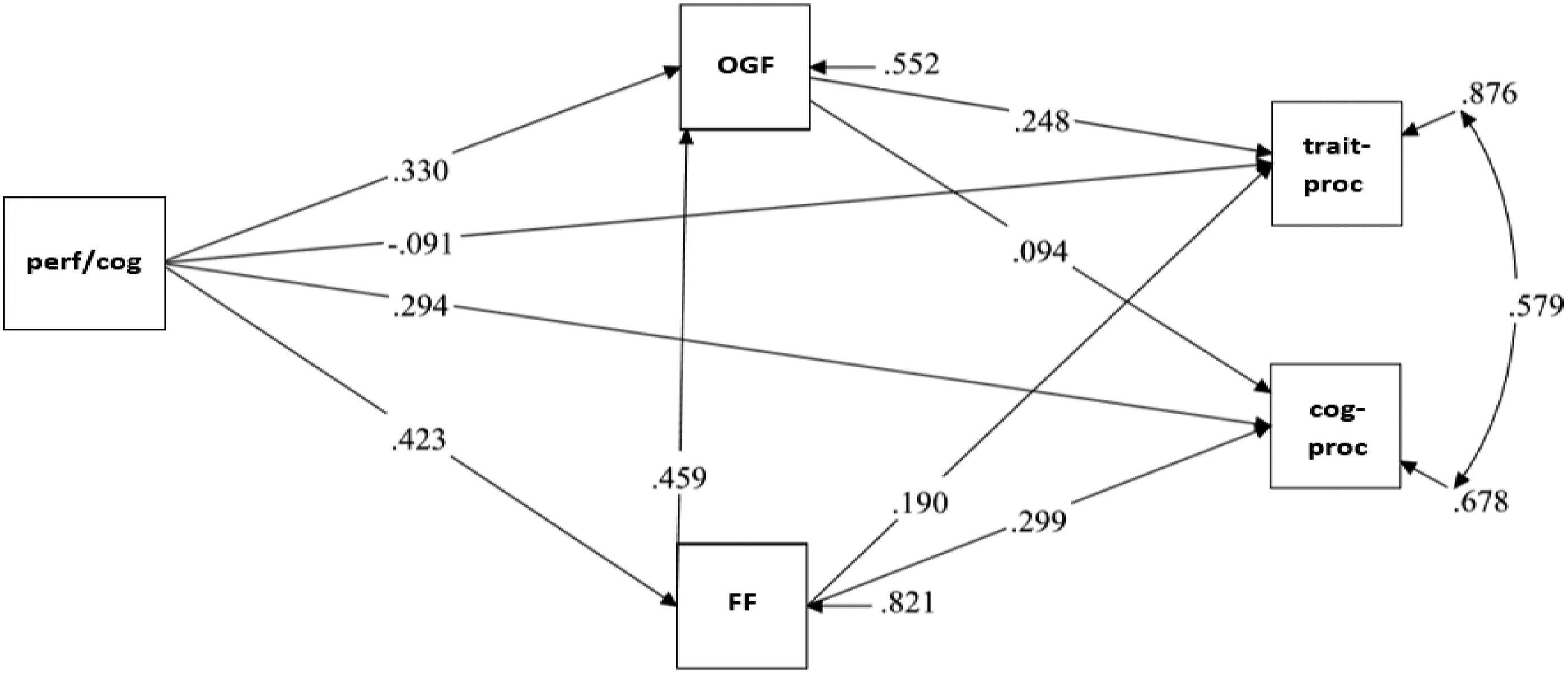
The mediation effect of FF followed by OGF was assessed by testing both mediators in a sequential pathway. Two models were employed, with perfectionistic traits (PS and PC) as predictors in one model (Figure 5) and perfectionistic automatic thoughts as predictors in another model (Figure 6). In each model, three sets of indirect effects were produced, via FF alone, OGF alone, and FF followed by OGF. The focus of this analysis was on the indirect effects in the sequential pathway of FF followed by OGF. Sequential-mediation model with trait-perfectionism (PS/trait and PC/trait) as the predictor variable, fear of failure and overgeneralization of failure as the mediating variables, and trait-procrastination and cog-procrastination as the outcome variables. All regression coefficients are standardized. Pathways not statistically significant: PS/trait to OGF, PC/trait to OGF, PS/trait to cog-procrastination, PC/trait to trait-procrastination, FF to cog-procrastination, and FF to trait-procrastination. Sequential-mediation model perfectionistic cognitions as the predictor variable, fear of failure and overgeneralization of failure as the mediating variables, and trait-procrastination and cog-procrastination as the outcome variables. All regression coefficients are standardized. Pathways not statistically significant: OGF to cog-procrastination.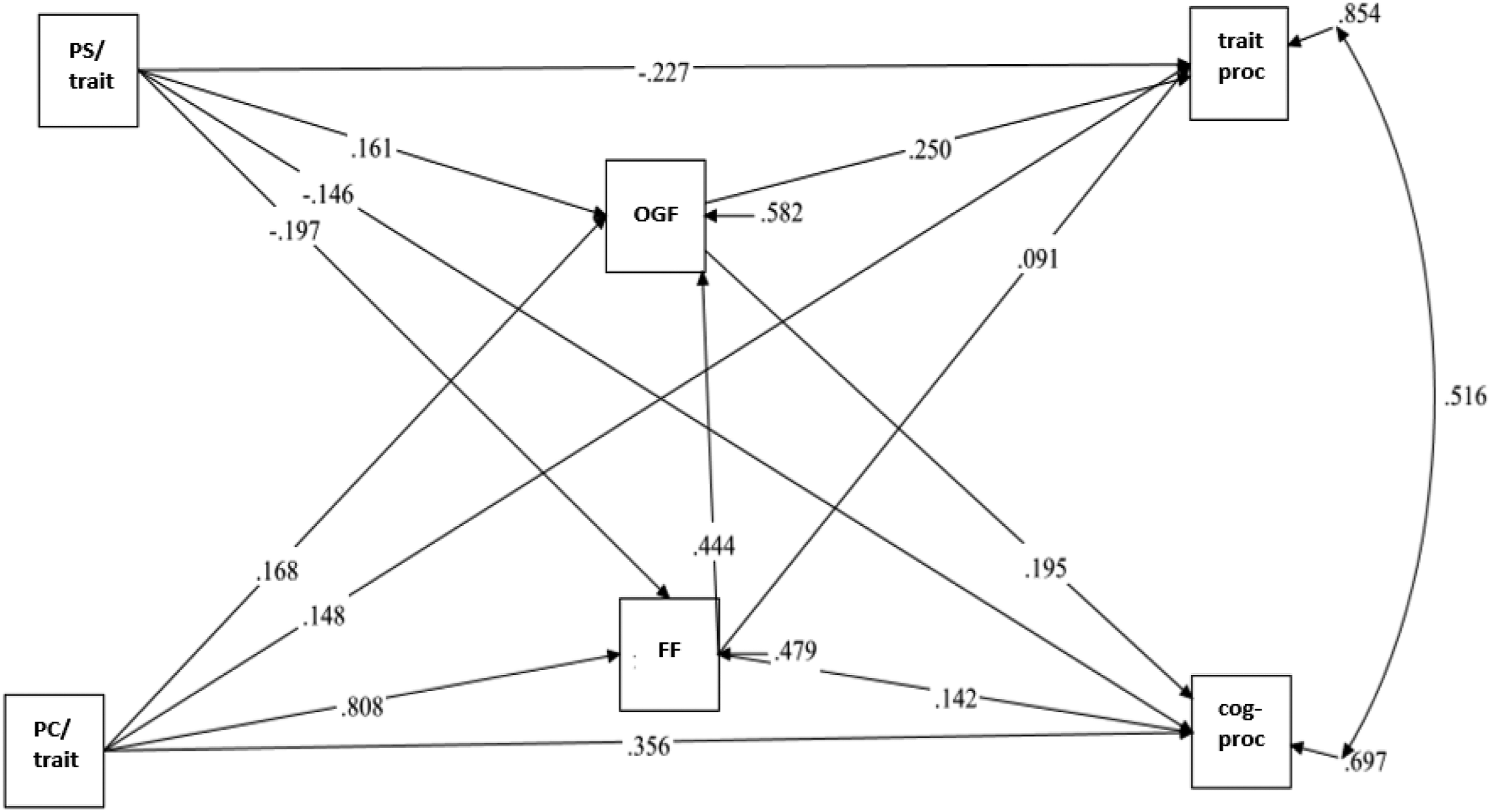
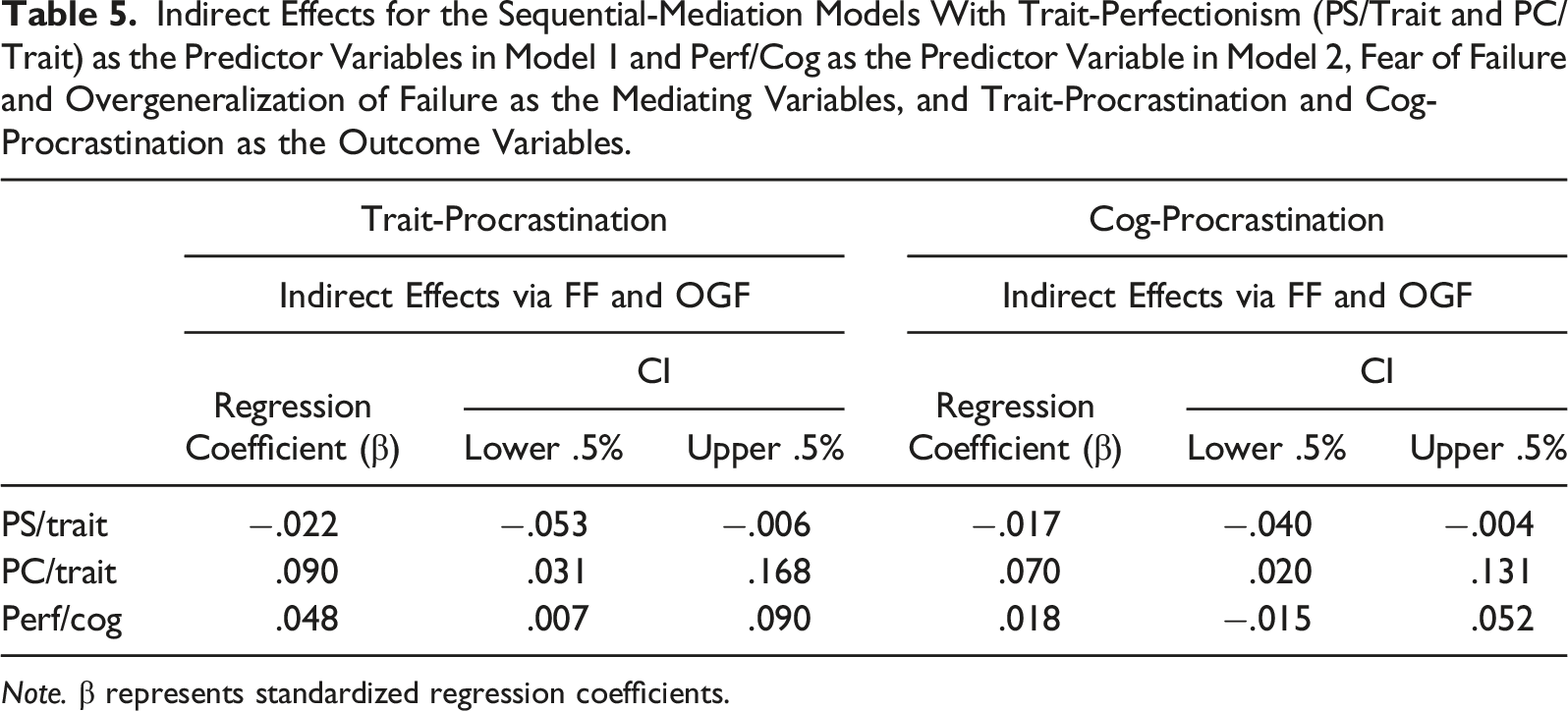
Indirect Effects for the Sequential-Mediation Models With Trait-Perfectionism (PS/Trait and PC/Trait) as the Predictor Variables in Model 1 and Perf/Cog as the Predictor Variable in Model 2, Fear of Failure and Overgeneralization of Failure as the Mediating Variables, and Trait-Procrastination and Cog-Procrastination as the Outcome Variables.
Note. β represents standardized regression coefficients.
Discussion
The current study is arguably the broadest investigation thus far of both trait and cognitive aspects of perfectionism and procrastination. The current study also uniquely examined the extent to which the proposed failure sensitivity in the form of fear of failure (FF) and overgeneralization of failure (OGF) was linked with both personality constructs and served as a mediator of the link between these constructs.
At the correlational level, it was confirmed that most measures of perfectionism and procrastination were significantly correlated, with the main exception being the lack of a significant association between the trait composite of PS and trait procrastination. Most notably, there were strong associations between procrastinatory automatic thoughts and the trait composite of PC (r = .49) and between procrastinatory automatic thoughts and perfectionistic automatic thoughts (r = .59). These results are important because they suggest that the link between perfectionism and procrastination is particularly strong at the cognitive level and considerably less so at the trait level (particularly for the trait composite of PS). This finding has important implications at the practical level, in terms of interventions needing to have an explicit cognitive focus. In addition, these results are also meaningful in terms of challenging past characterizations of the constructs in previous research. For instance, on the basis of his meta-analysis, Steel (2007) prematurely concluded that, “procrastinators are actually less likely, not more, to be perfectionists” (p. 81). The current results illustrate the need to more broadly assess both constructs and not focus solely on trait perfectionism and trait procrastination.
Furthermore, findings from this study showed that, for any measure of perfectionism, the effect size was always larger when procrastination was measured from a cognitive perspective, suggesting that the cognitive expression of procrastination, in terms of automatic thoughts, plays a vital role in the link between perfectionism and procrastination. Such findings provide a necessary clarification regarding current inconsistencies in the literature. A small-to-medium effect size, as reported by Sirois et al. (2017), is indeed found between perfectionism and procrastination when the constructs are measured from a trait perspective. However, when assessing these constructs are assessed using cognitive measures, specifically for procrastination, the magnitude of this association increases, consistent with findings by Flett, Stainton, and colleagues (2012).
These results raise an important question: why would perfectionism have a stronger association with the cognitive measure of procrastination than with the trait measure of procrastination? One viable explanation can be extrapolated from Clarry Lay’s (2015) analysis of seeking to understand delay and procrastination. He noted that the effort of attention can be quite fatiguing for anyone, and this should be especially the case for students balancing numerous activities and commitments. A key connecting element may be the cognitive exhaustion and burnout that accompany the experience of having frequent (if not constant) cognitive activation in the form of thoughts about needing to be perfect and needing to stop procrastinating on things that need to be started or finished. The co-occurrence of these automatic thoughts may also make it very cognitively salient that there is a discrepancy between the current self and the actual or ideal self. The experience of these discrepancies is relevant to the perfectionism-procrastination association (see Smith et al., 2017). Future research is needed to evaluate other possibilities that can help account for how and why perfectionism and procrastination are associated more strongly at the cognitive level.
Findings from this study may be viewed from the perspective of emotion-regulation failure (Tice & Bratslavsky, 2000; Tice et al., 2001). For the perfectionist, thoughts about the need to complete a task flawlessly or preoccupation with others’ evaluations can trigger a host of negative emotions (Dunkley et al., 2012; Flett et al., 1998). Being unable to cope with the negative affect elicited by the task at hand, the perfectionist abandons the task or delays taking necessary action, rather synchronously to the term “out of sight, out of mind.” Yet, not completely “out of mind,” as, on the cognitive level, the perfectionist is very much burdened by thoughts about this delay (Flett et al., 2012). Future research will be necessary to ascertain causal links between perfectionism and procrastination and to examine the role of affect in this relationship.
The results of our regression analysis also highlighted the need to include an emphasis on cognitive measures. It was established that perfectionistic automatic thoughts predicted unique variance in procrastinatory automatic thoughts, above and beyond the significant variance accounted for by the trait perfectionism composites. This statistical analysis can be regarded as the most rigorous test thus far of the degree of association between the frequent experience of thoughts related to needing to be perfect and need to stop engaging in procrastination and associated tendencies.
Perfectionism, Procrastination, and Failure Sensitivity Indices
The correlational analyses that took FF and OGF into account revealed that they were both significantly and positively correlated with all trait and cognitive measures of perfectionism and procrastination. It was evident that the strongest associations were with the trait composite of PC, but all of the correlations were statistically significant. This pattern of findings is important in two key respects. First, it is keeping with the proposed presence of a failure sensitivity that is believed to underscore most ways of assessing and conceptualizing not only perfectionism but also procrastination (see Flett & Hewitt, 2022). Second, it is especially noteworthy that both FF and OGF were associated significantly with the trait composite of PS; these associations were less robust yet still clearly evident. These results attest to the vulnerability to failure that underscores self-oriented perfectionism and the presumed vulnerability discussed by Hewitt and Flett (1991) when self-oriented perfectionists experience ego-involving failures that can result in feeling like the self has failed.
Mediation Analyses
Results showed that FF mediated associations between perfectionism and procrastination, which is unsurprising given that links FF and both perfectionism and procrastination have been long-established (Frost et al., 1990; Solomon & Rothblum, 1984). Previous research has demonstrated that perfectionistic automatic thoughts and dimensions underlying the trait composite of PC were positively associated with FF (Conroy et al., 2007; Flett et al., 2012), and that FF was positively associated with both trait procrastination (Haghbin et al., 2012) and cognitive procrastination (Flett et al., 2012). These findings suggest that, when faced with a daunting task, perfectionists may be overwhelmed by the possibility of failure and what that failure would mean. When an individual fears failure, he or she is also likely to experience a high degree of negative affect (Conroy et al., 2002; Sagar & Stoeber, 2009), and the individual who seeks to escape negative emotions will resort to avoidant coping strategies (Sirois & Pychyl, 2013). Thus, the pathway from perfectionism to procrastination via FF can be interpreted from the lens of emotion-regulation failure (Tice & Bratslavsky, 2000).
Interestingly, while the indirect effects via FF were positive for pathways involving the trait composite of PC and the cognitive dimension of perfectionistic automatic thoughts, indirect effects were negative for pathways involving the trait composite of PS. This finding is consistent with the literature; while individuals with perfectionistic concerns are driven by a fear of failing, those with perfectionistic strivings are more likely to be driven by a motivation to succeed (see Slade & Owens, 1998) and are thus less likely to be overwhelmed by fears of failure; thereby, they are also less likely to procrastinate. However, the situation may be entirely different when the prospects of failure or actual failures are perceived as a poor reflection of the self, raising self-doubt and insecurity that may involve feelings of being an imposter.
OGF mediated all pathways from the trait composite of PC to procrastination, as well as all pathways from perfectionistic automatic thoughts to procrastination. These findings suggest that individuals who engage in perfectionistic behaviors and experience perfectionistic-themed thoughts may have a failure sensitivity that includes being prone to generalize failures to one’s global sense of self, yielding a feeling of being a failure. Hewitt et al. (2017) discuss various forms in which this negative self can present itself (e.g., feeling defective and deficient) and why a key therapeutic focus is the relationship that the self has with oneself. OGF did not mediate any of the pathways involving the composite trait of PS. One explanation for this finding is that individuals with perfectionistic strivings, being more motivated by the achievement of success rather than the avoidance of failure (Slade & Owens, 1998), may be less hypersensitive to their personal shortfalls compared to individuals with trait dimensions of perfectionistic concerns. However, it is important to remain cognizant of the fact that OGF was still significantly correlated with the composite measure of PS.
Finally, a sequential mediation analysis revealed that, except for the association between the trait composite of PC and procrastinatory automatic thoughts, all other perfectionism-procrastination associations were mediated by the sequential effects of FF followed by OGF. Of course, conclusions must be tempered by the fact that the current study is based entirely on cross-sectional data and ideally, future longitudinal research will evaluate these associations.
Limitations
Other limitations must be noted. First, all individuals were undergraduate students at an Ontario university. Thus, findings may not generalize to other populations. In addition, the majority of participants were females and certain results may be less applicable to males. In examining the association between perfectionism and procrastination, Smith et al. (2017) found that perfectionistic strivings suppressed the association between perfectionistic concerns and trait-procrastination, and they recommended measuring the composite trait dimensions of PS and PC as latent rather than composite factors. As this recommendation was not adopted in this study, it may be that the degree of association between PC and measures of procrastination was underestimated. Also, future research will need to consider other forms of perfectionistic vulnerability, such as the self-presentational tendencies measured by the Perfectionistic Self-Presentation Scale (PSPS; Hewitt et al., 2003).
Summary
The objectives of the current study were to investigate the association between perfectionism and procrastination using both trait and cognitive measures, and to assess the mediating variables of FF and OGF, independently and sequentially. Correlations between all measures of perfectionism and procrastination were statistically significant, except between the trait composite of PS and trait-procrastination. Both the trait composite of PC and the cognitive measure of perfectionism demonstrated a small positive correlation with trait-procrastination and a medium positive correlation with cognitive measure of procrastination. These findings suggest that individuals who have perfectionistic tendencies and recurring thoughts about the need to be perfect are not only more likely to engage in procrastinatory behaviors, but they are also more likely to experience negative thoughts about inaction. Measures of perfectionism have stronger links with the cognitive measure of procrastination, relative to trait procrastination, suggesting that perfectionists may be more burdened by the cognitive distress associated with their procrastination than their actual procrastinatory acts.
Other results indicated that FF mediated all pathways between perfectionism and procrastination. This finding implies that, as failure entails adverse consequences for the perfectionist, a challenging task may raise fear because it may lead to failure and this fear may promote disengagement from the task. OGF mediated all pathways from trait composite of PC and the cognitive measure of perfectionism to procrastination, suggesting that individuals who engage in perfectionistic behaviors and experience perfectionistic thoughts are more likely to be attuned to perceived flaws and generalize them to their global sense of self. OGF did not mediate any of the pathways from PS/trait.
While the current findings focused on these constructs in variable-centered research, the current results that the student who is a procrastinating perfectionism will not only be impacted complexly by an approach-avoidance conflict, but they will often also have frequent thoughts about needing to be perfect and avoid procrastination. Moreover, our results suggest at the root of these tendencies is a sensitivity to failure characterized by fear of failure and overgeneralization of failure and possibly other tendencies (e.g., cognitive perseveration involving failure). Collectively, these results indicate that certain perfectionists are vulnerable due to tendencies that can heighten the cognitive salience of the self and, in many instances, this self is falling short of goals and expectations.
Footnotes
Declaration of Conflicting Interests
The author(s) declared no potential conflicts of interest with respect to the research, authorship, and/or publication of this article.
Funding
The author(s) received no financial support for the research, authorship, and/or publication of this article.
