




Abstract
In primary schools, the incorporation of STEAM education has become a widespread trend, as it is believed to have the potential to enhance the quality of education and foster students' competencies. This investigation aimed to explore the definition, measurement model, and scale of students' STEAM competence, emphasizing their hands-on experiences in STEAM education. A total of 1126 fourth to sixth-grade students participated in the survey and were examined to assess the reliability and validity of the STEAM competence scale developed based on previous studies and theoretical foundations. The results indicate that the scale is acceptable and that there are significant connections between various indicators as confirmed by path analysis. The study’s significance, limitations, and conclusions are also addressed.
Keywords
Introduction
In response to criticisms of rote learning practices, the Chinese Ministry of Education proposed initiatives in 2015 to enhance education standards by integrating STEAM education, maker education, and entrepreneurship education. As a result, several schools adopted STEAM education to provide a holistic educational experience that moves beyond memorization.
The Chinese government implemented policies aimed at addressing challenges posed by economic restructuring, employment pressures, and the need for educational reform for its vast population and abundant workforce. The government’s policies aim to stimulate economic growth and advance social progress through the promotion of innovation and entrepreneurship. Consequently, STEAM education gained significant popularity among educators and researchers, leading to its widespread adoption by thousands of primary, middle, and high schools. However, the implementation of STEM and STEAM education encountered various obstacles based on the National Institute of Education Sciences (NIES, China), such as (1) Limited ability and conviction among educators and administrators to implement STEM education effectively; (2) Inconsistent support for STEM education that depended on open-minded attitudes; (3) The need for improved teaching methods and evaluation practices; (4) Lack of knowledge, skills, and support among educators and administrators to teach STEM subjects effectively; (5) Insufficient resource and policy support despite high demand for STEM education. Additional challenges included a severe shortage of teachers, inadequate STEAM curriculum, and inadequate space resources, among others.
The research gap is that, despite the widespread adoption of STEAM education programs in China, there is a paucity of research on students' STEAM competence (SSC). The research gap highlights the need for an assessment tool and measurement framework to advance STEAM education. Therefore, this study aims to address this gap by (1) collecting different types of validity evidence for the measurement model, (2) constructing a reliable and valid measurement model for SSC, and (3) developing and testing a comprehensive SSC scale to accurately measure primary school SSC. Overall, the objectives of the study are to evaluate the psychometric properties of SSC and effectively measure SSC.
Literature Review
Comparing STEM and STEAM: The Importance of Arts and Humanities
STEAM competence is the ability to apply knowledge and skills from science, technology, engineering, arts, and mathematics in an interdisciplinary and creative way to solve complex real-world problems (Lin & Tsai, 2021). It differs from STEM competence by incorporating the arts, emphasizing creativity and design thinking, and recognizing the potential for interdisciplinary collaboration and innovation that comes from integrating arts and STEM fields competence (Valerio, 2014).
There is a significant body of research on the topic of STEAM education. Firstly, the importance of arts and humanities in STEAM education is crucial, as recognized by several researchers (Khine & Areepattamannil, 2019). Incorporating arts into STEM education provides a diverse approach to teaching and promotes creativity among students (Harris & de Bruin, 2017; Katz-Buonincontro, 2018). When students acquire the ability to apply arts literacy and creativity in a flexible manner, they become better equipped to conceive and execute STEM projects (Land, 2013). While some argue that the arts should play a distinct role in STEAM education, separate from the other subjects, others are concerned that incorporating the arts may diminish the significance of STEM. However, the arts are essential for the growth of humanities, social sciences, and human empowerment within STEAM education (Anwaruddin, 2013). Neglecting the arts within STEM education highlights the society’s emphasis on utilitarian objectives at the expense of valuing appreciation and empathy. STEAM education fosters connections between individuals, society, and the natural world, making students more conscious of crucial aspects of society and the humanities, such as environmental preservation, resource management, and ethical considerations in science (Littledyke, 2008). Thus, educators should recognize the significance of arts in STEAM education to promote creativity, diversity, and empathy among students.
Secondly, the integration of arts and humanities into STEAM education is crucial for fostering creativity, which is essential for students to navigate the rapidly evolving world and shape the future (Kanematsu & Barry, 2016). STEAM education, based on the constructivist theory, can enhance students’ 21st-century competencies and creativity (Gross & Gross, 2016). Moreover, incorporating dance into STEM education yields a noteworthy influence on students' interdisciplinary thinking and other proficiencies (Payton et al., 2017). STEAM education aims to address real-world issues and develop aesthetically pleasing solutions that preserve human imagination and innovation (Daugherty, 2013). By incorporating cultural diversity into its pedagogy, STEAM education has the potential to enhance the creativity and outcomes of African American students (Allina, 2018). Through design-based activities and diverse cultural elements, STEAM education provides an efficient way to foster creativity and promote a culture of innovation in students through a carefully crafted curriculum and teaching methods.
Thirdly, the integration of the arts, humanities, and STEM fields in STEAM education aims to promote inclusivity by bridging the gap between traditionally separate areas of study. Historically, this division has hindered effective communication between scientists and non-scientists. By incorporating technology and pedagogical methods, the STEAM curriculum emphasizes the importance of artistic, linguistic, and cultural perspectives. Mathematics, which encompasses concepts such as quadratics, arithmetic, geometry, regularity, and modeling, serves as a tangible representation of the arts. The integration of arts and humanities into STEM education not only enhances STEM education but also strengthens connections between these diverse fields (Snow, 1960).
Fourthly, STEAM education encourages students to think critically and solve complex problems in creative ways. By integrating the arts and humanities with STEM subjects, students are able to approach problem-solving from multiple angles and perspectives, and generate more innovative solutions. For example, students who are involved in STEAM education are more likely to develop critical thinking skills, creativity, and problem-solving skills, as well as enhanced communication and collaboration skills (Wynn & Harris, 2012). Through project-based learning, students are able to work on real-world challenges that require the application of STEM concepts, as well as their knowledge and skills in the arts and humanities. Additionally, STEAM education helps students to develop a growth mindset and a sense of agency, which can lead to improved academic performance and overall life outcomes (Khine & Areepattamannil, 2019). In conclusion, STEAM education offers numerous benefits for students, teachers, and society as a whole, and is a promising approach to improving education and preparing students for the 21st century.
Finally, integrating arts and humanities into STEAM education has been found to have multiple benefits for students: (1) Incorporating language learning into STEM subjects within a contextualized environment can address inequities and close the achievement gap among students from different backgrounds. Additionally, engaging students in STEM through creative arts and hands-on experiences can inspire them to pursue STEM careers (Bequette & Bequette, 2012). A quasi-experiment also found that STEAM courses had a superior effect on students' physical science evaluations compared to STEM courses alone; (2) The integration of arts and humanities can advance the field, as demonstrated by examples such as hip-hop epistemology, environmentally friendly projects, and multidisciplinary frameworks that focus on the intersection of arts and ecology (Gadsden, 2008); (3) Implementing dynamic visualization systems and model-centered approaches from liberal arts education can enhance STEM education by fostering versatile skills and competencies.
The Need for a New Framework and Instrument for Measuring STEAM Competence
While evaluating STEAM competency is crucial for ensuring quality, equity, and diversity in STEM education, the research has primarily focused on assessing STEM education and competence, with less attention given to STEAM competence. Current K-12 education accountability systems tend to emphasize the evaluation of STEM knowledge rather than STEM skills, leading to a lack of comprehensive measurement tools for STEAM competence (Green, 2014). While there are numerous STEM assessment rubrics and tools available, they are insufficient for measuring STEAM competence (Kim & Moon, 2016).
Studies have indicated that creativity, which is a significant component of STEAM education, comprises five fundamental elements: inquisitiveness, imagination, persistence, discipline, and collaboration (Barber et al., 2017). However, other studies evaluating students' STEAM literacy or competence have not established a comprehensive framework or measurement model (Conner et al., 2017; Herro et al., 2017). These studies may also be limited due to small sample sizes, a lack of scientific basis, and questions about reliability and validity (Shek, 2013; Shek & Lin, 2013).
Therefore, researchers have advocated for a comprehensive evaluation system at the classroom level to address the needs of STEM professionals and educators and improve the assessment of STEM skills. In assessing the quality of K-12 STEM education, indicators such as student achievement, available resources, investments, professional development, external support, and other factors should also be examined. Ultimately, there is a need for more research and development of comprehensive measurement tools for STEAM competence to ensure that students are prepared for future STEM careers that require a broad range of skills beyond traditional STEM knowledge.
Theoretical Framework for STEAM Competence
While the arts and humanities have been neglected in education, the importance of STEAM education and competence has been recognized, as evidenced by its adoption in Chinese primary schools. To assess the effectiveness of STEAM programs, this study has utilized the Analytic Hierarchy Process (AHP) method and interviews to develop a STEAM competence model that includes psychological cognition, situated learning, practical inquiry, social communication, rational decision making, creative presentation, and impact assessment. This study aims to construct a measurement model and scale of SSC, consisting of three dimensions: individual, society, and living world, and to evaluate the scale’s transferability with different samples. The two-phase study involves developing and testing the measurement model’s reliability, validity, psychometric properties, and factor structure (Figure 1). The conceptual model of students’ STEAM competence, developed by the authors of this study.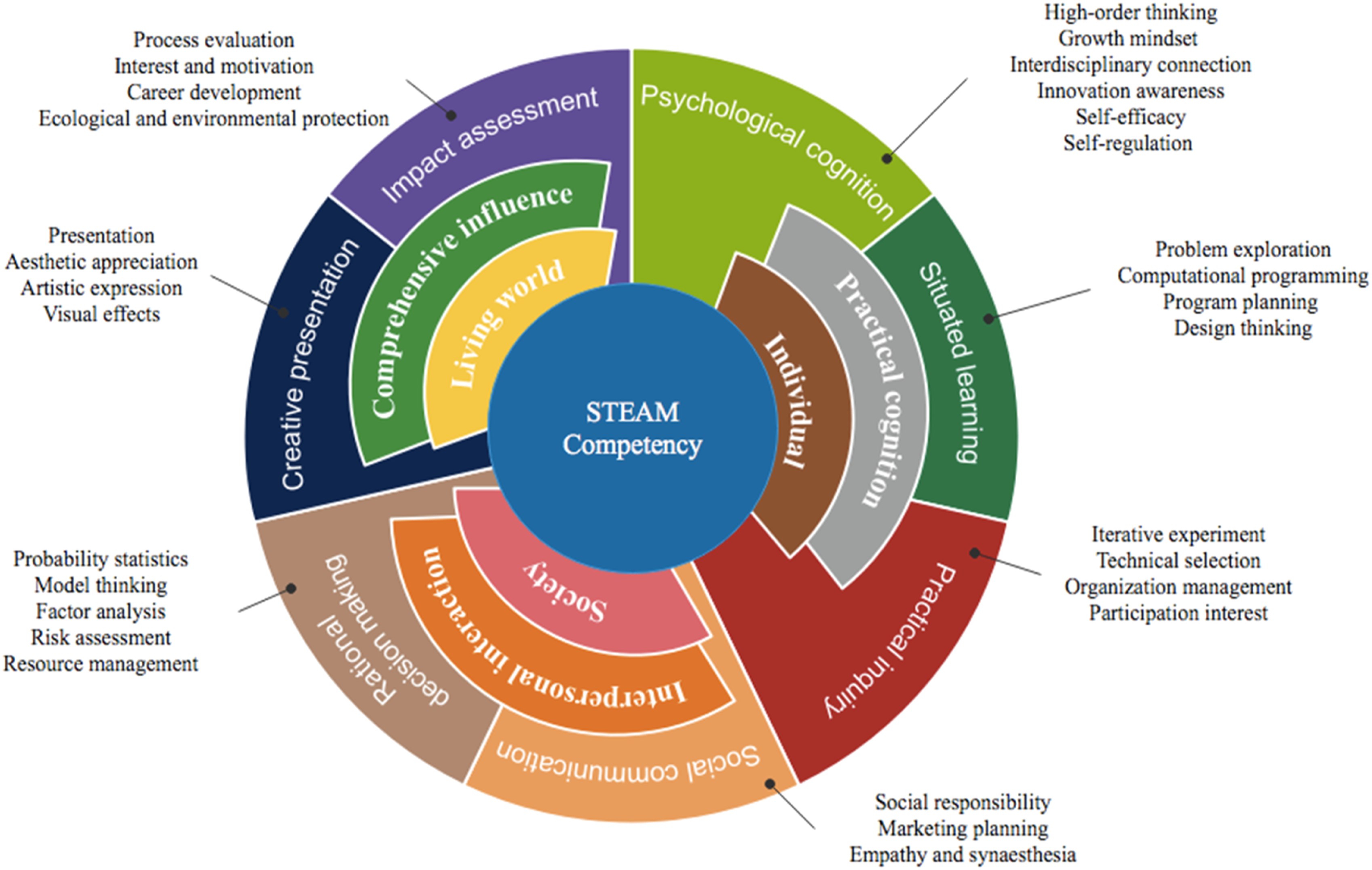
Method
Participants
This study included a sample of 1126 primary school students from five different schools. The participants were in grades 4 to 6 and were selected from schools that had previously participated in STEAM education programs, with support from government, university, and enterprise organizations. All participants were voluntarily involved in the study and were informed about the confidential nature of the investigation. The study’s sample comprised 507 fourth-grade students, 394 fifth-grade students, and 225 sixth-grade students, including 526 male and 600 female students. The five schools in the sample had a combined total of 246, 203, 168, 262, and 247 students, respectively. These schools had previously undergone STEAM education pilot programs in the past few years.
Materials
Students’ STEAM Competence Scale (SSCs) was formulated based on a prior study on STEAM competence for primary students. A survey was conducted, and a 32-item scale was developed and applied to primary school students who participated in a STEAM education program. The scale evaluates practical cognition, interpersonal interaction, and comprehensive influence in the individual, society, and environment contexts. Responses were rated on a Likert scale from 1 to 9, and scores for each dimension were calculated by averaging the corresponding items. The scale demonstrated good internal consistency, with a Cronbach’s alpha index of 0.963.
Data Interpretation
The study gathered data from a sample of 1126 primary school students randomly selected from grades four to six in five schools that had experience with STEAM education. The students completed a distributed questionnaire under teacher supervision. Statistical methods, including Cronbach’s alpha, Pearson correlation analyses, exploratory factor analysis (EFA), and confirmatory factor analysis (CFA), were used to evaluate the scale’s reliability and validity.
Cronbach’s alpha ranges from 0 to 1, with 0 indicating no internal consistency and 1 indicating perfect consistency (Kaplan, 2009). Typically, a Cronbach’s alpha value of 0.7 or higher indicates high internal consistency of the measurement tool, while a value below 0.7 may indicate the need for further refinement or redesign of the measurement tool.
Pearson correlation coefficient can range from −1 to 1, with a value of 0 indicating no correlation, a value of 1 indicating a perfect positive correlation, and a value of −1 indicating a perfect negative correlation (Ganti, 2020). Construct validity was examined through Pearson correlation analyses.
Unless otherwise specified, the Maximum Likelihood (ML) extraction (Klinke et al., 2010) was utilized for CFA, while the principal component analysis (PCA) extraction method (Sophian et al., 2003) was employed for EFA. Additionally, the default rotation method employed is varimax, unless explicitly stated otherwise (Park et al., 2002).
Results
Validity of the SSC Scales’ Constructs
Descriptive Statistics and Pearson’s Correlations of SSCs.
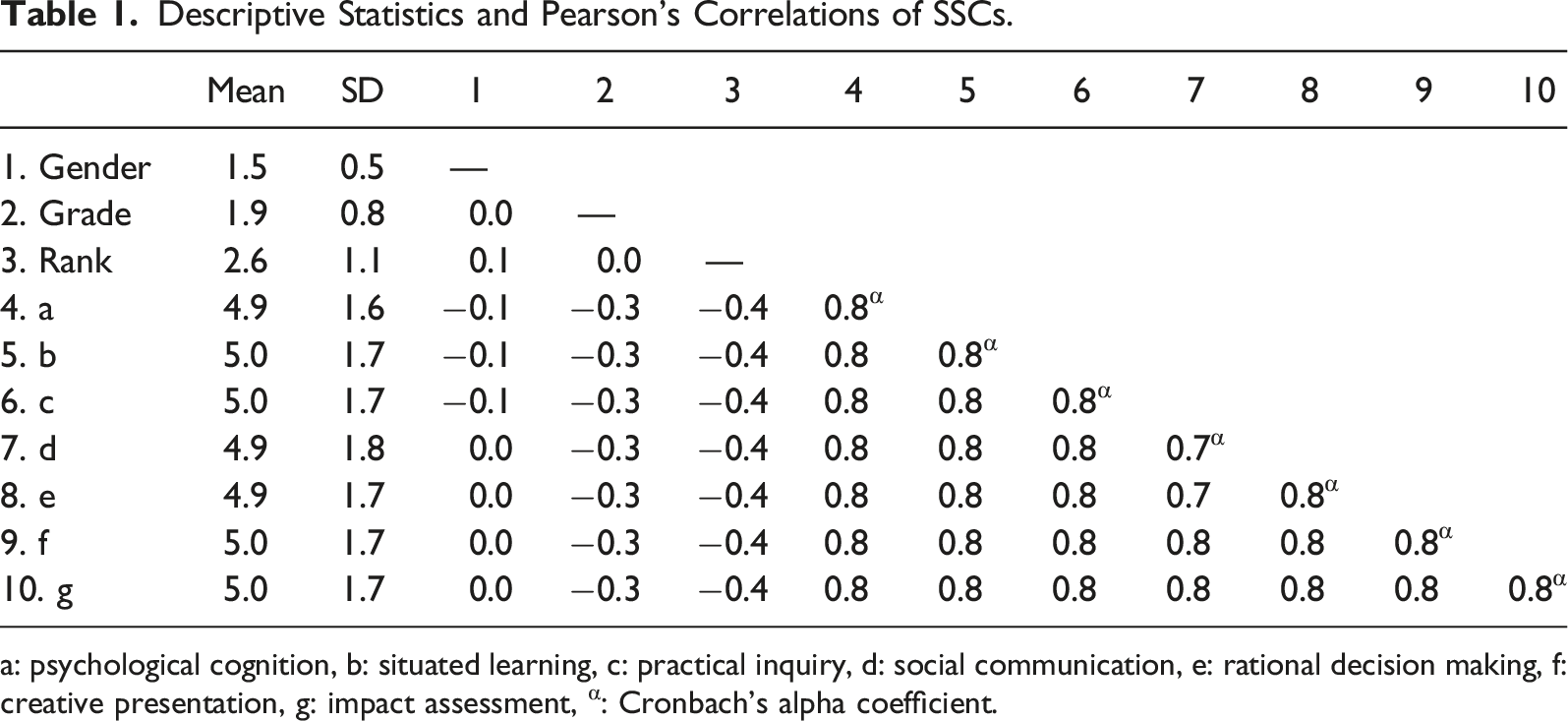
a: psychological cognition, b: situated learning, c: practical inquiry, d: social communication, e: rational decision making, f: creative presentation, g: impact assessment, α: Cronbach’s alpha coefficient.
Reliability and Validity of the SSC Scales
To determine the reliability and validity of the SSC scales, the research employed the use of the Cronbach’s Alpha coefficient and factor analysis. The internal consistency of the SSC scales was measured using the Cronbach’s Alpha coefficient, which is a widely accepted method in the examination of the reliability of measurement tools (Kaplan, 2009). According to the accepted standards, a Cronbach’s Alpha value above 0.7 is considered acceptable, while a value of 0.8 or above is considered good, and a value of 0.9 or higher is considered preferable (Kline, 2011).
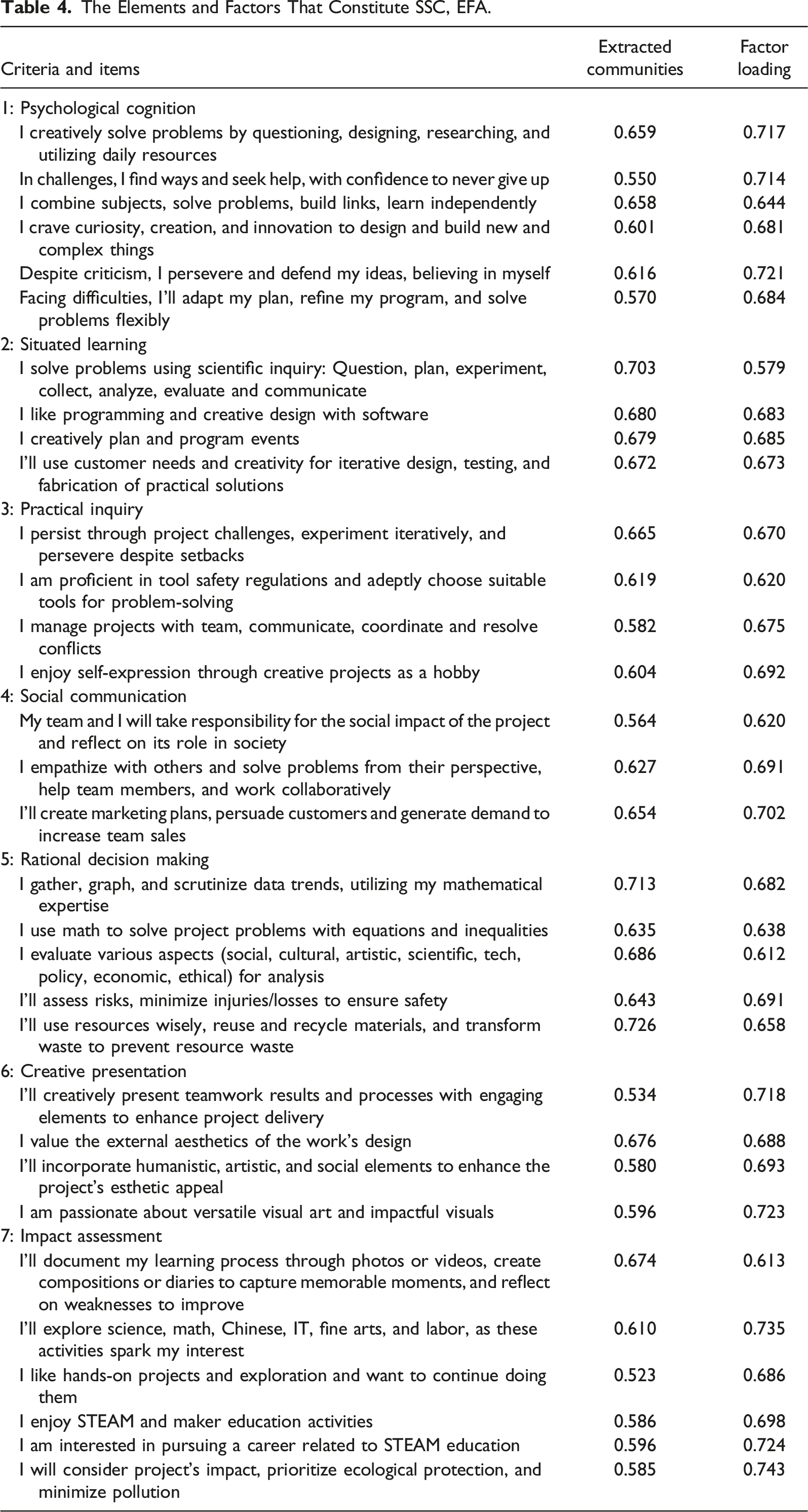
EFA was conducted to verify the validity and factor structure, and Cronbach’s alpha showed high reliability (α = 0.963). The reliability and validity of the SSC Scale were evaluated in this study. Cronbach’s Alpha coefficient was used to assess reliability (Kline, 2011), with an overall score of 0.963 indicating high internal consistency and stability. The individual dimensions of the SSC Scale also exhibited good reliability, with each criterion having a score ranging from 0.842 to 0.845. In addition, the study evaluated the construct validity of the SSCs through EFA and a literature review. The Kaiser–Meyer–Olkin (KMO) test and Bartlett’s test showed that the scale was suitable for factor analysis (KMO value of 0.980 > 0.9 and p < 0.001). The factor analysis results showed that 7 common factors accounted for a cumulative variance contribution rate of 62.708%, with factor loadings ranging from 0.523 to 0.726. The results indicated that the SSCs had a relatively high construct validity and were suitable for factor analysis. Expert appraisal was also conducted to confirm the content validity of the SSCs.
Reliability and Convergent Validity of SSCs, CFA.
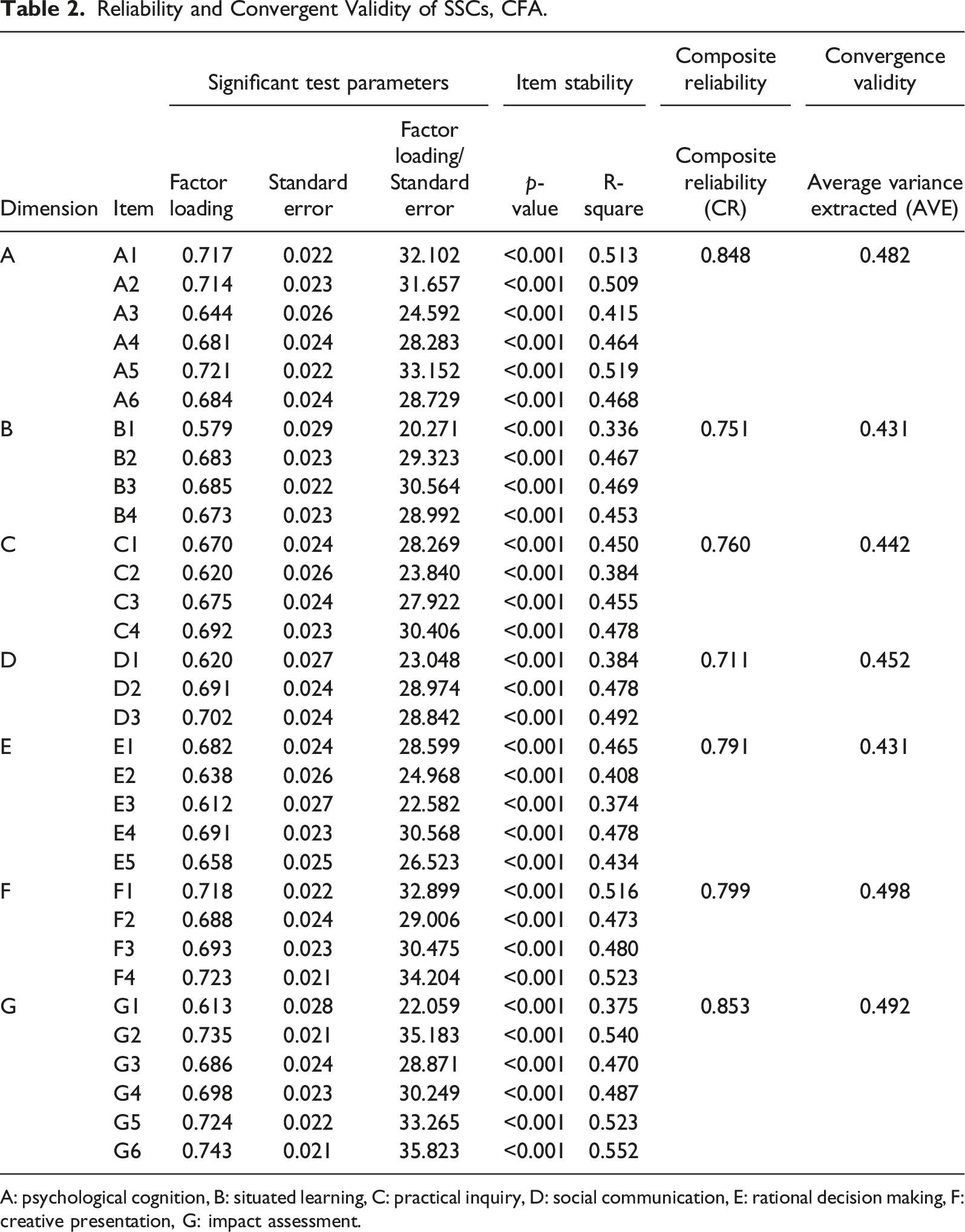
A: psychological cognition, B: situated learning, C: practical inquiry, D: social communication, E: rational decision making, F: creative presentation, G: impact assessment.
Model fit Criteria for CFA.

The Elements and Factors That Constitute SSC, EFA.
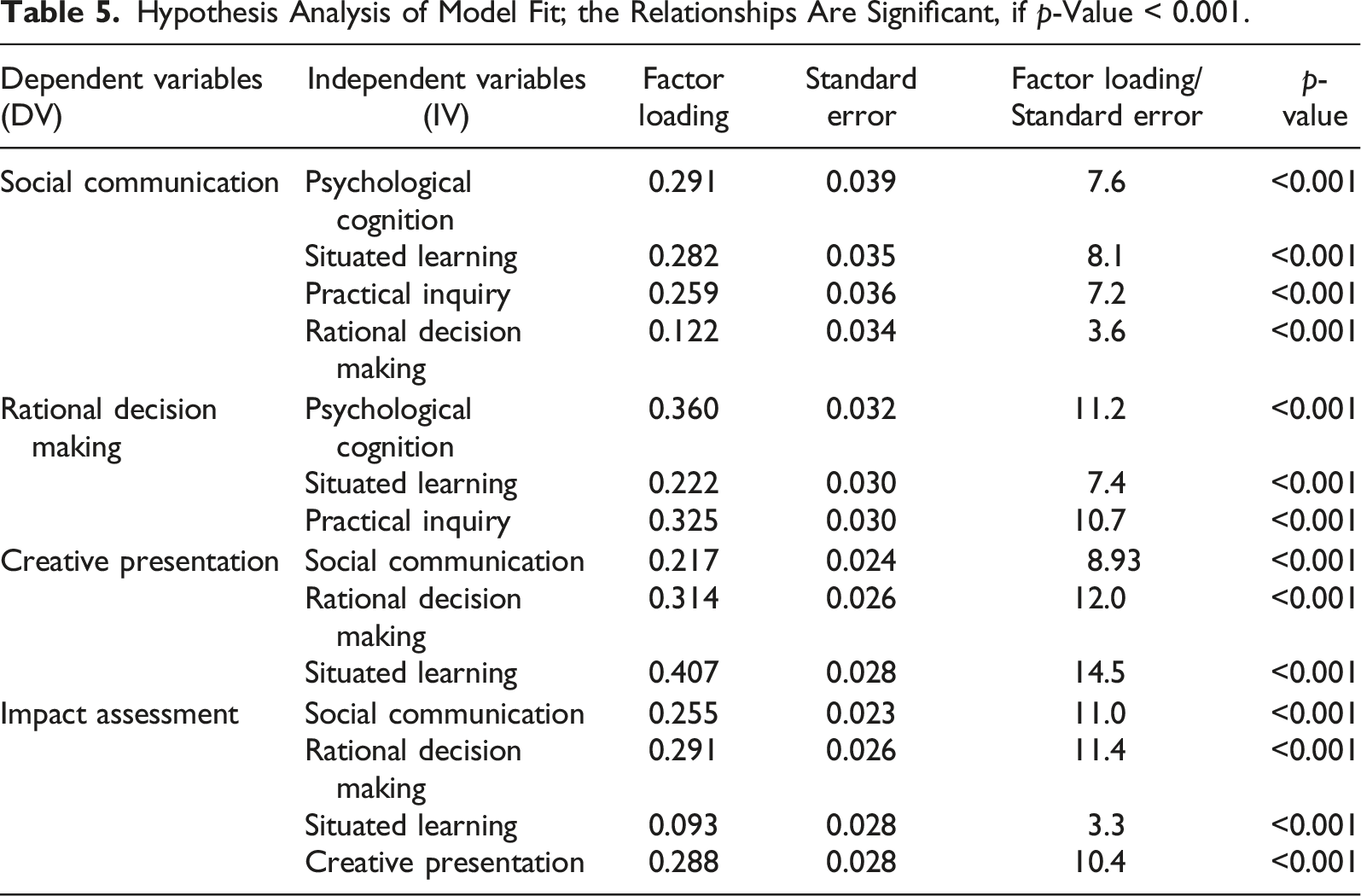
The study employed path analysis to examine the interrelationships among various factors, as presented in Figure 2 and Table 5. The findings revealed notable positive correlations among psychological cognition, situated learning, and practical inquiry. Further, social communication had a direct positive impact on creative presentation and impact assessment, while rational decision making had a direct positive influence on creative presentation and impact assessment. Additionally, psychological cognition, situated learning, and practical inquiry demonstrated positive effects on rational decision making. Path analysis examining the STEAM competence of students. Hypothesis Analysis of Model Fit; the Relationships Are Significant, if p-Value < 0.001.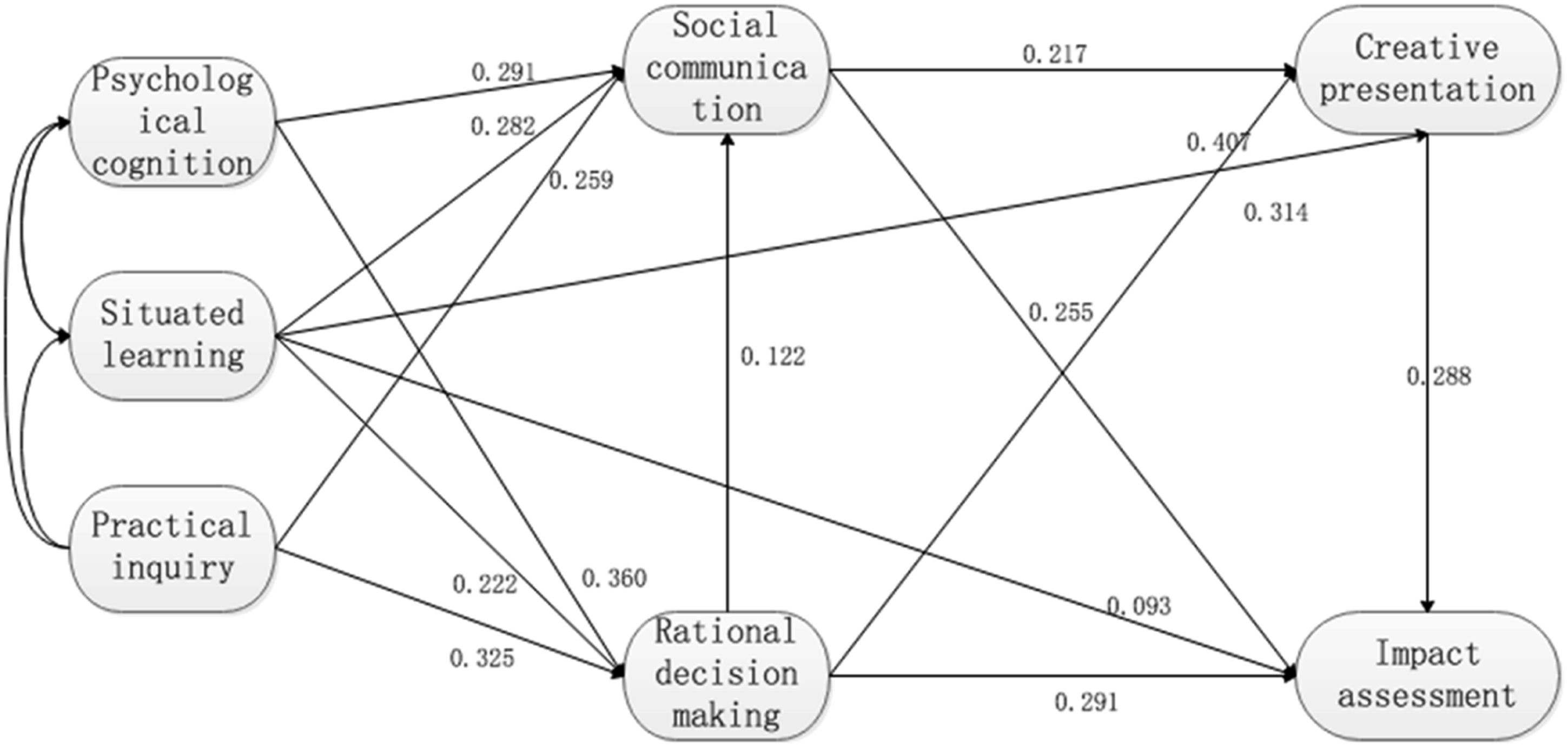
Discussion
Implications of the findings
According to Whitehead’s statement, "Culture is an activity of thought, we should aim to cultivate both culture and expert knowledge in some profession" (Whitehead, 1959). The measurement model for SSC integrates culture, arts, and STEAM knowledge. The model emphasizes the process of cultivating SSC, with explicit focus on experience, thinking, and knowledge. Whitehead’s educational process, which is like Dewey’s learning by doing theory, stresses the importance of the process or experience of learning speculation (Warde, 1960). Cultivating SSC requires appreciation of the experiences and process of learning (Blasius, 1997). Therefore, the aim of this research is to construct a measurement model for SSC.
Firstly, the measurement model of SSC was examined through reliability and validity tests, correlation analysis, an analytic hierarchy model, EFA (Tsai et al., 2019, 2021), and CFA (Rice et al., 2015; Wannapiroon & Pimdee, 2022). The model shows good reliability and validity, indicating that it can be successfully applied in practice to evaluate students' development (Edwards & Baglioni Jr, 1993Edwards & Baglioni, 1993). The dimensions, criteria, and items are suitable and reliable for testing students (Hsu et al., 2022).
Secondly, path analysis confirmed the relationship between the three dimensions and seven criteria of SSCs, particularly in practical cognition. This serves as a basis for interpersonal interaction and comprehensive influence. These relationships were affirmed through empirical analysis, validating the theoretical model and hypothesis. Schools must prioritize STEAM competence given its importance for students' development and high-quality curriculum (Quigley et al., 2020). Teacher awareness is critical in promoting STEAM competence, and programs should be launched to create an educational environment that supports it (Harris & De Bruin, 2018). Policymakers, researchers, and educators must encourage and provide financial assistance.
Finally, this study constructed a measurement model to assess SSC and examines the reliability and validity of the SSCs using different samples. STEAM education has positive benefits, such as improved math and science scores through the infusion of arts into STEM programs (White & Delaney, 2021). Infusing arts into math education can improve engagement and achievement (Hunter-Doniger, 2018). This model can provide a practical measurement tool for educators, who should focus on the long-term development of students and building a good relationship between education and the real world to promote a comprehensive understanding of the world.
Future recommendation
Based on the findings of the study, some future recommendations can be made.
Firstly, it is recommended to expand the sample size in future studies as a larger sample size can improve the reliability and validity of the STEAM literacy assessment scale and model.
Secondly, it is important to keep updating the assessment scale and model to keep up with the changing demands of STEAM education. Regular reviews and revisions of the assessment will ensure its relevance and validity.
Thirdly, it is recommended to promote the use of the STEAM literacy assessment scale and model in policy-making decisions regarding STEAM education. The assessment could be used to inform the development of curriculum and instructional strategies that focus on enhancing students' STEAM literacy skills.
Conclusion
The measurement of SSC is a multifaceted approach that blends culture, arts, and knowledge to cultivate SSC. This approach resonates with Dewey’s concept of progressive education that emphasizes hands-on learning. The reliability and validity of the measurement model were confirmed through path analysis, validating its ability to evaluate student growth. The study underscores the significance of teachers in enhancing SSC. However, the study’s scope is limited by a small sample size and the difficulty in generalizing findings to other schools and cultures. Future research utilizing mixed-methods and larger sample sizes is needed to strengthen the model’s applicability.
Supplemental Material
Supplemental Material - Assessing the Psychometric Properties of STEAM Competence in Primary School Students: A Construct Measurement Study
Supplemental Material for Assessing the Psychometric Properties of STEAM Competence in Primary School Students: A Construct Measurement Study by Shan Chen and Yuanzhao Ding in Journal of Psychoeducational Assessment
Footnotes
Declaration of Conflicting Interests
The author(s) declared no potential conflicts of interest with respect to the research, authorship, and/or publication of this article.
Funding
The author(s) received no financial support for the research, authorship, and/or publication of this article.

Supplemental Material
Supplemental material for this article is available online.
References
Supplementary Material
Please find the following supplemental material available below.
For Open Access articles published under a Creative Commons License, all supplemental material carries the same license as the article it is associated with.
For non-Open Access articles published, all supplemental material carries a non-exclusive license, and permission requests for re-use of supplemental material or any part of supplemental material shall be sent directly to the copyright owner as specified in the copyright notice associated with the article.
