



Abstract
Littering in natural open spaces presents persistent environmental, social and economic challenges, despite the implementation of various policies. Littering behaviour emerges from the interaction of multiple determinants and is strongly shaped by environmental, situational and personal conditions. To examine the influence of multiple determinants, the present study was designed as a quantitative multi-method field design. Structured behavioural field observations of 2262 visitors yielded 411 documented behavioural events, classified as intentional littering, unintentional littering and anti-littering behaviour. These were analysed alongside 624 linked post-event questionnaires across 26 nature sites in Israel. Forty-two environmental, situational and personal determinants were examined using multinomial logistic regression. Situational determinants, particularly litter type, emerged as the strongest predictor of observed littering behaviour, followed by environmental conditions such as maintenance levels and waste bin availability. In contrast, personal determinants, including attitudes and perceived responsibility, demonstrated limited predictive power when tested against directly observed behaviour. The results highlight the strong situational sensitivity of littering behaviour and reveal a gap between attitudes and observed behaviours in natural settings. The findings provide clear guidance for prioritizing waste management interventions in nature sites.
Keywords
Introduction
Litter pollution in public spaces is a widespread global problem with environmental, social and economic consequences (Chaudhary et al., 2021). It affects public health, well-being and ecosystems, and requires costly management and clean-up efforts (Rangel-Buitragoa et al., 2018; Rayon-Viña et al., 2018; Weiss et al., 2016). As litter accumulation results directly from littering behaviour (Schultz et al., 2013), understanding this behaviour and identifying its determinants are essential. Nevertheless, the literature on littering behaviour remains fragmented and lacks a unified conceptual framework (Chaudhary et al., 2021).
To establish conceptual clarity, this study adopts two core terms: littering and anti-littering. Littering refers to the improper disposal of waste in undesignated places (Schultz et al., 2013), whereas anti-littering refers to behaviours that prevent littering or correct litter accumulation and maintain environmental cleanliness (Chaudhary et al., 2021), including proper disposal in designated waste bins or removal of waste from the site (Spehr and Curnow, 2015). Within littering behaviour, prior research has distinguished between deliberate and inadvertent forms of littering, differentiating intentional acts and behaviour resulting from negligence or inattention (Sibley and Liu, 2003). Observational studies document manifestations that vary in intentionality, including discarding waste directly onto the ground, concealing litter, missing waste bins or allowing items to be dispersed by environmental conditions such as wind (Spehr and Curnow, 2015). More recent field-based studies further indicate that improper disposal may arise both from deliberate decisions and from situational or environmental constraints shaping behaviour in real time (Momm-Schult et al., 2013; Sagebiel et al., 2020).
Building on these distinctions, the present study differentiates littering behaviour into intentional littering and unintentional littering. This differentiation enables examination of whether behavioural determinants operate primarily through personal determinants or through situational and environmental mechanisms, consistent with situational perspectives on pro-environmental behaviour (Gifford and Nilsson, 2014; Sagebiel et al., 2020). Importantly, such determinants are inherently context dependent. While much empirical research on littering has focused on urban and coastal environments (Bator et al., 2011; Hu et al., 2019; Spotswood and Whitaker, 2017), inland natural open spaces remain comparatively understudied, despite evidence that visitor behaviour in forest and natural sites is shaped by site management conditions and environmental determinants (Mintz et al., 2024).
In constructed urban settings, such as city parks and residential neighbourhoods, cleanliness is typically maintained through regular municipal services, visible enforcement and continuous waste collection, signalling clear ownership and strong expectations of order (Das and Wiseman, 2024; Raap et al., 2022). These institutional determinants reinforce injunctive norms and reduce ambiguity regarding littering behaviour. By contrast, natural open spaces often operate under less visible governance. Maintenance may be intermittent, supervision limited and regulatory presence less salient (Leung et al., 2020; Sagebiel et al., 2020). Blurred boundaries between managed and unmanaged land can foster perceptions of such areas as ‘shared yet ownerless’, diffusing responsibility for waste management (Ai and Rosenthal, 2024). Consequently, littering decisions in natural settings may rely more heavily on personal discretion and immediate situational determinants than on clearly institutionalized norms. This difference is theoretically significant because the social and regulatory context of a place shapes littering norms and expectations.
Given the situational characteristics of natural open spaces, understanding littering behaviour requires an analytical perspective that considers multiple interacting determinants (Gifford and Nilsson, 2014; Stern, 2000). Environmental psychology conceptualizes behaviour as emerging from the interaction between individuals and their environments (Steg and Vlek, 2009). Within this field, pro-environmental behaviour is widely understood as the product of multiple interacting determinants, including personal dispositions, social influences and situational conditions (Gifford and Nilsson, 2014; Stern, 2000). Accordingly, explaining behaviours such as littering requires examining how these factors interact within specific environmental and situational settings.
Consistent with this interactional perspective, environmental and situational factors such as infrastructure availability, social presence, maintenance regimes and visible disorder may facilitate or constrain littering behaviour (Bator et al., 2011; Keizer et al., 2008; Weaver, 2015). Research in environmental psychology shows that situational affordances and physical determinants in the immediate environment can strongly influence behavioural responses in public spaces (Lange and Dewitte, 2019). Such situational signals have been shown to moderate, and in some cases override, attitudinal intentions, particularly in dynamic public-space settings where behaviour unfolds under situational constraints (Keizer et al., 2008; Valkengoed et al., 2022). This interactional framing is especially pertinent for littering behaviour, which occurs in immediate, site-specific environments and is highly responsive to situational signals.
In line with this view, empirical research has increasingly conceptualized littering as the outcome of multiple interacting determinants (Chaudhary et al., 2021; Schultz et al., 2013). Early empirical work demonstrated that both individual attributes and situational conditions contribute to littering, although individual-level variables often account for a larger share of behavioural variation (Schultz et al., 2013). Subsequent studies have further organized these influences into broader groups operating at different levels. Socio-ecological perspectives highlight the combined role of individual characteristics, social influences and environmental conditions (Al-Mosa et al., 2017; Marion et al., 2016). A broader behavioural synthesis likewise emphasizes the interaction between psychological dispositions, social norms, situational context and environmental characteristics (Spehr and Curnow, 2015).
To situate these situational considerations within the broader literature, determinants of littering have been discussed across multiple domains. Drawing on this body of work, the present study synthesizes these influences into three analytical clusters: environmental (e.g. cleanliness level, waste bin availability and weather conditions), situational determinants (e.g. litter type, group size and crowding; Chaudhary et al., 2021; Schultz et al., 2013) and personal (e.g. pro-environmental attitudes and perceived behavioural control). However, few studies examine these domains simultaneously, leaving their relative contribution insufficiently understood (Chaudhary et al., 2021). Figure 1 synthesizes these three determinant clusters as reflected in the literature and provides the conceptual framework guiding the present study.
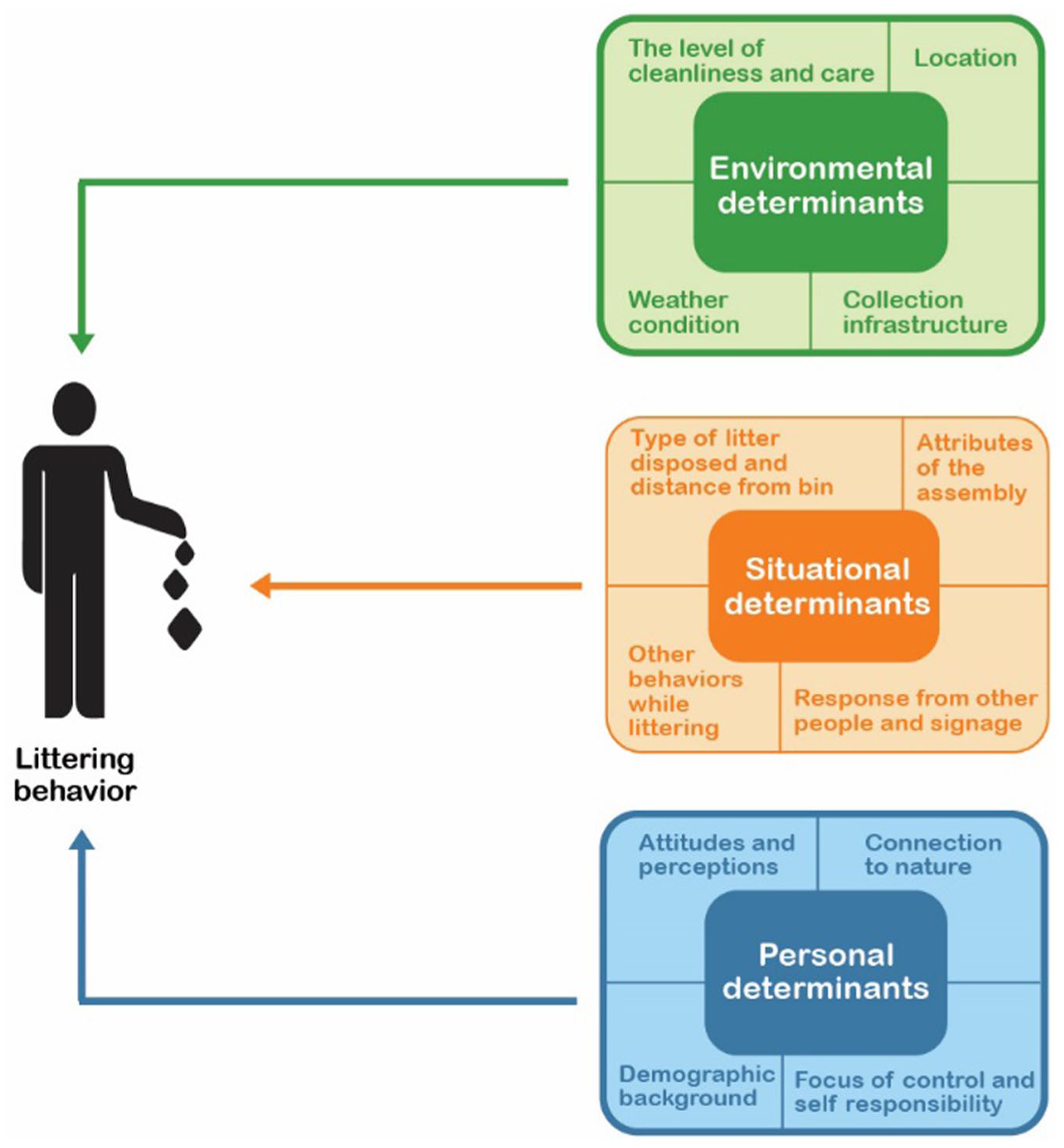
Determinants of littering behaviour in public spaces.
While previous studies have identified multiple determinants of littering across environmental, situational and personal domains, relatively few studies have examined these domains simultaneously within a single empirical framework (Chaudhary et al., 2021). As a result, the relative contribution of these different determinants to littering behaviour remains insufficiently understood.
The situational nature of littering behaviour also poses methodological challenges. Many studies rely on intention-based or self-reported measures, which may not adequately capture behaviour as it unfolds in real-world settings (Hu et al., 2019; Shimazu, 2018). Self-reported measures of pro-environmental behaviour are also prone to systematic biases, including social desirability and over-reporting of environmentally responsible actions (Koller et al., 2023). A well-documented challenge in research on pro-environmental behaviour is the discrepancy between environmentally favourable attitudes or intentions and actual behaviour, commonly referred to as the intention–behaviour gap (Kollmuss and Agyeman, 2002; Valkengoed et al., 2022). Individuals frequently report pro-environmental intentions while their real-world behaviour does not consistently reflect these commitments. Moreover, self-reported behavioural measures are prone to systematic over-reporting of environmentally responsible conduct, whereas studies relying on objective behavioural data frequently yield weaker or differently patterned effects (Allison et al., 2022; Podsakoff et al., 2012).
This limitation is particularly salient in research conducted in natural open spaces and nature-based tourism contexts, where reliance on stated intentions may misrepresent visitors’ actual environmental behaviour (Esfandiar et al., 2021). In natural open spaces, littering decisions often occur during leisure activities and unfold rapidly under situational conditions shaped by group dynamics, activity context and environmental determinants (Sagebiel et al., 2020). Under such circumstances, behaviour may be spontaneous or habitual and may therefore not pass through a clearly articulated stage of behavioural intention.
For this reason, several empirical studies have examined littering behaviour through direct observation in real-life settings (Al-Mosa et al., 2017; Schultz et al., 2013; Spehr and Curnow, 2015). Observational approaches enable researchers to document littering behaviour as it unfolds within its environmental and social context and therefore provide a more reliable representation of behaviour in public spaces (Schultz et al., 2013). However, these observational studies primarily document behavioural acts and situational conditions rather than linking observed behaviour to individual psychological characteristics. Reliance on a single methodological approach may provide only a partial understanding of littering behaviour. Self-report surveys typically measure attitudes, perceptions and reported behavioural intentions but do not observe behaviour as it occurs in real-world settings (Hu et al., 2019; Khawaja and Shah, 2018). Conversely, observational studies document behavioural acts and situational conditions in the field but rarely capture information about the psychological characteristics of the individuals involved (Al-Mosa et al., 2017; Schultz et al., 2013). Methodological literature, therefore, increasingly recommends integrating behavioural observations with self-report instruments in order to strengthen behavioural inference and reduce common method bias (Koller et al., 2023; Lange and Dewitte, 2019; Podsakoff et al., 2012).
To address these limitations, the present study employs a quantitative multi-method design, integrating structured behavioural field observations with post-event questionnaires administered to the same individuals. Multi-method approaches are recommended to reduce common method bias and strengthen behavioural inference by integrating distinct data sources (Podsakoff et al., 2012). In environmental behaviour research, integrating behavioural measures with self-report instruments has been shown to improve construct validity and address discrepancies between reported and observed behaviour (Koller et al., 2023; Lange and Dewitte, 2019). Similar integrative approaches have been employed in litter research to link observed disposal acts with psychological determinants (Spehr and Curnow, 2015). Linking observed disposal behaviour with measured personal determinants enables estimation of the relative contribution of environmental, situational and personal determinants within a single empirical setting.
Three interrelated gaps emerge from this review. First, much of the empirical research on littering has focused on urban environments and coastal areas, while inland natural open spaces remain comparatively understudied despite their growing recreational use. Second, although previous studies have identified multiple behavioural determinants, relatively few investigations examine environmental, situational and personal factors simultaneously within one analytical framework. Third, many studies rely on single method designs despite documented discrepancies between reported and observed behaviour. Accordingly, this study advances the literature by examining littering behaviour in inland natural open spaces through a framework integrating multiple determinants and a quantitative multi-method design. This approach links directly observed behaviour and enables the simultaneous examination of environmental, situational and personal determinants.
Determinants of littering behaviour
Environmental determinants have been shown to significantly influence littering behaviour. Studies using this approach, which primarily employed observations and experiments, found that on-site determinants such as the cleanliness level (Al-Mosa et al., 2017; Cialdini et al., 1990) and maintenance level matter. Neglected areas have a higher presence of litter (Hansmann and Steimer, 2017) and graffiti (Weaver, 2015). The content, type and availability of waste bins also affect littering behaviour. The absence of waste bins leads to increased litter (Al-Mosa et al., 2017; Bakker, 2019; Momm-Schult et al., 2013; Sater et al., 2020), whereas larger and more frequent waste bins reduce the litter (Al-Mosa et al., 2017; Bator et al., 2011; Sater et al., 2020; Torres et al., 2019). Weather conditions can also influence the littering behaviour. Windy conditions require visitors to be more attentive because wind can scatter litter, making proper disposal more challenging (Billard and Boucher, 2019; Fanini and Guittard, 2021).
Situational determinants significantly influenced littering behaviour. People, particularly older individuals, litter less in groups but more when they are alone (Al-Mosa, 2017). Social norms reduce littering when others are present (Cingolani et al., 2016), and the risk of being fined discourages littering (Schultz et al., 2009). However, the presence of cleaning crews can deter and encourage littering, as people may rely on them for clean-up (Spehr and Curnow, 2015; Wanjohi, 2016). Moreover, the type of litter influences perceptions and behaviours: cigarette butts, constituting 65% of observed litter and organic waste in green areas are deemed more acceptable (Carmi, 2019; Lev et al., 2023; Schultz et al., 2013), and food wrappers are discarded more often than recyclables (Weaver, 2015). One study differentiated litter types and reported higher organic litter (59.44%) than plastic waste (32.16%; Göktuğ, 2021).
Personal determinants and demographic backgrounds are individual attributes that significantly shape littering behaviour, affecting how individuals perceive and respond to different littering situations (Carmi, 2019). These determinants are typically assessed through surveys that rely on self-reported statements, showing that anti-littering attitudes and willingness to act strongly impact behaviour (Aziz et al., 2019; Freije et al., 2019; Hansmann and Steimer, 2017; Zambezi et al., 2020), while motivations (Moqbel et al., 2020) and personal responsibility (Freije et al., 2019; Hwang et al., 2010; Kaiser and Fuhrer, 2003) also affect the littering behaviour. Perceived powerlessness, which results from a lack of control, refers to the belief that one’s actions cannot generate meaningful changes or have a significant impact. In contrast, an internal locus of control is the belief that outcomes can be controlled through one’s own actions and decisions. All of these determinants can influence littering behaviour (Esfandiar et al., 2019; Hwang et al., 2010; Ojedokun, 2013). Attachment to a place also influences littering behaviour, with higher rates of littering in unfamiliar locations (Esfandiar et al., 2019), whereas strong community ties and shared space ownership reduce littering and vandalism (Spehr and Curnow, 2015).
Demographic background, such as age, gender, income, education, income level and religiosity are key determinants in predicting behaviour. However, the effects are inconclusive, as some studies indicate that certain demographics have no influence on littering behaviour. Thus, it is challenging to draw clear conclusions from these studies, such as older individuals littering less than young people (Asmui et al., 2019; Bator et al., 2011; Leijdekkers et al., 2015; Wanjohi, 2016), women litter less than men (Al-Khatib et al., 2009; Al-mosa, 2017; Shimazu, 2018) and religious individuals litter more than their non-religious counterparts (Al-mosa et al., 2017; Bator et al., 2011). Nevertheless, demographic characteristics clearly influence both the personal and situational determinants.
This review reveals the multidimensional determinants of the littering behaviour. While previous studies have focused on one type of determinant, this study integrates environmental, situational and personal determinants to provide a comprehensive understanding of the littering behaviour.
Israeli open spaces managed by the Jewish National Fund
Littering behaviour is culturally influenced by local values, politics and norms (Carmi, 2019); therefore, understanding the local context of this research is crucial. In Israel, where approximately 93% of the population resides in urban areas (World Bank, 2024), recreational activities in open spaces are a common leisure pursuit among individuals across various social strata (Mintz et al., 2024). These open spaces include nature reserves and wilderness sites, which are often restricted in terms of access to hours and fees, as well as other non-reserved areas. Managed primarily by the Jewish National Fund (JNF), these parks aim to conserve Israel’s environmental resources for future generations. Entry to these sites is typically free year-round, with much of the vegetation, including species such as oaks and pines, planted by JNF. These forests are suited to Israel’s Mediterranean to semi-arid climate and feature a variety of shrubs, climbers and herbs. JNF facilitates day parking for community visitors at these sites, offering picnic areas, public amenities and waste bins (Figure 2).
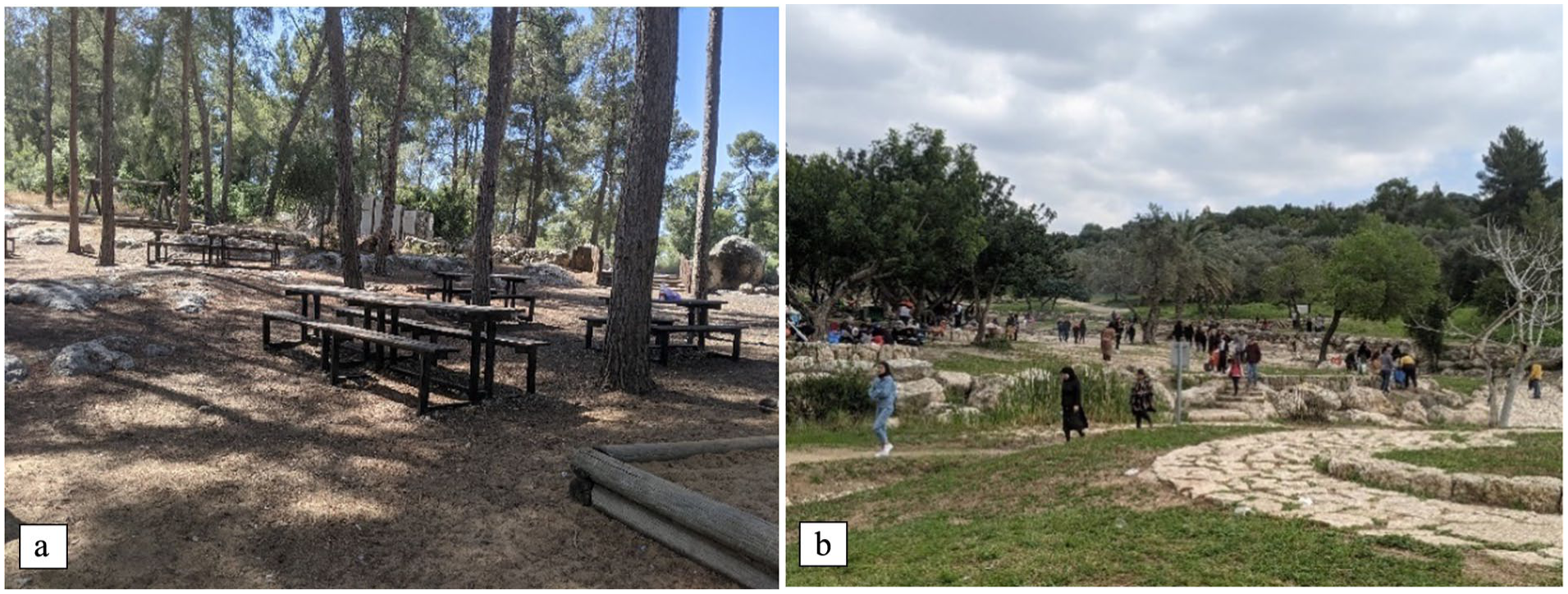
Representative natural open spaces in Israel. (a) Visitors to the ‘Lake’ day park at Canada Park in the Jerusalem Hills. (b) Picnic tables in the day park at the Lavi Forest in the Galilee region.
Research aim
Our research aimed to determine how environmental, situational and personal determinants influence littering behaviour in natural open spaces. This was achieved by:
Analysing a diverse set of 42 variables to identify the most significant environmental, situational and personal determinants affecting littering behaviour in natural open spaces.
Assessing the combined effect of these determinants on littering behaviour using regression models to quantify the relative contribution and explanatory power of each determinant.
Methodology
This study examined the environmental, personal and situational determinants of littering in natural open spaces using a quantitative multi-method field study approach combining (1) structured behavioural field observations and situational determinants, (2) post-event on-site questionnaires and (3) structured environmental site assessments. The methodological framework is organized as follows: Section ‘Research procedure’ outlines the research procedure, including tool development, piloting, field data collection and ethics approval; section ‘Research participants’ describes the study participants and sample characteristics; section ‘Research area’ delineates the research area and site-selection process; section ‘Research tools and data collection’ presents the research tools and data-collection protocols; section ‘Research variables’ defines all study variables and their operationalization; and section ‘Data analysis’ details the data-analysis strategy, including descriptive, bivariate and multinomial logistic modelling.
Research procedure
The research procedure included three main phases: tool development and validation, field data collection and data analysis.
Tool development and validation
Structured behavioural field observations and post-event on-site questionnaires protocols were adapted from established instruments (Carmi, 2019; Schultz et al., 2013; Spehr and Curnow, 2015) and culturally adjusted for the local context. Expert reviewers evaluated the instruments for clarity, coverage of relevant content and alignment with the underlying constructs, and pilot testing (60 observations and 72 questionnaires) confirmed their reliability and internal consistency.
Field data collection
The study was conducted between April 2020 and November 2021 at JNF-managed natural open spaces, each containing picnic facilities, signage and waste bins. The trained surveyors worked individually during weekends and holidays. Upon arrival, each surveyor selected a fixed observation point covering approximately 2000–3000 m2 and conducted a 2-hour session following a structured protocol (see section ‘Research tools and data collection’). This protocol included fields observations, administering brief post-event on-site questionnaires to the observed individual or, in cases of group-based littering, to two to four group members and subsequently linking questionnaire responses to the corresponding observed littering-related event. Surveyors also conducted structured environmental site assessments documenting cleanliness levels and infrastructure conditions before proceeding to the next site.
Data analysis
All data were coded and analysed using IBM SPSS Statistics for Windows, Version 23.0 (IBM Corp., Armonk, NY, USA), as detailed in section ‘Research variables’. All procedures complied with institutional ethical standards and were approved by the University of Haifa Ethics Committee (approval #053/20). Covert behavioural observation was authorized to minimize reactivity, and questionnaire participation was followed by informed consent. Participants were not informed prior to the questionnaire that their behaviour had been observed; surveyors invited them to complete a brief on-site satisfaction survey following the event.
Research participants
The trained surveyors observed 2262 visitors, and recorded 411 instances of observed littering behaviour events, attributable either to specific individuals or to groups, and approached all the observed actors to complete a face-to-face questionnaire. Of these, 624 questionnaires were completed and linked to the corresponding observations. Table 1 summarizes the participants’ demographic information.
Demographic data of questionnaire participants (N = 624).
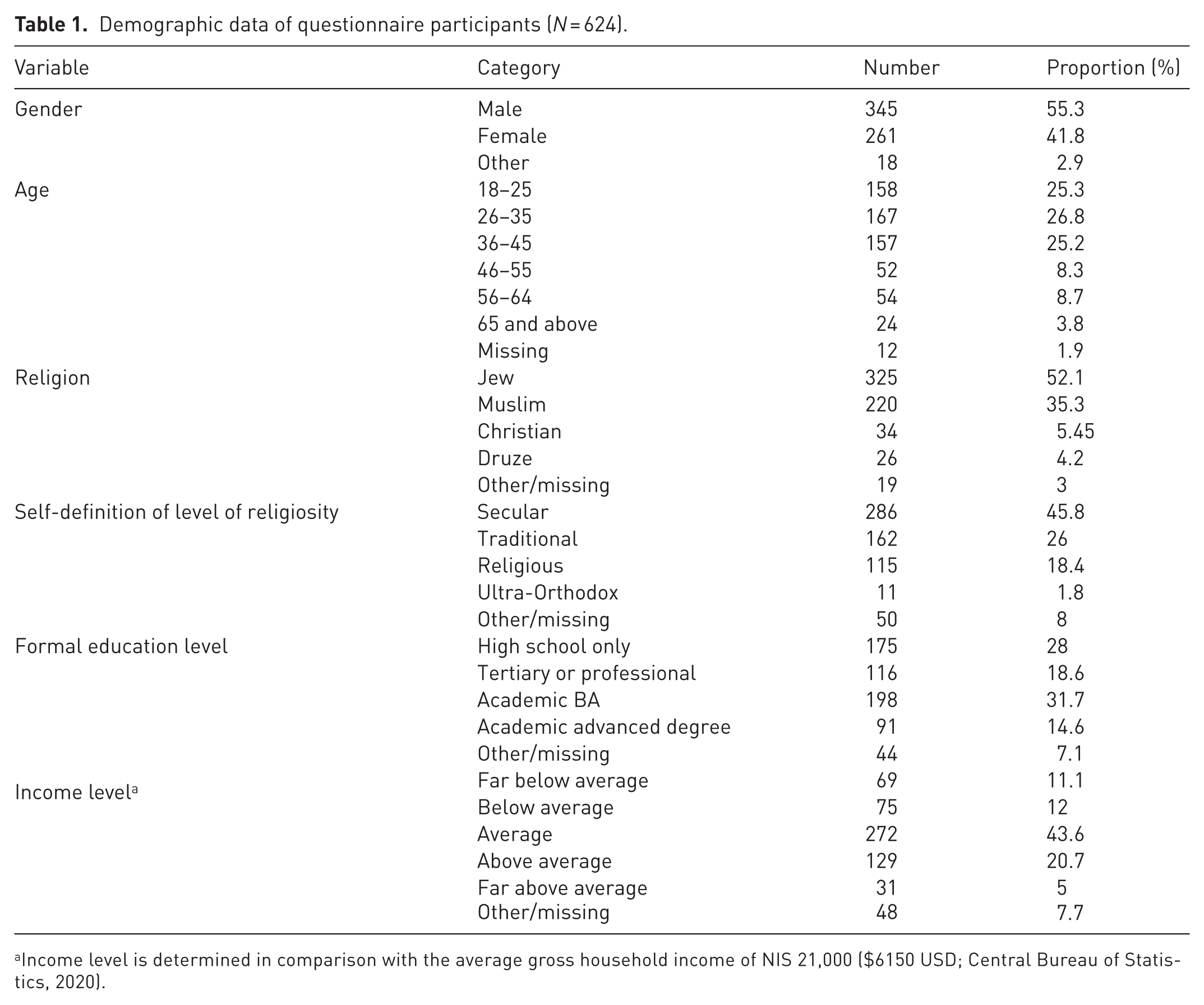
Income level is determined in comparison with the average gross household income of NIS 21,000 ($6150 USD; Central Bureau of Statistics, 2020).
Research area
The study covered 26 different inland natural open-space JNF sites distributed nationwide (out of 80 JNF sites; see Figure 3). Site selection was undertaken jointly with JNF site managers, prioritizing locations with noticeable littering problems that met four eligibility criteria defined by the researchers: Each site was a non-urban natural open space with visitor facilities (e.g. picnic tables, signage, waste bins), provided unrestricted year-round access and served a heterogeneous visitor population across cultures, ages, religions and socio-economic strata. The selected sites and observation periods were predefined in coordination with JNF managers to represent peak recreation times (weekends and holidays) and diverse geographical regions. Although all sites satisfied the same criteria, they differed in their microclimatic and topographic characteristics.
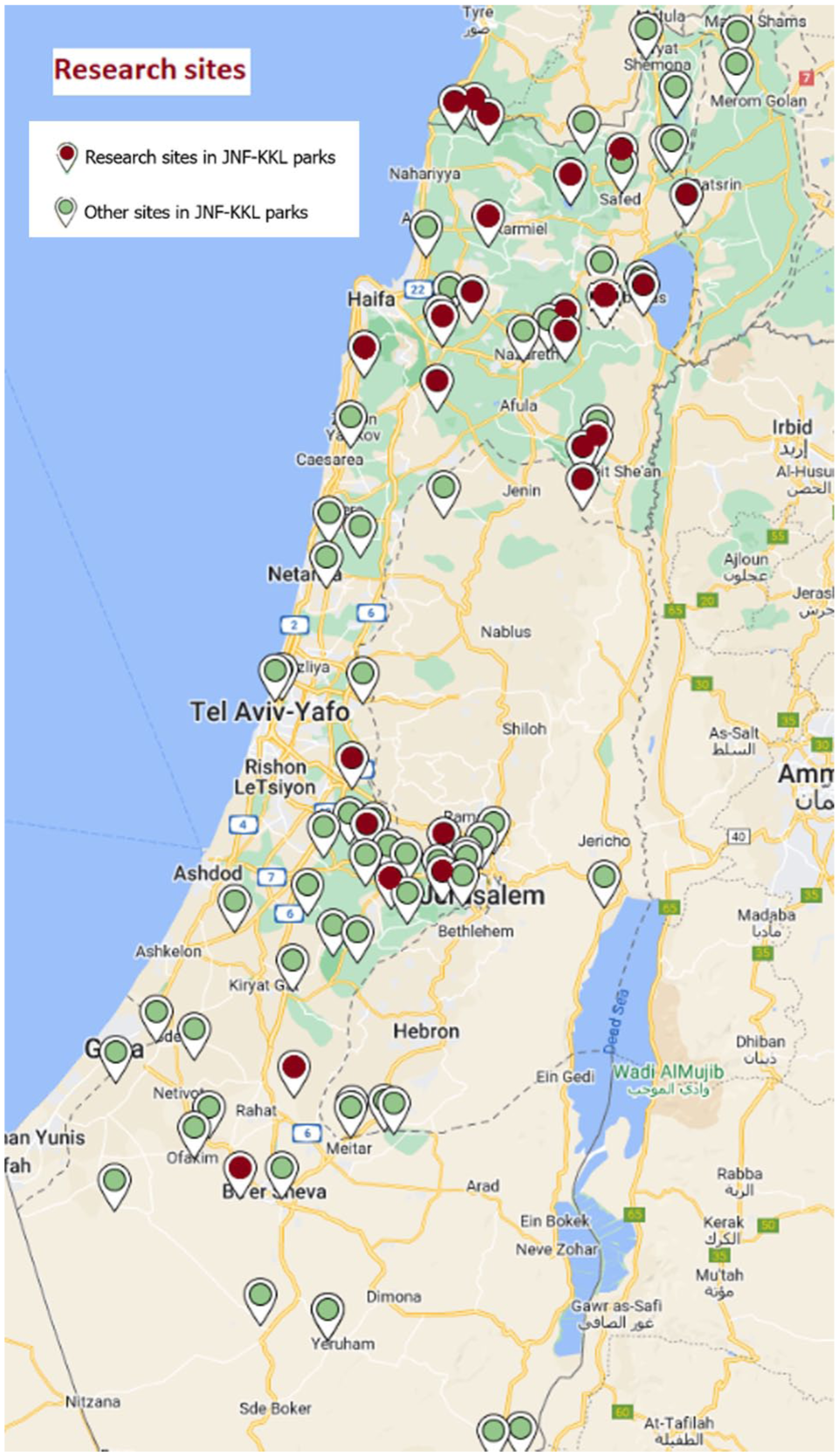
JNF-managed nature sites included in the study (based on the organization’s national map of forests and parks: https://www.kkl-jnf.org/tourism-and-recreation/forests-and-parks/).
Research tools and data collection
This study employed three complementary research tools within a quantitative multi-method field design: behavioural field observations, post-event on-site questionnaires administered to observed visitors and structured environmental site assessments. The full-field protocols for all tools are presented in Supplemental Appendixes 1 and 2. Twelve trained surveyors operated individually at 26 JNF-managed natural open spaces during peak recreation periods, following a detailed field manual and observer guide developed for this study.
Structured behavioural field observations
Surveyors systematically documented littering behaviour and associated situational determinants within a fixed observation area of approximately 2–3 dunams (2000–3000 m2). Each 2-hour session included documenting every observable act of littering, categorized into 11 behaviour types (e.g. throwing litter on the ground, concealing, missing the waste bin, collecting in a bag and leaving it and allowing litter to blow away; Spehr and Curnow, 2015). Situational characteristics (e.g. litter type, group size and social context) were coded using a structured observation protocol.
Post-event on-site questionnaires
After the observed littering-related event, during the same site visit, surveyors approached the relevant visitor or, in cases of group-based disposal, two to four group members and administered a brief questionnaire. In total, 624 valid questionnaires were completed, each linked to its corresponding observed littering-related event (see Table 1). Items assessed perceived cleanliness, personal determinants (e.g. perceived responsibility, coping attitudes, perceived behavioural control, connection to nature) and demographics using culturally refined measures (Carmi, 2019; Moqbel et al., 2019; Schultz and Kaiser, 2012).
Structured environmental site assessments
In addition to behavioural observations and post-event on-site questionnaire, surveyors documented environmental determinants at each site, including cleanliness, presence and condition of waste bins, and anti-littering signage (see Supplemental Appendix 1). Observations were recorded using standardized 1–5 scales and categorical indicators. The measurement framework reflects established environmental observation practices and was adjusted to the local conditions (Al-Mosa et al., 2017; Carmi, 2019; Schultz et al., 2013; Spehr and Curnow, 2015).
Research variables
This section presents the study variables and their operational measures, including the dependent variable of observed littering behaviour and the environmental, situational and personal determinants used as independent variables (see Supplemental Appendix 3 for the full measurement details).
The dependent variable was the observed littering behaviour, operationalized at the event level, classified into three mutually exclusive categories: intentional littering, unintentional littering and anti-littering behaviour. Intentional littering included throwing litter on the ground, leaving it behind or concealing it (42.1% of all observed events). Unintentional littering included missing the waste bin, leaving a filled bag behind or allowing litter to blow away (40.6%); anti-littering behaviour included placing litter in a container or packing it out (17.3%). The dependent variable was not normally distributed according to the Kolmogorov–Smirnov test (statistic = 0.263, p < 0.0001).
The independent variables were selected based on prior empirical evidence and included 42 environmental, situational and personal determinants. Categorical measures were recorded on a 1–5 Likert scale, and continuous measures were standardized prior to analysis. Full operational definitions, units of measurement, data collection methods, validity procedures and a complete list of variables are provided in Supplemental Appendix 3.
Data analysis
Analyses were conducted using IBM SPSS Statistics for Windows, Version 23.0 (IBM Corp., Armonk, NY, USA) and comprised three steps. First, we produced descriptive statistics for all variables (i.e. frequencies, means and standard deviations). Second, we ran bivariate logistic models regressing the dependent outcome (observed littering behaviour) on each predictor; variables with p < 0.20 were retained for multivariable modelling. Third, we estimated multinomial logistic regression models, including the retained predictors, to identify the determinants of intentional and unintentional littering relative to anti-littering behaviour. Continuous predictors were standardized prior to analysis. Results are reported as odds ratios with 95% confidence intervals and two-sided p-values (α = 0.05). Multicollinearity was assessed (tolerance/variance inflation factor [VIF]), and the model fit was evaluated using likelihood ratio tests and pseudo-R2 indices. The full sequence was performed separately for the observation and questionnaire-based datasets.
Results
This section presents the findings in three stages. Section ‘Descriptive statistics of littering determinants in natural open spaces’ reports the descriptive statistics of all environmental, personal and situational determinants measured in the field. Section ‘Bivariate association between determinants and littering behaviour in natural open spaces’ presents the bivariate associations between each determinant and the observed littering behaviour. Section ‘Multivariable model of key determinants of littering behaviour’ describes a multivariable multinomial logistic regression model that integrates all significant predictors into a single explanatory framework.
Descriptive statistics of littering determinants in natural open spaces
Environmental determinants
Environmental determinants were obtained from 411 structured behavioural field observations. Site cleanliness varied between 2.78 and 4.33 on a scale of 1–5, with a moderately high overall mean (M = 3.55, SD = 0.798), closely mirroring the maintenance level (M = 3.74, SD = 0.728). Cleanliness differed significantly among the sites (χ2 = 420.89, p < 0.001). Litter was generally dispersed across picnic areas, rather than concentrated near waste bins (M = 3.51, SD = 1.06). In 365 of the 411 observations (90%), a waste bin was available within 0–250 m (M = 20.5 m, SD = 32.5 m), indicating high accessibility.
Background on-site litter, that is, all litter present in the area regardless of whether it was linked to a specific observed disposal act, was classified according to the amount observed (minor, moderate, massive).
Cigarette butts were the most common litter found in massive quantities (16%), followed by toilet paper, wipes (13%) and disposable plastic dishes (9%). Large plastic bottles were the least frequent (2%) items.
Personal determinants and demographic background
Personal determinants were obtained from 624 completed questionnaire responses. Visitors expressed high satisfaction with the natural open spaces (M = 3.97, SD = 1.09) and attached great importance to site cleanliness (M = 4.79, SD = 0.61). Their subjective assessment of cleanliness (M = 3.69, SD = 1.10) closely corresponded with the surveyors’ evaluations (M = 3.55, SD = 0.80). Most respondents (82%) endorsed anti-littering attitudes (M = 4.14, SD = 0.60), with emotional and cognitive attitudes (M = 4.49, SD = 0.63) were stronger than reported behavioural intentions (M = 3.80, SD = 0.82). Participants primarily assigned responsibility for maintaining cleanliness to visitors (M = 4.63, SD = 0.79) and the managing organization (M = 4.39, SD = 0.90), and less so to local (M = 3.74, SD = 1.29) or national authorities (M = 3.69, SD = 1.28). Perceived behavioural control was high (M = 4.46, SD = 0.72), indicating strong self-efficacy for maintaining cleanliness in nature.
Situational determinants
Visitor density per site typically ranged from 20 to 100 people (69% of cases); 19% of the cases involved fewer than 20 visitors, and 10% exceeded 100. Group sizes varied between 2 and 35 individuals (M = 8.5; median = 7), with 80% of groups containing fewer than 10 participants.
Enforcement personnel (rangers, inspectors, etc.) were observed in only 14.2% of the cases. In nearly all littering events (98.6%), no reaction from bystanders was recorded, and only minimal within-group responses were observed (1.4%). Surveyor notes illustrated these interactions, for example, ‘Instructed to dispose of a bottle’, ‘Laughter as a bag eluded the chase’, ‘Children prompting a family clean-up’.
Situational determinants were derived from 411 behavioural observations. All recorded cases involved visitors in pairs or groups. Among these, 275 observations (67%) represented group littering, where the act was collectively attributable, and 136 (33%) reflected individual littering by a single group member.
Anti-littering actions, such as the use of reusable utensils (6.6%) or nature education activities (1%), were rarely observed. In contrast, negative behaviours – loud music (3.2%) and improper fire use (2%) – were infrequent but present. Common co-occurring activities included the use of disposable dishes (20%), cigarette smoking (18%), picnicking with barbecues (12%) or without barbecues (14%), alcohol consumption (8%) and hookah smoking (8%). The most frequently observed litter types during littering were disposable dishes (19.8%), wipes or toilet paper (16.3%) and plastic bags (14.8%; Figure 4).
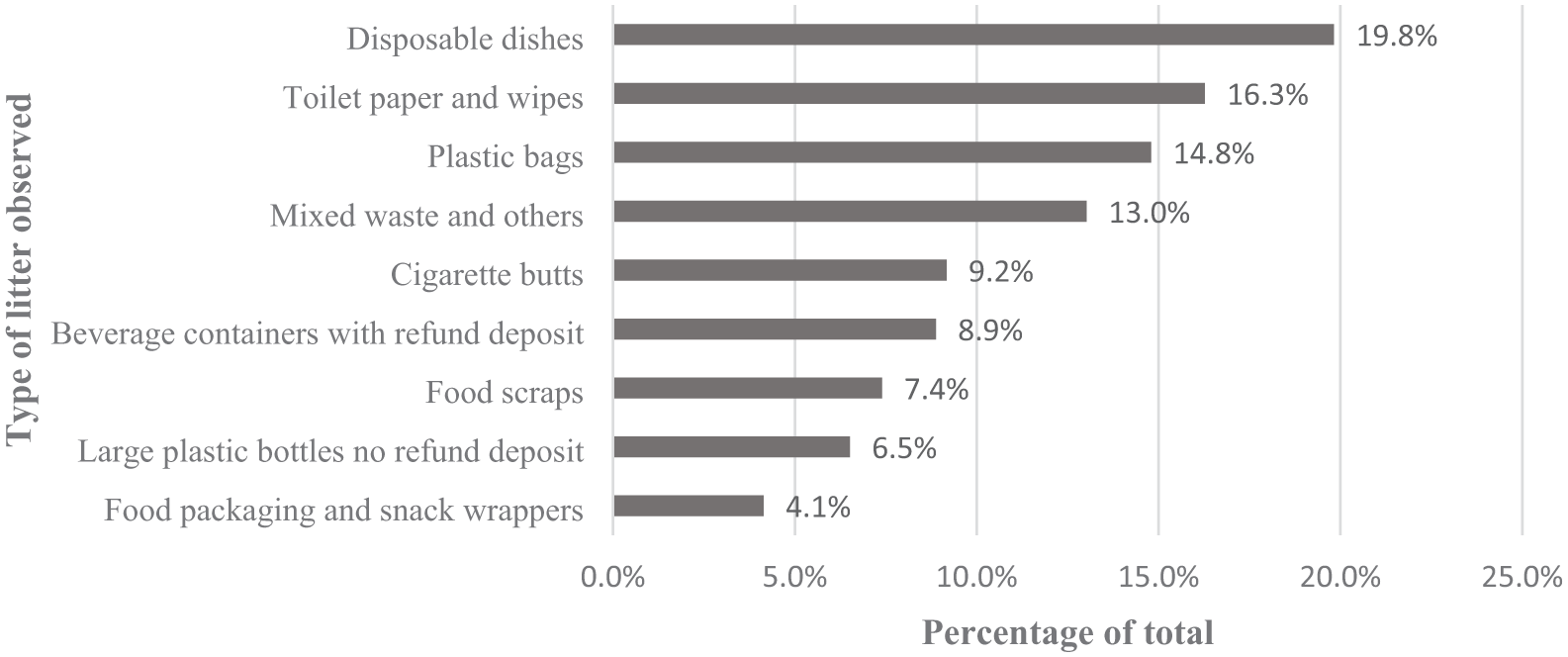
Types of litter directly observed during littering behaviour.
Bivariate association between determinants and littering behaviour in natural open spaces
Multinomial logistic regressions analyses were conducted to assess the individual associations between each of the 42 determinants and observed littering behaviour (see Supplemental Appendix 3). Correlations among the determinants were also tested, and Supplemental Appendix 4 presents all determinants that show significant relationships with littering behaviour. The results are summarized below by determinant category.
Environmental determinants
Littering behaviour was significantly associated with four environmental determinants: the presence of waste bins, maintenance level, litter distribution and windy conditions. The likelihood of intentional littering was 10 times higher than that of anti-littering behaviour when no waste bin was available. Likewise, when maintenance levels were low, the odds of intentional littering were approximately 10 times higher than those of anti-littering behaviour. Even in well-maintained areas (ratings 4–5), the odds of either intentional or unintentional littering were roughly double those of anti-littering behaviour, suggesting that high maintenance reduces but does not eliminate littering behaviour.
Windy conditions tripled the probability of unintentional littering compared with anti-littering behaviour. Other environmental determinants, including overall cleanliness, waste bin type and condition, waste bin fill level and the presence of informational signage, had no significant effect on the observed behaviour.
Personal determinants and demographic background
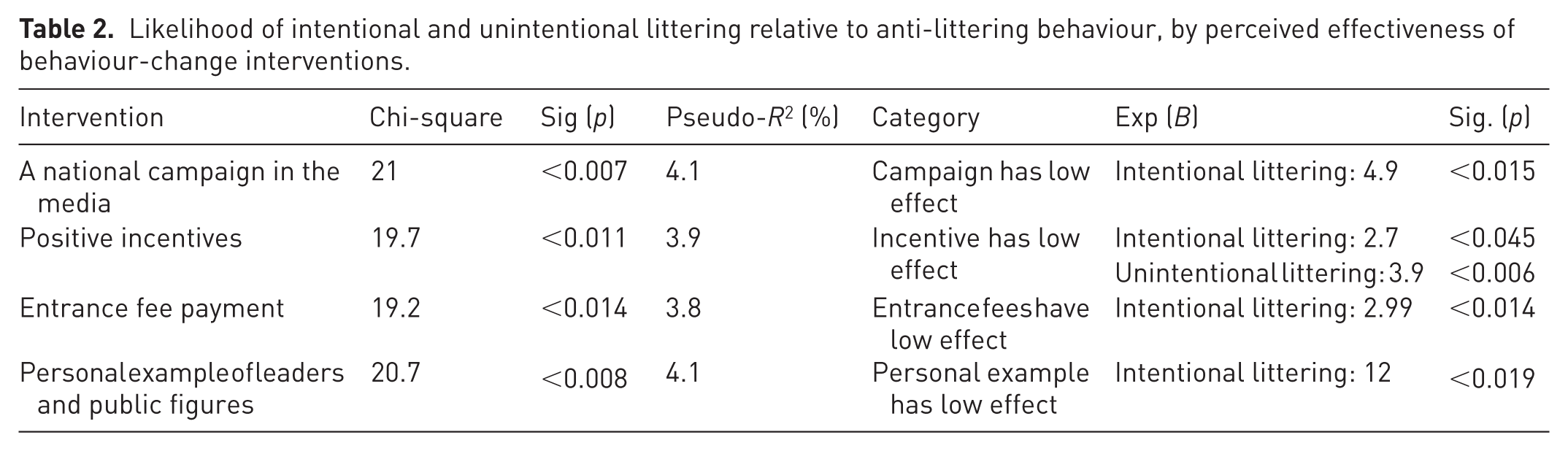
Littering behaviour was also associated with two personal determinants: perceived effectiveness of different interventions as motivators for changing littering behaviour and perceived responsibility, and one demographic determinant, namely education level. Intentional litterers perceived most interventions as being relatively ineffective. National campaigns were viewed as five times less effective by intentional litterers than by those with anti-littering behaviour (Table 2). Similarly, positive incentives, entrance fees and the personal example of leaders were all rated as weak motivators of behavioural changes. Education level was also a significant predictor: Participants with intermediate education were three times more likely to intently litter than to display anti-littering behaviour.
Likelihood of intentional and unintentional littering relative to anti-littering behaviour, by perceived effectiveness of behaviour-change interventions.
Situational determinants
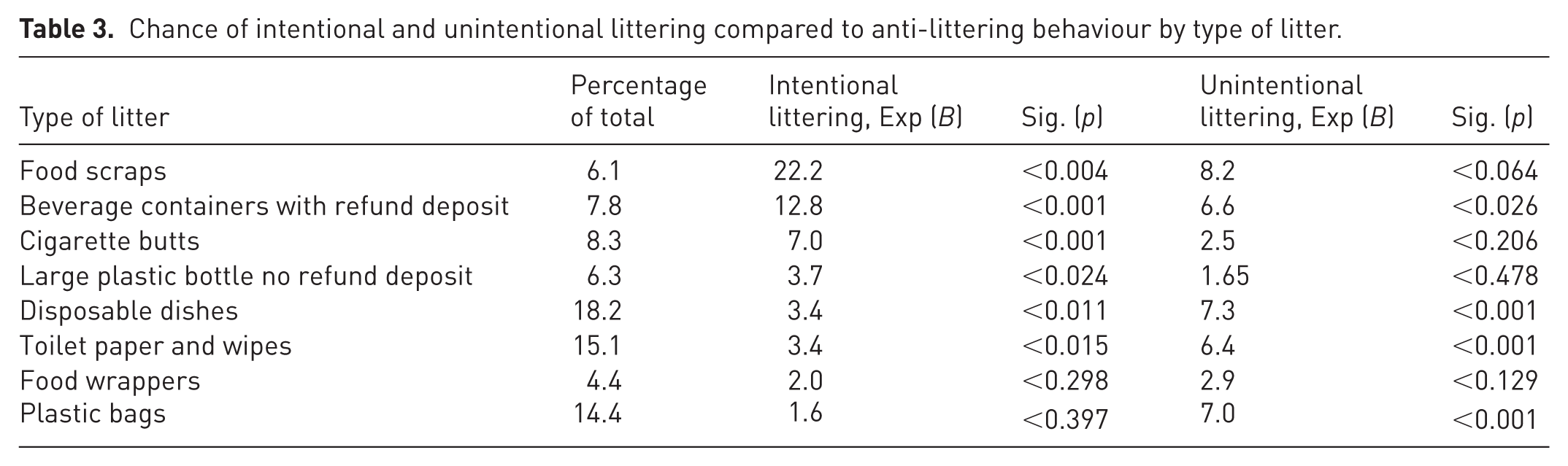
Three situational determinants significantly influenced littering behaviour: type of litter, number of people present and co-occurring activities (i.e. other activities occurring at the time of the observed littering behaviour). The analysis showed that specific litter types were far more likely to be disposed of improperly (Table 3). The probability of intentional littering of food scraps was 22 times higher than that of anti-littering behaviour, whereas unintentional littering of disposable dishes and plastic bags was seven times higher.
Chance of intentional and unintentional littering compared to anti-littering behaviour by type of litter.
Crowding also affected behaviour: As the number of people in the area increased, intentional littering decreased, whereas unintentional littering increased.
Five significant associations were found for co-occurring activities. Intentional littering was three times more likely during cigarette or hookah smoking (χ2 = 5.26, df = 3, p = 0.015) and twice as likely during barbecues (χ2 = 12.0, df = 3, p = 0.007). Conversely, feeding animals (χ2 = 24.5, df = 3, p = 0.001) and observing or educating about animals (χ2 = 24.5, df = 3, p = 0.001) significantly reduced the likelihood of both intentional and unintentional littering.
Multivariable model of key determinants of littering behaviour
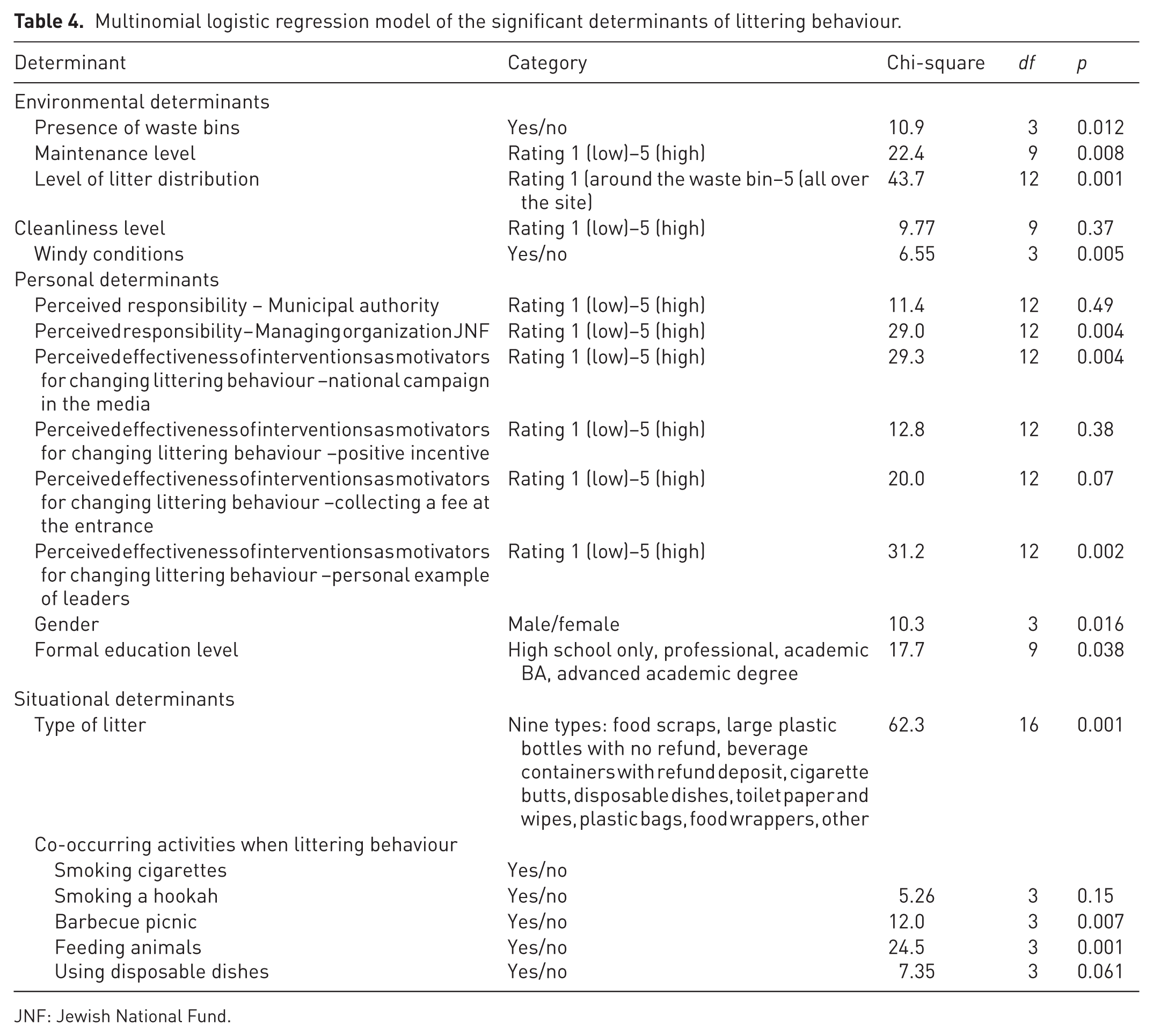
To identify the combined effects of all determinants, a multinomial logistic regression model was fitted, integrating variables with p < 0.20 from the bivariate analyses. The final model included 19 predictors: 8 personal, 5 environmental and 6 situational determinants (Table 4). Together, these variables explained 70.1% of the variance in littering behaviour across natural open spaces (χ2 = 399, df = 156, p < 0.0001) with a Nagelkerke pseudo-R2 of 0.701.
Multinomial logistic regression model of the significant determinants of littering behaviour.
JNF: Jewish National Fund.
Situational determinants emerged as the strongest predictors in the multivariable model (Table 4). Litter type was the most influential determinant of littering behaviour, accounting for 21.7% of the model’s explained variance (χ2 = 62.3, p < 0.0001). This was followed by various situational, environmental and personal determinants, such as other behaviours (e.g. feeding animals and having a barbecue picnic), level of litter distribution, maintenance level and maintenance, windy conditions, the perceived effectiveness of different interventions as motivators for changing littering behaviour (e.g. leaders setting a personal example and a national campaign in the media) and the perceived responsibility of the organization managing the site.
Discussion and conclusions
Littering behaviour in natural open spaces is often discussed through a combination of environmental, situational and personal determinants (Steg and Vlek, 2009). The findings of the present study support this multivariate perspective. When examined through direct field observations and linked post-event questionnaires, littering behaviour was associated with determinants across all three domains. At the same time, the results suggest that situational and environmental determinants played a stronger role than personal determinants in predicting observed behaviour in natural open spaces. These findings align with integrative behavioural frameworks that emphasize the combined influence of personal and contextual determinants (Schultz et al., 2013; Stern, 2000). However, in the present study, situational determinants, particularly litter type and activity context, emerged as the strongest predictors of observed littering behaviour in natural open spaces.
Additional situational determinants, including group size and activity contexts such as barbecuing, smoking and alcohol consumption, were also associated with littering outcomes, although their effects were weaker. These findings indicate that littering behaviour in natural open spaces is strongly embedded in leisure activities and shaped by the specific waste generated during these activities, rather than by deliberate environmental considerations (Mintz et al., 2024; Sagebiel et al., 2020).
The prominence of litter types suggests that different litter types carry distinct social meanings that influence littering behaviour (Heidbreder et al., 2019). In this study, disposable dishes were the most commonly observed litter, a finding that reflects consumption practices associated with leisure activities in open spaces and is consistent with previous research (Pahl et al., 2020). Previous research in Israel has also shown that certain waste types, such as organic waste and toilet paper, are often perceived as more acceptable to leave in nature than other forms of litter (Lev et al., 2023). Similarly, behaviours such as feeding wild animals may be perceived as altruistic while their ecological consequences remain overlooked (Torgler et al., 2012). The strong predictive role of litter type suggests that disposal behaviour is not only a function of environmental attitudes but also of the social meaning and perceived acceptability attached to different waste categories.
In the current study, environmental conditions played a selective role in predicting littering behaviour. Several environmental determinants significantly predicted littering outcomes, partly aligning with the existing literature. In particular, the presence of waste bins (Al-Mosa et al., 2017; Bakker, 2019), maintenance level (Freije et al., 2019; Hwang et al., 2010) and windy conditions (Billard and Boucher, 2019; Fanini and Guittard, 2021) were associated with observed behaviour. These findings indicate that certain physical site conditions shape disposal behaviour in natural recreation settings.
However, several environmental determinants that were significant in previous studies did not predict littering behaviour in this study. Cleanliness level is often considered a key determinant shaping littering norms (Cialdini et al., 1990; Keizer et al., 2008), showed no significant association with littering. While earlier research suggests that dirtier environments encourage littering, this study and others (Allison et al., 2022; Bator et al., 2011; Sagebiel et al., 2020) indicate that littering also occurs in relatively clean environments. Similarly, distance to the waste bin had no effect, contrary to prior findings (Doesum et al., 2021; Lockwood and Wyant, 2020). One possible explanation is that environmental cues operate differently across settings. Urban streets are often perceived as dirtier, which may normalize littering behaviour, whereas urban parks are typically well maintained (Doesum et al., 2021). Natural open spaces, in contrast, receive less continuous maintenance and may accumulate dispersed litter over time (Weaver, 2015). In such environments, visitors may rely less on overall cleanliness cues and more on activity-related and site-specific signals when deciding how to dispose of waste. These findings highlight the importance of examining littering behaviour specifically in natural open spaces rather than extrapolating conclusions from urban contexts. Previous research on visitor impacts in natural areas similarly shows that such impacts emerge from the interaction between visitor behaviour, environmental conditions and site management (Marion et al., 2016).
Results regarding personal determinants highlight a notable deviation from parts of the existing literature. While perceptions related to motivations, perceived responsibility and education level were associated with littering behaviour, other well-established personal determinants including much of the sociodemographic background showed limited influence on actual observed littering behaviour. In previous research, attitudes towards littering are often treated as influential predictors of behaviour (Borongan and NaRanong, 2022; Esfandiar et al., 2019; Liobikiene and Juknys, 2016). However, the present findings suggest that even when visitors report negative attitudes towards littering, willingness to act for cleanliness and a connection to nature, they may still intentionally litter in open spaces. These results indicate that personal orientations alone may be insufficient predictors of behaviour in natural settings, where situational and environmental cues can override behavioural intentions (Esfandiar et al., 2021; Gifford and Nilsson, 2014).
The discrepancy between personal determinants and observed behaviour may partly reflect methodological differences across studies. A prevalent reliance on self-report measures means that many studies focus on correlations between behavioural intention and reported behaviour, rather than on directly observed actions (Hansmann and Steimer, 2017). This can overestimate the explanatory role of attitudes in contexts where behaviour is shaped by rapid decisions, distractions and situational constraints. A key contribution of the present study is the use of multiple quantitative methods. By linking behavioural observations with post-event questionnaires administered to the same individuals, the study provides a rare opportunity to compare reported orientations with actual behaviour in real time.
Future research should explore additional determinants using a similar methodology that links documented behaviour with measurements captured close to the behavioural event. Habitual processes may play an important role in littering behaviour, particularly in repeated leisure practices (Stege and De Groot, 2019), yet habit was not directly assessed in the present study. In addition, deeper underlying determinants may shape behaviour in ways not captured by short questionnaires (Creswell et al., 2003; Mittal et al., 2017). Qualitative approaches may therefore help uncover the social meanings attached to specific waste types and explain mechanisms that sustain intentional littering in natural recreation settings (Almosa et al., 2020).
This study had some limitations that should be acknowledged. Littering is generally perceived as socially undesirable, and questionnaire responses may therefore be influenced by social desirability bias, despite efforts to minimize it (Esfandiar et al., 2019; Gifford and Nilsson, 2014). In addition, multinomial logistic regression has inherent limitations: Model specification, predictor selection and potential overfitting may influence results, and findings should therefore be interpreted with caution.
Policy and management implications
The findings of this study suggest key policies and management strategies for improving waste management in natural open spaces. Given the complexity of littering behaviour, a single solution is insufficient. Instead, a multifaceted approach integrating environmental, educational and behavioural interventions is necessary.
Targeted interventions by litter type and activity context: Because litter type strongly predicts littering behaviour, managers should deploy activity-specific solutions at barbecues, smoking zones and picnic areas: provide bags for organic waste, clarify on site that toilet paper and food leftovers constitute litter and offer reuse points or returns points for utensils.
Infrastructure placement with visible maintenance: Presence of waste bins matters more than proximity, while maintenance reduces but does not eliminate intentional littering behaviour. Waste bins should be placed slightly away from seating areas to preserve order, and frequent visible upkeep of facilities and quick removal of waste accumulations should be prioritized.
Adaptive responses to situational and weather conditions: Wind increases unintentional littering. On windy days, distribute tie-off bags, use light wind screens near picnic areas and increase the collection frequency in high-exposure hotspots.
Real-time social norm signalling: Disposal occurs mainly in groups, and bystander responses are rare. Use brief descriptive messages at decision points and recognize clean behaviour on site to activate peer influence rather than relying on broad awareness campaigns.
Local incentives that reflect shared responsibility: Visitors and site managers are viewed as sharing primary responsibility. Offer small, immediate rewards for returning full waste bags or assisting with spot clean-ups, such as tokens or parking benefits, to convert positive attitudes into action.
Future research directions
Future work should prioritize the direct observation of littering behaviour in managed natural sites, complemented by brief self-reports, to estimate the relative roles of environmental, situational and personal determinants. Field experiments should compare the on-site effectiveness of environmental cues, descriptive social norm messages and local incentive mechanisms. Longitudinal designs can test habit formation and disruption as site conditions and activity contexts change. Qualitative studies should probe deep-seated cultural meanings and perceived norms that sustain intentional littering behaviour. Integrating observational data with objective covariates (e.g. wind exposure, visitor density, waste bin usage and fill levels) will improve predictive models and enable adaptive management.
Supplemental Material
sj-docx-1-wmr-10.1177_0734242X261441101 – Supplemental material for The complex web of littering behaviour in natural open spaces: A multivariate exploration
Supplemental material, sj-docx-1-wmr-10.1177_0734242X261441101 for The complex web of littering behaviour in natural open spaces: A multivariate exploration by Naama Lev, Maya Negev and Ofira Ayalon in Waste Management & Research
Supplemental Material
sj-docx-2-wmr-10.1177_0734242X261441101 – Supplemental material for The complex web of littering behaviour in natural open spaces: A multivariate exploration
Supplemental material, sj-docx-2-wmr-10.1177_0734242X261441101 for The complex web of littering behaviour in natural open spaces: A multivariate exploration by Naama Lev, Maya Negev and Ofira Ayalon in Waste Management & Research
Footnotes
Acknowledgements
We thank the staff of the Chief Scientist for providing information and assisting in the development of the study design. We are grateful to Prof. Costas Velis, Ms. Ceren Baran and the anonymous reviewers for their valuable insights and support in revising this manuscript.

Ethical considerations
Not applicable.
Consent to participate
Verbal informed consent was obtained from all participants.
Consent for publication
Not applicable.
Author contributions
NL, MN and OA designed the study. NL collected and analysed the data under the supervision of MN and OA. NL drafted the initial manuscript. MN and OA provided comments and edited the manuscript accordingly. All authors contributed to and approved the final version of the manuscript.
Funding
The authors disclosed receipt of the following financial support for the research, authorship, and/or publication of this article: This study was supported by the Chief Scientist of the Jewish National Fund (KKL-JNF).
Declaration of conflicting interests
The authors declared no potential conflicts of interest with respect to the research, authorship, and/or publication of this article.
Data availability statement
The data are available from the authors upon request.
Supplemental material
Supplemental material for this article is available online.
References
Supplementary Material
Please find the following supplemental material available below.
For Open Access articles published under a Creative Commons License, all supplemental material carries the same license as the article it is associated with.
For non-Open Access articles published, all supplemental material carries a non-exclusive license, and permission requests for re-use of supplemental material or any part of supplemental material shall be sent directly to the copyright owner as specified in the copyright notice associated with the article.
