



Abstract
The reuse of concrete components is increasingly recognized as a circular strategy to reduce embodied carbon, minimize concrete waste, and conserve resources; yet, evidence on circular concrete reuse (CCR) remains fragmented and is often discussed alongside recycling pathways, which obscures reuse-specific insights. This study aimed to synthesize CCR research, map development trends and identify knowledge gaps and future research directions to support scalable implementation. A Preferred Reporting Items for Systematic Reviews and Meta-Analyses (PRISMA)-guided systematic review of 61 peer-reviewed studies was conducted, with evidence analysed using descriptive mapping and qualitative coding across five themes: CCR design and applications, pre-deconstruction and reusability assessment, digital technologies, life cycle assessment, and CCR benefits and barriers. Findings indicate that CCR research is geographically concentrated in high-income contexts, particularly Europe, with limited studies from low- and middle-income regions. Performance evaluation primarily focused on embodied carbon, with some studies reporting reductions of up to 90% compared with conventional construction. Beyond CCR’s benefits, adoption is hindered by challenges in quality assurance, costs, logistics, and stakeholder acceptance. Given the carbon-centric emphasis of existing performance studies and implementation-related barriers reported across the literature, this study proposes a conceptual framework for CCR performance assessment integrating environmental, economic, and social dimensions, providing a structured basis for future empirical assessment and decision-making by industry stakeholders. This study also highlights key gaps for future research directions, including limited implementation‑focused evidence, insufficient durability evaluation, fragmented digital frameworks and a lack of integrated performance assessment beyond carbon metrics. Collectively, these findings provide a robust reference for researchers and practitioners in advancing CCR implementation.
Keywords
Introduction
Concrete serves as the cornerstone of contemporary civil infrastructure, underpinning urban resilience and adaptation to climate change. Over the past three decades, rising investment in buildings and infrastructure projects has been accompanied by a sharp rise in concrete production, reaching approximately 26 gigatonnes per year by 2020 (Watari et al., 2023). Industry roadmaps project that concrete demand could increase from about 14 billion cubic metre in 2020 to around 20 billion cubic metre by 2050 under current practice (Global Cement and Concrete Association, 2021). However, this scale of production exacts a heavy environmental toll: cement, a key constituent, contributes approximately 8% of global greenhouse gas emissions (Khan et al., 2021; Volaity et al., 2025). Additionally, unsustainable extraction of natural aggregates like sand and gravel has precipitated ecological crises in resource-rich regions (Küpfer et al., 2023; Rousseau et al., 2025). Compounding these challenges, construction and demolition waste from concrete overwhelms landfills and pollutes ecosystems (Ibrahim et al., 2023), especially in rapidly urbanizing or disaster-prone regions (Villagrán-Zaccardi et al., 2022).
In response to the resource depletion and environmental harm caused by the concrete lifecycle, the circular economy (CE) has emerged as a viable strategy aimed at mitigating these impacts. The CE concept revolves around transforming the traditional linear model of ‘take-make-dispose’ into a regenerative system that emphasizes the reduction, reuse and recycling of resources (Bamshad and Ramezanianpour, 2024; Geissdoerfer et al., 2017; Oyejobi et al., 2024). In the concrete industry, CE strategies include reducing material usage through improved specifications and design, enhancing the concrete mix by substituting a portion of Portland cement with supplementary cementitious materials, prolonging the life of concrete structures through maintenance and rehabilitation and reusing components and recycling waste to incorporate materials back into the production process (Adesina, 2021; Barbhuiya et al., 2024; Marsh et al., 2022).
The reuse of construction components is regarded as a higher value process in CE, offering greater environmental benefits (Kirchherr et al., 2017). Reuse involves carefully dismantling a structure into smaller elements that can be reassembled in new structures, thereby delaying waste production and significantly reducing the demand for new materials and associated CO2 emissions (Bertola et al., 2024; Tu et al., 2025). Despite its potential, the reuse of concrete components such as beams, slabs and columns remain underutilized as a CE strategy for prolonging concrete usage and minimizing waste (Devènes et al., 2022; Harala et al., 2023; Thakuri et al., 2024). More often, concrete structures are demolished not due to structural failure but as reuse of functional obsolescence (e.g. changing spatial needs, energy retrofits; Salama, 2017; Widmer et al., 2023), thereby resulting in the premature disposal of reusable components.
Currently, dismantled concrete is primarily crushed for use in road bases or recycled as aggregate in new concrete (Nedeljković et al., 2021). However, reuse, unlike recycling, preserves the structural integrity, reducing the demand for new materials and eliminating the need for the energy-intensive process of transforming materials into a new product (Al-Faesly and Noël, 2023; Hansen and Revellio, 2020).
Given these benefits, there is an increasing focus on circular concrete reuse (CCR) among researchers and practitioners worldwide, as evidenced by a growing body of empirical studies (Al-Najjar et al., 2025; Bertola et al., 2024; Rokio et al., 2024), as well as review studies (Küpfer et al., 2023; Villagrán-Zaccardi et al., 2022). While existing reviews have made significant contributions to the field, as shown in Table 1, they predominantly focus on concrete recycling (Hasan and Elmualim, 2023; Oyejobi et al., 2024), or isolated aspects of concrete element reuse such as deconstruction, connection systems or material performance (Ottosen et al., 2024; Salama, 2017; Zhou, 2024). In addition, many notable contributions from these narrow perspectives utilize traditional narrative or comprehensive review methodologies (Bertino et al., 2021; Salama, 2017; Zhou, 2024). These methods can be helpful, but they often don’t have clear, repeatable search protocols, organized data extraction, or open synthesis processes like systematic reviews do. This can lead to potential selection bias, inconsistent coverage and challenges in objectively mapping the evidence base, thereby complicating the identification of robust consensus or critical contradictions within the field. Accordingly, there remains a need for a systematic review that consolidates evidence on concrete component-level reuse beyond recycling-oriented pathways and isolated discussed practices.
Existing review studies on circular concrete reuse.
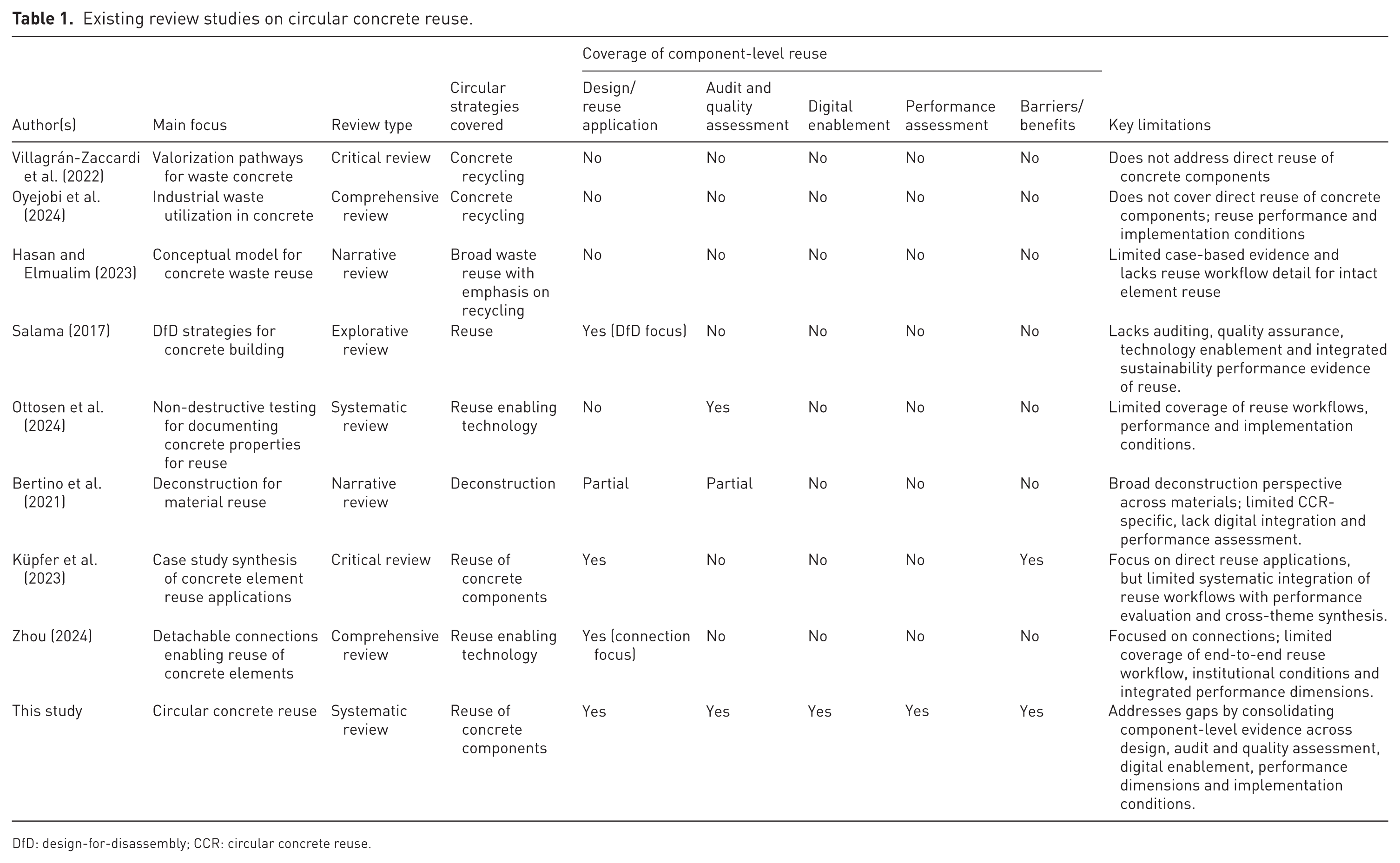
DfD: design-for-disassembly; CCR: circular concrete reuse.
Therefore, this study aimed to provide an integrated, practice-oriented synthesis of peer-reviewed research on the direct reuse of concrete elements. It systematically compiles evidence on CCR across five thematic domains: (i) design and applications, (ii) pre-deconstruction and reusability assessment, (iii) digital technologies, (iv) life cycle assessment and (v) CCR benefits and barriers, thereby consolidating fragmented findings across technical, performance, digital and implementation perspectives to provide coherent evidence for research and practice. In addition, the study summarizes case-study evidence within each theme to enable clearer comparison of methods, contexts and reported outcomes, and it also proposes a conceptual framework linking the CCR cycle to environmental, economic and social performance dimensions to support assessment and decision-making. Based on the systematic synthesis, the review identifies existing knowledge gaps and outlines future research directions to support the transition of CCR from emerging practice to broader industry uptake.
Specifically, this review is guided by the following research questions:
How has the CCR literature evolved over time in terms of publication trends, geographic distribution and methodological characteristics within the CE context?
What are the dominant research themes and evidence areas addressed in CCR within CE?
Which CCR-specific evidence gaps and priority research directions emerge from the mapped trends and thematic synthesis to advance CCR towards scalable implementation?
Methodology
This study aimed to identify and synthesize scholarly contributions on the reuse of concrete components within CE frameworks. It focuses on peer-reviewed academic literature and is designed to offer a material-specific understanding of research trends, knowledge gaps and future directions concerning the reuse of concrete components in construction. To achieve this objective, a systematic literature review was conducted, guided by the Preferred Reporting Items for Systematic Reviews and Meta-Analyses (PRISMA) protocol. The PRISMA framework was adopted because it provides a rigorous and transparent structure for reporting systematic reviews, thereby enhancing the clarity, traceability and reliability of the research process (Aguinis et al., 2020; Premji and Cabugos, 2023).
Systematic reviews effectively identify relevant scholarly work aligned with defined research questions and uncover critical gaps to inform future advancement (Illankoon and Vithanage, 2023), which is the core aim of this study. An overview of the review process is presented in Figure 1.
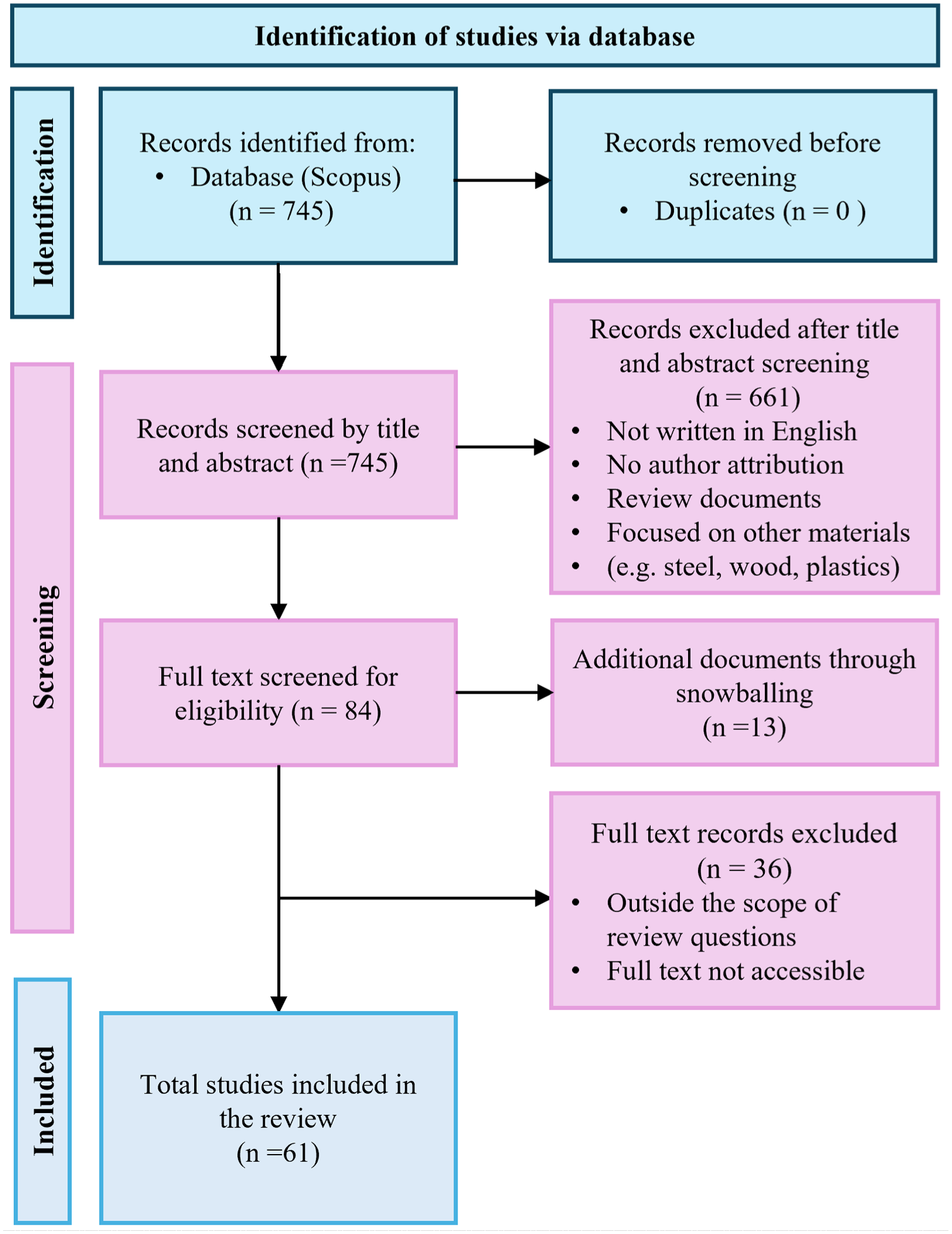
Overview of the systematic review process.
Data sources and search strategy
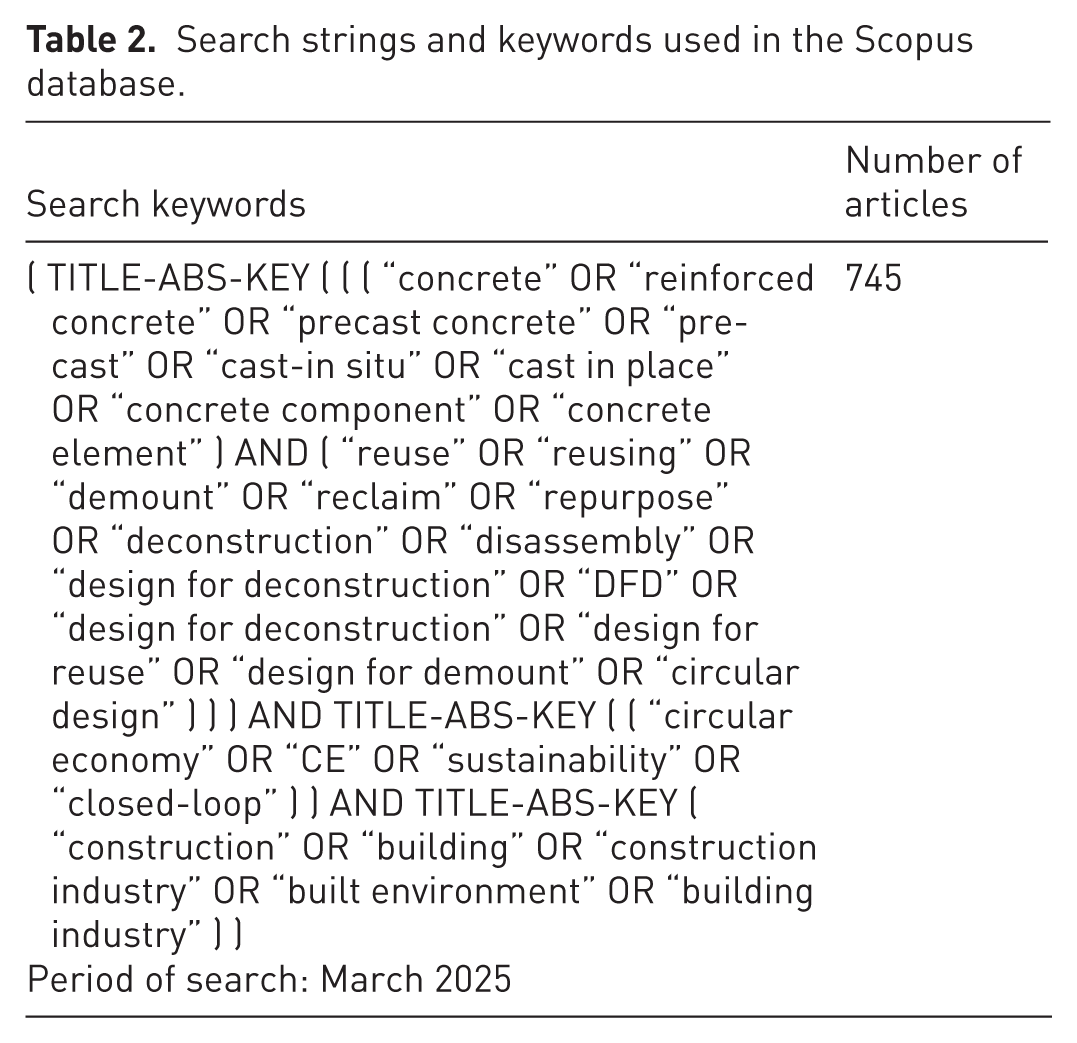
To identify relevant literature, the Scopus search engine database was used as the primary search source due to its broad multidisciplinary coverage and inclusion of peer-reviewed scientific publications. The keyword strategy was developed from a preliminary scan of the literature on CE and concrete reuse. Keywords related to CE included terms such as “circular economy”, “CE”, “sustainability”, “reusing”, “demount”, “recover”, and “reclaim”. For concrete-specific terms, the search included “concrete”, “reinforced concrete”, “precast concrete”, “cast-in-situ” and “cast-in-place”. Relevant articles were then retrieved using the Boolean search combinations “OR” and “AND,” covering CE reuse concepts and concrete terminology. The Scopus search was conducted in March 2025 using the developed search strings, with no restrictions on the publication date. The initial query yielded 745 documents, as shown in Table 2.
Search strings and keywords used in the Scopus database.
Screening and eligibility criteria
A two-stage screening process was implemented to ensure the relevance and quality of the studies included in this review. In the first stage, the titles and abstracts of the 745 documents retrieved from Scopus database were screened to exclude records that did not align with the study’s focus. Specifically, articles were excluded if they: (i) were not written in English, (ii) lacked author attribution, (iii) were review documents and (iv) primarily addressed concrete recycling or recycled aggregate use, or focused on other construction materials such as steel, timber or plastic. This initial screening process resulted in a refined pool of 84 documents.
The second stage involved full-text screening of the remaining 84 articles to assess their relevance to the reuse of intact concrete components and alignment with the research questions. Articles were excluded at this stage if they did not provide substantial insights into the reuse of concrete components as a distinct CE strategy, or if the full texts were not available. Following this in-depth screening, 48 articles were retained for inclusion.
To further enhance the comprehensiveness of the review, a snowballing technique was applied by reviewing the references and citations of the 48 selected articles. This process yielded an additional 13 relevant articles, resulting in a final dataset of 61 peer-reviewed studies. These documents formed the evidence base for the subsequent thematic synthesis presented in this review.
Document analysis
The included studies were analysed using both descriptive and systematic analytic approaches. To facilitate this, a comprehensive table was prepared in Excel, where the key information from each study, such as author year, title, country, methodology and findings, was systematically recorded (see Supplemental Table S1).
The descriptive analysis mapped publication trends, the geographic distribution and the prevalent methodologies. This helped identify development trends in concrete component reuse within the context of the CE, highlighting patterns in how, where and when CCR-related studies have been conducted.
To address the second research question on the thematic focus of CCR studies, a systematic analysis was conducted through detailed coding and synthesis of each study’s objectives, methods, key findings and limitations. Studies addressing similar research areas were grouped thematically. From this process, five thematic categories emerged: (i) CCR design and applications (CCR_d), (ii) pre-deconstruction/reusability assessment, (iii) digital technologies (DT), (iv) life cycle assessment (LCA) and (v) CCR benefits and barriers (CCR_b). Subsequently, the identified limitations and future recommendations from each study were analysed to derive the overarching research gaps and future directions. Collectively, this approach provided a robust foundation for understanding the current state of CCR research and highlighting existing gaps in global coverage, methodological rigour and thematic development.
Results and discussion
This section synthesizes the findings from the reviewed studies on CCR. Table 3 presents an overview of the 61 analysed studies, organized by publication year and primary research topic, providing a descriptive mapping of the literature that underlies the subsequent synthesis and discussion.
List of 61 reviewed studies on circular concrete reuse.
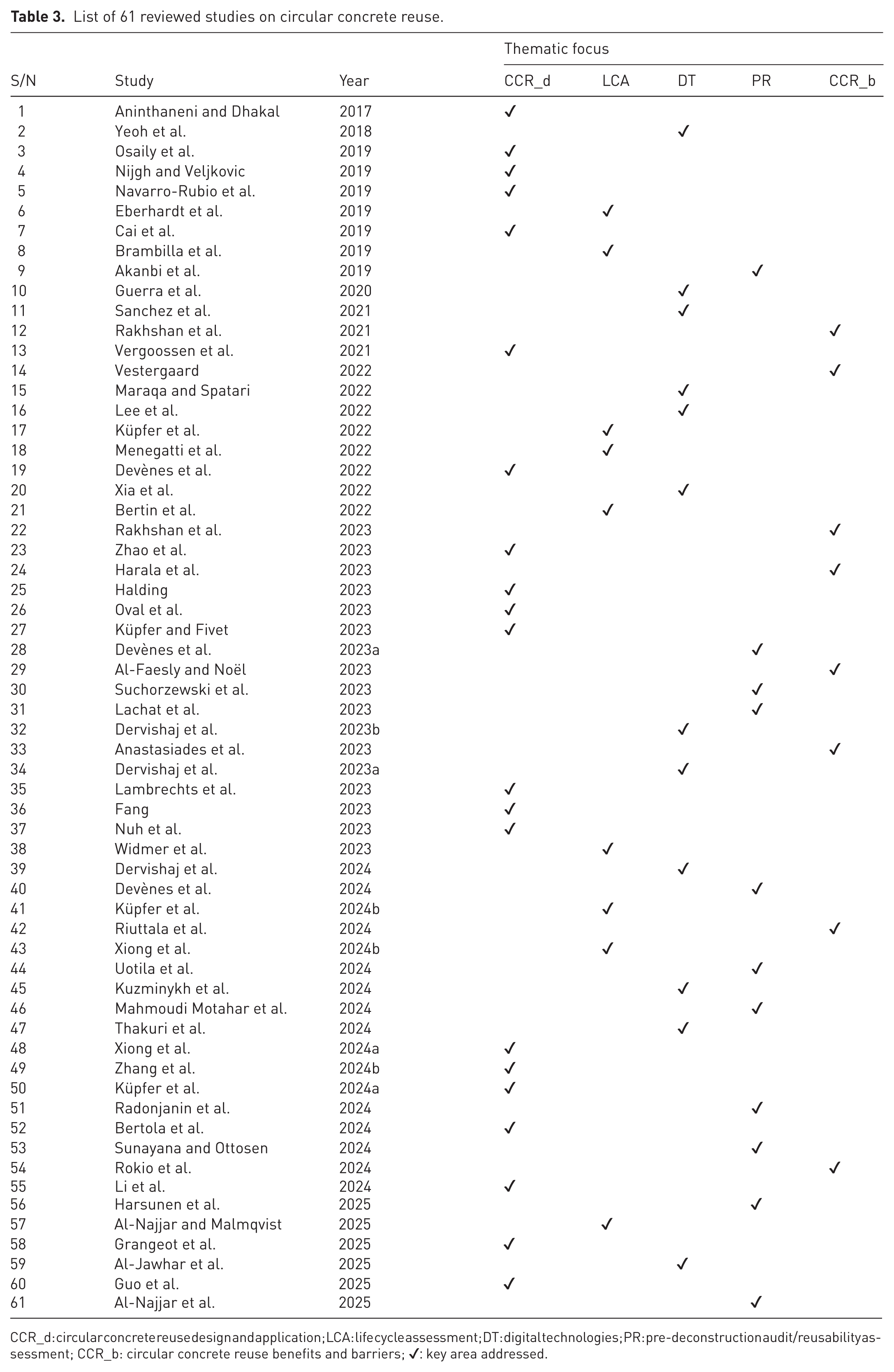
CCR_d: circular concrete reuse design and application; LCA: life cycle assessment; DT: digital technologies; PR: pre-deconstruction audit/reusability assessment; CCR_b: circular concrete reuse benefits and barriers; ✔: key area addressed.
Descriptive analysis
Temporal distribution of reviewed publications on CCR
Figure 2 illustrates the temporal distribution of the 61 reviewed studies from 2017 to 2025 alongside their respective citations, highlighting a clear upward trend in scholarly attention towards the reuse of concrete components within the CE framework. The earliest publication identified in the review dates back to 2017, marking the starting point of research activity on CCR within the scope of this review. The number of publications remained minimal between 2017 and 2020, with only one to two studies published per year. This early period reflects a nascent stage of interest, where reuse strategies were not yet a major focus within construction sustainability discourse. However, beginning in 2021, there was a noticeable increase in publications, culminating in a sharp rise in 2023 and 2024 (17 publications each year), garnering over 500 citations in total. This surge likely corresponds to growing policy momentum on CE laws (EU Circular Economy Action Plan), advances in digital technologies for material tracking and disassembly, market readiness and a broader shift in research towards circular construction practices.
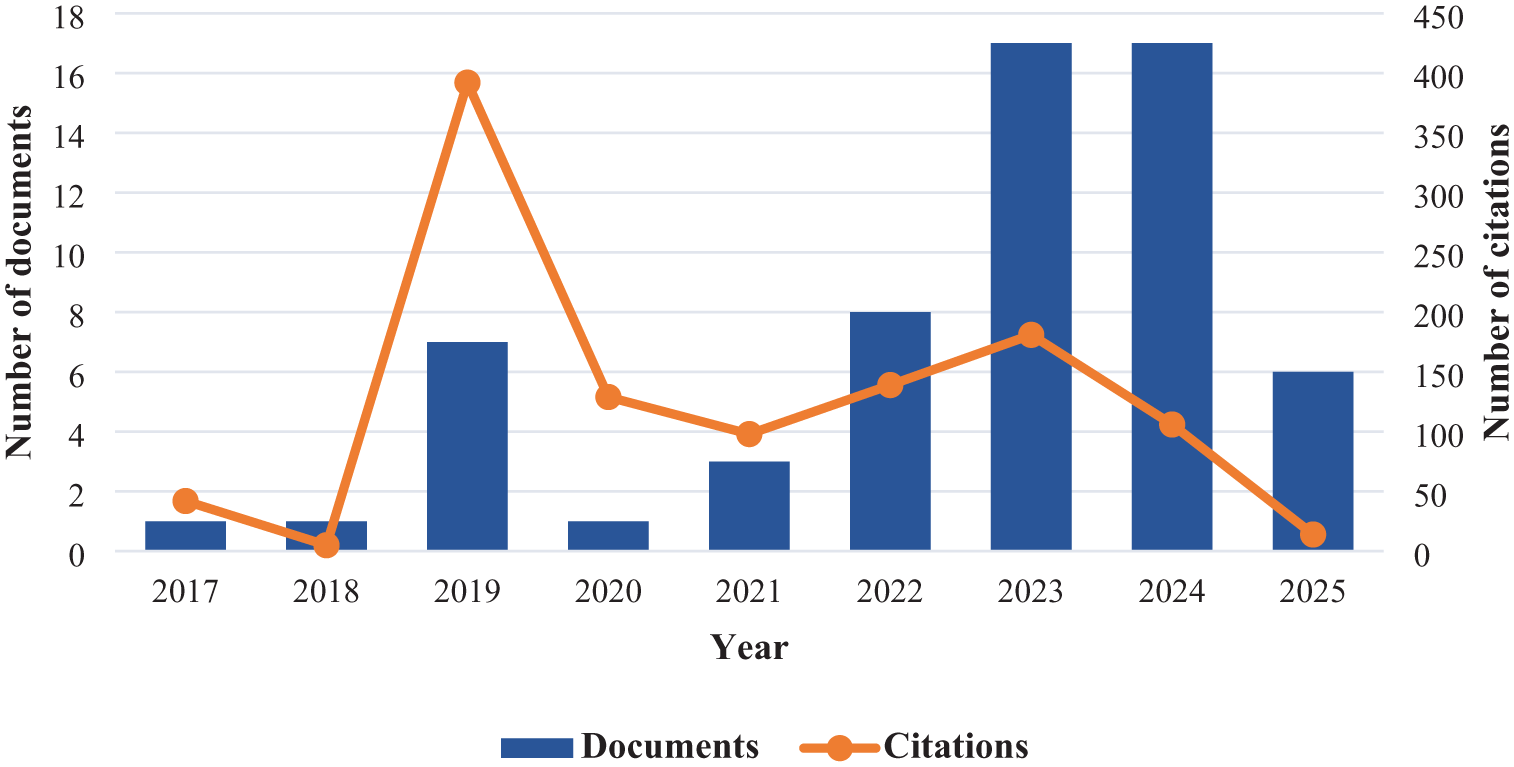
Temporal distribution of reviewed CCR studies (2017–2025).
While the number appears to decline in 2025 (six studies), this drop may be due to the partial nature of data collection for the ongoing year. Additionally, a notable drop in 2020 can likely be attributed to the global disruptions caused by the COVID-19 global pandemic era.
Overall, the bar chart confirms a sustained and growing scholarly focus on concrete component reuse, with 2022–2024 representing a pivotal period for technical innovation, methodological refinement and cross-disciplinary engagement in the field.
Geographic distribution of reviewed CCR studies
The reviewed studies exhibit strong international representation spanning across 22 countries and 4 continents, as shown in Figure 3. Of the 61 studies, 46 (approximately 75%) originate from European nations, underscoring the region’s dominance in circular construction research and policy-driven initiatives (EU CE action plan 2020). Many focus on CCR validation through case studies and experiments, such as Swiss pilot projects and design-for-disassembly (DfD) initiatives (Devènes et al., 2022; Küpfer et al., 2024b; Lambrechts et al., 2023). Switzerland emerges as the most active contributor, accounting for 18% of total publications (11 studies), followed by the United Kingdom (15%) and a tie between Sweden and Finland (10% each). Other notable contributors include Denmark, the Netherlands and France.
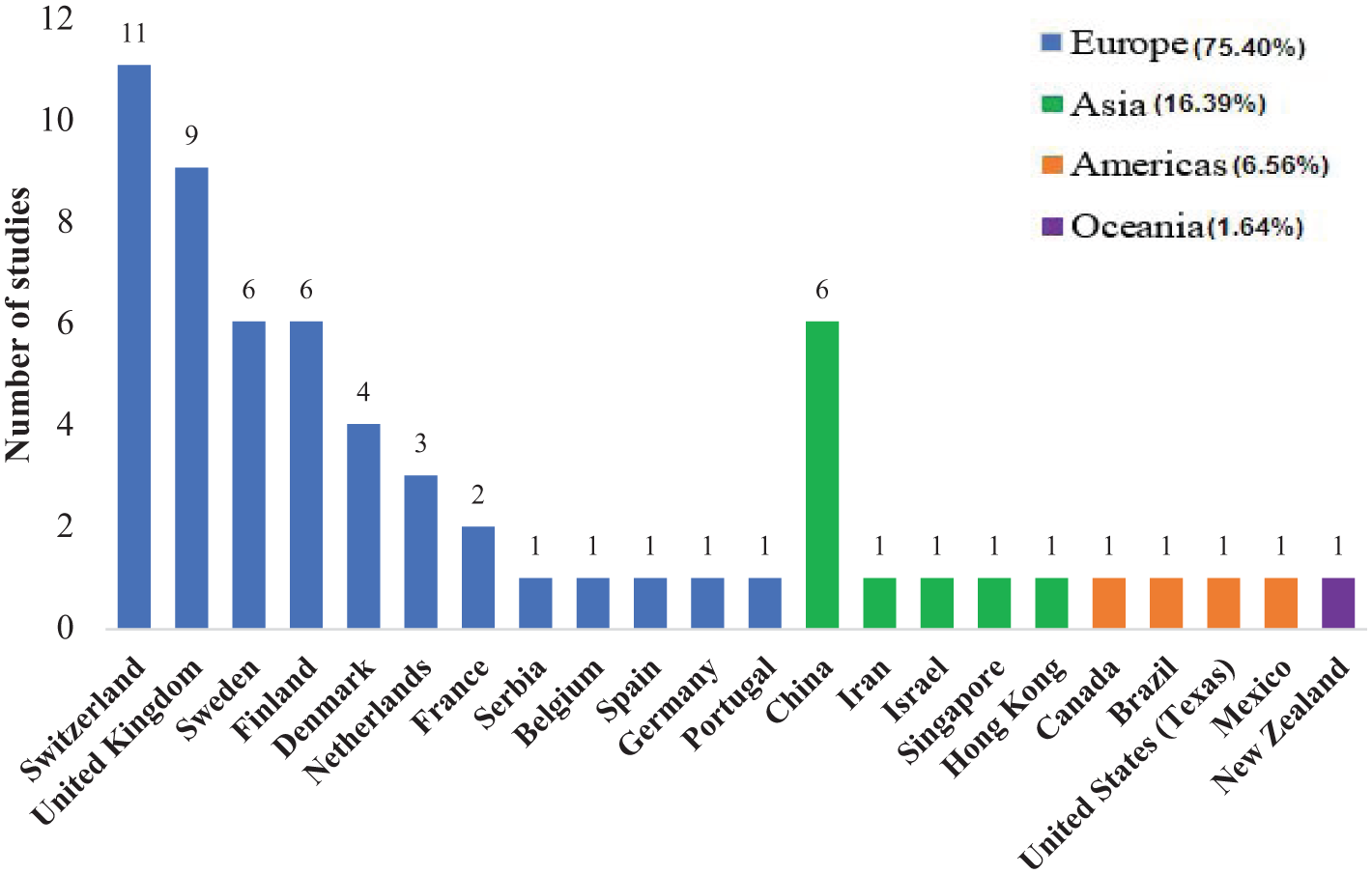
Geographic distribution of CCR studies by country and continent.
Asian countries account for 10 studies (16%), led by China with 6 publications, focusing on technical innovations such as demountable connections and component performance testing (Cai et al., 2019; Guo et al., 2025; Li et al., 2024). Other Asian contributors include Iran, Israel, Singapore and Hong Kong, but with just 1.6% of the total studies. Likewise, the Americas are modestly represented, with just four studies (6.5%) from Canada, Brazil, the United States and Mexico highlighting isolated efforts in North and South America. Oceania is represented by a single study from New Zealand (1.6%).
Strikingly, there is no representation from Africa, including populous nations such as Nigeria or Ghana, while most other regions are represented by only a single publication, aside from the European countries and China. While this pattern highlights a research and implementation gap in low- and medium-income countries, it may also reflect differences in the maturity of national building stocks and urban development trajectories. Countries with newer or less dense urban environments may experience lower levels of systematic demolition activity, thereby reducing the immediate empirical visibility of CCR practices. These factors underscore the need for context-specific research strategies that account for geographic coverage, built-environment characteristics and institutional capacity when advancing CCR. Expanding empirical research into these regions is crucial for developing inclusive, context-specific strategies to address concrete waste management and foster global circularity in the built environment.
In addition, while CCR studies remain geographically concentrated, several reviewed studies involved international research collaborations. Beyond the 22 countries identified through case study locations, co-author affiliation analysis reveals collaborative participation from countries such as Italy, Japan, Luxembourg and Nigeria, suggesting emerging research engagement and partnership even though the reuse of concrete elements is not the primary research focus (see Supplemental Table S2).
Methodological approaches to reviewed CCR studies
The 61 reviewed studies exhibit a diverse methodological landscape reflecting the interdisciplinary nature of CCR research (Figure 4). Case study approaches are the most prevalent (22 studies, 36.1%), focusing on reuse applications, design adaptation, feasibility and implementation challenges. For example, Vergoossen et al. (2021) demonstrated the reuse of pre-stressed concrete girders in new highway overpasses. Devènes et al. (2022) explored the construction of an arch footbridge using reclaimed concrete blocks. Studies particularly in Europe (e.g. Switzerland, and Finland), such as Dervishaj et al. (2024) and Eberhardt et al. (2019), evaluate life cycle performance, providing insights into design adaptation and application challenges.
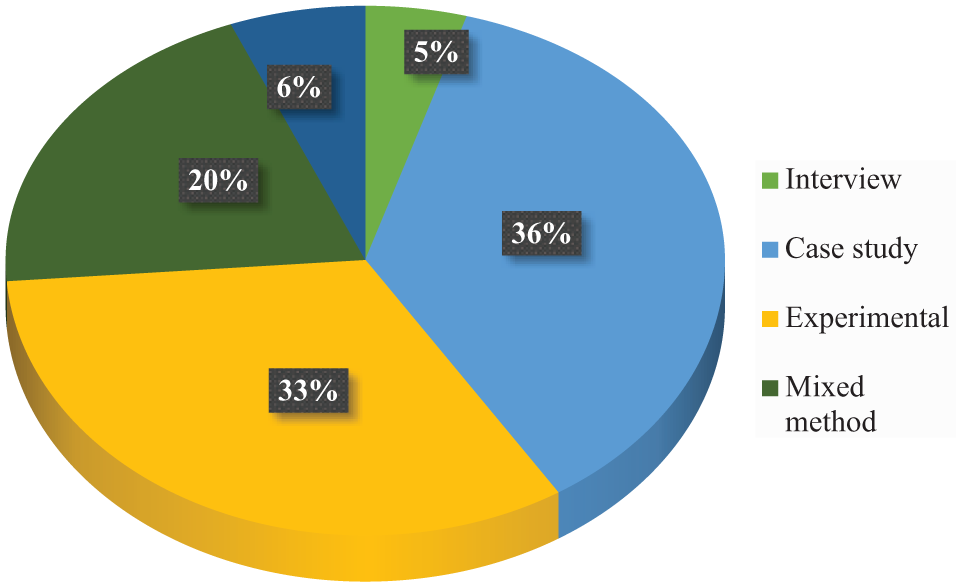
Methodological approaches to reviewed CCR studies.
Experimental approaches were also prominent (20 studies, 33%), involving laboratory testing, mechanical performance evaluations and structural behaviour assessments of reused elements and demountable connections. For instance, Lachat et al. (2023) and Li et al. (2024) provided empirical evidence on the mechanical integrity, and durability of reclaimed concrete, while Fang (2023) and Radonjanin et al. (2024) assessed connectors’ performance and carbonation effects.
A significant share of the studies adopts a mixed-method approach (12 studies, 20%), combining multiple data collection strategies. For instance, Al-Najjar and Malmqvist (2025) and Riuttala et al. (2024) integrated quantitative LCA with qualitative case-based observations and interviews to evaluate the carbon reduction and economic feasibility of CCR. Studies by Harala et al. (2023) and Suchorzewski et al. (2023) combined case studies of reuse projects with stakeholder interviews to assess the structural condition and the broader benefits of CCR.
By contrast, only a few studies applied survey (4; 6%) or interview-based (3; 5%) approaches, focusing on human and organizational dimensions of reuse. For instance, Al-Faesly and Noël (2023) and Rakhshan et al. (2023) used surveys to assess stakeholder perceptions on CCR benefits and challenges. Interview-based studies such as those by Osaily et al. (2019) and Thakuri et al. (2024) highlighted the significance of the demolition industry and digital tools in CCR implementation.
Overall, this methodological distribution demonstrates the field’s gradual evolution from technology-driven experimentation towards context-rich, case-based and integrated approaches. However, the dominance of case-based and experimental research highlights a gap in addressing the behavioural, policy and stakeholder dimensions of CCR. Future research should prioritize combining qualitative and quantitative methods to better understand enablers and barriers to real-world CCR implementation.
Systematic analysis of CCR research themes
The 61 reviewed studies revealed five key themes, as shown in Figure 5. CCR design and application accounted for 34.4% (21 studies), emphasizing structural innovation and practical reuse strategies. Pre-deconstruction audits and reusability assessments represented 18.0% (11 studies), focusing on condition evaluation and component grading. Digital technology applications comprised 19.7% (12 studies), reflecting the growing role of digital integration in CCR. LCA studies made up 14.8% (9 studies), addressing environmental performance and carbon reduction. Finally, CCR barriers and benefits highlighting opportunities and behavioural challenges represented 13.1% (8 studies). Collectively, this distribution indicates that current CCR research is primarily driven by design and technical feasibility studies, while other research themes remain comparatively underexplored. This imbalance highlights a need for more integrated research that connects design innovation and digital enablement with lifecycle assessment and socio-institutional considerations. The thematic categories are systematically discussed in the following sections.
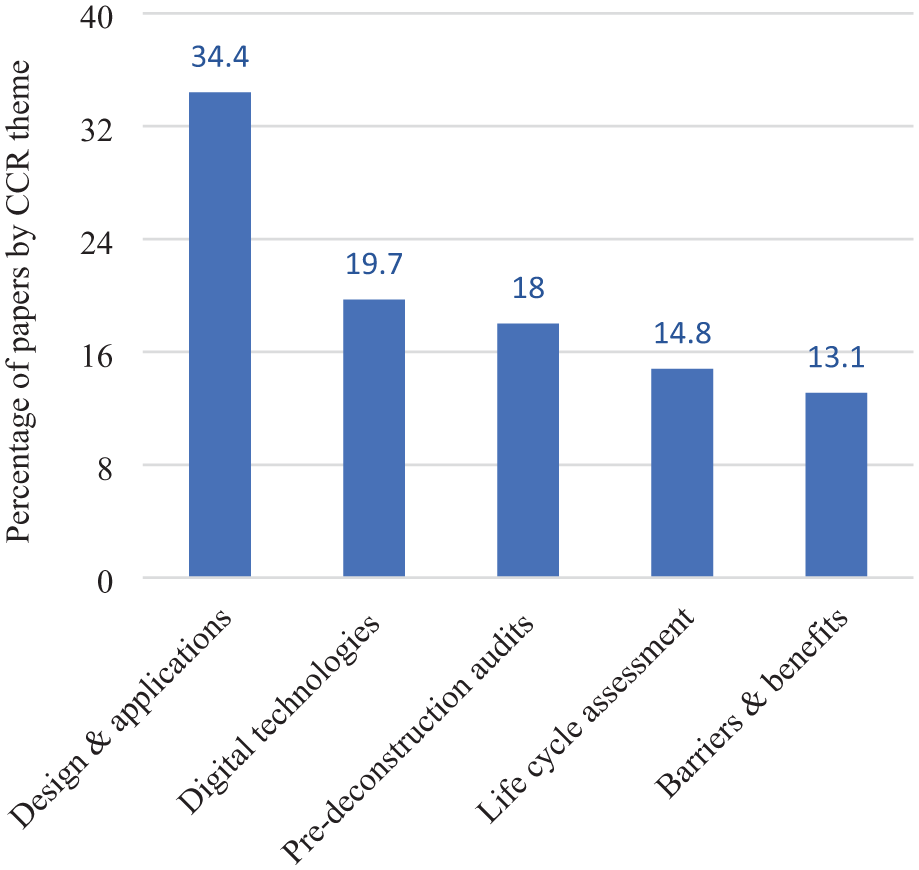
Thematic focus of CCR studies.
CCR design and applications
CCR typically involves extracting concrete components, either precast or cast-in-place from existing structures and reintegrating them into new construction. Unlike recycling, which requires reprocessing waste into new materials, CCR maintains the components’ original function after appropriate reconditioning (Bertin et al., 2022; Brütting et al., 2018). This practice extends the service life of the components, conserves natural resources, reduces construction and demolition waste, and lowers the greenhouse gas emissions associated with manufacturing new concrete (Bertin et al., 2022; Cai and Waldmann, 2019).
The feasibility of CCR is greatly enhanced when DfD, precast modular systems and reversible connections are incorporated at the early design stage (Hopkinson et al., 2018; Küpfer et al., 2024b). DfD enables selective deconstruction and systematic reuse of concrete components at end-of-life, aligning with CE objectives in the built environment (Kim and Kim, 2023; Ostapska et al., 2024). Precast concrete systems offer the precision and ease required for efficient deconstruction and reassembly (Hopkinson et al., 2018; Nuh et al., 2023), while reversible or dry connections enable non-destructive disassembly and structural reconfiguration, allowing individual concrete components to be separated and reused (Ashour et al., 2023; Cai et al., 2019; Guo et al., 2025).
Recent innovations in precast concrete with mechanical fastening techniques such as bolted shear connectors, dry interlocking systems and segmented joints have shown promising performance in structural applications (Navarro-Rubio et al., 2019; Xiong et al., 2023, 2024a; Zhou, 2024). These systems preserve load transfer capacity and improve flexural stiffness while allowing for easy dismantling (Almahmood et al., 2023; Li et al., 2024). For instance, Zhao et al. (2023) demonstrated that demountable bolted precast wall panels maintained structural integrity under seismic loading. Zhang et al. (2024b) observed that precast concrete elements with dry connections can resist minor earthquakes without damage and survive severe earthquakes without collapse. However, performance is sensitive to bolt size, the number of steel bolts, the tightening process and concrete strength, which influence overall performance (Cai et al., 2019; Fang, 2023).
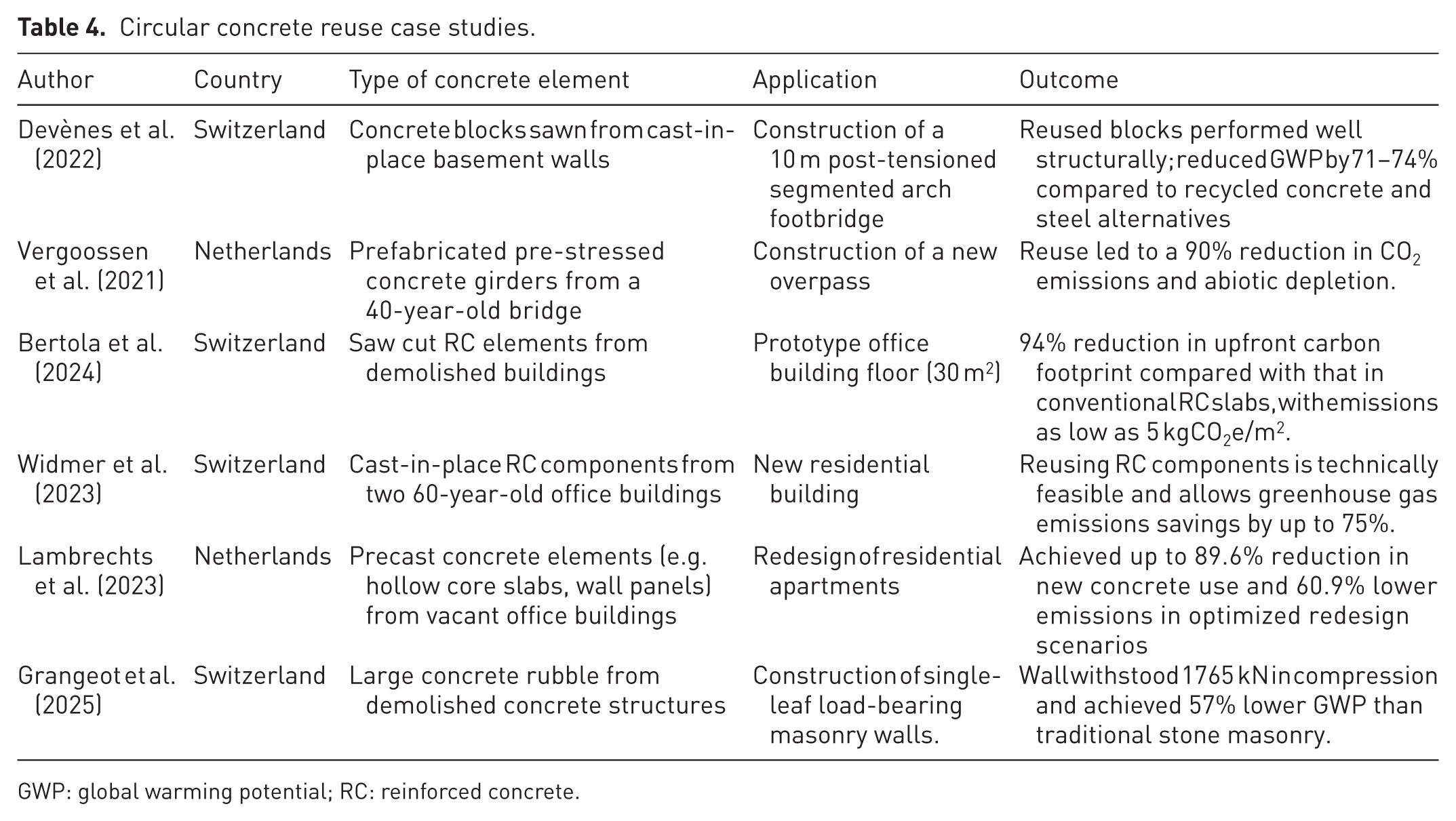
As indicated in Table 4, several studies have presented pioneering reuse initiatives that demonstrate CCR’s technical feasibility and the environmental advantages. In Switzerland, Grangeot et al. (2025) explored the reuse of large concrete rubble to construct new load-bearing walls for low-rise buildings, achieving substantial carbon savings. Bertola et al. (2024) reused sawn cast-in-place concrete slabs in a new building, reporting substantial reductions in environmental impact. In the Netherlands, Lambrechts et al. (2023) demonstrated the reuse of various precast concrete elements such as beams, columns, floor slabs, wall panels and staircases from office buildings in residential construction project. Other notable examples include the construction of a 10-metre-long arch footbridge using 25 reclaimed concrete blocks from a demolished cast-in-place building in Switzerland (Devènes et al., 2022); the reuse of cast-in-place concrete slabs for new floor systems (Küpfer et al., 2024a); and the reuse of 40-year-old prefabricated concrete girders from a viaduct to construct new overpasses in the Netherlands (Vergoossen et al., 2021).
Circular concrete reuse case studies.
GWP: global warming potential; RC: reinforced concrete.
Collectively, these projects record average embodied-carbon savings of roughly 70–90% while maintaining 70–100% of original structural performance, confirming that well-engineered reuse can meet safety and durability requirements. However, despite these advances, practical applications of CCR remain limited and are often concentrated in high-income countries. This indicates that CCR is still in its early stages of adoption, and there is a pressing need for more demonstration projects across diverse geographical contexts.
Pre-deconstruction audit and reusability assessment
Pre-deconstruction audits and reusability assessments are crucial for determining the suitability and integrity of reclaimed concrete components, informing reuse decisions within a circular construction framework. These audits typically involve on-site inspections, material identification, sampling for testing and inventory creation (Devènes et al., 2024). They also address deconstruction planning, including logistics and worker safety (Huuhka et al., 2019; Mahmoudi Motahar et al., 2024). Reusability assessments focus on structural performance and condition of concrete elements, evaluating compressive strength, surface degradation and reinforcement corrosion (Devènes et al., 2023a; Radonjanin et al., 2024).
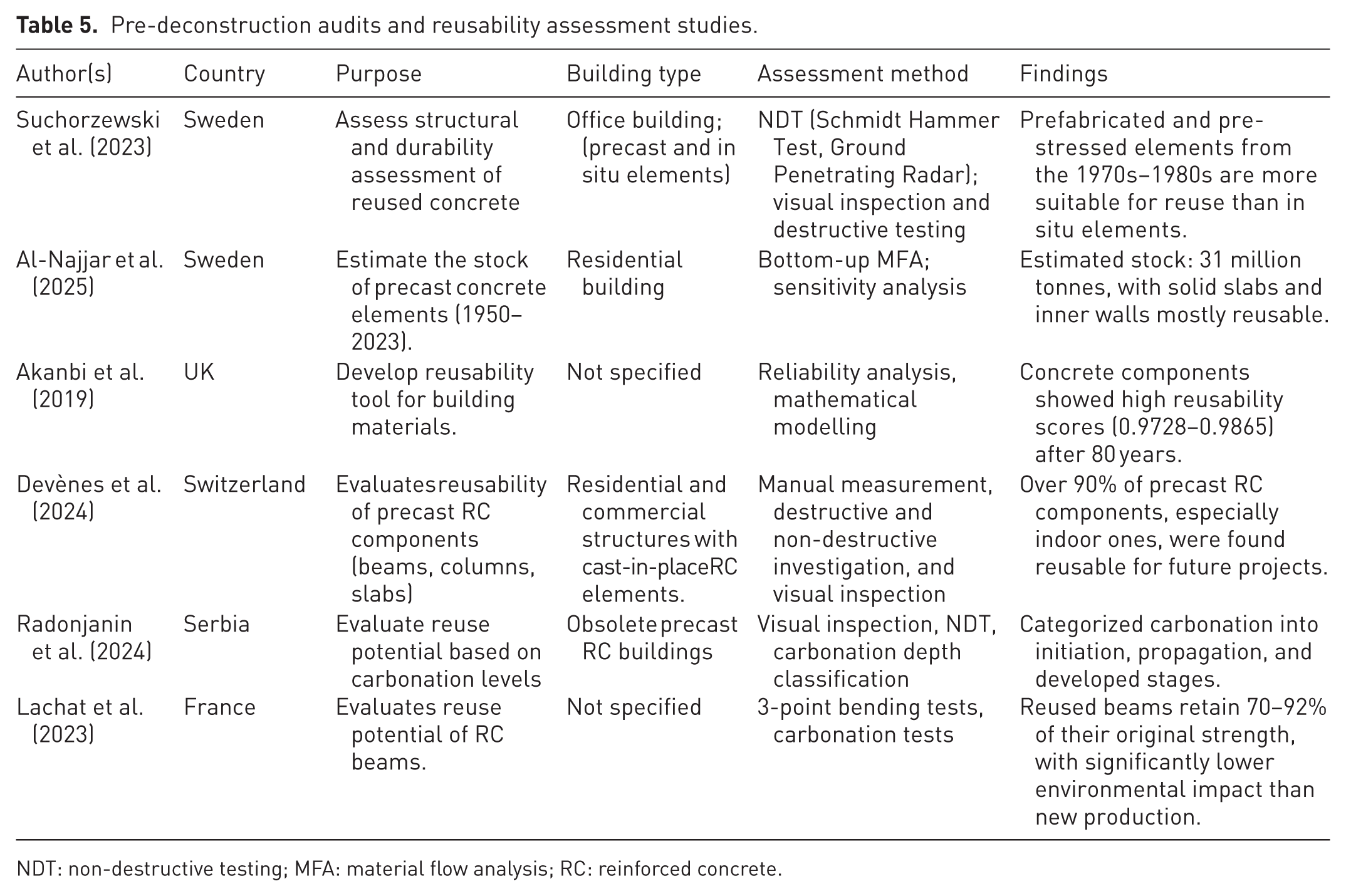
Across the reviewed studies as summarized in Table 5, several methodological frameworks have emerged, combining visual inspections, non-destructive testing (NDT) and advanced modelling to assess reusability. Visual inspection is often the first step in identifying potential for reuse, as it provides a rapid, cost-effective way to assess visible damage, cracks or deterioration. Studies like Devènes et al. (2024) and Radonjanin et al. (2024) used this method to perform an initial evaluation of precast and cast-in-place components before applying more specialized techniques. Visual inspections are typically complemented by inventory and evaluation systems, which categorize damage based on predefined use, damage and intervention classes (Devènes et al., 2023a). NDT tools such as ultrasonic pulse velocity, electrical resistivity, Schmidt hammer, ground-penetrating radar and infrared thermography evaluate reinforcement layout, cracks and material strength without damaging the concrete (Ottosen et al., 2024; Sunayana and Ottosen, 2024). Additionally, material flow analysis estimates the stock of reusable elements, while service-life and reliability models provide quantitative predictions of long-term performance (Akanbi et al., 2019; Al-Najjar et al., 2025).
Pre-deconstruction audits and reusability assessment studies.
NDT: non-destructive testing; MFA: material flow analysis; RC: reinforced concrete.
Furthermore, the studies show that precast concrete components, especially beams, slabs, and columns, are more reusable than cast in situ elements, with some studies reporting that 80% or more are suitable for reuse (Devènes et al., 2024; Suchorzewski et al., 2023). However, audit practices remain inconsistent due to lack of standardization, poor documentation and absence of certification (Anastasiades et al., 2023; Harsunen et al., 2025; Uotila et al., 2024). To scale CCR, standardized digital frameworks and regulatory validation systems are needed, with a focus on expanding these methods beyond Europe to diverse construction contexts.
Digital technologies
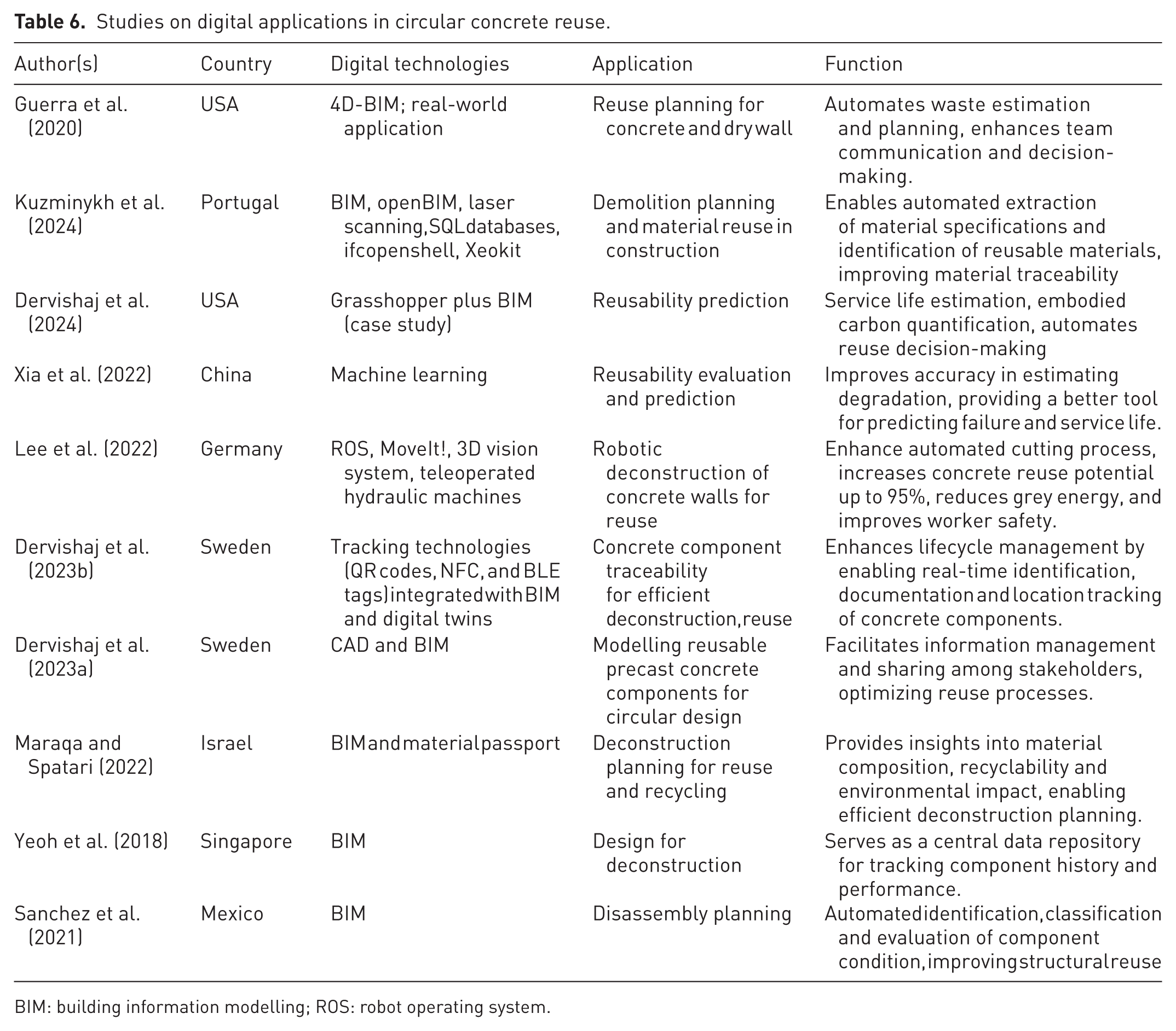
Digital technologies have become critical enablers of CCR, offering powerful tools to enhance design, planning, traceability and decision-making throughout the building life cycle (Thakuri et al., 2024). Accordingly, a range of digital tools, including building information modelling (BIM) models, laser scanning, digital twins, the internet of things (IoT), material passports, robotics and artificial intelligence (AI), has been integrated to support CCR (Table 6).
Studies on digital applications in circular concrete reuse.
BIM: building information modelling; ROS: robot operating system.
BIM is one of the most widely used tools, facilitating DfD, reuse planning and material traceability (Guerra et al., 2020; Yeoh et al., 2018). For example, Kuzminykh et al. (2024) combined BIM with laser scanning to capture existing building conditions for reuse planning, while Maraqa and Spatari (2022) demonstrated how BIM integrated with material passports provides details on the composition and recyclability of concrete, thus improving the efficiency of deconstruction and material recovery.
The application of digital twins, integrated with IoT sensors and machine learning algorithms, has also shown promise in monitoring the condition of concrete components during their service life. By providing a virtual model of physical components, digital twins enable ongoing assessment of structural integrity, which helps engineers to predict when components need maintenance or are ready for reuse (Thakuri et al., 2024). AI and machine learning offer advanced methods for predicting the technical reusability and service life of concrete components. Xia et al. (2022) demonstrated the use of machine learning to assess design compatibility and predict material performance, achieving high accuracy in reusability forecasts.
Across the reviewed studies, a consistent point is the role of DT in addressing information gaps that hinder effective auditing, quality assurance and certification processes. CCR depends on reliable data on component identity, geometry, condition and provenance, all of which are often fragmented or unavailable at the end-of-life. DT can help structure these data sets, link inspection and testing records to specific elements and support transparent monitoring and evaluation across the reuse cycle, thereby reducing performance uncertainty and liability concerns while improving market acceptability.
Robotic systems have also emerged as powerful tools for automatic deconstruction. Lee et al. (2022) used robots to precisely cut and dismantle concrete walls, increasing reuse potential by up to 95% while improving operational safety and efficiency. Together, these findings suggest that an integrated digital framework for CCR practices must be developed to scale beyond isolated applications.
Life cycle assessment of CCR
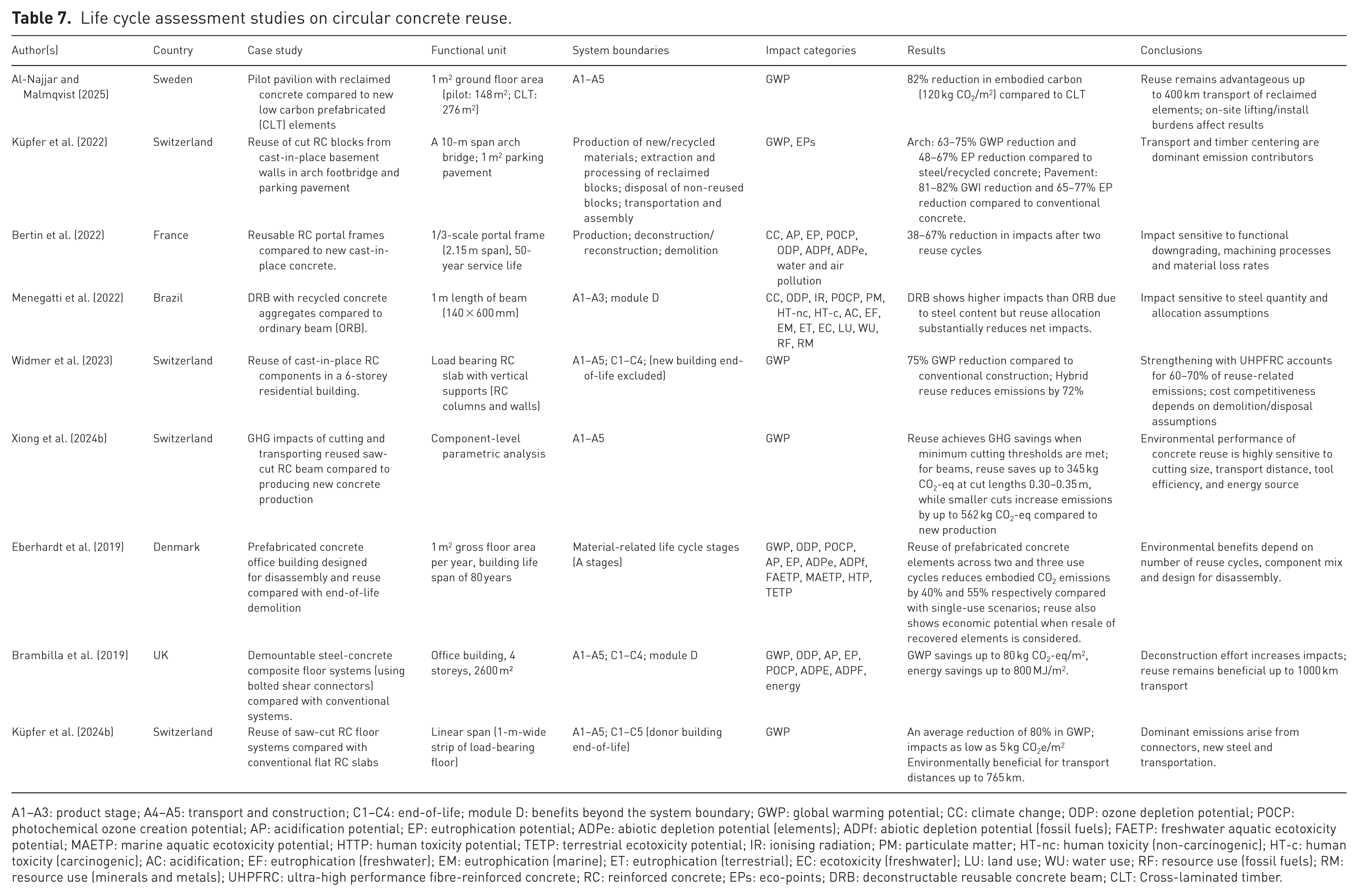
LCA is essential for evaluating the environmental performance of CCR, particularly regarding embodied carbon, resource use and overall sustainability (Barbhuiya et al., 2024). LCA’s main advantage lies in capturing the full environmental impact of reclaimed components, including both the benefits and the trade-offs associated with deconstruction, transportation and reprocessing. Recent studies have underscored the significant environmental benefits of CCR, demonstrating substantial reductions in embodied carbon and energy consumption, as shown in Table 7. For example, Al-Najjar and Malmqvist (2025) found that reusing precast concrete elements resulted in 82% savings in embodied carbon, significantly outperforming both recycling and conventional construction with new materials. Likewise, Küpfer et al. (2024b) reported that reusing cast-in-place concrete slabs showed an 80% reduction in carbon footprint.
Life cycle assessment studies on circular concrete reuse.
A1–A3: product stage; A4–A5: transport and construction; C1–C4: end-of-life; module D: benefits beyond the system boundary; GWP: global warming potential; CC: climate change; ODP: ozone depletion potential; POCP: photochemical ozone creation potential; AP: acidification potential; EP: eutrophication potential; ADPe: abiotic depletion potential (elements); ADPf: abiotic depletion potential (fossil fuels); FAETP: freshwater aquatic ecotoxicity potential; MAETP: marine aquatic ecotoxicity potential; HTTP: human toxicity potential; TETP: terrestrial ecotoxicity potential; IR: ionising radiation; PM: particulate matter; HT-nc: human toxicity (non-carcinogenic); HT-c: human toxicity (carcinogenic); AC: acidification; EF: eutrophication (freshwater); EM: eutrophication (marine); ET: eutrophication (terrestrial); EC: ecotoxicity (freshwater); LU: land use; WU: water use; RF: resource use (fossil fuels); RM: resource use (minerals and metals); UHPFRC: ultra‑high performance fibre‑reinforced concrete; RC: reinforced concrete; EPs: eco-points; DRB: deconstructable reusable concrete beam; CLT: Cross-laminated timber.
However, challenges remain in CCR performance. The accuracy of LCA outcomes depends on high-quality data on material performance, transportation distances and the energy used in dismantling and reusing concrete components. Küpfer et al. (2022) analysed the reuse of cast-in-place concrete blocks in constructing a 10-m arch and pavement, showing 75–82% GHG savings and up to 77% reduction in ecological load, but pointed out higher logistics costs. Conversely, Xiong et al. (2024b) found that larger reclaimed components offer greater environmental benefits if cutting efficiency and transport distances are optimized. Brambilla et al. (2019) observed significant energy and carbon savings with demountable steel–concrete floors but higher ozone depletion impacts from transport and deconstruction. These studies underscore the need to optimize logistics and processes to maximize CCR’s sustainability benefits.
Moreover, standardizing LCA methodologies for CCR remains a significant challenge due to variations in impact categories and study boundaries, making it difficult to compare performance across projects. To overcome these barriers, future research should focus on developing standardized LCA guidelines for CCR, improving data availability (particularly for transportation and energy use) and integrating digital tools like BIM and Digital Twins with LCA frameworks could streamline data collection, enhance accuracy and facilitate real-time environmental monitoring throughout the lifecycle of reclaimed concrete components.
Barriers inhibiting and benefits driving CCR adoption
The reuse of concrete components presents a transformative opportunity spanning environmental, economic, social and technical benefits (Table 8). Among the reviewed studies, environmental benefits were the most frequently highlighted, with 13 studies (21.3%) revealing outcomes such as emissions reduction, resource conservation and waste minimization. For instance, Dervishaj et al. (2024) and Eberhardt et al. (2019) used LCA to quantify emissions reduction, while Harala et al. (2023) and Vergoossen et al. (2021) emphasized reduced material demand and landfill avoidance, underscoring CCR’s role in sustainable construction practices.
Circular concrete reuse benefits.
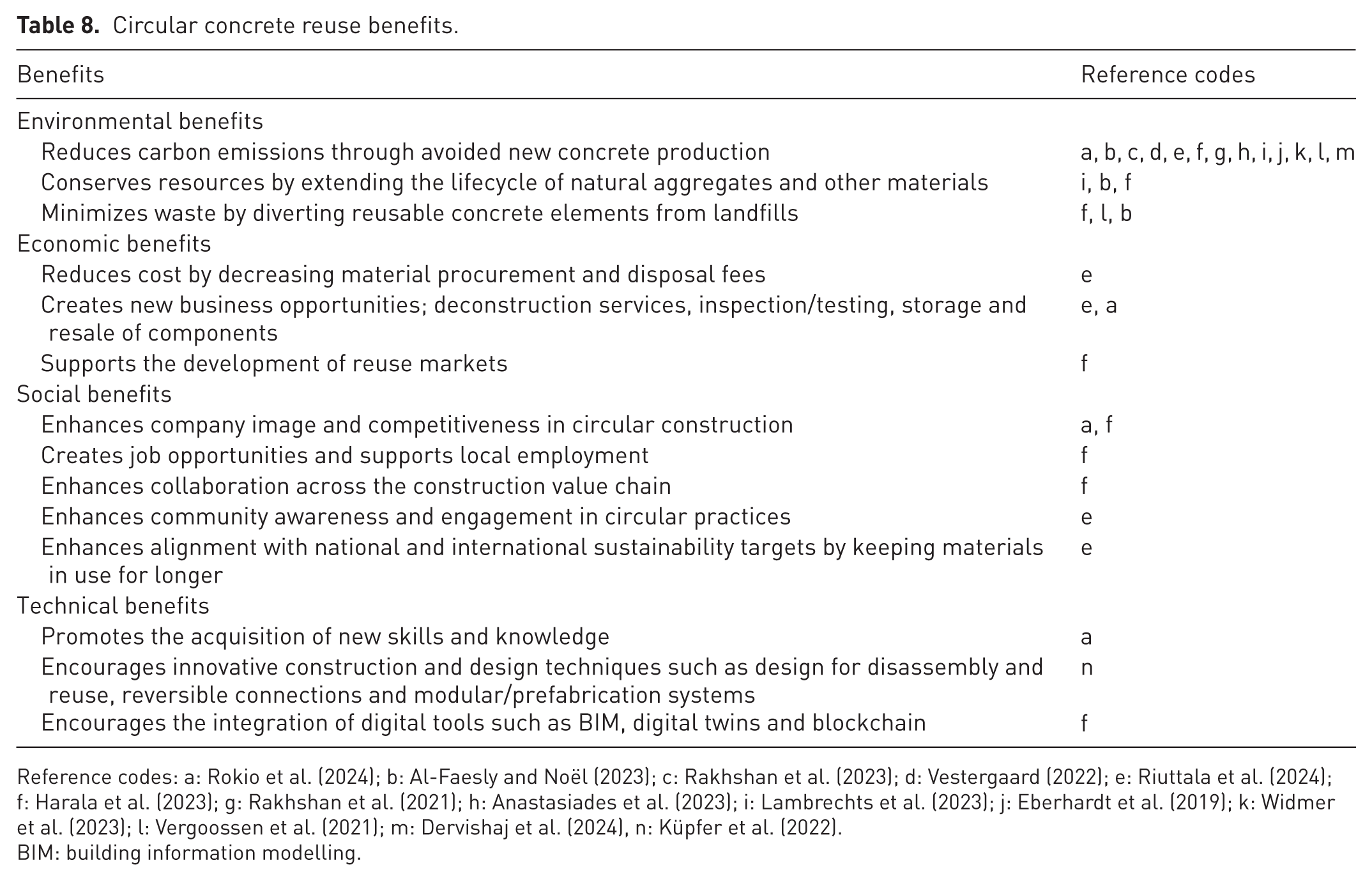
Reference codes: a: Rokio et al. (2024); b: Al-Faesly and Noël (2023); c: Rakhshan et al. (2023); d: Vestergaard (2022); e: Riuttala et al. (2024); f: Harala et al. (2023); g: Rakhshan et al. (2021); h: Anastasiades et al. (2023); i: Lambrechts et al. (2023); j: Eberhardt et al. (2019); k: Widmer et al. (2023); l: Vergoossen et al. (2021); m: Dervishaj et al. (2024), n: Küpfer et al. (2022).
BIM: building information modelling.
Social and technical benefits were also reported in three studies (4.9%) each. Socially, CCR holds potential for job creation (e.g. deconstruction, testing, logistics and refurbishment), while also stimulating community engagement, supporting climate targets and regulatory compliance (Salama, 2017; Vestergaard, 2022). Technically, integrating reused concrete fosters innovation in design, modular construction and digital planning, encouraging interdisciplinary collaboration, skill development and technological advancement (Küpfer et al., 2022). This position forward-thinking companies to gain a competitive edge in a rapidly evolving market.
While economic benefits were less frequently reported (two studies; 3.3%), they include significant cost savings through material reduction, disposal fee avoidance and new market opportunities such as storage and refurbishment services (Harala et al., 2023; Riuttala et al., 2024). The limited reporting of economic, social and technical benefits suggests underexplored areas, while the predominance of environmental benefits reflects the field’s focus on sustainability. Future research should prioritize quantifying economic impacts and technical innovations to strengthen the case for CCR adoption in practice.
Despite the perceived clear benefits of CCR, several persistent barriers hinder its widespread adoption (see Table 9). Among these, technical and operational barriers are the most frequently reported, identified in eight studies (13.1%). Key challenges include the inconsistent material quality, insufficient documentation on structural properties and difficulties in achieving dimensional compatibility with new designs (Al-Faesly and Noël, 2023; Rakhshan et al., 2021). Other challenges include balancing aesthetics with functionality and the lack of practical experience and digital infrastructure for quality assessment and reuse planning (Lambrechts et al., 2023; Osaily et al., 2019). The labour- and time-intensive nature of deconstruction, inadequate transport systems, lack of storage facilities and the prevalence of traditional construction and demolition practices also increase the overall complexity and environmental burden (Al-Faesly and Noël, 2023; Anastasiades et al., 2023; Harsunen et al., 2025).
Circular concrete reuse barriers.
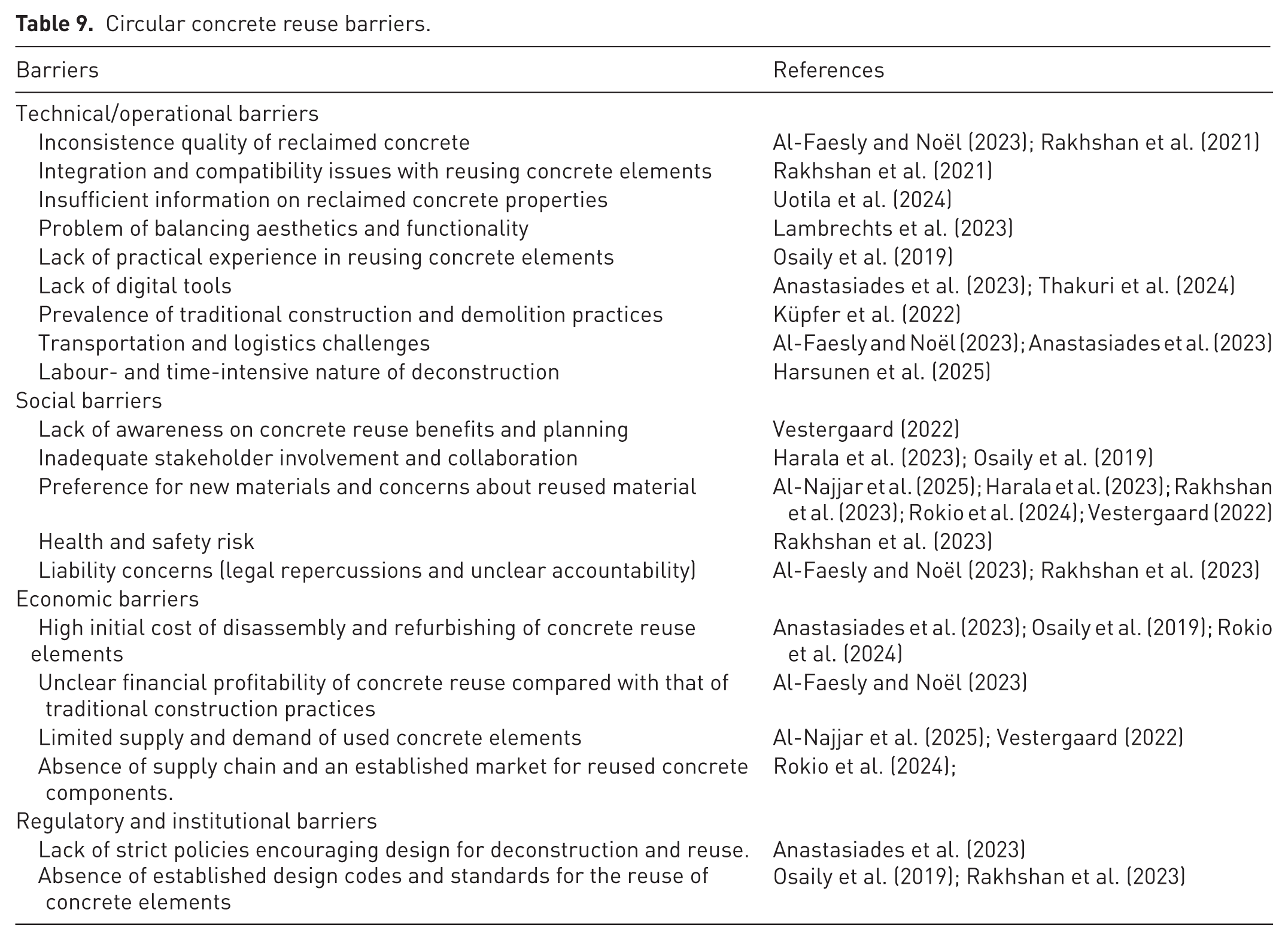
Social barriers, as identified in seven studies (11.5%), reflect stakeholder hesitation towards reused concrete due to concerns about structural quality, aesthetics, safety and liability risks (Rakhshan et al., 2023; Rokio et al., 2024). Economic barriers, also discussed in six studies (9.8%), include high initial costs of disassembly and refurbishment, unclear financial profitability compared to conventional practices, limited supply and the lack of supply chain actors to manage logistics and resale (Anastasiades et al., 2023; Vestergaard, 2022). Regulatory and institutional barriers, cited in three studies (4.9%), stem from the absence of reuse standards and regulations mandating DfD, which contributes to liability concerns and risk aversion among stakeholders (Anastasiades et al., 2023; Rakhshan et al., 2023).
As revealed in the reviewed studies, the predominance of technical/operational, economic and social barriers underscores persistent challenges related to design, material performance, cost constraints, limited expertise and stakeholder acceptance, while the relatively fewer references to regulatory barriers highlight gaps in policy research. Overcoming these requires targeted investments in training, digital systems and development of standardized guidelines for CCR. Furthermore, strengthening policy frameworks, introducing financial incentives and promoting awareness through demonstration projects and collaborative partnerships are essential in scaling CCR and fostering circular construction.
Research gaps and future research directions
Expert studies on CCR implementation
The practice of reusing concrete components is gaining increasing attention as a viable and sustainable alternative to traditional demolition and reconstruction methods; its adoption remains largely limited, with most practical implementations and research efforts concentrated in developed countries, particularly across Europe. This geographic imbalance reveals a critical gap in understanding how CCR can be effectively adapted to diverse regulatory, economic and material recovery contexts, especially in developing economies where demolition practices are often informal and infrastructure for controlled deconstruction is limited.
Currently, there are not enough expert studies examining the human and institutional factors that shape CCR implementation. These include stakeholder dynamics (including perceptions, attitudes and behaviours towards reused concrete), policy and awareness, collaboration and intellectual capacity-building frameworks. Addressing these areas is vital for future research to enable context-driven adoption and implementation.
Another major barrier is the absence of reliable data on the availability, typology and logistics of reusable concrete components. This limits informed decision-making and hinders efficient material recovery systems (Al-Najjar et al., 2025). Future research should prioritize the development of regional or national material stock-flow databases and digital reuse inventory systems supported by material banks to enable real-time matching systems, traceability, market transparency and overall system efficiency.
Reliability performance of CCR
The review highlights a growing interest in the reuse of concrete elements such as blocks, beams, slabs and panels in new construction applications (Bertola et al., 2024; Devènes et al., 2022; Küpfer et al., 2024a; Vergoossen et al., 2021). To accelerate the transition from a linear to a circular construction economy, reclaimed concrete elements must meet performance standards, including mechanical strength, fire safety, acoustic and thermal properties, and long-term durability aligned with building codes (Suchorzewski et al., 2023).
However, only a few studies have rigorously assessed the reliability of reused concrete components in these aspects (Devènes et al., 2023b; Küpfer et al., 2024a; Lachat et al., 2023). While findings indicate that reclaimed elements can retain sufficient structural capacity under suitable conditions, comprehensive durability assessments across varying environmental exposures remain limited. Additionally, reused concrete components often undergo disassembly, storage and reinstallation in different contexts; their performance may deteriorate due to mechanical fatigue, moisture variation or thermal stress (Suchorzewski et al., 2023).
Future research should focus on long-term durability assessments that examine reused components under extreme conditions, develop predictive service-life models and create robust standardized testing and classification guidelines. These efforts will help to improve reliability assurance and enhance industry and public acceptance of CCR.
Emerging technological innovations
Technological innovations are a critical enabler for CCR, offering pathways to overcome persistent barriers and improve efficiency, traceability and sustainability in reuse practices. Among these, digital technologies are emerging as particularly transformative, with a growing presence in both academic research and practical pilot projects. Tools such as BIM, digital twins, the IoT, laser scanning, NDT and robotics are being utilized to support the documentation, visualization and planning of reusable elements from donor buildings (Nuh et al., 2023; Thakuri et al., 2024). However, their applications remain at the proof-of-concept stage and are not yet fully implemented in concrete element reuse project workflows. Similarly, while NDT and digital diagnostics support reusability assessment, the absence of standardized grading systems and certification protocols limits scalability and practitioner confidence (Ottosen et al., 2024; Sunayana and Ottosen, 2024).
Future research should focus on the systematic deployment of emerging digital technologies such as digital twins, AI, blockchain, IoT, across the reuse life cycle. When integrated with BIM, these can create intelligent digital systems for reusability assessment. Also, machine learning and probabilistic algorithms can predict CCR potential by analysing historical performance data, sensor outputs and material degradation trends (Rakhshan et al., 2021; Xia et al., 2022), while optimizing logistics to reduce environmental impact. Additionally, virtual reality and augmented reality can streamline reuse by visualizing structural conditions in real-time, simulating design integration and guiding safe and efficient deconstruction, as well as training workers on dismantling and reuse procedures.
Beyond digital technologies, advances in concrete materials and manufacturing also present further opportunities to enhance CCR. For example, self-healing concrete can autonomously repair minor cracks, extending component lifespan (Ghazy et al., 2024), while ultra-high-performance concrete improves stiffness and crack resistance, supporting multiple reuse cycles (Zhang et al., 2024a). Prefabrication and modular construction techniques further improve adaptability and disassembly efficiency (Suchorzewski et al., 2023).
In conclusion, while technological innovations hold substantial potential to accelerate CCR, their integration into practice remains limited. Future research should focus on developing integrated technological frameworks that clearly define the roles of these tools across various reuse practices, identify their key drivers, and demonstrate their practical benefits for large-scale implementation.
Performance assessment of CCR
A consistent finding across the reviewed studies is that reusing structural concrete elements significantly reduces environmental impacts, particularly in terms of greenhouse gas emissions. LCA studies report emission reductions of 70–90% compared to conventional demolition and new construction approaches (Bertin et al., 2022; Bertola et al., 2024; Menegatti et al., 2022). However, most existing LCA studies focus narrowly on global warming potential, while often overlooking broader impact categories such as resource depletion, acidification, eutrophication or human toxicity (Al-Najjar and Malmqvist, 2025; Widmer et al., 2023). Future research should adopt a more comprehensive set of impact indicators to capture the full environmental profile of CCR.
Furthermore, while the environmental benefits are well pronounced, empirical evidence on the economic and social performance remains limited. Studies highlight persistent uncertainty among practitioners and stakeholders regarding the overall performance of the CCR system (Al-Faesly and Noël, 2023). This underscores the need for a comprehensive performance assessment that integrates environmental, economic and social dimensions as explained below.
A conceptual framework for CCR performance assessment
Based on the reviewed studies, this study proposes a conceptual framework for CCR performance assessment, integrating end-of-life concrete reuse processes with environmental, economic and social outcomes (see Figure 6).
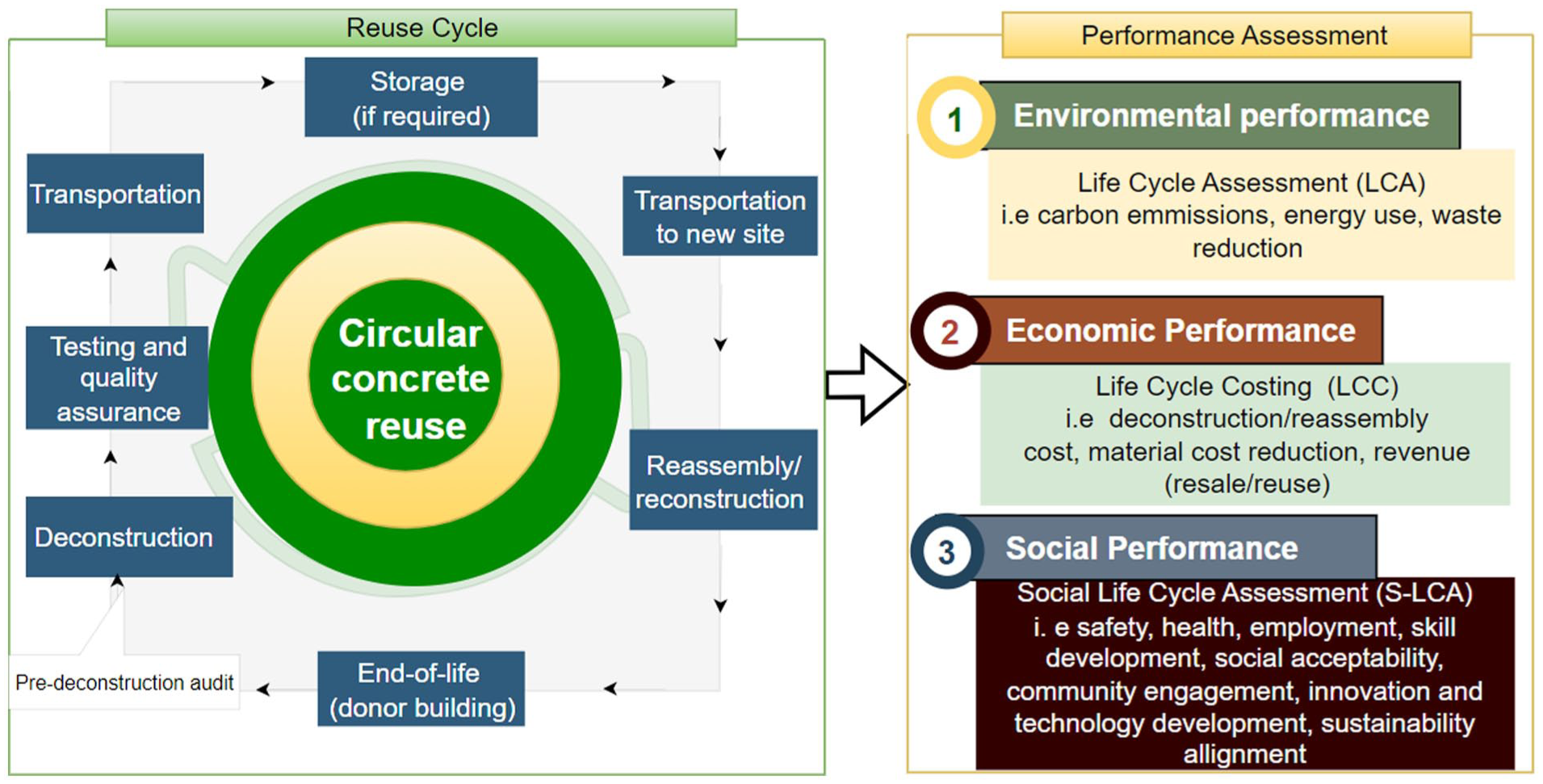
Conceptual framework for CCR performance assessment.
The CCR cycle is a continuous sequence of interlinked activities that guide reclaimed concrete elements from existing structures into new construction applications. The cycle begins with a pre-deconstruction audit, in which the characteristics and condition of existing components are assessed to determine their suitability for recovery. Studies consistently show that choices made during this early audit phase, such as the choice between deconstruction and demolition, cutting and lifting requirements, and projected logistic and handling processes, exert significant influence on both environmental and economic performance outcomes (Widmer et al., 2023; Xiong et al., 2024b). Digital tools such as BIM, material passports and digital twins increasingly enhance the efficiency of this stage by improving traceability of components, informing disassembly planning and ensuring that material data are retained for future design and verification (Kuzminykh et al., 2024; Maraqa and Spatari, 2022).
Following the audit, the recovery then proceeds to the deconstruction stage, where elements are removed in a controlled manner to retain structural value. Recent technological advances, including robotic and semi-automated deconstruction solutions, are increasingly being explored to improve efficiency and reduce occupational risk in recovery operations (Lee et al., 2022). Once removed, components undergo additional processing involving testing, quality assurance and certification to confirm their suitability for reuse and to transition them from waste into recognized construction products (Devènes et al., 2024; Rokio et al., 2024). Proper handling, storage and optimized logistics help maintain component quality and minimize additional emissions and costs (Lambrechts et al., 2023).
This cycle concludes with the reassembly and integration of reclaimed components into new construction, where designers must verify compatibility with design specifications, structural demands, regulatory requirements and specific constraints of the receiving project (Küpfer et al., 2024a). Reassembly may require additional reinforcement, connectors or detailed engineering checks to verify performance under new loading conditions. Emerging concepts such as DfD and reuse and modular construction approaches facilitate smoother integration (Fivet, 2019). Together, these activities form a continuous cycle that translates reclaimed concrete into functional assets in new projects.
CCR’s performance assessment spans environmental, economic and social dimensions, consistent with broader sustainability assessment theory, which emphasizes the need for multidimensional evaluation to capture the full implications of CE practices (Larsen et al., 2022). Environmental assessment accounts for the energy use and greenhouse gas emissions associated with the reuse process and is predominantly assessed using LCA. Economic performance is commonly evaluated through life cycle costing (Larsen et al., 2022), reflecting both the added costs and potential financial savings associated with reuse. While the deconstruction and reassembly process may incur additional labour, equipment, transport and storage costs, studies indicate that these can be offset by avoided demolition, disposal and material production costs, and, in some cases, revenue from the sale of reclaimed components (Eberhardt et al., 2019).
Social performance is typically examined through Social LCA, which evaluates the impacts of a product’s life cycle on workers, local communities and value-chain actors (Benoît Norris et al., 2020; Larsen et al., 2022). Empirical evidence regarding CCR demonstrates that stakeholder acceptance is enhanced by its congruence with waste-reduction goals and its capacity to alleviate environmental burdens (Rakhshan et al., 2023). Moreover, deconstruction-based reuse reduces on-site disturbances such as waste, dust and noise, thereby contributing to healthier and safer working and neighbourhood environments, while simultaneously supporting local employment and skills development through labour-intensive activities such as deconstruction, quality assurance and component testing (Harala et al., 2023; Riuttala et al., 2024). Increasingly, reuse contributes to innovation and technology development by demanding precise assessment, controlled recovery and adaptive design, which in turn accelerates advances in digital tools, automation and circular design.
Together, the CCR cycle and its associated performance dimensions as shown in Figure 6 provide a coherent foundation for evaluating the broader implications of CCR. This integrated approach provides a structured basis for future empirical assessment, policy development and industry decision-making. Additionally, the future research directions for CCR are graphically summarized in Figure 7.
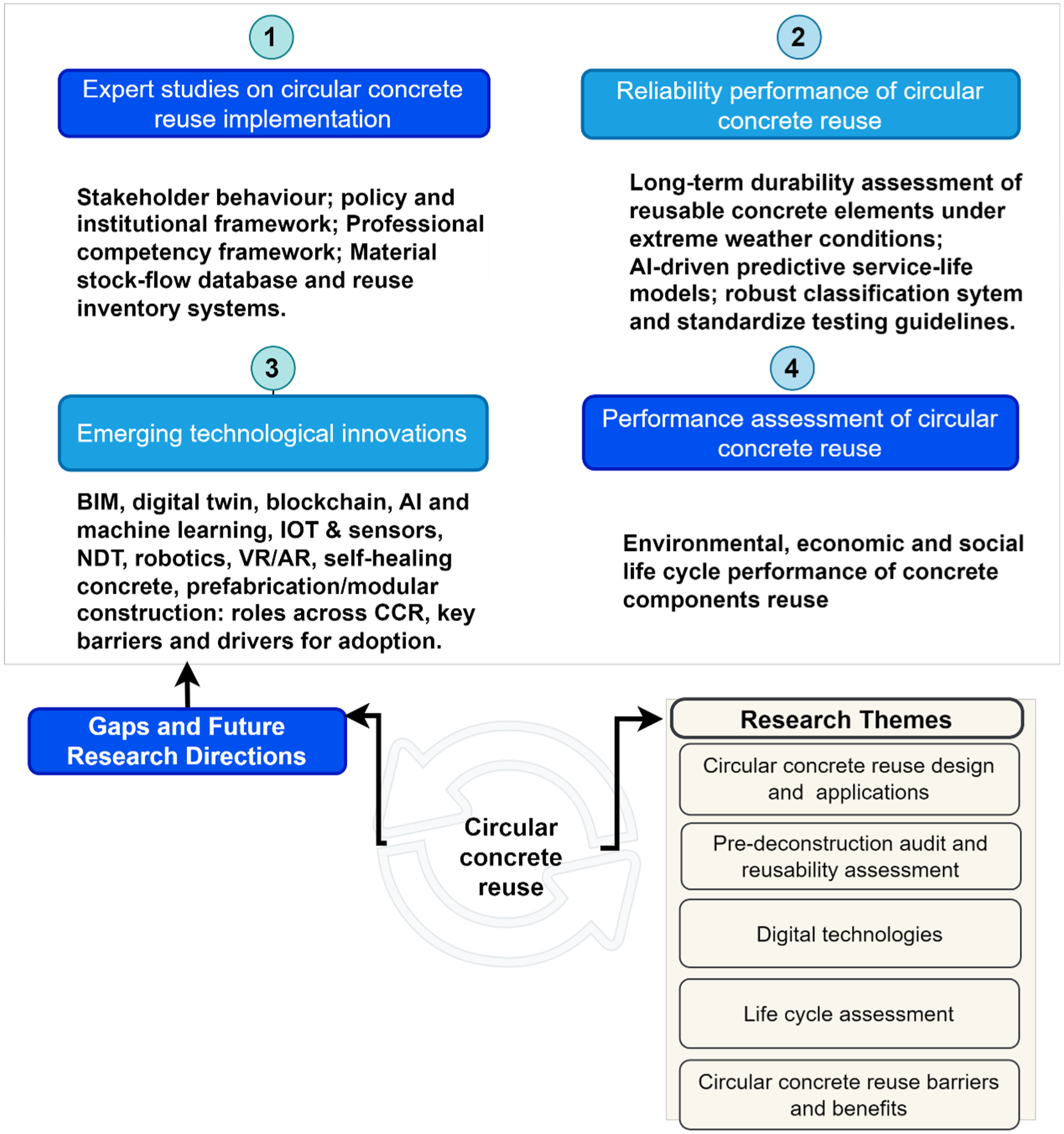
Research gaps and future research directions on circular concrete reuse.
Conclusions
This review synthesized the fragmented research on the reuse of concrete elements and mapped how the literature has evolved across design strategies, recovery planning, digital enablement, performance evaluation and implementation conditions through a systematic PRISMA-guided approach. Unlike previous reviews that emphasize concrete recycling or examine CCR practices in isolation, this study consolidated CCR evidence to provide an integrated perspective on reuse pathways. The descriptive mapping indicates that CCR research remains predominantly concentrated in high-income contexts, particularly Europe, while low- and middle-income regions, including much of Africa, are under-represented, suggesting limited evidence for diverse regulatory, market and institutional environments.
The qualitative synthesis reveals growing evidence on DfD, precast concrete, reversible connections and reuse applications; however, demonstrations remain concentrated in a limited range of building typologies and contexts, with relatively few full-scale validations. Pre-deconstruction audits and reusability assessments emerges as decisive for reuse feasibility, with several studies reporting that precast concrete components are more readily reusable than cast-in-place elements, and in some cases, up to 80% of assessed components may be suitable for reuse. Digital technologies particularly BIM, material passports, digital twins, IoT, NDT and AI are increasingly positioned as enablers of CCR through improved design and planning, documentation, quality assurance and traceability, with BIM being frequently applied in the reviewed studies. Performance evaluation is dominated by LCA evidence indicating substantial embodied-impact reductions from direct reuse, with some studies reporting up to 90% embodied carbon reductions compared to conventional construction methods, depending on system boundaries and assumptions. While CCR provides environmental, technical and social benefits, adoption remains constrained by persistent challenges related to quality assurance, costs/logistics, and stakeholder acceptance.
Beyond synthesis, this review introduces a conceptual framework highlighting dimensions of CCR performance to provide a structured basis for evaluating trade‑offs, guiding empirical research and informing industry decision‑making. This study also identified four extant research gaps for future studies: (i) limited implementation-oriented and institutional evidence, including the lack of reuse inventory systems; (ii) fragmented digitalization and a lack of integrated technological frameworks that clarify tool roles, drivers, and scalable benefits; (iii) performance evaluation dominated by environmental indicators with insufficient economic and social assessment; and (iv) limited evidence on long-term durability and service life under diverse exposure conditions. Addressing these gaps could help scale up CCR implementation in the construction industry.
This review has some limitations. The analysis is primarily based on Scopus database, and English-language publications, which may underrepresent relevant scholarly evidence available in other repositories and languages including academic theses, industry pilot reports and technical guidelines. Retrieval may also have been affected by inconsistent terminologies used across studies. Future reviews could strengthen coverage by combining multiple databases, expanding language inclusion where possible and conducting structured grey literature searches across repositories. In addition, the diversity of country contexts among the included studies limits the generalizability of findings and highlights the need for more context-specific evidence for comparison. Lastly, the conceptual framework proposed is based on literature synthesis and requires empirical validation through full-scale CCR projects and stakeholder evaluations. Despite these limitations, the findings provide a sound reference for academic researchers and industry practitioners in assessing CCR progress, identifying opportunities and constraints and informing policy development that supports effective implementation towards a more resilient and sustainable built environment.
Supplemental Material
sj-docx-1-wmr-10.1177_0734242X261437544 – Supplemental material for Circular concrete reuse as a higher-value process to achieving decarbonization in the construction sector: A systematic review
Supplemental material, sj-docx-1-wmr-10.1177_0734242X261437544 for Circular concrete reuse as a higher-value process to achieving decarbonization in the construction sector: A systematic review by Margaret Damilola Oyewole, Daniel W. M. Chan, Sakibu Seidu and Caleb Debrah in Waste Management & Research
Footnotes
Acknowledgements
The authors kindly acknowledge the Department of Building and Real Estate of The Hong Kong Polytechnic University for supporting this research study through the Departmental PhD research postgraduate studentship funding scheme.

Funding
The authors disclosed receipt of the following financial support for the research, authorship, and/or publication of this article: The authors sincerely acknowledge the financial support of PhD Research Postgraduate Studentship Funding Scheme to make the research study possible.
Declaration of conflicting interests
The authors declared no potential conflicts of interest with respect to the research, authorship, and/or publication of this article.
Supplemental material
Supplemental material for this article is available online.
References
Supplementary Material
Please find the following supplemental material available below.
For Open Access articles published under a Creative Commons License, all supplemental material carries the same license as the article it is associated with.
For non-Open Access articles published, all supplemental material carries a non-exclusive license, and permission requests for re-use of supplemental material or any part of supplemental material shall be sent directly to the copyright owner as specified in the copyright notice associated with the article.
