



Abstract
In recent years, the concept of landfill mining has gained a lot of traction in India, and tonnes of plastic waste is being excavated. The present shift towards a circular economy necessitates to explore the use of excavated plastic waste as a source of valuable materials and energy. However, the physicochemical characteristics of plastic waste change due to the degradation and weathering process in landfills, making its valorization difficult. The current study investigates the change in physicochemical characteristics of plastic waste with age from an Indian dumpsite to identify the potential valorization options. In addition, a material and energy flow analysis was performed considering incineration treatment of plastic waste. The plastic waste ranged between 3.6 and 21% in the dumpsite and has almost doubled in recent decades, owing to the increase in plastic waste generation in India. Polyethylene (high- and low-density) accounted for approximately 66% of the excavated plastic waste and had a lot of adhered surface impurities. Mechanical pre-treatment using a shredder was effective in the removal of the adhered impurities with a recovery rate of 50−70% for polyethylene and a higher recovery of 70−90% for other types of plastic. Changes in the surface morphology of plastic waste with aging were observed through Scanning Electron Microscopy. The Fourier Transform Infrared Spectroscopy results confirmed low degradation levels for aged plastic waste, which is also confirmed through the high level of oxygen detected. The material and energy flow analysis revealed that incinerating one tonne of excavated plastic waste could produce approximately 1410 kWh of electricity.
Keywords
Introduction
In India, most of the collected municipal solid waste (MSW) historically ended up in landfills or dumpsites (Singh and Chandel, 2021). Majority of these sites are open dumps or unsanitary landfills that lack effective leachate and landfill gas collection systems, resulting in detrimental environmental and human health impacts. Also, most of the Indian cities are out of space to dispose of the ever-increasing waste generated. Landfill mining could be a promising strategy to clear these sites and eliminate potential sources of contamination (Krook et al., 2012). Landfill mining involves a sequence of stages starting from the excavation of waste present in landfills, followed by screening, sorting and processing to recover valuable resources and landfill space (Jones et al., 2013).
In India, after the implementation of solid waste management (SWM) rules in 2016 by the Ministry of Environment, Forest and Climate Change (MoEFCC), numerous landfill mining projects are being executed due to the push from the government to rehabilitate the existing landfills (MoEFCC, 2016). Based upon several landfill exploration studies in India, excavated waste typically contains 40−75% fine fraction (soil-like material), 20−40% combustible materials, 10% inorganic substances (mostly glass, stones and construction and demolition waste) and a very small percentage of metals (Cheela et al., 2021; Saluja et al., 2021; Singh and Chandel, 2020a; Singh et al., 2022; Somani et al., 2018). Plastic waste contributes to a major portion of the total excavated waste accounting for 12−25% (Cheela et al., 2021; Kurian et al., 2003; Singh and Chandel, 2020a). As approximately 90% of the plastics are produced using non-renewable petroleum products, they can be recycled to use as fuel or for the synthesis of plastics and petroleum products (Al-Salem et al., 2009). Moreover, plastic possesses a high calorific value comparable to commonly used fuels, making it a useful source of energy (Canopoli et al., 2018). The potential of material and energy recovery from excavated plastic waste is one of the major factors in assessing the economic feasibility of a landfill mining project (Van Passel et al., 2013). Hence, for the success of a landfill mining project, effective management of excavated plastic for recovering resources should be prioritized.
The plastic waste present in landfills experienced chemical and biological degradation for years. In a landfill, plastic degradation occurs due to various factors like moisture, elevated temperature and biological activity, which can lead to changes in the characteristics of excavated plastic waste as compared to fresh plastic waste (Rafey and Siddiqui, 2023). Plastic waste in landfills can be recycled but due to high impurity content and the presence of contaminants such as corrosive compounds and trace heavy metals, it might not meet the requirements for conventional recycling (Canopoli et al., 2018). Therefore, utilizing plastic waste as refuse derived fuel (RDF) for recovering energy could be one of the plausible valorization options. Rotheut and Quicker (2017) investigated the use of untreated RDF obtained from excavated landfill waste in a commercial-scale incinerator. The results showed that the RDF cannot be used in the plant without any addition of fresh MSW. According to Forster (1995), the presence of high soil-like fine fraction in the excavated wastes can result to an increase in the abrasion intensity for feeding equipment (such as feed chute hoppers) and flue gas ducts in incineration plants. Hence, removal of the adhered soil-like materials (impurities) by providing effective pre-treatment (drying, segregating, shredding, screening, etc.) is necessary before subjecting the waste to any valorization process.
Several studies in the Indian context assessed the physicochemical characteristics of the fine fraction which forms approximately 40–75% of the total excavated waste (Singh and Chandel, 2020b; Somani et al., 2018). However, a detailed characterization of the excavated plastic waste is not reported in the Indian context. Few international studies focused, especially on the characterization of excavated plastic waste from landfills to explore the resource recovery potential, extent of degradation and cleaning methodology (Canopoli et al., 2020; Geng et al., 2022; López et al., 2019; Zhou et al., 2014). The studies on excavated plastic waste reported to date either focused on evaluating the physicochemical characteristics of plastic waste or studying the degradation with respect to age. However, a thorough analysis of plastic waste characteristics and degradation is lacking, which is necessary to ensure its suitability for resource recovery. Also, since the landfill conditions and waste characteristics vary between different landfills, the findings drawn from the global studies cannot be applied directly to the Indian waste characteristics necessitating site-specific investigations. The current study aims to investigate the changes in physicochemical characteristics of plastic waste excavated from 16 locations belonging to different age groups. To study the effect of age on the properties of plastic, surface morphology and degradation, studies were performed. Since the excavated plastic waste consists of adhered impurities, the impact of shredding as mechanical pre-treatment on the removal of impurities was also studied. Finally, a material and energy flow analysis was performed considering the incineration of plastic waste to illustrate the waste transformation and electrical energy generation potential.
Materials and methods
Study area and sampling methodology
Deonar dumping ground, which is Mumbai’s oldest dumpsite, was selected as the study area to assess the excavated waste composition and characteristics of excavated plastic waste for evaluating the resource recovery potential. The dumpsite is operated by the Brihanmumbai Municipal Corporation and has been in operation since 1927, covering an area of over 326 acres containing over 12 million tonnes of waste (Centre for Science and Environment (CSE), 2020). Stratified random sampling was used and the site was divided into three strata (stratum 1: consisting of the oldest waste dumped area; stratum 2: where the waste was dumped during monsoon; stratum 3: where dumping was going on). All strata were further divided into plots of 5−10 acres with stratum 1 having 10 sampling locations and stratum 2 and 3 having 4 sampling locations. Due to some unforeseen circumstances, samples from a few locations could not be collected (marked as X in Figure 1). A total of 32 samples from 16 locations were collected (one from the middle and another from the bottom layer) in the year 2019 (Figure 1). A detailed description of sampling locations is provided in Supplemental Table S1.
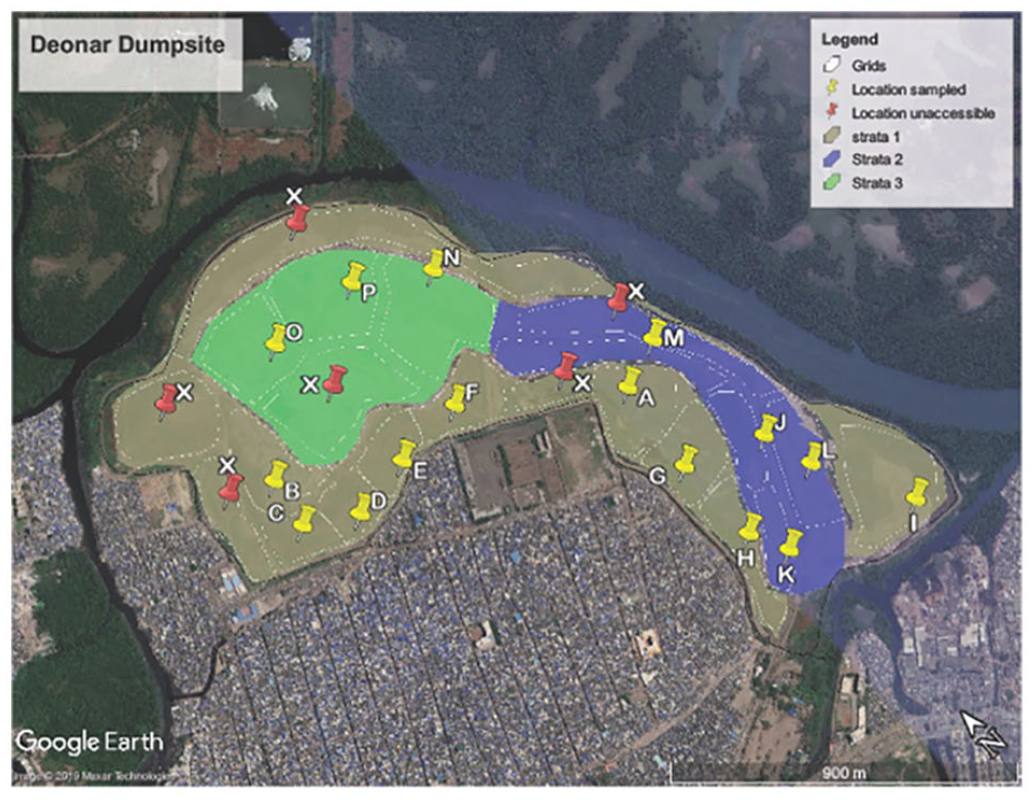
Map of the study area (Deonar dumpsite, Mumbai, India) with marked sampling locations.
Physical characterization of excavated plastic waste
The excavated waste was dried in a hot air oven for 48 hours at a temperature of 80 ± 5°C and then manually classified into different streams of plastic, paper, textile, wood, metal, glass, stones and fine fraction (<4 mm soil-like material). The plastic waste was then further classified into seven types namely: polyethylene terephthalate (PET), high-density polyethylene (HDPE), polyvinyl chloride (PVC), low-density polyethylene (LDPE), polystyrene (PS), polypropylene (PP) and others. Since the codes indicating the type of plastic were not indicated on the old plastic waste, classification was done based on their applications (Supplemental Table S2).
Visual inspection of the excavated plastic waste showed that a high amount of impurities were adhered to the surface of plastic waste making it unsuitable for several applications. Hence, mechanical pre-treatment using a shredder (SS 50, manufactured by Infed Systems, Mumbai, India) was carried out to separate the impurities from plastic fraction while reducing its particle size. The rejects were quantified by weighing the plastic before and after shredding. The recovery of plastic waste (after shredding) was calculated by considering the weight of dried plastic waste before shredding (mi) and the weight of shredded plastic (mf) equation (1). The percentage of impurity removal after shredding of excavated plastic was determined using equation (2).


Chemical characterization of mechanically pre-treated plastic waste
For the chemical characterization (proximate analysis, calorific value and chlorine (Cl) content), composite samples were analysed. Composite samples were prepared by grouping the excavated plastic waste into six groups based on the age of the waste (considering 2019 as the base year). The groups were: ⩾25 years (locations A and B), 20–24 years (locations C and D), 15–19 years (location E), 10–14 years (location F), 5–9 years (locations G to I) and ⩽4 years (locations J to P). The chemical characterization of the plastic waste samples was performed using standard test methods established by the American Society for Testing and Materials (ASTM). The volatile matter was determined using the ASTM D3175-20 standard by igniting the samples in crucibles covered with a lid at 950 ± 20°C for 7 minutes (ASTM, 2020). Furthermore, the ash content and fixed carbon were determined in accordance with ASTM D3174-12 by combusting the samples in open crucibles for 2 hours at 750 ± 15°C (ASTM, 2018). Calorific value was determined using a bomb calorimeter (Advance Research Instruments, Delhi, India) by combusting approximately 1 g of sample (in the form of a pellet) at high pressure of oxygen (25 atm) according to ASTM E711 (ASTM, 2002). Total Cl content was estimated using the bomb combustion method following the ASTM E776-16 standard (ASTM, 2017). Initially, the sample was combusted in an oxygen bomb containing 0.02N KOH as a Cl-absorbing solution. After combustion, the bomb was shaken gently to enhance the Cl absorption efficiency and was then rinsed properly with distilled water. The washings were collected in an Erlenmeyer flask and Cl content was then determined using the Volhard titration method.
Surface morphology and degradation study of low-density polyethylene
The surface morphology and degradation studies were conducted on white LDPE samples, the reason being their availability in all age groups and to avoid the interference of coloured dyes on the elemental content. For studying the surface morphology of excavated plastic waste, the samples were washed thoroughly with distilled water and then dried at 80 ± 5°C for 24 hours. The surface images of excavated plastic waste were captured at a magnification of 1500× using a field emission gun scanning electron microscope (SEM) manufactured by JEOL, Japan (model JSM-7600F). The chemical elements present on the surface of the excavated plastic waste were analysed using electro dispersive spectroscopy (EDS) to determine the level of contamination and extent of degradation.
Fourier transform infrared spectroscopy (FTIR) was carried out in transmittance mode within the spectral range of 4000–400 cm−1 at a resolution of 2 cm−1 using Vertex 80 FTIR system (Bruker, Germany). FTIR is a non-destructive testing and requires no sample preparation, only the surface needs to be wiped off to remove surface dirt. The carbonyl (−C=O), methylene (−CH2), and hydroxyl groups were considered at 1780–1600, 1490–1420 and 3570–3050 cm−1 respectively (Fairbrother et al., 2019; ter Halle et al., 2017). The ratio of the band area under the carbonyl group to the methylene group gives the carbonyl index (Almond et al., 2020). The carbonyl index also known as the aging index is one of the parameters used to assess the progression of polymer oxidation (Canopoli et al., 2020; ter Halle et al., 2017). The areas under absorbance curves of methylene and carbonyl groups were calculated using the integration tool in OriginPro 2021 software.
Material and energy flows in the thermal treatment of excavated plastic waste
A material and energy flow analysis was performed considering the incineration of excavated plastic waste to illustrate the waste transformation and the net energy (as electricity) generated. In material flow analysis (MFA), the transfer coefficient describes the partitioning of materials in a specific process (Allesch and Brunner, 2016). The experimental data obtained in the present study was used as input data to perform the MFA.
The potential of energy recovery (as electricity) per tonne of dry plastic waste excavated from landfill was calculated according to equation (3). Considering 25% conversion efficiency through a steam turbine cycle (Inglezakis et al., 2015; Ofori-Boateng et al., 2013).

where CV is the gross calorific value (MJ kg−1) on a dry basis, and Ei is the conversion efficiency, 1000 and 3.6 are the factors for converting kg to tonne and MJ to kWh respectively.
Statistical analysis
Statistical analysis of the assessed physicochemical characteristics was performed using OriginPro 2021 software. One-way analysis of variance (ANOVA) test at a significance level of 0.05 and Tukey’s test was carried out to compare the characteristics between different age groups.
Results and discussion
Composition of excavated waste
Excavated waste was classified manually into different categories like plastic, paper, textile, wood, metal, glass, stones and fine fraction (<4 mm). The fine fraction content was highest in the dumpsite accounting for 43.7%, on average, of total excavated waste and decreased with the waste age (Figure 2(a)). After fine fraction, the stone fraction and plastic fraction dominated the excavated waste with an average value of 31.9 and 11.5%, respectively. Paper, metal and glass fractions were present in very low amounts in the Deonar dumpsite. The paper fraction was evident only in ⩽4-year-old waste with a negligible contribution in waste older than 5 years. According to one-way ANOVA, paper, textile, wood, metal, glass and stone fractions had no significant difference for all age groups (Supplemental Figure S1). Plastic fraction in the excavated waste ranged from 4 to 22% and was almost similar for the waste ⩾15 years old and significantly increased in waste samples with age <15 years (Supplemental Figure S1). The findings imply that there has been an increase in plastic waste landfilling in recent years, which is concurrent with the increase in plastic waste generation.
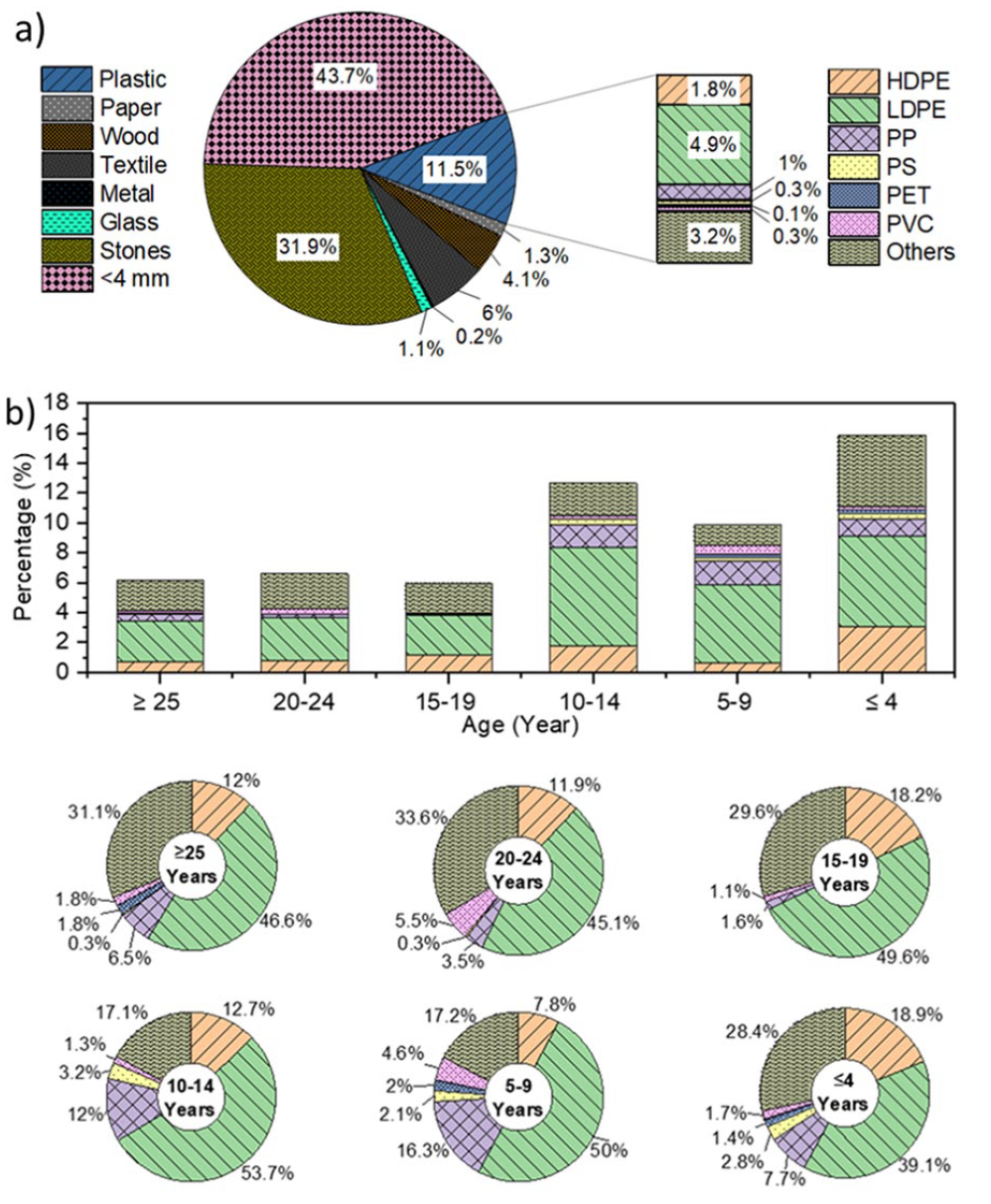
(a) Overall composition of excavated waste from Deonar dumpsite; (b) change in composition of excavated plastic waste with age.
Recyclable waste (consisting of plastic, paper, textile, glass and metal) accounted for 20% of the excavated waste and was contaminated by the adhered impurities (mainly soil-like material and sand). The utilization of excavated waste is limited due to the substantial contamination, rendering effective recycling and reuse difficult. To overcome this issue, it is imperative to prioritize the effective pre-disposal segregation of recyclable waste ensuring that fewer recyclables end up in landfills. This will not only encourage the efficient recycling of the materials but also reduce the burden on landfills. Moreover, pre-disposal segregation of recyclables from MSW can play a major role in improving the recovery of valuable resources, promote sustainable waste management practices and advancing towards a circular economy.
Classification of excavated plastic waste
The plastic waste collected from the Deonar dumpsite was sorted into different categories based on their applications. LDPE constituted a major portion of the excavated plastic (44 ± 14%) followed by others (26 ± 14%), HDPE (15 ± 11%), PP (8.5 ± 7.8%), PVC (2.7 ± 3.8%), PS (1.9 ± 3.0%) and PET (1.2 ± 2.5%). The quantity of LDPE and HDPE has increased in the landfilled waste considerably owing to the increase in the polyethylene in India (Figure 2(b)). Polyethylene (HDPE and LDPE) contributes to 66% of the total plastic waste generated in India, which is similar to that observed in this study (Aryan et al., 2019). Similar observation for the high amount of polyethylene in landfilled plastic waste has been found in other developing countries like China and Thailand (Chiemchaisri et al., 2010; Zhou et al., 2014). Although some differences were observed in the change in plastic waste composition with age, they were not statistically significant (Supplemental Figure S1).
Physicochemical characteristics
Proximate analysis
The proximate analysis results revealed that the excavated plastic waste had higher ash content compared to the fresh plastic waste (Table 1). Generally, LDPE plastics have a high volatile matter of 98.5–99%, low ash content of 0.4–1.2% and fixed carbon up to 0.1% (Nidhi et al., 2017; Zhou et al., 2014). LDPE plastic had higher ash content which resulted in decreased volatile matter (Figure 3(a) and (b)). The higher ash content obtained in the case of excavated plastic waste was due to the impurities adhered to the plastic surface as a combined effect of moisture, pressure and temperature inside the landfill. The others category of plastic waste had the highest fixed carbon of 1.66 ± 2.20% attributed to the presence of paper as one of the layers in multi-layered plastics (Figure 3(c)). Chiemchaisri et al. (2010) and Quaghebeur et al. (2013) examined the excavated plastic waste without any pre-treatment and reported high ash content of 27.01 ± 10.56 and 29.01 ± 3%, respectively. Considering the ash content reported in the previous studies conducted on excavated plastic waste, the analysed plastic waste had comparatively less ash content. Due to the shredding pre-treatment adopted in the current study, the adhered impurities were separated from excavated plastic waste, resulting in a cleaner plastic fraction with lower ash content. The parameters of proximate analysis play a decisive role in their utilization for thermal treatment techniques. For mass burning in incinerators and co-combustion in cement kilns, the maximum permissible ash content is 15% (Cheela et al., 2021). The average ash content of the analysed plastic waste was 13.32%, which satisfies the criteria for its thermal treatment.
Chemical characteristics of excavated plastic waste.
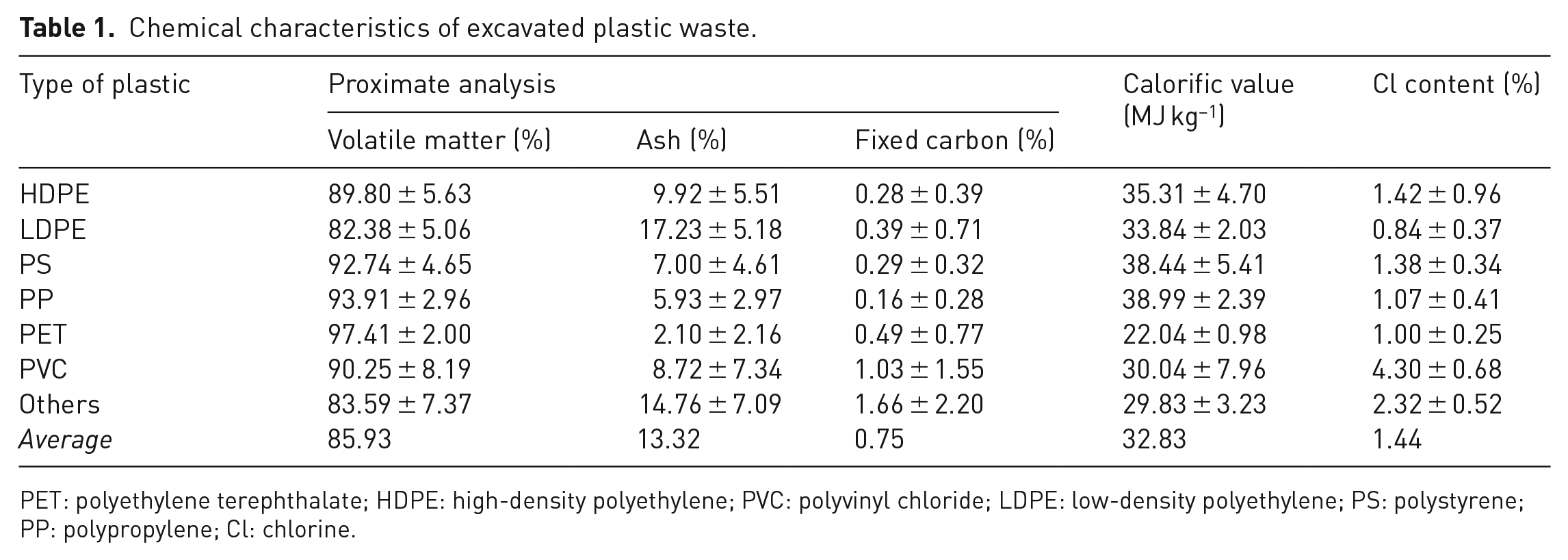
PET: polyethylene terephthalate; HDPE: high-density polyethylene; PVC: polyvinyl chloride; LDPE: low-density polyethylene; PS: polystyrene; PP: polypropylene; Cl: chlorine.
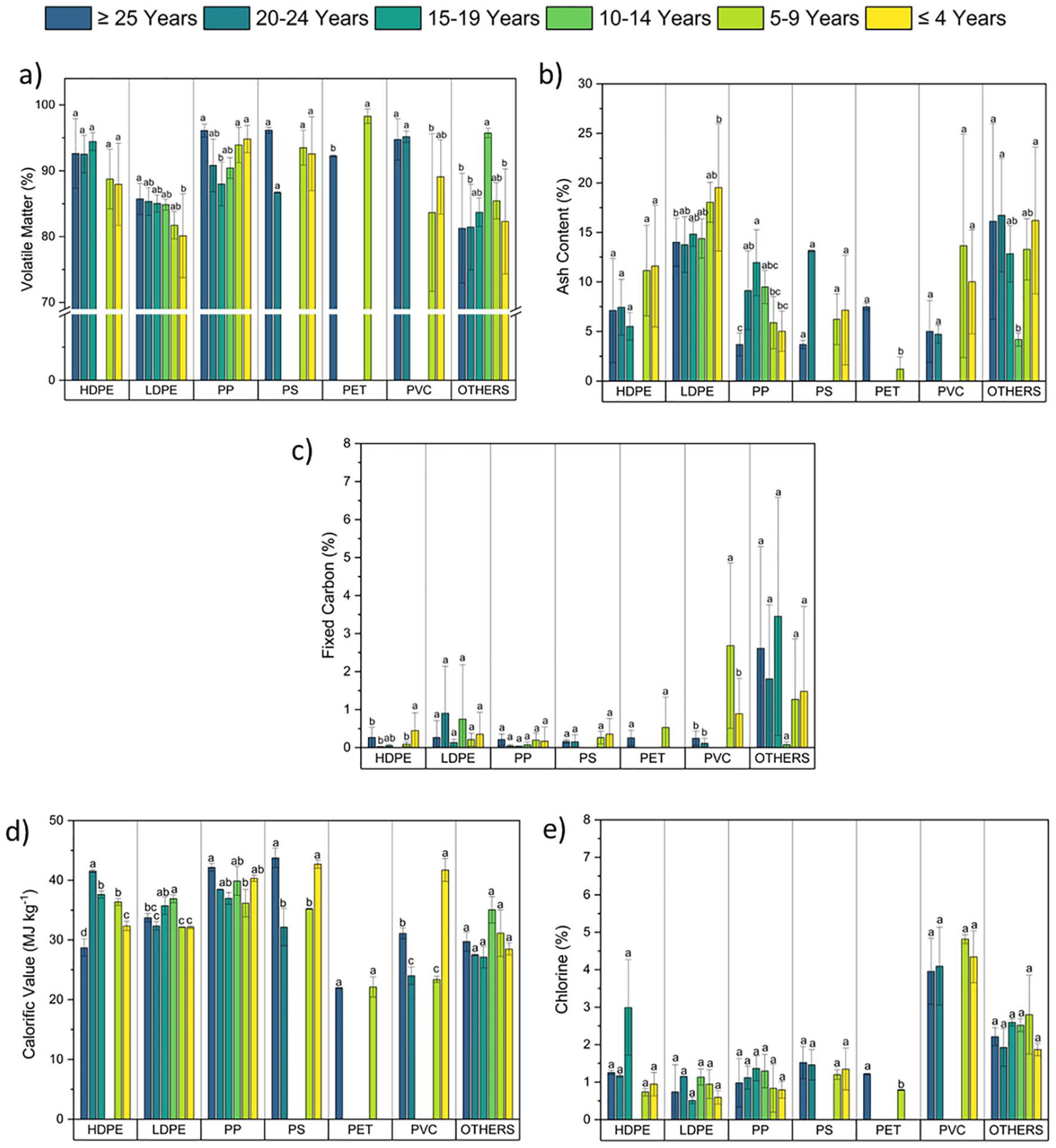
Chemical characteristics of excavated plastic waste. (a): volatile matter; (b): ash content; (c): fixed carbon; (d): calorific value; (e): Cl content (symbols a–c indicate statistically significant difference at significance level of p < 0.05).
Calorific value
The calorific value for different types of plastic waste increased in the following order: PET (22.0 ± 1.0 MJ kg−1) <others (29.8 ± 3.2 MJ kg−1) <PVC (30.0 ± 8.0 MJ kg−1) <LDPE (33.8 ± 2.0 MJ kg−1) <HDPE (35.3 ± 4.7 MJ kg−1) <PS (38.4 ± 5.4 MJ kg−1) <PP (39.0 ± 2.4 MJ kg−1). Although the one-way ANOVA test showed a significant difference in the plastic waste’s calorific value, no trend was observed with respect to age (Figure 3(d)). Zhou et al. (2014) also reported no change in calorific value with waste age. The calorific value of polyethylene (HDPE and LDPE) reduced significantly compared to virgin plastic, whereas for PET it was observed similar (Supplemental Table S3). These findings can be corroborated by the proximate analysis results, which showed that the volatile matter in excavated polyethylene (HDPE and LDPE) was relatively low due to the adhered surface impurities leading to high ash content and a lower calorific value. In the case of PET, the volatile matter was similar to that of virgin plastics, resulting in an equivalent calorific value as virgin PET plastic.
Quaghebeur et al. (2013) characterized mixed excavated plastic waste and reported a calorific value of 19–28 MJ kg−1. In contrast, a study by Zhou et al. (2014) reported the calorific value of excavated plastic waste in the range of 41–45 MJ kg−1, which was much higher compared to the earlier study. In the study by Quaghebeur et al. (2013), the calorific value was calculated on as received basis without any pre-treatment, while Zhou et al. (2014), performed the analysis on thoroughly cleaned plastic waste. The washing process can clean the plastic waste to achieve high calorific value and also improve the recyclability of plastics. As observed in the current study, a simple mechanical shredding pre-treatment can also yield plastic waste with a high calorific value of 31.83 MJ kg−1 without causing any additional environmental burden like water requirement in case of washing. According to SWM rules (2016), waste with a calorific value greater than 6.3 MJ kg−1 is suitable for waste-to-energy (WtE) treatment. As per the guidelines by the Central Public Health and Environmental Engineering Organisation (CPHEEO), Government of India, for using the waste as RDF grade I, the minimum calorific value required is 18.8 MJ kg−1 (CPHEEO, 2018). The high calorific value of excavated plastics obtained in the current analysis indicates a high energy recovery potential and ensures the suitability both for WtE treatment and use as grade I RDF.
Cl content
PVC and others category of waste had higher Cl content amongst all the analysed plastics (Figure 3e). The one-way ANOVA showed no significant difference in the Cl content of excavated plastics belonging to different age groups (except PET). Moreover, no particular trend was evident in Cl content with age. The maximum permissible Cl content for the use of plastic as RDF is 1% (CPHEEO, 2018). The average Cl content in the analysed plastic waste was 1.44% and hence did not meet the requirement to be used as RDF. Ma et al. (2010) reported a high Cl content of 6% in fresh PVC (non-packaging plastic) wastes, whereas in the case of packaging films, bags, containers and bottles it ranged from 0.5 to 1%. In the study by Quaghebeur et al. (2013), the landfilled plastic waste in Belgium had high levels of Cl content up to 7.3%. High Cl content reported in the case of excavated plastic waste can be due to the impurities adhered and contact of the plastic waste with the leachate. In order to meet the requirement for maximum Cl content, the excavated plastic waste can be mixed with other combustible fractions having low Cl content.
Surface morphology and degradation of low-density polyethylene plastic waste
Surface images of excavated LDPE plastic waste obtained through the SEM analysis showed a major alteration in the surface morphology with age, confirmed by visual cracks on the surface (Figure 4). The young plastic waste had a relatively smooth surface with less adhered impurities (Figure 4(f)), whereas the aged plastic indicated the accumulation of impurities on the surface of plastic waste with age (Figure 4(a)). The analysed plastic waste of age ⩾25 years had lower ash content in comparison to plastic waste of ⩽4 years age (Figure 3(b)). The SEM analysis showed that the older plastic waste had higher adhered surface impurities compared to the younger waste. This revealed that although the younger waste had a higher ash content compared to the older waste, the impurities were easily removable through washing. It can be concluded that the combined action of pressure and elevated temperature inside the landfill resulted in the embedding of more impurities on the plastic surface that are difficult to clean.
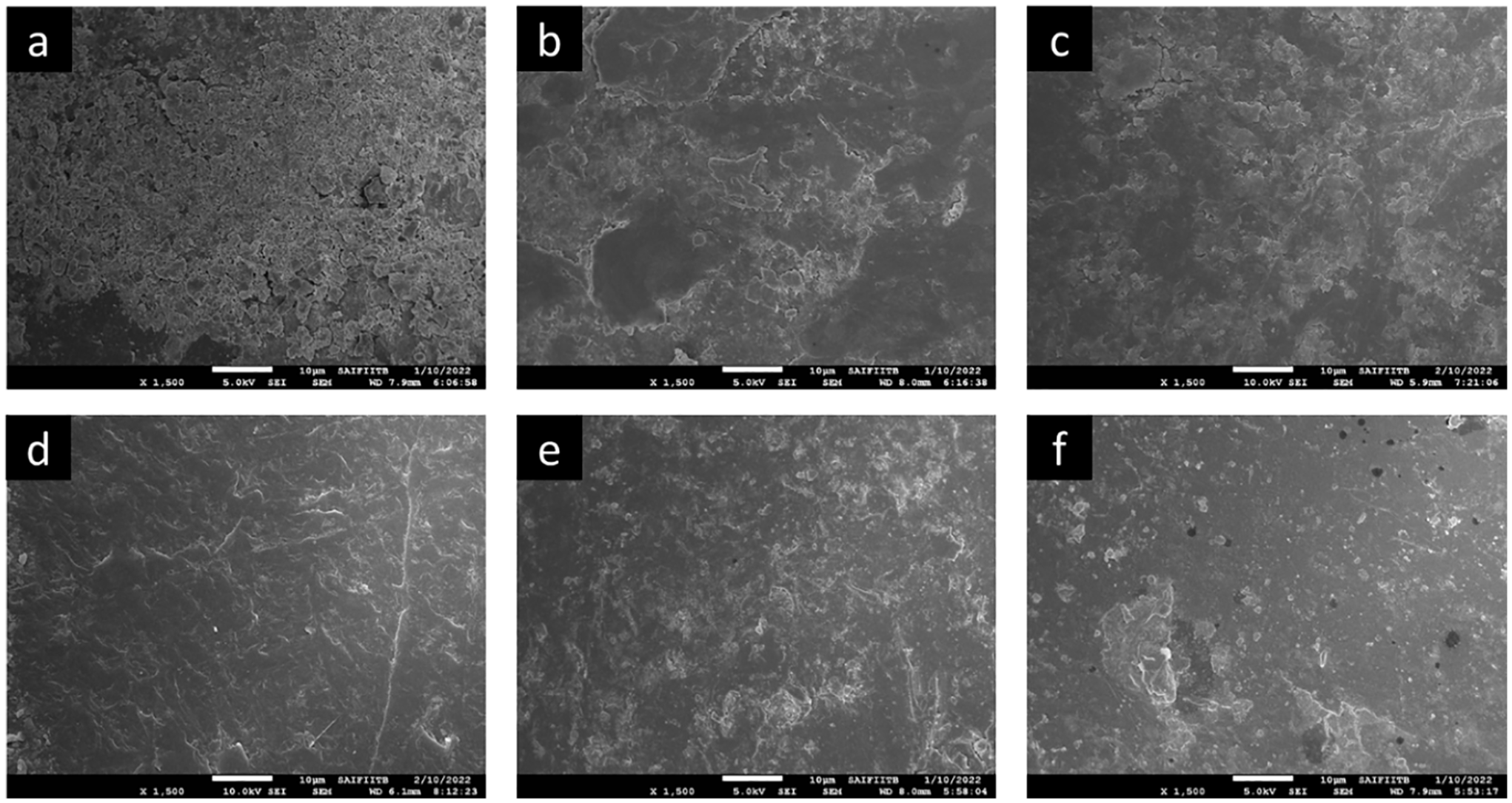
Surface images of excavated LDPE plastic under 1500× magnification. (a) ⩾ 25 years; (b): 20–24 years; (c): 15–19 years; (d): 10–14 years; (e): 5–9 years; (f): ⩽4 years.
The major elements detected in the analysed plastic samples through EDS included C, O, P, Fe, Cl, Si, Ca and Ti (Supplemental Table S4). Analysis of the elements present on the surface of excavated plastics showed that the carbon content decreased, whereas oxygen and silicon content increased with aging (Table 2). The presence of oxygen in a polymer is a sign of its degradation (Canopoli et al., 2020). The oxygen content increased from 9.45% in young waste to 27.20% in old waste signifying the degradation of LDPE with age. The silicon content varied from 0.4 to 3.27% in young and old samples, respectively. The increase in the silicon content is due to the adhered impurities (majorly soils and clays) on the surface and can be related to the presence of SiO2 in the soils. This complements the findings from SEM images where the adhered surface impurities increased with the plastic waste age. Geng et al. (2022) also observed a high percentage of oxygen and silicon in the old plastic samples. Ti, Al and Cl are used as Ziegler–Natta catalyst components in the polymerization of polyethylene plastics. Moreover, the commercially available flame retardants mainly consist of Cl, P, Al and Mg, which are added to the polymers during processing and hence were detected in a minor quantity (Rezvani Ghomi et al., 2020; Salasinska et al., 2020).
Chemical elements detected by EDS.
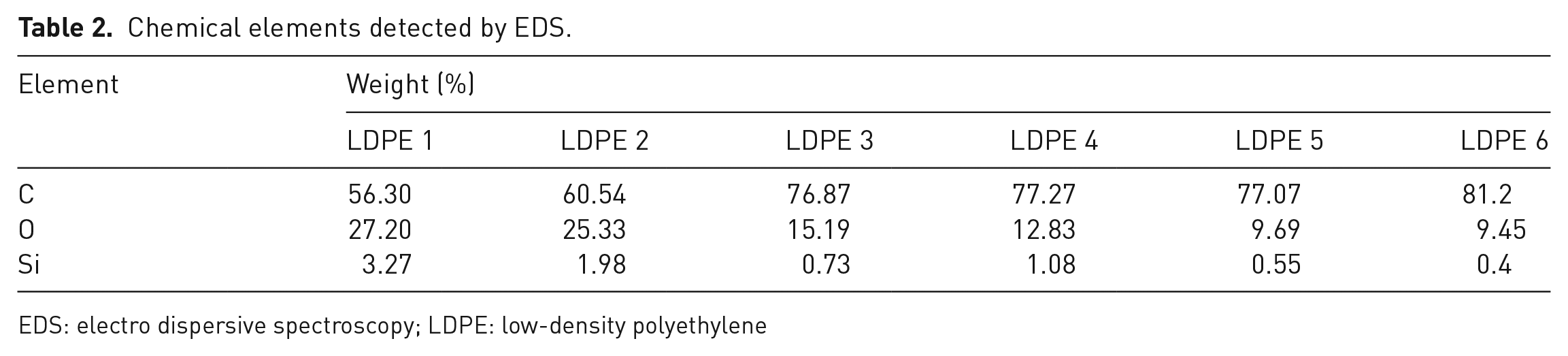
EDS: electro dispersive spectroscopy; LDPE: low-density polyethylene
The FTIR spectra for LDPE waste belonging to different age groups are presented in Figure 5. In the case of pure LDPE plastics, two absorption bands observed at 2925 and 2850 cm−1 correspond to the asymmetric and symmetric stretching of C−H bonds of methylene groups, respectively. In addition to this, a strong absorption peak at 1464 cm−1 and a small peak at 719 cm−1 indicates the bending vibrations of the C−H bond of methylene groups in LDPE plastics (Ali et al., 2019; Gala et al., 2020; Heydariaraghi et al., 2016; ter Halle et al., 2017). Similar characteristic peaks were observed in the current analysis for the LDPE waste of different ages (Figure 5).
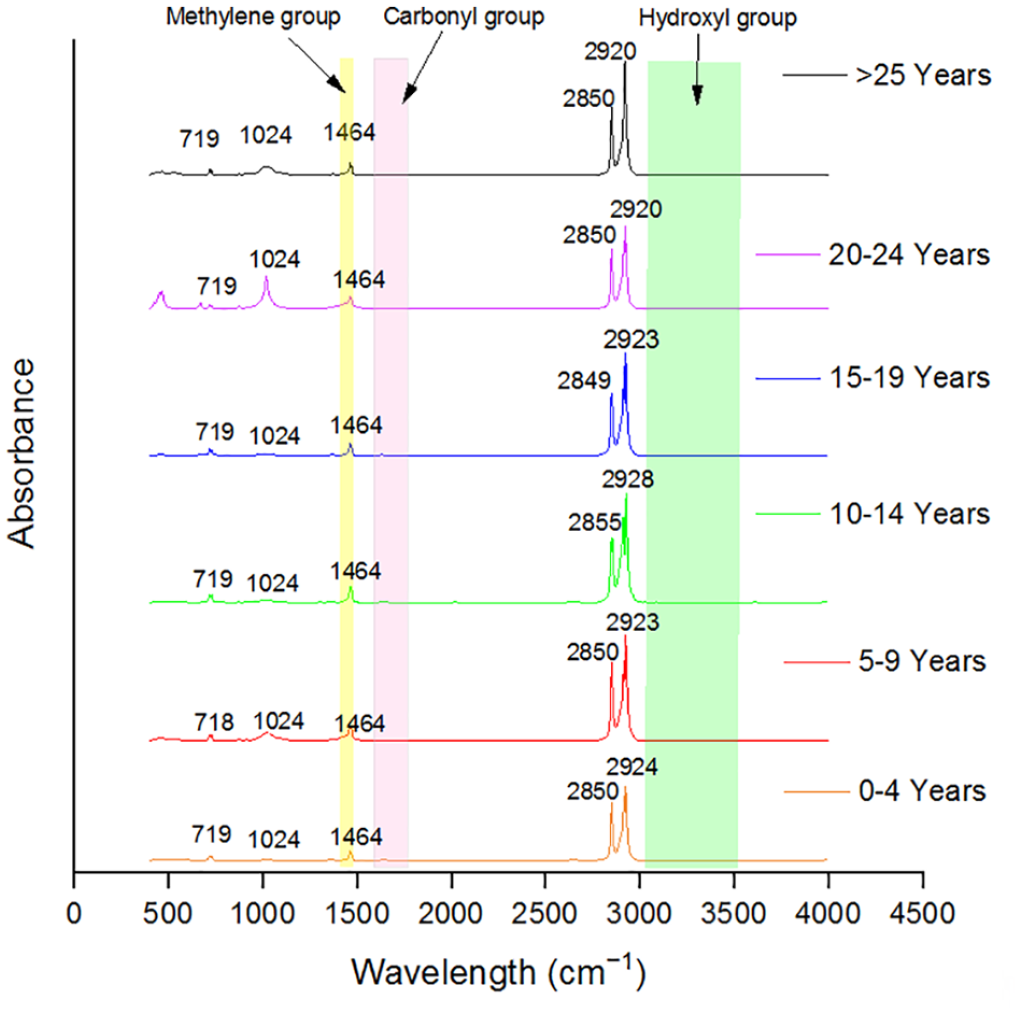
FTIR spectra of LDPE waste from different age groups.
According to ter Halle et al. (2017), the carbonyl groups show polymer weathering, and the carbonyl band appears broader with the degradation of plastic. The degradation products generally consist of ketones and aldehydes belonging to carbonyl groups (Roy et al., 2007). The minute absorbance observed in the range of 1630 to 1650 cm−1 for the carbonyl region indicated a low level of degradation. Due to the minute peaks obtained, the extent of peaks was calculated using the area under the absorbance curve, and it was concluded that the carbonyl band increased with aging (Supplemental Table S5). An increase in the area under the carbonyl band indicated the formation of degradation products on the polymer surface. In a study by Fairbrother et al. (2019), a similar trend was observed, where the non-degraded HDPE sample showed no peak corresponding to the carbonyl, but after the photodegradation of HDPE, a low absorption peak was observed.
The peak at 1024 cm−1 obtained in all the analysed LDPE samples could be attributed to the presence of soil (Briassoulis et al., 2012). The intensity of this peak had an increasing trend from younger to older waste, indicating a greater accumulation of adhered surface impurities in older samples (Figure 5). Products formed as a part of secondary degradation consist of hydroxyl bonds, and their absence indicates no significant degradation of plastic waste. Yu et al. (2022) also observed that in the plastic degradation process, the carbonyl group was the first to appear compared to the hydroxyl group. The carbonyl index is one of the parameters for assessing polymer degradation and was determined by dividing the band area under the carbonyl group by the band area under the methylene group. The carbonyl index obtained for plastic waste of ⩽4 years old was 0.06 which increased to 0.11 in the case of aged plastic waste, indicating degradation of LDPE with age (Supplemental Table S5). Also, the area under the carbonyl band for aged samples was higher compared to the younger one which showed the formation of degradation products.
Effect of mechanical pre-treatment on excavated plastic waste
The least recovery of plastic after shredding was obtained for LDPE, at 54.7%, followed by HDPE, others, PS, PP, PVC and PET with recovery percentages of 62.4, 68.8, 75.7, 79.2, 79.3 and 88.2%, respectively. The lower recovery of LDPE plastic was due to the high level of adhered surface impurities associated with it, which was also evident by its higher ash content (Figure 3(b)). The shredding pre-treatment facilitated the removal of a significant amount of adhered impurities (rejects) along with the downsizing of plastic waste. The rejects from plastic waste contributed approximately 37% of the total plastic waste and consisted of inert fractions (adhered soil-like material, sand, stones and gravel), wood and microplastic fragments. The proximate analysis of rejects showed an ash content of approximately 70%, indicating that they were predominantly composed of inert fraction. The average ash content obtained in the case of shredded plastic waste was approximately 13% and in the absence of shredding pre-treatment, it could have been approximately 50% (considering 37% adhered impurities). The shredding was found to be effective in the removal of adhered impurities (from approximately 50 to 13%) leading to an overall impurity removal of approximately 74% (Supplemental Figure S2).
Resource recovery options from excavated plastic waste
Resource recovery from the excavated plastic waste can be accomplished either as waste-to-material or WtE approach.
Waste-to-material
Primary, secondary and tertiary recycling are the three main approaches for material recovery from waste plastic. Primary and secondary recycling refers to the mechanical treatment that involves no to little modification in the chemical properties of polymers (Kumar et al., 2021). Tertiary recycling is chemical recycling involving the degradation of polymers into simpler monomers. The feedstock required for primary recycling is a single unpolluted type of polymer, which is not feasible in the case of excavated plastic waste. Secondary recycling appears to be a technically viable option for fresh plastic waste, it is not a feasible option for excavated plastic waste unless some pre-treatment techniques like cleaning or shredding are implemented. As discussed in the proximate analysis results, the excavated plastic waste was characterized by notably increased ash content primarily due to the adhered surface impurities. The surface images obtained from SEM analysis unveiled that simply cleaning of plastic waste would be ineffective in the removal of adhered impurities. Advanced cleaning processes would impose additional requirements for water and energy.
The utilization of excavated plastic waste as secondary raw material is uncertain due to the embedded impurities. In such conditions, tertiary recycling may be a more favourable option. In the case of tertiary recycling, depolymerization reaction breaks down the polymers into smaller molecules (gases and liquids) suitable for producing new petrochemicals and plastic products (Al-Salem et al., 2009). Although the tertiary recycling of fresh plastic waste has been extensively researched, the differences between the physicochemical characteristics of excavated plastic waste and fresh waste can lead to variations in the final process products (Jagodzińska et al., 2021; Kumar et al., 2011). This necessitates future investigations on the tertiary recycling of excavated plastic.
Considering the level of contamination in excavated plastic waste and the end-use of recovered material, its utilization as a construction material could be one of the plausible options. This allows for the better management of excavated plastic waste along with reducing the amount of raw materials required to manufacture construction materials. However, this aspect needs to be studied to assess the feasibility. Shredded plastic fibres can be used directly as filler in the concrete matrix, minimizing the requirement of natural aggregates for construction purposes. Moreover, plastic waste can also be used as a binder, which replaces the use of cement in manufacturing construction materials. The shredded plastic can be melted and mixed with filler material (the rejects obtained from shredding treatment) to manufacture tiles, bricks and paving blocks (Supplemental Figure S3). The viability of processing the excavated plastic waste into construction materials requires a comprehensive assessment of its economic feasibility. This would involve a thorough analysis of the costs associated with waste excavation, sorting, pre-treatment and material manufacturing, as well as the market value of the manufactured products.
Waste-to-energy
The results of the physicochemical characteristics of excavated plastic waste showed that the direct recycling of plastic waste from landfill mining could not be a viable option. Previous investigations on the excavated plastic waste in other countries also suggested their non-suitability for recycling due to high contamination and hence emphasized directing this fraction towards WtE systems (Bosmans et al., 2014; Canopoli et al., 2018; Hernández Parrodi et al., 2020). Our results showed that the excavated plastic waste had a high calorific value and could be used for energy generation. Quaghebeur et al. (2013) suggested WtE as the most suitable valorization route for excavated plastic waste. The research conducted on the excavated waste from a landfill site in Belgium also demonstrated the feasibility of processing excavated plastic waste into RDF (Hernández Parrodi et al., 2020). The study concluded that the RDF produced from excavated plastic waste exhibited comparable characteristics to the RDF processed from fresh MSW. Zhou et al. (2014) also concluded that the production of RDF and incineration are the best options for recovering thermal energy from excavated plastic waste.
The physicochemical characteristics of the excavated plastic waste were found suitable for WtE plants. Higher Cl content and other impurities would require effective control systems. Incineration with energy recovery could be a practical way for WtE treatment of excavated plastic waste. In India, the capital cost of an incineration plant (capacity of 100 tonnes day−1) is $3.55 million, along with an annual operational and maintenance cost of $0.28 million (Sharma and Chandel, 2021). Additionally, extra costs are associated with the excavation and processing of waste from landfills, which would range from $9 to 11 tonne−1 (CSE, 2020). Implementing pre-treatment techniques such as shredding to improve the quality before WtE treatment also leads to an increase in the cost. While incineration appears to be the most feasible option for energy recovery from excavated plastic waste, a comprehensive economic analysis needs to be done for assessing its feasibility. This evaluation should include a cost–benefit analysis that also accounts for the additional costs associated with excavation, pre-treatment before using the plastic and the operation and maintenance cost of the WtE system. In addition, the WtE treatment of excavated plastic waste may have other environmental impacts due to the release of greenhouse gases, particulate matter and hazardous pollutants like dioxins, furans and heavy metals. Future studies that focus on evaluating the environmental and economic feasibility of thermal treatment of excavated plastic waste are desired.
Material and energy flow analysis
The findings from the study and relevant literature studies (discussed in the resource recovery section) show that energy recovery through thermal treatment could be the most preferable valorization option for excavated plastic waste. Hence a material and energy flow analysis for the scenario considering incineration of excavated plastic waste was carried out to identify the energy recovery potential of Deonar dumpsite. For MFA, transfer coefficients are required and they were derived from the analysis carried out in this study. The transfer coefficients for the shredding process were taken as 0.37 (to rejects) and 0.63 (to shredded plastic) as per the description in the section on the effect of mechanical pre-treatment on excavated plastic waste. For the incineration process, transfer coefficients were adopted from the proximate analysis (ash content was 13% of the shredded plastic). The MFA performed for one tonne of excavated plastic waste revealed the electricity generation potential of 1410 kWh along with generating 80 kg ash (Figure 6). According to an estimate by CPHEEO, the Deonar dumpsite currently holds 12 million tonnes of waste (CSE, 2020). The waste excavated from the Deonar dumpsite consisted of approximately 11% plastic waste (Figure 2(a)). Considering 15% moisture and 37% impurity content in the plastic waste, a total of 0.7 million tonnes of clean plastic waste can be recovered. If the total waste from the Deonar dumpsite is excavated and incinerated, the plastic waste has a potential to generate approximately 985 GWh of electricity.
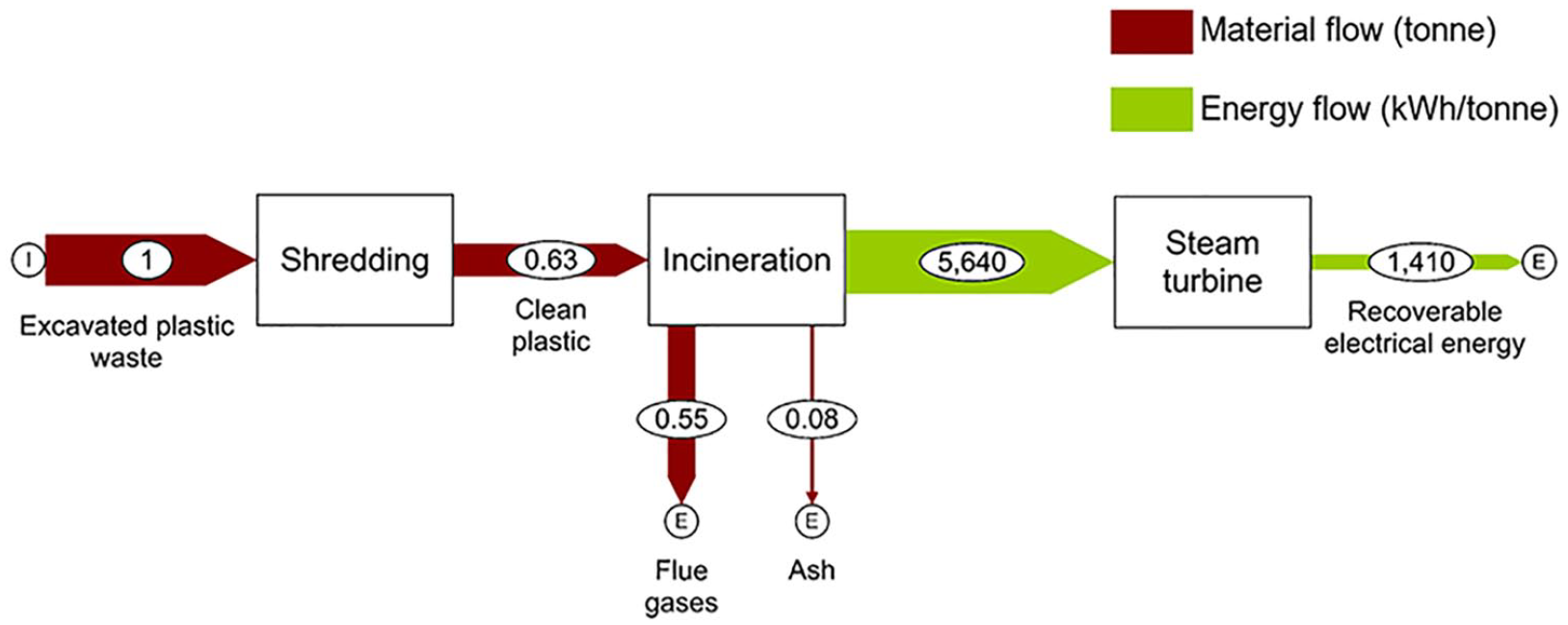
Material and energy flow analysis for incineration of excavated plastic waste.
Conclusions
Plastic waste contributed to an average of 11.5% of excavated waste from the Deonar dumpsite and has increased in recent years. LDPE dominated the plastic waste with an average value of 44 ± 14%. The average volatile matter, ash, fixed carbon, Cl content and calorific value of the analysed plastic samples was 85.93%, 13.32%, 0.75%, 1.44% and 32.83 MJ kg−1, respectively. No particular trend was evident in the physicochemical properties of excavated with increasing age. However, the surface morphology and degradation study revealed minor changes in the waste characteristics with aging. The carbonyl index determined by FTIR analysis increased with age, confirming the degradation of aged plastic waste. Similarly, an increase in oxygen content detected by EDS indicated surface oxidation in older plastic waste compared to younger waste. The shredding pre-treatment was found to be effective in the removal of approximately 74% of adhered impurities from the plastic waste leading to higher calorific value and suitable for use in WtE treatments for recovering energy, provided that the Cl content is controlled.
The contamination levels of excavated plastic waste limit its application for recycling. Utilizing plastic waste in construction materials (tiles, bricks and paver blocks) could be a feasible material recovery option. Further research in this field is needed to assess its suitability for application. Based upon the material and energy flow analysis considering the incineration of plastic waste, one tonne of plastic waste showed an electricity generation potential of 1410 kWh. The current study on excavated plastic waste confirmed significant resource potential and should be looked up as the source of secondary raw material for material and energy recovery. However, additional investigations are necessary to assess the economic viability and environmental impacts of recovering material and energy from excavated plastic waste.
Supplemental Material
sj-docx-1-wmr-10.1177_0734242X231219654 – Supplemental material for Characterization of excavated plastic waste from an Indian dumpsite: Investigating extent of degradation and resource recovery potential
Supplemental material, sj-docx-1-wmr-10.1177_0734242X231219654 for Characterization of excavated plastic waste from an Indian dumpsite: Investigating extent of degradation and resource recovery potential by Roshan Vilasrao Mankhair, Ayush Singh and Munish K Chandel in Waste Management & Research
Footnotes
Acknowledgements
The authors are grateful to the Sophisticated Analytical Instrument Facility, IIT Bombay for providing field emission gun scanning electron microscope, electro dispersive spectroscopy scanning electron microscope and electro dispersive spectroscopy analysis facility. The first author would like to acknowledge the Ministry of Education, New Delhi, India, for providing the fellowship during the research period.
Declaration of conflicting interests
The authors declared no potential conflicts of interest with respect to the research, authorship, and/or publication of this article.
Funding
The authors received no financial support for the research, authorship, and/or publication of this article.

Supplemental material
Supplemental material for this article is available online.
References
Supplementary Material
Please find the following supplemental material available below.
For Open Access articles published under a Creative Commons License, all supplemental material carries the same license as the article it is associated with.
For non-Open Access articles published, all supplemental material carries a non-exclusive license, and permission requests for re-use of supplemental material or any part of supplemental material shall be sent directly to the copyright owner as specified in the copyright notice associated with the article.
