



Abstract
Irresponsibly disposed electronic cigarette (e-cigarette) waste poses significant public health and environmental harm. This study explores downstream social marketing interventions that can be used to curtail the growth of e-cigarette waste in South Africa through the lenses of the social norms approach. This study harnesses the power of social marketing to identify downstream interventions that can be used by marketers to curb the problem of e-cigarette waste. An exploratory research design and a qualitative method were employed. Six virtual focus groups were conducted to collect cross-sectional data from South African electronic cigarette users. Reciprocal altruism, social orientation value, moral licensing and ecological beliefs were found to be the main normative influences that characterise e-cigarette waste. The results support the proposition that social marketers should employ a downstream approach to develop interventions to curtail the growth of e-cigarette waste. Such measures are envisaged to complement upstream initiatives. This study offers new insights on how to manage e-cigarette waste in the context of an emerging market.
Keywords
Introduction and background
The growth in the use of electronic cigarettes (e-cigarettes) in developed and emerging markets is fast changing the composition of e-waste (Hendlin, 2018; Krause and Townsend, 2015; Parker and Rayburn, 2017). E-cigarettes are battery-powered devices through which users, known as vapers, inhale vaporised flavoured nicotine (Kaisar et al., 2016). E-cigarettes are positioned in the marketplace as healthier alternatives to conventional tobacco cigarettes (Benowitz and Goniewicz, 2013). E-cigarettes are manufactured as either reusable or disposables (Krause and Townsend, 2015). Disposable e-cigarettes are more popular among users due to their low cost, and they offer the flexibility of permitting the use of different e-liquid flavours (Williams et al., 2013). Irresponsibly disposed e-cigarette waste poses significant public health and environmental harm due to toxic leachates from lithium-ion batteries and metals such as nickel, silver and silicate beads (Kang et al., 2013; Krause and Townsend, 2015). Used-up cartridges and plastic pods containing nicotine residuals also contribute to environmental pollution (Baran et al., 2021; Lerner et al., 2015). Toxicology reports also found that e-cigarette leachates have adverse effects on aquatic animals when ingested (Bhattacharya, 2016; Parker and Rayburn, 2017). With the global market of e-cigarettes estimated to grow to US$ 48.9 billion by 2025 (Adroit Market Research, 2018), the magnitude of e-waste is also expected to rise. If not responsibly managed, Kari (2019) predicted that e-cigarette waste has the potential to escalate into a waste management disaster.
Although empirical evidence suggests that improperly disposed e-cigarettes pose significant environmental harm, Hendlin (2018) and Kari (2019) noted that little research has been directed towards understanding consumer disposal behaviours. A significant strand of empirical studies mainly focused on addressing e-waste from household appliances such as televisions, computers, refrigerators and air conditioners (Borthakur and Govind, 2017; Issock et al., 2018). Studies on tobacco product waste are mainly focused on reducing butt litter from conventional cigarettes (Curtis et al., 2017; Novotny et al., 2009; Torkashvand and Farzadkia, 2019). The main research themes that dominate studies on e-cigarettes thus far include the health effects of e-cigarette aerosol (Polosa et al., 2019), the efficacy of e-cigarettes as smoking cessation aids (Dufort and Owila, 2014; Egbe et al., 2019), e-cigarette health hazards (Goniewicz et al., 2013) and e-cigarette use susceptibility (Pokhrel et al., 2015; Wasowicz et al., 2015). It is evident from the extant literature that there remains a glaring research gap on the awareness of e-cigarette waste and eco-friendly disposal practices among e-cigarette users. Due to the high toxicity levels of e-cigarette waste, a study on e-cigarette waste curtailment is imperative from a public health and environmental sustainability perspective.
Using the social norms approach (SNA) as the guiding framework, this study explores downstream social marketing interventions that have the potential to curb e-cigarette waste. Specifically, this study aims to explore whether e-cigarette users are aware of the adverse environmental and public health effects of e-cigarette waste. This study offers two main contributions to the extant literature. Firstly, it extends the application of the SNA to e-cigarette waste management. This is done by employing a qualitative enquiry of e-cigarette users’ perceptions and awareness of e-cigarette waste. Secondly, based on Hastings and Saren’s (2003) assertion that most social problems emanate from human behaviour, this study harnesses the power of social marketing to identify downstream interventions that can be used by marketers to complement upstream interventions to curb the problem of e-cigarette waste. In particular, this study explores: (1) awareness of e-cigarette waste among users, (2) consumers’ perceptions and beliefs related to e-cigarette waste and (3) knowledge of responsible e-cigarette waste disposal. The next section discusses the status of e-cigarettes in South Africa, the study context.
Research context
Status of e-cigarette use and waste in South Africa
E-cigarettes entered the South African market in 2009 and are marketed as healthier alternatives to tobacco cigarettes (Agaku et al., 2021a; Muposhi and Dhurup, 2018). The market entry of e-cigarettes generated much debate related to risk profile including whether they should be classified as tobacco products or not (Caruana, 2016; Visagie, 2017). As of 2021, e-cigarettes were not yet regulated with the proposed Control of Tobacco and Electronic Delivery Systems Bill still pending (Agaku et al., 2021a). The Bill aims to regulate the manufacturing, designing and marketing of e-cigarettes in South Africa (Agaku et al., 2021a). However, the Bill in its current form lacks clarity on how to manage the end-of-life stages of e-cigarettes. E-cigarette waste is also not yet classified as a form of e-waste under the National Environmental Management Laws Amendment Act of 2014. Due to this legislative gap, manufacturing, consumption and disposal procedures of e-cigarettes in South Africa are not subjected to regulatory oversight, a situation that threatens public health and environmental well-being.
The use of e-cigarettes has grown remarkably in South Africa (Ayo-Yusuf et al., 2022). As of 2018, e-cigarette users were estimated to be 1.09 million (Agaku et al., 2021b). E-cigarettes are mainly promoted on online platforms and distributed through franchise vape shops (Visagie, 2017). In 2020, more than 240 vape shops were identified in South Africa, strategically located close to institutions of higher learning (Agaku et al., 2021b). The growth in the popularity of e-cigarettes has also generated much research interest. The most notable studies focused on the safety of e-cigarettes (van Zyl-Smit, 2013), e-cigarette selling propositions (Muposhi and Dhurup, 2018), e-cigarette advertising exposure (Agaku et al., 2021a) and geospatial spread of e-cigarette vape shops (Agaku et al., 2021b). However, there is no known empirical study in South Africa that has focused on e-cigarette waste disposal behaviours yet. Similar to tobacco cigarette butts, used-up e-cigarette cartridges and reusable nicotine-filled plastic pods continue to be improperly disposed of. This study contributes to efforts to bridge this gap by exploring promising downstream social marketing interventions that can complement upstream measures to address e-cigarette waste based on interactions with e-cigarette users.
Literature review
A downstream SNA for managing e-cigarette waste
The tobacco industry has gained notoriety for downplaying the negative externalities of their operations on the environment (Curtis et al., 2017; Hendlin and Bialous, 2020). For example, in most countries, the tobacco industry is accused of lacking transparency in reporting extended producer responsibility initiatives related to waste disposal, carbon emissions, water and energy consumption (Hendlin and Bialous, 2020; Smith and Novotny, 2011). In most instances, the tobacco industry employs covert practices of neutralising their environmental harm through business-oriented corporate social responsibility practices (Gonzalez et al., 2012). Whilst this study acknowledges the need for the tobacco industry to assume more responsibility in addressing tobacco product waste, we argue that upstream interventions should be complemented by downstream consumer initiatives. This view is based on the fact that consumers are an important stakeholder in the e-cigarette value chain due to their direct influence on the most critical end-of-life stage of e-cigarettes, that is, disposal (Hendlin and Bialous, 2020; Krause and Townsend, 2015).
Upstream and downstream are the main social marketing interventions used to address environmental or community problems (Andreasen, 2005; Donovan and Henley, 2010; Wood, 2016). Downstream social marketing, which guides this study, attempts to elicit behavioural change using interventions informed by insights from targeted individuals (Wood, 2016). Upstream social marketing initiatives are aimed at influencing public policies or organisational behaviour through advocacy and lobbying (Gordon, 2013; Hoek and Jones, 2011). This study adopts a downstream perspective because it was found to be effective in influencing individual behavioural change (Donovan and Henley, 2010; Wood, 2016). The utility of downstream strategies has been confirmed in previous studies related to smoking behaviour, drug abuse and poor eating habits (Dibb and Carrigan, 2013). Downstream strategies have the potential to elicit behavioural change if they are embedded in prevailing social norms (Brennan et al., 2016; Glazer et al., 2010). This explains why the SNA is commonly employed to understand drivers of behavioural change (Berkowitz, 2004; Burchell et al., 2013; McAlaney et al., 2011).
The SNA, which was popularised by Berkowitz (2004) posited that favourable behavioural change occurs when misconceptions related to certain behaviours are corrected. It further argues that attempting to change behaviour without paying attention to the underlying normative structure is ineffective (Berkowitz, 2004). The SNA emphasises the importance of social persuasion as pathway to behavioural change (Dibb and Carrigan, 2013). In practice, SNA-oriented messages are designed to change behaviour by shifting attitudes towards favourable behaviours (Brennan et al., 2016; Glazer et al., 2010). E-cigarette online communities constitute social networks that can be used to address the problem of e-cigarette waste. Such networks can be used to address rationalisations and misperceptions associated with e-cigarettes. For instance, there is a misperception that e-cigarettes are healthier than conventional cigarettes (Parker and Rayburn, 2017), and e-cigarettes are environmentally friendly (Krause and Townsend, 2015). There is also a need to change the predominant practice of crushing of e-cigarette hardware as way of retrieving e-cigarette batteries (Chang, 2014). This practice should be discouraged as it results in environmental contamination with nicotine residue (Chang, 2014). Also, the practice of disposing used up e-cigarette waste in landfills needs to be addressed (Agaku et al., 2021b; Krause and Townsend, 2015).
Research methodology
Research design
An interpretivist exploratory research design was considered appropriate for exploring perceptions related to e-cigarette waste. Qualitative data were collected from moderated virtual focus groups (VFGs) conducted with e-cigarette users. Participants were recruited from websites selling e-cigarettes in South Africa. VFGs are a technology-mediated data collection procedure that is recommended for exploring perceptions, attitudes, norms and opinions in an interactive environment (Lathen and Laestadius, 2021; Tran et al., 2021). VFGs conducted on online communities offer the advantage of promoting a sense of belonging and cohesiveness among participants (Lathen and Laestadius, 2021). This facilitates spontaneity of ideas resulting in a rich understanding of the research phenomenon (Tran et al., 2021).
Sampling method and data collection
A semi-structured focus group guide was used to collect data. The development of the focus group guide was informed by the literature reviewed on e-cigarette waste (Hendlin, 2018; Krause and Townsend, 2015). The questions focused mainly on awareness of e-cigarette waste and its environmental harm, perceptions and beliefs related to e-cigarette waste and knowledge of responsible e-cigarette waste disposal. In accordance with the established procedure in research (Bryman, 2012), a pretest was conducted with eight participants to assess the technical support required for effective moderation of VFGs. The pretest confirmed the need for technical support in managing the challenges confronted by participants during discussions. Part of the technical support involved the process of managing the comments in the chat function.
Purposive sampling was used to select participants for the main study based on understanding of e-cigarette waste. Only participants who reported using e-cigarettes for a period of more than 1 year were considered, as they were deemed to have developed adequate knowledge on disposal behaviours. Moreover, eligibility to participate was based on the ability of the potential informants to engage on the Zoom© online videoconference platform. All participants were supposed to be residing in South Africa. Prior to each VFG, all participants were requested to sign consent forms, and technical issues related to logging on, audio and visual connection were addressed. All participants were given a voucher for internet connectivity.
VFG protocol
VFGs were conducted synchronously using the Zoom© video conferencing platform. Zoom© was preferred because of its user friendliness, security features for handling participant data and inherent recording capability (Archibald et al., 2019; Stewart and Shamdasani, 2017). Participants in each virtual online group ranged from 10 to 12 participants. With permission from participants, all online discussions were recorded. To enhance confidentiality and anonymity, a pseudo login name and password were given to each participant. To gather detailed data, prolonged engagement with participants was ensured, and on average, focus groups lasted for 60–90 minutes. Moreover, moderators provided a form of bracketing by allowing the debate to be conducted in a conversational manner with minimum interruptions. Where necessary, the moderators used reflective summaries to probe for further insights. Technical saturation was reached after the sixth focus group.
Data analysis
Constant comparison was used to analyse data from VFGs (Strauss and Corbin, 1998). This was done following a three-stage procedure recommended by Strauss and Corbin (1998). The procedure involved open coding, axial coding and selective coding. Following the guidelines recommended by Wilkinson (1998), a focus group was not used as a unit of analysis as this approach excludes participant data. Rather, the analysis tapped into the contribution of individual focus group members. Open coding involved the iterative process of reading through the recorded VFG discussions (Tran et al., 2021). This was done by comparing the data sets from six focus groups for similarities and differences. The next stage involved axial coding in which emerging keywords and categories were contrasted, while similar categories were combined. Lastly, selective coding was done by examining the relationships between categories leading to theme determination (Leech and Onwuegbuzie, 2008; Strauss and Corbin, 1998). The themes that emerged were shared with a selected number of participants in line with the practice of member validation (Leech and Onwuegbuzie, 2008). The members who participated in the validation process confirmed that the themes were a true reflection of issues that were raised during focus groups.
Results
Sample profile
The population of interest was e-cigarette users in South Africa. Of the 72 participants who expressed interest, only 64 participants managed to participate. About 63% (n = 40) of the participants were male, whereas 37% (n = 24) of the participants were female. The majority age was 26–30 years (n = 35; 54%), followed by 20–25 years (n = 14, 22%), 31–35 years (n = 10, 16%) and 40 years and above (n = 5; 4%). Most participants were students at institutions of higher education (n = 42; 66%), 14% (n = 9) indicated that they were pharmacists, whereas 13% of the participants did not indicate their occupation.
Findings
An analysis of focus group data showed that participants in all groups were fully aware of the problem of e-cigarette waste. However, there was heterogeneity of views as indicated by selected focus group excerpts. As shown in Table 1, the main themes that emerged from data analysis include reciprocal altruism, moral licensing, ecological beliefs and social value orientation.
Focus group themes.
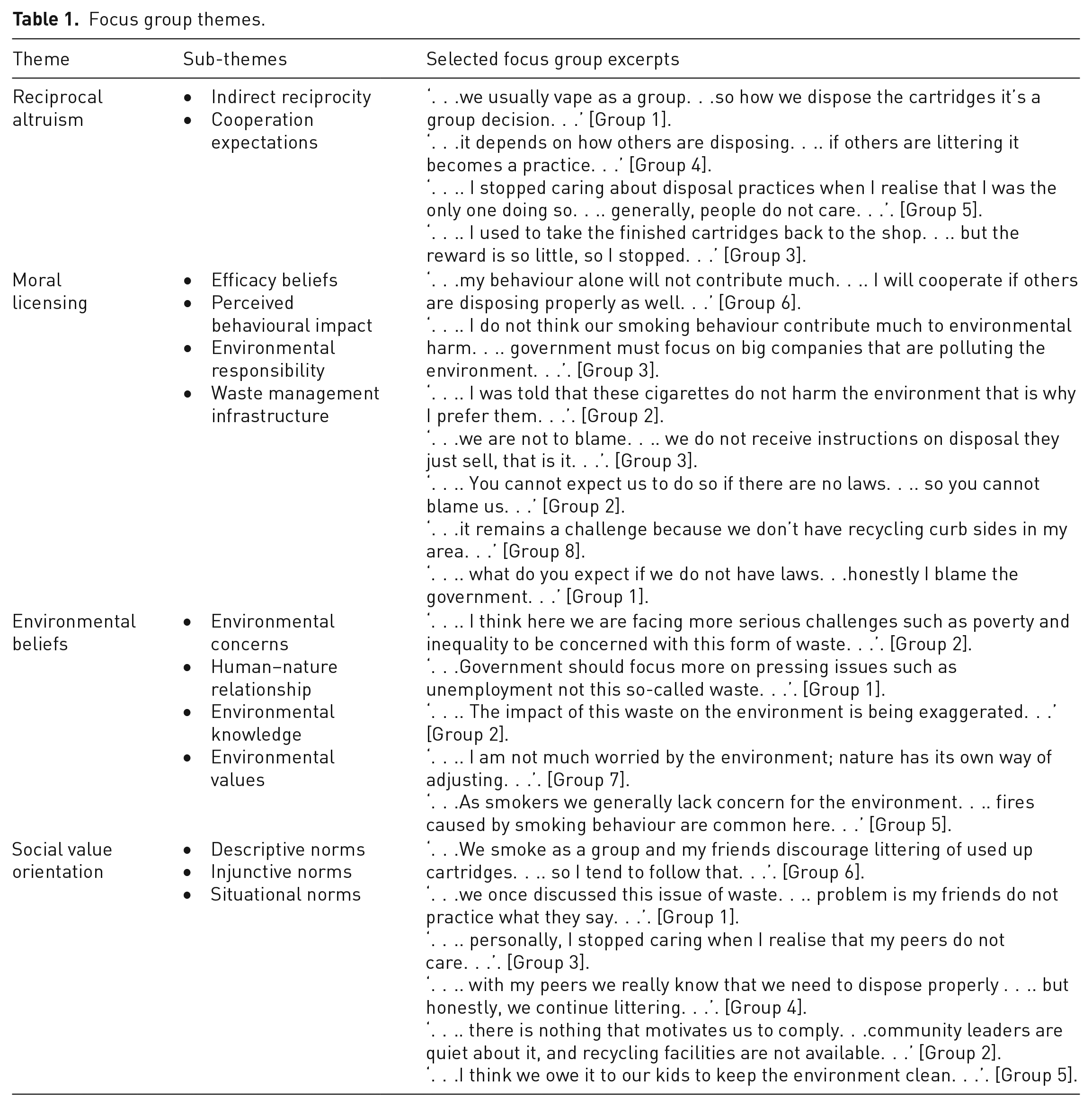
Table 1 presents the emergent themes, sub-themes and representative focus group excerpts:
Discussion
Reciprocal altruism was identified as one of the main factors influencing the responsible disposal of e-cigarette waste. Participants stated that they are more likely to engage in responsible e-cigarette waste disposal if fellow e-cigarette users are also doing so. This result is consistent with the findings of previous studies on towel reuse in hotels (Goldstein et al., 2008) and violence mitigation (Berkowitz, 2004. This result also gains theoretical support from the SNA and the concept of direct reciprocity (Trivers, 1971). The SNA’s principle of conformity argues that individuals tend to conform to what others do (Burchell et al., 2013), whereas the concept of direct reciprocity (Trivers, 1971) states that other people’s behaviours influence the extent to which individuals cooperate to engage in prosocial behaviours. Based on this result, it follows that e-cigarette users are more likely to engage in eco-friendly disposal of e-cigarette waste if they perceive that their counterparts are also cooperating to reduce littering behaviour.
The study also revealed that there seems to be no strong sense of social value regarding responsible e-cigarette waste disposal among e-cigarette users. In particular, the narratives from participants suggest a conflict between descriptive norms (what people do) and injunctive norms (what is approved). The common refrain was that although e-cigarette users understand the importance of responsible disposal, the actual behavioural practice is still lacking. This result is consistent with those reported in previous studies (Nolan and Warner, 2015). The most plausible explanation for this result could be that most smoking happens away from peer networks, weakening the potential influence of social value. As social value is extrinsically motivated (Cialdini and Goldstein, 2004), the social value attributed to responsible disposal of e-cigarette waste may be less significant to e-cigarette users. However, this argument does not imply that the influence of social values is entirely irrelevant, as other e-cigarettes are consumed and disposed of in social circles, which are susceptible to social influence (Caruana, 2016).
Participants also morally licensed their reluctance to engage in responsible disposable of waste based on low behavioural efficacy perceptions, attribution of responsibility and claims of limited availability of waste management infrastructure. This result is in accordance with previous studies, which support the view that low efficacy perception is a major barrier to behavioural performance (Bockarjova and Steg, 2014; van der Linden et al., 2015). In fact, participants in this study were characterised by low self-efficacy and low outcome expectations. Low self-efficacy expectations were based on the limited availability of waste management infrastructure. In addition, low outcome expectation was based on the perception that their actions’ behavioural impact will not do much since large companies are contributing more to environmental harm. Based on this result, it follows that efforts to manage e-cigarette waste could be enhanced by improving the efficacy perceptions of e-cigarette users.
Efforts to curtail the growth in e-cigarette waste were also found to be belied by ecological beliefs. In this study, ecological beliefs capture views on the human–natural environment relationship. There was a heterogeneity of views with other participants assuming an indifferent stance on the need to preserve the environment. One of the recurring refrains was that the environment’s well-being is not an immediate concern. Yet, other participants also underscore the importance of protecting the environment for the sake of future generations. Other studies also report the prevalence of mixed ecological beliefs (Erdogan, 2009; Husted et al., 2013). Therefore, this result suggests that social marketers need to consider ecological beliefs as a barrier to managing e-cigarette waste. Social markets should direct their efforts to correct the perception that e-cigarettes are environmentally friendly.
Managerial implications
The study notes the importance of reciprocal altruism in promoting responsible e-cigarette waste disposal. Consistent with this result, social marketers may need to develop campaigns that emphasise the importance of cooperative behaviour to address collective environmental problems. This approach has the potential to be effective, as individuals were found to be enticed by the desire for a cooperative reputation associated with voluntary participation in prosocial behaviours (Berger and Karabenick, 2016; Brandt and Sigmund, 2006). Such messages may be disseminated through online platforms that are used to market e-cigarettes. Cooperative behaviour may also be encouraged through the use of incentives such as discounts or nudges for e-cigarette waste hardware returned to a recycling facility. The use of nudges and incentives proved to be effective in other prosocial studies such as the use of reusable shopping bags (Homonoff, 2018). For this to be effective, manufacturers and retailers of e-cigarettes should publicise end-of-life buy-back programmes using multimedia communication channels.
Policymakers in South Africa are urged to develop laws that regulate the disposal of e-cigarette waste. Such proposed legislation should specify the environmental e-cigarette standards, provide a certification framework for e-cigarettes, mandatory environmental impact assessment, publication of health hazards associated with e-cigarettes and compel marketers of e-cigarettes to educate users on responsible waste disposal. As part of consumer education, disposal guidelines may be included on the package. As disposable e-cigarettes are known to contribute to more e-waste, like plastic bag ordinances, policymakers may use incentives or nudges to promote the use of reusable e-cigarettes. According to Hendlin (2018), this can be done as part of extended producer responsibility programmes.
The findings highlight the importance of promoting social norms related to eco-friendly e-cigarette waste disposal. Inculcating pro-environmental social norms amongst e-cigarette users has the potential to reduce environmental pollution and improve the quality of life for communities. Social marketers may also need to emphasise the potential contribution of eco-friendly disposal practices of e-cigarette waste to a circular economy, which has the potential to create job opportunities. Social marketers also need to develop educational campaigns that seek to align ecological beliefs with the goal of environmental sustainability. Current environmental challenges such as floods and drought may be used to justify that the well-being of the environment should be considered as an immediate challenge.
To address the low levels of efficacy perceived by e-cigarette users, social marketers may need to highlight that the goal of attaining environmental sustainability requires the cooperation of everyone. Social marketers may reinforce this view by emphasising that individual efforts drive power efficacy (Gifford and Nilsson, 2014, Huang, 2016). To enhance a shared sense of responsibility, social marketers in South Africa may also lobby for extended producer responsibility in providing recycling facilities and consumer education. Extended producer responsibility initiatives proved effective in plastic bag governance in Finland and France (Larsen and Venkova, 2014). In this regard, the e-cigarette industry presents a particular challenge because companies own some brands, whereas others are independently owned, coupled with the predominant use of online platforms for marketing.
Limitations and further research
Although this study provides valuable contributions to efforts aimed at addressing the problem of e-cigarette waste, it has some inherent limitations. This study relied on cross-sectional data collected from VFGs. This limits the generalisability of the findings, which can be improved by a more representative quantitative study. Such a study may also focus on understanding the interrelationships between social norm dimensions such as descriptive norm, subjective norm and e-cigarette waste disposal behaviour. This study was also limited in scope as it only focused on e-cigarette waste during the end-of-life stages. In order to have a detailed understanding of the impact of e-cigarettes on public health and the environment, additional research on the influence of e-cigarette vapour on air quality, especially in indoor environments, is recommended.
Conclusion
The study notes the adverse environmental and public health effects caused by irresponsibly disposed e-cigarette waste. The findings of this study underscore the need for the implementation of concerted downstream and upstream policies that incorporate strong incentives and disincentives. At consumer level, there is need to disseminate information on the benefits of reducing e-cigarette and costs of irresponsible disposal of e-cigarette waste. Improved quality of life due to reduction in pollution, monetary benefits from participating in recycling programmes, product return schemes and employment opportunities provided by adopting circular economy principles can be used as key benefits to promote behavioural change. As e-cigarette information is commonly shared on online platforms, social norms emphasising responsible disposal of e-waste can be engendered with the aid of opinion leaders. This may prove to be a viable long-term strategy as it promotes self-regulated behaviour, which lessons the enforcement burden of e-cigarette waste disposal laws.
The study findings also point to the need by policymakers to compel the e-cigarette industry to take more responsibility in addressing the problem of e-cigarette waste. Manufacturers and retailers of e-cigarettes should be compelled to implement consumer-centred recycling programmes and end-of-life product return initiatives as part of their extended supplier responsibilities. Accountability to reduce e-cigarette waste may also be enhanced by developing laws that regulate the disposal of e-cigarette waste in South Africa. Such an envisaged legislation should specify the environmental e-cigarette disposal standards, insisting on mandatory environmental impact assessment, publication of health hazards associated with e-cigarettes and compel marketers of e-cigarettes to educate users on responsible waste disposal.
Footnotes
Author contributions
All authors contributed equally to the development of this study.
Declaration of conflicting interests
The authors declared no potential conflicts of interest with respect to the research, authorship, and/or publication of this article.
Funding
The authors disclosed receipt of the following financial support for the research, authorship, and/or publication of this article: The authors thank the Vaal University of Technology for funding this study.
Disclaimer
The views expressed in this article are those of the authors and do not represent an official position of the institution or the funder.
