



Abstract
The success of demolition waste reverse logistics supply chains (DWRLSCs) depend on the market uptake of reprocessed construction materials (RCMs) since resource recovery will not be viable without a well-developed consumption process. However, usage of RCMs is sparse while there is also limited focus in existing research on their market uptake. Therefore, this systematic literature review (SLR) attempts to discern trends in research on the use of RCMs and identify factors that limit their uptake. 52 articles from three databases published between 2000 and 2021 were selected for descriptive and content analyses. Descriptive analysis showed growing research interest in the area over the last 5 years. Content analysis was underpinned by Attitude-Behaviour-Context (ABC) Theory which focuses on pro-environmental consumer decisions. As predicted by the theory, a mix of personal and contextual factors affect the low uptake of RCMs. Negative attitudes, reluctance to change the status quo and limited decision-making capabilities were identified as personal factors that limit the use of RCMs. Similarly, contextual factors such as price, quality, information availability, market availability, sourcing lead times and lack of regulations, standards, and specifications inhibit the use of such materials. The review also proposes several future research directions to expand knowledge around this domain.
Keywords
Introduction
Globally, the construction industry consumes up to 50% of all materials extracted from nature (Norouzi et al., 2021; Ruuska and Häkkinen, 2014; Verhagen et al., 2021). Continuous large-scale extraction of natural resources fuelled by the growing construction demand can have negative consequences such as depletion and contamination of natural resources, loss of biodiversity, increased greenhouse gas emissions and adverse climate impacts (Bell, 2018; Oyedele et al., 2014). While being an industry with substantial resource consumption levels, construction also ranks high amongst the largest generators of waste (Tennakoon et al., 2022). Construction and demolition waste (C&DW) accounts for approximately 30–40% of total solid waste generated worldwide and these values continue to increase (Akinade et al., 2018; Li et al., 2020a; Oyedele et al., 2014; Purchase et al., 2022).
When compared to construction waste, demolition waste (DW) generated in dismantling end-of-life buildings account for a significantly higher proportion of the total volume of C&DW (Chileshe et al., 2019; Srour et al., 2012). Therefore, it is important to prioritize the management of DW, since it can have a greater impact on minimizing the overall negative environmental impacts of C&DW. Landfilling is the preferred method for managing DW, as evident by the high landfill rates (Huang et al., 2018; Pickin et al., 2018; Tam et al., 2018; Yu et al., 2013;). However, this is not sustainable in the long run due to the higher environmental costs of landfilling and the diminishing availability of landfill sites (Bao et al., 2019; Caldera et al., 2020). Therefore, the construction industry has attempted to adopt the concept of reverse logistics (RL) to address the problems of high resource consumption and waste generation (Hosseini et al., 2015; Nunes et al., 2009; Schultmann and Sunke, 2007).
RL for DW can be interpreted as the movement of DW material and related information from the point of dismantling end-of-life buildings to the point of new construction (Hosseini et al., 2015). RL involves a series of activities from retrieving used materials, converting them to alternative uses and disposing-off any residual waste, and is collectively referred to as the demolition waste reverse logistics supply chain (DWRLSC) (Nasir et al., 2017). Jayasinghe (2019) identified dismantling, reprocessing, market operations and residue disposal as the four key process stages of the DWRLSC. Dismantling is the process of demolishing or deconstructing an end-of-life building which results in the generation of DW (Aidonis, 2019). This is followed by reprocessing where the DW generated during dismantling is recovered through different reprocessing techniques. Materials recovered through reprocessing are then sent to the market to be used in new construction applications, thereby creating a circular resource flow (Jayasinghe et al., 2019b). Any residual waste that cannot be recovered is ultimately disposed of. RL minimizes the volume of DW landfilled while also reducing the demand for virgin resources.
According to Chick and Micklethwaite (2004), successful RL requires more than simply collecting and reprocessing DW. It also requires a well-developed consumption process. Without giving due consideration to the ‘consumption’ or ‘market’ aspect of the RL equation, the authors argue that the process of resource recovery will not be sustainable in the long run. This idea is supported by multiple studies which emphasize the fact that the market uptake of reprocessed construction materials (RCMs) can have a direct impact on the success of resource recovery activities. Both Spoerri et al. (2009) and Yuan et al. (2011) identified a functioning market with sufficient demand for recycled materials as a major requisite for the success of recycling schemes. Spoerri et al. (2009) went on to mention market demand as the most decisive factor in determining recovery rates for DW, which is further supported by Srour et al. (2012). Similarly, He and Yuan (2020) highlighted that the motivation of end-users to use RCMs has a direct impact on the productivity DWRLSCs. These findings support the assertion of Oyedele et al. (2014) that the marketability of materials derived through RL operations is crucial for minimizing the substantial volumes of DW disposed of in landfills.
Despite the significance placed on the market uptake of RCMs, usage of such materials is limited (Chen et al., 2019; Silva et al., 2017). Most construction actors rely on conventional construction materials and show a conservative attitude towards the broad use of recycled materials (Knoeri et al., 2011). Existing research shows that mainstream applications of RCMs are limited. Several studies from the United Kingdom found that recycled materials are under-utilized in construction projects and their acceptance is low within the construction industry (Oyedele et al., 2014; WRAP, 2009). Similarly, Schut et al. (2015) reported that in the Netherlands, although around 95% of C&DW is recycled, only 3–4% of this is being used in high-grade applications while the majority is put into lower grade uses or is disposed of without any value recovery. As noted by Chileshe et al. (2015), the most significant barrier to adopting RL practices in the Australian construction industry is the paucity of incorporating RCMs for new construction applications. Based on a survey of the Chinese construction industry, Jin et al. (2017) also concluded that there is a clear lack of demand for RCMs in the construction market. These findings point to the low market uptake of RCMs for construction applications, which ultimately drives down waste recovery rates. Moreover, the majority of research on DWRLSCs has mainly focused on dismantling and reprocessing stages with limited attention given to the market operations stage (Govindan et al., 2019; Kabirifar et al., 2020; Oyedele et al., 2014). This further emphasizes the need for expanding research on the market operations stage of the RL equation.
Following on from this background and by adopting a systematic literature review (SLR) approach, the present study attempts to answer two pertinent research questions: (1) What are the trends in research on the use of RCMs? (2) What factors affect the low uptake of RCMs in construction applications? Initially, a descriptive analysis was employed to discern trends in research on the use of RCMs. This was followed by a content analysis based on the Attitude-Behaviour-Context (ABC) Theory to identify factors that affect the low uptake of RCMs. The findings of this review will be useful in enhancing the use of RCMs, thereby ensuring the long-term sustainability of DW recovery operations. The review is well aligned with the United Nations Sustainable Development Goals, specifically Goal 12 on ensuring sustainable consumption and production (United Nations Department of Economic and Social Affairs, 2022). By addressing the ‘market’ or the ‘consumption’ aspect of DWRLSCs, that is, the uptake of RCMs, this paper contributes to the discussion on sustainable development.
The paper is structured as follows. Section ‘Theoretical background’ of the paper elaborates in detail, the theoretical background for the study based on ABC theory. Section ‘Methodology’ explains the review methodology from the formulation of the research question to the reporting and the use of results. Section ‘Findings’ presents a detailed analysis of the study findings based on the descriptive and content analysis undertaken. This is followed by Section ‘Discussion and future research directions’ on the discussion of study findings coupled with potential future research directions. Section ‘Conclusions’ concludes the paper by highlighting the key study outcomes.
Theoretical background
Purchase and use of environmentally responsible products that minimize negative environmental impacts, and whose production process involves the use of recycled, carbon neutral, or bio-degradable inputs fall within the ambit of pro-environmental consumer behaviour (Grimmer et al., 2016; Stern, 2000). Going by this rationale, the use of RCMs can be viewed as a form of pro-environmental consumer behaviour. Therefore, decision-making theories with a specific focus on environmentally conscious decision-making were referred to ahead of this review to develop a more coherent understanding of factors that impact pro-environmental consumer decisions. We contend that the absence of such factors which drive pro-environmental decisions among construction actors would result in the low uptake of RCMs.
Guagnano et al. (1995) highlighted that the study of behaviour in social sciences takes two distinct approaches. One approach studies behaviour as a function of processes internal to an individual whereas the other considers behaviour to be a function of the context. Most behavioural theories have been developed along these respective lines of thought and this distinction is evident in research on pro-environmental consumer decision-making as well. This is affirmed by the findings of Ertz et al. (2016) and Zhang and Dong (2020) who identified two sets of causal variables used to predict pro-environmental behaviours; the first set is related to personal factors and the second set is related to objective contextual factors. Traditionally, research on pro-environmental behaviour focused on the impact of personal factors such as attitudes, values and beliefs while ignoring the impact of contextual factors (Black et al., 1985; Corraliza and Berenguer, 2000; Grimmer et al., 2016). This was identified as a shortcoming of behavioural research since focusing on personal factors alone ignores the effect of contextual factors on purchase behaviour (Carrington et al., 2010; Corraliza and Berenguer, 2000). Similarly, focusing exclusively on contextual factors underrepresents the effect of personal factors on pro-environmental behaviour (Ertz et al., 2016). Individual behaviour should therefore be considered as an outcome of the combined effect of both personal and contextual factors (Ertz et al., 2016). With this realization, another stream of theories emerged which explains the integrated effect of both personal and contextual factors on pro-environmental behaviour (Carrington et al., 2010; Guagnano et al., 1995; Zhang and Dong, 2020). This integrated approach towards theory development was advocated by Guagnano et al. (1995), who mentioned that ‘theories from distinct perspectives tend to view individuals as either atomistic agents autonomous of social structure or automatons programmed by forces beyond their comprehension or control’ (p. 700). Accordingly, Guagnano et al. (1995) presented the ABC theory which explains the combined effect of both personal factors (Attitudes) and contextual factors (Context) on pro-environmental behaviour.
ABC theory builds upon the work of Stern and Oskamp (cited in Guagnano et al., 1995) who contend that environmentally relevant action is an outcome of the combined effect of personal factors such as attitudes and beliefs of individuals and contextual factors such as economic forces, physical structures and social institutions. ABC theory posits that environmentally relevant actions or behaviours (B) are associated with attitudes (A) of individuals as well as the context (C) (Guagnano et al., 1995). Where other things are equal, actions which are inconvenient, difficult or expensive (negative C) will be relatively rare whereas those which are convenient, straightforward and inexpensive (positive C) will be very common. Similarly, with other things being equal, actions which are strongly favoured by individuals (positive A) will be more prevalent whereas those which are strongly opposed (negative A) will be rare. Unlike other theories on pro-environmental behaviour such as the Value-Belief-Norm Theory or the Theory of Planned Behaviour, ABC theory has the unique ability to provide a thorough account of pro-environmental behaviour by combining the influence of both personal and contextual factors, which is the strength of this model compared to other behavioural theories (Ertz et al., 2016; Okumah et al., 2020).
Stern (2000) further developed ABC theory by identifying four types of causal variables that influence environmentally significant behaviour or actions. These include attitudinal factors, personal capabilities, habits or routines and contextual factors, elaborated in detail as follows:
Attitudinal factors
Attitudes reflect the predisposition to act with pro-environmental intent which would subsequently influence pro-environmental behaviour (Ertz et al., 2016; Stern, 2000). According to Stern (2000), attitudinal factors such as perceived costs and benefits of action, behaviour-specific beliefs and norms and non-environmental attitudes (e.g. product quality) can affect pro-environmental behaviour. Such pre-existing tendencies to consider pro-environmental behaviours favourably, increase the probability of actually adopting pro-environmental behaviours (Ertz et al., 2016).
Habits or routines
Product use behaviours tend to be highly repetitive (Zhang and Dong, 2020). As mentioned by Stern (2000), most pro-environmental behaviours are a matter of personal habit or routine. To change behaviour, old habits must be broken down to allow the creation of new ones (Dahlstrand and Biel, 1997). Therefore, environmentally unfriendly habits would have to be broken down and replaced with pro-environmental habits to promote pro-environmental behaviour.
Personal capabilities
As defined by Stern (2000), personal capabilities include the knowledge and skills required to undertake pro-environmental behaviours and the availability of other general capabilities and resources such as time, money, literacy, social status and power.
Contextual factors
According to Guagnano et al. (1995), pro-environmental behaviours have external conditions associated with them which can either support or oppose such behaviours. ABC theory refers to these external conditions as contextual factors, which can include features of the broad social, economic and political context (Guagnano et al., 1995; Stern, 2000). Material costs, pricing regimes, availability of resources, time commitment, access to technology, government regulations, advertizing, etc. all fall under the definition of contextual factors that affect pro-environmental behaviours (Ertz et al., 2016; Grimmer et al., 2016; Stern, 2000). According to Carrington et al. (2010), a positive situational context facilitates the transition of intentions into actual behaviour.
The first three variables relate to individuals while the fourth relates to external conditions or the context. According to Stern (2000), studies that focus on a single variable would not provide a complete understanding of environmentally significant actions and therefore, the combined effect of all the above four categories of variables must be considered.
We use ABC theory as a basis for analyzing the selected studies to identify and classify factors that affect the low uptake of RCMs. Here, the pro-environmental behaviour considered is the use of RCMs. According to ABC theory, this behaviour will be determined by personal factors such as attitudes regarding the use of RCMs among user groups and contextual factors such as price, quality and availability. Review findings are therefore broadly classified and discussed under these two areas. Figure 1 depicts this theoretical basis for the review.
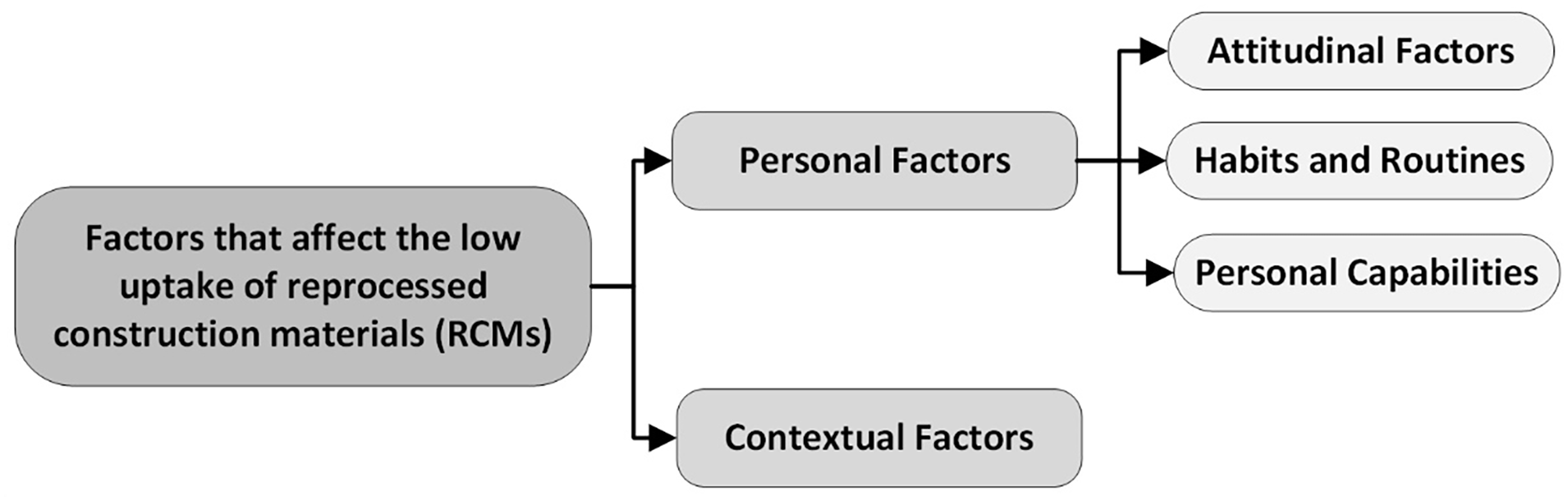
Theoretical basis for the review based on ABC theory.
ABC theory is useful for analyzing the review findings due to several reasons. Firstly, ABC theory is highly appropriate for analyzing pro-environmental behaviour since the theory has its origins in the domain of environmental studies (Guagnano et al., 1995). Secondly, unlike other behavioural theories that focus on either personal factors or contextual factors that affect behaviour, ABC theory provides a more thorough understanding of pro-environmental behaviour, which in reality is determined by the interaction of both personal and contextual factors (Guagnano et al., 1995; Stern, 2000). Thirdly, ABC theory is grounded upon more than 30 years of research and has been used for research on understanding and exploring pro-environmental consumer behaviour and decision making (Ertz et al., 2016; Okumah et al., 2020; Zhang and Dong, 2020).
Methodology
A SLR is defined as a structured approach for creating knowledge about a specific field of study, based on evidence from multiple sources (Briner and Denyer, 2012). Since SLRs are based on a strict set of guidelines, the process followed is scientific, transparent and replicable (Denyer and Tranfield, 2009). SLRs that adopt rigorous selection criteria and analysis and reporting methods allow combining existing knowledge from different sources to create new knowledge (Ali et al., 2017; Denyer and Tranfield, 2009). Accordingly, this SLR attempts to capture scattered knowledge on the use of RCMs to generate new insights. This review follows the 5-step approach for conducting SLRs proposed by Denyer and Tranfield (2009) (Figure 2), which has been used successfully in previous SLRs (Ali et al., 2017; Tennakoon et al., 2022).
Step 1: Question formulation: Well-formulated review question(s) sets the focus for the review and determines which studies are to be included, what search strategy should be followed and what data needs to be extracted from each study (Denyer and Tranfield, 2009). Accordingly, two review questions were formulated: (1) What are the trends in research on the use of RCMs? (2) What factors affect the low uptake of RCMs in construction applications?
Step 2: Locating studies: Scopus and Web of Science were selected as primary databases for the literature search. These databases were selected because they encompass an extensive collection of literature, are readily accessible through academic institutions and have been used for SLRs in similar areas of study (Jayasinghe et al., 2019a, 2019b; Kabirifar et al., 2020; Wijewickrama et al., 2021a, 2021b; Wu et al., 2019; Zhao et al., 2022). Both Scopus and Web of Science also offer advanced search capabilities which facilitate more targeted searches for precise location of studies. After the primary search from Scopus and Web of Science was completed, a secondary search was conducted using Google Scholar to identify any important studies which might have been missed out during the primary search. A similar approach was used by Kabirifar et al. (2020) in their review of factors contributing to C&DW management. A set of keywords were developed based on the review question to capture those studies that focus on RCMs. A search string was developed by combining the keywords using the Boolean operators “AND” and “OR” as follows: (‘Recycl*’ OR ‘reus*’ OR ‘remanufactur*’) AND (‘construction material’) AND (‘access*’ OR ‘use’ OR ‘trad*’ OR ‘market*’). The asterisk (*) symbol was used as a wildcard character to broaden the scope of the search by capturing alternative endings for the keywords. This search string enabled capturing studies that focused on specific RCMs (e.g. recycled aggregates, timber, bricks, etc.) or all RCMs in general, as evidenced through the primary database search. The timeline for the search was set from 2000 to April 2021, at which point the search was carried out. The year 2000 was set as the starting point for the literature search since publications related to resource recovery in the construction industry started to appear around that time (Umar et al., 2017; Wijewickrama et al., 2021a).
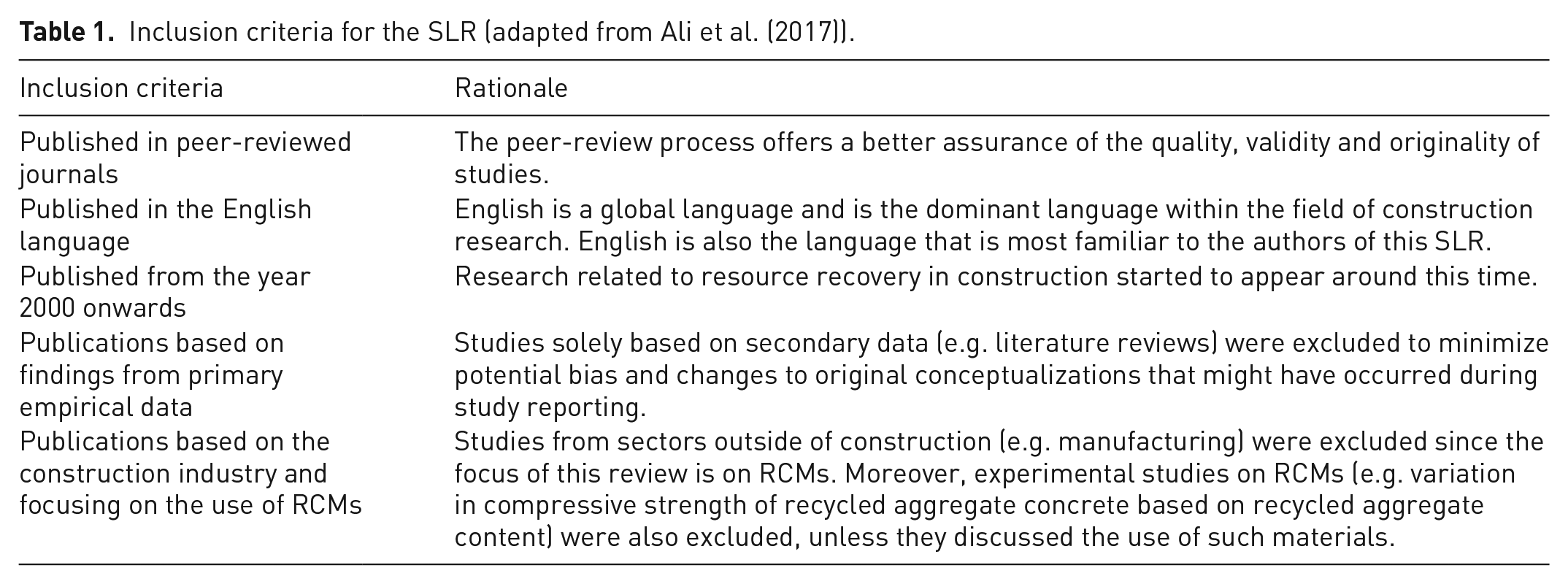
Step 3: Study selection and evaluation: Before study selection, a set of inclusion criteria were developed as shown in Table 1. Articles that did not meet these requirements were removed during the selection process.
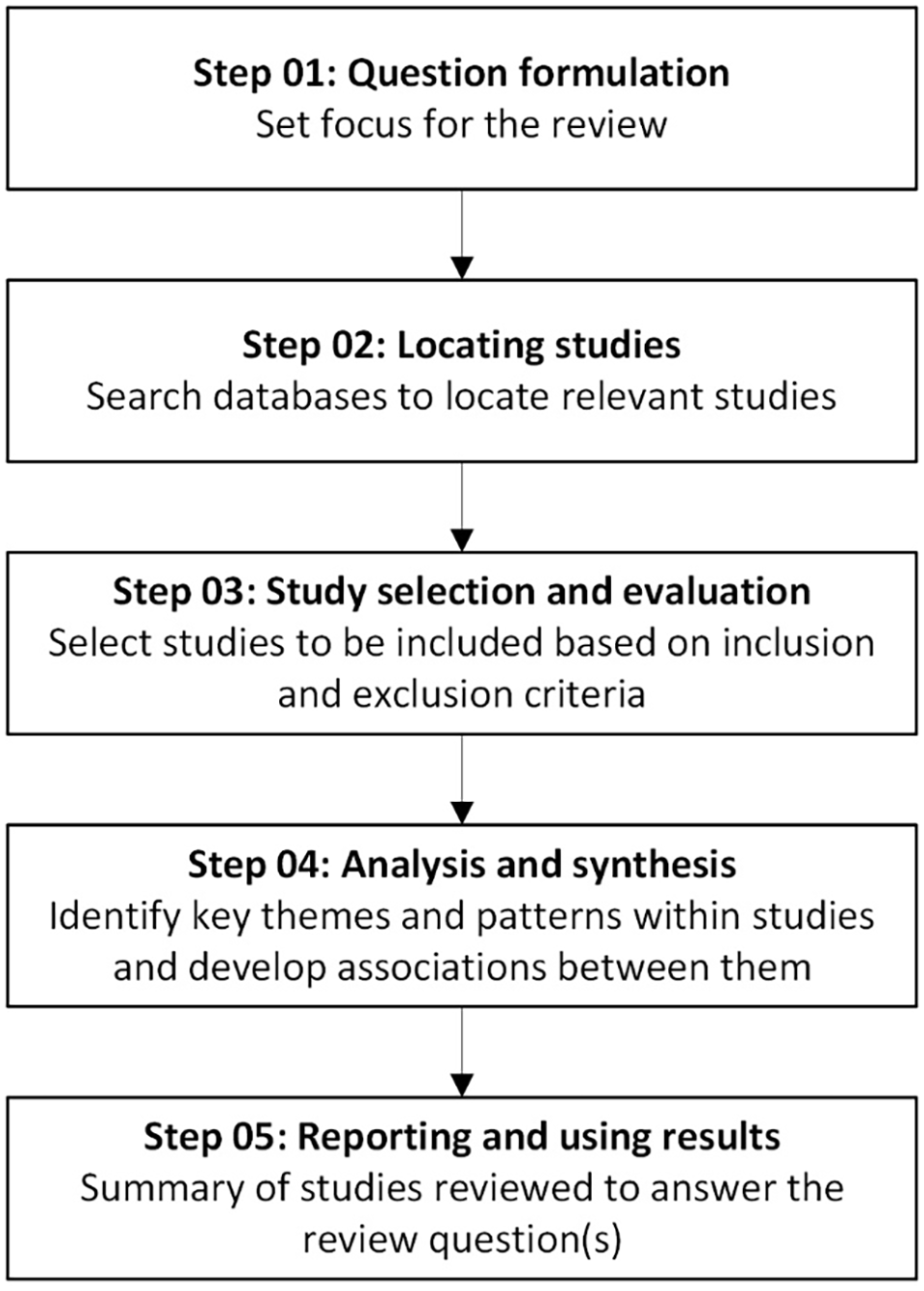
Five-step approach for conducting SLRs (adapted from Ali et al.,2017; Denyer and Tranfield, 2009).
Inclusion criteria for the SLR (adapted from Ali et al. (2017)).
Primary searches on Scopus and Web of Science databases were limited to journal articles published in English from the year 2000 until April 2021. The Title-Abstract-Keywords fields from the two databases were searched which resulted in a total of 1204 articles with 1001 and 203 articles from Scopus and Web of Science respectively. As the next step, the titles of all these 1204 articles were reviewed to determine their suitability for the SLR. Accordingly, 1131 articles were excluded since they did not comply with the inclusion criteria. For example, articles that were not from peer-reviewed journals or other industries such as manufacturing were excluded at this stage. Where it was difficult to determine the suitability of a study solely based on the title, they were taken forward to the abstract-review stage. A total of 73 articles were selected from the review of titles and subsequently, six duplicates were removed. At this point, a secondary search was carried out using Google Scholar to identify any significant studies that were not captured during the primary search. This added a further 21 articles to the already identified collection, which resulted in a total of 88 articles for the review of abstracts. Based on the review of abstracts, 47 articles were excluded altogether, with 44 articles being excluded because they were not highly relevant to the study and three articles being excluded due to lack of access. This resulted in a total of 41 articles for the review of full papers. A cross-referencing of these 41 articles revealed a further 11 articles, bringing the total number of articles included in the final review to 52. Figure 3 adapted from the process diagram developed by Ali et al. (2017) based on PRISMA – 2009 (Preferred Reporting Items for Systematic Reviews and Meta-Analyses – 2009) guidelines, depicts the study selection and evaluation process followed in this SLR.
Step 4: Analysis and synthesis: A complete review of the selected articles was undertaken, and a summary was developed using the Microsoft Excel spreadsheet package. Information about descriptive statistics which includes the source of publication, publication year, geographical location, research method(s), types of RCMs and reprocessing techniques were collected and analyzed to identify trends in research on the use of RCMs. Following a content analysis approach, the content of the articles was broken down under key themes based on ABC theory to identify factors that affect the low uptake of RCMs and associations between these key themes were developed.
Step 5: Reporting and using results: Informed by Grant and Booth (2009), the results of this SLR are reported under two categories: a descriptive analysis and a content analysis. Descriptive analysis conducted provides an indication of research trends on the use of RCMs based on common descriptive statistics such as the source of publication, publication year, geographical location and research method(s) (Akbari, 2018; Dubey et al., 2017). Alternatively, content analysis reveals key themes in existing literature and associations among them (Fereday and Muir-Cochrane, 2006), which in this case are the factors that affect the low uptake of RCMs. Findings from the content analysis are underpinned by ABC theory explained in Section ‘Theoretical background’. Moreover, recommendations for future research are also outlined. Following Prajapati et al. (2019), possible bias in study selection and reporting was minimized with the involvement of three researchers. Selecting, evaluating and analyzing the studies was initially undertaken by the first researcher. Subsequently, any ambiguities that arose were resolved by involving the other two researchers. Collective dialogue among the three researchers led to the development of the finalized version of this review.
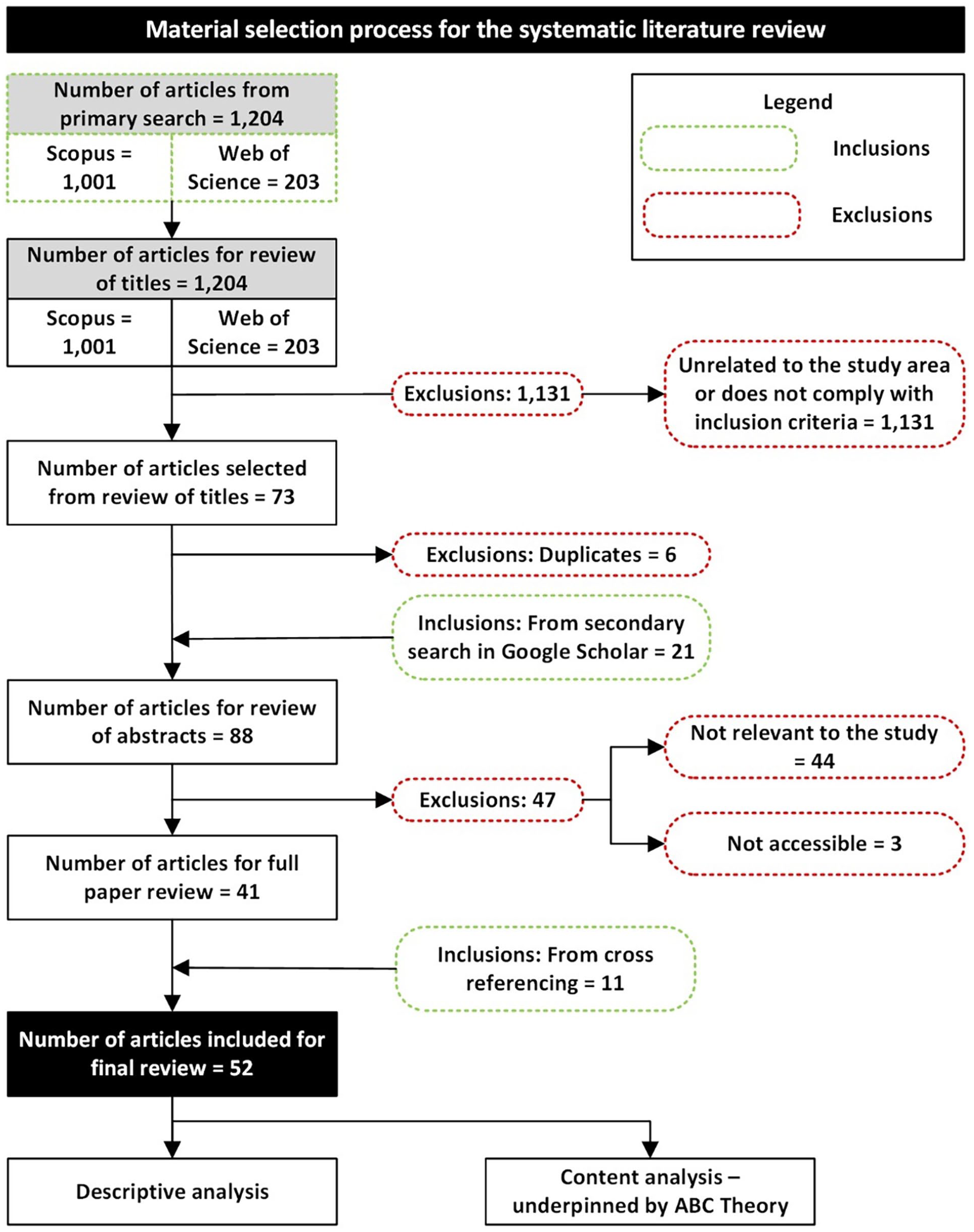
Material selection process for the SLR (adapted from Ali et al. (2017)).
Findings
Findings from the descriptive and content analyses are presented in this section.
Descriptive analysis
The distribution of articles based on the source of publication, year of publication, geographical location, research method(s), type of RCMs and the reprocessing techniques were analyzed under the descriptive analysis to discern trends in research on the use of RCMs. Figure 4 represents the distribution of articles by the source of publication. Accordingly, the highest number of articles was from the journal Resources, Conservation, and Recycling (10), followed by Waste Management (9), Journal of Cleaner Production (6), Sustainability (6) and Waste Management and Research (3). These five journals account for approximately 65% of the articles selected for the review, which indicates that these are the key journals publishing research in this area. Despite most articles being centred around a few key journals, the broad spectrum of journals publishing research in this domain signifies expanding research interest.
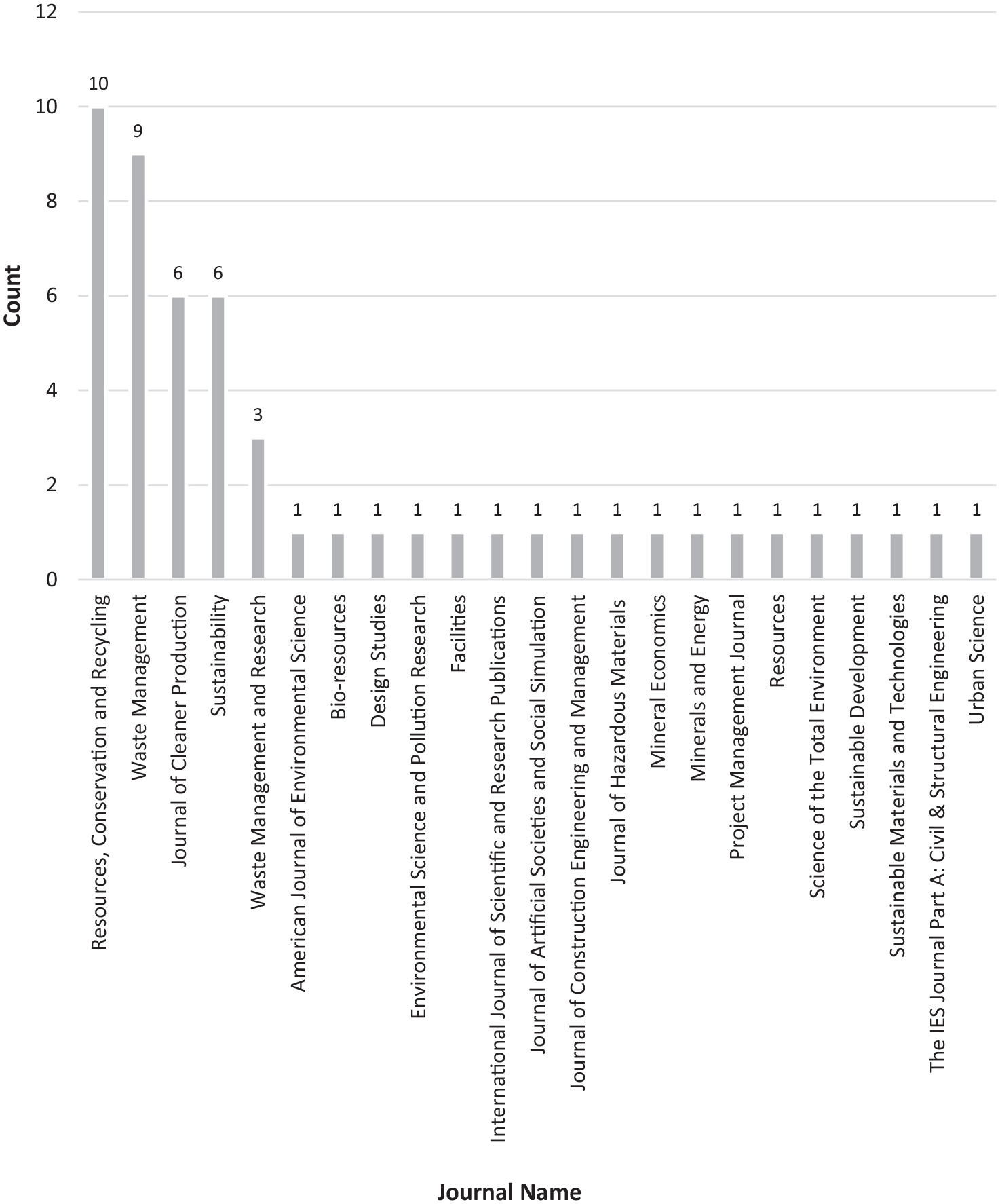
Distribution of articles based on the source of publication.
Figure 5 represents the distribution of articles based on the publication year. Although the search commenced from 2000, no articles from 2000 to 2003 were included in the final review. The number of articles published from 2004 to 2014 remained relatively constant with a dip in publications during 2015 and 2016. However, a surge in publications is evident after 2016, with the highest number of publications per year at 11 being recorded in 2020. It is interesting to note that more than 60% (33 out of 52 articles) of the articles have been published over the last 5 years. This aligns with the findings of Wijewickrama et al. (2020) and Tennakoon et al. (2022) which show growing attention on construction RL, a trend that is likely to continue with expanding interest in sustainability. The number of articles for the year 2021 can be higher since the search was limited to articles published till the end of April 2021, at which point the literature search was carried out.
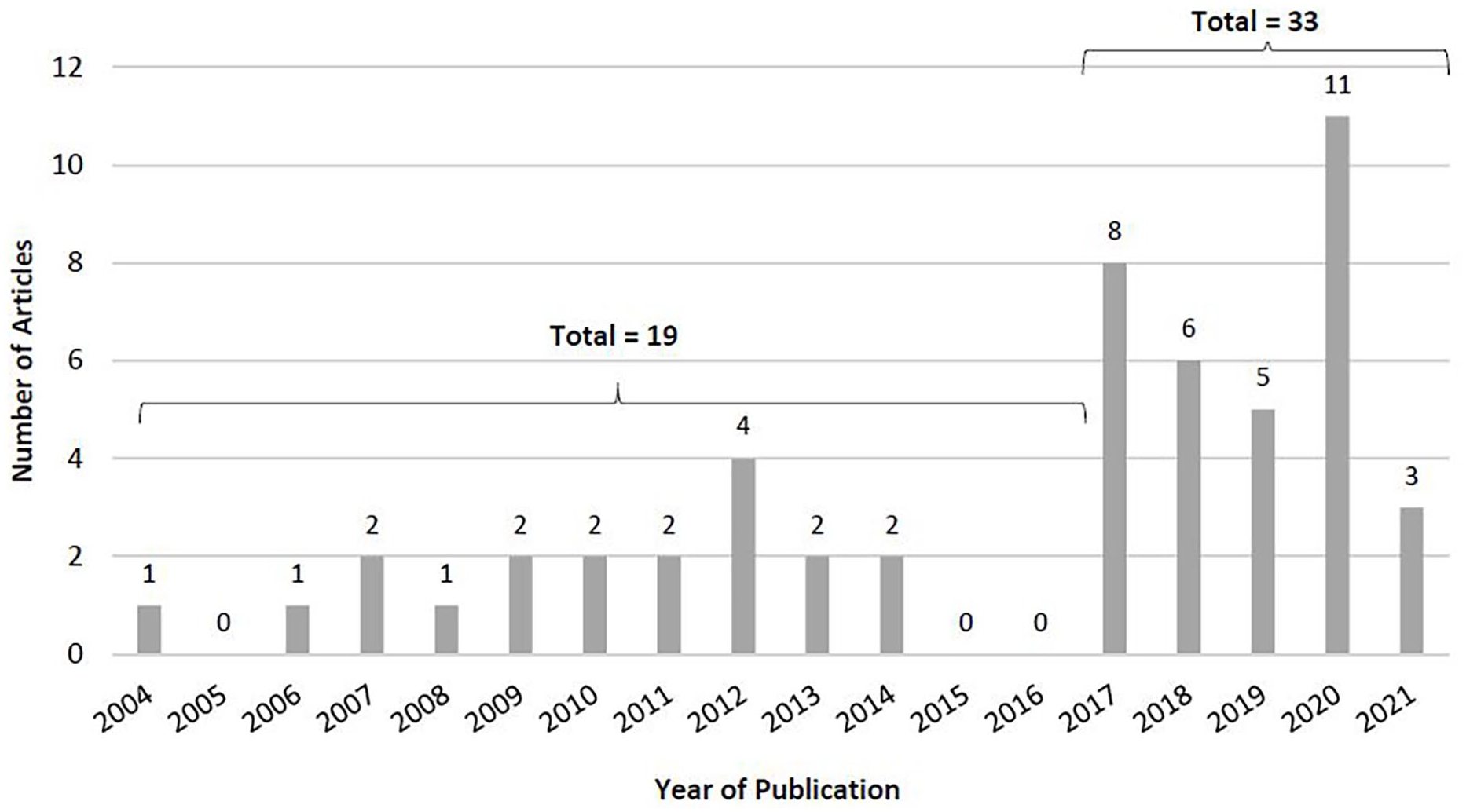
Distribution of articles based on the year of publication from 2004 to 2021.
Figure 6 shows the distribution of articles based on the geographical location, determined by the location of data collection. The highest number of publications are from China (10) followed by the United Kingdom (8). Australia, Switzerland and the United States of America also account for three publications each. This reflects trends in similar literature reviews on RL and circular economy in construction (Munaro et al., 2020; Norouzi et al., 2021; Tennakoon et al., 2022; Wijewickrama et al., 2021b). Four publications represented multiple countries or regional blocks such as the European Union. Geographical location was not available for two studies, but since these studies mainly used modelling approaches, their findings were mostly independent of the location. Figure 6 shows that there is more opportunity for research in this domain from countries in South America, Africa and Central Asia.
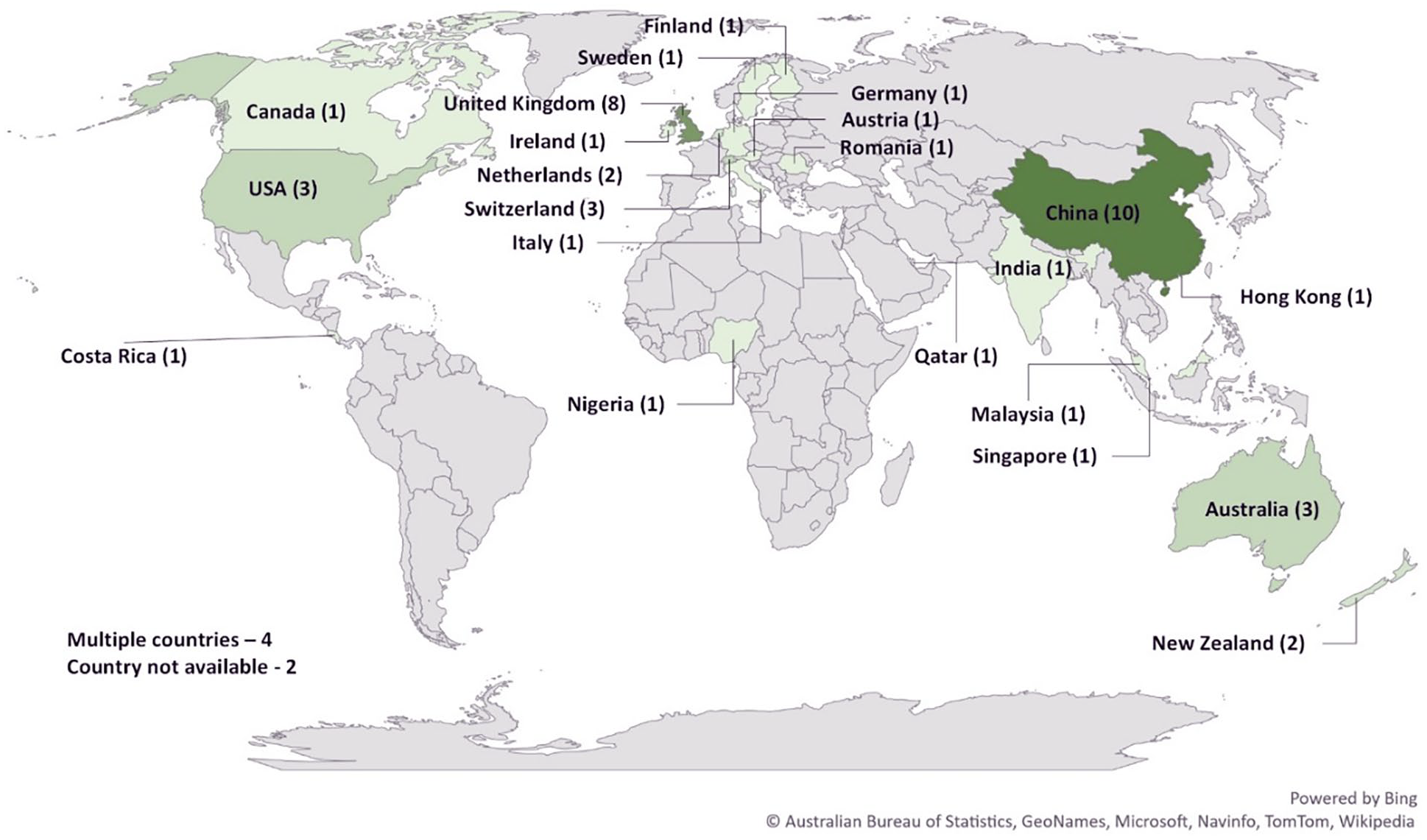
Distribution of articles based on the geographic location.
As shown in Table 2, the research method(s) used in the selected studies were also analyzed under the descriptive analysis. Accordingly, 29 articles used single methods while 23 used multiple methods. Case study was the most popular method under single methods, followed by questionnaire surveys and modelling. Use of different modelling approaches such as agent-based, system dynamic analysis, game-theory and stochastic programming were noted. Under multiple methods, combinations of focus group discussions and questionnaire surveys or interviews and questionnaire surveys were more popular. In such studies, focus groups and interviews were mainly used to develop the questionnaire which was then used to collect data from a larger audience. Although the analysis revealed another SLR undertaken in this context (Correia et al., 2021), the focus there was on identifying barriers and RL practices regarding C&DW. Despite identifying a few factors that limit the use of RCMs, it was not the focus of the review. Moreover, the current SLR covers literature across a broader timeline, evaluating more recent developments in the field. Findings on research method(s) will be useful for future researchers to understand the research method(s) used in this field of study while also proposing novel methodologies.
Distribution of articles based on research method(s).
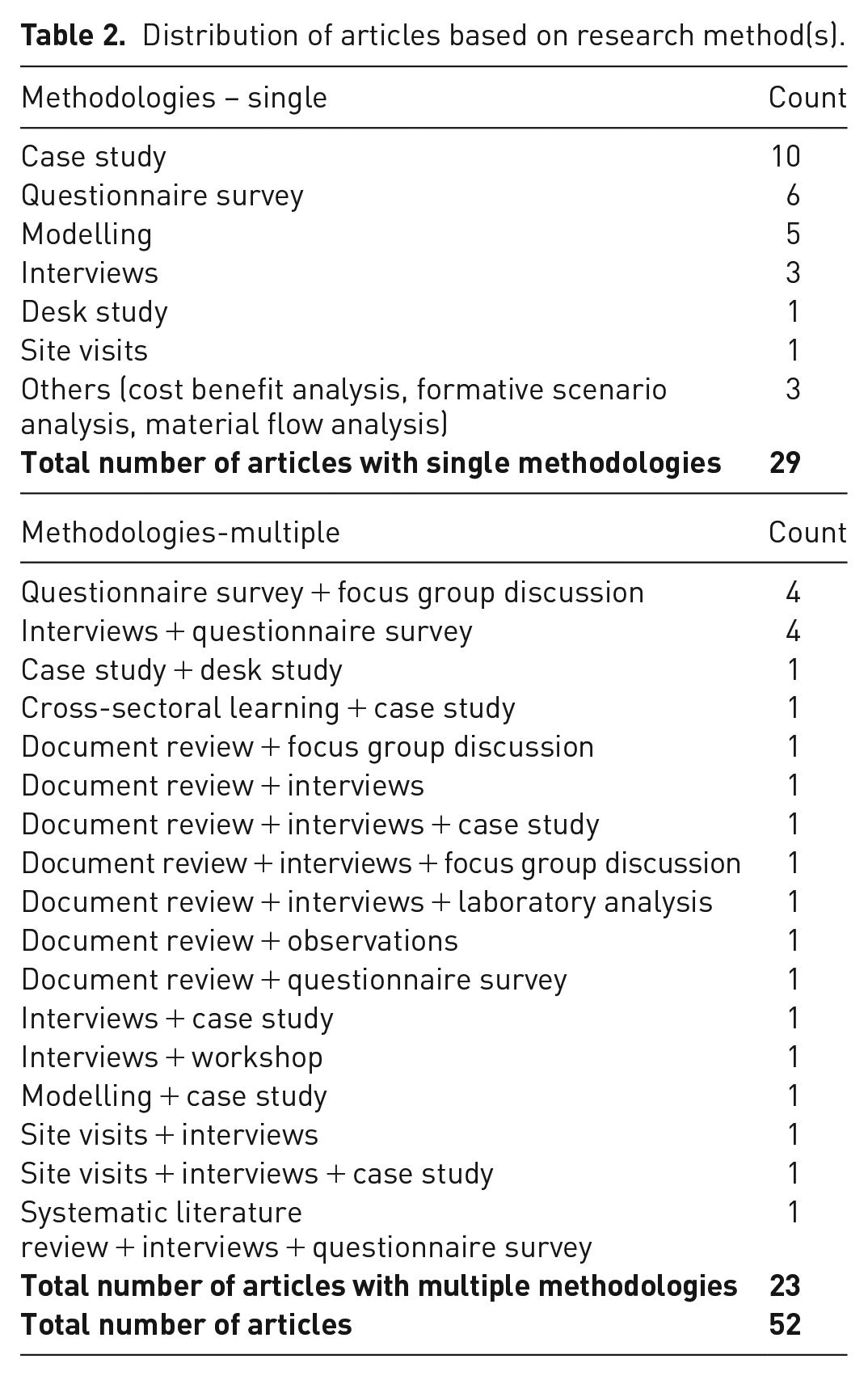
Figure 7 shows the distribution of articles based on the type of RCM considered and the reprocessing technique used. Accordingly, most of the studies were not limited to a specific RCM. A notable number of studies considered a mix of RCMs which mainly included materials such as recycled aggregates, bricks, timber, metals and glass while plastics, plasterboard, carpets and ceramics were also considered in a few studies. Three studies focused on recycled mineral construction materials which is primarily a combination of materials such as recycled aggregates and asphalt, used in civil engineering applications. Only a limited number of studies focused on a single material with recycled aggregate being the main material of focus. This might be because recycled aggregate is the main output from recycling concrete waste, which is the main constituent in most DW mixes (Tam et al., 2018). When considering the reprocessing techniques used, most studies focused on recycling, although it ranks low in the waste hierarchy after reducing and reusing. Combined use of reusing and recycling techniques were identified in studies that considered a mix of materials (e.g. recycling concrete waste into recycled aggregates and reusing bricks as-is with minimum reprocessing). One study emphasized upcycling, where the value of a product is enhanced, unlike recycling where products are downcycled into lower-grade uses (Rose and Stegemann, 2018). Landfill mining which involves the extraction of resources already accumulated in landfills was also identified as a promising avenue for resource recovery (Johansson et al., 2017). Studies without a focus on a specific reprocessing technique considered the DW recovery industry in general, especially aspects such as policy development.
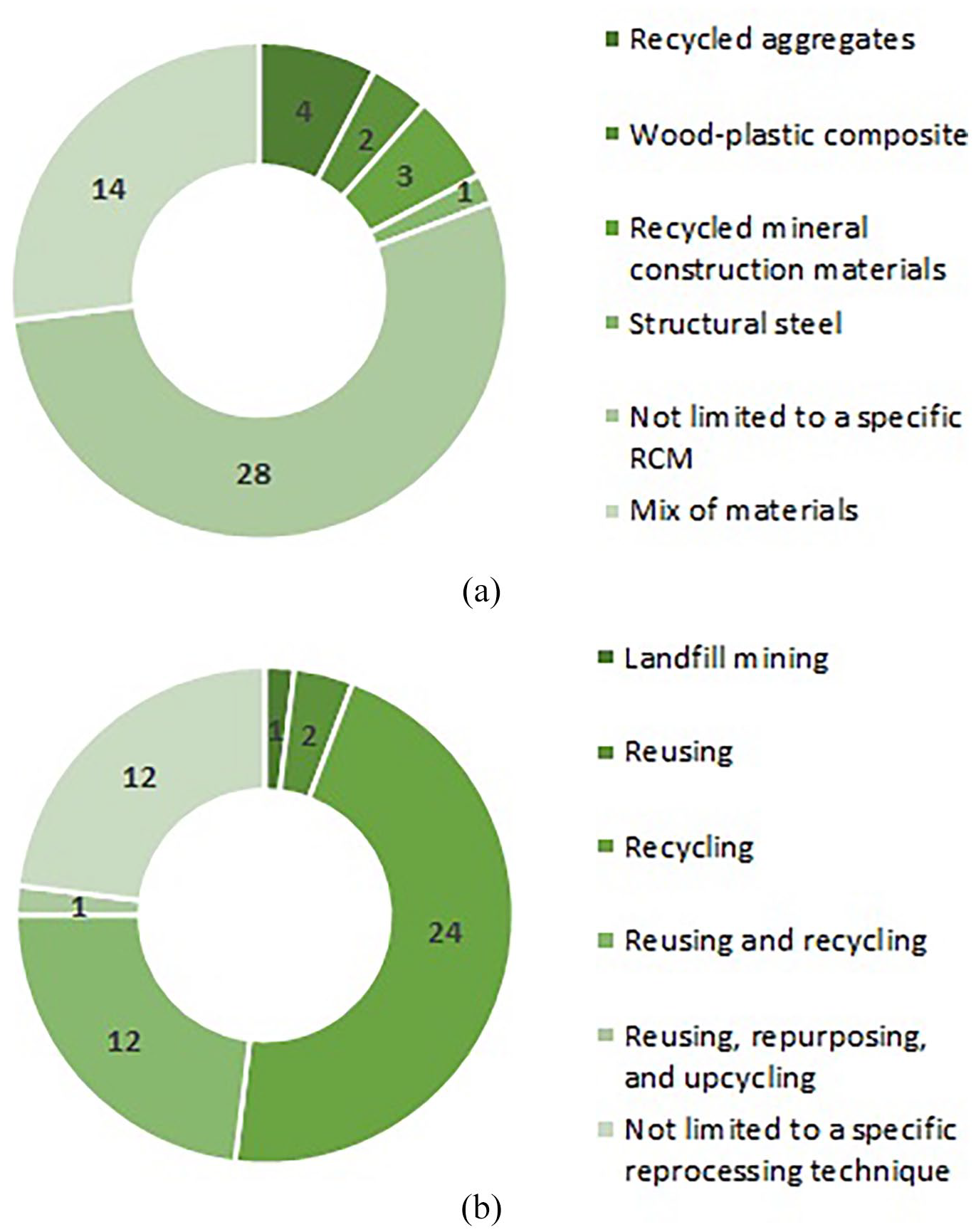
Distribution of articles based on (a) RCMs and (b) reprocessing techniques.
Content analysis
ABC theory was used in this review as a basis for the content analysis. Ensuing sections elaborate on how personal and contextual factors affect the low uptake of RCMs.
Personal factors that affect the low uptake of RCMs
Personal factors that affect the low uptake of RCMs mainly constitute negative attitudes regarding RCMs among construction actors. Moreover, reluctance to change the status quo and limited decision-making capability are also decisive in determining the uptake of RCMs.
Negative attitudes regarding the use of RCMs among construction actors
Negative attitudes among construction actors regarding RCMs are a major reason for the poor uptake of these materials (Abarca-Guerrero et al., 2017; Ajayi and Oyedele, 2017; Jin et al., 2017). Such negative attitudes are evident across different groups of actors including clients, design professionals such as architects and engineers and builders.
Negative attitudes among clients: Negative attitudes among clients have been emphasized in most cases as the primary reason for the low uptake of RCMs. This is rightfully so since ultimate authority over project decisions lies with clients as the initiators and financiers of construction projects (Oyedele et al., 2014). Clients almost always give priority to financial profits at the expense of environmental considerations (Abarca-Guerrero et al., 2017). With the general predisposition that the use of RCMs leads to increased costs, clients have little incentive to use RCMs. As revealed by Oyedele et al. (2014), willingness among clients to pay for green materials such as RCMs is second to cost despite the environmental benefits offered by these materials. Similarly, clients also consider RCMs to be of poor quality (Bao et al., 2020; He and Yuan, 2020; Hosseini et al., 2015). Since RCMs are derived from materials previously used, clients believe that these materials may not serve the required purpose and are not as reliable as virgin materials (Bao et al., 2020; Oyedele et al., 2014). Such negative attitudes about quality and performance weaken purchase intentions and drive down market demand for RCMs. According to Knoeri et al. (2011), clients rarely take initiative and explicitly request RCMs to be used in construction projects. Based on a comparison between private and public sector clients on their preference to use RCMs, the authors found that most private sector clients preferred conventional materials over RCMs in their final tender selection decisions. In contrast, public sector clients were more receptive to the idea of using RCMs. However, this was not always the case as noted by Blum and Stutzriemer (2007), where some tenders for public projects were not neutral about material use and favoured virgin materials over RCMs. There were also situations where the use of RCMs was explicitly excluded by certain municipalities (Blum and Stutzriemer, 2007). These studies provide evidence for the existence of negative attitudes regarding RCMs among both private and public sector clients.
Negative attitudes among design professionals: Design professionals often give lower priority to sustainability attributes in material selection decisions (Oyedele et al., 2014; Thompson et al., 2010). According to Hosseini et al. (2015), architects consider using RCMs a risky venture which can prevent a project from being completed within the expected timeline and budget while meeting required quality standards. This indicates negative attitudes among architects regarding the time, cost and quality performance of RCMs. Similarly, structural engineers prefer to use conventional materials with which they have experience (Knoeri et al., 2011). They are cautious in shifting from conventional materials to RCMs because they believe that using RCMs would negatively impact the structural integrity of a building. In contrast, civil engineers were found to be more open to using RCMs but even then, Knoeri et al. (2011) found that the percentage of use of RCMs in civil engineering applications was around half of that of conventional materials. This points to another interesting finding, the attitude – practice gap which exists among design professionals concerning the use of RCMs (Knoeri et al., 2011). Although these professionals may harbour positive attitudes regarding RCMs and consider such use to be beneficial, this is not always translated into practice.
Negative attitudes among builders: Literature evidence suggests that negative attitudes and perceptions regarding RCMs exist among builders as well. As highlighted by Hosseini et al. (2015), construction organizations consider environmental management as a non-profit activity. Being driven by such predispositions, builders are naturally reluctant to use RCMs. This is evident through the findings of Blum and Stutzriemer (2007) where the authors found that builders prefer proven material solutions even for projects where the use of RCMs was acceptable. A rather contrasting finding by Oyedele et al. (2014) shows that when compared to clients, builders were more forthcoming to use RCMs and some even considered it as a strategy to enhance their image as environmentally responsible organizations. Despite this, most studies emphasize that builders consider using RCMs as a non-profit generating, risky endeavour.
Reluctance to change the status quo and limited decision-making capability
Construction actors are reluctant to change their established methods of practice (Abarca-Guerrero et al., 2017; Knoeri et al., 2011). Such established practices or routines make it difficult to introduce change, especially in complex contexts such as construction projects (Blum and Stutzriemer, 2007). For example, Yuan (2013) found that in China, construction actors were reluctant to shift from cast in situ construction to pre-fabrication, which is seen as a change from conventional practice. The same applies to a change from the use of traditional construction materials to RCMs (Blum and Stutzriemer, 2007). Decision-making capability conferred on construction actors can further affect the market uptake of RCMs. Existing studies show that design professionals and builders consider clients as a major barrier to implementing environmentally friendly practices such as the use of RCMs (Akadiri, 2015; Osmani et al., 2008). Although these professionals suggest alternative material solutions, they have found it difficult to bring clients on board the journey towards circularity and resource conservation. Clients are the ultimate decision-makers in construction projects and their lack of interest to use RCMs makes it difficult for design professionals and builders to push for greater use of RCMs. This shows that design professionals and builders lack the capability to influence client decisions, which necessitates intervention from a higher authority such as the government to drive clients to use RCMs.
Contextual factors that affect the low uptake of RCMs
Contextual factors that affect the low uptake of RCMs include price, quality, information availability, market availability, lead time and government support and intervention. Review findings under each of these contextual factors are presented in detail in the following sections.
Price of RCMs
The price of RCMs is among the main factors that directly affect their low market uptake. The common consensus in the literature is that RCMs are often more expensive than virgin materials, or that there is little to no price differential between virgin materials and RCMs (Bolden et al., 2013; Chick and Micklethwaite, 2004; Jin et al., 2017; Knoeri et al., 2011; Yuan, 2017). As explained by Chick and Micklethwaite (2004), construction projects operate under tight budgets and therefore, it is difficult to justify additional spending on a material when a cheaper alternative can fulfil the same function. Following this line of thought, construction actors are not willing to spend extra on RCMs when more proven virgin alternatives could be sourced at a lower price. Although the use of RCMs has the potential to minimize adverse environmental impacts, this is not sufficient to persuade any additional spending (Zaman et al., 2018). In regions with rich natural resources, prices of virgin construction materials drop even further, thereby eroding the potential economic benefits of RCMs (Blum and Stutzriemer, 2007; Gálvez-Martos et al., 2018). This is evident through the study of Gálvez-Martos et al. (2018) based in Europe, where the authors identified that economic savings from using recycled aggregates are insignificant in countries such as Spain with abundant supplies of natural aggregates.
The constant fluctuation of market prices of RCMs adds to the complexity of its use in projects (Oyedele et al., 2014). A reason behind such price fluctuations is the poor regulation of reprocessed material markets. For example, Yeap et al. (2012) found that in countries such as Malaysia where reprocessed material markets are not well regulated, waste processors are vested with the power to determine prices, which subsequently leads to price discrepancies. Fluctuating market prices make it difficult to develop reliable estimates for construction projects that use RCMs (Yeap et al., 2012). Therefore, there is a tendency for such projects to be overpriced to allow for price fluctuations. These literature sources indicate that there is a lack of a clear financial case for using RCMs, resulting in their low uptake.
Quality of RCMs
Existing literature suggests that the quality of RCMs is poor when compared to virgin materials (Bolden et al., 2013; Chick and Micklethwaite, 2004; Jain, 2012; Li et al., 2020b). This has led to a reluctance in the use of RCMs among construction actors. Based on a case study in Italy, Pantini and Rigamonti (2020) identified that despite having well-developed recycling chains, uptake of recycled aggregates was limited due to the low to medium quality of these materials. In Shenzhen, China, the majority of private contractors were hesitant to use bricks made from reprocessed waste materials, primarily due to quality concerns (Yuan, 2017). Similarly, a study conducted in Queensland, Australia, revealed that the quality of recycled materials is inferior and therefore not suitable for construction applications (Tam et al., 2009). The literature further indicates that the quality of RCMs is highly inconsistent with large variations across different batches and supply sources. Based on a survey conducted in the United Kingdom, Oyedele et al. (2014) identified variations in quality as a considerable barrier to using recycled materials in construction applications. This is further affirmed by the findings of Schraven et al. (2019), where the authors highlight that quality of recycled materials remains uncertain which limits their use in high-grade applications. Unreliable quality increases the potential risks of using RCMs. Mitigating such risks through additional testing will in turn increase the cost of quality assurance as well (Tingley et al., 2017; Yeap et al., 2012). Inferior and inconsistent quality limits potential applications of RCMs, with the bulk of these materials currently being used for low-grade uses such as fill materials in road construction and environmental restoration (Hahladakis et al., 2020; Jin et al., 2017; Pantini and Rigamonti, 2020).
Lack of certification is another issue closely related to problems with the quality of RCMs (Chick and Micklethwaite, 2004). According to the authors, the absence of certification results in user concerns over material content (e.g. presence of contaminants), durability and performance. As a result, material specifiers such as architects and engineers become hesitant to specify RCMs. An example of this is the study conducted by Blum and Stutzriemer (2007) in Germany which revealed uncertainties and reservations among construction actors regarding the performance of recycled materials as a reason for their limited use. Moreover, this can make the process of obtaining approvals for using RCMs difficult (Bao et al., 2020; Yeap et al., 2012). As a result, construction actors are more likely to opt for virgin materials which readily comply with the requirements of existing standards and specifications. Moreover, lack of certification means that insurers might view the use of RCMs with caution which can drive up insurance costs as well (Rose and Stegemann, 2018).
Limitations with information availability on RCMs
The review of existing studies indicates that limitations in information availability hinder the use of RCMs (Bolden et al., 2013; Chick and Micklethwaite, 2004; Correia et al., 2021; Huang et al., 2018). Bolden et al. (2013) highlight that most construction actors are not familiar with recycled materials which can be used for construction applications, which suggests a lack of information. This is further established through the findings of Chick and Micklethwaite (2004) and Jin et al. (2017), where the authors identified information deficiencies to be among the top-ranked barriers to using RCMs. Lack of information leads to uncertainties and material specifiers, therefore, prefer the use of virgin materials which they are familiar with (Knoeri et al., 2011).
Oyedele et al. (2014) point out that there is a paucity of information on the market availability of RCMs. As a result, specifiers such as architects and engineers have found it difficult to identify what RCMs are available in the market. Unless there is adequate information on market availability, material specifiers are unable to successfully incorporate RCMs into their designs. Similarly, information available on potential sources of supply for RCMs was also found to be limited. For example, a study from the UK revealed that architects and engineers were reluctant to use recycled materials because of difficulties associated with locating suppliers (Chick and Micklethwaite, 2004). Information about what RCMs are available and where to source them from will be crucial in removing supply uncertainties (Tingley et al., 2017). Consequently, the need for improving marketing efforts by waste processors to promote the use of RCMs has been recognized (Bolden et al., 2013).
Information deficits on material performance, potential cost savings and environmental benefits also have a direct impact on the low uptake of RCMs (Bolden et al., 2013). There is a shortfall of technical information about RCMs (Chick and Micklethwaite, 2004; Knoeri et al., 2011; Yeap et al., 2012), which becomes a concern, especially when addressing certification requirements. According to Nußholz et al. (2019), information on the durability and resource-saving potentials of RCMs are likewise limited. Construction actors are not aware of the economics of using RCMs as well (Sormunen and Kärki, 2019). For example, Correia et al. (2021) highlight that builders are not aware of financial benefits such as tax reductions that can be gained through the use of RCMs. Further information on the environmental credentials of RCMs such as the level of recycled content is also important to give a true indication of how environmentally friendly RCMs are (Oyedele et al., 2014; Chick and Micklethwaite, 2004).
Another issue related to information availability is the difficulty in accessing available information. Studies show that information about RCMs is difficult to access and even the information that is available is rather vague and not well documented (Hahladakis et al., 2020; Oyedele et al., 2014). Only a few RCMs find their way into qualified product lists and Thompson et al. (2010) claim this to be a reason for the lack of awareness regarding RCMs. In the same vein, Sormunen and Kärki (2019) emphasized that information about RCMs is not readily available through material databanks, which makes designing with RCMs complicated. Alternatively, information about virgin construction materials is easily accessible and therefore, material specifiers tend to go for virgin materials which makes design processes less complex (Sormunen and Kärki, 2019). According to Chick and Micklethwaite (2004), mechanisms should be developed to present information about RCMs clearly and concisely to facilitate timely and easy access to information. The authors have suggested the use of electronic information exchange mechanisms such as websites to provide more up-to-date information about RCMs. Although some electronic platforms and applications have been developed in this regard, these are yet to become mainstream (Caldera et al., 2020).
Previous studies have also emphasized the importance of source traceability of RCMs. Based on an investigation in Hong Kong, Bao et al. (2020) observed that construction materials for public projects should come with a ‘birth certificate’ which proves the source of materials (p. 6). However, when it comes to RCMs, the authors found that it is difficult to track the source of materials and therefore many construction actors were reluctant to use them. Source traceability is crucial to minimize the risk associated with source uncertainty since inputs for RCMs come from various sources (Chen et al., 2019). According to the authors, source information is useful for analyzing the composition of waste materials and thereby determining potential avenues for future use.
As a result of poor information availability, a greater time commitment is needed on the part of materials specifiers and builders to search for information about RCMs. This results in a prolongation of design and construction times and subsequently increases design and construction costs. Due to unfamiliarity, contractors might also tend to increase their prices when RCMs are to be used (Chick and Micklethwaite, 2004). These findings indicate the impact of limitations in information available on the use of RCMs.
Limitations with market availability of RCMs
The market for RCMs is not mature as that of virgin construction materials (Yeap et al., 2012). As mentioned by Chick and Micklethwaite (2004), it is difficult to get what you want in the quantity that you want when it comes to RCMs. Due to poor market development, only limited quantities of RCMs are available at a given time in the market (Rose and Stegemann, 2018). This observation is supported by the findings of Tingley et al. (2017) where a review of websites of reclamation facilities by the authors showed that only small quantities of reclaimed materials were available to be purchased. Limited local availability of supply sources and the inability to access RCMs through conventional supply sources further inhibits the use of these materials in construction applications (Jin et al., 2017; Mihai, 2019). Markets for resource recovery and sale are generally dominated by a few actors and therefore, it can be difficult to locate nearby traders for a particular type of reprocessed material, which in turn limits opportunities for purchase (Nußholz et al., 2019; Rose and Stegemann, 2018). If RCMs have to be sourced from distant locations, transportation costs will be significant which diminishes any economic benefits of using RCMs (Lu et al., 2021). This is mainly a problem in rural areas where material recovery facilities are limited (Mihai, 2019).
When compared to virgin construction materials, there is also a higher variability in the availability of RCMs. According to Yeap et al. (2012), the availability of RCMs tends to be on an ad-hoc basis, which makes it difficult to ensure a reliable supply of RCMs for the entire duration of a construction project. For example, a case study from the Netherlands found that there is a large variation in the availability of RCMs over a year (Verhagen et al., 2021). Such variability poses a risk of material shortage, which can disrupt the timely completion of construction projects. The current market supply of RCMs also lacks flexibility, which is the ability of the supply to adapt and respond to different market needs. Lack of supply flexibility can be problematic, especially when there are sudden changes to the material demand due to unforeseen project conditions. Moreover, the choice of materials is limited when it comes to RCMs and even those alternatives which are available may not always meet specific project requirements (Chick and Micklethwaite, 2004; Oyedele et al., 2014).
The aforementioned limitations in market availability directly impact the use of RCMs (Li et al., 2020b). Where RCMs are not readily available in the market, users will resort to materials with a more predictable supply to avoid potential delays and cost overruns (Lu et al., 2020). Construction actors will only use those materials which they know they can get and unless there is a reliable supply, mainstream applications of RCMs will be limited (Chick and Micklethwaite, 2004).
Uncertain and prolonged lead times for sourcing RCMs
When it comes to RCMs, an adequate supply might not be readily available promptly (Chick and Micklethwaite, 2004). Literature evidence highlight uncertain and prolonged lead times as a possible reason for the low uptake RCMs. According to Rose and Stegemann (2018), uncertainty in lead times is a primary demotivator for the use of RCMs among risk-averse construction actors. Tingley et al. (2017) identified that suppliers of RCMs generally do not maintain large stocks of materials, which makes it difficult to know with certainty when RCMs would become available. Consequently, lead times for sourcing RCMs can increase. Poor information availability can also impact the time to source RCMs since material specifiers would then have to devote more time to search for information about these materials. As noted by Mihai (2019), time-related issues are more prominent in regional areas since most waste recovery facilities are located in urban areas with high levels of construction activity.
Lack of regulations, standards and specifications
Existing standards and specifications for RCMs are insufficient and lack clarity (Blum and Stutzriemer, 2007; Gálvez-Martos et al., 2018; Jin et al., 2017). Most standards and specifications focus primarily on virgin construction materials, with RCMs receiving marginal attention (Ajayi et al., 2017; Bao et al., 2020; Chick and Micklethwaite, 2004). Lack of standards and specifications results in the quality of RCMs being subpar and inconsistent. For example, Bao et al. (2020) highlighted that in Hong Kong, there are no normalized standards for recycled materials and therefore the quality of such materials is controlled by individual recyclers. This can lead to inconsistencies in the quality of materials sourced from different recyclers, which complicates quality assurance processes. The lack of clear standards and specifications creates doubts among construction actors regarding the quality of RCMs and the possibility of using such materials for high-grade applications (Hahladakis et al., 2020; Huang et al., 2018). Consequently, RCMs are mostly used for low-grade applications such as aggregates for road bases or fill materials in road construction (Hahladakis et al., 2020). Similarly, inconsistencies in material standards across different regions inhibit market development for RCMs. Evidence from China shows that with different districts having different material standards, materials developed in one region may not be accepted in another (Ma et al., 2020). Such conflicting standards limit the widespread use of RCMs across district boundaries.
Moreover, there are limitations in existing regulations that target RCMs (Correia et al., 2021; Jin et al., 2017; Olanrewaju and Ogunmakinde, 2020). For example, in developing countries such as India, regulatory frameworks that govern resource recovery and use are almost non-existent both at the regional and national levels (Jain, 2012). In most cases, even those regulations that are available are discretionary, where construction actors can choose to adopt these at their convenience (Hahladakis et al., 2020; Yuan, 2017). Such leniency in regulations might not persuade construction actors to adopt RCMs. Another related problem is the gaps in enforcing available regulations (Jain, 2012; Yuan et al., 2011). Based on a study in China, Jin et al. (2017) noted that despite establishing policies for resource recovery at the state and provincial levels, their implementation at local or municipal levels varies substantially based on resource recovery capacities and local guidelines. A further study from China also revealed that existing regulations are not sufficiently detailed, which makes implementing such regulations less effective (Ma et al., 2020). A similar situation is evident in India where even the limited regulations available are not implemented adequately (Jain, 2012).
In some cases, regulations, and standards themselves act as barriers to the use of RCMs. Some local councils and state governments disallow or impose limitations on the use of RCMs in new construction applications (Blum and Stutzriemer, 2007; Tam et al., 2009). For example, in countries such as Qatar, the use of recycled aggregates was allowed only recently by the government (Hahladakis et al., 2020). Similarly, some discrimination against the use of RCMs is apparent in public sector projects where tenders encourage the use of virgin materials over RCMs (Blum and Stutzriemer, 2007). There is also evidence of red tape in obtaining approvals for RCMs by the construction actors, therefore, they tend to avoid such formalities by choosing virgin materials which are easily allowed for use (Blum and Stutzriemer, 2007; Bolden et al., 2013). As noted by Verhagen et al. (2021), although it is important to standardize material characteristics, this can limit the use of RCMs in construction projects. Where material standards are developed with unnecessarily high margins of safety, RCMs might not be able to meet those requirements and will therefore be disregarded from use. In essence, the regulatory environment should be made more conducive to facilitating the use of RCMs.
Discussion and future research directions
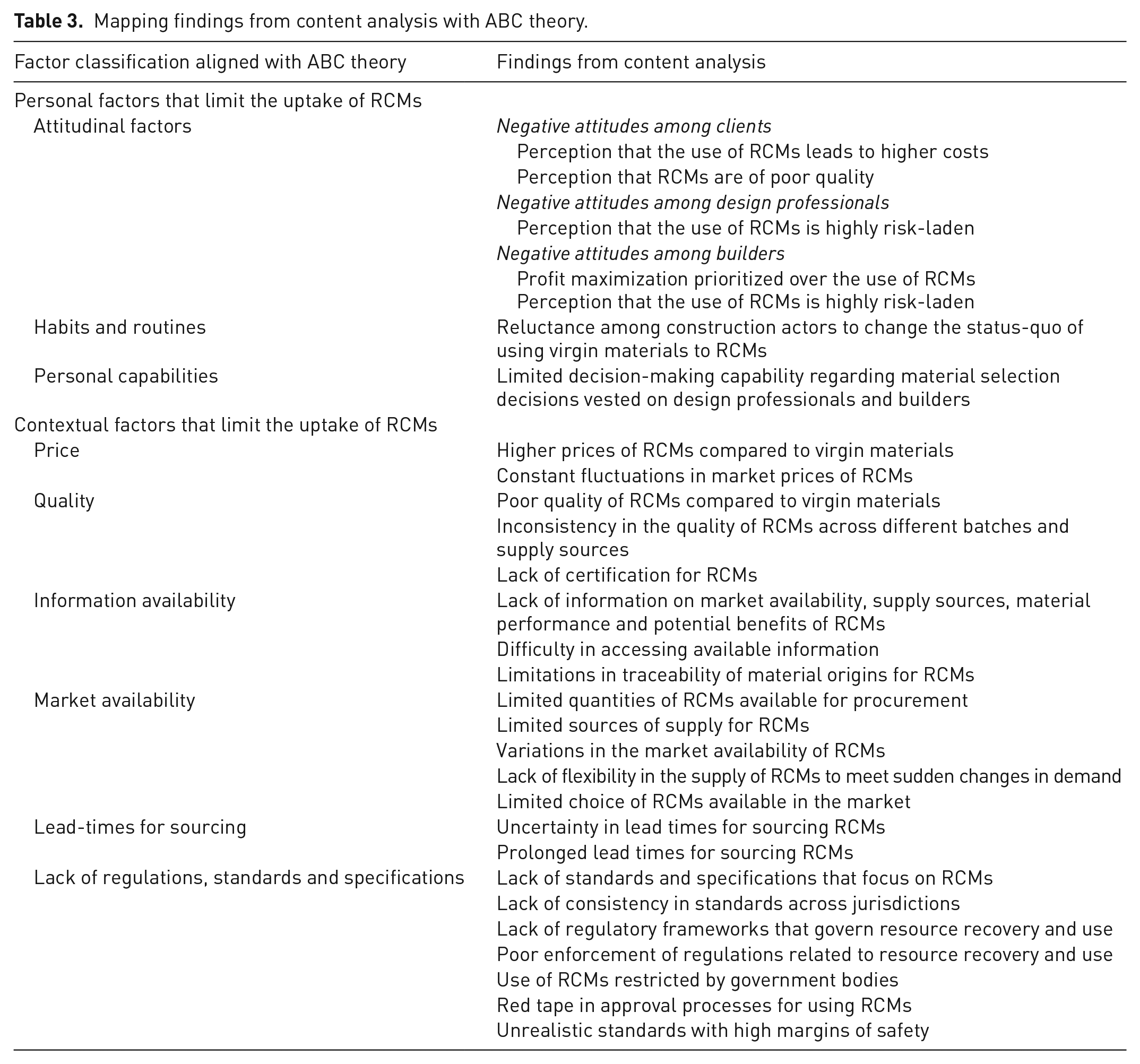
ABC theory underpinned the content analysis of this SLR. ABC theory posits that environmentally relevant actions or behaviours are an outcome of both personal and contextual factors. Since the use of RCMs can be considered as falling within the realm of environmentally significant behaviour, ABC theory provided a suitable basis for understanding the findings of the content analysis. According to ABC theory, four types of causal variables influence environmentally significant behaviour which includes attitudinal factors, personal capabilities, habits and routines and contextual factors (refer Figure 1). Table 3 below maps the findings from the content analysis with ABC theory and shows that the review findings agree with the conceptualizations of ABC theory.
Mapping findings from content analysis with ABC theory.
Impact of personal factors on the low uptake of RCMs
As predicted by ABC theory, attitudinal factors take a prominent place in limiting the uptake of RCMs. Negative attitudes regarding RCMs were evident among clients, design professionals and builders who are the main actors involved in material selection decisions for construction projects. Such negative attitudes are primarily formed around the price and quality of RCMs and potential risks of use. Many studies emphasize negative attitudes among clients as a prominent reason for the low uptake of RCMs (Abarca-Guerrero et al., 2017; He and Yuan, 2020; Oyedele et al., 2014). Clients perceive that RCMs are of poor quality and are not capable of meeting expected performance requirements. Similarly, they believe that using RCMs would lead to a significant increase in project costs. A positive shift in attitudes towards the quality and cost of RCMs among construction clients is therefore needed to make the use of RCMs mainstream. Compared to private sector clients, public sector clients were seen as more forthcoming to use RCMs, as reflected by the higher rates of use of RCMs for public sector projects (Knoeri et al., 2011). This aligns with the principles of ABC theory which posits that actions that are favoured by individuals will become more prevalent. However, there still needs to be a shift in attitudes among both private and public sector clients to favour RCMs since they are the ultimate decision-makers when it comes to construction projects.
Design professionals such as architects and engineers, in general, were also found to be reluctant to specify RCMs (Hosseini et al., 2015; Oyedele et al., 2014; Thompson et al., 2010). These professionals are generally risk averse and consider the use of RCMs which are unknown to them as a highly risk-laden venture. Differences in perceptions were identified among professionals from different domains as well (Knoeri et al., 2011). For example, civil engineers were more receptive to the use of RCMs than structural engineers. This might be because the specification of materials for structural uses entails a high-level risk of structural failure compared to the specification of materials for civil engineering applications such as road projects. This shows that risk perception acts as a major determinant of the decision to use RCMs among design professionals. Another notable finding is the attitude–practice gap regarding the use of RCMs among design professionals. Although these professionals harboured positive attitudes towards RCMs, this was not always reflected in practice. This aligns with the principles of ABC theory which state that attitudes alone would not stimulate behaviour. According to ABC theory, reasons for this attitude–practice gap could be other personal level factors such as lack of personal capabilities to drive the use of RCMs and established work patterns among design professionals or contextual factors such as limitations in information availability and supply of RCMs.
As profit-driven enterprises that prioritize profit maximization over environmental benefits, builders in general also show a negative attitude towards the use of RCMs (Blum and Stutzriemer, 2007). Similar to design professionals, builders consider using RCMs which they are not familiar with as a high-risk venture, thus limiting their tendency to use such materials.
Aligned with the notions of ABC theory, review findings identified the tendency to maintain habits or routines as a reason for the low uptake of RCMs. All construction actors show a reluctance to move away from the status quo, that is, from the use of conventional materials to RCMs (Abarca-Guerrero et al., 2017; Knoeri et al., 2011). They were seen to be more comfortable with following established work practices rather than shifting to something new. Therefore, any shift in the business-as-usual approach from using conventional materials to RCMs would require strong catalysts to break down established practices and promote alternative methods of working.
The ultimate decision-making power for construction projects is with clients and this was found to limit the capability of design professionals and builders to adopt RCMs (Akadiri, 2015; Osmani et al., 2008). Although design professionals and builders can suggest RCMs for construction projects, it is the client who has the final authority over such decisions. Review findings show that design professionals and builders have found it difficult to persuade clients to accept the use of RCMs. This indicates that limitations in personal capabilities as suggested by ABC theory also limit the widespread use of RCMs.
Impact of contextual factors on the low uptake of RCMs
Although users might prefer certain behaviours, ABC theory states that unless the context facilitates it, such behaviours will not be very common. Aligned with ABC theory, contextual factors which include price, quality, information availability, market availability, sourcing lead times and lack of regulations, standards and specifications also limit the uptake of RCMs.
Price is one of the key determinants that affect the decision to use RCMs. In most cases, it has been found that the prices of RCMs are higher when compared to virgin materials (Bolden et al., 2013; Jin et al., 2017; Yuan, 2017). This might have fuelled the negative attitude among users that using RCMs lead to higher costs. Such findings show that contextual factors can shape personal factors such as attitudes towards a particular behaviour, which is supported by the principles of ABC theory. Apart from being priced higher than virgin materials, prices of RCMs also showed greater fluctuation, which makes it difficult to develop reliable estimates ahead of use. Inferior and inconsistent quality of RCMs also impacts the low uptake of these materials (Bolden et al., 2013; Chick and Micklethwaite, 2004; Oyedele et al., 2014). Possible quality issues increase the risk of using RCMs which in turn have incited negative attitudes and perceptions regarding RCMs among users. This again indicates how personal factors are influenced by contextual factors. Well-developed certification schemes for RCMs would have alleviated this issue but literature evidence shows that such certification schemes are limited at best.
Review findings highlight limitations in information availability on RCMs as a top-ranked reason for the low uptake of RCMs (Chick and Micklethwaite, 2004). Several types of information were found to be lacking such as information on market availability, supply sources, material performances and potential benefits of use. This leads to unfamiliarity among users regarding RCMs and higher time commitment required on the part of users to locate required information ahead of use. Available information was also found to be rather vague and poorly documented, and the resulting difficulties in accessing information have made using RCMs a time-consuming and complicated process. Another closely related issue is the limitations in source traceability of RCMs (Bao et al., 2020) which introduces uncertainty into the use of RCMs.
Although discussions around sustainability and RL have been around for some time, the market for RCMs is not mature as that of virgin construction materials (Yeap et al., 2012). There seem to be only a few organizations that reprocess and supply RCMs to the market and the quantities available for purchase are also limited. Long-distance transportation is not viable as well since it would diminish any economic benefits of using RCMs. Variations in market availability and difficulty to source RCMs on-demand pose a risk of project delays. Similarly, users have a limited choice of materials when it comes to RCMs which makes it difficult to source materials to meet specific project requirements. Uncertain and prolonged lead times for sourcing RCMs, especially in regional areas with limited construction activity further demotivates the use of RCMs. With such limitations in market availability and lead times, construction actors resort to the use of virgin materials which have a predictable and readily available supply to avoid potential delays and cost overruns (Lu et al., 2020).
Drawbacks in regulatory environments also limit the market uptake of RCMs (Blum and Stutzriemer, 2007; Correia et al., 2021; Gálvez-Martos et al., 2018; Jin et al., 2017). The primary concern is the lack of regulations, standards and specifications that focus on RCMs. As a result, construction actors are concerned over the quality of RCMs and the potential of using these materials for construction applications. Moreover, differences in construction standards and specifications across different jurisdictions create a barrier to cross-border trade of RCMs, thus slowing down market development. Limitations were also identified around regulations that govern the use of RCMs. Even those regulations that are available are mostly discretionary and therefore do not drive construction actors to use RCMs. Studies show that some government bodies explicitly exclude the use of RCMs while red tape and unrealistic standards also discourage widespread use of RCMs.
Future research directions
Based on the review findings, the following pragmatic future research directions are proposed to improve existing knowledge around the use of RCMs.
Attitudes among construction actors towards RCMs
A notable finding of this SLR is the attitude–practice gap regarding RCMs among design professionals. Although design professionals perceive the use of RCMs positively as a forward step in the direction towards sustainable construction, such perceptions are not always reflected in practice (Knoeri et al., 2011). This is an area that warrants further research attention which would help to develop a better understanding of why positive attitudes regarding RCMs among design professionals are not translated to the actual use of such materials. Future research can focus further on the attitudes of different construction actors regarding RCMs, how such attitudes differ between actor groups and how pro-RCM attitudes can be developed so that more users are encouraged to adopt RCMs for their projects. Theoretical frameworks such as the theory of reasoned action (Fishbein and Ajzen, 1975) and the theory of planned behaviour (Ajzen, 1985) can be adopted as a basis for research in this domain.
Improving DWRLSCs to facilitate increased uptake of RCMs
DWRLSCs consist of demolition contractors that supply DW as inputs for resource recovery processes and waste processors that convert DW into RCMs and supply these materials to construction markets. Review findings show that most reasons for the low uptake of RCMs can stem from DWRLSC processes. In most cases, the prices of RCMs are determined by waste processors who supply these materials to the market (Yeap et al., 2012). Therefore, the actions of waste processors can have a notable impact on the price at which these materials are offered. As the first link in DWRLSCs, demolition contractors can also affect the price of RCMs since they are responsible for supplying DW, which is the primary input for the waste recovery process. Quality issues that impede the uptake of RCMs can also be traced to DWRLSCs. Inferior quality and inconsistent quality across different batches and supply sources can be a result of the deliberate mixing of high-quality materials with low-quality materials during resource recovery operations to maximize economic gains (Blum and Stutzriemer, 2007). Similarly, meagre efforts at sorting and segregating DW during dismantling and reprocessing stages can ultimately degrade the quality of RCMs entering the market (Hahladakis et al., 2020). Moreover, information on the availability and supply sources of RCMs were found to be limited, which points to a shortfall in the efforts of waste processors at promoting their products to the market. Lack of investment in communication systems, sparse attention on updating and maintaining returns monitoring systems and poor information collection and exchange practices among RLSC actors contribute to these limitations in information availability (Correia et al., 2021). RLSC actors must improve the dissemination of information to minimize uncertainties around the supply of RCMs (Tingley et al., 2017). The lack of well-developed information exchange practices also limits visibility across RLSC processes and this, coupled with the sporadic nature of waste generation makes it difficult to ensure a continuous and reliable market supply of RCMs. This is reflected through the findings of the content analysis which identified difficulties in procuring sufficient quantities of RCMs on time as a demotivator for using RCMs. Limitations in supply will invariably result in uncertain and prolonged lead times, which is undesirable in construction projects which are highly time constrained. This clearly shows that DWRLSC processes have a direct impact on the uptake of RCMs. Therefore, future research can be aimed at understanding constraints in DWRLSCs that affect the market delivery of RCMs and how such constraints can be minimized or eliminated. This would help DWRLSC actors to identify and overcome existing process constraints thereby diverting more RCMs towards construction markets.
Role of regulatory bodies in promoting the uptake of RCMs
Review findings show that deficiencies in regulatory aspects have a notable impact on the limited use of RCMs. A shift from using conventional materials to RCMs requires catalysts to activate this shift and regulatory bodies can intervene here by introducing incentives or mandates for using RCMs. However, no such incentives seem to have been proposed which limits the economic viability of RCMs compared to conventional materials which are priced competitively and are readily available (Thompson et al., 2010). Similarly, existing regulations that target RCMs are limited and are mostly of a discretionary nature (Hahladakis et al., 2020; Yuan, 2017). Such discretionary regulations do not create the required drive to change the conventional practice of using virgin materials. There is also evidence to suggest that existing regulations are poorly enforced in certain cases, especially in developing countries (Jain, 2012; Yuan et al., 2011). Standards and specifications targeting RCMs are also limited which has resulted in quality issues with RCMs and high uncertainty among users regarding the properties of these materials (Bao et al., 2020; Hahladakis et al., 2020). Issues with obtaining approvals for using RCMs are highlighted as well (Blum and Stutzriemer, 2007) and these approval processes should be made more conducive to the use of RCMs. This suggests the need for a more focused government-led approach so that industry efforts can be better aligned towards a common goal to enhance RCM use. Consequently, future research can study the role of regulatory bodies in promoting the use of RCMs. Many studies have focused on the intervention of regulatory bodies in waste management and resource recovery (Ajayi and Oyedele, 2017; Li et al., 2020b) but their role in promoting and facilitating the use of RCMs have not been studied in detail. Future studies can consider gaps in existing regulatory frameworks at enabling the use of RCMs and develop possible interventions to address such gaps.
Conclusions
Despite the importance of mainstreaming RCMs, their use in construction applications remain sparse. This negatively affects DWRLSCs since the success of resource recovery activities depends on the market uptake of RCMs. However, most research on DWRLSCs has overlooked the market operations stage of the RL equation. Therefore, this SLR focused on discerning trends in research on the use of RCMs and identifying factors that affect the low uptake of RCMs. 52 journal articles from three databases published between 2000 and 2021 were selected for descriptive and content analyses. The descriptive analysis showed a growing interest in the research domain with most of the articles being published over the last 5 years. 10 articles were from Resources, Conservation and Recycling making it the journal with the highest number of related publications. China and UK pioneers research in this domain, a trend that is evident through other SLRs in related topics. The analysis revealed a broad range of single and multiple research methods adopted with a multitude of RCMs and reprocessing techniques being focused on.
The content analysis underpinned by ABC theory highlight that both personal and contextual factors should be addressed to enhance the use of RCMs. For example, it will not be fruitful to inculcate positive attitudes among construction actors towards using RCMs unless there is a readily available market supply. Alternatively, improving supply will not be constructive unless there is an acceptance of RCMs among construction actors. Findings of this SLR will help potential users to understand possible issues that might be encountered when using RCMs and plan for them in advance. Similarly, DWRLSC actors can use these findings to understand current concerns on using RCMs and organize their operations accordingly, so that more DW can be diverted away from landfills towards alternative uses. Policymakers can also build on these findings to develop policy interventions suited for promoting the use of RCMs.
Despite the rigorous systematic process followed, some limitations need to be addressed. Under this SLR, only peer-reviewed journal articles published in English were considered. Consequently, conference publications or other grey literature and publications in other languages have not been captured. Although the three databases, Scopus, Web of Science and Google Scholar cover a broad spectrum of construction research, there might be studies that have not been captured under these three databases. Therefore, there is an opportunity to broaden this review to encompass additional sources of literature. Similarly, limitations in the analytical approach of SLRs require further empirical research to test and validate in a practical context, the findings of the SLR, especially the factors that affect the low uptake of RCMs.
Footnotes
Declaration of conflicting interests
The authors declared no potential conflicts of interest with respect to the research, authorship, and/or publication of this article.
Funding
The authors disclosed receipt of the following financial support for the research, authorship, and/or publication of this article: The authors wish to acknowledge the Australian government’s financial support through an Australian Government Research Training Program international (RTPi) Scholarship for PhD studies and support from the University of South Australia.
