




Abstract
Deconstruction is an innovative and sustainable option for building end-of-life. It can turn the negative impacts of demolition, including diverting valuable resources from the congested landfill into beneficial use through reuse and recycling. However, the feasibility of deconstruction has placed a massive limitation on the implementation of deconstruction. This research carried out a systematic literature review of 35 academic and 3 non-academic pieces of literature to develop a construct-based deconstructability framework. This framework – built around technical, economic, legal, operational, schedule and social construct – describes the condition under which deconstruction is likely to work and drivers influencing deconstructability. A total of 44 drivers influencing deconstructability were established and ranked from which design and building technology, cost including expense and revenues from the resale, supply and demand of the recovered component and material, the schedule for the deconstruction were identified as most influential. However, every identified driver should be considered during the deconstructability assessment of a building.
Keywords
Introduction
The built environment industry is an industry with a vast number of activities. These activities include design, planning, construction, alteration, renovation, demolition and maintenance of a building/structure throughout its lifecycle. The industry is amongst the principal sector of the United Kingdom (UK) and world economy – contributes to over 6% of the economic output in the UK, which is equivalent to £117 billion in the year 2018 (Rhodes, 2019) and over 10% of the world gross domestic product (Crosthwaite, 2000). Construction in the UK and many other countries is not an economic driver alone, but it impacts social lives – the built environment has increasingly enhanced the development and wellbeing of people and support healthier communities (Altomonte et al., 2020; McKinnon et al., 2020; Younger et al., 2008).
Despite the recognized benefits of the industry in the UK and the world, contemporary arguments indicate the built environment to be an environmentally disadvantageous industry. It remains one of the significant resources consumption industries, responsible for around half (50%) of global natural resources consumption, including materials, and energy, to name but a few (Assefa and Ambler, 2017). Furthermore, around one-third of total landfill waste and over two-fifth (40%) of all the carbon dioxide (CO2) releases (DEFRA 2020; TERI, 2017) are associated with the different stages of the building lifecycle, including the extraction of the raw materials, design, use, management and end-of-life (EOL).
The current construction practices need to be reconsidered to reduce the detrimental impacts and to create a more sustainable industry. In this context, an essential and sustainable option for most buildings at their EOL should be deconstruction instead of demolition, which a typical building was designed. Deconstruction is the careful and selective disassembly of the building or its component for reuse, repurposing or recycling. It is arguably a better sustainable alternative to demolition, which is destructive, rendering more than 90% of the entire building or its components as waste (Del Río Merino et al., 2010). Furthermore, deconstruction could address ‘Circular Economy Principles’ in the construction industry, leading to reduction of CO2 gas emissions through the gains of reuse and recycling of material/component from building/structure at the EOL (Akinade et al., 2017a; Nakajima, 2014). Regarding diversion of waste from landfills, research indicated that a significant amount of waste can be re-rerouted to next use through a well-thought-out deconstruction, for instance, approximately 40% (around 16 million tonnes) of the Construction, Demolition and Excavation (CD&E) waste in the UK (DEFRA, 2020) and over 75% (around 460 million tonnes) in the United States of America (United States Environmental Protection Agency (US EPA), 2018) can be transformed from a liability into an asset. In addition, benefits of deconstruction can also include saving costs for landfill tax; for example, the over £500 million landfill tax paid by UK companies yearly can be averted (HM Revenue & Customs, 2019). Aside from diversion of waste and potential savings (e.g. landfill tax), other benefits of deconstruction include the creation of a market for salvaged materials, workforce development, historic preservation of structures or their components, job training, to name but few (Denhart, 2010; Teshnizi, 2019).
Even though there is an increasing interest in deconstruction due to its accruable opportunities, the trend is still far from widespread. This limitation in implementation is because a typical building is not designed for disassembly; it is mostly cast-in-situ, built-in, or chemically bonded together in a way that prevents easy deconstruction (Akanbi et al., 2019; Akinade et al., 2015; Chini and Bruening, 2003; Kibert et al., 2000; Morgan and Stevenson, 2005; Rios et al., 2015). However, deconstruction’s economic and environmental advantage have given rise to research trying to evaluate/assess existing buildings for deconstruction and encourage new stocks to be designed for disassembly/deconstruction.
Generally, knowledge on the deconstruction feasibility of a building or its component has placed a massive limitation on the implementation of deconstruction. As a result, it is often hard to decide the candidacy of a building for deconstruction at their EOL. The building deconstruction feasibility, referred to as deconstructability throughout this research, will enable informed decision-making before capital investment. Thus, saving demolisher/deconstruction industry and other stakeholders from demolishing buildings that are deconstructible and encouraging wider deconstruction implementation.
However, the deconstructability assessment is possible only after understanding the concept of deconstruction and the drivers influencing the deconstruction. Thus, this research is the first of its kind to establish and unify all deconstructability influential drivers towards a construct-based conceptual framework. To achieve this aim, the following are the study’s objectives:
To establish drivers influencing the deconstructability of buildings from literature.
To develop a deconstructability construct-based conceptual framework
To rank the identified drivers, thus establishing the importance among the constructs
This study will contribute to knowledge by identifying and unifying valuable drivers helpful in deciding the deconstructability of a building irrespective of the type of material of the building. It will change the narratives behind deconstruction, significantly improving the efficiency around assessing existing buildings and creating more awareness around drivers responsible for ease of deconstruction during the design stage. The scope of this work is limited to identifying relevant drivers and developing a construct-based conceptual framework for the deconstructability of buildings.
The rest of this research article is organized as follows: Section ‘Demolition and deconstruction’ presents a brief introduction on demolition, deconstruction, their difference and benefits. Section ‘Methodology’ presents the review methodology used in establishing the drivers influencing the deconstructability. Finally, Section ‘Result and discussion’ focuses on the result and discussion of the systematic literature review (SLR), while the conclusion, limitation and future direction round up the study.
Demolition and deconstruction
Thomsen et al. (2011) defined demolition as ‘the complete elimination of all parts of a building at a specific location and time, typically it is the end of life for the building’. Zahir et al. (2016) describe demolition as an engineered process that uses heavy equipment or manual tools to knock down building/structure and render the building/structure into rubble and debris. Equipment/tools used to tear down structure/building include excavator, bulldozer, tearing balls and explosives such as dynamite and Royal Demolition eXplosive (RDX) (Pranav et al., 2015; Rathi and Khandve, 2014).
To carry out a demolition project, there are several drivers to be considered. To name a few, these drivers are a type of construction, safety, cost, scheduling, work sequence. In addition, the preparation and implementation of demolition assignments need to comply with some set of guidelines and criteria, such as safety and environmental assessment of the site and other community-specific regulations (Diven and Shaurette, 2010). Demolition is quicker, uncomplicated and relatively inexpensive. However, many criticized demolitions due to lack of separation, making material reuse and recycling difficult and owing to a large amount of CD&E waste (Chini and Bruening, 2003).
On the other hand, deconstruction also referred to as disassembly is used interchangeably in this research. Deconstruction is the process of carefully knocking down a building/structure into its components to rescue its materials for recycling, reuse and reconstruction reasons (Rios et al., 2015). Thus, deconstruction is the ‘means to an end, and it exists for the appropriate recovery of building elements, components, sub-components, and materials for either reuse or recycling in the most cost-effective manner’ (Guy, 2004). Other definitions of deconstruction include ‘construction process in reverse’ (Greer 2004), ‘systematic disassembly of building in order to maximize recovered materials reuse and recycling’ (Chini and Bruening 2003), among others.
Deconstruction is cost-effective than demolition, considering a reduction in disposal costs and the returns from the recovered material. For instance, Zahir et al. (2016) research shows that demolition and deconstruction of a building/structure costs between 10,000 to 12,000 and 13,000 to 15,000 in dollars, respectively. However, due to use over time, sabotage or decay, deconstruction of such building/structure can yield a salvage price of approximately 4000–5000 dollars, depending on the material/component quality and the type, accessibility, resale/reuse markets. Based on these findings, it was discovered that the net-deconstruction cost comes out to be somewhat less than its comparative demolition cost. On this note, the gross deconstruction costs (i.e. total cost incurred in the deconstruction assignment) are usually greater than gross demolition costs (all costs associated with the demolition of a building); meanwhile, the deconstruction net cost (cost after considering the resale and recycling of recovered materials) is mostly lower than that of demolition.
Deconstruction is often called ‘green demolition’ due to viable environmental advantages over demolition (Zahir et al., 2016). Aside from the fact that deconstruction aids the diversion of landfill waste, it helps create a sustainable economy through reuse, recycling, downcycling, upcycling and closes the circle of linear resource use (Akanbi et al., 2019). This sustainability can include reusing the recovered materials/components in new or existing structures and downcycling, upcycling or recycling materials that are not fit for immediate reuse. Examples of materials/components that are fit for immediate reuse include lumber. Recycling can be seen in the case of recovered scrap of steel turned into beams. On the other hand, downcycling can be seen in the case of concrete slabs used as road base, and upcycling is salvaging and creating a value-added product from lumbers, for example, a cupboard from recovered lumbers.
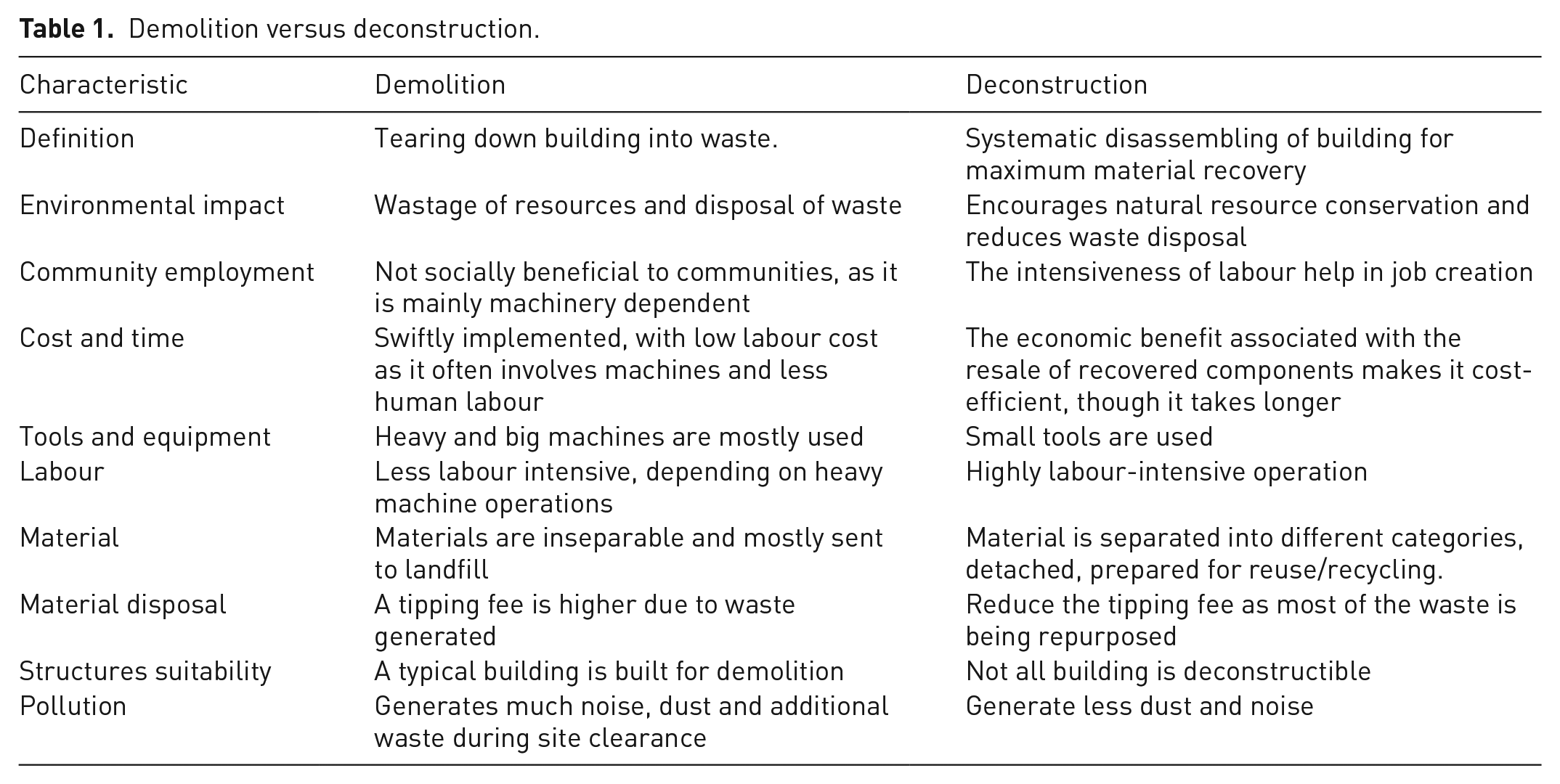
In general, deconstruction can avert many negative impacts of demolitions, as it changes ‘waste’ into ‘feed’. See Figure 1 for the demolition and deconstruction of buildings and how a circularity economy is achieved through deconstruction. Also, see Table 1, which presents the comparison between demolition and deconstruction (Diven and Shaurette, 2010; Guy, 2001, 2004; Guy and McLendon, 2003; Zahir et al., 2016).
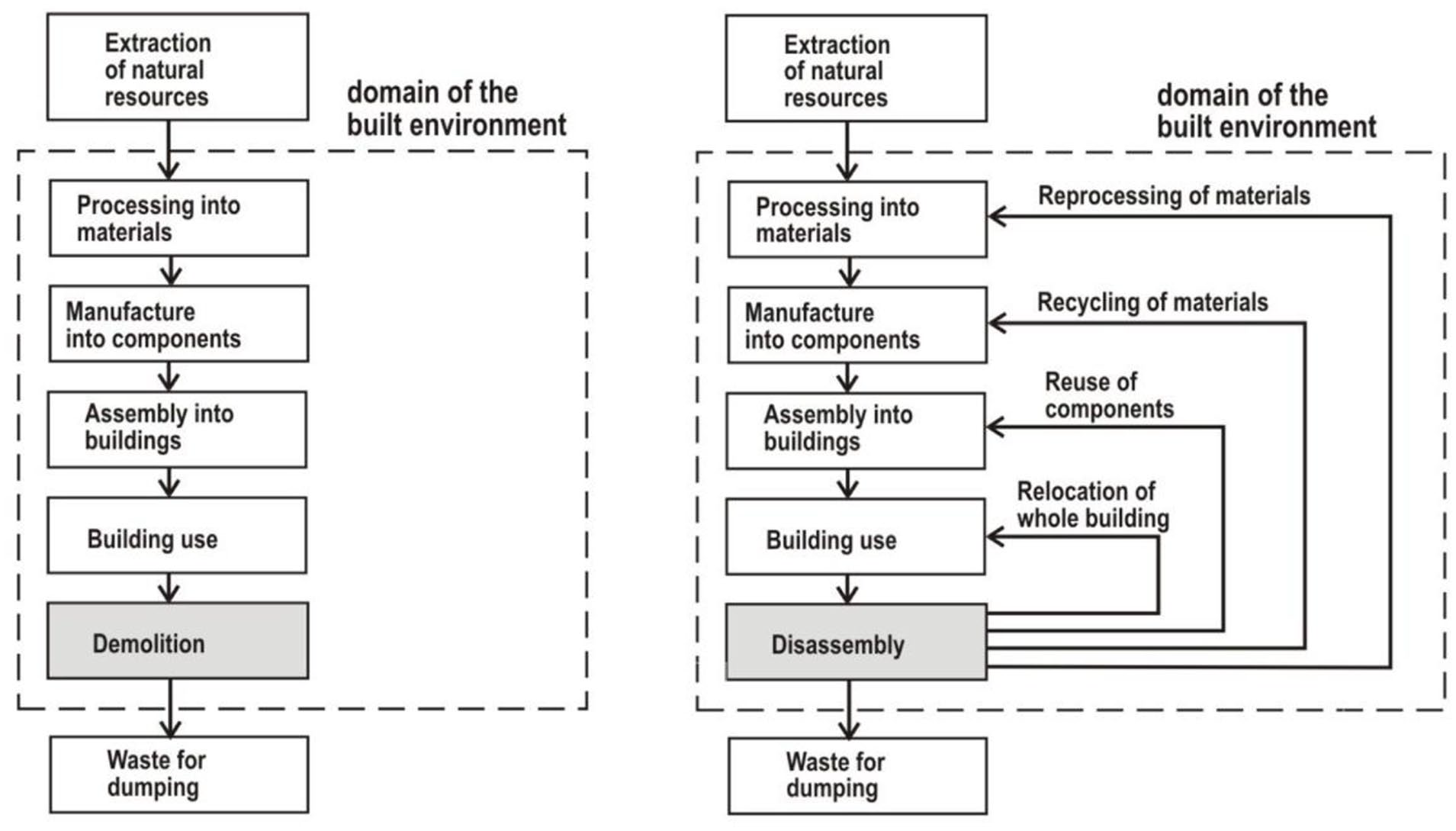
Demolition as building end-of-life option, and deconstruction as an alternative end-of-life option for building (Crowther, 2005).
Demolition versus deconstruction.
Owing to the advantages associated with the deconstruction practices, there has been an increasing interest in its implementation across the globe, both in practical terms and research, encouraging design for deconstruction. However, older built structures are not deconstructible as they were never designed for such purposes. The design mentioned above limit the older structure’s deconstructability and increase the uncertainty associated with ease of deconstruction at EOL. However, the deconstructability assessment of a building can avail the contractors and other stakeholders the decision to reconsider the entire building or its component for deconstruction at EOL.
Methodology
This section used a SLR to establish drivers influencing the deconstructability of building from literature and identify the importance from the established. The SLR steps and the construct-based conceptual framework developed from the SLR are discussed herein. A SLR is a structured approach for research synthesis, providing a comprehensive, up-to-date and unbiased process for locating studies relevant to a research question (Higgins et al., 2019). This approach is well articulated, widely accepted with well-defined features, including clear research objectives and questions, inclusion and exclusion criteria, quality assessment of the included studies, analysis, presentation, synthesis and the transparent reporting of the findings extracted (Aromataris and Pearson, 2014). Furthermore, a SLR has been long established in the medical field because of its unique properties. However, SLR is gaining significance among other research fields, including engineering and management (Alaka et al., 2016, 2018; Charef et al., 2018; Egwim et al., 2021; Rakhshan et al., 2020).
As described, a clear research objective remains a necessity for SLR as it answers a specific question from already existing knowledge. However, selecting the relevant studies includes subjecting these studies discovered from the comprehensive search on the topic to some critical assessment. This assessment includes standardized instruments, checklists, scales that aid transparency and reproducibility of the review process. In addition, data synthesis (extraction) of answers from the perceived relevant studies is an essential feature of the SLR. Depending on the data type, there are various data extraction methods in a SLR (Tricco et al., 2011).
SLR needs to be reported in a way the complete process is reproducible (Tawfik et al., 2019). PRISMA (Preferred Reporting Items for Systematic Review and meta-analysis) checklist (Moher et al., 2010), widely used in research fields such as construction and waste management (Rakhshan et al., 2020; Shahruddin and Zairul, 2020), was employed to report the complete SLR process.
SLR is known for its comprehensive literature search from databases. Following the approach of Rakhshan et al., 2020, a more recent article on the deconstruction of building, Scopus database was considered. This is because Scopus database constitutes research from all over the globe, thus eradicating biases geographically. In addition to Scopus, Google Scholar, which is also a widely accepted database, was considered using the keyword ‘deconstructability’, generating a total of 31 relevant articles. However, the search here was restricted to title search only to have a manageable record due to its inability to automate filtering.
Comprehensive search helps reduce the risk of missing important studies (Collaboration for Environmental Evidence (CEE), 2013; Kugley et al., 2017). To find relevant articles, a pilot search on Google search engine and search framework on Scopus was conducted. The pilot search was to identify the proper keywords, reduce bias in search and create a framework to retrieve all relevant articles. The pilot search revealed that deconstruction, disassembly is interchangeably used. In contrast, assessment, feasibility, potential, estimation, appraisal and evaluation are used intertwined. In addition to capturing a broad spectrum of research, repeatability and consistency of the whole process is another great point to note. The search framework ((‘deconstruct*’ OR ‘disassemb*’) AND (‘assessment’ OR ‘feasibility’ OR ‘potential’ OR ‘estimation’ OR ‘appraisal’ OR ‘Evaluation’) AND (‘building’)) captures all raised concerns as it loops through ‘title/abstract/keywords’ of each journal.
The exclusion criteria considered in this research included, among others, articles not written in the English language due to lack of funds for interpretation services. However, this is mostly not encouraged in SLR. Examples of articles excluded based on the language are Schwede and Störl (2017) and Caparrós and Astarloa (2017), written in German and Spanish. Due to the high quality of the peer-reviewed articles, other forms of the article (i.e. conference papers, trade journals, book chapters) were not considered (Alaka et al., 2017, 2018; Comfort and Park, 2018; Rakhshan et al., 2020)
The decision to include an article may be sorted directly from the title of the research paper. However, some papers were exceptional. In most of these cases, the article abstract was read, and if possible, the introduction and conclusion were read to have the most relevant papers. Unsuitable articles, for example, articles with a focus on life cycle assessment (Vieira and Horvath, 2008; Malabi Eberhardt et al., 2020), sustainable assessment (Akbarnezhad et al., 2014; San-José et al., 2007), circularity indicator (Cottafava and Ritzen, 2021), environmental impact of steel structure (Broniewicz and Broniewicz, 2020), optimization of deconstruction (Sanchez et al., 2020), deconstruction planning (Sanchez et al., 2019), reusability index (Hradil et al., 2019), databank (Bertin et al., 2020) among others were removed. This is because most of these articles are out of scope for this research. A process flow of the methodology is presented in Figure 2.
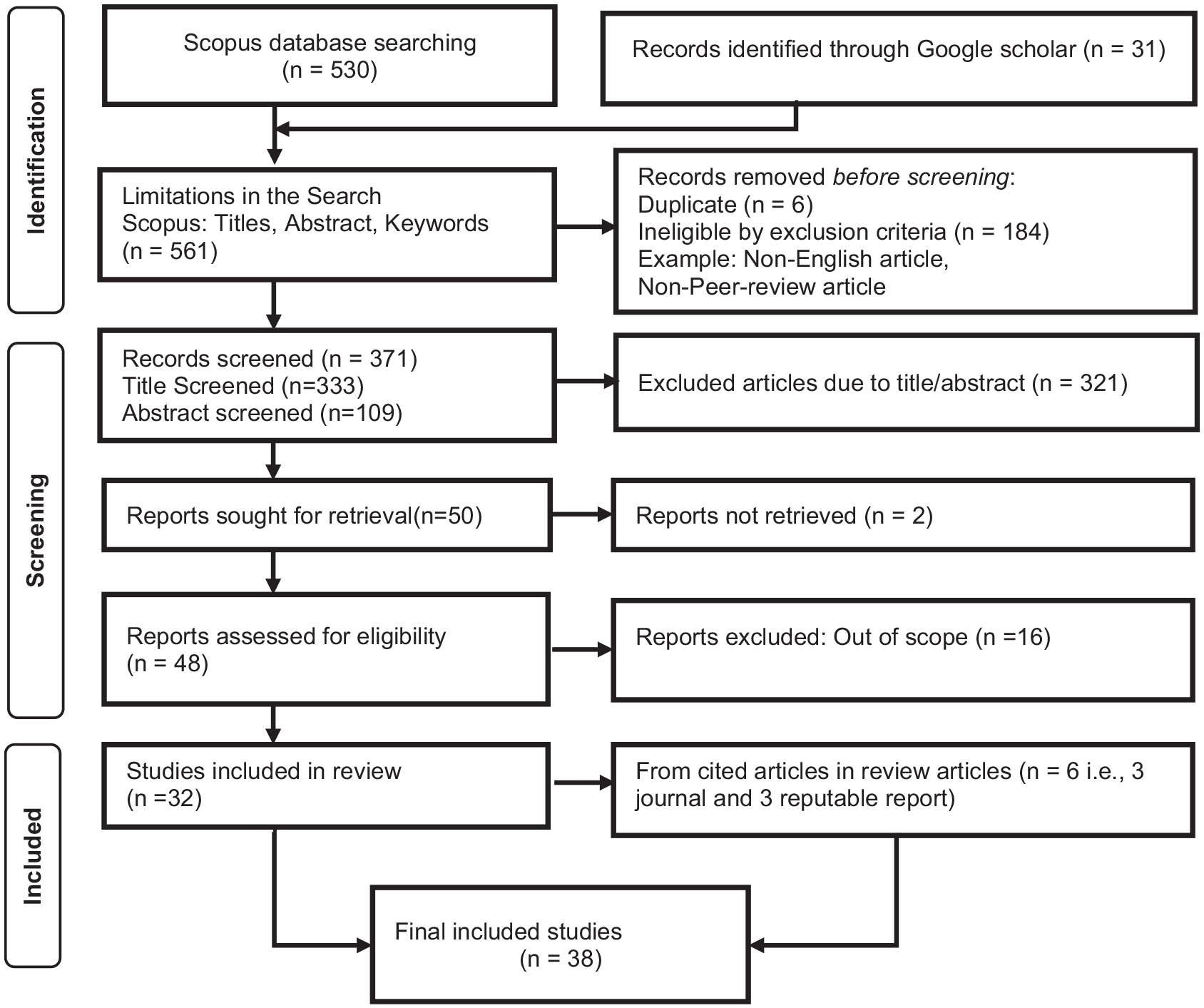
SLR flow diagram (Page et al., 2021).
Result and discussion
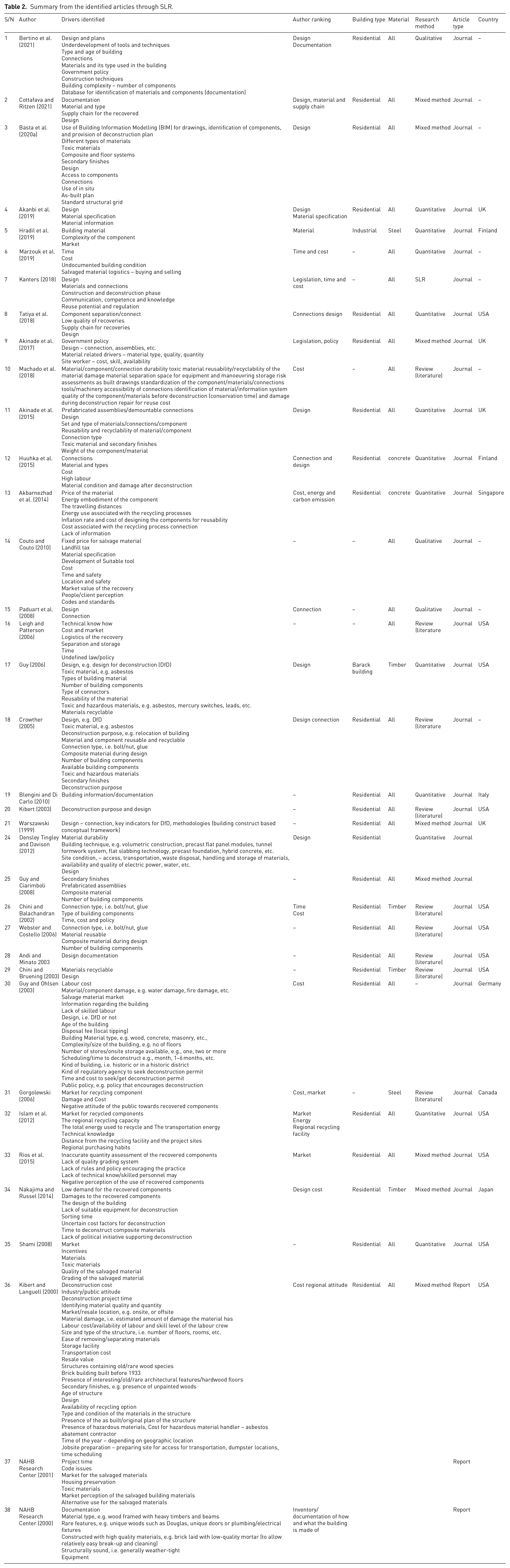
In the SLR flowchart, the number of articles is indicated by n, and there were 530 and 31 articles retrieved from Scopus and Google Scholar, respectively, using the search framework earlier defined. Of the total retrieved articles, six were identified to be duplicates and were removed. Furthermore, 184 articles were eliminated at this stage, including publications authored in languages other than English and articles that were not peer reviewed. Other articles deleted include articles from other research fields retrieved due to the exhaustive search of the research database and the interdisciplinary nature of ‘deconstruction’. Though this comes after glancing through the article titles, and abstracts. Example, Eisenbach and Grohmann, (2017) was discovered under the arts and humanity domain yet was found relevant after looking through its abstract. A quick judgement to remove all arts and humanity would have led to losing this article. The remaining 371 papers were thoroughly examined by skimming the titles and abstracts. As previously indicated, certain titles are sufficient to decide an article’s candidacy; but, in some situations, the title, abstract and potentially the discussion and conclusion were evaluated prior to the decision to include an article, and 321 papers were screened out in total. Upon scrutiny, a total of 50 papers were found to have promise and to be significant in determining the factors that influence building deconstructability. The next step was to read the complete copies of the 50 prospective articles; however, two of them were not publicly available, and 16 were found to be out of scope, resulting in a total of 18 articles being deleted at this point. After all the screenings, a total of 32 articles were found to be beneficial in determining all the building deconstructability drivers. Following the approach of Alaka et al. (2017), six relevant publications were identified from references/citations of the previously identified articles, this includes three peer-reviewed journal and three reputable reports. This has made the author realize 38 relevant articles for achieving the research aim and objective. The summary of the findings from the SLR is presented in Table 2.
Summary from the identified articles through SLR.
As part of the exploration and discovery from the SLR, Figure 3 presents the count of the driver’s rankings by the article authors, then the type of building mostly considered for deconstruction and lastly, the research methods primarily used in the identified articles.
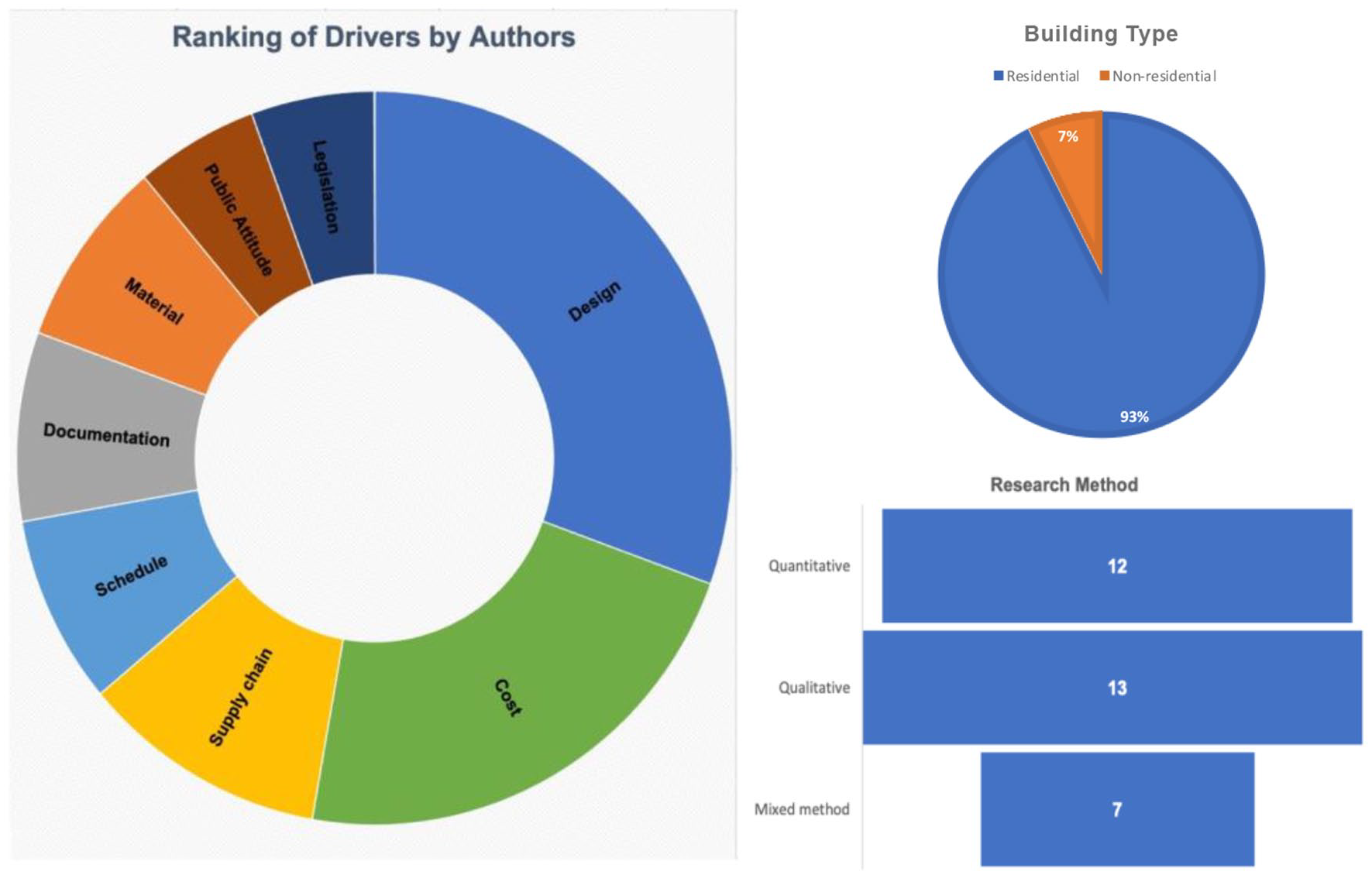
Exploratory analysis from the SLR result.
Other deduced knowledge from the SLR includes the building type, material type of the building and the research methods considered in the article. It was discovered that out of the 38 articles retrieved, most articles referred mainly to the deconstruction of residential buildings; this is probably due to its relevance in the social community as everyone seeks shelter as a significant need for life. In addition to the residential type of buildings discovered, an army barrack building constructed during World War II using timber was also discovered; this is obviously because of the reusability of timber materials as they are believed most sustainable material type (Guy, 2006). As for the research methodology of the identified articles, most of the articles are quantitative, though qualitative and mixed research method was discovered for a smaller percentage of the articles.
Deconstructability framework
To develop a construct-based conceptual framework measured using the established drivers influencing the deconstructability of building, there is a need for domain expertise in deconstruction and feasibility analysis. However, with the industrial expertise of the co-author, convergence on the five generic areas of feasibility analysis known as TELOS (technical, economic, legal, operational and schedule) was employed. Other assessment areas identified from the SLR includes social construct (Densley Tingley and Davison, 2012; Densley Tingley et al., 2017). The position of this article is that social construct should form the sixth construct to form TELOSS. The construct-based conceptual framework is thus presented in Figure 4.
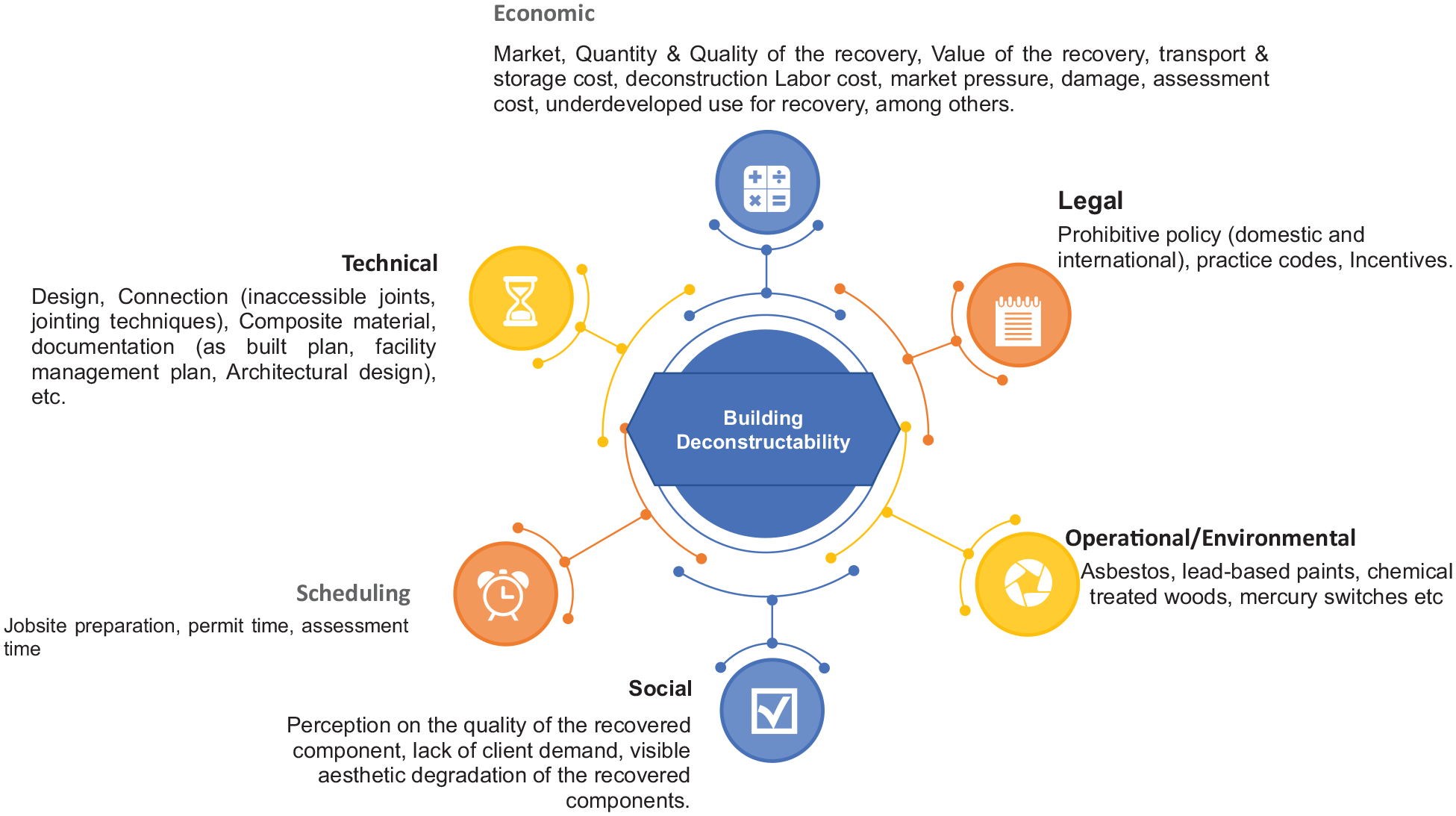
Construct-based conceptual framework for deconstructability of building.
Technical construct
This mainly includes every driver established from the SLR, which covers the technical aspect of deconstructability. As deduced, it was revealed that a typical building is permanently built from design and as such, their construction techniques do not focus on the deconstruction when the EOL is reached. The current state of designs connected using bonds, in situ and chemicals make it inseparable, in which case the building components upon dismantling would be damaged and rendered not useable. Other drivers discovered and classified under this construct include the material and its type, components, types and exact quantity and quality of the component/materials recoverable.
Economic construct
This is yet another area with much emphasis on price-related and all kinds of expenditure-related drivers. All the drivers drawn from the SLR, which forms the economic construct, will help decision-makers decide the deconstruction’s price benefits. The drivers under this construct include market, labour cost, equipment and tool cost, storage and logistic cost, among many others. In addition, the supply and demand for the recovered components play a crucial role in deconstruction. Example, when there is a problem creating demand or market for these ‘recovered’ components. Also, many retailers are around with no precise value for the recovered components (Gorgolewski et al., 2006). With no knowledge of the market and value for the recovered components, the appropriate deconstruction cost-benefit may never be achieved, hence influencing the deconstructability of the building.
Another driver under this construct includes knowing the quality and quantity of the reusable/recyclable component. This uncertainty makes it hard to assess the financial benefit associated with deconstruction. For example, there is an unknown revenue stream for recovered structural steel components. The quantity may be unknown as steels are mostly not in ‘as is’ form (Gorgolewski et al., 2006), that is, steel mainly needs steel modification/recycling before being used in other new construction. This modification often results in inaccurate economic assessment. In addition, the recovered components are mostly not sold onsite, resulting in extra cost for storage and transportation, leaving the component with storage options except for a few cases where there is already an existing market for the recovered components.
The transportation of the components from the regional recycling facility or from the storage to the market cost extra. This is because most regional recycling facilities may be situated far from residential areas where the deconstruction project occurs. Other drivers established under this construct include the cost to hire more manual labour, as most deconstruction project uses less heavy equipment, the cost to seek a permit from the council/government, percentage of damages due to fire for a wooden structure, or corrosion for steel structure or other forms of damages, this tends to reduce the price of the recovered components.
Legal construct
This construct encompasses drivers making sure the deconstruction does not conflict with the legal requirement of the community/government. The drivers under this construct include regulations on waste disposal and generation, especially the landfill tipping fees (Guy and Ohlsen, 2003; NAHB Research Center, 2000, 2001; Rios et al., 2015). An increase in the landfill tipping fees encourages deconstruction. Even though this regulation exists in many communities, waste generators now find cheaper means by dumping waste in private sites, roads, empty plots, streams and islands. Nonetheless, these taxes would probably be of little efficiency, as unlawful disposal offers a reduced cost compared to the proper disposal. In addition, illicit disposal with no penalties and control further weakens the regulations encouraging deconstruction (Kartam et al., 2004).
In addition, subsidies, allowances and incentives given to virgin resource industries are regulations that directly or indirectly influence deconstruction. These enable the shift of extremely expensive stresses to the environment. An example is the USA percentage-depletion allowance, which in fact, aid timber exploration (Kibert 2000).
Operational construct
The operational construct covers the responsibility to examine and decide whether the building will meet all requirements when subjected to all kinds of assessment (Pollock, Ho and Farid, 2013). This construct mainly covers the cultural drivers established through the SLR. Drivers include health and safety assessments. This assessment is vital as it aids forecasting all risk and mitigating the recognized issues (Mukherjee and Roy, 2017). The assessment of hazardous materials is a culture in construction health and safety, as the presence of toxic material like asbestos, lead-based paints, chemical-treated woods, mercury switches, composite materials, etc. in a building needs to be carefully assessed and handled to ease sorting of the recovered components and to prevent fall, fire or other health and security issues that may arise on site. This often requires trained handlers and thus may cost extra.
Schedule construct
This construct deals with established drivers related to time. A good number of articles argue that besides technical drivers, the time to deconstruct remains a critical driver influencing the deconstructability of building. This corroborates with the findings of Da Rocha and Sattler (2009), as contractors may find it challenging to wait longer to deconstruct building/component due to rigorous deadlines and as the deconstruction process is typically manual, uses hand tools instead of the faster big machinery used in the conventional demolition. Moreover, contractors often sacrifice the benefits of deconstruction as there may be plans to redevelop after building removal. Other examples include the jobsite preparation time, permit time, assessment time and time of the year. It is usually unlikely that the site where the deconstruction project will be carried out is perfect for the process.
In some cases, there will be a need to create storage spaces, cut down some trees, create accessible road networks, especially for houses that have long been abandoned. This preparation depending on the region/location of the building, increases the time it takes to deconstruct a building carefully. Also, the time it takes to get a permit from the government/council and assess the site for environmental and health safety influence the overall deconstruction time. This is because there are procedures in place and must be duly followed. Examples include permits involving disconnection of electrical power, gas and other services and site assessment to prevent future accidents. Lastly, dependent on the region, most contractors may not like to deconstruct during the winter.
Social construct
The assumption on the value of recovered component by the community (i.e. constructors), which is often wrong and harmful, remains a social driver influencing deconstructability (Kartam et al., 2004). Similarly, this negative attitude will make the community view the recovered component as environmentally friendly though low value (Kibert 2000). The community interviews validated these findings, showing that many recovered products available have a poor quality, limiting their use (Da Rocha and Sattler, 2009). Much is expected on the reorientation of the public/community to clarify this misconception as some recovered component like brick, tiles and wooden element performs well or even better than new ones.
In all, the research revealed six primary constructs, measured by the established drivers from the SLR (see Figure 2). The measures were carefully assigned to each construct using the domain knowledge of the author, co-author and pieces of literature. The study by Densley Tingley et al. (2017) is especially worthy of note here. It considered the drivers affecting the reuse of steel from a deconstruction perspective. The research also grouped the drivers into groups, including the social group, which corroborates this research’s position.
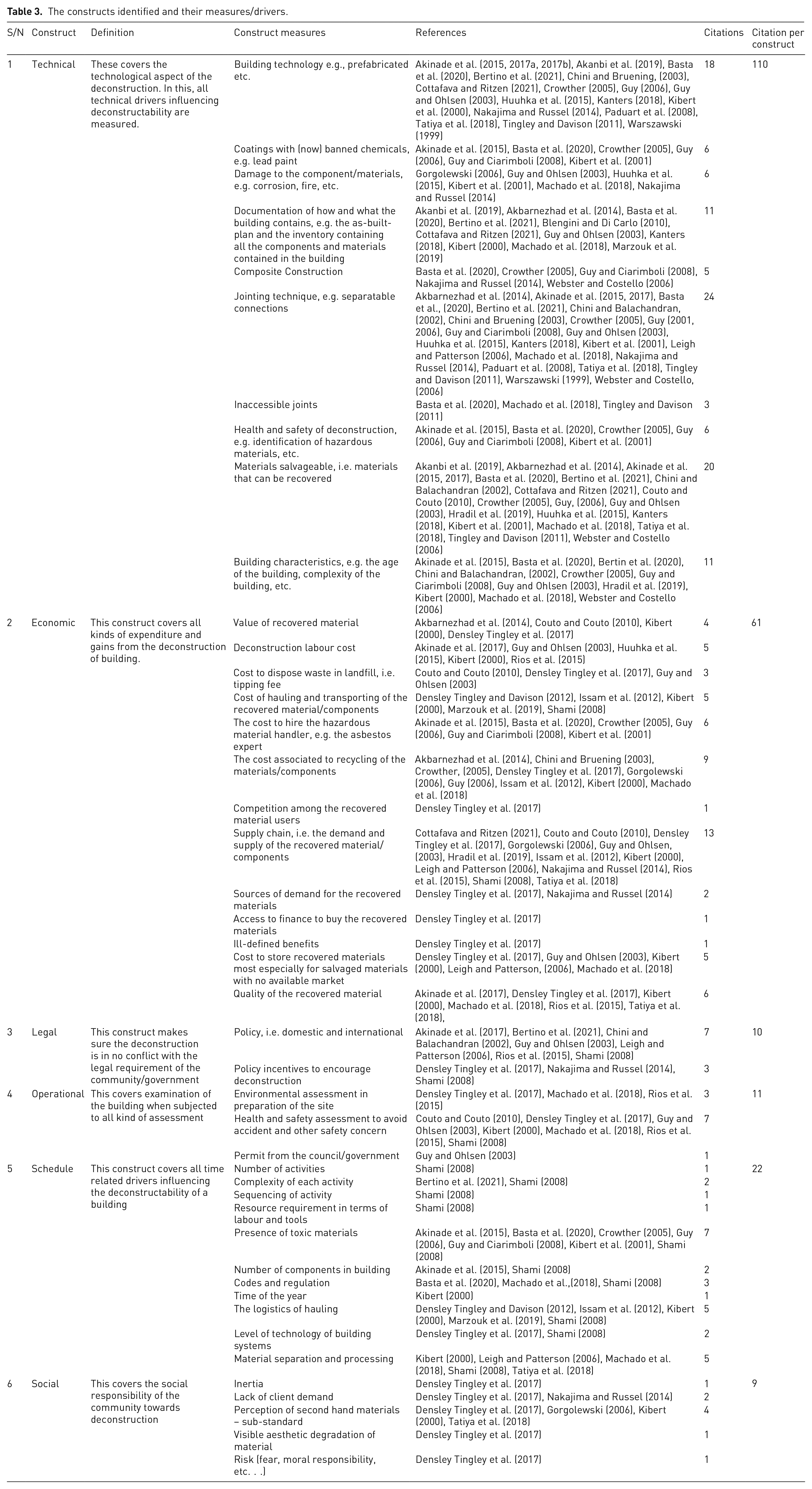
As discovered from the SLR, authors have strongly noted out some key drivers as most important; some pointed out to just a driver as key (Akinade et al., 2015; Basta et al., 2020), while some pointed out to more than one driver as important (Marzouk et al., 2019; Nakajima and Russel, 2014) and some pointed out to none (Blengini and Di Carlo, 2010). Though most articles with ranks for these drivers do not show scientific proof as to how they come about their rankings, for example, Akinade et al. (2017b) ranked design as the most critical driver affecting deconstructability of a building basing its argument on a general and acceptable notion that a typical building is never design for deconstruction. Despite this argument is valid and correct, some drivers other than design maybe more influential in deciding whether to deconstruct a building. However, the lack of proof as to how the rankings come about thus made this research make a count of drivers according to articles, with the most frequently ranked as most common and essential; see Table 3 for details.
The constructs identified and their measures/drivers.
For all the distinct drivers established, the drivers were ranked based on the frequency of occurrence in the studies. Figure 5 shows the count of the distinct established drivers.
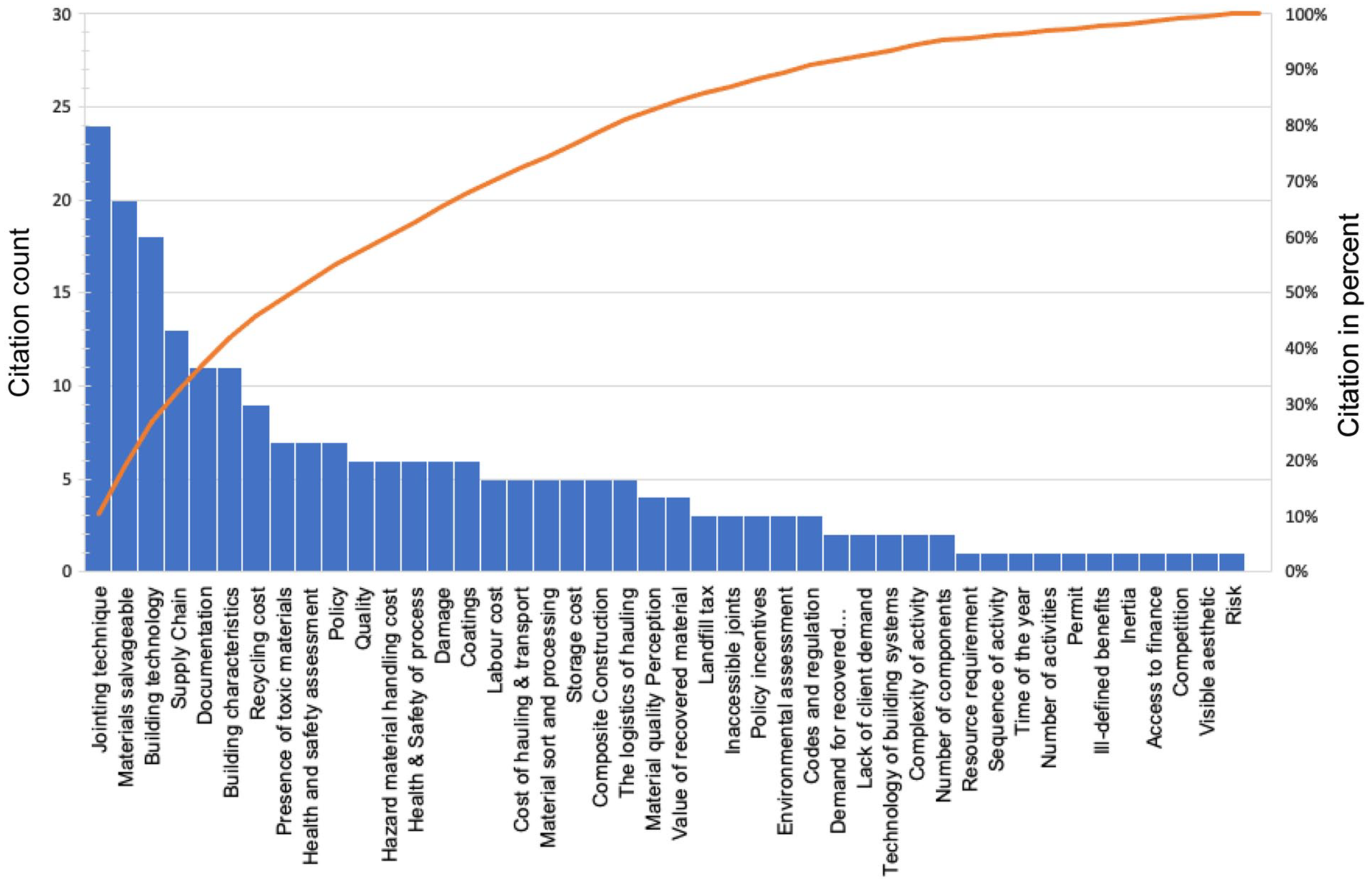
Drivers count by citation.
The research sorted and presented the drivers by several citations. The jointing technique came as the most cited driver, an aspect of the design corroborating with the literature’s knowledge, which identified design as the most crucial driver influencing the deconstructability of building. The following driver identified is the material salvage, which comprises the total recovered material/materials that could be recovered; these materials could provide an economic benefit that could arise from building deconstruction. Other vital drivers based on citation include the building technology, supply chain and market for the salvage materials, followed by the documentation of what the building contains and how the building was put together. Also, the ranking of the construct was done following the computation presented in Table 2. The constructs were ranked according to the citation per construct, though every construct, irrespective of the ranking, cannot be neglected in deciding the deconstructability of a building. Therefore, this ranking only presents the importance in order.
Conclusion
There are many established drivers that hinders the deconstruction of many building at their EOL. Example, a typical building is mostly not built for deconstruction yet could be deconstructed through careful deconstructability analysis. The deconstructability will save investors from losing the massive benefit that deconstruction could generate. To obtain the deconstructability of a building, understanding the concept and drivers influencing deconstructability are required and was achieved in this research.
Through a SLR, the research identified 38 relevant articles, of which 35 were peer-reviewed journals, and the remaining 3 were reputable reports in the deconstruction field. From the findings, 44 drivers were discovered, which were later grouped into six constructs following TELOSS (technical, economic, legal, operational, schedule and social), a common feasibility framework. This research employed the author’s domain expertise, the co-author and some notable pieces of literature to classify the drivers.
This research aligns with the study by NAHB Research Center (2001) as it provides analysis of feasibility of deconstruction, describing the condition under which a building could be deconstructible and the barriers that could hinder deconstruction, which must be overcome for wider implementation of deconstruction. Also, the deconstructability construct based conceptual framework proposed in this research identified all drivers from a different perspective, taking note of how the building was made, what the building contains, how the building deconstruction will take place and challenges or benefits after the deconstruction, which include the wrong assumption on the quality of the salvaged materials/components from deconstruction among many other drivers. All this put together will help decide if a building will be worthy of deconstruction or not.
Limitation and Future Directions
This SLR was designed to establish drivers influencing deconstructability of building, identify constructs and develop a construct based conceptual deconstructability framework. Aside from the domain expertise used in placing the drivers (measures) under the respective construct, the proposed framework requires more validation using statistical techniques like factor analysis from a quantitative perspective. The validation thus serves as the direction for future research. Also, future studies could incorporate the established drivers in collecting data that are possibly useful in other quantitative analyses regarding the deconstructability analysis.
Footnotes
Declaration of conflicting interests
The authors declared no potential conflicts of interest with respect to the research, authorship, and/or publication of this article.
Funding
The authors received no financial support for the research, authorship, and/or publication of this article.
