




Abstract
The irrational functioning of the food sector can negatively impact the environment and resources for future generations. The aim of this study is to analyse the assessment of sustainability indicators related to meal production processes and waste in the food service through a systematic literature review. The hypothesis is that these indicators are still little explored. This review was conducted according to the Preferred Reporting Items for Systematic Review and Meta-analysis Protocols. The databases consulted were Lilacs, Science Direct, Scientific Electronic Library Online (SciELO), Coordenação de Aperfeiçoamento de Pessoal de Nível Superior, OpenGrey and Greylit. Six different search strategies were applied, combining the terms sustainability and food service, plus manual searches. The search took place until April 2020 and there was no language restriction of the studies. After removing duplicates, 770 publications were identified through the search process, with 44 having been included in this review. Most publications carried out the quantification of food waste (38/44), while in 7/44 there were questionnaires, checklists and water footprint assessments. Most studies identified high indicators of waste, as well as little awareness of sustainability. Factors such as controlled portioning, omnivorous menus and dissatisfaction with the menu were reported to have caused the greatest losses in the process. This review identified a restricted assessment of sustainability in food service, countering the need to deepen these indicators and the effect of meal production processes on sustainable development.
Keywords
Introduction
Food service is economically and socially important, for it support related businesses, creates jobs, enables the provision of meals for different communities, and generates high financial value (Lima and Borges, 2020). According to the Brazilian Association of Collective Meals (Associação Brasileira Das Empresas De Refeições Coletivas, 2020), in 2019, the sector provided 21.84 million meals per day, employed 250 thousand employees, and had revenues of R$52.02 billion.
Although the meal production process does contribute to the economy and society, operations carried out in food service can have a negative impact on the environment, when there are limiting physical structures, excessive consumption of natural resources and absence of waste control measures, compromising the resources for future generations (Brasil, 2006; Dias and Oliveira, 2016).
Natural resources, such as water, are used in multiple stages of food production, as in food hygiene and cooking, as well as in the cleaning of equipment, utensils and physical structure. Electricity is necessary for the overall functioning of food service, particularly for machinery, which can also use gas as the main fuel for generating heat. In addition, there is a high production of solid waste, especially in the pre-preparation stages, due to poor quality of the products employed or inadequacy of handling techniques, in addition to losses of food in production and to leftovers and food scraps that remain after distribution (Araújo and Carvalho, 2015; Strasburg and Jahno, 2017a). The abusive use of natural resources and loss and waste of food are considered important sustainability indicators (Food and Agriculture Organization of The United Nations [FAO], 2011).
According to the Food and Agriculture Organization (FAO, 2011), one third of the edible parts of food are lost or wasted worldwide, amounting to roughly 1.3 billion tons per year. In addition to a broad environmental impact, such waste costs the equivalent of US$ 750 billion.
Against this worrying and challenging scenario, the Sustainable Development Goals (SDG) were proposed to encourage actions in favour of responsible production and consumption (Organização das Nações Unidas [ONU], 2015). In Brazil, Law No. 12,305 of 2010 established the National Policy on Waste Management, assigning to people or institutions the duty to carry out the proper management of waste, so that there is no damage to the environment, demonstrating that sustainable development is legally relevant and of national concern (Brasil, 2010). Other initiatives were observed in different countries to prevent waste and to promote sustainability (Stone et al., 2019; Zorpas et al., 2014, 2015).
Given the above, this study aims to analyse the assessment of sustainability indicators related to meal production processes and waste in the food service through a systematic literature review. Its objective is to identify the generally sustainability indicators used in the meal production processes and its impacts on sustainable development. The hypothesis is that although the assessment of sustainability indicators has been increasing in the food service, it is still very superficial and explored.
Materials and methods
This systematic review included studies published until April 2020 in any language. The search and selection of suitable studies was conducted according to the recommendations of the Preferred Reporting Items for Systematic reviews and Meta-Analyses – PRISMA (Moher et al., 2015). A research protocol and data collection forms were structured accordingly.
Publications from different parts of the world, presenting original data, an observational design, and the assessment of sustainability practices in food service were included in this study. The exclusion criteria were review papers, qualitative studies, intervention studies and publications in the form of comments and letters. These, however, were used to search and select publications manually.
We consulted the databases Lilacs, Science Direct and Scientific Electronic Library Online (SciELO) and conducted a manual search by checking the reference lists of the publications found. In addition, grey literature was consulted in the databases OpenGrey and Greylit, and in those of the Coordenação de Aperfeiçoamento de Pessoal de Nível Superior.
Six search strategies were used, combining the following terms: (1) ‘sustainability’ AND ‘food service’; (2) ‘waste’ AND ‘food service’; (3) ‘food service’; (4) ‘food service’ AND ‘sustainability’ OR ‘waste’; (5) ‘waste’ and ‘feeding’; (6) ‘desperdício’ AND ‘alimentação’.
The search and selection of publications was carried out independently by two reviewers (FCC and LOF), according to the eligibility criteria and in accordance with the predefined protocol. Any disagreements were settled by consensus or in consultation with a third reviewer (DAS).
Following search and selection, duplicate articles were identified and removed. To begin with, we evaluated the titles of the articles selected, and those deemed eligible for this review had their abstracts analysed. Next, articles that met all the inclusion criteria were selected for full reading. We must disclose that when an article could not be accessed in its entirety, the authors were approached with a request for the full-text publication.
The studies included in this review had their information characterized through a standardized instrument, by extracting data on the country where the study took place, authors and year of publication, type/location of the establishment, public served, sustainability assessment method, data collection period, study goal, data analysis method and results found.
Information on the search process and resulting evaluations were saved in Microsoft Excel® spreadsheets, and the study protocol and tables were prepared using Microsoft Word®.
The methodological quality and subsequent risk of bias of the studies were analysed using the Critical Appraisal Checklist for analytical cross-sectional studies of the Meta-analysis of Statistics Assessment and Review Instrument (MAStARI), developed by Joanna Briggs Institute (Moola et al., 2020). This instrument was adapted according to the aim of this study that implies cross-sectional studies realized in collective food services and based on Falcomer et al. (2018). The bias risk instrument included seven questions that are listed below.
1. Was the analysed food service institution characterized?
The authors should provide clear information about characteristics of food service institution (e.g. type of institution, place and number of meals produced).
2. Was the selected institution representative and randomly determined?
The authors should provide detailed information about the selection process of the institution (e.g. convenience or random selection).
3. Was the data collected described in detail?
The authors should provide detailed information about the process of data collection (e.g. date and duration of collection, equipment or instruments used).
4. Have the sustainability measure been specified?
The authors should provide clear description of the type of sustainability measure (e.g. weighing, check-list or/and interview).
5. Was the sustainability measure in a valid and reliable way?
The study should clearly describe the method of measurement of sustainability, considering the weighing of foods or validated questionnaires as ‘gold standard’.
6. Was an appropriate statistical analysis used?
The methods section should be detailed enough about statistical methods used to compare the data.
7. Did the results answer the main question?
The study should present results according to the main objective.
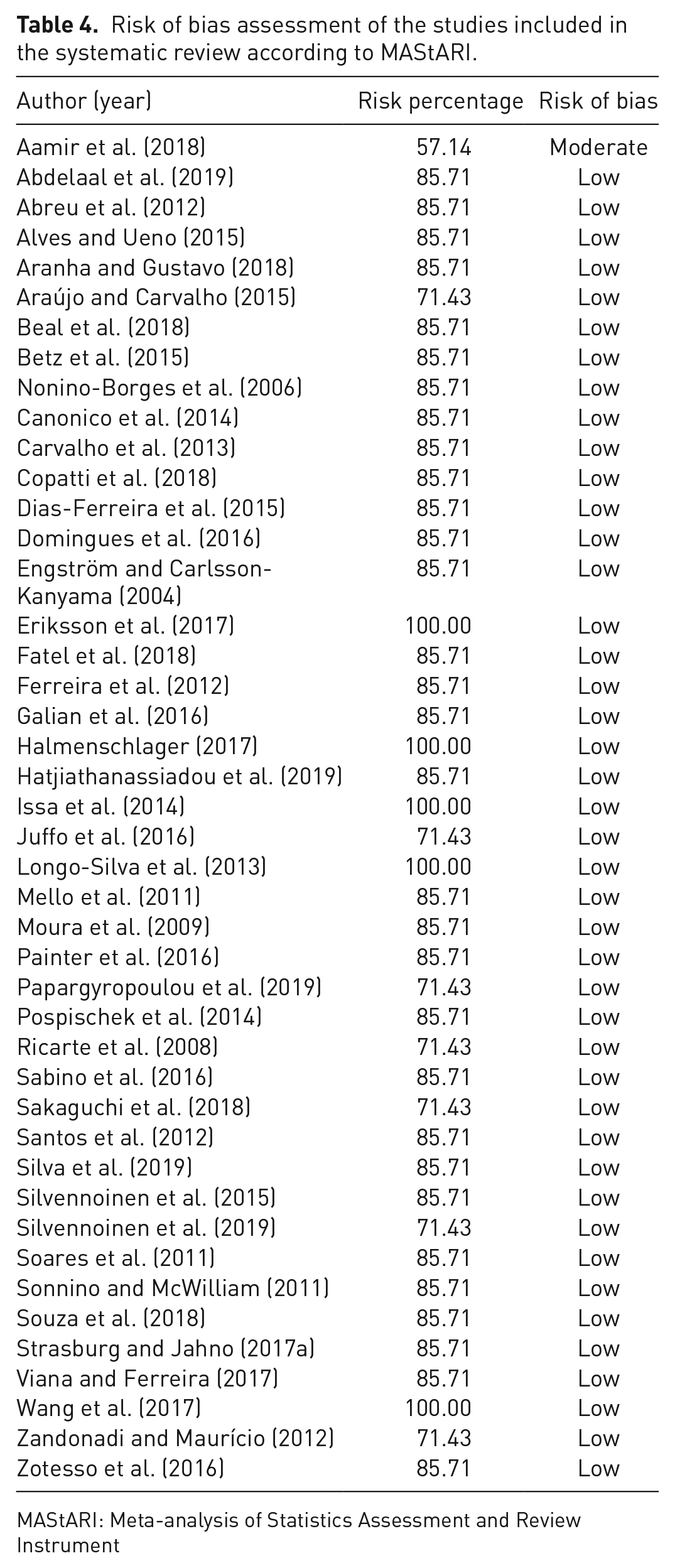
After the evaluation, the risk of bias was categorized as ‘High’ when the study reached up to 49% score ‘yes’; ‘Moderate’, when the study reached 50%–69% score ‘yes’; and ‘Low’, when the study reached more than 70% score ‘yes’.
Results
The search process resulted in 808 publications: 135 from the Science Direct database, 28 from Lilacs and 85 from SciELO, in addition to 509 from grey literature and 51 from manual search. Thirty-eight duplicate articles were identified and, after all the evaluation steps, 75 were read in full. Of these, 31 were excluded for the following reasons: 1 theoretical study, 1 pilot study, 2 intervention study, 1 methodological study, 4 qualitative studies, 19 studies that did not contain data of interest and 3 studies in which the full-text was not available. Finally, 44 articles were included in this review. A flowchart detailing the search and selection process is shown in Figure 1.
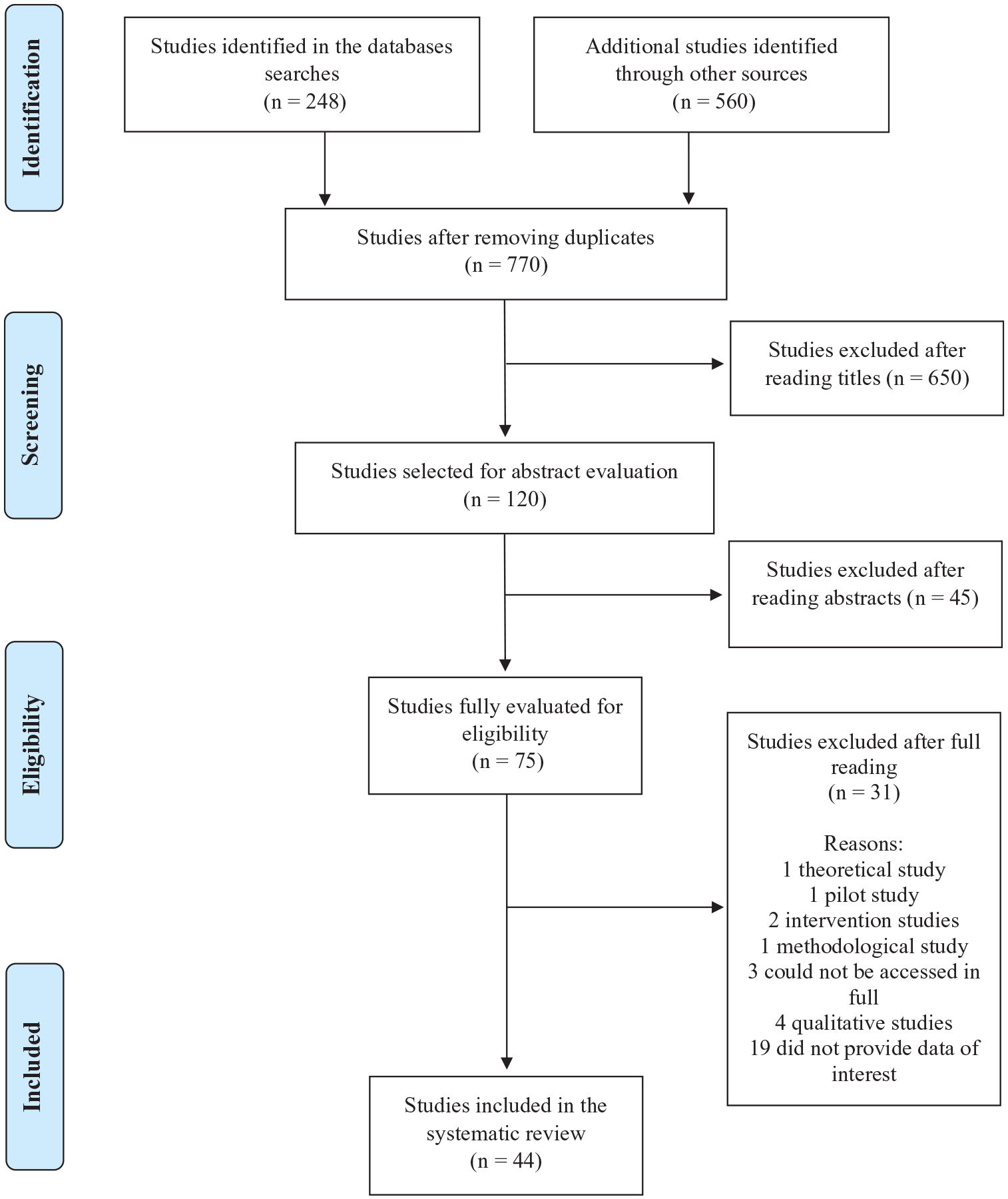
Flowchart of the study selection process: identification, screening, eligibility and inclusion of studies in the systematic review, as PRISMA (2015).
Table 1 shows the characterization of the studies included in this review. Studies from four different continents were identified: Africa (1/44), Asia (4/44), America (33/44) and Europe (7/44). The majority of publications came from Brazil (32/44) and were published from 2004 on, focusing mainly on the last 5 years (29/44). It is worthy of note that there was a predominance of scientific articles (43/44), in addition to Master of Science dissertations (2/44).
Characterization of the studies included in the systematic review as to the type/location of institutions, clientele, forms and period of sustainability assessment.
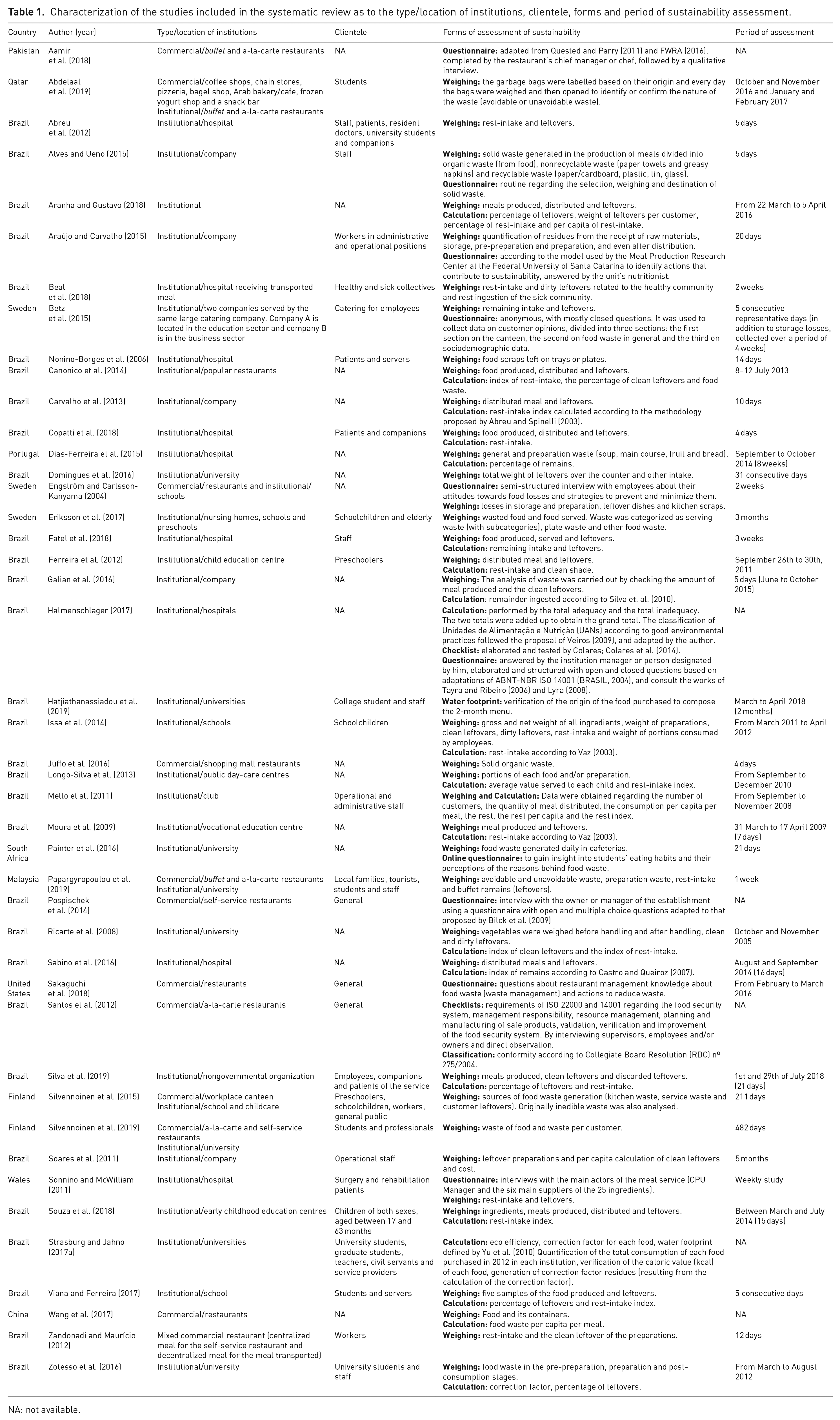
NA: not available.
Most studies were conducted in institutional food service (38/44), particularly hospitals (9/44), schools/day-care centres (9/44) and universities (8/44). The samples included mostly workers (17/44) and students (7/44). The most common sustainability assessment methods were the quantification of solid waste (38/44) and the application of standardized questionnaires adapted by the authors (9/44), with varying evaluation periods (Table 1).
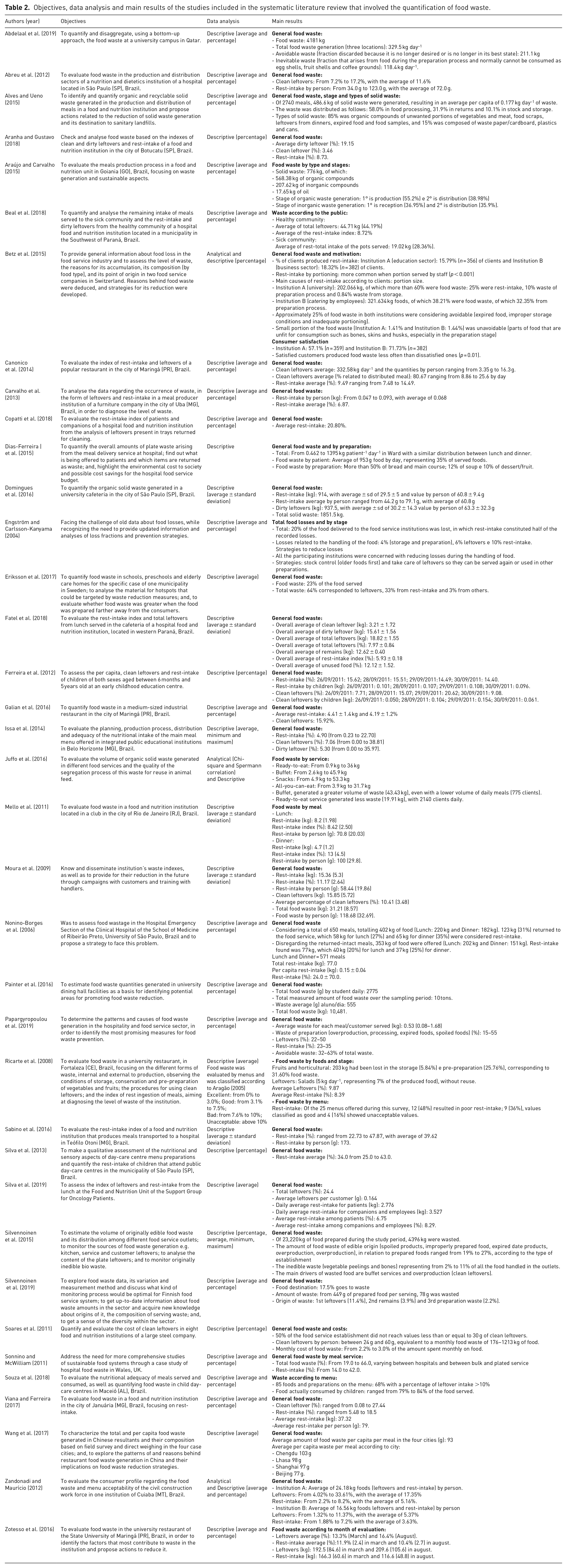
The aims, methods of data analysis and the main results of the studies included in this review are shown in Tables 2 and 3.
Objectives, data analysis and main results of the studies included in the systematic literature review that involved the quantification of food waste.
Objectives, form of data analysis and main results of the studies included in the systematic literature review that involved the application of questionnaires, checklists and water footprint assessment.
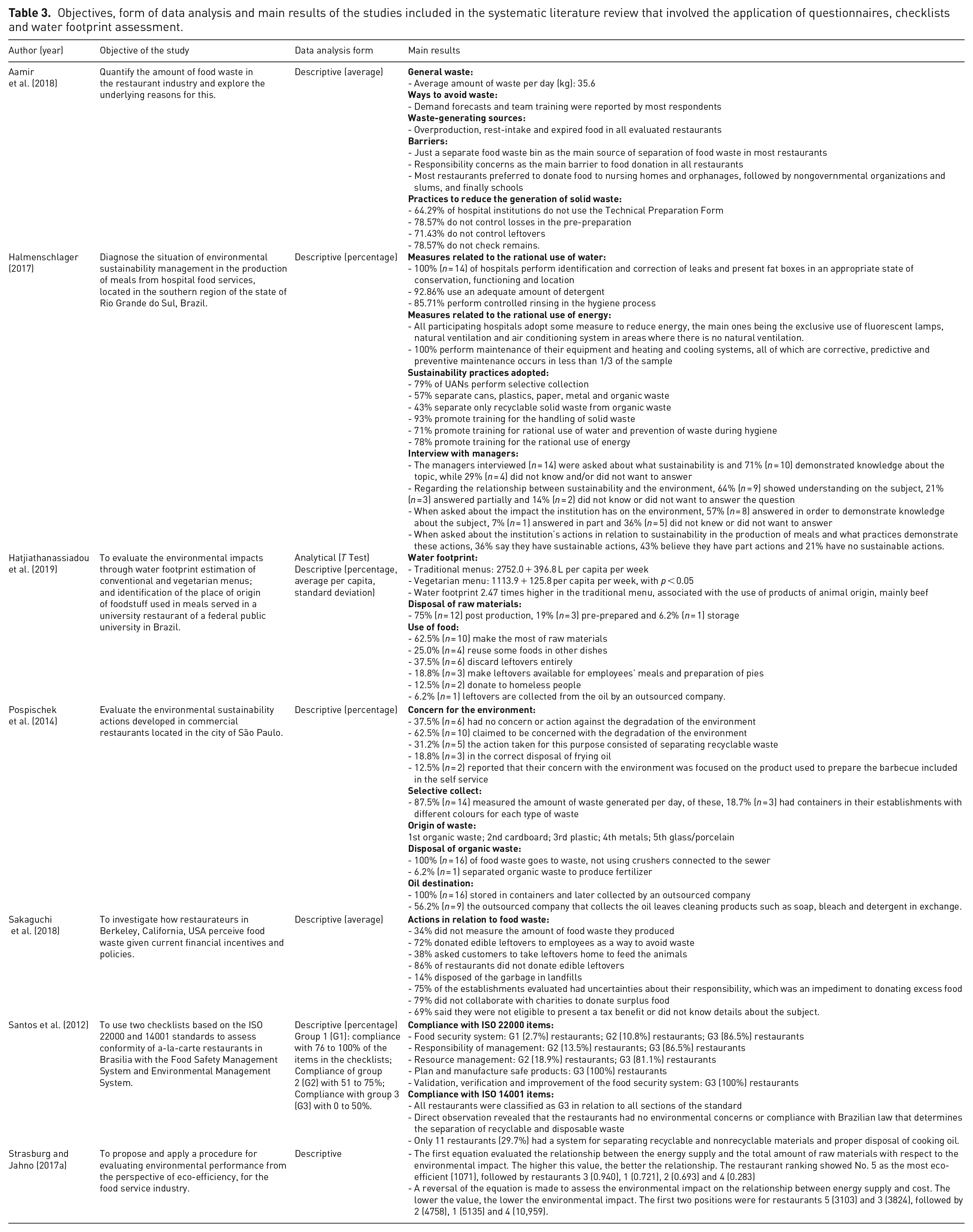
Most publications aimed at quantifying and evaluating solid waste, by weighing rest-intake and leftovers (Table 2). The articles also focused on research on sustainability actions, compliance with environmental management, strategies for preventing waste, satisfaction with the menu and cost of leftovers (Table 3).
Regarding data analysis, there was a predominance of descriptive statistics showing frequencies, means and standard deviations (41/44). We observed that, in studies that applied statistical tests, sustainability indicators were compared between types of menus (omnivorous and vegetarian), forms of distribution (set meals, buffet) and customer satisfaction (rest-intake and acceptance of the menu) (Tables 2 and 3).
Results from studies that evaluated solid waste (38/44) revealed high amounts of waste, in both institutional and commercial segments. Although a few studies (3/38) included inorganic waste, the measurement and production of organic waste was predominant. The meal processing/production stage was identified as the main source of waste (5/38). Other aspects that impacted waste indicators were the customers’ dissatisfaction with the menu and portion sizes (Table 2).
The studies shown in Table 3 (7/44) revealed an absence of measures to assess sustainability in the production of meals (3/7), in addition to inadequate handling, disposal and/or separation of waste (3/7) and the lack of awareness of managers regarding this issue (1/7) (Table 3).
When evaluated the risk of bias of the studies, it was found that just one study (1/44) was classified as moderate risk; all other (43/44) was considered as low risk of bias. All studies presented the characterization of the institution and the specification of the sustainability measure, as the results of the studies answer its main questions. The limitations observed were the lack of representativeness of the institution and non-randomized selection (38/44); the data collected not described in detail (3/44); the sustainability measure is not valid and reliable way (6/44); and the statistical analyses was not appropriate (1/44) (Table 4).
Risk of bias assessment of the studies included in the systematic review according to MAStARI.
MAStARI: Meta-analysis of Statistics Assessment and Review Instrument
Discussion
This systematic review established that the assessment of sustainability practices in the food service is carried out mostly through quantification and classification of solid waste. Most studies found unsatisfactory results through the sustainability indicators used, especially those involving quantification of waste, in addition to the lack or shortage of sustainable development measures.
The main reasons for waste in the meal production environment usually involve expired products, overproduction of food, and excess of rest-intake, according to Aamir et al. (2018). In addition, Zandonadi and Maurício (2012) point the dissatisfaction of consumers with the menu as a factor impacting the generation of food waste.
A similar observation was made by Ricarte et al. (2008), who evaluated food waste in a Brazilian university cafeteria in Fortaleza-CE, focusing on different forms of waste, both internal and external to production. These authors found that the low acceptance of some preparations and the lack of variety were the main responsible for dissatisfaction with the menu. In the 25 menus offered during the survey, rates of rest-intake classified as good ranged from 4.93% to 7.30%, while poor ratings were in the range of 7.69–9.65% and unacceptable ratings from 10.46% to 14.64%. There were no rates of rest-intake classified as optimal.
On the other hand, for Betz et al. (2015) the portioning of the foods was one of the causes of waste. Their study assessed two different companies in Switzerland, both served by the same catering company, company A in the education sector (producing around 450 meals a day) and company B in the business sector (meals for employees, more than 750 meals a day). The authors found that when the portion size was determined by the crew rather than the customers, rest-intake were significantly more frequent (p < 0.00). While answering a questionnaire, the customers cited ‘too large’ portions as the main reason for the remaining of plate waste. In view of this, the authors emphasized the importance of adapting portion sizes to the requirements of the customers.
Economic and structural issues that lead to the lack of variety on the menu, an insufficient number of professionals to prepare more elaborate menus, and lack of equipment are also behind high rates of leftovers, according to Moura et al. (2009). These authors conducted a study in the food service of a State Center for Professional Education, in Guarapuava, state of Paraná, Brazil, which serves an average of 280 meals for lunch daily. They found an average of 60.39 g of leftovers per capita, and that the dirty leftovers from this food service could feed 28 people daily.
This systematic review revealed that few studies evaluated the adoption of strategies against the waste of resources and on waste management by establishments. However, that is crucial for the dissemination of the concept of sustainability in the meal production sector (Strasburg and Jahno, 2017b).
Halmenschlager (2017) investigated food services in public and private hospitals in the southern region of the Rio Grande do Sul state in Brazil, using two instruments: an adapted questionnaire that addressed practices and projects on sustainability, and a checklist of good environmental practices in food services. Based on the percentage of adequacies assessed through the Checklist of Good Environmental Practices in Food Services, of the 14 hospitals studied only four had a higher percentage of adequacies than inadequacies, the highest percentage of adequacy having reached 66% and the smallest 24%. These instruments also generated results in relation to service managers, who were asked about actions taken by the food services in relation to meal production sustainability, and about practices confirming these actions. Only 36% reported having promoted sustainable measures, while 43% believed to have partly done so and 21% did not do it at all.
Among sustainable production practices that can be developed in food service, those aimed at reducing waste and optimizing the use of natural resources, especially water and energy, are worthy of note. It is indispensable to promote the continuous and permanent training of employees, along with the planning of menus considering seasonality and regional foods, as well as the adoption of appropriate processing techniques that preserve nutritional and sensory properties of food and its use in full (Abreu et al., 2012). The preventive maintenance of equipment, waste separation and adequate waste management are also important (Dias and Oliveira, 2016).
During the production and distribution of meals, one must consider the number of customers, so that the volume of meals produced is proportional to the demand, as well as the presentation and organoleptic aspects of the preparations, not to mention the adaptation to the climate. Adequate planning prevents high generation of leftovers and minimizes the environmental impacts caused by food waste, besides influencing the food services expenditure (Silvério and Oltramari, 2014; Soares et al., 2011).
The technical cards are valuable tools that can assist in controlling the waste of food service. These cards aid the nutritionist, standardizing and controlling production and distribution, directly influencing the quality of the service offered, in addition to facilitating the execution of the processes, the acquisition and control of products, and the planning of the menu. The sheets also provide data on correction and cooking factors per capita, portioning and nutritional information, contributing to the training of the crew (Akutsu et al., 2005).
Educational actions directed at the customers are also extremely relevant in promoting sustainability, in view of the direct impact of customer behaviour on food waste (Issa et al., 2014; Silvério and Oltramari, 2014). In the study by Painter et al. (2016), conducted in cafeterias at the University of Rhodes, South Africa, the average food waste was around 555 ± 107 g per student per day. The total amount of food waste measured over the sampling period was estimated to be around 10 ton. In addition, the students answered a questionnaire that provided an insight into their eating habits, and perceptions on the reasons behind food waste. When asked whether or not they finished the food on their plates, only 18% of students said they ‘always’ finished everything. Almost half of the students (46%) said they ‘sometimes’ finished their meals, 30% rarely did it, and 6% never finished their food, suggesting that a considerable proportion of students did not eat all of the food served. When students were asked why they did not finish their meals, the main reason was ‘not liking the food’ (73%). Other reasons were haste (32%), and ‘just not being hungry’ (30%).
Britto and Oliveiro (2017) described positive impacts on the control of rest-intake when promoting nutrition education against waste and changes in portion sizes in the nutrition and dietary service of a hospital in São José do Rio Preto, São Paulo. The authors observed that the average food waste decreased from 23 kg to 16 kg per day, a drop of 31% in the volume of waste. There was a monthly reduction from 680 kg to 477 kg of food waste, corresponding to 30% in total volume.
Borges et al. (2019) have also described a positive outcome after developing educational actions for employees and raising customer awareness in a university cafeteria. Clean leftovers dropped from 31.64 ± 10.80 kg to 14.93 ± 10.43 kg (p = 0.001), validating the effectiveness of the crew’s training. The work with the customers, which was assessed through the analysis of rest-intake, also yielded positive results, with scraps dropping from 46.90 g to 37.83 g (p = 0.021). With the maximum value of acceptable waste in terms of rest-intake set at 10%, the authors reported a reduction from 8.68% to 6.20% of rest-intake after implementation of the actions proposed (p = 0.003), placing the cafeteria in a satisfactory range.
Ricarte et al. (2008) observed that the lack of measures to take advantage of clean leftovers resulted in approximately 7% of waste. Although an alternative to reduce food waste would be the donation of surpluses, some studies included in this review reported that a reason for this measure not being applied was the concern with the responsibility for any problems that may arise from the donated food (Aamir et al., 2018; Sakaguchi et al., 2018).
In addition to environmental, economic and social benefits, sustainability practices in the food service can be good for the consumers’ health. The use of fresh foods in full and the respect for seasonality and local socio-biodiversity contribute to improving the quality of the food offered to the population (Veiros and Proença, 2010).
In this scenario, the important role of the nutritionist is emphasized, for this professional is trained to select effective methods of acquisition, production and distribution of food, as well as to supervise and analyse the indicators, aiming at better results along with the crew (Araújo and Carvalho, 2015).
It should be noted that most of the articles included in this study have been published in the last 5 years, and that all countries involved are members of the United Nations (UN). That may be related to the update of the 2030 Agenda for Sustainable Development that took place in 2015, built on the legacy of the Millennium Development Goals with the aim of boosting sustainability, eradicating inequalities and promoting the well-being of humanity. The UN established practices to be adopted by its allied countries, comprising 17 items termed SDGs that encompass zero hunger and sustainable agriculture, sustainable cities and communities, and responsible consumption and production (ONU, 2015).
This systematic review presents as its own limitations those of the selected studies, such as poor methodological detailing, specific and local investigations, and also a predominantly descriptive analysis of the results. Nevertheless, this is a pioneering study that included articles published in different databases, including grey literature, without restrictions on language and date of publication.
Conclusions
This review identified a restricted assessment of sustainability in food service, as opposed to the need of deepening sustainability indicators and the effect of meal production processes on sustainable development. High levels of waste, combined with the scarcity of practices aimed at controlling the use of natural resources and waste generation, and the recent debate on the subject, point to the importance of sensitizing professionals to the combination of different measures in this investigation, in addition to strategies to mitigate the environmental impact and the commitment of resources for future generations.
Footnotes
Author contributions
FCC and DAS had the idea for the article. FCC and LOF performed the literature search and data analysis. All authors drafted and critically revised the work.
Declaration of conflicting interests
The authors declared no potential conflicts of interest with respect to the research, authorship, and/or publication of this article.
Funding
The authors received no financial support for the research, authorship, and/or publication of this article.
