




Abstract
An increasing corpus of data demonstrated the disruptive impacts of the COVID-19 pandemic on food consumption habits, particularly food waste, but the Balkan area is often overlooked. Accordingly, this study investigates the immediate effects of the COVID-19 pandemic on consumer knowledge and reported behaviours linked to food waste in Bosnia and Herzegovina. The research was based on an online survey with 2425 participants using the Google forms platform from 10 April to 10 May 2020. This period coincided with the first wave of the COVID-19 pandemic in Bosnia and Herzegovina. Consumers’ behaviours regarding where and how often they buy food, their attitude towards food labels, food provision and particularly the amounts and values of food waste and how they handle it were investigated. The data were analysed using descriptive statistics methods, and the significance of the association between variables was determined using nonparametric and multivariate statistical tests. The study’s findings revealed that (i) Bosnia has a low rate of household food waste and a favourable attitude towards food waste prevention, (ii) the majority of the respondents are familiar with the most common expiry labels, notably ‘use by’ and ‘best before’ and (iii) consumers adjusted their buying and consumption patterns due to the pandemic. The findings of this research are essential for developing evidence-based policy in Bosnia and Herzegovina during the post-pandemic recovery period since they are unique to that country. Indeed, the crisis’ lessons and insights may be used to help move towards more sustainable consumption habits.
Introduction
Food losses and waste (FLW) refers to ‘a decrease, at all stages of the food chain, from harvest to consumption in mass, of food that was originally intended for human consumption, regardless of the cause’ (HLPE, 2014). Food waste occurs downstream of the chain (e.g. retail/distribution, food service and household consumption) (FAO, 2011, 2019; UNEP, 2021) and is defined as food suitable for human consumption that is discarded, whether or not after it has passed its expiration date or has been left to rot (FAO, 2013a). Food waste has been identified as one of the most significant sustainability issues to tackle globally due to its detrimental economic, social and environmental impacts (FAO, 2013b; HLPE, 2014). In light of rising concerns about food security and environmental implications, such as resource depletion and greenhouse gas emissions attributable to food waste, emphasis has been focused on the issue (Schanes et al., 2018). Food waste is affected by a variety of variables, including behavioural (e.g. meal planning and preparation, shopping behaviours, storage organisation, storing and consumption of leftovers, etc.) (van Geffen et al., 2020), socioeconomic factors (e.g. incomes, age, gender, level of education, household composition, familiarity with food labels, etc.), and product characteristics (e.g. food and packaging) (Roodhuyzen et al., 2017). Several activities such as meal planning, grocery shopping, storage, cooking and eating may impact household food waste behaviour (Amicarelli et al., 2021).
The global COVID-19 pandemic and associated containment measures created a stressful condition that has had an immediate and significant effect on people’s lives and habits. Indeed, many have highlighted its devastating impacts on agriculture and food systems (Ben Hassen and El Bilali, 2022; FAO, 2020a, 2020b; HLPE, 2020; IPES-Food, 2020; OECD, 2020; One Planet Network, 2020; UNSCN, 2020). In this context, the issue of food waste is resurfacing because reducing and increasing losses can improve or worsen food security and, as a result, affect the achievement of some of the Sustainable Development Goals – SDGs (most notably SDG 2, ‘Zero Hunger,’ and SDG 12, ‘Responsible Consumption and Production’).
Indeed, the pandemic significantly influenced people’s everyday lives, including substantial effects on household diet, food buying and food-related behaviours, such as food waste (Jribi et al., 2020). Since the pandemic, worldwide waste generation dynamics have altered, causing unexpected waste composition and volume changes, especially regarding food waste (Sharma et al., 2020). OECD (2020) outlined that the COVID-19 pandemic may have short-term and long-term implications for food loss and waste. Fleetwood (2020) emphasises that global food waste and loss from farm to fork have never been visible and urgent.
The beginning of the pandemic was accompanied by significant increases in food loss and waste due to disruptions in supply chains caused by blockages on transport routes, mobility restrictions and quarantine measures, particularly for perishable agricultural products such as fruits and vegetables and fish, meat and dairy (FAO, 2020b). In fact, COVID-19 boosted panic buying and stockpiling, and some families expanded their home stocks, particularly of nonperishable food items (Cranfield, 2020). Fears about interruptions in the food supply chain have led to an increase in the amount (Berjan et al., 2022) and the kind of food purchased by households (Pappalardo et al., 2020). However, due to a misunderstanding of date marking, overestimated needs, and poor storage, most of these stocked food items may never be eaten and may wind up being thrown as food waste (Berjan et al., 2022; FAO, 2020b).
Meanwhile, several researches highlighted that food waste had decreased in many countries, such as Italy (Principato et al., 2020), the USA (Babbitt et al., 2021; Rodgers et al., 2021), the UK (Waste and Resources Action Programme[WRAP], 2020), Russia (Ben Hassen et al., 2021a), Japan (Qian et al., 2020), Mexico (Vargas-Lopez et al., 2021), Qatar (Ben Hassen et al., 2020) and Tunisia (Jribi et al., 2020). This reduction may be attributed to better food shopping with increased and careful planning, reduced supermarket shopping time, greater home cooking due to lockdowns and stay-at-home requirements, better in-home food storage, etc. (Rodgers et al., 2021). Furthermore, COVID-19 is much more than a public health emergency. It culminated in a global economic and financial crisis, rising unemployment rates and global poverty (International Monetary Fund, 2020). It seems that out of necessity, consumers decreased their food waste. Accordingly, changes in consumer behaviour regarding food waste are more likely to be affected by the socioeconomic backdrop of the pandemic than by pro-environmental concerns (Jribi et al., 2020).
Reducing food waste is critical from a financial, environmental and social standpoint, and it is crucial to understand how the Covid-19 pandemic has impacted household consumption and food waste habits and behaviour (Principato et al., 2020). Further, reducing food waste is an essential component of promoting food and nutrition security as well as sustainable development in many countries worldwide. These initiatives are in jeopardy because of the COVID19 pandemic challenges (FAO, 2020b).
However, as a general observation, the scholarly literature on FLW remains geographically unbalanced, emphasising developed countries, even in Europe (El Bilali and Ben Hassen, 2020). Accordingly, statistics on the extent and magnitude of FLW in developing countries, such as the Western Balkans, are limited and inaccurate due to a lack of reliable data. Indeed, a search on the Web of Science database conducted in April 2022 yielded 34 papers, 21 of which were suitable. The paucity of data on Food waste (FW) in the Western Balkans was a key finding. Further, the research concentrated on food loss at the consumer level, but food loss at other levels of the food chain was typically ignored. There are few extensive evaluations of FLW’s economic and environmental repercussions, as well as its implications for food and nutrition security. FLW quantification is often imprecise and reliant on estimations. The research emphasises on FW reuse and recycling (e.g. energy, compost), with minor references to alternative management measures (e.g. reduction/prevention, redistribution). Further, circular food waste management knowledge concentrating on preventative activities is lacking across the Balkan area (Foodways Consulting, 2020). More recently, some studies analysed the effects of the COVID-19 pandemic, and the related containment measures, on FLW in some Western Balkan countries such as Bosnia and Herzegovina (Ben Hassen et al., 2021b) and Serbia (Berjan et al., 2022). All the studies point out that the pandemic affected food-related practices and behaviours, including food wastage, but the findings are rather mixed; for instance, Ben Hassen et al. (2021b) report that the pandemic improved the awareness of Bosnians towards food with a decrease in FW while Berjan et al. (2022). found that household food wastage increased in Serbia during the COVID-19 pandemic.
According to The European Environmental Bureau (2020), the countries of the Western Balkans generate high amounts of municipal waste – Serbia, 2.46 million tons (330 kg capita−1 year−1) in 2019; Albania, 1.2 million tons (381 kg capita−1 year−1) in 2019; Bosnia and Herzegovina, 3.25 million tons (354 kg capita−1 year−1); North Macedonia, 456 kg per capita in 2019; and Montenegro, 292.7 thousand tons in 2017. While it is assumed that food constitutes a considerable portion of solid municipal waste, precise statistics on the proportion and volume of food waste are lacking.
The paucity of current research on the dynamics of food waste in Bosnia and Herzegovina and the Balkan region and its link to food security and sustainability leaves a major and worrying gap in the knowledge base needed to form effective policies. Accordingly, this study aims to investigate the immediate effect of COVID-19 on consumer knowledge and reported behaviours linked to food waste in Bosnia and Herzegovina. To the best of our knowledge, this is the first paper that analyses the direct consequences of the pandemic on food waste in Bosnia and Herzegovina.
Material and methods
Data collection and questionnaire design
The research was based on an online survey using the Google forms platform from 10 Apr to 10 May 2020. This period coincided with the first wave of the COVID-19 pandemic in Bosnia and Herzegovina. Consequently, consumers’ responses reflect their food procurement and management reported behaviour during the first wave of the pandemic. The study targets the general adult population (age > 18 years) in Bosnia and Herzegovina. With 77%, internet penetration is high in Bosnia and Herzegovina. The survey was circulated through the most-used social media in Bosnia and Herzegovina: Facebook (1.45 million users/44.5% of the total population) and Instagram (1.20 million users/36.9% of the total population) (Data Reportal, 2022). Participants gave their digital informed permission for the study’s data sharing and privacy policy before taking part in the research.
The study adopted the snowball sampling method (SSM), and participants were asked to share the survey with their friends and relatives. We used a non-probability sampling technique because survey participants were chosen randomly and voluntarily. With the COVID-19 pandemic restrictions, the SSM provides significant advantages, especially when enhanced by using social media (Dosek, 2021), and other sampling strategies are unlikely to succeed. This method is based on recommendations from originally selected respondents to additional people thought to have the same interest in the subject. This method benefits from not being readily interrupted or halted and minimises possible sample bias (Hermsdorf et al., 2017; Johnson, 2014).
The questionnaire (Appendix 1) was developed and adapted based on previous studies performed in the Mediterranean region (Abouabdillah et al., 2015; Ali Arous et al., 2017; Berjan et al., 2019; Bogevska et al., 2020; Charbel et al., 2016; Elmenofi et al., 2015; Preka et al., 2020; Sassi et al., 2016; Yildirim et al., 2016). The questionnaire was adapted to the local context and the COVID-19 pandemic situation and administered in Bosnian, the official language in Bosnia and Herzegovina.
The questionnaire consisted of 30 closed-ended and open-ended questions, divided into eight sections: (1) Profile of respondents; (2) Food shopping habits: purchasing behaviours and frequency, as well as food spending; (3) Knowledge of information on the ‘use by’ and ‘best before’ food labels; (4) Opinion and attitudes towards food waste: food waste awareness, frequency of discarding food and food waste management; (5) Extent of household food waste: the quantity and food categories that were discarded; (6) Economic value of household food waste; (7) Willingness and necessary information to reduce food waste and (8) Food behaviour and food waste during the COVID-19 pandemic. The questionnaire was meticulously developed to ensure the quality of the survey data, limit the risk of common method variation, and lessen the likelihood of respondents misunderstanding the questions. Incidentally, Berjan et al. (2022) and Bogevska et al. (2021) utilised a similar questionnaire to investigate the impact of the COVID-19 pandemic on food behaviours and food waste in Serbia and North Macedonia.
The questionnaire was subjected to two rounds of testing before being made available. An expert panel first performed a quality audit of the validity of the contents to improve the validity and reliability of the study. In addition, a pretest was conducted with 30 individuals to make sure the data was accurate.
Data analysis
The research was based on a non-probability sampling method. For the purposes of analysis, the data were downloaded into the Statistical Package for Social Sciences (SPSS) version 25.0. A sample of n = 2459 adults from Bosnia and Herzegovina was considered valid and accepted for further processing. Categorical variables were processed via frequencies, while function descriptives were used to process continuous variables. The Chi-square (χ2) test of independence was used to test the correlation of the profile of the respondents with individual variables from the questionnaire. The Mann–Whitney U test was used to compare the differences between the two independent groups (gender) and the subjects’ behaviour during the pandemic. The Kruskal-Wallis test was used to assess the influence of respondents’ age on food waste. In addition, multiple regression models were fit and analysed in order to explore relations in a multivariate setting. A statistically significant difference was set at p < 0.05.
Results
According to the survey findings, the COVID-19 pandemic has significantly impacted food purchasing, preparation, and waste in Bosnia and Herzegovina. We begin by introducing the survey participants’ sociodemographic features; then analyse the food procurement and consumption behaviours, awareness and attitude towards food waste; and the effects of sociodemographic characteristics on food-related behaviours.
Sociodemographic characteristics of the participants
According to Table 1, 44.6 % of the participants are married with children, and 29.5 % live with their parents. Since women are in charge of cooking and food management in Bosnian households, the sample was not gender-balanced (67.3% were female, and 32.7% were male).
Sociodemographic characteristics of the respondents (n = 2425).
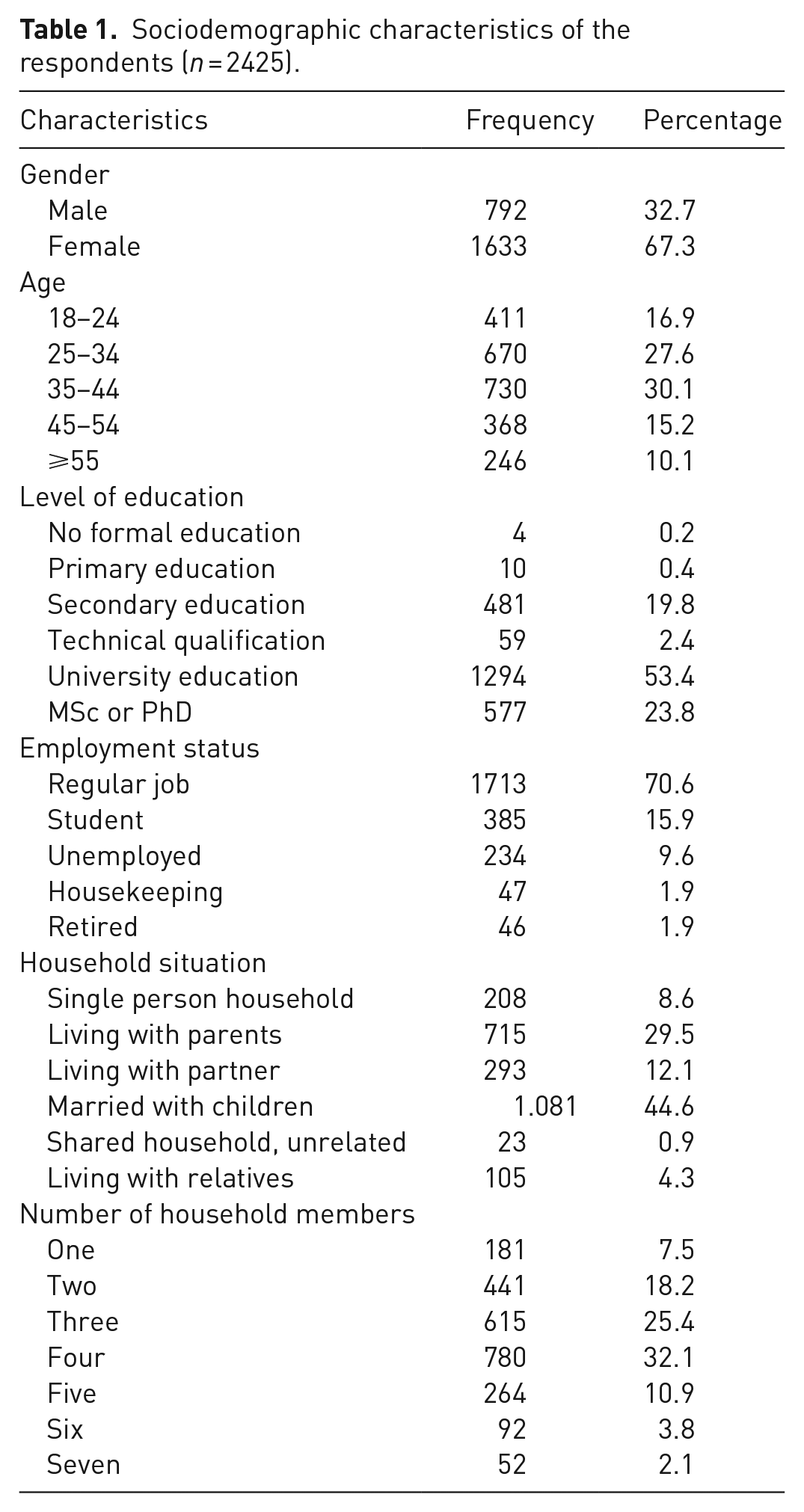
In terms of profession, 70.6% work full-time, while 15.9% are students. Furthermore, most respondents were in their forties and fifties, with 45.3% between 35 and 54 years old and 27.6% between 25 and 34. Older individuals make up a small percentage since they are less computer literate. Our sample may not reflect the whole population, but it does show that educated individuals are more computer literate and have greater access to online resources. In terms of household composition, 32.1% have four individuals, and 25.4% have three persons. This is consistent with statistics data indicating that the average number of household members in Bosnia and Herzegovina is three (average 3.04) (Agency for Statistics of Bosnia and Herzegovina, 2018). The sample was well educated, with 53.4% holding a university diploma and 23.8% holding a master’s or a PhD.
Food shopping behaviours during the COVID-19 pandemic
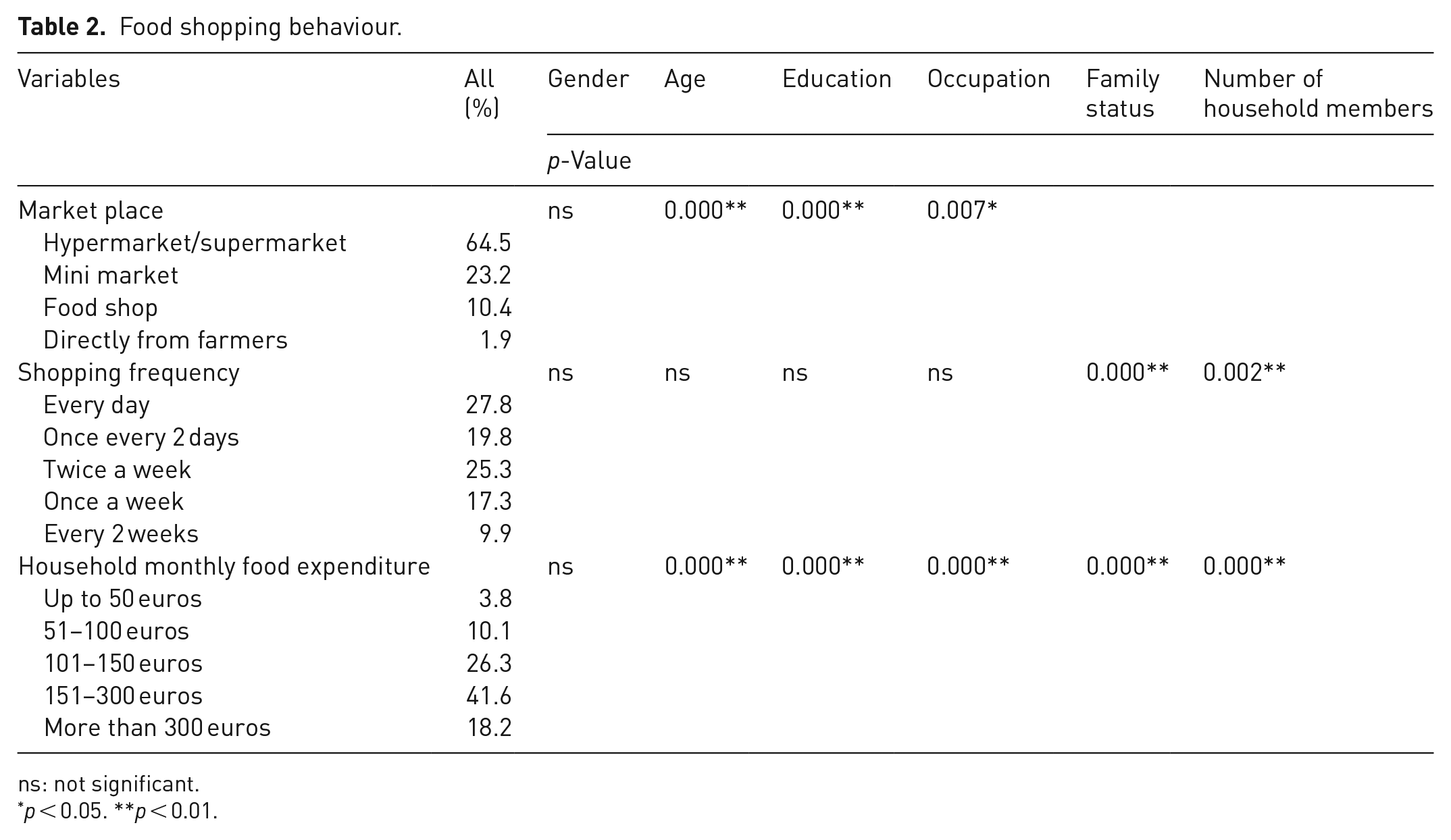
The results indicate that most respondents buy food in hypermarkets and supermarkets (64.5%) and rarely directly from the producer/farmer (1.9%). Meanwhile, 23.2% and 10.4% of the respondents buy food in mini-markets and shops located directly in their neighbourhoods. The marketplace is significantly associated with age and education, so higher-educated respondents were more likely to buy at hypermarkets and supermarkets (Table 2). These findings showed that Bosnia and Herzegovina is transitioning to a contemporary urban lifestyle. Indeed, like in other Balkan nations, Bosnia and Herzegovina has lately seen changes in the retail food procurement industry, with the development of hypermarkets and supermarkets (Berjan et al., 2019, 2022; Bogevska et al., 2020; Preka et al., 2020). This may be attributed to increasing discretionary incomes among consumers due to the higher pace of economic growth. There has been no substantial shift in the location of food purchases compared to the pre-pandemic situation. As a result, the COVID-19 pandemic had little effect on where people bought their food (Vaško et al., 2020).
Food shopping behaviour.
ns: not significant.
p < 0.05. **p < 0.01.
Regarding food purchase frequency, because of the contemporary style of life of the urban population, consumers in Bosnia and Herzegovina (BIH) do not purchase food every day, but they buy food quite often. Most of them buy food every day (27.8%), 19.8% buy food every other day, 25.3% twice a week, and 17.3% once a week. Shopping frequency is significantly associated with family status and the number of household members. Indeed, married couples with children and households with more than two people like to shop for groceries twice a week.
Regarding the value of monthly food expenditure, 41.6% of Bosnian households spend between 151 and 300 euros on average, followed by those who spend 100–150 euros per month (26.3%) and those who spend more than 300 euros (18.2%). Food expenses should be compared to the average income in Bosnia and Herzegovina, which was 493 euros in July 2020 (Agency for Statistics of Bosnia and Herzegovina, 2020). The results also reveal significant associations between several respondents’ sociodemographic characteristics, such as age and education level and monthly food expenditure (chi-square test, p < 0.05). Indeed, education level is strongly linked with income level and, as a result, food spending. Income and educational attainment are significant factors influencing food spending. Low education level is linked with low income and low food spending, and vice versa.
Awareness, attitude, and causes of food waste
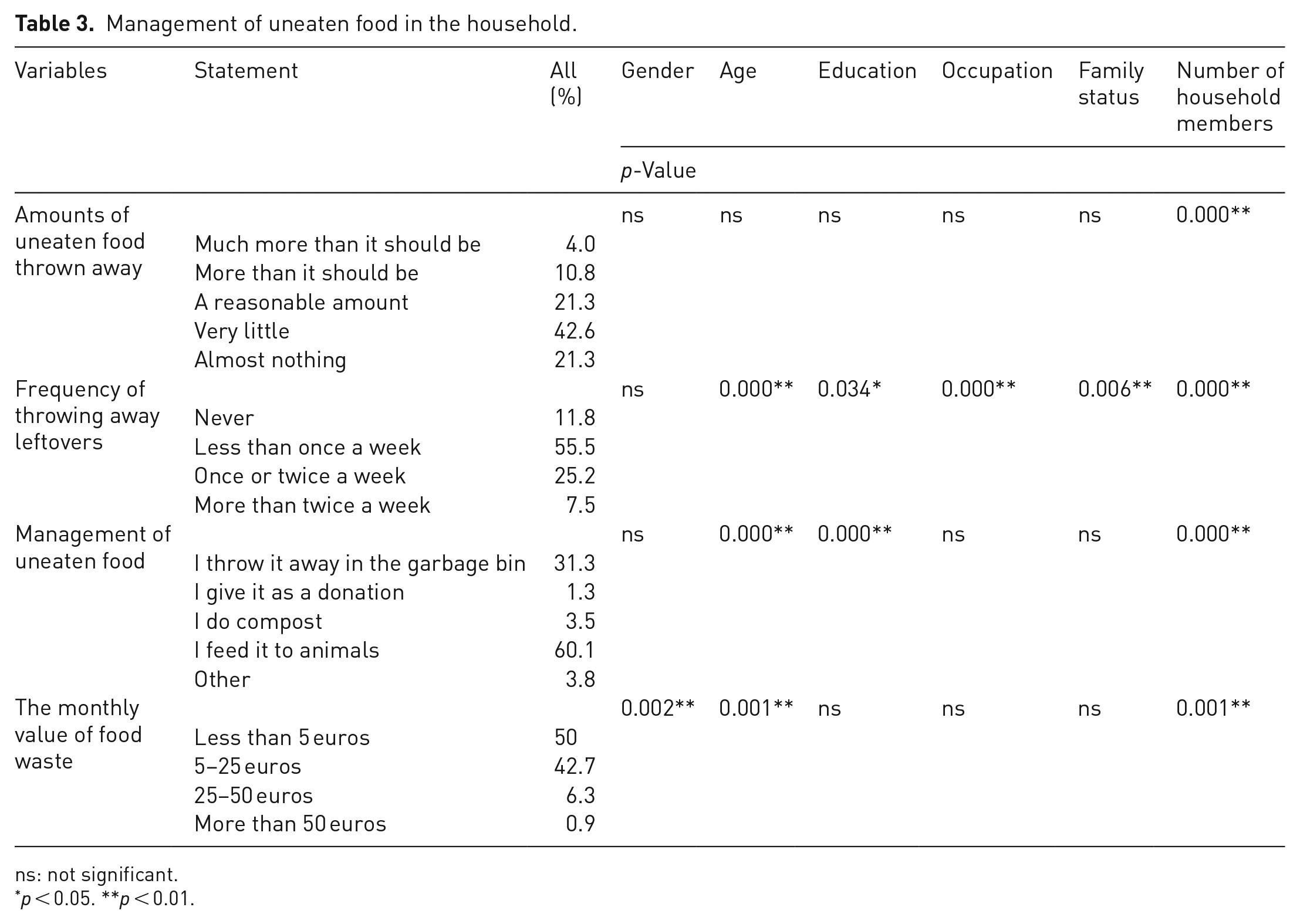
The findings show that household food waste in Bosnia is low. Most households worry about food waste and throw away very little (42.6%) and practically nothing (21.3%) of the bought food. Regarding the frequency of throwing away leftovers, 55.5% of respondents indicated doing it less than once a week, while 25.2% said they do it once or twice a week. Regarding uneaten food, most responders indicate feeding it to domestic animals (60%). This may be linked to the population’s geographical dispersion. In Bosnia and Herzegovina, 46% live in cities, while 54% live in rural regions (Agency for Statistics of Bosnia and Herzegovina, 2018). Meanwhile, 31.3% toss it away in the garbage, and a tiny proportion (4.8%) donate or compost it (Table 3).
Management of uneaten food in the household.
ns: not significant.
p < 0.05. **p < 0.01.
The findings revealed that Bosnia has a low rate of household food waste and a favourable attitude towards food waste prevention, as it is in the majority of Balkan countries (Berjan et al., 2019; Bogevska et al., 2020; Vaško et al., 2020; Yildirim et al., 2016). In general and as highlighted by Secondi et al. (2015), the most industrialised nations with the highest per capita income generated the most significant food waste. In low-income countries, food is mainly lost in the early and intermediate stages of the food supply chain; considerably less food is wasted at the consumer/household level (FAO, 2011). Further, the findings indicate that cereals, bakery items, milk, and dairy products were the most wasted food groups. Because of its limited shelf-life, consumers find that old bread is less attractive than fresh. Consequently, bread is one of the most wasted foods globally. Similar results on discarded food groups were observed in other countries of the Balkan region, such as Serbia (Berjan et al., 2022) and Macedonia (Bogevska et al., 2021), and European countries such as the Netherlands (van Dooren et al., 2019), Finland (Silvennoinen et al., 2014), and Hungary (Szabó-Bódi et al., 2018). Further, during the pandemic, the percentage of some types of food that are thrown away (e.g. fruits and vegetables) slightly increased compared to 2016 (Vaško et al., 2020), which is probably due to the purchase of larger quantities for fear of shortages or due to complex supply.
The respondents’ age, job position and family status significantly impacted their behaviour regarding the quantity of food thrown away. Indeed, older people waste less food than their younger counterparts. Also, married couples with children waste more food than the other categories. Furthermore, age, education, and the number of family members all had a substantial impact on the management of uneaten food. Age, job position, family situation, and the number of family members all had a substantial impact on the frequency of food waste, whereas education had a significant impact.
Furthermore, the findings indicate that cereals, bakery items, milk and dairy products were the most wasted food groups. Fish and seafood, as well as grains and oilseeds, were the least wasted food groups (Figure 1).
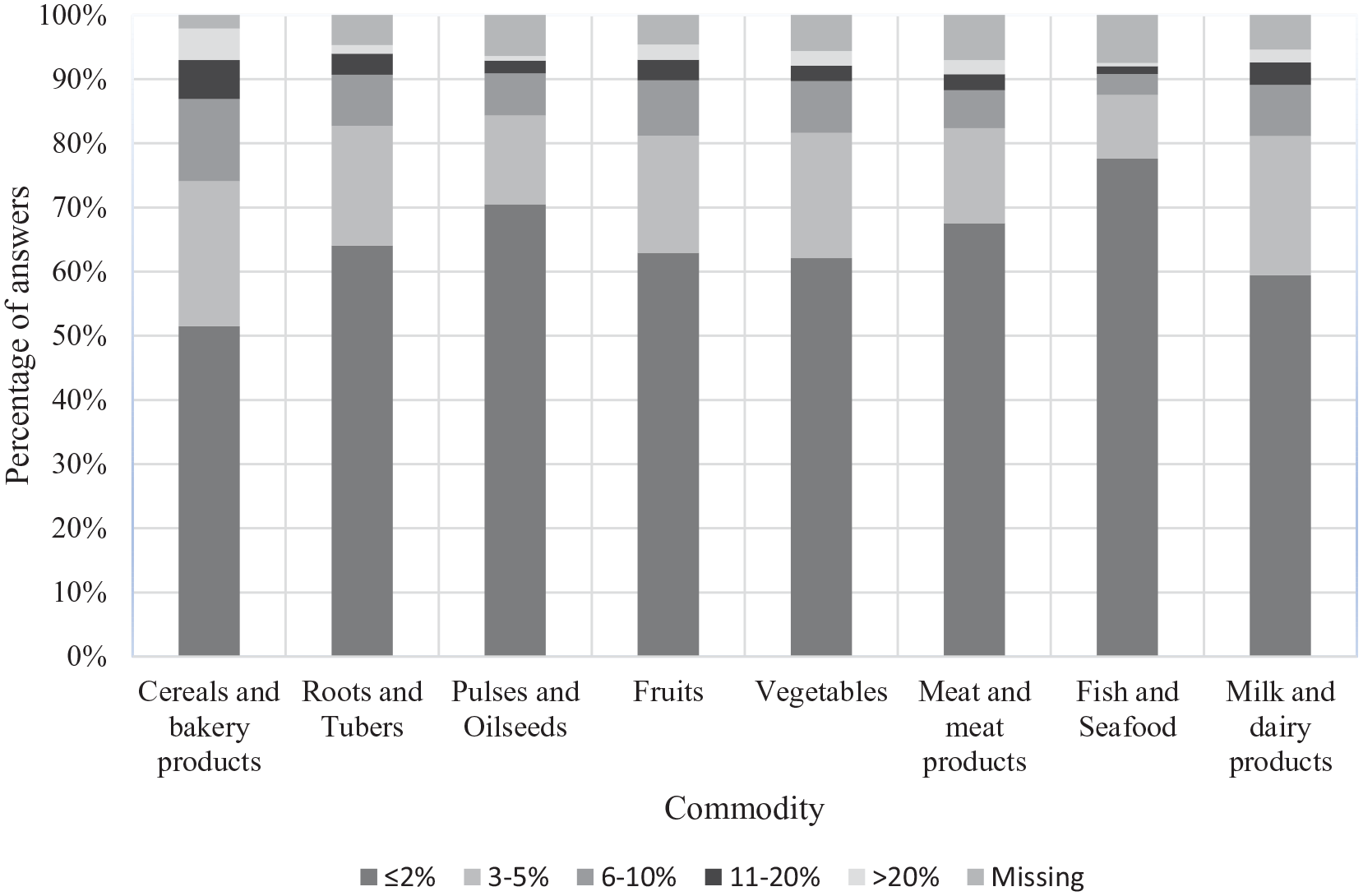
Household food waste estimation by product category.
Regarding the monthly economic value of food waste, 50% of respondents said they throw away less than 5 euros per month, while 42.7% said they throw away between 5 and 25 euros (Table 3). The value of purchased food was highly influenced by all sociodemographic characteristics except gender (age, education, education, employment status, family status and family size). Meanwhile, the value of discarded food was highly influenced by gender, age and family size.
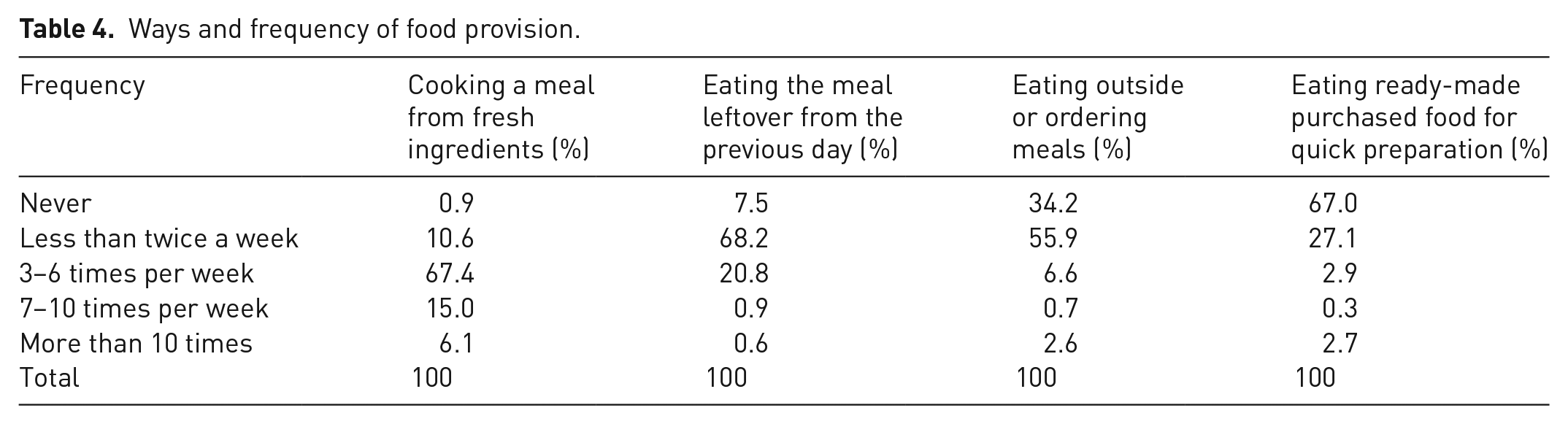
According to Table 4, 67.4% of the respondents cook the main meal at home from fresh ingredients, and they did it mostly 3–6 times a week, and 15% did it 7–10 times per week. Similar results were obtained in Greece (Ponis et al., 2017), Serbia (Berjan et al., 2022), and North Macedonia (Bogevska et al., 2021). Moreover, most of the respondents, 68%, ate the meals leftover from the previous day less than twice a week. A tiny number of respondents did not cook at home at all (<1%), which shows that most respondents tend to cook food at home. This habit resulted in a high percentage of those who never bought fast food (67%) and those who did it less than twice a week (27%). More than half of the respondents ate in a restaurant or ordered fast food, but less than twice a week. The frequency of dining out and buying ready meals is modest, and the response structure was likely affected because most restaurants were closed during the pandemic.
Ways and frequency of food provision.
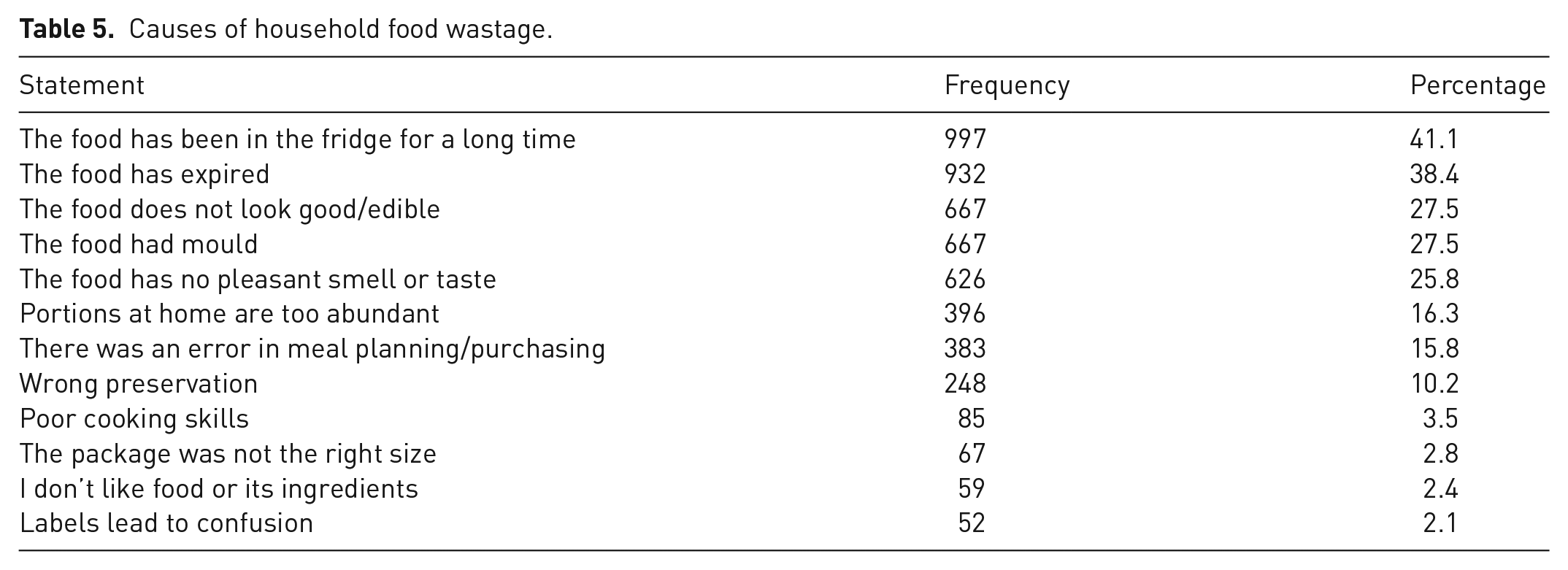
The main reasons for throwing food away are leaving food in the fridge for too long a time (41.1%), expired food (38.4%), the food does not look good/edible (27.5%), and food with mould (27.5%) (Table 5). In this respect, the hierarchy of causes of food waste in BIH is similar to that in other countries. Long-term storage in the refrigerator is also in the first place in Albania (Preka et al., 2020), Algeria (Ali Arous et al., 2017), and Morocco (Abouabdillah et al., 2015). In Montenegro (Berjan et al., 2019), food leftovers are often thrown away. In Tunisia (Sassi et al., 2016), food is thrown away mainly because it has expired; and in Lebanon (Charbel et al., 2016) and Egypt (Elmenofi et al., 2015), because the food does not look good, that is, because it does not have a pleasant smell and taste.
Causes of household food wastage.
Knowledge of food labelling information
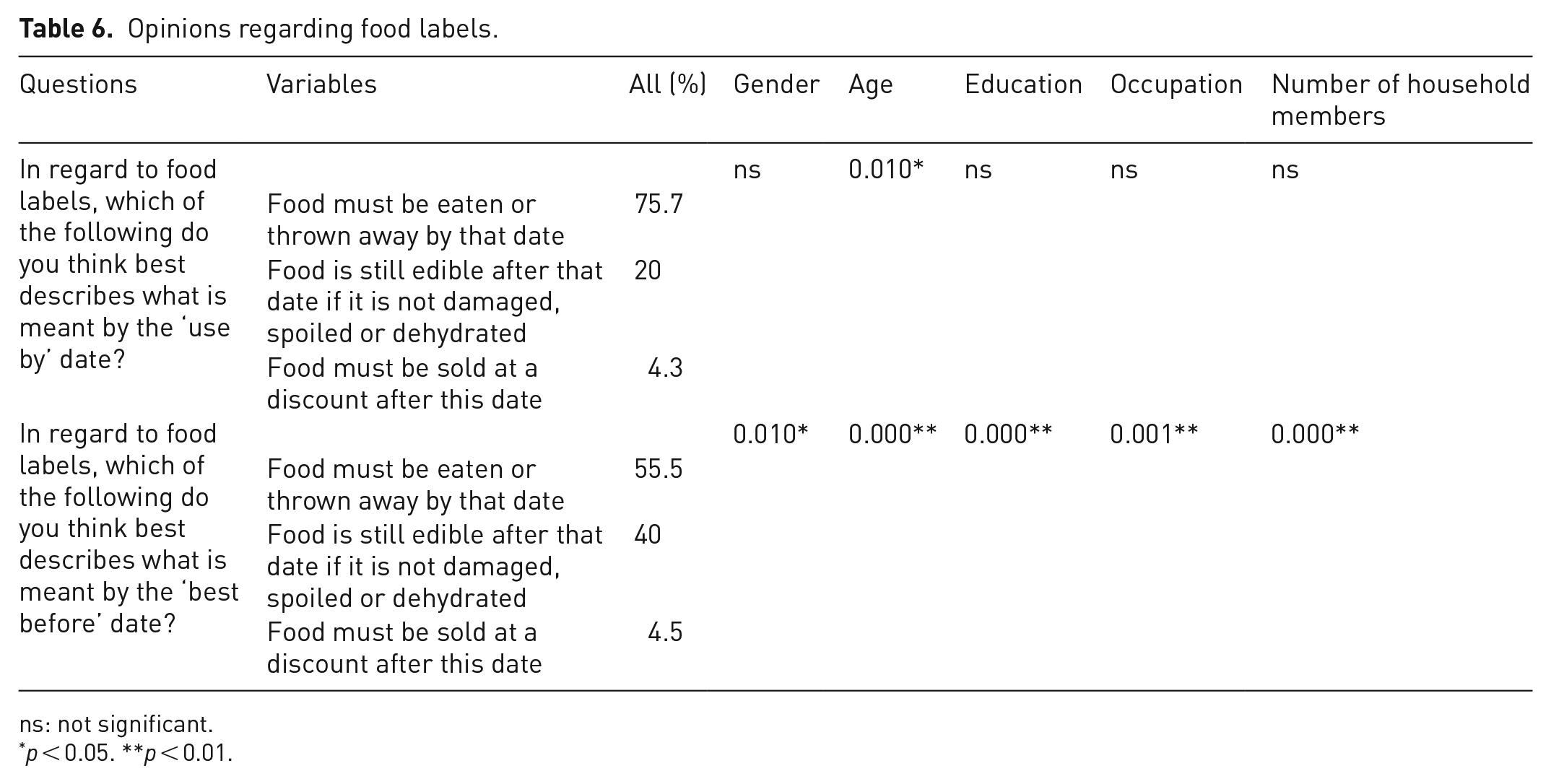
Regarding knowledge of expiry dates and labelling, the majority of respondents are familiar with the most common labels, notably ‘use by’ and ‘best before,’ differentiating between them (Labelling according to the EU regulation No 1169/2011) 1 . Indeed, since 2003, Bosnia and Herzegovina (BiH) has been a prospective candidate for EU membership and has been working to align its laws with the EU’s Acquis. As a result, BIH relies heavily on EU norms and regulations for food labelling, such as ‘best before’ and ‘use by.’(International Trade Administration, 2021). For the first label, ‘use-by’, 75.7% of the cohort know that food must be eaten or thrown away by this date. Additionally, 20% had a more tolerant attitude and felt that food was edible beyond the stipulated date if it was not damaged, spoiled or dehydrated. When it came to the second label, ‘best before,’ 55.5% ate or threw away food by that date. Meanwhile, 40% think that if food is not damaged, spoilt, or dehydrated beyond that date, it is still edible, thus increasing food usage and decreasing food waste. These points highlighted the need for proper food labelling and labelling choices, as both may increase or decrease food waste (Table 6).
Opinions regarding food labels.
ns: not significant.
p < 0.05. **p < 0.01.
When it comes to an understanding of ‘use by’ and ‘best before’ food labels, age is significant (p < 0.01), indicating that younger respondents have a better grasp of these labels’ meanings. Furthermore, understanding the label ‘best before’ is strongly linked to education, implying that educated individuals are better acquainted with the meaning of this label.
Consumer food-related behaviour changes during the COVID-19 pandemic
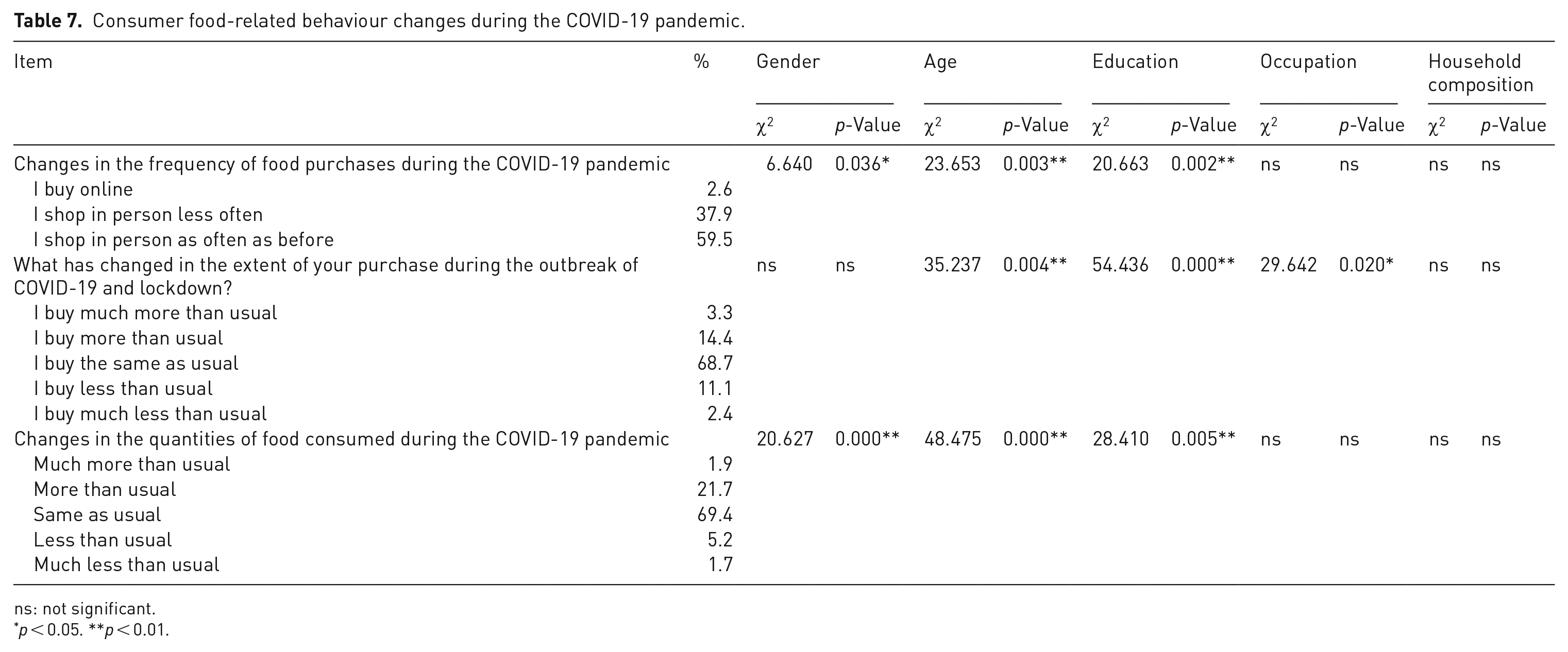
The results confirmed that, due to the pandemic, respondents changed their behaviours regarding shopping frequency. Indeed, 38% of consumers went to buy food less often. Only a small number of consumers (2.6%) used an alternative way of buying food by ordering it online (Table 7). Meanwhile, 17.7% of the respondents bought more and much more food than usual, 13.5% less and much less than usual, while 68.7% bought the same amount of food as usual.
Consumer food-related behaviour changes during the COVID-19 pandemic.
ns: not significant.
p < 0.05. **p < 0.01.
These findings corroborated previous findings in several European countries (European Institute of Innovation and Technology, 2020). People alter their shopping habits because shopping in a supermarket is viewed as a challenge (fear of the virus, fear of being near others, long waiting lines in supermarkets, etc.), and because of mobility limitations. As observed in several countries (Ben Hassen et al., 2021c; Cranfield, 2020; McKinsey, 2020), consumers cut the number of trips they made to the store and purchased more each trip to decrease their perceived risk of exposure to COVID-19. However, contrary to a general trend of increasing online shopping and delivery of food and groceries in many countries across the globe during the first wave of Covid-19 (Ben Hassen et al., 2021a; Ben Hassen et al., 2022; Đuričin and Antonijević, 2020; Eger et al., 2021), online shopping is still minor in Bosnia. This might be explained by the fact that e-commerce in this country is still in its early stages due to the low credit card ownership rate. Only 9.7% of Bosnians have them. Consumers are not accustomed to purchasing online and find it difficult to persuade themselves of the benefits of this method of shopping. Only 15% of Bosnians purchase or pay bills online. Most consumers in Bosnia purchase apparel and fashion online, and the percentage of food bought online is negligible (E-commerce Germany News, 2022).
Furthermore, food consumption increased rather than decreased due to movement restrictions and lockdown measures. Almost a quarter of respondents (23.6%) consumed more during the pandemic, while 6.9% consumed less. The majority of other respondents reported no substantial changes in food intake (Table 7).
The survey shows that 92.2% of the respondents worried about food waste, and there is a slight increase in concerns about food waste in the pandemic period compared to the response rate in 2016 (86.9%) (Vaško et al., 2020). The same observations were highlighted by Jribi et al. (2020) in Tunisia (89%) and Abeliotis et al. (2014) in Greece (90%). In Bosnia, according to our results, 63.9% of the respondents throw away uneaten food rarely (including ‘very little’ and ‘almost nothing’) (Table 3). This confirmed that food waste is significantly lower in developing countries than developed ones (Lipinski et al., 2013). There are certainly some moral aspects; as stated by Radzymińska et al. (2016), in Poland, discarding food is not in line with the Polish tradition, which certainly applies to BIH, where people are accustomed to consuming hard-to-produce or purchased food rationally. Uneaten food is rarely thrown away, and over half of households do it less often than once a week. Comparing the same responses with those of 4 years ago (Vaško et al., 2020), the number of those who do not throw food at all increased, and the number of those who throw significant quantities decreased, which can be attributed to the greater concern caused by the pandemic (cf. lower living standard and more difficult food procurement). This is correlated with the findings of increasing efforts to waste less food and limiting food waste during the stay at home during the COVID-19 pandemic, as indicated Borsellino et al. (2020).
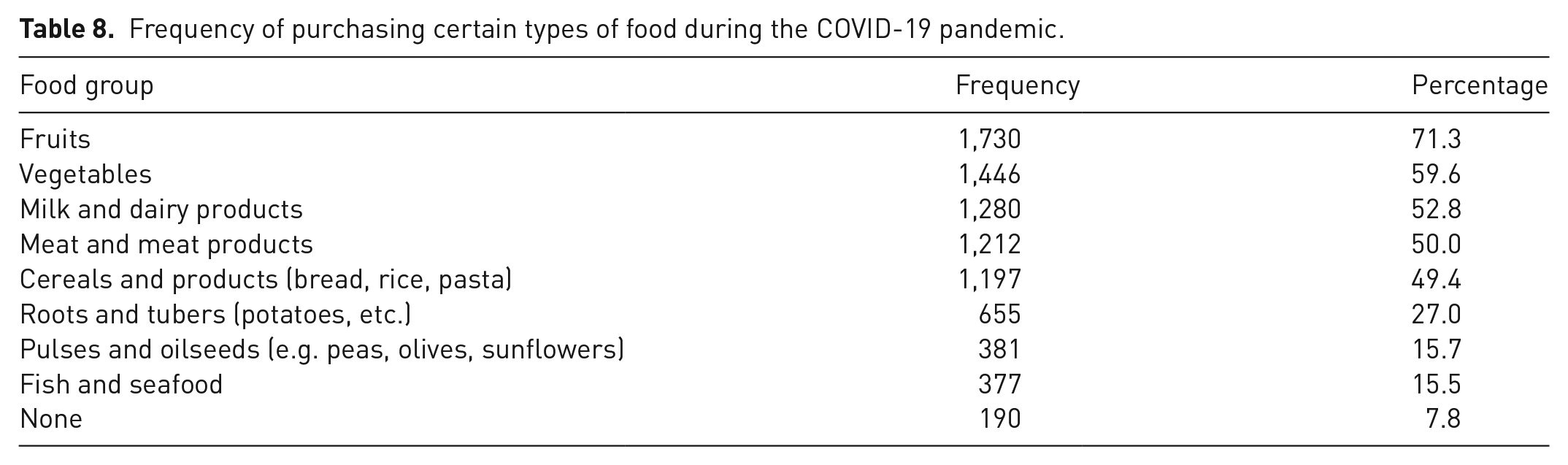
Also, during the pandemic, most households spent their budget on fruit. Fruits were followed by vegetables, milk and dairy products, meat and meat products, and cereals products (Table 8). Indeed, COVID-19 has compelled individuals to reconsider their overall lifestyles worldwide, and many have become more aware of their diet. Individuals all around the world are concerned about their health in order to strengthen their immune systems to fight COVID-19. Ben Hassen et al. (2021b) underlined a change to a healthier diet after the COVID-19 pandemic in Bosnia. Consumers decreased their unhealthy food intake, such as fast food, sweets and desserts.
Frequency of purchasing certain types of food during the COVID-19 pandemic.
Meanwhile, they consumed more healthy and nutritious food such as fruits and vegetables. Indeed, 25.66% of individuals ate more healthy foods, and 27.83% ate more fruits and vegetables. Furthermore, 33.22% of the cohort stated eating less junk foods (e.g. fast food), 24% eating less unhealthy snacks and 19% reported eating fewer sweets, cookies, cakes and candies.
Conclusions and study limitations
This study aims to investigate the immediate effect of COVID-19 on consumer knowledge and reported behaviours linked to food waste in Bosnia and Herzegovina. The study identified several significant consumer trends regarding food consumption, waste patterns, and food-buying decisions in Bosnia and Herzegovina during the pandemic. The study’s findings revealed that consumers adjusted their buying and consumption patterns due to the pandemic. The pandemic seems to have raised Bosnians’ awareness of the problem of food waste. As a result, the disturbance caused by COVID-19 must be used to encourage a transition towards more sustainable food consumption habits in Bosnia and Herzegovina.
The findings of this research are essential for developing evidence-based policy in Bosnia and Herzegovina during the post-pandemic recovery period since they are unique to that country. Indeed, the crises’ lessons and insights may be used to help move towards more environmentally friendly consumption habits. However, since the current study focused solely on the immediate, short-term effects of the pandemic, future studies are needed to clarify the medium and long-term effects of the COVID-19 pandemic on food-related behaviours (e.g. food shopping/procurement, consumption, preparation, waste) as well as food and nutrition security in the country. These findings will serve as a starting point for further study on the pandemic’s effect on Bosnia’s food sector.
However, because the COVID-19 pandemic is new and continually evolving, evaluating its impact on food waste and food systems is difficult since the entire extent of the effects is not yet clear (FAO et al., 2021; Okolie and Ogundeji, 2022). Furthermore, roughly 2 years after Coronavirus was first discovered, the pandemic is far from ending, and some countries still face substantial epidemics. However, even those who controlled the virus are concerned about incoming waves, particularly with the emergence of more contagious variants, for example Delta, Omicron, etc. (WHO, 2021). The risk of new infections and waves might result in other lockdowns or the continuation of present restrictive restrictions, further disrupting economic activity and food-related activities. For instance, Omicron has already caused widespread fear and rattled global markets, while new border closures by several countries have hampered the economy’s recovery from the 2-year epidemic (Reuters, 2021).
However, some survey techniques and instrument limitations: (i) sampling bias, (ii) questionnaires and (iii) social desirability bias should be acknowledged. Firstly, sampling bias is the study’s most significant limitation. As explained above, the study adopted the SSM, and participants in the survey were chosen at random, with no remuneration. Consequently, only individuals with a particular interest or a close relationship with the topic participated (i.e. self-selection bias). On the other hand, specific subgroups may be less likely to answer or finish the survey (i.e. nonresponse bias). As a result, our sample does not accurately represent the overall population of Bosnia and Herzegovina. High-educated people and women, for example, were overrepresented in our sample. This may be due to the cultural context of Bosnia and the Balkans in general, in which women are in charge of cooking and food management in the majority of households (Berjan et al., 2022). As a result, women were more interested in participating in the study. In addition, unemployed people are underrepresented in our sample. In our sample, 10% of the respondents were unemployed, which is below the official unemployment in Bosnia in 2020 of 15.87% (World Bank, 2022). However, low-educated individuals are generally underrepresented in surveys, especially self-selected surveys (Spitzer, 2020). Bosnia and Herzegovina has a high internet penetration rate of 77%. However, certain vulnerable groups, such as the elderly and the web illiterate, may have less access (Data Reportal, 2022). These limitations are prevalent in Computer-assisted web interviewing (CAWI), frequently used in surveys (Couper, 2000; Evans and Mathur, 2018; Monzon and Bayart, 2018). Indeed, self-selection bias, nonresponse bias, or just reaching selected subgroups are all examples of selection bias found in online research and snowball sampling and highlighted by several studies during the pandemic (De Man et al., 2021). However, because of the COVID-19 pandemic, particularly during the early waves when vaccinations were unavailable and social distance was required, face-to-face interviews or diaries were impractical and/or unsafe. Online surveys allowed data to be collected remotely, a significant advantage. Consequently, since the beginning of the pandemic, there has been a growing interest among academics in adopting internet-based data-gathering techniques, as seen by the increasing number of studies using online surveys to collect data (Singh and Sagar, 2021). Furthermore, it is a more cost-effective and time-efficient method of data gathering than other methods of collection (e.g. telephone interview) (Hlatshwako et al., 2021). Also, snowball sampling offers the possibility to collect primary data cost-effectively in a short duration of time. However, this method has limitations, such as non-random selection processes and relationships between network size and selection probability (Johnson, 2014).
Secondly, it has been well established that using questionnaires in the research about food waste does not identify precise amounts and actions but merely a distorted version of them which may be influenced by a positive illusion bias (van der Werf et al., 2020). Indeed, questionnaire-based research, such as ours, portrays consumers’ perceptions of their actions and behaviours connected to food waste rather than how they really behave and waste (Giordano et al., 2018, 2019). For instance, the European Commission’s proposed methodological guidelines, issued in 2019, specifically identify food diary and waste compositional analysis as approaches to be used in national assessments of food waste but exclude questionnaires (European Commission, 2019).
Thirdly, our food waste assessment was self-reported and point-in-time. However, people’s perceptions of food waste reduction during the lockdown may be influenced by a social desirability bias (Tversky and Kahneman, 1973). In fact, as Rodgers et al. (2021) pointed out, changes in food-related behaviours were complicated by compliance with general health norms in the aftermath of the pandemic, which might have reflected prevailing society expectations during the pandemic’s early months. Furthermore, since people are aware of and sensitive to social norms about food waste (Stancu et al., 2016), this might have influenced the findings of this study.
Footnotes
Appendix 1
Author contributions
Željko Vaško: Conceptualisation, writing original draft and visualisation. Aleksandar Ostojić: Software, validation and formal analysis. Tarek Ben Hassen: Conceptualisation, writing original draft and revision. Siniša Berjan: Methodology, data curation, supervision and project administration. Hamid El Bilali: Conceptualisation, methodology and writing – review & editing. Igor Đurić: Investigation, data curation and resources. Soroush Marzban: Software, validation and formal analysis.
Declaration of conflicting interests
The authors declared no potential conflicts of interest with respect to the research, authorship, and/or publication of this article.
Funding
The authors received no financial support for the research, authorship, and/or publication of this article.
Ethical approval and consent to participate
This research was carried out per the Helsinki Declaration principles. The Western Michigan University Human Subjects Institutional Review Board (HSIRB) authorised all procedures involving research participants. Participation in the study was entirely voluntary. Each participant was informed of the study’s goal and context before providing their digital consent regarding privacy and information management procedures.
Availability of data and materials
The datasets used and/or analysed during the current study are available from the corresponding author on reasonable request.
