




Abstract
Foodservice businesses influence the sustainability of their natural environment by producing significant amounts of waste. Yet, research has, thus far, been dominated by studies that limit their scope to food waste alone. Few studies have taken a broader look at sustainable waste initiatives, including innovative waste processing techniques, with a view to constructing management indicators for foodservices. This study combines management innovation practices related to resource management, waste prevention, processing and disposal techniques, and stakeholder involvement to offer sustainable standards. It primarily adopts the Delphi technique to propose specific solutions pertaining to waste management. Experts from government, industry, and academia reveal that potential waste management initiatives comprise three facets – service, process (operational), and organisational practices and innovations, 15 sub-facets and 41 indicators. This study thus establishes a catalogue of solutions for food, packaging and other ‘non-food’ waste that foodservice establishments can implement. In addition to its practical implications, an important contribution is its focus on management systems to establish waste management standards for hospitality, food and beverage (F&B) services, restaurants, and non-commercial catering.
Keywords
Introduction
Food systems represent a grand challenge for society as the world faces wicked problems related to changing climate, environmental, and socio-economic conditions (George et al., 2016; Jurgilevich et al., 2016). The COVID-19 pandemic has exposed major weaknesses in the current global food system and the paradoxical redistribution tensions resulting from excessive surplus on the one hand and wastage, hunger, and poverty on the other. The pandemic has also forced businesses worldwide to quickly adapt to new consumption patterns. The crisis has forced commercial foodservice companies to transition into new business models, many of them transforming into hybrid onsite and online order placement and home-delivery businesses. Whereas the longer-term consequences in terms of sustainability are still somewhat uncertain (Gössling et al., 2021), for the majority of foodservice establishments this change represents an increase in waste generation and a major management challenge. The exponential increase in food-away-from-home consumption is straining existing waste management strategies. As a result, there are few sustainability topics for the food sector that generate higher interest than waste management (Hoornweg et al., 2013).
The foodservice industry has considerable weight in the global economy and involves a plethora of complex activities, from commercial catering (restaurants, mobile catering, and event catering) to non-commercial catering – including business and education dining facilities or varying forms of care (elderly, hospital, and others). It is also a major consumer of resources (materials, food, water, and energy), and generator of solid and liquid waste (food, plastic, and paper). The fact that the global expansion of the foodservice industry leads to an increase in waste generated by the sector makes it more salient to analyse in detail the various managerial approaches to waste minimisation and processing practices (Pirani and Arafat, 2016).
As a result, foodservice providers have been subject to increasing scrutiny over specific waste management initiatives, notably food waste and plastic packaging (Jambeck et al., 2015; Martin-Rios et al., 2018; Vizzoto et al., 2020). Still, the absence of sector-specific quantitative targets on waste prevention (Magrini et al., 2020) and the scant amount of research available on integrated waste management systems for restaurants – referring to all the activities related to avoiding, reducing and recycling waste throughout the foodservice process (for an exception see, Pirani and Arafat, 2014), and the limited managerial involvement – are the greatest impediments to the successful development of food waste reduction systems (Filimonau and Gherbin, 2017; Papargyropoulou et al., 2016). This article focuses on innovative solutions to waste management in the foodservice industry (Demen Meier et al., 2015; Martin-Rios et al., 2018; Whiley and Boehm, 2014) to address the following research question: What best practices and solutions are available for foodservice establishments to implement waste management systems?
This study involves a collaborative, interdisciplinary, and sector-specific approach. It builds on an international three-stage Delphi study with representatives from all key stakeholder groups: foodservice practitioners, institutional actors, recognised sustainability specialists, and leading academics, all of whom are fluent in waste management practices in a wide array of European countries. Experts were prompted to identify which waste minimisation and processing techniques foodservice providers must implement to successfully develop a waste management system.
The unique contribution of this study is twofold. It provides a comprehensive approach towards waste management alongside a set of solutions that can be used in foodservice establishments for waste management and minimisation. Indeed, waste minimisation and management is an important aspect of the sustainable business model for all types of food-related businesses (Bloom, 2010). The study contributes to the existing literature by outlining the principles of a sustainable waste management system comprised of innovative waste practices resulting from the Delphi study. The study offers insights that could be beneficial in the post-pandemic context where the salience of innovative waste techniques uncovered in this work is highest. Furthermore, it offers a comprehensive stakeholder system inductively derived from the practices selected by experts. This interdependent ecosystem further facilitates the implementation and management of the sustainable waste management system proposed.
A brief overview of the current status of research
Waste generation and management
Waste in foodservices has links to other global challenges including climate change, environmental degradation, health, poverty, as well as sustainable production and consumption (Diaz et al., 2005; Hayward et al., 2013). A stream of research highlights the mounting economic, environmental and ethical relevance of minimising and mitigating waste generation of renewable and nonrenewable packaging materials – that is, plastics, metal, glass or cardboard, and resources or basic commodities like food, water, electronics or energy (Abdulredha et al., 2018; Arvanitoyannis, 2010; Finnveden et al., 2007; Hoornweg and Bhada-Tata, 2012; Powell et al., 2016; Robinson, 2009).
The United Nations Environment Program (UNEP) provides a broad definition of waste management, encompassing the collection, transport and disposal of hazardous wastes or other wastes (UNEP, 1989). The European Union has implemented Directive 2018/851/EU, amending Directive 2008/98/EC on Waste, which is one of the most advanced waste management policies in the world. However, Directive 2018/851/EU merely specifies a minimum set of prevention measures and has set quantitative targets only for food waste prevention (reduction by at least 30% by 2025 and 50% by 2030). At the end of 2015, the European Union (EU) also launched the Circular Economy Package, with the main objective being a common 2030 target to recycle 65% of municipal waste, 75% of packaging, while reducing landfill to a maximum of 10% of all waste.
Recent advances in waste management include specific activities pertaining to waste minimisation and various opportunities to treat waste as a resource that mimic the design of a circular economy (Di Maio et al., 2017; Zacho and Mosgaard, 2016). These key approaches, which aim to enhance resource efficiency, highlight the need to take account of the managerial dimension: the set of specific practices companies set forth to address the waste challenge encompassing ‘prevention and/or reducing the generation of waste, improving the quality of the waste generated, including reduction of hazard and encouraging re-use, recycling and recovery’ (Hyde et al., 2003: 328).
Efficient waste management systems can generate significant benefits and savings for foodservice businesses in terms of positive corporate branding, environmental benefits (e.g. reduced carbon footprint), and improved relations with stakeholders along the value chain (Cummings and Cummings, 1990; Ju and Chang, 2016; Kasim and Ismail, 2012; Wang et al., 2013). Recently, waste management has received growing attention in the service industry, more specifically in hotels and resorts (Dief and Font, 2010; Radwan et al., 2010); event management (Hottle et al., 2015); air transport – including waste created through aircraft maintenance, onboard services and airport operations (Cowper-Smith and De Grosbois, 2011); as well as cruises (Wilewska-Bien et al., 2016).
Approaches to waste management in the foodservice industry
As an important producer of waste, the environmental footprint of the global food chain is significant (Gustavsson et al., 2011). In particular, the foodservice industry, at the end of the food chain, deserves special attention. The amount of organic waste generated in foodservice establishments is almost double that of other activities in the tourism and hospitality industry (Pirani and Arafat, 2014; Vinck et al., 2019). According to studies in the United Kingdom, foodservices account for 2.87 million tonnes of waste, including food, packaging, and other ‘non-food’ waste, produced each year (Waste & Resources Action Programme (WRAP), 2011). This represents an average waste production of 4.02 kg per guest per day. A recent assessment of 20 outlets in Chicago estimates that the breakdown of daily waste is as follows: 60% organic waste; 20% paper; 7% plastics; 6% glass; and 7% other types of waste (metal, textile, construction and demolition waste) (Van Waning, 2017). Most of this ‘garbage’ ends up in a landfill, which increases pollution, greenhouse gas emissions, and diminishes resource conservation (Beretta and Hellweg, 2019; Tatàno et al., 2017). A similar study looking at restaurants in the United Kingdom revealed that food accounts for 44% of all waste, followed by paper (14%), glass (14%), cardboard (10%), dense plastic (4%), plastic film (5%) and other (9%) (WRAP, 2011). In the United States, food waste is reported to account for about 56% of the garbage from restaurants (Iowa Waste Reduction Center (IWRC), 2013).
In economically developed countries, over 28% (24 million tonnes) of waste comes from production, retail, and commercial foodservice, which includes the hospitality sector (Stenmarck et al., 2016). More recently, food waste research has increasingly focused on measuring waste (Garonne et al., 2014). Measuring food waste in hospitality (Papargyropoulou et al., 2016), cafeterias and catering companies (Steen et al., 2018), as well as foodservice establishments (Betz et al., 2015) has been studied. Another major stream of work has focused on the environmental impacts of food waste (Cristobal et al., 2018; Kummu et al., 2012). Recent efforts to compile technical solutions for food waste minimisation and management has resulted in the so-called ‘food waste and recovery hierarchy’ (Papargyropoulou et al., 2014). Despite the significant potential for waste prevention, US restaurants and institutions (including canteens and catering) generate an estimated 13 to 20 million tonnes of food waste each year (Gunders, 2017).
Waste management initiatives in foodservice entail different degrees of innovation. Most of the current approaches to waste management take place at the operational level, while there is little knowledge about large-scale, strategic practices, and the role of technology in waste minimisation and management (Martin-Rios et al., 2021). In certain EU countries, selective disposal and collection of waste has been implemented for foodservice outlets to establish waste prevention schemes. For example, a policy based on the principles of Extended Producer Responsibility (EPR) has had a significant impact on reusing and recycling packaging (Rubio et al., 2019). Moreover, there is substantial evidence on how foodservices can innovate their food waste systems (Bilska et al., 2020; Dhir et al., 2020; Martin-Rios et al., 2018). There is, however, less evidence on how to innovate their waste systems for other types of waste and the type of solutions that are necessary to move towards a system of practices drawing on the principles of sustainability. Until recently, most studies in tourism and its food service component have drawn attention to the potential for developing synergies between waste policy and climate change mitigation and adaptation (Gössling et al., 2011). There is however a lack of systemic research on the specific tools to manage the waste challenge. Thereby, many foodservice businesses fall behind in establishing waste management systems.
Research methodology
Methodological background
This research uses a three-step Delphi study of European experts on waste management to better understand which solutions are more suitable for the foodservice sector (Dalkey and Helmer, 1963). The Delphi study is a flexible method to collect data from identified subject-matter experts (Coleman et al., 2017). It is an appropriate research design for systematic, iterative, and theory-building research. First developed by Dalkey and Helmer (1963), the Delphi method has become a popular way of obtaining consensus from a relatively small group of experts and hence has been applied to a wide range of sustainability and management issues (Walters and Javernick-Will, 2015). The common Delphi procedure is as follows: first it gathers feedback from individual contributions. This is followed by an assessment of the group judgement or view, which gives further opportunity for participants to revise their individual views, while safeguarding anonymity throughout the process. Finally, consensus about the best responses among all participants is reached.
The Delphi technique is a useful methodology to overcome social desirability issues common in the field of sustainability and waste management (Coleman et al., 2017; Hsu and Sandford, 2007). Certainly, this methodology has significant advantages versus most other individual-respondent methodologies. First, a Delphi study allows researchers to identify expert opinions and obtain structured feedback from participating experts (Seuring and Müller, 2008). It is a suitable research tool to explore an undetermined range of perspectives around the topic of waste minimisation and processing. In that sense, the Delphi study is an effective method to allow a group of individuals to discuss complex problems (Turoff and Linstone, 2002). Second, the Delphi method is often used in prospective studies and as a decision-making tool (Mukherjee et al., 2014). It stems from the idea that consensual answers are more reliable when they originate from a group of experts rather than from a single respondent (Donohoe and Needham, 2009). Anonymity allows group participants to express their judgements individually and without social pressure. This therefore mitigates any negative influences that might arise from responses given by individuals with particularly strong personalities or high status (Woudenberg, 1991). Nevertheless, the Delphi method has been subject to some criticism precisely for placing such emphasis on the opinions expressed by a small group of people, and for the subjectivity inherent in any qualitative method (Sackman, 1975). In that sense, for this study a diverse group of industry experts, academics and policymakers was assembled to obtain a more complete understanding of waste management systems and practices in the foodservice industry.
Selection of the panel
Selection procedure was done according to Okoli and Pawlowski’s (2004) recommendations and a set of panellists was contacted in order to achieve a wide range of views. In total, five areas of expertise were defined to be represented in the panel: (a) level of expertise about the foodservice activity in Europe; (b) level of knowledge about waste management in foodservice; (c) level of experience in actual waste practices; (d) level of experience with innovative waste initiatives conducted by the foodservice industry, academia, and government; and (e) level of dedication and ability to contribute to the advancement of our current understanding of waste management practices. In line with the multi-stakeholder perspective, a set of academics were selected based on their research standing. A larger number of industry practitioners were also selected, in anticipation of a lower response rate (Seuring and Müller, 2008). To be added to the panel grid, industry panellists needed to be experts in at least three of the five fields of expertise featured in the panel. Finally, a third group of institutional representatives, including government employees and nongovernment organisation professionals, were approached as well.
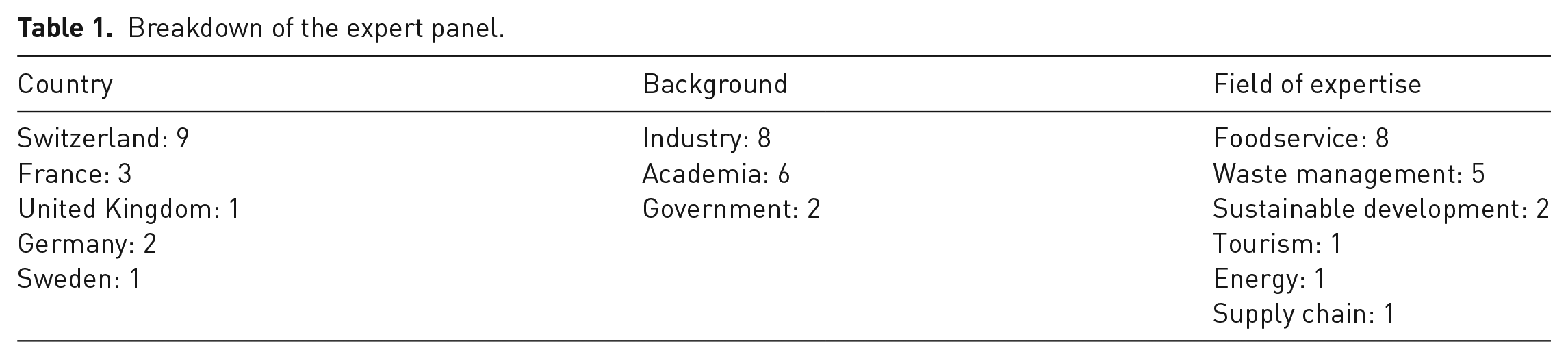
Although there is not a clear consensus about the ideal number of participants in a Delphi panel, in general, there is agreement that a minimum sample of seven experts is necessary and a group of 10–18 experts is recommended (Okoli and Pawlowski, 2004). Of the 32 international experts contacted by e-mail, representing all five areas of expertise mentioned above, 16 experts agreed to participate which is considered an adequate size for achieving the study’s objectives. It should be noted that one expert did not complete the third round, meaning that, for this last step of the study, the panel included 15 participants. Since the general objective of the study does not restrict to waste management in a single country, experts were chosen for five different European countries to improve their generalisability and transferability claims. Several experts were invited to participate for reasons of proximity (to be based in Switzerland) to increase participant retention strategy. Table 1 provides more information regarding the distribution of the expert panel, the country of origin, professional background, and field of expertise.
Breakdown of the expert panel.
Number of polls and content of the polls
A Delphi study is expected to continue until saturation is reached (i.e. until feedback from experts becomes redundant) (Turoff and Linstone, 2002). In practical terms, it means at least two or three polls. The first round of the Delphi study either includes a qualitative study to refine the research issues or may start with a questionnaire. In line with other management studies (Shi et al., 2016), first key waste practices were identified and aggregated from the literature and then given them to key informants. As such, the Delphi scenario was less ambiguous and offered greater direction. To populate the initial list of practices, we collected information on existing waste practices through bibliographic research in peer-reviewed journals and specialised practitioner publications (both online and print). A majority of the items were chosen based on prior expert and existing research on waste management practices (e.g. Demen Meier et al., 2015; Filimonau and Gherbin, 2017; Jambeck et al., 2015; Martin-Rios et al., 2018; Papargyropoulou et al., 2016; Pirani and Arafat, 2016; Vizzoto et al., 2020; Whiley and Boehm, 2014), with a few items added specifically from the grey literature (e.g. robotic systems for sorting recyclables, packaging and utensils made from organic waste). Nearly 100 waste practices were collected. Moreover, a grid featuring the main improvement points for waste management in foodservice establishments was created. These points include production, front-office management, sorting, storage, staff availability and competences, collection, and treatment. Practices affecting at least at one of these points (e.g. reducing the amount of waste produced or making the sorting process easier or less time-consuming) were retained for further evaluation.
Structure and administration of the Delphi
The selected experts were contacted by e-mail. Questionnaires were distributed to experts via an online platform. The survey at each round required 35–60 minutes to complete. To guarantee authoritative answers from experts, data collection was done individually, and anonymity was ensured. For the first round, each participant-expert individually assessed selected waste practices in terms of their ease of implementation on a 10-point scale. An inter-rater agreement analysis was carried out to uncover consensus disparity in the ratings provided by each expert. Panel participants were contacted after descriptive statistics were computed. For the second round, each participant-expert individually assessed selected waste practices in terms of the adequateness for the foodservice industry, the likelihood of being adopted, and the ease of implementation. The evaluation was done on a 10-point scale for usefulness and ease of implementation. A consensus was reached through the interquartile range, considering the frequency of distributions where the percentage of panellists responding to any given category was determined to be 51% (McKenna, 1989). This resulted in 32% of practices being disregarded by experts. In the final poll, a list of pros and cons and new survey questions were added so experts could further their reflection on the topics. The ‘no opinion’ option was removed from the question about ease of implementation. The objective was to force the experts to take a clear stance and thus limit the number of practices not generating a wide consensus.
Delphi analysis
The first phase of the Delphi study was started with a selection of 28 potential waste solutions and their potential degree of ease of implementation (Table 2). Those practices which were deemed too far-flung from their core activity and highly unlikely to be implemented by restaurateurs were removed from the list (for example, practices that create tension between waste and safety). This analysis was also an opportunity to assemble practices that were remarkably similar. For example, the various smart applications that help consumers purchase nearly expired and therefore cheaper products were collected under the label ‘anti-food waste apps’ and the several types of training offered to staff were labelled ‘training’.
Selected practices and anticipated degrees of ease of implementation.
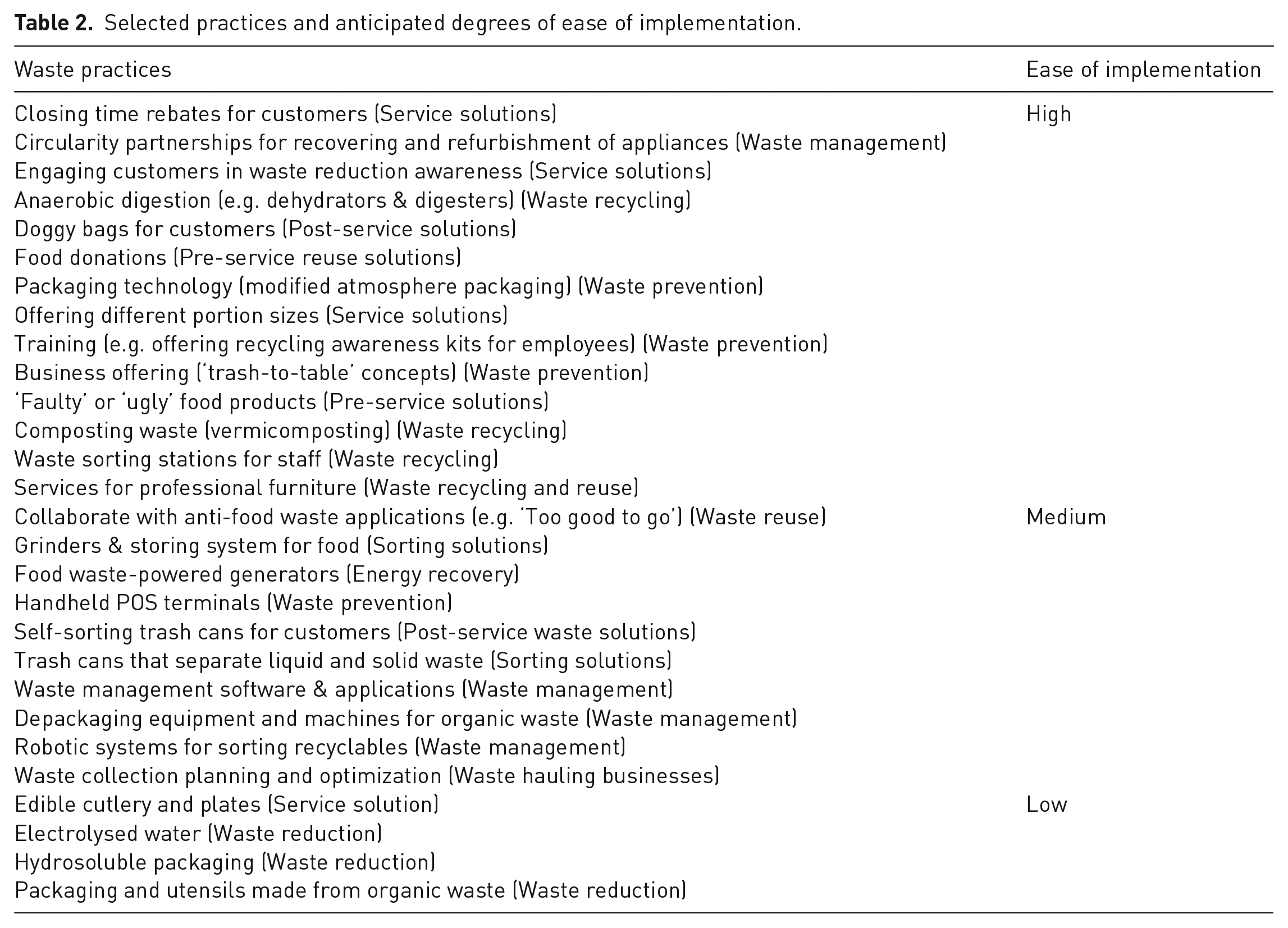
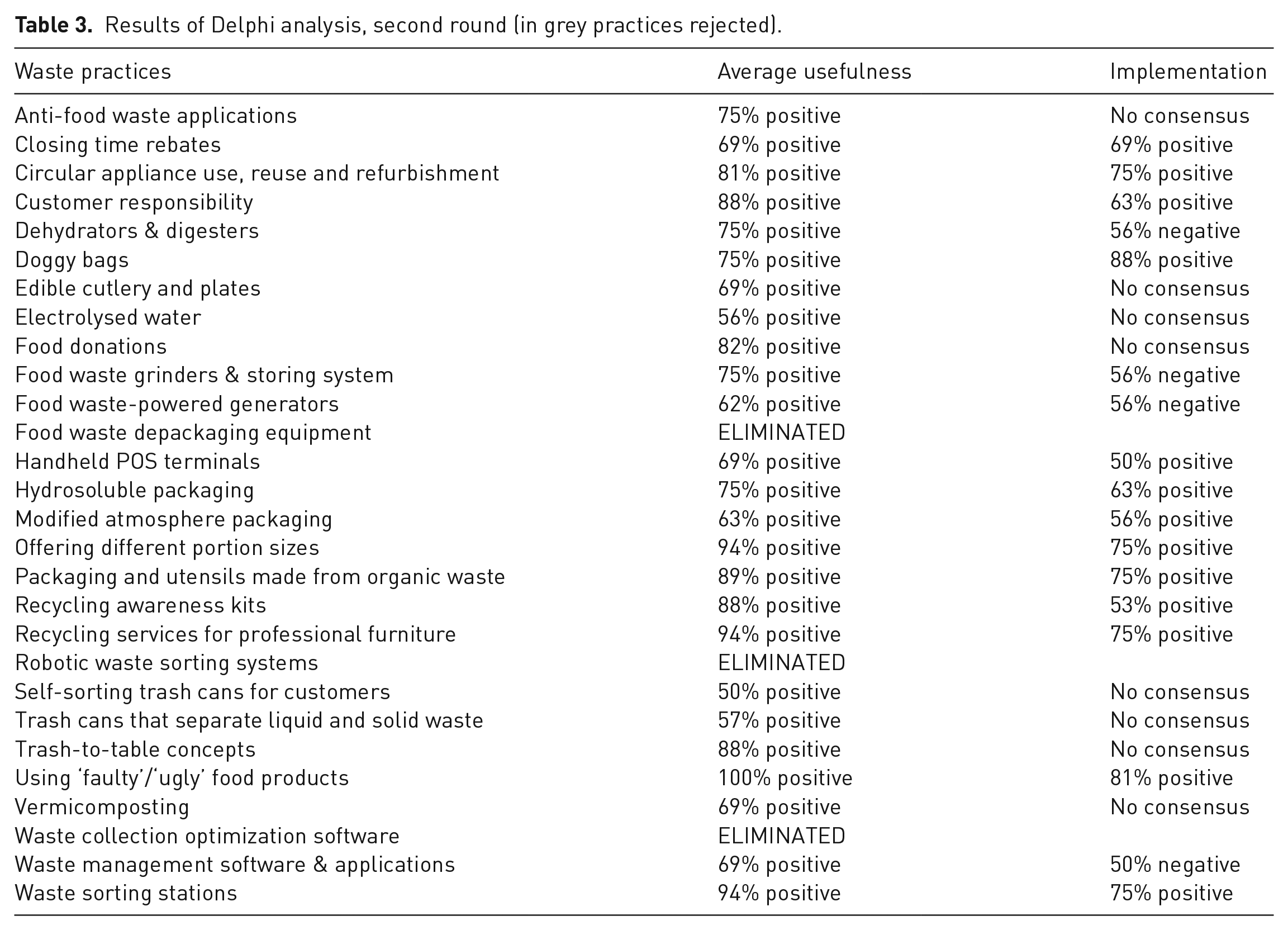
Potential solutions range from practices that can be implemented in foodservice establishments and managed internally by professionals to practices that are externally managed and cannot be implemented within the establishment, to even practices that depend on third-party players for successful deployment. The round resulted in four practices being rejected by at least 50% of the panel. Moreover, content analysis of the experts’ comments eliminated three waste practices that fall beyond the boundaries of companies because they depend entirely on third-party, waste management companies. This allowed the experts to focus on practices directly related to foodservices during the second round. Table 3 provides more detail on the experts’ evaluation.
Results of Delphi analysis, second round (in grey practices rejected).
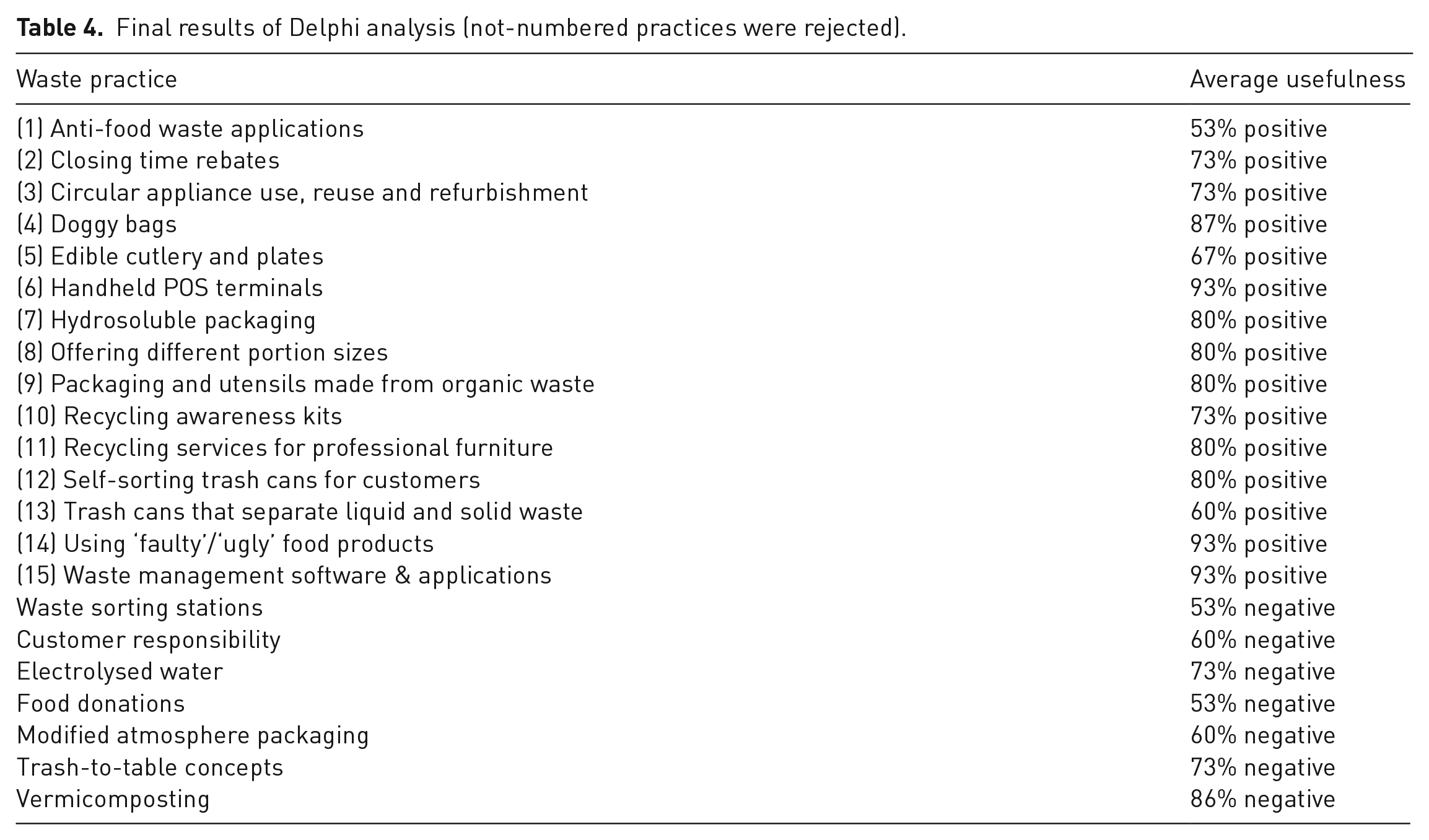
In the final poll, six waste management practices were rejected based on the experts’ responses. That brought the total to 15 practices. Table 4 shows the results of the final round.
Final results of Delphi analysis (not-numbered practices were rejected).
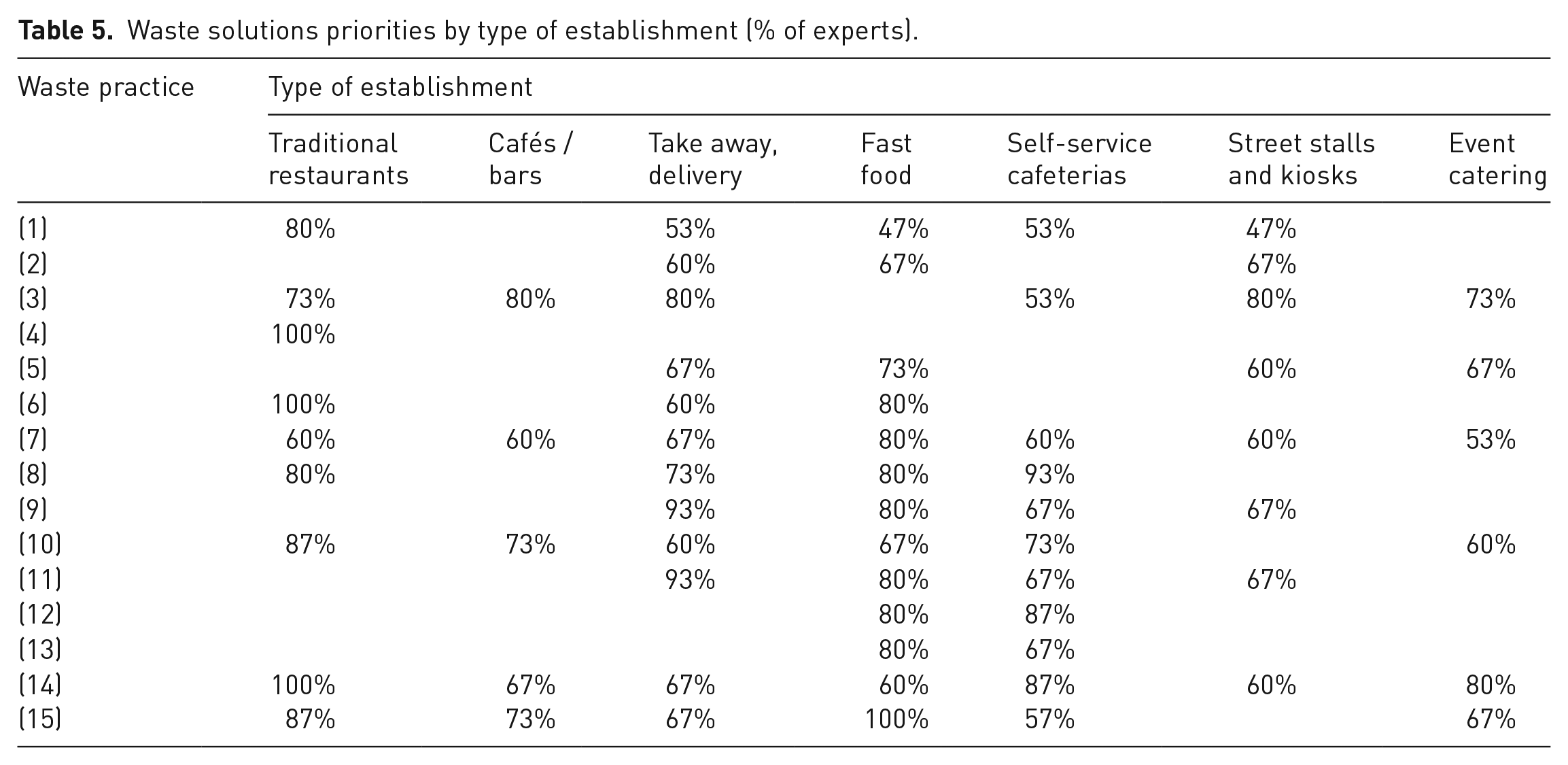
Finally, experts were asked to evaluate how likely and easy it would be to implement each waste practice for each of the seven specific types of foodservice establishments. The seven types of dining options, as defined by Euromonitor International (2016), are as follows: traditional restaurants (stand-alone, chain, independent, etc.); cafés/bars; take away and home delivery; fast food; self-service cafeterias; street stalls and kiosks; and event catering (Table 5).
Waste solutions priorities by type of establishment (% of experts).
Results and discussion
Despite recent efforts undertaken to combat waste and increased media attention, studies analysing superior solutions in waste management remain – surprisingly – few and far between, which has resulted in a dearth of waste management indicators for foodservice establishments. By investigating relevant waste practices for foodservice establishments, this article sheds light on what organisational solutions and innovations contribute to the development of a waste management system for the sector. The problems facing foodservice can draw on best practices in other industries. There is consensus that the waste problem requires a holistic approach, one that involves a combination of scientific initiatives (e.g. quantification technology or R&D of new materials and processes) and management practices (i.e. innovative solutions to waste reduction and management) all along the value chain, from production to final consumption (Assamoi and Lawryshyn, 2012; Zhang et al., 2019).
The Delphi study presented in this article sets the foundation for establishing waste management solutions for foodservice establishments. The three expert polls provided an aggregate picture of restaurants’ waste minimisation and mitigation techniques at the managerial level. This study may be useful in inspiring more sophisticated and innovative systems and practices of waste management for the restaurant industry.
Levels of innovation
Following existing literature but in the broader context of waste management, waste solutions were clustered in terms of their innovation objective for management and employees, including organisational innovations, process innovations and service innovations (Martin-Rios et al., 2018; Martin-Rios et al., 2022). Each of these categories featured practices with varying degrees of innovativeness. Service innovation refers to a new service offering or practice in foodservice delivery that is different from a company’s current practice. Process innovation relates to the development of new production methods. These innovations change the way in which goods and services are produced. Finally, organisational innovations are related to new organisation of work, management structures, or relationships with external partners. Each form of innovation requires different levels of investment and is appropriate for different foodservices. Figure 1 depicts how the 15 solutions identified in the Delphi are clustered according to their varying degrees of innovativeness, as defined in the literature.
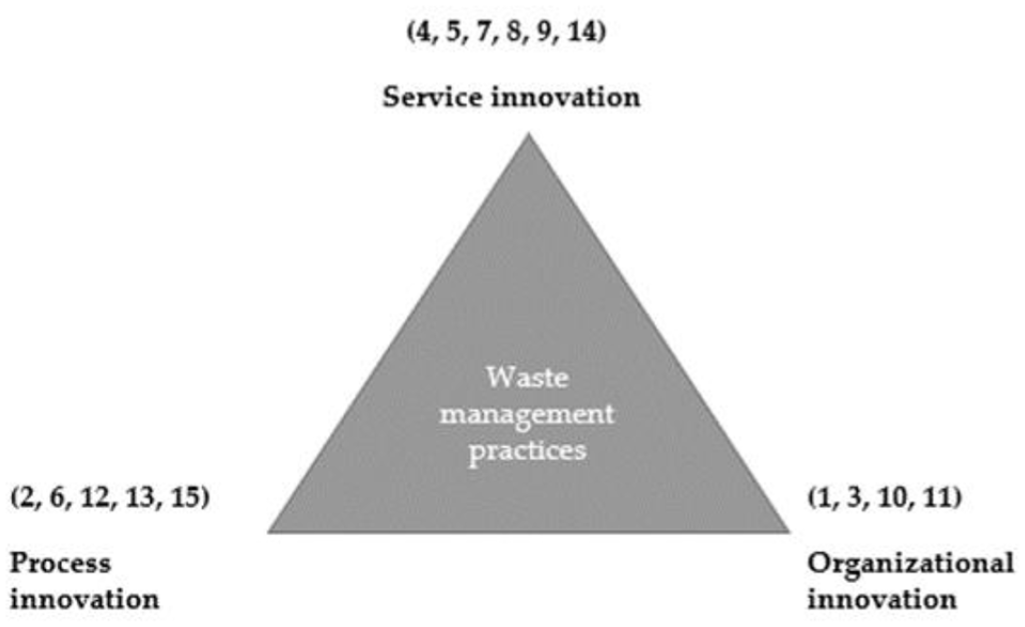
Type of innovation for each waste solution (in parenthesis).
Solutions include a wide variety of resources managed by these companies, including food, water, energy and physical appliances and materials. In general, the practices selected by experts address the three R’s: reduce, reuse and recycle (Papa, 2015). Of these, reducing waste is most effective but receives the least attention because it requires a significant change in management patterns (Papargyropoulou et al., 2016). Reusing waste materials is next in effectiveness and received some attention from Delphi experts in the form of drop-off centres or establishing collaborative ties with online services to reuse or refurbish appliances and furniture. Recycling waste is least effective yet received the most interest in the form of a variety of self-sorting cans (e.g. machines that sort liquid and solid trash). Recycling, sorting and source separation are not synonyms. In fact, some of the waste solutions require sorting and separating waste at their source (source separation). Recycling is a term that is often misused by foodservice management and staff. Indeed, for many people sorting or source separation is synonymous with recycling. In the selected practices, however, recycling is a downstream process that happens after waste is source-separated, separately collected, further sorted into marketable fractions, and – only after these steps have been completed – recycled into new products.
Solutions for establishments
Although all practices emerged as both useful and implementable, their relevance and innovativeness vary depending on the specific foodservice activity. Experts proposed a fine-grained categorization of solutions for each foodservice activity. For example, self-sorting trash cans were deemed appropriate for self-service cafeterias and fast food establishments, whereas closing time rebates were best suited to fast food, street stalls and kiosks. Several innovative waste practices also include collaboration with third companies in the collaborative or circular economy, including anti-food waste applications and circularity solutions for appliances. Foodservices with higher levels of professional management are better suited to succeed in collaborative partnerships (Ryu et al., 2019). Reuse waste solutions not only reduce waste, but also enable businesses to increase their turnover, since they can increase their chances of selling products that would otherwise go to waste. In addition, post-service solutions like doggy bags were considered valuable solely for traditional restaurants. Doggy bags are the norm in many countries, for example, in France they are compulsory by law, and would be an effective way to reduce food waste once cultural barriers have been overcome. Yet, WRAP (2011) point out that this practice can represent more packaging per meal. This solution may be useful when it is introduced together with some innovative packaging solutions (Giordano et al., 2020). It also works best in culinary cultures where food is wasted, because the portions are big or where customers are not allowed to substitute sides in meals at no extra cost (Sirieix et al., 2017).
Waste prevention solutions such as offering different portion sizes or edible cutlery enhance personalization and service offering in traditional restaurants, take away and home delivery, fast food and self-service cafeterias (Aschemann-Witzel et al., 2018; Wansink and Van Ittersum, 2013). Edible cutlery and plates have the potential to be fun for customers and distinctive for restaurants. Experts consider technological solutions for waste management appropriate for all activities, except for street stalls and kiosks. Handheld POS (point of sale) terminals reduce paper waste and can be connected to stock and/or food waste management software to help improve restaurant operations. Finally, packaging solutions could be introduced in every activity. Hydrosoluble packaging dissolves in aqueous liquids and can be safely eaten, meaning that it helps avoid plastic waste. In addition, pre-packaged portions may speed up preparation.
Practices tailored to different types of establishments help establish an agenda of foodservice waste solution standards to minimise and mitigate waste generation and show how future management systems should evolve to potentially change practices in foodservice. In fact, responding to the global challenge of waste involves a two-pronged approach: the development of a comprehensive waste management system and the purposeful and widespread development of synergies among stakeholders.
Sustainable waste management systems
The increasing pressure on foodservice businesses to integrate demands for sustainability into specific business actions is exemplified by waste management. Waste management must thus become a key priority. Managers must be involved in the process of planning and implementing the system, to lend managerial support to the system itself and its sustainable focal point. They must engage in the promotion of processing techniques and the development of incentives and practical guidance for professionals to prevent waste production. Paradoxically, foodservice businesses are often unwilling to invest in waste management systems – even though they could cut operating costs by reducing perishable loss (Wang et al., 2013). In fact, existing research often includes other sectors of the food and beverage industry, such as food producers, manufacturers, and retailers (Beretta et al., 2013; Hyde et al., 2001, 2003). This has left the foodservice sector with a comparative lack of initiatives and knowledge on waste management, and food managers are consequently required to renew their managerial systems.
This article argues that foodservice establishments must develop appropriate waste management strategies and integrate managerial practices in daily downstream activities (Demen Meier et al., 2015). Currently, companies’ efforts are not generally based on management methods. Therefore, it can be said that there is ‘no one recipe for all’. A set of managerial and operational practices dovetails today’s sustainable waste management systems. Figure 2 illustrates key features of an integrated waste model. Delphi experts emphasised the need to integrate waste solutions and stakeholder involvement in a sustainable waste management system.
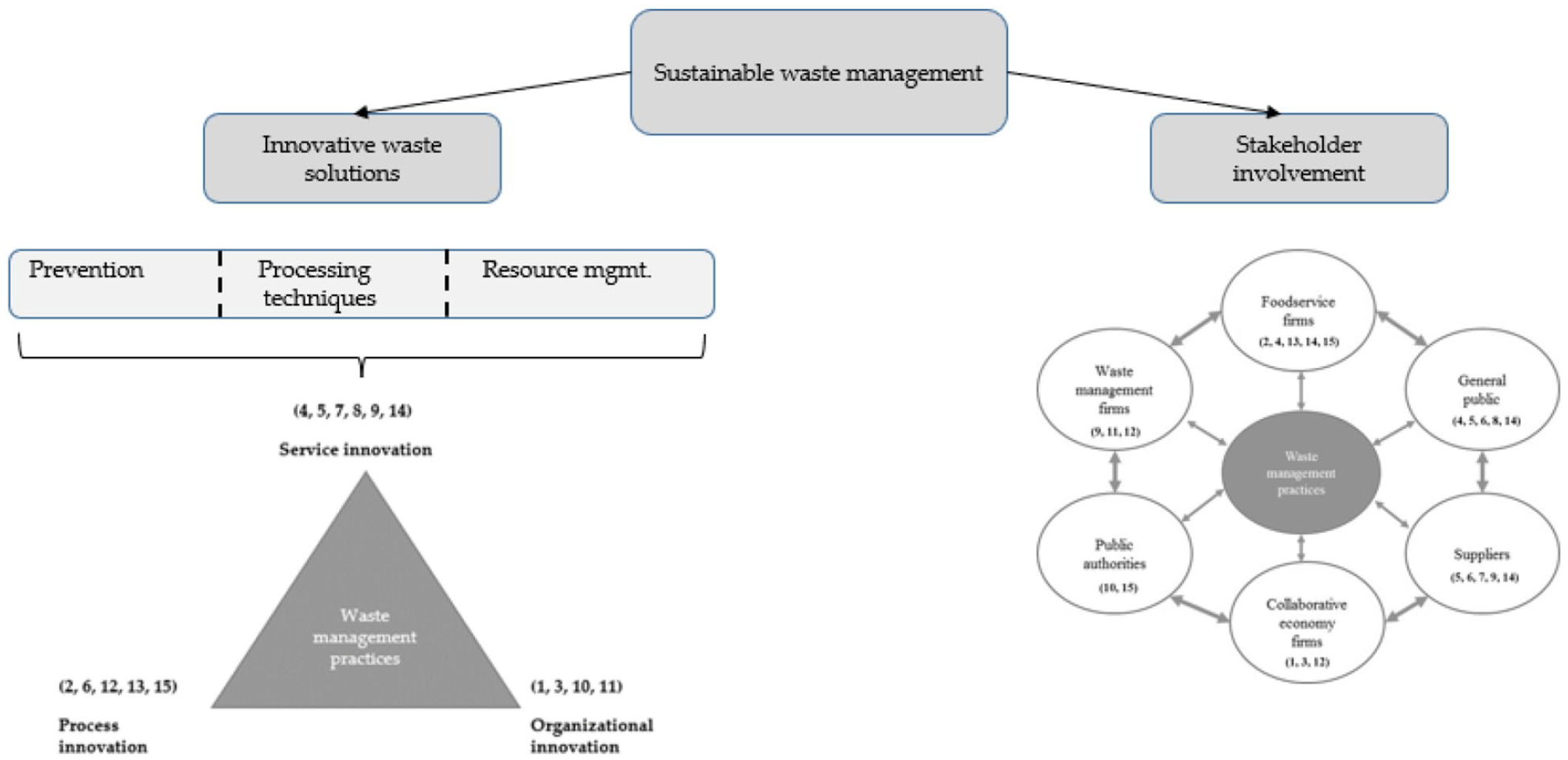
An integrative sustainable waste management system.
Integrating waste management solutions
Infusing sustainability in the waste management system depends on the combined effects of a large number of individual waste practices. Experts in the Delphi panel emphasised a threefold approach including tailored-made resource management practices, waste minimisation solutions, and processing techniques for recycling, reusing and recovering wastage. Resource management is an integral part of these systems and practices (e.g. decision making about food manipulation, storage and delivery). Deployment of appropriate resource management practices helps to clearly distinguish between avoidable and unavoidable wastage. Implementation of prevention and processing practices also addresses the problem of waste management.
Alongside current trends, the literature on waste management addresses two critical debates. A stream of research addresses issues related to legislation, climate change and waste mitigation (e.g. UN resolutions or EU directives), such as imposing a financial burden on users with the objective of punishing wastage of useful resources (Escobar et al., 2015). Other research has focused on the effective use of resources and waste adaptation, including circular economy practices that promote industry and social consciousness of the benefits of sustainable management of resources (Geissdoerfer et al., 2017). The circular economy refers to a ‘loop economy’ where continuous growth and increasing resource throughput is reversed with the implementation of ‘closing-the-loop’ production patterns (Geissdoerfer et al., 2017; Pearce and Turner, 1990). Underlying the circular economy’s closed-loop principles, companies no longer see ‘waste’ they see ‘secondary raw materials’ that contribute to new economic cycles. The circular economy represents one opportunity for many foodservice companies (Tisserant et al., 2017). In doing so, some businesses practice a ‘zero waste strategy’ (Song et al., 2015).
Notwithstanding, Delphi experts rejected certain practices, generally complex innovations that combine certain services, processes and/or organisational innovations, most notably dehydrators, grinders, electrolysed water and trash-to-table concepts. These could be potentially valuable innovations in foodservice, at least for some types of restaurants, which explains why they were included in the initial shortlist of potential practices. One reason why most of these innovations were rejected is because experts linked them with complex processes tied to the principles of the circular economy. This might indicate that there is still a lot of work to be done to change conventional wisdom and mindsets among professionals and experts in the industry.
Policy implications: Towards a stakeholder ecosystem
The shift from waste as a problem to a resource has also meant bringing together several players in the waste challenge. The novel approach involves institutional actors, including legislators, civil service, social service, and academic researchers, as well as other players like end-consumers and private firms located both upstream and downstream on the value chain (Joos et al., 1999). Cross-fertilisation results in a complex system where stakeholders tackle the issue of waste by encouraging a debate about its relevance (Das et al., 2019), advancing manifold practices (Van Ewijk and Stegemann, 2016), developing public awareness (Esposito et al., 2016), and introducing legislation (Lim and Prakash, 2014).
As exemplified in the integrated waste model (Figure 2), waste management requires multiple stakeholders to take responsibility (Joseph, 2006). Combining the nature of the practices observed, the potential actors involved in each waste initiative, and the complex relationships between the different actors involved in them, the framework deductively envisions a waste management web of relationships. In the multi-stakeholder approach to waste, foodservices still need to play an active role. They need to contribute to and learn from the innovative waste reduction techniques implemented by many different stakeholders. Alliances have the potential not only to reduce waste, but also to make its management more economically useful and environmentally sustainable.
According to the Delphi experts, collaboration with public administrations and legislators would provide a forum in which legal concerns and liabilities could be discussed (Radwan et al., 2010). Likewise, fruitful relationships between foodservices and collaborative consumption firms could trigger new synergies to foster waste initiatives that are driven by technology and innovation (Belk, 2014). In addition, waste management solutions require greater involvement from the general public through education, involvement, and interactivity. Research on innovation shows the potential benefits of co-creating synergies between customers and organisations for successful innovation initiatives on the tourism industry (Erhardt et al., 2019; Raub and Martin-Rios, 2019) or on pharmaceutical innovation (Depledge, 2011).
Foodservice activity needs to promote a collaborative approach to managing waste. This situation leaves foodservice firms in a dilemma. On one hand, the enlarged ambition and scope of sustainable objectives can only be met when foodservices explicitly integrate sustainable management into their strategic plans. They must also initiate, promote and sustain organisational and operational restaurant activities, including their waste management systems. On the other hand, a core challenge of sustainable management in foodservice remains the alignment of specific environmental and social issues with economic approaches. In practice, waste management systems and practices must present advantages for the businesses themselves (Kim and Hall, 2020). The social and environmental issues will not be embedded in corporate strategies – and sustainable practices in foodservice companies will not be implemented – unless economic and business factors, including financial strength, managerial attitudes, new leadership approaches and new organisational methods are considered (Martin-Rios and Ciobanu, 2019).
Foodservice firms need to build on potential synergies when developing waste management systems. They need to find new ways of managing the entire value chain where complementary partners are co-innovating new solutions that they can only establish together. New innovative processes and business models, such as collaborative platforms and apps, are emerging. Foodservices can establish innovative collaborations with sharing economy firms to promote reusing, recycling, and repairing appliances (Ranjbari et al., 2018). As our results suggest, certain technologies have a far-reaching impact on how food providers innovate together (Martin-Rios et al., 2020). Moreover, notions such as ‘innovation ecosystems’ are gaining traction in the digital age (Carrillo-Hermosilla et al., 2010). Still, there is limited available data on innovative collaborative waste management in foodservice. More research is needed in this domain, examining different types of solutions and sources of collaboration between institutional actors, social agents, collaborative firms and foodservice businesses. This opens up exciting areas for future research and potential application.
Conclusion
This research presents the lessons learned regarding waste management in foodservice and provides a list of solutions that foodservice businesses can use in adopting and innovating their waste management systems. To do so, a panel of experts (managers, consultants, institutional and academics) took part in a Delphi technique to draw up a list of waste management practices and explore the critical success factors more in-depth. Few empirical studies have deeply researched the waste processing. Additional research on the actual implementation of sustainable waste management systems would prove to be a fruitful line of investigation. These systems are also relevant and are anticipated to be of interest from a management perspective because they can improve waste management procedures in their establishments, reduce costs and enhance sustainability.
Footnotes
Credit author statement
Declaration of conflicting interests
The authors declared no potential conflicts of interest with respect to the research, authorship, and/or publication of this article.
Funding
The authors received no financial support for the research, authorship, and/or publication of this article.
