




Abstract
Using a life cycle assessment (LCA) to evaluate municipal solid waste management (MSWM) systems is strongly recommended and the approach has been used in high-income contexts. However, stakeholders in low to middle income countries are not aware of the potential of this approach, mainly due to a lack of financial resources and technical ability. The present work introduces a LCA of MSWM system scenarios into a developing city using an academic licence for the LCA software that is available for use exclusively by researchers. The MSWM system in place in 2018 in La Paz (Bolivia) was assessed according to seven scenarios. The novelty of the research is twofold: the use of LCA academic licensing in a low to middle income region where LCA is unknown as planning tool; and discussing the potential of the approach in conjunction with local and international stakeholders with a view to starting MSWM projects. The results of the analysis allow for the consideration of energy recovery and materials recycling as the main methods by which the environmental impact of MSW can be reduced, as has also been reported by other LCA studies conducted with full licensing of the relevant software. Moreover, the research is the basis for cooperative development projects that will adopt the LCA approach as the main assessment tool. The study discusses the importance of cooperation between universities and local governments for implementing new strategies for MSWM assessment and planning. The research is a contribution towards improving technical knowledge in developing countries for boosting sustainable development.
Keywords
Introduction
Life cycle assessment (LCA) is an approach used for planning municipal solid waste (MSW) management (MSWM) systems. It is specifically used to identify options that prevent or minimize negative environmental impacts (Laurent et al., 2014), to analyse strategies for material and energy recovery from waste (Giugliano et al., 2011) and to compare the total potential impacts of the technologies available for waste valorization (Khoo, 2009). In the main, LCA is implemented in conjunction with material flow analysis (MFA), in order to analyze MSWM systems based on actual MSW flows (Haupt et al., 2018).
The application of LCA with the aid of LCA software for planning MSW collection and treatment is mainly carried out in high-income countries (Khandelwal et al., 2018). This is because it requires high technical expertise, knowledge about the existence of this management tool in the first place and the ability to afford LCA software, which is necessary for implementing complete LCA studies. Moreover, models developed in different countries rely on geographic data that influence the results of LCAs on waste (Gentil et al., 2010); impact databases are not always suitable for such geographic specifications because the reliability of results is affected in countries where data consistency is poor. However, the LCA approach should be encouraged in low to middle income countries where the implementation of sustainable solid waste management (SWM) actions is usually required for reducing the global environmental impacts typical of these contexts (Ferronato and Torretta, 2019).
LCA software and its associated impact databases are essential for implementing reliable LCAs. Annual full software licensing is sometimes available free of charge for non-OECD countries, but for limited periods. At the same time, academic licensing is making such software available for longer periods but only for scholars and researchers; parts of databases or software may be made accessible with limited functionalities or with discounts on licensing fees. The implementation of LCA approaches is, therefore, challenging in low to middle income developing cities because of the lack of accessible data, the absence of a specific database linked to the LCA software (i.e. the impact of open dumping), the lack of knowledge and the lack of economic sustainability with regard to using full LCA software licensing.
The research presented in this article discusses these issues, applying a LCA to the MSWM system in La Paz (Bolivia) using an academic licence for the Waste and Resources Assessment Tool for the Environment (WRATE) LCA software that is free of charge and available only for scholars and researchers. The research will demonstrate the potential of using academic licensing in conjunction with local partners for implementing a preliminary assessment of MSWM systems in a first step towards improving the awareness and knowledge of stakeholders in low to middle income countries. The international scientific literature about LCA in developing countries (Coelho and Lange, 2018; Syeda et al., 2017; Yadav and Samadder, 2018) usually ignores three aspects of its use in these areas:
The use of academic licensing in low to middle income regions where LCA has not been introduced as a planning tool;
The share of the results obtained by LCA and MFA in developing regions where the local stakeholders are not aware of the methods that can be employed for understanding SWM issues;
The use of LCA for supporting the analysis of development projects in low-income regions.
Therefore, the research will implement a LCA with local waste streams and information. It will compare scenarios, discuss the results obtained by other case studies and present the potential of the approach for including stakeholders in a local context. Finally, the opportunities of this methodology and its feasibility for establishing an international cooperative development project in developing cities are commented on. Therein lies the novelty of the article compared with previous scientific publications.
The study was conducted in La Paz in cooperation with the Universidad Mayor de San Andrés and the local municipal government. The case study presented considers the opportunity to start a project financed by the Italian Agency for Development Cooperation (AICS) in collaboration with local stakeholders, using a LCA as technical tool for evaluating the environmental benefits of the MSW collection and treatment improvements obtained as a result of the MSWM project.
The article also introduces the results of the MSW LCA in La Paz, where it (2018) is compared with future MSWM scenarios. The outcomes are comparable with other analyses conducted in similar areas of the world with full software licensing and, with this in mind, the article comments on the requirements for guaranteeing and disseminating affordable management tools in the developing world for improving environmental knowledge and awareness.
Materials and methods
Study area
Bolivia is a low to middle income country, with a gross national income of about $3370 per inhabitant and a poverty ratio of about 36.4% in 2018 (World Bank, 2019). La Paz is located in the middle of the Bolivian Andean plateau and the Cordillera Real mountain range, at about 3600 m above sea level. The city has about 900,000 inhabitants and generates about 628 t of MSW per day, for a total of about 229,220 t of MSW produced per year and 0.63–0.73 kg d-1 inh-1. About 8 wt% is recovered for recycling, mainly by the informal sector, and about 50% of this is composed of organic materials (Ferronato et al., 2018).
In 2017, after the introduction of the first regulation concerning SWM at national level in 2016, the local government started a MSW collection using street containers, the first time at city level. In 2018, La Paz ran the first selective collection (SC) pilot using separate street containers (SSC) for paper, cardboard and plastic. Currently, the municipal service collects recyclable waste from schools, green points (GP) (temporal areas for collecting recyclable waste) and SSC in two neighbourhoods of the city, achieving about 1–1.5 t of recyclable waste per day. The waste fractions are separated in a small material recovery facility (MRF) and sold to private companies working at the national level. A small amount of green and market waste (about 4 t d-1) is delivered to the city’s composting plant, whereas the rest of the MSW is disposed of to the city’s sanitary landfill, which collects about 95–100 wt% of MSW generated per day.
In parallel with the municipal activity, the informal sector recycles plastic waste, metals, paper, cardboard and glass. It has been estimated that about 40 t of MSW are gathered per day informally, of which 14.6 wt% is plastic bottles, 10.9 wt% is newspapers, 18.6 wt% is low-density polyethylene (LDPE) and high-density polyethylene (HDPE), 16.4 wt% is white and coloured paper, 7.2 wt% is cardboard and 5.4 wt% is aluminium (Swisscontact, 2013). These data are the only information available locally. Although in ten years the composition of gathered waste may change, such data are the most reliable and the only information that can be used for evaluating the involvement of the informal sector in this activity in a context in which data reliability is the most difficult challenge that needs to be overcome.
The involvement of stakeholders
The study has been conducted in conjunction with local stakeholders. In particular, the technical support for analysing the city’s MSWM system was provided by the Department of Environmental Engineering at the Universidad Mayor de San Andrés. At the same time, the local municipal government in La Paz, through the municipal secretary for environmental management, allowed access to the MSW treatment facilities and the final disposal site, and was willing to share information and past experiences. The cooperative process started in 2016 (Ferronato et al., 2016) and has been continued since. Collaboration was guaranteed by interviews, participation in meetings, field inspections, public campaigns, drafting of technical reports, lessons and conferences. The preliminary LCA of the MSWM system presented in this article was implemented because of this cooperation. The LCA approach, as well as the results, were finally presented to the local partners and shared with local engineers with the specific remit of promoting a circular economy and sustainable development.
LCA
The study was conducted according to ISO 14040 standards. Therefore, the research is divided into four parts. Stage I introduces the goal and scope of the research – the functional unit, system boundaries, the users of the results, limitations and a list of the environmental impacts assessed. Stage II presents the life cycle inventory (LCI), which is preceded by a description of the scenarios. Stage III describes the life cycle impact assessment (LCIA) and Stage IV interprets the results. In the latter, the sensitivity analysis is implemented (ISO, 2006).
Stage I: Goal and scope definition
The goal of the LCA is to compare the existing MSWM system with other alternatives in terms of their environmental impacts in order to choose the best environmentally friendly options. The functional unit is the annual production of MSW, approximately equal to 229,207 t generated in 2018, with the hypothesis that the amount of MSW produced in 2018 was similar to the amount produced in 2016 (Ferronato et al., 2018). The system boundaries consider the generation, storage, collection, transportation, treatment and final disposal of MSW, as well as recycling (Figure 1). Open-loop recycling and the utilization of the electricity produced outside the boundaries of the system are considered, avoiding allocation issues (i.e. use of electricity as a by-product of MSWM). Such assumptions are related to the system expansion technique, in which the product system is expanded to include additional functions related to the coproducts (Weidema, 2000), such as including the coproduct’s replacement in the model, as introduced in other LCA research (Rigamonti et al., 2010).
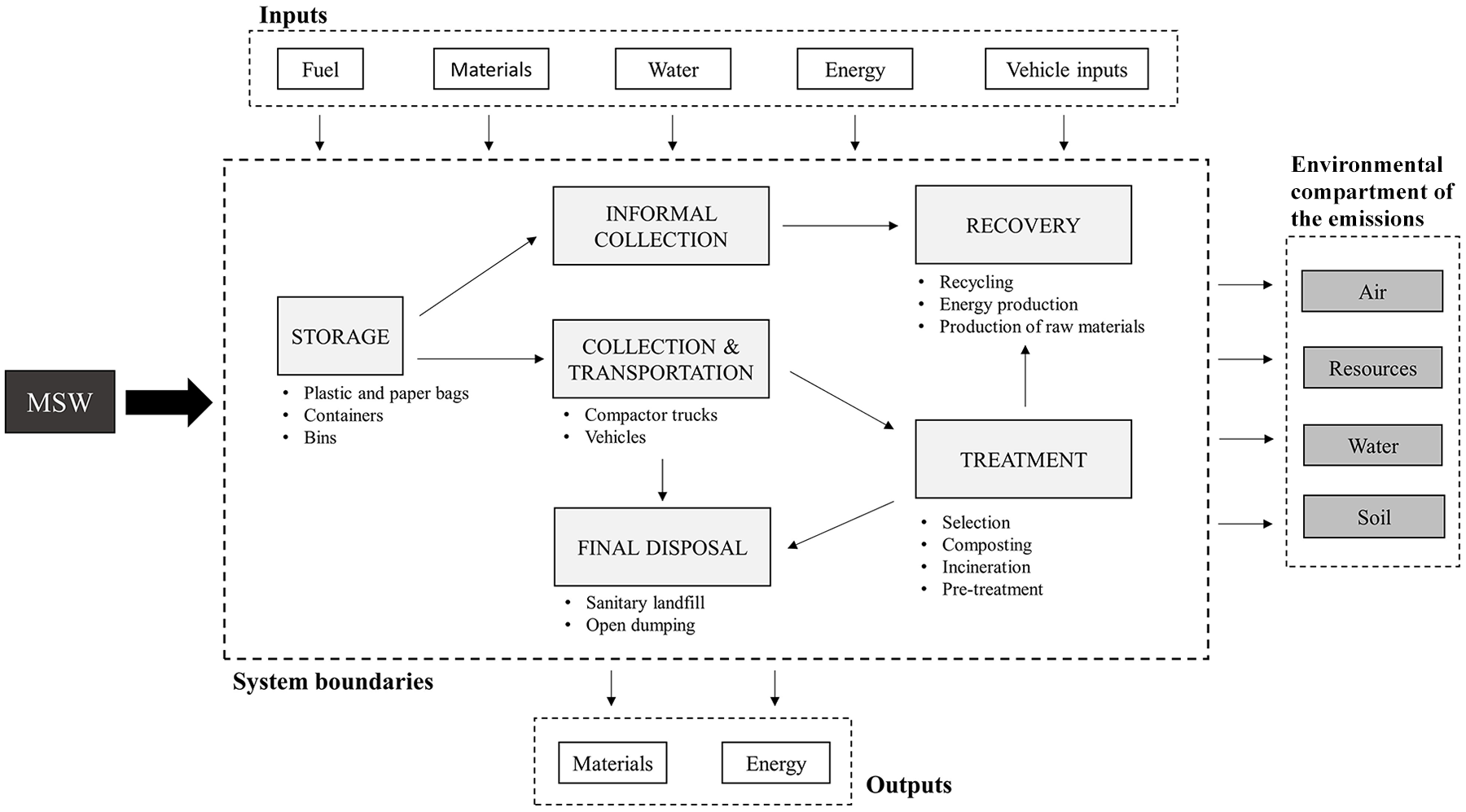
System boundaries of the LCA conducted in La Paz.
For the study, data for the LCI were gathered from local documentation, field inspections of the sanitary landfill and MSWM facilities, and from interviews with local engineers and experts in the field of SWM. When not available, some processes and plans were introduced from the software database; some assumptions were made: the amount of waste that is not gathered by the formal and informal system is hypothesized to be about 1%–5% of the total generated at municipal level.
Software used for modelling and LCIA
The database from the WRATE software academic version 3.0.1.7 developed by Golder Associates (2007–2014) was used for the research. Four impact categories were investigated with the characterization method recommended by the Institute of Environmental Sciences at Leiden University (CML2001), represented by the following indicators: global warming potential (GWP100) (kg CO2-eq); eutrophication potential (EP) (kg PO43--eq); acidification potential (AP) (kg SO2-eq); and human toxicity potential (HTP) (kg 1,4-DCB-eq). Moreover, the value of MSW streams was assessed in terms of MSW recycled, MSW sent to landfill and biodegradable waste dumped in control sites. The impact assessment, therefore, includes characterization and normalization methods.
Limitations of academic licensing
The academic version of the WRATE software does not allow for making extensive modifications to the parameters and internal database, therefore limiting the quality of the analysis. First, it is not possible to modify the MSWM facilities with local specific parameters and characteristics. Therefore, those available in the software’s internal database were used.
Second, data available in the database are for the years 2005–2009. They were collected in the UK, Ireland and northern Europe, and are related to technologies implemented in Europe. Such limitations affect the results because distances and technologies for collection and treatment may be different. In particular, with regard to storage and collection, the systems used in Bolivia can be compared with the database because the trucks and containers used here are imported from high-income or more developed neighbouring countries. Composting facilities, MRFs, mechanical biological treatment (MBT) plants and final disposal sites, as well as recycling facilities, are the ones most affected by the differences. Data about these treatment plants are not readily available in Bolivia, and when accessible only relate to small-scale facilities. Therefore, it is assumed that the WRATE database has been used for introducing these technologies and for estimating the environmental impact due to their introduction, choosing the most reliable and simple of the items contained in the list of technologies in the database. A further limitation is the impact of open dumping. For modelling this issue, the final disposal site has been considered to have no sort of landfill gas collection system.
Data about the waste fractions and the amount of waste managed in the treatment plants were introduced according to the information gathered locally, as was information about the collection routes, the distances travelled by the collection trucks and the capacities of the treatment facilities. At the same time, the energy mix used for the analyses cannot be modified to use the Bolivian combination. Therefore, a medium carbon emission energy mix was used, according to the data available in the software database. Finally, the characterization method is unique and cannot be modified. Therefore, the environmental impacts characterization method available in the software has been used.
MSWM scenarios
Excluding the current MSWM system, seven scenarios were considered for the analysis. The first six are possible scenarios pertinent to the case study and previously assessed with other methods (Ferronato et al., 2019). The last was added as a high-technology MSWM option achievable with advanced treatment plants, the correct knowledge and financial support. The schematic description of the scenarios assessed is given in Table 1.
Collection and treatment options considered for the scenarios analysed by the LCA.
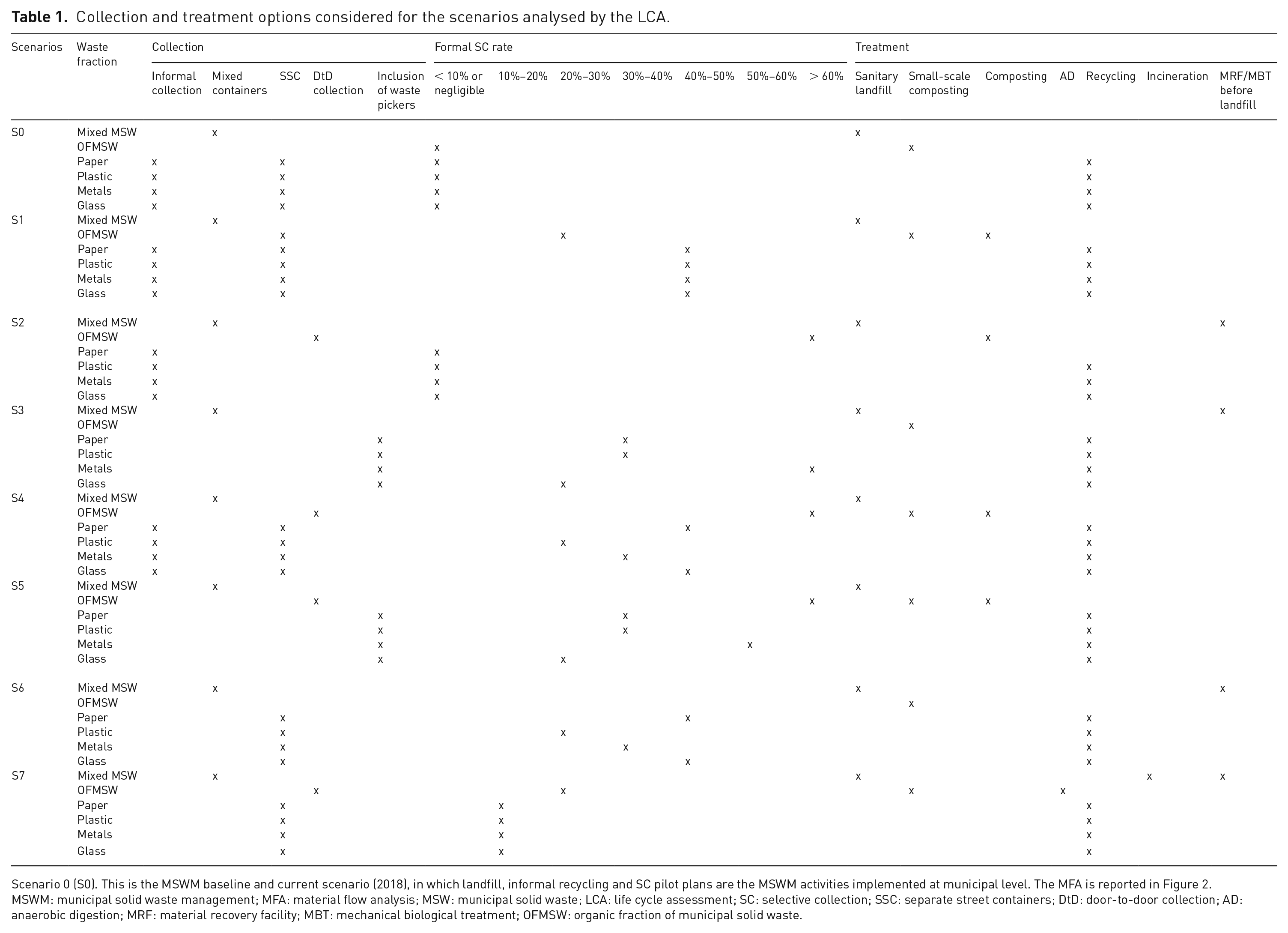
Scenario 0 (S0). This is the MSWM baseline and current scenario (2018), in which landfill, informal recycling and SC pilot plans are the MSWM activities implemented at municipal level. The MFA is reported in Figure 2.
MSWM: municipal solid waste management; MFA: material flow analysis; MSW: municipal solid waste; LCA: life cycle assessment; SC: selective collection; SSC: separate street containers; DtD: door-to-door collection; AD: anaerobic digestion; MRF: material recovery facility; MBT: mechanical biological treatment; OFMSW: organic fraction of municipal solid waste.
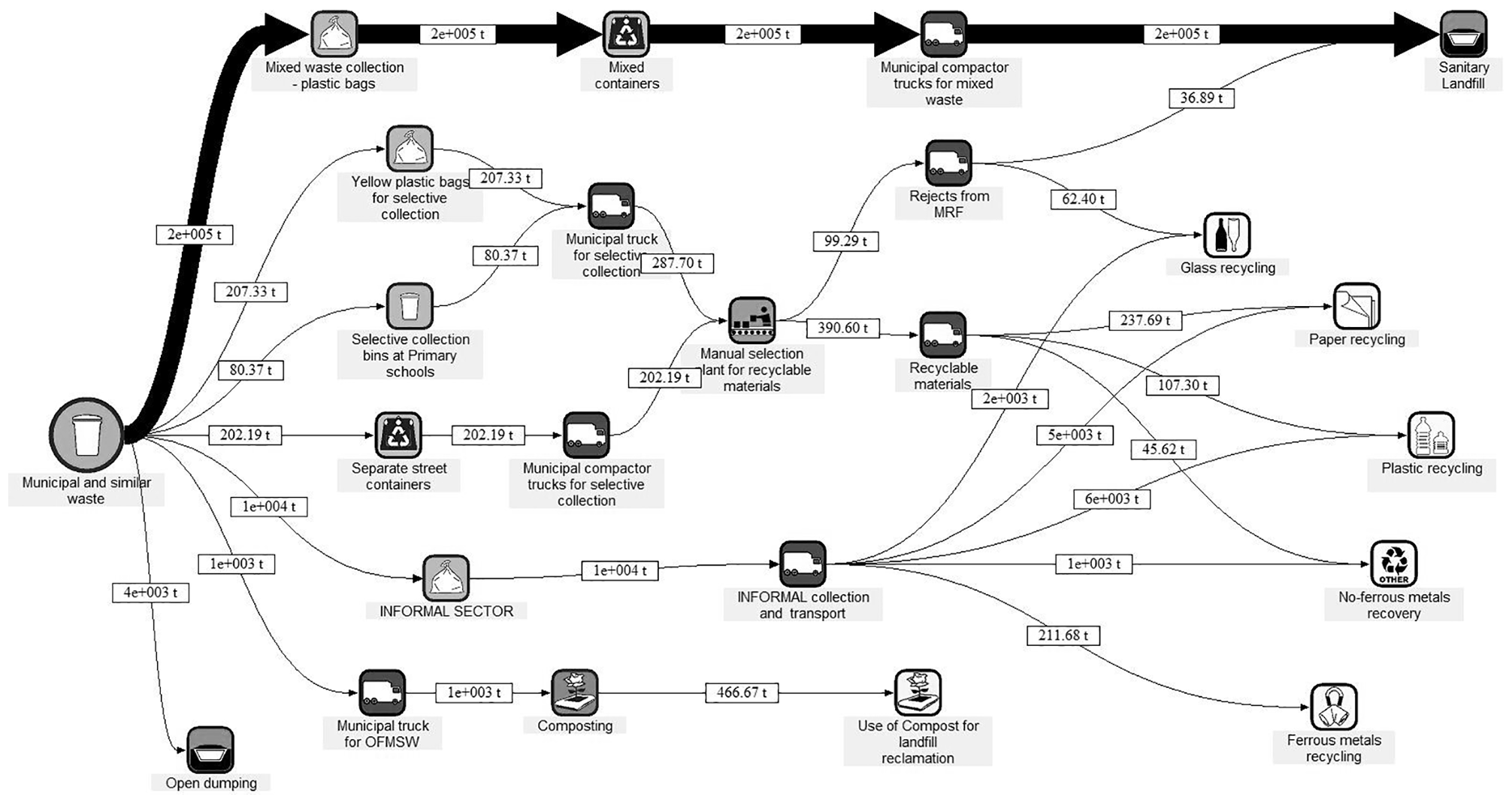
Waste flow analysis of the baseline scenario (S0) (functional unit: 229,207 t per year – graph obtained using WRATE software).
With reference to Table 1, in Scenario 1 (S1) the SC is improved by the introduction of SSC for paper, plastic, glass, metal and organic matter. Therefore, compared to S0, this scenario introduced SSC for organic waste, obtaining higher SC rates. The amount of MSW collected separately is about 50 wt% of plastic, 50 wt% of glass and 50 wt% of metals, this being the maximum SC rate achievable by SSC in big cities (Ferronato et al., 2019). At the same time, 25 wt% of organic matter MSW (OFMSW) in a SC was included, obtaining a recovery rate of 3–5 wt%. At the same time, a MRF and large-scale composting facilities are introduced into the city. The compost produced cannot be considered to be of a uniform high quality, so it is also recovered as landfill cover material.
Scenario 2 (S2) foresees the door-to-door (DtD) collection of the OFMSW and mechanical selection of recyclable materials before landfill in a MRF for dirty waste. The MRF is introduced for selecting the plastic, glass and metal fractions available within the mixed MSW, with a recovery rate of about 25 wt% recyclable plastics, 75 wt% recyclable glass and 95 wt% metals available in the MSW inflow into the plant. These data are related to the efficiencies provided by the WRATE databases. The compost produced after the DtD collection is of high quality and can be used as fertilizer.
Scenario 3 (S3) involves the inclusion of the informal sector for improving the recycling rate (RR) of the city, and the introduction of MBT before landfill. The aim of the scenario is to take advantage of the current recycling activity going on in the city encouraged by public campaigns and social policies. This improvement allows an increase in the SC of about 80 wt% of non-ferrous metals (i.e. copper and aluminium cans), about 50 wt% of ferrous metals, about 30 wt% of glass, 35 wt% of plastic and 35 wt% of paper and cardboard. At the same time, the introduction of aerobic MBT before landfill reduces the impact of the organic fractions disposed of into sanitary landfill and allows the recovery of a small amount of recyclable waste inflow into the plant: about 16 wt% of glass and 86 wt% of metals. The outputs of mechanical selection that can be converted into refuse-derived fuel (RDF) are disposed of to sanitary landfill, due to a dearth of experience of RDF exploitation in cement kilns and the lack of national regulations applying to this process. After aerobic stabilization, the stabilized waste is also safely disposed of to sanitary landfill.
In Scenario 4 (S4) the DtD collection of the OFMSW in paper bags, which is then treated by composting, and the introduction of SSC for recyclable waste are implemented. The aim of this scenario is to improve considerably the formal RR of the city, thereby enhancing the quality of the material recovered. It is an upgrade of S1, in which the collection of the OFMSW using SSC does not allow the production of high-quality compost. The hypothesis is that the SSC allow for the interception of about 45 wt% of paper and cardboard, 25 wt% of plastic, 50 wt% of glass and 35 wt% of metals, whereas the DtD collection yields 80 wt% of OFMSW. Such data are considered to represent the highest interception rate obtained in developed MSW collection systems in high-income European capital cities; therefore, they are considered to be the highest rate achievable in La Paz (Ferronato et al., 2019).
Scenario 5 (S5) introduces the informal recycling of inorganic waste and the DtD collection of the OFMSW. If compared with S3, the improvement consists of the implementation of the DtD SC of the OFMSW, for recovering the latter. The informal sector can collect about 17 wt% of paper and cardboard, 23 wt% of plastic, 50 wt% of metals and 30 wt% of glass. These data are obtained by the estimation of the waste recycled by the informal waste collection activity and divided by the theoretical amount of waste fractions produced at municipal level. At the same time, the organic fraction collected separately is about 80 wt% of the total generated at the municipal level, as an estimation of the maximum amount that can be collected by the system (Ferronato et al., 2019).
The MSWM options considered for Scenario 6 (S6) are the SC of recyclable fractions using SSC and MBT before landfill for the recovery of inorganic MSW and for reducing the impact of the OFMSW at the sanitary landfill. The SSC are used for the collection of plastic, glass and paper, as was also suggested in S1 and S4. As implemented in S3, it is proposed that a MBT takes place before the sanitary landfill, in order to recover metals, plastic and glass, and for reducing the environmental impact due to the disposal of the OFMSW.
The last scenario, Scenario 7 (S7), describes the implementation of a MBT as a pretreatment before landfill and energy recovery at the incineration plant. Moreover, the OFMSW collected selectively by the DtD collection system is treated in an anaerobic digestion (AD) plant for the production of electricity, whereas the recyclable waste is collected using SSC. It is estimated that about 10% of the SC of recyclable waste (plastic, paper and metals) and 20% of the OFMSW is collected by the system. The aim of the scenario is to focus on energy recovery within the incineration plant and on the integrated implementation of the collection and treatment option for all the fractions available in the MSW. This scenario is depicted in Figure 3.
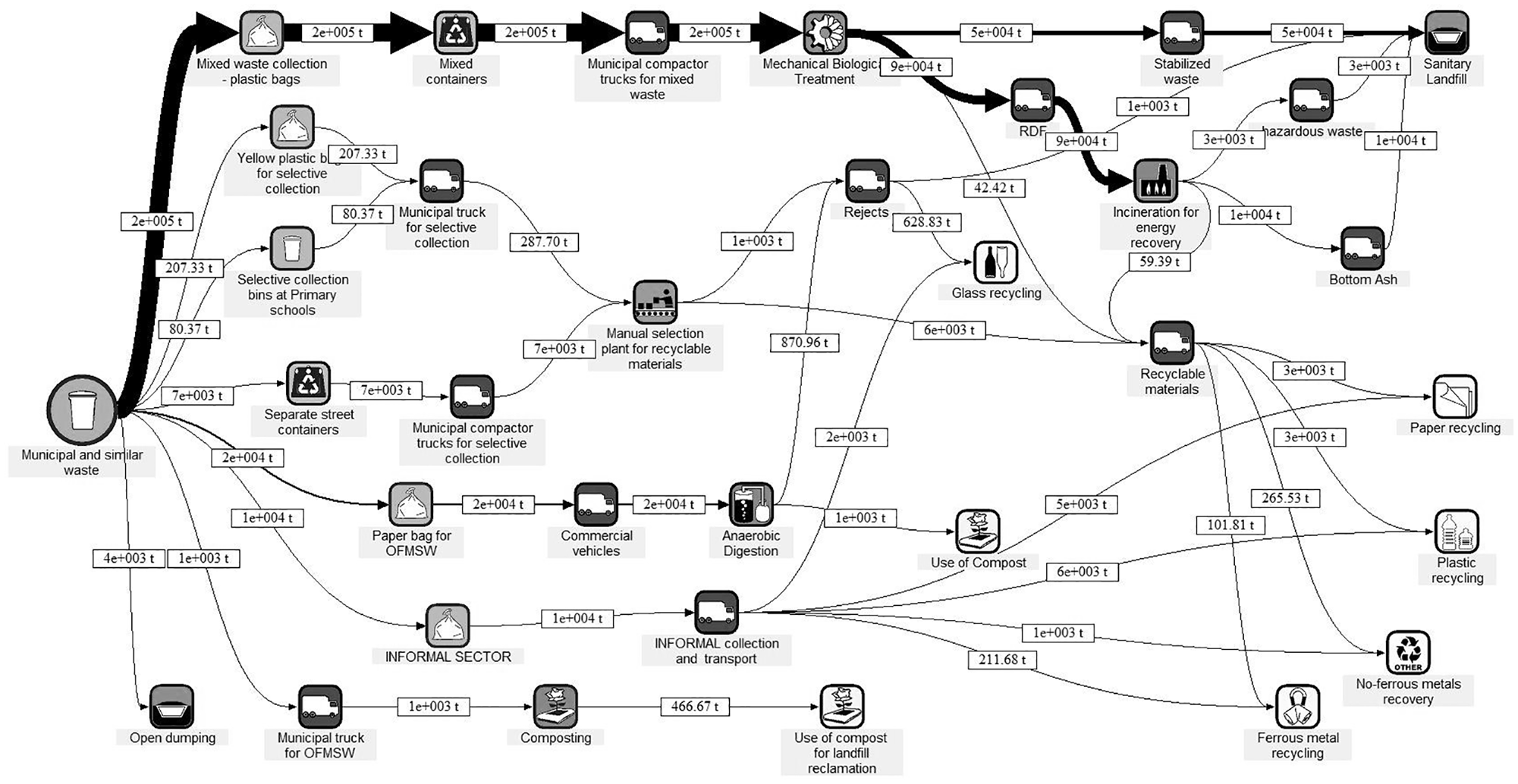
Waste flow analysis of S7 (functional unit: 229,207 t per year – graph obtained using WRATE software).
Stage II: LCI
Within the LCI, the processes and systems are described by the function of the treatment and collection options employed. The analysis involves data collection to quantify relevant input and output for the different scenarios evaluated. Several processes are considered for different waste streams after storage and collection. The functional unit is assumed to be constant for all the scenarios assessed, as are the physical characteristics and composition of the MSW (Table 2). The values of MSW fractions represent the data obtained in a study conducted in 2008 in La Paz (the most recent available), whereas the physical characteristics were obtained from the WRATE database, which provided general standards in relation to the waste input. Waste from electrical and electronic equipment, construction and demolition waste, used batteries, tyres, furniture and hazardous MSW were not included in the LCA. The LCI of the storage, collection, treatment, recycling and final disposal was obtained from the WRATE database. This includes energy (electricity and heat) and fuel consumption, avoided manufacture of recyclable materials (paper/cardboard, plastics, glass, metals) and avoided energy consumption.
Waste fractions of the MSW in La Paz and their main physical characteristics as obtained from the WRATE database.
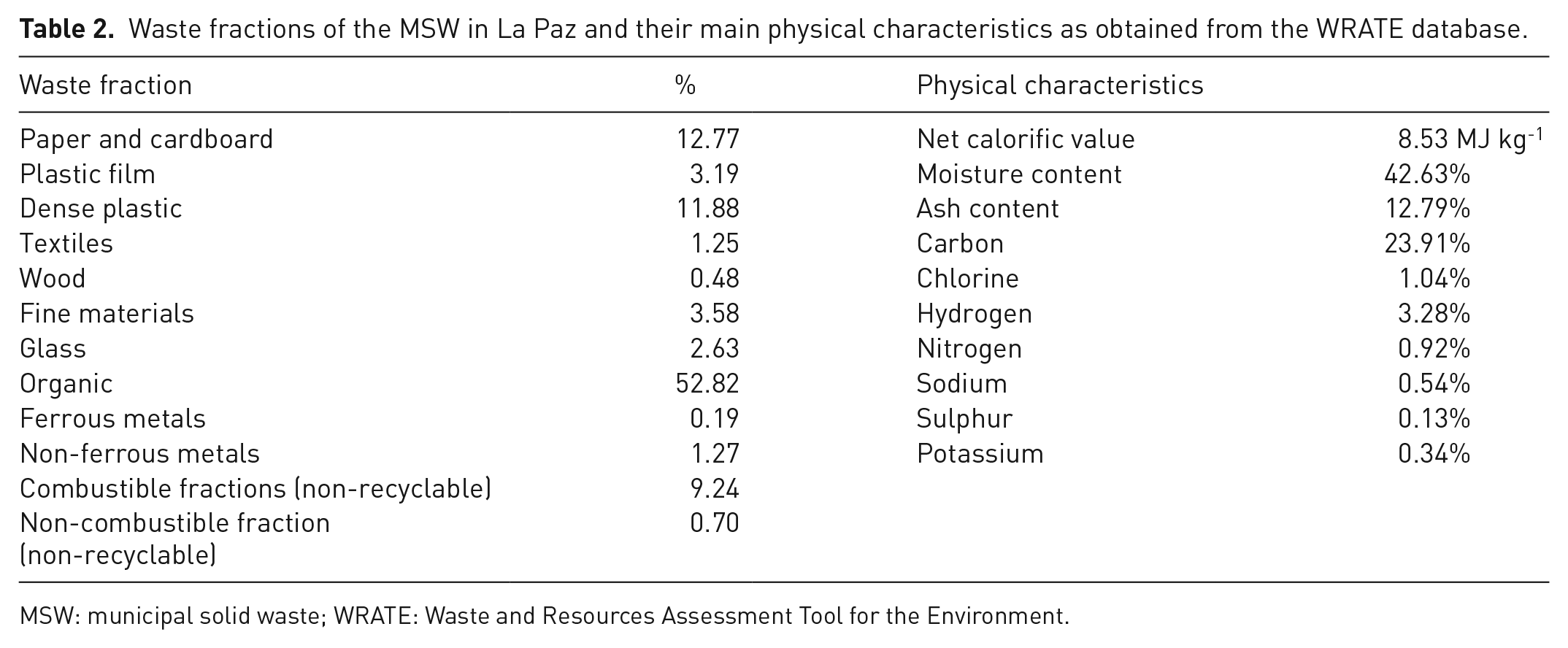
MSW: municipal solid waste; WRATE: Waste and Resources Assessment Tool for the Environment.
Storage
The first component of the MSWM system is the storage system (Table 3). Bins, containers and bags are introduced into the LCA for assessing the storage stage. Plastic bags are used for collecting mixed and selective MSW; mixed and selective MSW is also collected in 2.5m3 steel street containers and SC wheeled bins are used for collecting paper, cardboard and plastic in schools and other organizations that generate a lot of waste.
Description of the storage and collection systems used for the LCA. The functional units refer to S0.
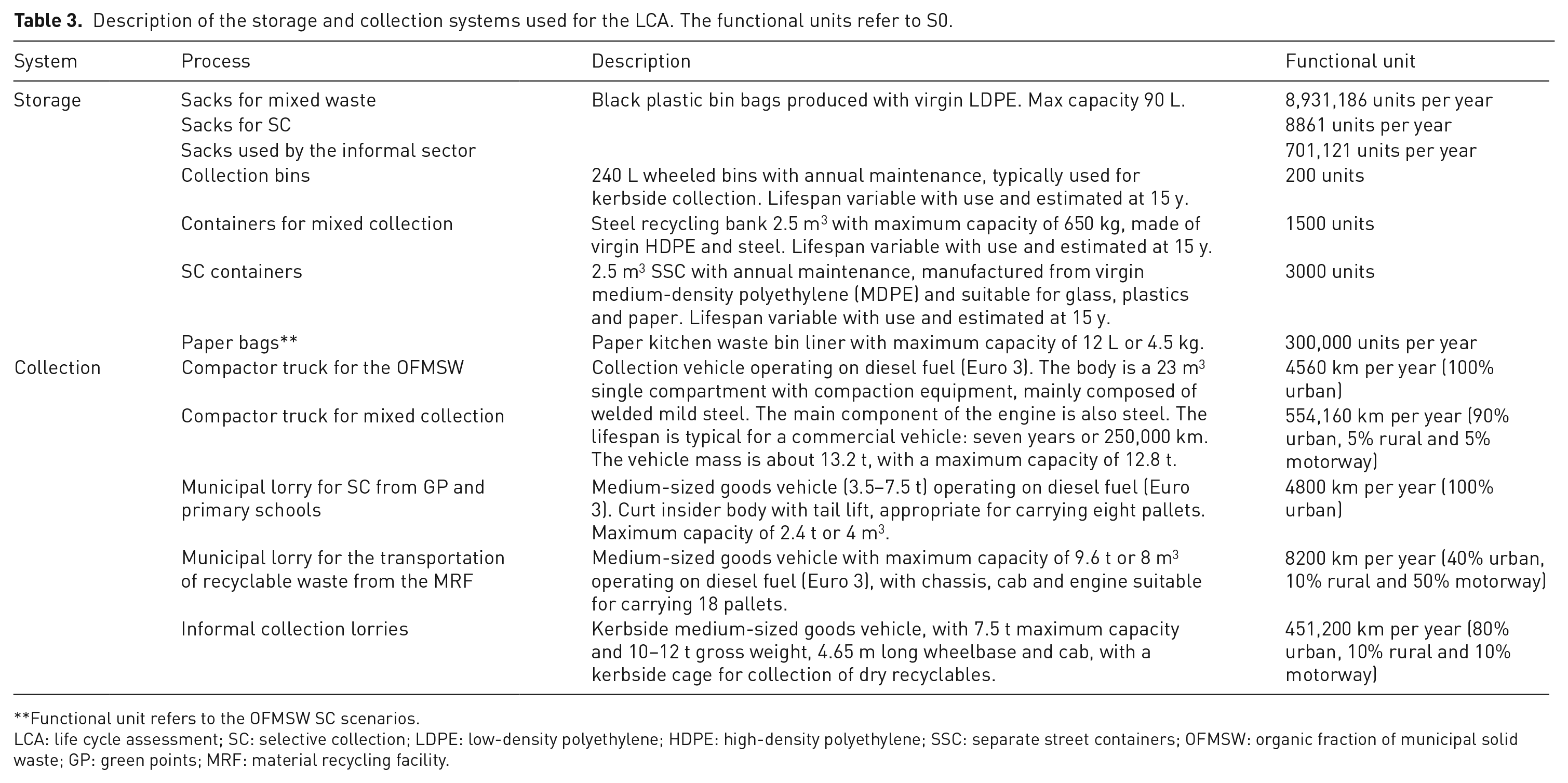
Functional unit refers to the OFMSW SC scenarios.
LCA: life cycle assessment; SC: selective collection; LDPE: low-density polyethylene; HDPE: high-density polyethylene; SSC: separate street containers; OFMSW: organic fraction of municipal solid waste; GP: green points; MRF: material recycling facility.
Collection
Two types of vehicle are considered for transporting the waste (Table 3): compactor trucks, used by the formal municipal collection system, and kerbside medium-sized goods vehicles (caged), thought to be used by informal collectors. Three further types of trucks are considered for transporting other products (recyclable raw materials, compost, RDF and rejects): medium-sized goods vehicles (3.5–7.5 t), larger goods vehicles (7.5–17 t) and intermodal road transport.
MSW treatment technologies
The complete description of the MSWM facilities, the treatment yields and the energy required or produced by the systems are given in Table 4. The recyclable materials collected separately are assumed to be treated in a semi-mechanized MRF with infrared plastics separation. The OFMSW recovered by DtD collection from households, markets and parks is assumed to be treated in composting plants. As another option, the OFMSW is treated in a small-scale automated AD facility for energy generation and digestate production. Before sanitary landfill, the mixed waste can be pretreated by an MBT with aerobic biostabilization in composting tunnels. The last treatment technology considered for mixed waste remaining after SC is incineration for energy recovery. The electricity produced by the waste-to-energy (WtE) plant displaces the same amount of electricity produced by the energy mix.
Description of the treatment processes assessed in the LCA as reported in the WRATE database.
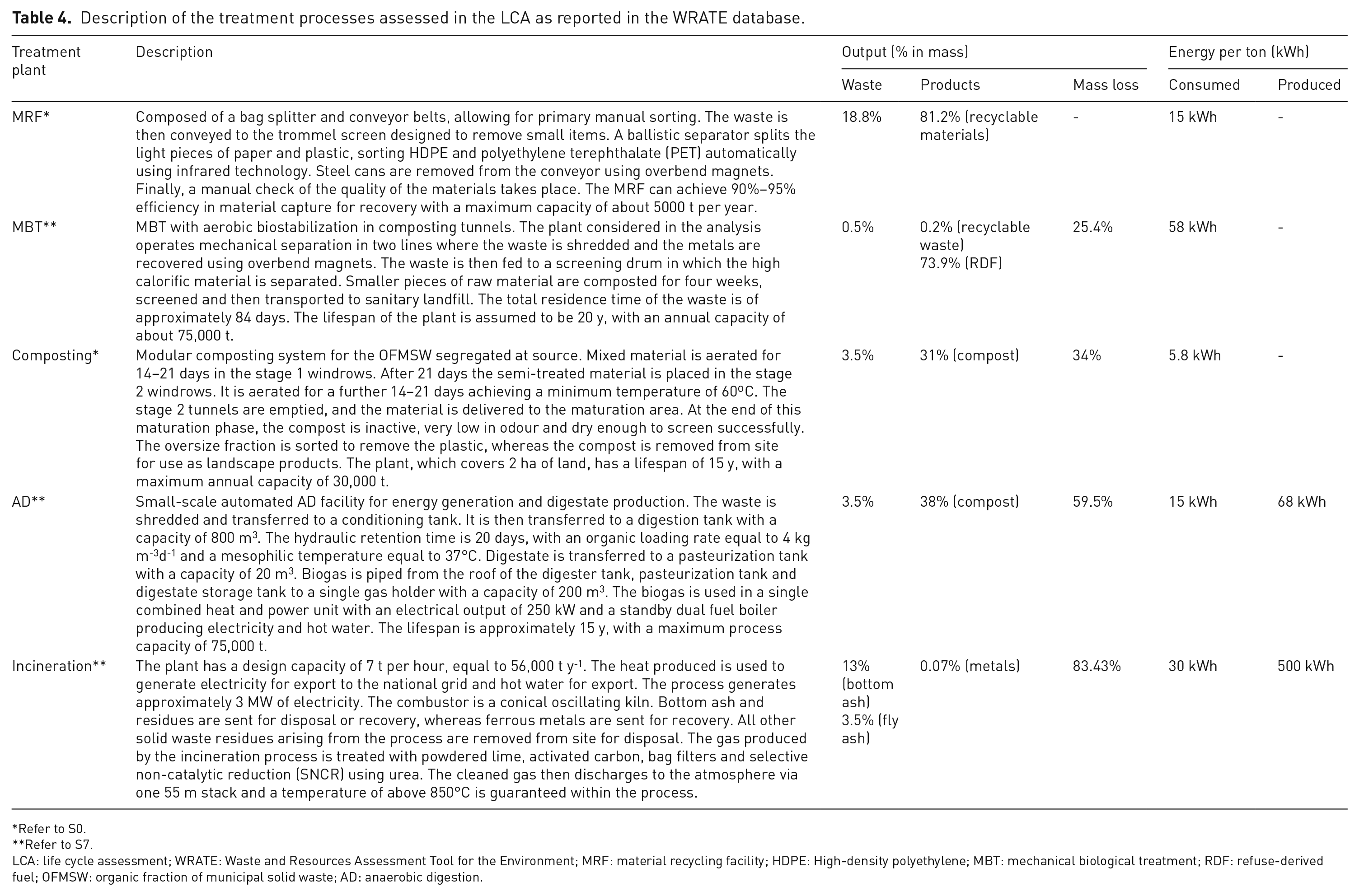
Refer to S0.
Refer to S7.
LCA: life cycle assessment; WRATE: Waste and Resources Assessment Tool for the Environment; MRF: material recycling facility; HDPE: High-density polyethylene; MBT: mechanical biological treatment; RDF: refuse-derived fuel; OFMSW: organic fraction of municipal solid waste; AD: anaerobic digestion.
Final disposal
Mixed MSW and rejects are disposed of to sanitary landfill that has a basic liner of HDPE and a daily cap of clay. The gas collected from landfill is flared. It is estimated that 20% of the landfill gas collection rate is obtained by the collection system. The maximum annual capacity is of 250,000 t, with a lifespan of 20 y and 12.5ha of land use.
Recycling
The recycling processes involve the conversion and recovery of recyclable materials such as plastic, glass, paper, metals, and compost. The collection, recovery and recycling efficiencies are reported in Table 5, as are the replacement rates. Plastic is recycled by mechanical systems and cold washing, converting plastics into pellets for producing plastic bottles, yogurt pots and coathangers. Glass is assumed to be converted in aggregates and asphalt, whereas metals and paper are considered to displace primary production with closed-loop recycling in pig iron production industries and paper mills. Data of the processes have been derived from Ecoinvent. Finally, the compost produced after the composting process from the OFMSW SC goes into topsoil, landscaping and bags for retail sale.
Recycling efficiency of the materials assessed as a result of the combination of selection and recovery efficiency. The selection and recovery efficiencies rates are provided by the WRATE database.
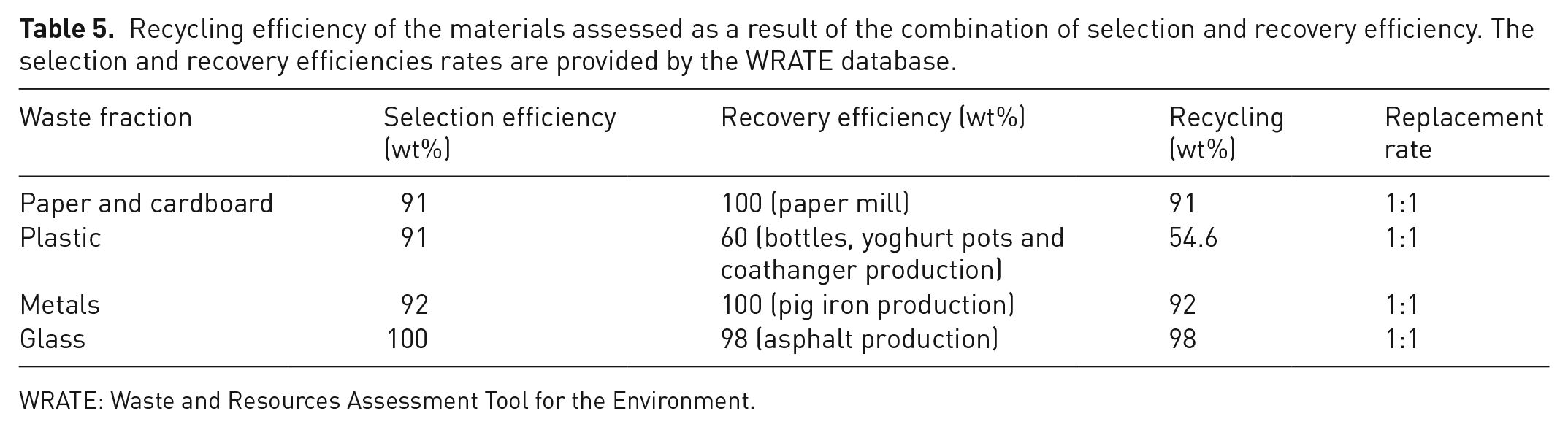
WRATE: Waste and Resources Assessment Tool for the Environment.
Interpretation
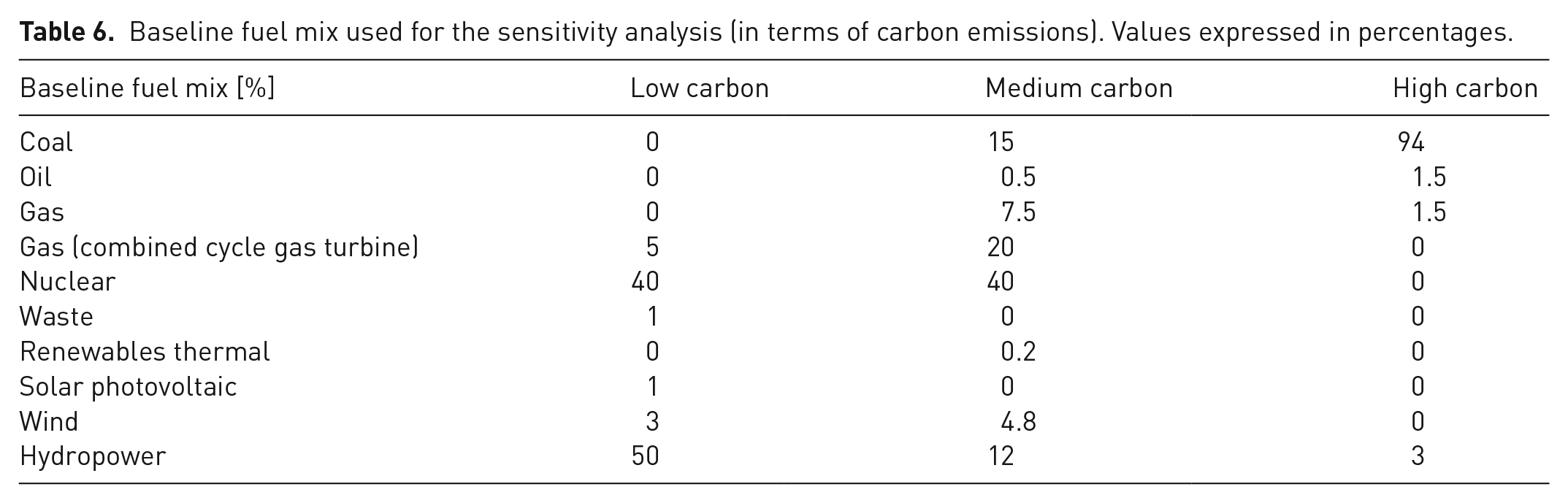
The results from the LCI and LCIA are evaluated, interpreted and compared with the results obtained by other studies on analysing future MSWM scenarios conducted in similar areas of the world. The LCA approach allows a sensitivity check for understanding the reliability of the selected impacts and indicators (Fiorentino et al., 2015). Therefore, a sensitivity analysis was also performed to check if the energy mix and the landfill gas collection efficiency (LFGCE) influenced the results obtained. For the energy mix change in terms of carbon emissions – low, medium and high rates – see Table 6. The landfill gas efficiency is set to 20%, 45% and 70%, with 20% and 70% considered as the minimum and maximum LFGCE for sanitary landfill.
Baseline fuel mix used for the sensitivity analysis (in terms of carbon emissions). Values expressed in percentages.
Results
Waste flow analysis
The analysis of the scenarios allows for obtaining the amounts of MSW and the OFMSW disposed of to sanitary landfill, as well as the net amount of MSW recycled. Table 7 reports the results obtained per scenario. The best option in terms of amounts of MSW and the OFMSW sent to landfill is S7. Incineration of waste and AD of the OFMSW increase the amount of waste recovered for material and energy valorization. However, the best RR is obtained by S4, due to the implementation of DtD SC of the OFMSW, with a high SC rate and the implementation of SSC. In terms of amounts of inorganic waste recycled, the best option is obtained with the implementation of SSC for plastic, paper, cardboard, metals and glass, in parallel with the OFMSW (S2). In any case, the best overall RR is always obtained with the inclusion of the SC of the OFMSW, the ranking being S4>S5>S2>S1>S7>S6>S3>S0.
MSW sent to landfill and recycled per MSWM scenario. The best values obtained are presented in bold.
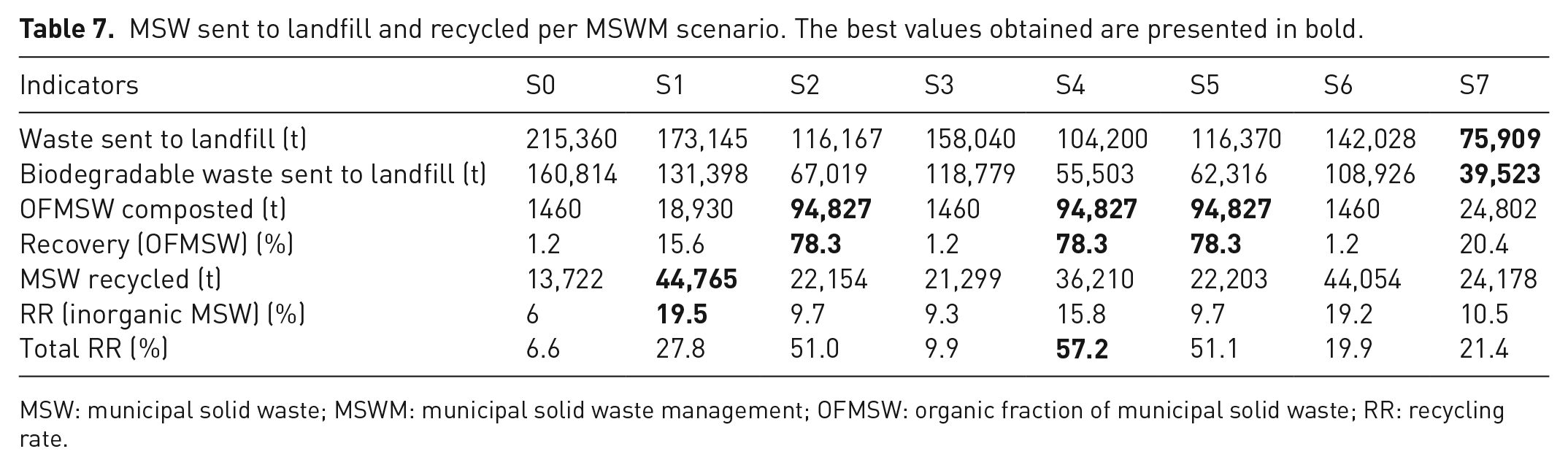
MSW: municipal solid waste; MSWM: municipal solid waste management; OFMSW: organic fraction of municipal solid waste; RR: recycling rate.
Stage III: Environmental impact assessment of the scenarios
Comparing the scenarios in terms of environmental impact, higher RR means lower GWP100. Table 8 sums up the total environmental impacts obtained by the LCA for each scenario. It is highlighted that S4 contributes less to the GWP100, whereas the maximum contribution is made by S0. The ranking obtained is S4<S5<S6<S7<S2<S1<S3<S0. Therefore, the best option is to implement DtD SC of the OFMSW and SSC of recyclable materials. Different results are obtained by analysing the AP and EP. The best option is always S7, waste recovery for energy valorization. With regard to the AP, the ranking is S7<S1<S6<S4<S5<S2<S3<S0, whereas the EP provided S7<S4<S6<S3<S5<S2<S1<S0. The worst scenario is always S0. It should be emphasized that the changes in terms of EP are lower than 30%, whereas the change in GWP100 and AP is about 60% and 70%, respectively, among the scenarios. Therefore, the change in MSWM options affects more the GWP100 and AP than EP. Finally, the HTP shows different trends, with S0 the best option and S2 the worst. The final ranking obtained is S0<S1<S6<S3<S4<S5<S7<S2. This is due to the high amount of compost produced and its use for land reclamation, with high contents of lead, nickel, chromium and arsenic that affect the soil. S7 is the second option less favourable in terms of HTP due to the incineration process. In this case, the differences between the scenarios are about 44%. However, normalizing the results and comparing the four impacts in terms of European person equivalent, the one that affects the environment the most is the GWP100, so this should be considered as the most important environmental impact among the ones analyzed by the LCA.
Total environmental impacts per MSWM scenario (the higher impact is presented in bold and the lower is underlined).
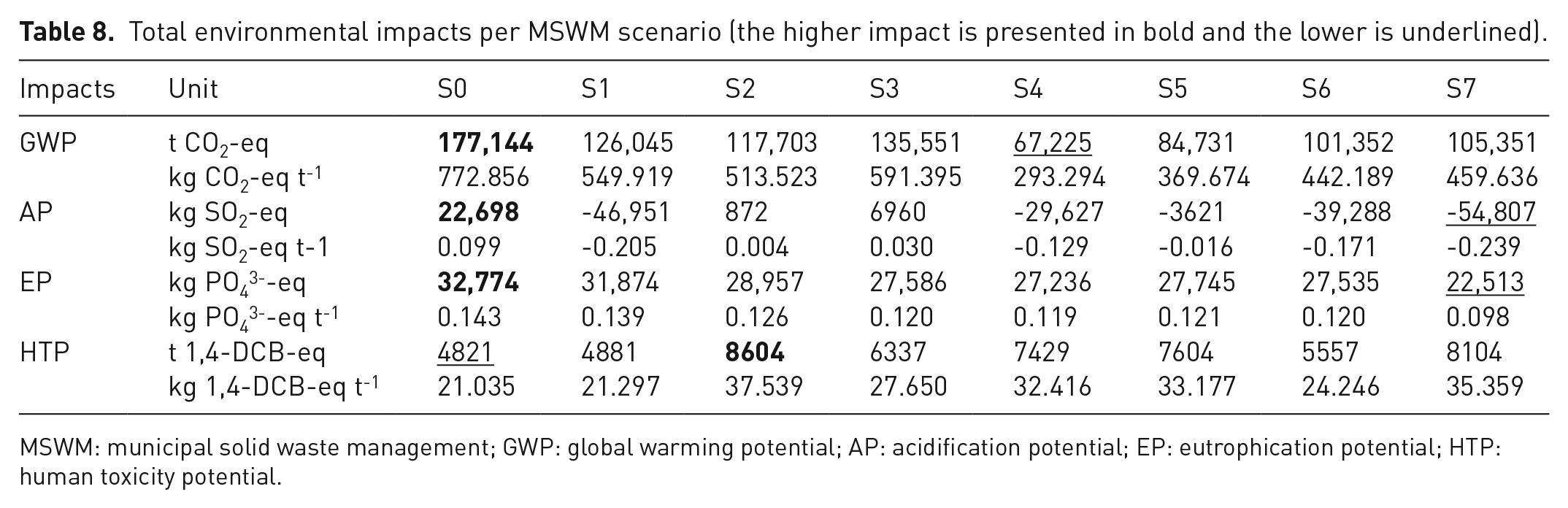
MSWM: municipal solid waste management; GWP: global warming potential; AP: acidification potential; EP: eutrophication potential; HTP: human toxicity potential.
Comparison with the impacts obtained in other case studies.
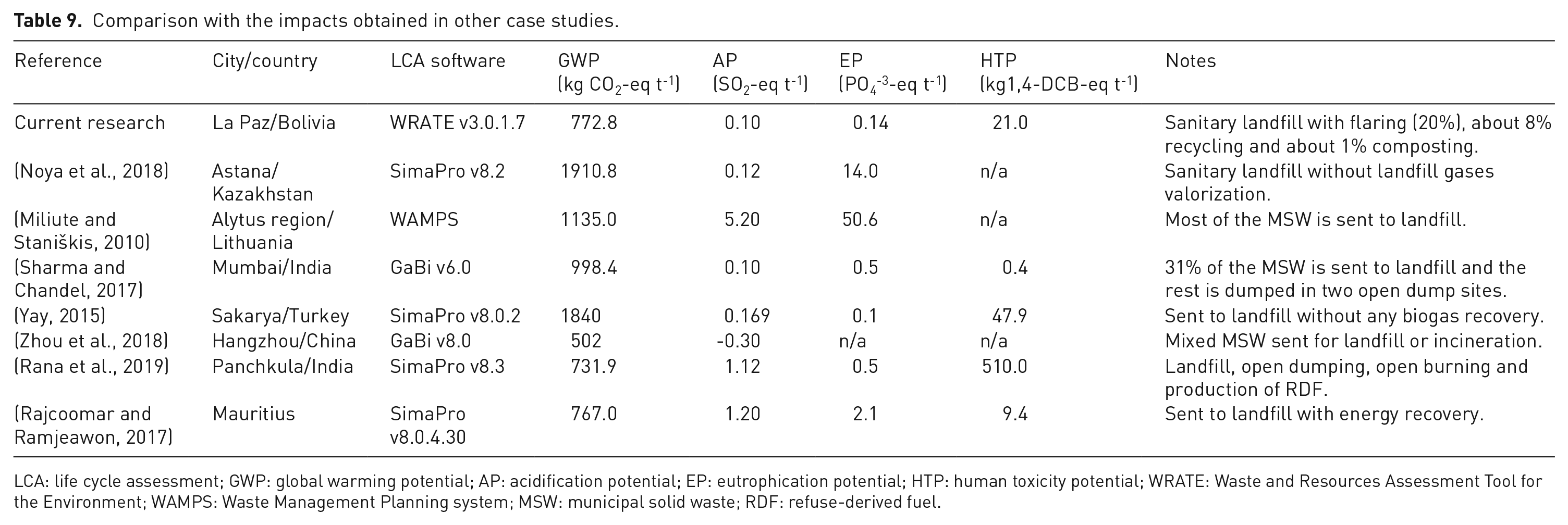
LCA: life cycle assessment; GWP: global warming potential; AP: acidification potential; EP: eutrophication potential; HTP: human toxicity potential; WRATE: Waste and Resources Assessment Tool for the Environment; WAMPS: Waste Management Planning system; MSW: municipal solid waste; RDF: refuse-derived fuel.
To understand the reason for the final ranking obtained for each environmental impact, the contributions of each treatment option and MSWM phase should be evaluated. In Figure 4, the main contribution of the MSWM activities to the environmental impacts is shown. With regard to the GWP100, the recycling of waste, in terms of substitution of virgin materials, allows a negative value to be obtained (impacts avoided). The higher contribution to greenhouse gases (GHG) emissions is due to the sanitary landfill because of the generation of methane and carbon dioxide. Evaluating the fossil CO2-eq (contained in fuels) and biogenic CO2-eq (contained in the OFMSW, paper, cardboard and wood) together, if compared with final disposal, the contribution of MSW treatment, including intermediate facilities, collection and transportation, to global warming is negligible. Recycling also allows the reduction of emissions that affect the AP. Comparably, the energy recovery from waste, which is obtained because of the reduction in fossil fuel combustion, contributes to the avoidance of AP. On the other hand, the main contribution of MSW to the HTP is the incineration and recovery of the OFMSW for land reclamation, in terms of air and soil contamination, respectively. However, as mentioned before, this impact on the HTP is of less magnitude than the contribution of MSW to the GWP100. Finally, the EP and the GWP100 are mainly affected by the sanitary landfill, due to the generation of leachate emissions and the contamination of water bodies.
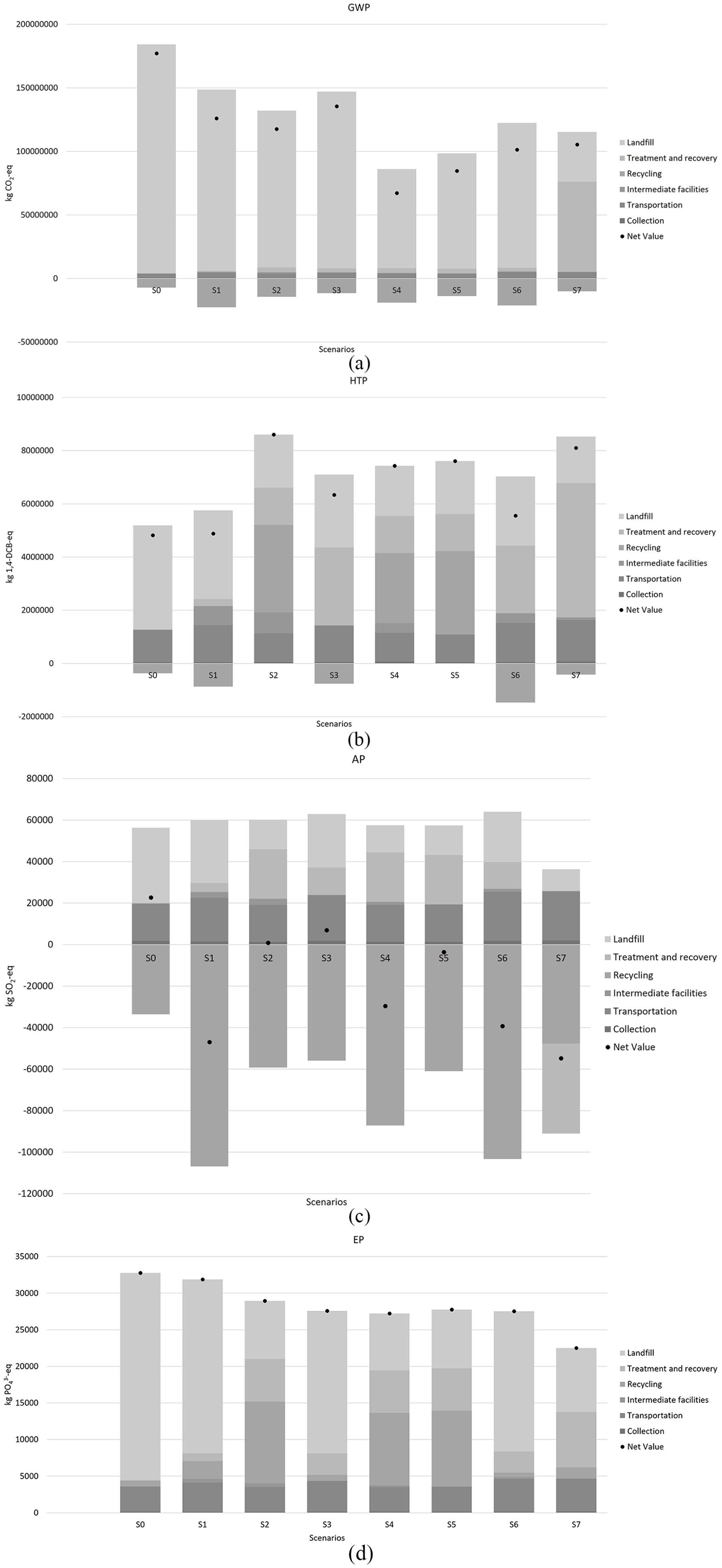
Environmental impact assessment for each MSWM scenario in terms of (a) GWP, (b) HTP, (c) AP and (d) EP.
Stage IV: Interpretation and sensitivity analysis
The sensitivity analysis was implemented to understand how the landfill gas collection rate and the different energy mix affect the results and the ranking obtained. The results of the different LFGCEs are reported in Figure 5. First, the HTP and EP are not influenced by the landfill gas collection rate. However, the latter does affect the GWP100 and the AP because of the reduction of GHG emissions and the increase of kg SO2-eq due to the flaring of landfill gas. The final ranking of the GWP100 with 70% of collection rate is S4<S5<S6<S1<S2<S3<S7<S0. Therefore, the sanitary landfill gas collection affects the final ranking of the most affordable scenarios in terms of the GWP100 and it should be considered for reducing the environmental impact of the MSWM system in comparison with other options. It is an issue also reported by other authors, who emphasize the fact that landfill gas recovery should be properly assessed and transparently reported, especially in developing countries, because of the high generation of organic matter (Zhao et al., 2009). At the same time, the AP final ranking changes, but S7 remains the most favourable option and S0 the worst.
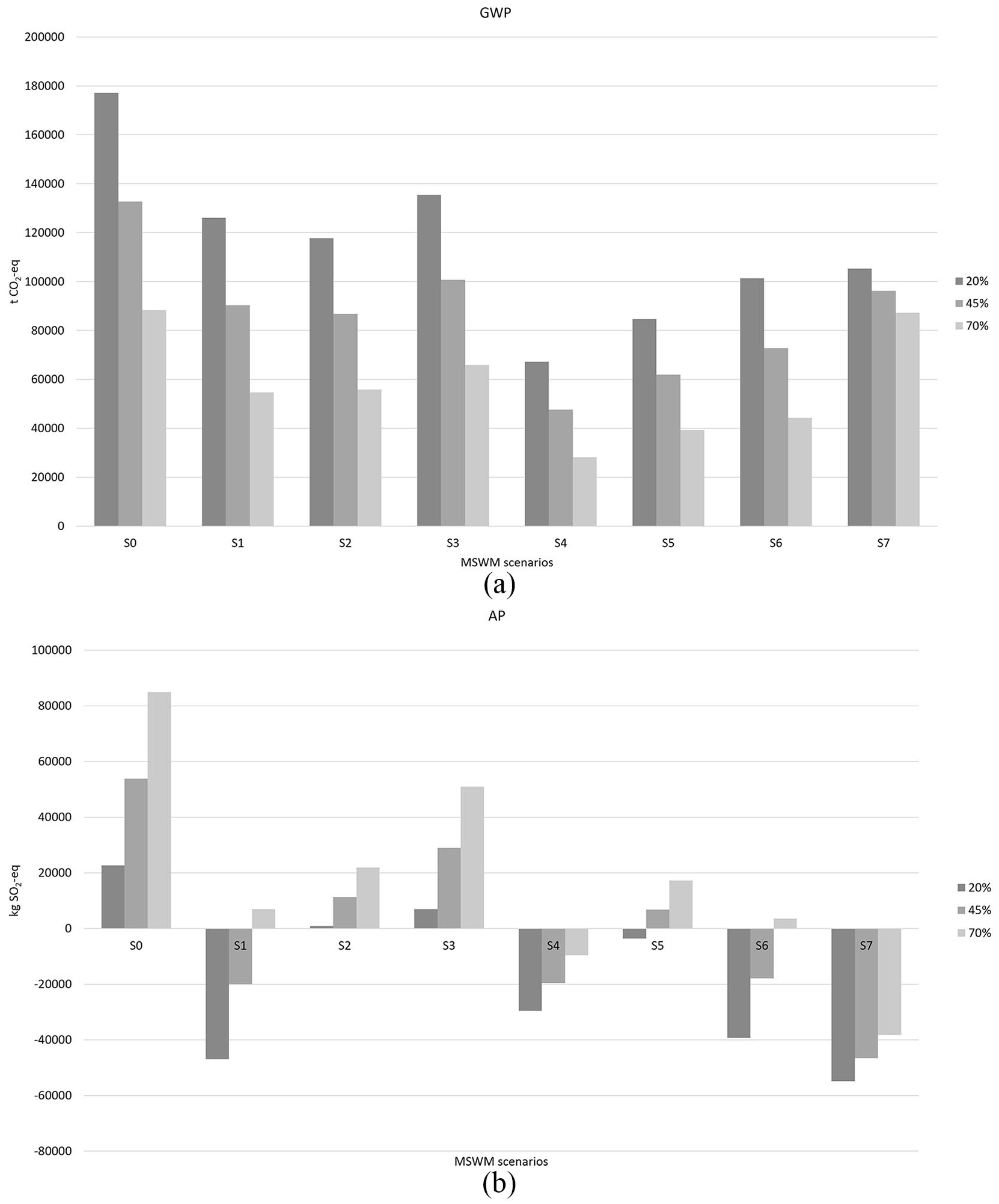
GWP100 and AP for each MSWM scenario in terms of the LFGCE.
The different energy mix influences all the environmental impacts assessed (Figure 6). An increase in carbon emissions because of electricity generation boosts the GWP100 for all scenarios except S7. This is due to energy avoidance in S7 because of incineration and WtE. The varying energy mixes affect the final ranking of the scenarios; the best option is always the recovery of organic and inorganic waste, although energy recovery is suggested if the energy mix consists of high carbon emissions (intensive use of fossil fuel). At the same time, the EP increases for all the scenarios with the increase in carbon emissions, except for S7. However, in this case, the final ranking remains equal for all the energy mix options. Considerable changes are obtained in terms of the AP. The worst scenario with high carbon emissions is S3 and the best S7, whereas with regard to low carbon emissions the worst scenario is S0 and the best S1. This is because S1 has a higher RR and smaller treatment plants for other fractions, reducing the use of electricity. Therefore, incineration is recommended when the energy mix is mainly generated with the combustion of fossil fuel, whereas recycling is the most affordable option when renewable energies are used. Finally, the HTP is also affected by the change in the energy mix, and the impact on this increases in parallel with the increase in fossil fuel consumption. Again, the final ranking changes, in particular for S6, in which the electricity used in MBT considerably affects the HTP.
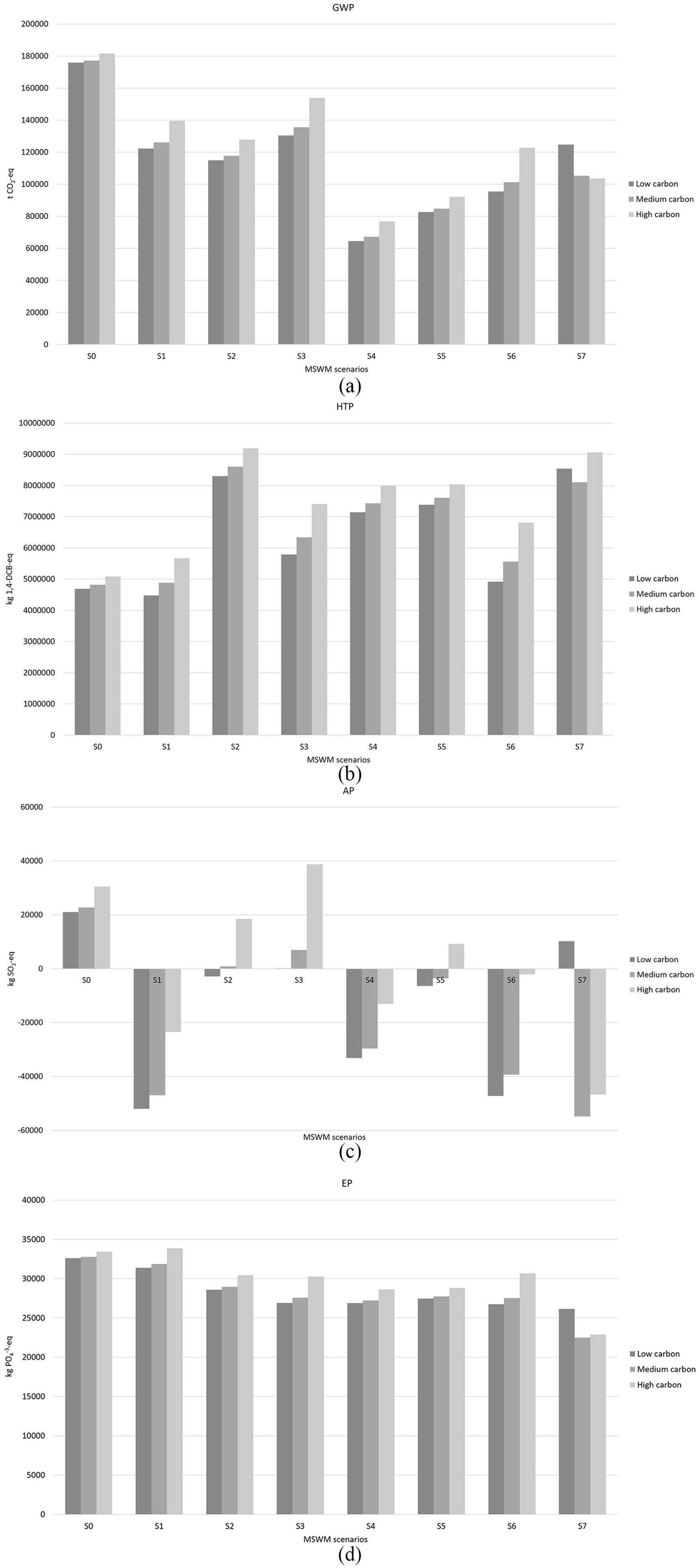
Environmental impact assessment for each MSWM scenario in terms of the energy mix and its effect on (a) GWP100; (b) HTP; (c) AP; (d) EP.
Discussion
Lessons learned and future improvements
The results obtained by the LCA introduced in this article are not important as quantitative values, but for providing indications about the best and worst options, focusing on the main actions that can have a positive or negative environmental impact. For example, the flaring of landfill gas allows for the reduction in the GWP100, increasing the AP. At the same time, open burning of waste increases the HTP, as well as the GWP100 and the AP, whereas recycling and energy recovery allow for the reduction of just about all environmental impacts, as also reported by the scientific literature (Bovea et al., 2010; Di Maria and Micale, 2014). Such information, in conjunction with a complete MFA, allows policymakers to understand what the main actions are that should be implemented for improving the MSWM system from an environmental point of view.
The sensitivity analysis added other useful indications with regard to the issues that should be addressed for ranking the best and worst MSWM scenario in terms of environmental impact. The energy mix used and the percentage of landfill gas recovery affect the LCIA, changing the ranking of the best and worst scenario. These issues can be explained to local stakeholders and can be used as environmental indicators for understanding the main pros and cons of the actions implemented or planned.
These results were shared with stakeholders and engineers in La Paz for improving their knowledge about MSW planning. The application of an LCA free of charge allows it to be used in low to middle income countries as a long-term teaching tool for spreading knowledge and awareness about environmental issues. The experience of applying the LCA in La Paz is the basis for writing, submitting and starting an international cooperative development project financed by AICS in collaboration with the local government, the local University (Universidad Mayor de San Andrés) that supported the research and an Italian non-governmental organization (NGO). A LCA (with full licensing and complete databases) will be used as a technical approach for assessing the pre- and post-design environmental impacts in terms of them being indicators of the improvements obtained because of the MSWM project. Therefore, the application of a LCA with academic licensing was the first step towards starting development projects, demonstrating that cooperation with local and international stakeholders is essential for sourcing international funds and boosting sustainable development.
Strengths and limitations of the study
The study conducted in La Paz has limitations in terms of data quality and availability. The use of academic licensing, limited in terms of databases and inventories, does not allow for the avoidance of bias in a LCIA. Moreover, only one characterization method is provided, and it cannot be modified in order to improve the characterization of the environmental impacts.
In general terms, the results obtained are only indications about the potential environmental impacts of the MSWM scenarios introduced. The main advantage of the research consists in introducing a LCA in areas where this approach is not known. The results have been achieved only through cooperation between the university, which can obtain academic licensing and provide technical information about how and why the LCA should be applied, and the local government, which can explain the pros and cons of a LCA to local stakeholders.
The scenarios presented are possible MSWM systems that can be adopted for improving environmental sustainability. The analysis emphasized that the main benefits are obtained if the organic fractions are separated and treated for energy or material recovery, reducing the GWP100. At the same time, WtE is also a strategy that should be adopted in order to reduce the use of fossil fuel, avoiding GHG emissions. However, the main challenge is to implement such strategies in terms of financial risk, technical knowledge, local expertise in operation and management, social inclusion and the presence of the informal sector (Rochman et al., 2017).
Comparison with other case studies
Other LCA studies in developing countries have been implemented for estimating the environmental impact of MSWM. A study conducted on the island of Mauritius with SimaPro 8.0.4.30 shows that landfill with energy recovery is the most undesirable scenario, generating the worst environmental impacts compared with other MSWM systems. From an environmental point of view, the study recommended considering incineration of waste with energy recovery (Rajcoomar and Ramjeawon, 2017). In Panchkula, India, research conducted with SimaPro 8.3 determined the impact of MSWM scenarios. Among the proposed alternative scenarios, the combination of recycling, composting and sanitary landfill showed lower environmental impacts, with significant environmental savings achieved through energy recovery (Rana et al., 2019). In Hangzhou, China, using GaBi 8.0 software, a study found that incineration is better for the environment than landfill, whereas SC of recyclable waste can reduce the negative effects on the environment. The study recommended AD as a primary option for the treatment of food waste (Zhou et al., 2018).
These LCA are in accordance with MSWM strategies for reducing environmental impacts. The implementation of AD, incineration with energy recovery and composting, and materials recycling in conjunction with controlled sanitary landfill, are always the most preferable options in terms of environmental impacts. Therefore, the main issue is not about choosing the best option, but about its implementation in developing areas, where knowledge and financial sustainability are not sufficient for guaranteeing and effecting policy implementation, and where there is a weak framework for promoting dialogue among stakeholders, including ineffective activities to raise awareness (Dos Muchangos et al., 2017). For this reason, it is important to spread knowledge, and information about management tools that would be useful for planning solutions and understanding local issues.
Table 9 reports the results of the LCA of MSWM systems implemented in other developing areas of the world in terms of the GWP100, AP, EP and HTP. The comparison of the data obtained with the results of this study provides a good indication of the reliability of our results, although without specific databases and with only academic licensing. This consideration has also been noted by other review articles, in which the GWP100 of the MSWM scenarios has been found to range from -740 to about 1900 kg CO2-eq t-1 and the AP ranges from -4.60 to about 2.37 kg of SO2-eq t-1 (Cleary, 2009), in other words, from the best to the worst MSWM option. Moreover, LCA results have been found to be independent of the choice of software if the models are based on the same assumptions (Laurent et al., 2014). This information is useful for understanding the values obtained, and they should be presented in conjunction with the data resulting from the LCA implemented locally, ensuring that the policymakers are aware of the consequences of the lack of data and the use of academic licences, as well as the choices in LCA modelling.
Conclusions
Making improvements to MSWM systems in developing countries is challenging. La Paz is a developing context where technical and financial support is required for boosting sustainability in the short term because global warming and climate change require urgent solutions. The LCA of MSWM system scenarios implemented in La Paz is another contribution to the scientific literature with regard to understanding the pros and cons of an LCA implemented in low-income regions with a lack of financial sustainability for understanding the environmental opportunities of waste valorization.
The article explores the main advantages of the academic licensing (free of charge) of a version of LCA software for analysing MSWM options in terms of their environmental impact. Results demonstrate that the rankings obtained are comparable with the ones provided by other studies, as are the final values obtained, and that the approach can be useful as a starting point for international cooperative projects and improving local awareness about MSWM issues. The first assessment of MSWM scenarios, albeit with a lack of data and a reliable inventory, shows there is potential for improving awareness and methodological knowledge in areas with low technical expertise and poor economic viability. Scientific and political cooperation, together with expertise in the use of management tools such as LCA, can be used for sourcing international funding that can be employed in improving the MSWM systems of developing megacities.
The next studies will focus on the implementation of a LCA with full licensing of the software and complete inventories, resulting in more consistent data to compare with other studies. This study, as well as future ones, can be of interest to stakeholders in low to middle income countries with regard to how the approach can be applied, and useful as a starting point for international cooperative development projects aimed at improving MSWM systems with the goal of achieving a circular economy and sustainable development.
Footnotes
Acknowledgements
The research was conducted with the cooperation of the Universidad Mayor de San Andrés (IQPAA and IIDEPROQ), and the municipal secretary for environmental management from the Autonomous Municipal Government of La Paz.
Declaration of conflicting interests
The authors have no conflicts of interest to declare.
Funding
The authors disclosed receipt of the following financial support for the research, authorship and/or publication of this article. This research is supported by a Global Grant from the Rotary Foundation: Global Grant GG1758711 Scholarship provided by the clubs Rotary Bassano del Grappa Castelli and Rotary Sopocachi La Paz.
