




Abstract
In response to the COVID-19 pandemic, governments restricted community members’ activities and, in turn, patterns of human behavior, both legal and illegal, changed. In many countries, the police have been entrusted to enforce these new COVID-19 related restrictions and were often perceived as the main enforcers of these sometimes unpopular measures. In this paper, we study four types of factors that may affect the public's trust in the police during the COVID-19 pandemic: traditional factors, such as interactions with the police during the pandemic, assessments of the police effectiveness in dealing with the pandemic, COVID-19 related factors, such as instrumental concerns for their personal health, and the adherence to the conspiracy theories. Specifically, using data from a sample of 527 respondents from the Seoul metropolitan area in South Korea, collected in the fall of 2021, we estimate the effects of the factors listed above. The results indicate that trust in the Korean National Police was strengthened when the police were perceived to have effectively dealt with the challenges of the pandemic and addressed the instrumental concerns of the community in the protection of public health. No demographic variables were significantly independently associated with trust in the police during the pandemic. The theoretical and policy implications of the findings are discussed.
Introduction
When the COVID-19 pandemic started in March 2020 (World Health Organization, 2020), the World Health Organization urged governments worldwide to impose measures to restrict the spread of COVID-19. In many countries, the police have been entrusted to enforce these new COVID-19-related restrictions, often with no or quite limited training (e.g., Matarazzo et al., 2020; Warren et al., 2020). On more than one occasion, the police were accused of being heavy-handed in administering these measures. In the report about the police enforcement of COVID-19 restrictions in South Africa, one of the countries with the most stringent COVID-19 regulations, Faull (2020, p. 1) vividly argued that “State abuses [during the enforcement of COVID-19 restrictions] could match the threat of COVID-19 itself.” The strict enforcement of lockdown rules and the potential abuses by the governmental agents in the process could have contributed to the spread of conspiracy theories, leading to lower trust in the government (e.g., Murphy et al., 2022; Pummerer et al., 2022).
Trust or confidence in governmental institutions leads the public to perceive the government as legitimate, resulting in greater support for and compliance with governmental measures. While trust or confidence in the government is important during “normal” times, it becomes much more important during physical disasters and humanitarian crises (e.g., Murphy et al., 2022; Volkan, 2014). Specifically, during these times, the safety and security of society might critically depend on the degree to which community members obey the governmental orders (e.g., Blair et al., 2017) and when conspiracy theories about the government’s misuse of power are more likely to blossom (e.g., Murphy et al., 2022). In the context of COVID-19, compliance with governmental instructions on safe practices can lead to the curtailing of the disease's spread (e.g., Sedgwick et al., 2022). Research indicates that in such situations, people pull together around their government—the “rally around the flag” effect (Mueller, 1970)—leading to an increase in institutional trust (Bol et al., 2020; Esaiasson et al., 2020; Sibley et al., 2020). Empirical research on trust and compliance with governmental measures during the COVID-19 pandemic confirms that trust is positively and directly related to compliance with COVID-19 orders (e.g., Devine et al., 2021; Han et al., 2021).
However, there is limited extant research exploring how the public trust in the police during the COVID-19 pandemic was shaped. This study focuses on the factors influencing community members’ trust in the police during the COVID-19 pandemic. Our analyses further the research by including instrumental concerns for their health prompted by the COVID-19 pandemic. We test the effects of more traditional factors (e.g., experience with the police, police effectiveness) and COVID-19-specific factors (e.g., fear of COVID-19, conspiracy theories) influence citizens’ trust in the police. Using data from a sample of 527 respondents from South Korea collected in the Fall of 2021, we estimate the strength of these factors on the respondents’ trust in the police during the pandemic.
Literature Review
Trust in the Police
Trust in the police involves confidence that the police are competent, reliable, perform their duty, and take actions with responsibility (Hardin, 2002). That is, public trust in the police refers to the public belief that the police will exercise their authority by effectively producing the services they are supposed to produce with the greatest interests in the community. In other words, what police officers do (i.e., effectiveness) and how police do it (i.e., procedural justice) matter for the public's trust in the police.
People's level of trust in the police depends on “cues that communicate information about the intentions and character of the legal authorities” (Tyler, 2007, p. 24). Apart from the number of personal interactions that people have with the police, trust judgments are based on normative beliefs and expectations that the police have the right intentions for the community and are competent in carrying out their duties as the public expects.
Without trust and confidence, the police lose their legitimacy, which endangers democracy. Police legitimacy is reflected in public judgment related to trust in the police (Tyler, 2004; Tyler & Huo, 2002). Trust in the police improves police legitimacy and enhances people's “willingness to recognize and defer to official police authority,” which implies much more than general support (Braga et al., 2014, p.600). In other words, trust in the police brings people to abide by the laws not because they consent to the details of the law, nor because they expect legal sanction, but because they admit that it is morally right to follow the rules (Tyler, 1990).
Trust in the Police in Korea
While most of the empirical research on this topic has been explored in Western societies, a number of recent studies conducted in Korea started to examine public trust in the police. Korea is a more homogenous society in which most of its individuals share the same culture and racial ethnicity (Kim & Jeon, 2017; Shin, 2006). Such homogeneity creates an imperative to explore whether the findings from research in Western societies could expand to non-Western societies, including Korea. Thus, recent studies conducted in Korea began to explore whether the findings from the studies conducted in Western countries are generalizable to the South Korean context.
Consistent with prior studies in Western countries, Korean studies revealed procedural justice, distributive justice, and police effectiveness as the key antecedents of public trust in the police (Jang & Hwang, 2014; Kwak & McNeeley, 2017; Lee & Cho, 2020; Lim & Kwak, 2022). For example, Lim and Kwak (2022) used a sample from the 13th largest city (Daejeon Metropolitan City) in South Korea, geographically located in the center of South Korea, to show that trust in the Korean police seems to be rooted in instrumental concerns of police effectiveness and process-based issues of fair treatment. In another study by Kwak and McNeeley (2017), the authors found that the respondents who participated in the 2008 Korean Crime Victimization Survey showed more trust in the police if they believed that the amounts of disorder within their neighborhoods were small.
Furthermore, studies using Korean data demonstrated a significant relationship between trust in the police and citizen-focused outcomes (Kim et al., 2019; Lee & Cho, 2020; Woo et al., 2018). For example, Kim and colleagues (2019) tested the relationship between citizen trust in the police and their willingness to violate the speed limit when the individual perceived a slight possibility of detection, finding that citizens’ trust in the police significantly and negatively impacts their willingness to engage in unlawful behavior.
Antecedents of Trust in the Police
Extant literature suggests that police effectiveness is a critical factor in predicting trust in the police (Nalla & Nam, 2021; Nam et al., 2022; Sunshine & Tyler, 2003). Tyler (1990) suggests that community members’ trust in the police is built on both the utilitarian, instrumental model (i.e., perceived effectiveness) and the normative, process-based model (i.e., procedural justice). Perceived police effectiveness largely hinges on whether the public believes the police are doing a good job in achieving outcomes (i.e., addressing crime and disorder) by effectively performing their duties (Sunshine & Tyler, 2003; Tankebe, 2008; Tyler & Fagan, 2008). For example, Tyler and Fagan (2008) found that when community members perceive the police as effective, they are more likely to trust the police and are more willing to report crime incidents and dangerous/suspicious activities to the police.
Previous studies demonstrated that perceptions developed during police-citizen encounters significantly shape the public's views on various dimensions of police work. Specifically, research indicates that involuntary contacts (i.e., those initiated by the police) can harm people's perceptions and attitudes toward the police, while voluntary contacts (i.e., those initiated by the citizen) do not affect confidence in the police (Cao, 2011; Jacob, 1971; Lee et al., 2019; Winfree & Griffiths, 1977).
A long line of research examining community members’ trust in the police generally included several demographic characteristics such as age, gender, employment status, and residential location. Previous studies have identified age as a strong predictor of trust in the police, where older people were more likely to be supportive of the police than younger people (Peek et al., 1981; Wilson, 2013; Wu et al., 2012). Regarding gender, several studies revealed that women expressed more trust in the police than men (Cao et al., 1996), while others found no such relationship (Correia et al., 1996). Yet, others claim that though gender disparities exist concerning police policies, attitudes toward the police tend to be very similar (Hadar & Snortum, 1975; Wolfe et al., 2016). Previous research indicates that people residing in suburban areas tended to hold more favorable attitudes toward the police than those living in urban areas (Kusow et al., 1997).
Trust in the Police and the COVID-19 Pandemic
The fact that the origin of the COVID-19 virus remains uncertain, coupled with the psychological pressures from the lockdowns, perceptions of uncertainty about the future, and the speed with which the COVID-19 vaccine has been developed, all helped to create the breeding grounds for the new, COVID-19 related conspiracy theories about the government. It is by no means surprising that conspiracy theories are more likely to be accepted in turbulent times—such as the COVID-19 pandemic—when anxiety and psychological uncertainty are high (Murphy et al., 2022) and when there is a threatened sense of security and control (Douglas, 2021). Pummerer and colleagues (2022, p. 49) argued, “Conspiracy theories are built on the notion that a powerful group is acting in secret, thus building on (and potentially also creating) suspicion toward the powerful such as the government.” Extant research pointed out the link between the acceptance of conspiracy theories and the lack of compliance with social norms and the lower tendency to engage in preventive health behavior (e.g., Imhoff & Lamberty, 2020; McCarthy et al., 2021; Romer & Jamieson, 2020).
Several studies (e.g., Murphy et al., 2022; Pummerer et al., 2022) found that adherence to conspiracy theories is associated with lower trust in the government during the COVID-19 pandemic. Furthermore, Murphy and colleagues’ study (2022) showed that adherence to conspiracy theories was associated with less willingness to comply with governmental orders. However, the relationship was much weaker for the respondents with higher trust in the government. As Murphy and colleagues concluded (2022, p. 53), “having high levels of trust in the government offers some protection against the negative consequences of believing in conspiracy theories on duty to comply with authorities and their COVID-19 restrictions.” However, we know of no study exploring the relationship between adherence to conspiracy theories and the level of trust in the police.
Another aspect of the pandemic that could shape people's trust in the police is their fear of being infected with the COVID-19 virus. Many studies have demonstrated that people fear being infected themselves or infecting others with COVID-19 (Alimoradi et al., 2022; Fitzpatrick et al., 2020; Sloan et al., 2020). Studies show that fear of COVID-19 is linked with psychological distress, lower work satisfaction, and lower life satisfaction (e.g., Alimoradi et al., 2022; Duong, 2021; Labrague & de los Santos, 2021; Rahman et al., 2021; Satici et al., 2020). However, scholarly literature has spent much less time exploring the impact of fear of COVID-19 on community members’ attitudes and perceptions toward the police. This begs the question of how the police will be viewed by their community members in the presence of fear of COVID-19.
Yet, extant research exploring the role of fear of COVID-19 in shaping public trust in the police is quite limited. In their study of Israeli citizen views during the pandemic, Perry and Jonathan-Zamir (2020) explored trust in the police during the pandemic. They found that most respondents perceive that the police are successfully handling COVID-19-related tasks and agreed that the police would behave with integrity when enforcing emergency regulations. Yet, most respondents did not feel that how police dealt with the pandemic would strengthen their trust in the police (Perry & Jonathan-Zamir, 2020). However, their study did not explore factors shaping community members’ trust in the police.
Recent studies about the COVID-19 pandemic reaffirm the link between trust in the government and the public's willingness to obey the rules. While the number of studies exploring factors that shape community members’ trust in the police during the COVID-19 pandemic is very limited, there is a growing body of research on the association between trust and compliance with the COVID-19 governmental measures (see, e.g., Devine et al., 2021). In one of the earliest studies, conducted in March 2020 in Italy and France during the lockdown, Lalot and colleagues (2022) found that compliance with government-imposed restrictions is strongest among individuals more concerned about their risk of infection and who have higher trust in their political leadership. On the other hand, adherence to the governmental-imposed restrictions is the lowest among the individuals who experience distrustful complacency (i.e., low personal concern for the infection or complacency and low trust in the government or distrust).
In a comparative Finnish–U.S. study, Sedgwick and colleagues (2022) argued that compliance with the governmental rules would be affected by rational choice factors based on the assessment of risk (e.g., fear of COVID-19 infection, fear of fines, or other legal sanctions), as well their ability to comply with the recommendations. The study's results demonstrate that the belief that the respondents follow the rules to protect themselves, their families, and their communities is the key predictor of their compliance with the instructions to wash hands and socially distance themselves in both countries. At the same time, confidence in central institutions was not a strong and consistent predictor of their compliance. Similarly, Pagliaro and colleagues (2021) found that the binding foundations (i.e., loyalty, authority, and purity) were positively related to trust in government. Furthermore, trust in the government is strongly associated with the respondents’ self-prevention behaviors (e.g., isolating at home) and discretionary behaviors (e.g., charitable giving).
A handful of studies directly explored predictors of community members’ trust in the government during the COVID-19 pandemic. One study by Han and colleagues (2021) found that trust in the government's pandemic control was associated with the public willingness to obey the health recommendations and engage in COVID-19-related health behaviors (e.g., washing hands, avoiding crowded spaces) and prosocial behaviors (e.g., making donations to help others, protecting vulnerable groups, making personal sacrifices). Furthermore, how the government is perceived to be dealing with the pandemic (e.g., organized, fair, and sending clear messages on coping with COVID-19) also affected the respondents’ overall trust in the government. Finally, the employment status and financial strain were not associated with the overall trust in the government.
In addition, Murphy and colleagues (2022) reported in their Australian study that, in addition to political affiliation and country of origin, all COVID-19 government action measures were directly and strongly associated with trust in the government. While the threat of sanctions, perceptions of governmental effectiveness in dealing with the pandemic, and perceptions of police fairness were positively associated with trust in the government, perceptions of government as heavy-handed and concerns for the loss of freedom post-pandemic were negatively related to the trust in the government (Murphy et al., 2022). Murphy and colleagues (2022, p. 54) concluded, “Together, these findings suggest that authorities’ actions during the pandemic are important for promoting and maintaining public trust in the government.”
Although the COVID-19 pandemic has dramatically altered our reality along many dimensions—including the demand for police services and the modes of their delivery—extant research did not explore how community members evaluate the police and how much trust they have in the police. Studies about trust in the government during the pandemic find that engagement in self-protective health behavior, willingness to obey governmental regulations, perceptions of governmental effectiveness, and perceptions of police fairness are related to trust in the government (Han et al., 2021; Murphy et al., 2022). What remains unclear is whether the same factors would affect the public's trust in the police during the pandemic as well. Our study seeks to provide an empirically based answer to this open research question.
Policing During the COVID-19 Pandemic in Korea
South Korea was among the first countries to experience the impact of the COVID-19 pandemic and also has been one of the hardest hit countries with a significant number of infections (Worldometer, 2022). The first COVID-19 case was announced in January 2020, and the Korean government increased the national infectious disease crisis from ‘alert (orange)’ to ‘serious (red)’ in February 2020. The changing status refocused the Central Disaster and Safety Countermeasures Headquarters—led by the Korean government's Prime Minister—to prevent the spread of COVID-19. Under the declaration of a national emergency, the Korean National Police Agency (KNPA) became the leading police agency in charge of responding to the COVID-19 pandemic, which led to the establishment of a task force known as “COVID-19 Police Disaster Countermeasure Headquarters,” led by Deputy Commissioner General of the KNPA. The KNPA agency was mainly responsible for enforcing the COVID-19 regulations to protect people's lives and health from COVID-19.
The KNPA was entrusted to enforce the COVID-19 regulations, prevent social disorder and illegal activities, and secure public safety (KNPA, 2020; Shin, 2020). In particular, the police were responsible for enforcing quarantine regulations and ensuring that individuals who were required to self-quarantine were following the rules. In the process, the KNPA worked together with local authorities on proactive and preventative measures against self-quarantine violators. If the police identified individuals who were not complying with self-quarantine requirements, they took actions to catch them and make an arrest. The goal of this enforcement was to prevent the spread of COVID-19 and protect public health. The police also had the responsibility of maintaining public order and ensuring that individuals were following social distancing measures and other guidelines aimed at preventing the spread of COVID-19. To that end, the KNPA enforced the laws and regulations against both public and private gatherings that violated the public health order limiting the number of people who can gather together for indoor and outdoor events. In addition, the police were responsible for investigating crimes related to the COVID-19 pandemic, such as fraud or hoarding of medical supplies.
Current Study
Our study explores predictors of community members’ trust in the police during the COVID-19 pandemic. We test the relationship between traditional factors and COVID-19-specific factors and citizens’ trust in the police. Beyond the traditional factors (e.g., prior experience with the police, evaluations of police effectiveness) shaping citizens’ trust in the police, the COVID-19 pandemic created unique factors that could shape community members’ attitudes. On the one hand, if community members’ fear of COVID-19 infection is strong, the public may perceive that the police enforcement of COVID-19 rules is necessary and that it enables them and their loved ones to remain safe from COVID-19 infection. If the police perform this role well—if they are perceived as effective—community members who are afraid of COVID-19 infection may have more trust in the police.
On the other hand, community members who subscribe to the conspiracy theories about COVID-19 enforcement as a pretext for the governments to reduce civil rights (e.g., Imhoff & Lamberty, 2020) would assess the police primarily through the lens of the restriction of their rights. As conspiracy theories undermine public trust in the government (e.g., Murphy et al., 2022), community members who subscribe to these theories would view the police as the most visible tool of the government aimed at their rights and, therefore, unfair. This perceived lack of fairness in how the police treat the public could erode trust in the police.
Methods
Data
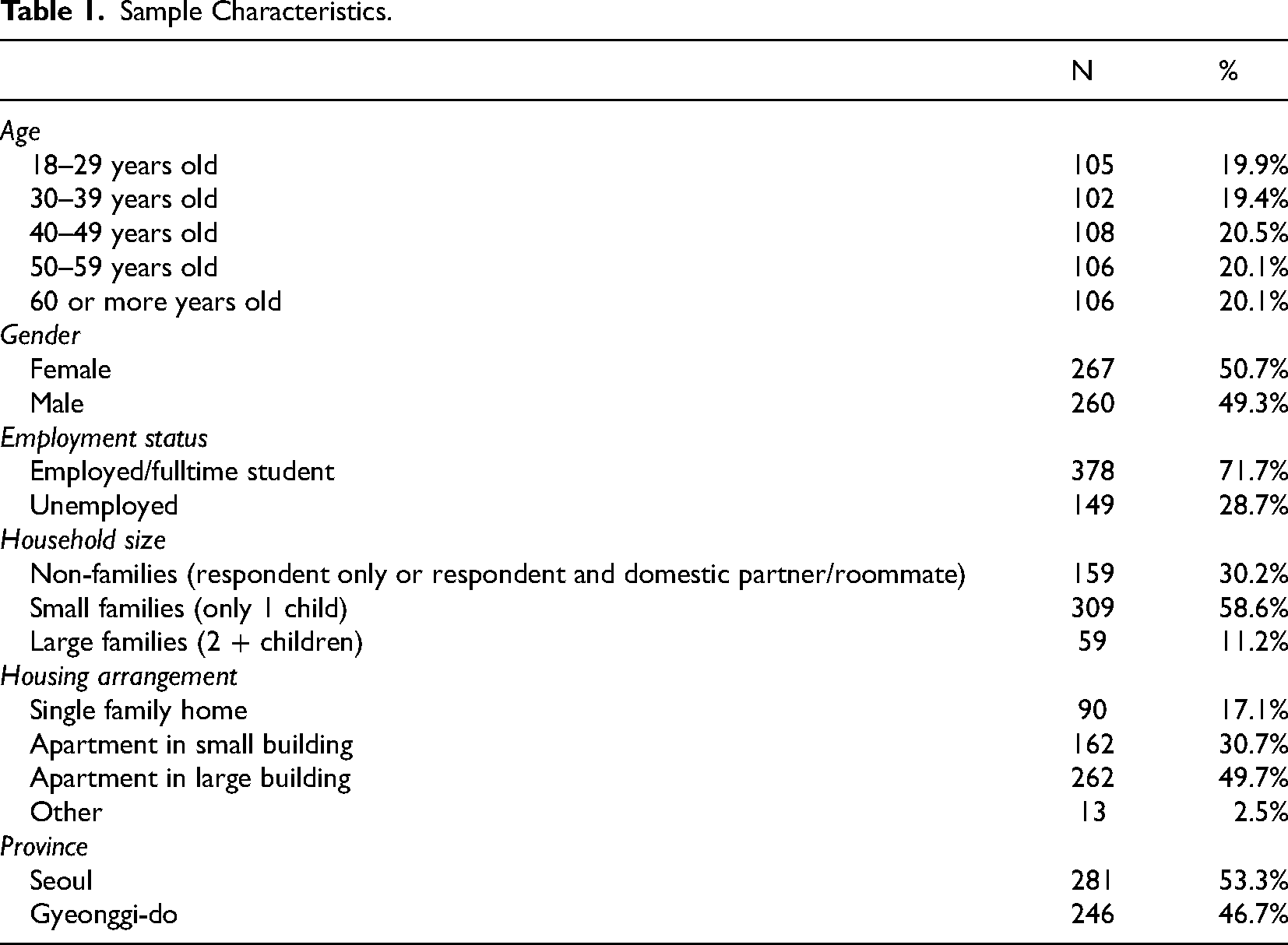
The data used in this study were collected as part of a larger global study examining how the pandemic affected police organizations, police officers, and the public (BLINDED FOR PEER REVIEW). The survey was developed by a group of researchers from across the globe and with input from local stakeholders to ensure the instrument was culturally appropriate for the local context. The survey contained items measuring attitudes towards the police generally and specific to the pandemic, perceptions of and experiences with COVID-19, how the pandemic affected the respondent, and sociodemographic questions. The survey was designed in English and then piloted with several Korean scholars who offered input and guidance on forming questions and appropriate response categories for items. The survey was translated into Korean by a native Korean speaker and then administered by a professional survey firm in Korea between November 8, 2021, and November 12, 2021. 1 The survey firm attempted to secure 500 responses distributed to the Seoul (capital of Korea) metropolitan area. To collect a final sample representative of the Seoul metropolitan area regarding the respondent's age and gender, stopping quotas were established to more closely match the sample characteristics with the Seoul Census estimates. Ultimately, 527 responses were collected. The demographic information on the sample can be found in Table 1.
Sample Characteristics.
Dependent Variable
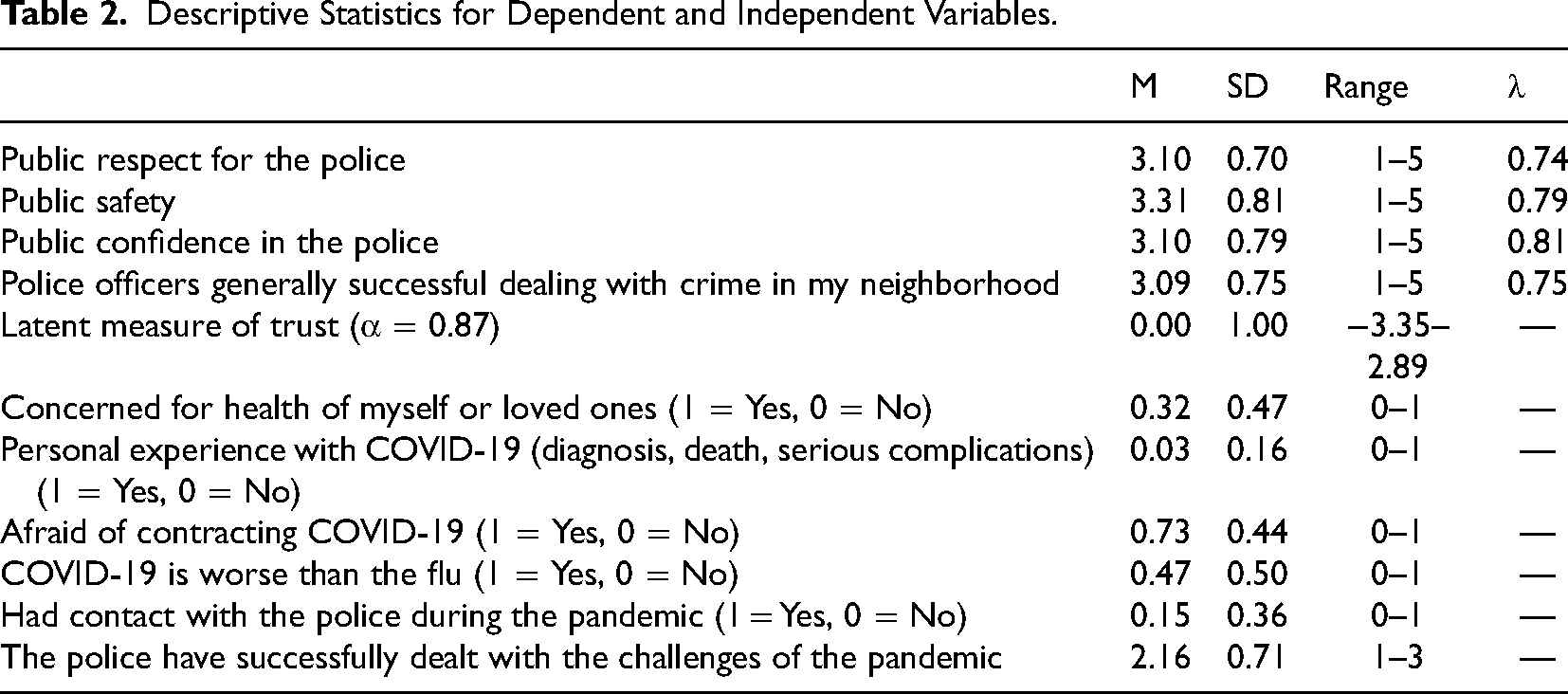
The dependent variable in this study is community members’ trust in the police. Using a five-point Likert scale ranging from strongly disagree (1) to strongly agree (5), respondents were asked to indicate their level of agreement with four statements that capture the broader domains of trust in the police. Specifically, participants were asked about whether the public generally had respect for the police, whether the police were adequately providing for public safety, whether the public had confidence in the police, and whether police officers were generally successful in dealing with crime in their neighborhoods. The descriptive statistics for these items are presented in Table 2. A latent measure of trust in the police was constructed by subjecting the items to principal axis factoring that showed evidence that the items were part of a unidimensional construct (i.e., λ > 0.74) with high levels of interitem reliability (α = 0.87). A factor score (M = 0.00, SD = 1.00, Range = −3.35—2.89), estimated using the regression scoring technique, was used as the dependent variable in subsequent analyses.
Descriptive Statistics for Dependent and Independent Variables.
Independent Variables
We include three categories of independent variables in subsequent analyses. Specifically, we include measures capturing participants’ fear and experience with COVID-19 (Table 2), their demographic characteristics (Table 1), and experiences and perceptions of the police during the pandemic (Table 2).
Fear of and Experience with COVID-19
The first category of independent variables refers to the participant's perceived risk of and experience of contracting COVID-19, which was captured with four variables. The first variable is a dichotomous measure of whether the participant was not more concerned for the health of their family members or for their personal health in the wake of the COVID-19 pandemic compared to before the pandemic. Initially, participants responded to these items using a five-point Likert scale with anchors of much less than before the pandemic (−2), somewhat less than before the pandemic (−1), no change from before the pandemic (0), somewhat more than before the pandemic (1), and much more than prior the pandemic (2). However, the measures were collapsed and combined into a single metric. The response categories were collapsed into more meaningful categories as 75% of respondents on both measures understandably indicated that they were somewhat or much more concerned about their personal health or that of their loved ones. The most meaningful distinction in the data seemed to be between those participants who were more concerned—irrespective of the degree of concern—compared to those who were no more concerned or were less concerned for their personal health of their loved ones. Additionally, the two measures were combined as the responses to the two items were not statistically independent of one another (χ2 = 229.18, p < .001) and were strongly correlated with one another (φ = 0.66).
The second independent variable used to capture participants’ experience with COVID-19 was a dichotomous measure asking participants to indicate whether they had personally been diagnosed with COVID-19, of which only a small percentage of respondents (2.47%) had personal experience with the virus. The third independent variable in this category asked participants to indicate their fear of contracting COVID-19. Initially, participants responded using a four-point Likert scale of: not at all afraid (1), not very afraid (2), fairly afraid (3), and very afraid (4). The responses indicated that there was a clear break in fear of contracting COVID-19, with 73.1% of the sample indicating that they were fairly or very afraid of contracting COVID-19 compared to the remaining 26.9%. Therefore, we collapsed the response categories for those who were not at all afraid and not very afraid into one category and those indicating they were fairly afraid or very afraid into another category.
The fourth and final measure included in this category is a measure that asked participants to indicate, using a five-point Likert scale ranging from strongly disagree (1) to strongly agree (5), their agreement with the statement that COVID-19 is no worse than the flu. Again, the plurality of participants disagreed (27.5%) or strongly disagreed with this statement (19.9%). Therefore, we collapsed those who disagreed and strongly disagreed with this statement into one category compared to those who responded in other ways.
Demographic Variables
The second category of independent variables included in the analyses is the respondents’ demographics because attitudes towards the police and risk from exposure to COVID-19 are related to certain demographic characteristics. We specifically include the respondents’ self-reported age at the time of the survey, broken down into five categories. We also included their sex (1 = female) and whether they were employed or full-time students (1). Participants were also asked how many other people lived in their household, with most participants indicating they lived alone (30.2%) or in a household with a spouse/partner and one child (58.6%), with the remainder living in households with four or more people. We created two dummy variables that compared the effects of living alone and in a small household (0 < n < 3) compared to those who lived in large households (n < 4). Likewise, participants were asked about the type of dwelling in which they resided. Most participants indicated they lived in a small apartment building (31.5%) or a large one (51.0%). Relatively few indicated they lived in a single-family home (17.5%), which is consistent with Koreans’ architecture and living patterns generally. We created two dummy variables for those who lived in small and large apartment buildings compared to those who lived in single-family homes. Lastly, we included whether the participant lived outside the city of Seoul (46.7%) compared to those who lived in the city of Seoul.
Experiences with and Perceptions of Police During the Pandemic
The third category of independent variables included in the study measures participants’ experiences with and perceptions of the police during the pandemic. The first variable asked whether participants had contact with the police during the pandemic. Only a small number of our sample (15%) had contact with the police during the pandemic. Unfortunately, we do not know the nature of this contact with the police (e.g., COVID-19 regulation enforcement, the victim of crime, traffic stop). The second variable in this category asked participants to indicate their level of agreement, using a five-point Likert scale, that the police had successfully dealt with the challenges of the pandemic. Based on the distribution of the data (i.e., very few strongly disagree and strongly agree responses), we collapsed responses into those who disagreed with the statement (18.6%), those who were neutral (46.7%), and those who agreed with the statement (34.7%)
Analytic Plan
The analyses proceed in two stages. First, we examine the bivariate relationship between trust in the police and the measures of fear of and experience with COVID-19 measures. These bivariate analyses go to the question at the center of this study, namely whether community members’ instrumental concerns for their health are associated with perceptions of the police during the COVID-19 pandemic. In the second stage of the analysis, we estimate a series of three regression models that estimate how the independent variables affect the public's trust in the police. Model 1 examines the respondents’ experiences with and perceptions of COVID-19. Model 2 adds the demographic factors to the factors included in Model 1. Model 3 then adds the variables measuring the respondent's experiences with and perceptions of the police during the pandemic. We pay special attention to the change in the regression models’ ability to explain community members’ trust in the police by assessing the improvement in model fit using
Results
Bivariate Analyses
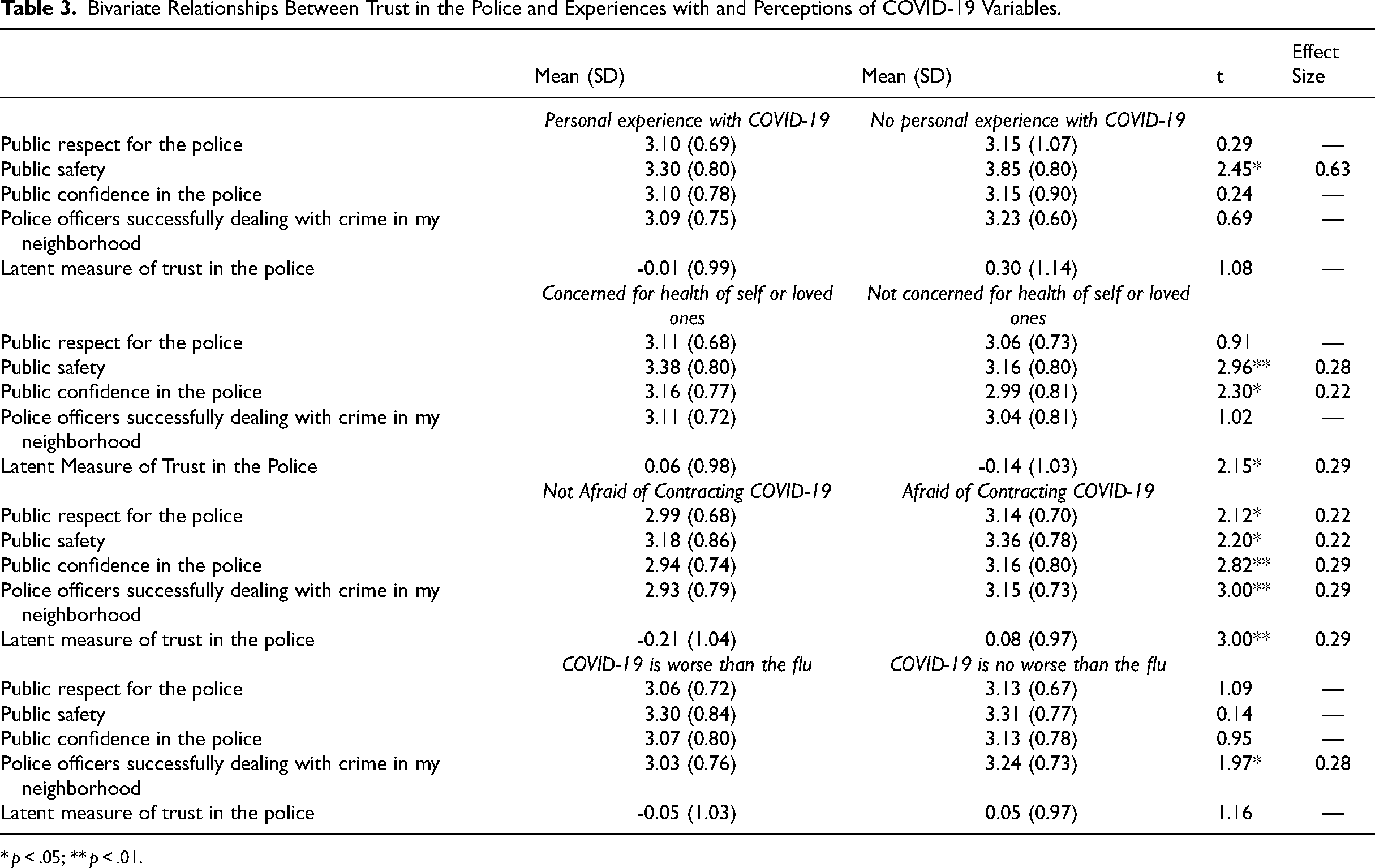
We begin by examining the bivariate relationships between the respondents’ experiences with and perceptions of COVID-19 and their trust in the police on the latent trait and the indicators that comprise it (Table 3). The results indicate that only a handful of variables have a significant bivariate relationship with trust in the police. Notably, the only significant mean difference for those with personal experience with COVID-19—compared to those without—is for the item indicating changes in public safety. Specifically, those with personal experiences with COVID-19 (M = 3.85) report more positive perceptions of the police providing for public safety (t 525 = 2.45, p < .05) than those without personal experience with COVID-19 (M = 3.30). Further, the magnitude of the effect (d = 0.63) is quite pronounced.
Bivariate Relationships Between Trust in the Police and Experiences with and Perceptions of COVID-19 Variables.
* p < .05; ** p < .01.
When we examine the effects of those who expressed concerns for the health of their loved ones or themselves, we see a greater number of significant mean levels differences. Again, we see that those who are concerned for the health of their loved ones (M = 3.38) report significantly higher perceptions of the police's ability to provide for public safety (t 525 = 2.96, p < .01) compared to those without this concern (M = 3.16). Similarly, the same group expresses greater confidence in the police (t 525 = 2.30, p < .05) and expresses greater trust in the police on the latent measure (t 525 = 2.15, p < .05). However, the magnitude of these effects is more modest than that for the personal experiences with COVID-19—with effect sizes ranging from 0.22 to 0.29.
The fear of contracting COVID-19 significantly affects each indicator of our trust in the police measure. Specifically, we see that those who are afraid of contracting COVID-19 indicate significantly greater respect of the public for the police (t 525 = 2.12, p < .05, d = 0.22), higher perceptions of public safety (t 525 = 2.20, p < .05, d = 0.22), greater public confidence in the police (t 525 = 2.82, p < .01, d = 0.29), and the police are more successfully dealing with crime in their neighborhood (t 525 = 3.00, p < .05, d = 0.29). Additionally, we see that those who are afraid of contracting COVID-19 (M = 0.08) express significantly more trust in the police (t 525 = 3.00, p < .01) than those who are not afraid of contracting COVID-19 (M = −0.21). Again, fear of COVID-19 exerts a small to medium effect on the latent measure of trust in the police (d = 0.29).
Finally, we see one significant difference when comparing the responses of those who feel that COVID-19 is no worse than the flu to those who feel COVID-19 is more serious than the flu. Specifically, we see that those who feel that COVID-19 is no worse than the flu (M = 3.24) feel that the police are significantly better at dealing with crime in their neighborhood (t 525 = 1.97, p < .05) than do those who feel that COVID-19 is more serious (M = 3.03). Again, this effect is small to medium (d = 0.28).
Taken as a whole, the results from the bivariate analyses show that experiences with and exposure to COVID-19 affect respondents’ trust in the police. However, these effects are not universal across independent variables or conceptually consistent. For instance, those who feel that COVID-19 is worse than the flu should also exhibit higher levels of fear of COVID-19, but that is not the case. Subsequent analyses show that while there is a significant relationship between fear of contracting COVID-19 and the belief that COVID-19 is no worse than the flu (χ2 = 24.87, p < .001), the relationship is not as strong as one might expect (φ = 0.22). In fact, 70.4% of those not afraid of contracting COVID-19 feel that COVID-19 is no worse than the flu. However, 45.9% of people afraid of contracting COVID-19 also feel that COVID-19 is no worse than the flu. This suggests that the relationships between these independent variables—and likely others—are more complex than a bivariate relationship.
Multivariate Analyses
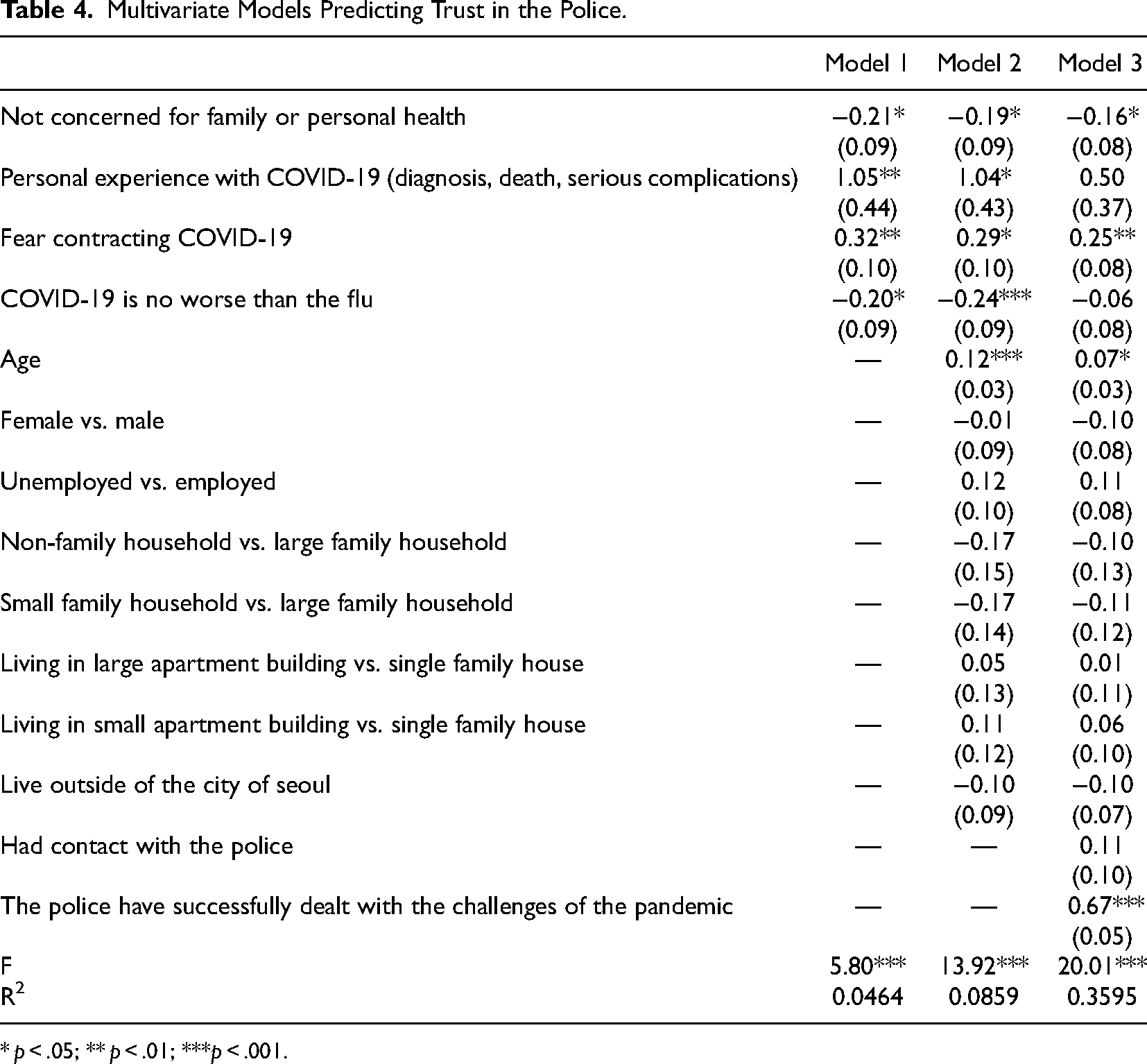
To further explore the complex relationship between the independent variables and community members’ trust in the police, we estimate a series of three multiple regression models that adds each of the categories of independent variables in turn (Table 4). Model 1, which includes only the experiences with and perceptions of COVID-19 variables, explains a relatively modest proportion of the variance in community members’ trust in the police (R2 = 0.0464). However, those who do not express greater concern for the health of their loved ones or themselves express significantly lower trust in the police (b = −0.21, p < .05). Similarly, those who had personal experience with COVID-19 report significantly higher trust in the police (b = 1.05, p < .01). The fear of contracting COVID-19 significant increases trust in the police (b = 0.32, p < .01). However, this effect was only 30.48% as strong as the effect of personal experience with COVID-19. Finally, those who think COVID-19 is no worse than the flu report significantly lower trust in the police (b = −0.20, p < .05) than those who feel that COVID-19 is a more serious condition.
Multivariate Models Predicting Trust in the Police.
* p < .05; ** p < .01; ***p < .001.
In Model 2, we add the demographic variables to those already included in Model 1. The addition of these eight demographic variables significantly improves the explanatory power of the model (F = (8, 501) = 2.70, p < .01), although the explanatory power of the model remains relatively modest (R2 = 0.0859). The only demographic variable that affects trust in the police is age. Specifically, we see that net of all other factors in the model, older community members generally report greater trust in the police than their younger counterparts (b = 0.12, p < .001). Finally, we see that the findings for variables for experience with and perceptions of COVID-19 remain substantively unchanged from Model 1 with the addition of the demographic variables. Specifically, most of the magnitude of the effects are slightly attenuated in Model 2 compared to Model 1, except for perceptions that COVID-19 is no worse than the flu. The substantive effect of this variable remains negative—as it was in Model 1—but the effect of the variable is augmented by 20%.
Finally, in Model 3, we add variables depicting community members’ experiences with and perceptions of the police during the COVID-19 pandemic. The addition of these two variables again significantly improves our ability to explain community members’ trust in the police (F = (2, 499) = 106.62, p < .001). The amount of explained variance in Model 3 (R2 = 0.3595) is 4.18 times that of Model 2. The only variable of the two additional variables in Model 3 to have a significant relationship with trust in the police is community members’ perceptions of how well the police have dealt with the challenges of the pandemic. Specifically, a one-unit increase in agreement with this statement was—on average—associated with a 0.67 increase in trust in the police.
The new variables substantively change the interpretation of some of the other variables in the model. We see that the effect of those not concerned for the health of their loved ones or themselves remains negatively related to trust in the police (b = −0.16, p < .05), although the effect is reduced by 23.8% from Model 1. Similarly, age’s effect remains significantly and positively associated with trust in the police (b = 0.07, p < .05), although the effect is reduced by 41.7% from Model 2. We also see that some previously significant predictors of trust in the police— personal experiences with COVID-19 and the perception that COVID-19 is no worse than the flu—are no longer significantly associated with trust in the police with the inclusion of the new variables in Model 3. When examining the collinearity diagnostics for Model 3, we see no variance inflation factor above 2.5, which suggests that these effects were unlikely masked by redundant variables in the model.
Discussion and Conclusion
Our primary goal has been to assess the relative contributions of traditional and COVID-19 pandemic-specific factors related to trust in the police. The results from our study indicate that South Korean residents’ trust in the police during the COVID-19 pandemic was directly affected by both types of factors. First, the respondents’ assessments of how well the police were coping with the challenges of the pandemic directly affected their level of trust in the police. This result is no surprise because extant literature before the pandemic flags police effectiveness as a critical factor in predicting trust in the police (Sunshine & Tyler, 2003). Furthermore, our results about the COVID-19 pandemic are in sync with prior Korean studies, which reported that procedural justice, distributive justice, and police effectiveness are key predictors of public trust in the police (Jang & Hwang, 2014; Kwak & McNeeley, 2017; Lee & Cho, 2020; Lim & Kwak, 2022).
However, dealing with the pandemic required a lockdown, reducing police-citizen contacts. On the other hand, contact with the police, a staple in the traditional literature on trust in the police (Cao, 2011; Jacob, 1971; Lee et al., 2019; Winfree & Griffiths, 1977), does not seem to be related to the trust in the police during the pandemic. Indeed, only a small proportion of our sample had recent contact with the police. Future research could explore whether the types of such infrequent contacts are related to the trust in police.
Our results also show that some of the COVID-19-specific factors matter as well. The community members’ instrumental concerns relating to their health affected their trust in the police. Specifically, those who feared contracting COVID-19 or expressed increased concern for their health or that of their loved ones expressed greater trust in the police. Similarly, older respondents expressed greater trust in the police, which could be due to an indicator of their instrumental concerns for their health and well-being. After all, the COVID-19 pandemic showed the greatest lethality in older people and those with underlying health conditions.
At the same time, our initial results showed that adherence to conspiracy theories was negatively related to trust in the police. These results align with the studies finding that adherence to conspiracy theories is associated with lower trust in the government in general (e.g., Murphy et al., 2022; Pummerer et al., 2022). However, once we included the assessment of the police effectiveness in dealing with the pandemic in the models, the effects of the conspiracy theory on the trust were no longer significant. Put differently, the perceived police effectiveness in dealing with the pandemic seems to trump the adherence to the conspiracy theories in shaping the trust in the police. Future research should explore the interaction among perceptions of police effectiveness, adherence to conspiracy theories, and trust in the police.
Our results add to a growing body of literature that suggests that authorities are not judged by the mechanisms used to address public health crises but rather by their actual and potential effects on the lives of individuals. Prior research has found that perceptions of authorities during emergencies (i.e., the H1N1 influence pandemic) are directly related to the risk reduction strategies taken by the respondents (Rubin et al., 2009). Further, the trust in these authorities is not affected by the factual knowledge put out by the government during these periods but rather by the seemingly positive effects of complying with the regulations implemented to curb the spread of communicable diseases like the Ebola virus (Blair et al., 2017).
A long line of research revealed that improving public trust and confidence in the police leads to positive public behaviors. The advantage of such a strategy comes from its strength in promoting voluntary rule adherence and cooperation (Tyler, 2004). Tyler (2004) argues that people's cooperative and law-abiding behaviors are not best secured simply by an authority figure's capacity to employ threat or punishment effectively. Instead, a self-regulatory strategy is viable to attain people’s voluntary compliance by motivating their sense of responsibility and obligation to abide by the law and follow moral principles (Tyler, 2004; Tyler et al., 2007). Thus, self-regulation is most likely when people trust and have confidence in the law and the authorities that carry it out (Murphy et al., 2008; Tyler, 2007; Tyler & Huo, 2002). Therefore, trust and confidence in the police promote people's everyday, law-abiding behavior, and voluntary actions.
The additional benefits that police can anticipate from building public trust and developing goodwill with the community include increased public empowerment (Moule et al., 2019; Tyler, 1990) and stronger institutional support (Jackson et al., 2013; Skogan & Frydl, 2004; Sunshine & Tyler, 2003; Tyler, 2004). These relationships between trust in the police and such beneficial outcomes have been examined in a variety of policing contexts, including in various national settings outside the United States, such as the U.K. (Hough et al., 2010), Australia (Murphy & Cherney, 2011), China (Sun et al., 2018), Ghana (Tankebe, 2009), Israel (Jonathan-Zamir & Harpaz, 2014), and Korea (Lim & Kwak, 2022).
While the results from this study are certainly suggestive of the factors that affected the public's trust in the police, unanswered questions remain. One such question is whether there is an asymmetric effect on the groups with different perceptions about the seriousness and appropriateness of the revised police role and tactics employed during a public health emergency. In other words, are the gains in trust from those who had their instrumental concerns addressed (i.e., the police protected my health) equivalent to the erosion of trust from those who feel the police were misused or heavy-handed in their enforcement of these restrictions? If there is no asymmetry here, the implications are clear. Use the police like most community members want, and there is likely no net negative effect. However, if—as was the case during the COVID-19 pandemic—the issue of public health becomes divisive in society, there could be drastic unintended effects.
A second question that remains is the mechanism through which community members’ trust in the police is formed. For instance, the findings from this study suggest that personal experience with COVID-19 was positively associated with trust in the police until community members’ assessments of how well the police met the challenges of the pandemic were included in the model. The nullified effect may suggest that the effect of personal experiences with COVID-19 is mediated through the community members’ assessment of how well the police have met the challenges of the pandemic. In other words, a person's level of trust in the police during an emergency may be driven by how well they thought the police handled the situation. In essence, community members may not lose trust in the police during the pandemic if they think the police have done a good job dealing with it. This more complex causal sequence for forming attitudes should be examined in subsequent research.
The findings from this study present several significant contributions to trust in the police literature. At the same time, the study has limitations that provide opportunities for future research. First, replicating the current study's findings by using samples from various policing contexts, including settings inside and outside Korea, will help lead to more generalizable conclusions. Second, we did not differentiate among different types of contacts with the police. In addition, the data used for this study did not ask about the vicarious contact experience with the police. An open question is whether the type of contact with the police and any vicarious contact experiences with the police may have affected the results. Considering the findings from the previous studies that show that types of experience and vicarious contact experiences with the police as significant predictors of trust in the police, future work could explore whether vicarious contact with the police is germane to attitudes toward the police under the current framework. Third, the current study was cross-sectional in nature. Although quite several prior studies examining trust in the police have also utilized cross-sectional designs (Jackson et al., 2013), more robust research designs, including longitudinal data, may provide greater explanations for the causal order of these observed relationships.
Footnotes
Declaration of Conflicting Interests
The author(s) declared no potential conflicts of interest with respect to the research, authorship, and/or publication of this article.
Funding
The author(s) disclosed receipt of the following financial support for the research, authorship, and/or publication of this article: This work was supported by the Academy of Criminal Justice Sciences, (grant number 2021 Minority Mentorship Grant Award).
Informed Consent
The research protocol has been approved by the Michigan State University Human Research Protection Program.
