



Abstract
This article presents the findings of an initial evaluation of an innovative contribution by West Yorkshire Police (WYP) to Personal, Social, Health, and Economic (PSHE) teaching in schools within the region, namely the Police-Education (Pol-Ed) programme. Pol-Ed contributes police specific knowledge into the PSHE curriculum with the aim of keeping children safe from crime and victimisation. This article details the findings of a mixed-methods study using ten semi-structured interviews and an online questionnaire (n = 94) with PSHE teachers in West Yorkshire to explore their perceptions of the Pol-Ed programme. Additionally, we explore this type of expert-informed teacher resource to contribute to the school PSHE curriculum in a meaningful way. The quantitative results suggest that teachers perceived that Pol-Ed helps them teach children how to keep safe, understand risks and the law, and to make positive choices. The qualitative findings suggest that teachers perceived that Pol-Ed increases pupils’ awareness of risk of crime and victimisation, is locally relevant, builds trust and strengthens community relations, and supports teacher confidence, knowledge, and awareness. We conclude by offering some reflections on the potential of this type of programme to add value to the school curriculum in a range of ways by sharing of expertise across organisations.
Keywords
Background
The police can play an important role in schools in a variety of ways (National Association of Head Teachers (NAHT), 2021). This can take the form of supporting teaching and learning, increasing engagement through building positive relationships and early intervention, and through enforcement by crime prevention and crime detection (NAHT, 2021). Police involvement in schools in the UK also tends to prioritise pupil safety and prevention (Bradford and Yesberg, 2018). The focus of this paper is on pupil safety and prevention through supporting teaching and learning. Specifically, by exploring teachers’ perceptions, we consider lessons that can be learned from our early evaluation of West Yorkshire Police’s (WYP) contribution to the school curriculum through the Police-Education (Pol-Ed) programme. As outlined by WYP, this programme is designed ‘to keep children safe by developing their understanding of risks, consequences and the law, and to develop their resilience and ability to help and support each other’ and is delivered through the Personal, Social, Health, and Economic (PSHE) curriculum (Pol-Ed, 2024, para.1).
The research reported in this paper does not measure pupil learning, behavioural change, or crime reduction. Rather, it draws on teachers’ perceptions of using the Pol-Ed programme and the possible contribution such an approach can make to the curriculum. As gatekeepers of pupils’ learning, such perceptions are crucial in determining what resources children are exposed to and the nature of the pupil-school-police relationship.
Increasingly more pressure and expectations are placed on schools to address or mitigate society’s challenges (Schmueker and Bestwick, 2024). Some of these occur within the school environment, such as violent behaviours (NASUWT, 2023). However, many of the challenges facing children today are present outside the school setting, such as violence in the community (Youth Endowment Fund, 2023) and may be distinct to local communities (Fearon and Henson, 2022). Children, and therefore schools, are also affected by wider national and global challenges such as the cost-of-living crisis and the longer-term impacts of the pandemic (Fearon and Henson, 2022). Despite many of these challenges not originating in schools, the expectation remains that schools play a role in addressing them (Fearon and Henson, 2022), both practically and in terms of building pupils’ resilience and preparedness. Teachers are not experts in crime, risk, or law, but they are tasked with teaching children about these subjects without the expertise or training to do so; therefore, it is logical for other organisations who have this knowledge, experience, and authority to contribute. This could take many different forms, but this paper explores teachers’ perceptions of the benefits (and limitations) of police contributing their specific knowledge through a police-informed teacher resource (rather than one-off police visits to schools).
Children’s safety is a key priority of the Children’s Commissioner (Children’s Commissioner, 2024a). In 2021, The Big Ask survey was commissioned by the Children’s Commissioner in England to understand the experiences of children in a post-pandemic world (Children’s Commissioner, 2021). Children aged between four and 17 (n = 557,077) answered a range of questions about their lives. Whilst most children reported feeling safe (80%), 16% responded neutrally, and 4% felt unhappy. Those children living in areas with the highest crime rates or highest levels of deprivation were more likely to feel unhappy. A key recommendation of the report is to improve children’s safety both online and offline. Ahead of the General Election in 2024, the Children’s Commissioner conducted The Big Ambition survey to understand what children wanted the government to do to improve their lives (Children’s Commissioner, 2024b). The survey collected 367,000 responses from children and their parents. Seventy-three percent of respondents reported feeling safe and protected in their local area, although when different age ranges were considered, this showed a decrease as children grew older (80% of 6- to 11-year-olds compared to 66% of 12- to 18-year-olds). The Big Ambition report notes concern about children becoming a victim and becoming involved in crime. The report highlights the importance of children learning about safety, their rights should they become a victim of crime, and where they can access support through quality PSHE lessons in schools. Increasing children’s confidence in the police is also highlighted as important to reduce their risks of harm and victimisation.
Teachers’ perceptions of the PSHE curriculum
PSHE is a structured programme of learning that aims to support school children to develop the understanding, knowledge, and skills to be able to manage their lives on a short- and long-term basis (PSHE Association, 2024a). Elements of PSHE have existed in some form in schools since the 1960s (Hilton, 2009). However, PSHE as a distinct subject was introduced on a non-statutory basis in the curriculum in 2000 (Willis and Wolstenholme, 2016), and from 2020 it became a mandatory (unassessed) requirement for health and relationship elements of PSHE to be taught in all state schools (PSHE Association, 2019). Other topics covered include growing and changing, bullying and discrimination, mental health, and personal safety (PSHE, 2024b). Schools have the autonomy to develop their own PSHE resources or implement programmes from external sources whilst ensuring that these map onto statutory and non-statutory content (DfE, 2021).
There is little research on teachers’ perceptions and experiences of the PSHE curriculum; this is surprising given the important role that PSHE has been given in the lives of school pupils (Crow, 2008; DfE, 2021) and the variation in PSHE provision. Owen et al. (2023) explored primary school teachers’ experiences (n = 6) of using the Connect PSHE wellbeing programme with pupils aged between 4- and 11- years old. The importance of teacher buy-in, pupil engagement, and the programme aligning with the school’s priorities were all noted as playing an important role in the take-up and continued use of this resource. Formby (2011) utilised an online survey (n = 923) and follow-up interviews (n = 171) with a range of stakeholders relating to PSHE, including PSHE teachers. Teachers appreciated resources that were provided by the Local Authority as these were most likely to cover the necessary topics and be locally relevant. Specific expertise from external sources was a valued contribution to PSHE materials and often increased teacher confidence, although these were often found to vary in quality. Drawing on the same data as Formby (2011), Willis et al. (2013) considered participants’ perceptions of the effectiveness of PSHE provision in primary and secondary schools. Overall, it was found this related to how the PSHE provision aligns to the values of the school and the extent to which it supported the development of school pupils. More recently, Davies and Matley (2020) conducted a survey of PSHE teachers (n = 167) to understand their experiences of PSHE topics in relation to sex and relationships, alcohol and drugs, and wellbeing and mental health. PSHE teachers noted a lack of training and confidence when covering some PSHE topics that were outside their areas of expertise.
PSHE and the police
The police can make a valuable contribution in schools in relation to personal safety, safeguarding, and bringing specific expertise to the PSHE programme (Ofsted, 2013; Pinkney & Baggaley, nd). Little is known however about the range of different forms that police involvement takes. In 2019, the PSHE Association and the National Police Chiefs’ Council (NPCC) sought to explore the contribution of police in PSHE education in England and Wales through online surveys to PSHE professionals (n = 320) and police (n = 600) (PSHE Association, 2019). Sixty-seven percent of police reported visiting schools as part of their role to engage with staff and pupils, with 12% reporting that their dedicated role was to work with schools to input into the curriculum. Police officers most frequently delivered PSHE sessions in assemblies (reported by 54% of officers and 54% of teachers), with small workshops (45% of officers, 24% of teachers), drop down days 1 (30% of officers, 30% of teachers), and PSHE lessons (29% of officers, 26% of teachers) also being used relatively frequently. Most common topics covered in primary schools included the role of the police, road safety, and personal safety, whilst sexual offences (including sexting), drugs and the law, knife crime, anti-social behaviour, and online safety were the most common topics for secondary schools. Police officers tended to source their materials online (47%), although some reported they had either written the material themselves (43%), or they had been provided by their force (42%). Only a sixth of police - and teachers reported that they worked collaboratively to plan the materials.
Pósch and Jackson (2021) conducted a randomised control trial to understand whether police delivery of a ‘Drugs and the law’ PSHE lesson impacted on building relationships and trust with pupils in England and Wales. The lesson was designed to encourage discussions of how the police may treat suspected drug use, the laws and procedures the police would follow, and the different perspectives of all involved including the community. Pupils filled out a questionnaire prior to, immediately following, and 2 months after the lesson. The police-led PSHE lesson was found to significantly increase trust in police fairness and some knowledge relating to drugs and the law compared to the same lessons being delivered by teachers or no lessons being taught on that subject at all.
These limited studies sought to understand physical police involvement in schools as part of the PSHE curriculum. The Pol-Ed programme takes a different approach and seeks to use police-specific knowledge in PSHE lessons through the development of a programme that is then delivered by teachers.
The Police-Education (Pol-Ed) programme
The original idea for Pol-Ed was conceived in 2019 by a Police Sergeant in WYP, a former teacher, who believed that the police could play an important role remotely through the PSHE Framework. Its contribution was based on applying police-specific knowledge to teaching children how to keep themselves and others safe and it was made freely available to all West Yorkshire schools from May 2020. The original Pol-Ed resources were designed by police officers, who were former teachers. In 2022, the original Pol-Ed materials were redesigned with external content specialist teachers, and a new Pol-Ed website was created. The research reported here took place shortly after the redesign in early 2023. The Pol-Ed programme is split into three topics, namely relationships, keeping safe, and the law, all of which are designed to develop children’s knowledge, skills, and awareness in an age-appropriate way. The topics are designed to be flexible so schools can use the resources (whole topics or specific lessons) in a way that is responsive to pupils’ and the schools’ needs.
Based on the integral role that teachers play in facilitating PSHE provision in schools, and the importance of the topics covered, this paper focusses on teachers’ perceptions of the Pol-Ed programme. PSHE teachers are tasked with teaching topics that cover often challenging and complex areas for school children (Davies and Matley, 2020). We therefore want to determine what we can learn from teachers about why, and how, Pol-Ed is used in schools; what they perceived the benefits of Pol-Ed to be; and, ultimately, what we can learn about how this type of expert-informed resource can be best used to contribute to the curriculum in a meaningful way.
Methods
The research was commissioned by West Yorkshire Police (WYP) and aimed to meet their objectives of exploring the extent of, and ways in which, Pol-Ed was used in schools. At the time of the research, Pol-Ed was being rolled out as a free resource to West Yorkshire schools and WYP were interested in finding out the extent of its use, teachers perceived benefits of using Pol-Ed, and to explore ways Pol-Ed could be improved for future development and expansion. This paper draws on teachers’ experiences of using Pol-Ed in relation to their perceived benefits of the programme. We also reflect on the findings to consider, more generally, the potential of a police-informed teacher resource to contribute to the school curriculum in a positive way. A mixed methods approach was adopted in the form of an online questionnaire distributed to all schools in West Yorkshire between 13th and 31st March 2023, and semi-structured interviews with PSHE teachers in April and May 2023. The study sought the views of both Pol-Ed users and non-users, but for the purposes of this paper we focus on Pol-Ed users and their perceptions of using Pol-Ed.
The research was carried out relatively early in the programme, therefore we did not aim to evaluate the programme’s effectiveness. Additionally, it was not possible to capture pupils’ experiences. However, as already stated, we propose that teachers’ gatekeeper role makes their perceptions of a resource crucial to adoption and how that resource is presented and used with pupils. This research is therefore a fundamental first step into further understanding this dynamic. Pupil perspectives should be incorporated into future research, wherever possible.
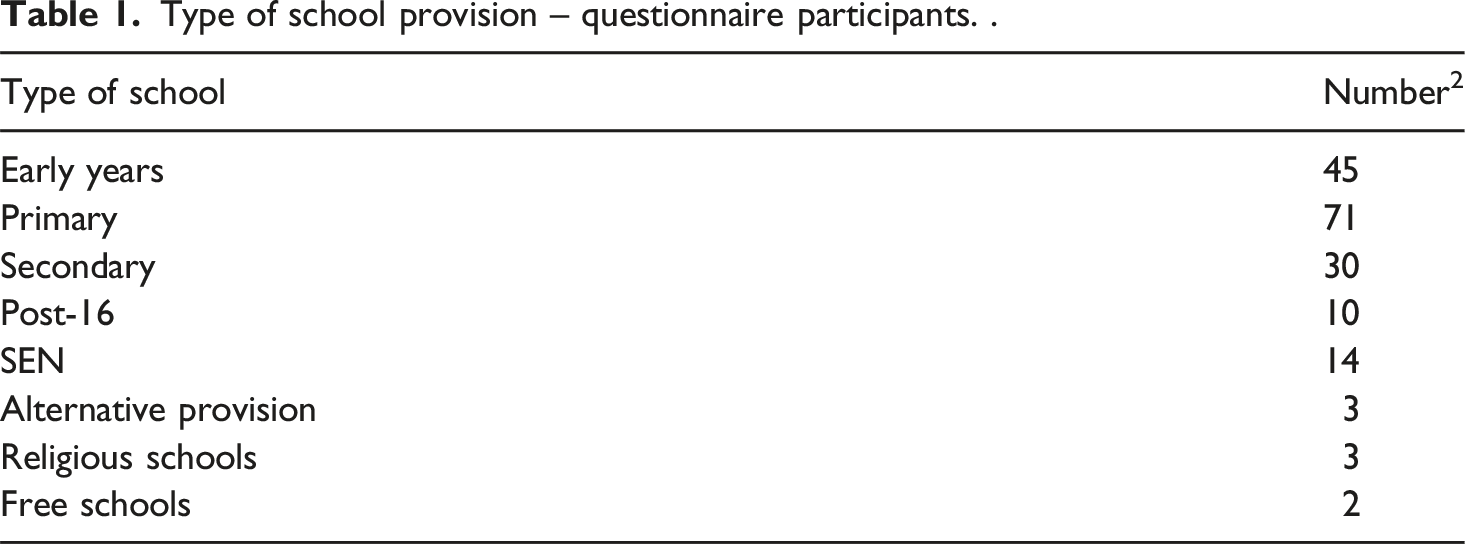
Type of school provision – questionnaire participants. .
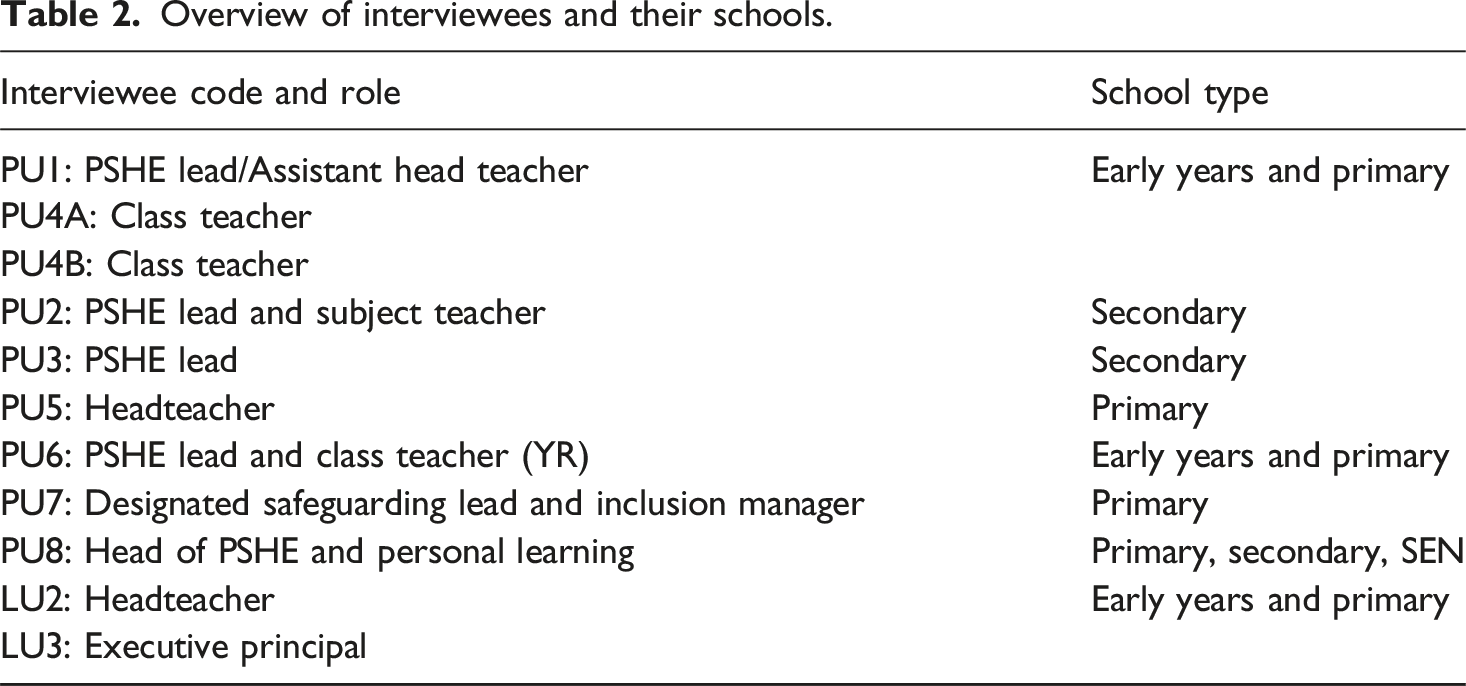
Overview of interviewees and their schools.
The research was approved by the University of Huddersfield's School of Human and Health Sciences Research Ethics and Integrity Committee. The questionnaires required some school-based information, such as school location (to determine if Indices of Multiple Deprivation (IMD) was related to Pol-Ed use) and the role of the person completing the questionnaire (though not their name). As such, we did not grant anonymity, but we did assure that all information would be dealt with confidentially and non-aggregate data would only be viewed by the research team. It was made clear that the research was funded by West Yorkshire Police, but the raw data would only be seen by the research team.
Results
Just over half of the questionnaire participants reported using Pol-Ed (52%; n = 49). It was hypothesised that deprivation may have some bearing on the likelihood of Pol-Ed uptake. This was measured using the IMD of the school location and percentage of pupils eligible for Free School Meals. However, there was no significant difference found between these factors and Pol-Ed uptake, which may be related to the low sample size.
When asked about the frequency with which the Pol-Ed resources were used, ‘occasionally’ (33%) and ‘when needed’ (27%) were the most common responses. Pol-Ed was most commonly used in PSHE lessons (73%; n = 36), but also used quite frequently in assemblies (29%, n = 19) or ‘whenever relevant’ (20%, n = 10), such as to address specific incidents. These different uses were also reflected in the interview responses. The qualitative analysis also revealed the importance of perceived compatibility of Pol-Ed with each school’s approach, ethos, or culture and seeing Pol-Ed as being ‘on our wavelength’ (PU1). This appeared to be a key reason for uptake. Questionnaire participants indicated that all topics were accessed, with subjects from Year 1 to Year 6 used most frequently, though this is likely to be reflective of the high proportion of primary schools in the sample (see Figure 1). Questionnaire responses indicating use of Pol-Ed subjects.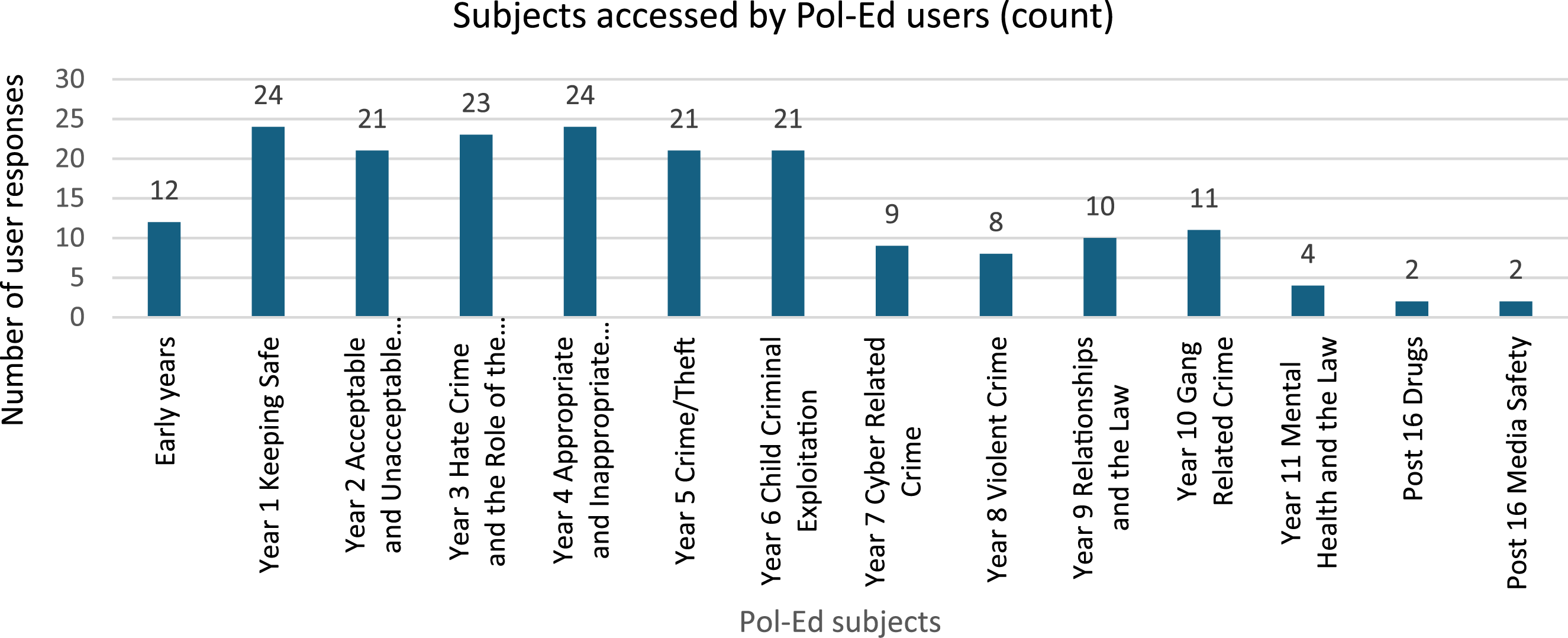
Teachers perceived benefits of the Pol-Ed programme
Most highly agreed responses relating to the perceived benefits of Pol-Ed.
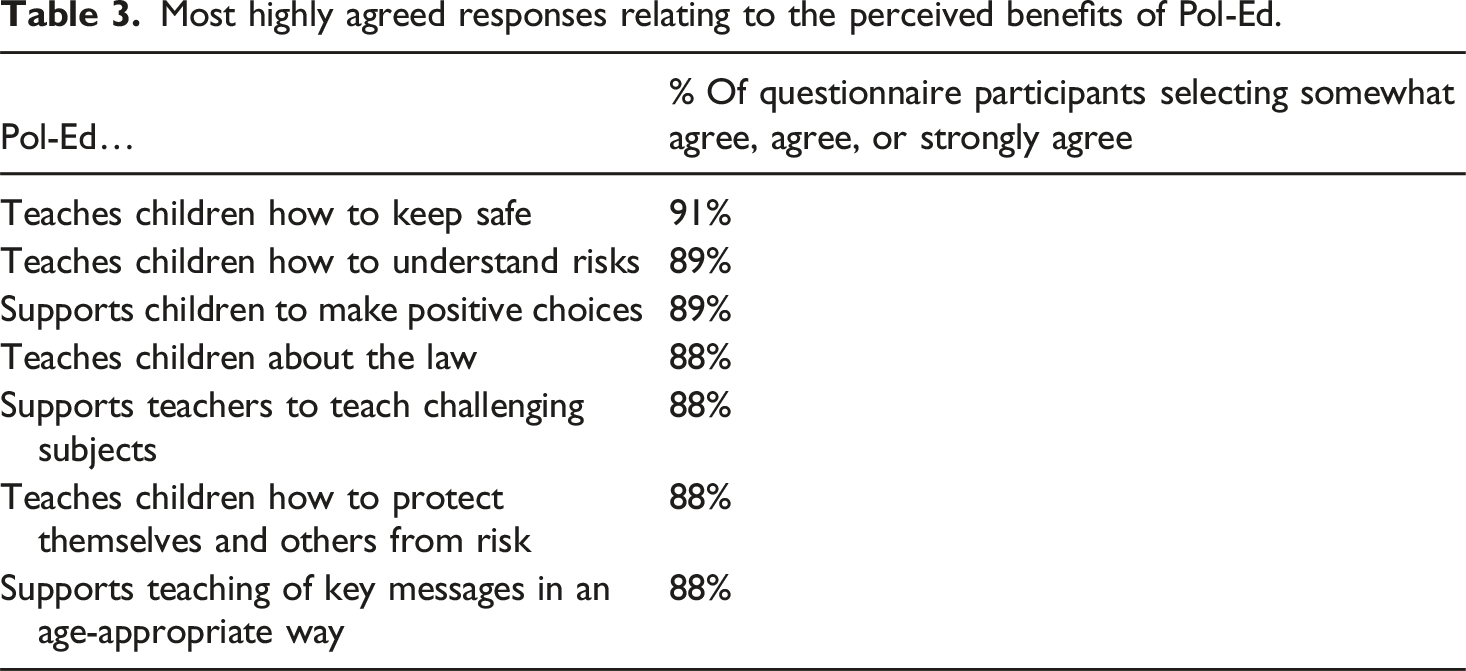
It is important to note, that trying to determine if Pol-Ed ‘works’ or is effective in reducing crime and victimisation is beyond the scope of this study. Indeed, some participants who were relatively new users of Pol-Ed felt it was too soon to discern any potential impacts. Whilst others rightly noted the difficulty of separating the impact of the Pol-Ed resources from other influences.
Of central importance for this paper is the exploration of the perceived benefits (and limitations) of this type of resource being produced for schools by (or in collaboration with) the police. To this end, we now present the four themes drawn from the interviews (supplemented by questionnaire responses) that are particularly pertinent for considering this, namely, increasing awareness of crime and victimisation, local relevance, building trust and strengthening community relations, and teacher confidence, knowledge, and awareness.
Increasing awareness of risk of crime and victimisation
When asked about the perceived impact of the Pol-Ed materials on school pupils, the most notable responses related to the perceived impact on student knowledge and awareness of risk, and/or how to keep themselves safe, ‘It helps pupils identify potential risks in situations and also helps them understand safe and effective ways of dealing with things’ (Questionnaire participant ). Additionally, participants valued that Pol-Ed did not just reiterate messages that certain behaviours should not be carried out, but the materials demonstrated, in a manner that pupils were able to relate to, that such behaviours might have negative consequences, [Some individuals] were displaying, sort of, unwanted behaviours around language and hate crime. And the impact of the curriculum, especially because it is endorsed by the police, has meant that they’ve dramatically reduced their incident level, especially when it’s been related to something that is prosecuted by law for adults, and knowledge around, like, knife crime. (Questionnaire participant) …now [after engaging with Pol-Ed] they’ve got a much better understanding that if they do this, this is the outcome, so your choices are you can carry a knife and be prosecuted, or you cannot carry a knife and the risk goes away. It’s making them aware of the risks of their behaviour and giving them the opportunities to really think right, I’ve got the choice, it’s up to me whether I’m involved in criminality or not. (PU8)
Local relevance
Addressing local issues and drawing on local knowledge were highlighted by a number of participants as being distinct from other available PSHE resources, which tended to be less locally relevant, We wanted to address issues that we know are issues in our local area that the [PSHE] scheme wasn’t covering, because it’s sort of a generic scheme, aimed at all schools in the country. But we wanted to address issues specific to our community. (PU6) The school has a PSHE scheme of work but sometimes we need to supplement this when specific incidents occur in school. Pol-Ed provides us with materials for this targeted response. (Questionnaire participant)
Building trust and strengthening community relations
The idea of building a positive relationship with the police was seen as important throughout the interviews. In fact, one of the common reasons for wanting to use Pol-Ed was connected to teachers’ observations of poor perceptions or misunderstandings of the police amongst their pupils and the wider community. For example, PU1 noted the police were not ‘everyone’s cup of tea’ in their local community, whilst PU2 said that their learners had spoken about how they did not really trust the police because they are not ‘out to sort of look after them and keep them safe, they think they are out sort of to catch them doing wrong things.’ Similarly, PU4B felt that their pupils were often fearful of the police who were used as a ‘threat’, with children being told ‘oh, we’ll call the police [on you].’ As such, PU5 explained that the primary outcome they wanted to see from using Pol-Ed was that ‘children don’t see the police as scary.’
It was perceived that as a result of using Pol-Ed that there was generally ‘greater understanding and appreciation of the police’s different roles in the community’ (Questionnaire participant) and the Pol-Ed lessons helped demonstrate the range of activities and roles undertaken by the police, illustrating how it was ‘much bigger than just arresting criminals’ (PU6). This awareness raising element of Pol-Ed also meant that some misperceptions and misunderstandings could be broken down, whether these had been learned in the home or otherwise outside of the school environment. PU7 felt that Pol-Ed enabled pupils to form their own opinions in a safe environment ‘and not just go off their parent or older sibling’s view of that person or thing.’ As one questionnaire participant noted ‘it has allowed our pupils to view the police/law in a more positive light. This has had an impact on the perception our pupils have of the police.’
This impact was not limited to pupils, but also related to staff, It’s been quite good because as a teacher, it’s opened my eyes up to what the police do as well, I think it's made teachers be reflective of their own view of the police, which I think is really important because children aren't daft […] they can weigh up if you like the subject or not. (PU1)
We also identified that some participants felt there was a disconnect between their schools and local PCSOs and police officers, who were perceived to have little presence within the school community. Invariably, schools did want more physical involvement with local officers, to help foster these relationships further, and so children could get to know the people who are policing their communities.
Teacher confidence, knowledge, and awareness
The process of using Pol-Ed resources was reported to benefit teachers allowing them to learn more about the law and risks. This reportedly resulted in increased knowledge, awareness, and confidence to tackle such subjects, It feels better knowing that the topics contain information from the police which makes us feel more confident that we are supporting our children in the best way. (Questionnaire participant) Pol-Ed helps us to be better informed with the laws around student learning to help ensure that we are accurate. It also helps us to ensure content is right for specific year groups and is clear and accurate. (Questionnaire participant) I think for teachers it gives them a safe way of offering support because I think like I say they are difficult topics to cover and if you were to think that this didn’t exist, the thought of a teacher going way and planning, you know, what does safety in the home look like, what does safety, you know, it would be an absolute nightmare.
Discussion
This study has identified a range of perceived benefits from a police-educational programme that contributes police-specific knowledge into children’s education. Previous research suggests that police delivery of specific PSHE lessons can increase trust in the police and pupil knowledge in relation to some concepts (Pósch and Jackson, 2021). The findings in this paper suggest that there can also be value from police expertise delivered in a more mediated format. Pol-Ed is the first known programme in the UK that involves a police-designed educational programme that complements the existing PSHE framework and is delivered by teachers. Previous research found that police officers delivered PSHE sessions was most commonly via assemblies (PSHE Association, 2019); this is perhaps not surprising as assemblies would allow the maximum number of children to benefit from the experience. However, Pol-Ed offers an alternative way to incorporate police knowledge into the school learning experience and whilst it is designed to be flexible, with one-off lessons available, it was planned with the PSHE curriculum in mind. Our research confirmed that this was how Pol-Ed was most commonly used, being incorporated into PSHE lessons. This produced ongoing perceived benefits to both pupils (through building knowledge) and to staff (who became more familiar and confident with the subject-matter).
One of the strengths of the Pol-Ed programme noted by teachers was the expertise it brought to bear on increasing the awareness of crime and victim related issues and keeping children safe. Increased teacher confidence and knowledge were also noted as important benefits. This is consistent with Formby’s (2011) study which also found expertise from external sources was a valued by PSHE teachers and increased teacher confidence. Davies and Matley (2020) also found that increasing teacher confidence was important when they are tasked with teaching sensitive topics outside of their area of expertise. This is particularly important as we have noted that schools are faced with multiple challenges, often emanating from outside the school environment, in their local communities (Fearon and Henson, 2022; Youth Endowment Fund, 2023) and/or online (Children’s Commissioner, 2021). The importance of learning about online and offline safety and victims’ rights has been identified as a priority by the Children’s Commissioner (2021; 2024b) and an approach like Pol-Ed is able to tap into local police expertise to support teachers to more appropriately address these topics.
The Pol-Ed materials also appeared to be valued due to their relevance to local issues. The desire for local issues to be embedded in the school curriculum via working with external professionals such as PCSOs is evident in some school practice (Ipsos MORI & the PSHE Association, 2021). However, this approach limits input due to the availability of policing personnel. On the other hand, more generic PSHE materials are designed to be applicable nationally, which may not focus on topics in a way that is pertinent to pupils in a particular location and may fail to articulate issues in a way that resonates. Our research identified that the Pol-Ed resources empowered teachers to be responsive to children’s specific needs based on local issues, approached in a locally relevant way. This is consistent with previous research that found local relevance to be important to PSHE teachers (Formby, 2011). Additionally, efforts to embed learning in local context and communities is at the heart of ‘Development Matters’, a Department for Education non-statutory guidance document for Early Years education (Department for Education, 2020). Moreover, relating learning to local issues enables schools to become more deeply connected to their communities (Smith and Sobel, 2010).
Increasing public trust and building community relations is at the heart of effective policing (College of Policing, 2023) and is particularly important following recent concerns about declining public trust in the police (Leaders Unlocked, 2022; ONS, 2024; Pickering et al., 2024). The findings here suggest that teachers perceive that Pol-Ed has the capacity to contribute towards these aims in a positive way. Pol-Ed was designed by police officers (who had previously been teachers), which appears to increase the trust that teachers placed in the resources. It was also identified that using the Pol-Ed materials was perceived, by our participants, to have helped pupils develop their own views of the police and to have had a positive impact on their perceptions. Public trust is affected by people’s interactions with the police; this includes personal interactions and information people receive about the police (from the media for, example) (Bradford, 2024). Moreover, The Big Ambition report highlights the importance of increasing children’s confidence in the police to reduce their risks of victimisation and harm (Children’s Commissioner, 2024b). We suggest that Pol-Ed has the ability to provide a flow of positive information relating to the police and their role within society, which has the potential to impact positively on public trust.
Pol-Ed is designed to be taught by teachers, and we have asserted that this brings benefits over the input that it is possible to achieve if relying on occasional visits by individual officers or PCSOs. In addition, we would argue that the most appropriate people to deliver PSHE sessions are teachers themselves. The Pol-Ed resources benefit from the contribution of professional knowledge and expertise of police; we suggest that this can be enhanced by being delivered by expert teachers who already have established relationships and rapport with pupils. It is also possible, that for some demographics, inviting police officers into schools may be unwelcome, resisted, and cause more harm than good. Incorporating police provided resources into the PSHE curriculum may provide a more palatable alternative and potentially pave the way for greater physical police involvement in the future.
However, our research identified there remained an appetite among teachers for establishing stronger links between schools and the police, including increased visits and talks. We do not think the two approaches are mutually exclusive. A practical and resource-light way to achieve this may be by incorporating representations of actual local police officers in Pol-Ed materials, or supplementary resources for local schools, such as video clips. Where staffing allows, visits or PSHE input from local officers could also be encouraged. Importantly, this should not be used as a mechanism for control and surveillance resulting in increased criminalisation of school pupils (Leaders Unlocked, 2022), but rather as a mechanism to better establish mutually supportive relationships.
It is important to consider some of the limitations of this study. Firstly, whilst some of the perceived benefits of the programme were sought, these related to teachers’ perspectives. Whilst these are valuable, incorporating school pupils’ experiences of the resources would have been advantageous. This was not possible within the timescale of the study reported here, but we recommend it is prioritised in future research of this kind. It is also important to acknowledge that the majority of interviewees were recruited through contacts provided by WYP having been identified as high users, which was necessary to ensure they had sufficient experience of the Pol-Ed resources. The questionnaire also resulted in a low response rate. This was likely affected by the timing of distribution (with a short window that ran close to the Easter holidays), and the fact that publicly available contact details were used for many of the schools, meaning the invite may not have been seen by those in a position to complete the questionnaire. Therefore, the findings may not represent the views of all educators in West Yorkshire, especially those with less existing buy-in to the programme.
It is possible that some schools may not feel this type of programme or engagement with the police would be beneficial or may not have the desire to adopt new or additional schemes of work. However, the data we did obtain from low or non-users who completed the questionnaire did not indicate the former to be the case. Finally, the evaluation of Pol-Ed was designed to explore teachers perceived benefits as it was too early in the programme to ascertain its actual effect on pupil attitudes and knowledge, or whether it impacted on future victimisation or criminal involvement. Many of our participants also noted this issue and felt they could not draw any conclusions about the effectiveness of Pol-Ed or distinguish the impacts of the programme from other influences. Future research on this under-explored topic will need to use longer follow-up periods and would benefit from conducting a quasi-randomised control trial comparing schools (or classes) where Pol-Ed is used with those where it is not. Additionally, school behaviour and school exclusions data may prove insightful.
In conclusion, we have focused here on the benefits identified by teachers and explored the contribution of this type of expert-informed teacher resource to contribute to the school PSHE curriculum in a positive way. The results suggest that there are a range of perceived benefits that may result from including a structured contribution from the police into teaching in schools, drawing on police professional knowledge for the content and teacher expertise for the delivery. In particular, we identified that this approach has the potential to increase pupil (and teacher) awareness of risks related to victimisation and criminal involvement. It is the professional expertise provided by the police that makes these resources so valuable, whilst their local context and appropriateness ensure they are relevant. We also found that even without physical police visits, such programmes were felt to be able to contribute to building trust, at least as noted by teachers in this study. However, based on the responses from this study, there is also a clear appetite to supplement teacher-delivered resources with police or PCSO presence, be this virtual or, where possible, in-person involvement.
Footnotes
Authors’ Note
Dr Vickie Barrett: The research was conducted at the University of Huddersfield.

Ethical approval
The research was approved by the University of Huddersfield School of Human and Health Sciences Research Ethics and Integrity Committee.
Consent to participate
Informed consent was received from all participants prior to taking part in the study.
Funding
The authors disclosed receipt of the following financial support for the research, authorship, and/or publication of this article: This research was funded by West Yorkshire Police.
Declaration of Conflicting Interests
The authors declared no potential conflicts of interest with respect to the research, authorship, and/or publication of this article.