




Abstract
Juveniles contribute to crime in natural resource-based boom communities, but there has been very little research examining the extent of their involvement. To respond to this gap in the literature, two indicators of youth arrests and court referrals in North Dakota—the state hardest hit by the 2000s oil boom—were examined. Although arrest rates for North Dakota youth were more than two times higher than the national average in 2019, almost three-quarters of them were for minor offenses. In addition, arrest and court referral rates in oil-producing counties were lower than those for non oil-producing counties. When controlling for demographic and economic factors, and county-specific fixed effects in panel analyses from 2011 to 2019, oil production is negatively associated with youth arrest rates, but positively associated with juvenile court referrals. However, oil-producing counties had very strong county-specific fixed effects which on average raised youth arrest and court referral rates. Arrest rates were also positively associated with unemployment rates while median household income was negatively associated with Group B offenses and juvenile court referrals. Implications for future research into the boom-crime relationship are discussed in light of these findings.
Resource-based booms throughout rural North America have placed significant demands on local justice systems given the rapid population growth and industrialization happening in these places. Key concerns of boomtown residents are the disruptions to their lives and the concomitant increase in social ills—also called boomtown effects—that reduce their quality of life (Ruddell & Ortiz, 2015). Community residents and public health officials often express concern about increases in the number of people with substance abuse problems (Heitkamp, 2016), the spread of sexually transmitted infections (Cunningham et al., 2020), deaths of despair (Boyd, 2022), a lack of safe and affordable housing (Jayasundara, Heitkamp, and Ruddell, 2016), increased teenage birth rates (Owen, 2022), the local government's inability to deliver adequate social, educational, and health-care given rising demands (Buse et al., 2019; Government of New Brunswick, 2012), a distorted sex ratio where men outnumber women (Jayasundara, Heitkamp, Mayzer, et al., 2016), increases in air, water and noise pollution (Loh & Loh, 2016), and a rapid population turnover that reduces the efficacy of informal social controls (Freudenburg, 1984).
The rise in crime after the onset of a resource-based boom is well-documented, and Freudenburg and Jones (1991), Ruddell (2017), and Stretesky and Grimmer (2020) summarized the results of 45 boom-crime studies documenting these increases, and in 41 of them, levels of crime increased beyond what could be expected from the population increases. Dahle and Archbold (2015) describe how the rise of disorder and crime can overwhelm local law enforcement agencies, and these impacts ripple throughout the local and state justice systems. The increase in criminal cases as well as civil court matters after the onset of a boom also have significant impacts on the local courts (Perry, 2007), as well as local probation (Guldborg, 2016) and correctional systems. In North Dakota, for instance, the jail and prison populations increased by 83% and 32% respectively between 2005 and 2015 (Buchholz-Kerzmann, 2019). Communities experiencing these booms are also plagued with increases in traffic congestion and serious collisions (Blair et al., 2018; Ruddell & Ortiz, 2015).
In his seminal study of the impacts of rapid population growth on a Colorado town after an energy boom, Freudenburg (1984, p. 687) found that youths expressed “significantly lower evaluations of their community, more negative attitudes toward growth, lower levels of satisfaction, and higher levels of alienation” than young people in three nearby communities that did not undergo a boom. Freudenburg attributes some of these feelings to the negative influence of newcomers who are posited to have little stake in these communities and a higher likelihood of engaging in antisocial behavior and crime. In addition to describing these perceptions, he also identifies the presence of a breakdown in informal social control although he avoids the issues of antisocial behavior, crime, drug use, and deviance.
Even though the relationship between resource-based booms and crime is well established, there has been comparatively little empirical work done on the contributions of youth to those outcomes. In order to shed light on that relationship, the research question addressed in this study is (a) to what extent have youth contributed to crime rates in North Dakota resource-based boom counties. In what follows, we present a review of the boom-crime literature and this is followed by a description of the data and methods used in the analyses, the presentation of the results, and the implications for future research. Our goal in undertaking this research is to advance our knowledge about youth crime in oil producing counties in order to help local government officials develop stronger responses to mitigate the worst of the boomtown effects.
Boom-Crime Relationship
There is a growing body of research describing the relationships between the growth in resource-based booms and crime, and these results are summarized in three publications. Freudenburg and Jones (1991) report the results of 23 studies of U.S. boomtowns published between 1976 and 1986, and they found increases in crime beyond the population growth—or in comparisons of non-affected jurisdictions—in 21 of them. Ruddell (2017) reviewed the results of the boom-crime relationship in 13 subsequent studies published between 1993 and 2017, and in all but two there was an increase in crime after the start of these booms. Stretesky and Grimmer (2020) added another nine studies to that total, and all those investigators reported an increase in crime beyond what could be expected from the population growth. Researchers publishing the results of their studies after 2020 reported similar results (see for instance, Shakya & Sohag, 2021; Shaw, 2022).
Altogether, the studies summarized in these reviews have reported the changing volume, distribution, and seriousness of crime in communities undergoing rapid population growth due to resource-based booms. The scholars carrying out this research use several methodological approaches, including panel, cross-sectional, time series, and pre-post strategies—primarily at the county level of analyses (Stretesky & Grimmer, 2020). Regardless of where these boomtowns are located, scholars have found that rates of antisocial behavior and crime increase. The increase in crime, however, is often related to when and where a boom takes place, the magnitude of the boom, and the ability of local officials to mitigate the most harmful impacts of rapid population growth and industrialization. Consequently, no two booms are alike.
Most boomtown studies reveal that crime increases in these communities are often driven by offenses typical of an increased population of young males: simple assaults, driving under the influence, disorderly conduct, and drug-related offenses (see Montana All Threat Intelligence Center and North Dakota State & Local Intelligence Center, 2012; O’Connor & Ruddell, 2021). A growing number of these researchers, however, are reporting increases in the victimization of women (Jayasundara, Heitkamp, Mayzer, et al., 2016; Martin et al., 2019). These findings are not isolated to North America, and scholars in Australia, New Zealand, and the United Kingdom have reported similar results (Carrington et al., 2011; Carrington et al., 2016; Stretesky et al., 2018).
Whether the population growth and industrialization is driven by oil and natural gas extraction or mining operations, Ruddell and Ray (2018) contend that booms have a life course where the social ills are magnified in the initial phases of the boom. This is because more workers are required for the construction of the extraction facilities as well as modes of distribution such as pipelines, and these communities are unprepared for the rapid population increase that follows. Community populations, however, eventually decrease and stabilize after the transition to the production phase, and local governments—including the justice system—are often able to match the demands for services. The challenge for the residents of these communities is the lack of a consistent timeline for these changes to occur and some booms have persisted for years. Other places have experienced a series of economic booms and busts over a period of years or decades (Jacquet & Kay, 2014).
After 2000 there were seven oil and gas boom locations throughout the continental United States; the Bakken region of North Dakota and Montana, in the northeast (Marcellus and Utica shale oil fields), in Nebraska and in three Texas formations; the Eagle Ford, Permian, and Haynesville shale oil fields (US Energy Information Administration, 2016). There is some variation in the distribution of crime and other social ills in the communities across these seven locales, and these differences are often an outcome of the location, magnitude, and duration of these booms. The long-term impact of the oil and gas boom on North Dakota, with cycles of booms, busts, and recoveries, dates back to the 1950s (see Conway, 2020), and makes the Bakken region an ideal location to examine the contributions of different population groups on the boom-crime relationship.
Although researchers have established the link between booms and crime, there has been comparatively little prior examination of the contribution of youth to boomtown crimes. Most research examining the impacts of boomtowns on youth focus only tangentially on issues related to crime and disorder. For example, Freudenburg (1984) was one of the first to examine the impacts boomtowns have on young people but he focused on how youth perceived the boomtowns they lived in, instead of their participation in crime. Freudenburg found that young people in comparison to their non-boomtown counterparts were more prone to expressing negative views of their community and experiencing alienation. Similarly, researchers have examined increased risks posed to boomtown youth through sexually transmitted infections (Goldenberg et al., 2008), precarious school-to-work transitions (O’Connor, 2014), and victimization (Heitkamp & Mayzer, 2018). Further, O’Connor (2015) examined young people's perceptions of crime, disorder, and risks in a boomtown, but not their involvement in crime-related activities. We are unaware of any studies that quantitatively examined youth contributions to crime in a boomtown context.
Youth Crime in the North Dakota Oil Patch
The literature clearly establishes that a boom-crime relationship exists, but there is less consensus about the contributions of different populations, including young persons, to the overall number of offenses occurring in rapid growth communities. With respect to juveniles, North Dakota courts hear cases referred to them for youths aged 10 to 17 years. These cases are either delinquent acts (which would be classified as crimes if committed by an adult), or unruly acts, which are behaviors previously called status offenses and they are not considered unlawful for an adult, such as truancy, failing to abide by a curfew, or consuming alcohol (North Dakota Juvenile Court, 2020, p. 7). Our focus is on delinquent acts and in 2019, 4,597 of these cases were filed in ND courts (North Dakota Courts, 2020, p. 41).
In order to place the arrest data in context, information was collected from the Office of Juvenile Justice and Delinquency Prevention (OJJDP) on rates of juvenile cases per 100,000 youth aged 10–17 years filed for the entire United States, less North Dakota (Puzzanchera et al., 2020) and this rate was compared with the juvenile cases filed in North Dakota (North Dakota State Courts, 2020). One of the most optimistic aspects about youth crime is that arrests decreased, although North Dakota is an exception to that trend. Figure 1 reveals that while the rates of juvenile cases filed per 100,000 youth aged 10 to 17 years decreased by 57% nationally between 2000 and 2018, the North Dakota rate rose by 8% during that era; peaking in 2010 and then dropping.
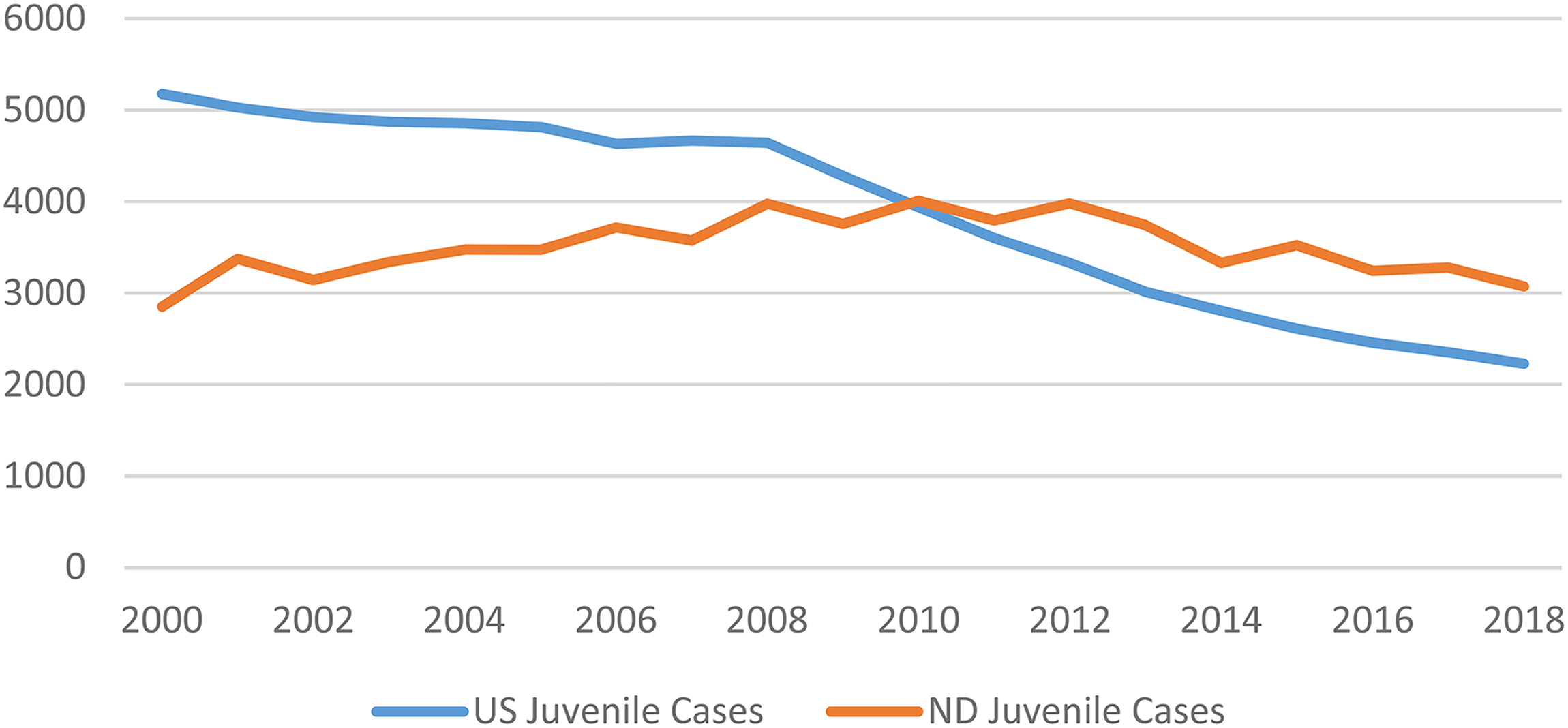
Juvenile court cases filed per 100,000 youth aged 10 to 17 years, United States and north dakota, 2000 to 2018. Source: North Dakota Courts (2020); Sickmund et al. (2020).
Given that finding, it was hypothesized that youth in oil-impacted counties would be over-represented in their involvement in crime and this would end in arrests and referrals to the court. Figure 2 shows the rates of juvenile cases filed in oil-producing (n = 16) and non-producing (n = 37) North Dakota counties per 100,000 youth aged 10 to 17 years. The number of cases in both the producing and non-producing counties increased after 2001; peaked in 2010 and have subsequently dropped. Inconsistent with expectations, Figure 2 reveals the rate of filed juvenile cases decreased for both sets of counties, but filing rates were higher in the non-oil producing counties. Further investigation indicated that the high filing rates in non-oil producing counties were primarily driven by cases filed in Burleigh, Cass, and Grand Forks counties; where 61% of all youth in non-oil producing counties resided in 2019.
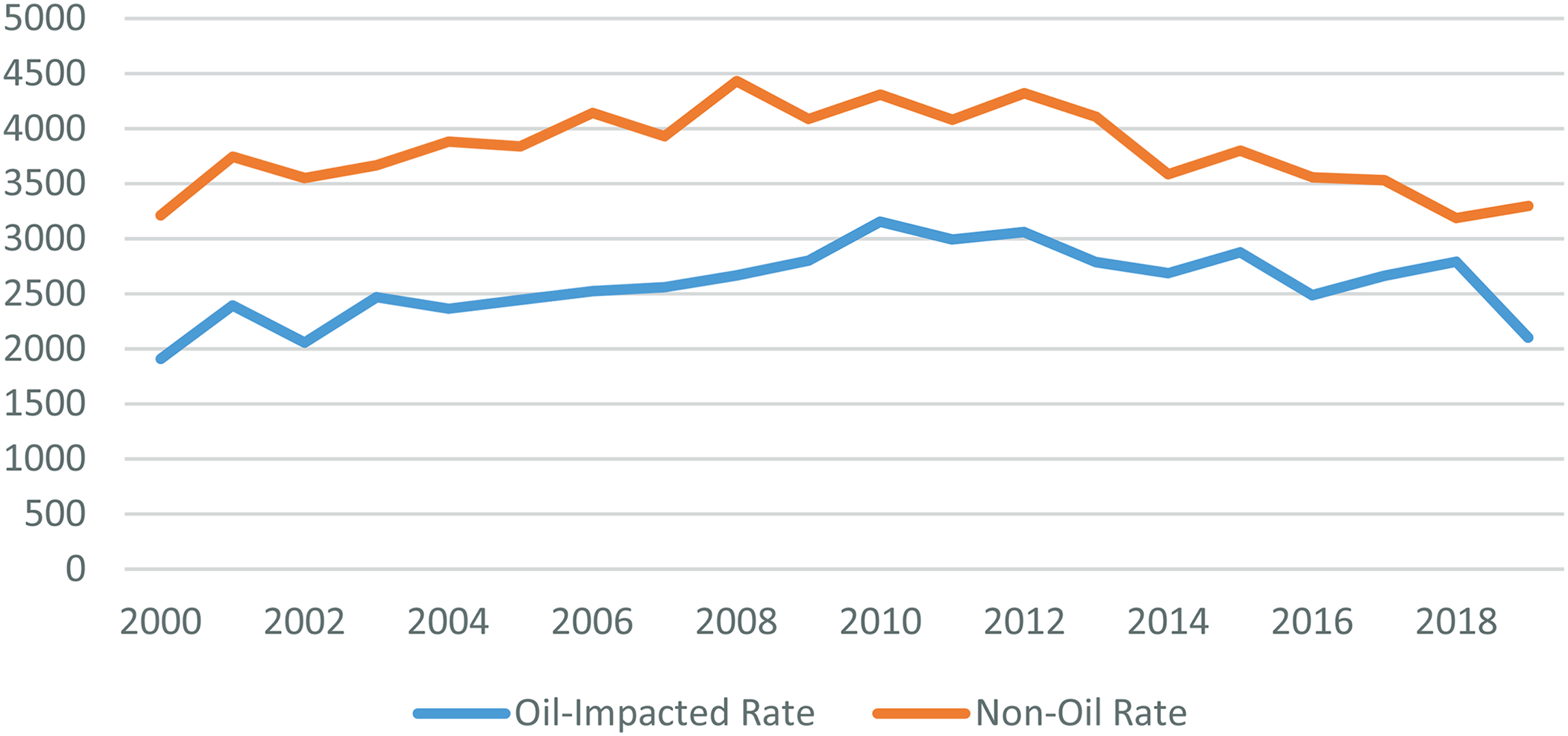
Juvenile cases filed per 100,000 north dakota youth aged 10–17 years: oil producing and non-producing counties, 2000 to 2018. Source: North Dakota Courts (2020).
Although demonstrating the numbers of youth appearing in juvenile courts is changing over time, it may be more important to examine youth arrests as they represent an individual's entry into the youth justice system. Arrests may also be a better indicator of delinquency in a community than youth court appearances as law enforcement agencies in some jurisdictions divert young people from the formal justice system after their arrests, and they may never appear in a juvenile court. Referrals may also come to the attention of the juvenile courts from non-police sources, such as schools, social service agencies, and parents (North Dakota Juvenile Court, 2020). Given the strengths and limitations of these indicators, they are both used in the research that follows.
Data and Methods
The temporal era investigated—2011 to 2019—was driven by data availability and one challenge for researchers examining rural crime in some states, including ND, is a lack of consistently reported arrest and offense-related data (Ruddell, 2017). From 2011 to 2019 oil production and revenues increased and peaked in 2014 when there was an economic bust due to depressed oil and gas prices: a three-year bust was followed by increasing production (Abboud & Betz, 2021). Information about juvenile arrests were collected from the North Dakota Bureau of Criminal Investigation (2020) from 2011 to 2019 and disaggregated into offense seriousness using the national incident-based reporting system (NIBRS) classifications for Group A and B offenses. With respect to the Group A offenses, an analyses of the 2019 data reveals that crimes against persons—almost all were simple assaults—accounted for almost one-half of these acts, while the remaining Group A arrests for were for crimes against property, and most of those were larceny or vandalism offenses. Of the remaining Group A offenses, 456 of the 492 public order offenses were drug-related. By contrast, of the Group B offenses, over one-half were for disorderly conduct and liquor law violations. Consistent with national trends, there were about two males arrested for every female, and the number of arrests increased by age, with 17 year-olds having the highest proportion of arrests for any age group.
Panel analyses were used to examine the relationships between county oil production and youth arrests and court referrals controlling for economic and demographic characteristics. As North Dakota has only 53 counties, using this approach instead of a one-period cross-sectional approach increased the number of available cases, which in turn enabled us to include a greater number of independent variables in the analyses. Two indicators of youth arrest rates and the juvenile court referral rate are the dependent variables in the analyses that follow. Examination of these three indicators revealed that all were highly skewed and showed evidence of kurtosis, and they were subsequently log transformed. With respect to the independent variables, consistent with other studies of youth criminality in rural America (see Osgood & Chambers, 2003), indicators of child poverty including the proportion of county residents receiving supplemental nutrition assistance program (SNAP), county size, adult arrests, county population and composition (e.g., the proportion of White juveniles) were included in the models as control variables. Several county-level indicators of economic well-being were also included in the analyses including median household income, the proportion of women in the labor force with children aged 17 years and under and the unemployment rate. One of the limitations in conducting rural studies is the lack of annual Census Bureau estimates for counties with fewer than 5,000 residents and consequently indicators such as female headed households or residential stability were not available.
It was hypothesized that youth arrest rates would be greater in counties with higher rates of child poverty and in larger rural counties where responses to delinquency are likely to be treated more severely than in urban counties (see Feld, 1991; Pupo & Zane, 2021). The size of the juvenile population and the proportion of White youth in the county population were also included in the models. One finding in prior boomtown studies is that after the police become overwhelmed with calls for service the threshold for arrests increases and persons who would have been arrested prior to the boom are instead cautioned or warned (Archbold et al., 2014). With respect to tolerance for criminal behavior the adult arrest rate was included in the models as it was hypothesized that adult and juvenile arrests would be interrelated. The sources and characteristics of these independent variables are shown in Table 1.
Variables Used in the Analyses.
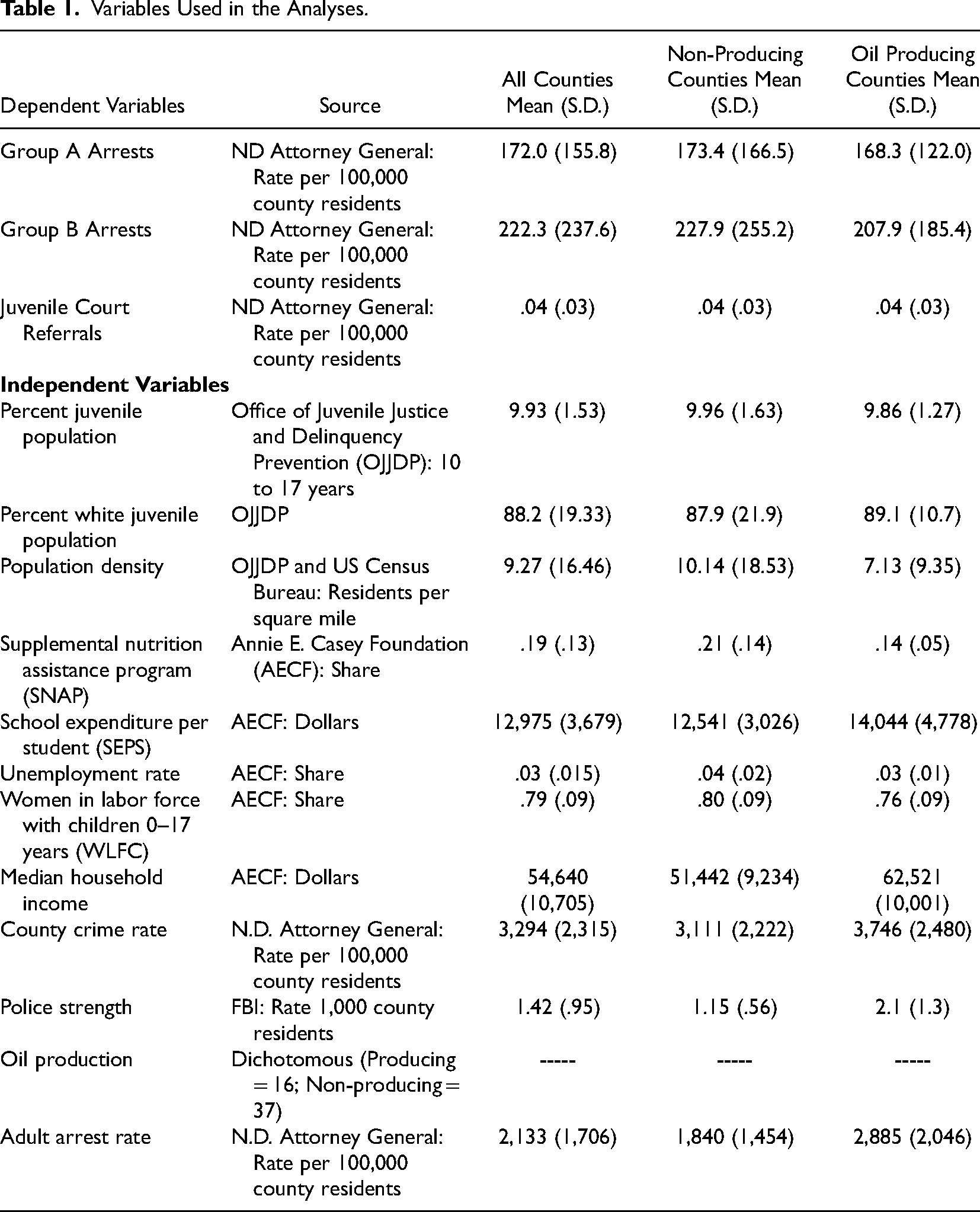
Three different indicators of oil and natural gas production—the actual annual production of each resource in barrels and thousand cubic feet of natural gas, a combined variable (summing oil and gas), and a dichotomous variable (oil and gas production or no county production) were examined in the panel models. However, only the results for the dichotomous variable are reported in the analyses presented in Table 2. The results of those parallel analyses were similar to the outcomes presented in Table 2.
Panel Results: Youth Arrests and Court Referrals, North Dakota, 2011 to 2019.
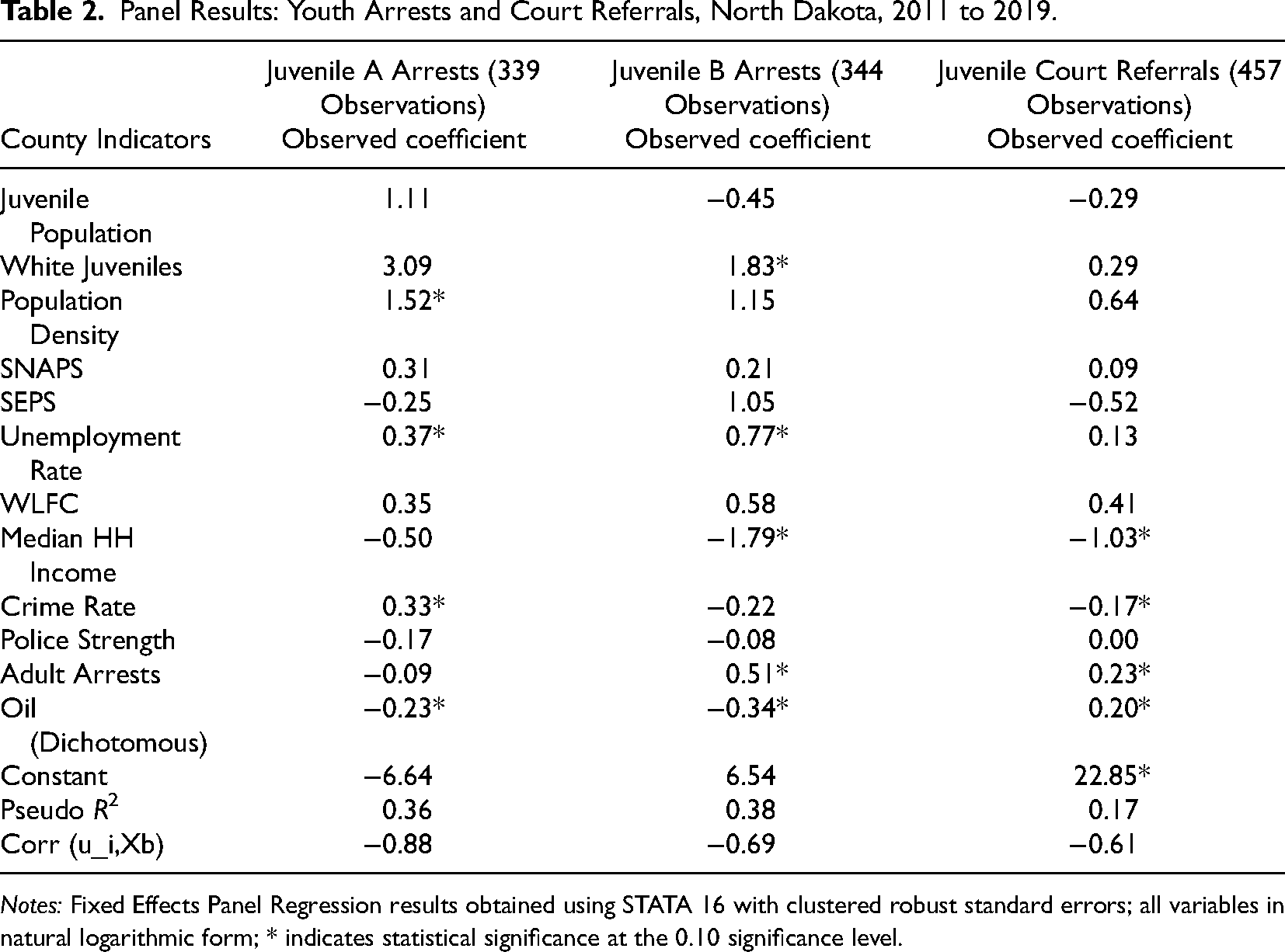
Notes: Fixed Effects Panel Regression results obtained using STATA 16 with clustered robust standard errors; all variables in natural logarithmic form; * indicates statistical significance at the 0.10 significance level.
Inconsistent with expectations, both Group A and B arrest rates were negatively associated with oil production after controlling for the other independent variables. Referrals to juvenile courts, however, were greater in the 16 counties with oil production, all else being equal. Economic factors exerted a significant impact on youth arrest rates. Group A and B arrest rates were positively associated with increased unemployment rates. Furthermore, juvenile arrests and court referrals were negatively associated with median household incomes although the association with Group A arrests was not statistically significant. Two other population-related variables had a significant positive association with arrests: a greater proportion of White juveniles in the county population and having a higher population density.
The panel fixed effects regression estimation uncovered strong (unidentified) fixed effects for the counties over the nine-year study period. These fixed effects are county-specific and are correlated with the explanatory variables. These fixed effects are also closely linked to oil production. In Table 1 it was shown that counties with oil production have higher incomes, crime rates, police strength and adult arrest rates, along with lower juvenile arrest and court referral rates, on average, than those counties without oil production. Oil producing counties also had estimated fixed effects which were larger and contributed to higher rates of juvenile arrests and court referrals, on average, when compared to those fixed effects in non-oil producing counties. Those fixed effects are presented in Table 3. We may combine these average fixed effects with the effect of the dichotomous oil dummy which is fixed across all oil producing counties in Table 2 to show that on average, oil producing counties had a 34% higher juvenile A arrest rate, a 66% higher juvenile B arrest rate, and a 42% higher juvenile court referral rate, when all other explanatory variables are held constant. 1
Average County Fixed Effects, Oil and Non-Oil Producing ND Counties, 2011 to 2019.
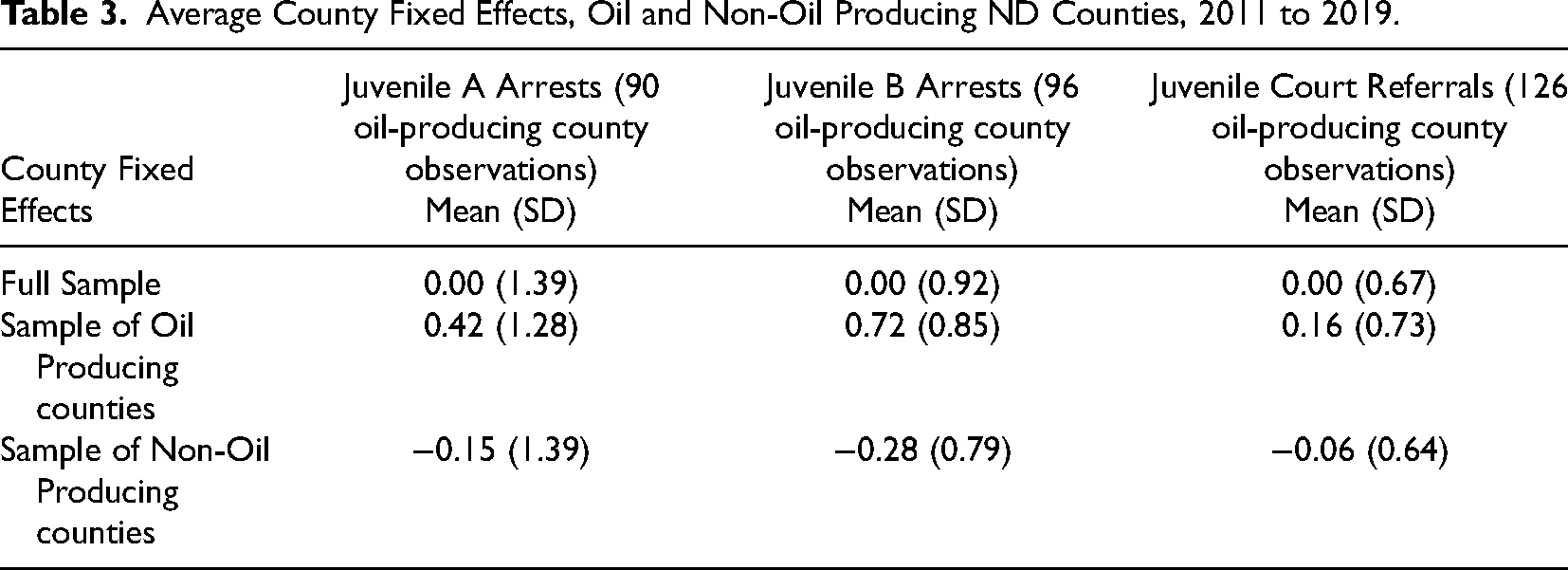
The findings presented in Tables 1 and 2 show that the disparity across oil and non-oil producing counties in other variables, like median household incomes, unemployment rates, and population density, actually resulted in lower juvenile arrest and court referral rates in oil-producing counties when compared to those of non-oil producing counties. There are a number of possible fixed effects that may include the harshness of public sentiment towards juvenile crime, the (un)willingness to divert cases away from court, the (un)availability of youth programming, community resiliency, or the efficacy of local government which may vary widely across counties. These unidentified characteristics have a stronger upward impact on arrest and court referral rates in oil-producing counties. It is also possible these fixed effects may be stronger in and may have persisted across North Dakota counties for longer periods of time than in other US states. This may help explain the relatively static juvenile court case rates filed in North Dakota compared to the declining rates in the entire nation between 2000 and 2018 shown in Figure 1.
Discussion
The results presented above reveal that youth contribute to crime in North Dakota's resource-based boom communities although Group A and Group B arrests are negatively associated with oil production, but youth arrest and court referral rates are lower in oil-producing than non-oil producing counties. Overall, the disadvantages associated with oil production in terms of youth involvement in crime are mitigated by the better economic conditions. There are a number of important points to note when interpreting these findings. When it comes to arrests, for example, a review of the ND youth crime statistics shows most arrests are for relatively minor offenses and some sparsely populated counties reported no Group A youth arrests in some years. This observation is supported by the strong and statistically significant population density variable for Group A arrests. Second, juveniles contribute to crime in a manner inconsistent with adult offending. For example because young people tend to commit crimes in groups, one criminal act can result in the arrest of four or five juveniles (Andresen & Felson, 2010; Lantz, 2020).
A third challenge of using youth arrests to better understand boomtown crime is that in the counties with the greatest impacts of oil production, it is possible the police were too busy dealing with more serious matters than arresting youth for public order and other minor offenses. Police often lack the resources to respond to minor crimes in boom communities as they are stretched thin (Archbold et al., 2014; Dahle & Archbold, 2015; Ruddell, 2011) and as noted above the thresholds for arrests increase (Archbold et al., 2014). The public order offenses carried out by youth are bothersome and annoying, but not necessarily threatening to community safety. Seldom are ND youth arrested for engaging in violent crimes and between 2011 and 2020 a total of four youth were arrested for their involvement in homicide offense(s).
There are several advantages of using both juvenile court referrals and arrest data to better understand juvenile involvement in crime. First, some arrests are unfounded and the charges later dropped. Second, minor cases are diverted from the justice system post-arrest. A review of the Group A youth arrests from 2011 to 2019 shows that 24% of them were handled internally by the police department or sheriff's office with the balance referred to other agencies. One limitation of using the ND juvenile court data is the lack of information about case outcomes, and how cases moved through the youth justice system. How many of these referrals, for instance, led to youth being placed into a long-term correctional facility? Another limitation of the incomplete court data is the lack of information about the race and residency status of the youth who are referred. Are non-county resident and non-White youth, for example, referred to the courts at a higher rate than their counterparts?
The analyses presented above reveals that like delinquency cases in non-boom locales a community's economic well-being exerts an influence on the number of youth arrests and their referrals to courts. Higher unemployment rates are significantly associated with a greater number of arrests and lower household incomes are associated with higher Group B arrests and juvenile court referrals. Inconsistent with expectations there was no significant association between police strength and arrests or court referrals, although those results were consistent with studies in other jurisdictions (see Shaw, 2022).
Yet, we also find there are variables missing from our analyses that would help us better understand the contribution of youth to overall levels of boomtown crime. These indicators may include the county-level willingness to sanction youth, local government efficacy, and support for restorative justice approaches such as diversion or community resiliency. Our knowledge of the contribution of youth to boomtown crime will be incomplete until we include these indicators in our analyses of youth crime.
The nature of youth arrests might vary at different points of the boom-bust cycle. Street (2019) found that criminal charges in ND dropped 22% after the start of signing of leases with oil companies became commonplace between 2004 and 2008. Young people, like their adult counterparts, had more opportunities for legitimate employment after the onset of a boom and their involvement in property crime might have decreased. Abboud and Betz (2021) observe there was a significant variation in the economic impacts of the oil and gas boom between 2000 and 2018 across three broad U.S. regions. As a result, it may be difficult to make sweeping statements about the different types of boom-crime relationships due to the variation in economic impacts across different geographical regions.
This study is also limited by our inability to more closely examine the contribution of non-county residents to the arrests and court referrals. Investigators interested in better understanding the contributions of different population groups to crime in places undergoing resource-based booms might consider examining the differences in arrests for residents and non-residents. Non-county residents may be traveling from adjoining counties for employment and recreation and commit crimes in the boomtown. Long-term boomtown residents are often quick to attribute the rise in crime to newcomers but it is important to remember that crime existed in these counties prior to any population surge. A growing number of scholars have also started to examine the impacts of resource-based booms on surrounding counties. The residents of these places may enjoy the economic benefits of the boom but experience fewer of the social or environmental ills associated with the boom. Junod et al. (2018) label these places “Goldilocks Zones” (see also Junod & Jacquet, 2019).
Conclusion
Natural resource booms have created challenges for U.S. juvenile and adult justice systems since the California gold rushes of the 1800s, and in each instance there is a corresponding increase in antisocial behavior and crime that occur along with a migration of young people seeking employment and more prosperous futures. Having established the existence of a boom-crime relationship, there needs to be more research on the different population groups contributing to those crime increases. The current study reveals that young people contribute to disorder and crime in boom counties, although their arrests did not significantly differ from youth in counties producing no oil. With respect to youth involvement in crime, the results presented above suggest that the negative aspects of oil production at the county-level were mitigated by economic prosperity. Furthermore, most of their involvement in crime is for minor offenses, which are not particularly threatening to community safety, but do contribute to a reduced quality of life; which is an important issue for boomtown residents (Ruddell & Ortiz, 2015).
Although some policymakers contend that the extraction of carbon-based fuels such as oil and gas are in their eighth inning, the U.S. Energy Information Administration (2022) projects that petroleum and natural gas consumption is forecast to rise until 2050. Moreover, there is growing demand for minerals such as lithium for the green economy, and this demand will lead to exploration for these materials throughout the globe. The extraction of these minerals almost always happens in sparsely populated rural places. The social disruption, including the rise in antisocial behavior and crime happening in these communities is predictable, and Thomas et al. (2016) contend that if a social problem is predicable, it can be prevented. As a result, we need to learn from the challenges that other communities have faced and then overcome them to mitigate the social ills that emerge during resource-based booms.
Footnotes
Declaration of Conflicting Interests
The author(s) declared no potential conflicts of interest with respect to the research, authorship, and/or publication of this article.
Funding
The author(s) received no financial support for the research, authorship, and/or publication of this article.
