




Abstract
Europe has experienced multiple crises, including inflation, rising food and living costs, the COVID-19 pandemic, and the 2007–2009 financial crisis, which have contributed to widening social inequalities. These economic pressures may threaten the material well-being of adults aged 50 and older, yet little is known about how they affect those who provide care. This study examined the risk of material deprivation among those with different caring roles in 2021–2022 using the SHARE data. The findings show that co-resident family caregivers, those experiencing financial strain, and individuals with a migrant background are particularly vulnerable to material deprivation. Women carry a disproportionate share of caregiving responsibilities and face higher deprivation risks than men. In contrast, individuals who provide care outside their households or care for grandchildren tend to exhibit better material well-being than those without these roles. Targeted policy measures that both alleviate energy poverty and financial strain are needed.
• This study evaluates social inequalities among individuals aged 50 and older, with a specific focus on their risk of material deprivation and caregiving roles. • The findings demonstrate that women bear a disproportionate share of care responsibilities and also face a higher risk of material deprivation. • The study highlights how social determinants, particularly gender and migration background, shape the material well-being of those aged 50 and older in Europe.
• Gerontological practice can draw on these findings to better identify and respond to the social inequalities experienced by caregivers, while recognizing that not all caregivers are socially vulnerable. • The results underscore the gendered nature of care work and the structural disadvantages faced by marginalized groups, highlighting the need for targeted policy interventions. • Future research should include diverse groups of individuals aged 50 and older with caregiving roles to inform tailored services and improve gerontological care and policy responses.What This Paper Adds
Applications of Study Findings
Introduction
The European Union (EU) is undergoing a rapid demographic transition as its population ages. By 2050, more than 30% of EU residents are projected to be aged 65 or older (European Union, 2020). Older adults contribute to society in multiple ways, including family caregiving, volunteering, and providing grandchild care (Bordone et al., 2017; Strauss, 2021; Verbakel et al., 2016).
Caregiving is particularly significant. Family members meet most long-term care needs (Verbakel, 2018), often providing essential support to relatives (Schulz et al., 2020) and reducing public expenditures (Kalliomaa-Puha, 2018). The estimated value of family care is approximately 2.5% of the EU’s gross domestic product (GDP), compared with about 1.7% for formal care (Eurocarers, 2023). In parallel, many older adults volunteer (Strauss, 2021), strengthening community resilience, and provide grandchild care (Bordone et al., 2017), enabling parents to remain in paid employment.
However, family caregiving can also entail substantial physical, emotional, and psychological strain (R. Savela et al., 2022; Välimäki et al., 2024) and caregivers often exhibit poorer health outcomes than non-caregivers. Evidence further indicates marked social inequalities among older caregivers (R.-M. Savela et al., 2022b). Some experience elevated risks of food insecurity due to limited financial resources, and disparities in dietary quality have been documented (Savela et al., 2023). More broadly, the social determinants shaping caregivers’ well-being remain under-examined (Hepburn & Siegel, 2020; Young et al., 2020). Besides, the salience of material deprivation has increased amid recent EU-wide shocks (Marmot, 2022; Munro et al., 2022). These phenomena highlight greater concerns about risk to material deprivation among older adults.
Material Deprivation
Material deprivation refers to economic hardship that limits access to basic necessities, such as the ability to maintain heating, and facing payment debts on housing and utility bills (Eurostats, 2021). Material deprivation includes food insecurity, defined as the inability to obtain sufficient quality or quantity of food in socially acceptable ways, or the concern about doing so (Dowler, 2002). Food insecurity is the starkest indicator of social inequalities (Cooper et al., 2014) and is strongly linked to human rights, since everyone should have access to affordable, nutritious food (UN Human Rights, 2021).
Material deprivation has long been a persistent challenge across European countries, closely linked to economic instability and structural inequality. Historically, periods of economic downturn and global crises have not only strained food security but also widened existing social inequalities. Recognizing this connection is essential for developing effective strategies to mitigate deprivation and promote more equitable and resilient societies (Dorn et al., 2020; Hawkes et al., 2022).
In this study, we focus on the risk of material deprivation, assessing three dimensions: (i) energy poverty, (ii) the capacity to manage unexpected expenses, and (iii) access to homegrown food. Energy poverty occurs when a household is forced to reduce its energy consumption to the point that it negatively impacts the health and well-being of its residents (European Commission, 2024). This pressing issue is largely driven by three factors: a large share of the household’s income is devoted to energy expenses, often leaving little for other essential needs; the prevalence of low-income levels that restrict financial flexibility; and the inadequate energy efficiency of both the buildings in which people live and the appliances they use (European Commission, 2024).
The second dimension is the inability to manage unexpected expenses, which can be understood as a form of financial fragility. This concept is complex and encompasses more than just the evaluation of the assets one might draw upon during financial hardship. It includes the ability to secure cash or credit in emergencies, as well as an overall assessment of a household’s financial health (Aristei et al., 2025).
The third dimension is homegrown food, which may serve as an adaptive strategy and an intermediary determinant of access to nutritious food, shaped by structural factors that underline social stratification. Unlike hunger, which indicates acute and immediate food insecurity (Mah et al., 2022), the consumption of homegrown food may reflect a household’s ability to buffer economic stress by reducing reliance on commercial food systems. Examining homegrown food thus offers insights into longer-term coping mechanisms during periods of economic instability, inflation, or disruptions in supply chains (Soil Association et al., 2024). Prior evidence also suggests that income may have a weaker or altered association with food insecurity in cases where a significant share of food is home-produced rather than purchased (Du Toit et al., 2022). This is particularly relevant because the panel data used in this study do not allow for precise measurement of food insecurity, making homegrown food a meaningful proxy for food access and resilience.
Homegrown and self-produced food also plays an important role in the context of climate change. A substantial proportion of fruits and vegetables consumed in Europe originates from climate-vulnerable and water-scarce regions, making food systems sensitive to environmental changes and potential supply shocks (Soil Association et al., 2024). This vulnerability affects both the affordability and availability of fresh produce. For example, in the United Kingdom (UK), only 33% of adults meet the recommended daily intake of fruits and vegetables (Soil Association et al., 2024), underscoring the public health implications of disruptions in the food supply. Therefore, examining homegrown and home-produced food, rather than focusing solely on hunger, is crucial for understanding the social sustainability. Insights from such analyses also provide valuable guidance for future policy development.
Furthermore, it is critical to integrate social determinants of health into research on aging populations. Determinants such as income, housing conditions, discrimination, and access to material resources are central to understanding health inequalities among older adults (Williams, 2021). Elements such as housing tenure, financial hardship, and cultural or structural barriers significantly shape the lived experiences of aging. There is a growing need for inclusive, equity-oriented research that not only documents disparities but also seeks to address and dismantle systemic inequities impacting older populations worldwide (Williams, 2021).
Against this background, this study examines the risk of material deprivation among adults aged 50 and older, including those in distinct caregiving roles. The caregiving roles assessed include the following: (a) providing family care within the same household, (b) providing care or support outside the household, and (c) providing grandchild care.
Our aim is to determine whether individuals occupying these roles experience heightened vulnerability to material deprivation compared with those not in these roles, and to explore the social inequalities that may shape these disparities.
Methods
The primary objective of this study is to examine the risk of material deprivation among older adults occupying different caregiving roles. To address this aim, we conducted a quantitative cross-sectional analysis using data from the Survey of Health, Ageing and Retirement in Europe (SHARE). SHARE is a multidisciplinary and cross-national panel study that has been collecting micro-level data from individuals aged 50 and older across the majority of EU countries since 2004 (Börsch-Supan et al., 2013). This study draws on data from the latest Wave 9 collection, conducted in 2021–2022. It provides harmonized information on health, socioeconomic status, family networks, and caregiving, making it well-suited for analyzing social inequalities in later life.
Wave 9 is especially significant because data collection took place during the COVID-19 pandemic and the resulting economic challenges. This context allows us to examine the risks of material deprivation amid increased social and financial strain, giving us the opportunity to assess this population's vulnerability during societal crises. However, it is also important to note that the COVID-19 pandemic may distort the data, reflecting the broader impacts of the crisis.
The research questions guiding the analysis are as follows: (1) What social determinants are associated with the risk of material deprivation among adults aged 50 and older? (2) Are adults aged 50 and older in different caregiving roles (family care within the household, care or support provided outside the household, and grandchild care) at increased risk of material deprivation compared with those without these caregiving responsibilities?
Data Collection and Sample
The SHARE data provides insights into social networks, socioeconomic status, and health for individuals aged 50 and above in Europe. Collected through computer-assisted personal interviews every 2 years, it examines diverse individuals. In this study, we will focus on individuals with caring responsibilities, including co-resident family caregivers, those caring for others outside the household, and grandparents caring for their grandchildren. We focused on participants with both children and grandchildren, allowing us to explore the dynamics between those with and without caring roles.
Caring Roles of the Respondents
One of the focused groups is family caregivers. In the SHARE data, family caregivers can be identified with those who answered yes to the following question, “Is there someone living in this household whom you have helped regularly during the last twelve months with personal care, such as washing, getting out of bed, or dressing?”
The second focused group includes individuals who care for others outside the household. Respondents were questioned about whether they had personally provided any assistance listed on a provided card to a family member outside the household, a friend, or a neighbor in the past 12 months (i.e., “personal care, e.g. dressing, bathing or showering, eating, getting in or out of bed, using the toilet 2. practical household help, e.g. with home repairs, gardening, transportation, shopping, household chores 3. help with paperwork, such as filling out forms, settling financial or legal matters”).
The third focused group consists of grandparents who look after their grandchildren. They were asked about regular or occasional care for their grandchildren or grandchild in the absence of parents within the past 12 months. Again, the response options were “yes” or “no.”
Although these groups are treated as independent, it is essential to note that some adults may have multiple roles, which can lead to collinearity. To investigate this, we first assessed the multicollinearity among these roles using a Pearson correlation analysis. The analysis examined the relationships among the three care-related activities using data from 22,477 respondents, after excluding cases with missing data on key variables.
The results revealed a statistically significant but weak positive correlation between providing help outside the household and looking after grandchildren (r = 0.225, p < 0.001). This suggests that individuals who reported engaging in general helping behavior were modestly more likely to also participate in grandchild care. A very weak positive correlation was observed between providing personal care within the household and helping outside the household in the past 12 months (r = 0.033, p < 0.001), indicating minimal overlap between these two types of care. In contrast, a very weak negative correlation was found between looking after grandchildren and providing personal care within the household (i.e., family caregiving) (r = −0.028, p < 0.001), suggesting a slight tendency for these caring roles to function independently.
Despite the statistical significance of these correlations, all coefficients are well below the conventional thresholds that raise concerns about multicollinearity (e.g., |r| ≥ 0.80). Therefore, from a statistical modeling perspective, these variables can be mainly considered independent, and no corrective action is necessary for multicollinearity in regression analysis.
Data Variables
The survey compiled data from respondents’ demographic factors, including age, gender, and educational level (e.g., educational attainment was classified according to the International Standard Classification of Education (ISCED-1997), a framework developed by UNESCO to ensure international comparability of education statistics, varying from lowest level to highest, Level 0 to Level 6; we divided the educational level to low (0,1,2) medium (3,4), and high (5,6)), marital status, country of residence, whether they were born in the country of interview, type of living building, area of residence, ability to make ends meet, energy poverty, health status, and affordability to pay unexpected expenses. Moreover, most of the study sample are aged 65 and older, so we will refer to them as “older adults” in this paper.
Additionally, the data encompassed details about the 27 different countries where the interviews took place; these were Belgium, Denmark, France, Finland, Germany, Luxembourg, The Netherlands, Sweden, Austria, Bulgaria, Croatia, the Czech Republic, Estonia, Hungary, Latvia, Lithuania, Poland, Romania, Slovakia, Switzerland, Slovenia, Cyprus, Greece, Italy, Malta, Portugal, and Spain.
The primary outcome of interest in this study is the risk of material deprivation, including the subjective energy poverty and the affordability of unexpected expenses, and the influence on access to homegrown and produced food. The first outcome measurement was energy poverty. Energy poverty was asked with the question, “In the last twelve months, have you put up with feeling cold to save heating costs, to help you keep your living costs down?”, having yes or no options.
The second outcome measurement was the affordability of paying unexpected expenses. The question was “Could your household afford to pay an unexpected expense without borrowing any money,” with yes or no options.
The third outcome measurement was homegrown food. Consumption of homegrown food was evaluated with the question, “Do you [and other members of your household] consume vegetables, fruit or meat that you have grown, produced, caught or gathered yourselves?”, having yes or no options.
Data Analysis
First, descriptive analysis was used to characterize the sample’s demographic features. The descriptive statistics included age, gender, marital status, being born in the country of interview, respondents’ level of education, ability to make ends meet, affordability to pay unexpected expenses, energy poverty, country of residence in Europe, type of living building, area of residence, health, consumption of fruit and vegetables, consumption of meat, fish or chicken, consumption of homegrown food, and caring roles.
Our data analysis considered several background variables to address differences in energy poverty, the ability to afford unexpected expenses, and the consumption of homegrown food. Since these variables were categorical, we employed the Pearson Chi-square test to investigate the relationships between various outcomes and demographic factors (Mchugh, 2013). The tables displaying these analyses are in the Supplementary file; however, some outcomes are discussed in the Results section.
The binary logistic regression model was then used to understand the predictors of energy poverty. The reference category was “have not put up with feeling cold to save heating costs and keeping my living costs down.” The model was adjusted for respondents’ age, gender, marital status, country of residence, educational level, type of living building, and area of residence. The predictors were (a) different caring roles, (b) the respondent’s ability to make ends meet, and (c) whether the respondent was born in the country of the interview, to assess the social inequalities. These predictors were included based on prior evidence of vulnerabilities associated with caring roles (Hepburn & Siegel, 2020; Schulz et al., 2020; Young et al., 2020), and the effects of structural factors, such as socioeconomic status (Solar & Irwin, 2010). Moreover, there is a lack of assessment of ethnicity, gender, socioeconomic status, and geographic location in existing caregiving studies (Young et al., 2020), which is why we decided to have predictors of energy poverty related to different caring roles, ability to make ends meet, and whether the respondent was born in the country of the interview.
Similarly, we used a second binary logistic regression model to assess respondents’ ability to pay unexpected expenses. The reference category was “household is unable to afford to pay an unexpected expense without borrowing money.” Again, the model was adjusted for variables similar to those previously described, as well as the predictors.
The third binary logistic regression model assessed the predictors of homegrown and consumed food among older adults in Europe. The reference category was “no one in the household consumes vegetables, fruit or meat that we have grown, produced, caught or gathered ourselves.” The model was adjusted for age, gender, marital status, country of residence, educational level, ability to make ends meet, type of living building, area of residence, consumption of fruit and vegetables, and consumption of meat, fish, and chicken. The predictors were (a) different caring roles, (b) born in the country of the interview, (c) energy poverty, and (d) the ability to pay unexpected expenses. Again, prior knowledge of the structural determinants (Solar & Irwin, 2010) was used to assess the predictors. Predictors of homegrown and consumed food, which can be considered intermediary determinants, are influenced by structural determinants. Therefore, it is important to assess the effects of structural factors such as being born in the country where the interview takes place, experiencing energy poverty, and having the ability to cover unexpected expenses. Additionally, we want to evaluate whether these factors are interconnected. It is essential to investigate whether energy poverty and the inability to pay for unexpected expenses are associated with homegrown and consumed food among older adults in Europe. This relationship may have significant public health implications. These analyses were performed in SPSS 29.0, using a p-value <0.05 for significance and a 95% Confidence Interval (CI). After these analyses, the results were summarized using frequencies, percentages, adjusted odds ratios (OR), and CIs.
Results
Descriptive Statistics
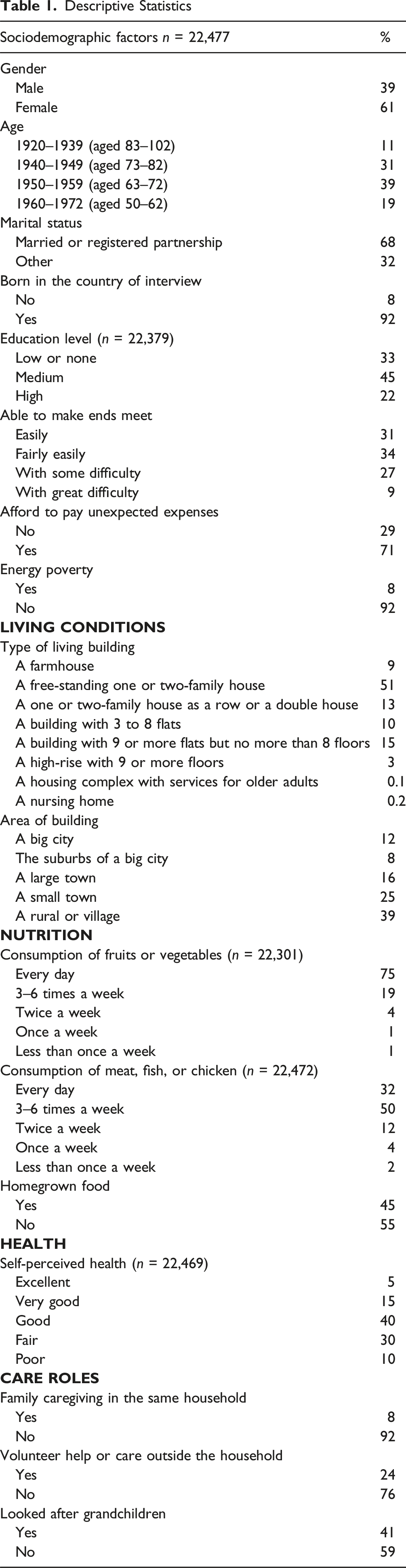
Foreign-born older adults, those with low education, and individuals struggling financially were most vulnerable to the risk of material deprivation, including energy poverty and difficulty covering unexpected expenses. These individuals had poorer self-rated health, consumed less meat, fish, or chicken, and ate fewer fruits and vegetables (Supplemental Materials, Table 2).
Social Inequalities Among Older Adults and Associated Caregiving Roles
Gender inequalities were evident, as women took on more caring roles (p < 0.001) and faced greater vulnerability to energy poverty (p < 0.001) and unexpected expenses (p < 0.001) compared to men. This suggests that older women bear more caregiving responsibilities and experience greater financial instability. However, they were more likely to consume home-produced food (p < 0.001) than men.
In addition, those with low educational levels (i.e., primary or lower secondary level) were more likely to engage in family caregiving in the same household than those with medium education (i.e., upper secondary or non-tertiary education) or high educational levels (i.e., first or second stage of tertiary education). These family caregivers in the same household also seem to be socially and materially more vulnerable than non-caregivers.
Older adults who engage in care and support roles outside their households, as well as those who care for their grandchildren, may have a higher socioeconomic status than those without these responsibilities (see Supplemental Materials, Table 1). They were more likely to make ends meet (p < 0.001), have a higher level of education (p < 0.001), manage unexpected expenses (p < 0.001), and experience lower rates of energy poverty (p < 0.01) than their peers.
Risk of Material Deprivation: Energy Poverty
The Factors Associated With Energy Poverty in Europe
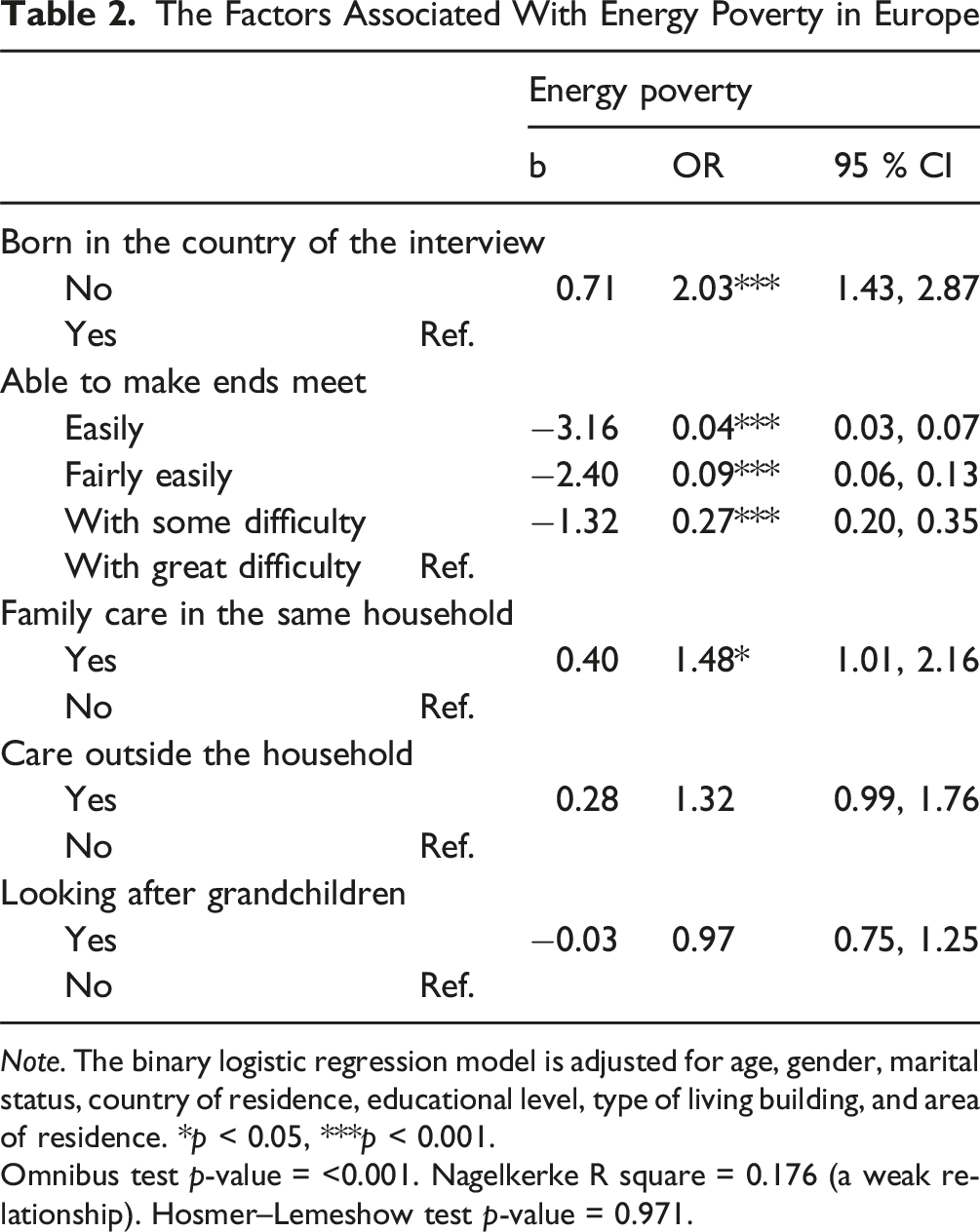
Note. The binary logistic regression model is adjusted for age, gender, marital status, country of residence, educational level, type of living building, and area of residence. *p < 0.05, ***p < 0.001.
Omnibus test p-value = <0.001. Nagelkerke R square = 0.176 (a weak relationship). Hosmer–Lemeshow test p-value = 0.971.
Risk of Material Deprivation: Ability to Cover Unexpected Expenses
The Factors Associated With the Ability to Cover Unexpected Expenses in Europe
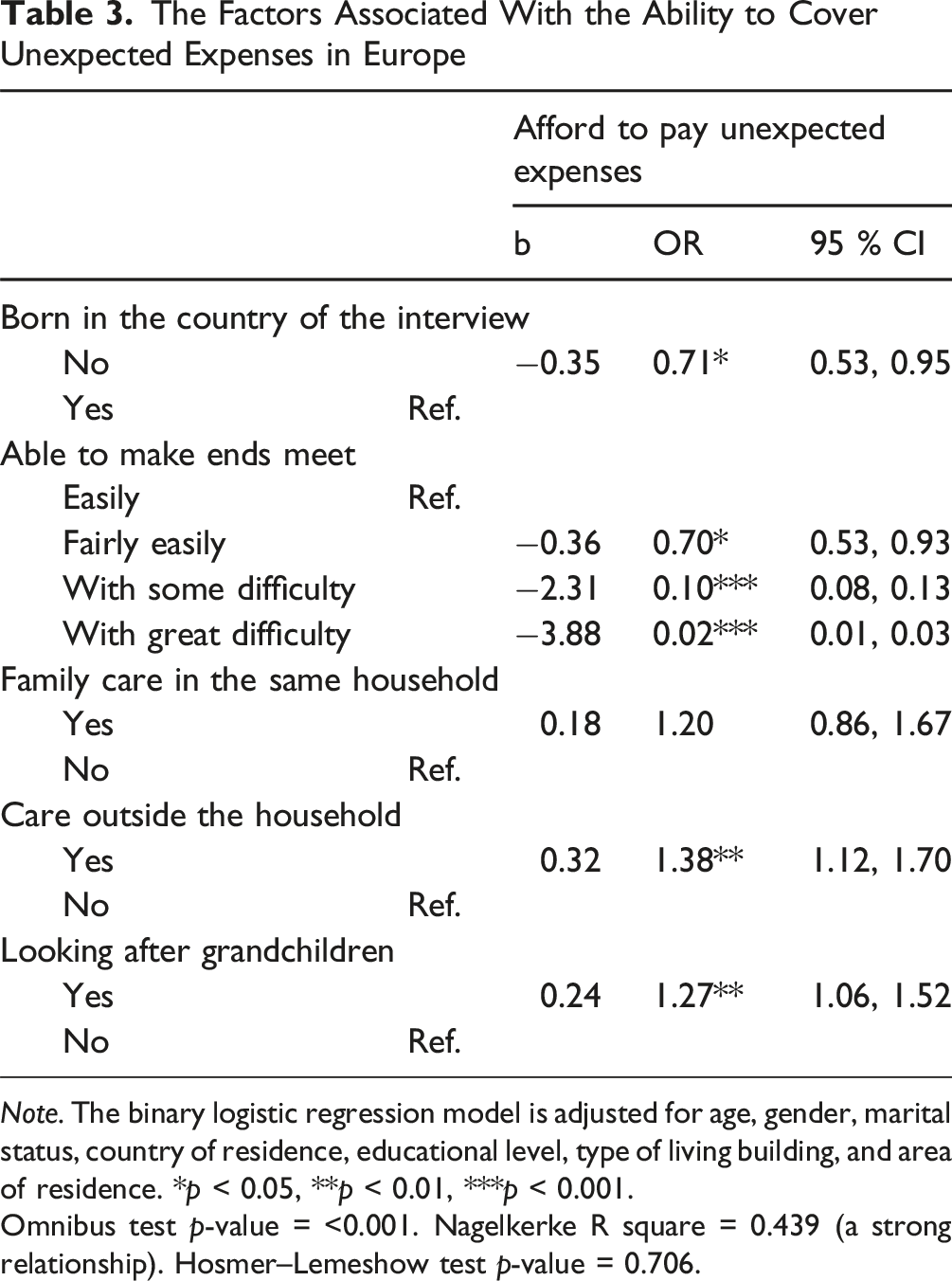
Note. The binary logistic regression model is adjusted for age, gender, marital status, country of residence, educational level, type of living building, and area of residence. *p < 0.05, **p < 0.01, ***p < 0.001.
Omnibus test p-value = <0.001. Nagelkerke R square = 0.439 (a strong relationship). Hosmer–Lemeshow test p-value = 0.706.
Risk of Material Deprivation: Homegrown Food Consumption as a Marker of Resilience and Access
The Factors Associated With Homegrown and Consumed Food in Europe
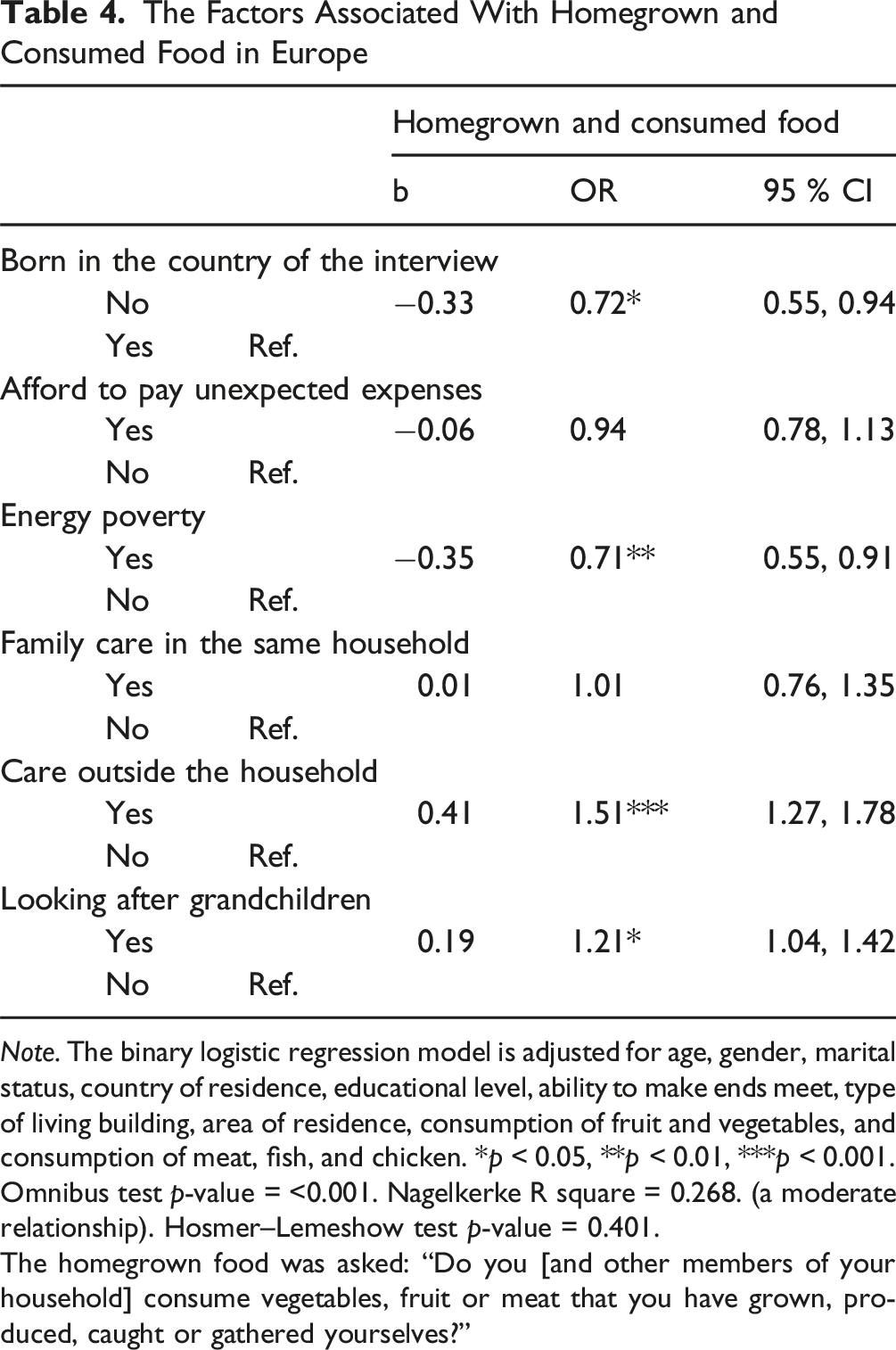
Note. The binary logistic regression model is adjusted for age, gender, marital status, country of residence, educational level, ability to make ends meet, type of living building, area of residence, consumption of fruit and vegetables, and consumption of meat, fish, and chicken. *p < 0.05, **p < 0.01, ***p < 0.001.
Omnibus test p-value = <0.001. Nagelkerke R square = 0.268. (a moderate relationship). Hosmer–Lemeshow test p-value = 0.401.
The homegrown food was asked: “Do you [and other members of your household] consume vegetables, fruit or meat that you have grown, produced, caught or gathered yourselves?”
Discussion
Our findings indicate that the risk of material deprivation among older adults is shaped by distinct social determinants, particularly those related to migration background, gender, educational attainment, and financial strain. These determinants intersect with caregiving contexts: older adults providing family care within the household faced a markedly higher risk of material deprivation, especially energy poverty. In contrast, caregiving outside the household and providing grandchild care were not associated with increased risk of deprivation and, in some cases, were linked to greater financial resilience.
Unequal Risks of Material Deprivation: Migration, Gender, and Care Contexts
Our findings show that foreign-born older adults face higher risks of material deprivation than natives, aligning with European monitoring data indicating greater severe material and social deprivation among non-EU citizens compared with EU citizens and nationals, with notable country exceptions (Eurostat, 2024). While this convergence strengthens external validity, a key limitation is that our data did not distinguish EU versus non-EU origin, precluding finer-grained analyses of migration-related gradients (Eurostat, 2024).
Gendered patterns in care are also evident: women more often occupy caregiving roles and are more exposed to energy poverty and financial strain, reflecting structural determinants that channel unpaid care toward women and may depress late-life income via interrupted employment, lower lifetime earnings, and pension gaps (e.g., Antczak & Zaidi, 2016; Solar & Irwin, 2010; Wakabayashi & Donato, 2006). Consistent with prior research, women frequently provide unpaid care to children and grandchildren, spouses, and older relatives, roles that may limit labor-market participation and accumulate long-term financial disadvantage (Bordone et al., 2017).
Some prior evidence indicates that the financial situation of older women differs significantly from that of older men, mainly due to structural factors within pension systems and the labor market. Historically, women were often expected to leave paid employment during childcare periods (Antczak & Zaidi, 2016). As a result, they contributed less to pension schemes, leading to lower incomes in old age. Unsurprisingly, older women face a higher risk of poverty than older men, though the gender gap in poverty rates has remained relatively stable since the early 21st century (Antczak & Zaidi, 2016).
Moreover, co-resident family caregiving might be more likely to be undertaken by socioeconomically disadvantaged older adults, while caregiving outside the household and grandchild care may be more common among individuals with greater social and economic resources. This variation indicates that co-resident family caregiving might reinforce existing social vulnerabilities in later life.
The differences in caregiving roles may stem from the selection process for these roles, which may be influenced by their existing socioeconomic positions. Intensive, necessity-driven care in the household may fall to those with limited resources, whereas individuals with better health, education, and financial stability might be more likely to take on voluntary or less demanding caregiving roles. This aligns with prior evidence indicating that lower individual socioeconomic resources, such as education, income, and wealth, are associated with a higher incidence of informal care provision of older adults within the household (e.g., Quashie et al., 2022).
Therefore, co-resident family caregiving may arise out of necessity, driven by a lack of formal care options, financial constraints, or family obligations. As a result, these caregiving roles may fall to individuals with lower levels of education and fewer socioeconomic resources, placing them at higher risk of material deprivation. In contrast, caregiving outside the household and caring for grandchildren are generally more voluntary, flexible, and resource-dependent. These roles might require mobility, good health, stable housing, and financial security. Older adults with higher education and higher income may therefore be more likely to engage in these caregiving roles. Consequently, the greater material well-being among these caregivers may reflect their pre-existing socioeconomic advantages rather than any protective effect of caregiving itself.
Recent studies have reinforced this phenomenon. A systematic review and meta-analysis examining the factors influencing participation in voluntary work found that, in the United States, individuals with higher education (albeit with weak evidence) or higher income, particularly those aged 55 and over, were more likely to volunteer (Niebuur et al., 2018) and “high-status individuals” so those with a high International Socio-Economic Index of Occupational Status score were more likely to volunteer (Dederichs, 2024).
The results highlight the importance of adopting an intersectional approach in gerontological care that accounts for factors such as age, gender, socioeconomic status, and migration background (Tinner et al., 2023). This approach aligns with calls to more thoroughly integrate social determinants into caregiver research, an area where empirical evidence remains limited (Hepburn & Siegel, 2020; Young et al., 2020). Thus, gerontological practice can benefit from these findings, as they offer valuable insights into recognizing and addressing the social inequalities that older adults encounter in their roles as caregivers. It is essential to understand that not all caregivers are socially vulnerable; some may have resources and support that enable them to navigate their responsibilities effectively.
Recommendations
Given cross-country heterogeneity, our findings support EU-wide policy guidance while acknowledging differences in national frameworks. First, policies should be culturally sensitive and gender-aware: caregiving carries cultural meaning and may be framed as a gendered obligation, which obscures its financial burden on women. Services and benefits should therefore recognize the social value of care while addressing gendered inequalities in exposure to financial risk. Gerontological practice should avoid one-size-fits-all assumptions and tailor support to diverse contexts, motivations, and needs. Within healthcare, gerontological nurses should routinely assess social determinants of health to identify barriers, individualize interventions, and advocate for resources that improve outcomes (e.g., Savela et al., 2023).
Second, historically informed policy is needed to avoid repeating the unequal impacts of austerity. Past cutbacks may have disproportionately affected older adults, especially women with lower lifetime earnings and caregiving-related employment interruptions, by eroding pensions and public services. Governments should protect pension adequacy, ensure income support, and reduce gender disparities in employment and caregiving to mitigate the risk of poverty in later life.
Finally, inclusive research and monitoring are essential to inform responsive policy: future studies should encompass diverse older populations by ethnicity, socioeconomic status, gender identity, and geography, to guide equitable service design and resource allocation. Overall, European governments and service providers should adopt equitable approaches, recognize individual needs, and shield older caregivers, particularly women, from disproportionate economic shocks (e.g., Ng & Indran, 2021; Savela et al., 2023). Concrete steps include strengthening pension systems, targeted financial support for family caregivers, ensuring affordable essential services (e.g., energy), and expanding community-based care models.
Conclusion
In this SHARE-based analysis of adults aged 50 and older, we found that the risk of material deprivation is influenced by sociodemographic conditions, which intersect with caregiving contexts in distinct ways. Co-resident family caregiving may be undertaken by socioeconomically disadvantaged older adults and is therefore associated with higher odds of experiencing energy poverty. In contrast, caregiving outside the household, as well as grandchild care, tends to be more common among socioeconomically advantaged individuals and is linked to greater financial resilience, enabling them to cover unexpected expenses. These findings highlight the diversity of caregiving experiences and the varying risks of material deprivation associated with different caregiving roles. This study emphasizes the need for targeted policy measures to alleviate energy poverty and financial strain among co-resident family caregivers while recognizing that not all caregiving contexts carry the same level of material risk. Future research should explore causal pathways and country-specific policy environments to understand how socioeconomic conditions influence both the selection into caregiving roles and the resulting material outcomes.
Supplemental Material
Supplemental Material - Who Bears the Burden? The Risk of Material Deprivation Among Adults Aged 50 and Older With Varying Caring Roles in Europe
Supplemental Material for Who Bears the Burden? The Risk of Material Deprivation Among Adults Aged 50 and Older With Varying Caring Roles in Europe by Roosa-Maria Savela and John McKenzie in Journal of Applied Gerontology.
Footnotes
Ethical Considerations
Author Contributions
All authors listed have made a substantial, direct, and intellectual contribution to the work. The draft of the manuscript was written by RMS and JMCK. Data analysis was conducted by RMS. All authors read and approved the final manuscript.
Funding
The authors disclosed receipt of the following financial support for the research, authorship, and/or publication of this article: INVEST Research Flagship Centre is funded by the Research Council of Finland (decision number: 345546). The SHARE data collection has been funded by the European Commission, DG RTD through FP5 (QLK6-CT-2001-00360), FP6 (SHARE-I3: RII-CT-2006-062193, COMPARE: CIT5-CT-2005-028857, SHARELIFE: CIT4-CT-2006-028812), FP7 (SHARE-PREP: GA N°211909, SHARE-LEAP: GA N°227822, SHARE M4: GA N°261982, DASISH: GA N°283646) and Horizon 2020 (SHARE-DEV3: GA N°676536, SHARE-COHESION: GA N°870628, SERISS: GA N°654221, SSHOC: GA N°823782, SHARE-COVID19: GA N°101015924) and by DG Employment, Social Affairs & Inclusion through VS 2015/0195, VS 2016/0135, VS 2018/0285, VS 2019/0332, VS 2020/0313 and SHARE-EUCOV: GA N°101052589 and EUCOVII: GA N°101102412. Additional funding from the German Ministry of Education and Research, the Max Planck Society for the Advancement of Science, the U.S. National Institute on Aging (U01_AG09740-13S2, P01_AG005842, P01_AG08291, P30_AG12815, R21_AG025169, Y1-AG-4553-01, IAG_BSR06-11, OGHA_04-064, BSR12-04, R01_AG052527-02, HHSN271201300071 C, RAG052527 A) and from various national funding sources is gratefully acknowledged (see  ).
).
Declaration of Conflicting Interests
The authors declared no potential conflicts of interest with respect to the research, authorship, and/or publication of this article.
Supplemental Material
Supplemental material for this article is available online.
References
Supplementary Material
Please find the following supplemental material available below.
For Open Access articles published under a Creative Commons License, all supplemental material carries the same license as the article it is associated with.
For non-Open Access articles published, all supplemental material carries a non-exclusive license, and permission requests for re-use of supplemental material or any part of supplemental material shall be sent directly to the copyright owner as specified in the copyright notice associated with the article.
