




Abstract
Ten morphological awareness intervention studies, conducted in English with students in kindergarten through 12th grade between 2008 and 2020, were synthesized in this article. Research in the studies focused on the effects of morphological awareness intervention on literacy outcomes of students who struggle with reading and writing—including students with disabilities. The 10 studies included a total of 411 participants ranging from kindergarten to 12th grade. All 10 studies used an experimental pre/post-test design to determine growth in morphological awareness as well as assessed areas in word identification, spelling, reading comprehension, vocabulary, and written composition. The assessments across the studies varied and included standardized and nonstandardized measures. Effect sizes for standardized measures ranged from 0.0 to 0.97. Effect sizes for nonstandardized measures ranged from −0.03 to 2.96. Results indicate that morphological instruction, including short-term interventions, is beneficial to students at risk of future reading difficulties.
Although literacy is a primary focus of schools in the United States, many students with and without disabilities struggle to become competent, efficient readers and writers. The Nation’s Report Card (The National Assessment of Education Progress, NAEP) reported that only 27% of students in eighth grade were at or above the proficient level in writing in 2017 (Institute of Educational Science, National Center for Education Statistics, National Assessment of Educational Progress [NAEP], 2019). In addition, they reported that only 34% of students in the eighth grade were at or above the proficient level in reading scores. With the high percentage of students struggling with literacy, educators need effective instructional strategies to support literacy growth. Knowledge of written language must be learned and is critical to a student’s success in school and beyond.
Students who are progressing slowly in reading may benefit from a morphological awareness (MA) intervention that connects decoding with comprehension (Katz & Carlisle, 2009). MA is the skill of identifying and purposefully manipulating morphemes, which are the smallest semantic and grammatical units in language (Apel & Henbest, 2016). Morphemes include simple whole word units such as “cat” and base words with affixes, such as “boat” in “boats,” “zip in unzip,” and “swim in swimming.” Affixes, which include prefixes and suffixes, can be inflectional or derivational morphemes. Inflectional morphemes convert base words by modifying time, number, possession, or comparison such as adding “-ing” to “jump” to create “jumping.” Inflectional morphemes do not change the grammatical category of the word, for example, “jump” and “jumping” both continue as verbs. Derivational morphemes alter base words by modifying their meaning and changing their grammatical category such as adding “-er” to “sing” to form the new word “singer” (Apel et al., 2013).
Limited knowledge of MA may be an obstacle to word learning, ultimately negatively affecting success in academic achievement. Morphological instruction may benefit students with limited MA by increasing word knowledge, leading to reading and writing more efficiently (Brown et al., 2016).
Morphological Awareness and Reading
Morphological awareness is a linguistic skill that supports the representation of a spoken language in a written system (Carlisle, 2003). The connection between language skills and reading is explained in Gough and Tunmer’s (1986) simple view of reading (SVR) framework. The SVR states that reading comprehension is the product of two components: linguistic (language) skills and decoding. MA primarily contributes to reading comprehension through its influence on vocabulary (Reed, 2008). Morphological knowledge allows students to generalize to increase their word reading level and may result in exposure to more complex vocabulary. Vocabulary is just one aspect of linguistic comprehension (Braze et al., 2015). Catts et al. (2006) also include grammatical understanding and discourse comprehension as additional linguistic skills that affect comprehension.
Morphological awareness also supports the decoding of complex words. Carlisle and Kearns (2017) explained that reading complex words involves the use of a variety of letter patterns (e.g., graphemes, syllables, and morphemes). However, little research has been focused on the use of different letter patterns or units in reading. By being able to decode larger chunks of words, MA contributes to the speed and accuracy of decoding (Nagy et al., 2006). For example, the word “flower” is processed differently than “taller.” “Taller” can be segmented into two morphemes and “flower” only one. As reading skills develop, MA contributes to literacy outcomes in a variety of ways (e.g., vocabulary, decoding, and reading comprehension; Nagy et al., 2006).
Kuo and Anderson (2006) postulate three reasons why there is an intertwined relationship between MA and reading. The first reason is that morphemes provide semantic, phonological, and syntactic information. The second reason is that the efficient, mature reader utilizes morphological organization for processing complex words. Morphological awareness word knowledge is used to store information regarding words and word parts. The more advanced reader may benefit by having more MA to efficiently store and retrieve morphologically complex words. The third reason researchers posit that MA is interwoven with reading is that MA provides information about the writing system. Morphemes remain static regardless of a phonological shift when a suffix is added to a word (e.g., sign-signature). Increased MA allows the reader to recognize and identify morphologically complex words (Kuo & Anderson, 2006).
Morphological Awareness and Writing
Most research on MA has focused on the contributions to spoken language and reading. However, Carlisle (1994) addressed MA and spelling, and Green et al. (2003) focused on MA and written composition. Although research in the area of MA and writing is not extensive (e.g., Allen & Lembke, 2022; Green et al., 2003), there are existing theoretical frameworks that connect morphology and writing acquisition.
The cognitive theory of developing the writing process by Flower and Hayes’ (1980) focuses on three processes: planning, translating, and reviewing. Berninger and Swanson (1994) expanded upon this model, addressing developmental writing, and included two components within the translation process: transcription and text generation. Transcription is the transformation of language representations into written symbols, which involves cognitive and physical abilities, such as spelling, handwriting, and typing (Green et al., 2003). Text generation refers to turning ideas into language representations (words, clauses, and paragraphs) in the working memory through the use of lexical, syntactic, and rhetorical processes. Morphological knowledge may support both transcription and text generation skills.
Green et al. (2003) examined the development of children’s use of morphology in their spontaneous writing, including text generation skills, as well as the relationship between MA and spelling. Participants in the study included 247 students in third and fourth grade. To test the hypothesis that MA relates to transcription and text generation, the participants wrote a narrative essay following the protocol described in The Expression Connection: A Structured Approach to Teaching Storytelling to School-Age Children (Klecan-Acker & Brueggeman, 1991). The participants’ essays were scored, and the use of inflectional and derivational forms was identified using the Morphological Coding System based on Carlisle (1996). Green and colleagues examined the prevalence and accuracy of morphological forms used.
Green and colleagues determined that students’ development of MA in writing is similar to the progression observed in oral language (Berko, 1958; Carlisle, 1988). Students’ use of derived forms in their writing parallels the use of morphological forms in their spontaneous speech. Inflections were used more than derivational forms. Fourth-grade students displayed more accurate use of derived morphological forms in their writing and showed more variance in their writing when compared with third-grade students. The assessment that took place at the end of fourth grade indicated mastery of the use of inflections at 90% accuracy or higher. Accurate use of derived forms was lower at the beginning of the year (60%) but had increased by the end of the school year (87%). Green et al.’s findings support Carlisle’s (2000) theory that the use of inflectional morphemes develops first, and the use of derivational morphology forms begins in second and third grade.
Current Research Reviews Regarding Morphological Awareness and Literacy
Five literature reviews addressing MA and literacy have been completed (Bowers et al., 2010; Carlisle, 2010; Goodwin & Ahn, 2010, 2013; Reed, 2008). These reviews demonstrate the importance of MA to literacy development. However, the purpose, methods, interventions, and literacy outcomes included in the studies in the reviews varied significantly.
Reed (2008), for example, synthesized seven morphological intervention research studies for students in kindergarten through 12th grade that included students with varying reading ability levels. Studies were included that were conducted between 1986 and 2006. She examined peer-reviewed studies that used chunking multi-syllable words, reading and spelling inflectional endings, and changing words with analogies (e.g., sing: singer; magic: _____). Use of Cohen’s d effect sizes (ESs) for six studies revealed mixed results with a range of negative to positive ESs (d = −0.93 to d = 1.76) on literacy skills. The strongest ESs were associated with instruction that focused on learning a combination of affixes and root words not isolating affix intervention such as Baumann et al. (2002). Reed indicated that more research with MA needs to be completed to better understand the influence of morphology on literacy skills.
Goodwin and Ahn (2010) conducted a meta-analysis focusing on the effects of specific morphological interventions on literacy skills, such as word reading accuracy and vocabulary development for struggling readers, poor spellers, and students with learning/reading disabilities. They examined published and unpublished literature including 17 studies from 1980 to 2009 using different morphologic instructional strategies such as affix and root word construction, building words with morphemes, and compound word instruction. A relationship between morphological interventions and an increase in positive literacy outcomes in students who struggle to read efficiently was noted. A weighted-mean effect of the morphological intervention was 0.33 with a standard error of 0.07 and a 95% confidence interval ranging from 0.18 to 0.47 (z = 4.42, p < .01), indicating that the overall effect of the morphological intervention on literacy outcomes was statistically significant. Further analysis of data found that many curricula are lacking in direct, explicit morphological instruction for improving both phonological and morphological awareness as well as spelling and vocabulary. Goodwin and Ahn (2010) recommended that morphological instruction be included in both remediation and instruction for struggling readers.
Bowers et al. (2010) completed a systematic review of 22 studies that focused on morphological interventions in multiple languages for preschool children to Grade 8. The intervention included the spelling of morphemes, morphological sorting, and morphological analogy. Results indicate that the morphological analysis sublexical layer achieved the highest average ES of d = 0.65. The ES was calculated as the difference between the mean posttest score of the treatment group and that of the comparison group. At the word level, reading achieved an ES of d = 0.41 spelling d = 0.49, and vocabulary d = 0.35. An ES of d = 0.28 was achieved at the supralexical level which includes reading comprehension and fluency. The meta-analysis results indicated that morphological instruction had a positive influence on students’ literacy skills such as reading, spelling, and vocabulary skills. The analysis also revealed a need for more experimental research regarding morphological instruction.
Carlisle (2010) completed a review of 16 studies and book chapters from 1989 to 2009 that focused on morphological instruction. Studies included were completed in five different languages. The integrative review sought to determine whether MA instruction contributed to improvements in literacy in the areas of phonology, orthography, and word meaning to provide information regarding MA instruction to educators and researchers. Carlisle identified five studies that focused on the relationship between MA and phonology, seven studies that focused on MA and orthography, and four studies that focused on MA and vocabulary development. Carlisle noted that instructional approaches rarely include MA. She stated that a goal of the integrative literature review was to examine theories of the role of MA in literacy development as well as consider the contributions of current research to evidence-based practice.
A meta-analysis of 30 studies completed by Goodwin and Ahn (2013) focused on morphological instruction for school-age children. The purpose of this meta-analysis was to explore the different instructional approaches of MA in relation to literacy. The researchers coded and analyzed published and unpublished studies in English. Seven literacy categories were identified: reading comprehension, decoding, fluency, morphological knowledge, phonological awareness, spelling, and vocabulary. The weighted-mean ES was 0.32 when compared with the other groups, suggesting that students in the morphological intervention groups yielded statistically higher scores on literacy outcomes when compared with other groups.
Of the five reviews that are noted above, only one review focused on interventions of MA for students that struggle with reading (Goodwin & Ahn, 2010). To better understand the influence of MA instruction on reading ability and to extend the literature base regarding students that struggle with literacy, the current review was completed on recent (2006–2020) MA intervention studies and literacy outcomes for students at risk of literacy disabilities. To determine research-based effective strategies, only peer-reviewed studies were included.
Purpose of the Study
To address gaps in preceding literature reviews and meta-analyses, a review was conducted to examine the research studies that used explicit MA interventions to improve word identification, reading comprehension, spelling, vocabulary, and sentence writing outcomes for students struggling with reading and writing. Given the results of previous reviews, the following research questions are addressed:
Method
The Preferred Reporting Items for Systematic Reviews and Meta-Analyses (PRISMA) diagram (see Figure 1) displays the systematic search of the literature including database search, hand search, and ancestral search (Moher et al., 2009). First, a search was conducted on the following databases: Education Research Complete, PsycInfo, and ERIC between the years 2006 and 2020. To perform this search, the following key terms were used in various combinations: morphology, affix, intervention, reading comprehension, morphological instruction, struggling reader, morphological awareness, morphological skills, morphological awareness skills, morphological awareness intervention, morphological analysis, vocabulary, literacy instruction, and instruction. In addition, ancestral and hand searches were also completed to find additional relevant research. We conducted ancestral searches of the citation lists of Apel and Diehm (2014), Brimo (2016), Denston et al. (2018), and Allen and Lembke (2022) studies. The first author contacted Allen and Lembke to inquire about ongoing research regarding MA and literacy since they had published MA research in 2020. To conclude the intervention research study search, the first author completed a hand search for the journals that contained MA intervention studies including Communication Disorders Quarterly; Journal of Learning Disabilities; Language, Speech, and Hearing Services in Schools; Reading and Writing Quarterly; and Learning Disability Quarterly from the year 2013 to 2020. The first author completed a hand search for two additional reading focused journals: Reading Research Quarterly and Scientific Studies in Reading. No studies were identified.
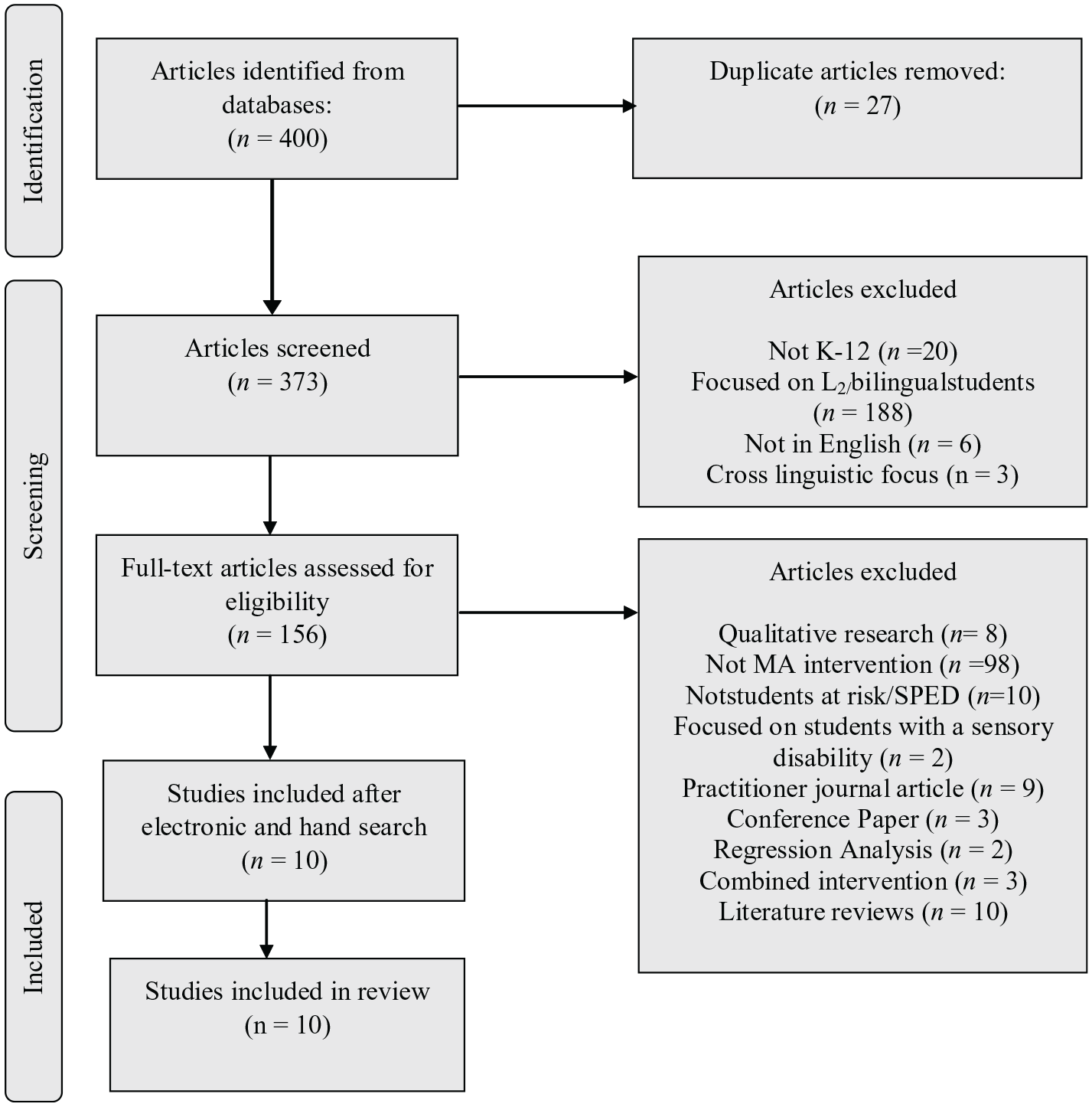
Search Protocol for studies on morphological awareness (MA) interventions to be included in this review. Note. SPED = special education.
Criteria for Inclusion and Exclusion
Four criteria for inclusion were used for this review. First, all studies had to utilize randomized control and quasi-experimental methods to evaluate the effectiveness of morphological awareness intervention on one or more literacy skills. In addition, the study had to have been published after 2006 to expand upon the research reviewed by Reed (2008). Third, the study had to have included disaggregated results for readers who had been identified as reading below grade level or at risk of reading failure, including students with disabilities. Lastly, studies had to focus only on participants in grades kindergarten through 12th grade. Studies were excluded that were not in English or peer-reviewed. Furthermore, articles were excluded if the disability focused on students with sensory disabilities (e.g., hearing).
Data Analysis
To address the research questions, each study was coded by the first author for participants (e.g., grade, exceptionality), design, and characteristics (e.g., intervention and outcomes). The second author checked the coding for interrater reliability (IRR). A graduate student trained in the coding procedures randomly selected four of the 10 studies and reapplied the coding schema. This process resulted in an IRR of 87%. Discrepancies were discussed and resolved. An IRR of 100% accuracy was achieved. Table 1 displays features from the intervention studies including participants’ characteristics and design characteristics. Intervention information, findings, and outcomes are included in Table 2. The information was examined to determine patterns within the data.
Features of Morphological Awareness Intervention Studies.
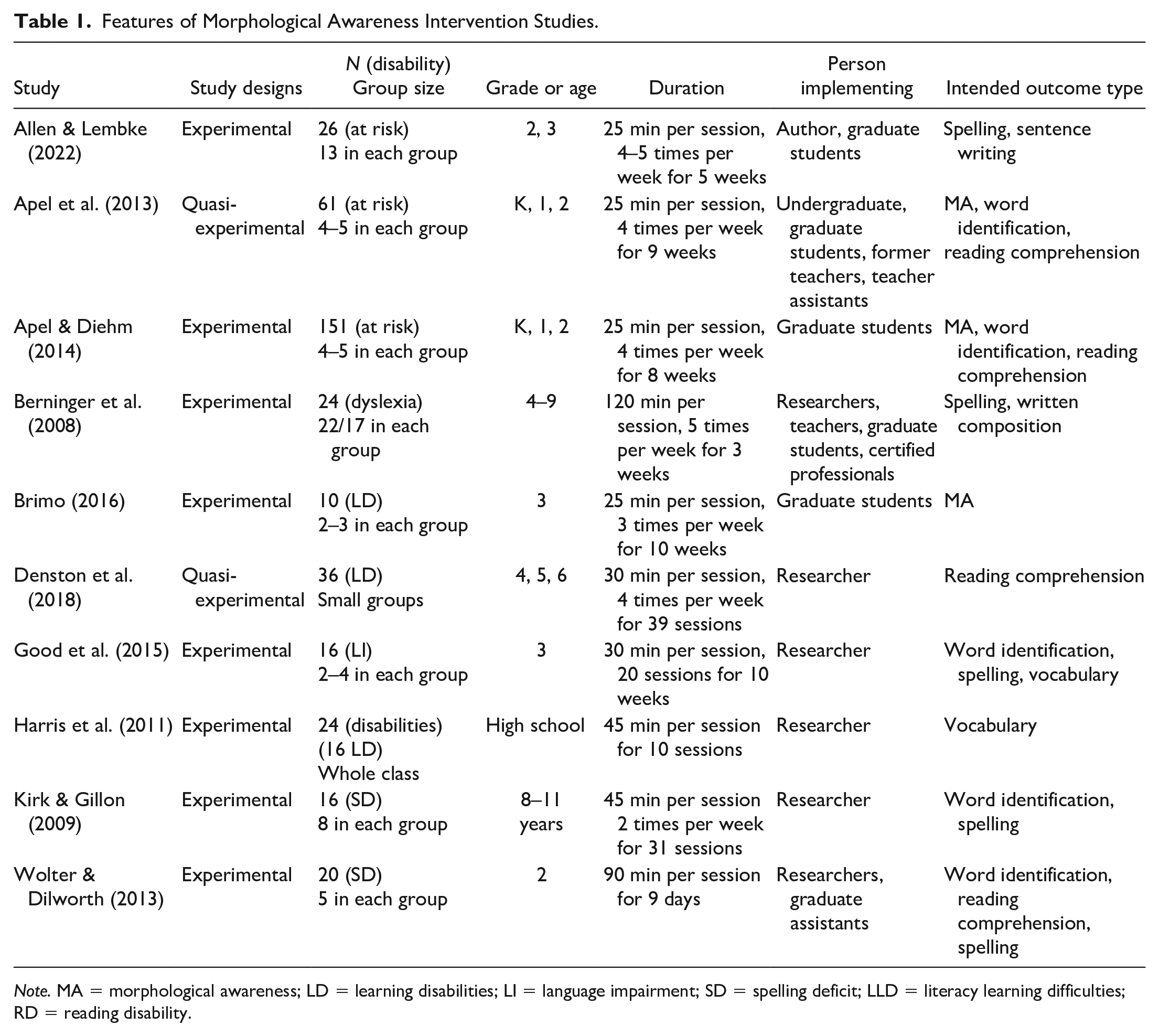
Note. MA = morphological awareness; LD = learning disabilities; LI = language impairment; SD = spelling deficit; LLD = literacy learning difficulties; RD = reading disability.
Outcomes by Intervention Type and Design.
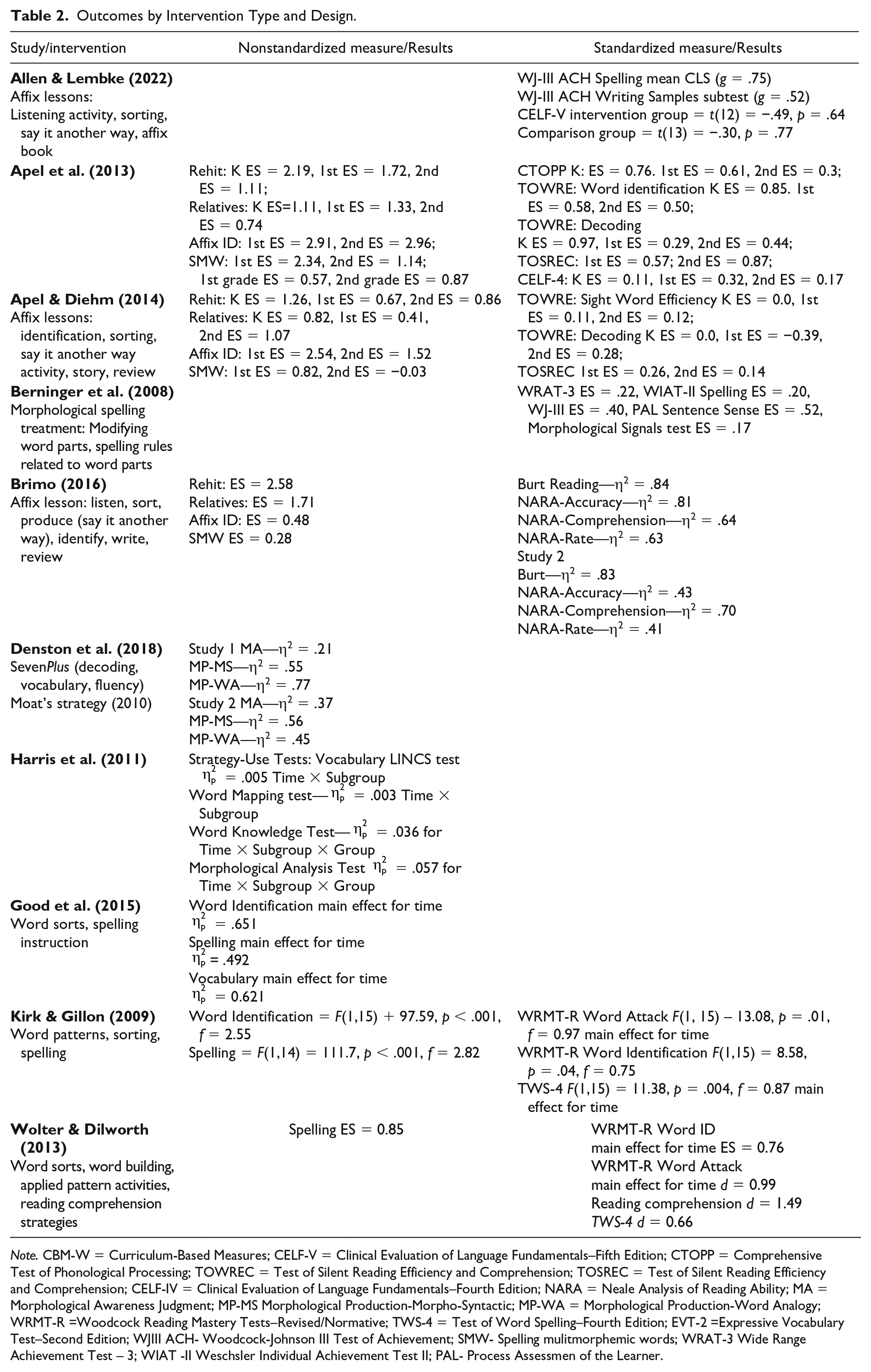
Note. CBM-W = Curriculum-Based Measures; CELF-V = Clinical Evaluation of Language Fundamentals–Fifth Edition; CTOPP = Comprehensive Test of Phonological Processing; TOWREC = Test of Silent Reading Efficiency and Comprehension; TOSREC = Test of Silent Reading Efficiency and Comprehension; CELF-IV = Clinical Evaluation of Language Fundamentals–Fourth Edition; NARA = Neale Analysis of Reading Ability; MA = Morphological Awareness Judgment; MP-MS Morphological Production-Morpho-Syntactic; MP-WA = Morphological Production-Word Analogy; WRMT-R =Woodcock Reading Mastery Tests–Revised/Normative; TWS-4 = Test of Word Spelling–Fourth Edition; EVT-2 =Expressive Vocabulary Test–Second Edition; WJIII ACH- Woodcock-Johnson III Test of Achievement; SMW- Spelling mulitmorphemic words; WRAT-3 Wide Range Achievement Test – 3; WIAT -II Weschsler Individual Achievement Test II; PAL- Process Assessmen of the Learner.
Results
Ten articles met the criteria for inclusion in this literature review. Although 2006–2020 was used as the dates for the search, no articles were identified that were published during the years 2006, 2007, 2010, 2012, 2014, 2017, or 2019. The articles were published between 2008 and 2020 in the following journals: Language, Speech, and Hearing Services in Schools; Journal of Learning Disabilities; Communication Disorders Quarterly; Learning Disability Quarterly; Education and Treatment of Children; Reading and Writing Quarterly; Reading Disabilities Quarterly; and Australian Journal of Language and Literacy. Across the studies, there were 411 students ranging from kindergarten to 12th grade who were identified by their schools as having a learning disability or literacy learning difficulties, at-risk, poor spellers, reading below grade level, dyslexia, or had an Individual Education Program (IEP) addressing reading. In each of the studies, the participants received a morphological intervention to address reading and writing outcomes, such as word identification, reading comprehension, spelling, and vocabulary. However, the studies used a variety of explicit instructional techniques. Each of the studies used a group design with a pretest assessment prior to intervention and a post-test following intervention. Three of the studies included multiple groups with varying interventions.
Study Features
To answer the research questions, the authors analyzed the results by studying characteristics and literacy skill outcomes. We examined the types of interventions that were used to teach MA to readers and writers at risk of disabilities. We coded each study by the intervention patterns. The authors then analyzed and summarized the characteristics in the following sections to better explicate the findings.
Sample Characteristics
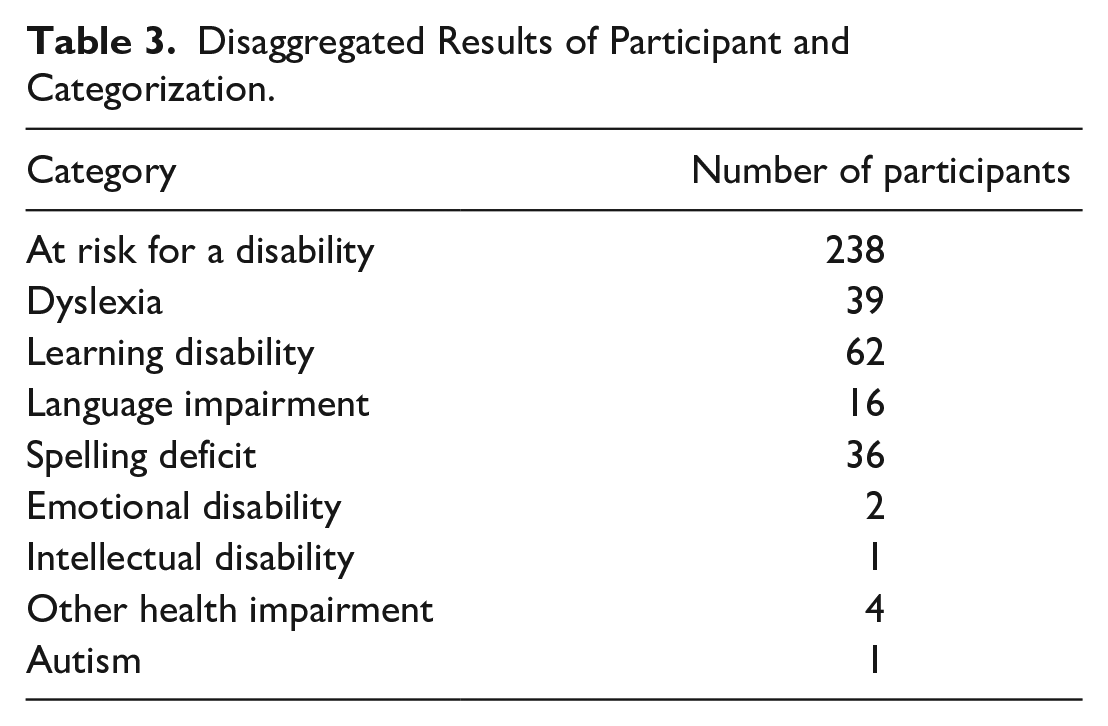
Within this review of 10 studies, we included a total of 411 students who were categorized as readers and writers at risk of reading difficulties. For this review, we defined a reader or writer at risk of reading difficulties as a student who had been identified by the school as reading below grade level, classified as at risk of reading difficulties, or had an IEP addressing reading or writing. Of the total participants, 238 were categorized as at risk and 161 were identified as having a disability (see Table 3).
Disaggregated Results of Participant and Categorization.
The majority of participants (356) were students in primary elementary grades (kindergarten through second grade). Four studies (Brimo, 2016; Denston et al., 2018; Good et al., 2015; Kirk & Gillon, 2009) focused on participants in the upper elementary grades. One study (Harris et al., 2011) included only high school students. One study (Berninger et al., 2008) included students in middle school.
Intervention Implementation
The intervention duration and implementation varied by study. Intervention duration ranged from 9 days (Wolter & Dilworth, 2013) to approximately 15 weeks (Kirk & Gillon, 2009). One study (Wolter & Dilworth, 2013) was completed over 9 consecutive days during a summer camp. Each study had a set intervention time that ranged from 25 to 45 min except for the two studies (Berninger et al., 2008; Wolter & Dilworth, 2013) completed during a summer session. The summer session intervention sessions ranged between 90 and 120 min. In six of the studies, the interventions were implemented by researchers (Berninger et al., 2008; Denston et al., 2018; Good et al., 2015; Harris et al., 2011; Kirk & Gillon, 2009; Wolter & Dilworth, 2013) and four by graduate students (Allen & Lembke, 2022; Apel & Diehm, 2014; Apel et al., 2013; Brimo, 2016) in primarily small (2–5 students) groups. One study (Harris et al., 2011) completed the intervention using whole-class instruction.
Intervention Activities
The interventions for each of the studies focused on affix and root word identification, segmenting, and word-building activities. All 10 studies included identification tasks such as word sorts, decoding, or initial instruction that included identification of word parts of morphologically complex words through oral or written strategies. For example, Apel et al. (2013), Apel and Diehm (2014), and Brimo (2016) all included word sorts where the student sorted word cards with and without target affixes. Denston et al. (2018) used a decoding strategy developed by Moats (2010). Students decoded morphologically complex words by first identifying vowel graphemes, then by morphemic units, and then orthographic patterns of letters.
Four of the 10 studies specifically addressed word segmenting. Harris et al. (2011) used a word mapping strategy. Harris and colleagues compared the generative MA word mapping strategy to a nongenerative vocabulary strategy, LINCing. The students in the MA group would divide the word by prefix, root, and suffix, then define each morpheme to determine the word meaning. Apel et al. (2013), Apel and Diehm (2014), and Brimo (2016) utilized activities that tasked students with using letter blocks to add or remove affixes from base words or a written activity that tasked the students with circling the affix on each morphologically complex word from a word list.
To achieve word building, eight of the 10 studies in this review included oral or written activities or manipulation of letter blocks. For example, Apel et al. (2013), Apel and Diehm (2014), and Brimo (2016) used activities such as, “Say it another way.” The researcher stated, “Say to dance right now another way.” The student replied, “Dancing.” Good et al. (2015) used blocks for spelling base words and then additional blocks for adding the affix(es). Wolter and Dilworth (2013) used games such as Jeopardy with morphological patterns to complete the sentence (e.g., “when a pin was stuck in a balloon it ________ popped”; p. 47). Kirk and Gillon (2009) asked participants to spell morphologically complex words after teaching spelling prompts to assist students with using spelling changes when adding a suffix as needed (e.g., swim/swimmer).
MA Intervention Effect on Literacy
The second research question sought to determine what effect MA interventions had on the literacy outcomes (word identification, reading comprehension, spelling, vocabulary, and sentence writing) of students at risk of disabilities with reading and writing. To address this research question, we discuss the outcomes by the type and focus of the assessments used to determine these results (see Table 2).
Word Identification
Six (Apel & Diehm, 2014; Apel et al., 2013; Denston et al., 2018; Good et al., 2015; Kirk & Gillon, 2009; Wolter & Dilworth, 2013) of the 10 studies assessed word-level reading as a dependent measure prior to and following MA intervention. Four of the studies (Apel & Diehm, 2014; Apel et al., 2013; Denston et al., 2018; Wolter & Dilworth, 2013) used standardized measures. Apel et al. (2013) and Apel and Diehm (2014) used the Test of Word Reading Efficiency (TOWRE). The TOWRE is a timed test that requires students to read as many real and pseudowords as possible within 45 s. Medium to large ESs using Cohen’s d (d = 0.50 to d = 0.87) were achieved by comparing pre- and post-test TOWRE scores with Apel et al. (2013). Small to nonsignificant effects (d =0.00 to d = 0.12) were achieved in the Apel and Diehm (2014) study. The small ES may be due to a small sample size within groups (n = 27, n = 22, n = 26).
Wolter and Dilworth (2013) used the Woodcock Reading Mastery Test–Revised (WRMT-R) subtests for word identification and word attack to assess word level reading accuracy. Wolter and Dilworth (2013) compared pretest and posttest scores, a large ES (d = 0.76) was achieved for word identification and (d = 0.99) for word attack, indicating that the MA treatment group significantly improved in word reading skills.
Kirk and Gillon (2009) also used the WRMT-R subtests for word identification and word attack to assess word-level reading accuracy. Results for the word identification revealed no significant main effect of time, F(2, 28) = 2.61, p = .09, f = 0.41. The word attack subtest showed a significant main effect of time, F(2, 28) = 5.46, p = .01, f = 0.62.
Kirk and Gillon (2009) also used a nonstandardized reading probe. The reading probe consisted of 180 words that the participants read. A significant main effect of reading accuracy for time, F(2, 28) = 33.76, p < .001, f = 1.55 was determined. This large effect was attributed to the large post-intervention change in reading performance. The researchers noted that students displayed the ability to generalize to untaught words during post-testing.
Good et al. (2015) used only experimental measures to determine word-level reading growth following the intervention. The reading measure consisted of 100 words and included affixes taught and not taught during the intervention. Results indicated a main effect for time (partial eta squared = .58). Results indicated that generalization occurred to untaught words. Using the nested factor partial η2 = .651 was achieved indicating generalization to new words did take place.
Reading Comprehension
Reading comprehension, as the dependent variable, was assessed using standardized measures for four studies (Apel & Diehm, 2014; Apel et al., 2013; Denston et al., 2018; Wolter & Dilworth, 2013). Reading comprehension measures were completed before and after the MA intervention. Two studies (Apel & Diehm, 2014; Apel et al., 2013) used the Test of Silent Reading Efficiency and Comprehension (TOSREC) to assess first and second graders. To complete the TOSREC, students read a sentence silently and answered a true or false question. Effect sizes between pretest and posttest measures varied. In the study conducted by Apel et al. (2013), first- and second-grade students achieved d =0.57 and d = 0.87, indicating a medium to large ES. Apel and Diehm (2014) also gave a pretest and posttest TOSREC measure. First and second graders achieved d = 0.26 and d = 0.14, indicating a small ES. The researchers attributed this small ES to the focus on decoding morphologically complex words instead of directly targeting reading comprehension skills.
Denston et al. (2018) used the Neale Analysis for Reading Ability (NARA) as a dependent variable following an MA intervention for students in Grades 3, 4, and 5 with literacy learning disabilities. Results were an ES of
Wolter and Dilworth (2013) used the passage comprehension subtest from the Woodcock Reading Mastery Test– Revised (WRMT-R) as a dependent variable for reading comprehension. To complete this subtest, students had to supply a missing word in a sentence. Pre and post-testing revealed a large effect of d = 1.49.
Spelling
Five studies (Allen & Lembke, 2022; Berninger et al., 2008; Good et al., 2015; Kirk & Gillon, 2009; Wolter & Dilworth, 2013) assessed the effect of MA interventions on the spelling skills of students that were identified by the schools as having a spelling or language deficit. The dependent measures and the results used for these five studies varied significantly. Using nonstandardized spelling measures, the students in the study conducted by Good et al. (2015) achieved a significant main effect for time (
Kirk and Gillon (2009) and Wolter and Dilworth (2013) used standardized Test of Written Spelling–Fourth Edition (TWS-4). Kirk and Gillon achieved large effects for time that can be attributed to changes in spelling performance, F(1,15) = 11.38, p = .004, f = 0.87. The large ES is the result of an 8.1 standard score points difference on the pretest and posttest TWS-4. Wolter and Dilworth also achieved significant changes on the TWS-4 for pretest and posttest intervention with an ES of d = 0.66, indicating a medium ES. Students in both studies (Kirk and Gillon, 2009; Wolter and Dilworth, 2013) demonstrated positive changes in the TWS-4 following the intervention.
Vocabulary
Two studies (Good et al., 2015; Harris et al., 2011; Ramirez et al., 2013) assessed students’ vocabulary gains following MA intervention. Each of these studies demonstrated gains in researcher-created and standardized measures. Good et al. (2015) used researcher-developed measures that included 15 taught and 15 untaught words to assess the vocabulary gains of 16 third graders with language impairments. To assess vocabulary, the researchers asked the students to orally define a morphologically complex word (e.g., What does unfair mean?). The researcher-designed vocabulary measure indicated large posttest gains with an ES of
Harris et al. (2011) also used researcher-designed vocabulary measures. The researchers used word knowledge tests to compare pre and posttest scores for 24 students with disabilities. The Word Knowledge Test consisted of 20 taught words. The students responded by writing information about the word, defining the word, or using the word in a sentence. The paired sample t test compared changes from pre and posttest scores, which revealed a significant difference (d = 4.264), indicating a large ES. The Word Knowledge Test assessed words and word parts that were targeted during instruction.
Sentence Writing
Two studies (Allen & Lembke, 2022; Berninger et al., 2008) assessed the effects of MA intervention on the construction of sentence writing. Allen and Lembke used Apel and Diehm’s (2014) researcher-created MA activities that included a listening activity, word sort, “say it another way,” and affix writing book to record base words and target affixes. The study used a randomized control trial with an intervention (n = 13) and a comparison group (n =13). To assess spelling and writing skills, participants completed the Woodcock-Johnson-III ACH (Woodcock et al., 2007). Spelling and Writing Samples subtests and a Curriculum Based Measurement task (CBM-W). The assessments were given pre-and post-intervention. The CBM-W consisted of 12 pictures of nouns paired with a written verb (e.g., “paper,” “walk”). Students were asked to write a sentence for each picture. The CBM-W was also used as a probe throughout the intervention period. After controlling for receptive language, working memory, and spelling ability, the intervention did not have a significant effect (p > .05) on participant performance. It is noted that the intervention only lasted 5 weeks and may not have been long enough or explicit or powerful enough of an intervention.
Discussion
The purpose of this review was to explore the characteristics of MA interventions and the influence of these interventions on the word identification, reading comprehension, spelling, vocabulary, and sentence writing skills of students at risk of reading failure. This review expanded upon the synthesis by Reed (2008). Her results indicated that students with reading difficulties may benefit from MA intervention, but included studies had a wide range of ESs. Reed also noted that limited information was known about the components of MA. Reed’s synthesis included seven studies, only three of which specifically identified students who struggled were low achieving in reading. This review sought to focus on the characteristics of MA interventions that may support those students at risk of reading and writing difficulties.
Implications for Intervention
To address the first research question, regarding the characteristics of the interventions used to teach MA to students struggling at risk of literacy disabilities, with reading and writing the authors analyzed each study. Interventions included in this review primarily utilized small group (four to eight participants) instruction that took place over a relatively short period of time, approximately 9 (Wolter & Dilworth, 2013) to 39 (Denston et al., 2018) sessions. These findings indicate small group instruction that is included with remediation and instruction of MA may benefit students at risk of reading disabilities. According to Goodwin and Ahn (2010), MA instruction is not a major component of reading instruction in the whole group. This small group instruction that focuses on MA may be ideal for Tier 2 and Tier 3 of a Response to Intervention or Multi-Tier Systems of Support to support students at risk of reading difficulties.
Additionally, interventions were implemented at a variety of grade levels. Participants in kindergarten through second grade comprised the bulk of the samples. Four of the studies addressed the MA abilities of 340 students in kindergarten through second grade. Some researchers (Adams, 1990; Anglin et al., 1993) have identified that students in primary grades do not demonstrate the ability to consciously identify and manipulate morphemes. Apel et al. (2013), Apel and Diehm (2014), and Wolter and Dilworth (2013) contradict the assertion that students do not develop MA until later years. After completing a relatively short intervention (8 to 39 sessions), the participants in these studies achieved positive outcomes in areas such as word identification, reading comprehension, spelling, and vocabulary. This demonstrates that interventions of relatively short duration make a difference in the literacy outcomes of students in early elementary grades.
Only one study (Berninger et al., 2008) addressed participants in middle school. Reed (2008) noted a previous study (Abbott & Berninger, 1999) using MA interventions that included middle school students who were identified as low-achieving readers. Following the intervention, they achieved positive results in word reading. Abbott and Berninger (1999) recommended further research with larger sample size and longer treatment duration to address MA intervention with middle school students. This is clearly an area for more research.
The types of interventions included in this review focused on affix and root word identification, word segmenting, and word blending. The intervention activities ranged from oral and written activities to manipulatives and storybooks. One (Denston et al., 2018) of the intervention studies involved the use of stories. No intervention used subject area content, such as science or social studies academic vocabulary. Helman et al. (2015) stated that science text contains a more morphologically complex vocabulary than text in any other content area. Morphological awareness instruction addressing subject area text may be an area to explore in future studies.
The individual activities of each study varied. Apel et al. (2013), Apel and Diehm (2014), and Brimo (2016) focused intervention activities solely on MA using a relatively intensive intervention schedule focused on small groups of students identified as at-risk. All three studies determined that students with lower MA abilities made greater gains despite varied intervention activities.
Overall, the results indicated that students in the primary grades benefit from MA intervention. The studies included in this literature review indicated that the MA intervention was effective when addressed in small groups even over relatively short periods. Upper elementary and high school students benefited from generative morphological instruction and displayed the ability to generalize to untaught words. Interventions included identification of affixes through word sorts, oral, written, and manipulative activities (i.e., letter blocks).
Effect of Intervention on Literacy Abilities
The second research question that guided this literature review refers to the influence that MA intervention has on literacy outcomes (word identification, reading comprehension, spelling, vocabulary, and sentence writing) for students struggling with reading and writing. We examined the assessment process that the researchers used in each intervention study. The primary literacy skill that was assessed following MA intervention was word identification skills using decoding of real and pseudo morphologically complex words. Using generative MA word identification strategies teaches students to identify unknown morphologically complex words.
Morphological awareness intervention activities taught students to use strategies to generalize to identify untaught words. These activities are noted by Good et al. (2015), Harris et al. (2011), and Kirk and Gillon (2009). Good et al. (2015) focused on teaching students to identify common affixes through word sorts and letter blocks. During review lessons, students were taught to apply that knowledge to other morphologically complex words. Kirk and Gillon (2009) included similar activities that focused their intervention on teaching regular orthographic patterns that included common affixes (e.g., -ed, -est, -en) that could be generalized to new words. Harris et al. (2011) used a word mapping intervention to teach students to segment morphologically complex words, analyze word parts, and infer the word’s meaning. Harris and colleagues found that using MA is a powerful generative tool for identifying and understanding unknown words.
Denston et al. (2018) noted that students with literacy learning difficulties increased their ability to read at the word level and the reading comprehension level. This gain may be attributed to the increased ability to decode using morphemic units that are larger than phoneme-grapheme decoding units allowing the reader to decode larger more complex words. As students encounter more complex, multimorphemic academic vocabulary as they advance in school, MA intervention may help students segment words more quickly as well as retrieve letter patterns from memory, allowing the reader to use these skills to read more efficiently. Decreasing the cognitive demands for decoding allows the reader to focus on text comprehension. Denston et al. (2018) included the use of text to increase the ability to transfer knowledge from the morphological sublexical to supralexical (e.g., reading comprehension) linguistic layer.
Although researchers (Apel & Diehm, 2014; Apel et al., 2013; Denston et al., 2018; Wolter & Dilworth, 2013) used standardized assessments to measure reading comprehension outcomes achieved from pre to post-test, other than Denston et al. (2018), the use of connected text was not directly targeted during the MA interventions. The reading comprehension increases noted were achieved indirectly through an increase in the ability to analyze morphologically complex words.
In addition to word identification and reading comprehension, two studies (Good et al., 2015; Harris et al., 2011) assessed students’ vocabulary gains following MA intervention. All interventions varied but all showed gains in vocabulary using both standardized and nonstandardized measures. Good and colleagues used word sorting activities with suffixes and Harris et al. (2011) focused on word mapping. Harris et al. (2011) used whole-class instruction and compared the generative MA intervention to a nongenerative LINCing strategy. The MA intervention demonstrated the ability to predict the meaning of unknown words.
Five studies (Allen & Lembke, 2022; Berninger et al., 2008; Good et al., 2015; Kirk & Gillon, 2009; Wolter & Dilworth, 2013) addressed spelling of morphologically complex words through the use of MA interventions (e.g., word sorts to target morphological patterns). Pre and post-test measures demonstrated generalization to untaught words with Good et al. (2015) and Kirk and Gillon (2009).
Overall, as in a previous review (Goodwin & Ahn, 2010), studies in this review indicate that MA interventions increased word identification, reading comprehension, spelling, and vocabulary skills of students that are at risk of disabilities with reading and writing. Morphological awareness interventions teach students to use a generative strategy to segment word parts to decode, spell, and understand words more easily. Being able to decrease the readers’ focus from decoding individual graphemes the reader is able to read and understand the text more efficiently. This is supported by Nagy et al. (2006) and (2013), and Reed (2008). Morphological knowledge directly contributes to decoding, vocabulary, and spelling (Nagy et al., 2006, 2013). The student’s ability to analyze morphologically complex words indirectly affects reading fluency and comprehension (Nagy et al., 2006; Reed, 2008).
Limitations
This literature review aimed to learn more about the characteristics of MA interventions that support literacy outcomes for students at risk of reading disabilities. Overall, the results provided information regarding how MA interventions are currently being addressed to support literacy outcomes. Through the review process, there are several limitations noted.
The first limitation is that the study participants were not defined consistently across the studies. Participants were included that had a learning disability, literacy learning difficulties, or an IEP addressing reading. Participants were also included that had been identified as at-risk, poor spellers, or reading below grade level. Goodwin and Ahn (2010) recommended that students who struggle with literacy, such as the participants in the studies who were included in this review, may benefit from additional support in reading. These participants were included in this review to gain more knowledge on the types of MA instruction that benefited these students.
The second limitation is that eight of the 10 studies included participants in kindergarten through sixth grade (see Table 1). While the inclusion criteria allowed for kindergarten through 12th-grade students, only one study (Harris et al., 2011) was identified that included high school students and one study that included seventh- and eighth-grade students. Reed (2008) noted that the lack of research on MA and students in secondary grades is surprising due to the importance of studying Latin and Greek roots, which is related to the performance on college readiness tests. Additionally, this review expanded upon Reed’s (2008) research, and only peer-reviewed studies were included.
Implications for Future Research
Future experimental research is warranted that addresses the use of MA at the contextual level. More gains might have been achieved at the supralinguistic (reading comprehension) level if strategies that address the use of MA were explicitly and systematically taught for use at the contextual level as in Katz and Carlisle (2009). Katz and Carlisle completed a study that was identified but not included in this review due to the inclusion and exclusion criteria. The feasibility study consisted of three case studies of three upper elementary participants. Katz and Carlisle (2009) approached MA intervention with an additional step. The researchers used MA and contextual analysis to develop a Close Reading (CR) program. The CR program initially teaches a sublexical MA intervention with affixes. Next, the researchers use connected text and story reading to model strategic behaviors to apply MA to context. Although the study only included three students, results indicated improvement in word reading and reading comprehension on both standardized and experimental measures.
Further research using a program, such as CR, that provides explicit and systematic application of MA is warranted. The CR program could be addressed with secondary students to determine if this strategy supports students who struggle with reading expository text.
Footnotes
Declaration of Conflicting Interests
The author(s) declared no potential conflicts of interest with respect to the research, authorship, and/or publication of this article.
Funding
The author(s) received no financial support for the research, authorship, and/or publication of this article.
