




Abstract
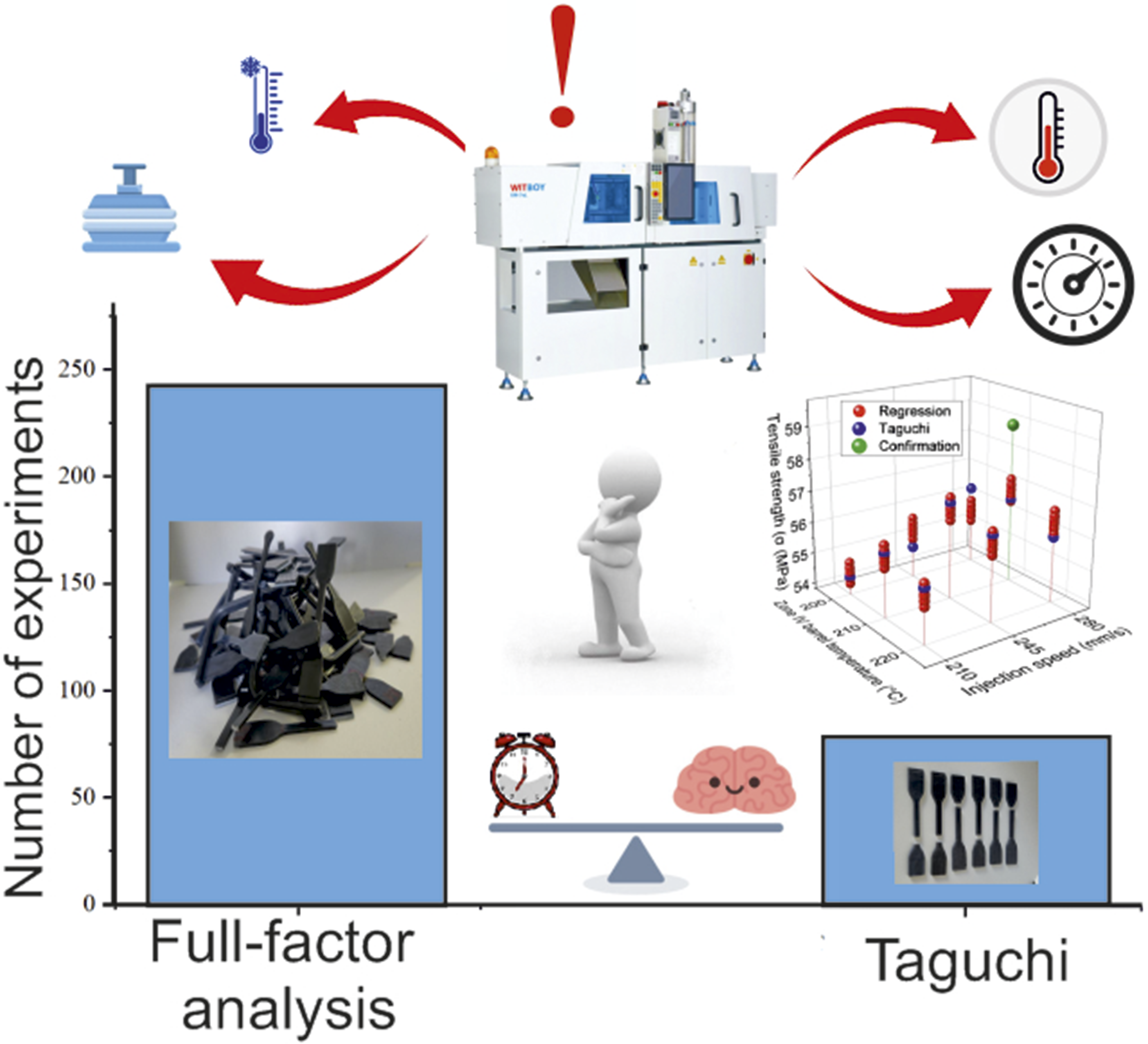
This study optimizes the injection molding of ABS/carbon fiber/magnetite composites using the Taguchi L9 array. A masterbatch approach was used to ensure uniform filler distribution. Signal-to-noise ratio analysis and ANOVA identified zone IV barrel temperature as the most significant factor affecting all measured properties. A regression model for tensile strength demonstrated strong predictive capability (R2 = 82.7%) and was selected for validation. While statistical analysis identified optimal parameters, the verification specimen exhibited a paradoxically low Young’s modulus (1658 MPa) despite high predicted strength. Integrated microstructural characterization (SEM, TGA, and density measurements) resolved this contradiction. The study demonstrates that the morphological architecture and spatial distribution of the filler phase, dictated by processing conditions, exert a more profound influence on mechanical performance than the filler concentration. It is, therefore, posited that reliable process optimization for hybrid composites must augment statistical methodologies with direct microstructural validation to preclude such performance anomalies.
Get full access to this article
View all access options for this article.