




Abstract
This article makes the case that electric micromobilities (EMMs) are the site of a moral panic and employs the lens of mobility justice to explain it. Through analysis of scholarly and media discourse, interviews with, and social media content produced by, EMM riders (eriders), and the auto ethnographic experiences of the lead author as an electric unicycle rider in daily life, as a participant in online and offline “erider” communities, and as a food delivery worker, we reinforce the conclusion that alternate mobilities face an uphill battle in gaining legitimacy and inclusion in transportation policy and infrastructure. While this is not a new finding—alternate mobilities have a long history of being demonized and excluded—this article offers insight into how individuals who find themselves unwitting scapegoats in conflicts over public space consciously engage in deliberate actions to resist EMM panic and achieve greater mobility justice.
Keywords
Death on eco-friendly two wheels: After Gone Girl actress Lisa Banes is killed by a hit-and-run electric scooter
1
we find the Big Apple’s roads and sidewalks full of scooterists and e-bikes running red lights and narrowly missing pedestrians.
On June 16, 2021, this headline from the United Kingdom’s Daily Mail announces that a new threat to public health and safety has emerged in the form of electric scooters (escooters) and electric bikes (ebikes) (Crane 2021). Although the specific scene of this new danger was far away in New York City, “atrocity tales” (Klocke and Muschert 2010:303) around electric micromobilities (EMMs) as new means of transportation are characteristic of media coverage in many locales. 2 U.K. papers, for example, adopted a similar tone and called for a ban on escooters when celebrity, Emily Hartridge, was killed by a truck while riding an escooter in London (Tapper 2019). The sensationalism of these accounts impedes EMM integration.
In this article we apply moral panic theory and a mobility justice lens to critically analyze public discourse regarding EMMs in Canada and the United States. Our data include existing scholarship on EMMs; media coverage; interviews with 31 EMM riders (eriders), 3 city councilors, 4 city planners, and 3 EMM retailers; and autoethnographic data from Author A’s study of food delivery work on an electric unicycle (EUC) in Vancouver, Canada. We provide a glossary of relevant EMM terminology in Appendix A.
EMMs offer zero tail-pipe emission mobility, are a low-cost alternative to purchasing a car, can solve the “first and last mile problem” by delivering riders to and from public transit systems, and generally reduce reliance on cars. EMMs have an understudied potential to transform cities away from the dominant mode of the single-occupancy automobile in ways that self-propelled cycling technologies and mass transit have (so far) been unable to accomplish. EMMs are also efficient and low-impact modes for food and other local deliveries. While overshadowed by public discourse related to escooter sharing companies, privately owned EMMs are becoming increasingly popular.
The most significant hurdle that eriders and policymakers across the globe have come up against regarding EMM integration is the physical and legislative limitations of the built environment. EMMs fit uneasily into transportation landscapes dominated by automobility and challenge how we navigate and regulate urban space (Fang, Agrawal, and Hooper 2019).
While EMMs have the potential to challenge automobile dependence, at present they are the site of a moral panic based on overblown claims about danger to riders themselves and other vulnerable road and urban space users. We argue that the moral panic about EMMs resembles other moral panics, in that it identifies and scapegoats a set of “folk devils” who are unfairly blamed for a series of imagined transgressions of public order in urban space. In particular, this moral panic works to pit EMM users against persons with disabilities (visually impaired, wheelchair users, etc.) and those employing other active transportation modes (pedestrians, “analog” cyclists, etc.). And it works to elide the dominance of the automobile which continues to crowd out alternative mobilities. In this process the potential contributions of EMMs as an alternative to automobility and as an expansion of participation in mobility, and hence as a contribution to mobility justice, are denied. However, we also document an emerging counter-narrative and set of justice-seeking practices by EMM users—users who represent a far more diverse group than that portrayed by the “claims-makers” of the moral panic.
Next (“Moral Panic Theory and Mobility (In)Justice” section) we review the literature on moral panics, highlighting the importance of “folk devils” and “claims-makers” in the production of moral panic. We are not the first to observe a link between moral panic and mobility. After reviewing this literature, we turn to a discussion of automobility and the mobility injustice it produces. With these conceptual tools, we turn to methods and data (“Data and Methods” section) before describing the core elements of the moral panic around EMMs (“Public Discourse Surrounding EMMs: The Panic” section). We then identify the contours of an emerging counternarrative and related set of practices by EMM community builders (“Working toward Mobility Justice” section). While this is mostly reaction, seeking to avoid bans and other unwanted forms of regulation, a mobility justice-seeking policy, regulatory, and infrastructure investment paradigm is emerging (“EMM Panic Regulation, Policy-Making, and Infrastructure” section). A brief conclusion (“Conclusion” section) restates the challenges posed by moral panics to modes such as EMMs that pose an alternative to automobility.
Moral Panic Theory and Mobility (In)Justice
The concept of moral panic was introduced by U.K. sociologist Jock Young in 1971 (2009) when he used the term to describe the socially constructed and symbiotic relationship between media coverage of a purported increase in illegal drug-taking and increasing policing and criminalization. In his 1972 publication, Folk Devils and Moral Panics: The Creation of Mods and Rockers, Stanley Cohen introduced moral panic as a concept for understanding deviance and social control to a wider sociological readership via a case study of a specific youth subculture in 1960s Britain. Cohen explained the role the media played as “claims-makers” in creating a social crisis requiring increased criminalization and surveillance, by constructing the Mods and Rockers as a threat to social order.
Stuart Hall et al. (1978) subsequently employed the concept of moral panic to explain the way that mainstream media wildly exaggerated a series of muggings that served to justify and extend the racial profiling of Black men in Britain. New theories of moral panic problematize the objectivist criteria of disproportionality (Watney 1987; Wright 2015), emphasize the emergence of new, fragmented media landscapes fostered by digital technologies that decentralize knowledge production and enable “folk devils” to produce counter-discourses (McRobbie and Thornton 1995), view deviance through a postmodern lens and employ discourse analysis (Dotter 2002; Watney 1987), and contextualize moral panics as a mode of governance and resistance in neoliberal contexts (Hier 2008, 2016, 2019). 3
Folk Devils—Small Villains as Scapegoats
Michael Hobbes (2021) identifies four main hallmarks of moral panic journalism: low-stakes anecdotes, irrelevant examples, misleading statistics, and the idea of false equivalence. Brian V. Klocke and Glenn W. Muschert (2010) observe that a moral panic often emerges after a “precipitating event that has a strong element of inherent drama” (p. 302). Yet, moral panics emerge because of “specific sociocultural circumstances, groups and categories, social structures and societies, historical eras, individuals, and/or classes” (Goode and Ben Yehuda 1994:151). Moral panics typically increase the injustice experienced by marginalized groups in society and have lasting legacies.
For a moral panic to take a hold on public imagination, a group that feels threatened must find visible scapegoats, or “folk devils,” where some people are publicly identified with the perceived threat, even if the transgressions they are accused of are purely imaginary (Thompson 1998:549). False accusations are a necessary part of a moral panic: The group targeted for discipline is not the actual cause of the problem. Instead, the cause of the problem is typically located within normative institutions and actors whose damaging impact has become invisible.
S. Watney (1987) views moral panics not as discrete events but as hyperbolic moments in ongoing representational struggles between groups of social actors with differential power. Klocke and Muschert (2010) claim that a moral panic “is more likely to emerge when folk devils are of marginalized social status (e.g., race, class, gender) or disavow their own social status and values of their dominant culture” (Klocke and Muschert 2010:301). According to Phillip Jenkins (2009), “small villains rather than large or well connected ones” are the most likely targets of moral panics (p. 45). And, “(t)he goal of a moral panic is to push the marginalized back to the margins” (Pepin-Neff and Cohen 2021:1). In this reading, moral deviants are those who defy the normative subtexts of contemporary citizenship—whiteness, (cisgender) masculinity, heterosexuality, adulthood, and market-based production/consumption, and, as we argue, automobility.
“Claims-Makers”
Additional players in a moral panic include “claims-makers” or “moral entrepreneurs” “from whom the moral indignation flows” (White, Hepworth, and Zidar 2018:1388). Klocke and Muschert (2010) identify four key groups of claims-makers: “public officials (politicians, law enforcement, etc.), action groups (moral entrepreneurs, folk devils, and supporting groups of both), the public, and the media” (p. 304), with particular emphasis on the role of the media as “the main access point through which the masses try to become aware of, formulate and interpret collective meanings. They are also the figurative public cauldron through which claims-makers and counter-claims-makers evaluate and contest these social meanings” (Klocke and Muschert 2010:304). According to Klocke and Muschert (2010),
the media [are] the primary definers of the MP. Government officials, social institutions, and action groups use rhetorical heat . . . often revealing atrocity tales to emphasize the threat and typify the behavior of folk devils as representative of their inherent evil nature. (P. 303–4)
Moral panics often scapegoat groups of young people (Yochim 2009) as targeting youth “seems to be part of a master status transcending various moral panics over time” (White, Hepworth, and Zidar 2018:1395).
Mobility Moral Panics
The concept of moral panic has been applied to a wide range of issues and actors, and there is precedent for applying moral panic to alternative transportation modes, including bicycles (Jarry 2020), escooters (Kolaković-Bojović and Paraušić 2019), “jaywalking” (Millington 2014; Norton 2007), skateboarding (Olivo 2015), cycling infrastructure (War on Cars 2021), and to the emergence of new technologies in general (Cavanagh 2007). Milica Kolaković-Bojović and Ana Paraušić (2019) analyze newspaper coverage and Twitter posts through a moral panic lens to conclude that the arrival of escooters in Serbian cities was an instance of moral panic via being framed as an “urban security challenge.” They define urban security in terms of “protection against traditional and serious threats, such as armed conflicts or terrorism” and the provision of “adequate quality of life,” including the functioning of urban transportation infrastructure (Kolaković-Bojović and Paraušić 2019:1046). They note that escooters are presented in both academic discourse and public debate as either an “alternative innovative means of transportation” or “as an urban security challenge potentially endangering the citizens’ mobility in the city” (Kolaković-Bojović and Paraušić 2019:1047). The media narrative the authors examine contained key features of moral panic: (1) concern about a conduct or practice; (2) hostility against the perpetrators; (3) consensus in the reaction; (4) disproportionality in the depiction of the threat; and (5) volatility of the episode (the media reporting and a period of intense anxiety emerging quickly and then dissipation; Kolaković-Bojović and Paraušić 2019:1058). Significantly, neither the authors nor the media they sample ever consider automobility itself as an urban security challenge despite acknowledging its disproportionate contribution to injury and death.
In a specific discussion of escooters and “bikelash” 4 during a guest appearance on the War on Cars podcast, Hobbes (2021) defines moral panic as “entrenching misinformation and fomenting reactionary backlash,” noting that moral panics are “oftentimes an offshoot of . . . a majoritarian backlash to social progress that benefits minority groups”. Podcast host, Doug Gordon, summed it up succinctly by defining moral panics as “fear-mongering designed to prevent change.” Hobbes (2021) employs a mobility justice lens to focus on the false equivalence between the relatively rare instances of injury and death resulting from EMMs and the significant and normalized “carnage” wrought by automobiles (Vardi 2012).
Automobility and Mobility Justice
Automobility—or automobilization—can be understood as a sociotechnical system which ascribes predominance to the cars/vehicles/automobiles, their subjects/drivers/users, and the patterns of movement in time and space produced through these car-dominated practices (Beckmann 2001; Conley 2016; Urry 2004). The dominance of automobility comes packaged with cultural stories of freedom and access to the wider world (Freudendal Pedersen 2005) that promise unfettered individual mobility choice. For some it is undoubtedly true that automobility increases choice, but for other transport modes and their users, automobility represents a narrowing of choice. Automobility is instead a story that is built within a particular taken-for-granted “constellation of mobility” (Cresswell 2010) that is constituted in relation to a series of sharp social injustices. We understand (in)justice here in the sense advanced by Nancy Fraser (2003), who has defined justice through the notion of “parity of participation” which implies that “all (adult) members of society [are permitted] to interact with one another as peers” (p. 36; see also Fraser 1990, 2007).
A conception of justice built around participation is apt in this case because it draws our attention to the conditions under which some public space users are, or are not, permitted to experiment with and implement diverse mobilities. For parity to be possible, at least two conditions must be met, according to Fraser. First, the “distribution of material resources must be such as to ensure participants’ independence” (p. 36), which is manifestly not the case when it comes to the distribution of public space for the purposes of automobiles compared to other modes. Second, and more directly relevant to the question of moral panic, that “institutionalized patterns of cultural value express equal respect for all participants and ensure equal opportunity for achieving social esteem” (p. 36). We show that this is not the case for EMM users, nor is it the case for other nonautocentric mobilities.
Mobility justice (Scott 2020; Sheller 2018) is a theory of equity and inclusion that considers “how power and inequality inform the governance and control of movement, shaping the patterns of unequal mobility and immobility in the circulation of people, resources and information” (Sheller 2018:23). One specific strand of mobility justice research focuses on transportation vulnerability, defined as “lack of access to transportation resulting in financial, social, or health consequences” (Patel et al. 2020:1). As a subset of mobility justice more broadly, the critical mobilities paradigm draws attention to increasingly racialized, suburbanized poverty, gentrification, and public spaces that continue to be unwelcoming for (and frequently designed to repel) people who are marginalized based on houselessness, gender, race, class, gender nonconformity, and disability. A related strand of mobility scholarship, the “sustainable mobility paradigm” (Banister 2008), recognizes that there is a foundational and inextricable relationship between land use policy decisions and transportation investment. Key findings from literature on urban planning and transportation establish that automobility is presently underpriced/more heavily publicly subsidized than other more sustainable modes (Schafer and Victor 2000; Shoup 2011), and that automobile travel is inequitable, and socially undesirable (Litman 2017). Transportation equity therefore requires significant cultural and structural change away from automobility.
The framework of mobility justice is particularly relevant for understanding how moral panics about EMMs relate to relations of power in Canada and the United States, where the widespread denigration of public transit builds upon the starkly racialized and classed character of spatialization that unevenly distributes access to mobility. Here, “(o)ne person’s speed is another person’s slowness” (Cresswell 2010:21). Many are left living within areas deemed as “mobility deserts” (Taylor and Hall 2013:72), where there is no safe transport infrastructure. Into a world marked by such inequities—inequities that themselves are regularized through legislation, planning practice, and social understandings of the appropriate use of urban space for movement (Blomley 2011; P. V. Hall 2015)—EMMs are necessarily implicated in a politics of mobility (Cresswell 2010) which brings their adoption into conflict, dialogue, and/or coalition with car culture, business interests, the cycling lobby, and urban planning (Conley 2010; Conley and Jensen 2016; Urry and Dennis 2009). While it is too late to prevent the moral panic surrounding EMMs, it is important to interrupt it with critical analysis from a mobility justice perspective.
Data and Methods
Klocke and Muschert (2010) propose three interventions to strengthen moral panic research, urging researchers to: triangulate findings by drawing on multiple methods and sources of data; situate findings within relevant bodies of theory; and conduct comparative studies. We undertake the first two recommendations as it is beyond the scope of this article to engage in comparative analysis. Specifically, the data we draw on consist of existing scholarship and news media on EMMs; interviews with 31 eriders throughout Canada and the United States, 5 3 Canadian city councilors, 4 Canadian city planners, and 3 Canadian EMM retailers; analysis of “folk devil” social media; and the auto ethnographic experiences of the lead researcher as an EUC rider in daily life, as a participant in online and offline erider communities, and as a food delivery worker in Vancouver, Canada. And we situate our findings within a systematic literature review of the field of mobility justice to understand EMM panic in the context of hegemonic automobility. 6
Erider interview participants were recruited from various online groups 7 ; city councilors, city planners, and EMM retailers were recruited via personnel networks and social media. Interviews were 60 to 90 minutes in length, open-ended, conducted in-person or via Zoom in 2021, and transcribed via Otter. Erider participants were modestly compensated.
We use moral panic theory and mobility justice to analyze media and scholarly discourse related to EMMs from the early 2000s to the present and “folk devil” counter-discourse in the form of interviews with eriders, social media content, and Author A’s ethnographic account as an erider and food delivery worker. We employed open coding to develop themes across our data sets (Glaser 2016) and focus on describing “existing value conflicts” between “claims-makers” or “key interest groups and moral entrepreneurs” (Klocke and Muschert 2010).
Public Discourse Surrounding EMMs: The Panic
Most scholarly and media discourse on EMMs focuses on shared escooters and ebikes and typically addresses EMMs within preexisting problem frames related to traffic safety that normalize car culture by focusing on “threats” to public safety and social order posed by previous small villains such as motorcyclists (Katz 2011), skateboarders (Atencio et al. 2018; Howell 2008; Yochim 2009), rollerbladers (Khan 2009), and bicycle couriers (Kidder 2009, 2011) Research on EMMs mainly clusters around eriders, transport integration, injuries, and policy concerns.
Claims-makers include scholars, the media, public officials, city planners, other vulnerable road users (people with disabilities, seniors, cyclists, pedestrians), EMM retailers, escooter sharing companies, and eriders. There are significant debates among various claims-makers about whether—and how—EMMs should be integrated with existing transportation systems.
Folk Devils on E-Wheels
Resistance to EMMs comes from multiple parties (politicians, law enforcement, other vulnerable road users, healthcare professionals) and is mostly concentrated into three streams of criticism: (1) unattended or abandoned EMMs on sidewalks (mainly associated with dockless, shared escooters) are dangerous for pedestrians/people with disabilities; (2) EMMs (typically ebikes) allow riders to “cheat”; and (3) EMMs are a danger to riders and others as a result of their speed and/or lack of regulation.
The most significant hurdle that cities have come up against in efforts to integrate micromobilities, including EMMs, is the built environment. The structures built into our automobility-centered urban landscapes impose physical and legislative limitations and spark conflict among road users and pedestrians (Balsamini 2022), with eriders emerging as the latest in a long line of new mobility “folk devils.” These conflicts arise from competition for (road and sidewalk) space and from “irresponsible” rider behavior such as high-speed or reckless riding (Tuncer et al. 2020). Unchecked, conflicts lead to public anger against EMMs and eriders, as evidenced in news media across the globe and legal prohibitions (Gössling 2020). 8 Beyond issues of legality, negative attitudes toward EMMs are a cause for concern as eriders report experiencing aggressive behavior from pedestrians (Che, Lum, and Wong 2020; James et al. 2019; Tuncer et al. 2020), cyclists (Ussner 2014), and car drivers (Richburg and Zhang 2009).
As the headline we opened this article with confirms, news media exaggerate safety issues regarding EMMs. While controversy is attached to all EMMs (Cheney 2013), shared escooter systems emerged as a lightning rod for debate in the media (Kostareli et al. 2020; Lorin 2019; Nowak 2019; Spurr 2021b; Van Dongen 2020), a public policy issue (City of Toronto 2021; Rider 2020; Rodriguez 2019), and a focus of research.
Escooter Panic: Moral Entrepreneurs and Folk Devils
Municipalities such as Toronto, San Francisco, Nashville, Chattanooga, and Beverly Hills have banned escooters, citing concerns about safety, liability and lack of insurance, lack of resources to enforce rules, and improper use and parking impeding sidewalk traffic (Spurr 2021a; Stewart 2019; Yue 2019). Shared escooter systems are frequently linked to concerns about safety for people with disabilities and seniors (Fang et al. 2019; Flaccus 2019). Consistent with moral panic theory, “moral entrepreneurs” have produced “folk devils” in the form of eriders and escooter sharing companies via emphasis on “irresponsible” practices related to inappropriate speeds, reckless or rule-bending riding (Rodriguez 2019), and sidewalk “litter” in the form of discarded escooters. Escooters are described in invasive terms as “unsafe nuisances” (Valentic 2019), “eyesores,” and “safety hazards” that arrive in “thickets” (Rider 2020).
Antiscooter lobbying plays a significant role in driving the moral panic around EMMs. Disability rights advocates have identified escooter sharing systems as threats to public safety (Flaccus 2019; Rider 2020; Van Dongen 2020; Wright 2020). For example, a focus group of Ottawa residents with vision impairments formed to address that city’s shared escooter pilot raised safety concerns related to unsafe riding, improper parking, and difficulty in reporting infractions (CNIB Foundation 2020). Escooter sharing companies responded to such criticism by adding Braille to the devices to enable visually impaired individuals to report infractions (Lazo 2019). In the City of Toronto, the Accessibility for Ontarians with Disabilities Alliance ran an anti-escooter campaign that was instrumental to that City’s ban. This campaign portrayed escooters as a mode of transport that combines silence and speed and as a source of sidewalk clutter in emphasizing dangers to people with disabilities in general and people with vision impairments specifically.
While some cities have banned escooters, others have decided that the benefits of escooter mobility outweigh any negatives while requiring providers of shared escooters to build parking compliance mechanisms into the app. Drawing on interviews with officials involved with successful shared EMM pilot programs, Steve Wright (2020) emphasizes the importance of outreach and consideration of people with disabilities from the outset.
CP#5, a planner in a Canadian city with a shared escooter pilot, observed that new technologies “always seem to generate panic and concern and attention.” He reported that “The amount of people who have told me that I’m going to kill someone is like, through the roof: even in the week that we had three people die in one single car crash.” Injuries and deaths from car crashes are normalized, yet CP#5 noted that the economic costs related to the approximately 5,000 annual car crashes in his municipality cost “$600 million per year.”
Conflicting reports about escooter safety issues are common in scholarly research and news media reporting. A flurry of studies in medical journals have been published detailing escooter-related injury rates in cities around the world, often based on emergency room/hospital admission records (e.g., Badeau et al. 2019; Brownson, Fagan, and Ian Civil 2019; Dhillon et al. 2020; DiMaggio et al. 2020; English et al. 2020). The problem with these injury studies, however, is that the total number of rides is not reported, nor is the injury rate of EMMs compared to other types of transportation (Yue 2019). Reports of deaths, injuries, and accidents resulting from escooter use have been magnified by news media. Tellingly, incidences of cars striking, injuring, and killing escooter riders in Canada and the United States have galvanized citizens to demand that escooter sharing services employ stronger safety measures and city officials impose strict regulations aimed at changing rider behavior or outright bans (Ferri 2019; Martin and Smith 2019; Valentic 2019). Escooter injuries are also attributed to rule-bending and helmet-less riding (Breggin 2019; Ferri 2019).
Despite the panic around EMMs, the phenomenon of discarded escooters “littering” sidewalks is significantly overblown, and risks in the form of critical injury and death are greatly exaggerated as are reports of conflicts among vulnerable road users. Several scholarly studies unreported in the media reveal the exaggerated nature of improper parking claims (Fang et al. 2019; James et al. 2019). Escooters and ebikes rarely cause critical injury and death on their own; this typically results from contact with cars and speaks to a lack of infrastructure designed for people who choose active modes of transportation (Cherry 2021; Shah et al. 2021). Indeed, safety considerations resulting from unsuitable infrastructure are ranked as the highest barrier to EMM adoption/integration (e.g., (Almannaa et al. 2021; Arsenio et al. 2018; Nematchoua et al. 2020) and yet the majority of recommendations for improved safety in scholarly and public discourse focus on erider behavior rather than appropriately targeting automobile-dominated infrastructure (Oeschger, Carroll, and Caulfield 2020). Because EMMs occupy liminal positions and the space allotted to pedestrians and bikes is so small in comparison to that provided for automobiles, eriders are often out of place or unwelcome, whether they are competing for space on roads, bike lanes, or sidewalks (Lorinc 2012; Tuncer et al. 2020).
Ebike riders face conflict with regular cyclists in competition for lane space because of speed differentials (Dill and Rose 2012) and have been judged by bicycle purists in the United States as “cheatercycles” and “the redheaded stepchild of the cycling industry” (Rapoport 2011:46). The accusation of “cheating” (Mayer 2020) is overtly ableist and sets a standard of physical exertion that drivers of automobiles are spared. But this social stigma may act as a real obstacle for adoption due to general attitudes perceiving ebikes “as a ‘lesser than’ mode of transportation” (Leger et al. 2019:252). A recent study produced for the transit authority in the City of Vancouver, however, supports permitting EMMs, except “sit-down electric scooters,” to use cycling infrastructure and multiuse paths (2022:6). In this report, Alexander Bigazzi and Amir Hassanpour (2022) observed that “The effect of electric-assist on speed is less than commonly perceived by the public; eliminating this perception bias would have the same effect on comfort as a 2 km/hr decrease in actual speeds” (p. 6). But EMM panic works to divert attention away from automobility by pitting disability activists and other vulnerable road users against eriders by constructing the latter as threats to public safety. 9
Working toward Mobility Justice
While criticism of EMMs is prevalent in public discourse, there is evidence of underlying support for EMMs as a potentially more environmentally friendly, less expensive, and convenient mode of travel (e.g., Labbe 2022; Larsen 2022). EMMs have a smaller physical and energy footprint, are quieter and more affordable than automobiles (Moran 2021; Spurr 2021a; Stowell 2020; Tchir 2020), may help mitigate transit deserts (Ecola and Fraade-Blanar 2021), and solve the first/last mile problem for transit (Milakis et al. 2020). EMM uptake also promises public health benefits via increasing the mode share of active travel and reducing critical injuries, deaths, and pollution-related health issues associated with car dominance.
Erider Demographics
Although EMMs demonstrate the capacity for greater transportation equity, current users are typically those with more social and financial capital as opposed to those who could benefit most from access to EMMs. Consistent with early adopters of technology in general, eriders are mostly men with relatively high income and education levels, ranging in average age from their twenties to their forties (Flores and Jansson 2021; Liao and Correia 2022; Lo et al. 2020; McQueen 2020; Reck and Axhausen 2021) although users between the ages of 40 and 65 are overrepresented in studies on ebike usage (Behrendt 2018; Fishman and Cherry 2016; Marincek, Ravalet, and Rerat 2020; Wolf and Seebauer 2014).
Erider demographics, however, do reflect more diversity and hence the potential for more equity among users than conventional (analog) cycling. Ebikes, for example, enable “more people to cycle, across social groups (women, couples with children, people over 40, people with a lower physical condition) (Leger et al. 2019; Popovich et al. 2014) and spatial contexts (suburban and rural areas)” (Rerat 2021). Reduced physical exertion allows users across all demographics to arrive at their destination less tired and/or sweaty, an important consideration that is highlighted by many ebike commuters (Mayer 2020; Plazier, Weitkamp, and van den Berg 2017). Studies and user surveys in cities such as Atlanta found that women were more likely to use escooters (Populus 2018). Significantly, countries with established cycling cultures and strong biking infrastructure, such as the Netherlands, enjoy more diversity among their ebike user base while countries more centered around automobility with less cycling infrastructure, such as the United States, are characterized by less diversity (Marincek et al. 2020).
The ubiquity of EMM uptake in the highly racialized app-based food delivery labor sector (Nir and Singer 2020; Toll 2020) also runs counter to constructions of escooter “folk devils” as thrill-seeking young men. Eriders who are commuting or riding for pleasure experience challenges, and eriders who engage in food delivery work experience it on another level: The work is dangerous, often forcing them onto streets with high-volume, fast-moving traffic, and other vehicles illegally parked in bike lanes (often driven by other delivery workers). When Author A began their autoethnographic study of food delivery work on an EUC, they were an ardent “stay off the sidewalk” proponent, but that quickly changed as, for reasons of safety and efficiency, they and other delivery workers spend a lot of time on city sidewalks. Based on Author A’s observations and preliminary research on EMM-riding food delivery workers, most of the workers in Vancouver are racialized men, often immigrants. Constructing this group as a scapegoat is highly consistent with moral panic theory: Folk devils are small villains, people who are already marginalized.
There are efforts to address mobility justice concerns about the availability and uptake of EMMs. In many cities, equity considerations have been incorporated into contracts with shared ebike and escooter companies. For example, San Francisco and Seattle now require operators to deploy a minimum number of escooters at reduced rates in disadvantaged communities (Field and Jon 2021). And equity concerns drove resistance by antiracist activists to the criminalization of ebike riding in New York City when visible minority food delivery workers received tickets that exceeded their wages (Robbins 2018). The backlash resulted in a tacit decision by City officials to end enforcement of an ebike ban. 10 Finding ways to improve access is necessary to achieve many of the benefits associated with EMMs (Cairns et al. 2017; Moran 2021; Ton and Duives 2021). As long as commercial actors are allowed to shape smart mobility, however, problems with access will persist (Wallsten, Henriksson, and Isaksson 2022).
Divergent streams of criticism point to a need to consider the public impact of various EMMs—most prominently ebikes and escooters—separately and to distinguish between those that are shared versus rider-owned. While not fully accepted, (pedelec) ebikes have garnered more public and government support than (kick) escooters (Edge and Goodfield 2017; Edge, Goodfield, and Dean 2020). There have been many studies on rider-owned ebikes (e.g., (Behrendt 2018; Fishman and Cherry 2016; Jones, Harms, and Heinen 2016) but the same attention has not been given to other EMMs, many of which are more amenable to integration with transit than ebikes due to smaller size, weight, and hence portability. And what remains unreported, in both media and scholarship, is that EMMs offer the potential to extend the mobility potential of some people with disabilities, without the attendant marking of disability or limitations on maneuverability that come with conventional wheelchairs or mobility scooters.
Folk devil Counter-Discourse: Eriders as Ambassadors
In keeping with moral panic theorizing that emphasizes the significance of new, fragmented media landscapes for enabling folk devils to produce counter-discourse (McRobbie and Thornton 1995), a worldwide network of EUC riders/enthusiasts with geographically based smaller groups are connected via Facebook, WhatsApp, Telegram, YouTube, and so on. Some of this content is produced by EUC riders who have become EUC “celebrities” or influencers because their content is informative and entertaining.
“Wrongway (2021),” a popular EUC influencer and Polish citizen, produced a YouTube video entitled “Guide [to] SAFE Riding on Wheels in Public Space,” designed to educate eriders about the need to ride safely and respectfully and to advocate for EMM integration. He focuses not only on issues related to safety but also on how eriders should interact with pedestrians and cyclists to avoid creating bad will. Wrongway urges eriders to avoid behaviors that can result in EMM bans and to engage in activism to legalize EMMs. Wrongway begins the video, however, with the claim that “the most dangerous vehicle on the road is the car . . . most people in Europe in traffic accidents are either killed by [a] car or heavier traffic,” and goes on to stress that the most important safety measures are building safe infrastructure for people on light vehicles. He ends the video lamenting that he cannot follow his desire and live in the Netherlands because EMMs are illegal there: “Netherlands forbids them. Netherlands, you allow cars which kill people, but you don’t allow this which I know will never kill anyone.” 11
Analysis of interviews with eriders, erider counter-discourse on social media, and autoethnographic data paint a picture of eriders as adopters of new mobility technologies who feel themselves to be on the brink of being banned. Eriders are attempting to counter this by modeling good “sidewalk/bikepath citizenship” and being erider “ambassadors,” producing counter-discourse and educating politicians and planners and anyone they encounter about the benefits of EMMs and the comparatively low risk to public safety they pose when compared with automobiles. Eriders are convinced that EMMs are “the future” of transportation but are highly attuned to riding in a social context characterized by moral panic. This is, however, a site of conflict within EMM “communities” themselves wherein eriders who post videos of high-risk riding are censured and/or excluded from EMM online communities who are striving for “respectability,” legitimacy, and widespread EMM integration. 12
Every erider we interviewed acknowledged feeling the burden of making a good impression on others to avoid the reactive policymaking that corresponds with moral panic. Fear of a “precipitating event” that will result in a ban, such as an injury to a pedestrian, is a specter that haunts the eriders we interviewed. As FF (personal interview 2021) explained, “I think we just need to be proactive, you know. I’m always encouraging people to be good sidewalk citizens and good bike path citizens.” RG (2021) put it this way: “I think it’s our responsibility as the early adopters of technology to be the ambassadors for this new movement.” TM (personal interview 2021) explains that the Onewheel group she participates in actively promotes respectful riding and that creating “goodwill for our sport” is important to her: “We don’t want people to say ‘see, it doesn’t work out, look what’s happened.’” GL (personal interview 2021) is worried because
I don’t think people have embraced what we do yet. I don’t think they’ve accepted us as another form of transportation. And these are people who probably hate cyclists, anyway, or didn’t like cyclists to begin with but now they’ve got another group of riders or type of rider to deal with.
Many eriders worry that their own responsible riding behaviors will not matter in the end because other less responsible eriders will “ruin it for all of us.” The potentially erroneous assumption operating here is that if every erider proceeded with care and followed existing traffic rules, no one would oppose EMM integration. GL is “hoping that we can somehow pave the way or image [so] that ESK8 is actually looked upon very positively, as a great form of transportation while also helping to save the planet.” For TT,
when I see one of those jackasses speed by me . . . that’s my biggest worry. And it only takes one or two of those angry people with a lot of time [to] get in touch with the media and there’s a story that drives a narrative, as opposed to “there’s this really cool technology that’s environmentally friendly.” (personal interview 2021)
13
Conflicts among eriders about what constitutes appropriate/safe riding play out on a larger scale in group rides. While groups of eriders can be a positive way to expose the public to EMMs, large groups of eriders traveling on multiuse paths or in bike lanes, some of whom are wearing body armour and full-face helmets, can be a jarring sight for people unaccustomed to seeing them. Many eriders note the importance of outlining ground rules relating to safety and etiquette at the beginning of a group ride to avoid annoying, frightening, or harming anyone they encounter. Others avoid group rides altogether. Although an EUC rider herself, AB described her reaction to seeing a “huge group of people on eskateboards, escooters, eunicycles” on a popular multiuse path in her city. Seeing them “riding fast where there’s a ton of people walking on a Sunday, and lots of little kids,” AB said that “if I was a parent and this group came screaming by me, I would not be happy, it’s just like, ‘run for your lives!’” (AB, personal interview 2021). While AB is a member of this specific group (on Facebook) and acknowledges its stated intention (on its social media page) to create goodwill by promoting safe riding, she considers group rides “kind of intimidating and they take up too much space.” Erider groups also appear to vary considerably in what they consider to be appropriate riding behavior. AJ (personal interview 2021), for example, quit riding with one group when some of the people started playing “chicken” with opposing traffic, explaining “when I’m out in a group. I worry about the group because collectively as a whole, we are one. And if one is an asshole, we’re all assholes.”
The pressure to be an erider “ambassador” reflects the relatively small portion of public transportation space that is dedicated to nonautomobiles; sidewalks, bike lanes, and multiuse paths take up a fraction of the space dedicated to automobility. HT (personal interview 2021) described the tensions between various micromobilities in these spaces in terms of “slow road rage.” Referring to a popular multiuse path in his city, he reported that “you’re gonna see five or six different arguments breaking out about whose ebicycle should be here, whether skateboarders belong here.” HT believes that “a very few very simple rules, would suffice” to enable everyone to enjoy the path. JP (personal interview 2021) reminds himself that “people are scared of the unknown” and expects this apprehension to lessen when people become more familiar with EMMs.
EMM Panic Regulation, Policy-Making, and Infrastructure
There are divisions among the “folk devils” themselves about whether EMMs should be regulated by government and if so how. Some want EMMs to remain unregulated while others consider government regulation as inevitable and/or necessary to provide legitimacy for EMMs. JF (personal interview 2021), for example, considers the emergence of legislation regulating EMMs to be inevitable but is worried about the process, stating that “I would hope that the local government would invite EUC riders, and ebike riders, escooter riders in to talk about it because a lot of those decisions are made without those people.” MO (personal interview 2021) reported that he is purposefully building a movement of eriders in his region so that they can have representation “in the room” when decisions about EMM regulation are made.
Ebikes, in contrast to escooters, EUCs and ESK8, have been more generally accepted in the transportation landscape in Canada and the United States but this has been coupled with a requirement that all ebikes sold have built-in speed limiters of 30 kph/18 mph. 14 Most eriders find this nonsensical given that cars, a much deadlier mobility, are not regulated in this way 15 and prefer to see limits on erider behavior rather than speed-limiting technology. Hsiang (personal interview 2021), an EUC influencer from New York City, points out, “You can, after all, buy a sports car capable of going 200 miles an hour, but you will be fined and otherwise punished if you drive at that speed.” Hsiang put concerns about EMMs in perspective, stating that any mobility technology will be used dangerously by a small minority of users but dominant mobility technologies—notably, the car, which is much more dangerous—are not banned because some people drive dangerously.
The eriders we interviewed are angry about existing bans on EMMs and fearful of more. Speaking of the City of Toronto ban on escooters, JS had this to say: they’re only listening to one side. The only evidence that was provided to them [City Council] about the safety of escooters was the Accessibility Committee, who deemed them very unsafe for elderly people and people with disabilities on sidewalks, and they were just scared about rental companies going berserk on sidewalks and people just throwing them on sidewalks. What they don’t realize is that there’s a huge difference between private ownership and rentals, that people who bought the scooters have spent thousands of dollars of their money, they’re not going to be leaving them on the side of the street. That’s a very big difference between paying $5 for a fucking trip on a rental. (Personal interview 2021)
HT is also “furious” about the City of Toronto ban, resents the self-appointed “sheriffs of the bike lane,” and describes the political pressure antiscooter activists exert as
the free floating malice of the busybody that you always have to contend with in these matters. But if people really need to get somewhere and they need a cheap way to do it . . . I don’t see how government can actually push this along.
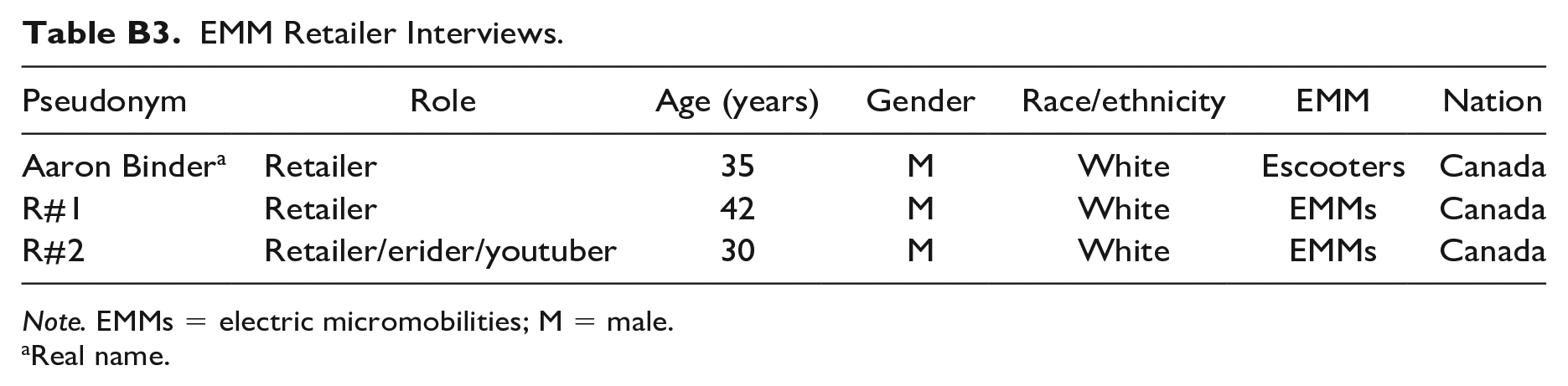
Aaron Binder, Chief Experience Officer of Segway, Ontario, is also critical of the City of Toronto for ignoring equity issues beyond the disability community, stating that
the ban is actually quite inequitable for a lot of people that ride, specifically scooters, because when we look at our sales data, it’s a lot of people in Scarborough, it’s a lot of people in North York, it’s a lot of people downtown that are students, and these people don’t have money. That Metro pass that costs 2000 bucks a year, they can cut that in half with the scooter. (AB, personal interview 2022)
We wish to underscore that tensions related to the impact of escooter sharing companies and eriders on sidewalk access for people with disabilities are a complicated matter. While we note that a mobility justice lens is pertinent to these tensions, municipal policy and enforcement is driven by a lens that Nicholas Blomley (2011) refers to as “pedestrianism.” According to Blomley (2011), “Pedestrianism understands the sidewalk as a finite public resource that is always threatened by multiple, competing interests and uses” (p. 3). From this perspective, the sidewalk is regulated according to the values of “circulation and flow” as opposed to the “rights frame” (Blomley 2011:4) that is more congruent with mobility justice. These competing frames indicate the need for a deeper analysis of conflicts related to the public space of the sidewalk that is beyond the scope of this article.
Every erider we interviewed emphasized the need for more and safer micromobility infrastructure so that eriders can be safe from cars and away from pedestrians. Tensions exist, however, about what constitutes an EMM as opposed to a “motorized vehicle” and what kinds of EMMs are appropriate for bike lanes and multiuse paths. According to HT, “the bike lanes that we’ve built at great cost could be really thriving if we allow every type of non-internal combustion vehicle.” HT rides a “sit-down escooter” that from a video he provided looks like a small, electric motorcycle. According to him, however, it qualifies as an escooter because it tops out at 30 kph. HT’s main reason for riding his scooter despite the ongoing hassles with city police officers who have threatened to impound it the next time they catch him is that he does not have a driver’s license. He got in an accident as an unlicensed driver when he was 15 and has never been able to pay the resulting debt to the provincial automobile insurance bureau, a debt that has made him ineligible to obtain a driver’s license. HT is a janitor and handyman, and public transit is neither convenient for him nor feasible for bringing tools and materials necessary for his various jobs.
Other eriders think that “sit-down” scooters such as the one HT rides should be banned from cycling infrastructure. CB, an ebike rider, worries that “there will be a reckoning” that will negatively affect ebike riders like her because of the sale of escooters that are essentially small, electric motorcycles without the requirement for the rider to have a motorcycle license. FF considers the Onewheel he rides to be “very bicycle zone” because 30 kph is its top speed, in contrast to “these new people who are on their ebikes, they’re going 50-80 (CB, personal interview 2021).” FF sees “people in transportation “in his city “trying to regulate these devices based on type” and considers this to be a mistake. Posting speed limits makes more sense to him because “bureaucrats can’t keep up with the technology, let alone the specs.” GL expressed the belief that there should be age requirements to ride various EMMs, given how fast some of them can go.
Several eriders we interviewed are actively advocating for EMM-inclusive government policy. FT (personal interview 2021), for example, has been doing this work in her city and finds it incredibly frustrating that EMMs prompt concerns about safety when she considers automobile-caused injury and death to be so much more significant. FT believes that cars are far more dangerous for pedestrians and people with disabilities than EMMs and was one of several eriders who referenced the emphasis on erider injury as disproportionate, observing that “2000 people in Canada die as a result of a car accident each year but that’s normal [while] ours is a new technology and we’re judged.” 16 Travers has been involved in advocacy work as well, going so far as to successfully teach several municipal politicians and city planners how to ride an EUC. 17
As a testament to the potential for EMMs to enhance mobility as people age, CB is a 60+ ebike rider and knows some older folks who have foregone an electric wheelchair in favor of a more mobile (sit-down) escooter. CC#1, a city councilor, reported that his elderly mother, who no longer drives, rides an electric tricycle and enjoys the independence and means to get outside that it provides. Travers has a knee injury that prevents them from pedaling a bike or ebike and has met two EUC riders—one of whom is an amputee (leg)—who rely on EUCs as mobility devices (see also Boland et al. 2022; Leger et al. 2019).
Conclusion
We are amid an EMM panic that is fueled by media reports, scholarship on injuries and safety, and conflicts between various users of public space. Public discourse featuring catastrophe tales or exaggerated concerns about EMM safety and the demonization of eriders and escooter sharing companies plays a significant role in impeding EMM integration and protects logics that prioritize cars and trucks over public safety, environmental sustainability, personal autonomy, and mobility justice.
EMMs introduced another layer to pressures on transportation infrastructure and traffic safety concerns that stem from the hegemony of automobility. Narratives of scarcity regarding public space dedicated to micromobility users elide the dangers to public health and safety resulting from automobility and render alternative ways of organizing public space for smaller, more affordable, and less dangerous mobilities unthinkable, even as morgues regularly receive the bodies of car crash victims and climate change resulting from reliance on fossil fuels produces increasingly dire outcomes for sentient planetary life. Automobility is the power structure being threatened and EMM panic shores it up by normalizing it and highlighting conflicts related to competition for the relatively small portion of public pavement space not dedicated to cars. A mobility justice lens illuminates the conditions under which this EMM panic has developed.
That much of the scholarship and media in the United States and Canada call for better regulations that focus on device availability and erider behavior despite the greater danger to public health and safety caused by automobiles is consistent with a moral panic analysis in the context of neoliberal governance. Rather than target a built environment dominated by automobility, EMM panic makes scapegoats of “small villains,” when the appropriate focus for safety should be on increasing the space and resources allotted to micromobility transportation infrastructure.
Moral panic-making in public discourse works to obscure the potential benefits of EMMs for greater transportation equity. The relationships between government and private operators can and should include equity and sustainability goals to expand low-income, racialized communities’ access to EMMs and prioritize the use of smart mobilities for long-term sustainability objectives over commercial interests (Field and Jon 2021; Wallsten et al. 2022). According to Stefan Gössling (2020), “[where] negative public opinion can be averted, escooters stand a chance to become a disruptive niche innovation with the potential to transform urban transport systems” (p. 1). In a report to policymakers regarding establishing regulations for dockless escooters, James Wood et al. (2019) urge policymakers to avoid allowing media sensationalism to set the tone for policy-making and urge them to focus instead on advancing community goals. This can be particularly difficult advice to follow, given the role of media and scholarly research in constructing an EMM panic.
A transformation of urban and suburban spaces is necessary to keep a wide range of micromobility riders separate from cars and pedestrians and aid in the adoption and integration of EMMs. The potentially positive consequences of this transformation in terms of public health and safety, environmental sustainability, and mobility justice are rendered invisible by EMM panic discourse. But eriders, as they negotiate this precarity in their day-to-day travels, are taking every opportunity to make an EMM-integrated future visible. We provide our analysis of EMM panic in Canada and the United States to contribute to counter-discourse in support of this transformation.
Footnotes
Appendix A: Glossary
Appendix B
EMM Retailer Interviews.
| Pseudonym | Role | Age (years) | Gender | Race/ethnicity | EMM | Nation |
|---|---|---|---|---|---|---|
| Aaron Binder a | Retailer | 35 | M | White | Escooters | Canada |
| R#1 | Retailer | 42 | M | White | EMMs | Canada |
| R#2 | Retailer/erider/youtuber | 30 | M | White | EMMs | Canada |
Note. EMMs = electric micromobilities; M = male.
Real name.
Declaration of Conflicting Interests
The author(s) declared no potential conflicts of interest with respect to the research, authorship, and/or publication of this article.
Funding
The author(s) disclosed receipt of the following financial support for the research, authorship, and/or publication of this article: The author(s) received financial support from the Social Sciences and Humanities Research Council of Canada Knowledge Synthesis Grant Program.