




Abstract
The COVID-19 pandemic and protests have marked an unprecedented increase in U.S. gun sales. But America has long been an outlier; the stockpile of private guns climbed to almost 300 million in 2017. Scholars use multiple theories to explain why gun sales have tripled since the early 2000s, and why disruptions like the pandemic might cause gun sales. However, scholars have difficulty evaluating these theories with existing retrospective estimates of gun sales and other measures, limiting their ability to test theory or suggest policy changes. This study uses the known increase in gun sales during the COVID-19 pandemic to introduce and experimentally validate a novel measure of gun desirability. With a sample of 4,240 U.S. residents, this project demonstrates that gun desirability is a valid measure of inclination toward gun ownership, and that a pandemic video vignette significantly increases overall gun desirability relative to a control video vignette. These results serve as a foundation for future scholarship to (1) discern gun desirability trends, (2) evaluate theorized causes of gun desirability, and (3) consider interventions on those conditions that arouse desire for gun ownership.
Keywords
Introduction
[H]e knows there be laws and public officers, armed, to revenge all injuries shall be done him; what opinion he has of his fellow subjects, when he rides armed; of his fellow citizens, when he locks his doors; and of his children, and servants, when he locks his chests. Does he not there as much accuse mankind by his actions as I do by my words? But neither of us accuse man’s nature in it. The desires, and other passions of man, are in themselves no sin. (Hobbes 1651:78)
The COVID-19 pandemic and protests have marked an unprecedented increase in U.S. gun acquisition (Arnold 2020; Yamane 2020) by residents of every political persuasion and in every state (Lang and Lang 2020). Of the five highest months of estimated gun sales, three have elapsed since the March 2020 pandemic declaration (Brauer 2013; Bureau of Alcohol, Tobacco, Firearms and Explosives [ATF] 2021b; see Figure 1).
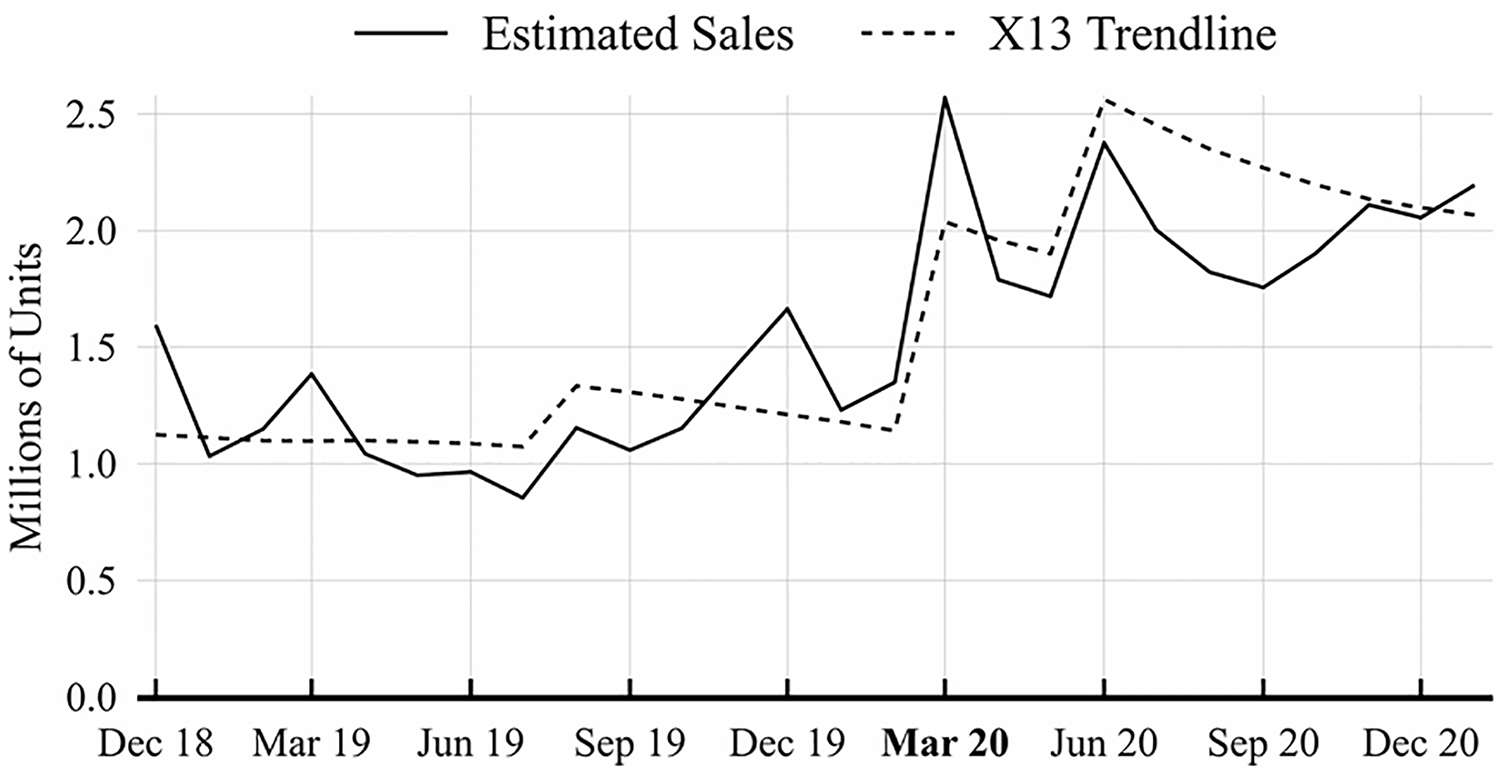
Estimated monthly gun sales with X13 ARIMA trendline, December 2018 to January 2021.
America has long been an outlier of gun ownership. In 1970 Richard Hofstadter declared America to be “the only modern industrial urban nation that persists in maintaining a gun culture,” (4) and in recent years, the stockpile of guns in private hands has climbed to almost 300 million (Azrael et al. 2017). The COVID-19 pandemic is not the first event to spur purchases; social, economic, and political disruptions often precipitate gun sales in the United States. Scholars argue that disruptions (1) renew fears that new gun regulations will decrease availability (Depetris-Chauvin 2015; Studdert et al. 2017); (2) increase consumer desire for self-protection, in the context of a gun culture that increasingly emphasizes using guns for protection (Lizotte and Bordua 1980; Yamane, Yamane, and Ivory 2020); or (3) a synergistic combination thereof (Kelley and Ellison 2021; Porfiri, Barak-Ventura, and Marín 2020).
Yet, much like criminologists’ struggle to explain the post-1990s decline in violent crime (Blumstein and Wallman 2006; Lauritsen, Rezey, and Heimer 2016; Tcherni-Buzzeo 2019; Zimring 2006), social scientists have yet to explain why gun sales per month have tripled since the early 2000s (ATF 2021b; Brauer 2013). With more than 10,000 homicides and more than 20,000 suicides annually commissioned with guns (Azrael et al. 2017), research that can distinguish the proximate causes of gun desirability is overdue. Recent scholarship explores the emergence of self-defense oriented “Gun Culture 2.0” (Yamane et al. 2020) and gun populism (Carlson 2019). A validated measure of gun desirability will enable scholars to evaluate these theories, discern trends in desire for guns, and suggest policy changes accordingly.
This study uses the known increase in gun sales during the COVID-19 pandemic as an opportunity to introduce and validate a measure of gun desirability. Drawing on an online sample of 4,240 U.S. residents, this project asks the following research questions:
To date, no other work has sought to measure and validate gun desirability, or measure how it changes in an experimental context.
This paper is composed of two studies to answer these two questions. Study 1 validates gun desirability against participants’ gun ownership patterns and against the demographics of U.S. gun owners. Study 2 tests whether gun desirability is affected by a short TV news segment (NBC 2020) that details how the COVID-19 pandemic drives fears of social disorder and grocery, liquor, and gun sales. After randomized exposure to this treatment or a control video, participants reported their desirability for three guns: a handgun (Glock), an AR-15 pattern semiautomatic rifle, and a bolt-action hunting rifle. Results demonstrate that gun desirability is a valid measure of inclination toward gun ownership, and that the pandemic vignette significantly increases overall gun desirability relative to the control. These results are a foundation to (1) discern gun desirability trends, (2) evaluate theorized causes of gun desirability, and (3) consider interventions on those conditions that arouse the desire to “ride armed” (Hobbes 1651:78).
Theory and Literature
Introduction
Criminology and law scholars began to seriously consider gun ownership in the 1970s (Cook 1976; Zimring 1972), after the passage of the Omnibus Crime Control and Safe Streets Act of 1968. This crime bill formed the basis for modern federal gun control measures (Zimring 1975). Following this legislation, public opinion surveys (e.g., NORC and Gallup) began measuring gun ownership, enabling the demographic analysis of gun owners in the United States.
At the present time, there is no social theory or empirical research specific to the relationship of pandemics to gun desire. Instead, sociological, criminological, and psychological literatures broadly examine and theorize how longer running processes (like shifts in gun culture toward self-defense) affect the consumption of guns in the United States, while economic and public health literatures study transients (like mass shootings, elections, or new gun controls) as quasi-experiments. Explanations range from a national trend of neoliberal “responsibilization” of security, individual propensity to believe that the world is dangerous, to media-driven reactions to events such as Obama’s reelection. None of these approaches suffice if gun desirability and acquisition are contextualized and affected by both processes and transients, as Figure 2 displays.
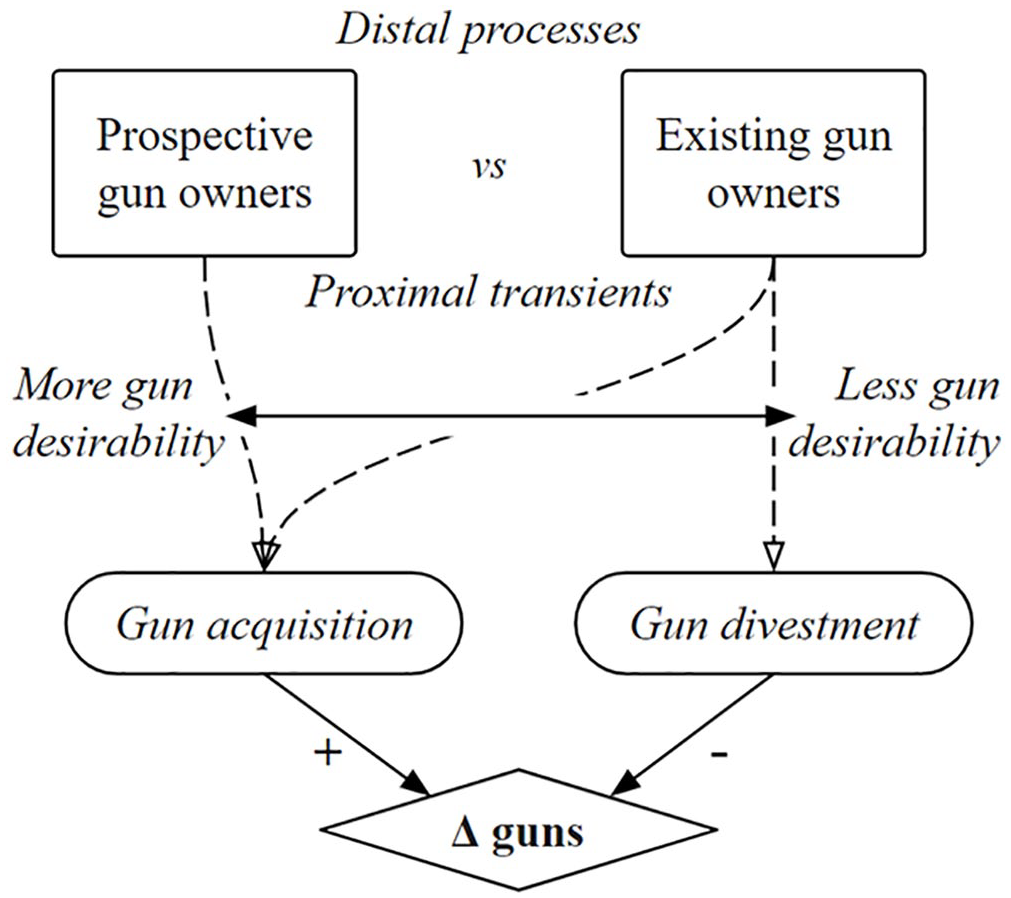
Framework of gun desirability.
At the top of Figure 2, a population is dichotomized into prospective gun owners and existing gun owners at a point in time. At this time point, there are accumulated processes (such as neoliberalism in the United States) and transients (now the U.S. COVID-19 pandemic) that affect both gun availability (held constant here) and desirability. Gun desirability refers to an affinity for guns that is necessary, but not sufficient, to catalyze or maintain gun ownership. More gun desirability increases the probability (represented by dashed lines) of acquiring guns, while less desirability increases the probability that existing gun owners divest guns. Habitus formation differentially affects how gun owners interpret transients (see Shapira and Simon 2018). Thus, gun owners may differ from nongun owners in their resulting gun desirability and decisions. Acquisition minus divestment (solid lines) yields a rate of change (Δ) of gun ownership. This momentary rate, when accumulated (integrated) over a time period, can then yield the change in privately held guns.
Scholars theorizing from a distal process (such as neoliberalism), or retrospectively examining a transient (like an election), currently wrestle with pernicious sampling error and/or causal heterogeneity when interrogating the causes of gun ownership. For example, studies using interview data to find that economic decline has motivated men to become gun owners (Carlson 2015a, 2015b) might not fully consider that women are similarly affected by economic duress (Mencken and Froese 2017). Gun desirability is better suited to test the predictions of prevailing theories. Furthermore, a gun desirability framework elevates gun divestment—typically the provenance of studies on government-mandated or government-funded buybacks (e.g., Bartos et al. 2020; Hazeltine et al. 2019)—as a sociologically tractable research question: What processes and transients decrease gun desirability so that gun owners are more likely to divest their guns?
Recent scholarship calls for precisely this research “on owners that might relinquish their guns in the future” (Kelley and Ellison 2021:23). The “Outcome Measurement” subsection of the “Data Collection and Experimental Design” section features a full discussion of gun desirability measurement.
COVID-19 Context
A sociocultural shift, such as toward neoliberal responsibilization, may affect people’s gun desirability “not by shaping the ends they pursue, but by providing the characteristic repertoire from which they build lines of action” (Swidler 1986:284). However, a pandemic likely shifts this repertoire of norms. The U.S. COVID-19 pandemic (and responses thereof) has (1) caused shortages of foods, masks, and other crucial items; (2) overburdened critical infrastructure like government services and hospitals; (3) plunged the economy into a recession amid widespread unemployment; (4) upended the social norms of everyday life; and (5) resulted in hundreds of thousands of deaths. During the study’s data collection period, the U.S. COVID-19 death toll surpassed 100,000 (The Atlantic 2020). Fear and worry increase as people’s perception of control (and repertoire of action) diminishes and consequences (like illness and death) increase in severity, even “when they view victimization to be relatively unlikely” (Jackson 2011:531).
These deeply “unsettled” times in turn distend our repertoires of action, requiring research “analyzing the structural constraints and historical circumstances” (Swidler 1986:280). Unsettled times therefore present an opportunity to study theorized effects on an outcome of interest (gun desirability). Specifically, the precarity caused by the pandemic may testably exacerbate latent trends in U.S. gun desirability. This study introduces a measurement and a dataset well suited to study trends and interactions, and is a response to Michèle Lamont and Ann Swidler’s (2014:166) call for research that moves “beyond the street corners so celebrated by classical ethnographers, to consider causality and/or historicity in a wide-ranging set of enabling and constraining factors.”
In the following subsections, I review various theoretical, historical, and empirical work that contribute to our understanding of gun desirability, especially during unsettled times. Note that this study evaluates gun desirability as a measure and does not test how well the following literature fits the known increase in pandemic gun sales (see Figure 1).
Shifts in U.S. Gun Culture
Gun culture in America has shifted significantly in recent decades. Handgun manufacture and sales (ATF 2021a, 2021b) and military-pattern rifle manufacture and sales (Eger 2018) have vastly increased, while interest in hunting has waned (Gallup, Inc. 2020). Gun culture divergence was noted in the 1980s (Lizotte and Bordua 1980), and defense-oriented gun ownership has since eclipsed hunting and sporting gun cultures (Pew Research Center 2013). David Yamane (2017) describes the current gun “culture of armed citizenship” as a modern “gun culture 2.0.” Specifically, the justification of gun ownership for defensive purposes has increased from 26 percent in 1998 to 63 percent in 2016, even as the risk of both violent and property crime has decreased in that period (Yamane 2017). Accompanying this significant change in gun culture are shifts in the demographics of U.S. gun owners.
While gun owners largely remain white, middle-class, male, and Protestant relative to the U.S. population (Gallup, Inc. 2020; Legault and Lizotte 2009; Yamane, DeDeyne, and Méndez 2021), their demographics are shifting. Fewer new owners grew up with guns; new gun owners more often own handguns and identify as liberal, women, and nonwhite (Wertz et al. 2018). Approximately 12 million, or one out of every five, gun owners identify as liberal. Liberal gun owners prefer less punitive social policies, suggesting that researchers who analyze gun owners as a unitary conservative block may miss important sources of heterogeneity (Yamane et al. 2021). Gun owners support laws restricting access to firearms (such as barring those convicted of felonies from purchase) and support background checks, but are averse to most other gun controls (Gallup, Inc. 2020; Smith 2003).
The stock of civilian guns in the United States approaches 300 million (Azrael et al. 2017). As ~35 percent of households in the United States are gun owning, such households often have three or more guns (Gallup, Inc. 2020). In the 2000s, Americans typically purchased 3 to 6+ million new firearms per year (ATF 2021a; Legault and Lizotte 2009), but this number has steadily increased; 13 million new guns were sold during 2019 (ATF 2021b; Brauer 2013). Newly purchased guns augment the total stock because guns are highly durable; firearms produced in the early twentieth century remain functional (Diaz 2005). Gun acquisition theories are therefore critical to help scholars situate both U.S. gun ownership and downstream health outcomes.
Responsibilization Theory
Neoliberal responsibilization is theorized as a sociocultural and political movement that opposes state hegemony of responsibility for order and welfare. Such a counter movement can be traced back to Thomas Hobbes’ (1651:82) caveat that, despite the hegemony of state violence, there are “some rights which no man can be understood by any words, or other signs, to have abandoned . . . A covenant not to defend myself from force, by force, is always void.” Max Weber’s ([1919] 1946:4) lasting definition of the modern state specified its “monopoly on the legitimate use of physical force” within its territory; the state was thus the “sole source of the ‘right’ to use violence.” Rising levels of gun sales, just like rising levels of violent crime, would in turn delegitimize a state’s claim on the right of force. Therefore, events that destabilize the state—such as a novel and serious pandemic—cause residents to perceive that the state has diminished capacity, delegitimizing the state monopoly on force and in turn increasing interest in gun ownership.
Recent theory brings this interplay of responsibility between state and citizens into the American context. David Garland (1996:452) introduced “responsibilization” to describe citizen assumption of crime control functions previously associated with the state. Garland’s (2001:89) Culture of Control postulated that there were distinct sets of consumption decisions (e.g., Prius vs. Hummer drivers) that mapped to demographics and beliefs, constituting “communities of choice.” Gun acquisition might be congruent with a community belief in personal responsibility for safety, while gun abstention would imply a greater reliance on the arms and adjudication of the state.
In Governing through Crime, Jonathan Simon (2007:200–204) extended this lens of consumer “security” culture. Specifically, Simon (2007:200) proposes a set of sociopolitical and legal practices that “channel responsibility for managing crime risks . . . into the family itself.” Guns fit into the many consumable “solutions” to risk that lead to a modern family “[l]ocked inside SUVs, parked in a secure garage, locked inside a ‘gated’ and privately policed subdivision” (Simon 2007:204). The privatization of risk may be part of a more general neoliberal agenda of deregulation and increased market control of the state (O’Malley 2009).
Responsibilization and Guns
Ethnographic work has found that American gun owners see guns as a tool to assert choice and avoid disempowerment, so that “if he’s packing, you’d better ask his permission first” (Kohn 2004:81). This partly substantiates Garland’s (2001) security consumption argument as gun owners situated their ownership as a way to responsibilize themselves. Jennifer D. Carlson (2012) extended responsibilization theory, showing how some gun owners assumed police-like roles and thereby “exceeded the confines” of Weber’s ([1919] 1946) state-monopolized force (Carlson 2014). Indeed, “I don’t dial 911” (Carlson 2012) is a common adage among gun owners.
Sovereign Subjects (Carlson 2014) have greater access to lethal force than other citizens via their gun ownership, yet are still subject to state laws. This responsibilization framework extends to gun populism (Carlson 2019) and police acceptance of gun ownership (Carlson 2020). Responsibilization can best be thought of as a milieu in which gun acquisition is normalized as a method to secure safety and well-being. This framework allows gun owners to dichotomize gun usage as “responsible” and legitimate or irresponsible and illegitimate, excising illegitimate gun usage that is linked to racialized conceptions of criminality (Vila-Henninger 2021). While responsibilization frames a context that is conducive to gun acquisition, it is hard to distinguish between gun acquisition as a symptom of responsibilization versus gun acquisition as a result of neoliberalism. Beyond supporting the idea that state destabilization (e.g., via the COVID-19 pandemic) may increase gun desirability, responsibilization is not well suited to explain differences in gun acquisition (or nonacquisition) among prospective gun owners.
Masculinity and Racialization
Guns are a key semiotic to U.S. coming of age stories, which often center white manhood in a quixotic “wild suburb” featuring guns, hunting, fatherhood, and heritage (Messner 2011; see also Bass 1985:73–77). The problem with these heritage masculinity accounts is that they no longer substantiate U.S. gun culture, which, as discussed earlier, now emphasizes self-defense rather than hunting.
Instead, men with concealed carry licenses often draw on a masculinity characterized by “responsible” violence and whiteness (Carlson 2015b; Shapira, Jensen, and Lin 2018; Stroud 2016). Licensees contrast their responsible violence with criminal violence. Criminal violence is nominally racially neutral; however, people of color are perceived as more criminal and therefore legitimate targets of gun violence (Shapira 2017). Under this framework, where (white) men are responsible for security, gun ownership can allow women to “be alone by affording them extra safety . . . The gun and the man appear interchangeable” (Carlson 2015a:101). Jennifer D. Carlson (2015a:405) finds that when “socioeconomic insecurity undermines men’s role as provider (even if all men do not experience this directly), guns provide a means for men to prove their utility and relevance outside the breadwinner role.” The economic insecurity engendered by the pandemic should therefore increase gun desirability, particularly for guns which provide tangible protection in the home, like pistols, rather than those largely restricted to range and hunting uses, like hunting rifles.
Gun owners, particularly white men, now seek out handguns and semiautomatic rifles as “foundational sources of power and identity” in “unsettling economics times” (Mencken and Froese 2017:21). This recent emphasis on semiautomatic guns and empowerment substantiates the previously discussed gun culture shift away from hunting. Therefore, I expect hunting rifle desirability to experience the smallest desirability increase (if any) from exposure to the pandemic video vignette condition.
Transients: Risk of Victimization and Political Threat
Gun advocacy organizations and gun trainers incorporate victimization scenarios to motivate gun ownership and justify training. For example, “National Rifle Association (NRA) course materials encourage students not just to actively imagine threats, but also to actively look for them,” as an exhortation to be keenly aware of potential danger (Carlson 2015a:78–79). These fears of crime, beyond reflecting the social norms of a community, speak to what communities “see as hostile to that social order” (Jackson 2006:261). The best protection against hostile elements is the “good guy with a gun,” a concept promulgated by gun trainers, who “socialize people into constructing the world (and especially black men) as a threat” (Shapira 2017:515–16).
The pithiest summation of this risk of victimization framework is a common NRA adage that “when seconds count, the police are only minutes away” (Awr 2018). Gun owners socialize to develop comfort with (1) the physical practice of carrying a gun and (2) the belief that killing with their guns is an acceptable outcome (Shapira and Simon 2018). This account suggests that gun acquisition will increase in relation to socially instilled fears of victimization. It is therefore no surprise that exposure to crime is positively correlated to gun carrying and suspicion of police efficacy (Smith 2003), and that crime risk appears to increase gun acquisition (Kleck et al. 2011).
This proposed relationship—that gun acquisition is motivated by the perceived risk of crime—is complicated by research showing that “although gun owners have consistently reported a belief that their guns make their homes safer, the arrival of a gun in the house apparently does not produce a lasting reduction in fear of crime” (Hauser and Kleck 2013:287). Developing this concept, Benjamin Dowd-Arrow, Terrence D. Hill, and Amy M. Burdette (2019:6) find that fear may drive gun ownership but that gun owners are less fearful than nongun owners on a variety of axes—the “causal order of this association is uncertain, [as] it is likely characterized by a complex combination of fears.” Because of this complexity, there is no a priori reason to expect that the pandemic vignette’s effects should differ in valence between gun owners and nongun owners.
Political “victimization” is another aspect of this account—evidenced by the surge of gun sales coincident with Obama’s election and reelection campaigns. Large spikes in gun sales in 2012 were “partially driven by fears of a future Obama gun-control policy” (Depetris-Chauvin 2015:67). Changes in risk perception, and fear of impending gun controls, partially explain gun acquisition in the wake of the Orlando nightclub shooting (Stroebe, Leander, and Kruglanski 2017). Indeed, gun purchases rise in the aftermath of U.S. mass shootings (Studdert et al. 2017) as media exposure arouses fear of gun controls (Porfiri et al. 2020; Porfiri et al. 2019). The risk of quarantine impeding access to guns during the pandemic (via store closures and decreased supply) should increase overall gun desirability.
Prior Studies of Intent-to-purchase
The design and hypotheses of this paper are influenced by several prior studies that utilized intent-to-purchase measures to understand U.S. gun ownership. Gary Kleck et al. (2011) found that perceived crime risk, along with actual robbery victimization (though not burglary), increases stated intentions to buy a gun. These results suggest that the prospect of social disorder stemming from the COVID-19 pandemic should increase gun desirability. However, as Kleck et al. (2011:319) did not “know how many of who stated that they planned to get a gun for self protection actually did so, and understand that the two are not the same,” this intent-to-purchase measure has limited external validity. Social desirability and other factors may bias participants’ responses to intent-to-purchase questions, complicating interpretation. See the “Outcome Measurement” subsection of the “Data Collection and Experimental Design” section for a complete discussion of the flaws inherent to intent-to-purchase measures.
Tara D. Warner and Courtney R. Thrash (2020) use Pew survey data to demonstrate that the link between crime risk and gun ownership is complex, supporting a framing that both distal processes and transient events (crime victimization) influence gun desirability and acquisition trends. Tara D. Warner (2020:12) elaborated on this finding with a survey (n = 954) of nongun owning U.S. Mechanical Turk (MTurk) participants, measuring openness to future gun ownership (“How likely are you to own a gun in the future?”) via a five-point Likert-type scale. Warner (2020) found that participants who identified as men were significantly more open to future gun ownership, but only women had a significant association between perceived risk of crime and openness to gun ownership. This complexity partly confirms research (Mencken and Froese 2017; Yamane et al. 2021) that different groups of gun owners have different underlying reasons for their gun ownership.
Margaret S. Kelley and Christopher G. Ellison (2021) use survey data to trifurcate participants (n = 3,103) into (1) gun owners, (2) nonowners who express openness to future gun ownership (“maybes”), and (3) nonowners who do not express openness to future gun ownership (“nevers”). They find that preparedness—including securitization through alarm systems, socialization among other gun owners, and other factors—and a highly complex set of other characteristics differentiate “maybes” from “nevers.” Recognizing this complexity, Kelley and Ellison (2021:23) advocate for research (1) that moves “beyond the owner/non-owner dichotomy” and (2) that offers a serious exploration of gun divestment. The gun desirability measure tested in this paper helps address these two calls to action.
The present paper contrasts with Kleck et al. (2011), Warner (2020), Warner and Thrash (2020), and Kelley and Ellison (2021) by using an experimental design, including both gun owners and nongun owners in the participant pool, and by testing gun desirability rather than intent-to-purchase. An important distinction is that the purpose of this paper is to validate the measure of gun desirability. This validation will allow researchers to test the causal impacts of theorized motivations of gun ownership, while the cross-sectional and nonexperimental designs common with intent-to-purchase studies reveal the correlations of theorized motivations.
Data Collection and Experimental Design
Preregistration and Participant Recruitment
Data collection, experimental design, hypotheses, and general analytic strategy were preregistered with the Open Science Foundation on May 15, 2020 (see Sola 2020 for a link to the preregistration). There are three significant departures from the preregistration plan, which was registered prior to piloting or data collection. First, editors suggested focusing on the pandemic video vignette; therefore, two other video vignettes and sexual identity interactions will be analyzed in future work. Second, in Study 1, Bonferroni-corrected t-tests are more sensical than the initially proposed analysis of variance (ANOVA) tests. Third, the bimodal distribution (see Figure 4) and interval nature of the gun desirability outcome variable necessitated a more thorough analysis than the proposed ANOVA and ordinary least squares (OLS) regression models. Hypotheses, model functional forms, and assumptions are addressed in the “Hypotheses and Methods” section, with further discussion for Study 2 in Appendix B.
Participants were recruited from May 26 to June 18, 2020, to complete a survey experiment via MTurk for a small monetary fee, where it was advertised as a “5 min survey containing a 1 min video and attention check.” The participant pool consisted of a nationwide sample of U.S. residents, aged 21 or older. Such samples recruited via MTurk are well suited for survey experimental designs if data quality standards are both measured and incentivized (Crump, McDonnell, and Gureckis 2013; Hunzaker and Mann 2020; Shank 2016). Beyond age and U.S. residency, two further restrictions were applied to the sample pool. First, an approval rating of 95 percent or above was required on prior MTurk tasks (known as human intelligence tasks, or HITs), which is a standard data quality measure (Peer, Vosgerau, and Acquisti 2013; Pickett, Roche, and Pogarsky 2018). Second, participants who had done prior work on my surveys (or who had taken this survey once already) were prohibited from (re)taking the survey to avoid treatment contamination (Barnum and Solomon 2019).
Video Vignettes
Participants first completed a brief screening questionnaire to verify that they could play and understand media files, met the 21+ age requirement of the study, and resided in the United States. Next, participants were randomly assigned to one of two conditions containing video vignettes. Video vignettes were chosen, as opposed to alternative treatments, because a different set of participants had frequently failed attention checks during a 2019 pilot of text vignettes.
In the control condition, participants viewed a one-minute video excerpt introducing the “Deflategate” American football controversy of 2015 (BuzzFeed 2018). This control condition was designed to arouse participants while being orthogonal (unrelated) to gun ownership and desirability. Deflategate was a cheating controversy stemming from a 2015 New England Patriots versus Indianapolis Colts football game. The Patriots, and specifically quarterback Tom Brady, were sanctioned by the National Football League for allegedly underinflating their footballs. Without the inclusion of a control video, any analysis of treatment effects would be confounded by the possibility that watching a video independently influences viewer’s gun desirability. The video first introduces the two hosts of the show, who hold differing views about the Deflategate football controversy, and then begins a narration of pertinent events during the New England Patriots versus Indianapolis Colts football game in question. The video is cut to end on a mild cliffhanger.
The treatment condition was a one-minute news video excerpt about increased grocery, liquor, and gun sales due to the COVID-19 pandemic and related fears of social disorder (NBC 2020). This vignette was selected specifically because it features the pandemic in conjunction with several theorized causes of gun desirability: fears of social disorder, increased gun sales, lack of gun availability, perceived utility of guns for self-defense, and a lack of effective government responses. Amid other videos that addressed such themes, this video was selected because it (1) described several national contexts and concerns aroused by the COVID-19 pandemic and (2) addressed these topics within a one-minute time span.
During the video, a narrator explains that the ongoing COVID-19 pandemic is causing “long lines” and supply shortages at grocery, pharmacy, liquor, and gun stores. In the first of two interview segments, a white woman outside of a grocery store nervously expresses her hope that supplies will persist “until who knows how long this’ll last” (NBC 2020). In the second and longer interview segment, a white man is interviewed while waiting in line outside of a gun shop, explaining that he has decided to buy a gun because “I’m afraid that, if stuff gets worse, people are—people are gonna try to loot you, and I want my protection.” The narrator then reports similar lines “coast-to-coast,” driving dwindling supplies of guns and ammunition (NBC 2020).
As previously noted, the pandemic video vignette features several theorized causes of gun desirability. This vignette is not well suited for disaggregating which aspect(s) of the COVID-19 pandemic contributed to the known increase in pandemic gun sales (see Figure 1). As the purpose of Study 2 is to validate the novel measure of gun desirability against this known increase in gun sales during the pandemic, the video vignette’s inclusion of several theorized causes of gun desirability buttresses external validity.
A multiple-choice attention check question was presented immediately after participants viewed either the control or pandemic video vignette. As advertised in the MTurk recruitment, participants who failed the attention check were not able to complete or retake the survey.
Outcome Measurement
Immediately after vignette exposure, participants filled out the outcome measures: horizontal sliding scales of gun desirability accompanying pictures of a Glock pistol, an AR-15-pattern semiautomatic rifle, and a bolt-action hunting rifle. All three outcome measures were presented in random order on the same page, immediately after the video vignette (control or treatment) and attention check (see Table 1). Presenting all three on the same page prevents attenuation by limiting the number of actions (clicks and page changes) and elapsed time participants had to traverse between the vignette and outcome measures. To complete the outcome measure, participants had to click on the sliding scale and drag to their desired point. Requiring participant input helps mitigate the potential for anchoring on an initial point of a measure (Maineri, Bison, and Luijkx 2019).
Participant Attention Check and Subsequent Survey Completion Rates.
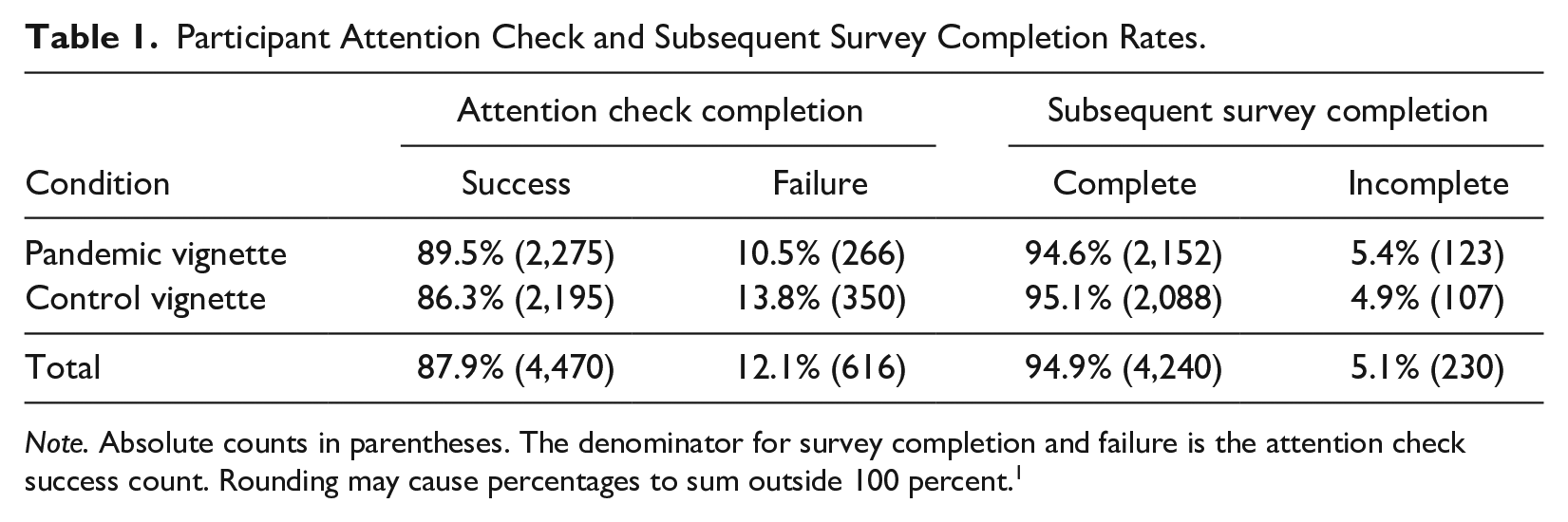
Note. Absolute counts in parentheses. The denominator for survey completion and failure is the attention check success count. Rounding may cause percentages to sum outside 100 percent. 1
The outcome question directed participants to “Take a look at the gun below,” displayed the referenced gun, and asked participants to “Use the slider to show how desirable this gun is to you.” The left-hand side of each sliding scale was labeled as “least desirable,” while the right-hand side was labeled as “most desirable.” The response was recorded on the interval of [00.00,100.00], with 0.00 corresponding to “least desirable” and 100.00 to “most desirable.” Participants saw the graphical position of their slider selection rather than this numerical record. For review, see the hunting rifle sliding scale outcome measure below (see Figure 3).
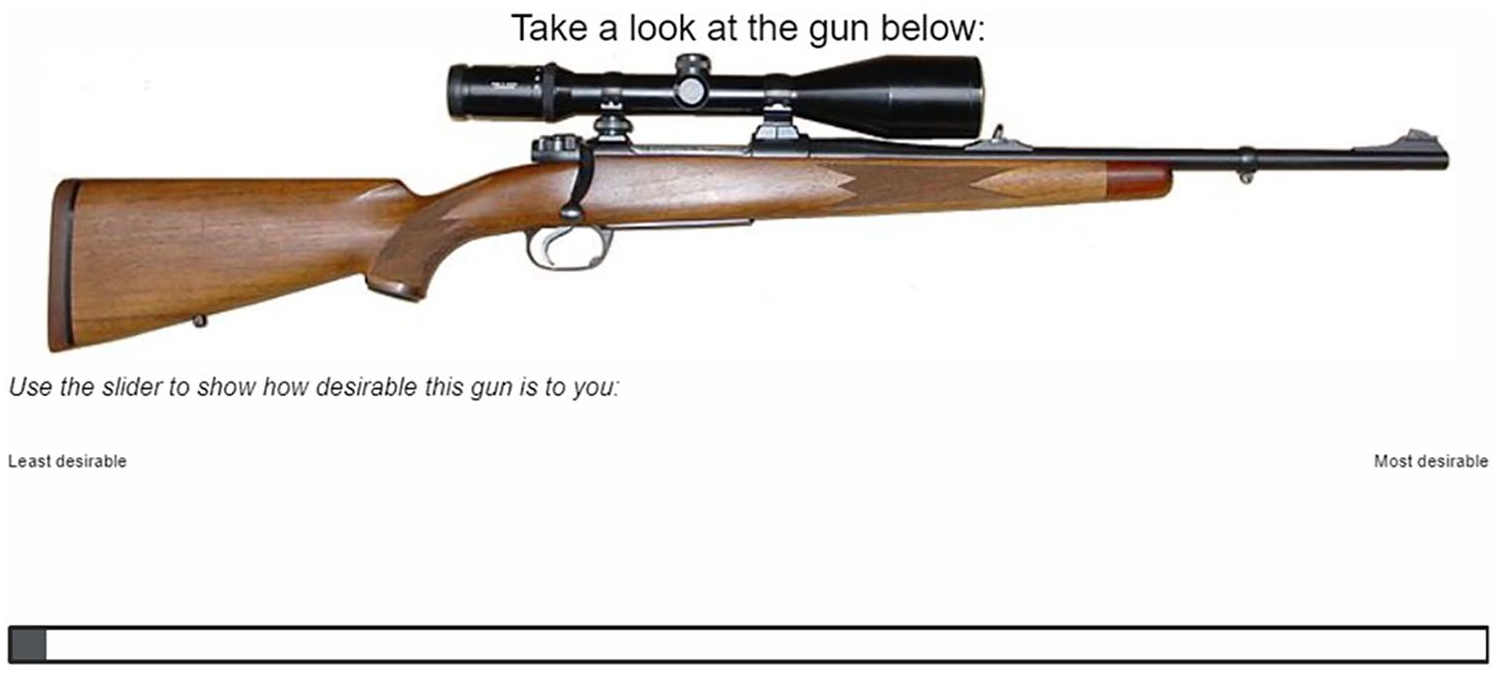
Hunting rifle outcome measure example.
A sliding scale, rather than a Likert-type scale, was chosen for two reasons. First, there is no reason to believe that desire manifests at the discrete levels of an ordinal Likert-type scale, and therefore measuring on a continuous scale may have less measurement error. Second, a continuous scale avoids the problem of participants fixating on a “neutral” middle position with odd Likert-type scales, while also avoiding the opposite problem of neutral participants unable to express a genuine neutral preference with even Likert-type scales (Bishop 1987; Guy and Norvell 1977; Kalton, Roberts, and Holt 1980; Nowlis, Kahn, and Dhar 2002).
An alternative approach would be to directly ask participants about their intention, or lack thereof, to purchase a gun—also known as an “intent-to-purchase” measure (often time-bound: “Will you purchase a gun within the next 3 months?”). However, there are two major impediments to such a measurement: Intentions have low external validity, and direct questioning on a partisan topic may deter truthfulness. First, intent-to-purchase questions measure accounts of prospective behavior, rather than participant’s actual future behavior. Our accounts of our future behavior are fallible; “talk is cheap” and is not a reliable indicator of future behavior in ethnographic (Jerolmack and Khan 2014), survey, or experimental contexts (Eifler and Petzold 2019). Intent-to-purchase questions may also catalyze purchases via self-generated validity (Chandon, Morwitz, and Reinartz 2005), which is of concern when administering a large survey experiment such as this study (N = 4,240).
Second, an intent-to-purchase question may be interpreted in a partisan context. Conservatives are more apt to nonresponse when participating in a survey, particularly when answering questions about personal gun ownership (Urbatsch 2018). However, gun owners do answer questions about their gun ownership behavior accurately (Smith 2003). Eliciting gun desirability on a sliding scale is thus less likely to result in an outcome afflicted by responses that are missing in nonrandom ways (as a result of “gun-question-shy” participants). An outcome variable with data missing in nonrandom ways, also known as “endogenous sample selection” (Wooldridge 2018:315–16), is a problematic violation because the missing data cannot be corrected by imputing outcome values or by dropping nonresponses.
A willingness-to-pay outcome measurement (“How much money would you pay for this gun?”), while potentially increasing external validity, is confounded by market conditions. Regardless of how desirable a participant may or may not find a gun, their willingness-to-pay ceiling and floor may be constrained by local and temporal market conditions that this study cannot control for. For example, a participant could easily ascertain the local price and availability of any gun through a search engine. Furthermore, a willingness-to-pay outcome measure would tread close to marketing research. The benefit of gun desirability is that it measures participants’ disposition rather than their economic resources and gun market knowledge.
Survey Questions and Sample Characteristics
On the survey page after the outcome measures, participants completed a set of up to nine questions. These questions included measures of gun ownership; thought(s) since January 1, 2020, of buying a gun or completed purchase(s); beliefs about the origins of COVID-19 (natural, unsure, released unintentionally from a laboratory, and released intentionally from a laboratory); and whether the participants had encountered significant pandemic impacts (health, financial, and/or quality of life). The COVID-19 beliefs and pandemic impact questions act as a robustness check on the measurement of gun desirability.
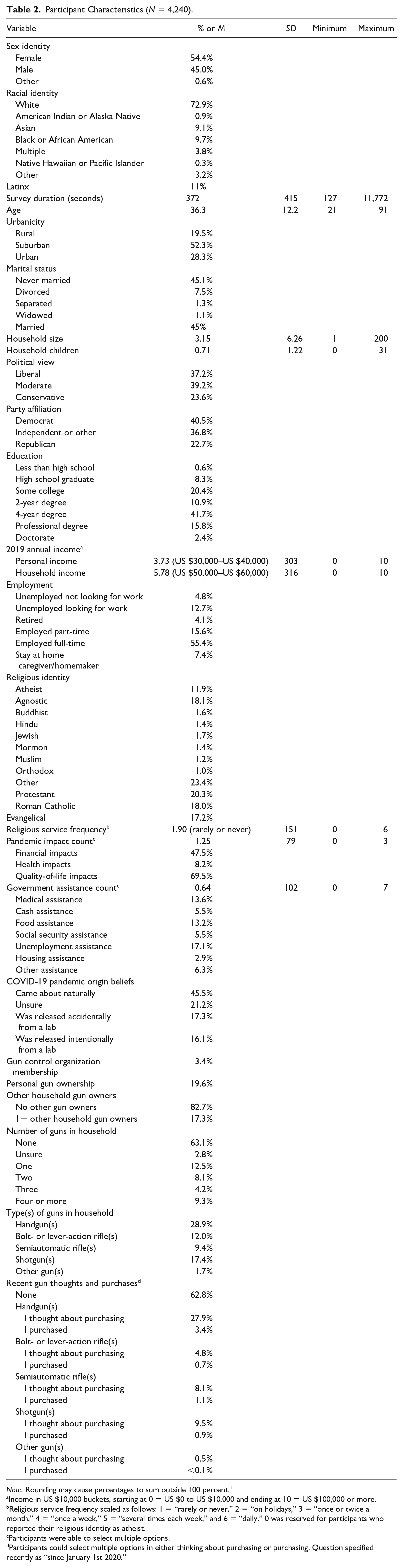
In the last stage of the survey data collection, participants completed up to 19 demographic questions (see Table 2 for sample characteristics). After completing the survey questions, participants were served a completion notice with a redemption code for input on the MTurk Web site. Finally, all participants (including those who failed the attention check) were shown the contact information and institutional affiliation of the principal investigator. Survey completion time was measured from opening the survey window in Qualtrics to viewing the contact information. Among participants who successfully completed the survey, median time to completion was five minutes and five seconds. See Supplemental Appendix C for variable definitions.
Participant Characteristics (N = 4,240).
Note. Rounding may cause percentages to sum outside 100 percent. 1
Income in US $10,000 buckets, starting at 0 = US $0 to US $10,000 and ending at 10 = US $100,000 or more.
Religious service frequency scaled as follows: 1 = “rarely or never,” 2 = “on holidays,” 3 = “once or twice a month,” 4 = “once a week,” 5 = “several times each week,” and 6 = “daily.” 0 was reserved for participants who reported their religious identity as atheist.
Participants were able to select multiple options.
Participants could select multiple options in either thinking about purchasing or purchasing. Question specified recently as “since January 1st 2020.”
Reasons for survey failure and data exclusion were as follows: (1) participants reattempting the survey despite failing an attention check, (2) multiple survey attempts resulting in the exclusion of subsequent responses (if a user took the survey more than once, despite MTurk and Qualtrics-based efforts to prevent this), (3) timing out of the survey or other reason for incompletion, and (4) missing responses (n = 10) to pandemic questions. No significant differences in sample characteristics, pairwise correlations, and OLS multiple regression estimators were observed when excluding missing responses. Finally, one participant reported problems viewing videos when using the Microsoft Edge browser. This participant was compensated, but their data were dropped from the analysis. Table 2 displays the descriptive statistics of the final sample.
As is common in MTurk samples, participants were relatively more educated, more liberal, less religious, and younger than the U.S. population as a whole (Barnum and Solomon 2019; Hunzaker and Mann 2020; Pickett et al. 2018; Shank 2016). Unusually, the racial composition of the sample was similar to the U.S. population; whites are often overrepresented in MTurk samples. Gun ownership was consistent with U.S. estimates (Gallup, Inc. 2020) of 30 to 35 percent household gun ownership (~35 percent in the sample) and 15 to 20 percent individual gun ownership (~20 percent in the sample). There is no reason to expect systematic bias as a consequence of sample bias, particularly as the experimental procedure is randomly assigned.
Hypotheses and Methods
Study 1: Gun Desirability Measure Validation
In Study 1, gun desirability is validated against the demographic characteristics and beliefs of gun owners. Specifically, Study 1 compares mean differentials derived from t-tests—a variant of a difference-in-differences design. Nongun owners are compared with gun owners on a variety of demographic characteristics, drawn from national surveys of gun ownership and behavior (Gallup, Inc. 2020; Legault and Lizotte 2009; Parker et al. 2017; Smith 2003). Participants with above the median overall gun desirability (above-median desirers) are compared with those with below or equal to the median overall gun desirability (below-median desirers) on the same characteristics. I predict that significant differences in demographics within each dichotomous pairing—gun owners and nongun owners, above-median desirers and below-median desirers—will be mirrored. For example, if Evangelical Christianity is significantly more common among gun owners than nongun owners, Evangelical Christianity should also be significantly more common among above-median desirers than below-median desirers.
As desirability measures inclination toward gun ownership, rather than gun ownership itself, I do not expect perfect parity between above-median desirers and gun owners. First, the demographic differentials of gun owners versus nongun owners should often be larger in magnitude than differentials of above-median desirers versus below-median desirers, as gun ownership is a more significant demarcation than a dichotomization of gun desirability. Second, gun desirers are not always able to acquire guns—inclination is not action.
Demographic covariates of interest include sex (male associated with greater gun ownership), urbanicity (rural associated with greater gun ownership), political and party affiliations (conservative affiliation and Republican party associated with greater gun ownership), age (increased age associated with greater gun ownership), racial identity (white associated with greater gun ownership), and evangelical identity (associated with greater gun ownership than nonevangelical—see Whitehead, Schnabel, and Perry 2018; Yamane 2016), among other covariates of sociological significance (e.g., household income, marital status).
Gun owners (n = 831, 19.6 percent) and nongun owners (n = 3,409, 80.4 percent), as well as above-median desirer and below-median desirer (n = 2,120 in each group), are t-tested on the set of covariates. This procedure results in two mean differentials for each covariate: a differential for gun owners versus nongun owners, and a differential for above-median desirers versus below-median desirers. Finally, these two differentials are compared for each covariate, examining the significance and direction. B. L. Welch’s (1947) approximation is used to account unequal sample sizes (between gun owners and nongun owners) and the possibility of unequal variances among both groups (Ruxton 2006). Creating a dummy variable based on median values of a continuous variable, and then using a t-test with unequal variances, is nonparametric and highly resilient to measurement errors (Wald 1940).
Study 2: Pandemic Vignette Effects on Gun Desirability
Formally, gun desirability is a function of video vignette exposure and covariates, and the coefficient for pandemic video vignette exposure is positive. In equation form,

where
OLS multiple regression is usually suited to causal inference in randomly assigned experimental contexts (Shadish, Cook and Campbell 2002; West and Thoemmes 2010), such as the design utilized here. Gun desirability is measured on the closed interval [0,100], least desirable [0] to most desirable [100], and is therefore bounded, rather than censored or truncated, to that interval. This distinction is meaningful when considering model selection. Some models (like the two-limit Tobit) are ideal for censored or truncated data but less so for natural boundaries (like participants’ indications of least desirable and most desirable), whereas other models (like the Probit) assume a Gaussian outcome distribution (Wooldridge 2010). The distribution of all three outcome measures was bimodal, with responses massed at least desirable [0] and most desirable [100]. Figure 4 displays the distribution of overall desirability, an average of all three desirability measures (see Appendix A for individual outcome distributions).
OLS may yield accurate coefficient estimates for mean values, but may not yield sensical results as combinations of covariates are considered. Such combinations of OLS estimators might exceed the [0,100] interval or feature greater magnitudes of error at the interval boundaries (heteroscedasticity). The usage of a large sample helps to mitigate model concerns that stem from the nonnormal distribution of outcomes (Lumley et al. 2002), but does not necessarily mitigate concerns that stem from the interval scale of the outcome.
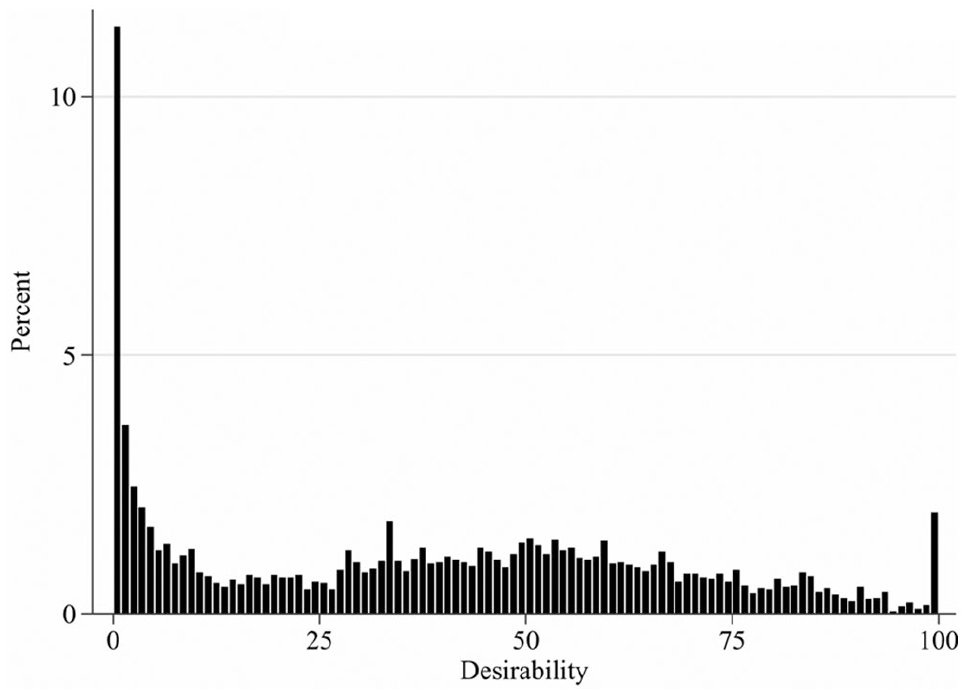
Histogram of overall desirability from 0 (least desirable) to 100 (most desirable).
There are numerous classes of models that may be appropriate for such a “fractional” outcome variable (Papke and Wooldridge 1996; Ramalho, Ramalho and Murteira 2011; Wooldridge 2010). Given that there is considerable massing (see Figure 4) at the boundaries of 0 (least desirable) and 100 (most desirable), the most appropriate models are fractional logit (FL) regressions and zero- and one-inflated beta (ZOIB) regressions. FL regressions are a generalized linear model that predicts the expected value (also known as conditional mean) of a bounded but continuous outcome given a vector of explanatory variables (Papke and Wooldridge 1996; Wedderburn 1974). Note that these regressions predict an expected value rather than an estimator that is linear and unbiased throughout the full range of outcome variables (which OLS attempts). As such, FL regressions treat the difference between boundary (here least desirable and most desirable) and interval outcomes as due to a “gradual” process “rather than a completely different process” (Buis 2020:13). As quasi-maximum likelihood estimators they are also quasi-parametric, meaning that FL regressions do not necessitate any particular probability distribution function of the outcome variable (Gourieroux, Monfort and Trognon 1984). Furthermore, quasi-maximum likelihood estimators are “strongly consistent” and resilient even when the functional form of explanatory variables is misspecified (White 1982:4). FL regression complements OLS regression because of its robustness to nonnormal errors and better fit to the fractional outcome variables.
The pandemic video vignette may affect desirability differently for participants who find guns most desirable [100], least desirable [0], or in the interval between (0,100) (Ospina and Ferrari 2012). ZOIB regressions test for this causal heterogeneity by simultaneously estimating equations for each of these three outcome intervals: two logit regressions for outcome values of [0] and [100], and a beta regression for the (0,100) interval. This simultaneous estimation is computationally intensive and results in three estimators for each covariate—one for each of the three outcome interval models.
Because participants likely vary in the plasticity of their gun desirability, as well as how covariates affect their desirability, I relax the independent and identically distributed error assumption and calculate robust standard errors in all three (OLS, FL, and ZOIB) regressions. Appendix B includes further discussion of model selection, specification, and assumption testing for Study 2.
Results
Study 1
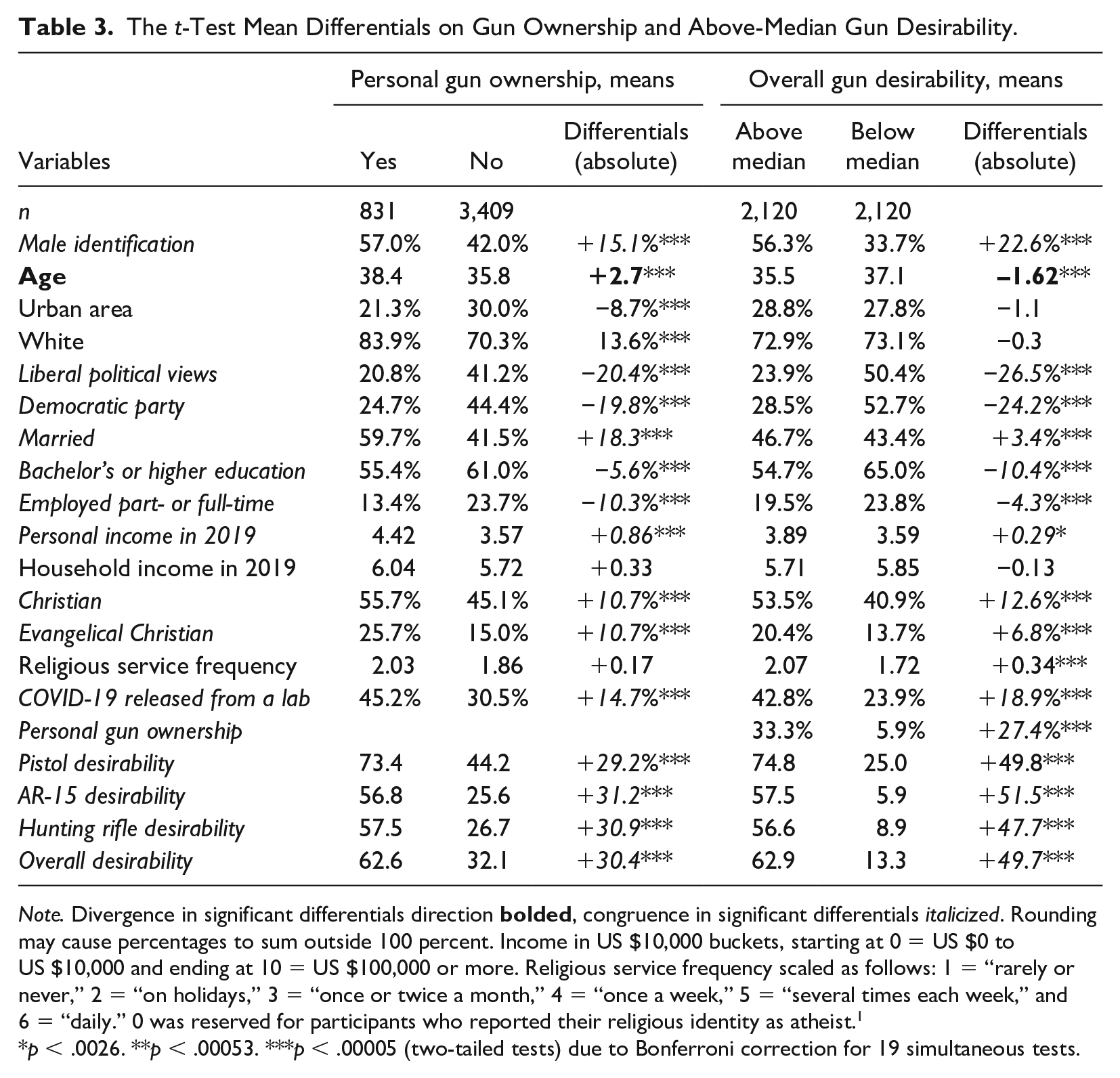
Table 3 presents group mean t-test differentials between (1) gun owners and nongun owners and (2) above- and below-median desirers.
The t-Test Mean Differentials on Gun Ownership and Above-Median Gun Desirability.
Note. Divergence in significant differentials direction
p < .0026. **p < .00053. ***p < .00005 (two-tailed tests) due to Bonferroni correction for 19 simultaneous tests.
Differentials are largely consistent between the two mean comparisons. Promisingly, gun owners exhibit much higher gun desirability than nongun owners. There is only one significant direction change: Above-median desirers were significantly younger (–1.6 years mean difference) than below-median desirers, while gun owners were significantly older (+2.7 years mean difference) than those who did not report gun ownership.
Study 2
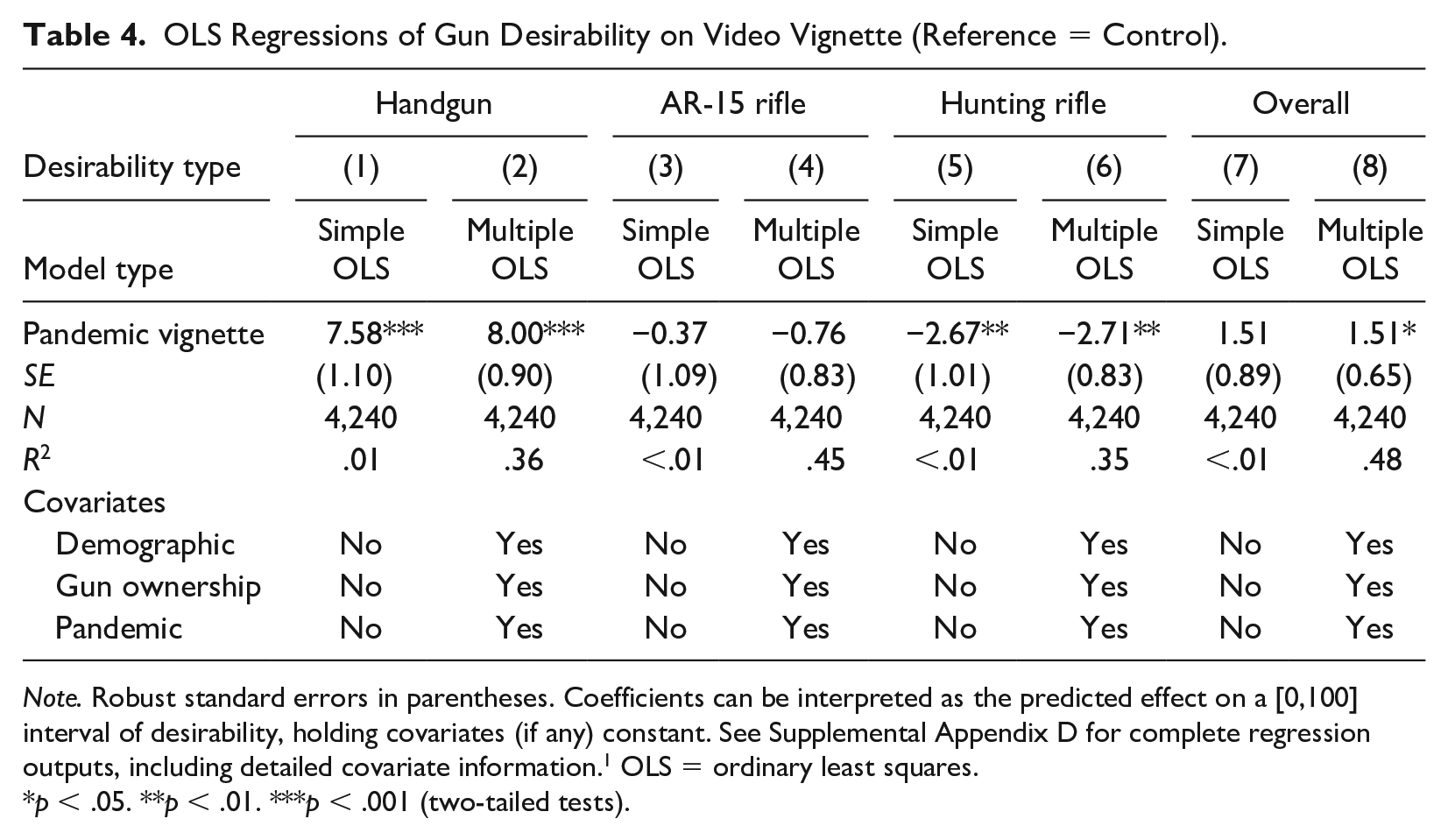
The pandemic video vignette increases handgun desirability ~8.0 points on the [0,100] interval with a high degree of significance in both simple and multiple OLS regression models. AR-15 desirability is not significantly affected by the pandemic vignette. Hunting rifle desirability is significantly decreased by ~2.7 points on the [0,100] interval. Last, overall desirability is increased by ~1.5 points on the [0,100] interval, without significance in the simple regression model but with significance in the multiple regression models. Coefficient point estimates are stable between simple and multiple OLS regression models (see Table 4).
OLS Regressions of Gun Desirability on Video Vignette (Reference = Control).
Note. Robust standard errors in parentheses. Coefficients can be interpreted as the predicted effect on a [0,100] interval of desirability, holding covariates (if any) constant. See Supplemental Appendix D for complete regression outputs, including detailed covariate information. 1 OLS = ordinary least squares.
p < .05. **p < .01. ***p < .001 (two-tailed tests).
Results for the fractional logit models are similar to the OLS regression models, with some slight improvements to standard errors resulting in marginally increased significance for some coefficients. The pandemic video vignette increases the expected value of handgun desirability ~7.9 points on the [0,100] interval with a high degree of significance in both simple and multiple regression models. The expected value of AR-15 desirability is not significantly affected by the pandemic vignette. The expected value of hunting rifle desirability is decreased by ~2.7 points on the [0,100] interval with a high degree of significance. Last, the expected value of overall desirability is increased by ~1.6 points on the [0,100] interval, without significance in the simple regression model but with significance in the multiple regression models. Coefficient point estimates are stable between simple and multiple FL regression models (see Table 5).
FL Regressions of Gun Desirability on Video Vignette (Reference = Control).
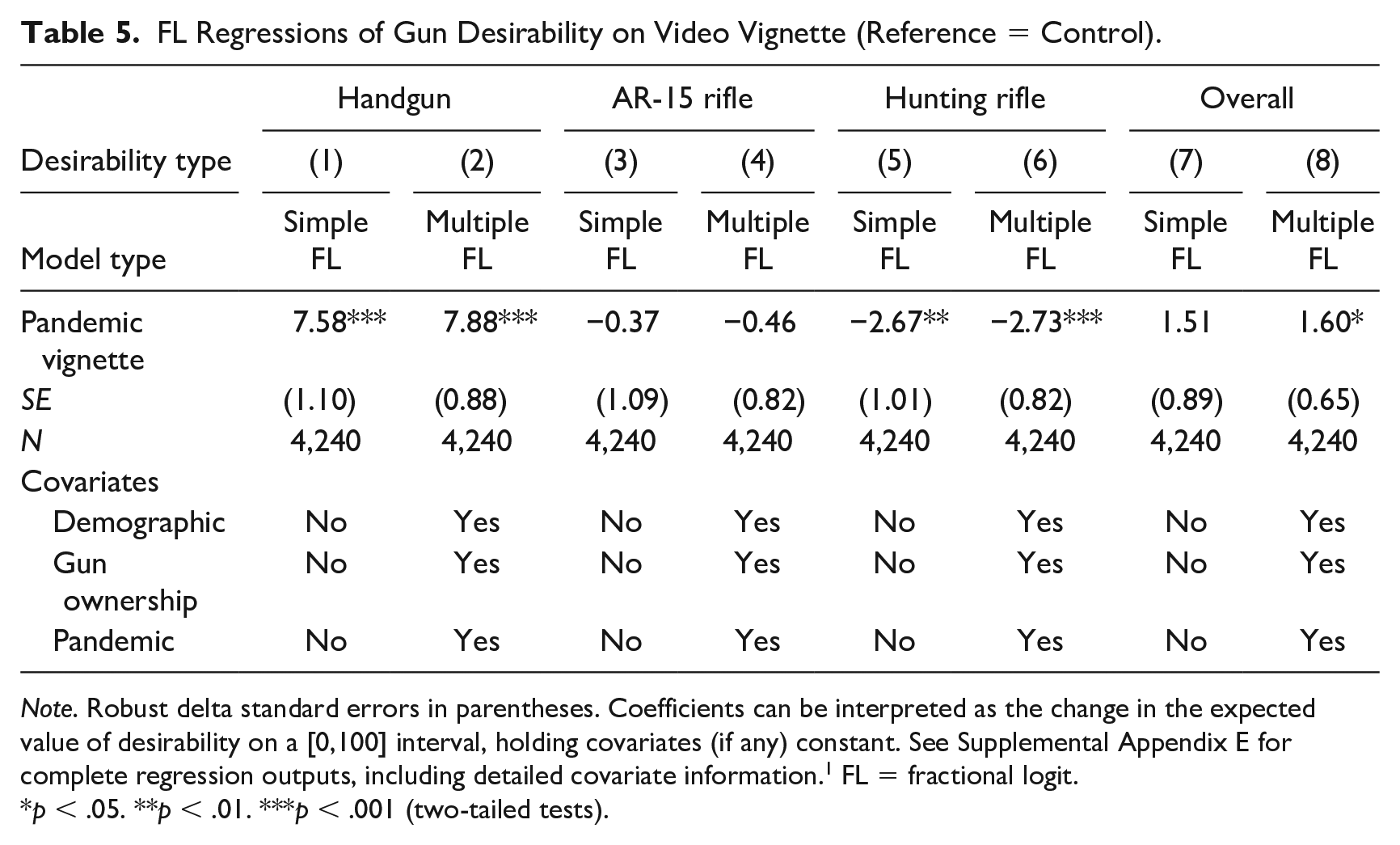
Note. Robust delta standard errors in parentheses. Coefficients can be interpreted as the change in the expected value of desirability on a [0,100] interval, holding covariates (if any) constant. See Supplemental Appendix E for complete regression outputs, including detailed covariate information. 1 FL = fractional logit.
p < .05. **p < .01. ***p < .001 (two-tailed tests).
Beta regression results, representing the closed (0,100) interval of outcomes, for the ZOIB regression models are comparable with the OLS regression and fractional logit models. The pandemic video vignette increases the expected value of handgun desirability ~6.3 points on the (0,100) interval with a high degree of significance in both simple and multiple regression models. As per previous regressions, the expected value of AR-15 desirability is not significantly affected by the pandemic vignette. The expected value of hunting rifle desirability is decreased by ~1.6 points on the (0,100) interval, with significance in the multiple regression models only. Last, the expected value of overall desirability is increased by ~2.0 and ~1.5 points on the (0,100) interval in the simple and multiple regression models, respectively, both with significance. Coefficient point estimates are stable between simple and multiple regression model types but have less precision than in the OLS and fractional logit models (see Table 6).
ZOIB Regressions of Gun Desirability on Video Vignette (Reference = Control).
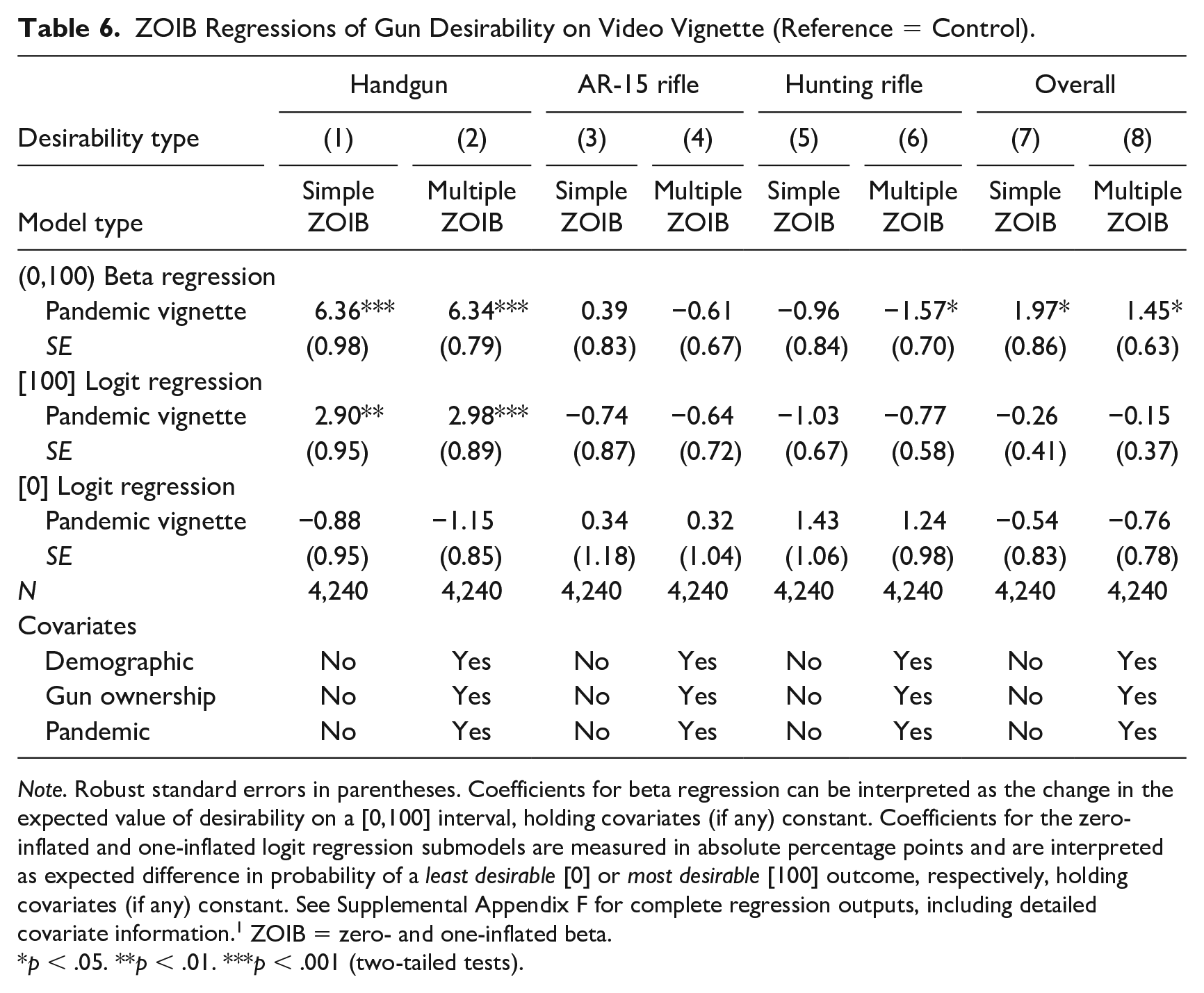
Note. Robust standard errors in parentheses. Coefficients for beta regression can be interpreted as the change in the expected value of desirability on a [0,100] interval, holding covariates (if any) constant. Coefficients for the zero-inflated and one-inflated logit regression submodels are measured in absolute percentage points and are interpreted as expected difference in probability of a least desirable [0] or most desirable [100] outcome, respectively, holding covariates (if any) constant. See Supplemental Appendix F for complete regression outputs, including detailed covariate information. 1 ZOIB = zero- and one-inflated beta.
p < .05. **p < .01. ***p < .001 (two-tailed tests).
For the zero- and one-inflated logit portions of the ZOIB models, interpretation is simpler because there is only one significant result. For handgun desirability, exposure to the pandemic video vignette results in a ~3.0 percentage point greater probability of a most desirable [100] rating, which is highly significant in both simple and multiple regression models.
Discussion and Limitations
Interpretation of Results
Study 1 confirms the validity of gun desirability as a measure of inclination toward gun ownership. Deviations between gun owners and gun desirers are congruent with this definition and confirm that gun desirability is not a measure of gun ownership. Gun owners are older than nongun owners, but gun desirers are slightly younger than participants with below-median gun desirability. Gun owners rarely divest guns, so gun ownership accumulates with age while gun desirability is not so affected. Furthermore, interest in gun ownership requires resources (e.g., income, time, stable and independent living situation, perhaps licensure) to manifest as gun ownership. Older U.S. residents have more of these prerequisite resources, which may explain why gun ownership is skewed toward older Americans while age itself is negatively associated with gun desirability in Study 2 (see Supplemental Appendices D–F for point estimates).
Study 2 confirms that exposure to the pandemic video vignette significantly increases overall gun desirability relative to the control. Handgun desirability is significantly increased by exposure to the pandemic video vignette. This should not surprise U.S. gun researchers, given the known increase in gun sales (particularly of handguns) during the pandemic period. Within the ZOIB regressions, the significant one-inflated logit coefficient for the pandemic video vignette effect on handgun desirability buttresses the results of the OLS, fractional logit, and beta regression functional forms. The limited number of least desirable [0] and most desirable [100] responses (see Appendix A) may have impeded the significance of other possible zero- and one-inflated logit regression results.
However, AR-15 rifle desirability is not significantly affected, and hunting rifle desirability experiences a significant (though small in magnitude) decrease in desirability. This represents a shift of gun interest away from sporting and further toward self-defense rather than a uniform increase in gun desirability. The surprising lack of a significant effect on AR-15 desirability, and the small but significant decrement to hunting rifle desirability, are likely due to the simultaneous presentation of the gun desirability outcome measures. Because participants indicated their pistol, AR-15, and hunting rifle desirability on the same page of the survey, results should similarly be analyzed in concert as both (1) an overall increase in gun desirability due to the pandemic video vignette, and (2) a shift toward self-defense gun desirability (rather than hunting) due to the pandemic video vignette. Had AR-15 desirability been measured alone, I expect that desirability would have increased relative to the control video vignette. Study 2 cannot estimate this effect; instead, Study 2 demonstrates that the pandemic video vignette increases handgun desirability more than AR-15 desirability, a relative effect. Therefore, Study 2’s nonsignificant AR-15 finding does not conflict with increased AR-15 sales associated with the COVID-19 pandemic.
OLS regressions with robust standard errors produced estimators consistent with estimators from the fractional logit regressions, as well as interval ZOIB regressions. Fractional logit regressions outperformed OLS regressions in point estimate precision and significance by a small margin. Researchers interested in participants who rated guns as most desirable or least desirable should consider the ZOIB regression’s ability to produce estimators for the likelihood of these extreme outcomes.
Limitations of This Study
A key limitation of this study is that the novel gun desirability measure was not simultaneously tested with other measures. Future research could compare this interval measure of gun desirability with a more traditional (1) willingness-to-pay measure, as is common in economics, and (2) a Likert-type scale, as is common in sociological and psychological research. A related limitation is that gun desirability does not replace estimates of gun sales. The relationship between shifts in gun desirability and shifts in gun sales is therefore open to future research.
The selection of video vignettes (both control and pandemic) may limit the external validity of Study 2. Indeed, an experiment featuring different vignettes could (and often should) have different outcomes. For example, a different scholar could have chosen a treatment video vignette that highlighted different aspects of the COVID-19 pandemic, such as its aerosol spread or other transmissibility characteristics. Rather than view vignette choice as a limitation, I consider myriad vignette possibilities as an opportunity for researchers to (1) carefully consider how their selected vignette(s) relates to prior work and theory, and (2) foment research featuring alternative vignette selections, leading to a more thoroughly tested body of theory. A clear (ideally preregistered) discussion of vignette selection, experimental design, and hypothesis testing should protect against overbroad claims or interpretations.
This research requires a large sample size because vignettes account for a small proportion of variance in gun desirability. For example, the largest amount of variance explained by the pandemic video vignette was ~.01 R2 for handgun desirability within the simple OLS regression model. This is sensical as it would be surprising (and potentially alarming) if any short vignette accounted for a significant proportion of overall variance in gun desirability. This affects research scalability, as scholars must choose two of three desirable research traits: estimator precision, covariate diversity, and low cost per participant. This study, which featured screening questions, a one-minute video vignette, an attention check, three outcome measures, and 28 covariates that required about five minutes to complete, costs nearly US $1 per participant.
Discussion
This novel research demonstrates an experimental method to test theories of gun ownership, and prospective policy interventions, through a validated measure of gun desirability. Scholars are no longer limited to retrospective gun sales estimates, or intent-to-purchase measures of questionable validity, when investigating prospective changes in gun interest. This study also establishes a dataset for the analysis of gun ownership, gun desirability, and a rich variety of covariates. My hope is that this research serves as a foundation for future scholarship to (1) discern trends of increasing and decreasing gun desirability, (2) test theorized causes and mechanisms of gun desirability, and (3) test prospective policy interventions’ impact on gun desirability. One open question is whether white men in economic duress, or exposed to a vignette of economic duress, desire guns significantly more than other groups (Carlson 2015a; Mencken and Froese 2017). Other inquiries might include the role of Evangelical Christianity (Whitehead et al. 2018; Yamane 2016), racial threat (Shapira 2017), belief in “protective” masculinity (Stroud 2016), and further theorized causes and mediators of gun ownership.
Research with participants from populations of interest—including the incarcerated, youth, and police—will enable fruitful comparisons to test causal heterogeneity of gun desirability (Harcourt 2006). For example, there is a debate between “palliative” (Dowd-Arrow et al. 2019) and “symptomatic” accounts (Hauser and Kleck 2013) of connection between gun ownership and various fears. Gun desirability is well suited for comparing gun owners with nongun owners, and to exploring how gun desirability is affected by the interaction of particular fears and gun ownership. With an increased ability to conduct empirical examinations, scholars can bridge the gap between “epochal change” theories like neoliberalism (Sozzo 2019) and studies that contextualize the lived experience and social structure of gun ownership (Shapira and Simon 2018). Future researchers might also use this paper as an informative prior to Bayesian analyses of their research questions.
In conclusion, there are deeply pragmatic reasons why this research is important. Guns used in crime have overwhelmingly been legally purchased, with an ATF (2018) estimated “time-to-crime” of less than a decade. Despite polarization, policymakers and the public are receptive to research when considering policy decisions (Cook and Ludwig 2003). Moreover, gun owners are willing to change their minds in response to new information (Roberto et al. 2000). As approximately 500,000 guns are stolen per year (Azrael et al. 2017), discovering the social influences of gun desire and how to reduce leakage into illegal markets should be a scholarship priority.
We need to ask: Why is it that we seek out guns during unsettled times? By testing a prospective measure (gun desirability) rather than a retrospective estimate (gun sales), scholars and policymakers can study why we crave access to violence and evaluate the failures of our social institutions when considering prospective policy interventions. Then social policy can intervene on those conditions that arouse the desire to “ride armed” (Hobbes 1651:78), opening a different (and perhaps more fruitful) front than the narrow channel of gun controls.
Supplemental Material
sj-pdf-1-spx-10.1177_07311214211007179 – Supplemental material for Transmitting Desire: An Experiment on a Novel Measure of Gun Desirability in a Pandemic
Supplemental material, sj-pdf-1-spx-10.1177_07311214211007179 for Transmitting Desire: An Experiment on a Novel Measure of Gun Desirability in a Pandemic by Justin Lucas Sola in Sociological Perspectives
Supplemental Material
sj-pdf-2-spx-10.1177_07311214211007179 – Supplemental material for Transmitting Desire: An Experiment on a Novel Measure of Gun Desirability in a Pandemic
Supplemental material, sj-pdf-2-spx-10.1177_07311214211007179 for Transmitting Desire: An Experiment on a Novel Measure of Gun Desirability in a Pandemic by Justin Lucas Sola in Sociological Perspectives
Supplemental Material
sj-pdf-3-spx-10.1177_07311214211007179 – Supplemental material for Transmitting Desire: An Experiment on a Novel Measure of Gun Desirability in a Pandemic
Supplemental material, sj-pdf-3-spx-10.1177_07311214211007179 for Transmitting Desire: An Experiment on a Novel Measure of Gun Desirability in a Pandemic by Justin Lucas Sola in Sociological Perspectives
Supplemental Material
sj-pdf-4-spx-10.1177_07311214211007179 – Supplemental material for Transmitting Desire: An Experiment on a Novel Measure of Gun Desirability in a Pandemic
Supplemental material, sj-pdf-4-spx-10.1177_07311214211007179 for Transmitting Desire: An Experiment on a Novel Measure of Gun Desirability in a Pandemic by Justin Lucas Sola in Sociological Perspectives
Footnotes
Appendix A. Gun Desirability Distributions,0 (Least Desirable) to 100 (Most Desirable) 1
Appendix B
Acknowledgements
I am deeply grateful to Bryan Sykes for his mentorship, good humor, and belief in this project. I appreciate the constructive comments on theory, writing, and research design rendered by Jilisa Snyder, Swethaa Ballakrishnen, George Tita, Emily Owens, Joanne Decaro, Juan Sandoval, Nicholas Scurich, Ana Muñiz, John Hipp, Mona Lynch, Steven Sola, Socio-legal Studies workshop participants, and the UC Irvine Criminology, Law & Society department at large.
I want to acknowledge Bryan Sykes, the UC Irvine Center for Psychology and Law, and the UC Irvine Criminology, Law & Society department for their help funding this project. I wish to thank the special issue editors—Andrew Davis, Terrence Hill, and Simone Rambotti—and three anonymous reviewers for their help improving this paper.
Declaration of Conflicting Interests
The author(s) declared no potential conflicts of interest with respect to the research, authorship, and/or publication of this article.
Funding
The author(s) disclosed receipt of the following financial support for the research, authorship, and/or publication of this article: This study was supported by Bryan Sykes, the UC Irvine Center for Psychology and Law, and the UC Irvine Criminology, Law & Society department.
Supplemental Material
Supplemental material for this article is available online.
Notes
Author Biography
 ) is a doctoral student in the Department of Criminology, Law & Society. He received his BA with honors in Social Studies at Harvard University. Justin researches gun desirability & gun cultures, how carceral contact affects inequality, the epistemology of mixed-methods social research, and heterogeneity in desire for police service.
References
Supplementary Material
Please find the following supplemental material available below.
For Open Access articles published under a Creative Commons License, all supplemental material carries the same license as the article it is associated with.
For non-Open Access articles published, all supplemental material carries a non-exclusive license, and permission requests for re-use of supplemental material or any part of supplemental material shall be sent directly to the copyright owner as specified in the copyright notice associated with the article.
