




Abstract
Objective
This study explored the importance of various aspects of Rapid Access Addiction Medicine (RAAM) based care for alcohol use health from the perspectives of people across Canada, including those who had and had not accessed RAAM services.
Design
Participants (n = 160) responded to items in rounds of an eDelphi survey, with each progressive round aiming to reach a consensus on the most important components of care at a RAAM clinic. Thirty-eight evidence-informed components were organized into five domains of healthcare accessibility. Ranking was conducted on a 5-point scale, with options ranging from “not at all important” to “critical”. Consensus was defined a priori as 75% or greater ranking agreement. The survey was designed to close after 10 components reached consensus or following four rounds.
Results
Eighty-nine participants (mean AUDIT = 13.9, SD = 5.4; mean age = 53.1, SD = 16.1; women = 43%) completed three rounds of the eDelphi. Seven per cent of participants reported having visited a RAAM clinic. The top ten components of care included compassionate care, RAAM team collaboration and effective communication, prompt care, low costs, easy contact, accessible clinic information, strength-focused care, shared decision making and availability of services for individuals across the substance use health spectrum.
Conclusions
Findings highlight client-prioritized features of alcohol use health services and offer actionable insights that can help enhance care across care settings. Future research should focus on under-represented populations to ensure that their specific needs are addressed and incorporated into service planning and policy development.
Plain Language Summary Title
What Matters Most About Alcohol Use Health Services? Insights from People Across Canada
This is a visual representation of the abstract.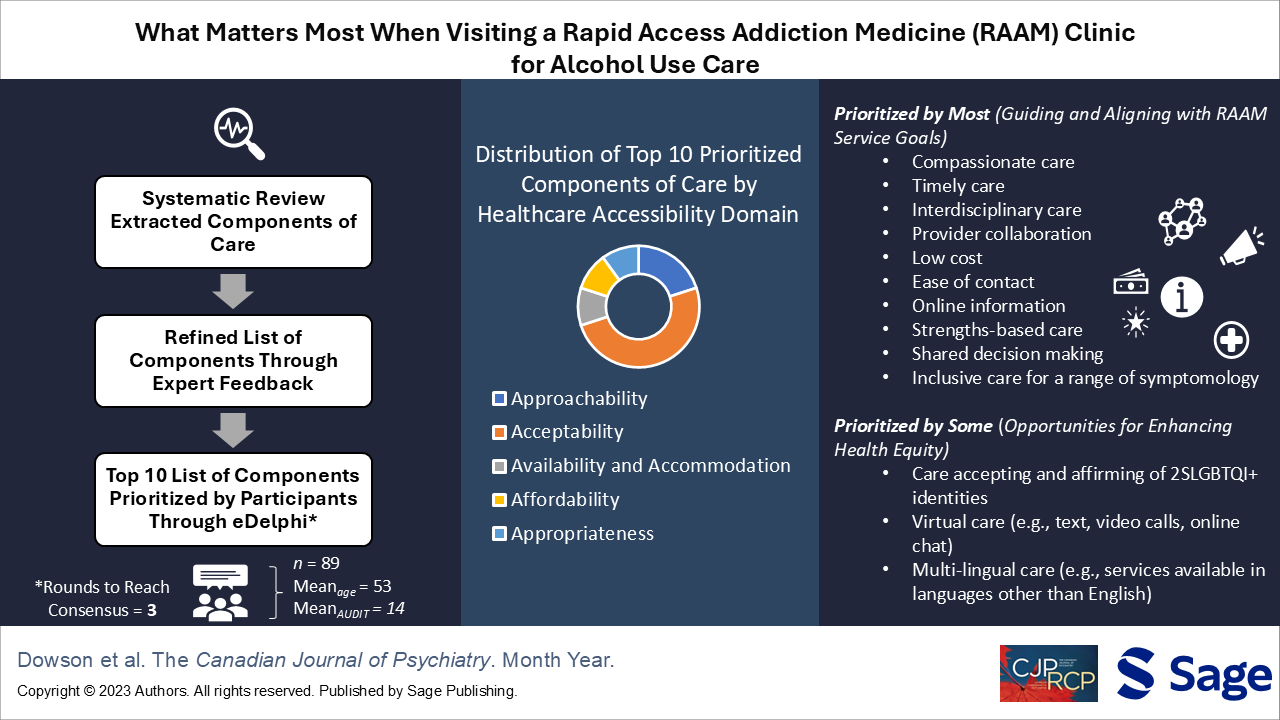
Plain Language Summary
Why was this study done? It is important for health services providers to know what people want when seeking care. This study asked people across Canada what they believe is most important when thinking about alcohol use health care at Rapid Access Addiction Medicine (RAAM) clinics. RAAM clinics offer fast and flexible support for people who want help with substance use. The goal of this research was to find out what matters most to people who might consider going to a RAAM clinic in Canada.
What did the researchers do? Using an online survey, researchers asked 160 participants across Canada to rate how important different parts of care were. For example, how important is it that the RAAM clinic staff are kind and compassionate, how important is it that it is easy to get information about the clinic, or how important is it that the services are free? The goal was for the participants input to create a top ten list of what matters most when considering care at a RAAM clinic.
What were the findings? After three rounds of the survey, where participants could rank and re-rank the importance of parts of RAAM services, a final group of 89 participants helped identify ten key features. The top ten included: being treated with compassion, having a team that communicates well, getting care quickly, keeping costs low, making it easy to get in touch with the clinic, offering clear information, focusing on strengths rather than just problems, involving clients in decisions, and providing services for all levels of needs.
Why is this research important? These findings show what people value most when thinking about alcohol use care and can help improve services in RAAM clinics and beyond. The researchers suggest future studies should include voices from under-represented groups to make sure everyone's needs are met.
Get full access to this article
View all access options for this article.