




Abstract
Objective:
The mass media may increase stigma against people with mental health problems by reinforcing common stereotypes. Media professionals thus represent a target group for antistigma interventions. This paper aims to review available literature on antistigma interventions for mass media professionals, seeking to clarify what kind of interventions have been found to be effective in reducing mental health stigma among mass media professionals.
Method:
Six electronic databases (MEDLINE, PsycINFO, Embase, Cochrane Reviews Library and Cochrane Central Register of Controlled Trials, Web of Science, and Applied Social Sciences Index & Abstracts) were systematically searched through March 2017 for studies addressing antistigma interventions on mass media professionals.
Results:
A total of 27 studies on antistigma interventions targeted to media professionals were found. Reviewed articles were classified into 3 categories: media-monitoring projects/reporting guidelines (n = 23), interventions for educating journalists (n = 2), and interventions for educating journalism students (n = 2). Overall, antistigma interventions for media professionals seem to have some effect in improving reporting style, thus providing a more balanced portrayal of people with mental health problems: the most promising interventions are contact-based educational approaches and the provision of guidelines by authoritative institutions.
Conclusion:
It should be useful to promote and disseminate contact-based educational interventions targeted to journalists and to include specific modules on mental health topics in the training curricula of journalism students. However, as research in the field suffers from several limitations, high-quality studies exploring the long-term effect of antistigma interventions for media professionals are needed.
Background
Stigma is an overarching term including problems of knowledge (ignorance or misinformation), attitudes (prejudice), and behaviour (discrimination) 1 that affects the daily life of people with mental health problems in many respects, for example, in terms of social isolation, 2 exclusion from employment, 3 reduction of intimate relationships and parenting, 4 difficulties or delay in help seeking, 5 and poorer physical health care. 6 Overall, stigma is one of the main barriers to social recovery for people with mental health problems. 7
A large body of literature reveals a major contribution by mass media in reinforcing common stereotypes of people with mental health problems by providing a negative image of such people, who are often labelled as dangerous or unpredictable. 8 –13
Mass communication sources, including the news media, provide fundamental frameworks through which most people from developed nations come to perceive and understand the contemporary world. 14 Unfortunately, when the news media frame a group in a negative light, it propagates prejudice and discrimination. Hence, whether it is intentional or not, mass media become social structures for perpetuating stigma. 15 Social scientists have called this form of prejudice and discrimination ‘structural (or institutional) stigma’. Structural stigma includes the policies of private and governmental institutions that intentionally restrict the opportunities of people with mental health problems, but it also includes major institutions’ policies that are not intended to discriminate but whose consequences nevertheless hinder the options of people with mental health problems. 16 Within this context, when an institution like a newspaper or a television show publishes or broadcasts negative and/or prejudicial portraits of people with mental health problems, it becomes a strong source of structural stigma.
Media representations of mental illness can have a detrimental impact on people with mental health problems by reducing their level of self-esteem, discouraging help-seeking behaviours, and increasing their lived experience of discrimination 17 and their possibility to recover. Moreover, media depiction of mental disorders contributes to the level of fear, hostility, and intolerance in the general population. 18,19
On the other hand, it is also important to recognise that the media may also be enlisted as a formidable ally in helping to challenge public prejudices, initiate public debate, and project positive, human interest stories about people who live with mental health problems. 20,21 For example, it has been recently pointed out that promoting news articles portraying depression as a common mental disorder affecting men (as well as women) can be useful to positively challenge stigma. 22 Media professionals may also be eager and responsive targets for antistigma interventions and proactive lobbying, particularly if this improves communication between reporters, mental health providers, and service users, as well as facilitates access to better information. 23 Recently, national antistigma campaigns targeting negative portrayals of mental illness in the media have been launched in Canada 24 and New Zealand, 25 which included media professionals as a target group. It was found that, if appropriately enlisted, the media may challenge stigma and disseminate positive mental health messages. 26,27
To our knowledge, no systematic review has been carried out on media antistigma interventions to clarify what interventions are effective with media professionals and what level of change can be achieved. Moreover, while some recently published reviews have reported the impact of antistigma interventions on other target groups, such as students, 28 health professionals, 29,30 and employers, 31 no reviews on media professionals are currently available. We, therefore, carried out a systematic literature review to 1) identify available interventions aimed at reducing stigmatising coverage as well as mental health stigma among media professionals and 2) examine the effect of such interventions.
Methods
Data Sources and Search
Studies for possible inclusion were searched by 2 authors (A.M. and G.S.) by using 6 electronic databases: MEDLINE, PsychoINFO, Embase, Cochrane Reviews Library and Cochrane Central Register of Controlled Trials (Central), ISI Web of Knowledge—Web of Science Index, and Applied Social Sciences Index & Abstracts (ASSIA). In addition, the reference lists of all included studies and of relevant existing systematic reviews were checked for possible studies. Authors of published articles were contacted to retrieve relevant information that was either not reported or unclear from the published articles. Article were searched from 1960—when the processes of the deinstitutionalisation of psychiatric patients and the growth of the social psychiatry movements began in many countries 32 —to March 2017. Only articles written in English were included.
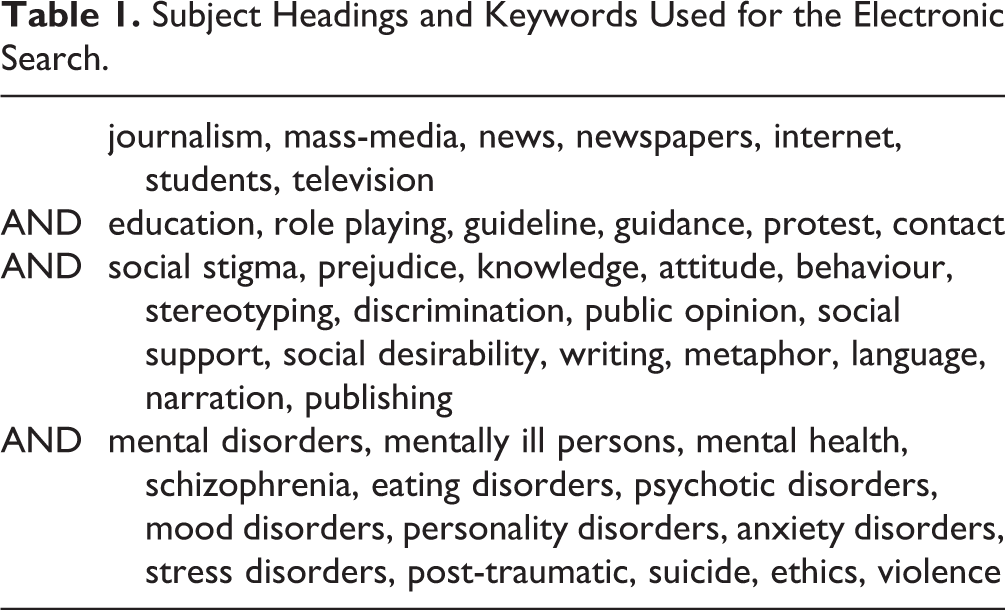
The subject headings and the keywords used for the electronic search are detailed in Table 1.
Subject Headings and Keywords Used for the Electronic Search.
Study Selection
For the purposes of study selection, media professionals were defined as professionals working in the field of mass communication (e.g., print newspaper, magazines; radio; television; and Internet, including websites, blogs, podcasts, and social network sites). 33 Inclusion criteria were 1) studies conducted on media professionals, journalists, or students/trainees in a journalism programme; 2) studies describing the effect of antistigma interventions delivered to journalists, media professionals, and trainees in journalism courses or describing media reporting guidelines; and 3) studies aiming to improve knowledge, attitudes, and behaviour in journalists, media professionals, and students in journalism courses, with pre-post evaluation. The search strategy included randomised controlled trials (RCTs), non-RCTs, controlled before-and-after studies (CBAs), crossover studies, cohort studies, longitudinal panel studies (except for studies that did not include baseline assessments), and qualitative studies fulfilling the inclusion criteria. Studies carried out with trainees/students in programmes other than journalism courses were excluded, as well as descriptive studies on the levels of stigmatising behaviour and attitudes in journalists, media professionals, and trainees in journalism courses. After removing duplicates, 10% of articles were screened by another independent researcher (G.S.) and assessed for eligibility, with discrepancies resolved by discussion involving a senior expert (C.H.). Subsequently, full reports of potentially relevant studies were obtained, and 2 authors (A.M. and G.S.) independently extracted content by the articles.
Data Extraction and Quality Assessment
Data on study design, sample characteristics, and findings were extracted independently by 2 authors (A.M. and G.S.). Narrative synthesis was undertaken due to the paucity of research published in this field and to substantial methodological heterogeneity between studies. 34
Two authors (A.M. and G.S.) independently assessed the quality and level of evidence of each study, using an ad hoc extraction tool, the GRADE 35 criteria for evaluating quality in quantitative studies, and the Critical Appraisal Skills Programme (CASP) tool for qualitative research. 36 The authors independently assessed the studies against these criteria and resolved discrepancies through discussion.
Results
Identification of Studies
An overview of the study identification process is provided in Figure 1.
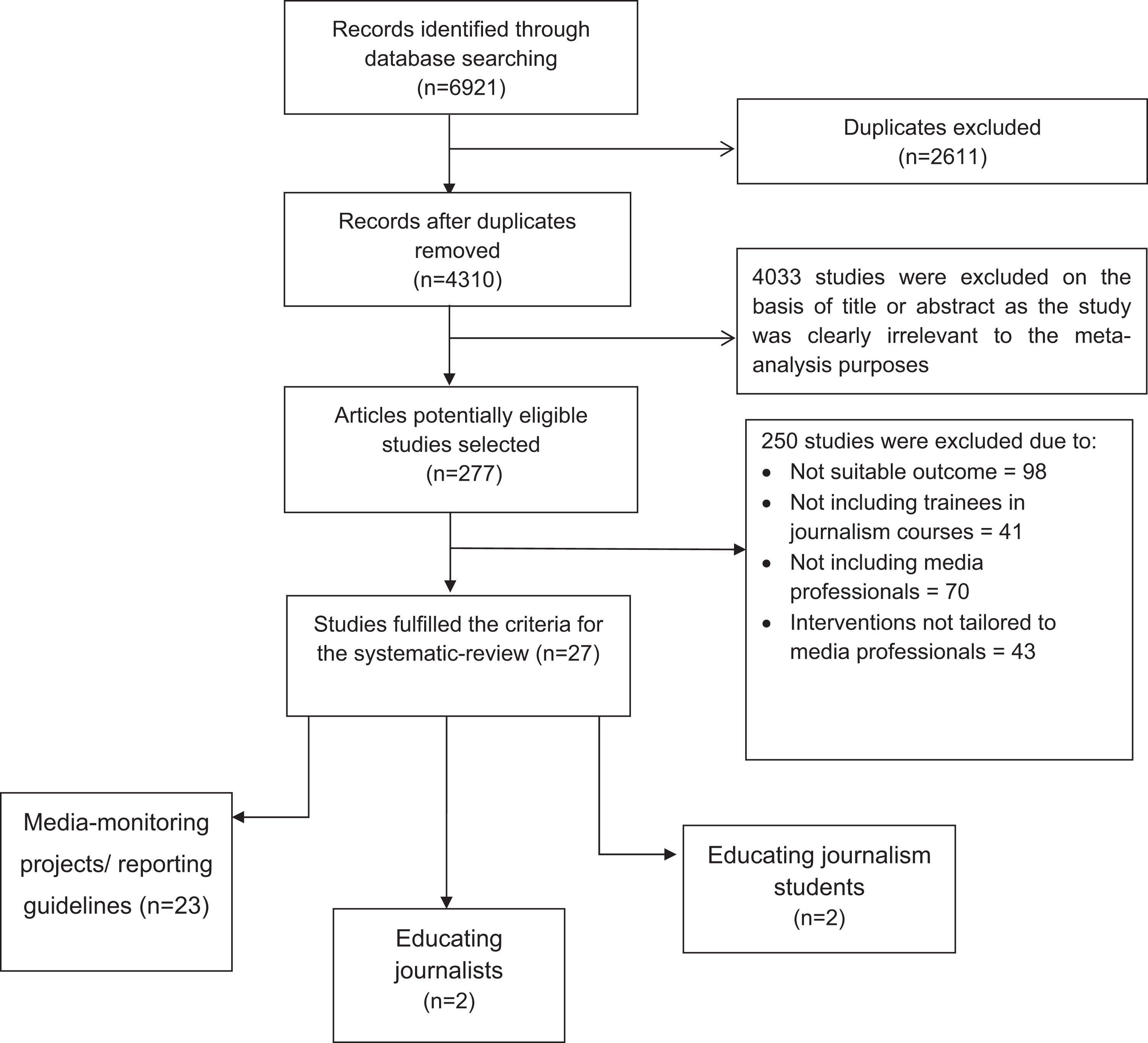
PRISMA flow diagram of selection of studies for inclusion in the review.
Overall, 6913 studies were retrieved from the electronic search; of these, 2611 were duplicates and were subsequently excluded. Of the remaining 4302 studies, 296 full-text articles were analysed as potential studies to be included in the review, and reasons for exclusion are reported in the PRISMA flow diagram. Of these, 27 studies were finally included in the review. These studies were classified according to Stuart et al. 37 into 3 groups: media-monitoring projects and development of reporting guidelines, interventions for educating journalists, and interventions for educating journalism students.
Media-Monitoring Projects/Reporting Guidelines
Twenty-three studies (85%) were assigned to this category. Details on these studies are reported in Table 2.
Media-Monitoring Projects/Reporting Guidelines.
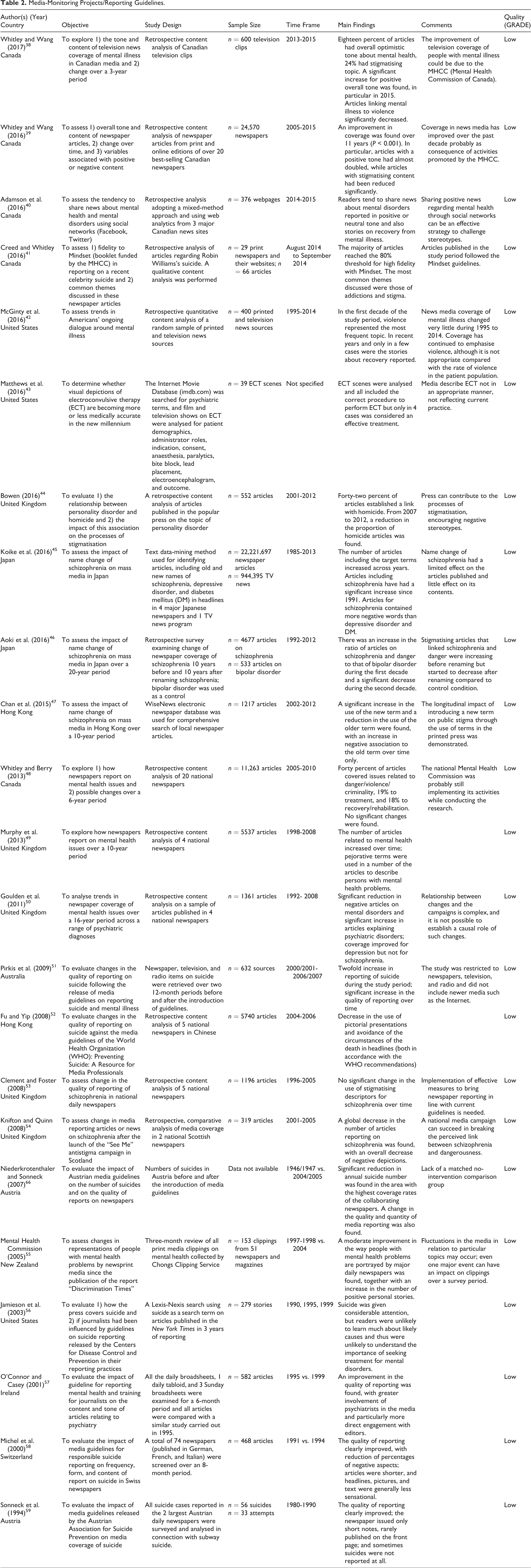
These studies evaluated media coverage of mental health issues following national or local antistigma initiatives and media coverage following the release of guidelines on how to report on mental disorders and/or suicide.
Over the past 15 years, several guidelines on how to appropriately report on mental health issues have been released by different advocacy groups or as part of national antistigma campaigns. 60 –65 A number of studies analysing newspaper reports during a given period have been published, with the aim to evaluate the impact of reporting guidelines on media coverage. The timeframe considered by the different studies, however, was extremely heterogeneous, making it hard to draw clear-cut conclusions. Reviewed literature in fact provides a quite complex and mixed picture. National antistigma campaigns carried out in New Zealand, 55 the United Kingdom, 49,50,53,54 Ireland, 57 Canada, 41 and the United States 42 were found to be somewhat effective in improving both tone and type of newspaper reporting on mental health issues and in decreasing reports of “bad” news on mental health. However, the effect is heterogeneous in relation to different psychiatric diagnoses: reporting on depression, anxiety, bipolar disorder, and eating disorders either improved over time or was always largely favourable; in contrast, schizophrenia, personality disorders, and general references to severe mental illness appeared mainly in the context of ‘bad news’, with little or no change in their coverage over time. 48,49 In particular, in Canada over the period 2005-2010, during which the Mental Health Commission Campaign (MHCC) ‘Opening Minds’ was launched, no changes in media reporting were found. 48 However, an improvement in both the tone and content of television news was identified over the period 2013-2015. 38,39 The authors concluded that this improvement in media reporting may have been a consequence of the activities promoted by the MHCC. Moreover, in the period 2014-2015, an increase in sharing positive stories about recovery from mental disorders 40 was also found. On the other hand, the study promoted by McGinty et al. 42 in the United States highlighted that in the period 1995-2014, coverage of mental disorders did not change, continuing to emphasise violence associated with mental disorders.
In some Asian countries (e.g., Japan, Honk Kong, Taiwan, South Korea) in the early 2000s, the equivalent term for schizophrenia was replaced with a less stigmatising one. Koike et al., 45 analysing the articles published in Japanese newspapers from 1985 to 2013, found a limited effect of the name change on the media representation of the condition, whereas Aoki et al., 46 in a retrospective survey aiming to examine how newspaper articles associated schizophrenia with danger over a 20-year period, found that renaming was associated with a mitigation of stigmatised depiction of the new term in newspaper reports. Similarly, Chan et al. 47 found that also in Hong Kong, renaming schizophrenia with a less stigmatising term resulted in a reduced association of the new name with danger/aggressiveness in newspaper reports.
Matthews et al. 43 assessed scenes regarding electroconvulsive therapy (ECT) in English-language movies and television shows and found that the media still portray ECT in ways that do reflect current practice. Moreover, Bowen et al 44 observed that in the period 2001-2012, articles dealing with personality disorders emphasised the relationship between personality disorder and violent behaviours, encouraging negative stereotypes.
Regarding the impact of guidelines on reporting on suicide, Sonneck et al. 59 found that in Austria, following the release in the mid-1980s of media guidelines, the newspapers issued short notes on the topic and avoided publishing it on the front page. Since then, several studies have been carried out in different countries, showing that the release of guidelines has a positive impact in terms of quality of reporting on suicide, 51,66 decreased use of pictorial presentations, 52 and less sensational ways of describing suicidal deaths. 58 On the other hand, a study carried out in the United States 56 found that following the release of media recommendations for suicide reporting by the Centers for Disease Control and Prevention, the number of articles on suicide had increased and the pattern on reporting had not positively improved.
Interventions for Educating Journalists
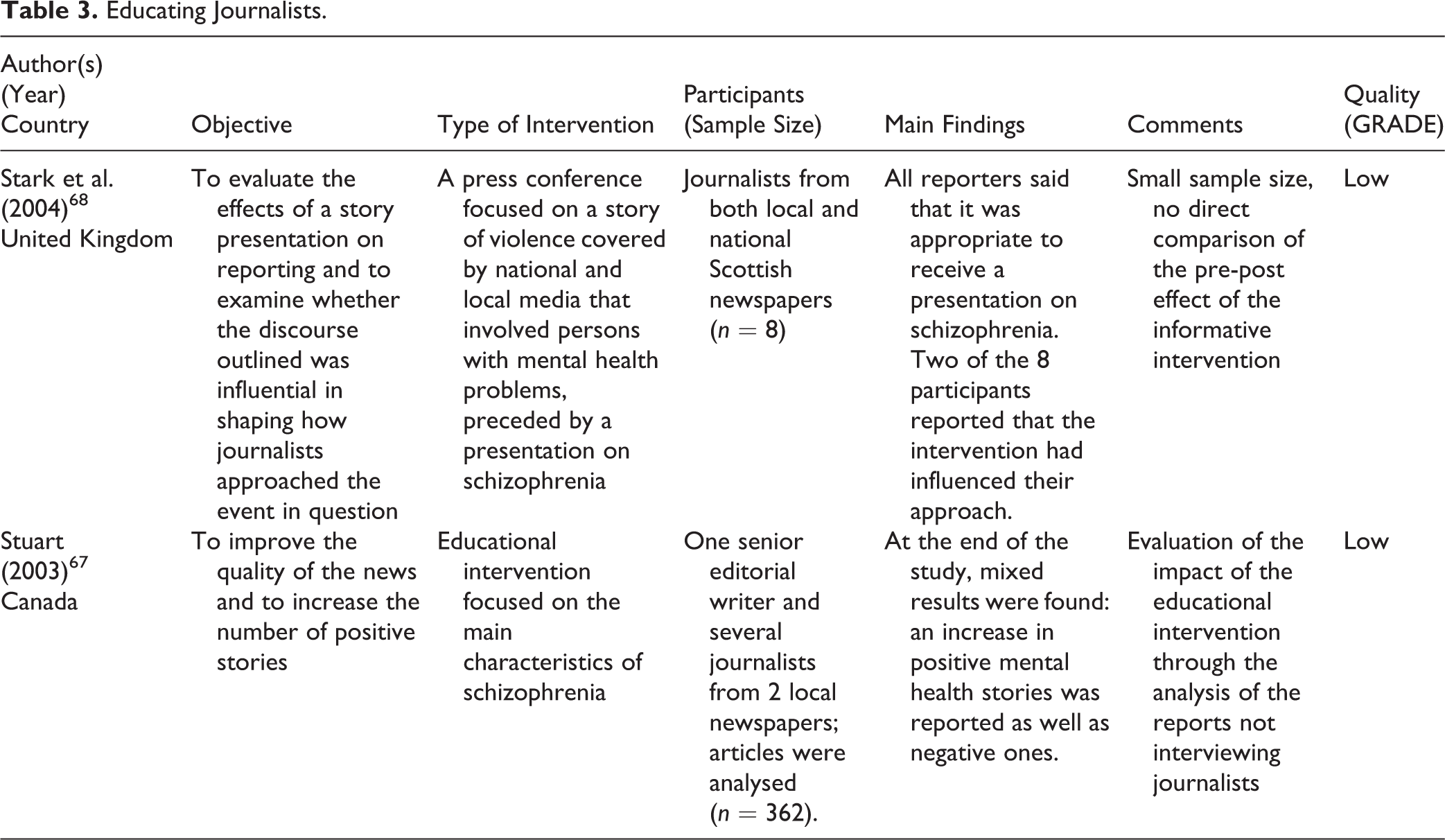
Only 2 studies were identified as aiming to educate journalists on mental health issues. Stuart 67 implemented an educational intervention in Canada, within the framework of the international World Health Organization (WHO) antistigma campaign ‘Open the Doors’, which was aimed at improving the media representation of people with schizophrenia. The intervention comprised the provision to reporters with more accurate background information on mental disorders and helping them to develop more positive stories about schizophrenia and other mental disorders. The impact of this intervention was evaluated by analysing the content of reports on mental health issues from 2 local newspapers over an 18-month period. The intervention showed an immediate positive effect, resulting in more and longer positive new stories about mental illness in general. However, disappointingly, this coincided with a larger increase in negative news concerning people with schizophrenia, the specific target group for the intervention.
Stark et al. 68 conducted a small qualitative study on 8 newspaper journalists in Scotland. The intervention consisted of a press conference on a recent assault made by a person with mental health problems that had been widely covered by national and local media; the press conference was preceded by a presentation on schizophrenia, which was intended to put the incident into context and to reduce the chance of poorly informed comments on schizophrenia or community care. A structured telephone interview conducted after the meeting found that 2 journalists reported that the intervention had influenced their approach, whereas the remaining 6 felt that intervention was useful for background but had not altered their approach on how to report news on mental health issues (Table 3).
Educating Journalists.
Interventions for Educating Journalism Students
Regarding the approach to educate journalism students (see Table 4), only 2 studies were identified. Both provide some encouraging findings. Campbell et al. 69 carried out an interactive workshop on mental health topics with 5 journalism students and 14 psychiatric residents.
Educating Journalism Students.
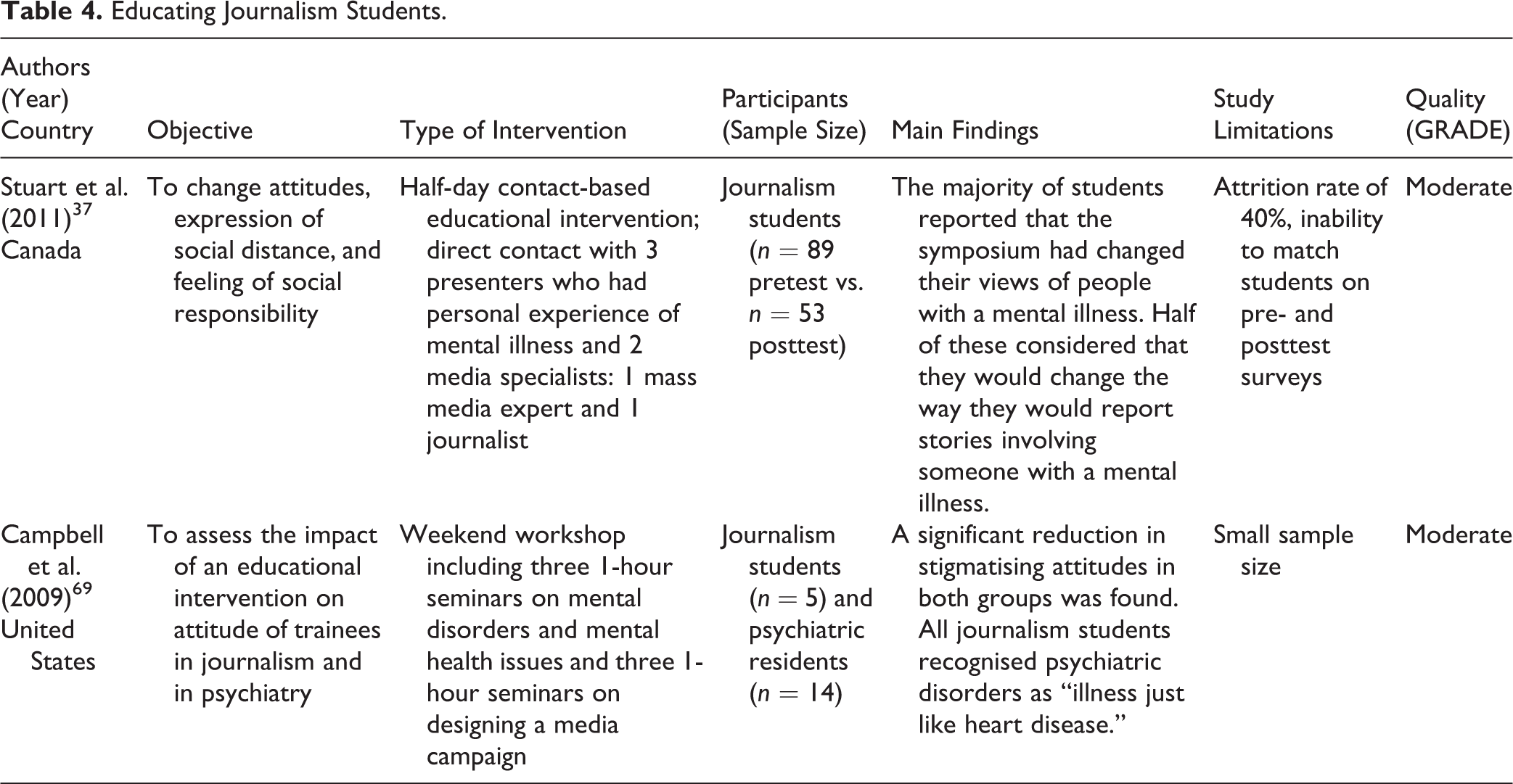
The workshop included seminars by psychiatrists and senior journalists. As regards lessons on mental health topics, psychiatrists provided epidemiological data, description of clinical presentations, and principles of treatments for mental disorders such as schizophrenia, depression, and attention-deficit/hyperactivity disorder. Senior journalists dealt with topics, including designing a media campaign, interacting with media, and developing speaking points. After attending the workshop, journalism students reported to have gained greater awareness of mental health problems and less stigmatising attitudes. Stuart et al. 37 in 2011 promoted a contact-based educational intervention involving people with lived experience of mental health problems. In particular, the intervention consisted of a 2-hour symposium conducted by two mental health service users, one family member and two media experts, whose role was to help link the speaker’s personal experience of stigma with journalism practices. Surveys conducted before and after the intervention used to assess changes found that the majority of the participants modified their attitudes towards mental health problems.
Summary of Design Quality
The GRADE criteria 35 were adopted to evaluate the quality of included studies. We found that most studies were of low quality (n = 23; 92%), being retrospective reports evaluating the coverage of mental health issues in news articles. Only 2 studies were considered moderate quality, being quasi-experimental studies with pre-post designs.
The overall quality of the analysed studies was poor. There is a need to promote further multisite longitudinal studies, with large sample sizes and rigorous methodologies.
Discussion
It has been well recognised that the mass media contribute significantly in reinforcing common stereotypes attached to mental disorders through negative portrayal of those who experience them and their symptomatology. In particular, media professionals can represent an optimal target for antistigma programmes, since they can disseminate positive information regarding mental health topics. Recently, many antistigma campaigns and educational activities have been specifically targeted to media professionals. A systematic evaluation of all available approaches has never been conducted, and no data are yet available on what interventions are effective for media professionals.
According to our systematic review, most of the included studies consisted of media-monitoring projects or guidelines development for improving reporting styles. The results yielded using such approaches are quite mixed, and there is the need to carry out further research to evaluate their long-term effect. In conducting a systematic review of all relevant literature published on this topic, we have found a considerable heterogeneity among participant groups, interventions, and outcomes. Moreover, the source material is varied in its methodological design and quality, including small sample sizes and short follow-up times. In addition, a comparison of like-with-like outcomes is only possible to a limited extent because of the heterogeneity of outcomes measured in the reviewed studies. Finally, it is notable that few of the interventions followed published, manualised protocols or included ratings of intervention fidelity.
Very little research has been conducted on interventions specifically tailored to journalists to help them adopt a less stigmatising reporting style on mental health issues; furthermore, one such study did not specify the content of the intervention provided, 67 and in the other study, 68 the intervention consisted of a press conference with a very limited number of journalists. Therefore, it is difficult to draw any definite conclusion from this literature.
Moreover, these interventions only involved professionals working in traditional print media, whereas the most frequent source of information for a large sector of the population (particularly younger age groups) is nowadays represented by web sources/social media; research should include these media.
While a number of antistigma interventions have been proved to be effective on other target groups, such as health care professionals, 29 employers, 33 and police officers, 70,71 this review shows that more research is still needed on journalists and media professionals.
A number of interventions have been developed to reduce mental health stigma in university or college students, based on intergroup contact with people with mental health problems, videos that describe the lives of people with mental illness, and lectures or texts that present the features of mental illness. 5
However, the present review found that very little research has been conducted on journalism students. One study explored the effect of a contact-based educational intervention. 37 This is a very interesting area that requires further evaluation. Contact-based interventions use either face-to-face or virtual contact as a way to improve relations among groups that are experiencing stigma and discrimination. 72,73 Key mediators of its effect are increased empathy, reduced anxiety, and possibly, to a lesser extent, increased knowledge about the other group. 74 A key ingredient of contact-based education is the delivery of testimonies by service users who are recovered or in recovery. 75 Therefore, further research on interventions adopting a contact-based approach is needed to evaluate their impact on both journalists and trainees in journalism. A contact-based educational online program for journalism students has been recently implemented in Canada with some encouraging initial findings. 76
Based on our review, the most promising interventions that could provide guidance in the field are the contact-based educational approaches 37 and the provision of guidelines by national authoritative institutions. 53
Several limitations of this review should be acknowledged. First, we included only studies published in English, but it is possible that we missed important research published in other languages, and this may have affected the results of studies on the impact of renaming in Japan, South Korea, Taiwan, and Hong Kong. Second, our search was performed only on health and social science journals, but it is possible that we missed articles published in journals about journalism education. Third, we also need to acknowledge the possibility of publication bias, for example, that intervention studies showing no difference might be published less often than those that do identify a clear benefit.
This review highlights the need to both improve the quality of studies and implement interventions that may have long-term effects and a positive impact on actual media coverage. Future research should seek to determine whether the effects of interventions are long lasting and to identify strategies for maintaining or boosting the benefits over the long term. The main limitation of most antistigma interventions on other target groups is their limited evidence for a long-term effect. 28 –31
It should be useful to promote and disseminate contact-based educational interventions targeted to journalists and to include specific modules on mental health topics in the training curricula of journalism students. Moreover, users and family organisations—together with other stakeholders 77 —should cooperate with journalist professional associations to provide them with continuous feedback regarding the way they report stories, news, and articles addressing mental health issues to constantly challenge structural stigma mediated by the mass media.
Conclusions
Overall, antistigma interventions for media professionals seem to have some effect in improving reporting style, thus providing a more balanced portrayal of people with mental health problems. However, as research in this field suffers from several major limitations (e.g., small sample size, short follow-up time, sparse and heterogeneous outcome measurements, no web/social media interventions), high-quality research exploring the long-term effect of theory-based antistigma interventions for media professionals is urgently needed.
Footnotes
Declaration of Conflicting Interests
The author(s) declared no potential conflicts of interest with respect to the research, authorship, and/or publication of this article.
Funding
The author(s) received no financial support for the research, authorship, and/or publication of this article.