




Abstract
The Siwalik flora is important in understanding the orogeny of the Himalayas and the resulting climate change. Though the fossil records from the eastern Himalayan Siwalik of Nepal are sparse, we report a fossil leaf impression/ compression of Ficus precunea Lakhanpal from the Middle Siwalik (upper Miocene–lower Pliocene) sediments of eastern Nepal. The characteristic leaf venation pattern and morphological details suggest its strong affinity with the extant species of F. semicordata Buch.-Ham. ex Sm. The fossil assemblage indicates the presence of seasonal forests during the depositional period in the region.
Introduction
The mulberry family, Moraceae, envelops 49 genera and >1,000 species distributed throughout tropical and temperate regions of the world (POWO, 2023). The family has been placed under the order Rosales with six tribes namely, Artocarpeae, Castilleae, Dorstenieae, Ficeae, Maclureae, and Moreae, exhibiting a wide diversity of morphological traits, particularly in inflorescence architectures, pollination syndromes and breeding systems (APG, 2016; Clement & Weiblen, 2009; Zerega et al., 2005). The genus Ficus Tourn ex L. (fig) belongs to Ficeae which contains 877 species distributed in tropical and subtropical areas of the world (POWO, 2023). The genus diversified in a terrestrial ecosystem in which primitive forms were retained together with advanced forms (Corner, 1969). It is unique in having enclosed inflorescence (syconium) and obligate pollination mutualism with fig wasps of the family Agaonidae (Cook & Rasplus, 2003).
Ficus fossil records have a long geological history that can be traced back to the Lower Cretaceous (Supplementary Table 1), known from North and South America, Africa, Europe, and Asia. Molecular phylogenetic studies have inferred that understanding the evolution, diversification and biogeography of the genus is complex because of its disjunct distribution pattern and poorly preserved megafossil records (Cruaud et al., 2012; Datwyler & Weiblen, 2004; Machado et al., 1996, 2001; Rønsted et al., 2005, 2008; Xu et al., 2011; Zerega et al., 2005; Zhang et al., 2019).
Morphological comparison of the present Ficus fossil with the extant comparable species of various families.
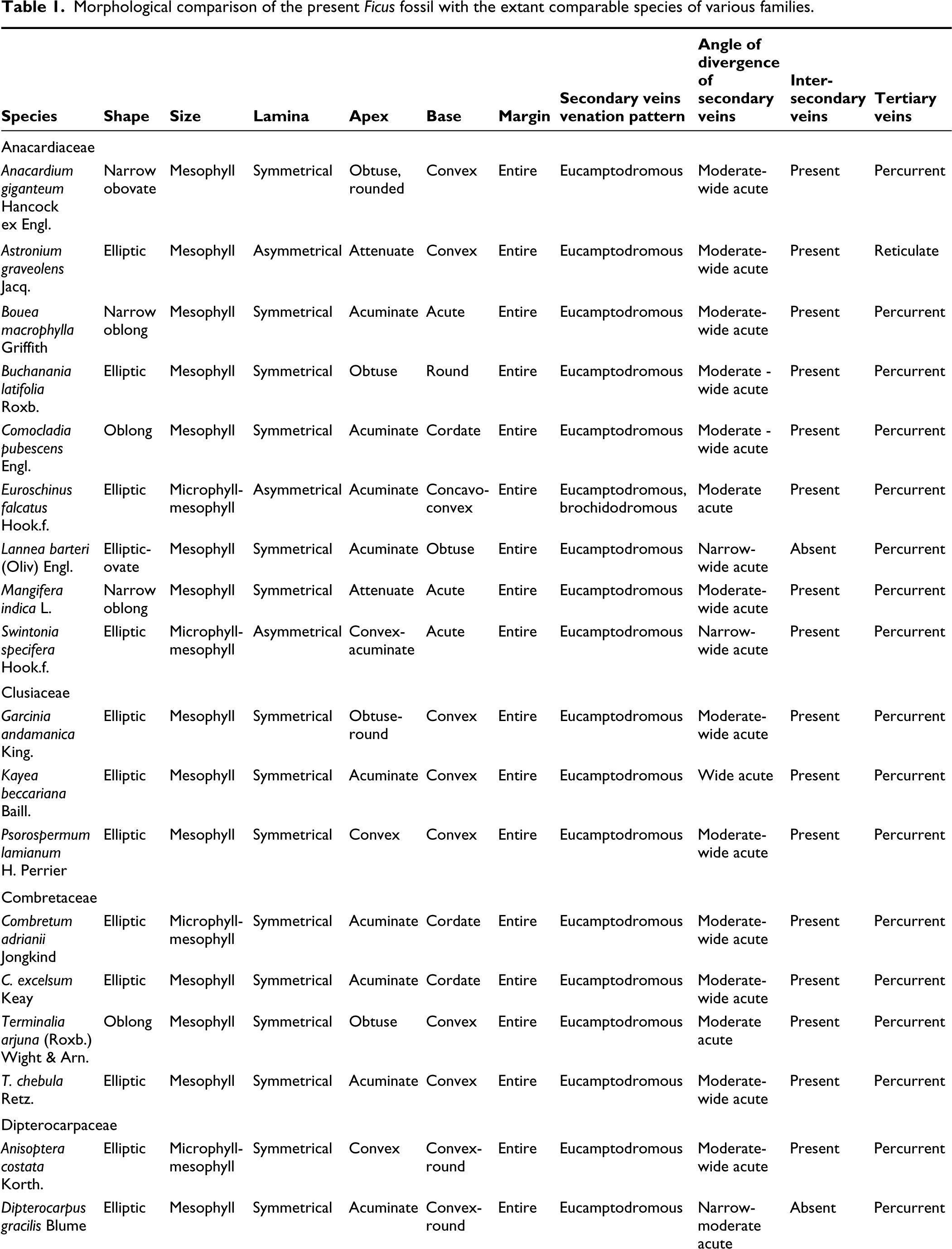
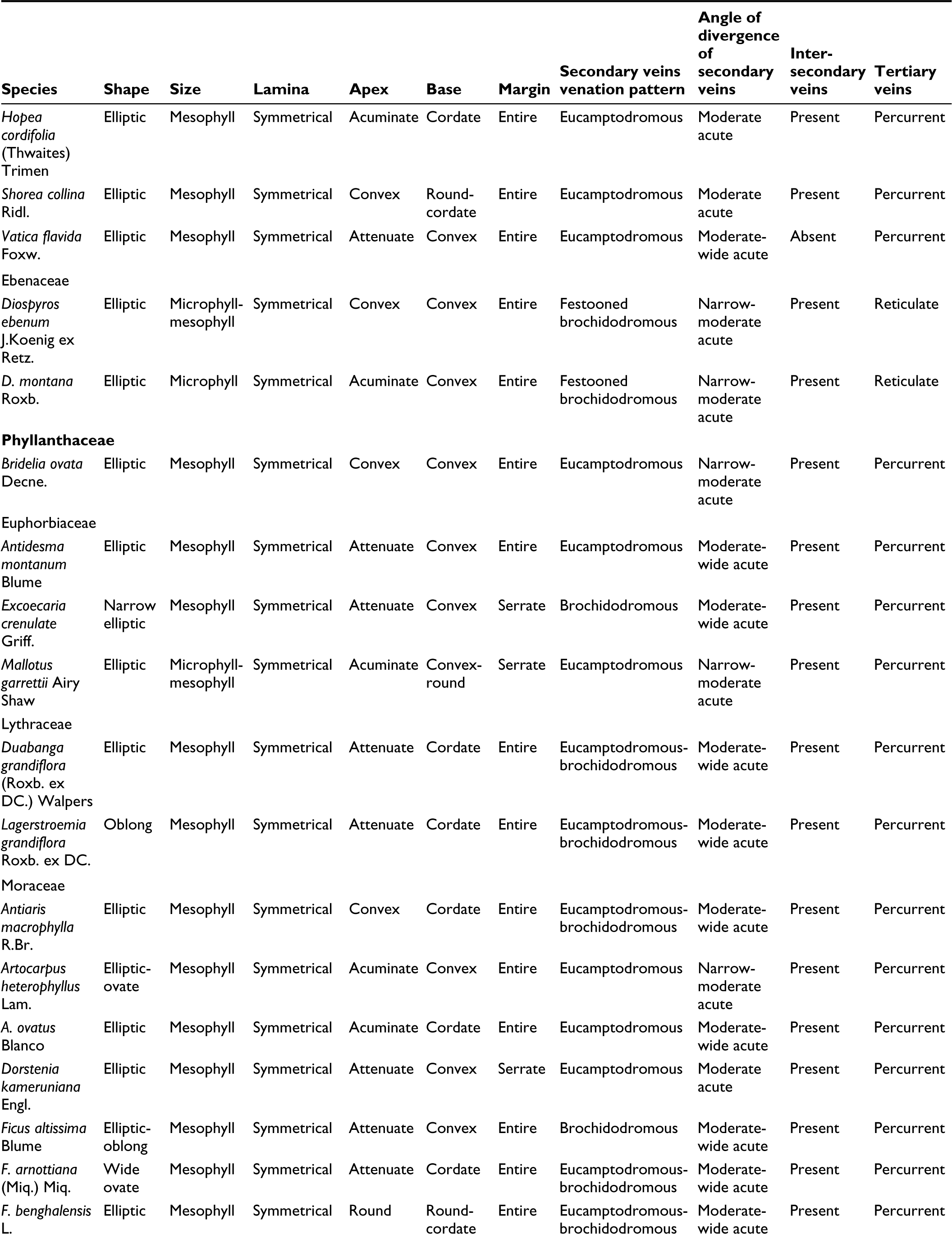

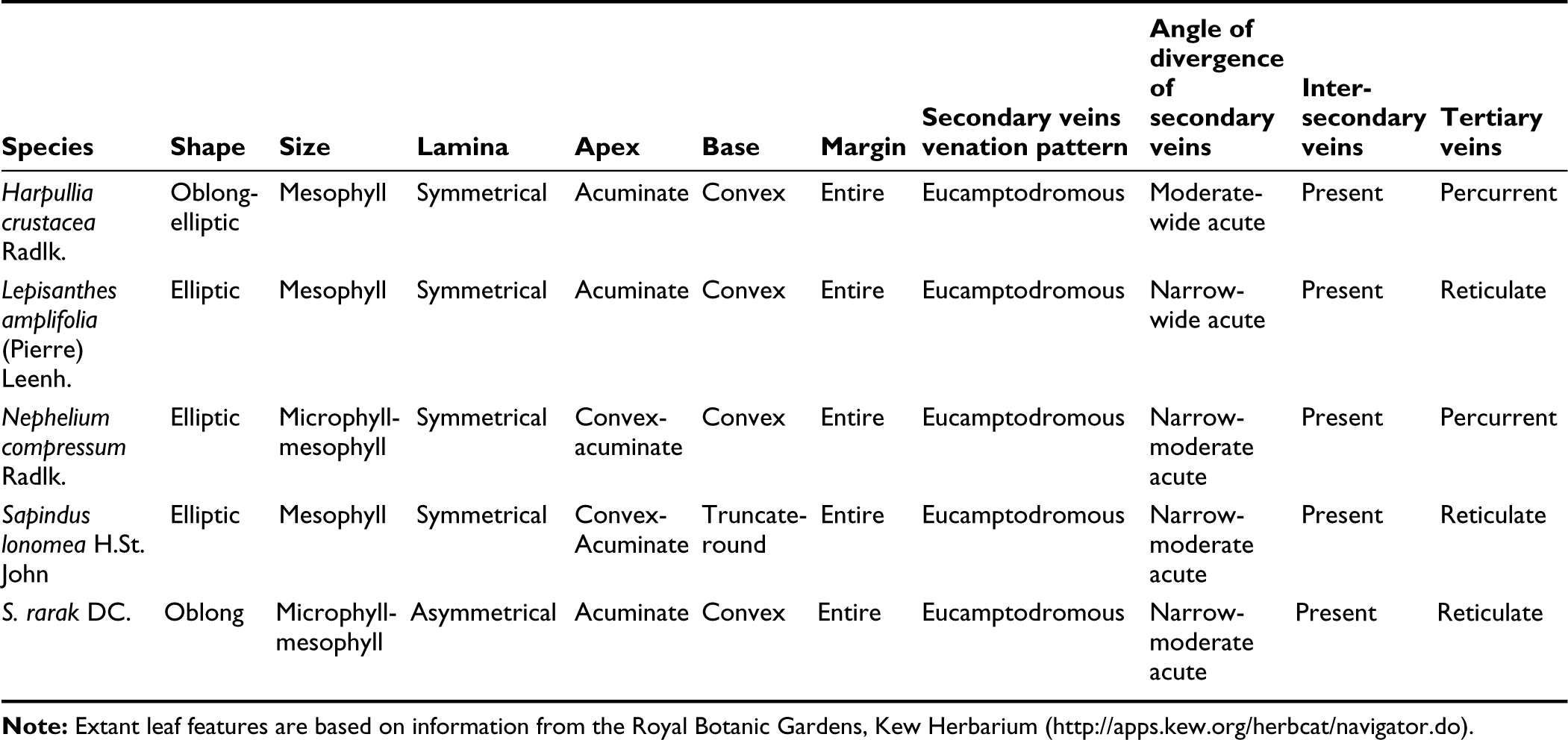
In the present communication, we report a well-preserved leaf of Ficus from the Middle Siwalik (upper Miocene–lower Pliocene) sediments of eastern Nepal (Figure 1). This study will help in understanding the diversity and extent of distribution of this genus in eastern Himalaya during the upper Miocene‒lower Pliocene.
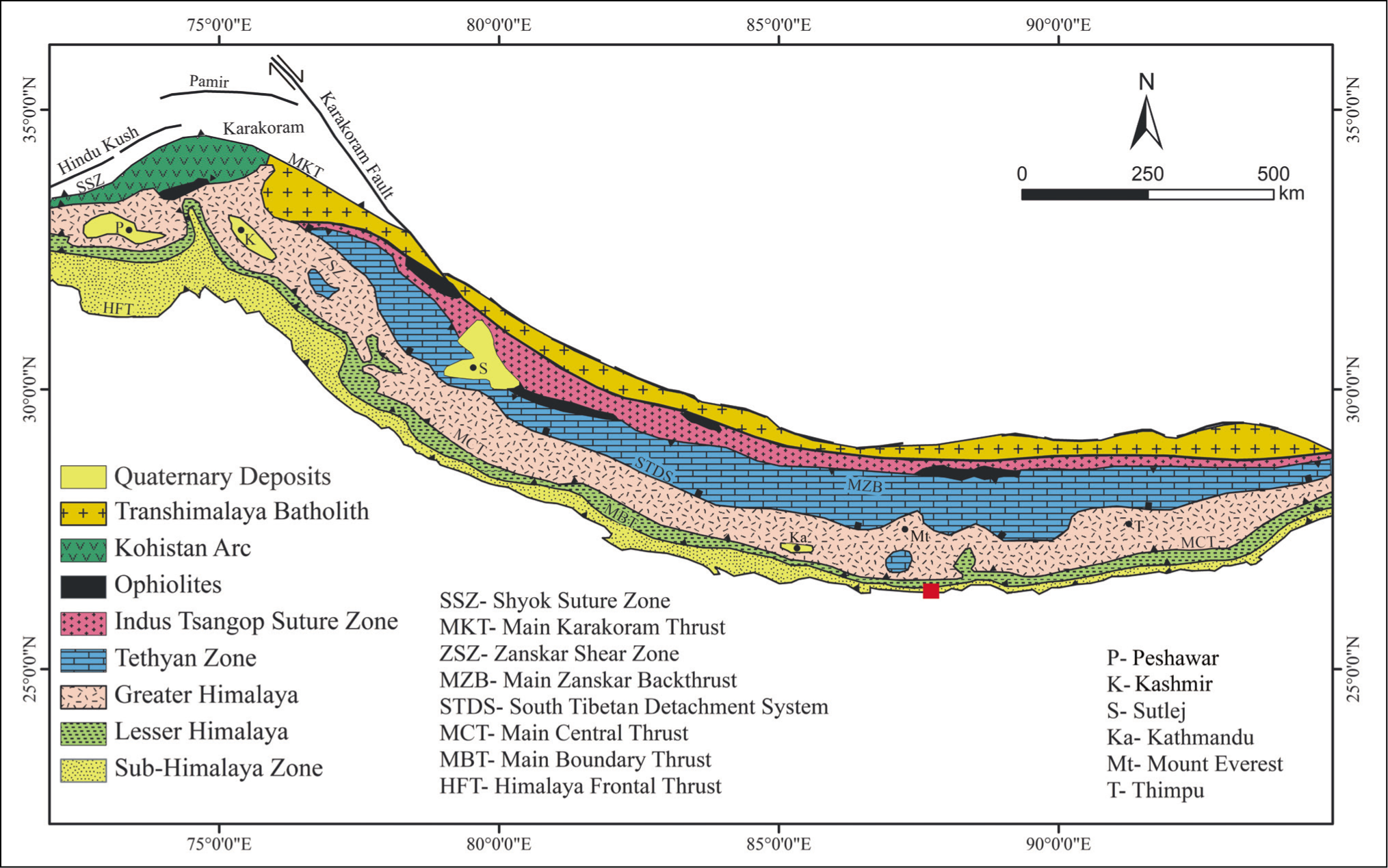
Geological map of the Himalaya, indicating the fossil locality (red rectangle) (modified after Searle et al., 2008).
Geology and Age of the Studied Area
The results of deformation and uplift of the Himalayan belt led to the accumulation of a huge quantity of molasse sediments (~6,000 m thick) along the Himalayan Foreland Basin covering a longitudinal distance of ~2,400 km. The infill of this basin is popularly known as the Siwalik Group, which is embedded between the Main Boundary Thrust (MBT) to its north and the Main Frontal Thrust (MFT) to its south (Gansser, 1964; Valdiya, 2002) (Figure 1). The age of the sediments ranges from middle Miocene–lower Pleistocene (Gansser, 1964). The Siwalik group has been classified into three sub-groups, namely Lower, Middle, and Upper Siwalik (Pilgrim, 1910; 1913), which show a succession of fluvial sediments in a coarsening upward sequence (Nakayama & Ulak, 1999; Prakash et al., 1980). The Siwalik Group in Nepal is also termed as Churia Group (Tokuoka & Yoshida, 1984).
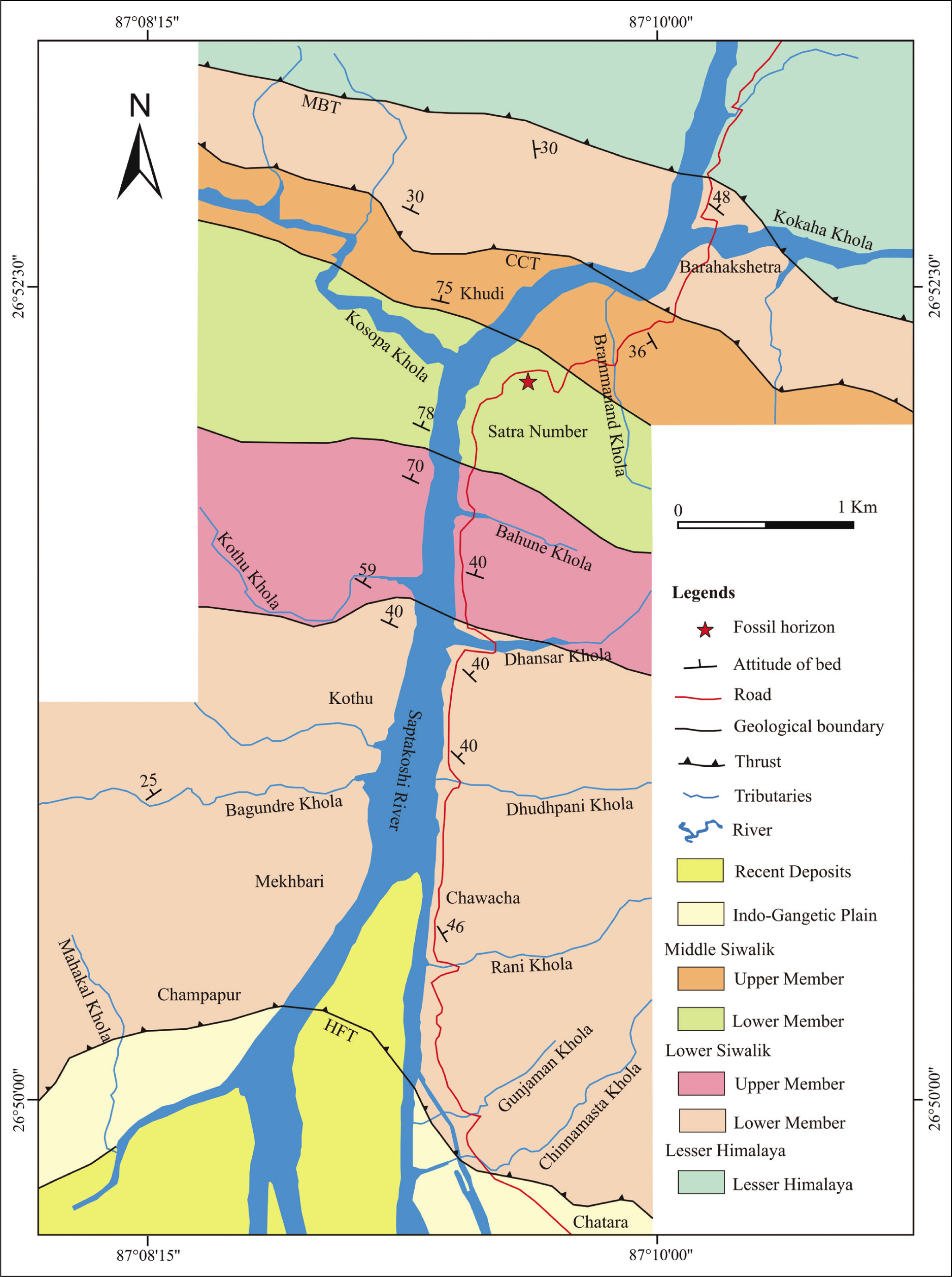
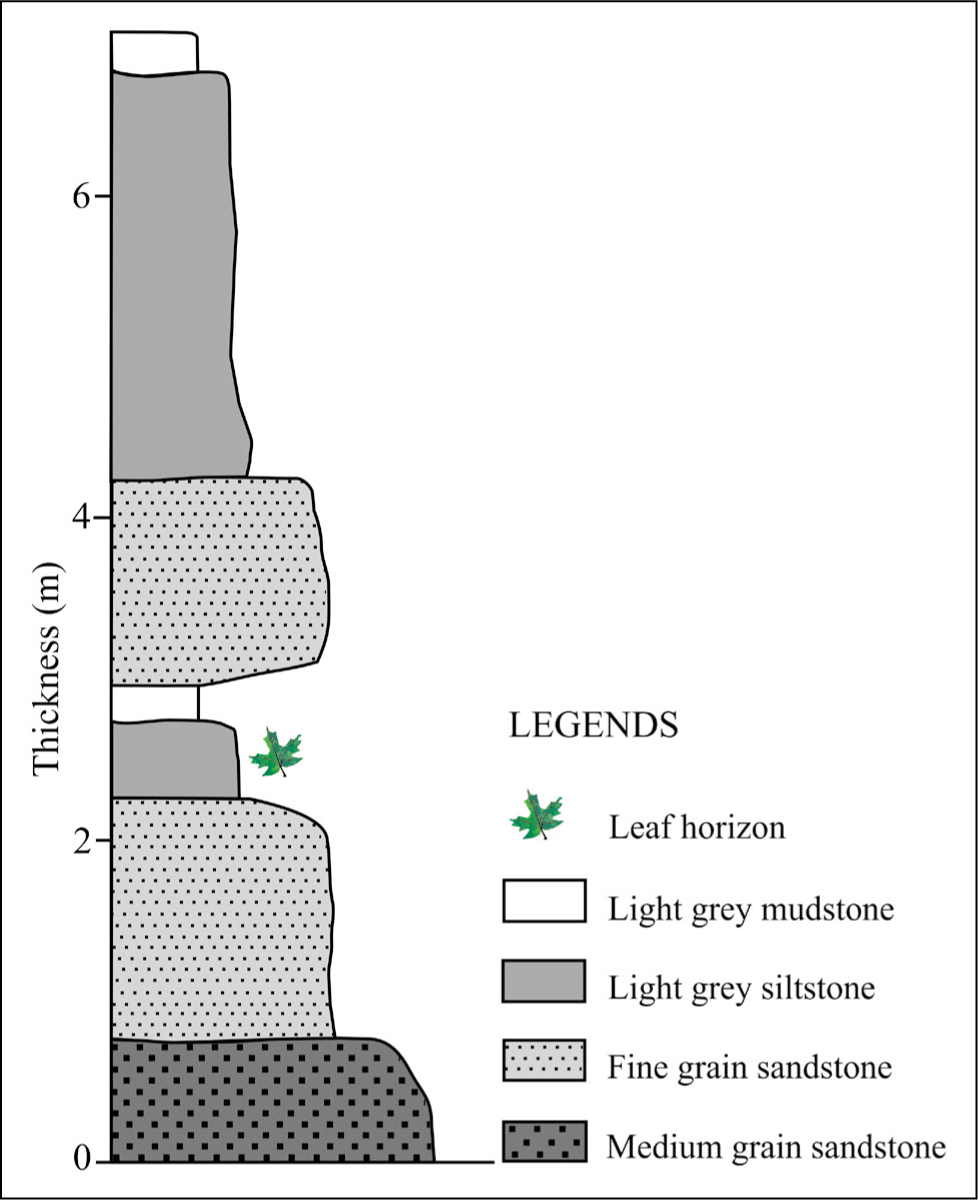
The study area is located in the eastern part of Nepal (Figure 1) (26.87° N; 87.16° E). The Siwalik Group of the Chatara-Barahakshetra area, eastern Nepal comprises two litho-units—the Lower Siwalik (lower and upper members) and the Middle Siwalik (lower and upper members). The Upper Siwalik is not exposed in the studied area (Adhikari D. et al., 2018; Adhikari P. et al., 2018; Ulak, 2004) (Figure 2). The Lower Siwalik is mainly characterised by variegated mudstone and siltstone interbedded with fine to medium-grained sandstone, while the Middle Siwalik is composed of medium to very coarse-grained, ‘salt and pepper’ sandstone, pebbly sandstone interbedded with dark grey mudstone and siltstone (Adhikari P. et al., 2018). The fossil impressions have been collected from the light grey, thinly laminated siltstone of the Middle Siwalik (Figure 3).
Geological map of Chatara-Barahakshetra area, eastern Nepal (modified after Adhikari P. et al., 2018).
Lithological details of the Middle Siwalik of Chatara-Barahakshetra area.
Chronostratigraphically, the Neogene sediments of Nepal are poorly known due to the lack of tuffaceous deposits and marker fossils (Corvinus & Rimal, 2001; Gautam & Rösler, 1999). However, the geological age of the Nepal Siwalik has been estimated by magnetostratigraphy (Appel et al., 1991; Appel & Rösler, 1994; Gautam et al., 2000; Gautam & Appel, 1994; Gautam & Fujiwara, 2000; Gautam & Rösler, 1999). Recently, Ojha et al. (2009) made a comprehensive magnetostratigraphic study on the Neogene sediments of eastern, central, and western Nepal. They suggested that the Middle Siwalik sediments of Muskar Khola (26.87° N; 86.38° E), which are very close to our fossil locality (26.87° N; 87.16° E), were deposited between ~9.9–3.5 Ma (upper Miocene–lower Pliocene).
Materials and Methods
The present fossil leaf impressions (three) were cleared with the use of a fine chisel, soft brush, and hammer and then were photographed with a Canon SX110 digital camera under low-angled natural light. The fine details of the fossil leaf impression were studied under a stereoscopic microscope (Leica S8APO). The terminology used for description follows the leaf architecture classification by Dilcher (1974) and Ellis et al. (2009). The fossils were identified in the herbarium of Central National Herbarium (CNH), Howrah, India. In addition, the website of the Royal Botanical Gardens, Kew (
Systematics
Order Rosales Bercht. & J. Presl (1820)
Family Moraceae Gaudich (1835)
Genus Ficus L.
Ficus precunea Lakhanpal (1968; Plate 1, Figures 1–6; Plate 2, Figures 2, 5)
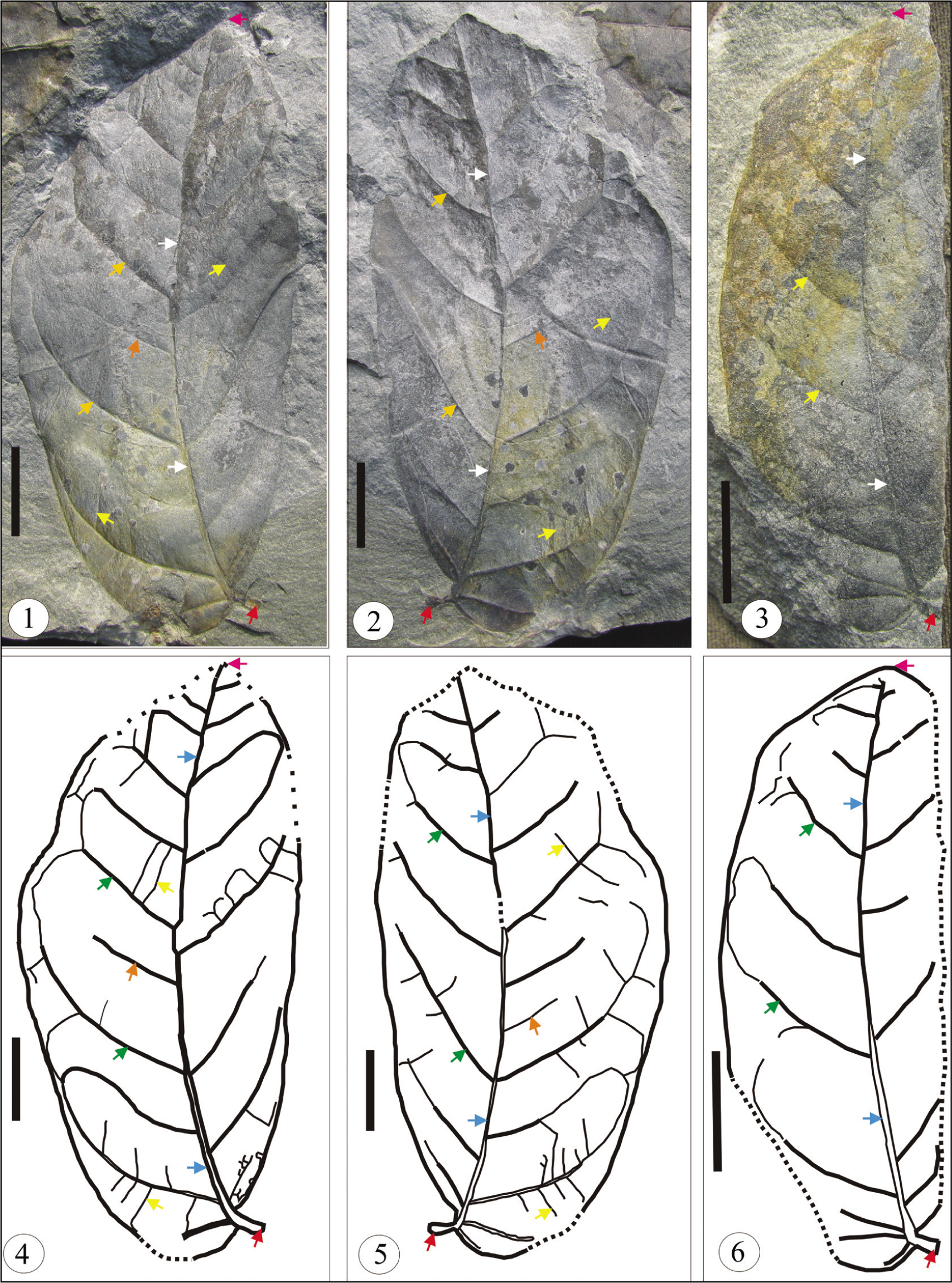
Showing the fossil leaf of Ficus precunea Lakhanpal; (1 ) Fossil leaf (specimen no. OKK 8i) showing shape, size, primary vein (white arrows), secondary veins (dark yellow arrows), inter-secondary veins (orange arrow), percurrent tertiary veins (yellow arrows), petiole (red arrow) and apex (pink arrow); (2 ) Fossil leaf (specimen no. OKK 8ii) showing shape, size, primary vein (white arrows), secondary veins (dark yellow arrows), inter-secondary veins (orange arrow), percurrent tertiary veins (yellow arrows), and petiole (red arrow); (3 ) Fossil leaf (specimen no. OKK 21) showing shape, size, primary vein (white arrows), secondary veins (yellow arrows), petiole (red arrow), and petiole (red arrow); (4 ) Text diagram of the fossil leaf (specimen no. OKK 8i) showing shape, size, primary vein (light blue arrows), secondary veins (green arrows), inter-secondary veins (orange arrow), percurrent tertiary veins (yellow arrows), petiole (red arrow) and apex (pink arrow); (5 ) Text diagram of the fossil leaf (specimen no. OKK 8ii) showing shape, size, primary vein (light blue arrows), secondary veins (green arrows), inter-secondary veins (orange arrow), percurrent tertiary veins (yellow arrows) and petiole (red arrow); (6 ) Text diagram of fossil leaf (specimen no. OKK 21) showing shape, size, primary vein (light blue arrows), secondary veins (green arrows), petiole (red arrow), and apex (pink arrow). (scale bar = 1 cm).
Specimen numbers: Three specimens
Description: Leaf asymmetrical, chartaceous, elliptic with medial asymmetry, laminar size mesophyll with preserved lamina length and width 7.5–7.8 cm and 3–3.5 cm, respectively; lamina unlobed with entire margin; apex convex with acute angle; base auriculate, asymmetrical with obtuse to reflex base angle; primary venation pinnate with petiole preserved, attachment normal, length 0.2–0.3 cm; primary vein moderately thick; major secondary vein 8 pairs visible, eucamptodromous becoming brochidodromous in the distal part of lamina with irregular spacing varying 0.3–1.8 cm, angle ranging from moderate to wide acute (52°–81°) with decurrent attachment to the midvein; intersecondary vein (IS) present, simple, covering < 50% length of the subjacent secondary, proximal course perpendicular to midvein, distal course of IS parallel to secondary vein terminating into percurrent tertiary veins, IS vein frequency >1, ranging 1–2 per intercoastal area. Intercoastal tertiary veins percurrent, straight to slightly wavy, predominantly opposite to sometimes alternate, dominantly AA-OA angle of origin; epimedial tertiary veins opposite percurrent; exterior tertiary veins looped.
Figured specimens: OKK 8i, OKK 8ii, OKK 21
Locality: Chatara-Barahakshetra road section, eastern Nepal
Horizon: Middle Siwalik
Age: Upper Miocene–lower Pliocene
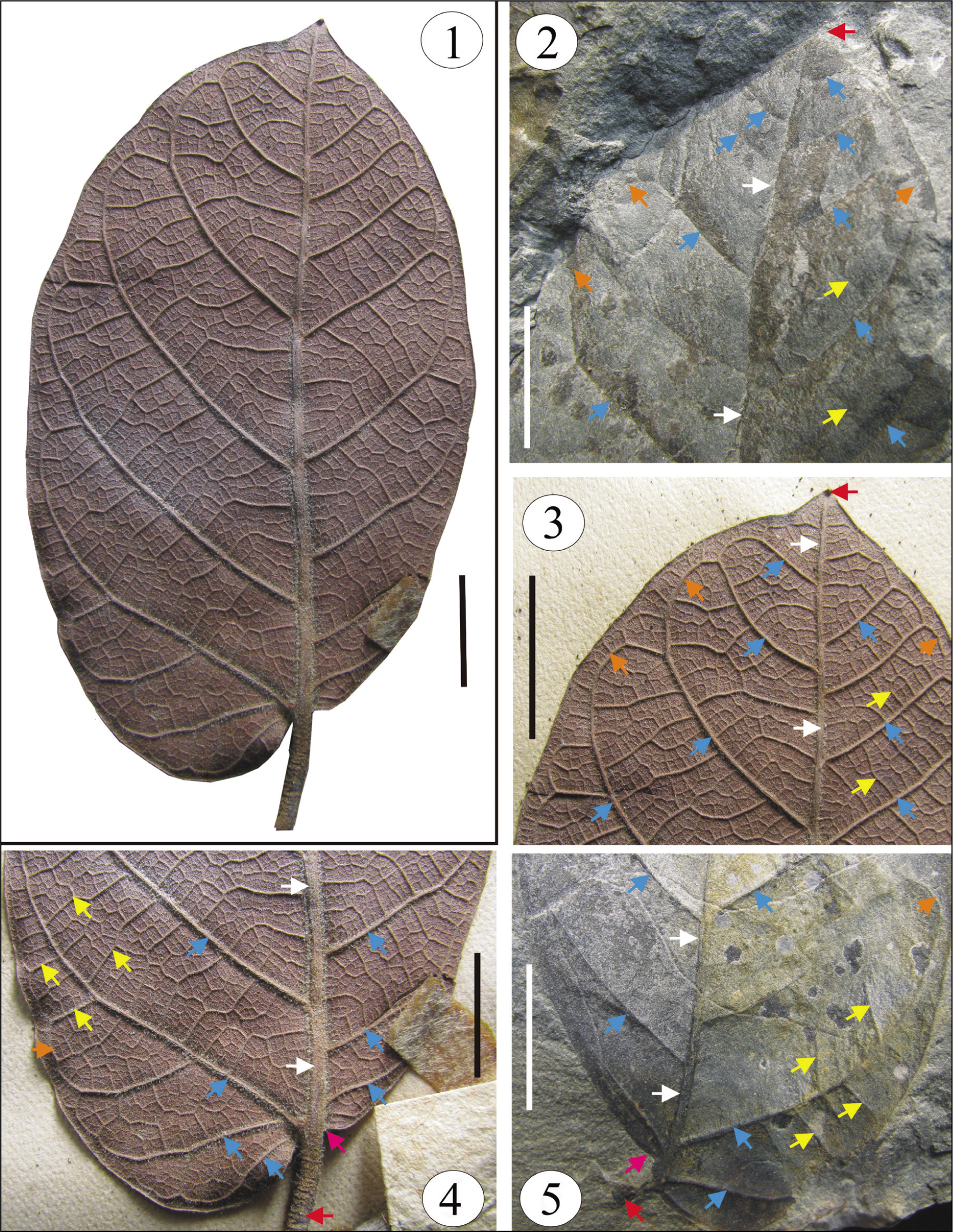
Affinities: The characteristic features of the fossil leaf such as elliptic shape, asymmetrical base, entire margin, eucamptodromous venation, wide to moderate acute angle of divergence of the secondary veins, and simple percurrent tertiary veins suggest its affinities with Ficus of the family Moraceae. A large number of herbarium sheets were studied and compared with the present fossil to determine its nearest living relative (NLRs) in the herbarium of CNH, Howrah, along with digital images of herbarium sheets available on the website of the Royal Botanic Gardens, Kew (Table 1). After a close and comparative evaluation of characters preserved in the fossil and several extant leaves belonging to the families such as Anacardiaceae, Clusiaceae, Combretaceae, Dipterocarpaceae, Ebenaceae, Phyllanthaceae, Lythraceae, Moraceae and Sapindaceae, it shows maximum similarity with the extant leaf of Ficus semicordata Buch.-Ham. ex Sm. (syn. Ficus cunia Buch.-Ham. ex Roxb.) (CNH Herbarium sheet no. 426921; Plate 2, Figures 1, 3, 4) of the family Moraceae.
Showing the fossil leaf of Ficus precunea Lakhanpal and the modern leaf of Ficus semicordata syn. Ficus cunea. (1 ) Modern leaf showing shape, size, and venation pattern; (2 ) Enlarged portion of the fossil leaf showing primary vein (white arrows), secondary veins (blue arrows), percurrent tertiary veins (yellow arrows), eucamptodromous venation pattern (orange arrows) and apex (red arrow); (3 ) Enlarged portion of the modern leaf showing primary vein (white arrows), secondary veins (blue arrows), percurrent tertiary veins (yellow arrows), eucamptodromous venation pattern (orange arrows), and apex (red arrow); (4 ) Enlarged portion of the modern leaf showing primary vein (white arrows), secondary veins (blue arrows), percurrent tertiary veins (yellow arrows), eucamptodromous venation pattern (orange arrows), base asymmetrical (pink arrow), and petiole (red arrow); (5 ) Enlarged portion of the fossil leaf showing primary vein (white arrows), secondary veins (blue arrows), percurrent tertiary veins (yellow arrows), eucamptodromous venation pattern (orange arrows), base asymmetrical (pink arrow), and petiole (red arrow) (scale bar = 1 cm).
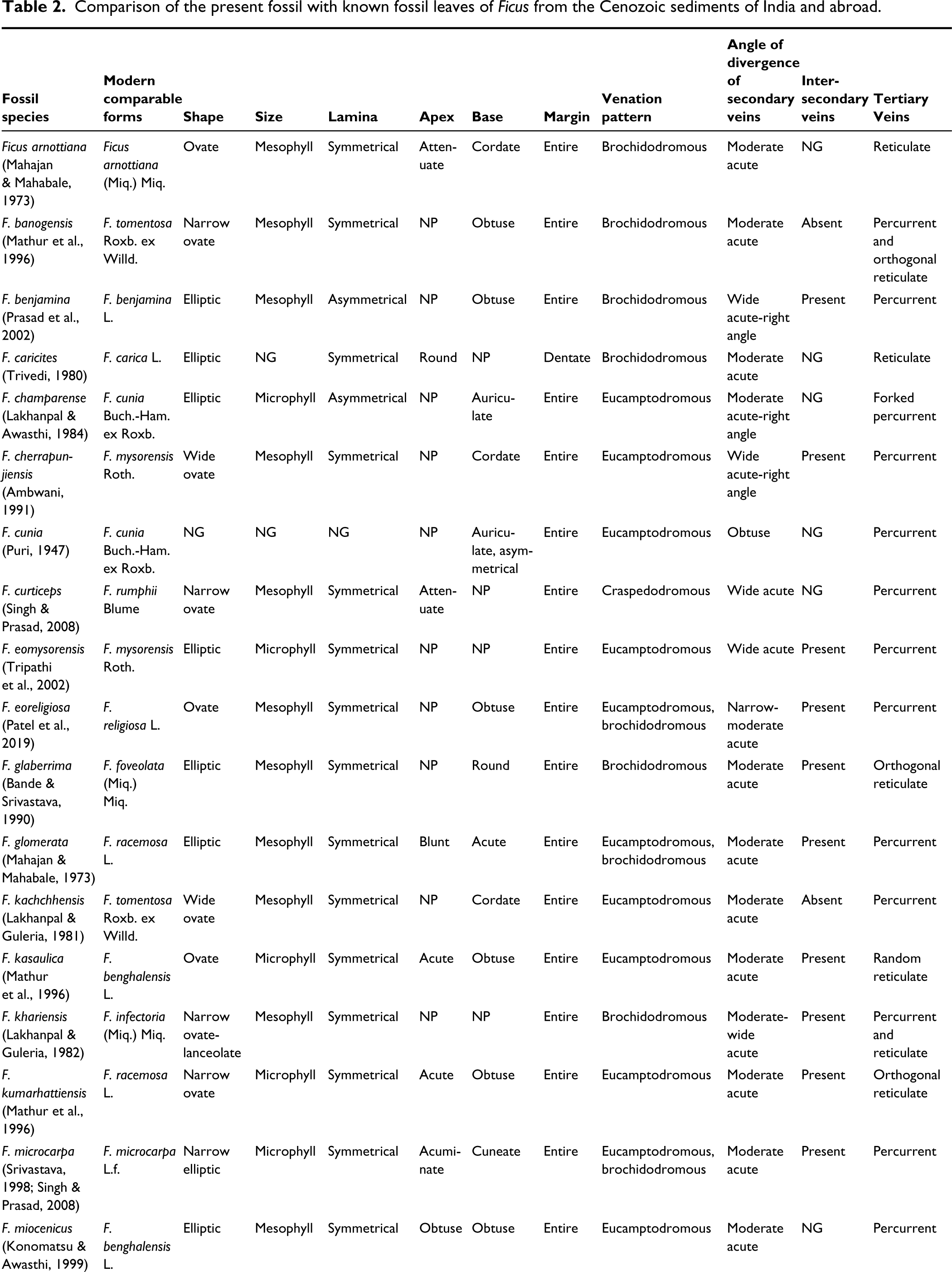
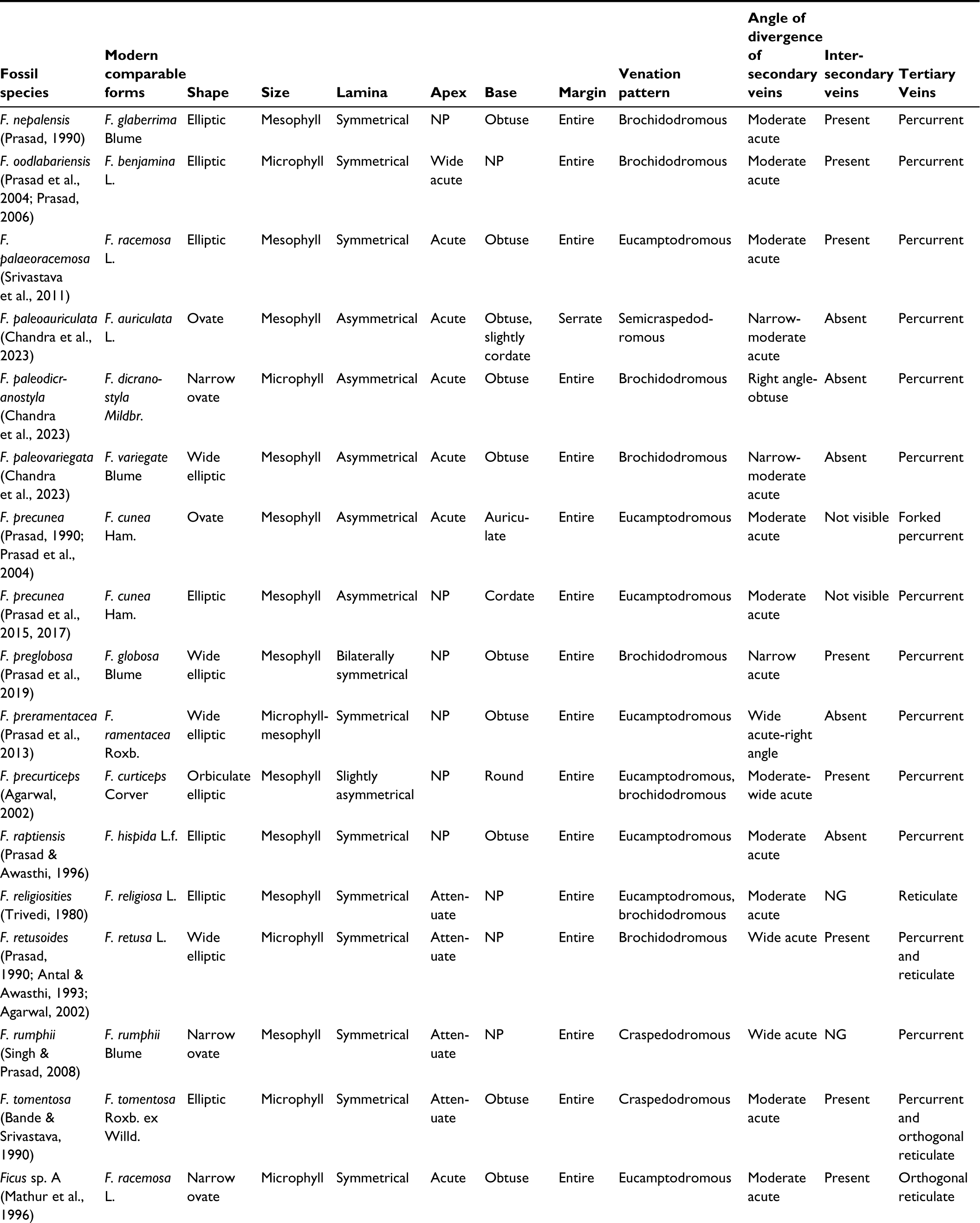
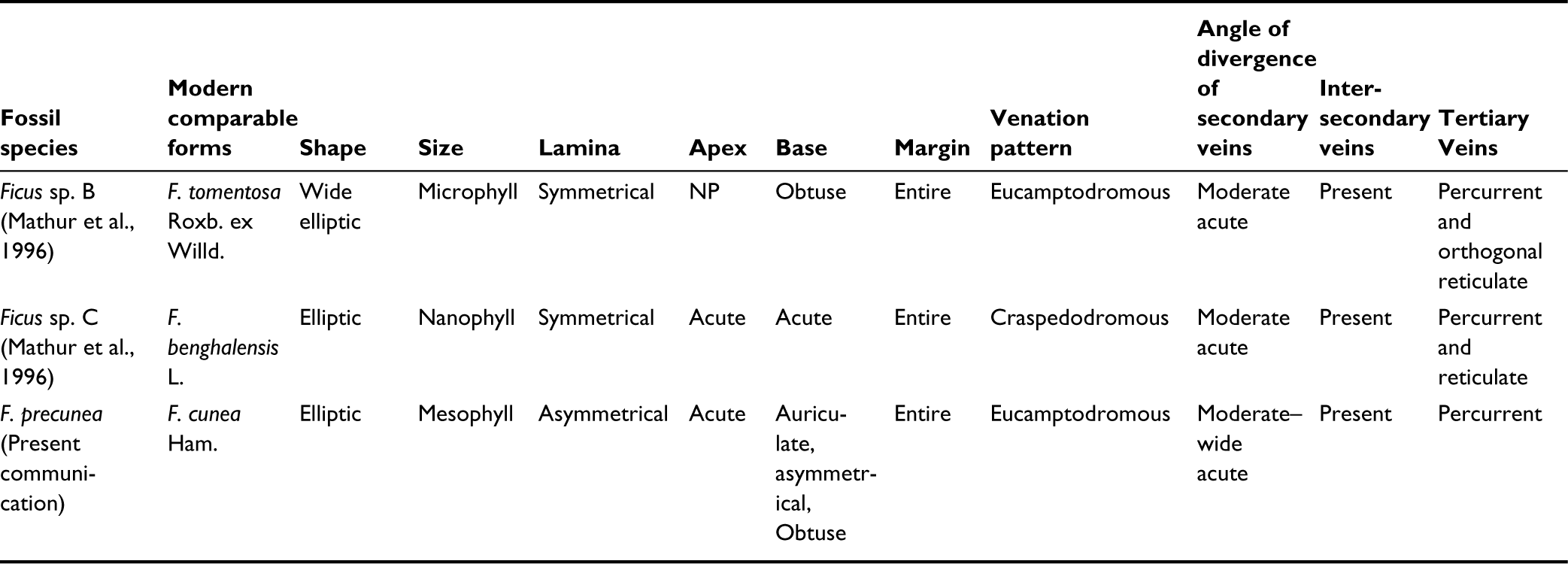
A character-by-character comparison has also been made with the fossil leaves of Ficus known from the Indian subcontinent (Table 2), which shows a resemblance with Ficus champarense (Lakhanpal & Awasthi, 1984), F. praecurtieps (Agarwal, 2002) and F. precunea (Lakhanpal, 1968). However, F. champarense possesses moderate acute–right-angled tertiary veins which are different from our fossils. Moreover, F. praecurticeps has a slightly asymmetrical base and eucamptodromous to brochidodromous secondary venation, unlike our fossils. As the fossil leaves show maximum resemblance with F. semicordata (synonym F. precunea), it has been placed into the same species.
Comparison of the present fossil with known fossil leaves of Ficus from the Cenozoic sediments of India and abroad.
Discussion
Ficus grows in various habitats and life forms due to its extensive distribution (Rohwer, 1993) and indicates a specific type of vegetation. It is usually tall evergreen trees in the lowland rainforests deciduous in the tropical seasonal forest, and shrub in the riparian vegetation. Because of these facts, Ficus species could indicate a particular type of vegetation and environment (Berg, 1989). The climatic requirements of the genus are: 13.8‒27.7°C for the mean annual temperature, 18.9‒30.3°C for the warm month mean temperature, 1.8‒27°C for the cold month mean temperature, 585‒10,798 mm for the mean annual rainfall, 125‒2446 mm for the precipitation during the wettest months, and 3‒165 mm for the precipitation during the driest months (Utescher & Mosbrugger, 2015).
The megafossil records of Ficus are known from both the hemispheres in the forms of leaf, wood, and endocarp (Figure 4; Supplementary Table 1). The earliest record of Ficus-like leaves is from the Lower Cretaceous of Maryland and is described by Fontaine (1889) under the generic name Ficophyllum. The fossil records of the genus indicate its presence since the Cretaceous, although Huang et al. (2018) and Doweld (2018) suggested that the Cretaceous fossils are perhaps unreliable in terms of their identification and geological age. The Paleogene records of the genus indicate its distribution in North America, Africa, India, Europe, and Asia (Figure 4; Supplementary Table 1) suggesting that Ficus was already well-established and diversified during the Paleocene in both high and low- latitude regions. The diversity of Ficus in South Asia during the Cenozoic and Quaternary periods increased from the Paleocene onwards and was at its peak during the Miocene (Figure 4). It is interesting to note that during the Paleogene and Miocene, Ficus was distributed beyond its modern distribution (Figure 4), that is, at low and mid- latitudes, however, after the Miocene it was confined to its modern distribution. The most plausible reason for this contrasting distribution of Ficus might be the increase in global cooling during the Neogene (Zachos et al., 2001).
Map showing the modern distribution of Ficus, Ficus cunea, and fossil records of Ficus (Source: World map created using ArcGIS10.5).
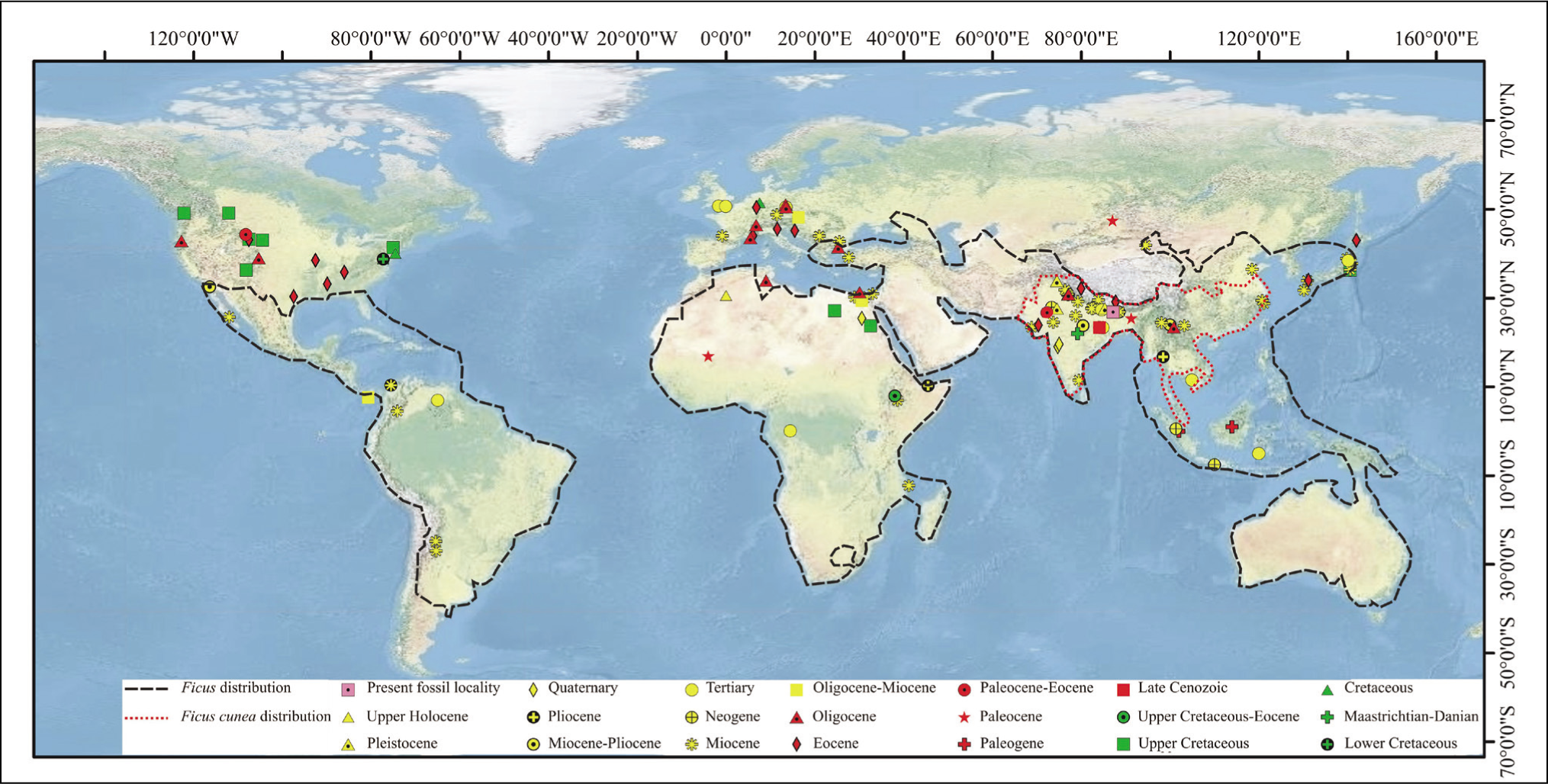
In India, the genus has been reported from Paleogene and Neogene sediments (Figure 4; Supplementary Table 1). The Paleogene records indicate its presence in the late Paleocene of Meghalaya (Ambwani, 1991) and early Eocene of western India (Lakhanpal & Guleria, 1981, 1982). During the late Paleocene, the Indian Plate was present in the Southern Hemisphere near the equator (Chatterjee et al., 2013). The Cretaceous and Paleogene fossil records from Africa and India indicate that the genus might have migrated from Africa to India via the Ladakh–Kohistan Arc during the latest Maastrichtian–early Paleogene (Chatterjee et al., 2013).
The plant megafossil records from the Siwalik of eastern Nepal are meagre, including Pterygota (Malvaceae), Terminalia (Combretaceae), Dipterocarpus (Dipterocarpaceae), Lauraceae, and ferns belonging to the Thelypteridaceae (Adhikari P. et al., 2018; Adhikari et al., 2023; Srivastava et al., 2017). The present fossil record of Ficus there adds further information about the floristic diversity of eastern Himalaya and its distribution range during the middle Miocene.
The modern distribution of the fossils reported from the Middle Siwalik of eastern Himalaya indicates the presence of seasonal forests having wet evergreen and deciduous taxa (Adhikari P. et al., 2018; Adhikari et al., 2023; Srivastava et al., 2017). The quantification of the Middle Siwalik climate of the Darjeeling area, which is near our fossil locality, using the Coexistence Approach indicates a mean annual temperature of 25.5°C ±1.6°C, a warm month mean temperature of 27.6°C ±0.5°C, and a cold month mean temperature of 22.2°C ±2.8°C. Reconstructed mean annual precipitation was 1652 ±275 mm, while precipitation during the wettest and driest months were 260.5 ±35.5 mm and 38 ±31 mm, respectively (Bhatia et al., 2022). The overall reconstructed climate data of the Middle Siwalik indicates a warm, humid, and seasonal climate during the deposition of the sediments (Bhatia et al., 2022).
Ficus semicordata is a moderate-sized tree found in parts of China, South Asia, and Southeast Asia, throughout India and Nepal except for a few places where either humidity or temperature is very low (Figure 4) (POWO, 2023). Based on the modern distribution of Ficus semicordata (Figure 4) and the previous fossil record of Dipterocarpus fossil leaves (Srivastava et al., 2017), it appears that a tropical and humid climate is necessary for its growth. This indicates that during the deposition of sediments in eastern Nepal, the climate was tropical and humid with the dominance of evergreen taxa over the deciduous ones.
Conclusions
The plant fossil records from the Siwalik sediments of Nepal are sparse. These records are important in understanding the vegetation shift and climate changes that occurred due to the orogeny of the Himalayas. In the present communication, we report a new fossil leaf impression/ compression of Ficus precunea Lakhanpal from the Middle Siwalik sediments of eastern Nepal. The characteristic venation pattern and leaf morphological traits suggest its affinity with the extant species of F. semicordata. The present and previous fossil records suggest the presence of seasonal forest during the deposition of the Middle Siwalik sediments in the eastern Himalayas. The previously reconstructed quantitative palaeoclimate data from the Middle Siwalik of eastern Himalaya also suggest a seasonal climate. The global fossil records of Ficus Tourn ex L. indicate that the genus might have immigrated to India from Africa via the Ladakh–Kohistan Arc during the latest Maastrichtian‒early Paleogene.
Supplemental Material
Supplemental material for this article is available online.
Footnotes
Acknowledgements
PA is grateful to the Head of the Department, Central Department of Geology, Tribhuvan University, Kathmandu and Campus Chief, Birendra Multiple Campus, Tribhuvan University, Bharatpur, Chitwan. GS, HB, S and RCM are thankful to the Director of the Birbal Sahni Institute of Palaeosciences, Lucknow for providing necessary facilities during the present work. Thanks are also due to the authorities of the Central National Herbarium, Howrah, India for permission to consult their herbarium. We are thankful to Drona Adhikari and Keshav Shrestha for their assistance during our fieldwork.
Declaration of Conflicting Interests
The authors declared no potential conflicts of interest with respect to the research, authorship and/or publication of this article.
Funding
The authors disclosed receipt of the following financial support for the research, authorship, and/or publication of this article: The present research work was supported by University Grants Commission (UGC), Sanothimi, Bhaktapur, Nepal (No. PhD-76/77-S&T-8) to PA.
References
Supplementary Material
Please find the following supplemental material available below.
For Open Access articles published under a Creative Commons License, all supplemental material carries the same license as the article it is associated with.
For non-Open Access articles published, all supplemental material carries a non-exclusive license, and permission requests for re-use of supplemental material or any part of supplemental material shall be sent directly to the copyright owner as specified in the copyright notice associated with the article.
