



Abstract
Field station research locations offer scientists isolation and immersion for more precise statistical analysis of climate change and environmental damage. As more art/science initiatives develop in academia, art students are gaining access to difficult scientific research sites and using the experience to fuel creative strategies. The methodology for offering a course that taps these into possibilities for the teaching of creativity remains little explored. Through a case study at the School of Creative Media in Hong Kong, this article examines how student expeditions that work adjacent to environmental scientists in extreme environments can be used for the teaching of creativity and artistic process as well as informing a larger public on climate issues. The structure of the program with detailed descriptions of sequenced proficiencies is presented. Both pedagogical philosophy and logistic issues will be discussed through the set-up and organizational structure of the course, the variety of teaching materials, assignments, dissemination and finally the exhibition and impact of the students’ work. Using scientific resources with the goal of artistic interpretation, the pedagogy is designed to respond to the emerging potential of digital technologies in creative media. The results, both for the students and the public, demonstrate multimodal approaches that offer broader possibilities for learning and outreach that are both scalable and transferable.
Introduction
This article documents the methodology and the results of a 9-year teaching experiment involving course SM3703 Media Art and the Environment at the School of Creative Media at City University of Hong Kong. The ‘Extreme Environments’ project draws from the disciplines of science and media arts to help create a better understanding of issues of sustainability while promoting interdisciplinary arts-centered research and immersive education. It demonstrates ways for undergraduate artists and experienced scientists to collaborate by leveraging technologies to collect environmental data and interpret it in new creative forms. To date, the program has worked in five distinct ecosystems: the Mojave Desert (2012), Antarctica (2014), a recently-discovered cave network in central Vietnam (2015), and two sites in the Coral Triangle (2017): underwater in Sipidan and Mabul, Malaysia, and on disappearing atolls in the Solomon Islands. 1
Onsite in each selected remote ecosystem, the initial emphasis is on the science and the development of critical and analytic thinking. Students partner with expert scientific and academic researchers who share their approaches and tools. Exposure to the most current sophisticated sensor and locative technologies allows the students to perceive differently delicate eco-balances and to produce singular datasets linked to the natural features of the sites.
The second emphasis is on the arts. The presentation of the collected data requires in-depth research in esthetics and visualization strategies that are often beyond the area of study for the sciences. Students learn computational and procedural programming as a generative art strategy, new 3D printing possibilities, advances in screen and projection technologies, new robotics, new interactions, styles, and formats. Upon completion of their work, they have developed a range of proficiencies, while also experiencing art as a medium to promote sustainability and environmental awareness.
Science routinely presents its findings as text or graphic content, on the basis that ‘the numbers speak for themselves’. Art, in contrast, often explores both what is said (content) and how it is said (form). By empowering students to investigate form as a way to approach complex scientific datasets, art provides a singular entry point for non-scientists to access important research. The project thus is an exploration of form as a way to convey environmental statistics, in a way that speaks to non-scientists and a much larger public. At the same time, it also allows scientists to see their data projected in new ways and explore previously unforeseen relationships, thus stimulating everyone’s creativity.
This article presents the pedagogical underpinnings of the Media Art and the Environment course and discusses its structure, including the sequenced proficiencies gained by students, and logistic and organizational challenges. We begin by showing how experiential education and learning and research-creation approaches shape the overarching conceptual framework in which the course is embedded, calling for and generating more integrative methodologies. Some of the difficulties inherent to crossing disciplinary boundaries are addressed. We then detail the sequenced learning approach that equips students with a wide variety of methodological tools and proficiencies to both explore the expedition environment and creatively render their findings in a legible way for a general public. We present all steps of the pedagogical journey, including in-class components prior to the expedition, onsite data collection and collaboration with scientists, and the creation and design of artwork for the exhibition space. Finally, we discuss challenges relating to institutional sanctioning, financial support, and research legitimacy, along with some of the ways in which such difficulties have been addressed.
Overall, this article maps out close to 10 years of pedagogical exploration through the Extreme Environments program. As such, it attempts to answer some queries from parties interested in creating similar endeavors in their own institutions by baring technical and organizational frameworks and sharing potential solutions to looming challenges. While this historically-oriented account does not strive to overturn the positivist epistemological paradigm, it hopes to serve as a starting point to discuss concerns that will dictate future iterations of the expeditions, such as, but not limited to, problematic nature/culture and science/art dichotomizations, data reification, or colonialist pitfalls inherent to value-extracting expeditions.
Conceptual framework
In 2012, City University of Hong Kong’s then Provost Arthur B. Ellis launched a proposed new discovery-centered paradigm for higher education. In his remarks for the exhibition catalogue, he stated that the goal of the Discovery-enriched Curriculum (DEC) was ‘for each student to have the chance to make an original discovery. DEC enables students not only to master existing knowledge, but to learn what it means to create new knowledge by being partners in the process of discovering/innovating/creating’ (Ellis, 2014). The DEC was conceived to create opportunities to explore the unknown and take measured risks under academic guidance. Extreme Environments was conceived as a nearly literal interpretation of that paradigm. Additionally, a societal outreach component was built into DEC, with the Provost adding that ‘students have the opportunity to create new knowledge and then communicate, curate, and cultivate that knowledge to benefit society’ (Ellis, 2014). Coherently, the Extreme Environments program draws on two main conceptual frameworks to integrate experience, knowledge, and creation, namely experiential education and research-creation.
Experiential education and learning
‘Experiential education’ is a broad-based term for learning that results from challenge and direct experience (Itin, 1999). Learning occurs via curated experiences that are configured to require initiative and investigation. The physical experience is relational as the student gains self-knowledge, develops partnership with others on site, and sees the larger connections shared with the world. The philosophy has been integrated into multiple methodologies used by educators who offer direct experience to engage students. Since the first use of the term in John Dewey’s 1938 Experience and Education, the models developed have spread across fields and cultures.
Among the most comprehensive is David A. Kolb’s experiential learning theory, which draws on work from Dewey, but also William James, Kurt Lewin, Jean Piaget, Lev Vygotsky, Carl Jung, Paulo Freire, and Carl Rogers to propose an integrated and holistic framework for learning from experience. Kolb outlines six foundational propositions about learning: that it should be understood as a process rather than an outcome; that it should build on learners’ existing knowledge; that it necessitates the constant resolution of conflictual ways of understanding the world; that it is a holistic process of adaptation, not solely a cognitive one; that is it relational in the sense that it is a process influenced both by the learner’s characteristics, and by the environment’s; finally, that learning happens precisely as ‘social knowledge is created and recreated in the personal knowledge of the learner’ (Kolb and Kolb, 2012; Kolb, 1984). As this article demonstrates, the Extreme Environments program is driven by such understandings of learning as a holistic, wholly involving, and immersive process.
What’s more, all approaches to experiential learning emphasize the central importance of reflection (Howden, 2012). Physical immersion is not sufficient and needs to be partnered with reflective practice, a personal consideration of both the challenges and the learning. Art provides a unique opportunity for this self-reflection in that visual methods are explored to coalesce the entire experience.
It must be noted, however, that experiential education has occasionally been partly co-opted for institutional purposes. University websites offer evocative examples, as in Carleton University’s emphasis on ‘the application of theory and academic content to real-world experiences’ for ‘outcomes that are specifically focused on employability skills’ (Carleton University, 2019). Among the University of Guelph’s six listed benefits of experiential education, four are directly related to job preparedness, including the first one: ‘Development and strengthening of skills (soft and technical) demanded by employers’ (University of Guelph n.d.). 2
While such attempts at standardization and career orientation-ism are to be expected in an institutional context, experiential learning as an approach and as a philosophy extends largely beyond the neoliberal framework that would apply purportedly abstract theory to the ‘real’ world for a better tailoring to job-market imperatives. As Benveniste and her co-authors remind us about ways of ‘entering’ research work: The institution's disciplines offer us a grab-bag of paths for not-entering. They call these paths ‘methods’, and strongly suggest that students choose one (and only one) before the writing and the making, the thinking and the feeling – before the studying – begins. This is not what we’re after. The entry way cannot be a method. [. . .] The student was already thinking and wording, listening to a will to create, her appetite an a-disciplinary invention, before being told which beaten-path to walk. By entangling our writing process we seek not the method, but a way open to the eventfulness and artfulness of what cuts and intersects with the more-than of everyday life – sites and encounters that invent their own techniques for study within the rhythms of the world and not solely within the walls of a classroom called-to-order. (2015)
In their radical approach to pedagogy, the authors here exhort researchers to think beyond a two-step process – apply ‘theory’ to ‘reality’ – that aims to translate experience into expertise for the workplace. Instead, they insist that the creative work of research begins before the application of method, and requires instead the invention of a unique approach to apprehend, understand and translate the research. In this perspective, there is no ‘one-size-fits-all’ method for different ‘real-world’ situations. The research informs the method, and vice-versa. It is always in the becoming.
It is such a process that the Extreme Environment program seeks to foster as it immerses students in challenging research environments and exposes them to tools, situations, and knowledge that extend beyond the boundaries of their own practice.
Research-creation
With its driving focus on media arts, the Extreme Environments program is strongly linked to research-creation approaches to education and learning. Research-creation, as well as a constellation of related concepts including creative practice as research, practice-led research, practice as research, studio practice as research, or arts-based research (Haseman, 2006), refers to a set of undertakings in which the artistic endeavor is integral to the research, not just an added component – in other words, it is understood that the topic could not be addressed without engaging in this creative or experimental process.
This particular approach is specific to academic contexts, and as such has been regulated and typified over the years by funding and granting agencies and by academic departments. Nonetheless, for many practitioners, it remains a potent epistemological and methodological questioning of the ‘‘regime of truth’ of the university’ (Chapman and Sawchuck, 2012: 6) and of the ways institutions have defined, circumscribed, standardized and measured acceptable forms of research, production of knowledge, presentation, and research ‘outputs’, based on the scientific model. With its emphasis on tacit and personally situated knowledge, it has the capacity to extend and enrich scholarly and knowledge-production activities (Barrett, 2010).
In this regard, research-creation approaches usually strive to deconstruct or at least disrupt the research model hierarchy that places scientific inquiry at the top, followed by quantitative work and, at the very bottom, qualitative research. The Extreme Environments program seeks to bridge such oppositions in rendering scientific-type knowledge legible through other types of creative approaches. Instead of relying on a classic epistemological opposition between explicit and tacit knowledge, which continues to underpin the divide between scientific and arts and humanities disciplines (Barrett, 2010), the students’ work exposes the inherently embodied and intuitive nature of all forms of research, including scientific ones. In rendering ‘hard’ data as artistic creations, they are able to articulate research knowledge traditionally understood as positivist and objective in intimate and subjective manners that resonate with viewers in multiple ways. As the projects outlined in this article will demonstrate, the abundance and variety of accumulated data offers both opportunities and challenges.
In their seminal article, Owen Chapman and Kim Sawchuck (2012) explore four related concepts that, while not constituting an exhaustive repertoire, help comprehend many articulations of research-creation. Research-for-creation refers to the initial generative phases of research that shape and inform the future creative work. Research-from-creation is either the hybrid or more traditional forms of inquiry that stem from the artwork itself (as is the case, for instance, with the present article). Creative presentations of research, as the phrase indicates, translate more conventional academic forms of research into artistic means. Creation-as-research, finally, refers to research that cannot emerge without the integral creative component (2012: 15–19). All four of these forms are integral parts of the Extreme Environment program, as the more detailed examples included in this article will show.
Integrating methodologies
A word on the thorny issue of positioning the program on the integrative methodology spectrum. In considering the Extreme Environments project as an interdisciplinary endeavor, we draw on Julie Thompson Klein’s study of multi-, inter-, and transdisciplinary approaches.
Her fine-cut typology establishes multidisciplinarity as a ‘juxtaposition’ (2017: 23) in which disciplines retain their full separate identities, rather than a disciplinary and epistemic integration. On the other end of the spectrum, transdisciplinarity aims for a ‘systematic integration of knowledge’ (2017: 29) that can have transgressive, critical or even anti-disciplinary tangents that endeavor to reorganize the very structure of knowledge. Situated between these two poles – where exactly depends on methodological, philosophical, empirical and often institutional positionings – is interdisciplinarity, driven by ideas of disciplinary integration and collaboration. The scope of this integration depends on the number of different disciplinary fields involved, and in the compatibility of their relevant methodologies and epistemological underpinnings. Because of its emphasis on sharing methods, tools, and technologies between various disciplines in the sciences and the arts, the Extreme Environments program can be understood as drawing from and building on methodological interdisciplinarity more specifically, which borrows and includes or integrates methods and concepts from different fields in order to ‘test a hypothesis, to answer a research question, or to help develop a theory’ (2017: 24). Thanks to the program’s strong commitment to public outreach and engagement, we would add that this commitment to interdisciplinarity allows Extreme Environment students to include and mobilize evocative methodologies to reconstruct and diffuse their findings in an impactful way.
The spark triggered by the shared experience among students and professional artists, scientists, and engineers has proven to be an effective pedagogical approach and often a transformational experience. Merging research methodologies creates a context where a skill, whether scientific or artistic, is no longer specialized but rather integrated into a larger context. Unexpected hybrids form when the established goal of a field of study is diverted, for example when an engineering skill is applied to art or an art skill applied to science. Students thus realize that specialization does not mean a singular path; that the specializations from different fields can be applied to new contexts to yield innovative ideas.
This entrance into the methods of another discipline is rarely smooth, for a range of reasons, including the delicate question of sharing proprietary research, the discomfort of scientists with inexperienced students, or the art and design participants’ general unfamiliarity with many of the deeper complexities of the site, the local culture, the scientific research background and connectivity to other scientific fields. However, the frictions and resistance can help reconsider the potentiality of the collected data.
Many times, the scientists onsite have balked at the methods or projects as being too simple or unimportant. For instance, a student project that measured lichen growth in Antarctica, which is rapidly expanding due to warming, planned to connect the data to skin cancers and measurements of UV radiation in both Antarctica and Hong Kong. The botanist on the ship repeatedly attempted to direct the students to other plant studies that he felt were more key to the ecosystems’ survival, frustrated with the lack of scientific rigor or publishable results. However, the methodology of plant growth measurement was not key to the student’s vision; the kinesis of the change in lichen was the entrance, the representation of a process, not a result. In the resulting exhibition, lichen was grown onto vanity mirrors in patterns matching those found in Antarctica, eerily growing across our reflected faces, establishing a personal connection between global warming and human health. The artwork, with its slick esthetics and reshuffling of scientific data, attracted the interest of the beauty industry and was ultimately sponsored by Lush Cosmetics.
While Extreme Environments projects can be initially understood as alternative data visualization modes that use scientific sensing tools as foundational material, in actuality the methodology pertaining to those tools is often subverted or even hacked. Within the lecture component of the course, data visualization is in itself presented as a methodological approach that can be applied across disciplines, by both rethinking the tool and the method. Examples 3 of data visualization outside of traditional forms, materials, interfaces and technologies are discussed, with less emphasis on the discipline of the data collection itself. By focusing on alternative explorations into representation, the tool becomes an interdisciplinary bridge instead of a technique within a particular field. Physical representations of movement as data are viewed through history from static objects (tokens, ropes, wooden carvings, string and rope arrangements) that evolved as fabrication and modeling techniques allowed for more detail and control of a wider range of materials, introducing metals, plastics, crystals, and most recently additive fabrication. When separated from a particular discipline, these objects represent a trajectory of visual, tactile and electronic development. Artistic explorations into each type are also presented, as personal, aesthetic and even humorous examples reveal the flexibility of data visualization as a larger methodology.
Once a range of materials and technologies have been presented and discussed, the course inverts the discipline/data visualization relationship, showing a diverse range of ways of representing similar datasets. Fortunately, the creative arts have used a variety of tools to render different issues. For example, pollutants in the air have been represented as a projected waterfall in Andrea Polli’s ‘Particle Falls’, clinging to electrically charged wires in R&Sie(n)’s proposal for the B-Mu Tower in Bangkok, and as puffed smoke rings in Big Vortex’s waste-to-energy plant in Copenhagen. Different ways to reveal research areas, ranging from animal migration to seismic activity, to water flow to wind to sound, are shown in widely variant forms to demonstrate that each can be better understood when expressed with alternative data visualization techniques.
Simultaneously, the partners, science organizations and scientists-on-site, supply a list of data that they collect as part of their research. The Academik Ioffe, a 1988 Russian research vessel designed for underwater acoustic transmitting and receiving, hosted the Antarctica expedition and served as the base for students to live on and visit multiple sites. The ship also provided dozens of potential datasets as part of its operations, including meteorological data, navigation statistics, historical environmental studies, and more, all accessible to the student team. The Nature Conservancy, the scientific host organization in the Solomon Islands, provided raw data on turtle migrations, measurements of disappearing islands, and studies of flora and fauna changes due to a rapidly shifting ecosystem. Existing research thus becomes a set of proposals and invitations for students that can be paired with physical, tactile interfaces or emerging technologies, while also demonstrating the types of sensors available (and those yet unexplored).
The merging of possible data with alternative forms to represent it is the core creative moment for each student, but still allows for onsite evolution on both sides of the equation. In one project, original data of regional warming provided by the climate scientists working in Antarctica was matched with data regarding infant penguin mortality provided by biologists also working onsite. The students learned thermal camera filming techniques and created a narrative connection between how seemingly minor changes in warming have devastating effects on newborn penguins, who are less equipped to survive. The students measured nesting ground, adult, infant and egg temperatures, supervised in the colony by the ship’s biologist. Penguin behaviors were filmed and then reframed in the form of a Hong Kong tabloid newspaper website 4 which playfully compared observed colony activities such as traffic jams, theft, and hoarding with recent local headlines. In the mobile application, the video footage could toggle to infrared video, reminding viewers of how temperature changes have a direct impact on animal physiology (Figure 2). This mix of climate and biological data with a specific cultural issue would be rarely found in any one discipline, but collectively the shared methodology presented a critical issue about that environment that resonated deeply and immediately with members of the Hong Kong public who visited the exhibit.
Integrating methodologies also creates challenges. Often, the scientific data is too complex or too detailed for an art or design student to fully understand. Climate study technologies and sensors may not directly import into a creative software application – the data may change too slowly for visual dynamism or too quickly for understanding. When taken out of context, the data being collected by scientists is often simplified, exaggerated, modified, or even rendered meaningless. One student, planning to compare increased pollution levels in the Solomon Islands with those in Hong Kong, learned that air quality in the city was actually improving, making the artwork concept meaningless. Assumptions occur when the disciplinary underpinnings of a methodological tool are not fully understood, and the data does not ‘behave’ as expected when torn from its intended context. When free access to the tools, methods and theories of the scientists becomes the impetus of an artwork, sometimes assumptions and lack of knowledge of the discipline create pitfalls. Often, the moment when the data collected does not match expectation is a harsh moment onsite, with students quickly trying other sensors and tools that may weave a stronger emotional or narrative thread into their work.
However, at times the lack of expertise of an art student in a scientific discipline also provides new opportunities. In the Solomon Islands, one student created a device that combines both camera and microscope to view microplastics invisibly invading the ecosystem. The level of detail possible in the student project had not been seen before by the conservationists on site, the community thereby gaining (with the help of state-of-the-art technological means) a different perspective from the student’s research.
Methodology: Course structure and application
The educational model for the Extreme Environments course is a blended structure of engaging social and digital resources, technical workshops, information arts theory, the expedition itself, and the post-expedition creation and diffusion work. The diversity of skills required are approached in steps to avoid overload. Sequenced interdisciplinary proficiencies provide a natural evolution of skills within large, diversified, task-oriented, interdisciplinary teams. While the extreme challenges provide deep and multi-faceted learning, careful structuring of skills development allows for a high sense of individual responsibility within a larger context.
Students are selected in the semester prior to the course offering. An orientation meeting is offered to explain the site, the possibilities, the program concept, and the steps to submit a proposal. Students write a short proposal that states what they hope to study and how they will mediate their results into creative displays and artworks. The students submit online, the school provides the students’ Grade Point Average (GPA), and a panel of faculty and interested scientists ranks the proposals based on research, creativity, portfolio and potential. The highest ranked proposals and top GPAs receive an interview, which is rated on presentation, verbal and written skills, and additional proficiencies that support the larger group (e.g. medical training, graphic design, cooking). Of these students, the team is selected and has always included a broad international mix. The entire course occurs in a 13-week semester with the on-site expeditions usually taking place over 10–15 days in mid-semester. Students are excused from other classes during the expedition dates by directive from the university but are encouraged to use elements from their experience in their other courses.
Sequenced interdisciplinary proficiencies
To achieve success and subsequent deep learning, the course defines sets of proficiencies that are appropriately sequenced. With proper sequencing, learning becomes more natural and the perceived learning curve less steep. Many of these proficiencies are interdisciplinary in nature and require partnering students across disciplines. While the focus is often on the expeditions themselves, they are part of the larger picture which involves research, planning, lab work, library work, lectures, seminars, workshops, guest speakers, and site visits.
To realize their proposal, the students must begin learning skills often outside of arts creation. Six proficiency categories are delineated: equipment, teamwork, project management, computation, media systems and presentation. Many students begin by learning the operations, maintenance and repair of equipment that is specific to their field of interest. For example, an Antarctica project used light sensors to measure UV levels that first needed to be correctly operated, but then also connected to the student’s laptop with appropriate software and an interface into the design software used to further the project. The more complex endeavors are often led by teams of 2 or 3 students, and proficiencies in team and personal development skills need to be solidly gained through interdependency, interaction, and collaboration to overcome site-specific difficulties. Teams rarely include members with identical backgrounds, but are more frequently a mix of students from different schools. For instance, a technical engineering student could be partnered with a visual arts student, with the work divided into stages. Many students must learn new computational data mining and visualization skills through programming and art-centered media software to interpret their data. Arduino, Raspberry Pi, 3D Studio Max are among dozens of specialized software that students may need to master either independently or with the help of tutors volunteering from the school’s MFA program. These computational proficiencies are then extended to larger, more complex media systems to interpret the data in alternative venues, systems and contexts through research and partnerships with engineers, programmers and other media artists. These media systems range from analog environments, such as a room filled with connected images and strings showing the complexity of illegal South Pacific turtle shell smuggling (and Hong Kong’s direct involvement), to highly programmed installations like real-time paintings created live using robotics controlled by remote wind sensors in the Mojave desert. Finally, the skills related to mounting and presenting the work for the public are developed to insure professional presentation of students’ research through media interviews, serving as tour guides, and research and writing for the public exhibition. The local newspapers and television broadcasts often choose selected students for interviews and the clarity and composure required are rehearsed in class with oral presentations throughout the semester.
These six proficiencies are developed on a weekly basis over the duration of the course. In addition, a theoretical framework for approaching both the individual artwork and the larger ecosystem are developed through research and sequenced writing. The knowledge is incremental and timed so that skills match the moment they are required within the larger framework. For example, in the first week, the student must submit a single sentence description of what they hope to study onsite and a rough concept drawing of how the collected data will be presented. The student must also write a single sentence about why that topic is of personal interest. These two documents are developed both in text and visual form over the course of the semester and ultimately become the artwork description and artist statement in the print and web catalogue. Many proposals evolve dramatically over the semester, beginning with a simplistic interest in the most obvious topics within a site – penguins, baby turtles – but then deepen into more complex issues as the students do research into infant starvation in colonies, rising ocean levels, etc. The ‘hook’ that initially drew in the student is redirected when the larger context begins to be better understood. The strongest projects follow through to a direct connection to Hong Kong, where issues in the remote sites are often connected to urban sprawl and population density.
Classroom activities prior to the expedition
During the semester, students encounter and familiarize themselves with a unique subset of art history and contemporary art practices that highlight the single-sentence directive of the course: ‘The artwork cannot exist without direct input from nature’. The program recognizes the role of science in environmental research but emphasizes empirical working and adaptation from the natural forces intrinsic to the sites. The emphasis on force over image connects well with the range of sensing technologies being learned by the students, as well as with the resulting media systems. Students are encouraged to transpose the energy and dynamism found onsite into dynamic presentation systems that stimulate a range of senses. Data is understood as a complex construct, a way to bridge forces found in nature to the digital realm for further study and alternative representation instead of a simple, objective capture of the world. Art, on the other hand, is understood as a way to contribute to climate change epistemology.
Scientific sensors and the resulting data are viewed as tools to engage with the environment, not to simply ‘read’ it. While art has often turned to nature for inspiration, the jump from the visual to the interactive is a more specialized creative approach. Kinesis and patterns created by natural forces are presented and studied for their beauty, complexity, form, color, and more. Cultural definitions of nature are reviewed – the ‘Other’, the battlefield, the Eden, the commercial opportunity, the endangered, the vengeful – to explore and address preconceptions that might be embedded in projects.
Emphasizing natural force over natural beauty in each location creates a multi-sensory approach, stepping away from the more culture-specific focus on sight often associated with stunning remote environments. Instead of returning from Antarctica with only amazing photographs, the students are invited to build an understanding of wind, light, decay, growth, struggle, and more. Their findings extend the understanding of Information Arts (see for instance Wilson, 2001) beyond data visualization to engagement with data, recognizing that a mono-sense rendering of the complexity of these places is insufficient. Physical objects that have represented data throughout history – rocks, carvings, strings – are studied as potential avenues to convert the site-collected data to other senses.
Classroom time is also dedicated to honing technical skills. Equipment lists are organized early on in the semester and training for all the media technologies, as well as for sensor and scientific hardware, takes place weekly leading up to the mid-semester expedition. For example, the 2017 underwater diving team started getting certification as open water beginners and then onwards to advanced and scientific diving certification.
In addition, each week the students research the sites and present incremental information regarding safety, unique cultural discoveries, natural features, etc. that are compiled into larger lists and documents for subsequent referral. Students also investigate the ongoing science research at the sites. The students are not sheltered from the complexity of the logistics nor the bureaucracy of the planning with all involved in the development of larger processes, such as emergency protocols for safety, fundraising and budgeting, exhibition design, and media relations.
The expeditions: Project examples and data collection
The students and faculty team is supported by PhD and MFA students who volunteer as assistants in exchange for joining the expeditions, usually in a ratio of one Research Assistant for every eight undergraduates. Depending on accessibility and resources available on-site, the total group numbers have ranged from 16 to 28. The students are on-site from 8 to 10 days with daily short trips to sites of unique ecological, cultural, or historical significance. Students are exposed to as many landscapes and contexts as possible.
The sites are selected based on invitations from science organizations and eco-tourism companies. The Nature Conservancy scientists doing research in the disappearing Solomon Islands saw the program as a form of outreach, as did One Ocean in Antarctica and Oxalis Tours in Vietnam. Once the students arrive onsite, local guides take the team to key sites and ensure safety through familiarization with the dangers and areas to avoid. Instructional workshops are dispensed by local experts who explain inherent dangers such as crocodiles at night in a tropical island, icy crevasses in Antarctica, or poisonous plants in the desert. A cook is hired and the students are required to assist.
Student field research takes many forms, but onsite each student works daily to collect the data required for their chosen project. Some follow the conventions of scientific data collection, using the sensors as intended. Others stage live performances on the sites that simultaneously collect data that ties the artist directly to the environment, while others yet use technologies to present datasets in situ.
It should be noted that not all data collected utilizes scientific hardware. Other projects have collected cultural data. For instance, an animated game was created about bartering, a key social activity in Antarctica due to a lack of currency or government. The team regarded the exchange of goods and services as a more sustainable, environmentally responsible practice. They left Hong Kong with a collection of simple, iconic Asian trinkets and traded for the duration of the trip with the scientists, travelers, military, and residents they encountered. Documenting each exchange, a game was created to guess each trade and win a ‘prize’ of a visualization of the environment as pristine (Figure 3). More successful exchanges were presented as direct drivers to protecting the ecosystem and an unusual social economic network was revealed to be a valuable tool in preserving nature.
Other interactions between student and site were computationally measured, performance-based gestures. In the Mojave Desert, dance movements across a ridge were captured via direction, altitude, and video from a weather balloon suspended above the performer and then presented as a robotic installation from the perspective of the wind above the ridge (Figure 4). In Antarctica, kite-surfing gear was modified with cameras and a range of sensors on both the kite and the surfer to collect a wide range of data that could then be recreated with an interactive video utilizing the same control bar used during the performance (Figure 1). That work also included data collected about Hong Kong’s ‘wall effect’, the blockage of wind movement in the city due to skyscrapers along the waterfront. A four-screen installation showed multiple perspectives from the surfing along with a generative animation that transferred Antarctic wind data into the restrictive ‘built canyons’ of the city.
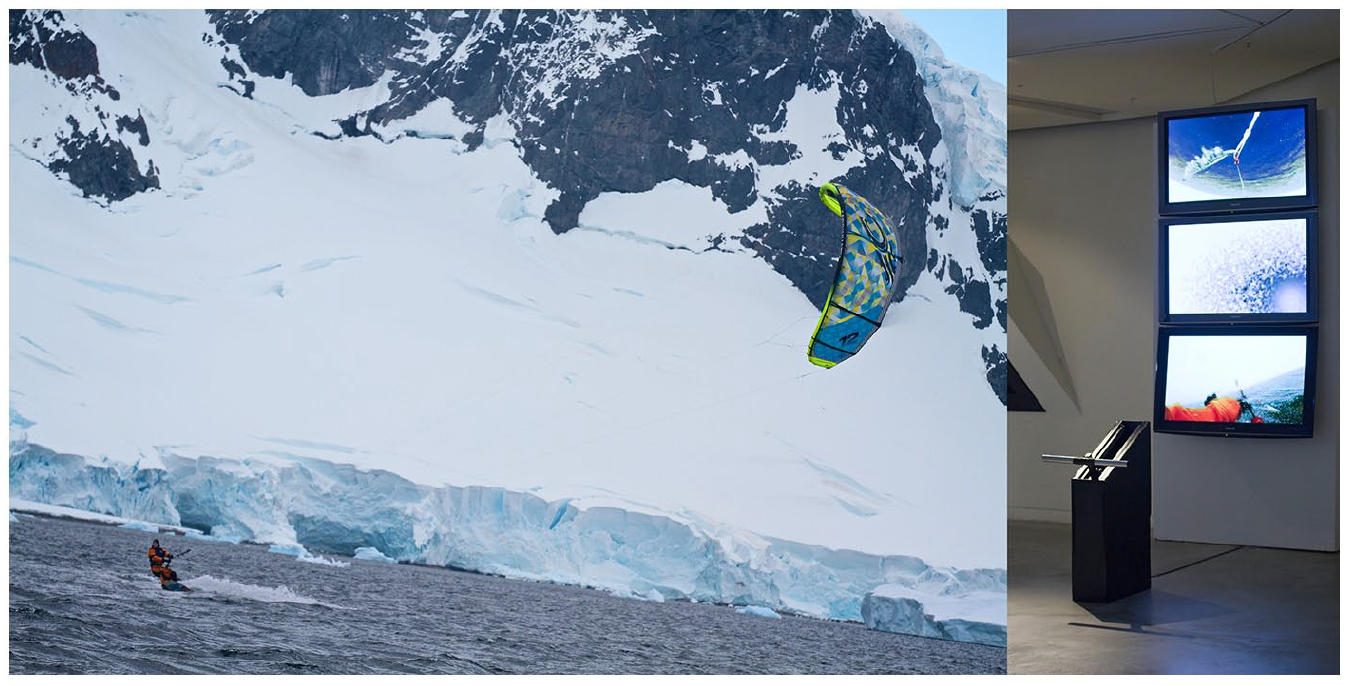
Student measuring wind data in Antarctica and resulting artwork.
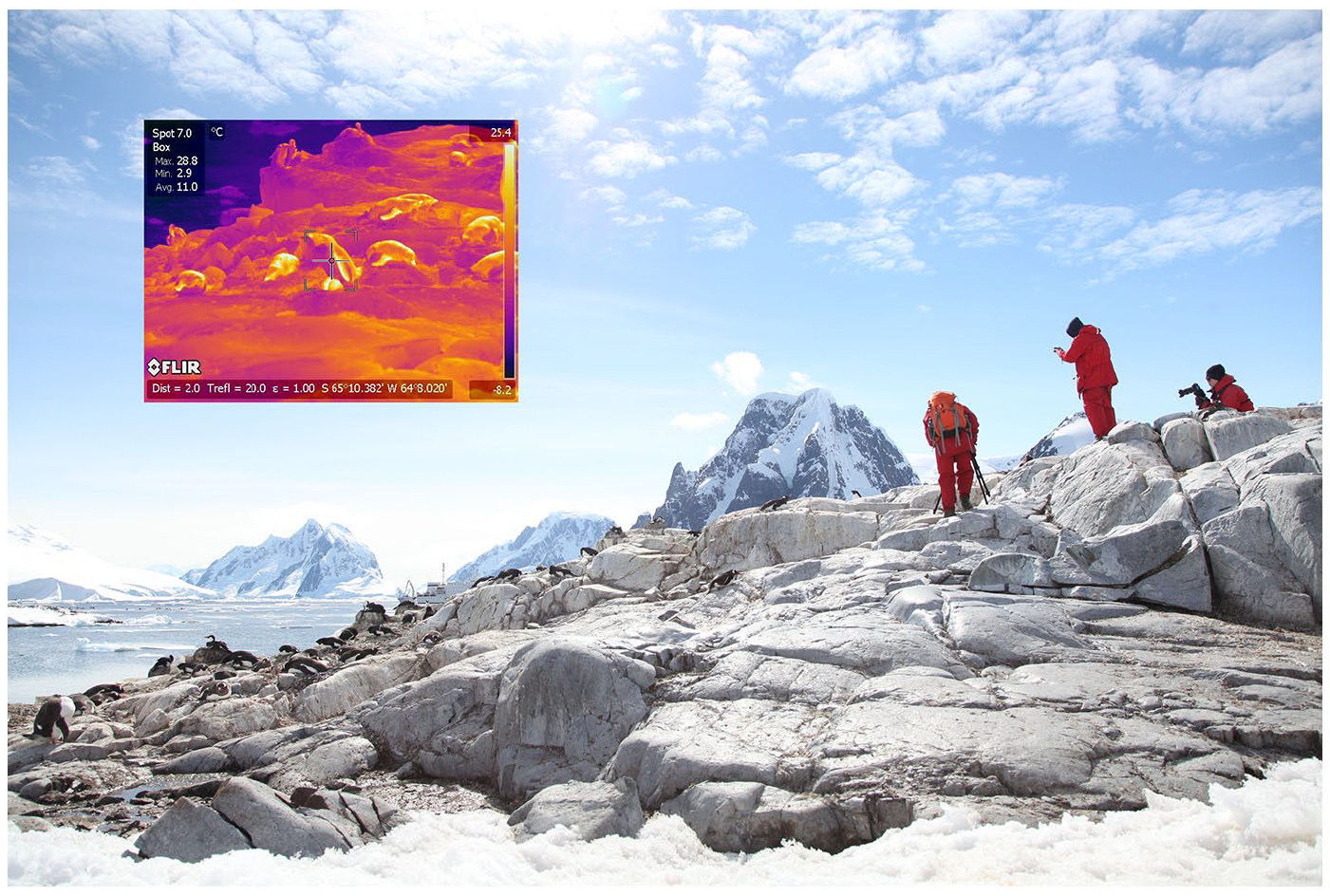
Students measuring penguin chick temperatures with thermal cameras.
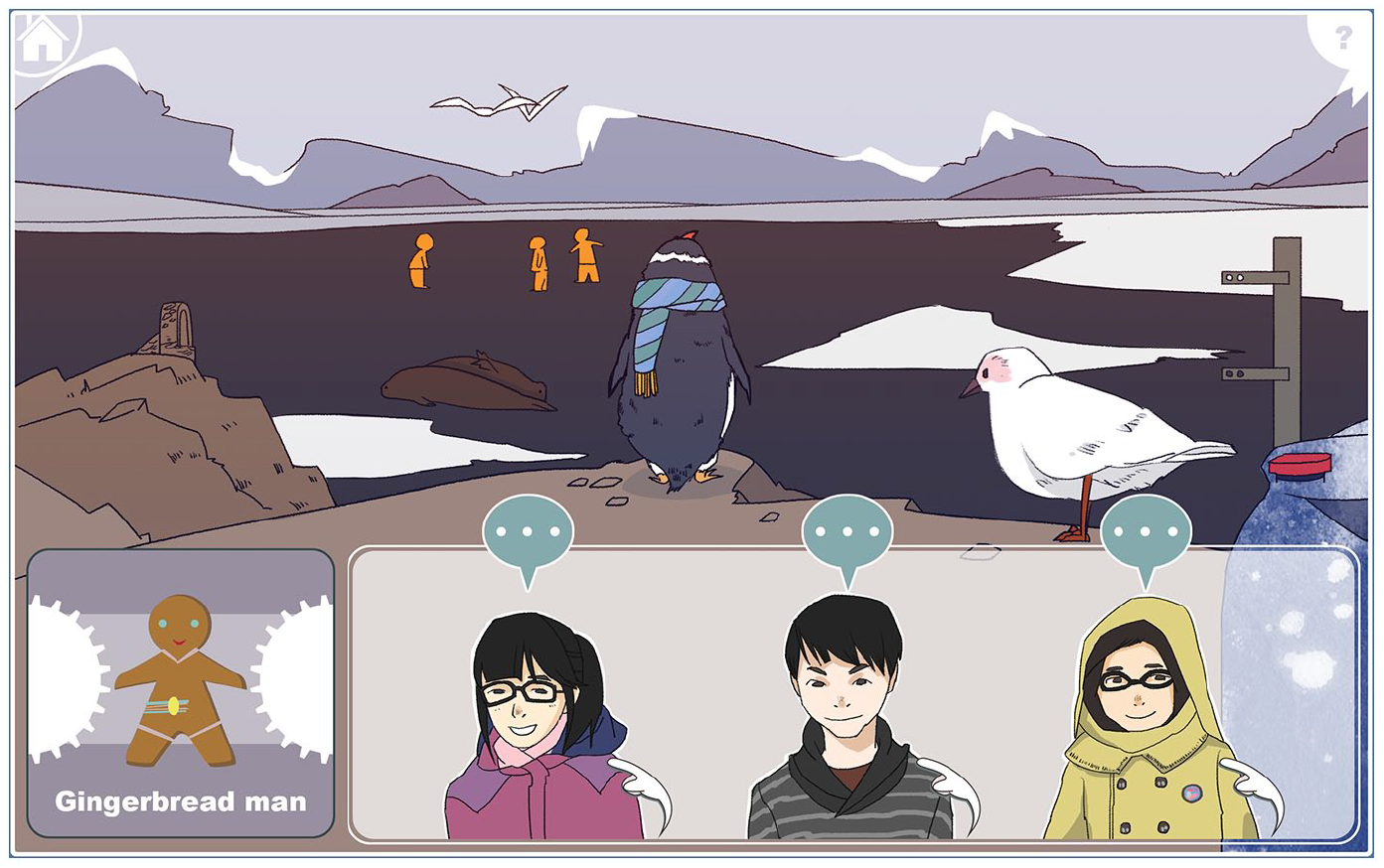
Student game application of barter experience in Antarctica.
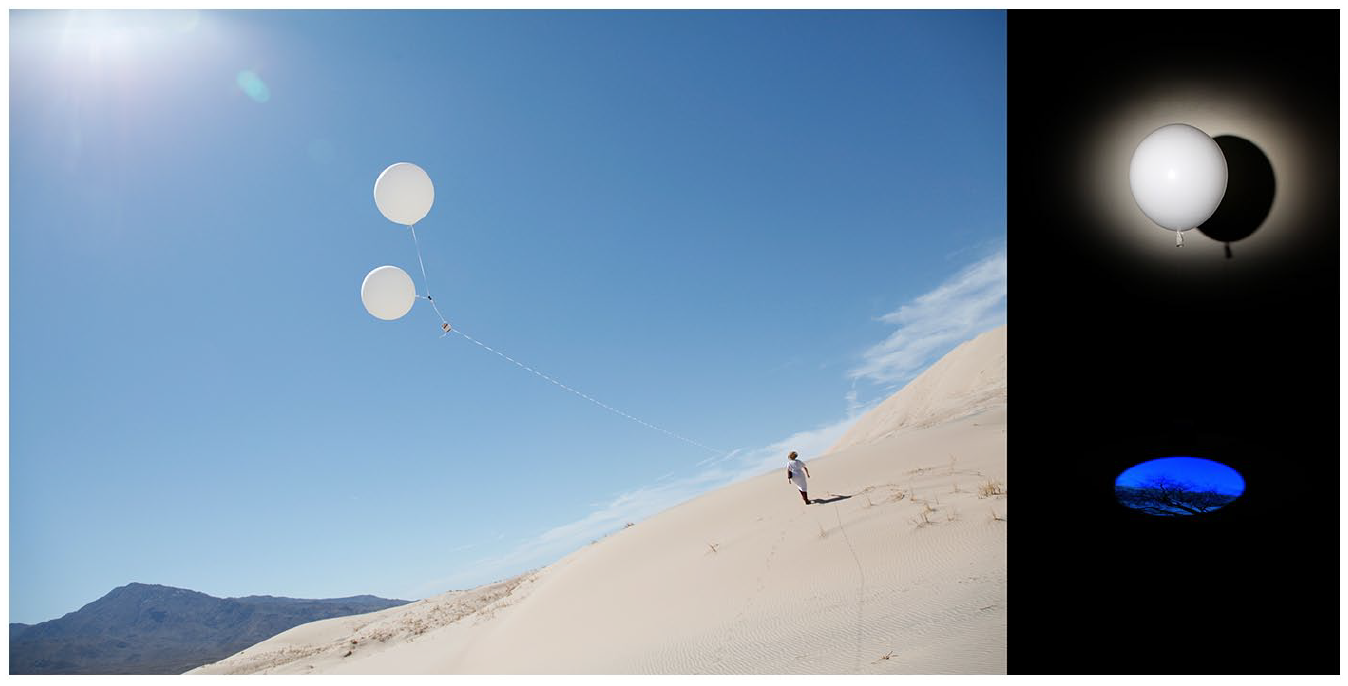
Aerial cameras and sensors measuring dance movements are used to control a robotic installation.
Many students have chosen to bring Hong Kong datasets to the sites themselves, layering information onto the environment through sound, projection, or light displays. In the Vietnam caves, projected images of Hong Kong people were shown in caverns of decreasing scale. Crowded downtown intersections were presented in massive underground spaces, images of cramped interior housing were projected in smaller caves, and the detailed faces of individuals shown in small cracks and crevasses. The work powerfully intersected the psychological strain of living in the world’s most densely populated city with the physical compression of the caves (Figure 5).
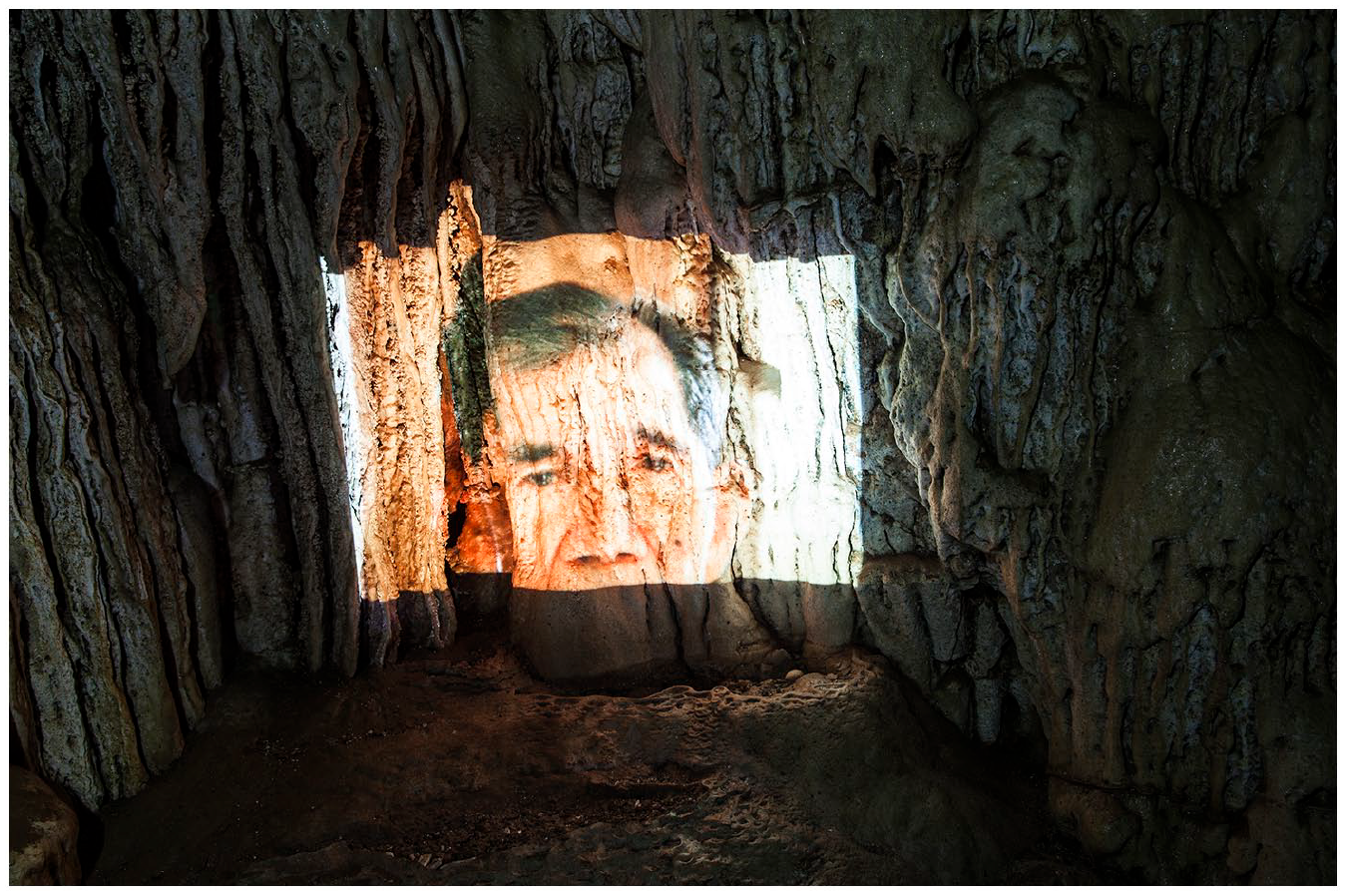
Image of Hong Kong overcrowding projected into corresponding sized caverns.
In the Solomon Islands, data of Hong Kong air pollution was programmed to play across a colored LED strip and then air quality data collected on the island was later played on LEDs in darkened corners of the city. The data performances were documented and contrasted, creating a bridge between the disappearing island and the urban environment (Figure 6).
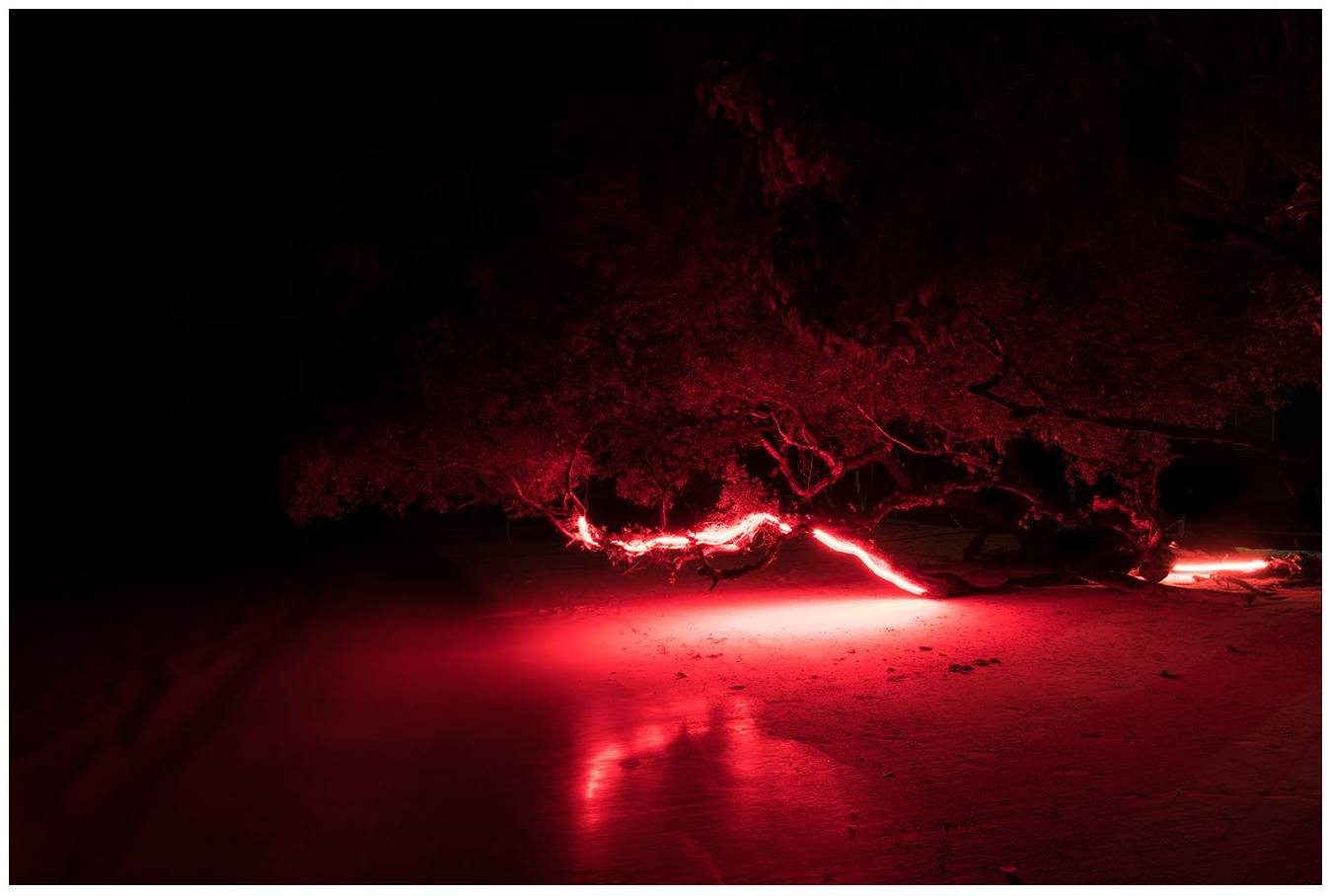
Collected Hong Kong air quality data played on LEDs in the Solomon Islands.
The in situ exploration of the diversity and complexity of each ecosystem stimulates students’ broader understanding of the issues at play and sometimes reorients entire projects. A side visit to show examples of destructive logging in the Solomon Islands proved so powerful that an earlier proposal was scrapped in favor of addressing this issue instead. The Singing Dunes near the Mojave Desert were so audibly pronounced by the wind on the day of the visit that the recording became key to the exhibition. During the Vietnam expedition, entering the caves in an area of intense conflict decades earlier, one of the students became interested in the traces of the war that still appear in ad hoc displays and tourist items. Using stacked macro photography of tiny insects, he composited weaponry onto the images, creating suggestive images of how a war permeates the lived environment (Figure 7).
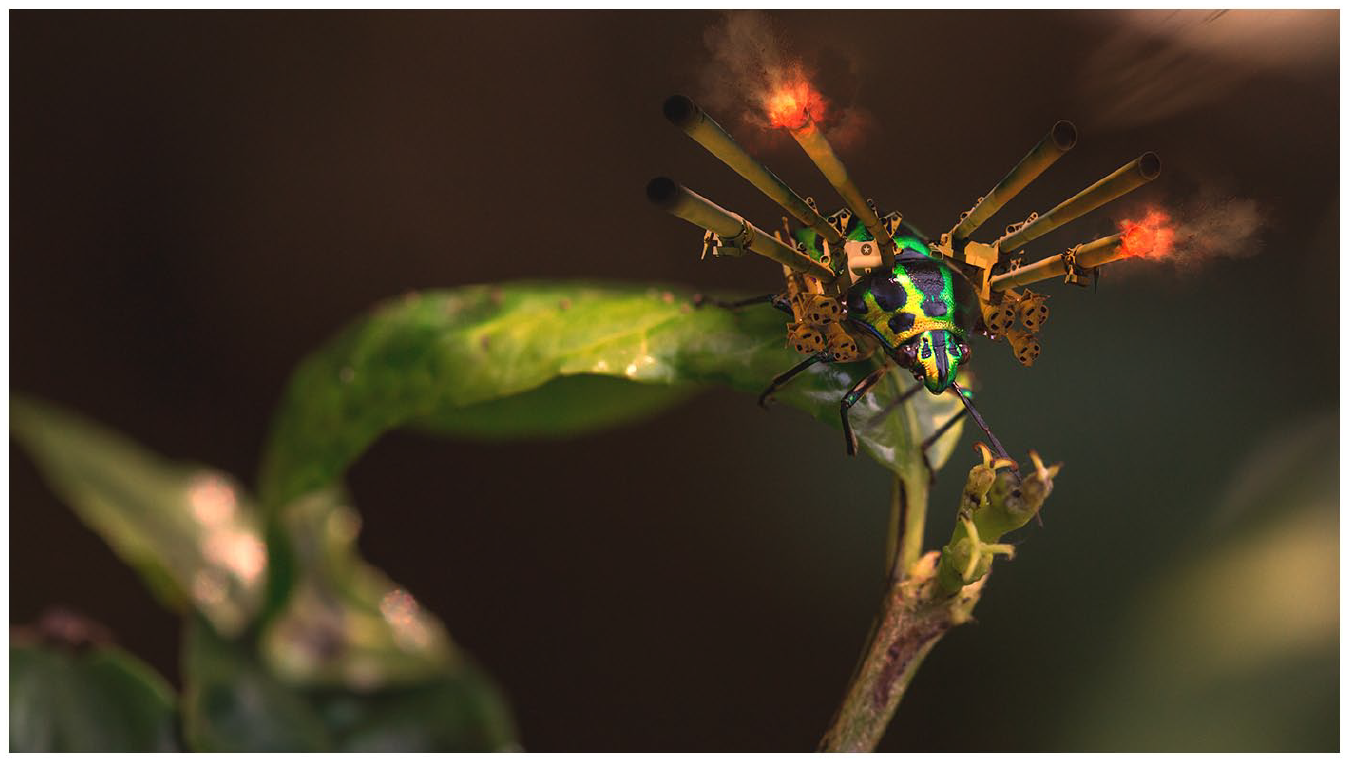
Macrophotography insect photos are digitally composited with military weaponry.
Finally, one team in each expedition ‘observes the observers’ by mobilizing a range of qualitative and quantitative tools to measure reactions, engagements and transformations at the sites. In Antarctica, students wore ‘black boxes’ that relayed key locative and physiological data as well as a range of personalized materials (texts, blogs, photo streams, sounds, etc.). Each day, the team transmitted altitude readings, location, medical and physiological data, questionnaire responses, experiment findings, keyword frequency in all communications, photograph analysis (number, color levels, GPS and cardinal direction), money spent and more, in addition to the 85 distinct scientific datasets collected about the environment. The trove of material generated meta-reflexive processes upon the students’ return to Hong Kong. Hundreds of thousands of lines of data had to be analyzed, along with over 70,000 photographs and more than a 100 hours of video captured on fifteen different camera systems. With such diverse research occurring at each location, compiling the student datasets after the expeditions often reveals unexpected connections between the researchers and site. In the South Pole, the project teams would scatter upon landing at each site and hike to the best point to conduct their individual experiments. One project realized that by collecting the ‘black box’ data from each student that measured GPS and altitude, the entire expedition team collectively and unknowingly surveyed every research site visited. By modeling these readings, the topography could be extrapolated and used to create an immersive installation (Figure 8).
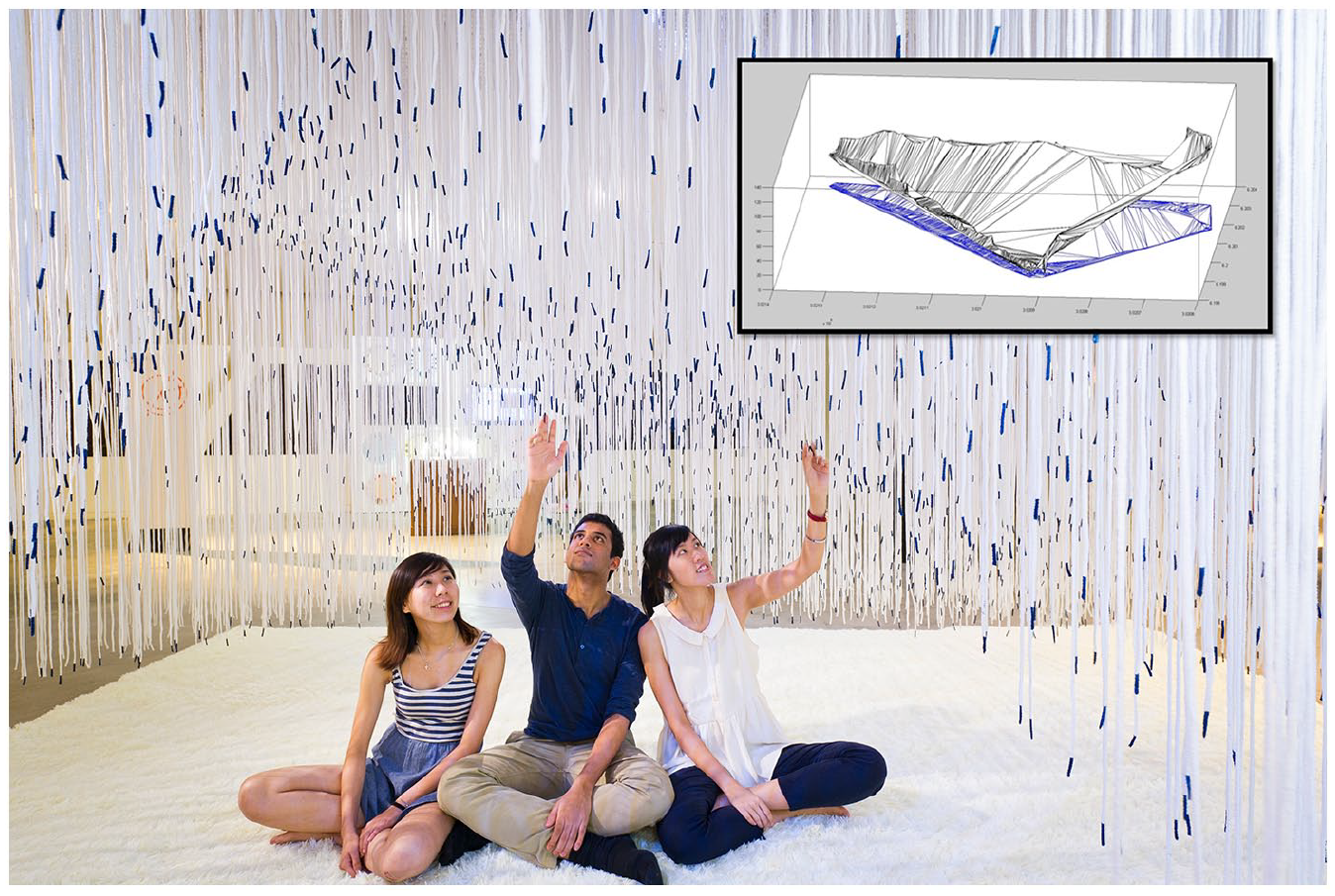
Student GPS and altitude data presented as an immersive installation.
Of course, the numerous and varied types of data gathered by students can quickly constitute a problem of overabundance. To manage the substantial amount of material more efficiently, the students are required to upload their memory cards to a centralized hard drive at the end of each day. The evening backups become a group activity as students evaluate their progress, examine the images they’ve collected, and tell the story of their day. This on-site archiving is key to the expedition as it shows individual progress and difficulties, reveals inaccuracies in documentation and data collection, creates an image and video timeline of the larger expedition, insures against student drives being crashed or lost on the return journey, and guarantees that all materials are centrally located and accessible for use in projects, media, and catalogues. All data is saved and reviewed upon return, but the evening collection means that the sheer amount of data, videos and photos does not become overwhelming.
Artwork development, exhibition and media dissemination
Upon their return to Hong Kong, the students begin the individual project construction as well as the planning, design and organization of the public exhibition, website, and print catalogue. Each week, they present the visual progress of their project and continue the development of their text components, namely the artwork description and artist statement.
The finished work is presented in an exhibition that utilizes many of the School of Creative Media’s unique display tools, including two systems able to play 360-degree filmed content – the iDome, a custom horizontal half-sphere screen (Figure 9) and Gallery 360, a unique 360-degree immersive 3D projection experience. Other unique displays include motorized screens, mist or vapor based screens, and a track-mounted display that moves diagonally up the lobby walls with its altitude used to manipulate specialized films. When coupled with the school’s array of projectors capable of projection-mapping both interior and exterior spaces, the diversity of presentation systems adds to the attractiveness of the exhibition.
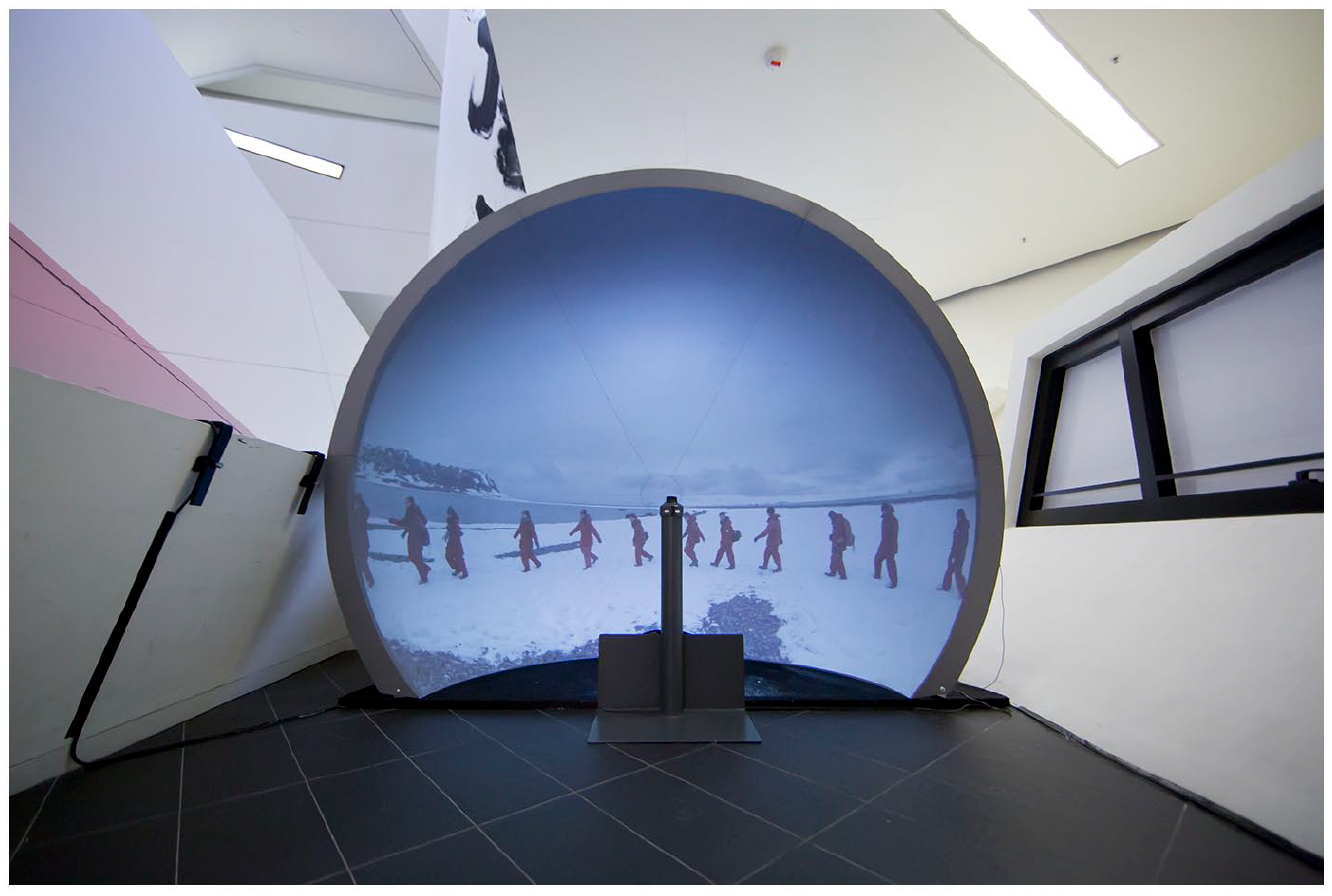
The iDome, a 360-degree interactive display.
A website is launched on the school’s portal, joining the previous expeditions also permanently hosted there. 5 The print catalogue is presented to donors and guests at the opening ceremony, with copies distributed to primary and secondary school libraries. The exhibitions and tours extend over 2 to 3 weeks. City University’s Community and Public Relations Department organizes press conferences prior to both the expedition and the exhibition. The dual press releases increase public visibility and allow a longer timeline for primary and secondary schools to organize tours.
The experience of the construction and exhibition set-up echoes the self-directed mentality of the course, as students are continuously asked to plan ahead for budget constraints and presentation equipment and availability. This additional and important component of the course highlights not only the engagement with an endangered ecosystem, the theoretical framework developed through the lectures, and the technical skillset gained through the workshops, but also intentionally allows students to direct their work and become self-motivated and engaged, owning their work and, with regards to the Discovery Enriched Curriculum, make their own, unique discoveries. This confidence is exhibited in the students’ presentations in press conference interviews and docent tours of the exhibition.
Reaching out
In order to appreciate the qualitative impact of the Extreme Environments project on students, each participant is interviewed before the course begins as part of the vetting process, midway while on the expedition, and again as part of the university course evaluation at the end. These interviews demonstrate the growth and shifts that occur for each student as they transition from expectations, to harsh reality, to reflection. Within the context of the course evaluations, the students have unanimously confirmed that the program increased their abilities to think critically and encouraged them to be creative and innovative.
From a quantitative perspective, the number of direct and indirect participants in the program can foster significant outreach. In the Antarctica expedition, for example, 29 students were on the expedition, supported by 10 hired research assistants, including those in Hong Kong. Over 50 students volunteered to assist, and two other courses used materials collected on the expedition in their assignments (e.g. the video editing class used the raw footage), involving another 60 students. 300 more students attended the exhibition itself. Indirect reach came through social, digital, and traditional media. Many of the students on the expeditions had large social media followings, often over 10,000, and regularly posted photographs, videos, personal experiences and artwork development, which were then shared. Many projects, and the program itself, developed partnerships with professionals and academics in the hundreds, and thousands more in the research community contributed through message boards and emails. The guests to the exhibition, from the public and from primary and secondary school tours, totaled over 1,000.
Tellingly, the most specific numbers related to the program are collected by the university publicity department, including the circulation numbers of local and regional newspapers carrying the stories matched with larger estimates on digital distribution through the sites of those media, along with online specific news and social media. When totaled as impressions, the numbers collected showed over 30 million coming in contact with the images, catalogues, postcards, stories, videos and more, from just the Antarctica iteration. While this number is impressive, it should be noted that digital media saturation and viewer numbers in Asia are much higher than in Western culture.
However, the media numbers reveal more than mere exposure. As one of the stated objectives of the program is public awareness of the issues related to each ecosystem (and of Hong Kong’s frequent involvement in such issues), the diversity of outlets providing coverage demonstrates that environmental issues are being addressed in several contexts. Articles about Extreme Environments have featured different components of the program, including special foci on science, finance, school activities, ecology, sustainability, art, technology, public service, social concerns, and entertainment. The program’s wide variety of ‘hooks’ for media demonstrates its ability to cross-pollinate.
The program also creates lasting, top-tier partnerships that extend beyond the semester course. Both academic (UCLA, The Getty Institute) and scientific (One Ocean, The Nature Conservancy) partners have remained in contact and requested continued alliance with Hong Kong education. Many times, these alliances are simply in the form of advice and shared information about structure, fundraising, and outreach. However, by building unexpected networks, specifically here among arts, education, and science departments, opportunities arise that would not have occurred otherwise. For example, the 2019 partnership between the School of Creative Media and the Hong Kong Observatory stemmed from previous partnerships in the meteorological community. The School is now regularly contacted by galleries and museums asking if they can host future exhibitions.
The range of physical and digital content created by one course demonstrates the range of possibility for outreach and research. As mentioned earlier, student questionnaires and on-site interviews reveal an increase in students’ general sensibility, capabilities, theoretical and analytic approaches, confidence, and problem-solving skills. Their writing for both the catalogue and the web also shows a profound understanding of sustainable design, a new knowledge of sensing technologies, a background in sustainable art history, and a new way of looking at the natural environment. The ephemera of emails, correspondence and postings collectively show a networked discussion among students, academics, scientists and industry professionals that demonstrate new insights about how art and design can offer new ways to engage with environmental data. While they are primarily of a ‘citizen science’ nature, the datasets collected onsite with the supervision of top research scientists has proven meaningful to those interested in exploring the topics more comprehensively. The artworks themselves show that new aesthetic forms can help the greater public visualize and understand sustainable issues in a different way; the substantial media coverage encourages increasing awareness of climate change and demonstrates how media art can be a vital part of public education.
Finally, it should be noted that the proficiencies developed through the program extend beyond the students. The introduction of a new program within a university creates new knowledge in areas of finance, safety, management and publicity. Each year, the program identifies good practices to manage a program of this scale within the university infrastructure. These practices can then be transferred to other initiatives, within any university, that involve high-profile, international and interdisciplinary activities. Each expedition equips the university with a skillset that adds value to the global network interested in this type of action research education. Recent study tours with entirely different foci - an engineering expedition to Eastern China, a business expedition to Nepal - still used the fundraising and accounting structure established at the university in response to Extreme Environments.
Challenges and concerns
While the challenges of running an expedition to remote ecosystems and mounting a large format exhibition are complex, the greatest difficulties are often connected directly to university policy. The Extreme Environments program upends established procedures in grading, distribution, finance, and institutional structure.
Grading and assessment issues
Key to the assessment of the students is a de-emphasis on the final project as the sole determiner of grade. This presents considerable challenges in institutional contexts where standardized grading is the norm. What’s more, the Hong Kong government adopted Outcome-Based Teaching and Learning in 2012, an approach that eliminates actions as measurable rubrics in favor of final projects that can be graded on specific completed tasks. While OBTL can be flexible, it does require a grading and assessment defense that shifts from ‘doing research’ to ‘completed research’.
Conversely, much like experiential education theorists advocate, attention in our program is directed toward the entire creative process, rather than the sole outcome. As Chapman and Sawchuck explain: This shifts emphasis away from over-valuing ‘deliverables’ and moves towards dynamic evaluative mechanisms based in conceptions of ‘peer review’ that de-emphasize the significance of quantifiable research outcomes, and focus instead on recognizing the mechanisms, contexts, communities, and methods through which a project strives to make something happen; in other words, to produce results that are not necessarily material or textual, but that occur on multiple planes, including the reactions of a beholder of a creative work, the future efforts of a community member and/or collaborator affected by the process of bringing a project to fruition, or the technological results and/or residues. (2012: 22)
In accordance with its research-creation methodological underpinnings, the Extreme Environments assessment scheme thus values the processes of preparation, immersion, collaboration, adaptation, creation, sharing, and reflexion as much as the final work of art students offer to the public. While students put tremendous effort into the exhibition version of their project, they are evaluated more closely on the process of collecting, adapting, creating, and working together. Their individual methodology to essentially ‘hack’ the field research for creative expression is the most important element learned, and the most difficult to assess. The six fields of proficiencies outlined earlier – equipment, teamwork, project management, computation, media systems and presentation – form the core of the grading rubric. Many of these components can be quantifiably measured through accurate budgets and schedules, partnerships formed, complexity of programming, etc. Collectively, these six proficiencies de-emphasize the final research outcome to favor a more process-based assessment.
The other areas of assessment that have met with resistance over time were the distribution of the class GPA and its disproportionate bell curves. Students are accepted into the program based on grades, portfolio, and proposal. The three are viewed holistically and form the backbone of an interview with each candidate to confirm that the student has a clear understanding of both the personal and academic rigor involved in joining the course. Very rarely has a student below a 3.5 GPA been accepted. However, each of the first years of the program had grades questioned by the university’s Academic Regulations and Records Office due to the class GPA being above 3.0, a suggested ideal average. With high functioning and dedicated students, often those with near 4.0 averages, it took several years for the institution to accept the course as an exception. Additionally, the workload that occurs during the 13 weeks (including the on-site expedition), tremendously exceeds other classes. Extreme Environments is one course among the 5-6 others that the students are taking in the same semester, yet it has been difficult to offer final grades that recognize the additional required effort.
Financial and support issues
On a larger scale, despite repeated claims of support toward interdisciplinary projects, the actual logistics of working across disciplines are impeded by significant structural barriers. Individual schools have distinct financial and academic measurements and reporting structures that do not easily match with the requirements in other academic units. Notably, university reports only allow one Principal Investigator to be credited, with no other partner receiving any recognition or reward in crucial performance reviews. Although interdisciplinarity occurred ad-hoc through conversations, advice, shared equipment, training and more, the utilization of scientific or engineering tools in the service of art creation was viewed as solely beneficial to the School of Creative Media.
In addition to cross-departmental resistance, the program encountered opposition from internal bureaucracy and deeply rooted practices. The infrastructure of the university is designed to battle programs such as this one - its entire finance model is dependent on conforming to a specific and identical reporting structure. For instance, prior to the Antarctica expedition, the leader was told that no receipt without a ‘chop’ – a common Chinese rubber stamp put on invoices to prove legitimacy – would be reimbursed. Once outside Hong Kong culture, this became extremely difficult to comply with. A frustrated shop owner in Tierra Del Fuego responded to insistence for a ‘stamp’ in three different languages by confusedly sticking a local postage stamp onto the receipt, which was later rejected for reimbursement by the university. In this case, the exact cliché of rubber-stamping literally demonstrated institutional norm conformity, totally devoid of meaning and a direct threat to experiments such as Extreme Environments.
Issues related to research rigor and legitimacy
As City University of Hong Kong is largely a technical research institution, dominated by its Engineering college, every funding proposal for Extreme Environments has been met by resistance regarding the efficacy of the results and questions regarding the legitimacy of arts research in advancing knowledge. The Antarctica expedition, funded by multiple grants, departments, and the students themselves through online donations, encountered particularly strong resistance from Engineering department professors who argued that the money could be better spent on research equipment in their departments. Although the students often live in shacks or tents onsite, the expeditions have been framed by other departments as luxury holidays. The program could not have endured if then Provost Arthur Ellis had not openly defended the program and insisted that its value lay in informing the public and students of climate change issues in creative ways.
Not recognizing the partners equally, due to reporting that only allows for one department to receive credit, also strengthened the perception that the artists were using scientific tools incorrectly and without required proficiency. These criticisms were not entirely unfounded, as enthusiastic students often selected complex sensing technologies well beyond their full understanding of the nuance and precision of the tool. The Solomon Islands expedition strove to mitigate this issue by placing six of the art students directly into the State Key Laboratory on Marine Pollution (SKLMP), an underwater on-campus research center. The SKLMP trained the students in scientific level diving and oversaw the data collection onsite in Sipidan, Malaysia. Having the students trained first in the methods of marine biology, ignoring the intent of their project but focusing on the process, enhanced the credibility of their work.
Issues relating to valuation by the institution
While the experience for the students is transformational and the outreach to the public is recognized, the element most valued by the university is arguably the visual imagery that the projects generate. Dramatic photographs of students engaged in spectacular natural settings were used to recruit students and attract fundraising from donors, in branding campaigns, publicity, reports to the government, and even to decorate university offices and hallways. While simultaneously impeding the program with bureaucratic practices and fixed procedures, several departments championed the experiment through the images themselves. The greatest utility for the Extreme Environments program for the institution is clearly branding, as it became the flagship of the Provost’s directive to increase discovery-based education. The contradiction of private obstruction and public praise became a pattern over the last decade, and each expedition gradually included more focus on images that represented travel, engagement, and beauty. In a 2018 donor fundraiser for the school, the only artworks sold were photographs from expeditions.
Issues relating to avoiding colonialist approaches
Finally, an ongoing concern involves the relationship between the students and local cultures. A 20-year-old enrolled in a 13-week course is not able to fully grasp and do justice to the complex history and culture of the people they encounter on-site. The expeditions cannot be touristic nor simplistic, recognizing that each ‘site’ is in fact a rich and complex set of ecological dynamics where both people and what we tend to regard as ‘nature’ are all intertwined. The ‘natures’ present are very different for each of the groups involved; the ‘nature’ or the natural world scientists usually study and the one students tend to accept is not necessarily the same ‘nature’ that local populations inhabit.
The Solomon Islands expedition was the first to include more significant interactions with the local population as part of student projects, the earlier trips being so remote that there were few encounters beyond those with the scientists onsite. On the Antarctica expedition, there was no indigenous population and students only came into contact with professional researchers, military personnel and government employees. The caves in Vietnam were so isolated and dangerous that the only interactions were with our guides from the local tribe. Conversely, the local population in the Solomon Islands were direct hosts of the student expedition, providing food and shelter at the nature sites; this dependency created opportunities for interviews, exposure to customs and music, and side expeditions to hidden heritage sites that celebrated their history. Anthropologist David Jaclin, from Ottawa University, joined the expedition and offered some context and tools to facilitate a respectful, more sensitive and mutually beneficial interaction with local populations. However, while we feel the need to flag this as an ongoing concern, the present discussion cannot adequately encompass the scope of this issue. Further work needs to be included in any future expeditions that include a significant human component.
Despite a more successful cross-sharing on the Islands expedition, the disparity of financial resources is also a consistent driving concern. City University has a larger percentage of students from low-income families than the region’s more prestigious schools, so most participants are local Hong Kong students who already somewhat recognize the difficulties of being trapped in a larger economic force. Nonetheless, arriving in a developing region with money and equipment establishes a power dynamic that must be acknowledged and mitigated. In Extreme Environments, the faculty, research assistants and students always travel ‘backpacker-style’ (using those actual words in the call), and no one is allowed to wear expensive clothing or bring expensive gear with them (apart from the digital recording equipment).
Finally, the exploitation of a program such as this one to become a driver for tourism dollars has already invaded other art expedition initiatives. The framework of tourism is impossible to completely overlook, and the school’s contribution to both The Nature Conservancy and the conservation site were inevitably part of the local’s welcome. However, once the motive of the program is clearly presented to the local villages and communities, different relational modalities are rendered possible. During an evening of sharing in the Solomons, community members expressed interest in the school’s endeavors to convey their story differently; they valued the range of electronic storytelling techniques in conversation with their own practice of writing and oral traditions.
Conclusion and summary
In closing, school Dean and artist Jeffrey Shaw summed up the program’s focus with remarks written for the Antarctica exhibition catalogue: Art practice in the 21st century is no longer a purely self-focused enterprise. The exigencies of the contemporary social and environmental contexts create new urgencies that call upon the artist’s inventiveness and insights to contribute to a better understanding, and to possibly even provide solutions. (Shaw, 2014: 113)
Extreme Environments was instigated by this belief. This article presented the pedagogical foundations of the program and its crucial core of sequenced proficiencies, showing how the student journey, both literal and figurative, through sequenced learning encourages a valuation of the entire process rather than the sole outcome, a central tenet of the course’s methodological underpinnings.
The article also discussed the challenges of the program, recognizing that a particular constellation of events, personnel, funding and directives has made Extreme Environments possible. In this specific case, institutional interest in creative uses of new media technologies, as well as an emphasis on travel and experiential education, leader experience in wilderness expeditions and data visualization, and grant initiatives that supported blended learning provided an environment in which such a program could successfully take hold. While this article has expounded the course methodology in specific terms, it also recognized that the larger context must be assessed and taken into account.
At the time of writing, future expeditions to remote sites seem unlikely in the light of politically and socially strained context in Hong Kong, but the ‘Blown Away’ iteration in 2019 was a success without any travel required. By partnering with the Hong Kong Observatory for the datasets from Typhoon Mangkhut, students were still able to attune to the original directive for the program: that artwork cannot exist without the direct input of ‘nature’. The resulting student work demonstrated that meaningful art and learning can still be achieved and, following the popular exhibition at Tai Kwun Center, that the public will still be engaged and informed. Many of the materials and steps designed for the pedagogy were distinct from the 10–15 day expeditions, and the program proved both flexible in focus and scale.
One can imagine further partnerships into ‘extreme’ environments that may be more theoretical or more conceptual – perhaps a partnership with a bio-lab to work with human datasets or with NGOs dedicated to working with threatened social or cultural groups. Also possible are telepresence and remote solutions, with students working in Hong Kong but connected to sensors already placed by scientists in field stations. Alternatively, the program has also been approached to produce one-off expeditions (or repeats of previous trips, using the same on-site contacts and itinerary) as a special art/science program or summer workshop. This model would set up Extreme Environments as a service provider and secure its funding based on tuition, essentially as a specialized tour operator, removing it from the demands of bending the program into an accredited course and from shifting university directives. The foundational pedagogy could be applied to a much broader interpretation of ‘travel’.
Footnotes
Funding
The authors received no financial support for the research, authorship, and/or publication of this article.
