




Abstract
During the COVID-19 pandemic, the Portuguese government implemented emergency fiscal measures to protect incomes. Despite these efforts, Portugal’s poverty rate increase in 2020 was the steepest among all European Union member states. The present article maintains that the prevailing labor market institutions limited the impact of the pandemic-related emergency measures. These institutions include social policies (such as low social benefits, minimum wages near the poverty line, and weak employment protection) as well as employment practices (such as precarious employment contracts and low wages). Established institutions increased households’ vulnerability to poverty and exacerbated the GDP/poverty nexus.
1. Introduction
In 2020, the at-risk-of-poverty (AROP) 1 rate increased by 2.2 percentage points in Portugal. This surge was larger than the rise in the AROP rate experienced in Portugal during the Eurozone crisis (2010–2014), when it increased by 1.5 percentage points.
Focusing on the initial year of the COVID-19 pandemic, this article investigates the connection between recent labor market reforms in Portugal and the rise in household income vulnerability. Income vulnerability is defined as the extent to which a household is prone to economic hardship or material deprivation due to income fluctuations or disruptions (Curatolo and Wolleb 2010). This study uses AROP rates to evaluate income vulnerability. It focuses on wage instability, as wages represent the primary source of market income for low-income households.
The COVID-19 pandemic has served as a stark reminder of the importance of strong state intervention and collaborative policy responses (e.g., Crouch 2022). Most notably, at the EU level, the issuance of common debt signifies a new era of shared responsibility, which starkly contrasts with the country-based solutions of the Eurozone crisis (Béland et al. 2021). At the national level, expansionary fiscal policies, including job retention schemes, are another conspicuous difference between policy responses to both crises (Moreira and Hick 2021). In response to the need for swift action and drawing upon lessons from international experiences, the Portuguese government implemented a two-pronged policy approach in March 2020. This involved enacting a lockdown to contain the spread of the virus and concurrently streamlining the preexisting job retention scheme to mitigate the economic impact.
Despite significant government involvement, existing economic institutions remained largely unchanged. The pandemic response brings to mind relief packages typically deployed in response to natural disasters (Seemann et al. 2021). It did not question the core neoliberal institutions of globalization, deregulation, and the retrenchment of the welfare state. State interventions primarily focused on supporting businesses.
Portugal presents an interesting case study for examining the influence of discretionary policies on poverty. Within less than a decade, the country experienced two major recessions: the Eurozone crisis and the COVID-19 pandemic. In 2020, real GDP fell by an alarming 8.3 percent. Such a slump exceeded even the 6.7 percent decline witnessed in 2010–2013 during the Eurozone crisis. Nevertheless, fiscal policies implemented during these distinct recessions diverged substantially (Moreira and Hick 2021). These policies were restrictive during the Eurozone crisis and expansionary in 2020.
Such contrasting interventions resulted in considerable disparities in employment dynamics. During the Eurozone crisis, unemployment rates surged to 17 percent, while they remained relatively stable at around 7% throughout the pandemic. Despite differences in unemployment trends between the Eurozone crisis and the COVID-19 pandemic, the AROP rate rose expressively in both periods, with an especially sharp increase during the pandemic. This seemingly paradoxical outcome forms the basis for this study.
The present article uses an institutionalist framework to understand the strong association between economic growth and poverty. Labor market institutions influence the effects of policies, like job retention schemes, on household income vulnerability. Institutions encompass both social protection and employment practices.
The article proceeds as follows. The next section presents the macroeconomic vulnerabilities of the Portuguese economy and outlines the stylized facts regarding the impact of the pandemic crisis on poverty. Afterward, section 3 provides an institutionalist analysis of wage-income vulnerability in Portugal.
2. Depicting Income Vulnerability in Portugal: Key Trends and Patterns
2.1. Macro-level vulnerability: The three crises between 2008 and 2020
Portugal experienced a confluence of three major economic downturns over the twelve years from 2008 to 2020: The global financial crisis (2008–2009), a sovereign debt recession (2011–2013), and a major crunch during the COVID-19 pandemic. The magnitude of these crises can be attributed to a combination of exogenous shocks and endogenous vulnerabilities within the Portuguese economy.
After experiencing high growth and a low unemployment rate (4 to 7 percent) in the 1990s, Portuguese GDP slowed down in the early 2000s. Such slowdown can be attributed to a decline in competitiveness in traditional sectors, following trade liberalization in textiles within the WTO. Furthermore, the adoption of the euro in 1999 eliminated the ability to accommodate external shocks using monetary and exchange rate policies (Weeks 2019). Not surprisingly, the 2008 global financial crisis severely impacted Portugal. GDP declined by 3 percent (2008–2009) and the unemployment rate increased from 7.6 in 2008 to 10.8 percent in 2010.
Then, in the aftermath of the Greek and Irish bailout packages, Portuguese sovereign debt became subject to growing speculation. In 2011, Portugal entered a bailout program with the European Commission, the European Central Bank, and the International Monetary Fund. As elsewhere, the bailout was conditional on adopting austerity policies. This package led to a sizable economic downturn. Between 2010 and 2013, GDP growth plummeted (with a cumulative loss of 6.7 percent), and unemployment skyrocketed, reaching a peak of 17.5 percent in 2013. Austerity policies enacted 2011–2015 set neoliberal labor market reforms and contributed to an increased vulnerability of household incomes.
The period between 2016 and 2019 was marked by both the official end of austerity (Weeks 2019) and economic recovery in Portugal. Over 2016–2019, the average real GDP growth rate was 2.8 percent and unemployment declined by 5 percentage points. However, this recovery did not fully address the underlying vulnerabilities within the Portuguese economy. Low investment, sluggish labor productivity growth, and dependence on tourism exports have made growth highly vulnerable to potential global economic shocks (Martins and Paes Mamede 2022).
In 2020, the Portuguese GDP contracted by a substantial 8.3 percent, reflecting the severe economic impact of the COVID-19 pandemic. This was the country’s largest one-year GDP decline on record. While employment declined by much less than GDP (2 percent), job losses were unevenly distributed across sectors. The decline in employment was heavily concentrated in two activities: trade, which saw a 37 percent decrease, and accommodation and food services, which experienced a 24 percent job loss.
Having considered the conditions of macro-level vulnerability, the stylized facts on poverty reveal that the pandemic crisis had a major impact in terms of income vulnerability.
2.2. Stylized facts on poverty rates in Portugal
This section examines how the COVID-19 pandemic affected income vulnerability, as measured by the AROP rate. It is important to note that all data refer to income earned in the preceding year. Consequently, income for 2020 is reported in the dataset for 2021.
2.2.1. Stylized fact 1: In 2020, Portugal experienced the highest increase in the AROP rate in the European Union
Figure 1 displays poverty rate dynamics and GDP growth between 2019 and 2020. When comparing the AROP rate using 2020 incomes (2021 data) with that of 2019 (2020 data), Portugal witnessed the highest increase in the AROP ratio within the European Union. Portugal was also one of the hardest-hit economies in terms of GDP decline. This is not surprising, as countries like Portugal, with a high dependence on tourism exports (such as Spain, Italy, Greece, Croatia, Malta, and France), experienced significant adverse effects during the pandemic crisis.
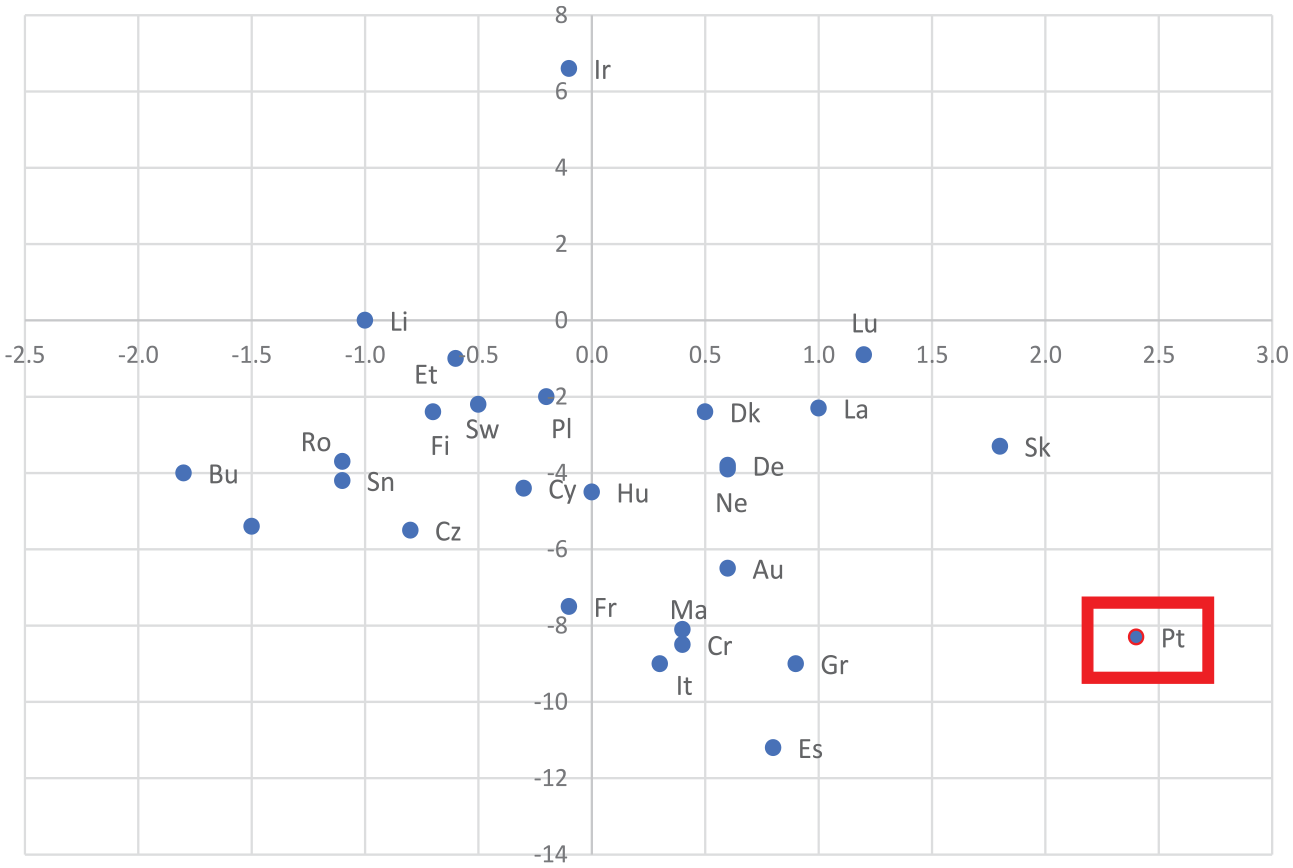
AROP rate variation (p.p.) and real GDP decline (%) among EU countries in 2020.
Following the pandemic-induced economic contraction in 2020, Portugal witnessed a resumption of growth in 2021, and the AROP rate returned to its prepandemic level. This strong nexus between economic GDP and poverty warrants further investigation. With this in mind, the following stylized fact examines how social transfers alleviate poverty in Portugal relative to the EU average.
2.2.2. Stylized fact 2: During the COVID-19 pandemic, social transfers were less effective in preventing poverty in Portugal than in the average EU 27-country
To assess the effectiveness of social transfers in Portugal compared to the EU average, figure 2 displays the AROP rates for market income and disposable income. Data highlight that the increase in poverty based solely on market income (before social transfers) was steeper in the EU27 in 2020. However, AROP rates computed based on disposable income increased more in Portugal because social transfers in Portugal had a less pronounced effect on reducing poverty compared to the EU average. This observation aligns with longer trends. Over the past two decades, the ability of social transfers to alleviate poverty remained lower in Portugal compared to the EU27 average.
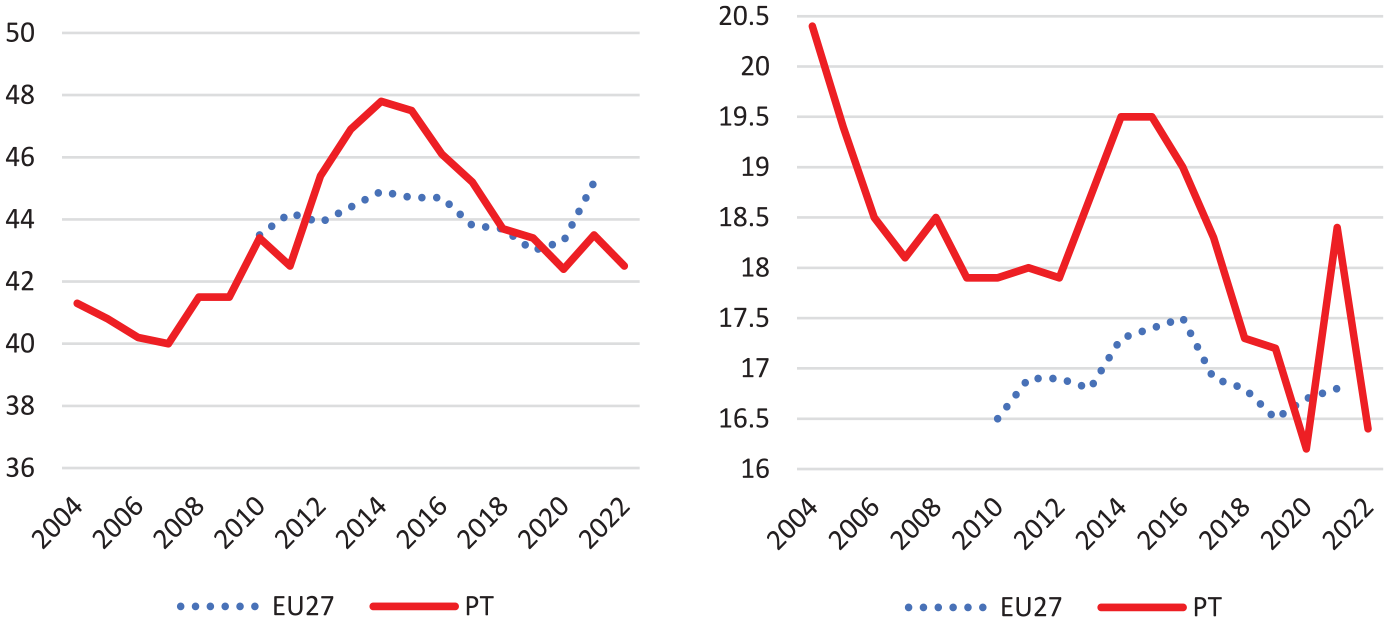
AROP rate on net market income (left) and on net disposable income (right).
During the COVID-19 pandemic (2020–2021), social transfers reduced the AROP rate by 25–26 percentage points compared to market incomes. What is intriguing is that this impact was comparable to, and even slightly lower than, the reduction observed during the Eurozone crisis (a 27– to 28–percentage point decrease in the AROP rate between 2012 and 2014).
This finding warrants further investigation, especially considering that the expansion of social benefits in 2020–2021 differed markedly from the austerity measures implemented during the Eurozone crisis. Such a counterintuitive observation compels us to delve deeper into the dynamics of crisis-induced poverty, specifically focusing on the impact of labor market dynamics on AROP rates.
2.2.3. Stylized fact 3: During the pandemic, the unemployed experienced a high income vulnerability
In 2020 (2021 data), the AROP rate for the unemployed was five times greater than for employees with permanent employment contracts and 3.3 times higher than for those on temporary contracts.
Figure 3 shows that the significant differences in the AROP rates by employment status are not recent and have steadily widened over the past decades. Even more concerning, the risk of poverty for the unemployed continued to rise despite economic growth, and an overall improvement in the AROP rate between 2014 and 2019.
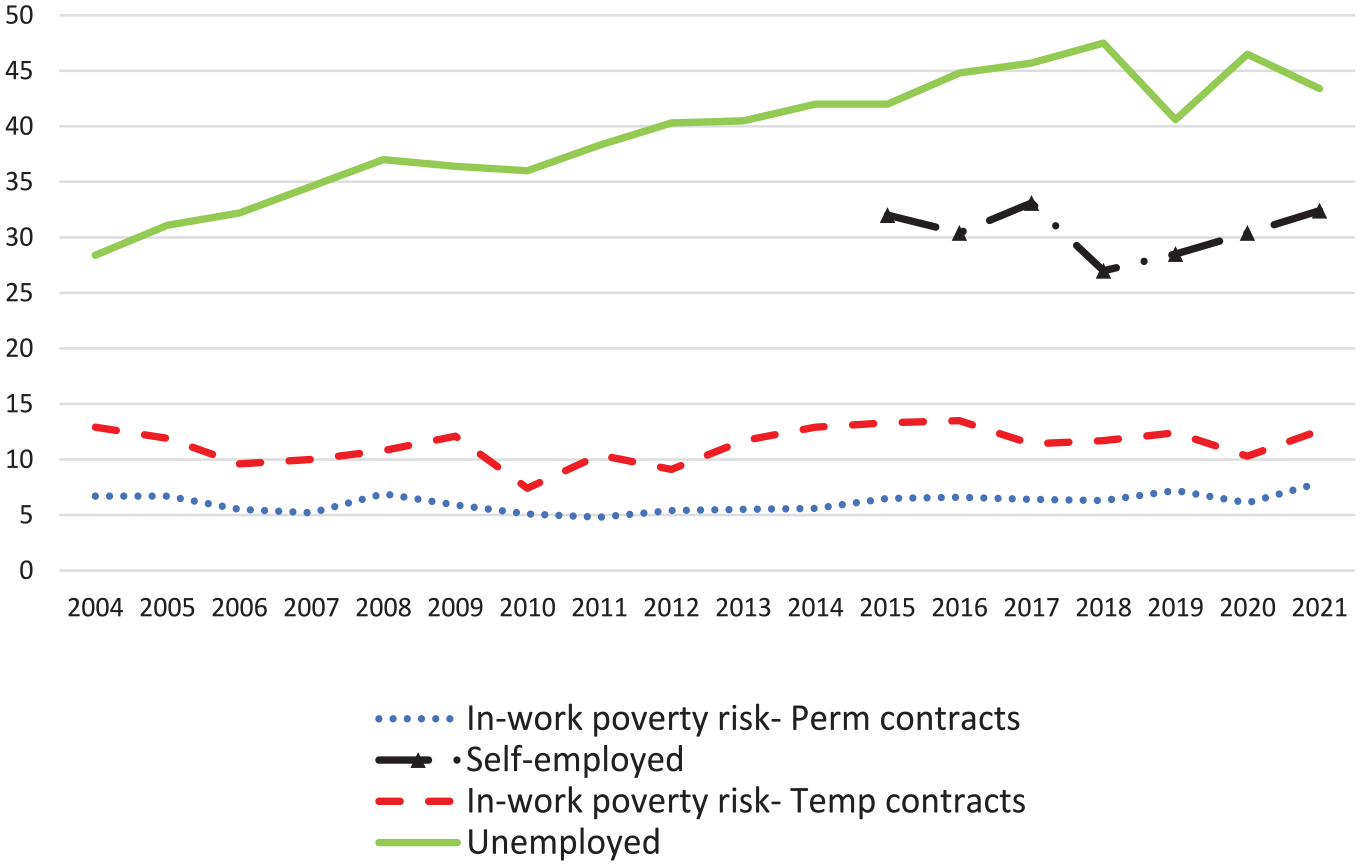
Unemployed AROP rate and in-work poverty risk in Portugal.
These trends suggest that unemployment benefits (UBs) had a limited and declining impact on poverty. While the AROP rate for unemployed individuals declined in 2020 (2021 data), it was above the analogous AROP rate during the Eurozone crisis.
In addition, figure 3 highlights that employment does not completely shield households against poverty. This finding leads to the next stylized fact.
2.2.4. Stylized fact 4: In-work poverty risk increased during the pandemic
Figure 3 (presented above) illustrates how employees faced an increased vulnerability to poverty during the pandemic. This affected workers on both permanent and temporary contract workers.
In 2020, among EU countries, Portugal documented the sharpest rise in in-work poverty. Workers with permanent contracts experienced a 1.8–percentage point increase in the AROP rate, reaching the highest rate for open-end contracts observed in Portugal throughout the available data series. Furthermore, in-work poverty for workers on temporary contracts increased even more, by 2.3 percentage points in 2020. Despite already having the highest AROP rates, the self-employed saw a further 2–percentage point increase in 2020.
Aside from substantial disparities in poverty rates across contract types, figure 3 underscores that the AROP rate for individuals with permanent contracts remained stable despite economic growth since 2014. This indicates wage growth was insufficient to raise households out of poverty. Figure 4 further supports this idea. Minimum wage increases, though implemented, have limited effectiveness in lifting workers out of poverty because of their stagnant value compared to the rising poverty line. Moreover, figure 4 highlights a growing share of employees who earned minimum wage (especially within the accommodation and food services).
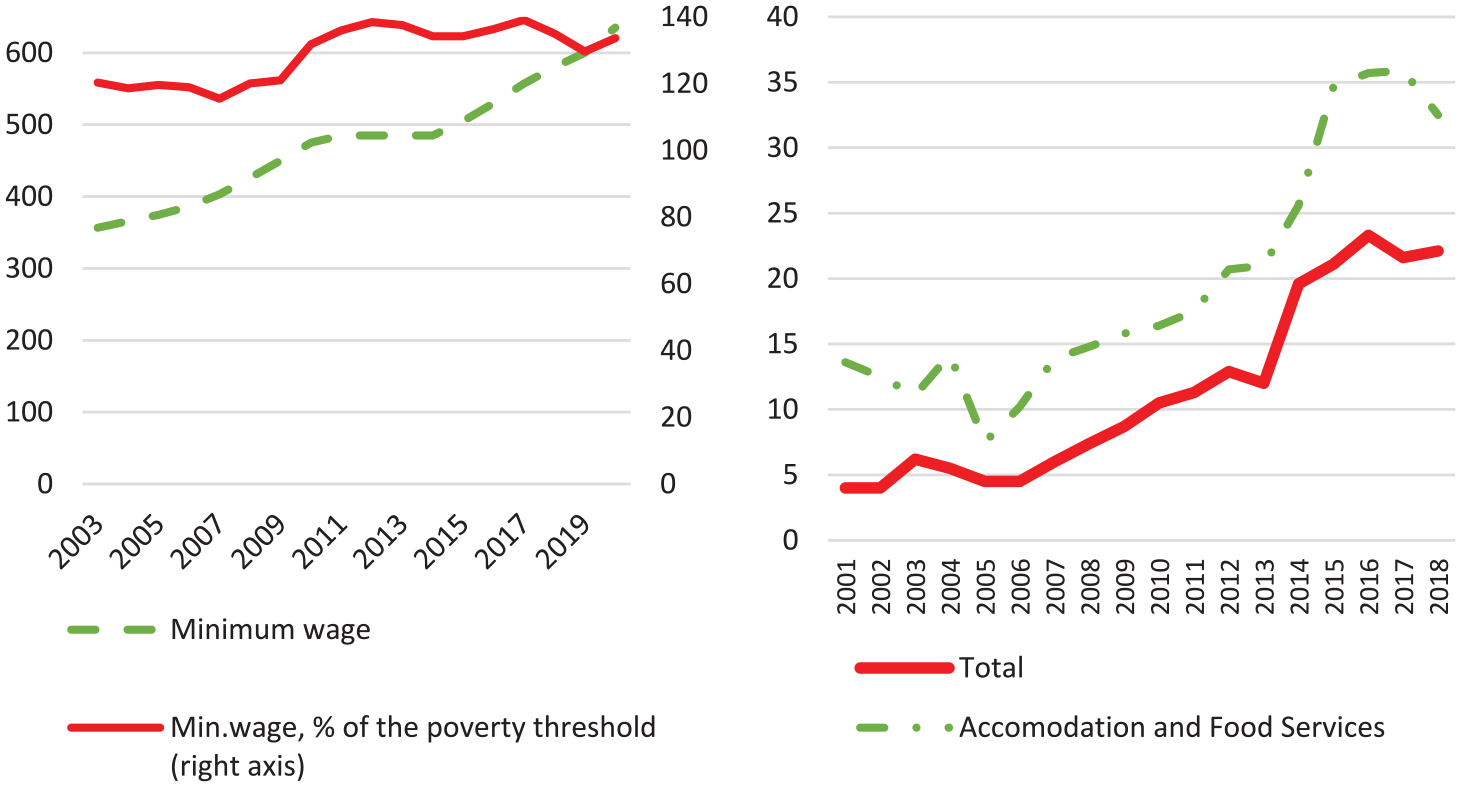
Minimum wages (left) and share of employees earning minimum wage (right).
2.2.5. Stylized fact 5: Low-income groups were more vulnerable during lockdown
Lockdowns impacted income groups differently. The ability to transition to telework was key to maintaining incomes. Yet, working from home was only feasible for activities that did not require physical proximity, and was more frequent among those with a university diploma (Castro Caldas, Silva, and Cantante 2020; Peralta, Carvalho, and Esteves 2021). Consequently, nearly half of the top quintile did not experience any income decline (figure 5).
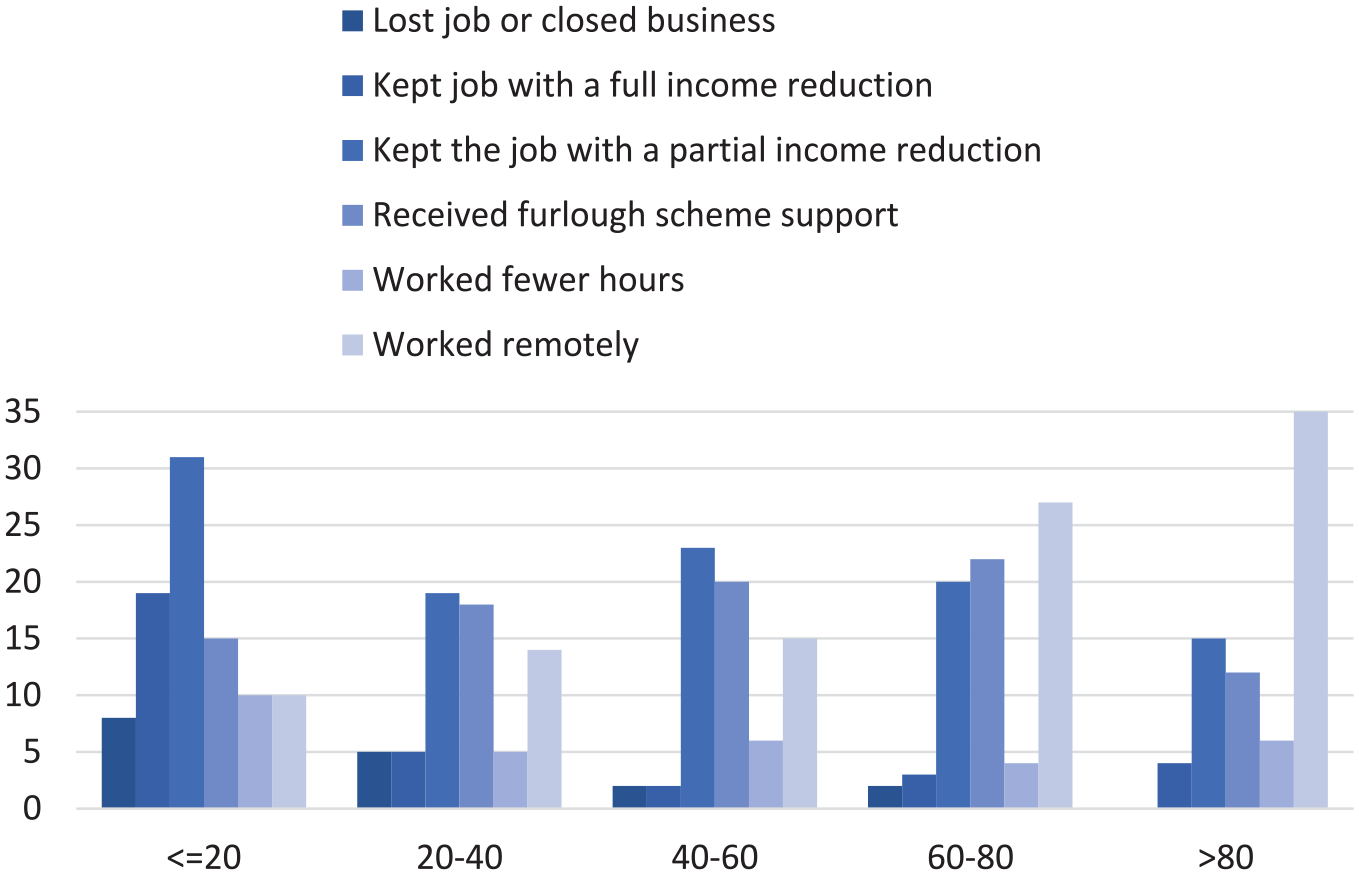
Income and employment changes during pandemic (by income quintiles).
By contrast, the economic repercussions of the pandemic disproportionately affected the lowest-income groups, who were more vulnerable to complete or partial pay cuts (see figure 5). Among individuals in the lowest income quintile, 58 percent experienced either job loss or income reduction. This indicates a very high-income vulnerability. This figure is nearly double the share observed in the second and third quintiles, where 30 percent of individuals encountered similar challenges. The uneven concentration of income vulnerability within the lowest quintile, a group already facing hardship, demonstrably contributed to the rise in AROP rates.
This section highlights that the vulnerability of the Portuguese economy to external shocks significantly impacted household incomes. Several factors contributed to household income volatility: low decommodification, disproportionately high- and rising-income vulnerability among the unemployed, minimum wages remaining close to the poverty line, and persistent in-work poverty, especially for those on temporary contracts. The following section leverages an original institutionalist framework to understand the underlying institutional processes at play.
3. Understanding the Roots of Income Vulnerability: An Institutionalist Approach
This section begins by exploring the income sources of households and their inherent volatility, followed by an analysis of how welfare policies and employment contracts impact income vulnerability. This approach reflects the principles of original institutionalism, which emphasize that the impact of policy measures can only be understood within the context of an existing and incrementally evolving institutional framework.
3.1. The sources of income and vulnerability
For lower-income households, primary income is essentially wage income. 2 Table 1 outlines the different sources of wage-earner income. In addition, it identifies the corresponding sources of volatility. Disposable income stability depends on (1) real wage instability and employment volatility and (2) net social transfer capacity to buffer income vulnerability.
The Sources of Real Disposable Income.
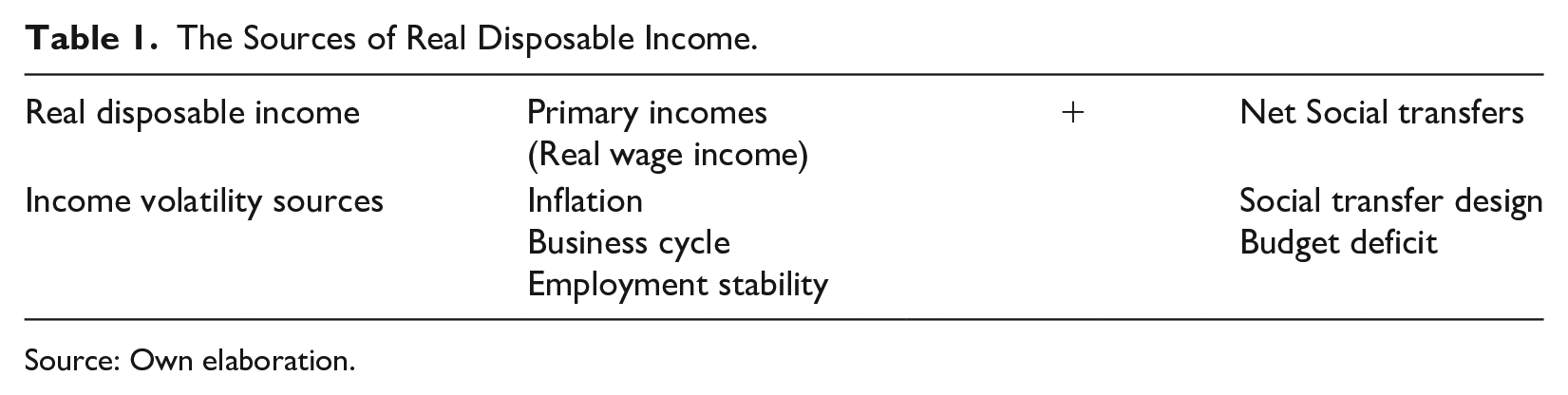
Source: Own elaboration.
Since inflation was weak during the analyzed period, real wage stability was contingent on the business cycle. Labor market institutions encompass formal regulations such as legal employment protection and standard employment practices. These influence how the business cycle affects income volatility.
Within a specific labor market, diverse employment norms coexist. These arrangements influence how the risks associated with the business cycle are allocated between employers and employees. Permanent workers typically enjoy longer tenures because of firm-level seniority rules and legal protection. Conversely, contingent workers face a higher risk of involuntary unemployment.
Welfare states can be understood as a response to the inherent insecurities of an industrialized economy (Hamilton 1984). Social programs, in particular unemployment insurance and social assistance, play a crucial role in reducing household income vulnerability by acting as safeguards against income loss. Other benefits also provide income support for parental leave, illness, or disability.
Building on Karl Polanyi’s ([1944] 2001) concept of a self-regulating market and its limitations, social protection scholars (e.g., Esping-Andersen 1990) analyze social policies from the perspective of decommodification. This approach emphasizes how labor market institutions, such as social protection programs, alleviate the adverse impacts of the business cycle on household income and reduce income vulnerability.
Labor is a fictitious commodity for Polanyi since it cannot be separated from human activity (Polanyi 2001 [1944]). He emphasizes that labor commodification arose with the advent of market societies. However, the harsh realities of this system led to the development of social protection measures (or decommodification). During economic downturns, decommodification is a critical determinant of poverty. In turn, labor commodification leads to a strong GDP/poverty nexus. Conversely, decommodification entails a weaker connection between economic growth and poverty.
The design of welfare provisions and employment practices both influence decommodification (Rubery and Grimshaw 2016). Employment contracts determine eligibility and benefit levels for social insurance programs, such as unemployment insurance. The disparity in UB entitlements reproduces existing labor market inequalities. Employees with shorter tenures or informal contracts experience a higher income instability upon job loss.
The article now turns to examining social policies (3.2) and the prevailing employment practices (3.3.) in Portugal in 2020.
3.2. Social policy design and household income vulnerability in Portugal
Portugal implemented major changes in employment protection, minimum wage, unemployment insurance, and minimum income programs. While some reforms had been implemented throughout the preceding decade (Moreira and Glatzer 2022), the most significant shifts occurred between 2011 and 2013. During this period, the financial assistance provided by the International Monetary Fund (IMF), European Central Bank (ECB), and European Commission was conditional on the implementation of neoliberal labor market reforms.
These reforms 3 enhanced labor commodification by retrenching employment protection, scaling back unemployment insurance, freezing minimum wages, reducing national holidays, and enacting special income taxes. Some of these policies were not reversed (Carvalho da Silva, Castro Caldas, and Hespanha 2017; Campos Lima and Castro Caldas 2023), and were still in effect in 2020, when the pandemic hit Portugal.
Legal protection for permanent contracts declined significantly after 2011. The reforms reduced severance payments, prolonged the maximum length of temporary contracts, and expanded grounds for ordinary termination (Moreira and Glatzer 2022). These regressive reforms were among the most substantial worldwide (OECD 2017), and the reformed system was operating in 2020.
The 2011–2014 austerity package also included a freeze on the minimum wage. This was later lifted between 2015 and 2019. Nevertheless, the minimum wage did not increase significantly in proportion to the poverty threshold (refer to figure 4 above).
A major UB reform was implemented in 2012. This amendment included a reduction in the maximum cap, as well as benefit amount penalties after six months of unemployment (except for households with two unemployed members). Additionally, the duration of unemployment insurance was reduced by 40 percent, from 900 to 540 days. The 2012 UB scheme was still active in 2020.
This reform contributed to the increase in the AROP rate for the unemployed, as observed in stylized fact 3. For workers earning minimum wages, the UB replacement rate declined from 90 percent (in 2009) to 73 percent (in 2020). The reform’s negative impact on income security was particularly pronounced after two years, when minimum wage earners’ replacement rate dropped from 90 percent of their previous wages (in 2009) to 53 percent (by 2020).
A minimum income scheme (RMG, Rendimento Mínimo Garantido) was introduced in Portugal in 1997 and underwent several reforms. In 2002, it was renamed RSI (Rendimento Social de Inserção, Social Integration Income) and underwent a sizable overhaul, which included the requirement to participate in training programs or accept job offers. Afterward, between 2010 and 2013, the means-testing threshold for RSI (social integration income) entitlement was reduced twice because of austerity measures.
Minimum income scheme cuts were subsequently reversed in 2016 when austerity was officially abandoned. Nevertheless, the RSI benefit remained very low, fluctuating between 40 and 46 percent of the poverty line (GEP 2021). It follows, that the RSI primarily served as a safety net for individuals experiencing extreme poverty, rather than as a tool for eradicating poverty.
Consequently, the social policies in place at the onset of the pandemic were shaped by a historical path dominated by the retrenchment of employment protection and social benefits. This trend is commonly observed in neoliberal labor markets. If we apply Polanyi’s terms mentioned above, this relates to a commodification process, where household incomes become more dependent on the labor market and more volatile.
In response to the COVID-19 pandemic, stringent lockdown measures were implemented in March–April 2020 and January–March 2021. During lockdowns, teleworking was mandated, and nonessential services were closed. The government promptly enacted compensatory social and economic measures mirroring emergency policies adopted by other European Union member states (Ebbinghaus and Lehner 2022).
The cornerstone of this response was a job retention scheme announced on March 13, 2020, and operational within two weeks. This scheme simplified the existing furlough procedure and provided wage subsidies to firms, helping to alleviate the financial burden of keeping employees on the payroll. Workers received a portion of their gross wages, amounting to two-thirds of their pre-furlough earnings (increasing to four-fifths after September 2020) or the minimum wage, whichever was higher (Eurofound 2021).
Job retention measures and firm support, such as credit lines, were contingent on retaining permanent workers, while firms were permitted to choose not to extend fixed-term contracts. As such, temporary workers could be discharged at the end of their contracts (Castro Caldas, Silva, and Cantante 2020; Peralta, Carvalho, and Esteves 2021). Income support for self-employed individuals experiencing turnover declines was implemented on April 1, 2020. This support was capped at the national minimum wage. Nevertheless, income support for the self-employed in cultural activities was not introduced until a year later, in March 2021.
Additional measures were implemented to safeguard income levels. The duration of UBs was repeatedly extended throughout 2020 and 2021, and the eligibility period for receiving UBs was halved between July and December 2020.
The COVID-19 pandemic served as a stress test for social protection frameworks worldwide, exposing limitations in current protection systems. In Portugal, reliance on extraordinary measures to alleviate financial hardship during the pandemic crisis underscores the inadequacy of current income support mechanisms (Pereirinha and Pereira 2021). Conversely, the relatively lower utilization of job retention schemes in Nordic countries compared to other EU member states (Ebbinghaus and Lehner 2022) can be attributed to the inherent income security provided by their well-developed welfare systems (Pereirinha and Pereira 2021).
During 2020–2021, the fiscal policies implemented were largely ad hoc, with minimal influence on entrenched labor market institutions. This characteristic aligns these emergency packages with other temporary funding mechanisms deployed to address crises similar to natural disasters (Seemann et al. 2021).
Several studies (Almeida et al. 2020; Christl et al. 2021; Sánchez et al. 2021; Clark et al. 2022) suggest that emergency measures implemented across the European Union (EU) effectively mitigated a further escalation of poverty rates during the COVID-19 pandemic. In the case of Portugal, evidence suggests that job retention schemes were instrumental in preventing further income losses (Almeida et al. 2020). Simulations (Silva et al. 2021) suggest that the absence of furlough schemes would have resulted in a more than fourfold increase in poverty.
While the furlough scheme helped mitigate job losses, the scheme’s wage replacement rate was among the lowest in the European Union (Ebbinghaus and Lehner 2022). Under the program, employees received at least the minimum wage, which, as figure 4 illustrates, was already close to the poverty line. As vulnerable low-wage earners in the lowest quintile fell below the poverty line, the overall in-work poverty rate increased in 2020 (stylized facts 4 and 5).
The intensification of in-work poverty contributed to an increase in the AROP rate (stylized fact 1) because the impact of social transfers on poverty remained low (stylized fact 2). Furthermore, existing social benefits could not be used to prevent an increase in poverty because they were set below the poverty threshold.
While the AROP rate for the unemployed improved marginally during the pandemic (because of ad hoc extensions of UBs), UBs were unable to alleviate poverty (because of noteworthy cuts in 2012). Furthermore, the high incidence of minimum wage has pushed down individual UB entitlements. Consequently, the AROP for the unemployed in 2020 (2021 data) was close to 50 percent, exceeding its level during the Eurozone crisis (2011–2013).
In conclusion, the pandemic emergency fiscal package proved inadequate in preventing the increase in the AROP rate observed in 2020. The strong association between GDP growth and poverty can be linked to neoliberal social policy reforms implemented over the past decade, which supported the commodification of labor. Furthermore, these institutions were not challenged by the emergency package, as it was oriented toward supporting businesses rather than labor (Ebbinghaus and Lehner 2022).
To better understand income insecurity, the article now turns to an examination of employment practices in Portugal. These practices, operating within an increasing commodification context, significantly influence wage-earner income volatility.
3.3. Employment practices and household income vulnerability
Institutionalism views economic agents as interactive and embedded within a network of enduring and self-reinforcing institutions (Hodgson 2000). Institutions, as social constructs, define the nature of commodification and shape income vulnerability.
Institutions can be conceived as prevailing habits of thought (Veblen 1899) that are deeply ingrained customs and practices of a society or group (Hamilton 1932). Labor market institutions encompass social benefits, legal provisions of employment protection, prevailing customs related to employment contracts and wages, and norms on commodification.
Labor market institutions influence the decisions of households, firms, and the government. Existing work practices emerge from the complex interplay of employer and household habits of thought regarding acceptable employment contracts. In turn, as specific employment arrangements become more common, a normalization effect sets in, impacting organizational routines, household habits, and legal provisions. National and industry-level employment norms, which include contract types, wages, and turnover, become institutionalized over time.
Hence, institutions and behavior coevolve, giving rise to a cumulative process: “Institutions and human actions, complements and antitheses, are forever remaking each other in the endless drama of the social process” (Hamilton 1932: 39). The interaction between institutions and behavior triggers path-dependence. Path dependence refers to decision-making over time, which conceptually narrows the choice set by influencing habits of thought (Veblen 1899).
Firms’ employment practices are anchored in routines, which are structured patterns of behavior that provide a framework for repetitive decision-making (Hodgson 2000). For firms, established routines guide human resource procedures, including the design of employment contracts, promotion ladders, wage scales, recruitment, and dismissal decisions.
Organizational employment routines play a crucial role in determining household income instability. Firm employment routines significantly influence income vulnerability through employment stability, earnings, and their impact on social insurance benefit entitlements.
Worker decisions are households’ decisions. These depend on prevailing employment norms concerning acceptable work conditions, as well as beliefs about fair wages and alternative job opportunities. More vulnerable households are more susceptible to pressures (Rubery and Piasna 2017). In institutional economics, bargaining between firms and workers cannot be equated with commodity transactions in the market. Unlike market transactions, employment relationships inherently involve power, authority, and hierarchy.
Unions, through collective bargaining, promote decommodification by negotiating wages, social benefits, and employment security. Collective bargaining reduces workers’ dependence on the market for survival. Unions in Portugal played a significant role in opposing the austerity measures implemented during the Eurozone sovereign debt crisis (Reis 2014). Their vocal opposition contributed to public debate about the social costs of austerity, and it may have indirectly influenced the decision to abandon some austerity-related policies.
The erosion of collective bargaining in different countries has created a fertile ground for the proliferation of unstable work arrangements. Precarious jobs include temporary jobs, part-time work, and solo self-employment. These combine job insecurity, low wages, and low decommodification (Rubery and Grimshaw 2016).
Precarious job development has received considerable attention (e.g., Kalleberg 2009; Standing 2011; Figart 2021). Nevertheless, the notion of a recent upsurge in precarious employment can be questioned, as open-ended jobs have never been a universal norm across time and space. These institutions only became prominent with the rise of Keynesianism and welfare states during the mid-twentieth century (Fudge 2017; Munck 2020). Furthermore, open-end contracts, along with the associated social rights, were never prevalent employment practices in the Global South (Wilson 2020).
Additionally, open-end employment continues to be an institution in developed countries (Choonara 2020). To fully grasp the complexities of the modern workplace, we need to analyze the variety of work arrangements that exist, including both stable and contingent jobs. Labor market segmentation theories (Doeringer and Piore [1985] 2020; Reich, Gordon, and Edwards 1973) provide a framework for understanding how diverse employment practices coexist in a single labor market. This connection between precarious jobs and labor market segmentation is further emphasized by contemporary institutionalists (e.g., Rubery and Piasna 2017) and radical political economists (e.g., Choonara 2020).
Firm routines contribute to segmented labor markets, where some jobs offer high wages, social benefits, and career opportunities (the primary labor market), whereas others are characterized by low wages, limited social benefits, and few promotion prospects (the secondary labor market).
Neoliberal institutions, with their emphasis on deregulation and flexibility, have shaped the evolution of labor market segmentation. Globalization has further intensified this trend by increasing competition from countries with lower labor costs. These processes have led to the growth of low-quality jobs in both developed countries (precarious jobs) and developing countries (informalization) (Wilson 2020).
Following the 1974 democratic transition, Portugal witnessed the emergence of both the modern welfare state and permanent contracts as the employment norm. However, alongside this positive development, firms also utilized precarious work arrangements such as bogus self-employment and temporary contracts.
Bogus self-employment involves individuals who are essentially employees in practice but are classified as self-employed. This work arrangement is illegal but flourished in Portugal during the 1990s. While there are no data on bogus self-employment, self-employed individuals without employees (hereafter referred to as isolated self-employed) can be used as a proxy. Its percentage increased in the early 1990s and declined from 1997 (figure 6), although their share continued above the EU average. By 2020, 16.8 percent of the Portuguese labor force was self-employed, which was 1.5 times higher than the EU average (11.2 percent).
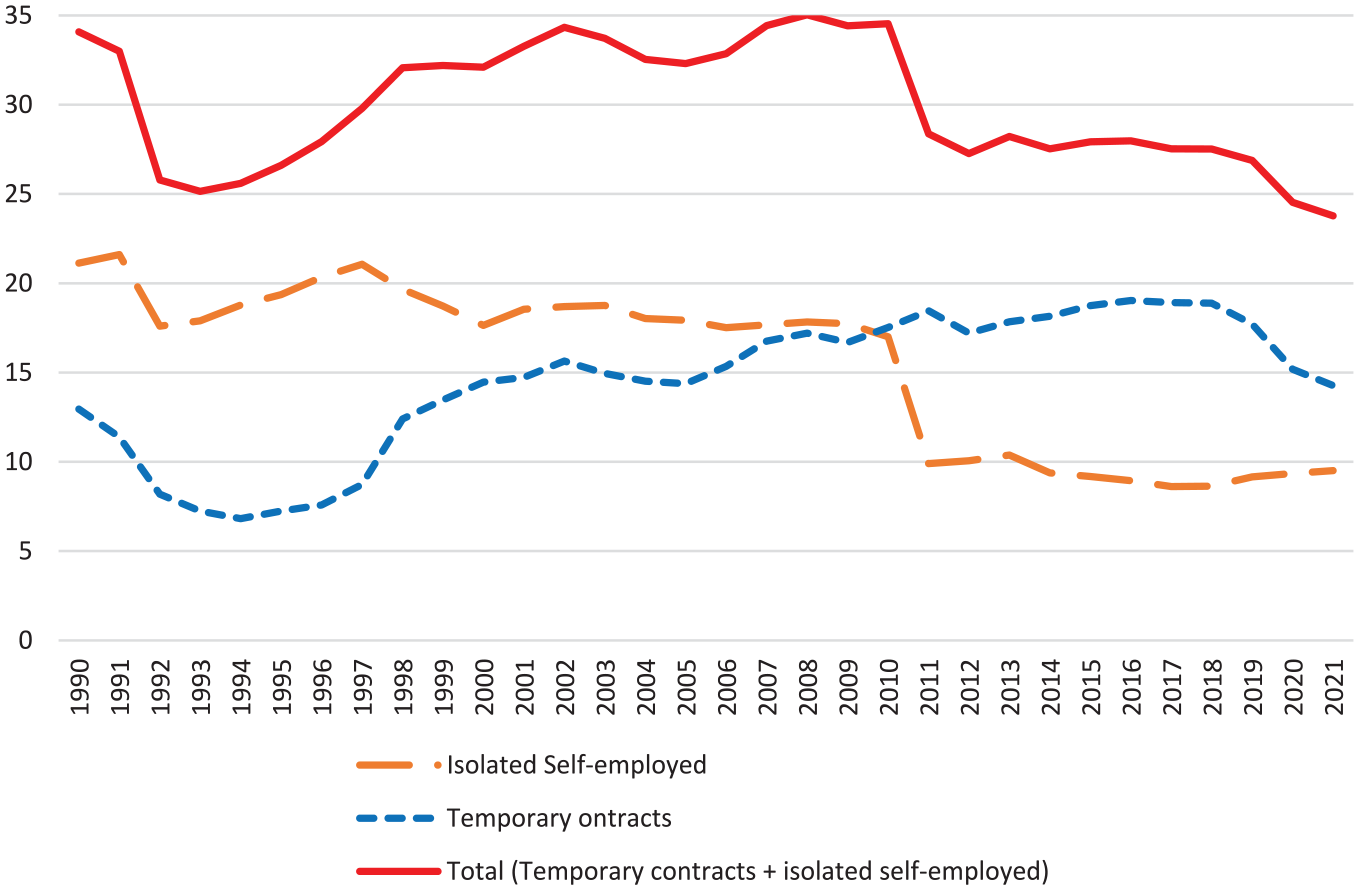
Isolated self-employed and temporary contracts in Portugal (share in total employment).
Cumulating unstable employment and earnings, the self-employed experienced the highest income volatility. Their AROP rate was three times higher than that of employees, and it increased by 2 percentage points in 2020 (figure 3). Moreover, self-employed individuals whose income relies on a single employer were only entitled to UBs after 2012.
As the ratio of isolated self-employed individuals decreased, the proportion of temporary jobs increased in the late 1990s. Hence, the combined percentage of isolated self-employment and temporary jobs continued to increase until 2008, when it reached 35 percent of employment. Although it declined thereafter, the total share of temporary jobs and isolated self-employment remained at a quarter of the total employment (figure 6) and above the EU average.
To conclude, both bogus self-employment and fixed-term contracts are established employment practices in the Portuguese labor market. As an institution, unstable jobs are tolerated by firms, and even by the state. Employees involuntarily endured job instability. Between 2014 and 2019, over 80 percent of individuals with temporary contracts were unable to secure a permanent job. This was higher than the EU average (around 55 percent).
Although it was an illegal practice, authorities did not punish fake self-employment. The state itself, as an employer, set an example by using bogus self-employed individuals to perform long-lasting missions. Unable to hire new public servants because of fiscal austerity, the government itself relied on precarious work arrangements. 4
Additionally, low-wage jobs are an institution in the Portuguese labor market. In 2013–2015, employment grew markedly in the lowest quintile of the wage distribution scale (Dias, Kovács, and Cerdeira 2020). The proportion of workers receiving the minimum wage increased by 11 percentage points during 2014–2016 (figure 4) and did not decrease thereafter.
Prevailing labor market institutions, such as social programs and employment practices, influenced the effects of the COVID-19 recession on poverty. Social reforms over the two preceding decades had strengthened the link between GDP and poverty, in other words, commodification. Emergency fiscal policies were not sufficient to completely prevent the exacerbation of existing vulnerabilities arising from low wages and unstable jobs.
The prevalence of low-wage jobs increased income vulnerability during the pandemic (stylized fact 1). While furlough schemes partially replaced lost wages, many workers received benefits close to the poverty line, leading to an automatic increase in the AROP rates for workers (on temporary as well as permanent contracts) (stylized fact 4). This disproportionately harmed households in the lowest quintile (stylized fact 5). Furthermore, the accommodation and food services, which had the lowest wages, were the hardest hit by the pandemic. The employment norms in this activity were characterized by precarious work and low wages, making these workers especially vulnerable.
The high AROP rate among the unemployed (stylized fact 3) emerges from both benefit design and employment practices contributing to a low benefit replacement rate (stylized fact 2). Temporary workers, who have low job tenure and earn lower wages, face a higher risk of job loss.
Young workers bore a disproportionate brunt of the pandemic’s economic impact. Unemployment rates surged by 4 percentage points for workers under 25 years old, while the corresponding rate for workers
4. Concluding Thoughts and Policy Implications
This study suggests that poverty increased expressively in Portugal in 2020 despite job retention measures because existing labor market institutions limited the impact of discretionary measures and amplified labor commodification. These institutions encompass both employment practices and social policies. On the one hand, social policy reforms over the twenty-first century increased commodification. On the other hand, employment norms, although diverse, kept a portion of the workforce close to or even below the poverty line.
Existing poverty reduction policies, such as the minimum income scheme or the UB, were insufficient in addressing poverty during the COVID-19 pandemic. This is because these programs are designed to alleviate extreme poverty rather than eliminate poverty. Low wages and unstable jobs, exacerbated by the 2012 Unemployment insurance reforms, further weakened their impact. The findings highlight the persistent effects of labor market reforms, introduced during the Eurozone crisis, which are a crucial factor influencing 2020 poverty dynamics.
Employment volatility shapes income vulnerability. In-work poverty was relatively high because the minimum wage remained extremely close to the poverty line. Despite the implementation of a furlough scheme in 2020, in-work poverty rates increased. The limited impact on poverty is partially explained by the design of the scheme. The furlough scheme prioritized job security over income adequacy, and did not reduce commodification.
Emergency social policies introduced during the pandemic were temporary, with ad hoc extensions added to the weak social safety net. The COVID-19 pandemic has exposed existing vulnerabilities within the Portuguese labor market, highlighting the need for reforms. Promoting the living standards of low-wage workers should be a priority. Linking minimum wage increases to the poverty threshold could be a meaningful step in this direction.
Social benefits, in general, have a very low impact on poverty (stylized fact 2). The high AROP rate among the unemployed highlights the need to reforms in the UB. These reforms should aim to enhance income resilience. This could involve extending the duration of benefits or adjusting benefit replacement levels. Moreover, while the current minimum income scheme (RSI) is valuable, a higher benefit level is needed to effectively address income vulnerability.
While legal reforms are essential, employment norms play a substantial role in shaping income vulnerability. In this regard, governments can play a decisive role in promoting more equitable practices. As an employer, the state can establish a positive standard for fair wages and guarantee secure contracts in the public sector. This would not only directly benefit public sector workers but also potentially influence private sector practices. Additionally, governments also have the responsibility of ensuring that existing legal regulations are effectively enforced.
Social dialogue offers a powerful tool for boosting decommodification. Social dialogue can facilitate agreements on fair compensation and secure employment. Ultimately, social dialogue can enhance overall labor productivity and growth. High employee turnover linked to temporary contracts disrupts workflows, reduces productivity, and impedes skill development within the organization.
In conclusion, labor market institutions have strengthened the connection between GDP and poverty in Portugal. Promoting more resilient household incomes requires decommodification, through amending social benefits, empowering unions, and stimulating stable jobs.
Footnotes
Declaration of Conflicting Interests
The author declared no potential conflicts of interest with respect to the research, authorship, and/or publication of this article.
Funding
The author received no financial support for the research, authorship, and/or publication of this article.
