




Abstract
There is increasing evidence that free radicals induced oxidative stress is a major causative agent in the pathogenesis of neurodegenerative diseases, particularly Parkinson’s disease. Quercetin glycosides, namely rutin and isoquercitrin, are flavonoid polyphenol compounds found ubiquitously in fruits and vegetables and have been known to possess antioxidant effects. This study was designed to compare the neuroprotective effects of quercetin glycosides rutin and isoquercitrin in 6-OHDA-induced rat pheochromocytoma (PC-12) cells. The results showed that both rutin and isoquercitrin significantly increased antioxidant enzymes, catalase, superoxide dismutase, glutathione peroxidase, and glutathione level that were attenuated by 6-OHDA in PC-12 cells. There was no significant difference in the activation of glutathione and glutathione peroxidase enzymes between rutin and isoquercitrin. These two glycosides were equally effective in suppressing lipid peroxidation in 6-OHDA-induced PC-12 cells as both compounds suppressed the malondialdehyde generation and prevented cell damage. In conclusion, quercetin glycosides rutin and isoquercetrin are having a significant neuroprotective effect against 6-OHDA toxicity in PC-12 cells.
Introduction
Neurodegenerative diseases is broad terminology used to refer to a host of disorders that afflicts nervous system cells (neurons) in the brain and spinal cords. 1 These diseases cause the neurons to function abnormally and eventually result in cell demise. The selective deterioration of neuronal cells may initiate with mild symptoms such as lack of coordination and remembering names and places.2–4 As vast numbers of neurons undergo neuronal death, patients may experience symptoms that compromise the quality of life, including difficulty in movement, neuropsychiatric symptoms, as well as performing basic individual requirements such as eating, sleeping, and speaking.5,6
Although several lines of evidence have suggested that neurodegenerative diseases such as Parkinson’s disease can be caused by genetic predisposition, environmental exposure to pesticides and insecticides, the most accepted concepts of neuronal death, is free radical-induced oxidative stress.7–9 Disruption in the antioxidant redox system in neuronal cells results in progressive accumulation of superoxide anions that is not downregulated by endogenous antioxidant enzymes (i.e. superoxide dismutase, catalase, and glutathione peroxidase), and results in oxidative stress and cell death. 10 Hence, it is worthwhile to resolve this problem by counteracting the free radicals with natural antioxidants.11,12
Flavonoid polyphenols are naturally occurring plant phenols that are widely distributed in fruits and vegetables. 13 Rutin, and isoquercitrin are glycoside derivatives of quercetin and are emerging as a potential candidate against oxidative stress-induced organ damage and neuronal degeneration.14,15 Several studies have reported that rutin and isoquercitrin have antioxidant and neuroprotective effects.10,16 However, a comparison study on the antioxidant effects of these glycosides in protecting neuronal cells has not been reported. Hence, the objective of this study was to compare and evaluate the antioxidant effects of rutin and isoquercitrin in modulating the natural antioxidant enzyme network in 6-hydroxydopamine (6-OHDA)-induced toxicity in rat pheochromocytoma, PC-12 cells.
Rat pheochromocytoma, PC-12 cells, are commonly used in the study of neurodegenerative diseases, such as Alzheimer’s and Parkinson’s disease. The main characteristics of these cells are that they secrete dopamine neurotransmitter, resembles dopaminergic cells, and possess dopamine transporters. In this study, PC-12 cells were pretreated with rutin and isoquercitrin prior exposure to 6-OHDA to induce neurotoxicity in PC-12 cells.
Materials and methods
Materials
PC-12 cells were purchased from ATCC (#CRL-1721.1 PC12 ADH, Rattus Norvegicus). 6-hydroxydopamine, rutin, isoquercitrin, Poly-L-Lysine, MTT (3-(4,5-Dimethylthiazol-2-yl)-2,5-diphenyl-tetrazolium bromide), and dimethyl sulphoxide (DMSO) were purchased from Sigma-Aldrich. Dulbecco’s Modified Eagle’s medium (DMEM), Penicillin streptomycin mixtures, and horse and fetal bovine serum were purchased from Gibco. Glutathione peroxidase, superoxide dismutase, catalase, thiobarbiturate, and glutathione assay kits were purchased from Cayman Chemicals.
Cell culture
PC-12 cells were grown in a humidified incubator with 5% CO2 at a temperature of 37°C in DMEM supplemented with 5% horse serum and 5% fetal bovine serum and penicillin streptomycin mixtures (100 U/mL). The cells were cultured in poly-L-lysine coated T-75 culture flasks and dislodged using cell scraper and dispersed to obtain singularized cells. The dispersed cells were plated on poly-L-lysine coated 96-well microplate at a density of 100,000 cells/mL and incubated overnight.
Antioxidant pretreatment
PC-12 cells were pretreated with 10, 50, and 100 µM of rutin and isoquercitrin for 8 h and subsequently exposed to 100 µM 6-OHDA for 24 h and assayed for its antioxidant activities. Control groups were cultured in complete media alone and 6-OHDA group was treated with 100 µM 6-OHDA only. Rutin and isoquercitrin were dissolved in DMSO and then diluted with complete culture media to obtain the desired concentrations. A concentration of DMSO in the final culture media of <0.05% had no protective or damaging effects on PC-12 cells.
Determination of cell viability
The cytotoxicity effects of rutin and isoquercitrin on 6-OHDA-induced PC-12 was determined using MTT (3-(4,5-Dimethylthiazol-2-yl)-2,5-diphenyl-tetrazolium bromide assay. MTT, a yellow tetrazole, is reduced to insoluble purple formazan in the mitochondria of viable cells and appears purple. The insoluble purple formazan is dissolved using a solubilizing solvent and the colored solution is measured at 570 nm using a microplate-reader. After incubation of PC-12 cells with different concentrations of quercetin glycosides, 10 µL of MTT (5 mg/mL) was added to each well and incubated for 4 h. The supernatant was removed, and 100 µL DMSO was added to solubilize the insoluble purple formazan. The absorbance was read at 570 nm. Data on cell viability were expressed as percentages of the viable control cell in the study.
Biochemical analysis
The treated PC-12 cells collected using cold PBS by centrifugation at 4°C at the specific centrifugation speed required by each enzyme kit. The cell pellet was homogenized using cold buffer and the clear supernatant was obtained for the measurements of glutathione, glutathione peroxidase, superoxide dismutase, catalase activities, and malondialdehyde level using Cayman Chemicals assay kits.
Statistical analysis
Data were expressed as mean ± SEM. The results were analyzed using analysis of variance (ANOVA) using the SPSS Inc. Software (SPSS Statistics, V22.0.0). Differences between rutin and isoquercitrin treated groups were determined using the Tukey post-hoc test. A value of P <0.05 was considered statistically significant.
Results
PC-12 cell viability of concomitant treatment of quercetin glycosides and 6-OHDA
Quercetin glycosides, rutin, and isoquercitrin added concomitantly with 100 µM of 6-OHDA showed a dose-dependent response with the antioxidant concentrations. The increase in cell viability by rutin at 50 µM and 100 µM is statistically significant with P <0.05 compared to the 6-OHDA-treated group alone. However, isoquercitrin presented the highest cell viability at 10 µM (62.28% ± 0.44) than rutin (60.02% ± 2.86) with P <0.05 (Figure 1).

Cell viability by MTT assay after concomitant addition of antioxidants (without pretreatment) and 100 µM of 6-OHDA for 24 h. Data are representative of mean ± SEM (n = 3) from one experiment representative of at least three independent experiments. a, P <0.05; b, P <0.01. *P <0.05 relative to cells treated with 6-OHDA only.
PC-12 cell viability of 8 h pretreatment of quercetin glycosides and 6-OHDA
Figure 2 shows the percentage of cell viability of PC-12 cells that were pretreated for 8 h with rutin and isoquercitrin at 10, 50, and 100 µM, and subsequently treated with 6-OHDA. The cell viability results that were obtained using MTT assay showed that rutin and isoquercitrin pretreatment protected the PC-12 cells in a dose-dependent manner compared to the 6-OHDA-treated group alone. Although, both rutin and isoquercitrin pretreatment shows a dose-dependent response, there is no statistical significant difference between the two quercetin glycoside derivatives. Isoquercitrin showed highest cell viability (73.64 ± 1.06) at lowest concentration (10 µM) and rutin pretreatment demonstrated maximum protection (78.40% ± 3.94) at highest concentration (100 µM) compared to the 6-OHDA-treated group alone (56.93% ± 2.31) (Figure 2).

Cell viability by MTT assay after 8 h pretreatment of antioxidants subsequently exposed to 100 µM of 6-OHDA for 24 h. Data are representative of mean ± SEM (n = 3) from one experiment representative of at least three independent experiments.*P <0.05 relative to cells treated with 6-OHDA only.
Catalase level following quercetin glycosides pretreatment in 6-OHDA- induced PC-12 cells
Catalase activity of quercetin glycosides pretreatment showed a significant dose-dependent response (P <0.05) at all concentrations (10–100 µM) relative to the 6-OHDA-treated group alone. Interestingly, rutin demonstrated higher catalase activity at 50–100 µM with P <0.01 compared to isoquercitrin at similar concentrations. Rutin was more potent in increasing catalase enzymes than isoquercitrin after 6-OHDA treatment (Figure 3).

Catalase activity after 8 h pretreatment of antioxidants subsequently exposed to 100 µM of 6-OHDA for 24 h. Data are representative of mean ± SEM (n = 3) from one experiment representative of at least three independent experiments. b, P <0.01.*P <0.05 relative to cells treated with 6-OHDA only.
Superoxide dismutase level following quercetin glycosides pretreatment in 6-OHDA- induced PC-12 cells
Superoxide dismutase enzyme, was significantly increased by quercetin glycosides in 6-OHDA-induced PC-12 cells. Both rutin and isoquercitrin pretreatment of PC-12 cells, have significantly increased superoxide dismutase enzyme levels, compared to the 6-OHDA-treated group alone. Besides that, isoquercitrin showed higher superoxide dismutase activity at 10–100 µM and there was a significant difference (P <0.01) between the two antioxidants at 10 and 50 µM concentrations. Isoquercitrin pretreatment increased superoxide dismutase enzyme levels to much higher than rutin pretreatment (Figure 4).

Superoxide dismutase activity after 8 h pretreatment of antioxidants subsequently exposed to 100 µM of 6-OHDA for 24 h. Data are representative of mean ± SEM (n = 3) from one experiment representative of at least three independent experiments. b, P <0.01. *P <0.05 relative to cells treated with 6-OHDA only.
Glutathione level following quercetin glycosides pretreatment in 6-OHDA - induced PC-12 cells
Glutathione level was significantly (P <0.05) elevated in antioxidant treated cells compared to cells incubated with 6-OHDA alone. The samples incubated with isoquercitrin demonstrated significantly higher (P <0.05) glutathione concentrations at 10 µM, and rutin elevated glutathione significantly at 100 µM concentration relative to the 6-OHDA-treated group alone. In comparison, isoquercitrin exhibited higher glutathione level at 50 µM, but rutin elevated the glutathione level significantly at 100 µM (Figure 5).
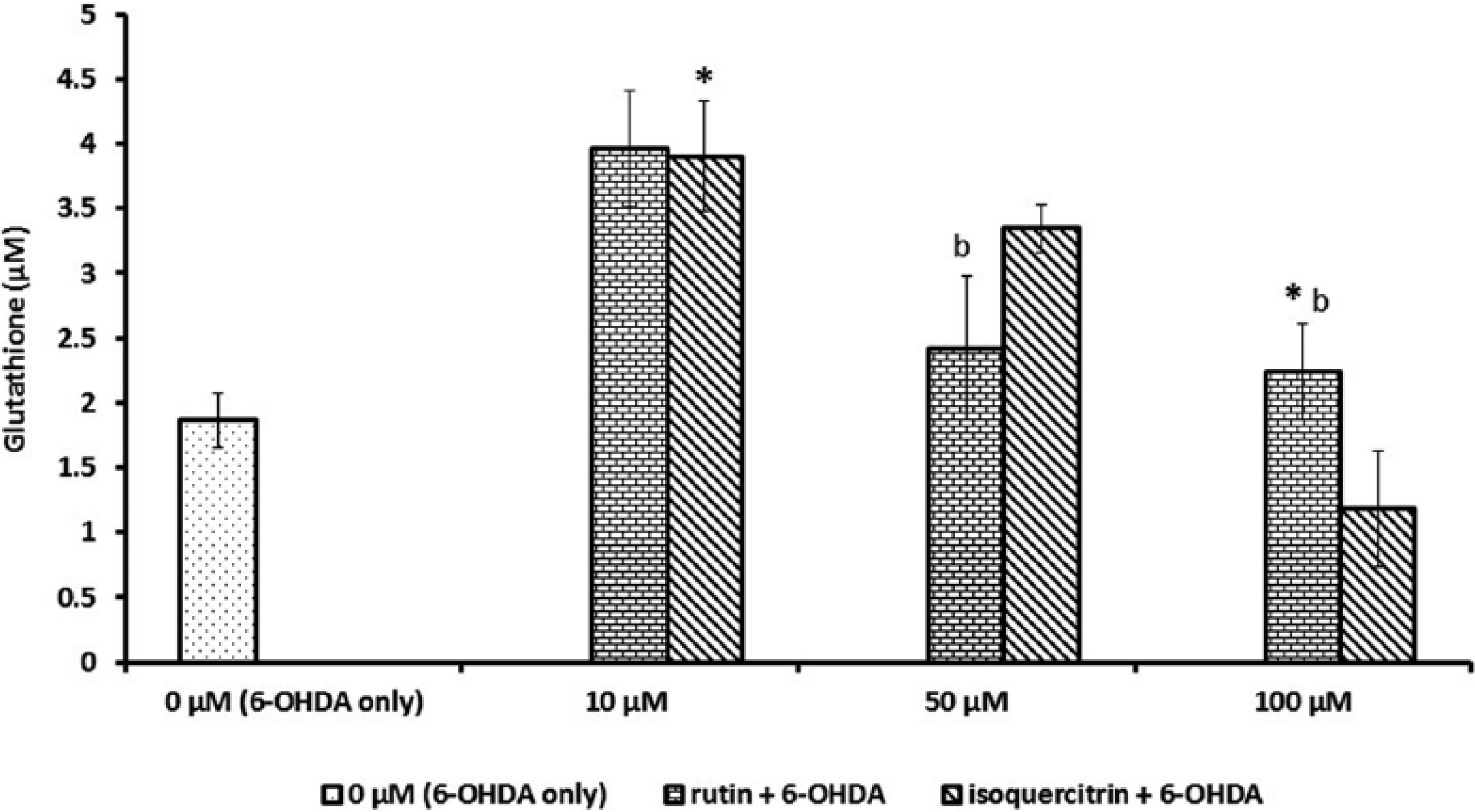
Glutathione level after 8 h pretreatment of antioxidants subsequently exposed to 100 µM of 6-OHDA for 24 h. Data are representative of mean ± SEM (n = 3) from one experiment representative of at least three independent experiments. b, P <0.01.*P <0.05 relative to cells treated with 6-OHDA only.
Glutathione peroxidase level following quercetin glycosides pretreatment in 6-OHDA-induced PC-12 cells
Glutathione peroxidase enzyme level was significantly higher (P <0.05) in quercetin glycosides pretreated cells at 10 and 50 µM compared to cells incubated with 6-OHDA alone. Isoquercitrin demonstrated higher glutathione peroxidase activity than rutin at 50 and 100 µM with statistical significance P <0.01. Isoquercitrin exhibited an increasing dose-response trend with glutathione peroxidase enzyme, but an opposite response was demonstrated by rutin as the enzyme level was elevated at a low concentration of rutin and the data were statistically significant (P <0.05) (Figure 6)
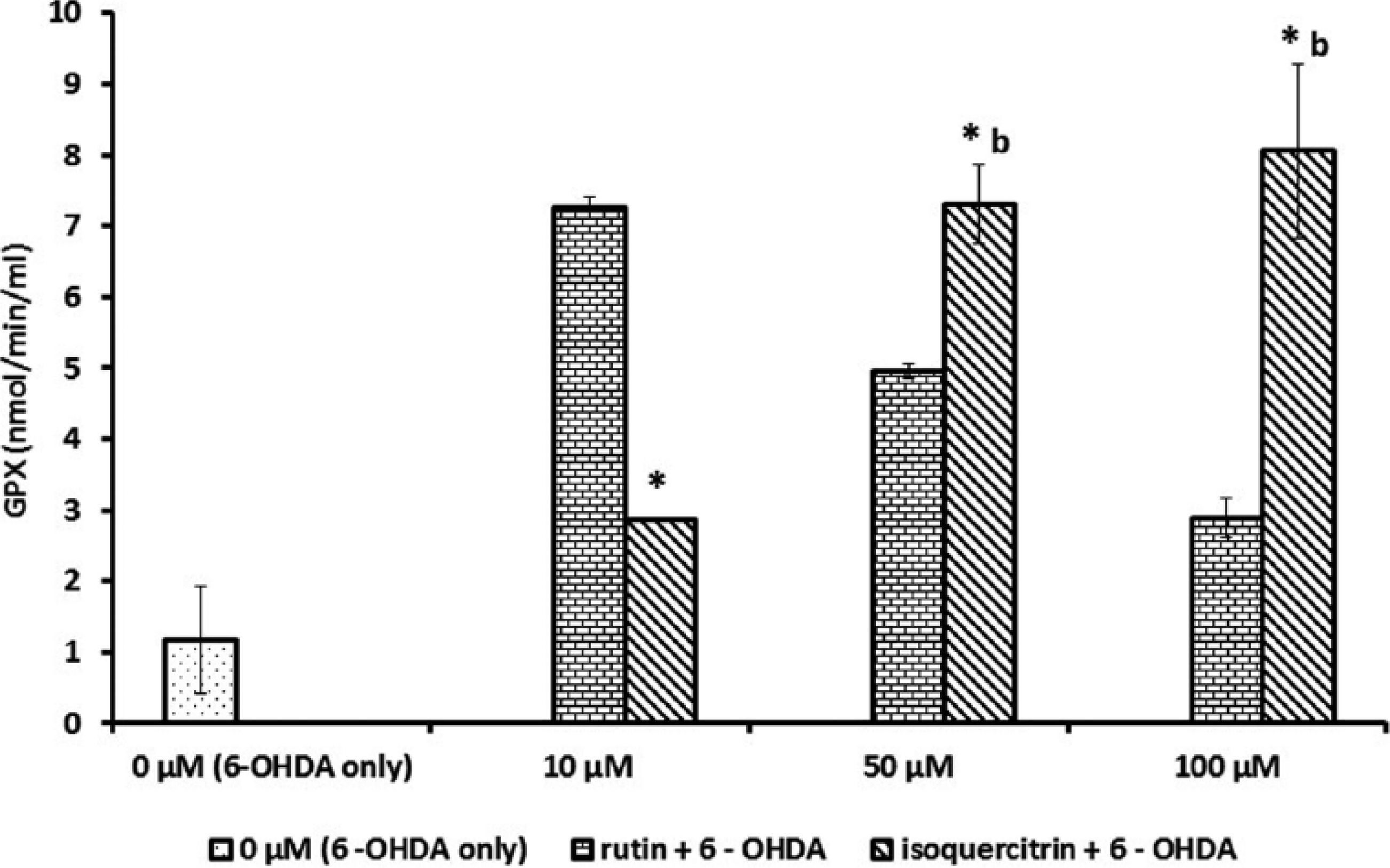
Glutathione peroxidase activity after 8 h pretreatment of antioxidants subsequently exposed to 100 µM of 6-OHDA for 24 h. Data are representative of mean ± SEM (n = 3) from one experiment representative of at least three independent experiments. b, P <0.01. *P <0.05 relative to cells treated with 6-OHDA only.
Malondialdehyde (MDA) level following quercetin glycosides pretreatment in 6-OHDA-induced PC-12 cells
A significant reduction of the lipid peroxidation by-product, MDA level was observed in cells treated with rutin and isoquercitrin (P <0.05). The cells treated with 6-OHDA alone showed a markedly high level of MDA, which is an indicator of lipid peroxidation or oxidative stress. Both rutin and isoquercitrin significantly reduced the lipid peroxidation in a dose-dependent manner (P <0.05). The highest concentration of the antioxidants showed the greatest potential in suppressing lipid peroxidation in PC-12 cells. There is no statistical significant difference of MDA level between rutin and isoquercitrin in protecting the 6-OHDA-induced PC-12 cells (Figure 7).
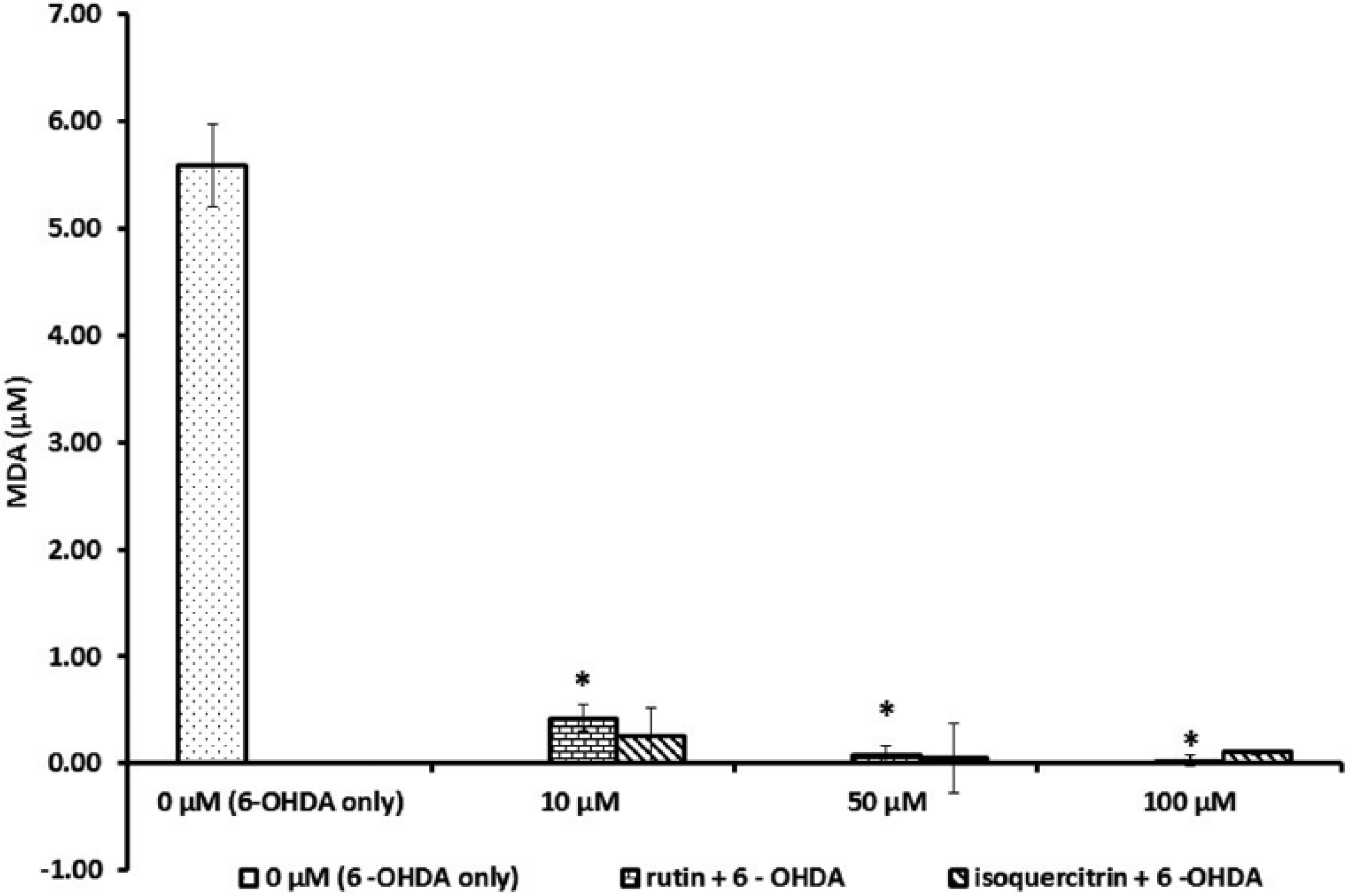
Malondialdehyde level after 8 h pretreatment of antioxidants subsequently exposed to 100 µM of 6-OHDA for 24 h. Data are representative of mean ± SEM (n = 3) from one experiment representative of at least three independent experiments.*P <0.05 relative to cells treated with 6-OHDA only.
Discussion
A substantial body of evidence suggests that the activity of the enzyme antioxidant system is significantly compromised in neurodegenerative diseases such as Parkinson’s disease, 17 Alzheimer’s disease, 18 and amyotrophic lateral sclerosis. 19 Studies have shown that chronic exposure to environmental toxins causes increased free radical-associated oxidative stress that suppresses the activity of antioxidant enzymes that further exacerbate cellular damage. 20 Therefore, natural antioxidants can be the solution to control and regulate the vicious cycle of reactive oxygen species (ROS) as well as protect neurons from undergoing neuro-degeneration. 21 Quercetin glycosides are quercetin polyphenols with carbohydrate structure exist as side chains. The presence of a dimer of rhamnose-glucose and glucose the position H-atom will result in the formation of rutin and isoquercitrin, respectively. 22
In this study, although isoquercitrin showed protective effects against 6-OHDA-induced PC-12 cells, its ability to protect the cells was lower than rutin. Rutin exhibited higher cell viability percentage in the concomitant addition study of antioxidants and 6-OHDA compared to isoquercitrin. The pretreatment step plays a crucial role in preparing the cells to be more resilient when encountered with oxidative stress. The highest cell viability (78.4%) was found when the PC-12 cells were pretreated with 100 mM rutin for 8 h of pretreatment prior exposure to 6-OHDA but isoquercitrin exhibited highest cell viability at 10 µM with 73.6%. It is important to note that PC-12 cell viability has a negative correlation with isoquercitrin concentrations, but showed a dose-dependent response in rutin pretreatment. Although, there is no statistical significant difference between rutin and isoquercitrin in the 8 h pretreatment study, a significant difference between the quercetin glycosides in concomitant treatment with 6-OHDA could be attributed to the physical structure of the antioxidant molecules. Rutin possesses two carbohydrate structures as its side-chain, but isoquercitrin has only one carbohydrate side-chain. 23 The enhanced neuroprotective effects of rutin that possesses an extra rhamnose structure can be correlated with higher solubility and stability and improved biological properties when compared to the isoquercitrin. 24
Catalase plays a major role in eliminating hydrogen peroxide (H2O2), which was generated by superoxide dismutase enzymes as well as pro-oxidant molecules such as 6-OHDA. Flavonoid glycosides, rutin, and isoquercitrin displayed a significant elevation of catalase enzyme levels in 6-OHDA-induced PC-12 cells. Several studies have shown that, flavonoid molecules have the potential to restore neuronal activity in rat brain following neurotoxin-induced damage.16,25,26 It has been reported that rutin protects neuronal damage by activation of antioxidant enzymes, including catalase to attenuate free radical formation. 16 Rutin was shown to inhibit the aggregation of β-amyloid into fibrillar deposits, which is one of the pathological hallmarks of Alzheimer’s disease. 27 Several studies have reported that pretreatment with isoquercitrin increased the cell tolerance to oxidative stress.28–30 Along with this, flavonoids with antioxidant activity such as quercetin have a high binding affinity towards catalase enzyme in the cells. 29 The binding of quercetin with catalase induced some conformational changes on this enzyme, which results in enhanced ability to quench free radicals as well as increase the antioxidant status in cells. 31 Rutin increased catalase concentrations higher than isoquercitrin in our study. This could be due to the presence of disaccharide side-chain that have induced conformational changes in catalase which might have enhanced its capability to reduce ROS. This conformation changes is lesser in isoquercitrin pretreated cells, hence lower catalase concentration was recorded.
Superoxide dismutase (SOD) is an enzyme that is found ubiquitously in most eukaryotic cells. It exists in the form of CuZn-SOD and Mn-SOD in most cells, including neuronal cells and these enzymes act as bulk scavengers of ROS. 32 The findings from the present study suggest that the SOD activity was significantly reduced in PC-12 cells treated with 6-OHDA alone and the pretreatment with rutin and isoquercitrin prior exposure to 6-OHDA reversed the damaging effects of 6-OHDA. Interestingly, isoquercitrin showed more profound superoxide dismutase concentration than rutin. It has been proposed that flavonoid glycosides like rutin and isoquercitrin induced activation of SOD enzyme in turn catalyzed the detoxification of superoxide radicals to less toxic molecules, and lead to attenuation of oxidative stress. 33 The reduced superoxide radical in cellular system is directly correlated with increased cellular antioxidant capabilities.34,35
Glutathione peroxidase and glutathione system are powerful antioxidant systems that work together by converting toxic hydroperoxide molecules into water and alcohol.28,36 Both rutin and isoquercitrin were potent glutathione stimulators in our study. This finding was consistent with other animal model studies, which found that rutin induced an increase in glutathione release in the rat hippocampus and enhanced the cognitive performance that was tested using Morris-water maze test.37,38 However, isoquercitrin showed a prominent effect than rutin in activating glutathione peroxidase enzyme at 50 and 100 µM. Rutin increased the glutathione peroxidase enzymes at lower concentration, but isoquercitrin presented the similar effect at a higher concentration. This study showed that isoquercitrin has a higher tendency in elevating glutathione peroxidase enzymes than rutin in 6-OHDA-induced PC-12 cells.
Lipid peroxidation is an oxidative degradation of lipids mainly caused by ROS. 39 The ROS are produced in cells due to an imbalance in the oxidative / antioxidant defense system that target the polyunsaturated fatty acids (PUFA) that contain multiple double bonds in between, which lie methylene bridges – CH2 – and has reactive hydrogen initiating self-propagating chain reaction.40,41 This process results in destruction of lipid membrane that affects cell viability and lead to cell death. 42 To date, numerous diseases such as atherosclerosis, asthma, kidney diseases as well as PD are found to be associated with increased lipid peroxidation. 43 Flavonoid glycosides have been found to reduce lipid peroxidation and improve cell survival. 44 In this study, both rutin and isoquercitrin demonstrated a significant antioxidant activity by reducing the MDA levels in the PC-12 cells when compared to cells that were just exposed to 6-OHDA alone. The protective effect of rutin and isoquercitrin was associated with simultaneous increase in the levels of antioxidant enzymes in the PC-12 cells. 45 However, there is increasing evidence to suggest that rutin exhibited its antioxidant activity by inhibiting ROS production via suppression of free radical processes at three stages, namely: formation of superoxide ion; generation of hydroxyl radicals in the Fenton reaction; and formation of lipid peroxide radicals.27,46 Likewise, isoquercitrin also suppressed lipid peroxidation by enhancing the antioxidant enzymes in this study. Although there are very few studies conducted to investigate the mode of antioxidant action of isoquercitrin, the available few studies have indicated that isoquercitrin protects against lipid peroxidation via a free radical scavenging effect in a rodent model. 47
In conclusion, the present findings revealed that both rutin and isoquercitrin have significant neuroprotective effects, where rutin and isoquercitrin are potent stimulators of catalase and superoxide dismutase enzymes, respectively. However, both quercetin glycosides are powerful activators of glutathione and glutathione peroxidase enzymes. In addition, rutin and isoquercitrin are effective antioxidants in suppressing lipid peroxidation in 6-OHDA-induced PC-12 cells as both compounds suppressed the MDA generation and prevent cell damage. These findings support the further investigation of quercetin glycosides as a new therapeutic agent, because of their potential merit in the treatment of oxidative stress in neurodegenerative diseases.
Footnotes
Declaration of conflicting interests
The author(s) declared no potential conflicts of interest with respect to the research, authorship, and/or publication of this article.
Funding
This research received no specific grant from any funding agency in the public, commercial, or not-for-profit sectors.