



Abstract
Background
Despite well-documented health benefits, fruit and vegetable (F&V) intake remains below recommended levels globally.
Objectives
This scoping review aimed to identify effective intervention strategies to increase F&V intake.
Methods
We searched PubMed and Web of Science (February 2023) for intervention studies assessing impact on F&V intake. Eligibility criteria included studies published in English since 2012, a valid control group, ≥2 weeks duration, and ≥50 participants per intervention arm. Analysis was done by intervention comparison. Findings were described by summarizing proportion of intervention comparisons reporting statistically significant increases in fruit, vegetable and/or combined F&V intake across standalone (nutrition communication, social protection, agriculture or food environment restructuring) and multi-component strategies.
Results
A total of 284 intervention comparisons (223 unique studies) were included. The majority of comparisons (191/284) came from high-income countries (HICs) and 93/284 from low- and middle-income countries (LMICs). Nutrition communication was the most common standalone strategy, with 121/218 comparisons reporting positive impacts on fruit, vegetable and/or combined F&V intake. Fewer studies evaluated standalone social protection (13/284), food environment restructuring (4/284), or agriculture strategies (3/284). Among the limited interventions, 7/13 social protection and 3/4 food environment restructuring comparisons reported positive impacts, while none of the 3 standalone agricultural interventions did. Multi-component interventions demonstrated potential with 28/46 comparisons having positive impacts.
Conclusions
Some of the intervention strategies showed potential for increasing fruit and/or vegetable intake. However, given the heterogeneity of the interventions, small number of studies for some strategies and limited evidence from LMICs, more rigorous, context-specific research is needed.
Plain language title
What works to increase fruit and vegetable intake? A global review of intervention strategies.
Plain language summary
Background
Eating enough fruit and vegetables is important for maintaining good health, but most people do not eat the recommended amounts. Many strategies have been tested to encourage fruit and vegetable intake, but it is unclear how successful they have been.
Objective
This study reviewed the success of different types of strategies to understand which ones were most likely to increase fruit and/or vegetable intake.
Methods
We analyzed 284 comparisons from 223 unique studies that tested interventions to increase fruit and/or vegetable intake. These included nutrition communication (e.g. education, cooking skills, diet counselling), social protection programs (e.g. food assistance or financial incentives), agricultural programs (e.g. school or home gardens), and food environment changes (e.g. making fruits and vegetables more available in schools or workplaces).
Findings
The majority of interventions included in this review were conducted in high-income countries (191/284) and the rest came from low- and middle-income countries (93/284). Nutrition communication was the most common standalone strategy. Of the 218 interventions, 56% increased fruit and/or vegetable intake. The other standalone strategies were less common, although 7 of 13 social protection and 3 of 4 food environment interventions reported positive impacts, whereas none of the 3 agriculture interventions did. Of the 46 multi-component interventions that combined 2 or more strategies, such as pairing nutrition communication with cash or home garden, about 61% reported positive impacts on fruit and/or vegetable intake.
Conclusions
Although some strategies showed promise, the variability of the interventions, small number of studies in some cases, and limited evidence from LMICs indicate a need for additional research to help us better understand successful interventions for increasing fruit and/or vegetable intake.
Introduction
Increasing fruit and vegetable (F&V) intake is critical for adopting healthier and more sustainable diets. 1 Inadequate intake of F&V is a significant risk factor for non-communicable diseases (NCDs) and is estimated to be a leading cause of preventable deaths globally.2–4 Fruit and vegetables are important sources of essential micronutrients and dietary fiber across all age groups, 5 enhancing immunity and maternal-fetal health during pregnancy, supporting growth and cognitive development in children and adolescents, and reducing the risk of NCDs in adults and the elderly.2,5,6 Despite well-established health benefits, F&V intake remains below recommendations worldwide, particularly in low- and middle-income countries (LMICs), 2 where food insecurity and resource constraints exacerbate the challenge of intake adequacy. 7 Addressing this gap is essential to reducing the global burden of nutrition-related diseases and conditions, including undernutrition, micronutrient deficiencies and NCDs, while supporting healthy development across the life course.
Efforts to improve diet quality and increase F&V intake have drawn on a wide range of strategies, such as nutrition education, social protection programs, agriculture programs, and food environment restructuring. 8 Despite this diversity, many interventions remain siloed, focusing on a single entry point rather than addressing the full spectrum of factors that shape dietary intake such as economic barriers, knowledge, attitudes, social and cultural norms, physical access and individual preferences. Emerging evidence points to the greater promise of multi-component strategies, 9 i.e., those that attempt to tackle different types of barriers to F&V intake simultaneously.
Frameworks like the NOURISHING Framework 10 and the Nuffield Ladder 11 reinforce a systems perspective, calling for coordinated action across individual, community, environmental and policy levels. These principles align closely with social and behavior change communication (SBCC), which can integrate various approaches such as education, media, social mobilization and structural changes to support healthier behaviors. 12 By simultaneously addressing multiple determinants of F&V intake, these integrated approaches can help create an enabling environment to make healthier choices more feasible.13,14 To design effective interventions to increase F&V intake in diverse settings, a better understanding is needed of which strategies work best, where and for whom.
This scoping review examined the evidence of the impact of intervention strategies to increase F&V intake across high-income countries (HICs) and LMICs. It was undertaken as part of the Fruit and Vegetables for Sustainable Healthy Diets (FRESH) Initiative, a multidisciplinary, multi-partner research program aimed at designing and evaluating end-to-end approaches to increasing F&V intake for healthy diets from consumer demand to supply to food environment. 13 In an accompanying paper, 8 we summarized available evidence of interventions on F&V intake with a focus on the methods used. This review article builds on that work and aims to identify the most effective approaches and highlight potential entry points for impact on F&V intake.
Methods
Scoping Review Design
Both this and our preceding paper, 8 used the same protocol, 15 and the same search strategy, eligibility criteria, full-text article selection, and data extraction process. This current analysis leverages the same database (Supplementary Table 1) to explore intervention strategies that were used in studies to increase F&V intake across various population groups in both HICs and LMICs.
Eligibility Criteria
As previously described in more detail, 8 intervention studies, published since 2012, with a valid control or counterfactual group were included, such as randomized controlled trials (RCTs), cluster-RCTs, controlled before-after studies and feasibility or pilot studies. Interventions with a duration of less than 2 weeks were not eligible for inclusion. Additionally, only studies in which at least 1 intervention or comparison arm included 50 or more participants per arm were considered eligible. All age groups, life stages and groups from any country worldwide were eligible. The population groups included were children aged 6 months to 4.9 years (referred to as children under 5 years), school-aged children (5-9.9 years), adolescents (10-19.9 years), adults (20-59.9 years), and older adults (60 years and older). Studies targeting populations with health conditions or pre-existing comorbidities were excluded.
Outcomes Assessed
The outcomes of interest for this review were fruit intake, vegetable intake, total F&V intake, intake of specific fruits or vegetables, and intake of fruit or vegetable food groups, such as vitamin A-rich F&V, green leafy vegetables, and orange-fleshed F&V. F&V groupings were based on study-specific definitions, as reported in each included study. Outcomes referring to specific fruits, vegetables or F&V groups were aggregated into the broader fruit, vegetable, or combined F&V categories. Throughout this manuscript, we consistently use the term ‘intake’ to refer to individual-level dietary intake, including types, quantities, and frequency of specific foods or food groups consumed, as reported in the primary studies.
Intervention Strategies
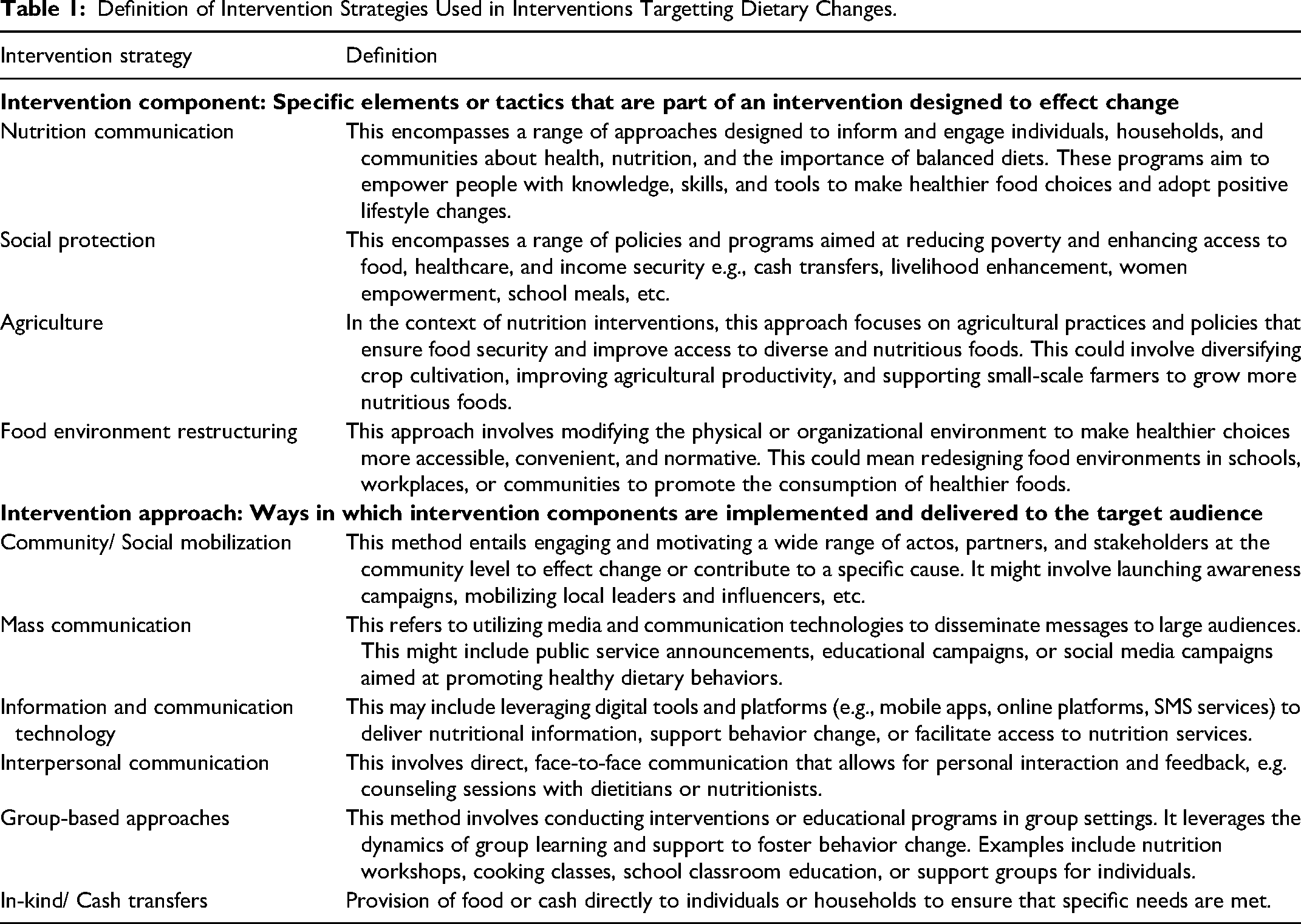
When using the term ‘intervention strategy,’ we refer to the combination of an intervention component and the intervention approach. 16 The ‘intervention component’ includes the specific element(s) designed to drive change (here, increased F&V intake). The ‘intervention approach’ involves the method(s) used to deliver the intervention component. Intervention components identified in this scoping review were grouped into 4 categories: nutrition/health communication, social protection, agriculture, and food environment restructuring. The intervention approaches were classified as interpersonal communication (IPC), group-based, mass communication, information and communication technology (ICT), community or social mobilization, and cash transfers, in-kind transfers, or other financial incentives. Intervention components and approaches are defined with examples in Table 1. Interventions utilizing more than 1 component and/or approach were classified as multi-component and multi-approach, respectively, and were not double counted under individual categories.
Definition of Intervention Strategies Used in Interventions Targetting Dietary Changes.
Intervention Types
Interventions were also classified based on their design intent and framing as reported in study materials. These were grouped into 3 mutually exclusive categories: 1) F&V-specific interventions, which were designed and implemented with targeted messaging or activities related to fruit and/or vegetables; 2) other dietary interventions, aimed at improving food security, dietary diversity and/or diet quality without specific emphasis on F&V messaging; and 3) lifestyle interventions, which provided general nutrition information and promoted healthy behaviors such as physical activity and smoking cessation. Where interventions could fit multiple categories, classification was based on the primary objective of the study and dominant framing in study materials. F&V-specific interventions were prioritized in cases of overlap.
Impact Assessment
A statistically significant increase in dietary fruit, vegetable and/or combined F&V intake in an intervention arm compared to a valid control arm was recorded as a positive impact. Intervention comparisons were reported as having either a positive impact (yes) or no positive impact (no); null or negative effects (if any) were captured within the no category. If an intervention assessed more than 1 relevant outcome, each was treated separately and counted individually. Studies with multiple intervention arms contributed multiple outcomes, each summarized separately. Therefore, throughout this review, the analysis was based on each intervention comparison, defined as an intervention arm compared to a valid control arm within a study.
Data Summary
Findings were summarized as the number and proportion of intervention comparisons reporting a positive impact on fruit intake, vegetable intake, combined F&V intake or any impact across the 3 indicators. We summarized this data by intervention strategy, population group and by HIC and LMIC (classified according to the World Bank at the time of data extraction). In line with recommendations for scoping reviews 17 and due to the heterogeneity of included studies, no formal statistical tests were conducted for comparison of intervention strategies, intervention types, or by country context.
Reporting
While we extracted data on fruit intake, vegetable intake, combined F&V intake, and any impact across the 3 indicators separately, we primarily give examples of intervention comparisons reporting on combined F&V intake, as this aligns with WHO recommendations that emphasize total daily F&V intake. For intervention strategies with few comparisons or no assessment of combined F&V intake, we report on any positive impact across the 3 indicators.
Results
Characteristics of Intervention Strategies
This scoping review identified 6338 articles, with 226 meeting the inclusion criteria, comprising 223 unique studies, which included a total of 284 intervention comparisons. Of the intervention comparisons, over 60% were conducted in HICs (191/284). Intervention strategies were classified as either standalone or multi-component (Table 2). The most common standalone strategy was nutrition communication (218/284), which encompassed a range of approaches to improve knowledge, attitudes, beliefs, social norms, skills, and behaviors related to F&V, diet, and health. Some of these interventions explicitly applied SBCC theories, while others used more traditional, information-focused education methods. Other standalone strategies included social protection (13/284), food environment restructuring (4/284), and agricultural interventions (3/284). Two-component interventions were the second most common strategy (41/284), frequently combining nutrition communication with social protection (23/284), agricultural interventions (15/284), or food environment restructuring (3/284).
Strategic Approaches to Increase Dietary Intake of Fruit and/or Vegetable.
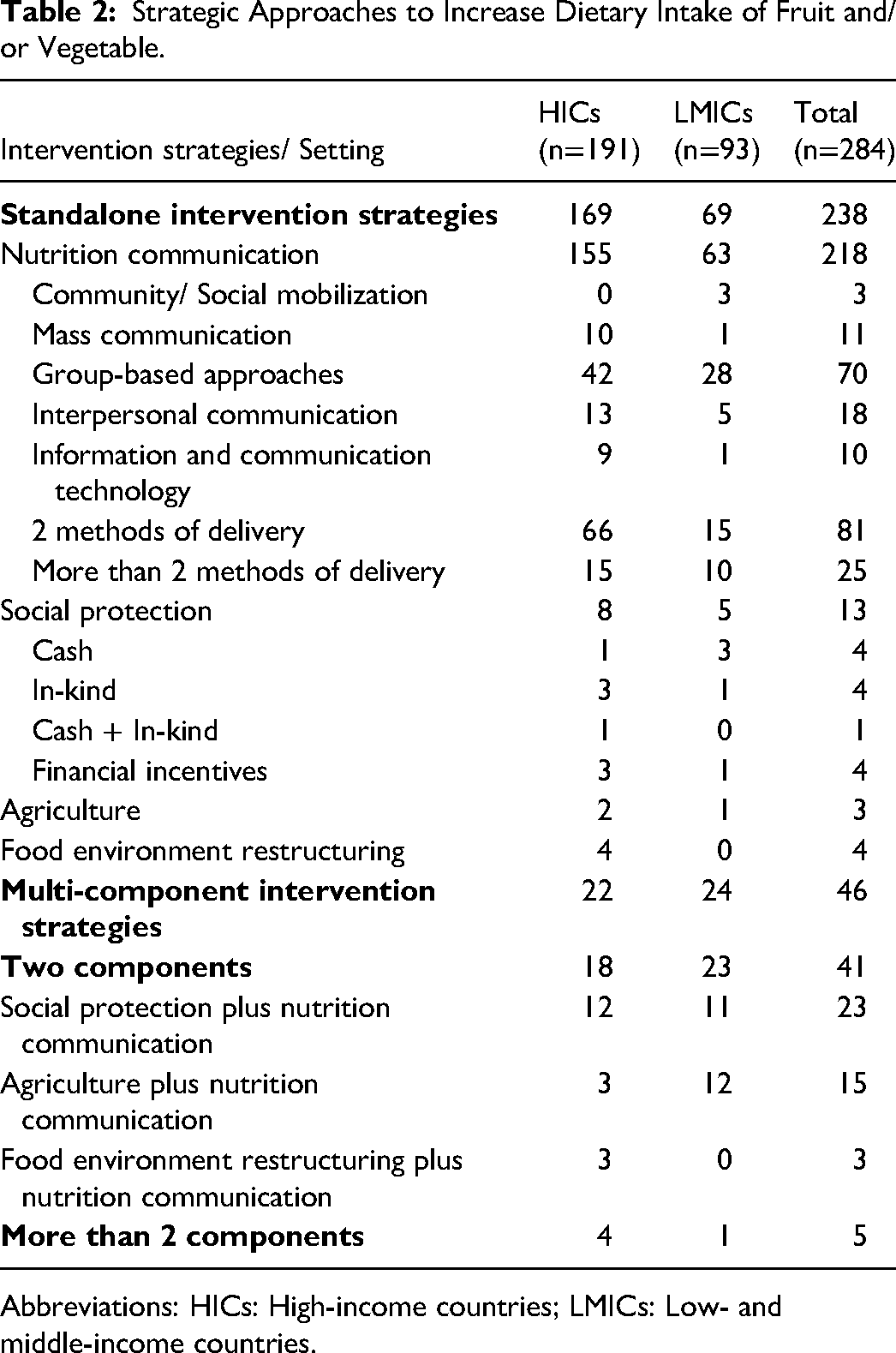
Abbreviations: HICs: High-income countries; LMICs: Low- and middle-income countries.
The intervention strategies varied by type, with most being F&V-specific (115/284) or lifestyle-focused (112/284) and the remaining diet-focused (57/284) (Supplementary Table 2). About two-thirds of the intervention comparisons focusing on F&V specifically found a positive impact on combined F&V intake (39/60), whereas about half of the diet-focused (15/27) and about a third of the lifestyle focused interventions (17/47) reported such an impact (Figure 1; Supplementary Figure 1). Similar results were observed when considering any impact across fruit, vegetable and/or combined F&V. These findings were also consistent when stratified by HICs/LMICs (Supplementary Table 3).
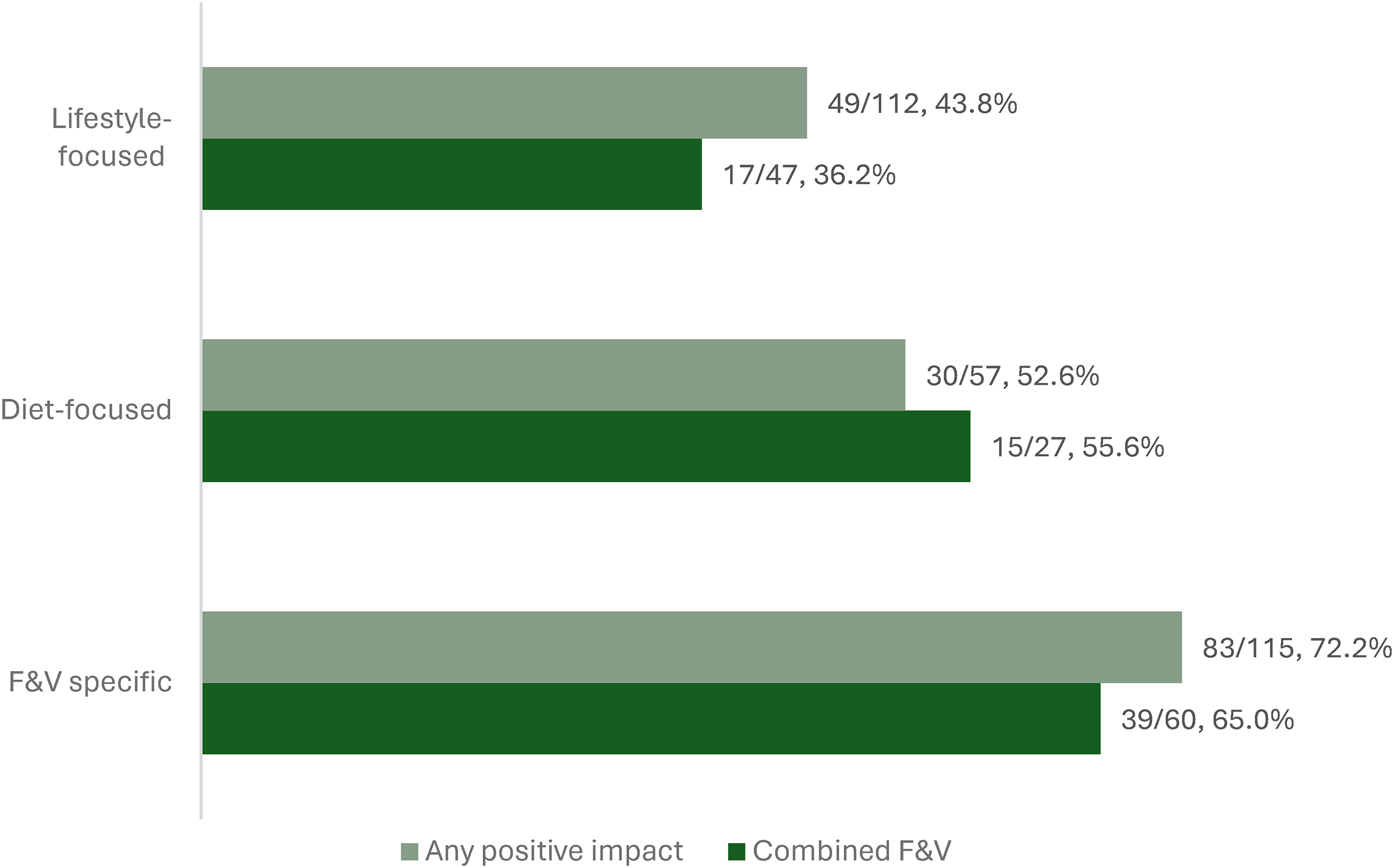
Significant positive impact of intervention types on dietary intake of fruit and/or vegetable.
Impact on intakes of fruit, vegetable and/or combined F&V differed by intervention strategy (Table 3; Supplementary Table 4). Below, we provide further details on the reported impacts in HICs (Supplementary Table 5) and in LMICs (Supplementary Table 6). We also provide an overall summary of the number of intervention comparisons for each intervention strategy (Supplementary Table 7) and their proportional impact (Supplementary Table 8) by population group.
Significant Positive Impact of Intervention Strategies on Dietary Intake of Fruit and/or Vegetable.
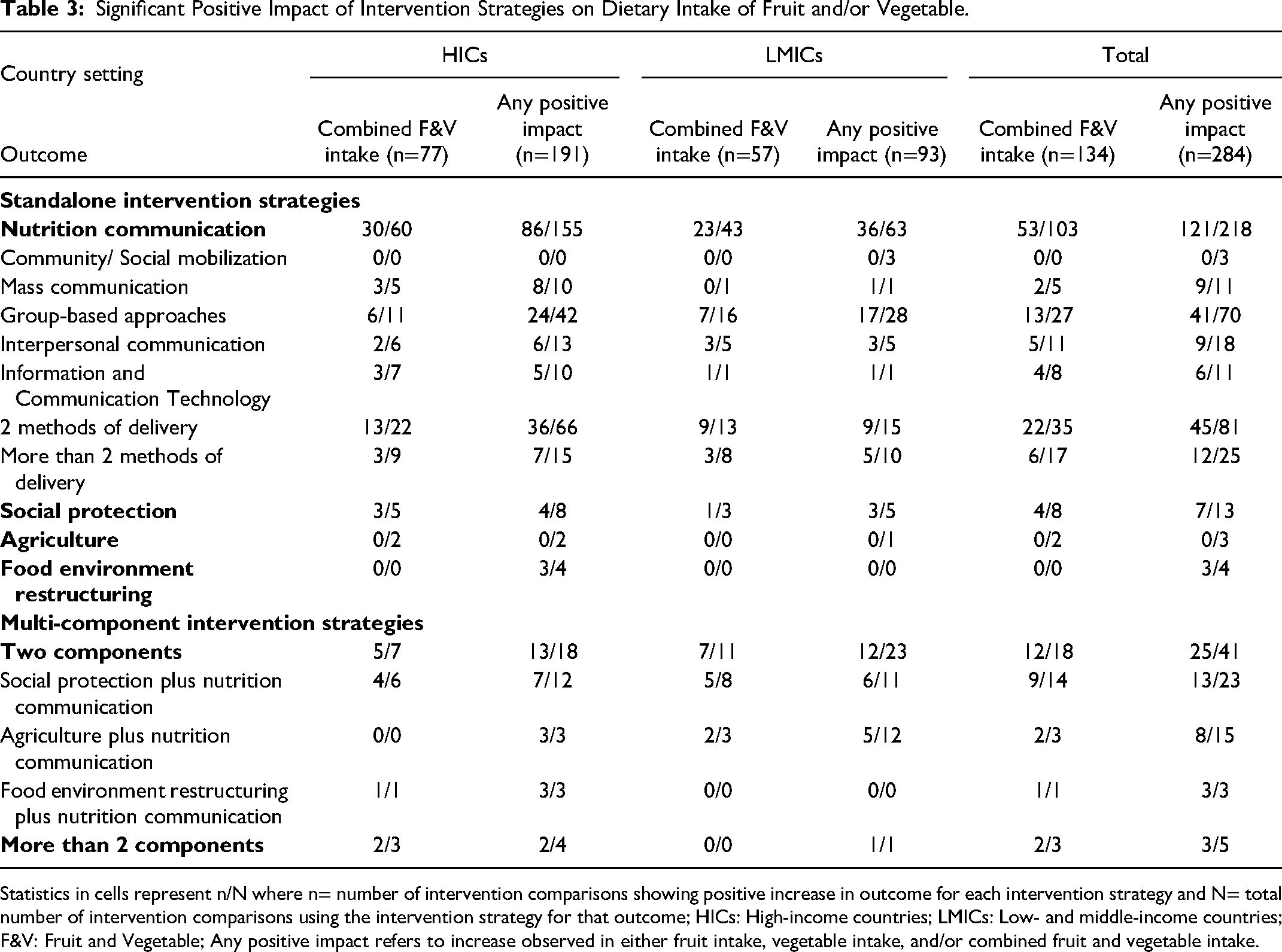
Statistics in cells represent n/N where n= number of intervention comparisons showing positive increase in outcome for each intervention strategy and N= total number of intervention comparisons using the intervention strategy for that outcome; HICs: High-income countries; LMICs: Low- and middle-income countries; F&V: Fruit and Vegetable; Any positive impact refers to increase observed in either fruit intake, vegetable intake, and/or combined fruit and vegetable intake.
Standalone Nutrition Communication Strategies
The majority of standalone nutrition communication interventions were conducted in HICs (155/218), and less than one-third were implemented in LMICs (63/218) (Table 2). In HICs, nutrition communication comparisons primarily targeted adults (71/155), followed by school-aged children (22/155) and children <5 years (18/155) (Supplementary Table 7). Conversely, in LMICs, intervention comparisons were evenly distributed between adults (16/63) and adolescents (15/63), followed closely by children <5 years (13/63) and school-aged children (11/63). Among standalone nutrition communication intervention comparisons, 30/60 in HICs and 23/43 in LMICs reported a positive impact on combined F&V intake, while 86/155 in HICs and 36/63 in LMICs reported any positive impact across either fruit, vegetable and/or combined F&V intake (Table 3).
The majority of standalone nutrition communication interventions utilized a single intervention delivery approach (112/218), with group-based approaches being the most common of these (70/112) (Table 2). Of the 218 intervention comparisons, 81 combined 2 delivery methods, and an additional 25 used more than 2, including 15 in HICs and 10 in LMICs. We next examined nutrition communication strategies by delivery approach to explore their effectiveness.
Of the 13 intervention comparisons using 2-delivery approaches in HICs, ICT combined with IPC was the most frequently tested and effective combination (6/13),54–57 with tailored websites or mobile Apps offering personalized feedback as a key feature. Other effective combinations included group-based education sessions with ICT (2/13)51,58 and group-based education with mass media (2/13).59,60 In LMICs, effective multi-approach delivery methods involved group-based education with IPC (4/9),54,61–63 group-based education with mass media (2/9),52,64 ICT with IPC (2/9),65,66 and group-based education with community mobilization (1/9). 67
Standalone and Multi-Component Social Protection Programs
Social protection interventions as a standalone component were less common (13/38) than as part of multi-component strategies (25/38). Overall, 21/38 intervention comparisons were conducted in HICs and 17/38 in LMICs (Table 2). In both settings, the most common target populations after adults, were caregiver-child dyads, children <5 years, and school-aged children.
Among standalone social protection comparisons 7/13 reported any positive impact across either fruit, vegetable and/or combined F&V intake, with 4/8 in HICs and 3/5 in LMICs (Table 3). When considering only combined F&V intake, 3/5 intervention comparisons in HICs54,71,72 and 1/3 in LMICs 73 were effective. Thirteen of 23 comparisons combining social protection with nutrition communication reported any positive impact across either fruit, vegetable and/ or combined F&V intake. Similarly, 9/14 of social protection comparisons assessing combined F&V intake reported an increase.74–80 This included 4/6 successful intervention comparisons conducted in HICs and 5/8 in LMICs.
Social protection components were delivered through in-kind food transfers (18/38), other financial incentives (11/38), cash-only (8/38) and combined cash and in-kind transfers (1/38) (Supplementary Table 9).
There were 4 multi-component cash-only interventions, all conducted in LMICs. 81 ,83–85 None showed impact on combined F&V intake, although 1 increased vegetable intake among adolescents in Nepal who received cash combined with nutrition communication and seeds for home and school gardens compared to a no-intervention control group. 85
Standalone and Multi-Component Agriculture Interventions
We identified more multi-component (16/19) than standalone (3/19) agricultural intervention comparisons. The majority of these studies were conducted in LMICs, with 6 in Africa86–90 and 5 in Asia,91–95 while 4 were conducted in the US96–99 and 1 in the UK. 100 All studies reported nutrition-sensitive objectives and most were F&V-specific (14/19) (Supplementary Table 3). None of the standalone agricultural interventions increased fruit, vegetable or combined F&V intake.95,98,100
Eight of the 15 agriculture interventions combined with nutrition communication were found to have any positive impact across either fruit, vegetable, and/or combined F&V intake (Table 3; Supplementary Table 4). This 2-component strategy was particularly successful at increasing either fruit intake and/or vegetable intake among school-aged children over a period of 9, 96 12 97 and 20 99 months in studies conducted in HICs. All 3 interventions included hands-on school gardening activities combined with nutrition communication. Conversely, in LMICs, this strategy showed any positive impact across either fruit, vegetable and/or combined F&V intake in 5/12 intervention comparisons.86,87,89,91,92,94 Agricultural interventions typically lasted 8 months90,93 to 2 years,88,90 but the duration of the intervention alone did not determine intervention impact.86–88
Standalone and Multi-Component Food Environment Restructuring
Food environment restructuring interventions included changes to the physical food environment, such as offering healthier options in school cafeterias, modifying food placement or presentation of F&V, and creating local markets. All intervention comparisons were conducted in HICs (Table 3), and most were among school-aged children or adolescents in school settings (Supplementary Table 7), with an equal number being either standalone (4/8)101–104 or part of a multi-component strategy (4/8).101,103,105,106 Three of the 4 standalone interventions101,103,104 and all 4 of the multi-component interventions101,103,105,106 reported any positive impact across either fruit, vegetable and/or combined F&V intake.
Overall Multi-Component Strategies
Multi-component strategies were implemented almost equally in HICs (22/46) and LMICs (24/46) (Table 2). The most frequent strategies included nutrition communication with social protection (23/46), nutrition communication with agriculture (15/46), and nutrition communication with food environment restructuring (3/46). Among the multi-component interventions that reported combined F&V intake, a similar proportion reportedly increased intake in HICs (7/10) and LMICs (7/11) (Table 3).
Discussion
This scoping review aimed to identify effective intervention strategies to increase F&V intake in HICs and LMICs. Our review included 284 intervention comparisons classified into 4 broad intervention strategies – nutrition communication, social protection, agricultural approaches, and food environment restructuring – of which nutrition communication was the most widely implemented. Nutrition communication and multi-component strategies showed potential with more than half increasing fruit and/or vegetable intake. Similarly, social protection and food environment strategies show promise although there were few studies. Considerable variation in study design, delivery methods, and outcome measurement across studies limited our ability to draw firm conclusions on the most effective strategy for increasing F&V intake.
The similar success rates of standalone nutrition communication interventions in HICs and LMICs suggest that the choice of intervention delivery method is a key determinant of impact for F&V intake. Among interventions using a single delivery method, reported impact varied. Mass communication, though widely promoted for population-level outreach, 113 has been associated with modest increases in F&V intake in the broader literature.114,115 Social mobilization approaches were infrequently used in included studies, and these generally require long-term investment and enabling environments to drive meaningful behavioral changes.116,117 Group-based approaches and IPC were designed to support behavior change through tailored feedback, social support, and participatory learning. These approaches were common in school-based interventions that incorporated experiential elements – such as cooking, tasting, field visits, and peer or caregiver engagement – which have been highlighted in prior reviews as promising channels for dietary behavior change.118–121 However, we found inconsistent impact on F&V intake, possibly due to differences in program intensity, duration, reach, fidelity, and implementation quality. ICT-based approaches also produced mixed results, which may have been influenced by factors such as type of digital tool,121,122 technology access, user literacy, and participant engagement,123,124 particularly across income settings.
Building on this diversity of single delivery approaches, some interventions integrated multiple methods, a practice often encouraged by communication theory which suggests that reinforcing messages through multiple, context-relevant channels may enhance their effectiveness by improving reach, salience, and retention.125,126 While nearly half of nutrition communication interventions in this review used more than 1 delivery method, outcomes remained inconsistent overall and across HICs and LMICs. This evidence on both single-delivery and multi-delivery approaches provides an indication that the delivery approach alone is not sufficient in nutrition communication interventions for F&V intake – design, content, and context also matter. However, due to the diversity in study design, population group, communication strategy, study duration, and outcome measured we were unable to identify which communication strategy would work best in which setting.
While cash transfers enhance purchasing power and could improve F&V affordability, evidence from our review and previous meta-analyses suggests inconsistent results on diet behaviors,127–129 with some regional variations. 130 These differences may reflect variation in program design, coverage, and/or implementation, in addition to setting. In contrast, direct provision strategies such as school-based or community-based F&V distributions consistently increase intake of fruit and/or vegetables, particularly when produce is freely available rather than subsidized. 131 Such interventions, however, are resource-intensive, face sustainability challenges, and may be culturally inappropriate in certain contexts.
Several multi-component interventions that combined social protection with other strategies reported improvements in F&V intake, though findings remained inconsistent. Prior impact evaluations have noted that the effectiveness of social protection programs depends on factors such as transfer modality, duration, targeting, and the broader food environment including food availability, market access, and cultural acceptability. 132 For example, financial incentives, such as discounts and vouchers, increase F&V purchases;115,133 but their effectiveness remains limited unless paired with other interventions, particularly nutrition communication and/or food environment restructuring.133,134
There were more multi-component agriculture interventions than standalone ones, but the impact on F&V intake remained inconsistent. Given the small number of studies and variation in context, geography, seasonality, design and implementation, firm conclusions cannot be made. Instead, these findings underscore the need for understanding the pathways through which agricultural interventions are expected to influence diets, and for targeted measurement of dietary outcomes when the intervention is nutrition-sensitive.
Among the few studies that were included in the present review, the exclusive implementation of these interventions in HICs highlights a research gap in addressing food environment barriers in LMICs. This disparity may reflect differences in public health priorities, infrastructure, or policy focus, but it does not imply a lack of relevance or feasibility in LMICs. 144 Given the ongoing nutrition transition in many LMICs, where shifts in food environments contribute to rising diet-related diseases, 145 scalable and cost-effective food environment interventions warrant greater attention.
Conclusion
There was inconsistent evidence on the impact of different intervention strategies on fruit and/or vegetable intake. Multicomponent strategies and nutrition communication indicated potential to increase intake with more than half of the intervention comparisons being successful. Social protection and food environment restructuring approaches also showed promise, although these were less frequently evaluated. Generating more evidence, particularly in LMICs, and aligning strategies across all relevant sectors will be essential to designing coherent, systems-based responses that lead to lasting improvements in F&V intake and healthier diets for all.
Supplemental Material
sj-docx-1-fnb-10.1177_03795721251350208 - Supplemental material for Impact of Intervention Strategies on Fruit and Vegetable Intake in Low-, Middle- and High-Income Countries: A Scoping Review
Supplemental material, sj-docx-1-fnb-10.1177_03795721251350208 for Impact of Intervention Strategies on Fruit and Vegetable Intake in Low-, Middle- and High-Income Countries: A Scoping Review by Nadia Koyratty, PhD, Fusta Azupogo, PhD, Taryn J. Smith, PhD, Guy-Marino Hinnouho, PhD, Manisha Tharaney, PhD, Lilia Bliznashka, PhD, Deanna K. Olney, PhD, and Sonja Y. Hess, PhD in Food and Nutrition Bulletin
Supplemental Material
sj-xlsx-2-fnb-10.1177_03795721251350208 - Supplemental material for Impact of Intervention Strategies on Fruit and Vegetable Intake in Low-, Middle- and High-Income Countries: A Scoping Review
Supplemental material, sj-xlsx-2-fnb-10.1177_03795721251350208 for Impact of Intervention Strategies on Fruit and Vegetable Intake in Low-, Middle- and High-Income Countries: A Scoping Review by Nadia Koyratty, PhD, Fusta Azupogo, PhD, Taryn J. Smith, PhD, Guy-Marino Hinnouho, PhD, Manisha Tharaney, PhD, Lilia Bliznashka, PhD, Deanna K. Olney, PhD, and Sonja Y. Hess, PhD in Food and Nutrition Bulletin
Footnotes
Acknowledgements
We appreciate the valuable feedback on the draft manuscript provided by Kenda Cunningham (IFPRI-UK).
Author Contributions
Conceived and designed the study: TJS, NK, FA, LB, GMH, DKO, and SYH; Literature search: TJS and FA; Screening and data extraction: FA, TJS, NK, GMH, SYH, and LB; Writing the first draft of the manuscript: NK, FA, TJS, GMH and SYH; Contributed to the editing of the manuscript: MT, LB, and DKO. All authors read and approved the final manuscript.
Declaration of Conflicting Interests
The authors declared no potential conflicts of interest with respect to the research, authorship, and/or publication of this article.
Funding
The FRESH Initiative is being implemented by CGIAR researchers from IFPRI, CIMMYT, The Alliance of Bioversity International and CIAT, IWMI, and CIP in close partnership with the World Vegetable Center, Applied Horticultural Research, the University of Sydney, the Institute of Development Studies, Wageningen University & Research, the University of California, Davis, Sokoine University of Agriculture, Wayamba University of Sri Lanka, and the Philippines Department of Science and Technology-Food and Nutrition Research Institute, along with other partners.

ORCID iDs
Supplemental Material
Supplemental material for this article is available online.
References
Supplementary Material
Please find the following supplemental material available below.
For Open Access articles published under a Creative Commons License, all supplemental material carries the same license as the article it is associated with.
For non-Open Access articles published, all supplemental material carries a non-exclusive license, and permission requests for re-use of supplemental material or any part of supplemental material shall be sent directly to the copyright owner as specified in the copyright notice associated with the article.
