




Abstract
Background:
Biofortified staples have been promoted widely in sub-Saharan Africa to combat micronutrient deficiencies. Contemporary projects are increasingly using elementary schools to target households with these foods.
Objective:
This study assessed the effects of integrated nutrition education approaches, targeting preschoolers and their caregivers, on retention of orange-fleshed sweet potato (OFSP) on farms in the second season after lapse of free vine dissemination initiatives.
Methods:
Rural farming households, with preschoolers and no prior engagement with OFSP, were targeted. A multistage sample of 431 preschooler–caregiver pairs was recruited for a cluster-randomized controlled trial. After issuing routine OFSP promotion activities, 15 village-level clusters of the pairs were randomized into 1 control group (3 villages) and 3 treatment arms (4 villages each) for the interventions. Baseline and follow-up household-level survey data were collected from the caregivers. The interventions included: (1) OFSP-branded exercise books, posters, and a poem to preschoolers only; (2) OFSP-oriented mobile phone mediated text messages to caregivers only; and (3) both 1 and 2 provided to individual households concurrently. Interventions 1 and 2 were single-channeled, while 3 was multichanneled. We estimated the intention-to-treat (ITT) and treatment-on-the-treated (TOT) effects using a binary logit model and a special regressor method, respectively.
Results:
Only the multi-channeled nutrition education approach had significant effects (ITT = 0.167, P = .001; TOT = .243, P = .007) on the caregivers’ likelihood to retain OFSP on their farms.
Conclusions:
The finding implies that multi-channeled agriculture nutrition education interventions through Early Childhood Development institutions can be effective in ensuring sustainable adoption of OFSP.
Introduction
Despite the concerted efforts to reduce hunger and undernutrition, in recent years, the undernourished global population grew from 785.4 million in 2015 to 821.6 million in 2018. The highest regional prevalence of undernourishment is reported in sub-Saharan Africa (SSA; more so Eastern Africa) 1 with the latest statistics at 22.8% (30.8%). 2 As part of the initiatives to reverse this trend, identification of testable, reliable, and evidence-based accelerators for alleviating malnutrition have received considerable interest in the literature. 3,4
Vitamin A deficiency (VAD) is one of the leading components of malnutrition. Recent efforts to combat VAD have focused on the biofortification of food staples with pro-vitamin A carotenoids as a food-based approach together with industrial fortification and supplementation. 5 -8 Orange-fleshed sweet potato (OFSP) is a successful pro-vitamin A rich biofortified food staple. 7 Among other advantages, OFSP matures faster than other sweet potato varieties, is high yielding, is widely accepted by young children, and can be easily integrated into kitchen gardens. Regular consumption of only 125 g of its steamed root can supply the recommended daily vitamin A requirements of young children. Unlike industrial fortification and supplementation approaches, biofortification is more sustainable because its potential scale-up is not exclusively dependent on financial injections by the government 8 or external development partners in the value chain.
Given the importance of OFSP in the fight against VAD, several projects in SSA have focused on promoting its adoption and consumption through schools, especially in Uganda, Nigeria, and Ethiopia. 9 -11 In most instances, the promotion of OFSP has involved the development of school gardens and the transfer of OFSP vines to households. It has also involved the integration of OFSP in the school feeding programs. However, there is weak evidence of the sustainability of these delivery approaches regarding the retention of the planting materials at household levels. Retention is used in this study to refer to the capability of the farmer to conserve the vines from the previous production and replant in the subsequent season. 12 -14
In this article, we employed a field experiment to assess the immediate effects of integrated nutrition education targeting Early Childhood Development (ECD) centers—as OFSP dissemination centers—on the retention of OFSP among caregivers of preschool children. The specific objectives were: (1) to assess the effects of single-channel nutrition education approaches—through preschoolers and their caregivers’ mobile phones—compared to a case of no complementary nutrition education on the replanting of OFSP among the caregivers after the initial distribution of free planting materials (vines) and (2) to assess the effects of multichannel nutrition education approaches—through preschoolers and their caregivers’ mobile phones—compared to a case of no nutrition education on the replanting of OFSP among the caregivers after the initial distribution of free vines. In the context of this study, a caregiver refers to the person who often prepares food and feeds the preschool child in the household.
Methods
Participants and Recruitment
The study was conducted in Homa Bay County, one of the leading producers of sweet potato in Kenya. Also, the county was of special interest as it hosted a large project that aimed at scaling up the production and consumption of OFSP to reduce the high incidence of malnutrition. 15 More than half the population of under 2-year old children in the county are chronically malnourished. 16
Early Childhood Development and Education centers in Kenya are managed by the county governments. They play an important role in providing learning and holistic development of children between 3 and 5 years. Homa Bay County has 1183 such centers with an enrollment rate of 76%. 17 Also, more than half the households in the county grow sweet potato for both subsistence and commercial purposes, with women playing a major role in the production activities. 16,18 These conditions make ECD centers a good avenue for reaching out to the households with under 5-year-olds with nutrition initiatives. They also make OFSP an essential vehicle for improving vitamin A intake and status among the target, thus reducing the prevalence of VAD in the county.
The sample size was calculated following McConnell and Vera-Hernandez’s 19 formula that is applicable in cases of cluster-level randomized studies:
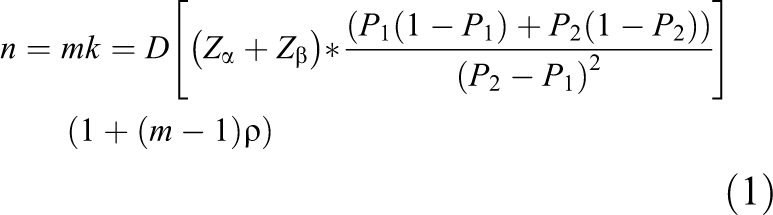
The calculations assumed a 20% increase (due to the planned short window between harvesting season and follow-up survey) in the proportion of households who conserve and replant OFSP in the subsequent season after the free vines dissemination season, an expected average of 26 respondents per cluster (m), and a low intracluster correlation (ρ) of 0.01. Further, using a standard parameter of 95% level of confidence (1-α) and 90% statistical power (β), Equation 1 gives an average of 98 respondents per group. In addition, after adjusting to 4 study groups and a possible 10% nonresponse rate as in recent studies in the area, 20 the final sample size was 431.
A purposive sample of 15 villages where OFSP varieties had not previously been introduced was identified for the study in Ndhiwa (7 villages) and Rangwe (8 villages) subcounties. Essentially, these villages had not received OFSP promotion activities such as cooking demos, issuance of free vines, nutrition education through health talks at ante/postnatal clinic sessions, or the mother-to-mother clubs. In each of the sampled villages, a government-run ECD center was selected for the study. A list of 723 households with preschoolers enrolled at the ECD centers, and who participated in the preliminary OFSP promotion activities (cooking demonstration sessions and dissemination of free vines), formed the sampling frame. From this, a random sample of 431 preschooler–caregiver pairs (158 from Ndhiwa and 273 from Rangwe) was drawn for the study using probability proportionate to size sampling technique to ensure proportionate representation of the villages in the sample. 21 The Institutional Review Board of the University of Nairobi approved this study. Additionally, during the survey, the field team sought the verbal consent of the caregivers for their participation in the study.
Study Design
The study used a randomized controlled trial design adopted from Duflo et al. 22 The ECD platform was identified as a better avenue (relative to having health talks at ante/postnatal clinics, group health talks through mother-to-mother clubs, and other avenues) to reach both the preschool children and their caregivers. The randomization was done after the baseline survey in August 2018. It placed 4 different villages in each of the 3 treatment arms and 3 villages in the control group. All the recruited preschooler–caregiver pairs in each village (cluster) were assigned to one of the 4 study groups (1 control and 3 intervention groups) as per the randomization and subjected to the same intervention/treatment (or no intervention). Ultimately, we intended to reach the caregivers of preschoolers (3- to 7-year-olds) as the end users of the nutrition education information in circulation via 2 channels: their preschool children and their mobile phones. Baseline and follow-up household-level surveys were conducted with the caregivers, before and after the 30-day long intervention period, respectively.
Interventions
Preschooler treatment
Literature posits that interventions involving children work better if designed with a multicomponent approach. 3,23 Thus, the preschooler treatment (PT) intervention involved the issuance of OFSP-branded exercise books and posters to the children. Each preschooler received an exercise book while their class teacher received a set of 10 class posters, which they displayed on the classroom walls on every school day. The objective was to make the preschoolers, as change agents, become aware and knowledgeable about OFSP, form a positive attitude toward it, and eventually transfer the message to their caregivers. The design of the books included brief text messages—written in the local language, Dholuo—and a poem in English about the benefits of OFSP augmented with pictorial illustrations of the messages on the front and back pages of the exercise/writing books (see Supplementary Material A—a sample book cover). The messages portrayed OFSP as “a food that makes one strong, healthy, and intelligent” to conveniently illustrate healthy food to young children. 24 Also, they emphasized positive appeal to be more effective in reaching young children. 25
Posters contained the same poem, key messages, and pictorials as in the front covers of the books. They were used by the preschool teachers to display the same nutrition education information to the classes and help the children to read and understand the messages as well as the poem (see Supplementary Material B). There were 5 sets of key messages, thus 5 sets of books and posters. The preschoolers were regularly reminded by their class teachers to read the messages on their exercise books and keep reciting the poems at home.
Caregiver Treatment
The second intervention targeted the caregivers directly. It involved the dissemination of the OFSP and nutrition-oriented text messages through their mobile phones. Mobile phones have been embraced in many nutrition and health behavior change studies on the premise that they are increasingly widely available in low- and middle-income countries and thus offer an improved opportunity for behavior change communication delivery. 26 In this study, the elements of length, frequency, complexity, and potential for personalization of the messages were essential in the design of the nutrition education intervention for effectiveness. 26 Seven previously tested and refined messages were sent to the caregivers in succession each day and repeated over the 30 days of intervention. In line with the ethical regulations that guide the use of Information and Communications Technologies (ICTs) in Kenya, 27 the messages were reviewed and approved by the Communication Authority of Kenya before delivery to the targeted persons. They were delivered in the local language, Dholuo, to ensure uniformity of the nutrition education information passed.
Integrated/combined treatment
This was the multichannel approach and involved providing both exercise books and posters with poems to preschool children and sending mobile phone-mediated text messages to the caregivers concurrently.
Control group
The control group received only the cooking demonstrations and free vines as the other groups.
Procedure
The study began by conducting routine OFSP promotion activities—issuance of OFSP cooking demonstrations followed by dissemination of free vines in late April 2018 to the caregivers of all the preschool children registered in the marked ECD centers. Each participating caregiver received 200 cuttings (30 cm each) of clean OFSP vines to plant, most preferably in their kitchen gardens.
Three and a half months later, in August 2018, a household-level survey was administered to the sampled caregivers at their homes. A total of 390 caregivers completed the interviews against a target of 431, with 9.5% lost to denials, refusals, and absenteeism cases. The baseline survey collected data on sociodemographics of the households; their engagement with OFSP if any; institutional enablers or barriers to OFSP production and consumption; and their knowledge, attitude, and practices around the same. The nutrition education interventions, described in the previous section, then followed and lasted for 30 days in a harvesting period.
Immediately after the interventions and during a new planting season, in October 2018, a follow-up household-level survey was conducted with the same caregivers covered in the first survey. A total of 360 respondents completed the second round survey resulting in a 7.7% attrition rate. Both rounds of survey data were collected and managed using the Open Data Kit system.
Data Analysis
First, we tested for differences in sample means between study groups in the sociodemographic variables at baseline and the outcome variable at follow-up. The tests varied with the distribution and measurement method of the variables. These involved one-way analysis of variance, Kruskal-Wallis, and Chi-square tests for significant differences in sample means between the 4 study groups. Further, we used the Bonferroni correction formula to conduct multiple pairwise comparisons for differences in the variable means/proportions between the groups. It is also important to note that the caregivers’ knowledge, attitude, and practices toward OFSP were measured using different sets of questions and reduced using factor analysis and manual computations to a ratio scale (0-1). A value close to 0 or 1 implied a very bad or good score of the given psychosocial construct.
The dependent variable, whether or not the caregiver replants OFSP, was measured once—in the follow-up survey. Thus, the data were analyzed as cross-sectional data. The “treatment assignment variables” (PT, integrated treatment [IT], and caregiver treatment [CT]) were used to estimate the intention-to-treat (ITT) effects in an adjusted binary logit model in Equation 2.
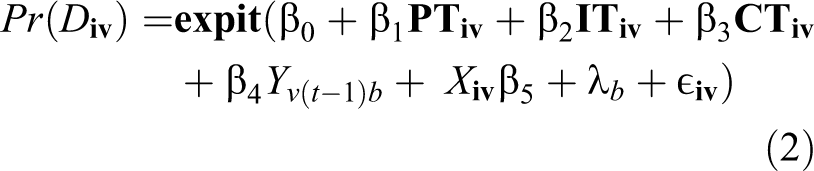
Where D is the dependent variable (retention of OFSP). In essence, the probability of a caregiver deciding to replant the OFSP is a function of the interventions (PT, IT, and CT with the control group as the reference group) and the control variables as drawn from OFSP adoption literature. 15,28,29 The controls include the size of OFSP plot in the first season, Yv(t-1)b ; a vector of child, caregiver, household, and village level characteristics, X iv; and subcounty fixed effects, λ b . Notations β1 to β5 represent the parameter estimates of the regressors, while, εiv refers to the random error term adjusted at the village cluster levels. In addition, we estimated the average marginal effects of assignment to a given treatment group compared to a control group.
The ‘treatment reception variables’ (received preschooler-oriented treatment [RPT], received integrated treatment [RIT], and received caregiver-oriented treatment [RCT]) were measured as dummies—whether the caregiver received the assigned treatment or not as assessed in the follow-up survey. They were also noted as endogenous (instrumented by the respective treatment assignment variables—PT, IT, and CT) in the estimation of the treatment-on-the-treated (TOT) effects. Equation 1 was adjusted and estimated using the Lewbel 30 special regressor method (SRM), with restrictions to only those who planted OFSP in the second season, to elicit the TOT effects. The SRM, unlike IVProbit and Tobit models, allows for discrete endogenous explanatory variables and provides a single estimation method irrespective of the nature of the endogenous regressors. 31 -34 More variables such as preschooler’s age, distance to community health volunteer (CHV), and marital status were included as proxy instruments of treatment reception variables and improved the goodness of fit of the model. All analyses were done in Stata version 14, where the SRM model was executed with the guidance of Baum 35 “sspecialreg module.” Moreover, the results were deemed significant for P values < .05.
The following consort diagram in Figure 1 provides a visual expression of the study activities and timeline.
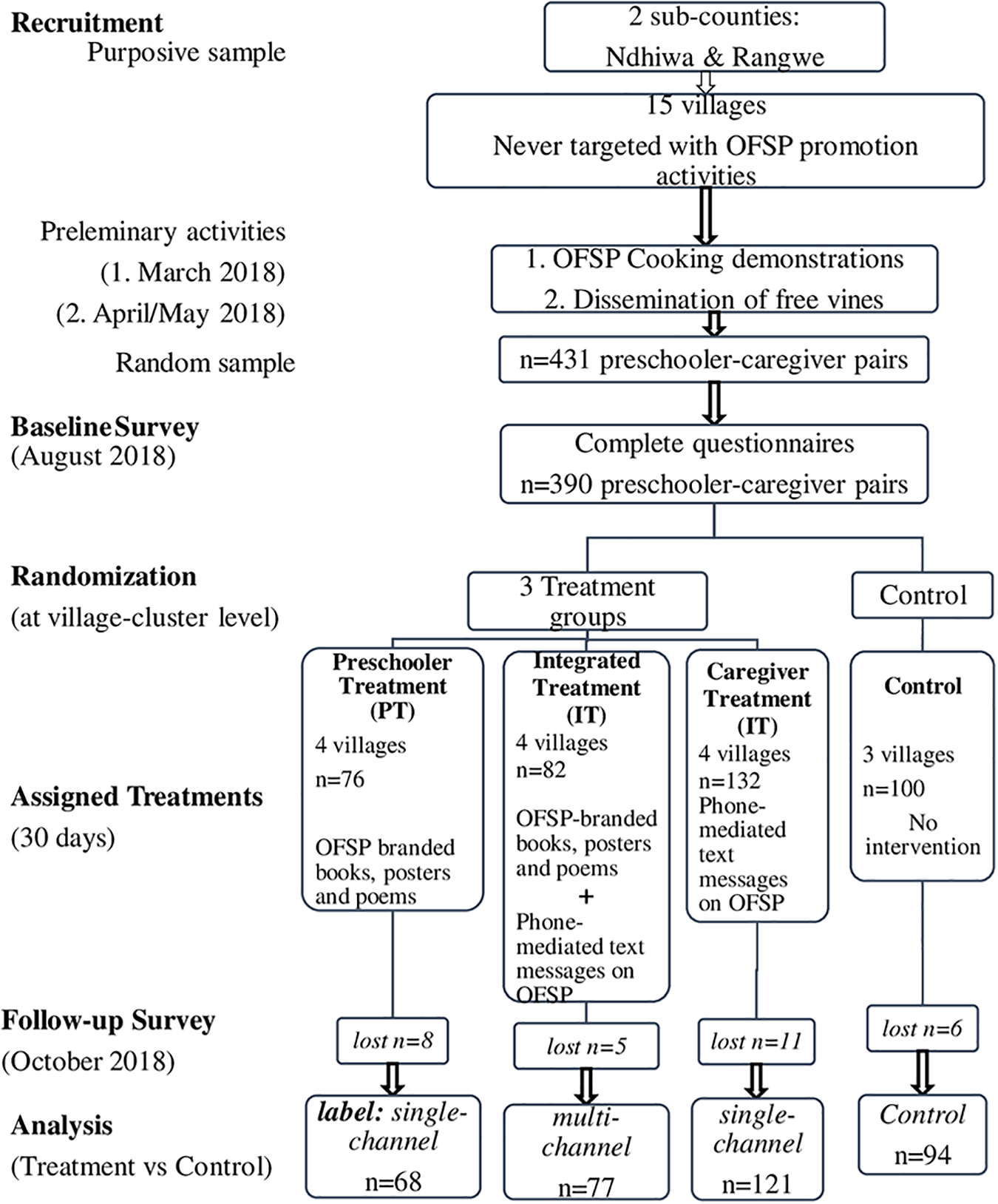
A consort diagram for the study.
Results
Sample Characteristics
Table 1 presents the descriptions and summary statistics of the variables by the study groups. Generally, there were no significant statistical differences in most of the socioeconomic variables except for the caregiver’s age, monthly household expenditure, and accessibility of a CHV. The statistically different variables between the study groups are, thus, variables of interest as possible regressors in the analyses.
The average age of the preschoolers who participated in the study was about 6 years in all the study groups. This confirms the finding by Uwezo 36 that 32.9% of children in lower education levels in Western Kenya are in lower grades than is expected of their ages. Further, a majority (89%) of the study caregivers were females, probably because women tend to be more responsible for food preparation and feeding of the household. 18,37 Overall, a majority (76%) of the sample had under 5-year-old children in their households. Also, at least three-quarters of caregivers in the sample were women of reproductive age (15-45 years).
Description and Distribution of Study Variables Across Study Groups.
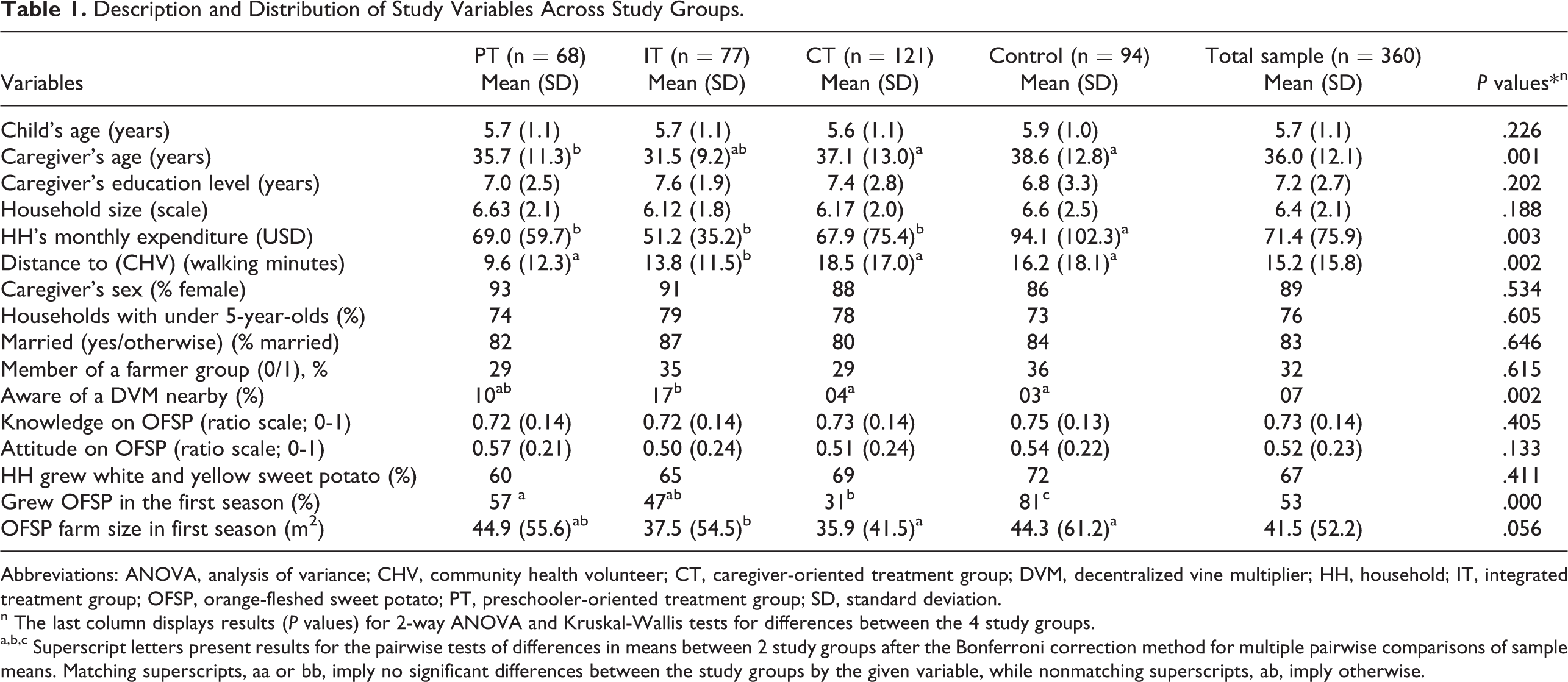
Abbreviations: ANOVA, analysis of variance; CHV, community health volunteer; CT, caregiver-oriented treatment group; DVM, decentralized vine multiplier; HH, household; IT, integrated treatment group; OFSP, orange-fleshed sweet potato; PT, preschooler-oriented treatment group; SD, standard deviation.
n The last column displays results (P values) for 2-way ANOVA and Kruskal-Wallis tests for differences between the 4 study groups.
a,b,c Superscript letters present results for the pairwise tests of differences in means between 2 study groups after the Bonferroni correction method for multiple pairwise comparisons of sample means. Matching superscripts, aa or bb, imply no significant differences between the study groups by the given variable, while nonmatching superscripts, ab, imply otherwise.
Relative to other study groups, the control group had the highest proportion (81%) of those who planted the crop in the first season, perhaps due to the geographical position of one of the villages which has more favorable agroecological conditions for a longer period of the year (see Figure 2). However, fewer farmers retained the crop in the control group relative to those in the treatment groups. About 80% of the caregivers in the IT group who planted the OFSP in the first season retained it in the second season, while only half of those in the CT group who planted in the first season did so. Further, the average sizes of the OFSP plots also differed significantly across the study groups in both seasons.
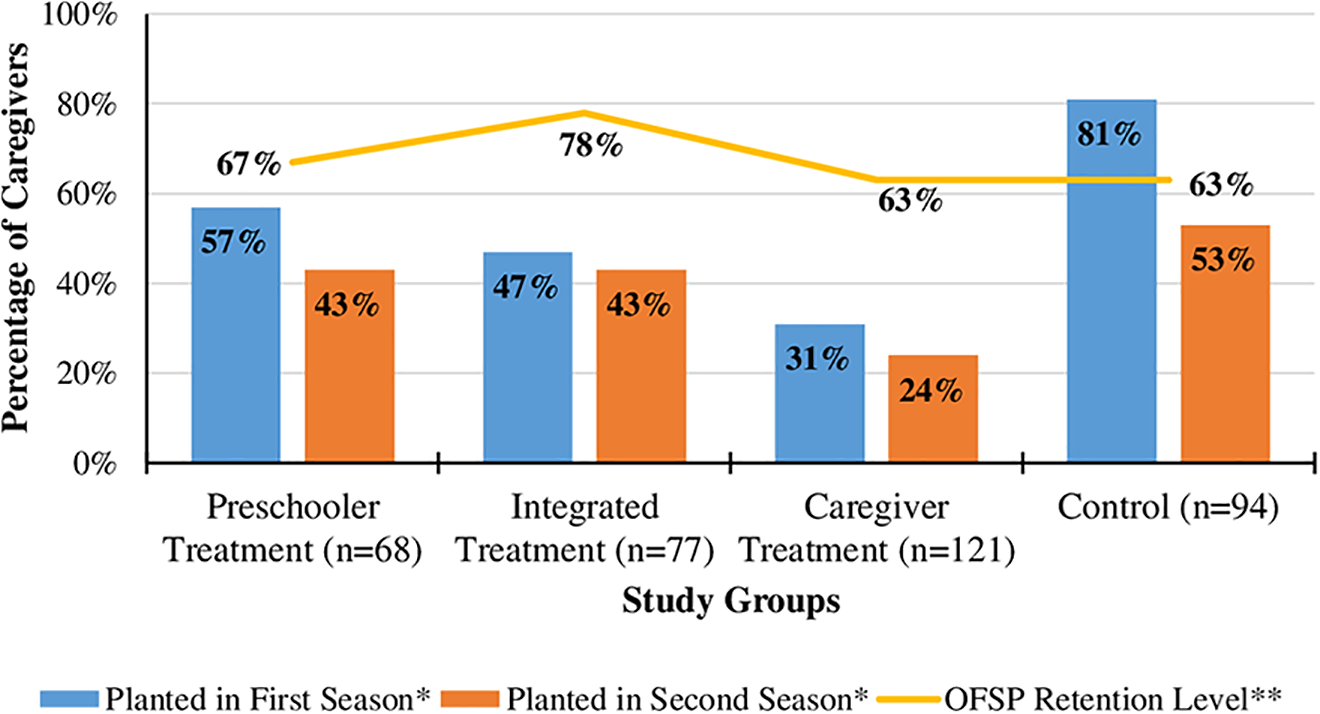
Caregiver engagement with OFSP across the study group. *n = total sample size of the study group as in the parentheses; **n = total number of those who planted OFSP in the first season in the group. OFSP indicates orange-fleshed sweet potato.
Participation in the Interventions
Figure 3 presents data on caregiver participation in the different intervention groups. The results show that 7% of caregivers in the control group (n = 94) received the messages designed for the intervention groups and are, therefore, spillovers. Overall, results show that the assignment of a caregiver to a given intervention significantly increased their exposure to the assigned interventions in comparison to other groups (Pearson χ2(9) = 356.26, P < .001).
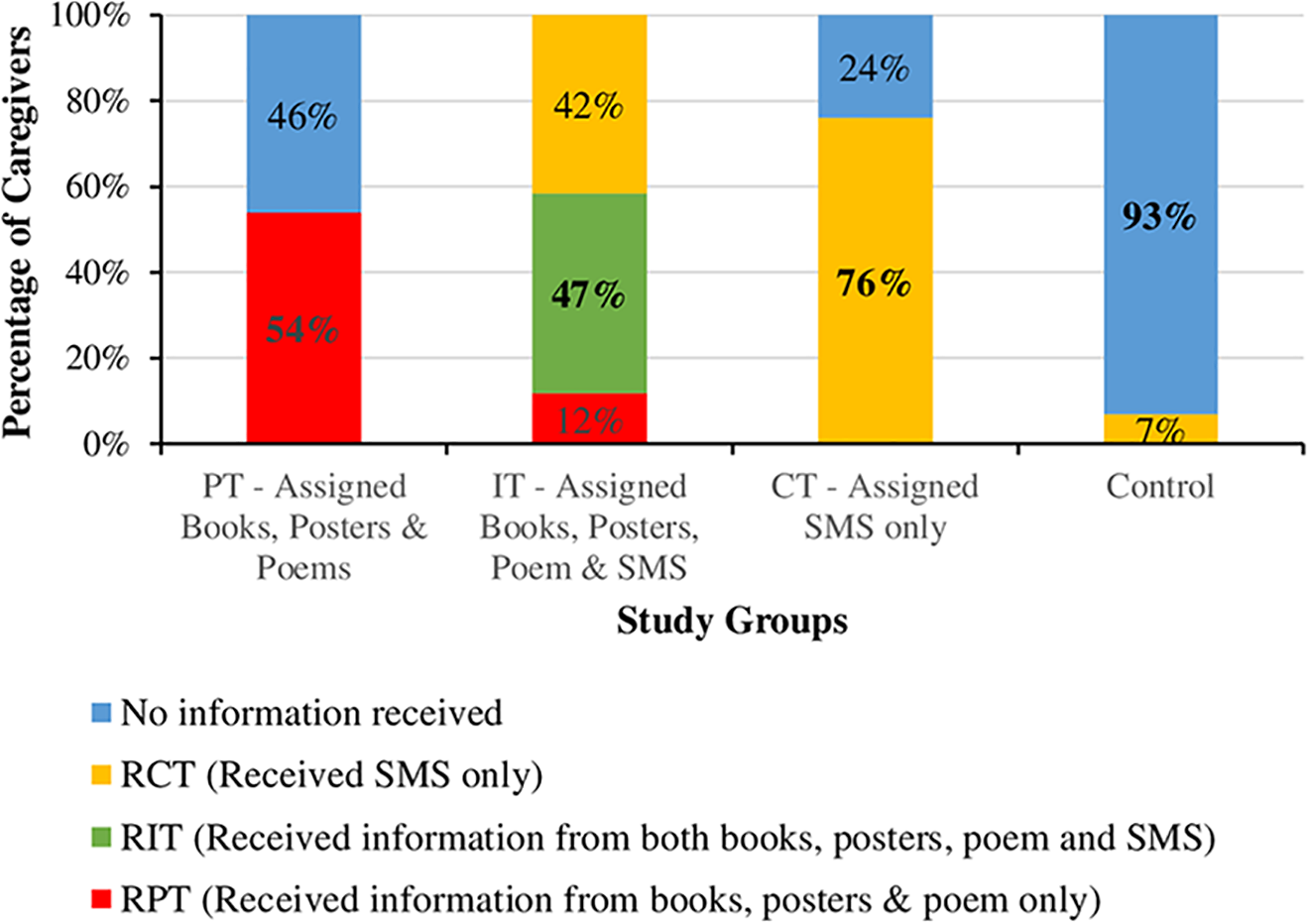
Assignment and participation of the caregivers with the interventions.
Also, 76% of the caregivers could remember the nutrition information delivered via the mobile phones (CT, n = 121), while only 54% remembered messages delivered through the preschoolers and their learning materials (PT, n = 68). However, all the caregivers in the IT group (n = 77) indicated that they received nutrition education information from at least 1 intervention channel. Nonetheless, although every member of the CT and IT groups owned a mobile phone, 12% and 24%, respectively, indicated that they did not get the mobile phone-mediated nutrition education information. This could be because they did not see the text message or know how to read them. 38
Treatment Effects
Intention-to-treat effects
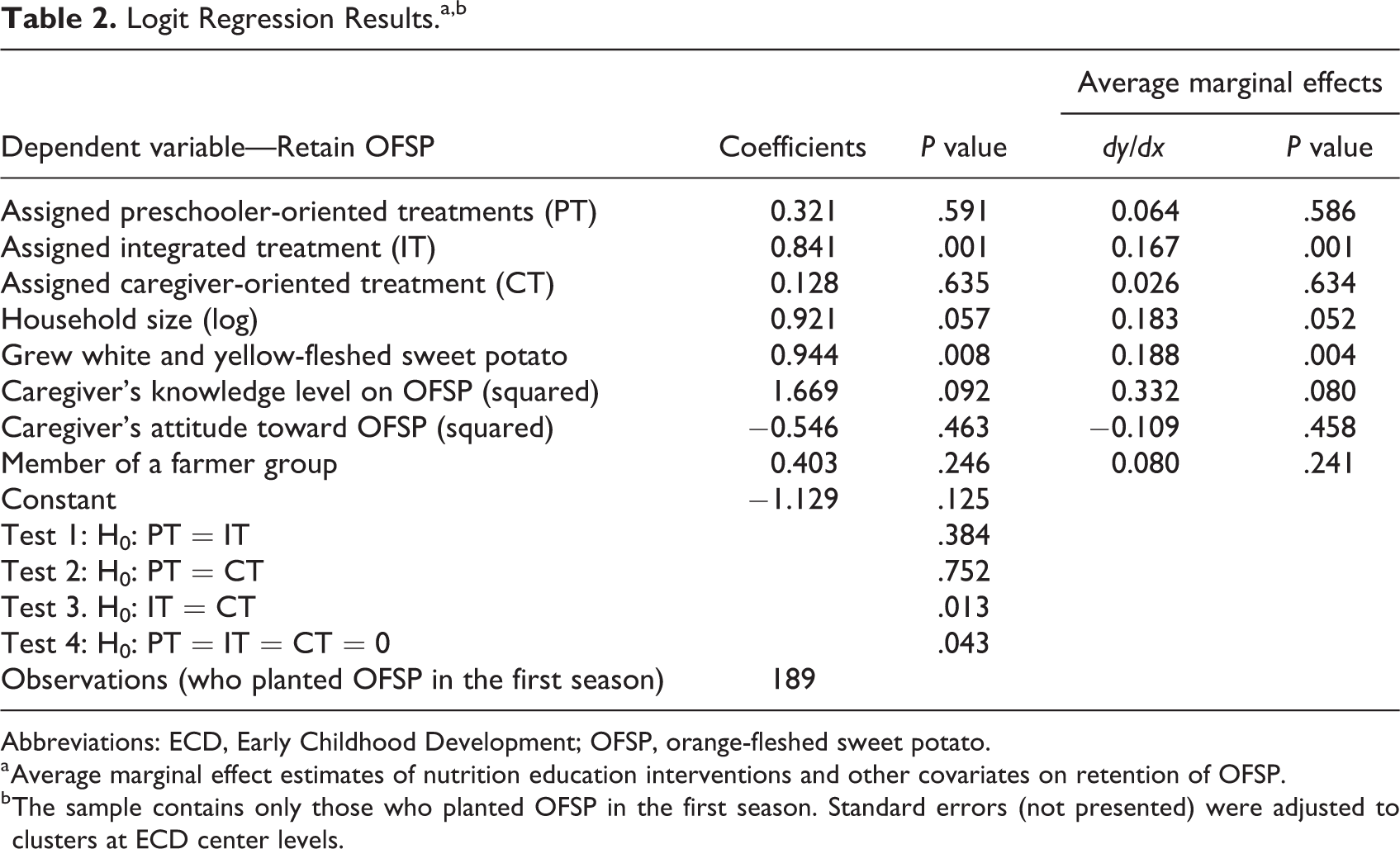
The estimation results of the binary logit regression of the treatment assignment variables and the control covariates on OFSP retention are provided in Table 2. The results indicate that positive and significant effects only exist for assignment into the integrated treatment group (marginal effects = 0.167; P = .001). Conversely, the estimates for single entry point interventions are not significant (PT, P = .59; CT, P = .63).
Logit Regression Results.a,b
Abbreviations: ECD, Early Childhood Development; OFSP, orange-fleshed sweet potato.
a Average marginal effect estimates of nutrition education interventions and other covariates on retention of OFSP.
b The sample contains only those who planted OFSP in the first season. Standard errors (not presented) were adjusted to clusters at ECD center levels.
The positive estimate in the IT approach indicates that caregivers who were targeted with nutrition education information from the books, posters, and poems given to the preschoolers and phone-mediated messages were more likely to replant OFSP in the second season than their counterparts who were not targeted with such combinations. The marginal effects indicate that the assignment of a household to an intervention group where nutrition education information is channeled through the preschoolers’ learning materials and the caregivers’ phone, simultaneously, increases the likelihood of planting OFSP by 16.7%, other factors constant. However, a Wald test for joint restriction for the 3 treatments gave significant statistics (P = .02) indicating that, collectively, the complementary nutrition education interventions have a relatively strong and significant effect on the likelihood of the caregivers to retain OFSP in their farms.
Treatment-on-the-treated effects
The average TOT effects were estimated using the SRM. The endogenous variables were exactly identified. Further, the Durbin Wu-Hausman test for endogeneity, with the null hypothesis that the instruments are exogenous, showed that all the instruments are indeed exogenous (chi-square = −36.12; P = 1.0). Education, income, and child’s age were tested as instrumental variables that determine whether or not a caregiver acknowledges the reception of the assigned treatment. However, the results of Sargan-Hansen test (chi-square = 98.66; P < .001) found no evidence of overidentification. The standard errors were also adjusted to account for possible heteroscedasticity in the clusters.
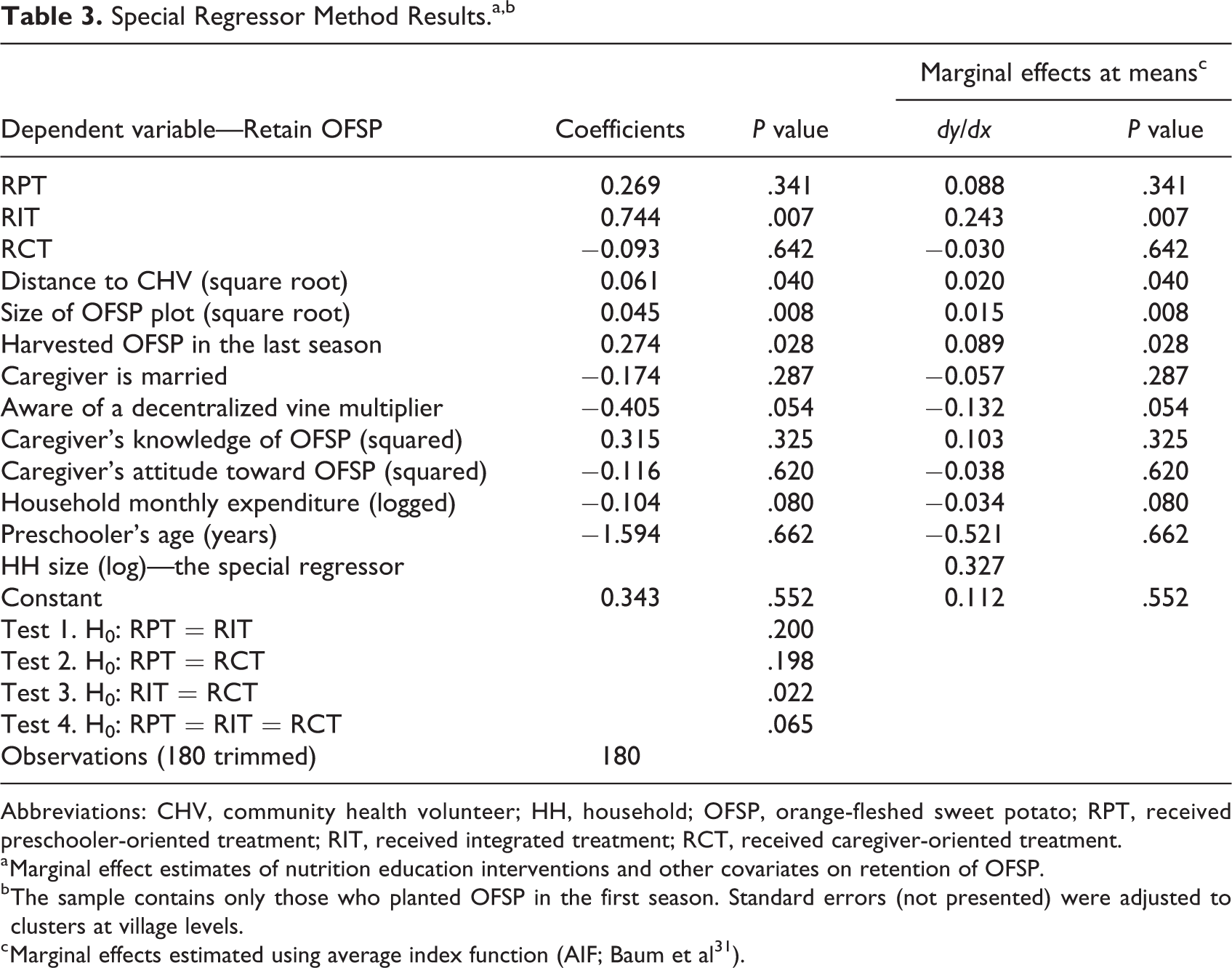
The SRM regression results (see Table 3) show that the reception of nutrition education through the IT approach had a positive and significant effect on the caregivers’ decision to retain the OFSP (marginal effects = 0.243; P = .007). Conversely, reception of information channeled through the preschoolers alone (RPT) or the caregivers alone (RCT) did not give any significant effects (P = .34 and P = .64, respectively). Estimates of the average marginal effect for RIT suggest that other factors held constant, households where both the caregiver and the preschooler received the nutrition education information were 24.3% more likely to replant the OFSP in the second season.
Special Regressor Method Results.a,b
Abbreviations: CHV, community health volunteer; HH, household; OFSP, orange-fleshed sweet potato; RPT, received preschooler-oriented treatment; RIT, received integrated treatment; RCT, received caregiver-oriented treatment.
a Marginal effect estimates of nutrition education interventions and other covariates on retention of OFSP.
b The sample contains only those who planted OFSP in the first season. Standard errors (not presented) were adjusted to clusters at village levels.
c Marginal effects estimated using average index function (AIF; Baum et al 31 ).
Discussion
Retention of OFSP vines in the farms is essential for the continued availability of the pro-vitamin A rich food to the VAD vulnerable groups in rural farming households—who often consume their farm produce. In this study, we assessed the immediate effects of the nutrition education interventions, through single and multi-channel approaches, on retention of OFSP among households targeted through the ECD centers. A multi-channel approach induced a significant effect of the interventions while a single-channel approach failed.
The study found that at least three-quarters of households reached through ECD platforms are households with under 5-year-olds and reproductive-age women. Homa Bay County government reports show that the county has 1183 ECD centers, 905 primary schools, and 260 health facilities. 17 Therefore, ECD institutions provide a relatively broader avenue for reaching the target population of nutrition security programs in the rural setting of the county. A wider reach to the target is imperative for addressing the accessibility challenges of agriculture-nutrition sensitive interventions, 39 especially to the micronutrient deficiency vulnerable groups.
The single-channel approaches had different rates of intervention receptions (higher in CT than PT). However, the multi-channel approach (IT approach) resulted in a 100% rate of intervention reception. This means that whereas the preschoolers’ channel may be less conclusive than the mobile phone channel, in conveying the messages to the ultimate target, having both approaches concurrently ensures that all the caregivers receive the intervention from at least one of the 2 channels.
Further, unlike the IT approach, the PT and CT approaches failed to induce significant ITT or TOT effects on retention of the OFSP among the caregivers. This confirms our hypothesis that single-channel nutrition education approaches do not improve the probability of the caregivers retaining OFSP in their farms after the initial dissemination of free planting materials. However, we rejected the hypothesis that the multi-channel nutrition education approach does not improve the probability that the caregivers will retain OFSP in their farms after the initial dissemination of free planting materials.
Comparing the estimates of the ITT and the TOT effects of the IT approach gives exciting insights. The variation in the magnitude of the estimates implies that there is a significant difference in the effects of offering agrinutrition education intervention and actual participation of the targets in the same. Mechanisms that ensure that the targeted caregivers receive the assigned nutrition education through multiple channels improve the likelihood of replanting OFSP by 24.3%. This is the effect of caregivers’ response to nutrition education information issued through multiple channels simultaneously.
In the context of sustainable adoption of agriculture-nutrition sensitive technologies, this study provides a set of lessons that may be valuable for future studies and development projects. Our results show that the success of a nutrition education initiative relies on whether or not it is delivered through multiple channels. Targeting both preschool children and their caregivers (predominantly their mothers) with nutrition education information ensures retention of the crop on the farms of the targeted households. The weight of the effects of the same depends on the extent to which the targeted population takes up the interventions as designed. Although a majority acknowledged receiving the interventions, ensuring that all the targeted respondents receive the interventions is worth considering to maximize their efficiency when up-scaling such interventions.
Adding on to notable literature on adoption, retention, and diffusion of OFSP, 13,15 this article provides evidence on a new factor to enhance sustainability of the technology among farmers. The 2 studies noted that while diffusion of the OFSP is desirable, sustainable availability starts with an individual’s ability to preserve and replant the vines in the subsequent years. From this study, multi-channeled nutrition education can be considered alongside other activities such as training on agronomic practices for producing and preserving OFSP to ensure its continued availability in the households.
One key limitation of the study regard time constraints. The treatment period (30 days), which covered only the harvesting and early planting periods, was shorter relative to a recommendation of 3 months from a meta-analysis of nutrition education experiments. 23,40 Based on this limitation, the results ought to be interpreted carefully as the immediate effects of the interventions. Future studies may cover the entire sweet potato production and consumption cycle and compare the intervention effects.
Conclusion and Recommendations
Based on the findings, we conclude that multichanneled nutrition education approaches, through preschool children and mobile phone-mediated messaging, are collectively effective nudges/interventions to promote households’ retention of biofortified technologies, particularly OFSP. Delivering nutrition education through a multi-channel approach improves the chances of accessing the targets, thereby enhancing the success of their intended purpose.
The study findings have significant implications for the design of agriculture-nutrition sensitive interventions. First, they imply the need to consider ECD centers as reliable avenues for reaching the VAD high-risk groups in rural farming settings. Second, designing and executing integrated nutrition education approaches by targeting both preschool children and their caregivers increase the likelihood of adoption of biofortified crops such as OFSP. Hence, the design of agriculture-nutrition education interventions should have multicomponent and multichannel approaches to boost their effectiveness in ensuring sustainable adoption of agriculture-nutrition sensitive technologies. Also, there is a need for a deliberate consideration of ICT platforms such as mobile phone platforms as promising channels for reaching caregivers with OFSP nutrition education.
Supplemental Material
Supplemental Material, sj-pdf-1-fnb-10.1177_03795721211025445 - Do Nutrition Education Approaches With Preschoolers and Their Caregivers Influence Retention of Biofortified Orange-Fleshed Sweet Potato on Farms? Evidence From Homa Bay County, Kenya
Supplemental Material, sj-pdf-1-fnb-10.1177_03795721211025445 for Do Nutrition Education Approaches With Preschoolers and Their Caregivers Influence Retention of Biofortified Orange-Fleshed Sweet Potato on Farms? Evidence From Homa Bay County, Kenya by Sylvester O. Ojwang, David J. Otieno, Julius J. Okello, Penina Muoki and Rose A. Nyikal in Food and Nutrition Bulletin
Footnotes
Acknowledgments
We are very grateful to the Ministry of Early Childhood Development and Education (ECDE) of the Homa Bay County government for their assistance with designing the materials and monitoring of the experimental activities in their ECD centers. We also acknowledge contributions from Janet Mutiso, Isaiah Okuku, Rose Chesoli, and Kevin Muoki in the study design and data collection.
Declaration of Conflicting Interests
The author(s) declared no potential conflicts of interest with respect to the research, authorship, and/or publication of this article.
Funding
The author(s) disclosed receipt of the following financial support for the research, authorship, and/or publication of this article: This study was undertaken as part of the CGIAR Research Program on Roots, Tubers and Bananas (RTB). Funding for the study was provided by the USAID Feed the Future’s Accelerated Value Chain Development (AVCD) project through the International Potato Center (CIP), and the African Economic Research Consortium (AERC) through a research grant offered to the first author who was a student in the Collaborative Masters in Agricultural and Applied Economics (CMAAE) program.

Supplemental Material
Supplemental material for this article is available online.
References
Supplementary Material
Please find the following supplemental material available below.
For Open Access articles published under a Creative Commons License, all supplemental material carries the same license as the article it is associated with.
For non-Open Access articles published, all supplemental material carries a non-exclusive license, and permission requests for re-use of supplemental material or any part of supplemental material shall be sent directly to the copyright owner as specified in the copyright notice associated with the article.
