



Abstract
Background:
Anemia is highly prevalent particularly in low- and middle-income countries. Iron deficiency contributes to an estimated 50% of anemia cases. Iron interventions have become central to global anemia treatment and prevention; however, few iron interventions have been scaled up to the national level, despite their proven effectiveness. While both cross-sectional and interventional studies on the effect of anemia and iron supplementation on worker productivity have been conducted, there have been few systematic reviews conducted. As such, a synthesis of previously conducted primary research is warranted and may provide a more comprehensive overview of the strength of currently available evidence, potentially helping to inform national policy on matters relating to funding and legislation for population-level iron interventions.
Objectives:
The objective of this study was to synthesize available evidence on the effect of both anemia and therapeutic iron interventions on productivity in working adults.
Methods:
All relevant English language studies were systematically obtained from both MEDLINE and EMBASE and assessed for evidence of differing productivity levels across groups stratified by iron intervention or anemia status. Potential mediating variables were reported, and the results were narratively summarized.
Results:
The available data from 12 included studies provide strong evidence that anemia negatively impacts occupational performance and that therapeutic iron interventions can yield substantial productivity gains.
Conclusions:
Despite their limitations, these findings make an important contribution to the literature highlighting the impact of iron deficiency and population-wide iron interventions on work productivity and occupational performance.
Introduction
Anemia, a condition characterized by an abnormally low hemoglobin (Hb) concentration in peripheral blood, constitutes a major global public health issue. 1 It is estimated that almost a quarter of the world’s population is anemic, amounting to more than 1.6 billion cases worldwide. 2 According to the World Health Organization, 42% of pregnant women, 30% of nonpregnant women (aged 15-50 years), 47% of preschool children (aged 0-5 years), and 12.7% of men older than 15 years are anemic. 2
The high rates of iron deficiency, in combination with widespread infections such as malaria, helminth diseases, and HIV, result in a disproportionate anemia burden in the developing world. 1 Anemia is reported to account for three-quarters of a million deaths per year in Africa and South East Asia. 1 In addition, anemia is also responsible for a significant source of global morbidity due to its adverse impacts on physical and cognitive development in early childhood. 2,3
While the causes of anemia are multifactorial, it is estimated that iron deficiency accounts for about half of the world’s anemia burden, making it the most common cause of anemia worldwide. 2,4 Acknowledging its significance, leading global players such as the United Nations Children’s Fund, Nutrition International, and other members of civil society have launched numerous initiatives to address iron deficiency anemia (IDA), including but not limited to interventions such as daily and intermittent iron supplementation, home fortification with micronutrient powders, fortification of staple foods and condiments, and activities to improve food security and dietary diversity, many of which have proven highly effective in reducing anemia prevalence. 2 Yet without support from domestic governments, the potential for scale-up and expanded coverage of well-established iron programs is limited especially in low- and middle-income countries (LMICs) where high IDA rates render an even greater need for such programs.
In 2017, there were only 75 countries with mandatory legislation to fortify wheat flour with iron and folic acid, highlighting the need for greater national policy support in this domain. 5 This sentiment is backed by the 2015 Arusha Statement on Food Fortification in which the central argument is made that “food fortification should become a critical player of national food and nutrition security plans,” followed by calls for the generation of more evidence to guide fortification policy and program design and to continue advocacy efforts to galvanize greater government support. 6 In responding to such calls, focus should not only be placed on research concerning the science of effective program implementation but also on the generation of evidence-based advocacy tools that would resonate with national governments, such as those linking legislative action to downstream economic and/or human capital gains.
While the pathophysiological consequences of IDA in relation to oxygen transport have been well established, 7 the scope of research relating to the direct effect of anemia and/or iron deficiency status on more tangible functional parameters such as occupational performance and work productivity is more limited. As such functional outcomes hold clear economic and societal significance, their relation to IDA is an important area to explore in the pursuit of developing more robust evidence to support the growing economic and cost-effectiveness assessment of national investment in population-wide iron interventions.
While both cross-sectional and interventional studies on the effect of anemia and iron supplementation on worker productivity have been conducted, there have been few systematic reviews conducted on the topic. As such, a synthesis of previously conducted primary research is warranted and may provide a more comprehensive overview of the strength of currently available evidence, potentially helping to inform national policy on matters relating to funding and legislation for population-level iron interventions, as needed to support their national scale-up. Thus, the objective of this study was to synthesize available evidence on the effect of both anemia and therapeutic iron interventions on productivity in working adults.
Methods
This study was conducted in accordance with the methodology outlined in the “guidance for the conduct of narrative synthesis in systematic reviews” provided by the Economic and Social Research Council Methods Programme. 8
Literature Review
To identify studies for inclusion in this review, searches were conducted within 2 databases: MEDLINE (OVID interface, 1948 onward) and EMBASE (OVID interface, 1980 onward). The search strategies used were adapted to each database’s specific medical subject headings and can be found in Figure 1. No study design, date, or language limitations were imposed on the search. To ensure literature saturation, reference lists of included studies and other identified reviews were additionally scanned for relevant titles which were then subjected to a standardized screening process including successive screening by title, abstract, and full text.
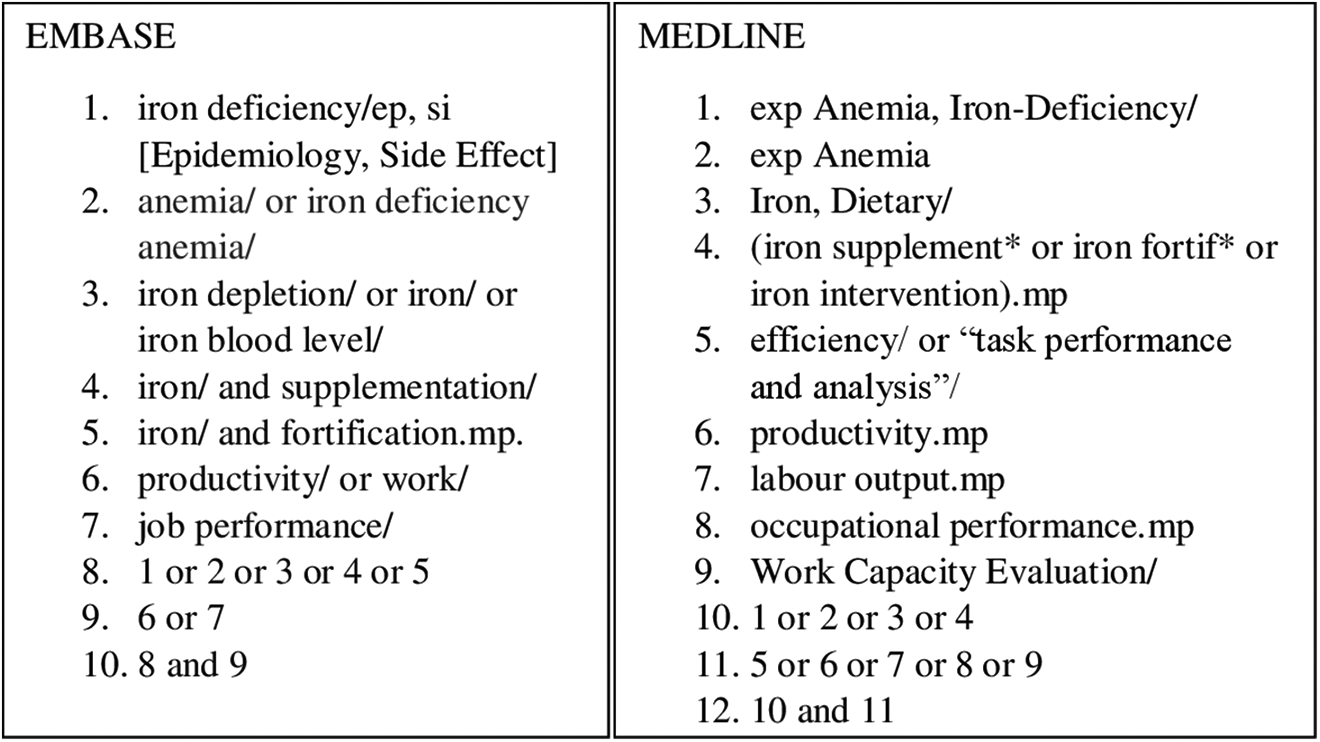
Search strategies.
Inclusion Criteria
While there were no restrictions by year of study or study setting, only studies reported and/or available in the English language were included due to resource constraints. Due to the limited available relevant literature, the decision was made not to impose date restrictions on the search.
Included studies were limited to placebo-controlled randomized or nonrandomized trials, where test groups were assigned to iron fortification or supplementation interventions, and cross-sectional studies, where participants were stratified according to anemia status or blood Hb levels, and comparatively assessed on work productivity. Placebo-controlled trials which also conducted cross-sectional analyses at baseline were also included.
Only studies conducted in healthy working adults were included, thus, for example, studies involving patients on renal dialysis or cancer patients were excluded. Studies conducted on individuals employed in both labor- and nonlabor-intensive occupations were included to assess the consistency of identified trends in various occupational contexts.
Iron fortification or supplementation interventions in placebo-controlled trials could be delivered in any chemical form (ie, any ferrous compound or elemental iron), in any consumptive form (ie, pill, fortified food, or drink), and at any dose. Control interventions could include placebos or other non-iron-fortified consumptives. Studies involving co-interventions or multiple micronutrient supplementation/fortification were included, albeit with the requirement that only treatment groups received iron while control groups did not.
All outcome measures had to relate directly to work productivity. Specifically, they had to be quantitative measures of labor-output relevant to the occupational context (eg, mass of product collected, number of tasks, or area of construction completed per unit of time). All studies measuring worker activity as a function of nonlabor-related outcomes (eg, general physical activity throughout work day) were excluded to limit the scope of the study to the direct effects of anemia or iron interventions on worker productivity as opposed to general physical performance.
Developing a Preliminary Synthesis
Data from the included studies was extracted using a standard data collection sheet with the following headings: design, setting and time period, population, methodology, method of exposure measurement (for cross-sectional studies) or characteristics of intervention (for placebo-controlled trials), productivity-related outcome measures, and quantitative findings. The collected data were then analyzed for trends by way of categorizing findings according to the direction of observed effects.
Exploring Relationships in the Data
To consider the factors that might explain any differences in the direction and size of effects observed across the included studies, the hypothesized and observed effects of potential mediating variables, as reported in the studies themselves, were summarized in a narrative form and assessed for overlapping themes.
Developing a Theoretical Model
To conceptualize the observed trends, the scientific literature on the physiological effects of anemia was consulted. Additionally, the potential social implications of low productivity were considered, not only in the context of national economic output but also in relation to individual well-being with a focus on mechanisms underlying a hypothesized anemia productivity feedback loop.
Assessing the Robustness of the Synthesis Product
All studies for which full texts were available were rated for risk of bias (ROB) to obtain an estimate of the robustness of the synthesized data. All placebo-controlled trials (including those with baseline cross-sectional analyses) were assessed using the Cochrane Effective Practice and Organization of Care (EPOC) tool while all cross-sectional studies were assessed using the Newcastle-Ottawa Quality Assessment Scale.
Results
Literature Review
A total of 12 studies 9 -20 were found to meet the inclusion criteria. The results of each stage of the screening process and the characteristics of the 12 included studies can be seen in Figure 2 and Table 1, respectively. While full reports were available for 11 of the 12 studies, one study 10 was only available in abstract format, and hence, corresponding extraction of supplementary data was limited and only key findings were documented.
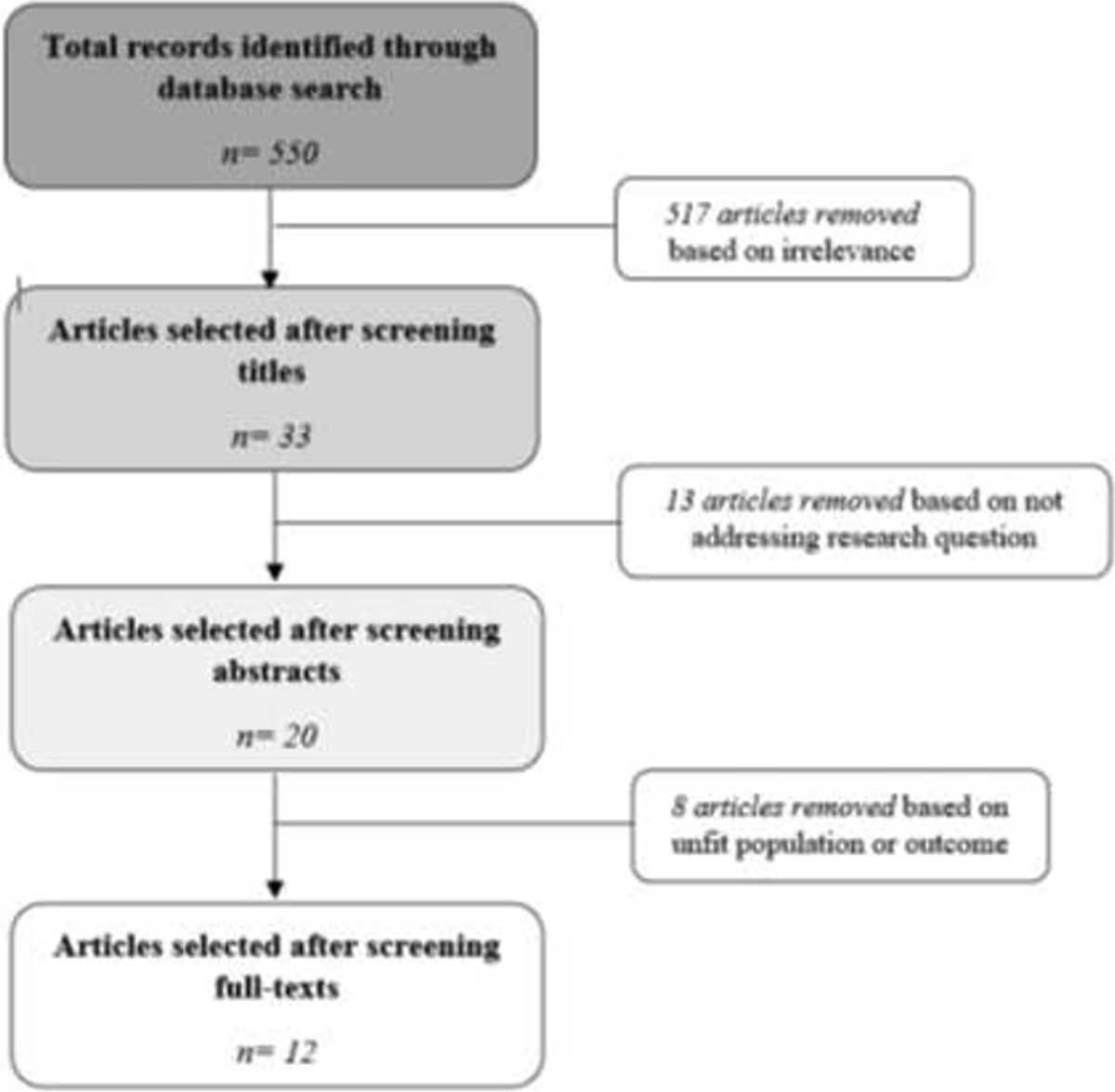
Search flow diagram.
Characteristics of Included Studies.
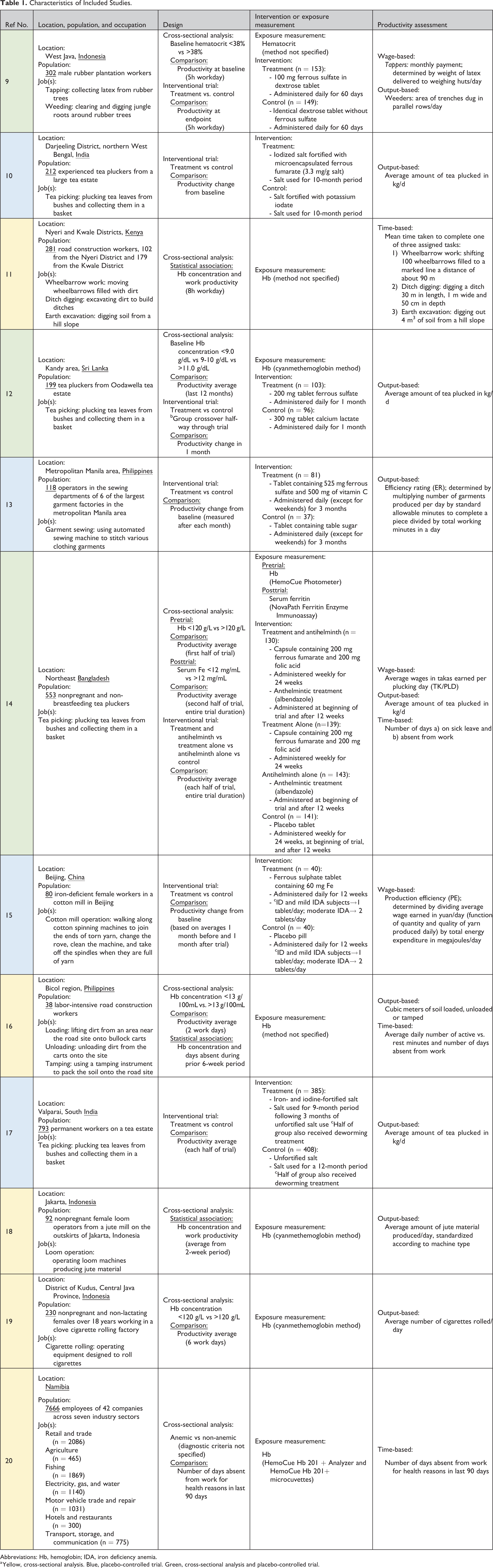
Abbreviations: Hb, hemoglobin; IDA, iron deficiency anemia.
a Yellow, cross-sectional analysis. Blue, placebo-controlled trial. Green, cross-sectional analysis and placebo-controlled trial.
Characteristics of Included Studies
Of the 12 studies included in this review, five 11,16,18 -20 were cross-sectional studies, four 10,13,15,17 were placebo-controlled trials, and three 9,12,14 were comprised of both placebo-controlled trials and cross-sectional analyses. Of the 7 studies that included interventional trials, 5 involved the administration of iron supplementation interventions (four 9,12,13,15 tested ferrous sulfate and one 14 tested ferrous fumarate supplementation) and 2 involved iron fortification interventions (both 10,17 tested iron-fortified salt specifically). The studies collectively covered a total of 8 countries, with 3 studies conducted in Indonesia, 9,18,19 2 studies conducted each in India 10,17 and Philippines, 13,16 and 1 study conducted in Kenya, 11 Sri Lanka, 12 Bangladesh, 14 China, 15 and Namibia. 20 All study manuscripts were written in English. Notably, the majority of the studies were relatively old, with five 9,11 -13,16 having been published in the 1970s to 1980s and three 15,18,19 having been published in the 1990s.
The average age of the workers across the five 12,14,15,19,20 studies that reported participant age data was 32.9 years. Based on the eight 9,12,14,15,17 -20 studies that reported the sex of participants, the female:male gender ratio was approximately 3:1. Using data from the six 11,13 -15,18,19 studies that reported the baseline anemia prevalence in the study population, the mean and median prevalence rates were 42% and 45.2%, respectively. However, different definitions and cutoff points for anemia were used, hence these pooled estimated may not be truly representative. Finally, of the 12 included studies, 3 were conducted on participants employed in physically labor-intensive occupations (road construction, 16 digging/lifting/excavating dirt, 9,11 and rubber tapping 9 ), 8 involved workers with less physically labor-intensive jobs (tea picking, 10,12,14,17 garment sewing, 13 machine operation, 15,18 and cigarette rolling 19 ), and one 20 involved workers employed in various sectors, encompassing a balanced distribution of occupational tasks.
Preliminary Data Synthesis
The major findings from the 12 included studies are presented in detail in Table 2. Results are divided into 3 general categories according to the productivity measures on which they are based to enable greater comparability. These categories include output-based (eg, quantity of product collected or produced), wage-based (eg, daily worker pay), and time-based (eg, time to complete task, days of work missed).
Summary of Findings.
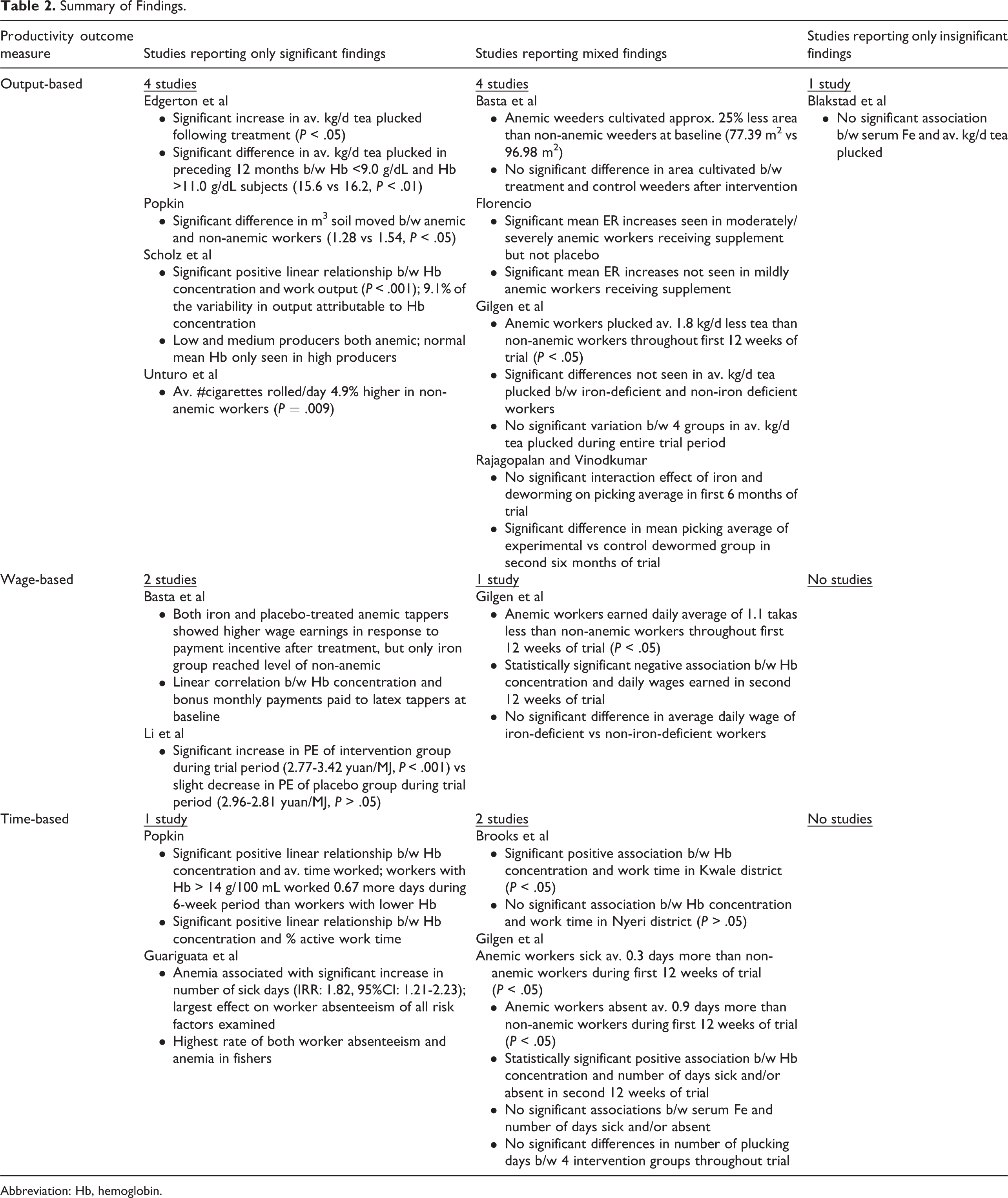
Abbreviation: Hb, hemoglobin.
Of the 9 studies that collected data on output-based productivity variables, 4 reported significantly improved productivity, four 12,16,18,19 reported mixed findings, and one 10 showed no effect. Meanwhile, two 9,15 of the 3 studies which based findings on wage-based productivity data reported a statistically significant positive impact on wages earned and the other 14 reported mixed findings. The results were similar for those studies reporting on time-based productivity outcomes, with two 16,20 reporting only statistically significant findings and two 11,14 reporting mixed findings. The result is a total of six 12,15,16,18,19,20 studies reporting only statistically significant findings, five 9,11,13,14,17 reporting mixed findings, and one 10 reporting only statistically insignificant findings. As shown in Table 2, those studies reporting mixed findings did so on the basis of a variety of discrepancies including differences in results obtained from cross-sectional and effect size analyses and differences in effect size data obtained at different time periods or from groups with different baseline anemia status, among others factors.
Role of Potential Mediating Variables
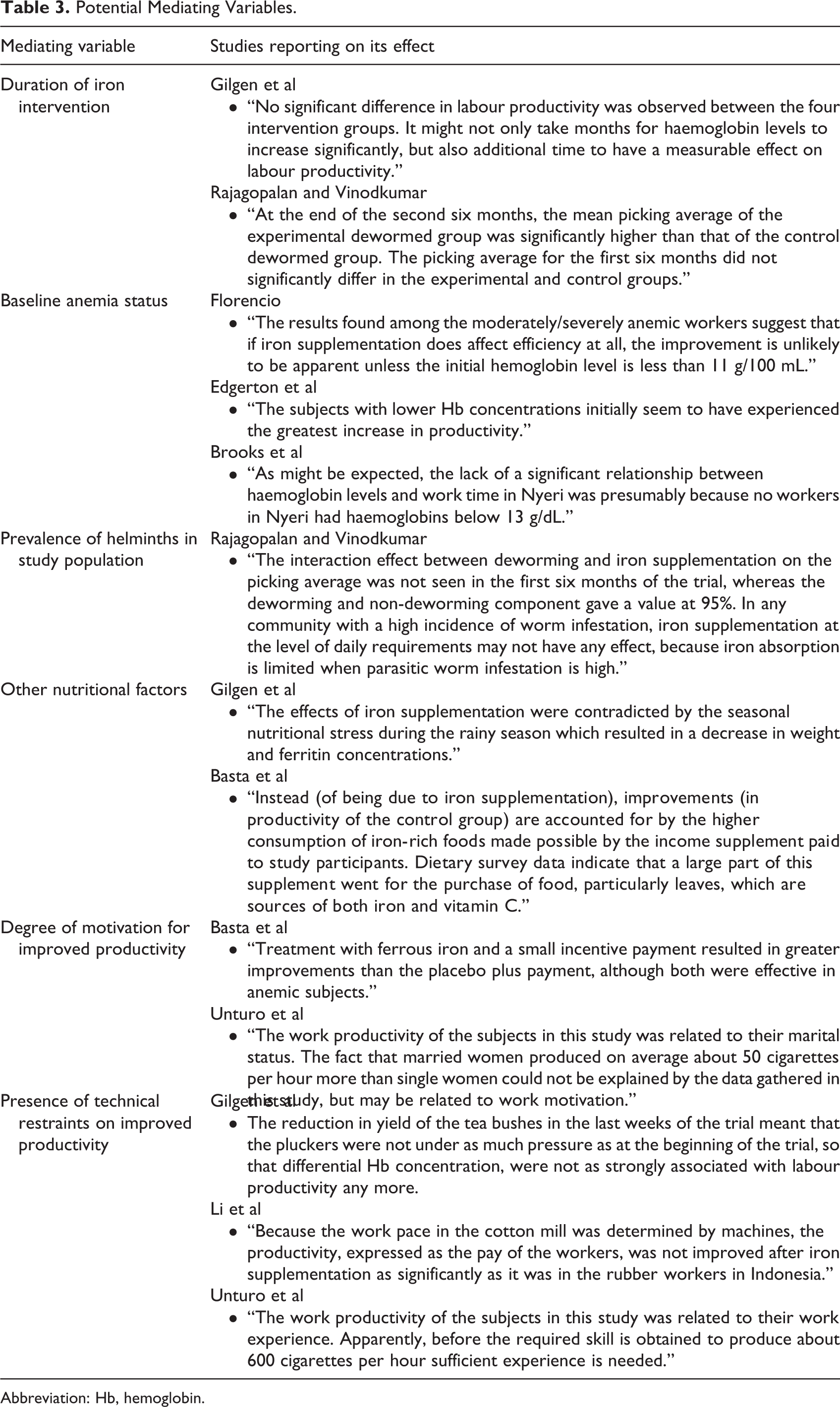
Across the included studies, a total of 6 mediating factors were either quantitatively or qualitatively reported for their potential effect on anemia and worker productivity levels. The potential mediating variables identified are shown in Table 3, along with a summary of relevant findings pertaining to their effects reported by the study authors themselves.
Potential Mediating Variables.
Abbreviation: Hb, hemoglobin.
Both Gilgen et al 14 and Rajagopalan and Vinodkumar 17 demonstrated evidence of a time-sensitive response to iron interventions. Gilgen et al 14 did not show effects of an iron intervention and explained the lack of effect on insufficient time for effects to be seen. Rajagopalan and Vinodkumar 17 reported findings that only reached statistical significance in the latter half of the intervention period. Meanwhile, Florencio, 13 Edgerton et al, 12 and Brooks et al 11 all suggested that the ability to detect either significant responses to iron interventions or Hb-dependent productivity trends was contingent on workers having sufficiently low baseline Hb levels to experience therapeutic responses to iron interventions or significant and hence detectable deficits in productivity.
Meanwhile, Rajagopalan and Vinodkumar 17 found a direct effect of the presence of helminths on the response potential to iron interventions by way of an interaction effect between deworming and iron supplementation. There were similar interactive effects of other nutritional factors in studies conducted by Basta et al 9 and Gilgen et al. 14 Specifically, Gilgen et al 14 found that “the effects of iron supplementation were compounded by the seasonal nutritional stress during the rainy season which resulted in a decrease in weight and ferritin concentrations.” Meanwhile, Basta et al 9 postulated that improvements in dietary intake resulting from new food purchases using incentive payments augmented the already therapeutic effect of iron supplementation.
Finally, external factors that serve to promote or restrain improved worker performance were also found to augment or impede productivity changes following iron supplementation. In studies conducted by Gilgen et al, 14 Li et al, 15 Basta et al, 9 and Unturo et al, 19 it appeared that incentives for improved productivity such as monetary rewards may enable iron-treated workers to achieve maximal productivity gains while restraints on improved productivity such as capped machine operating rates or limited worker skill/experience may have the opposite effect.
Assessment of ROB of Included Studies
The 5 exclusively cross-sectional studies were assessed for bias using the Newcastle-Ottawa Quality Assessment Scale, while 6 studies which included placebo-controlled trials were assessed using the Cochrane EPOC tool. Risk of bias assessment was done on only 11 of the 12 included studies since insufficient information could be obtained from the one 10 study for which only an abstract was available. Based on the Newcastle-Ottawa Quality Assessment Scale, two 11,16 studies were given 6/10 stars, one 20 was given 7/10 stars, and two 18,19 were given 8/10 stars. On the other hand, four 12 -14,17 studies were rated medium risk, one 15 study was rated low risk, and one 9 study was rated high risk using the Cochrane EPOC tool.
Discussion
From the findings of the 12 included studies, it is apparent that there exists a relatively large evidence base to support the contention that anemia adversely affects worker productivity, while iron interventions can have a positive effect on occupational performance. This is based on the fact that all of the studies with the exception of one provide at least some evidence in favor of this assertion. Seven of the studies included in the review reported statistically significant positive associations between worker Hb levels and efficiency of task performance, while in other studies, similar associations were found between Hb levels and worker pay, a proxy measure of worker productivity. In a novel study published on Indian Tea Estate workers since this review was conducted, similar findings were attained. Namely, authors found that an increase of 1.0 g/L in Hb concentration predicted 0.71 kg (3.3%) more tea plucked over 3 hours, providing additional affirmative evidence to support our own conclusions. 21
Interestingly, strong positive associations were also found between Hb levels and the quantity of active work time, assessed directly or as a function of worker absenteeism. This suggests that anemia may not only result in greater worker fatigue but may also be implicated in more severe comorbidities which can interfere with one’s ability to attend work regularly—a potential representation of the far-reaching consequences of anemia for employee health. Meanwhile, the potential positive effects of iron interventions on worker productivity are supported by studies which showed that increasing dietary iron yielded statistically significant improvements in the efficiency of task performance among workers, whether assessed directly or through payment-based proxy measures. As these findings represent worker performance in tasks requiring varying levels of physical exertion, the aforementioned findings can be extrapolated to a variety of occupations. This is further supported by the results of the subgroup analysis which found no significant differences in results ascertained from physically demanding and non-physically demanding occupations.
The strong associations found in many of the included studies are further substantiated by well-established biological evidence. Anemia is associated with low levels of oxygen-carrying Hb, thus resulting in less oxygenation of body tissues. 22 -24 The result is that both brain and muscle tissues may be deprived of sufficient oxygen to function at maximal capacity, manifesting as physical lethargy and possibly mental fatigue as well. 22 -24 This may explain why many of the observed associations were also seen in occupations involving relatively low physical demand but a higher degree of mental focus. The adverse effects of anemia on cognitive and motor development in early childhood have also been widely reported in clinical and biological studies. 25 -32 Thus, it is plausible that productivity deficits observed in anemic workers may not only be the result of its immediate effects on oxygen-carrying capacity but may also be rooted in its long-term cognitive and motor consequences, assuming anemia onset occurred in early childhood. This linkage of the pathophysiology of anemia renders the findings more plausible on a biological level.
It should be noted that not all of the reported results were statistically significant. Three studies 9,10,14 failed to find statistically significant differences between iron intervention and control groups on assessed productivity outcomes. In 2 placebo-controlled trials, 13,17 results were mixed with significant differences between study groups only found in moderately/severely anemic workers 13 and in the second 6 months of intervention, 17 while 2 other cross-sectional studies reported mixed results which lacked statistical significance. These studies were conducted in subcohorts of workers, namely those comprised of workers from select villages or having iron-deficiency but not anemia, respectively.
While there is compelling evidence to suggest that iron interventions in adult working populations may prove highly cost-effective, iron intervention in early childhood may similarly result in long-term human capital gains with economic significance. Research supports the existence of an association between iron deficiency and/or anemia and poor physical performance in children, as measured by other physical performance indicators applicable to non-working child/adolescent populations. In a study conducted on migrant schoolchildren in the suburbs of Beijing, severe iron deficiency was found to significantly affect maximum work time throughout the school day. 33 This same study also reported that iron-deficient children had significantly lower VO2 max and spent significantly less time on aerobic activity outside of school, possibly due to greater fatigue. 33 These findings are supported by other studies showing that heart rate, a measure of aerobic fitness and the efficiency of oxygen delivery, was significantly higher in anemic children, 34 while Hb levels were positively related to endurance capacity in rural adolescent girls. 35 Reduced physical activity as a result of fatigue and poor oxygen delivery may ultimately have a long-term effect on cardiovascular health in adulthood and may impede cognitive development in young children who may be less likely to actively explore their environment.
Integrated iron interventions, particularly for anemic populations, may have far-reaching implications for worker productivity and ultimately for national economic output. According to calculations made by Li et al, 15 15 years ago, there was a 20% difference in productivity levels between anemic and non-anemic workers. Thus, an investment of US $0.17 in iron supplements could yield an extra US$44.00 in the amount of latex obtained per hectare. This is of relevance, since in 2019, Thailand produced more than 4 million metric tons of latex. 36 Similar extrapolations were made by Rajagopalan and Vinodkumar 17 who estimated that just US$215 spent on iron-fortified salt provision to South Indian tea workers could yield an additional 300 000 kg of extra tea leaves picked per year. Such conclusions are also in line with those drawn by other researchers and health economists. In an analysis of 10 developing countries, the median value of annual productivity losses due to IDA was US$0.32 per capita or 0.57% of the gross domestic product. 37 Other researchers have estimated that productivity gains accrued by Vietnamese workers given both iron-folic acid supplementation and deworming treatment would have a benefit:cost ratio of 6.7:1, 38 while additional estimates have been made that malaria prophylaxis and iron supplementation combined would cost only US$9.7 per disability-adjusted life year averted, a rate considered highly cost-effective, as defined by the World Bank’s proposed threshold of less than US$25 per DALY for comparative assessments. 39
While the breadth of literature covered in this review was not extensive, it was sufficient to provide a diverse array of evidence pertaining to the effect of anemia or iron interventions on productivity in adult workers. The fact that many of the studies were quite old is likely testament to the time period in which this research area was of greatest focus and perhaps corresponds with the launch of the first large-scale iron interventions.
The relatively high mean anemia prevalence (42%) in the study population is indicative of the anemia burden borne by many LMICs in which these studies are primarily based and is comparable to estimated rates in the developing world today, 1,2 despite many of the studies being old. However, it is important to note that this prevalence rate varied dramatically across the included studies, ranging from as low as 5.3% (cross-group mean) in the Namibian study 20 to as high as 86% in the study conducted in Bangladesh. 14 Finally, the wide range of occupations included in these studies allow us to construct a comprehensive picture of iron’s role in occupational performance in diverse contexts.
Insignificant findings must be viewed in light of the array of potential variables which may mediate the effect of anemia status or iron interventions on worker productivity. Taking into account the findings summarized in Table 3, it is apparent that there are numerous factors worth considering when designing an iron intervention program aimed at yielding maximal productivity gains in working adults. Most importantly, findings from the 12 included studies suggest that such programs should not only be long term and targeted primarily toward anemic populations but also horizontally integrated with other public health initiatives such as deworming treatments and supports for improving nutritional diversity and overall dietary intake. This is further substantiated by biological evidence showing that intestinal parasites inhibit host iron absorption through a process of competitive “capture and uptake” of host iron. 40
Findings must also be viewed in light of several other notable limitations. As significant sources of bias were identified in many of the included studies, conclusions must not be overstated. For example, the high dropout rate in some studies 9,13,16 may have introduced attrition bias, the effects of which could not be ascertained without knowledge of the characteristics of nonrespondents. Additionally, the frequent exclusion of key subsets of the worker population such as new, frequently absent, or very overweight workers for practicality or safety reasons may have rendered certain study populations unrepresentative of the full workforce. Other concerning sources of bias included significant and important differences in baseline characteristics of study groups that were not controlled for in the final analyses and the possibility that workers knew their group assignment due to the inevitably detectable differences in placebo and treatment interventions administered in certain studies—an effect which would have appeared particularly prominent when assessing productivity outcomes. Such sources of bias in addition to the already small number of highly heterogeneous studies included in this review ultimately limit the voracity of the findings.
Conclusion
This review aimed to collate an array of evidence from the available literature pertaining to the effect of anemia and iron interventions on productivity in adult workers. Having included 12 studies conducted in various countries and diverse occupational contexts, this review is both comprehensive in scope and relatively widespread in applicability. Specifically, this review provides evidence that anemia adversely effects occupational performance. While findings pertaining to the positive effect of iron interventions on worker productivity are less conclusive, they still suggest that, when implemented effectively and integrated horizontally with other anemia-targeted public health initiatives, such interventions may confer substantial productivity benefits to adult workers and ultimately prove lucrative for national economies. While the limitations of these findings must be taken into account when considering their utility as evidence-based advocacy tools for national scale-up of iron interventions, their implications may be far-reaching should they ultimately be used, alongside the growing amount of other supportive evidence, to galvanize needed legislative action.
Footnotes
Authors’ Note
Dr Stanley Zlotkin and Claudia Schauer offered expert guidance in the design of the study, provided intellectual input throughout its completion, approved all protocols to be followed, and contributed to final manuscript editing and revisioning. Hannah Marcus conducted the literature review and was the primary contributor to the processes of data abstraction and analysis and of drafting the final manuscript.
Acknowledgments
The authors would like to thank Emily C. Keats for her technical guidance with conducting the literature reviews, developing database-specific search strategies, and identifying and applying appropriate ROB assessment tools for the diverse studies included.
Declaration of Conflicting Interests
The author(s) declared no potential conflicts of interest with respect to the research, authorship, and/or publication of this article.
Funding
The author(s) disclosed receipt of the following financial support for the research, authorship, and/or publication of this article: This research received no specific grant from any funding agency in the public, commercial, or not-for-profit sectors. Ms Marcus was supported by Chair’s funding from Dr Zlotkin’s Mining4Life Chair in Mineral and Vitamin Nutrition.
