




Abstract
Background:
Families living from artisanal fisheries are vulnerable to food insecurity.
Objective:
This research aimed to assess the determinants and consequences of food insecurity in artisanal fishing families from the coastal community of Sonora, Mexico, and to understand how these families face food insecurity.
Methods:
This was a cross-sectional study with 116 mothers. A socioeconomic, demographic, and nutritional knowledge survey was applied to assess determinants. A survey about food in the community and food security scale were collected to evaluate food insecurity and two 24-hour dietary recalls and anthropometric measures to assess consequences. Field notes about facing food insecurity were collected.
Results:
Sixty-eight percent of families have food insecurity. Being above the poverty line, higher father education, knowing how many glasses of water should be drunk per day, and how many minutes of physical activity should be done per day were associated with lower food insecurity. Not having medical service and lower mother education were associated with higher food insecurity. Higher food insecurity was associated with buying in a convenience store; higher food insecurity and higher mother education were associated with lower dietary score; and higher father education was associated with higher dietary score. Being below the extreme poverty line by income and number of children were associated with lower waist circumference; lower father education was associated with higher waist circumference of mothers.
Conclusions:
Artisanal fishing families residing in the coastal community of Sonora, Mexico, experience high food insecurity associated with social and economic determinants and their dietary quality.
Keywords
Introduction
In Latin America and the Caribbean, 85% of the fish and shellfish that feed households come from artisanal (small-scale) fishing. 1 Artisanal fishers, in addition to the temporality of their work, lack equipment and knowledge to preserve or transform their products to increase shelf life or added value. Therefore, fishers typically sell most of their catch fresh and at low price to avoid deterioration and reduce economic loss, which limits their income and purchasing power. 2 Consequently, these communities lack the financial resources to access nutrient-rich foods, which in turn can adversely impact the economic development, food security, health, and well-being of family members. 2
Worldwide, about 5.8 million artisanal fishers live on an income of less than 1 US dollar a day, with about 30% of them living in Latin America and the Caribbean. 3 In Mexico, a country with Atlantic and Pacific waters and 11 200 km of coastline, about 170 000 people live from fishing. 4 Sonora, located in the Gulf of California, is outlined by 1209 km of coastline. In this region, about 32 000 people are engaged in this economic activity; of these, 29.8% live in poverty and food insecurity. 5,6 The United Nations Food and Agriculture Organization (FAO) has declared artisanal fishers at global, national, and local levels vulnerable to food insecurity and poverty, especially fishermen who are dedicated exclusively to this activity and lack agricultural land, as is the case with some fishing communities of Sonora including Kino Bay. 5
Kino Bay is a fishing community located 105 km west of the capital of Sonora, Mexico. Most streets are unpaved, and 10% of households do not have essential basic public services such as drinking water or sewage system. 7 Fifty percent of the population relies on artisanal fishing directly and many indirectly related economic activities. In this region, artisanal fishing provides 46% of the gross domestic product. 2 Anthropological studies report that artisanal fish harvesters are vulnerable to poverty, constant debt, and exclusive consumption of only a few foods that do not provide sufficient nutrients to maintain their health and nutritional status. 2
Sustainable Development Goal 2 aims to guarantee by 2030 access to healthy, nutritious, and sufficient food for all, especially those with low income and vulnerable to food insecurity. 8 Achieving food security requires understanding and addressing its determinants, that is, why certain people, families, or communities face differential risks associated with food insecurity even if they reside in the same geographic region. Pre-existing conditions can make low-income people more vulnerable to food insecurity. 9 Food insecurity is associated with many adverse consequences for health and development of children and adults that arise through both nutritional and non-nutritional mechanisms including distress, altered social cohesion, worry and anxiety, and deprivation and alienation. 10
The determinants of food insecurity, the consequences of experiencing it, and the mechanisms through which it most effects consequences differ according to the physical, social, and economic context in which people are living. Identifying the determinants that affect vulnerability to food insecurity in artisanal fishers and the consequences that they experience will strengthen understanding of how to ensure adequate availability, access, and utilization of food by people who make a living from artisanal fishing. 11
No studies have investigated the socioeconomic determinants of food insecurity in fishing families in Mexico, nor how these determinants are associated with food insecurity and its possible consequences. Therefore, we aimed to assess the determinants and consequences associated with food insecurity in artisanal fishing families from the coastal community of Sonora, Mexico, and to understand how these families face food insecurity through answering 3 questions: (1) What economic and social determinants are associated with food insecurity? (2) How are food insecurity and social and economic conditions related to nutritional status and dietary quality? (3) What are the strategies to face food insecurity? We hypothesized that socioeconomic conditions, food availability in the community, educational level, medical service, and basic nutrition knowledge are associated with food insecurity and that food insecurity in turn is associated with low quality of food consumption, negative experiences of food insecurity, and inadequate nutritional status.
Methods
In September 2016, families living on artisanal fishing were recruited for the study. 12 The study had a cross-sectional design and was approved by the Research Ethics Committee of the University of Sonora, Mexico. To calculate the sample size, the formula for finite population 13 and a statistical power of 89% were used, derived from a cross-sectional study conducted in households belonging to different locations with high marginalization rates in northwest Mexico where the prevalence of food insecurity was 89%. 14 The sample size calculated was 147 households. To have a representative sample, 60% of the streets in the community were randomly selected. One hundred and thirty households agreed to participate. After applying the exclusion criteria (ie, families that were not permanent residents of Kino Bay, mothers with some condition that made it impossible for them to respond to surveys), the sample size obtained was 116 households, which provided statistical power of 81%. Households were surveyed from September 2016 to September 2017.
Access to Food: Categories of Food Insecurity
To assess food insecurity, the Mexican Food Security Scale validated for Mexican families was used. The scale consists of 12 items that assess whether household members changed their eating pattern in quality and quantity in the last 3 months prior to the interview and if they experienced hunger. 15 Food security was categorized as food security, mild food insecurity, moderate food insecurity, or severe food insecurity. During the application of this scale, field notes were taken on the mother’s experiences of and reactions to food insecurity as well as the strategies to face food insecurity.
Availability of Food in the Community
A semistructured interview was applied to assess the physical availability of food in the community. Families were asked about the places where they usually buy food as well as the frequency of purchase and the availability and kind of food in the store. Based on their responses, visits were made to the establishments, convenience stores, and supermarkets mentioned to take photographs and notes on the type of food they offer to the community.
Social and Economic Determinants of Food Insecurity
A socioeconomic and demographic survey that included 17 items was applied to assess economic context, social resources, and social functional limitations. Items assess income and expenditure on food. Based on these variables, 3 variables were calculated to specify vulnerability to food insecurity. First, the extreme poverty line by income was obtained as monthly income equal to the value of the food basket per person per month. Monthly income per person less than US$73.15 was classified as extreme poverty. Second, poverty line by income was obtained as monthly income equal to the total value of the food basket plus nonfood basket per person per month. Monthly income more than US$73.15 but less than US$147.39 per month was classified as poverty. 16 Third, the percentage of food expenditure was calculated as the monetary amount that a household allocates for the purchase of food both inside and outside the home, in relation to the family income measured in the same period of time. 17 Social resources were assessed by asking families if they had medical service and if they were beneficiaries of government assistance programs. Social functional limitations were assessed through the education level of the father and mother and the knowledge of nutrition and hygiene practices. This last aspect was assessed using a questionnaire with 25 items which was developed to assess the mothers’ knowledge of healthy eating, physical activity, and hygiene practices in food consumption, based on the FAO guidelines for assessing nutrition-related knowledge, attitudes, and practices. 18 Each correct answer was considered as 1 point, so the maximum score was 25.
Consequences of Food Insecurity
Consequences of food insecurity were assessed using food consumption pattern, the percentage of adequacy, and the categories of diet quality and using nutritional status. Two nonconsecutive 24-hour dietary recalls were applied to the mothers as household representatives. To assess the usual dietary intake, dietary data were obtained on a weekday and the other at the weekend. The amount of food and beverages consumed during the 24 hours prior to the interview was recorded. Food models and sample household measurements (such as cups and spoons) were used to specify serving sizes. 19,20 Dietary data were coded, analyzed, and estimated using the Food Composition Database compiled by Ortega et al. 20
From the dietary information obtained, the intake adequacy of 6 food groups based on the food grouping scheme provided by the Mexican dietary guidelines 21 and 4 dietary components that should be consumed in moderation was estimated. The 6 food groups were fruits and vegetables, cereals, legumes, foods of animal origin, dairy products, and water. The dietary components considered were saturated fats, sugars, sodium, and cholesterol. The analysis reported whether the mothers consumed less or a greater number of servings compared to the recommendations of the Mexican food guides. 21
To assess dietary quality, an index of healthy eating was constructed. Each group of food or food component was granted a value of up to 10 points if its consumption was in the range of recommendation for the age-group. Consumption out of recommended range amount was awarded scores below 10. The criteria for defining the scoring system were based on the diet quality index revised by Newby et al. 22 The theoretical maximum score was 100 points. Subsequently, dietary quality was classified into 3 categories: a score below 50, classified as “poor diet;” between 51 and 75 points, “needs improvement” (for improving); and a result between 76 and 100 points was categorized as “good diet.”
Weight, height, and waist circumference were measured according to the internationally standardized procedures to obtain body mass index and abdominal obesity. The classification of body mass index was made according to the references of the World Health Organization. 23 The cutoff for high waist circumference to define abdominal obesity was >80 cm according to the criteria for Mexican women of the Mexican Social Security Institute. 24
Families’ Experiences of Facing Food Insecurity
To investigate the strategies to face food insecurity, mothers of families from the Kino Bay Community were interviewed. Mothers were asked about their experiences of food insecurity, emphasizing strategies to cope with the lack of food at home. The information was compiled in writing through descriptive notes that consisted of asking and recording the perspectives of the mothers of the families regarding the original sentences expressed by them. 25 Two interviewers collected the information, while one asked, the other took notes so as not to lose the details of the conversation. Subsequently, the information was completely captured on the computer, preserving the original sentences of the mothers of the family and then classified into emerging themes and subtopics, taking into account the recommendations of Krefting 26 for the analysis of qualitative data. The occurrences of frequent topics were counted, and examples were selected that best reflected their perspectives about food security and how they face food insecurity.
Statistical Analysis
Descriptive statistics were performed to estimate the mean, standard deviation, and percentage of the variables. We estimated 5 regression models. First was a multinomial logistic regression of the place where families buy their food and food insecurity. Second was a multiple linear regression of social and economic determinants and food insecurity. Third was a multiple linear regression of knowledge of nutrition and hygiene practices and food insecurity. Fourth was a multiple regression for dietary score in mothers and food insecurity, controlling for educational level of mother and father, and poverty, leaving out medical service which was not important. Fifth was a multiple linear regression for waist circumference in mothers and food insecurity, controlling for age, number of children, educational level of mother and father, medical service, poverty, and dietary quality. No results are provided for body mass index because no independent variables were important to explain body mass index regardless of the set of variables included. Because 12 cases were missing father’s education and 4 were missing poverty, we estimated the multiple linear regression models using all available data with full information maximum likelihood under the assumption that data were missing at random. The results were similar if analysis of the complete cases was done, or ordered logistic regression was done with the ordinal food insecurity categories (not reported). The statistical software SPSS version 22.0 and Stata version 15.1 were used.
Results
Access to Food: Categories of Food Insecurity
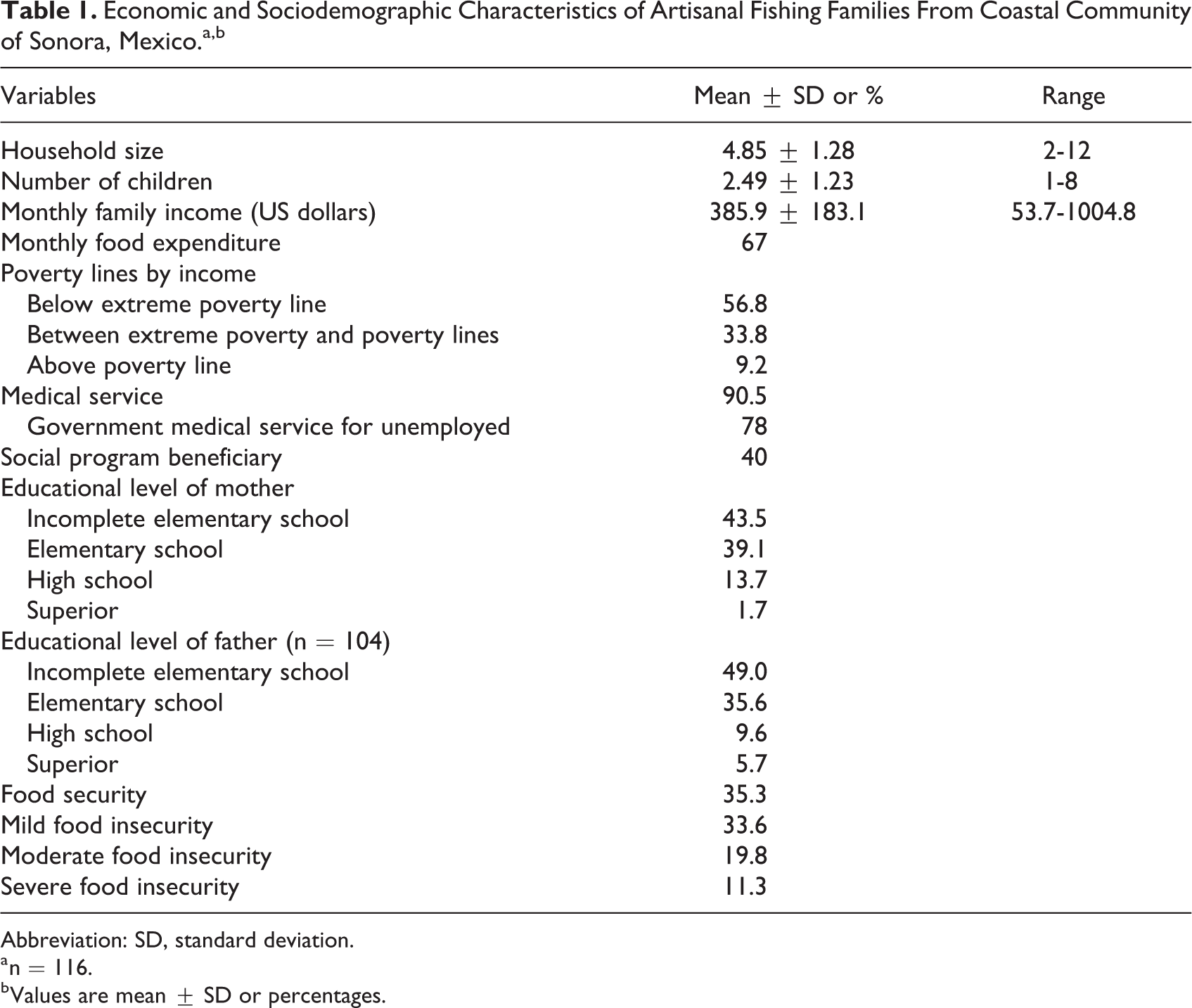
About two-thirds (64.7%, n = 75) of participant families were food insecure. The distribution for categories was 33.6% (n = 38) with mild food insecurity, 19.8% (n = 23) with moderate food insecurity, and 11.3% (n = 14) with severe food insecurity (Table 1).
Economic and Sociodemographic Characteristics of Artisanal Fishing Families From Coastal Community of Sonora, Mexico.a,b
Abbreviation: SD, standard deviation.
a n = 116.
b Values are mean ± SD or percentages.
Availability of Food in the Community
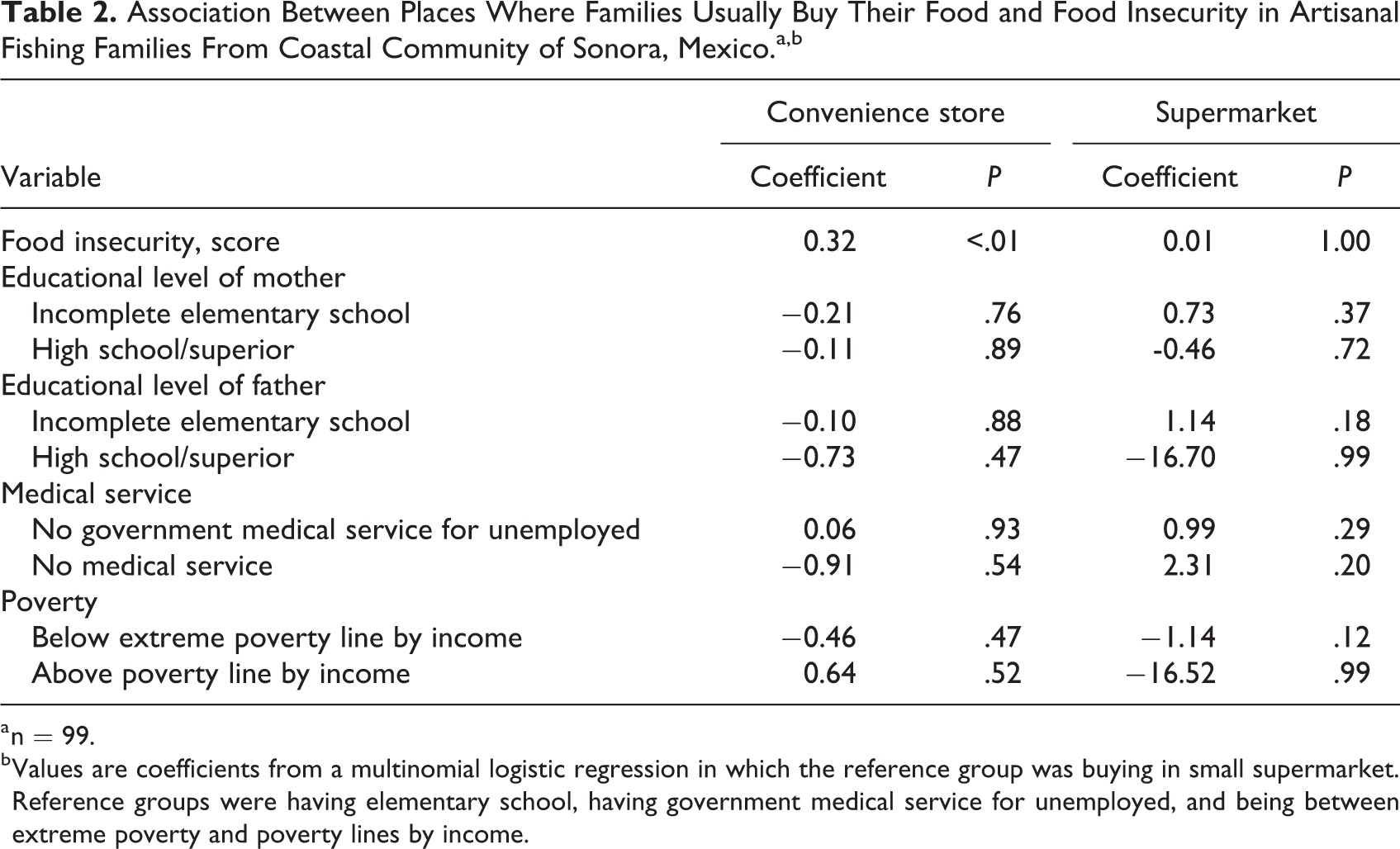
Fruit and vegetables had limited availability in the community, whereas processed foods such as breakfast cereals, breads, snacks, processed meats, ready meals, and sugary drinks had high availability. Families bought their food in 1 or more of 18 small local stores established in the community near their homes. From these stores, they mainly got processed foods or grains and little variety of fruits (mainly banana, apple, and oranges) and vegetables (mainly tomato, onion, cucumber, potato, and carrot). Also, they bought fruits and vegetables from a street vendor who walked the streets of the community once a week. To acquire more variety of fruits and vegetables, they must travel more than 50 km to the town of Miguel Aleman to buy in 1 of 4 supermarkets they visit or 105 km to the capital city, Hermosillo, where they visit 3 supermarkets. Higher food insecurity was associated with buying in a convenience store (Table 2).
Association Between Places Where Families Usually Buy Their Food and Food Insecurity in Artisanal Fishing Families From Coastal Community of Sonora, Mexico.a,b
a n = 99.
b Values are coefficients from a multinomial logistic regression in which the reference group was buying in small supermarket. Reference groups were having elementary school, having government medical service for unemployed, and being between extreme poverty and poverty lines by income.
Social and Economic Determinants of Food Insecurity
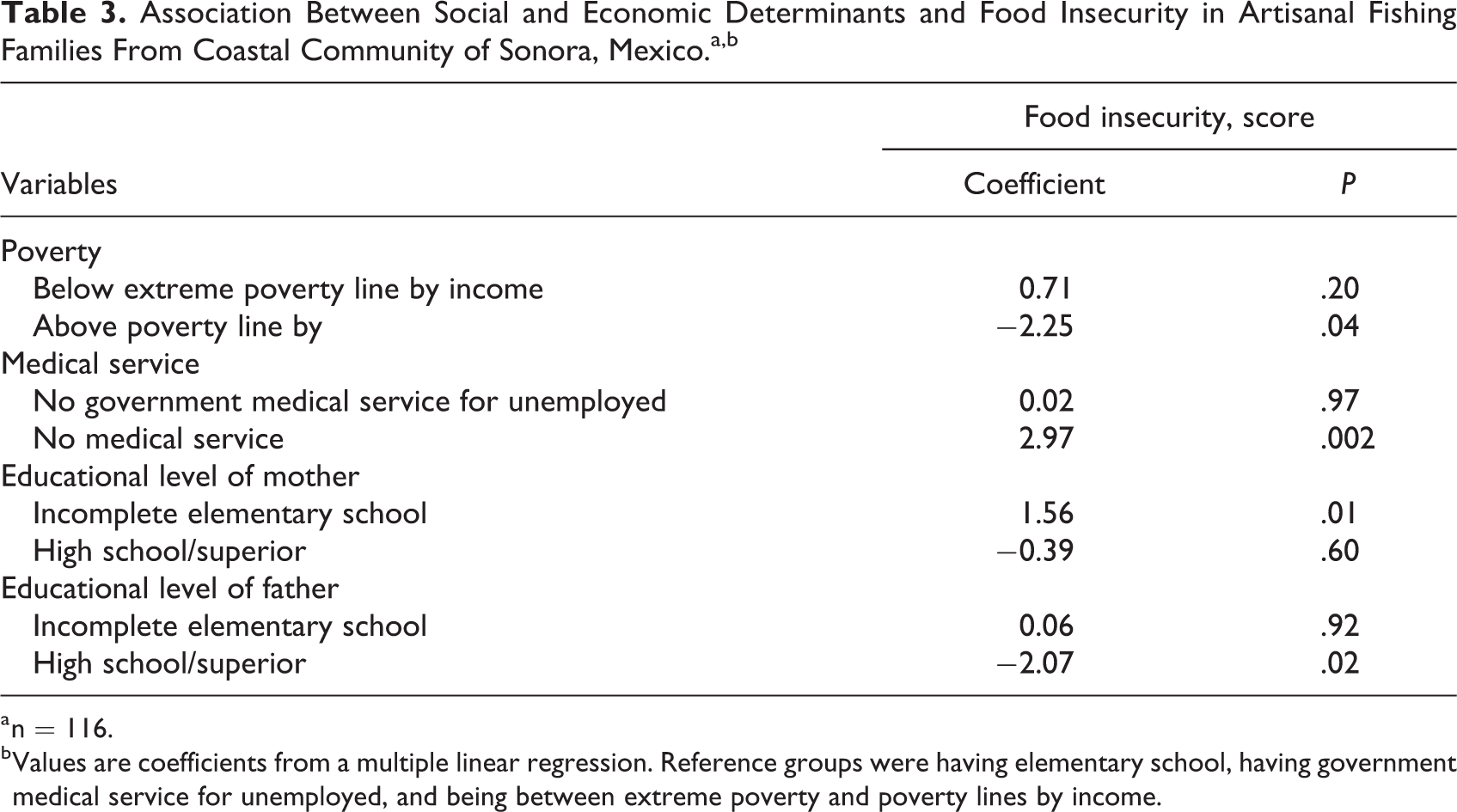
The average family monthly income was US$387 ± US$191 dollars, and 58.1% of the families presented income below the extreme poverty line by income. Although just over a third of families exceeded that line, only 9.2% were above the poverty line by income according to the Mexican poverty lines. On average, families used 68% (∼US$263) of their total income to buy food (Table 1). Being above poverty line was associated with lower food insecurity (Table 3).
Association Between Social and Economic Determinants and Food Insecurity in Artisanal Fishing Families From Coastal Community of Sonora, Mexico.a,b
a n = 116.
b Values are coefficients from a multiple linear regression. Reference groups were having elementary school, having government medical service for unemployed, and being between extreme poverty and poverty lines by income.
Social resources
A high percentage of families have medical service (90.5%), but 78% of them belong to the popular medical service for unemployed people (Table 1). About 40% of households were a social program beneficiary. They received social assistance that was monetary (79.5%) and pantry (19.5%). Not having medical service was associated with higher food insecurity (Table 3).
Social functional limitations
For mother’s education, 43.5% did not complete elementary school and 39.1% had elementary school (Table 1). Only 13.7% of the mothers reported having high school and only 1.7% had university studies. In about half (49%) of families, parents had less than elementary school, 35.6% had elementary school, and only 15.4% had high school and university. Lower mother education was associated with higher food insecurity, and higher father education was associated with lower food insecurity (Table 3).
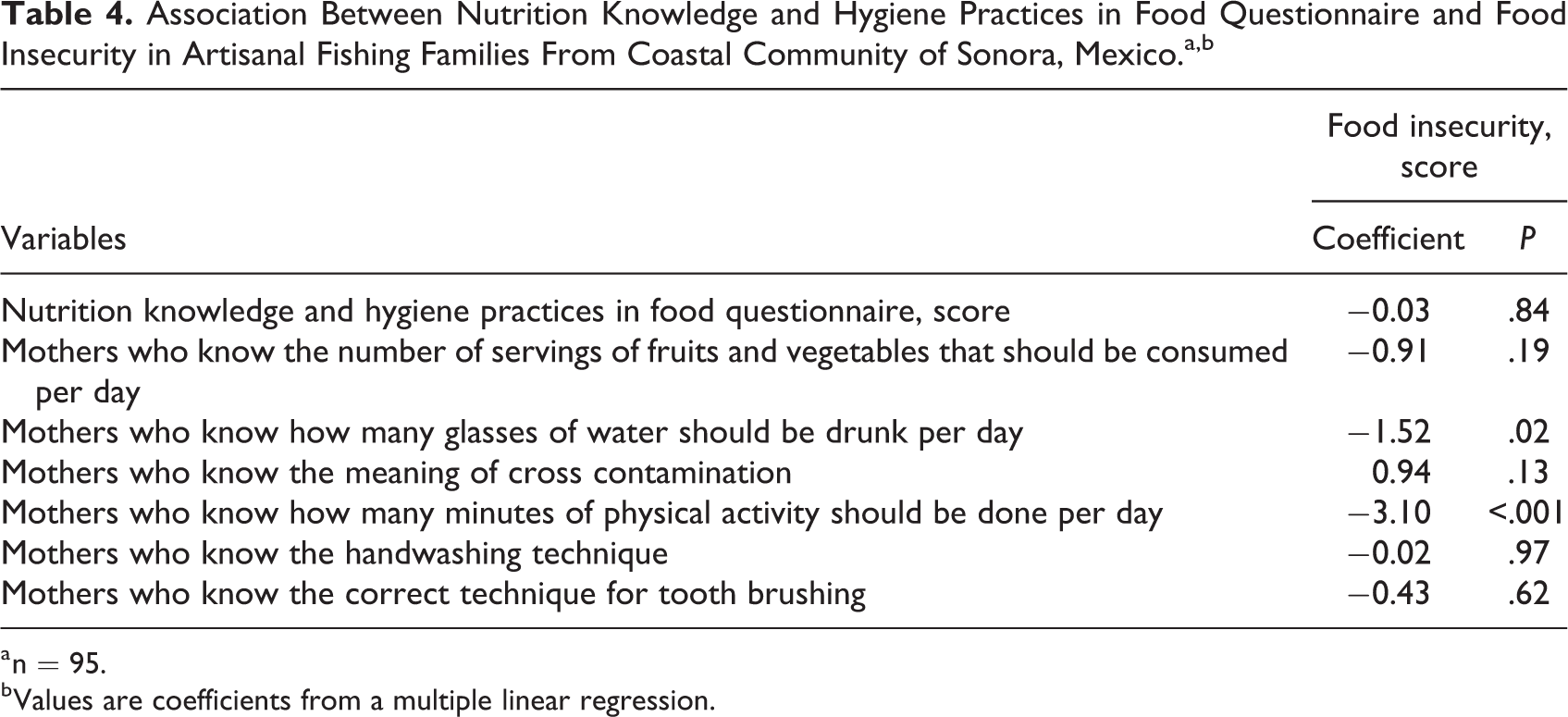
The average score of the nutrition knowledge and hygiene practices in food consumption questionnaire was 14.0 ± 2.7 points. Knowing how many glasses of water should be drunk per day and how many minutes of physical activity should be done per day was associated with lower food insecurity (Table 4).
Association Between Nutrition Knowledge and Hygiene Practices in Food Questionnaire and Food Insecurity in Artisanal Fishing Families From Coastal Community of Sonora, Mexico.a,b
a n = 95.
b Values are coefficients from a multiple linear regression.
Consequences of Food Insecurity
When the percentage of adequacy for the 6 food groups and dietary components was analyzed, consumption above the recommendations was observed, especially for the group of cereals (120%), legumes (240%), and meat (224%). Furthermore, all the dietary components exceeded the percentage of adequacy. Sugar was the highest consumption with an adequacy of 261.4% (Table 5).
Food Groups and Dietary Components Intake Adequacy Among Mothers Living From Artisanal Fishing From Coastal Community of Sonora, Mexico.a,b
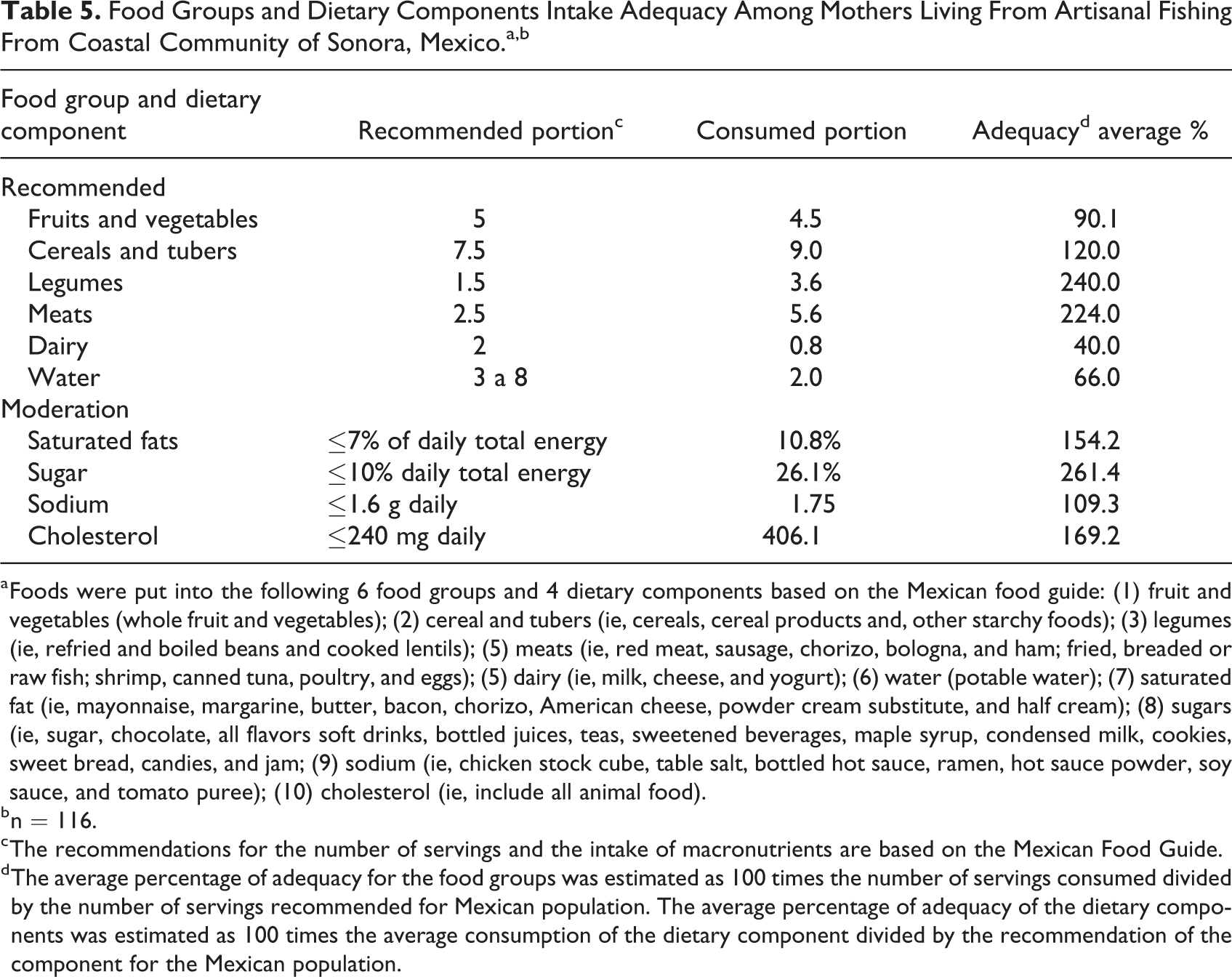
a Foods were put into the following 6 food groups and 4 dietary components based on the Mexican food guide: (1) fruit and vegetables (whole fruit and vegetables); (2) cereal and tubers (ie, cereals, cereal products and, other starchy foods); (3) legumes (ie, refried and boiled beans and cooked lentils); (5) meats (ie, red meat, sausage, chorizo, bologna, and ham; fried, breaded or raw fish; shrimp, canned tuna, poultry, and eggs); (5) dairy (ie, milk, cheese, and yogurt); (6) water (potable water); (7) saturated fat (ie, mayonnaise, margarine, butter, bacon, chorizo, American cheese, powder cream substitute, and half cream); (8) sugars (ie, sugar, chocolate, all flavors soft drinks, bottled juices, teas, sweetened beverages, maple syrup, condensed milk, cookies, sweet bread, candies, and jam; (9) sodium (ie, chicken stock cube, table salt, bottled hot sauce, ramen, hot sauce powder, soy sauce, and tomato puree); (10) cholesterol (ie, include all animal food).
b n = 116.
c The recommendations for the number of servings and the intake of macronutrients are based on the Mexican Food Guide.
d The average percentage of adequacy for the food groups was estimated as 100 times the number of servings consumed divided by the number of servings recommended for Mexican population. The average percentage of adequacy of the dietary components was estimated as 100 times the average consumption of the dietary component divided by the recommendation of the component for the Mexican population.
When mothers were classified according to dietary quality, almost three quarters of them (67.24%) were found in the category of needs improvement, and the average of the healthy eating index score was 60 points (Table 6). In multiple regression, higher food insecurity and higher mother education were associated with lower dietary score. In contrast, higher father education was associated with higher dietary score (Table 7).
Percentages of Mothers Living From Artisanal Fishing From Coastal Community of Sonora, Mexico, According to the Different Categories of Dietary Quality.a
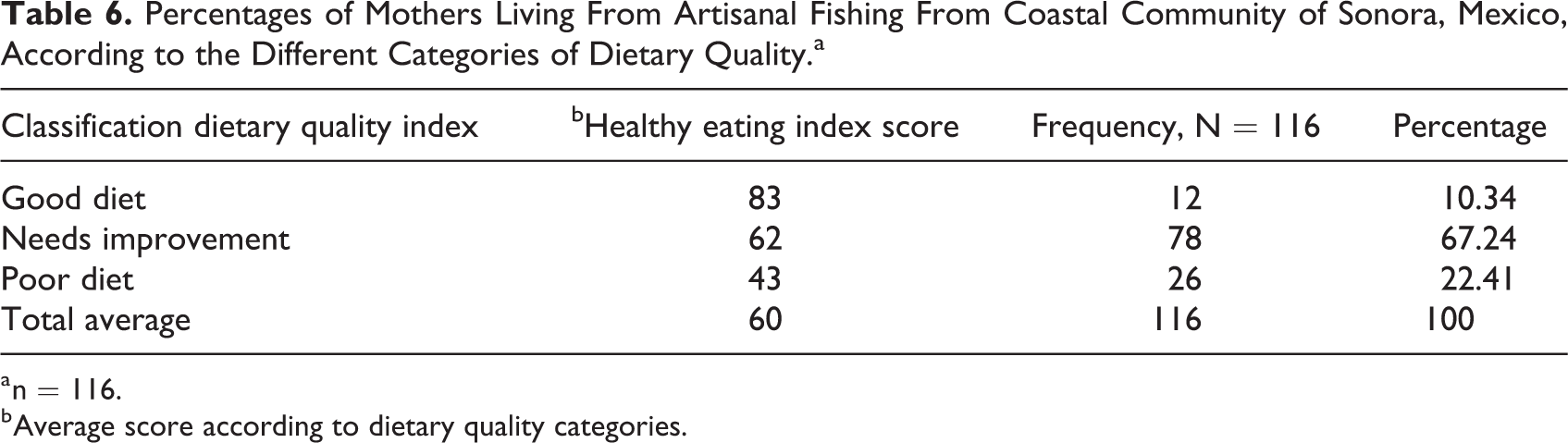
a n = 116.
b Average score according to dietary quality categories.
Association Between Dietary Quality and Food Insecurity in Artisanal Fishing Families From Coastal Community of Sonora, Mexico.a,b
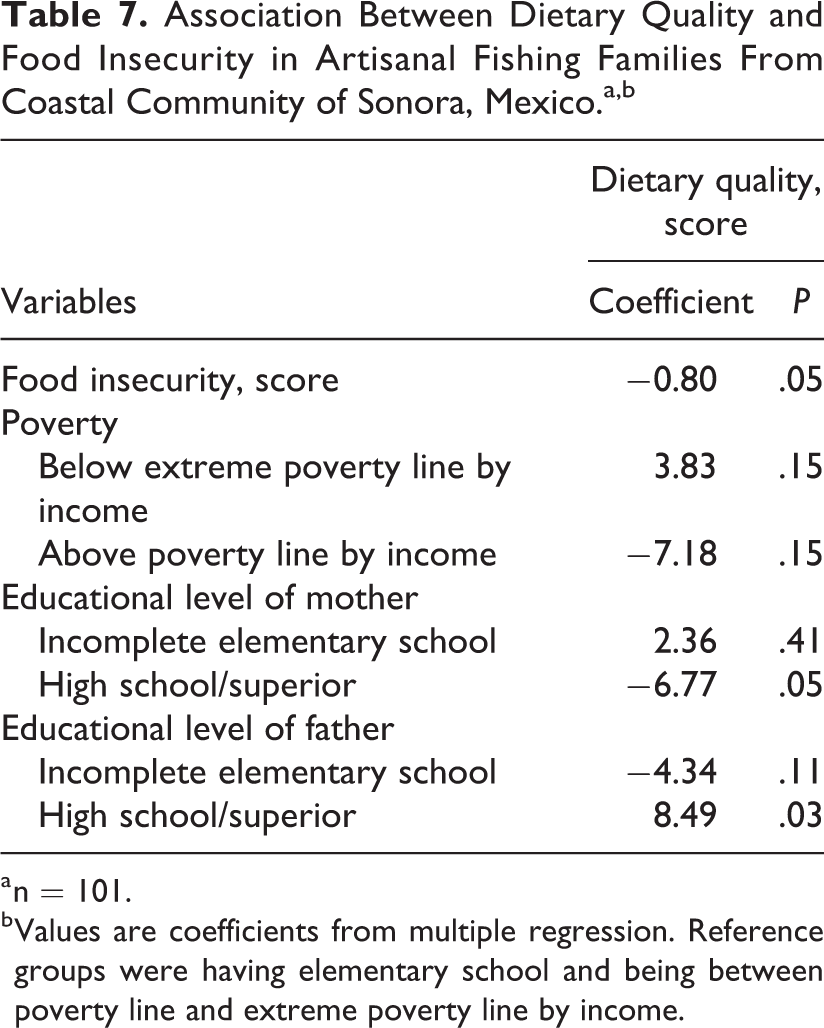
a n = 101.
b Values are coefficients from multiple regression. Reference groups were having elementary school and being between poverty line and extreme poverty line by income.
Nutritional status
The average anthropometric measures of mothers expressed as means ± standard deviation were weight, 78.1 ± 17.1 kg; height, 1.6 ± 0.1 m; body mass index, 31.5 ± 6.5 kg/m2; and waist circumference, 100.9 ± 17.0 cm. One-third (31%) of mothers were overweight, 57% were obese, and 93% had abdominal obesity.
Lower father education was associated with higher waist circumference. Being below extreme poverty line by income and number of children were associated with lower waist circumference (Table 8).
Association Between Waist Circumference and Food Insecurity in Artisanal Fishing Families From Coastal Community of Sonora, Mexico.a,b
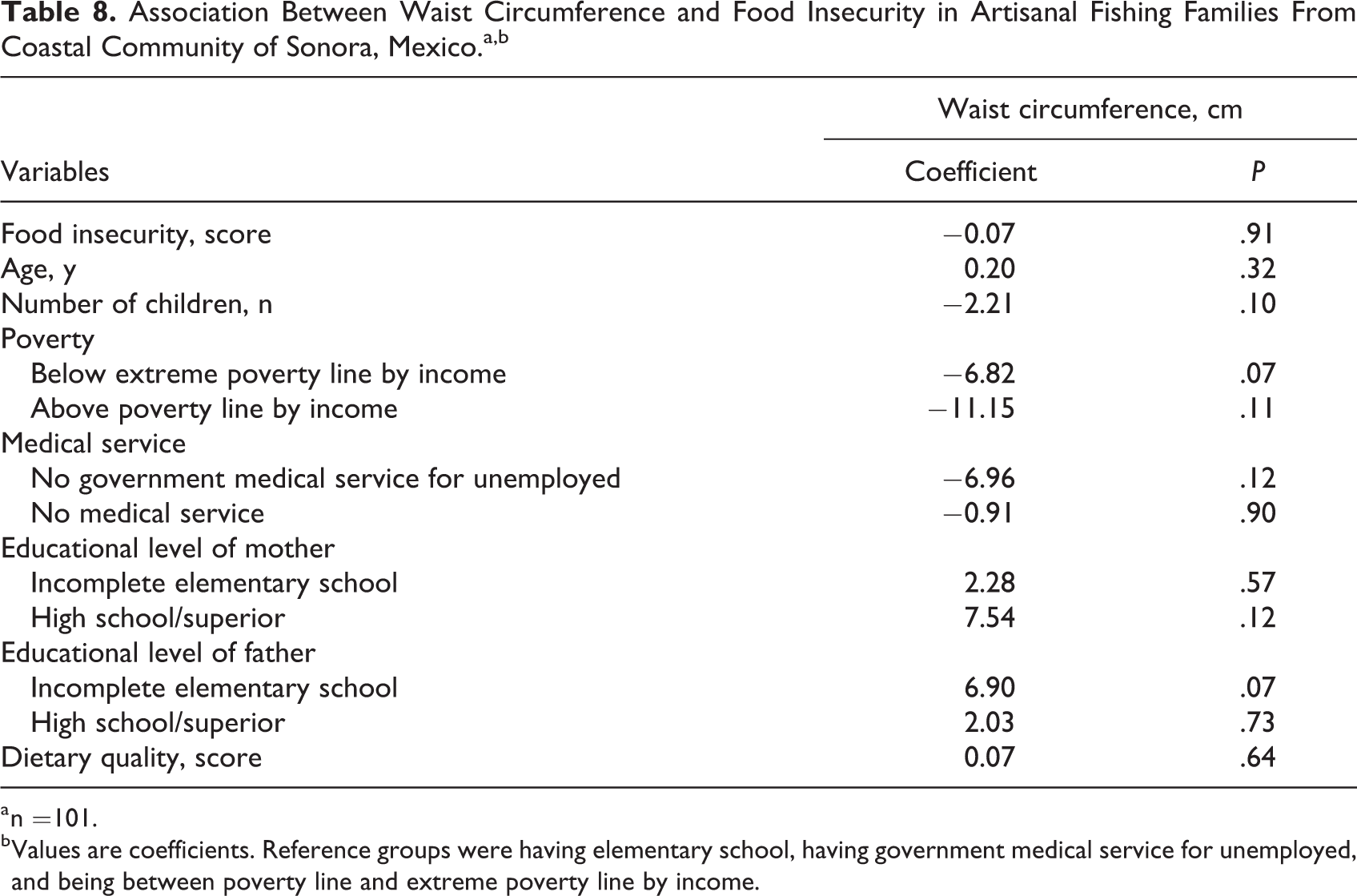
a n =101.
b Values are coefficients. Reference groups were having elementary school, having government medical service for unemployed, and being between poverty line and extreme poverty line by income.
Families’ Experiences of Facing Food Insecurity
Mothers of families reported that the family income is insufficient to acquire an adequate variety of food daily and especially fruits and vegetables and mentioned that their prices are high in the community. We do not buy fruits and vegetables because it is not enough to buy them, we only eat them when we get the government pantry which we receive once a month. My husband has two jobs. One of them is fishing, it is temporary. But when he can’t work on his second job, that’s when he and I have trouble eating properly, but we try not to stop feeding our children. It does feel that we don’t eat variety because of the prices (of food), but we don’t run out of food. My husband does have a good salary, and I try to get them to eat a lot of food, but you can’t always buy a lot (food variety). We have never stopped doing all three meals, but we do have to serve them a few less. Sometimes we go to the community dining room to eat. I haven't stopped doing all three meals … I can stop paying for services, but I will never run out of food … neither my children. I, for lack of money, have had insufficient food, and have had to stop eating one of the meals of the day. I stopped making dinner for me but, I have not left my children without food. What I earn is not enough for me nor my children. Then I have to send them with my mom to eat. I often go with her to eat too. I do get stressed, because the only food is eggs, beans, and potatoes, and the children tell me that they are already angry at eating the same and that is why it is difficult for me to make them eat. But I never run out of food since sometimes the neighbors help me. Once one of them told me that she dreamed that I needed help with food, and the next day she brought me eggs, rice, and beans. Well, it gets difficult (the food situation) when there are winds (the weather), but my oldest son helps me with the expenses. Sometimes the situation is difficult (without money to buy food) and well, my husband and I put up with hunger, and I think that my oldest son sometimes doesn’t eat well either and he stays hungry but he doesn’t tell me anything. Although my husband currently has a job (fishing) in the past months there was nothing (fishing) and it was several days that I only prepared one meal a day and we were very hungry.
Discussion
Almost three quarters of these households that live from artisanal fisheries had food insecurity. They have had to reduce the quality and quantity of food consumed, and some have been hungry due to lack of money. The extent and severity of food insecurity reported was higher than the 58% of households having some extent of food insecurity reported by the National Survey of Nutrition and Health 2018 for Mexican households. 27 Food insecurity was associated with shopping in convenience stores, which generally sell processed foods and little variety of fruits and vegetables. Families above the poverty line had lower food insecurity. Food-secure households with higher income will be able to provide better nutrition for their children because they have more purchasing power, allowing them to choose and prepare healthful but more expensive foods. 28 From an economic standpoint, access to food is a function of purchasing power. But purchasing power is not just a function of household income. The neighborhood food environment is also an underlying determinant of access in that it affects the cost of purchasing an adequate diet. In neighborhoods without supermarkets, residents likely face higher prices for many healthy foods, because small stores often charge higher prices for items such as fresh fruits and vegetables. 29 Convenience stores (ie, tienditas) usually are located in low-income neighborhoods and do not offer fresh foods but they do have a large availability of snacks high in salt and fat and soft drinks. 30 To get healthy food items, residents need to travel to outlying supermarkets, which are usually located far away from low-income communities. 29,30 This transportation cost increases the overall expense of acquiring a healthy diet. For those who do not own a car or who are not on a convenient public transportation line, the cost in out-of-pocket expense, as well as in time, can be substantial. 30
These households spent a high percentage of their income (67%) on food and beverages. According to Engels’ law, a family does not present problems of access to food when the percentage of their expenditure on food is less than 30%. 31 These coastal area families allocated twice the threshold line proposed by Engels and twice the national average of expenditure on food and beverages of 35.3% in 2018. 32 In developed countries such as Denmark, Germany, and Austria, among others, households spend about 15% of their total income on food and beverages. 33 Therefore, this situation reflects a constant state of food insecurity and that should be considered to promote intervention strategies focused on improving food security for fishers’ families.
A high percentage of mothers (43.5%) and fathers (49%) did not finish elementary education; both are above the national average (34.4%). Incomplete elementary education in mothers was associated with greater food insecurity, and high school or superior education in fathers was associated with less food insecurity. International studies have shown that the higher the parents’ educational level, the greater the variety of foods and food security. 34 -36 In addition, the score in nutrition knowledge and hygiene practices in food consumption questionnaire was low in the overall sample. Nutrition education-based interventions targeting low-income families have resulted in positive changes in knowledge, attitudes, and behavior. 37 Therefore, these results should be considered to propose strategic actions and programs that promote the completion of primary education and the improvement of food skills and nutritional knowledge, which can help promote healthy eating.
The lack of access to food of the participating families was manifested in the poor dietary quality; a large percentage of them were classified as families that need to make changes in their diet. International studies have shown a higher educational level can influence the acquisition of healthier foods, including better diet quality. 38 A study whose purpose was to relate the food insecurity of Mexican households with dietary diversity, however, reported a prevalence of 31.4% of low dietary diversity even among households with food security. 39 Therefore, we expected to find a positive association between education and quality of diet among mothers. Not observing this trend may be due to other social, cultural, environmental, and economic conditions. Only 2.5% of mothers have university studies, and a high percentage of the husbands (83.3%) of these mothers have no elementary or incomplete elementary school. Perhaps the low education of the father influences the family income to access food that they can acquire and consume, since we found that the parents’ secondary school and university studies were associated with a higher quality of diet.
Low dietary quality is influenced not only by monetary income and education but also by the high availability of low-priced processed and ultraprocessed foods observed in Mexico. 40 Food environments in Mexico in both urban and rural areas have undergone major changes in the last 40 years. 40 In general, the entire Mexican population has been changing traditional eating patterns for a high consumption of foods rich in cholesterol, saturated fats, sugars, and sodium, among other nutrients. Seeing a lot of processed foods in all corners of Mexico compared to fresh foods such as fruits and vegetables is common. 40 In addition to this change, the Mexican population has one of the highest obesity rates worldwide. 21 Therefore, the lack of income and the local food environment in the community reduce access to food quality since families have poor food quality regardless of education.
Incomplete elementary school in fathers was associated with higher waist circumference in mothers. Social and economic status and education of the spouse may be important and influence obesity-related behavior. 41 Mothers in this community may have adopted the customs and traditions of their husbands, which in turn depend on the education that they have, the majority being basic. Educational level can have a considerable impact on the adoption of eating habits and physical activity that lead to problems related to nutrition. 41
Waist circumference and body mass index were not associated with food insecurity. Families having a higher number of children and being below poverty line by income had mothers with lower waist circumference, which can be interpreted in light of the type of household to which mothers and their children belong. About two-thirds (64%) of the participating mothers were not married and instead were living in a common-law marriage, divorced, or single. In this type of household, families face financial, time, and/or material limitations that together prevent consumption and life habits that would lead to abdominal obesity. 42 In addition, lack of amenities, such as having their own car and recreational services such as cable television and the Internet, could contribute to low waist circumference in mothers of low socioeconomic status in this community. Rural Mexican settings, such as the studied community, have been associated with a lower prevalence of abdominal obesity compared to communities in urban settings. 42 Longitudinal study of the long-term effects of food insecurity on weight and waist circumference and that permit elucidation of paths and mechanisms of this relation are needed, 43 especially in communities that depend on fishing as their main livelihood.
Conclusions
Families residing in the coastal community of Sonora, Mexico, experience high prevalence of food insecurity. Fresh fruits and vegetables are not available all the time in these places, which together with low income and the high percentage of income needed for the purchase of food causes that families do not have access to them. Families with and without food security are exposed to foods of low nutritional quantity and quality; the constant access to this type of food is reflected in the nutritional profile of the mothers. Likewise, the education and family income to which households are exposed prevent adequate food security.
Attention is required in developing strategies to improve food security as well as its social and economic determinants and prevent its consequences. Actions should focus on improving income, raising the educational profile of men and women, and promoting purchase and consumption of healthy foods in the coastal community of Sonora, Mexico, in all family members. Financial and nutritional support programs that provide better food security are also important if designed based on in-depth understanding of the people’s lives so that the programs reduce food insecurity without contributing to excess body weight. 44 -47
Footnotes
Authors’ Note
TQP, EAF, KDMC, and JGCM designed the study. EAF, MAGCM, VLT, and TQP helped in translating the document. JGCM and KDMC applied surveys and made the measurements. TQP, KDMC, EAF, and JGCM analyzed the data and performed statistical analysis. TQP, EAF, and KDMC wrote the manuscript. EAF, TQP, MAGCM, and VLT provided critical feedback on the manuscript. All authors read and approved the final manuscript.
Acknowledgments
We would like to thank Armida Espinoza Lopez, Marco Antonio López Torres, and Elsa Yadira Moreno Moreno for technical assistance and all study participants for their contribution to this work.
Declaration of Conflicting Interests
The author(s) declared no potential conflicts of interest with respect to the research, authorship, and/or publication of this article.
Funding
The authors received financial support for this article from Universidad de Sonora, Mexico.
