




Abstract
Background:
Solutions to create enabling nutrition environments must come from within communities and involve multiple sectors. As vital actors in community mobilization, rights-based advocacy, and accountable public institutions, civil society organizations (CSOs) can help ensure nutrition programs and policies represent and reach all community members to achieve impact.
Objectives:
To review attributes of civic engagement in multisectoral nutrition governance systems and to provide recommendations to increase CSO participation.
Methods:
We reviewed 7 national case studies of Civil Society Networks involved with the Scaling Up Nutrition movement and characterized 6 functional attributes of CSOs in multisectoral nutrition governance: identify needs of all community members, mobilize and build civic capacity, advocate for political commitments, inform program design and evaluation, ensure accountability mechanisms in public institutions, and report challenges and successes using broad media campaigns.
Results:
All studies described government agencies involved with multisectoral nutrition governance systems, at national and subnational levels; however, there was limited evidence of subnational platforms for CSO engagement. Although countries increased investments in public institutions for nutrition, it was unclear whether nutrition service quality improved and none reported corresponding investments in civil society.
Conclusion:
Our characterization identifies strategies to engage CSOs in multisectoral nutrition governance at multiple ecological levels. We hope future adaptation and application of this characterization will increase community ownership and diverse representation in nutrition governance systems. Both of these are key to enabling national and international entities to address malnutrition’s underlying determinants in ways that align with local contexts, values, and systems change processes.
Keywords
Introduction
The Food and Agriculture Organization (FAO) of the United Nations identified the right to food as a basic human right. 1 Participatory governance systems that work at multiple levels—global, national, and local—are needed to ensure policies, programs, and activities enhance nutrition and food security for all. 1 Additionally, governance systems should involve the multiple sectors that influence nutrition within each ecological level. 2 Engaging civil society organizations (CSOs) is one strategy to help respond to the demand for nutrition governance systems that are accountable to human rights, respond to community priorities, and address malnutrition’s contextual and multifactorial determinants. 3 -5
Even though participation by civil society is considered an important dimension of governance systems to ensure equity and human rights are considered, 6,7 few studies have analyzed or characterized civil society engagement in nutrition governance. Thus, there is limited understanding of ways to structure civil society participation in nutrition governance systems, the relative benefits of their engagement, and measures for evaluating the contributions to intended and unintended outcomes of nutrition governance systems. To help address this gap in knowledge related to civil society engagement, this study is guided by the following operational research questions: What are structures for civil society engagement in multisectoral nutrition governance systems? What are the functional attributes of civil society engagement? And what are example measures or effects attributed to civil society engagement? This article had the following aims: review what is known about the structural attributes of civil society engagement in multisectoral nutrition governance systems, identify measures used to evaluate the impacts and characteristics of civil society engagement in these systems, and provide recommendations for how public institutions and national and international entities can increase diverse civic participation in these systems to accelerate good nutrition outcomes for all.
Defining Nutrition Governance
Globally, the primary drivers of morbidity and mortality result from malnutrition. 8 An estimated, 1 billion people are undernourished, including 33% of children in low and lower-middle-income countries (LMICs). 9 At the other end of the nutrition spectrum is the challenge of overconsumption of calories: nearly 2 billion people globally are classified as overweight or obese, increasing risks of chronic disease. 10 Specific to sub-Saharan Africa, about 58 million children younger than age 5 are stunted, 11 and the number of African children who are overweight or obese has nearly doubled from 5.4 million in 1990 to 10.6 million in 2014. 12 Malnutrition costs national economies in Africa between 3% and 16% of gross domestic product annually. 13
Poverty, food insecurity, and malnutrition are linked to poor health and cognitive development for individuals and also hold back nations from economic, social, and political development. 14 According to the 2018 Global Hunger Index, Burundi and Eritrea have sub-Saharan Africa’s highest rates of child stunting, at 55.9% and 52.8%, respectively. 15 In Burundi, child stunting is largely attributed to political unrest and forced migration. While in Eritrea, factors such as limited arable land, water shortages, and frequent droughts are cited as primary drivers. 15
Despite growing recognition of the need for policy strategies to address the local and multifactorial drivers of malnutrition, the concept of “nutrition governance” remains poorly understood. In LMICs, most analyses of nutrition governance have occurred at national levels, with case studies examining institutional and political factors affecting multisectoral policy coherence across government agencies. 3,5,16 -21 In high-income countries, the studies of nutrition governance are limited. Those that exist have primarily emerged from the food systems movement and focus on agricultural and trade policy reforms with little mention of multisectoral coordination. 3,22,23
To help address this lack of clarity about nutrition governance, a 2017 report by Friel et al and commissioned by the United Nations Standing Commission on Nutrition attempted to better define the term. 24 The authors describe nutrition governance as the “network of actors whose primary, designated function is to improve nutrition outcomes through processes and mechanisms for convening, agenda setting, decision-making (including norm-setting), implementation, and accountability.” 24 (p4)
Monitoring Nutrition Governance
Different tools have been developed to monitor nutrition governance and make comparisons across countries. One more widely used tool developed by the World Health Organization is the Nutrition Landscape Information System that classifies a country’s nutrition governance system as having weak, medium, and strong “readiness to accelerate action in nutrition” based on 10 criteria (Figure 1). 25 However, this tool and its indicators have been critiqued for being inadequate to ascertain whether “strong” nutrition governance results in positive nutrition outcomes. 26 Additionally, national-level tools fail to capture whether policy implementation reaches all groups and have limited capacity to ascertain disparities at the subnational level (ie, within certain populations or geographic areas). 27 To respond to the need for more reliable and standardized tools to determine relationships among nutrition governance systems stakeholder groups, policy-making processes, and nutrition outcomes, researchers from the Institute of Development Studies (IDS) created a conceptual framework, 21 identifying 4 components of nutrition governance: multisectoral cooperation, vertical coordination, sustainable funding, and monitoring and advocacy. The IDS conceptual framework also recognizes the need for multisectoral cooperation structures to exist at both federal and subnational levels (ie, vertical coordination).
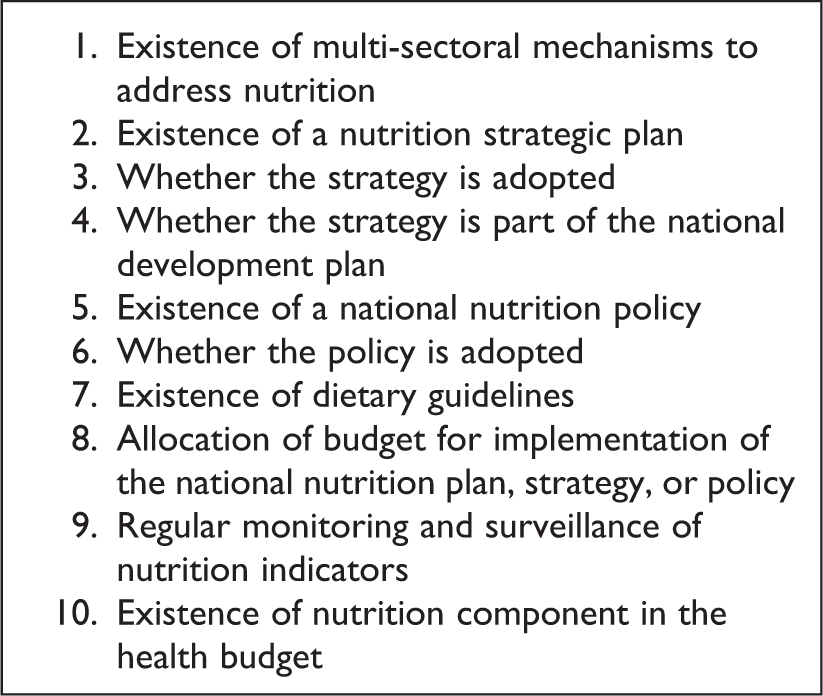
Ten elements of effective nutrition governance from the World Health Organization’s Nutrition Landscape Analysis tool.
Characterizing Multisectoral Nutrition Governance
Since in most countries no single agency is responsible for nutrition, 3 problems have emerged that have hindered progress in coherent nutrition governance, calling attention to the need for multisectoral cooperation in nutrition governance. First, there are unresolved competing interests, where policies in one agency may unintentionally accelerate poor nutrition outcomes, for society as a whole or specific populations. For example, agricultural subsidies that promote production of crops for their economic potential but have low nutritional value or high-input (eg, labor and water) requirements, or safety and nutrition standards for school feeding programs which add an implementation, monitoring, and enforcement burden to educational agencies that already struggle with insufficient staff and resources. 28 Second, there is fragmentation, as agencies lack shared measures, coordinating bodies, and processes to evaluate how their efforts can work together toward collective impact. Fragmentation limits sustained and coherent commitments for nutrition across government agencies. 4 Finally, there has been a lack of ownership about who should be responsible for ensuring nutrition, both in reference to public institutions and in nongovernmental entities. Some have argued responsibility be held by individuals for their personal choices; others have noted the role of government agencies in establishing dietary guidelines, food labels, and taxation; while others cite food industry’s responsibility for what foods are available and advertised in the marketplace. 29
Given the complex drivers of malnutrition, no single sector can adequately address all of them. 19,30 The concept of “multisectoral cooperation” is intended to address this limitation by building sustained and coherent government commitments across agencies and with nongovernmental actors. 21 In the context of nutrition governance, we define the actors of multisectoral cooperation to include stakeholders from 4 groups: government, civil society, research/academic institutions, and private sector. The types of stakeholders represented within each category and their roles vary depending on cultural and political contexts. 31 Generally speaking, however, government stakeholders are public institutions that develop policies and institutional plans. Civil society organizations help ensure voice and participation of diverse constituents. Research and academic institutions study the impacts of programs and policies and help develop workforce capacity. And private sector supports economic viability, innovation, and the potential for sustainability beyond grant funding.
Civil Society Engagement in Nutrition Governance
Civil society organizations are broadly understood as diverse organizations that represent aspects of the public sphere and serve the interests and values of their members. Former Secretary General of the United Nations, Kofi Annan, defined civil society as the “sphere in which social movements organize themselves around objectives, constituencies, and thematic interests.” 32 (p133) The diverse, localized, and specialized knowledge that civil society actors provide is necessary in the context of nutrition governance, in part, because malnutrition disproportionately affects vulnerable populations, 33 who may be excluded from formal power-brokering and policy-making processes. 34,35 Therefore, top-down, centralized policies can fail these groups by not responding to their priorities, beliefs, or contexts. The United States Agency for International Development examined roles civil society performed on funded projects working to end preventable child and maternal deaths in LMICs. 36 The report identified 5 unique improvements in maternal health that resulted from civil society participation: (1) increased public awareness of unmet health priorities and the importance of health service delivery, (2) increased funding for high-priority public health topics, (3) development of participatory governance platforms, (4) increased demand for and use of quality health-care services, and (5) improved health outcomes, particularly among vulnerable populations.
Civil society participation is generally endorsed as essential to ensure equity and human rights are considered throughout policy-making, implementation, and evaluation processes and as a mechanism for accountable governance systems. 37,38 However, recent studies have examined this assumption in the context of health systems governance. 39,40 One study found limited empirical evidence linking civic engagement with democratic health governance processes. 41 The authors noted “civil society partners’ main role seems to be to advocate and raise funds for the partnerships, as well as discuss best practices to implement programs more effectively.” 41 (p934) This finding contradicts normative discourse in health systems research about civil society’s ability to serve as a watchdog and advocate for rights of certain populations. This is not to argue that civil society participation is unimportant in health and, by extension, nutrition policy-making processes. Rather, it highlights the need for more research regarding attributes of civic participation in policy-making processes and the contexts in which CSOs ensure diverse representation in multisectoral nutrition governance systems.
Methods
Study Selection
We selected case studies from the Scaling Up Nutrition (SUN) movement. The SUN movement was established in 2010 in recognition of uneven and insufficient progress—across and within countries—in achieving nutrition targets for the Millennium Development Goals (MDGs), which were set to expire in 2015. 21 Unless broad and coordinated commitments were made, MDG targets would not be realized. Recognizing this, the SUN movement was formed to encourage broad-based political commitments to improve nutrition (Figure 2). 42 Scaling Up Nutrition was framed around the FAO’s rights-based approach to food and nutrition and was unique at the time in convening multisectoral stakeholder groups—CSOs, academic institutions, the United Nations, donors, and national governments—in collective action to improve nutrition. 43 Scaling Up Nutrition promotes nutrition as a universal agenda in member countries. On a global level, the SUN movement has assisted nations by providing platforms for information-sharing, joint monitoring and evaluation processes, and implementation materials. Within the SUN movement, the Civil Society Network (CSN) is 1 of 4 pillar networks. It is comprised of farmer, human rights, labor union, indigenous, women, youth, fisherfolk, humanitarian, and consumer organizations. As of February 2017, more than 2100 CSOs from 34 countries had membership in the SUN CSN alliance. The selection of national SUN case studies for our study was intended to better explore cases where civil society actors were recognized and integrated within formal governance structures. As the SUN movement continues to gain new members, additional analyses will be published. The time frame of cases included in this study was limited to those published between January 2010 and February 2017.

Vision, goals, and principles of the Scaling Up Nutrition (SUN) movement.
Inclusion Criteria
Articles included in our study met the following criteria: the country was a member of the SUN movement and had a CSN; the CSN had at least 2 sectors involved in nutrition coordinating platforms, at least one of which being civil society; and the CSN worked at a minimum of 2 ecological levels (eg, national and regional, or national and district).
Search Strategy
Our 6 studies were based on a search of all publications reported before February 2017, using the following search engines: PubMed, Google Scholar, Cochrane Collaboration, the Database of Abstracts of Reviews and Effects, and PLoS. Keywords searched: ((“civil society” OR “civil society organizations” OR “civic engagement”) AND (“multisector” OR “multisectoral” OR “multi-sector” OR “multi-sectoral”) AND (“nutrition” OR “nutrition governance” OR “governance in nutrition”) AND (“scaling up nutrition” OR “SUN”)).
A total of 13 results were returned. Two were removed because they focused on civil society engagement in the global food security movement; 3 were removed because they occurred before the SUN CSN alliance was formed and did not have national or multilevel civil society nutrition coordinating bodies; 1 was removed because it focused on nutrition budget allocations rather than the roles or capacity of civil society and other sectoral actors. The remaining 7 articles are listed in Table 1.
Summary of Civil Society Network Case Studies Included.
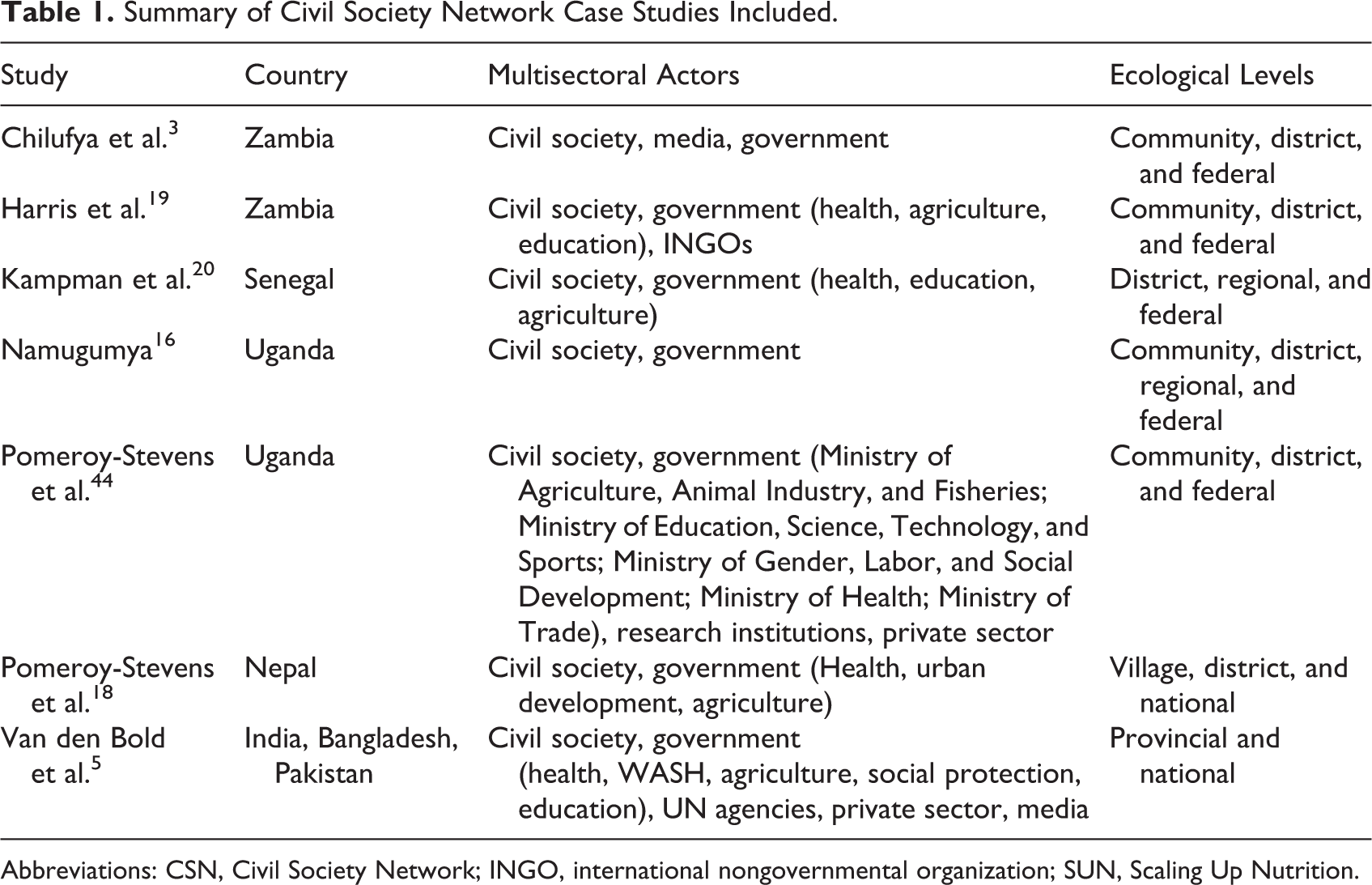
Abbreviations: CSN, Civil Society Network; INGO, international nongovernmental organization; SUN, Scaling Up Nutrition.
Data Extraction
Data extraction was performed by one of the authors and cross-checked by one other team member. Data extracted included specific information on authors, year of publication, country studied, year the CSN was established, types of multisectoral actors, ecological levels, structure of the CSN, functional attributes of civil society, outcomes assessed, and impacts attributed to civil society engagement. Finally, we noted key conclusions or findings reported in the included case studies. This deductive approach enabled us to better adapt our conclusions as we reviewed more cases and to include unexpected findings. Data extraction tables were developed by generating a set of dimensions for each operational research question: What is the structure of civil society engagement in multisectoral nutrition governance? What are the functional attributes of civil society engagement? And what are example measures or effects of nutrition outcomes attributed to civil society engagement?
Results
Characteristics of Included Studies
Case studies were reviewed from the following countries: Bangladesh, 5 India, 5 Nepal, 18 Pakistan, 5 Senegal, 20 Uganda, 16,44 and Zambia 3,19 (2 published cases each from Uganda and Zambia).
Socio-ecological levels
The lowest level of coordination mentioned was the district or village level for all countries except Pakistan. In Pakistan, provinces were the locus for coordination. Pakistan recently established a decentralized model of governance giving every province autonomy to plan and set priorities. It was unclear in this case study if coordination structures exist below the provincial level. 5
Multisectoral engagement
No study provided a list of CSO members in their CSN alliance. However, all studies described specific government agencies and their involvement at multiple ecological levels. Agencies noted included health; agriculture; fisheries and/or livestock; education; gender; women’s development; social welfare; water/environment/sanitation; finance; trade, industry, and cooperatives; and planning, development, and reform. In Senegal, the government’s Nutrition Enhancement Program Programme de renforcement de la nutrition (PRN)—first launched in 2001—was cited as critical to establish a “clearer definition of the role that each agency plays to address nutrition.” 20 The authors suggest that Senegal’s political commitments to fund and continue to sustain multisectoral nutrition programs result from having a high-level, national coordinating body for nutrition, inferring an association between national coordinating structures, and the ability to mobilize financial and human resources for nutrition. In Zambia, there were clear multisectoral coordination structures at the national level and in certain districts. However, the authors noted that further research is needed to determine whether nutrition policy and governance systems result in improvements in the quality of services, particularly those delivered at the district and other subnational levels.
Structure of SUN CSNs
In Figure 3, we provide a schematic for how the SUN CSN alliance is structured, starting from the international SUN Secretariat and Lead Group down to a national CSN. There are rules to guide national structures, such as appointing a national Civil Society Alliance (CSA) coordinator to convene meetings among national members and facilitate communications. However, no study described subnational structures or guidelines, whether village- and district-level CSOs were involved in the CSN network, or if CSN members were only organizations with national orientations (as opposed to representing regional or subregional organizations). Thus, in contrast to the detailed descriptions of subnational nutrition government structures described in the previous section, what remains unclear is how civil society is engaged in nutrition governance systems at subnational levels.
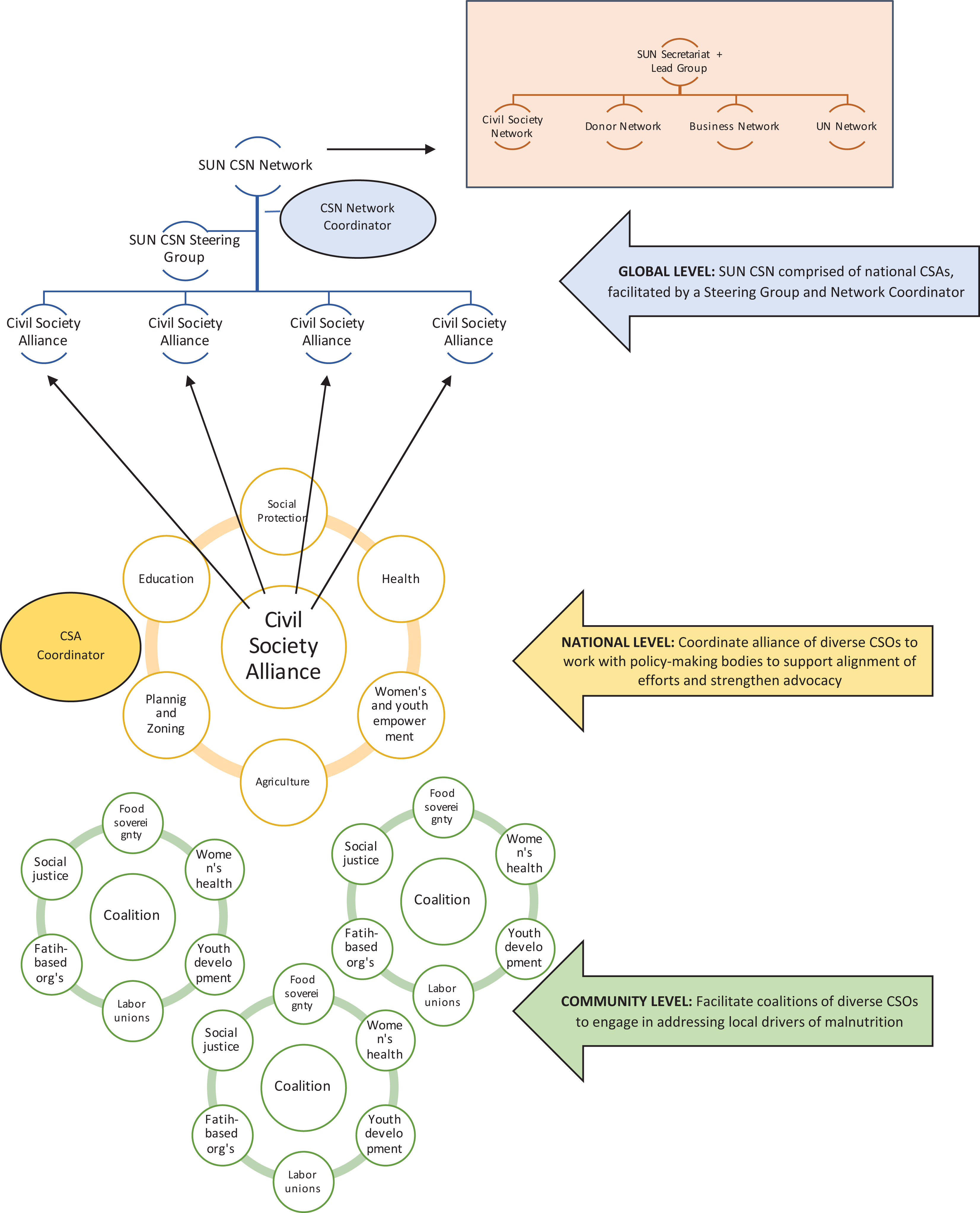
Example schematic for a Scaling Up Nutrition Civil Society Network structure, describing relationships among (from top to bottom) the international coordinating body, national Civil Society Alliance network, and community coalitions (February 2017).
Functional Attributes of Civil Society in Nutrition Governance
From our analysis, we characterized functional attributes of civil society and the roles CSOs tend to perform specific to multisectoral nutrition governance. Six attributes emerged, including: Identify needs of all community members, including the ability to reach traditionally marginalized groups. Mobilize members and build capacity for civic engagement. Advocate for political commitments (ie, sustained funding, human resources, and policy initiatives). Inform design and evaluation of interventions. Ensure accountability mechanisms and surveillance systems for public institutions to track impacts of nutrition policies. Report successes and challenges using media.
We created a data extraction table, identifying in which country these attributes were exhibited, and examples of what the attribute looked like (Table 2). For example, in Uganda, attribute 2 (ie, mobilize and build civic capacity) was described as training and developing the capacity of nutrition champions “at all levels” and creating nutrition discussion platforms at national and subnational levels. While in Pakistan, the focus of civil society mobilization was indicated at a single level, the provincial level. Our analysis also indicated that only one of the CSN alliances (Nepal) documented civil society activities in all 6 attributes.
Data Extraction Table of 6 Functional Attributes of Civil Society Engagement in Multisectoral Nutrition Governance Systems, Reported by Country.
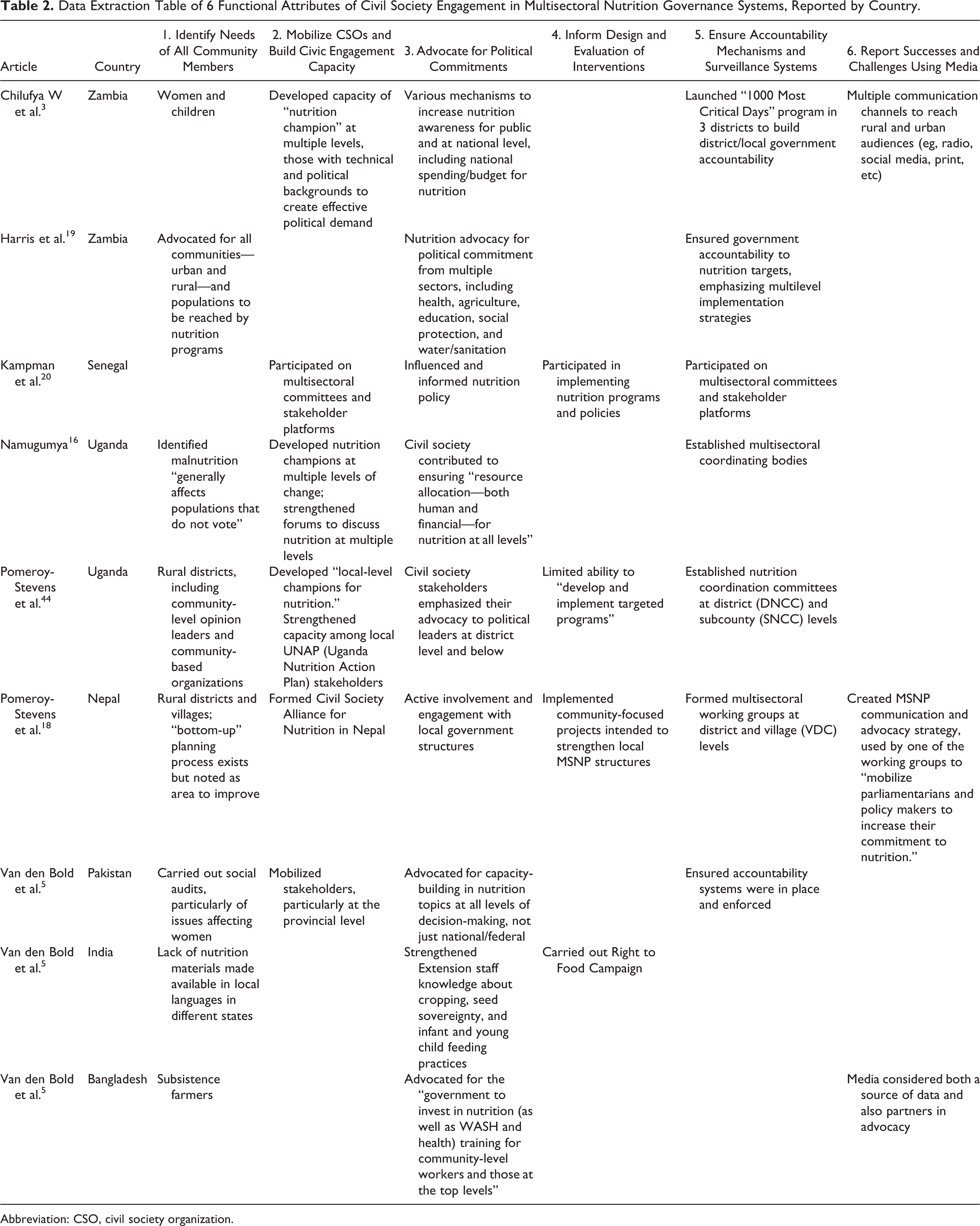
Abbreviation: CSO, civil society organization.
Measures of Nutrition Impacts Attributed to Civil Society Engagement
No study described direct or indirect impacts of civil society engagement on nutrition outcomes. This in part may be due to the nature of the cases being analyzed, as their focus was on the development of multisectoral nutrition governance systems broadly without a specific lens on either civil society or nutrition outcomes.
Discussion
Characterizing Civil Society Engagement in Nutrition Governance
There is promising evidence that strengthening systems and working on nutrition governance (ie, policy-level change) more successfully improves nutrition than delivering only direct nutrition services. 45,46 Systems strengthening approaches can include activities in core systems areas—for example, borrowing a health systems models for systems strengthening, this includes human resources, finance, governance, information, technology, and service delivery—in order to achieve the goals of a system. 47 However, system components look different within different community, cultural, and political contexts and require localized understanding. 48
In each study, there was indication (direct or indirect) that having a high-level, national nutrition coordinating body resulted in subsequent financial and human investments in nutrition governance systems. Further study is needed to ascertain what proportions of these investments were allocated to governmental or nongovernmental actors and, at what ecological level, questions that were beyond the scope of the studies included in this review. However, none of the reviewed studies critically explored questions of how nutrition rose to national attention, what role CSOs played (if any) in putting nutrition on national agendas, and what kind of CSOs was represented on national coordinating bodies. Van den Bold et al noted that there were 2 catalysts in India that increased attention to nutrition: the 2011 New Delhi 2020 conference, “Leveraging Agriculture for Improving Nutrition and Health,” and India’s 2013 Food Security Bill. The authors then described government initiatives in nutrition-sensitive agriculture and inclusion of nutrition training for government workers within Indian universities. Generally, there appears to be more discourse and shared understanding about the roles government agencies perform in advancing nutrition and less clarity about roles of broader multisectoral stakeholders and, specifically, civil society. The lack of nuanced descriptions of CSOs in the case studies may in part highlight a future research opportunity to better characterize roles that civil society performs in nutrition and broader health advocacy and under which political, cultural, and social conditions.
Structure of SUN CSNs
Interestingly, all case studies described how CSNs were integrated into formalized governance planning processes at the national level. Few studies described civil society integration with governance planning processes at the subnational level. This may present an opportunity to further study and understand whether the ecological level of civil society engagement in nutrition governance affects nutrition determinants or outcomes. Additionally, since national nutrition coordinating bodies—such as the SUN CSNs—are relatively new and continue to emerge, this may provide an opportunity for CSOs to inform the SUN CSN Alliance guidelines. In particular, about ways to structure, coordinate, and facilitate vertical integration of CSOs into subnational nutrition governance systems, which appears to be lacking. One challenge establishing consistent subnational coordinating structures is that every country has different political contexts, local processes for decision-making (including indigenous systems), and expectations and definitions of “leadership.” Thus, developing recommendations for subnational platforms for CSO engagement may require in-depth interviews and qualitative analyses to recommend strategies that are appropriate under these different scenarios.
Functional Attributes of Civil Society in Nutrition Governance
As mentioned above, only the Nepal case study reported civil society performance in all 6 attributes. One possible explanation why only one case study described all 6 attributes could be the cyclical nature of addressing nutrition challenges, as some attributes may not have been needed in the given political context or have yet to occur. This could also reflect a methods gap, as the studies we reviewed explored multisectoral nutrition governance from different disciplinary perspectives, and as yet, there is limited common language or assessment tools to ensure shared measures for characterizing and describing civil society engagement. However, the gap in common language and measures could be changing, as the SUN CSN alliance promotes better integration and shared terminology, being achieved in part through trainings for CSA networks.
Finally, while we broadly grouped attributes into the 6 categories, there was variation in how these attributes looked within different country contexts. Take, for example, the attribute of “mobilize civil society organizations and build capacity for civic engagement.” In case studies from Uganda and Zambia, the authors cite the strategy of training “nutrition champions,” those being “individuals…with public faces and passion…to advance the nutrition agenda.” 3 Such an approach reflects a one-directional exchange, transferring skills and knowledge from government agencies and international nongovernmental organizations to communities. What remains unclear is whether platforms or structures exist—and, if they do, what they look like—for CSOs to influence and inform public institutions and policy-making processes. This bidirectionality is important in systems strengthening. For example, in a recent analysis of multisectoral collaboration in a scaled-up health and nutrition hotline in Malawi, bidirectional coordination and communication structures indicated intentional process improvement operations (feedback loops) important for assessing impact. 49 Such feedback loops can ensure continuous feedback not only at the national but more importantly subnational levels to identify program implementation “gaps and problems” and do so in a timely manner.
Development of Measures to Assess Civil Society Engagement in Nutrition Governance Systems
Two issues emerge related to measuring civil society engagement in nutrition governance. First, there is a lack of indicators—be those outcome or impact measures at the individual, organizational, national, and global levels—for measuring multisectoral nutrition governance, and specifically civil society participation within nutrition governance systems. This in turn limits comparison of civic engagement across and within countries. As mentioned previously, what was perceived as “mobilizing and building civic capacity” in one country looked very different in another context. Second, without the ability to measure civil society engagement in nutrition governance, we are unable to assess whether and what kinds of civic engagement improve nutrition. This presents a future opportunity for public policy researchers, community organizers, and nutrition practitioners to evaluate whether and through what mechanisms civic engagement in nutrition governance contributes to improved nutrition outcomes. This kind of data—quantitative and qualitative—can inform the types of civil society advocacy platforms that are effective and under what kinds of conditions.
Table 3 elaborates a description for each of the 6 functional attributes of civil society engagement in nutrition governance systems and potential ways to measure and operationalize each attribute. The authors are using this matrix to inform a study to evaluate attributes of civil society engagement for a multisectoral nutrition project. We believe this matrix may contribute to discussions about the roles of civil society in multisectoral nutrition governance systems and improve selection of indicators for measuring participation at the subnational level, so that countries can improve local mechanisms for civic engagement to accelerate nutrition progress
Recommendations for Ways to Operationalize the 6 Functional Attributes of Civil Society Engagement in Multisectoral Nutrition Governance Systems.
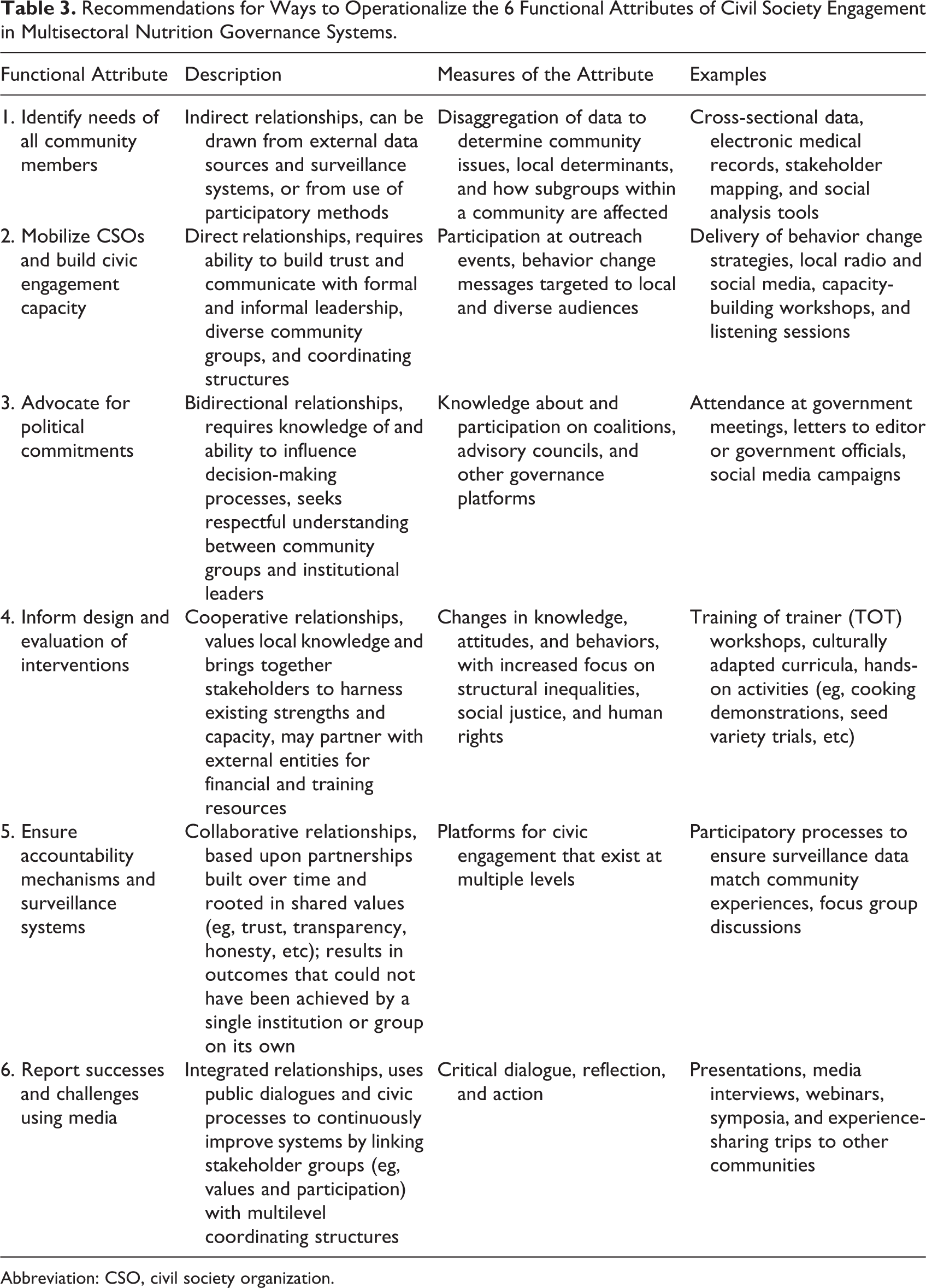
Abbreviation: CSO, civil society organization.
Finally, one rationale for engaging civil society in multisectoral nutrition governance processes—and other “systems strengthening” efforts—is that the issue of malnutrition is too urgent to let things continue as normal. Initiatives intended to reduce malnutrition of any form are often shaped by external priorities (eg, donor agencies) and structured by top-down hierarchical processes (eg, food fortification mandates). When addressing a complex issue—such as obesity or persistent acute malnutrition—that is influenced by determinants at multiple levels, such hierarchical structures do not reflect—and, at times, may disrupt—local leadership and decision-making processes, values, and organizational systems that are necessary for sustainable and meaningful change. 50 Our current ways of “solving” malnutrition are insufficient in part because they do not reflect diverse interests and constituencies, including those CSOs represent. National and international agencies are designing and funding multisectoral nutrition initiatives in the hope that such initiatives will be more effective than siloed, vertical nutrition programming within sectors. Our study highlights research gaps that may inform design of multisectoral governance structures that successfully achieve shared results and collective impact. For example, future research directions may include analyses of nutrition impacts attributed to multisectoral governance systems, synthesis of indicators used to monitor and evaluate civic engagement in multisectoral nutrition governance systems, and national and subnational analyses of civic engagement and advocacy platforms, so that recommendations are better tailored to local contexts.
Limitations
We had a small case study sample (n = 7). Also, no study included in the review sought to answer the same questions that guided this study; rather, they broadly analyzed national and subnational processes advancing multisectoral nutrition governance systems. This analysis reveals that there are opportunities to structure civil society engagement and build participatory processes at multiple ecological levels to influence nutrition governance. However, evidence is scarce for which measures to use to evaluate civic engagement in nutrition governance (and at multiple levels), what kinds of impacts (direct or indirect) can occur, and mechanisms used to achieve these results, presenting areas for future study. Our analysis, therefore, identifies the opportunity to look beyond the existing fields working in nutrition and convene interdisciplinary expertise (eg, social network analysis, human rights advocacy, policy analysis) to guide rigorous study design and evaluation to generate better evidence.
Conclusions
As multisectoral nutrition governance systems emerge globally in ways that respond to diverse and dynamic contexts, practitioners and researchers are exploring the question: What are we trying to achieve when we engage civil society in these governance systems? Because if we expect the processes of civic engagement to improve how interventions are designed, delivered, and assessed (explanation for “how” civic engagement happens), we need one set of evaluation approaches, methods, and tools. But if we expect civic engagement to accelerate nutrition outcomes and impacts (justification for “why” to involve civil society), we may need a different set of tools. As this work continues, we need to keep advancing multisectoral approaches, methods, and analyses in ways that integrate processes for civic engagement at multiple ecological levels with nutrition outcomes. We hope that future adaptation and application of this study’s novel characterization will increase community ownership and diverse representation in nutrition policy-making and governance systems. Both of these are key to enabling national and international entities to address malnutrition’s underlying determinants in ways that better align with local contexts, values, and systems change processes.
Footnotes
Authors’ Note
The authors have read the Food and Nutrition Bulletin’s guidance on competing interests.
Declaration of Conflicting Interests
The author(s) declared no potential conflicts of interest with respect to the research, authorship, and/or publication of this article.
Funding
The author(s) received no financial support for the research, authorship, and/or publication of this article.
