



Abstract
Background:
Diets in rural India are cereal based with low intakes of micronutrient-rich foods. The value chains for nutrition approach aims to study supply and demand of such foods. This may aid in development of interventions to improve diets and livelihoods.
Objectives:
(1) To identify how fruit and vegetables are accessed, (2) to describe and map the structure of value chains for exemplar foods, (3) to understand how foods are priced, and (4) to explore factors that affect decisions about which crops are grown, marketed, and sold.
Methods:
After stakeholder consultation, we identified 2 fruits (mango and guava) and 2 vegetables (shepu and spinach) as exemplar foods. Criteria for these exemplar foods were that they should be known to participants and there should be variability in intakes. We held 24 interviews with value chain actors including farmers, wholesalers, and vendors of the exemplar foods. Data collection was stopped when no new information emerged. We used inductive thematic coding for our analysis.
Results:
The value chains for each of the exemplar foods were relatively simple and involved farmers, middlemen, and vendors at either city or village level. The main themes identified as being factors considered when making decisions about which foods to grow and sell were (1) farming resources and assets, (2) quality of produce, (3) environmental conditions, (4) financial factors, (5) transport availability, and (6) consumer demand.
Conclusions:
There are opportunities to intervene within fruit and vegetable value chains to increase availability, affordability, and access to produce in rural India. Future research is required to determine which interventions will be feasible, effective, and acceptable to the community and other stakeholders.
Introduction
India has experienced rapid economic growth in recent years, but undernutrition remains a public health problem. Despite being classified as a lower middle-income country, the burden of undernutrition in India is greater than in some low-income countries according to the Global Hunger Index 2016. 1
Diets in rural India are often composed largely of staple carbohydrates including rice and wheat. 2,3 They are frequently lacking in micronutrient-rich foods. 2,4 -8 We focused on fruit and vegetables because they are nutritious foods that are acceptable to the majority in a country where vegetarianism is prevalent. The World Health Organization recommends 400 g of fruit and vegetables per day for the prevention and alleviation of several micronutrient deficiencies. 9 This target is not achieved for most of the rural Indian population due to lack of availability and affordability. 10 Our study area comprised villages around Wardha in rural Maharashtra, India. Dietary data from this area indicate that wheat, rice, and sorghum (millet) are the staple cereal foods. 11 Intakes of virtually all micronutrient-rich foods have been reported to be below 20% of the recommended daily intake (RDI), for example, mean daily consumption of green leafy vegetables is less than 10 g/d and fruit is 16 g/d compared to an RDI of 100 g/d for both food groups. Half of the women were chronically energy deficient (body mass index [BMI] <18.5kg/m2) and over 75% of nonpregnant, nonlactating women were anemic. 11
It is increasingly recognized that a detailed understanding of food value chains may be an important means to improve nutrition and health outcomes in such settings. 12,13 For the purposes of this research, the term “sector” is used to define a series of activities that add value to a product. Actors within the value chain carry out these activities, and in relation to this research, actors include farmers, wholesalers, and vendors. For example, farmers take the inputs required to grow vegetables and add value by producing crops; wholesalers transport the crops to market and may be involved in some processing or packaging activities; vendors market and sell crops to consumers.
The agriculture sector comprises cultivation of food and nonfood crops as well as rearing of animals. Recent growth in the agricultural sector has been reported to be a more effective means of poverty alleviation than growth in other sectors, as it tends to be an occupation engaged in by some of the poorest among the labor force. 14 To date, agricultural growth in India has largely been associated with increased cereal production. 15 Despite this, 30% of women living in rural areas in the state of Maharashtra had a BMI below 18.5 kg/m2 according to representative survey data. 16 In addition to chronic energy deficiency, diet quality is often poor. For example, a recent analysis of food balance sheet data found that a quarter of the Indian population are at risk of inadequate vitamin A intake. This figure was over 50% for folate, riboflavin, and calcium. 17 Promotion of fruit and vegetable cultivation and an understanding of barriers to fruit and vegetable production could lead to increased food and nutrition security and hence improved health outcomes. 18
It is important to understand how markets for fruit and vegetables operate in order to ensure that they are sustainably available and accessible. Value chain approaches to nutrition have been proposed as a means of determining how supply and demand factors impact on food and nutrition security. 12 These approaches aim to identify the people (actors) and processes (activities) within a supply chain and thereby to understand how decisions are made in terms of production, marketing, and selling of foods. This may provide opportunities to intervene and create “win–win” scenarios, whereby diet quality can be sustainably improved and poverty among those who work within the agriculture sector can be reduced.
A recent review of value chain interventions in India found that approximately half involved naturally nutrient-dense foods such as meat, fish, dairy, millets, pulses, fruit, and vegetables. 19 These include interventions to improve linkages between farmers and vendors so that value chains are shorter and prices are more stable. 20 Just over a quarter of interventions involved foods of increased nutritional value such as fortified foods and the remaining quarter involved the distribution of foods such as in the midday meal program for schoolchildren. 19
It has been reported that Indian farmers realize only about 30% to 35% of the value of their produce compared to 65% to 70% in developed countries. 21 Modifying value chains and the way they are financed can be part of a comprehensive livelihood model enabling small farmers to benefit from sustainable and profitable farming. 21 For example, a recently implemented project called MilkIT aimed to develop dairy-based livelihoods through value chain development in India. The project has achieved improvements in women empowerment; sharing of knowledge and technologies between farmers has improved animal feed. Furthermore, self-help groups have enabled development of new enterprises and increased incomes for farmers. 22
We conducted a value chain analysis in Wardha district, a rural part of the state of Maharashtra in India. Our objectives were to (1) identify how fruit and vegetables are accessed, (2) describe and map the structure of value chains for exemplar products, (3) understand how products are priced, and (4) explore factors that affect decisions about which crops are grown, marketed, and sold and understand the perceived barriers to producing and supplying fruit and vegetables in this region.
Methods
This study was qualitative in design and comprised 24 one-to-one interviews aimed at mapping value chains for exemplar fruits and vegetables and understanding decisions made by value chain actors with regard to the foods that they produce, market, and sell. We used a participatory approach in designing the research and involved members of the community in the development of the methods in order to learn from their knowledge of the local situation. This process is further described below in the section entitled “Choice of Exemplar Foods.”
Ethical permission was granted by the University of Southampton Ethics Committee, and all participants gave informed consent in writing.
Study Setting
The data collection took place from September 2015 to February 2016 in Wardha and surrounding districts (Wardha and Deoli blocks) and villages in eastern Maharashtra. This region is highly dependent on agriculture for food and income. It is a challenging environment with temperatures regularly exceeding 45°C (113°F) in the summer months (April, May, and June). There is frequently inadequate and unpredictable rainfall during the monsoon season (June to September). The agricultural land is mainly rain-fed and used for commercial crops including cotton and soya bean. 23 The majority of the workforce are occupied within the agriculture industry. In rural areas of Wardha district, literacy rates are 82% and 85% for women and men, respectively 16 ; 95% of households have electricity, but only 53% have adequate sanitation facilities and only 42% use clean fuel for cooking. 16
Choice of Exemplar Foods
We held a stakeholder workshop in Wardha in May 2015, one of the aims of which was to determine which exemplar fruit and vegetable value chains would be mapped and studied in detail. The workshop was attended by 18 stakeholders of a total of 25 that had been invited. Stakeholders were invited based on their role within government and nongovernmental organizations with an agriculture, livelihood, or health remit. The attendees included members of the Maharashtra State Rural Livelihood Mission, Zilla Parishad (elected members of the District Council), representatives of farmers’ unions, consumers, and farmers and vendors. The session was led by the authors V.D. and S.H.K.
The criteria for selecting these exemplars were that they were known by the vast majority of consumers and that there was some variability in intake of these foods within the study population. This would then enable us to study both barriers and facilitators to consumption of the foods. The foods that were chosen based on these criteria were mango, guava, shepu (dill leaves), and spinach.
Mapping of Exemplar Value Chains and Identification of Value Chain Actors
We held 12 interviews with reproductive-age women (18-40 years) living in 8 villages surrounding Wardha during which we asked about consumption of the exemplar foods and about how they accessed these foods. 24 Based on their responses, we identified and made contact with the vendors of these foods. We interviewed a purposive sample of these vendors based on where they sold their products (with one vendor serving each of the 8 villages). We identified one wholesaler per vendor, the vendor made the introduction, and we invited them for interview (n = 8). Similarly, each wholesaler identified a producer (n = 8) who we also subsequently interviewed.
Interviews
A total of 24 in-depth interviews were held with 8 vendors, 8 wholesalers, and 8 farmers in locations convenient to the interviewees, usually in the markets or at the interviewee’s home. No financial or other incentives were offered, but tea and snacks were provided to the interviewee prior to the discussion. All interviews were held in the local language of Marathi. They were digitally audio tape-recorded, transcribed, and translated to English.
The interviewers (V.D., S.B., and R.K.) were part of the research team and were all trained in qualitative methods prior to conducting the research. They had not met the respondents prior to the interview; all interviewers were native to the state of Maharashtra. Nobody other than the interviewer and the interviewee were present. The interviews were guided by a schedule (available on request) which was informed by discussions at 2 stakeholder workshops held in Mumbai and Wardha in May 2015. Briefly, the value chain actors were asked in detail about whether and how they made decisions about which foods to grow, market, and sell. They were also asked about difficulties they faced in the value chain activities that they were involved in. We stopped conducting interviews when no new themes emerged from the data. 25 We conducted sufficient interviews to reach the point of saturation and to ensure that we had the same number of participants from each of the groups of value chain actors.
All of the interviews were analyzed together. For objective 4, we used thematic analysis to identify emerging themes from the interviews, and an inductive coding approach was used to code the data. Three transcripts were used to create an initial coding frame, and this was applied to all further transcripts. The coding frame was continually discussed and adapted based on new information from the transcripts. Four researchers (V.D., S.B., R.K., and S.H.K.) read and coded the transcripts, and following discussion, the final coding template was created. The final template was applied to all transcripts by S.H.K.
Results
This section presents our findings in relation to our 4 objectives: (1) how consumers in the study villages accessed fruit and vegetables in general; (2) a description of the exemplar fruit and vegetable value chains; (3) how products were priced; and (4) the emerging themes from interviews with value chain actors in terms of how they made decisions about value chain activities. We identified 6 emerging themes as described below.
Access to Fruits and Vegetables
Consumers living in the study villages reported accessing fruits and vegetables from their own kitchen gardens, as gifts from neighbors and family members, door-to-door vendors within the village, village- or district-level markets that tended to be held weekly, and the city market in Wardha.
Consumers and other value chain actors reported a shift from the previous practice of shopping and marketing locally toward fruit and vegetables being bought and sold in the city of Wardha. It was stated that this was due to the price being lower in the city compared to the villages and that villagers were prepared to travel to Wardha to buy produce. Nobody buys from villagers now. People get it [fruit] from Wardha. They cannot afford to buy from villagers. (Farmer and village-level vendor) In villages, little fruit is sold. Actually the price of fruit in the city and in villages are very different. In the city the price is less than in villages. Villagers mostly visit Wardha so they come and buy all the stuff from here. (Fruit shop vendor in Wardha) At Wardha there are continuous modes of commuting. In places where transport is available it is affordable to buy produce to sell (City vendor) People living in the city can afford fruit but rural people don’t have money for these things (Wholesaler).
Exemplar Value Chains
Based on the consumer and value chain actor responses, we produced diagrams to depict the supply chains of the exemplar foods (Figures 1 –3). All of the chains described to us were relatively simple, with some value chain actors engaged in more than one activity, for example, producer vendors. The produce that was not sold by farmers was bought by contractors before the fruit was harvested in the case of mangoes and after harvest by wholesalers in the case of guava, spinach, and shepu. In the case of mango, the fruit was often picked before it was ripe and then artificially ripened. Wholesalers then sold the produce on to vendors at city- and district-level markets from where it was purchased by village-level vendors and consumers.
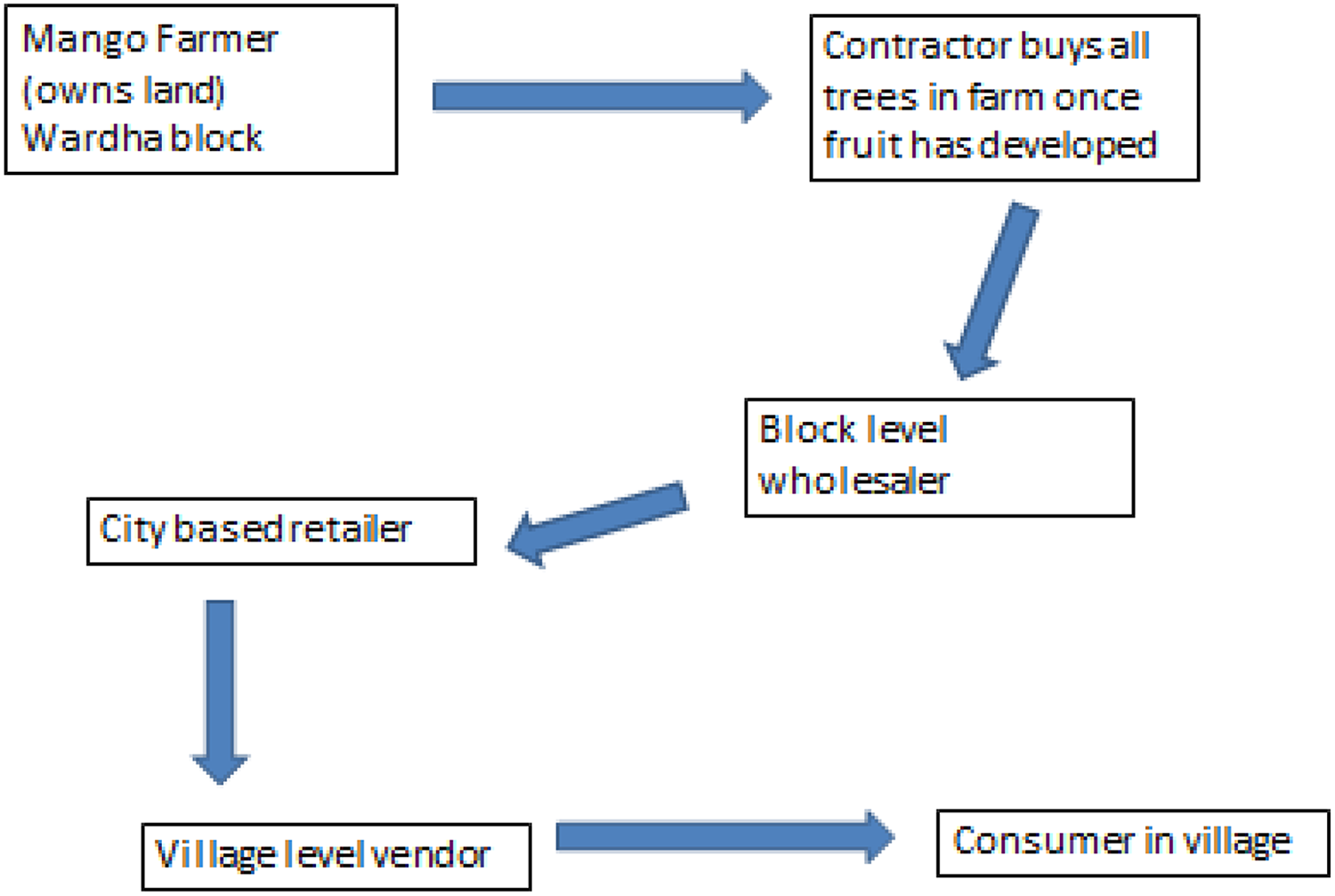
Example of a mango value chain.
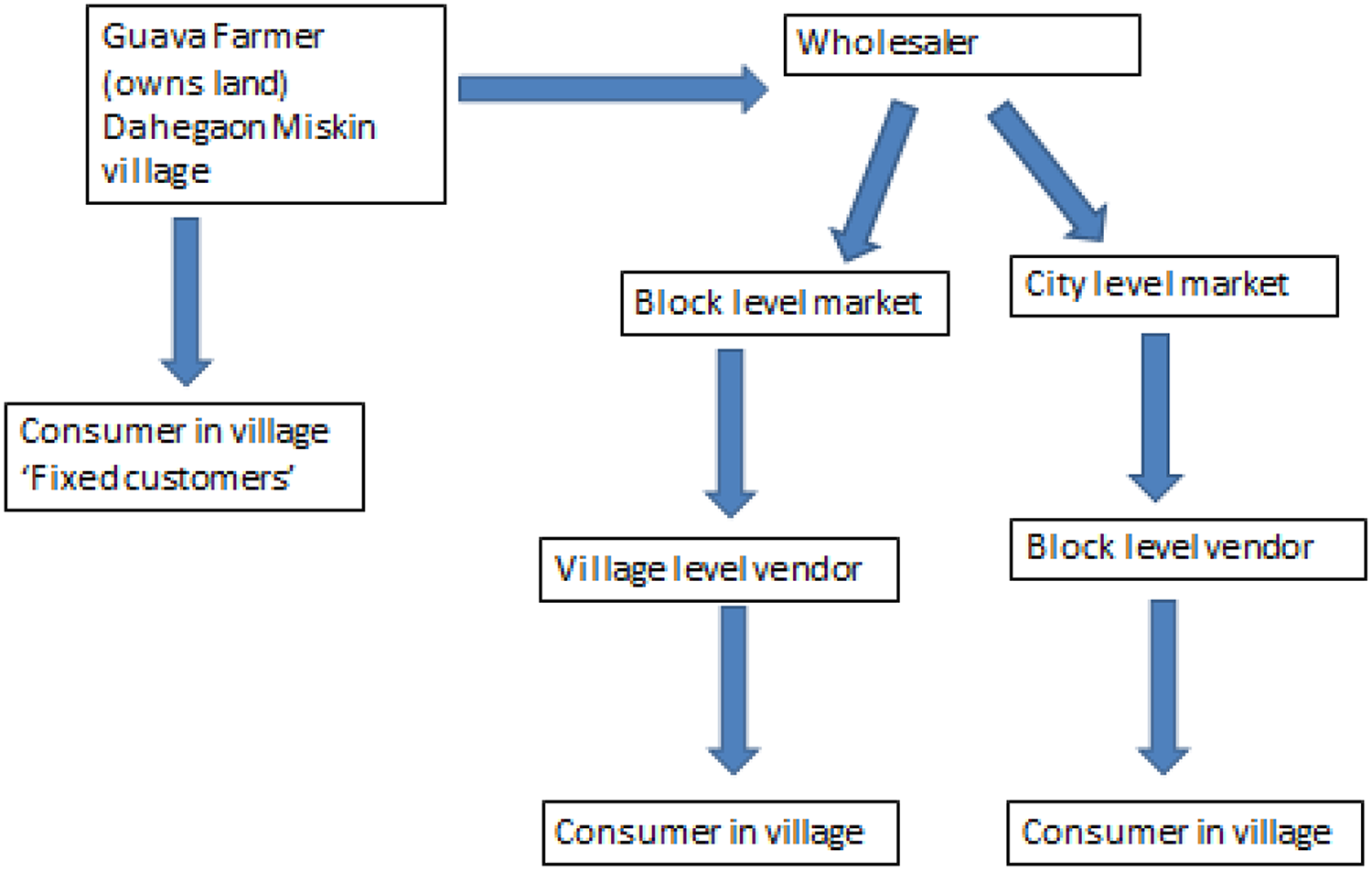
Example of a guava value chain.
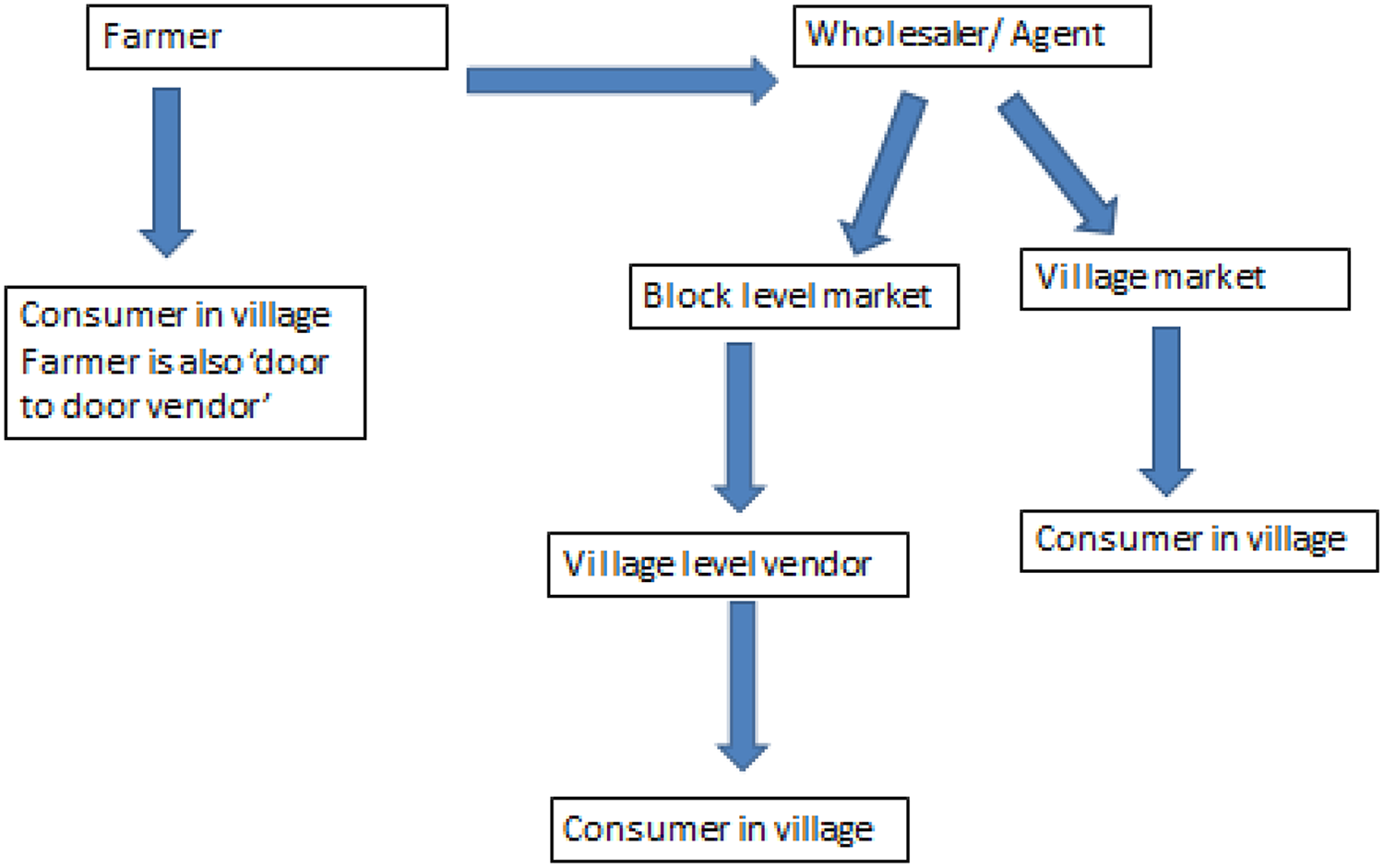
Example of a spinach or shepu value chain.
I sell it to the wholesaler. He ripens the stock with carbide and the next day he auctions it. (Mango farmer)
Pricing of Products
According to the farmers and wholesalers we spoke to, decisions about product pricing were largely made by wholesalers. Farmers did not command a specific price for their produce and stated that they had to accept the price offered to them by the wholesaler or vendor. Price was usually determined by supply and demand. In times of low production, the price would be high; when there was overproduction, the prices were low. Quality was also a determinant of price.
Wholesalers and vendors described selling produce that they had bought from farmers at a profit. They also described the process by which the produce is passed along the value chain. There are increments in price at each stage, and these cover the commission earned by the wholesaler and their transport costs. The wholesaler decides the price. We just have to take the produce to Wardha (Fruit farmer) Irrespective of our wish we can’t decide the price of our produce. If production is low then rates are high and if production is high then rates are lower. If the quality of the produce is good then we get 5-10 rupees (US$0.08-US$0.15) more per kg. (Fruit farmer) I sell guava to a wholesaler. First he investigates the fruit production and on that basis he decides the rate and then buys the fruit. No one asks the farmer. (Guava farmer) Wholesalers get commission from both sides. Suppose I am a farmer producing goods. I put my goods on his selling platform, he then sells the goods to another businessman. The other person then sells the stuff to a third person at double the rate. There is a price increment at each stage. So we buy something worth 10 rupees (US$0.15) for 15 rupees (US$0.23) and then sell the same thing for 30 rupees (US$0.45). We have to get commission; otherwise, there is no point in selling anything. If we do not earn a penny or two in a business, then the business is meaningless. It is like that. (Fruit vendor) Farmers come to us with their produce which we sell. We bargain a little bit. We deduct our commission fees, porter charges and pay them. The retailers buy the stock from us and they sell it on the handcart. A few of them have shops in the city. (Wholesaler) If we purchase at 60 to 70 rupees (US$1) per kg, we sell on at a rate of 100 rupees (US$1.50) per kg. (Mango vendor)
How Value Chain Actors Make Decisions: Emerging Themes
Based on objective 4, we identified 6 emerging themes as having an impact on which varieties of fruit and vegetable were produced, marketed, and sold by the value chain actors. These were (1) farming resources and assets, (2) quality of produce, (3) environmental conditions, (4) financial factors, (5) transport availability, and (6) consumer demand. These themes are now presented in detail.
Farming resources and assets
Farmers talked about several difficulties with resources. Finding reliable labor was described as a challenge due to the seasonality of farm work. For example, during the cotton harvest, the majority of farm laborers will work on cotton farms and will not be available to work on fruit or vegetable crops. Farmers also had to prioritize their activities based on the season and profitability. This meant that they would harvest cotton rather than sew vegetables because cotton was a more profitable crop. Labor problems are encountered during the cotton season. Nobody wants to work on our farm then. (Vegetable farmer) Due to lack of time, we cannot cultivate vegetables because we have other farm work. Like now the farm is ready for sowing vegetable seeds but this is the time of cotton harvesting so we need to concentrate on cotton because it is an important crop. (Vegetable farmer) My farming is not dependent upon rain. This area is very good. Here the water dam is available, irrigation is available. (Fruit farmer) We have irrigation but often there is a problem with the electricity that powers this. Then our crops can’t be watered. (Farmer) Seeds are very costly. Sometimes it is difficult to even recover the money invested in the seeds. (Vegetable farmer) We cultivate only those vegetables that we harvest and sell immediately. (Farmer) We don’t get any facilities at all. If we don’t sell it [fruit] early in the day our business will be lost because the fruit has a short shelf-life. (Fruit vendor) Our stock lasts for 2 days, by the third day it is not as good so we have to sell it at a lower price. Then we do not earn any money. (District-level vendor)
Quality of produce
Value chain actors talked about the importance of maintaining the freshness of fruits and vegetables. This meant that there was a tight schedule from harvesting crops to selling them in the market. Farmers said they would receive a higher price for their produce if the quality was maintained. Furthermore, vendors had to consider the quantities that they dealt with in order to ensure that they did not suffer losses due to spoilage or wastage. Customer loyalty was mentioned by interviewees as being important. If vendors sold poor quality produce, this was likely to affect their business and customers might purchase fruit and vegetables elsewhere. [Our produce] is fresh so the wholesaler gives a different price for that produce. They know when the produce is harvested. If the produce is harvested a day prior and it is taken to the market the next day then one can see that the produce is stale. We harvest in the morning at 6.00 They [vegetables] get spoilt if we get them in excess. We have to be careful when getting the goods. (Vegetable door-to-door vendor) If I sell fresh vegetables, then I can’t lose regular customers. (Vegetable vendor)
Environmental conditions
Farmers and vendors talked about how environmental factors, such as strong winds or heavy rain, affected which products they could grow and sell. Financial risk associated with growing certain crops and the unpredictable weather in the area were described. Farmers talked about the financial loss they suffered as a result of adverse environmental conditions. Last rainy season 700 trees fell down due to the wind. I lost nearly one and a half lakh [150,000 Indian rupees = US$2260]. (Mango farmer) Before there were no animals. No wild pigs. Now the animals are a menace. They are destroying the red gram (lentil) and fresh bengal gram (chickpea) crops. (Vegetable farmer) Wild animals attack the green produce. There are wild pigs and deer. For that reason we have to stay in the field. I was away for 15 days and the animals attacked my cow peas in the field and ate everything. I did not sell a single pod of cow pea. The entire field was wiped out. The painstaking efforts of 2 months were ruined in one day. That is why we have to stay in the field. I’m thinking of preparing a hut sort of thing to stay there. (Vegetable farmer) These trees produce a good crop every year. I do not have any other problems except that of parakeets; 80% of the crop is eaten by the parakeets. (Mango farmer) The Government doesn’t allow us to kill wild animal hence we use an electric fence to keep them away from the farm. (Fruit farmer) In the rainy season vegetables get spoiled easily. In winter, vegetables are fresh, and in summer, they get dry within one day. The best season is winter. (Vegetable farmer and door-to-door vendor) In summer, it is hot and windy so vegetables get dried out easily. We have to take care of vegetables like a small baby. (Door-to-door vendor)
“How does the demand vary by season?”
“In the rainy season vegetables are attacked by pests. How can anyone buy rotten vegetables? In summer, the availability of vegetable is very poor, therefore they sell easily.” (Farmer and Door-to-door Vendor)
At times when farm workers were busy, such as during the monsoon, and therefore had no time to visit the market, the vendors reported that business was poor. During winter, when fruit production was reduced, fruit was perceived as being a luxury, or something to eat if suffering from an illness. Business is dim in the monsoon because people work for daily wages. How can they come to the market? (Fruit vendor) Vegetables are essential, groceries are essential. Fruit is not an essential thing you see! It is bought by those who are not well. (Fruit vendor) Season affects production. We have to take care a lot in the summer; we have to wrap the vegetables in a wet cloth. (Farmer/door-to-door vendor)
Financial factors
The profitability of growing, marketing, and selling crops was discussed by the interviewees. This was an important and universal aspect of the decision-making process in terms of which products to work with. Seasonal fluctuations in price were mentioned in relation to green leafy vegetables. When discussing the cost of fruit, it was apparent that buying produce from door-to-door vendors was more expensive than traveling to markets. In summer, the cost of buying fruits from village vendors was often considered prohibitive. Demand around festivals made certain crops more lucrative to grow and sell. In the rainy season, production of vegetables is high, hence prices are low, but in summer, production of vegetables is low, hence prices are high. There is a good price for coriander during Nag Panchami (festival during monsoon), so I cultivate coriander 1to 1.5 months before this festival. (Vegetable farmer) During Navratri (festival at the end of monsoon/early winter), we purchase stock at a higher price so we also sell it at a higher price. (Deoli fruit and vegetable vendor). Coriander is ready within 4 to 6 weeks and shepu within 4 to 5 weeks. I am not interested in fruit cultivation. If I grew guava it would take 3 years to get the fruit. Until then, how can I manage for money? (Vegetable farmer). Seeds are costly. Previously, when I used to cultivate fenugreek, seed was available for 30 to 40 rupees US$ (0.45-0.60) per kg. Now it costs 100 rupees (1.50 US$) per kg. If everyone takes vegetables to the market the price of vegetables falls. It is difficult to recover the money invested in the seeds. We should take the produce to the market when there is no stock in the market. (Farmer/wholesaler)
“When you buy from farmers, who decides the price?”
“We decide. We have to keep watch on the supply of the stock to decide the price. When we go to the market in the morning we get an idea of the supply and the price.” (Vegetable wholesaler)
A farmer/vendor told us that they sold green leafy vegetables in bundles and that the size of these varied according to the price that could be achieved. If the rate is high, then I tie a small amount in one bundle, and if the rate is low, then I tie a larger amount in one bundle. (Farmer/door-to-door vendor) Spinach is expensive in the summer so we get a good price for it. We have to make the effort and then we get profit. (Farmer/door-to-door vendor) I feel vegetable cultivation is a profitable business because we get recurring cash income. Cotton is a seasonal crop, and with this income, we can do major work such as improvements to the farm. With the vegetables we get a daily income of 100 rupees (US$1.50 US$) per day, with this we take care of our daily expenses. (Farmer/wholesaler). In the month of December, there was a large amount of tomato production. Also, the demand for tomatoes was very low, the customer was not willing to purchase them. We had to throw the crop away. With the profit we get from other stock, we manage our losses from tomatoes. (Wholesaler).
Availability of transport
The quantities of produce that could be transported to markets were dependent on the method of transportation. A simple upgrade from a basket to a hand cart made a huge difference to a vendor’s business. Many local-level vendors have to transport all of their produce by foot which limits the area that they can cover and therefore their income. In addition, where motor transport was required, it was often difficult for the farmers and vendors to come by. They would often have to spend hours waiting for transport in the heat. By comparison, value chain actors with their own motor vehicles were well in a more advantageous position. The business has flourished [after getting hand cart]. I used to carry 5 kg in a basket. In this I can manage 10 kg. (Vegetable vendor) The problem is that it is inconvenient work. For selling [vegetables], we have to walk a lot which is inconvenient. (Farmer/ Door-to-door and district-level vendor) Sometimes we cannot find any auto-rickshaws to get the produce to the village. We have to wait for as long as 2 hours. We get oppressed due to thirst and hunger. If we had our own vehicle then we could get the stuff to the village straight away. But we have to depend on others. (Farmer and village-level vendor). We take our produce to Wardha by auto-rickshaw. It is affordable because we have our own vehicle. Otherwise one trip costs 200 rupees (US$3). (Vegetable farmer and wholesaler) We get vegetables every morning. Vegetables will only be sold when they are fresh, they do not last. We require 200 rupees (US$3.00) and they charge a fare of 100 rupees (US$1.50) for the bags of vegetables. (Village-level vendor)
Consumer demand
Migration to the city as a result of companies providing employment was described as having an impact on the market for fruit and vegetables in Wardha. Wholesalers stated that the population was increasing as a result of the migration, and this meant that sales of vegetables in Wardha were increasing. A divide between urban and rural people in terms of ability to afford fruit and vegetables was described, and particularly for fruit, although the demand for mangoes was perceived as being universal. Mango was considered essential even by the poorest customers. These customers would always buy as much of these products as they could afford. Poorer customers, typically those in rural areas, could not afford certain fruit such as guava. The population of Wardha is growing day by day, it is because of industrialization in Wardha. Companies like Lanko, etc are in Wardha. Due to this we are selling more vegetables. (Vegetable wholesaler) Guava is not getting a good rate in the market because there is no demand in the market. People don’t have money to buy it. People living in the city have it but rural people don’t have it. Farmers don’t have money. Everyone wishes to have orange, papaya with every day meals but farmers don’t have money. (Fruit farmer) In this village, the demand for mangoes is greater than other fruits. There are many villages near this market so people purchase 5 to 8 kg of mangoes per family. In the village, the family size is bigger than in the city. Smaller family size means a lower quantity of fruit is sold. (District-level vendor) Even the poorest man would buy mango as per his paying capacity. But if you ask that man how many times he had sweet lime in the last year, he would answer once or twice in a year. (Fruit vendor).
Discussion
We used qualitative methods to study fruit and vegetable value chains and to examine factors that influenced actors within these chains in rural Maharashtra. We found that the supply chains were relatively local and comprised a small number of actors and processes, compared to more elaborate value chains often observed in urban and international settings. 26 Many of the actors in the chains had multiple roles within the chain and were themselves consumers.
In the villages where we conducted the research, there appeared to be a shift occurring from consumers purchasing produce at the village level to purchasing at the city level. This was causing difficulties for consumers in terms of availability and for producers in terms of transport. It means that the poorest consumers and those living in more remote areas cannot access affordable fruit and vegetables, particularly during times when supply is compromised. Further work to identify the most effective interventions is necessary, but approaches to resolve these issues could include (1) increasing local production of fruit and vegetables through community or kitchen garden interventions and (2) addressing the negative attitudes and beliefs associated with consumption of indigenous fruit and vegetables that grow abundantly in and around the villages.
The risks associated with producing a particular crop were largely taken on by the farmers and included risks of financial losses as a result of wild animal or weather damage. Furthermore, farmers had little and often no say over the price that their produce was sold for. It is understandable in this context that farmers and land owners decide to grow cash crops such as cotton in order to protect themselves against the risk of growing food crops. The prioritization of cotton farming deprives fruit and vegetable farmers of labor at important times of the year. These are major challenges and will require multisectoral actions. Possible solutions that would require consultation with farmers and other stakeholders as well as government or industry support would be to (1) offer farmers affordable insurance policies against loss of fruit and vegetable crops and (2) offer financial subsidies to farmers to grow fruits and vegetables. 27
The decline in demand for indigenous vegetables that don’t require large amounts of water or agri-chemicals was talked about by consumers. 24 These findings are comparable with a study among tribal households in Jharkhand, India, in which it was found that overall intakes of indigenous foods were low, yet those women who did consume them had higher intakes of calcium and iron than those who did not. 28 Addressing this decline in demand through promoting the cultivation of these plants and educating consumers may lead to a “win–win” scenario in that local production of, and demand for, nutritious foods is increased. 29,30
Addressing infrastructure challenges, such as improving power supply to irrigation systems, will require sustained government support and investment. Other approaches to reduce transport time and costs could include providing better physical infrastructure for local periodic markets and improved storage facilities. Issues of wild animals consuming or ruining crops highlight an extremely sensitive and difficult conflict between humans and other species. This will require strategic planning and careful land and forest management.
Price volatility affected all value chain actors and led to large amounts of wastage. It also meant that several products, particularly fruit, were too expensive for many consumers. A large multicountry study investigating availability and affordability of fruits and vegetables 10 found that in low- and middle-income countries over 20% of rural inhabitants were unable to afford 3 servings of vegetables and 2 of fruit per day. It was also found that consumption of these foods decreased as relative cost per serving increased. The authors noted that there is a lack of systematic monitoring of food prices 31 and that the costs of fruit and vegetables are not part of national estimates of cost of major food commodities published by United Nations agencies including the World Bank 32 and Food and Agriculture Organization. 33
Study Limitations
There are some important limitations to note in this study. We recruited value chain actors based on their availability and willingness to take part in an interview. It is possible that the factors affecting fruit and vegetable consumption among chain actors who were not able and/or unwilling to participate were different from the themes we identified.
Conclusion
In conclusion, this qualitative work indicated that there may be several opportunities to intervene within fruit and vegetable value chains to increase availability, affordability, and access to good quality produce (Figure 4). These opportunities may include but are not limited to (1) kitchen or community garden interventions, (2) behavior change in terms of consumption of indigenous fruit and vegetables, (3) offering farmers insurance, subsidies, or both, and (4) infrastructure and land management. Further quantitative research is required to determine which interventions will be feasible, effective, and acceptable to the communities.
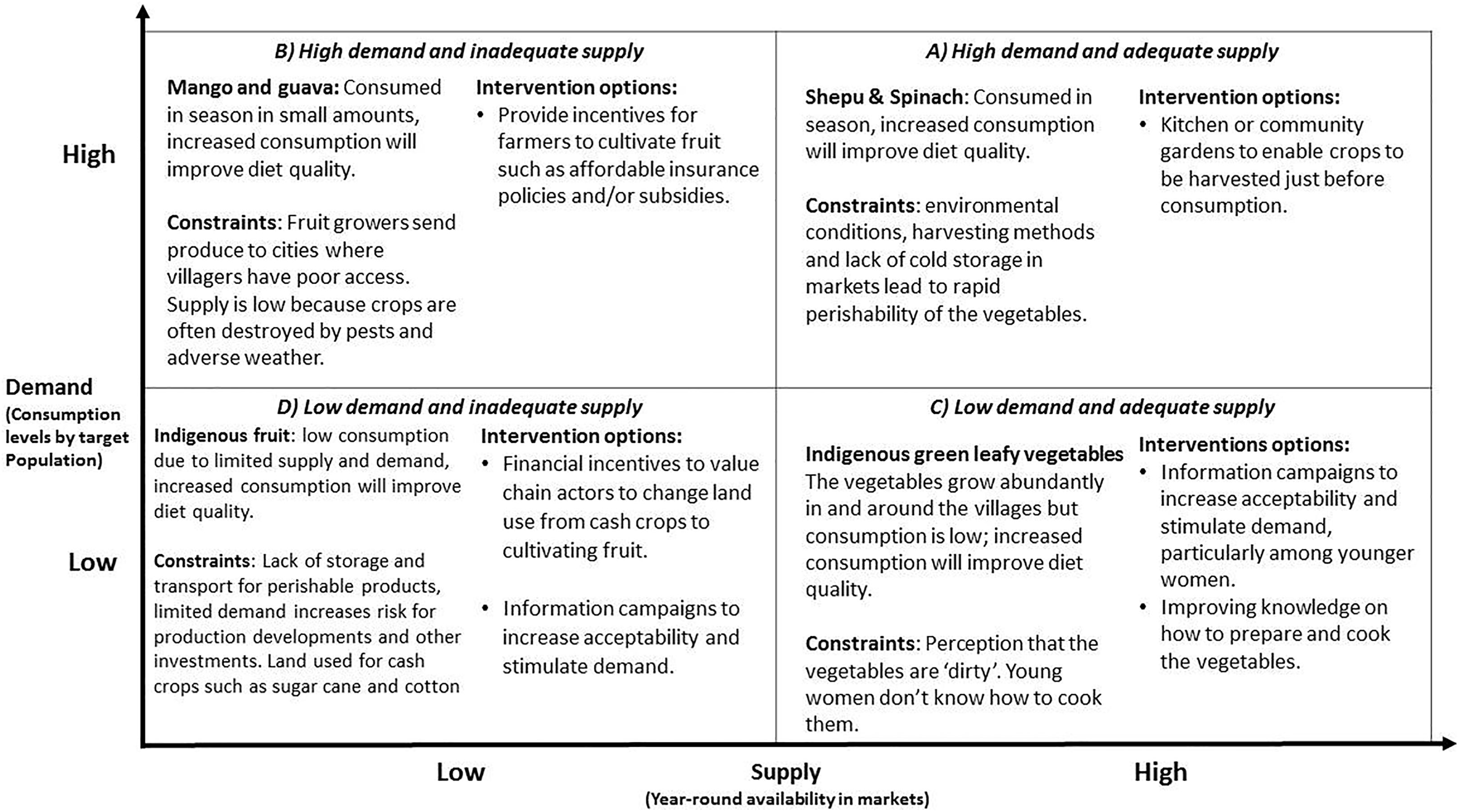
Examples of supply and demand constraints for fruit and vegetables and potential interventions
While undernutrition continues to be prevalent in rural parts of India, it is important to consider how public health messages are developed and targeted given the increase in overweight and obesity in India. 34 It is important also to consider how the adverse health effects associated with the “nutrition transition” described in low- and middle-income countries can best be prevented in rural areas which have thus far had little exposure to this transition. 35 -37 Evidence suggests that fruit and vegetables are protective against noncommunicable diseases, 38 whereas increased consumption of processed foods associated with the nutrition transition is likely to be harmful. 37 As such a market-based approach to increasing their consumption in which all value chain actors and processes are considered is likely to be required to achieve this end.
Future Research
This was a qualitative study in which we wanted to get the perspectives of people who work within the value chain. In order to prioritize interventions, it may be advisable to conduct a survey among a larger group of value chain actors based on the findings of the current study. The aim of the survey would be to obtain quantitative data on the challenges faced by actors as well as prices of fruit and vegetables, costs incurred by actors in the value chains, and their profit margins. These data could then be used to conduct cost–benefit analyses of implementing candidate interventions to improve supply of and demand for fruit and vegetables in this setting. Further work to understand the synergies and trade-offs associated with growing fruit and vegetables may be advisable in order to determine how nutritional yield can be optimized. Such a study could comprise a similar analysis to that conducted by DeFries et al, whereby cereal crops were assessed for nutrient yield per hectare and other crop attributes such as resilience to variability in precipitation and temperature. 39 In the case of fruit and vegetables, this would involve measuring the nutrient content of crops grown in different soil, temperature, and moisture conditions to determine how to maximize the nutrient content for the local environment.
We suggest some ideas for possible solutions to these issues: (1) to offer farmers affordable insurance policies against loss of crops and (2) to offer financial subsidies to farmers to grow fruits and vegetables.
Addressing this decline in demand through promoting the cultivation of these plants and educating consumers may lead to a “win–win” scenario in that local production of, and demand for, nutritious foods is increased. 29,30
Footnotes
Authors’ Note
S.H.K., K.K., A.G., R., and C.H.D.F. formulated the research question and designed the study. S.H.K., K.K., V.D., S.B., R.K., S.A.S., and R.D.P. carried out the study. S.H.K., V.D., S.B., and R.K. analyzed the data and interpreted the findings. S.H.K. wrote the manuscript, and all authors contributed to the drafting of the manuscript, reviewed its content, and have approved the final version submitted for publication. This study was conducted according to the guidelines laid down in the Declaration of Helsinki and all procedures involving human subjects were approved by the University of Southampton ethics committee. Written informed consent was obtained from all participants.
Acknowledgments
The authors wish to thank the study participants and key persons in the villages for their valuable time and inputs; all staff at MS Swaminathan Research Foundation, Chennai and Wardha who helped in the planning, design, and execution of this study; Dr Emily Morgan (London School of Hygiene and Tropical Medicine) and Professor Nitya Rao (University of East Anglia) for advice on study design, Dr Nigel Poole (School of Oriental and African Studies) for input on the interpretation of findings and review of the manuscript.
Declaration of Conflicting Interests
The author(s) declared no potential conflicts of interest with respect to the research, authorship, and/or publication of this article.
Funding
The author(s) received no financial support for the research, authorship, and/or publication of this article.
