



Abstract
Background:
Fish is a widely available animal-source food in Bangladesh and a rich source of nutrients, yet little is known about practices related to incorporating fish into the diets of infants and young children.
Objective:
Use dietary diversity data to explore consumption patterns of fish and high-quality food items within the household and examine factors associated with delayed introduction of fish to infants and young children.
Methods:
Cross-sectional survey of 496 households with children <36 months participating in the Aquaculture for Income and Nutrition project in Bangladesh. Data collected included household characteristics, women’s dietary diversity score, and minimum dietary diversity score along with data on Infant and Young Child Feeding practices.
Results:
Most children (63.4%) met the threshold for minimum dietary diversity. Despite having received extensive nutrition education related to including fish in complementary foods, only half of the caretakers introduced fish at 6 months and the mean age of introduction of small fish was 8.7 months. Meat and fish were not common in infant diets but increased with child age. Concerns about bones were a major barrier to incorporating fish into infant diets.
Conclusion:
Given its nutrient profile and widespread availability in certain contexts, fish could be an underutilized opportunity to improve nutrition and health outcomes of infants and young children. Further research, including utilizing food processing technologies, is needed to develop appropriate responses to overcome these barriers.
Introduction
For infants and young children in low- and middle-income countries, the period beginning at 6 months and lasting through their second birthday is a nutritionally challenging transition. During the complementary feeding period, breast milk must be supplemented by the introduction of a diverse range of safe, nutrient-dense foods to meet the nutritional needs of infants. 1,2 Nutritional needs during this period are elevated due to the extra demands of rapid growth, the limited gastric capacity of infants, and by frequent exposure to pathogens and infectious disease episodes. 3 Complementary foods must be nutrient and energy dense and feedings frequent to support growth and proper neurodevelopment. 2
The diets of infants in low- and middle-income countries are predominantly cereal based, and they are often fed a watery gruel that is even lower in nutrient density than foods consumed by other household members. 3,4 Certain nutrients, including zinc, iron, vitamins A and B12, and omega-3 polyunsaturated fatty acids are often inadequate. 3 Deficiencies of these nutrients in the diet adversely affect their growth and development. Child stunting affects 165 million children younger than the age of 5 years globally. 5 Growth faltering often peaks during the window from 6 to 18 months of age. Iron, vitamin A, and zinc deficiencies contribute to infant and young child mortality, and low iron, B-vitamin, and omega-3 polyunsaturated fatty acid intake may impair neurodevelopment. 6 Emerging evidence suggests that deficiency of certain amino acids may also be associated with stunting in certain settings. 7
Dietary diversification with animal-source foods (ASFs) is an important solution to this problem. Iron and vitamin A are more bioavailable when provided through ASFs, and ASFs are the only natural sources of certain nutrients such as vitamin B12 and long-chain omega-3 fatty acids, both of which play important roles in neurodevelopment. 8 Most studies also suggest that infants and young children who meet minimum dietary diversity have a lower risk of stunting, although small sample size and exposure misclassification have constrained the ability to demonstrate the statistical significance of such relationships in observational studies. 9 –11
Many current approaches to developing dietary diversity indicators lump meat and fish together in an amalgamated “meat and fish” or “flesh foods” category. 12,13 This practice has the virtue of simplicity, an important priority in the development of such indicators, yet it is also important to understand what may be lost in consolidating these foods together into one category. For example, although ASFs are often characterized as being prohibitively expensive for poor populations in low- and middle-income countries, there is meaningful variation in both the nutritional value and price of these items, depending on the species, parts consumed, and quality of the foods. 14 In both Asia and Africa, small fish are relatively inexpensive, nutrient dense, and available for sale in small portions and are therefore an important food source for the poor. 15 Due to their high nutrient:cost ratio, certain species of fish are often selected as part of optimized Infant and Young Child Feeding (IYCF) solutions. 16 –19
To translate such theoretical solutions into concrete action, it is important to understand the potential constraints to feeding recommended foods to infants and young children. Previous work has categorized constraints related to ASF consumption according to 3 levels: (1) availability of ASFs at the community level, (2) access to ASFs at the household level, and (3) intake of ASFs by infants and young children. 20
Dietary diversity data from mothers and infants/young children are now commonly collected, yet relatively little work has gone into trying to make use of this information to quantitatively understand intrahousehold consumption patterns. One recent multicountry study suggested that maternal consumption of flesh foods (fish and meat) was 1.9 and 5.8 times higher among mothers in Bangladesh and Ethiopia, respectively, than it was among their infants and young children, but the analyses did not disaggregate fish from meat. 21 Findings from a qualitative study in certain localities in rural and urban Bangladesh revealed differences in the attributes assigned to different types of ASFs in relation to the benefits and risks of such foods for infants and young children and raise the question of whether distinguishing between different food item components of the scores, and not just food categories, may provide a more comprehensive quantitative understanding of feeding practices. 22
Our study makes use of dietary diversity data collected from households participating in a homestead aquaculture project in rural Bangladesh, a population that we hypothesized would have greater than average access to fish. The main objectives of the study were to (1) understand differences between maternal and child consumption of quality food items, especially fish, (2) explore the prevalence of withholding fish from the diets of infants and young children, and (3) examine factors associated with the delayed introduction of fish in the diets of infants and young children and whether this practice differs for small fish versus large fish species.
Methods
Study Population and Sample Selection
The Aquaculture for Income and Nutrition (AIN) project is a 5-year (2011-2016) US Agency for International Development (USAID) Feed the Future investment in southern Bangladesh, focusing on strengthening aquaculture production systems. Over 2 years of project participation, households owning small ponds receive training in aquaculture production and behavior change communication components aimed at encouraging greater dietary diversification, particularly among pregnant and lactating women and infants and young children. The nutrition training focused on essential nutrition and hygiene actions, focused on safe preparation of age-appropriate complementary foods, participation in nutritional care and health services, and handwashing and was attended by both women and men. In addition, cooking demonstrations were given incorporating training on how to safely prepare small fish for consumption by young children by mashing the fish and bones. Of the 8 total AIN training sessions conducted over the course of a year, 7 incorporated 30 minutes of nutrition education each, with a 2-hour final session related to nutrition.
The study population consisted of households in 30 districts across the divisions of Barisal, Khulna, and parts of Dhaka. This cross-sectional survey focused specifically on households engaged in homestead pond aquaculture and enrolled in the project in 2014. Eligibility criteria for participation in the AIN project included (1) residence in a targeted area, (2) land ownership <250 decimals (1 decimal = 40 m2 or income BDT <165 000 (US$2134 in 2014)/month, (3) pond size between 5 and 50 decimals, (4), a reproductive-aged woman with a child <36 months of age in the household, and (5) willingness to adopt fish culture/management practices and interest in attending project training sessions. In communities that had more willing and eligible households than project openings, female farmers and single pond owners were given priority for selection into the project.
We aimed to enroll 500 households in the study; this sample size was based on resources available for the survey. We used simple random sampling to select 500 households from a comprehensive list of 1854 project households who either had a child younger than 36 months or a pregnant woman in the household when they were enrolled in the project in 2014.
Training and Data Collection
Bangla-speaking enumerators were recruited, each of whom had previous experience conducting similar surveys for national and international organizations. The data collection team then received a 2-weeks’ training by aquaculture and nutrition experts, including pretesting of the questionnaire in the field. The training included interview techniques, review of the indicators used in the survey, and field practice.
Data collection took place from November to December 2014. Consistent with the Helsinki Declaration as revised in 1983, informed consent was obtained orally from all study participants. The 18 enumerators were organized in teams of 2, consisting of 1 female and 1 male who jointly administered the 2-part questionnaire. The female enumerator collected information on the diet of mothers and their young children. The male enumerator collected data on aquaculture and vegetable production from the person in charge of homestead aquaculture and pond-dyke vegetable production, which in most cases was the adult male of the household. Three field supervisors ensured data quality control by facilitating the enumerators’ work and by conducting spot-checks in the field. In addition to the spot-checks, a female and male data quality control officer each reinterviewed 30 households, using an abbreviated version of the questionnaire, within 24 hours of primary data collection to compare and to validate the quality of the data set.
Measures
Survey questionnaires were used to collect data for all variables and included modules related to household socioeconomic status, pond and land productivity, IYCF practices, food, aquaculture, and gender. Key outcome indicators for the analyses were as follows:
Women’s dietary diversity recall
A 24-hour dietary recall was completed using the approach outlined in guidance for the 9-item Women’s Dietary Diversity Score (WDDS) indicator. 12 First, a comprehensive listing of all foods and beverages consumed the previous day and night was undertaken. Enumerators then reviewed these consumption records to generate dichotomous variables indicating whether each of 18 food groups listed on the questionnaire had been consumed at least once during that day. Information collected on the consumption of food items differed slightly from that of the standard WDDS questionnaire to reflect our need for information on small fish and orange sweet potato because production of these foods was promoted in the AIN project. For calculation of the WDDS indicator, these additional food groups were consolidated to form the standard 9-item score. This score included the following food groups: (1) starchy staples, (2) dark green leafy vegetables, (3) other vitamin A-rich fruit and vegetables, (4) other fruit and vegetables, (5) organ meat, (6) fish (including shellfish) and meat, (7) eggs, (8) legumes/nuts/seeds, and (9) milk/milk products.
Minimum dietary diversity for children
For children, a similar process was used to collect child’s intake of food groups consumed during the previous 24 hours, using the World Health Organization (WHO) IYCF questionnaire, with recommended adaptation to reflect the foods consumed in Bangladesh. 13 A 7-item dietary diversity score was created consisting of the following food groups: (1) starchy staples, (2) legumes and nuts, (3) dairy products, (4) flesh foods (fish, meat, poultry, organ meats), (5) eggs, (6) vitamin A-rich fruit and vegetables, and (7) other fruits and vegetables. We then calculated the standard WHO indicator of minimum dietary diversity for children, defined as consumption of ≥4 food groups over the past 24 hours. 13
Child’s age at which fish should be introduced
All mothers were asked to report the age at which they thought infants/children should first be given fish. They were asked separately about small fish and large fish.
Child’s age at which fish was actually introduced to child
Mothers who had introduced fish into their child’s diets were asked about the age at which they had first fed their child fish.
Covariates
We used a theory-based approach to the selection of covariates for inclusion in models. Maternal education was treated as a categorical variable in models due to small sample size (no formal education vs some formal education). Maternal age was treated as a continuous variable. Mothers were asked whether they had attended any AIN project trainings in the past year (yes vs no), as well as how many they attended. By the time the survey was administered, women could have attended a maximum of 8 training sessions.
A number of household-level indicators were included to represent socioeconomic status. Household income was collected from the respondent in charge of the homestead aquaculture, who was asked to estimate the cash and noncash income earned from 38 income sources by all household members in the 3 months prior to the survey. The sum of income in all categories, divided by 3, gave an estimate of monthly household income. The total household income variable was log-transformed for inclusion in models due to its skewed distribution. We also collected detailed information about the area of ponds used for fish production. To calculate this variable, the respondent in charge of homestead aquaculture was asked to report the area, in decimals, of all homestead ponds, commercial ponds, and shrimp and prawn production. These were summed to arrive at a total area in fish production per household. The same respondent was asked to report the area, in decimals, of all pond-dyke, homestead, and crop field vegetable production, which were summed to arrive at an estimate of total land used for vegetable production per household.
Statistical Analyses
Stata IC/10.0 was used to analyze the data. 23 Descriptive statistics were calculated to describe the demographic and socioeconomic characteristics of sampled mothers and children, as well as their dietary diversity and IYCF practices. Additional analyses based on the dietary recall data estimated the percentage of mothers/caregivers who “withheld” certain foods (their children did not consume the food, though the mother did) or who “channeled” foods to children (the children ate the food though their mothers did not), including disaggregation by age. A P for trend value for the prevalence of withholding behavior was calculated using 6-month age categories. A threshold of P < .05 was used to determine statistical significance for all analyses.
Finally, logistic regression models were used to examine predictors of beliefs and practices pertaining to the age of introduction of fish into infants’ diets. We modeled predictors of the age of introduction of small fish and large fish separately, hypothesizing that there may be differences due to bones and other perceptions. These models adjusted for the potential influence of maternal factors (formal education, beliefs about fish introduction modeled as at 6 months versus delayed, and participation in the training sessions) and household income, which was log-transformed to improve normality). Additional models estimated the effects of education and participation in AIN trainings on the odds that a mother believed small or large fish should be introduced at 6 months.
Results
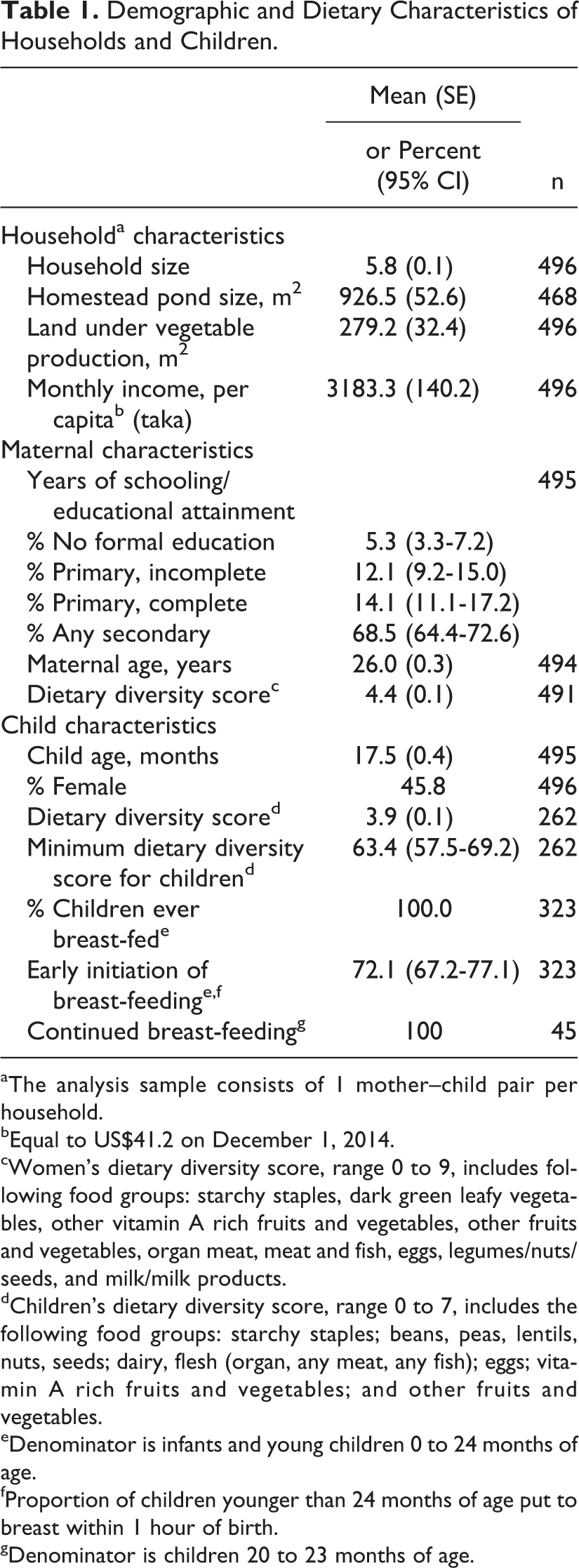
From the 500 randomly sampled households, data were available from 496 women and children. Four children were excluded, due to their age being greater than 36 months. Descriptive characteristics of the households, women, and children included in our sample suggest a relatively well-off population for rural Bangladesh (Table 1). The per capita monthly income of households in our sample was BDT 3183 (US$41), which is higher than the national rural average of BDT 2130 (US$30)/month, reported in the 2010 National Household Income and Expenditure Survey. 24 As pond ownership was a requirement for project participation, all households had a pond and the average pond size was 926.5 m2. Households also had an average of nearly 280 m2 of land used for vegetable production.
Demographic and Dietary Characteristics of Households and Children.
aThe analysis sample consists of 1 mother–child pair per household.
bEqual to US$41.2 on December 1, 2014.
cWomen’s dietary diversity score, range 0 to 9, includes following food groups: starchy staples, dark green leafy vegetables, other vitamin A rich fruits and vegetables, other fruits and vegetables, organ meat, meat and fish, eggs, legumes/nuts/seeds, and milk/milk products.
dChildren’s dietary diversity score, range 0 to 7, includes the following food groups: starchy staples; beans, peas, lentils, nuts, seeds; dairy, flesh (organ, any meat, any fish); eggs; vitamin A rich fruits and vegetables; and other fruits and vegetables.
e Denominator is infants and young children 0 to 24 months of age.
fProportion of children younger than 24 months of age put to breast within 1 hour of birth.
gDenominator is children 20 to 23 months of age.
The prevalence of reported beneficial feeding practices for infants and young children was also quite high. All sampled children were breast-fed at some point, and the rate of continued breast-feeding at 2 years (children 20-23 months) was 90% (Table 1). Nearly 75% of sampled children younger than the age of 2 years had been put to the breast within an hour of birth.
Food Intake by Mothers and Children Aged 6 to 35 Months
Two-thirds of the children studied were provided a diet that met the WHO definition of minimum diversity, and the average WDDS was 4.4 (range 0-9; Table 1). Certain high-quality foods contributed to this score more than others. For example, 51.7% of mothers and 41.7% of children consumed dark green leafy vegetables in the 24 hours prior to the survey, while fewer than 10% consumed vitamin A-rich fruit (Figure 1). Fish were the most widely consumed ASD; a significantly greater percentage of women (82.1%) consumed fish than children (59.0%, P < .05). For 3 other ASFs, organ meat, eggs, and dairy products, a significantly greater percentage of children consumed these food items than mothers (P < .05), but no significant difference was found for flesh meat (Figure 1). In total, 90.1% of children aged 6 months and up to 35 months had consumed at least 1 ASD (meat, fish, eggs, or milk) in the 24 hours prior to the survey.
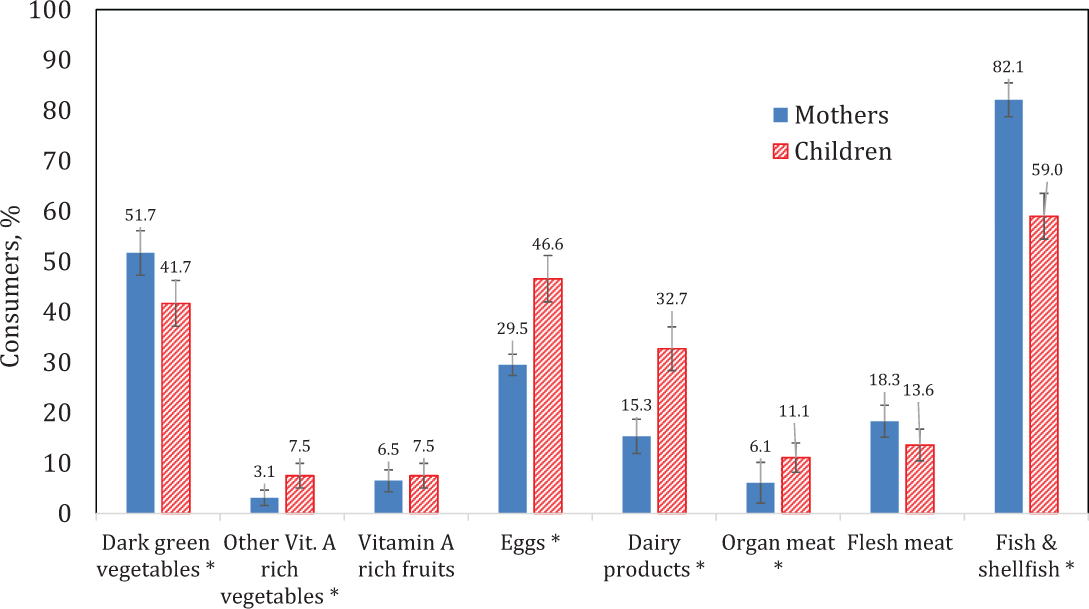
Percentage of mothers and children who consumed foods of high-nutritional quality (previous 24 hours). Asterisk indicates the percentage of mothers consuming a food was statistically different than the percentage of children (P < .05).
We found that only about half of mothers introduced small or large fish to their children at 6 months (44.1% and 56.8%, respectively; Figure 2). More than one-fifth (21.2%) of mothers did not introduce small fish until after their children’s first birthdays. The mean age that mothers introduced fish to their children was 8.7 months for small fish and 7.5 months for large fish. No significant differences were found by child sex in the mean age of introduction of either small fish (girls: 8.7 months old vs boys 8.7 months old, P = .98) or large fish (girls: 7.6 months old vs boys 7.4 months, P = .53).
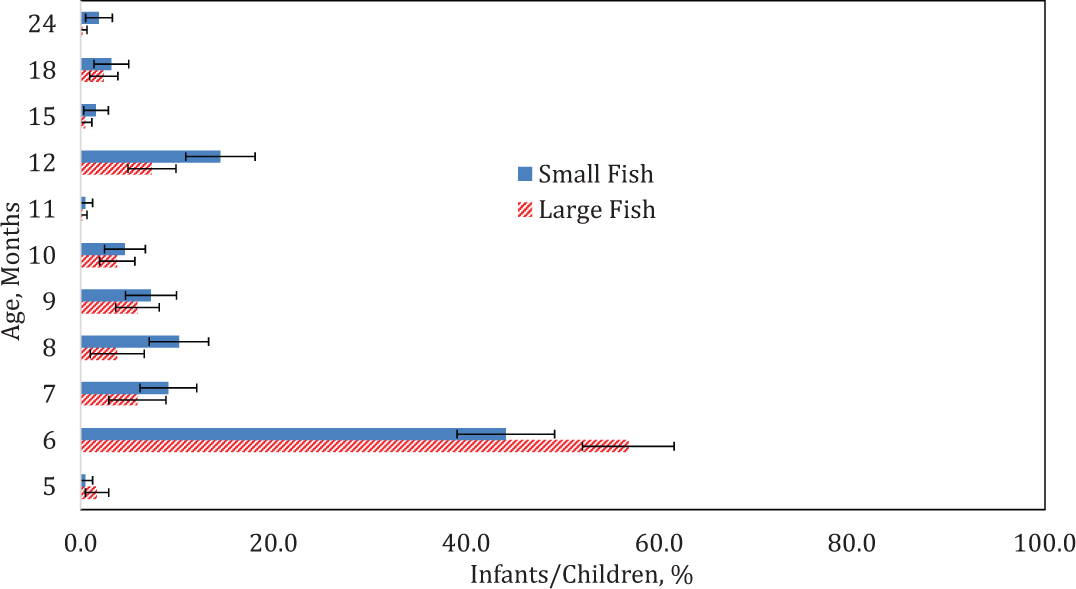
Age at which mothers reported introducing fish of different sizes to their children.
Exploration of consumption patterns of mother–child pairs revealed intrahousehold differences in the consumption of many high-quality foods (Figure 3). We found a modest positive correlation between the 7-item child dietary diversity score and the WDDS (Pearson r = .42, P < .001). The majority of all mother–child pairs had concordance in their consumption patterns, generally indicating nonconsumption. Some discordant behavior was apparent for all food items but exhibited variation. Among the subset of mothers who reportedly consumed high-quality food items, withholding from infants was most prevalent for organ meat (45.5%), flesh meat (40.0%), dairy products (32.9%), dark green leafy vegetables (28.4%), and fish (28.3%). Notably, nearly one-quarter (23.1%) of all the infants/young children whose mothers had consumed fish the previous day did not consume it.
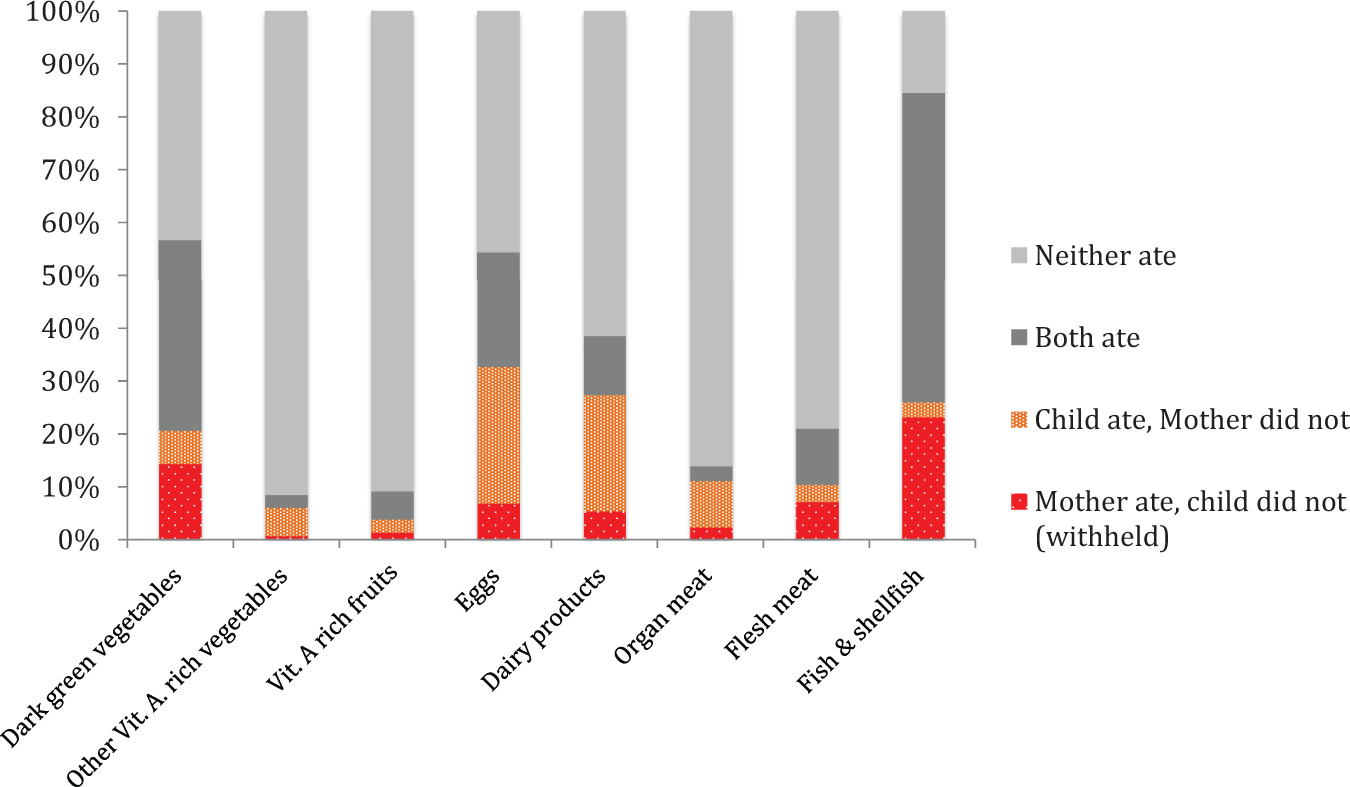
Intrahousehold dynamics of maternal and child consumption of high-quality foods.
Our data suggest the possibility that fish and meat might be more commonly withheld from the diets of male infants and young children than from females. For the category of animal flesh meat, a slightly higher proportion of females were fed this food in the past 24 hours (73% vs 65%) though this difference was not statistically significant (P = .07). Similarly, among those children whose mothers had consumed fish, the practice of withholding fish from male children was slightly more common than it was for females (36.7% vs 25.1%, P = .02). Withholding of meat and green leafy vegetables was also marginally more common by the parents of boys than girls though these differences were not statistically significant (53.5% vs 32.4%, P = .06) and (35.6% vs 23.9%, P = .05).
We also examined channeling of food items, defined here as discordant consumption in which a child consumed a given item, but his or her mother did not. Channeling of foods toward the infant/young child was particularly prevalent for eggs and dairy products, occurring in 25.8% and 21.9% of the total sampled households, respectively (Figure 3). No significant differences were apparent in channeling behavior for any food item by sex of child.
The withholding of ASFs varied substantially by the age of the child (Figure 4). For example, the percentage of mothers of 6- to 8-month-old children who consumed fish themselves but withheld from their children was more than 4 times that of mothers of 24 months and older children. Withholding decreased steadily across age categories for fish and eggs, whereas for dairy products, it dropped more suddenly and then leveled off, from 55.6% among children aged 9 to 11 months to 29.4% of 12- to 17-month olds and 28.7% of 24- to 35-month olds. This trend was statistically significant (P for trend <.05).
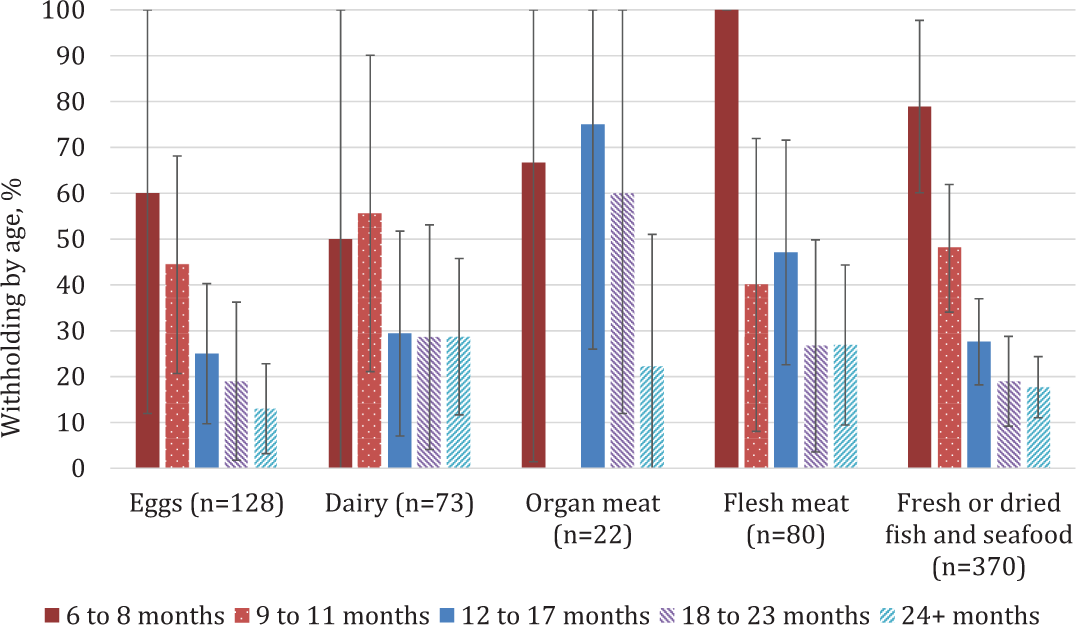
Withholdinga of animal source foods from children 6 to 35 months, by child age. aWitholding defined as the proportion of infants/children who did not eat a given food that was reportedly consumed by the mother.
Predictors of the Introduction of Fish to Infants and Young Children
Multivariable logistic regression models were used to estimate the odds of introducing small and large fish at 6 months, according to different factors. (Table 2). Women who believed that fish should ideally be introduced at 6 months were significantly more likely to report introducing fish to their infants: this association was true for both small fish (odds ratio [OR]: 13.56 [7.83-23.49] and large fish (OR: 12.71 [7.51-21.52]), after adjusting for years of schooling, child sex, and household income. Although crude and adjusted models also indicated that women without formal education may be more than twice as likely to introduce fish to their children at 6 months, this association was not statistically significant (P = .15).
Logistic Regression Predicting Introduction of Small and Large Fish at 6 Months on Household and Maternal Characteristics.
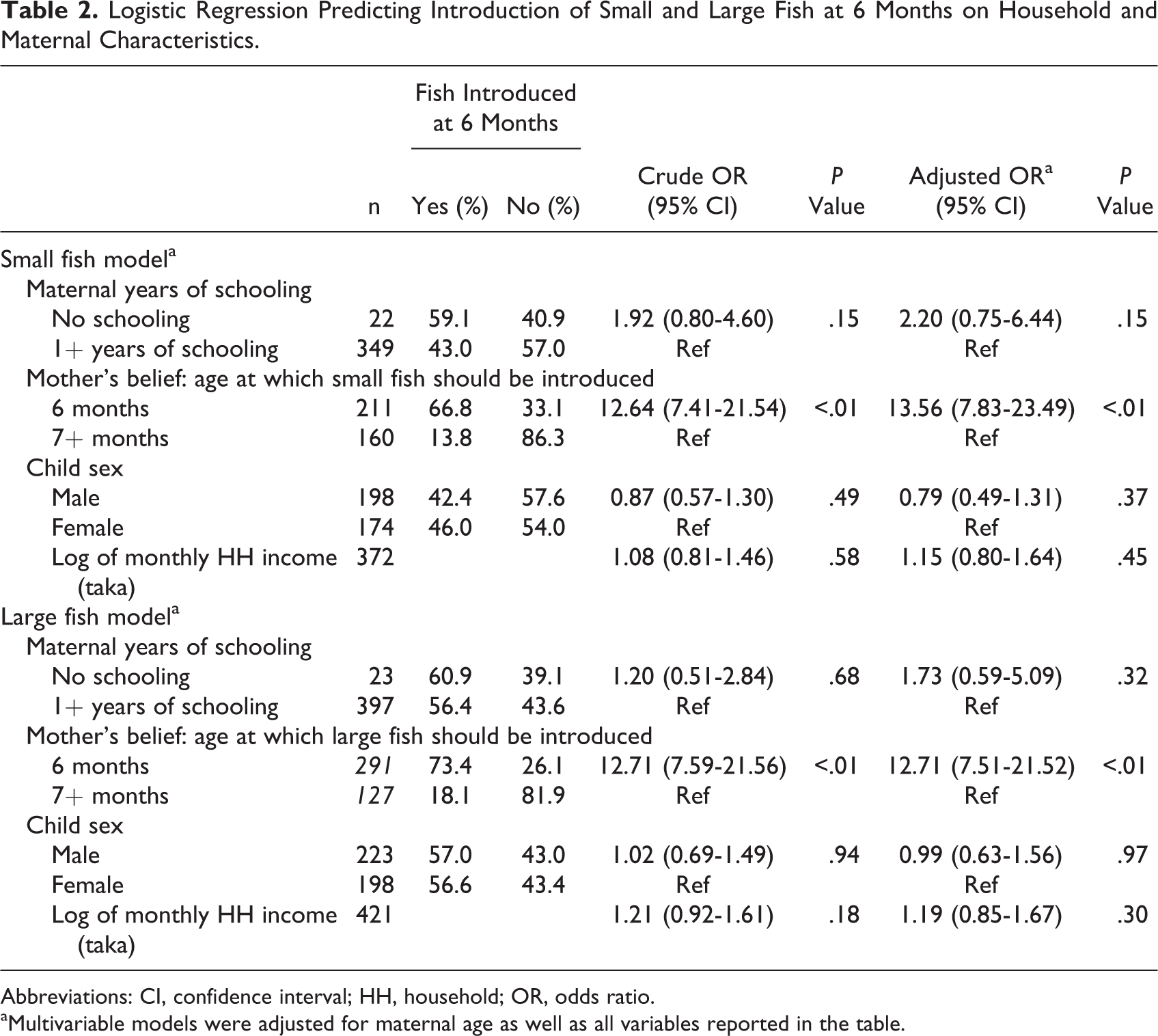
Abbreviations: CI, confidence interval; HH, household; OR, odds ratio.
aMultivariable models were adjusted for maternal age as well as all variables reported in the table.
Factors Associated With Beliefs About When Fish Should be Introduced
Years of maternal schooling did not have a statistically significant association with the belief that small or large fish should be introduced at 6 months (data not shown). The association between participation in the AIN project nutrition education sessions and maternal beliefs about fish introduction was also estimated for mothers of children 15 months of age or younger, using logistic regression models (Table 3). We observed no significant associations between participation in trainings and beliefs about when fish should be introduced.
Relationships Between Participation in AIN Training Sessions and Beliefs and Practices Concerning the Age of Introduction of Fish, Among Children 6 to 15 Months of Age.
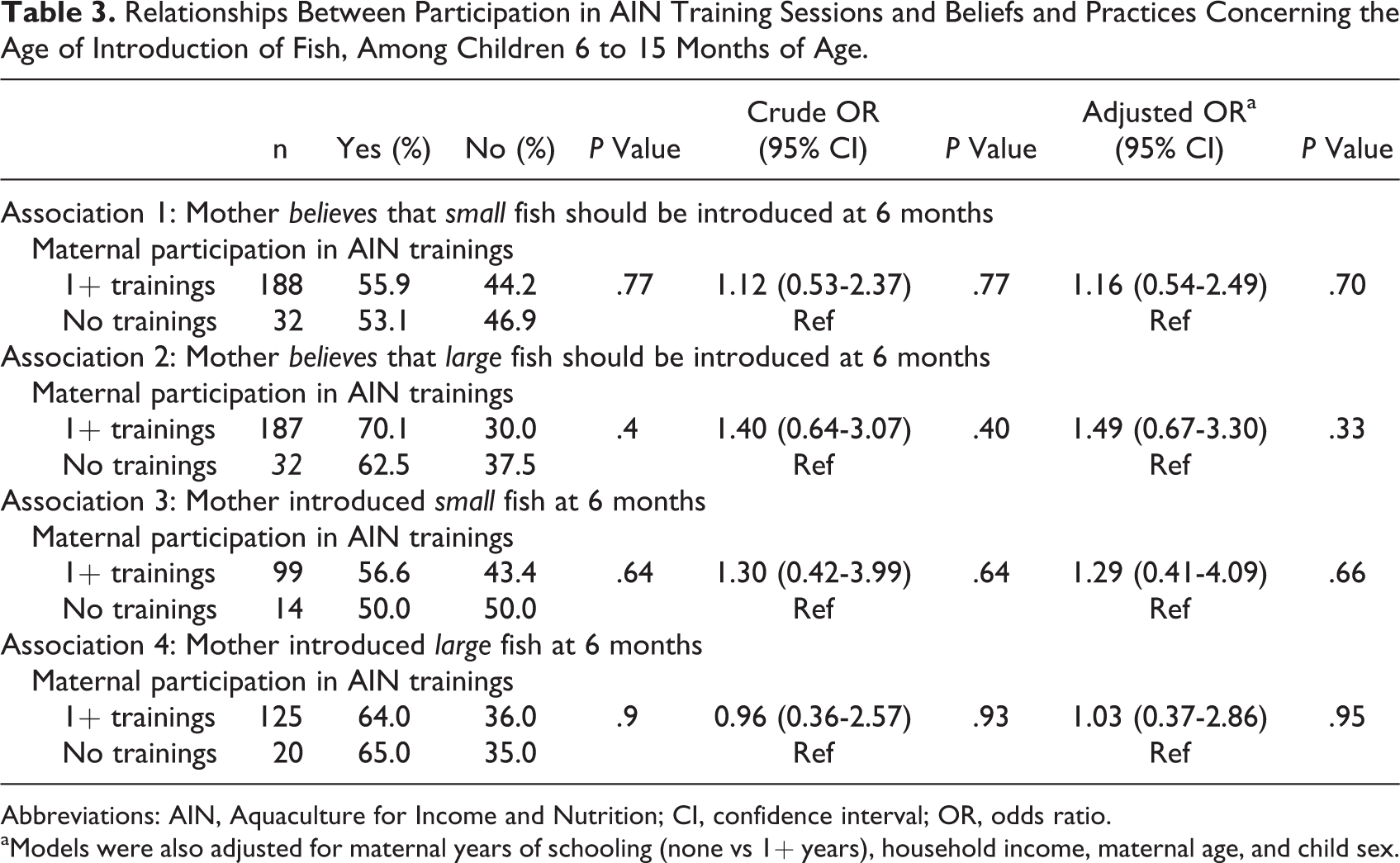
Abbreviations: AIN, Aquaculture for Income and Nutrition; CI, confidence interval; OR, odds ratio.
aModels were also adjusted for maternal years of schooling (none vs 1+ years), household income, maternal age, and child sex.
Women who reported believing that fish should be introduced later than 6 months to infants/young children were asked why. The most prevalent responses to this question were fear of bones (71.2%), followed by “other” (14.4%), maternal belief that the child was “too young” (7.6%), and child’s dislike of the taste (6.8%).
Discussion
In Bangladesh, fish is the most widely consumed ASF by the poor and represents an important locally available source of nutrients needed to support the growth, health, and development of rapidly growing infants and young children. 3,25 Small indigenous species of fish have a particularly high content of iron, zinc, calcium, vitamin A, and essential fatty acids when consumed whole, while larger fish generally have lower content of these nutrients. 19,26,27 Our study was conducted in a relatively well-off population that had access to fish from their own ponds as well as resources to purchase fish and other ASFs. They had also received nutrition education sessions stressing the benefits of including fish in the diets of infants and young children with practical demonstrations on how to prepare fish for this purpose. These sessions were well attended by study participants, and the fact that 90% of children had been reportedly fed an ASF in the previous day is quite remarkable. Given the cross-sectional nature of the study, it is not possible to draw a conclusion about the extent to which this reflects an effect of the interventions versus the fact that the households were relatively well off, as selection criteria for the project included ownership of a pond.
Despite high attendance at these sessions by study participants, our findings did reveal that the practice of delaying the introduction of fish into the diets of infants until at least 8 months of age remained prevalent within the population. These findings are consistent with prior observations from a large representative study in rural Bangladesh which showed that the proportion of children consuming fish in the past week doubled as children aged, from less than 40% among infants 6 to 11 months of age to more than 80% among children aged 12 to 24 months. 28
The lack of inclusion of ASFs in IYCF is common in low- and middle-income countries, and the reasons behind this practice have been grouped according to 3 categories: (1) lack of availability at the community level, (2) lack of economic access by households, and (3) distribution issues related to the use of ASFs within the household. 20 Within this third category, the decision of whether or not to feed fish to infants or young children may be influenced by many factors, including time needed to remove or mash bones, to prepare accompanying foods to mix in with it, concerns about the texture or the ability of infants to digest fish, concerns about the safety of fish, and cultural belief systems about the potential benefits or harm of fish for infants and young children. The relative importance of these issues exhibits significant variation by context. 20
We had hypothesized that there might be differences in the timing of introduction for large fish versus small indigenous fish, given that removing bones from smaller fish or mashing the fish with bones to make a paste may be more difficult than preparing meat from larger fish. Indeed, this was the case, although few other differences were apparent in the factors associated with behavior or beliefs about timing of fish introduction. This finding has potentially nutritional implications, as larger fish, including pangas (catfish), and tilapia have a lower content of micronutrients compared with small indigenous fish. 19 This suggests an interesting potential trade-off between the amount of time needed to prepare a fish for infant consumption versus its nutritional value.
Qualitative research from both Bangladesh and Peru suggests that concerns about bones and/or the time needed to prepare fish and remove bones is a particularly salient reason for the lack of inclusion in the diets of young children. 20,22 Until recent times, humans likely used premastication as a means of preparing foods for infants, yet it is unlikely that this practice will be re-adopted on a mass scale in modern times. 29 Food processing technologies present an intriguing solution to this problem, and varying degrees of processing technology can be used to help address the issue of bones, texture, smell, and safety of fish. In Uganda, the USAID Feed the Future program promotes group purchase of dried small fish which are then roasted and pounded to a powder and sprinkled on foods. 30 Processed complementary foods including fish powder have been developed and used in randomized trials of infant feeding in Cambodia 31 and Ghana 32 with mixed results. In Cambodia, locally produced complementary food which included dried small fish (approximately 13% by weight) and spiders as ASFs resulted in similar growth outcomes compared with Super Cereal-Plus corn soya blend, a micronutrient-fortified blended food containing milk, used in many countries by the United Nations World Food Programme. 31 In contrast, a study from Ghana found no difference in growth outcomes between infants who had been provided with a cereal–legume blend containing fish powder (made from anchovies, 20% by weight), a fermented maize dough containing the same fish powder, or a group containing the cereal–legume blend alone from 6 through 12 months of age. 32 WorldFish Bangladesh has developed fish-based products for complementary feeding of infants using local ingredients, which may provide an even more balanced solution, ensuring infants receive the nutrients they need to grow. 25,33 Assuming such foods are affordable, purchasing them may also help to circumvent the time-related constraints that may be limiting fish consumption in this environment, could also address food safety–related concerns, and may provide a healthy alternative to snack foods that are often purchased for children younger than 2 years in Bangladesh. 22
In addition to fish, we examined withholding and channeling of other foods of high-nutritional quality, particularly eggs, milk, meat, and fruit and vegetables. Concordant consumption behavior was observed for most foods by mothers and children, but eggs and milk appeared to be preferentially channeled to infants and young children by households while green leafy vegetables, meat, and fish appeared more likely to be withheld from the diets of infants and young children. While these findings require more research to confirm and understand, they have important ramifications for nutrition education and behavior change communication programs, as they suggest that fewer barriers may exist for incorporating eggs and milk into infant and young child diets. Indeed, behavior change communication efforts in Bangladesh have shown success in convincing households to incorporate eggs into the diets of infants for both prevention and treatment of malnutrition. 34,35 The fact that certain foods are more likely to be withheld from infants and young children suggests that efforts to scale up production of those foods should be coupled with additional efforts to ensure that they are used for infant feeding as part of “nutrition-sensitive” agricultural approaches. 36,37
The disjunction between maternal and infant/child dietary consumption patterns has been noted in other studies. Most recently, findings from the Alive & Thrive baseline studies in Bangladesh, Vietnam, and Ethiopia suggested that although maternal dietary diversity and child dietary diversity are correlated, maternal dietary diversity should not be used as a proxy for child consumption. 21 The findings of our study, namely, the frequent occurrence of withholding or channeling, despite the correlation between WDDS and children’s dietary diversity score, reinforce the same conclusion. They illustrate the value of including an indicator of women’s dietary diversity alongside the child dietary diversity indicator as a means of facilitating exploration of intrahousehold food sharing dynamics and of using food items rather than groups in such analysis.
It is difficult to explain observations that withholding of certain high-quality foods was more common among the mothers of boys versus girls. We suspect that this observation may have been due to chance, given that we observed no difference in the overall frequency of consumption of any foods by gender, with the exception of the category of animal flesh meat.
One limitation imposed by the cross-sectional design of this study is that we were unable to examine the extent to which the nutrition education and aquaculture interventions may have influenced the behaviors or beliefs expressed by participants in our study. The use of a recall-based tool rather than direct observation may have limited our ability to capture actual feeding/consumption behaviors. Data were collected in the winter months, a time when orange and yellow vitamin A-rich fruits are generally more scarce, and this may have led to lower dietary diversity scores. Our study was also limited by its relatively small sample size, as evidenced by relatively large but nonstatistically significant ORs for some results. Our sample was randomly drawn from participants in the AIN project, who were relatively well off, and findings are likely not generalizable of the overall rural population of the country.
One of the strengths of our study is that we were specifically able to examine fish separately from meat, rather than relying on the general “animal-source foods” or flesh foods exposure, which is typically used in dietary diversity scores. While one of the general observations we made was that caretakers delayed the introduction of both meat and fish to children, slight differences were found in the timing of different types of fish. Given that the challenges preparing fish and meat may differ, as may the potential belief systems about the potential risks that may result from introduction of fish versus meat to infants, future studies may use a similar approach to disaggregate the collection and presentation of these component foods rather than solely using the flesh foods category.
Conclusion
International guidelines stress that where possible, local foods should be used to meet the nutritional needs of infants and young children. 2 Introducing a diverse range of healthy foods to infants and young children can also help to shape future preferences and behaviors, thereby potentially reducing the risk of chronic disease later in life. 38 Even in contexts where other solutions to micronutrient deficiencies such as fortified foods or micronutrient powders are introduced, such approaches should be used to augment and not replace dietary diversification. 2
Fish, particularly small indigenous species, are an important and accessible source of multiple nutrients in Bangladesh and other aquatic settings.
Our study, set in the context of an aquaculture project, demonstrated that in spite of the inclusion of a nutrition education component emphasizing the inclusion of fish in the diets of infants and young children, a significant proportion of women delayed introduction of fish into the diets of young children, even when they themselves consumed it. More research is needed to explore reasons behind withholding of fish (and meat), to understand how this may relate to women and caretaker’s time, roles and other household responsibilities, to explore differences by child gender in this practice, and to explore alternative strategies to mitigate concerns about bones such as teaching techniques to remove bones from fresh fish, to powder dried small fish, or to increase access to fish-based complementary food products.
Footnotes
Authors’ Note
The contents and opinions expressed herein are those of the author(s) and do not necessarily reflect the views of the USAID or the US Government. This work is a contribution to the CGIAR Research Programs (CRP) on Aquatic Agricultural Systems (AAS) and Livestock and Fish (L&F).
Acknowledgments
The authors would like to acknowledge the families who took the time to participate in this study.
Declaration of Conflicting Interests
The author(s) declared no potential conflicts of interest with respect to the research, authorship, and/or publication of this article.
Funding
The author(s) disclosed receipt of the following financial support for the research, authorship, and/or publication of this article: The work reported in this article was partially funded by US Agency for International Development (USAID), through the Aquaculture for Income and Nutrition (AIN) project, implemented by WorldFish and partners in Bangladesh.