



Abstract
Background:
Fortification of cereal grains with at least iron or folic acid is legislated in 85 countries worldwide. Relative to wheat and maize flour, rice fortification is relatively new and provides an opportunity to deliver essential micronutrients to populations that consume rice as a dietary staple.
Objective:
To describe miller and public sector experiences and perspectives on rice fortification with micronutrients in Colombia and offer recommendations for policy makers.
Methods:
Interviews with Colombian rice millers, research and development personnel, and public sector leaders; desk review of key documents.
Results:
In Colombia, rice fortified with micronutrients is market driven and a few very large rice millers, currently representing about 35% of the market, have voluntarily fortified rice since 2002. The technology used (spraying) is unique to Colombia and to date there is no independent verification of nutrient retention after washing and cooking rice fortified through this technology. Millers are unwilling to switch to more proven methods, such as extrusion or coating, which will incur higher capital investment and recurring costs. Despite interest from multiple stakeholders between 2002 and 2011, mandatory rice fortification is not part of the Colombian government policy as of July 2015.
Conclusion:
Rice fortified with micronutrients through spraying technology has achieved moderate coverage in Colombia, but the technology is unproven, its effectiveness unknown, and public health impact likely limited. For rice fortification to be an effective nutrition intervention to improve micronutrient status, policy makers should explore standards to guide industry and improvements to regulatory capacity.
Introduction
Current estimates suggest that 2 billion people suffer from deficiencies of essential micronutrients, 1 and the World Health Organization estimates that 19% of child mortality globally is attributable to micronutrient deficiencies of iron, zinc, and vitamin A. 2 Fortification with micronutrients of staple foods, such as cereal grains, condiments, salt, and oil, is a proven strategy to improve micronutrient intake and status across a broad swath of population that consumes these foods. 3 Fortification programs, most notably of cereal grains and salt, have demonstrated reductions in neural tube defect birth prevalence, 4,5 iron deficiency, 6 iodine deficiency, 7 and virtually eliminated conditions such as pellagra, beriberi, riboflavin deficiency, folate deficiency, 8 -10 and folate-deficiency anemia. 10 The Copenhagen Consensus of 2012 identified micronutrient interventions (including fortification) as having the greatest cost–benefit ratio to address global challenges. 11
Rice is a staple food for about half of the world’s population, and many of the countries with the greatest burden of micronutrient deficiencies count rice as their main staple grain. 12 In many of these countries, rice would be an ideal vehicle to deliver micronutrients. Though rice fortification has been practiced since the 1940s, beginning in the Philippines, 13 technical constraints have prevented mass implementation of rice fortification globally thus far. 14 There are essentially 3 strategies for implementing rice fortification programs: through social safety nets (eg, school-feeding or food distribution programs), voluntary fortification driven by the private sector, or mandatory fortification legislated by the government. 15 Mandatory fortification with adequate monitoring and enforcement is generally considered the most effective for increasing micronutrient intake equitably and sustainably across the population. 16 While the supply of fortified food does not depend on market demand in a mandatory fortification program, 16 these programs require strong stewardship and a robust enabling environment. 17
Efforts to introduce fortified rice into the food supply in Colombia began in 2001 to 2002. Although mandatory wheat flour fortification was passed in Colombia in 1996, 18 the 2010 Encuesta Nacional de la Situación Nutricional (National Nutrition Survey or ENSIN) indicates that there is still a nutritional need, as deficiencies of vitamin B12 and iron affect 17.1% and 13.2% of women of reproductive age, respectively, across the country. 19 Per capita availability of wheat flour is slightly higher than rice (77 g of rice per capita per day [g/c/d] vs 82 g/c/d of wheat flour 20 ), but rice is more widely consumed in Colombia compared to wheat flour in some regions and subgroup populations. 21 In particular, rice is the main source of energy and protein for low-income groups. 22
On the surface, it appears that the industry-led effort to voluntarily fortify rice in Colombia has been moderately successful. As of 2015, an estimated 35% of the rice consumed in the country was marketed as fortified. However, several unique aspects of the rice fortification experience in Colombia suggested that it would be worthwhile to examine further the motivations, challenges, and opportunities behind rice fortification efforts in the country.
Although the objective of the original data collection effort was to analyze whether mandatory rice fortification was feasible in Colombia, our objective here is to describe the Colombian experience with rice fortification to date. We conducted key informant interviews with individuals from the public and private sectors and a desk review of relevant documents and literature to draw lessons learned, discuss related efforts in other countries, and offer recommendations to Colombian policy makers in rice fortification that may also be adapted to other contexts.
Methods
Information was obtained from September to October 2013 and in July 2015 through interviews, observations, and document reviews. R.M. conducted all research and interviews in 2013; P.M. followed up with stakeholders in 2015 to assess whether the information gathered in 2013 was still valid. Interviews were held with key stakeholders of the rice industry (including millers, research and development personnel, and trade association members) and public sector representatives in Colombia, identified through snowball sampling. The exploratory interviews with all individuals began with a standard interview guide. These interviews took place principally in Bogotá (capital city) and Medellín (capital city of the Antioquia department). When it was impossible to meet sources in person, telephone or Skype interviews were arranged and questions were addressed by e-mail. Interviews were recorded and transcribed when permission was granted; otherwise recorded by handwritten notes. Observations were conducted at supermarkets, wholesale outlets, and retail stores in Bogotá and Ibagué (capital city of the Tolima department), and at rice-processing factories in Ibagué to collect rice prices and packaging labels for claimed nutrient levels. After the interview process, a desk review of relevant documents, from official and nongovernmental sources, was conducted to supplement information from the original sources.
This investigation was carried out by following the principles espoused in the Helsinki declaration. 23 The objectives of the project were explained to all interviewees. Their oral consent was obtained to answer questions related to rice fortification and the rice industry in Colombia.
Results
Five members of the rice industry were interviewed, 1 individual from the Ministry of Health and Social Protection, 1 individual from Instituto Nacional de Vigilancia de Medicamentos, 6 from domestic social welfare programs, 3 from United Nations agencies (the United Nations Children’s Emergency Fund, World Food Programme, and Food and Agriculture Organization), 3 premix company representatives, 1 individual from a public relations agency that worked exclusively for 1 of the mills on fortified rice, and 1 Ministry of Health official from Costa Rica, where rice fortification is mandatory.
As interviews and information were reviewed, several themes related to rice fortification in Colombia emerged: motivations to begin rice fortification, technology unique to Colombia, costs to fortify, and efforts to legislate mandatory fortification.
For background on rice fortification technologies, see Figure 1. For clarification regarding rice fortification terms, refer to Figure 2.
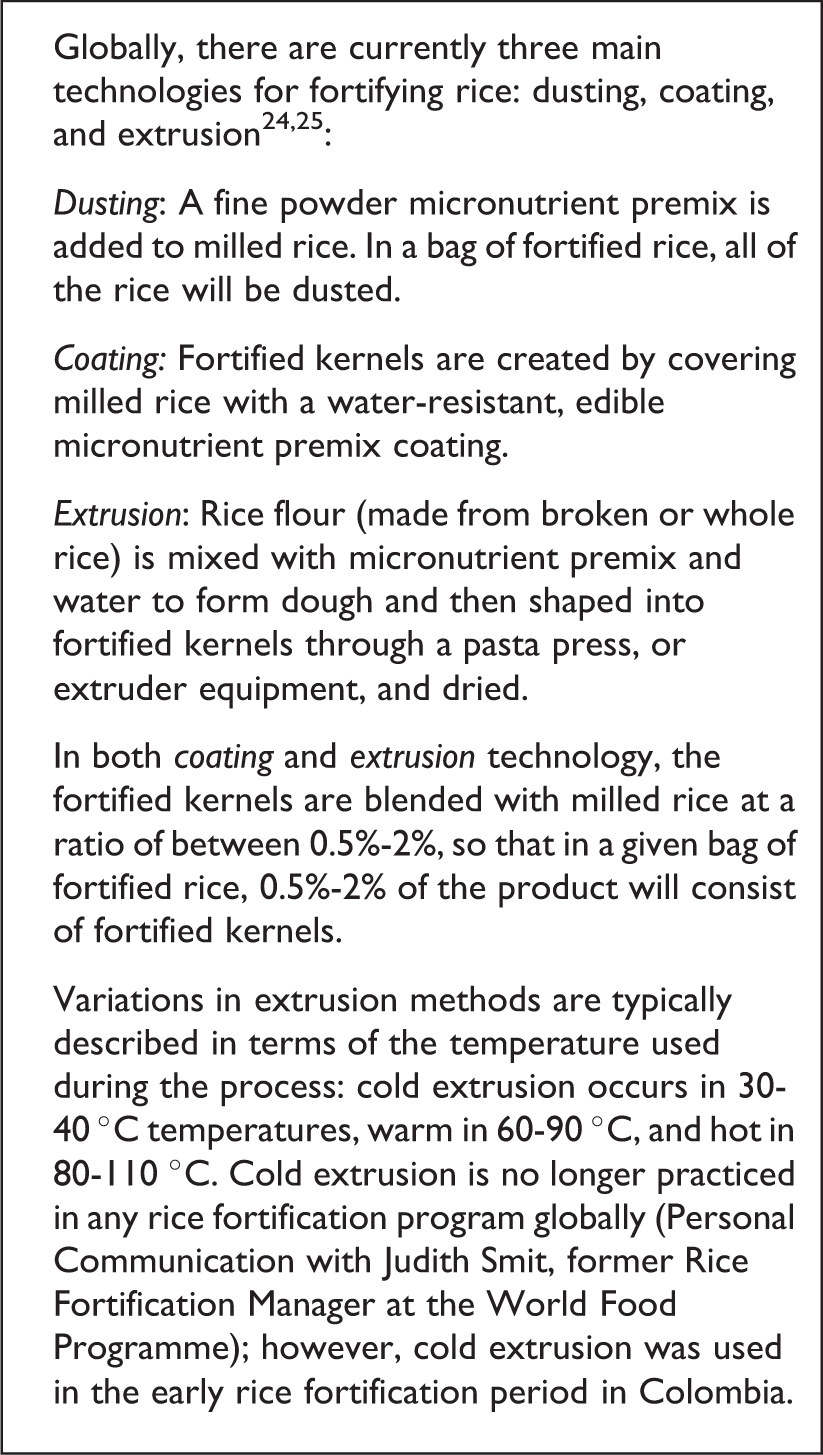
Rice fortification technologies.
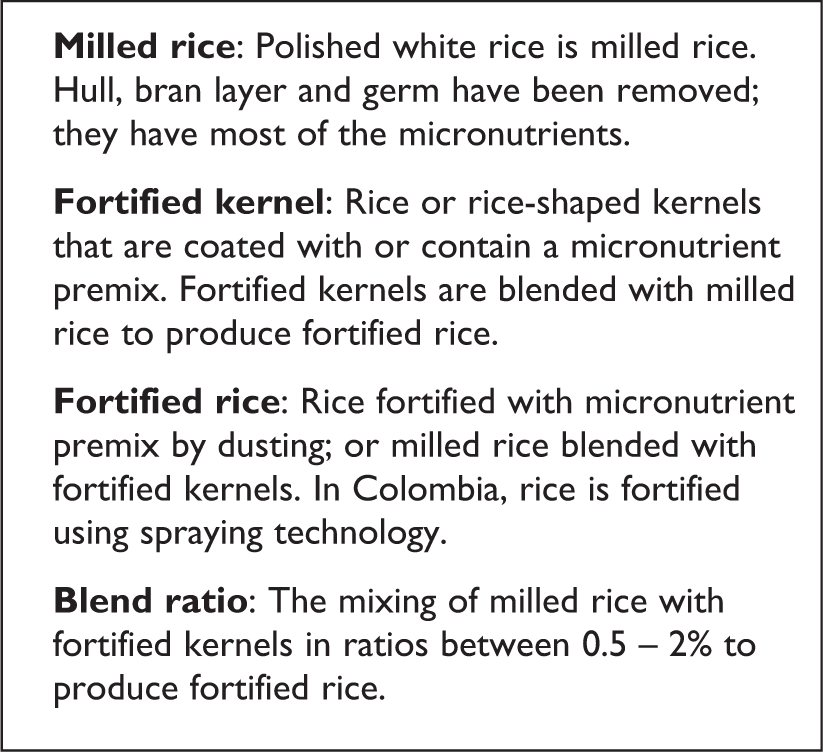
Key rice fortification terms.
Motivations to Begin Rice Fortification
According to several sources, efforts to fortify rice in the early 2000s were mainly driven by the desire of Colombian rice millers to differentiate their products from those of their domestic competitors. Arroz Roa, Colombia’s largest rice miller, and Unión de Arroceros, 1 of the 10 largest millers in the country, were the pioneers of rice fortification in Colombia. In 2002, both launched their fortified rice products, with Arroz Roa preceding Unión de Arroceros by a few months. They were driven by the same objectives—improve consumer perception of the company’s brand in the market and provide better nutrition to consumers—but employed different fortification technologies: Arroz Roa used spraying (aspersión), whereas Unión de Arroceros relied on cold extrusion (Figure 3).
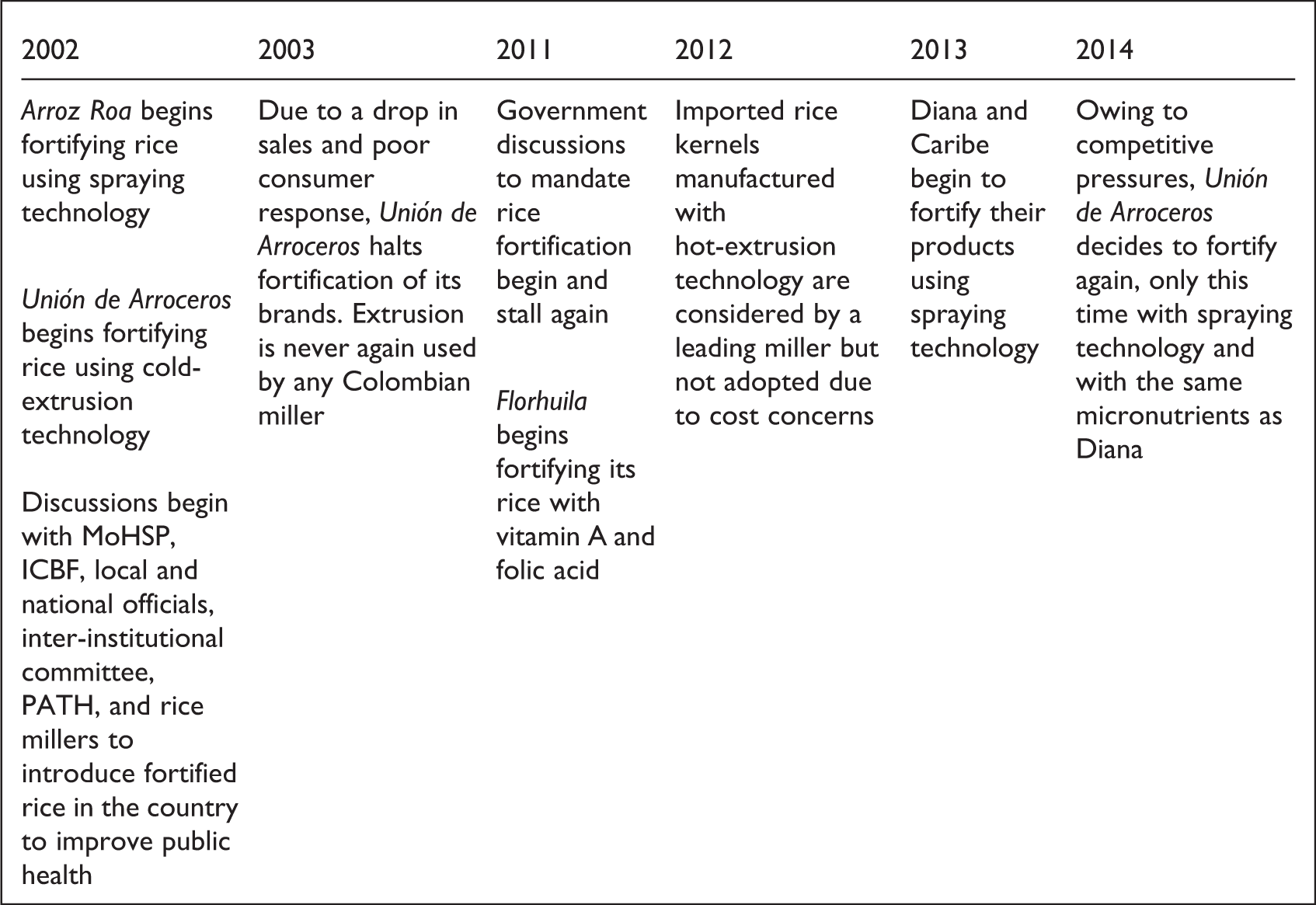
Rice fortification timeline in Colombia.
The rice milling industry in Colombia is fairly consolidated. There are 66 millers in the country, 2 of them large, 15 midsized, and 49 small ones based on production volume. The top 2 millers, Arroz Roa and Diana, account for about 50% of domestic production and about 35% of the rice consumed in Colombia (factoring in imported and smuggled rice), essentially constituting a duopoly with strong market power. 26 The combined efforts of these 2 market leaders and a few midsized millers, such as Unión de Arroceros and Caribe, were enough to provide the country with at least 35% coverage of fortified rice as of 2015.
From 2008 on, increases in smuggled, inexpensive rice from neighboring Ecuador and Venezuela contributed to millers’ desires to fortify under a regulated and mandatory scheme; they thought that if rice was legislated to be fortified, an official label or seal would be attached to all the domestic rice traded in the country, leading to a decrease in smuggling. However, the millers’ position changed after concluding that the federal government could not adequately control the flow of smuggled rice into Colombia. That being the case, mandatory fortification could potentially worsen the problem if the price of Colombian rice increased due to fortification and widened the price gap between domestic and smuggled rice.
Colombian Fortification Technology
Spraying technology and its challenges
Because fortification in Colombia was driven primarily to differentiate domestic rice brands, rice millers closely guard the details of their fortification processes. However, interviews with millers did indicate that spraying is the only fortification technology presently used in the country. Spraying is distinct from all the main fortification techniques described in Figure 1. According to a medium-sized rice miller, the micronutrients are present in a liquid solution that is sprayed at high pressure (micropulverized), allowing grains’ pores to absorb the liquid micronutrient premix. Depending on a specific mill’s method, waxes or gums may be used in the liquid solution to improve adherence to the surface of the grain. The spray is applied to all rice, as in the dusting technique. According to the source, consumers do not notice an organoleptic difference between spray-fortified rice compared to nonfortified rice.
Although the liquid micronutrient solution is sprayed onto all rice, a milling source indicated that this method does not result in homogenously fortified rice. For this, new equipment would be required to appropriately disperse the rice during spraying, and millers are reluctant to invest further in rice fortification technology.
Millers also identified 2 other key challenges with spraying technology: micronutrient losses during food preparation and the occasional formation of mold on fortified rice given high humidity during the fortification process. One source stated that spray-fortified rice should not be rinsed, since up to 35% of the micronutrient content is lost. It is not clear how much loss occurs during the cooking process, but different sources claimed that after rinsing and cooking, the retention of micronutrients was highly heterogeneous, varying between 0% and 60%. However, since there are no published studies conducted by any institution (private, government, academic, or other) evaluating the content and stability of the spray-fortified rice after it is rinsed and cooked, it is not clear how the spraying technology in Colombia compares in effectiveness to other technologies.
Challenges to introducing extrusion technology
After introducing its cold-extruded fortified rice, Unión de Arroceros experienced a decline in sales that the mill’s owner attributed to consumer rejection of the new product. Although market research prior to commercialization suggested consumer acceptability of the cold-extrusion fortified rice, Unión de Arroceros’s data showed that the rice was not well received. Given the drop in sales, Unión de Arroceros decided to stop fortifying its rice in 2003.
In light of suspected low nutrient retention of spraying technology and Unión de Arroceros’s poor experience with locally produced cold-extruded kernels, another mill explored the option of fortifying rice via imported (hot-extruded or coated) fortified kernels. Internal consumer acceptability and nutrient retention studies were positive, 27 but in the end, the miller chose to continue to fortify rice by spraying. The miller was reluctant to invest in the capital and increased recurring costs to switch to blending fortified kernels, especially when a rival mill had had such a negative experience with cold-extruded kernels in the past.
The Cost of Fortification
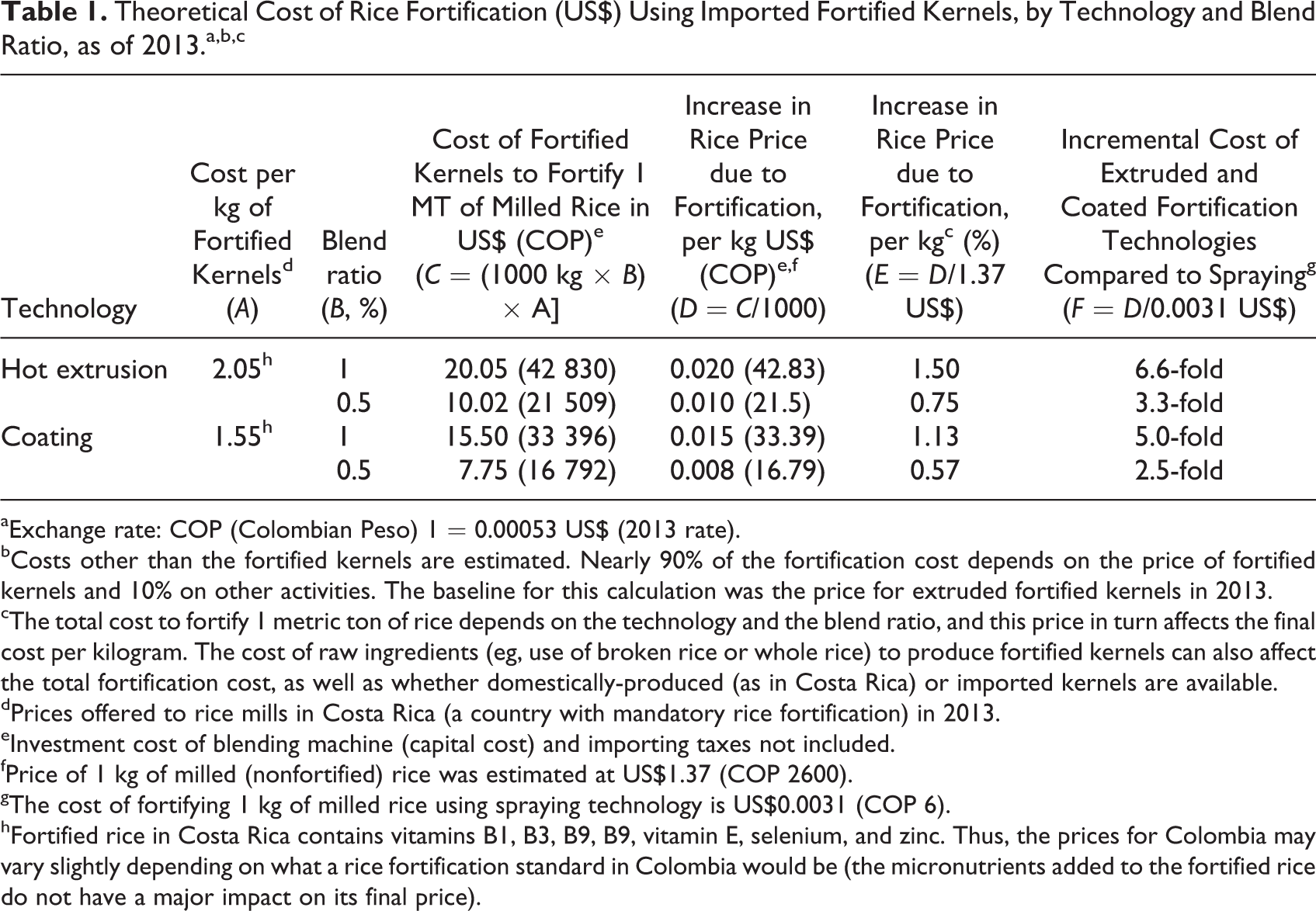
According to sources, it was clear that spraying technology had a strong advantage in cost for millers. The cost of purchasing coated or extruded kernels is far higher than purchasing micronutrient premix for spraying; according to quotes from coated and extruded fortified kernel producers, the incremental costs related to using fortified kernels are between 2.5 and 6.6 times higher than spraying (Table 1). Depending on the blend ratio, fortifying with coated or hot-extruded kernels would increase the price of rice between 0.57% to 1.13% and 0.75% to 1.50%, respectively (Table 1). By contrast, spraying increased the price of rice in Colombia by only 0.23% to 0.26%. The higher price due to spraying reportedly did not affect consumer demand.
Theoretical Cost of Rice Fortification (US$) Using Imported Fortified Kernels, by Technology and Blend Ratio, as of 2013.a,b,c
aExchange rate: COP (Colombian Peso) 1 = 0.00053 US$ (2013 rate).
bCosts other than the fortified kernels are estimated. Nearly 90% of the fortification cost depends on the price of fortified kernels and 10% on other activities. The baseline for this calculation was the price for extruded fortified kernels in 2013.
cThe total cost to fortify 1 metric ton of rice depends on the technology and the blend ratio, and this price in turn affects the final cost per kilogram. The cost of raw ingredients (eg, use of broken rice or whole rice) to produce fortified kernels can also affect the total fortification cost, as well as whether domestically-produced (as in Costa Rica) or imported kernels are available.
dPrices offered to rice mills in Costa Rica (a country with mandatory rice fortification) in 2013.
eInvestment cost of blending machine (capital cost) and importing taxes not included.
fPrice of 1 kg of milled (nonfortified) rice was estimated at US$1.37 (COP 2600).
gThe cost of fortifying 1 kg of milled rice using spraying technology is US$0.0031 (COP 6).
hFortified rice in Costa Rica contains vitamins B1, B3, B9, B9, vitamin E, selenium, and zinc. Thus, the prices for Colombia may vary slightly depending on what a rice fortification standard in Colombia would be (the micronutrients added to the fortified rice do not have a major impact on its final price).
Although spraying technology also involves capital equipment costs, for currently spray-fortifying mills to switch to blending coated or extruded kernels, a blending machine (costing approximately US$3500) is necessary. In interviews, millers expressed reluctance to purchase new equipment to fortify rice, given existing investment in spraying equipment.
Small millers argued that their access to capital is so low that they do not even have the ability to purchase fortified kernels. Moreover, these small millers are concerned that the current rice industry concentration may worsen if a few big rice mills invest in extrusion or coated technology to become the sole domestic providers of fortified kernels.
Efforts to Legislate Mandatory Fortification
Despite discussions to mandate rice fortification between 2002 and 2011 and the apparent agreement of the involved stakeholders on the public health need to fortify, there is no mandatory rice fortification legislation in Colombia as of July 2015. Included in discussions were rice millers, PATH, the Archdiocesan Food Bank in Medellín, the local government of Antioquia, the Ministry of Health and Social Protection, the Colombian Institute of Family Welfare, and a national, interinstitutional micronutrient committee (Comité para la Prevención y Control de las Deficiencias de Micronutrientes). However, ultimately there was no visible and engaged advocate in the public sector with sufficient political will or clout to pass mandatory rice fortification.
In these discussions, rice millers agreed to the possibility of mandatory rice fortification even though they feared the impact of rice fortification on their market share. Millers reported that they initially supported mandatory rice fortification because they were under the assumption that a mandate could potentially stem the influx of illegally imported rice, since nonfortified rice would officially not be allowed. However, millers later changed their position, claiming insufficient capacity on the part of government agencies to control the illegal trade of rice across Colombia’s borders.
According to interviews, draft decrees and legislation lacked specific language to identify micronutrients, amounts, and ensure that appropriate technologies were used in the country. No standards for rice fortification were developed and as a result, the types and amounts of micronutrients voluntarily added to fortified rice vary according to the brand (Table 2). Labeling to differentiate added micronutrients versus intrinsic amounts present in rice is not done clearly or consistently across brands.
Micronutrient Content (as Labeled) of Certain Fortified Rice Brands in Colombia.a
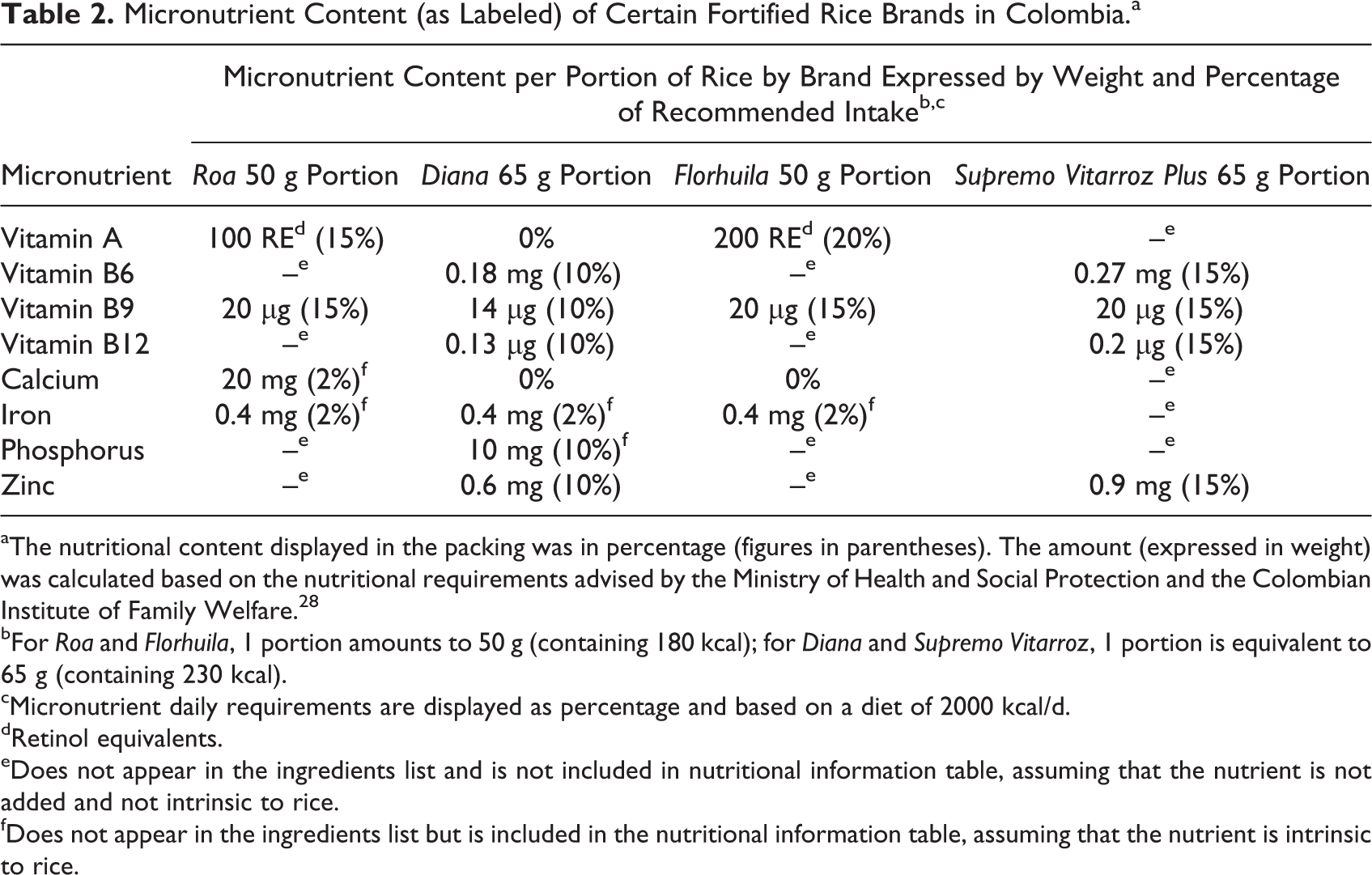
aThe nutritional content displayed in the packing was in percentage (figures in parentheses). The amount (expressed in weight) was calculated based on the nutritional requirements advised by the Ministry of Health and Social Protection and the Colombian Institute of Family Welfare. 28
bFor Roa and Florhuila, 1 portion amounts to 50 g (containing 180 kcal); for Diana and Supremo Vitarroz, 1 portion is equivalent to 65 g (containing 230 kcal).
cMicronutrient daily requirements are displayed as percentage and based on a diet of 2000 kcal/d.
dRetinol equivalents.
eDoes not appear in the ingredients list and is not included in nutritional information table, assuming that the nutrient is not added and not intrinsic to rice.
fDoes not appear in the ingredients list but is included in the nutritional information table, assuming that the nutrient is intrinsic to rice.
Although there is no mandatory rice fortification requirement in Colombia, public sector rice purchases have in certain instances required the rice to be fortified. Sources reported that rice purchases for feeding Colombian military personnel must be fortified, with the same requirement for the rice served in the government of Medellín’s programs. Sporadically, large national programs, such as those operated by the Ministry of Health and Social Protection, which reach 2.5 million children, have used fortified rice.
Discussion
Key Challenges to Rice Fortification in Colombia
Several barriers to an effective implementation of rice fortification were identified at various levels. These obstacles are outlined below.
Competition from smuggled rice
Millers were reluctant to fortify rice using more expensive methods than the current spraying technology due to easy consumer access to cheap, nonfortified rice smuggled into the country. They also feared that if mandatory rice fortification caused increases in prices, the demand for cheap smuggled rice would increase even further. For 2013, it was estimated that up to 20% of the rice consumed in the country was brought in illegally, resulting in 217 000 metric tons of domestically produced rice unsold. 29 Unless the government is able to stem the illegal trade of rice, it is unlikely that millers will be willing to pay more to purchase coated or extruded kernels, buy new blending equipment, invest in domestic fortified kernel production, or even upgrade current spraying technology to improve the delivery of micronutrients in fortified rice.
Concerns over market share due to increased costs
The low, “invisible” cost of fortifying rice using spraying technology has set a precedent for Colombian millers who are unwilling to accept alternatives that could increase costs and thus make them less competitive. For mills that have already invested in spraying technology, the key recurring cost of fortification is the purchase of micronutrient premix. Because a domestic supply of coated or hot-extruded kernels does not exist, millers preferring those technologies will also have the recurring costs of purchasing imported fortified kernels unless they make their own. Millers can produce hot-extruded or coated kernels themselves, just as Unión de Arroceros produced its own cold-extruded kernels. However, both extrusion and coating are costlier technologies than spraying. Hot-extrusion equipment, for example, was until recently cost-prohibitive except for very large mills with deep capital resources. According to millers that currently fortify, the low cost of spraying technology was precisely one of the reasons why voluntary fortification was taken up as a low-risk means to differentiate their brand. In essence, voluntarily fortifying mills use a cheap and unproven technology to make nutrition claims on their products without actually demonstrating nutritional benefit to the population.
Rice millers perceive a risk of market share loss not only to other rice millers but to other staple foods as well. Rice’s elasticity of substitution when compared to wheat products for the period 1961 to 2001 was 1.16, and its elasticity of demand for the same period was −0.94; although negative, the latter index is relatively high compared to potatoes (−0.21) or maize (−0.33). 26 Thus, rice’s role in the Colombian diet as a staple food is affected not just by its price but also by the price of wheat and other carbohydrate sources.
Concerns over consumer rejection of fortified rice
Fear of market share loss is also related to a lingering negative association with extruded kernels. A source cited the negative feedback from consumers and lost market share Unión de Arroceros experienced from using cold-extruded kernels. Information from an urban market investigation 30 shows that Colombian consumers prioritize price and physical characteristics of rice, such as color, flavor, and texture, above the nutritional benefits of fortification. Although the organoleptic qualities of warm- and hot-extruded kernels are superior to cold-extruded kernels, millers fear that even using warm or hot extrusion will result in the same poor consumer response.
Limited resources for small rice mills to fortify
Lacking the capital to purchase fortified kernels and new equipment, small mills fear being shut out of the rice market if fortification is made mandatory. This is problematic since small mills are usually the only ones serving rural areas, whose populations have the highest prevalence of malnutrition. 19 Small mills are also already operating under an oligopoly controlled by a small number of large mills with greater resources.
Lack of sustained political championship in the public sector
Fortification is a multisectoral intervention that requires collaboration within multiple ministries in the government as well as across private and civic sectors. Successful fortification programs have typically required high levels of political will to push legislation through and allocate resources to enforce the legislation. 31
Global Experiences With Rice Fortification
Public sector engagement in various national fortification initiatives has taken different forms. At one end of the spectrum, illustrated by Costa Rica and the Philippines, a rice fortification mandate supported by regulatory and policy instruments was put in place. 17 An intermediate level of public sector involvement is represented by most instances of voluntary fortification, in which governments may establish various forms of incentives and support to induce private sector companies to fortify while stopping short of an outright mandate. At the other end of the spectrum, some national voluntary fortification initiatives may be launched through partnerships engaging the private, social, and academic sectors but without public sector involvement. In Brazil, the voluntary rice fortification initiative is an example of a purely market-based approach led by the private sector. 32
In the Brazilian case, fortified rice has become a niche market that represents a single-digit percentage of the overall rice market. 32 Although efforts in Colombia also began with a purely market-based approach, market uptake has been much broader in that country, with slightly more than one-third of commercialized rice in the country currently being fortified. These vastly different outcomes reflect how market-driven rice fortification depends heavily on a country’s context. In Brazil, rice fortification never gained any meaningful traction with the public sector despite stakeholder efforts. In Colombia there was early signaling by the government that it would be supportive of the initiative. Arroz Roa was first to market with a fortified product that was organoleptically superior, lower cost, and higher margin than Unión de Arroceros’s but at the expense of nutritional quality. The availability of a lower-cost technology that enabled large millers to claim fortification of their product with better consumer acceptability effectively drove the extruded product off the market. Another favorable force at play in Colombia, but not Brazil, was the desire of the national rice industry to brand and differentiate its product from cheap imports and smuggled rice, for which fortification was seen as instrumental. While remarkably different in their pathways, the Brazilian and the Colombian rice fortification experiences coincide with their underlying model—purely market based—and their at best limited impact on public health thus far.
Recommendations for Rice Fortification in Colombia
Although the Colombian context presents several challenges for rice fortification to significantly contribute to nutritional outcomes, there are opportunities to improve the program and thereby increase micronutrient intake by the population.
Investigate spraying technology for rinse resistance and nutrient retention during cooking
Millers are clearly price conscious and want to avoid alternatives to the current spraying technology if those will increase costs or reduce demand. As a first step, the technical aspects of spraying technology should be assessed by a government laboratory or reputable third-party institution to provide documented information on nutrient retention and levels. If, as suggested by interviews discussed here, spraying technology in its current form is ineffective at delivering nutrients, rice fortification in Colombia is not improving micronutrient intake, and spraying technology should be either substantially enhanced or replaced with extrusion or coating technology.
Develop standards for rice fortification
Proposed nutrients and levels for rice fortification based on estimated per capita intake exist at the global level. 33 Using those levels as a starting point for setting standards in Colombia will ensure that rice is fortified in a manner that is safe and beneficial to consumers. In current practice, producers are allowed to add types and amounts of micronutrients for marketing purposes, but these levels are not guided by effectiveness in achieving nutritional impact. For Colombia, since wheat flour is already fortified, an analysis of the estimated levels of micronutrients contributed by both fortified wheat flour and rice is necessary to establish appropriate standards for fortifying rice. Based on the dietary or nutritional deficiencies prevalent in the population, which the ENSIN 2015 survey should highlight, delivery of the corresponding micronutrients can be optimized across wheat flour and rice.
Consider a mandate with special consideration for small mills
If mandatory fortification is established, options can be explored to enhance small mills’ ability to fortify (eg, collective purchasing of fortified kernels, contract purchasing of equipment and fortified kernels, or subsidies of various forms). The government should also weigh the resources required to regulate and monitor implementation by mills, and small mills in particular. Absent these resources, a fortification mandate could at least temporarily exempt small mills from the obligation to fortify, as done in Uganda to exempt mills from mandatory maize fortification if they have a capacity of less than 20 metric tons per 24-hour period. 34 Other public health strategies (eg, biofortification 35 and supplementation) to improve micronutrient status may be necessary to reach populations that depend on rice from small mills.
Strengthen capacity for enforcing food and border regulations
Any policy or mandate will only be effective with appropriate monitoring capabilities. 36,37 Improved enforcement and policies to deal with rice smuggling would improve the enabling environment for greater investment by local millers in rice fortification, including the adoption of proven fortification technologies.
Expand access to fortified rice by vulnerable populations through social safety nets
Countries such as Bangladesh, 38 India, 39 and Indonesia 40 fortify public sector rice through social safety nets, and these safety nets represent an opportunity in Colombia. Fortified rice provided in the Colombian military’s rice purchases and in the Medellín government’s local programs set a precedent for distributing rice in government social safety nets. Many other safety net programs at the national and municipal level could benefit from fortification by making it an institutional requirement in their procurement process. These large volume purchases could give the national government added leverage in implementing fortification-related policies and standards.
Conclusion
In Colombia, rice is a staple food that could serve as a suitable vehicle to reduce micronutrient deficiencies if properly fortified. Currently, about 35% of the country’s rice is voluntarily fortified but using a spraying fortification technology with unknown nutrient retention and effectiveness. Although the central government has indicated an interest in mandatory rice fortification legislation, millers fear that more expensive, and proven, fortification technologies will shift demand to cheaper, smuggled rice and thus cause them to lose market share. Past experience with consumer rejection of fortified rice using cold-extruded kernels also adds to miller hesitancy to switch from spraying to more proven technologies.
Colombia’s experience illustrates the limitations of purely market-based approaches to mass fortification. It shows how well-intentioned rice millers can voluntarily fortify and collectively achieve considerable coverage. However, without stewardship and regulation from the public sector to set and enforce standards for domestic and imported rice, local rice market dynamics can steer fortification efforts in unintended directions that produce little actual value for either consumers or the industry. In their current form, it is doubtful that rice fortification efforts in Colombia will improve nutritional outcomes.
Footnotes
Authors’ Note
P.M. and R.M. were involved in designed research; R.M. conducted research and analyzed data; B.L.T., R.M., N.D., H.P., R.S., and P.M. were involved in writing the paper; B.L.T., R.M., and P.M. had the primary responsibility for the final content. P.M., R.M. (at time of work), and N.D. (at time of work) were affiliated with PATH, an international nonprofit organization that holds the license to Ultra Rice, a technology to produce fortified rice. PATH licensed the original cold extrusion technology used by Unión de Arroceros in 2002. PATH was also involved in conversations with the government and rice millers to mandate rice fortification in Colombia.
Acknowledgments
The authors thank all interviewees for their time, participation, and insights. Special thanks to Alvaro Ruiz who provided all the information related to the initial rice fortification process in Colombia and who put us in contact with other key stakeholders.
Declaration of Conflicting Interests
The author(s) declared no potential conflicts of interest with respect to the research, authorship, and/or publication of this article.
Funding
The author(s) disclosed receipt of the following financial support for the research, authorship, and/or publication of this article: The field work was funded in whole by a generous grant from the Bill & Melinda Gates Foundation. The views expressed herein are solely those of the authors and do not necessarily reflect the views of the Foundation.