




Abstract
Background:
Meeting the food needs of Africa's growing population will require innovative and appropriate technologies whose effectiveness needs to be assessed.
Objective:
To evaluate the impact of Solar Market Gardens (SMGs) on crops production diversity and dietary diversity in the Kalalé district of Northern Benin.
Methods:
In 2007, SMGs were installed in 2 villages for women's agricultural groups as a strategy for enhancing food and nutrition security. Data were collected through interviews at installation and 1 year later from all women's group households (30–35 women/group) and from a random representative sample of 30 households in each village, for both treatment and matched-pair comparison villages.
Results:
Comparison of baseline and endline data indicated increases in the variety of fruits and vegetables produced and consumed by SMG women's groups compared to other groups. The proportion of SMG women’s group households engaged in vegetable and fruit production significantly increased by 26% and 55%, respectively (P < .05). After controlling for baseline values, SMG women's groups were 3 times more likely to increase their fruit and vegetable consumption compared with comparison non-women's groups (P < .05). In addition, the percentage change in corn, sorghum, beans, oil, rice and fish purchased was significantly greater in the SMG women’s groups compared to other groups. At endline, 57% of the women used their additional income on food, 54% on health care, and 25% on education.
Conclusions:
Solar Market Gardens have the potential to improve household nutritional status through direct consumption and increased income to make economic decisions.
Introduction
Although considerable achievements in the global reduction in hunger and poverty have been made, progress in Africa so far has been very limited. 1,2 At present, one-third of the population of Benin faces widespread hunger and chronic malnutrition. The most affected are rural households whose livelihoods are heavily dependent on traditional rainfed agriculture. 3,4 Rainfall plays a major role in determining agricultural production and hence the economic and social well-being of rural communities. The rainfall pattern in sub-Saharan Africa (SSA) is characterized by large-scale intraseasonal and interannual variability, with frequent extreme weather events such as droughts and floods that reduce agricultural outputs and can result in severe food shortages. 5 In response to seasonal and rainfall constraints, households facing acute food shortages are forced to adopt coping strategies that may result in long-term negative consequences for nutrition, health, child development, and food security. 6 –8
In Benin, the daily average energy consumption consists of 19% from fat and 10% from protein. This barely meets the minimum recommended intake by Food and Agriculture Organization (FAO)/World Health Organization (WHO; 15%-30% of energy from fat and 10%-15% from protein). 9 An estimated 39% and 32% of the average total daily energy intake is from cereals and roots/tubers, respectively, with meat and fish each contributing only 3% and vegetables and fruits together contributing 3%. 9 Furthermore, the prevalence of iron deficiency has been estimated between 34% and 41% among menstruating women. 10 Anemia prevalence was also extremely high (>60%) among both women of reproductive age and young children. Vitamin A deficiency is estimated to affect 70.2% of children 12 to 71 months of age, whereas the prevalence of night blindness is 14.1% among pregnant women in rural areas. 9 A survey conducted by the Benin government in 2011 found that 33.6% of Benin households are food insecure, and the 2012 Multi-Indicator Cluster Survey showed that 44.6% of children under 5 have chronic malnutrition. 3 Beninese diets often lack micronutrients due to the limited availability of both plant and animal source foods needed to meet nutritional requirements as well as the overall lack of income to purchase these higher-cost foods. 3,11,12
Agricultural interventions to improve household food availability and dietary diversity are potentially win–win solutions to reduce poverty, build resilience to climate change, and improve food security. 13 –16 In 2007, the Solar Electric Light Fund began a pilot test of commercial-scale solar-powered drip irrigation systems (Solar Market Gardens [SMGs]) in the Kalalé district of northern Benin. 17 Although drip irrigation is the most rapidly expanding type of irrigation in SSA, the impact of this technology has often been limited by reliable access to water, energy access, and lack of agronomic and marketing support. 18 –21 In addition, the role of irrigation in poverty alleviation, food security improvement, and income has been studied extensively in Asia, 22 –24 but relatively little has been written about the poverty and food security impacts of smallholder irrigation in monsoonal regions of SSA. 25,26 The SMG combines the efficiency of drip irrigation with the reliability of a solar-powered water pump; perhaps most important, such systems offer the prospect of diversification of crop production into higher-valued and nutritious fruits and vegetables crops. Using data from a rigorous field evaluation, this study highlights the impact of SMGs on the availability of fruits and vegetables at the household level, household consumption of such foods, and use of income from SMG products sales. This study quantitatively assessed the role that SMGs might play in alleviating food insecurity through both increased availability and access and provides information to develop policy objectives for SSA including Benin.
Methods
This pilot study was conducted among 4 villages (2 treatment villages and 2 matched-pair comparison villages) across Kalalé District in northern Benin. 27 In both treatment villages, SMGs were installed in conjunction with preexisting local women’s agricultural groups engaged in horticulture. In village A, 2 identical side-by-side systems were installed with the 2 local women’s agricultural groups; each draws water from a small year-round stream using a surface-mounted centrifugal pump. In village B, the women’s agricultural group uses a system that draws water from a 25-m borehole. Each SMG is used jointly by the 30 to 35 women in an agricultural group, each of whom farms her own 120 m2 plot. The comparison villages that did not utilize the SMGs were chosen for matched-pair comparison with treatment villages, based on similarity along several variables, including location along the same roads, administrative status, and size. 28 Women’s agricultural groups in the comparison villages grow vegetables in hand-watered plots, as had the groups in the treatment villages before intervention, allowing for comparison of the SMGs to traditional methods.
In all 4 villages, household data were collected from the treatment and comparison villages upon installation of the SMGs (November 2007) and following 1 year of garden operation (November 2008). The baseline and follow-up surveys were conducted during the same season of the year to reduce the influence of normal seasonal production fluctuations on the study. In each village, all households represented in the women’s groups were surveyed along with a random, representative sample of households in the village, allowing for comparisons both within and between villages. For clarity in this analysis, households represented in the women’s groups from treatment villages (ie, primary beneficiary households) were identified as “SMG women’s group” households and randomly selected households from same villages as “nonwomen’s group” households. “Comparison women’s group” and “comparison nonwomen’s group” refer to the represented households of women’s groups and randomly selected nonwomen’s group households from the same comparison villages, respectively.
In all villages, a precoded, structured questionnaire was used to collect data through interviews on household food production such as the diversity (number and varieties) of vegetable and fruits produced from the solar garden; household food consumption including the number of different varieties of fruits and vegetables consumed by household members in dry season over a given reference period (month); household dry season food purchase including the different varieties of food purchased by household members over 2-week period; household income and the income generated from sale of garden products in the year preceding the survey and the utilization of such income; and a range of other household socioeconomic indicators, including assets, access to services, human capital, and organizational involvement. It is worth noting that uses of garden income were collected only for women’s groups. Details of this project have been published elsewhere. 17 All the respondents were informed about the purpose of the survey, and verbal consent was received due to low literacy levels before their participation. The confidentiality of all information released by respondents was assured.
Statistical Analysis
All statistical analyses were performed using STATA (StataCorp LP, College Station, Texas), and statistical significance was set at P < .05. Descriptive statistics are presented as both means ± standard deviation (SD) and median in the case of continuous variables or frequency for categorical variables. Differences in baseline sociodemographic characteristics between the intervention and comparison groups were determined using analysis of variance (ANOVA) and χ2 tests. For the ANOVA comparison, a Tukey post hoc test was performed to indicate which values are statistically different from which others. Comparisons of differences in food production and purchasing within groups over time were assessed by McNemar tests to assess whether these parameters changed significantly over time. The χ2 test was also used to examine baseline significant differences in food consumption between different groups. Logistic regression analyses were used to determine whether there were differences in fruit and vegetable production and consumption and food purchasing between groups at the end of the study to assess the impact of the SMGs. Odds ratios were calculated in contrast with the comparison nonwomen’s group outcomes. Logistic regressions were adjusted for baseline values of the dependent variable and sociodemographic variables such as age, education, local languages, occupation, household size, and consumption expenditures. Age, education, and language were retained in a stepwise estimation procedure when P < .10, whereas occupation, household size, and consumption expenditures were forced into the model because of their known impact on fruit and vegetable consumption.
Results
Baseline Socioeconomic and Demographic Characteristics of Households
Baseline results revealed no significant difference between the 4 different groups for religion, household occupation, and yearly per capita total consumption expenditures (Table 1). The majority of households was Muslim (91.5%) and primarily engaged in agriculture (85%), and the yearly per capita total consumption expenditures were US$140.25. However, a greater proportion of nonwomen’s group households had members <5 years of age (66.7%) and 18 to 65 years old (100%) compared to other groups (P < .05). The Tukey post hoc test revealed that household size was lower in the comparison women’s group (5.9 ± 2.7) compared to the SMG women’s group (7.8 ± 3.5, P = .02) and the nonwomen’s group (8.0 ± 4.5, P = .008). However, household size was not statistically significantly different between the SMG women’s group, nonwomen’s group, and comparison nonwomen’s group. In addition, a significantly greater proportion of households in the comparison women’s group (57.9%) could read and write compared to other groups (P < .05).
Baseline Socioeconomic and Demographic Characteristics of Households.
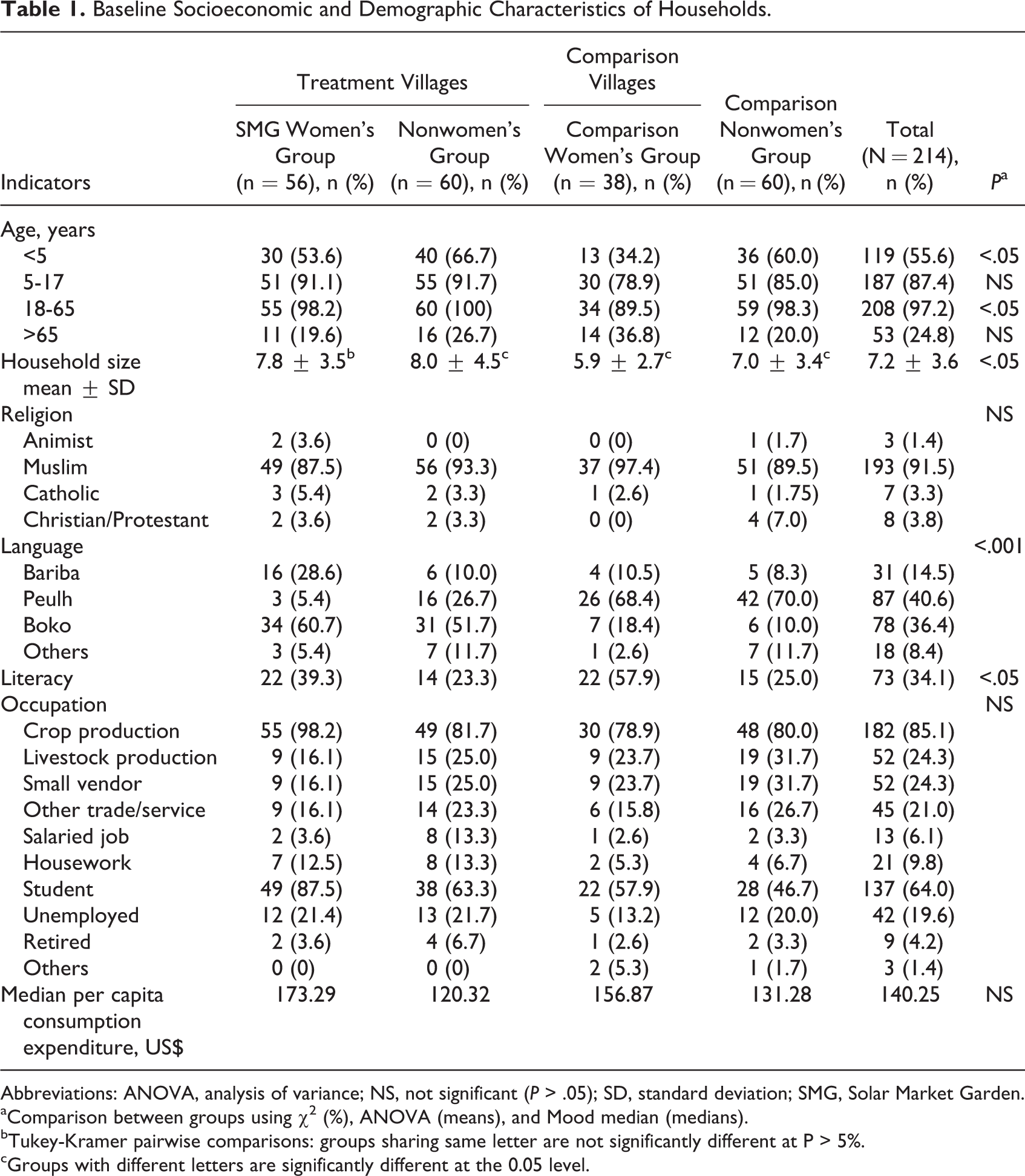
Abbreviations: ANOVA, analysis of variance; NS, not significant (P > .05); SD, standard deviation; SMG, Solar Market Garden.
aComparison between groups using χ2 (%), ANOVA (means), and Mood median (medians).
bTukey-Kramer pairwise comparisons: groups sharing same letter are not significantly different at P > 5%.
cGroups with different letters are significantly different at the 0.05 level.
Changes in Fruit and Vegetable Production and Consumption
At baseline, there was no significant difference in the variety of fruits and vegetables produced and consumed between the 4 groups. But at end line, as shown in Figure 1, the median test indicated significantly higher median number of types of vegetables grown (4.5 types) and types of fruits grown (3 types) in the SMG women’s group (P < .05). Similarly, the number of varieties of fruits (3 types) and vegetables (6 types) consumed was greatest among the SMG women’s group compared to other groups (P < .05).
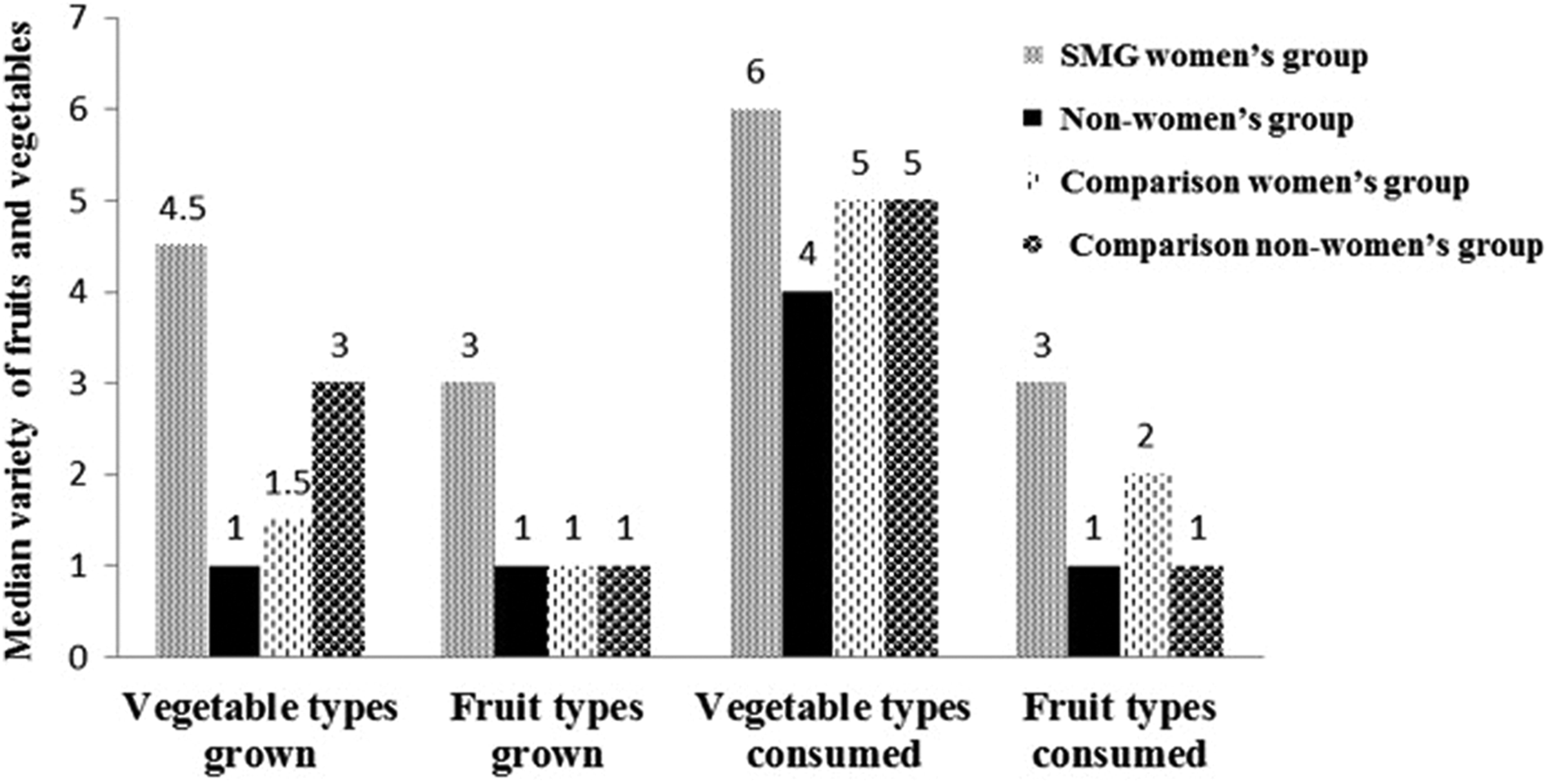
Median variety of fruits and vegetables grown and consumed at end line. Comparison between groups at end line using Mood median test. Significant at P < .05. Fruits mainly included mangos, bananas, and oranges, whereas vegetables included tomato, onion, salad/greens, amaranth, hot pepper, and okra.
The proportion of households engaged in vegetable production increased in the 4 groups at the end of the study, but a much greater increase was observed in the SMG women’s group: 26% (P = .03) compared to 5%, 10%, and 13.4% among the nonwomen’s group, comparison women’s group, and comparison nonwomen’s group, respectively (Figure 2). Similar results were also observed for the proportion of households engaged in fruit production (Figure 3) in the SMG women’s group (55%; P = .03), nonwomen’s group (50%; P > .05), and comparison women’s group (29.6%; P > .05); however, the proportion of those producing fruits decreased by 27% among the comparison nonwomen’s group (65.6%-80.4%; P > .05). At the end of the study, there was a significant difference in the proportion of households engaged in prevalence of fruit and vegetable production between the 4 groups, after controlling for socioeconomic variables and baseline status.
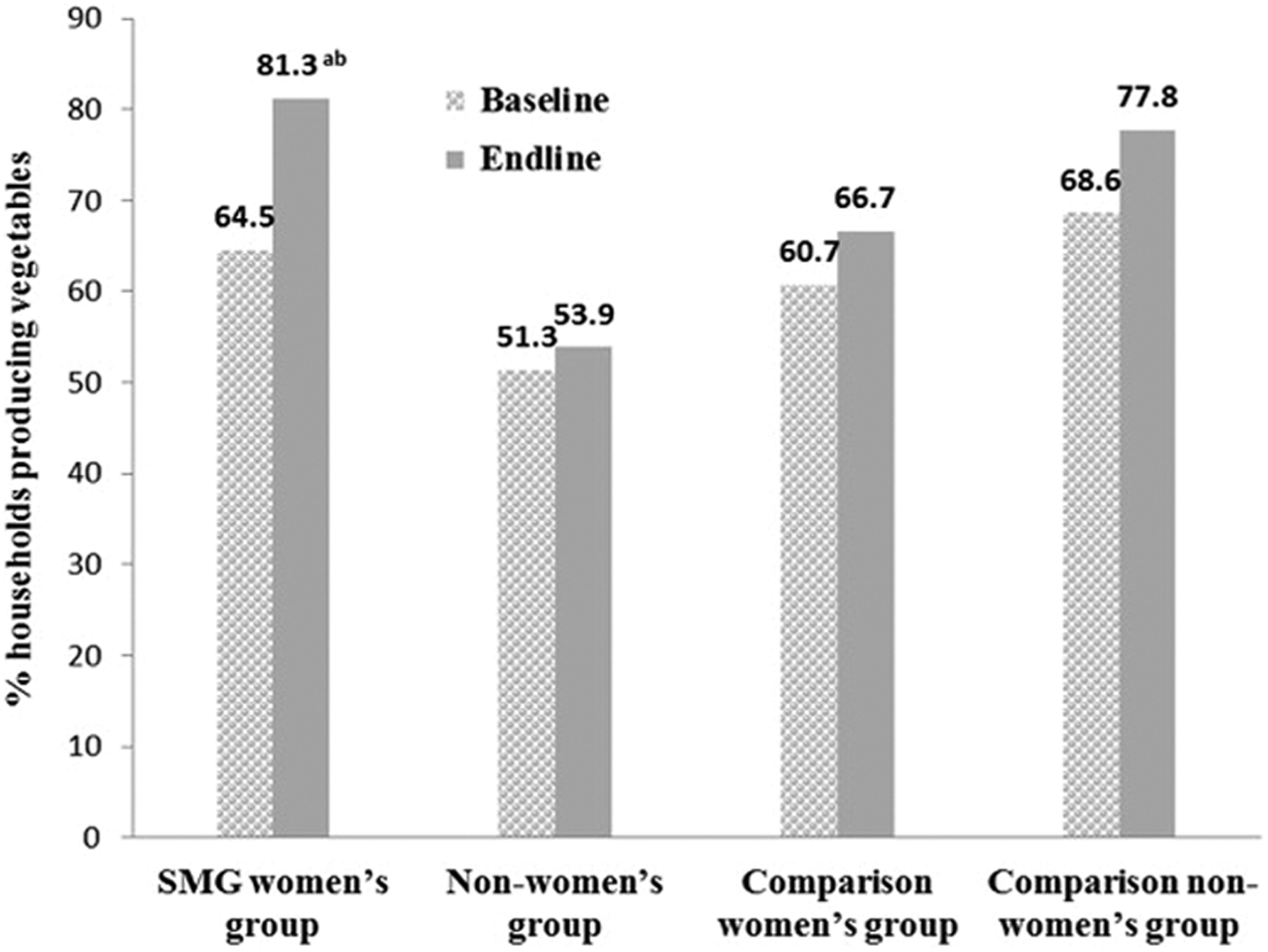
Production of vegetables among Solar Market Garden (SMG) and comparison households at baseline and end line. aBased on McNemar tests. Significant at P < .05. bEnd line significantly different from baseline using logistic regression analysis controlling for baseline values of the dependent variable and sociodemographic variables such as age, education, local languages, occupation, household size, and consumption expenditures. Significant at P < .05.
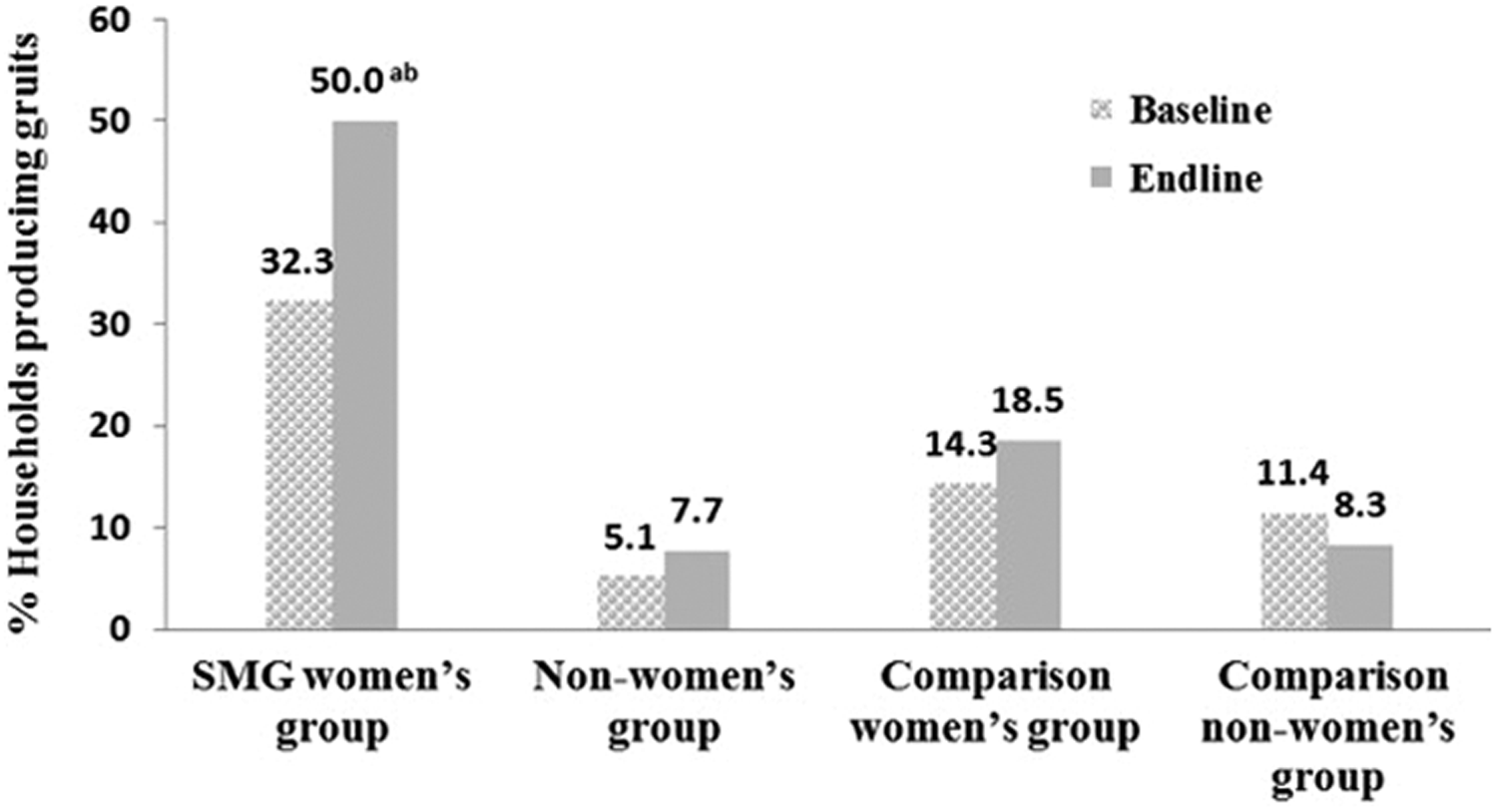
Production of fruits among Solar Market Garden (SMG) and comparison households at baseline and end line. aBased on McNemar tests. Significant at P < .05. bEnd line significantly different from baseline using logistic regression analysis controlling for baseline values of the dependent variable and sociodemographic variables such as age, education, local languages, occupation, household size, and consumption expenditures. Significant at P < .05.
At baseline, there was no significant difference in food consumption between different groups. However, at end line and after controlling for socioeconomic variables and baseline status, the SMG women’s group had a 3 times greater chance of increasing their fruit and vegetable consumption compared with the comparison nonwomen’s group (odds ratio = 3.45; 95% confidence interval = 1.05-11.39; P = .04) as shown in Figure 4. We also found that consumption of vegetables and fruits during the dry season increased by 70% (21.7-37%, P < .05) in the SMG women’s group compared with a decrease in consumption in the comparison women’s group (48.6%-40.0%) and nonwomen’s group (34.6%-13.5%).
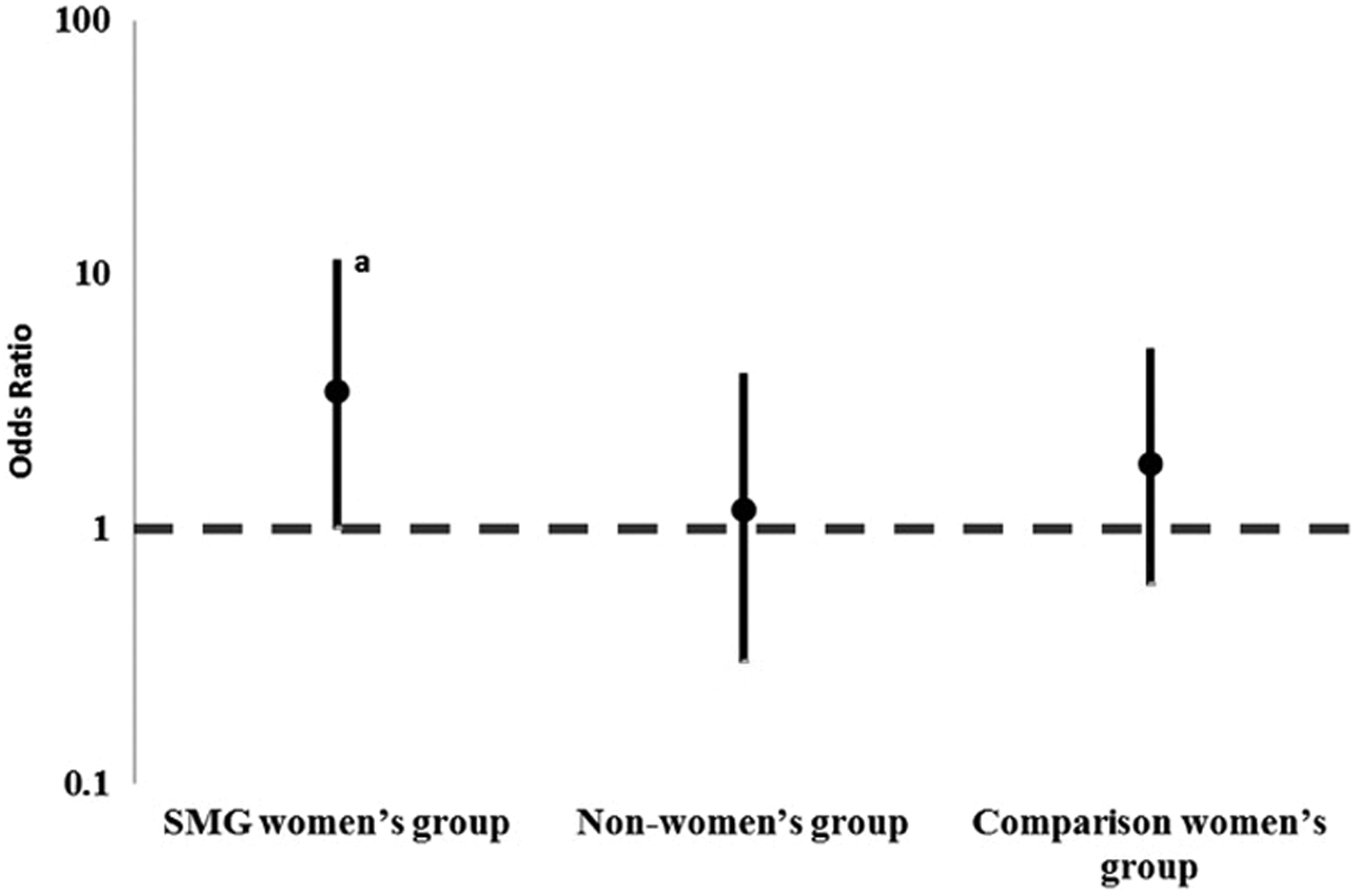
Odds ratio of households consuming fruits and vegetables on a daily basis in dry season. aLogistic regression analyses used to determine whether there were differences in fruit and vegetable consumption between groups at the end of the study (reference line = Comparison nonwomen’s group). Logistic regression adjusted for baseline values of the dependent variable and sociodemographic variables such as age, education, local languages, occupation, household size, and consumption expenditures. Significant at P < .05.
Income Generation and Utilization
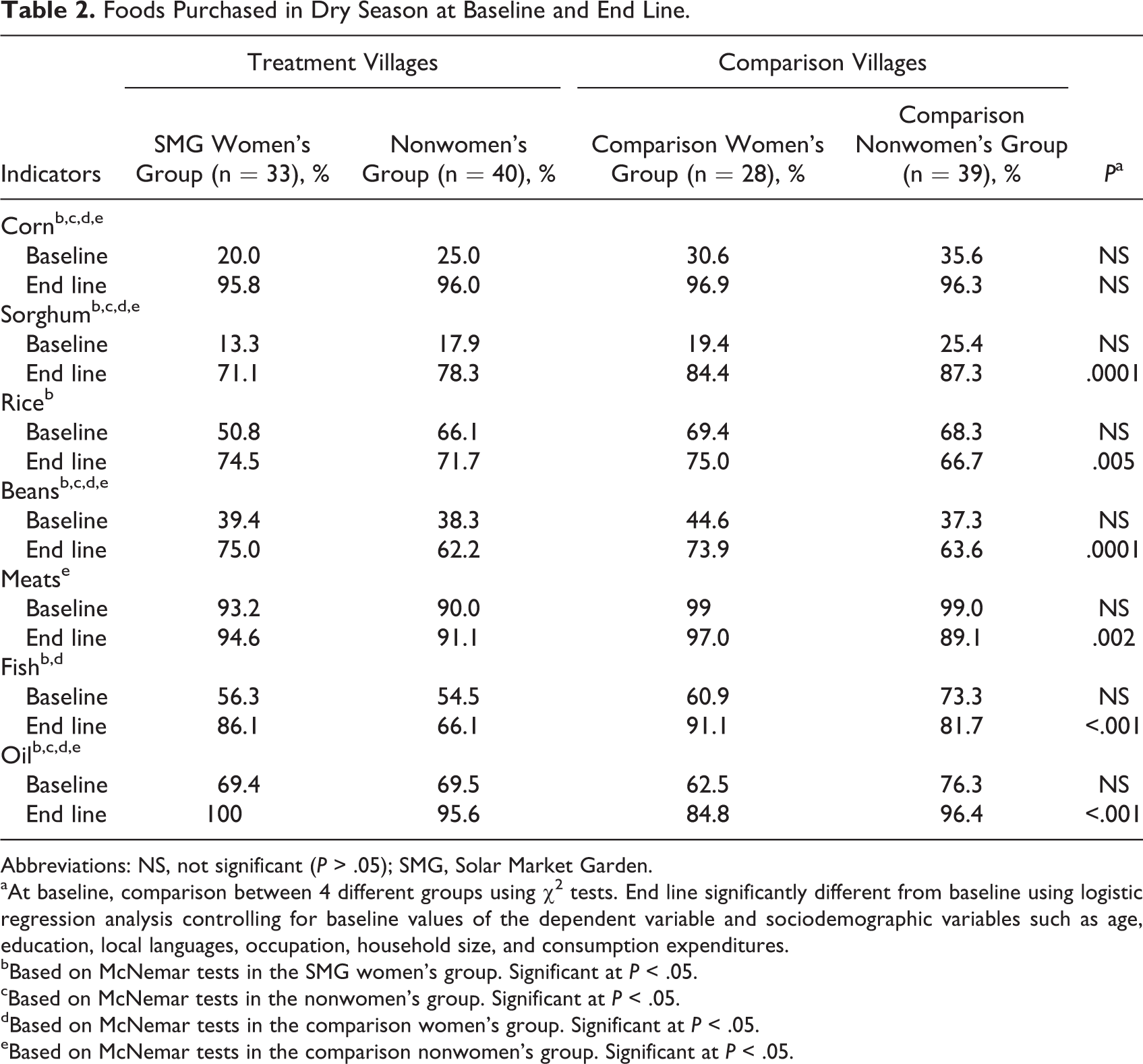
As indicated in Table 2, there were no significant differences in food purchases during the dry season between the 4 groups at baseline. However, after adjusting for baseline values and socioeconomic variables, changes were shown in which foods respondents purchased over time (P < .05). The percentage change in corn, sorghum, beans, and oil purchased was significantly greater in the 4 groups, but the percentage of households who purchased these foods was greatest in the SMG women’s group (379% change for corn, 435% for sorghum, 90% for beans, and 44% change for oil) compared to other groups. In addition, the percentage of households in the SMG women’s group who purchased rice (50.8%-74.5%; 47% change) and fish (56.3%-86.1%; 53% change) significantly increased, whereas the percentage change for both foods in 3 other groups was not significant. However, there was no significant increased percentage change in meat in the 4 studied groups: the percentage of households in treatment villages increased only by 1%, whereas it decreased in comparison villages: 2% in the comparison women’s group and 10% in the comparison nonwomen group.
Foods Purchased in Dry Season at Baseline and End Line.
Abbreviations: NS, not significant (P > .05); SMG, Solar Market Garden.
aAt baseline, comparison between 4 different groups using χ2 tests. End line significantly different from baseline using logistic regression analysis controlling for baseline values of the dependent variable and sociodemographic variables such as age, education, local languages, occupation, household size, and consumption expenditures.
bBased on McNemar tests in the SMG women’s group. Significant at P < .05.
cBased on McNemar tests in the nonwomen’s group. Significant at P < .05.
dBased on McNemar tests in the comparison women’s group. Significant at P < .05.
eBased on McNemar tests in the comparison nonwomen’s group. Significant at P < .05.
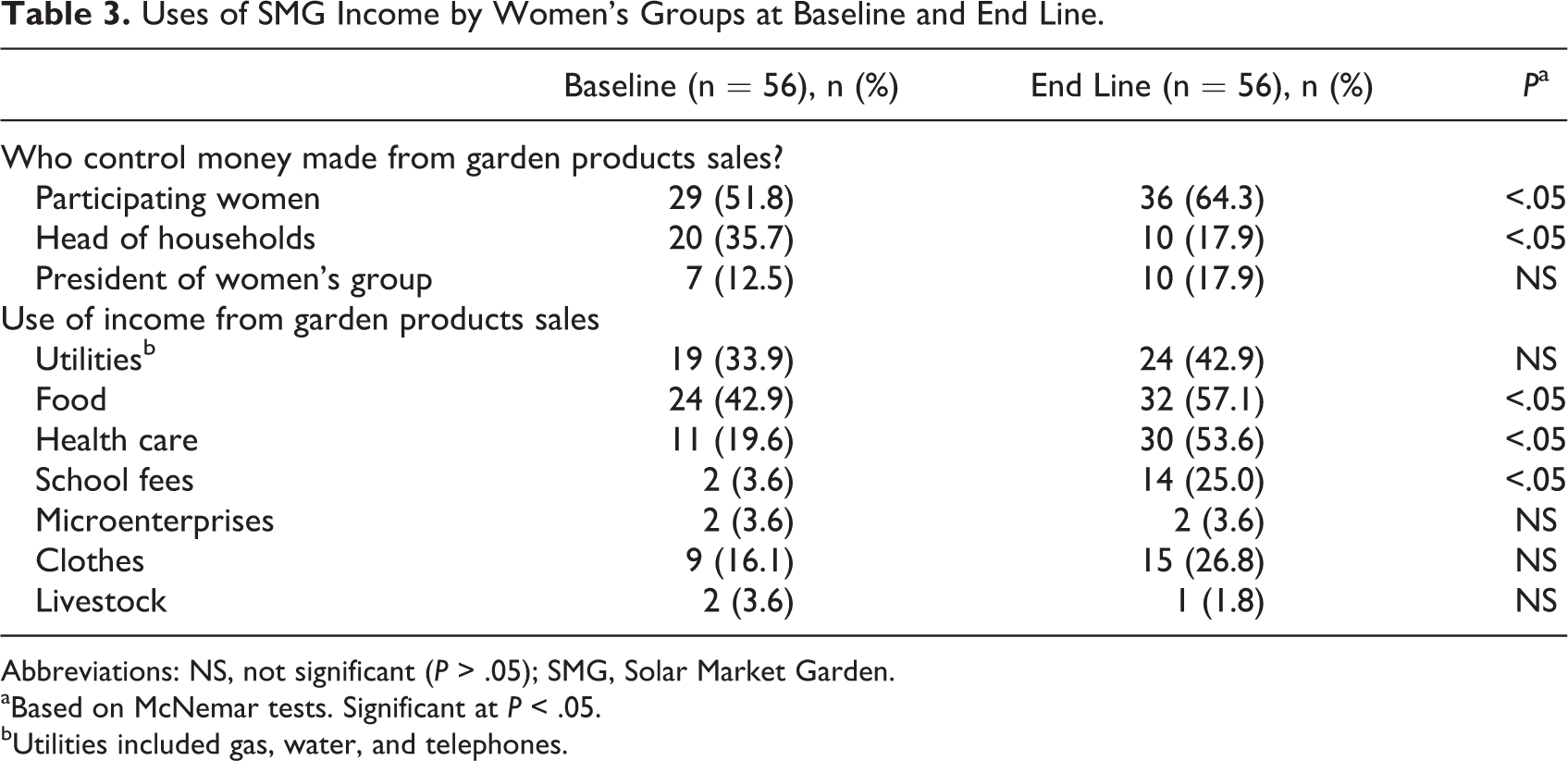
Although only the SMG women’s group participants were asked about intended uses of garden revenues at baseline and end line, they did report an increase in their control of the income they generated: 52% of the participants in the SMG women’s group felt they had control over their garden income at baseline compared with 64% at end line. Also, among respondents who reported earning income from their garden product sales, 43% used this income mostly on food at baseline, however, at end line, their purchases were more diverse and significantly increased: 57% used this income mostly on food, 54% on health care, 43% on utilities (gas, water, and telephones), and 25% on education. Additionally, 27% of the women used their income to purchase clothes, although there is no significant difference from baseline to end line (Table 3).
Uses of SMG Income by Women’s Groups at Baseline and End Line.
Abbreviations: NS, not significant (P > .05); SMG, Solar Market Garden.
aBased on McNemar tests. Significant at P < .05.
bUtilities included gas, water, and telephones.
Discussion
Results from this evaluation of SMGs in the Kalalé district of Benin revealed that the proportion of households producing and consuming fruits and vegetables significantly increased among the SMG women’s group compared with other groups. The presence of SMGs was also positively associated with increased diversity of fruits and vegetables in terms of production and consumption. Similar results were found in the study of Ayalew 29 in Ethiopia, where agricultural production increases were followed by better dietary diversity on the consumption pattern of the irrigated households. It is important to note that low fruit and vegetable intake is a major contributing factor to micronutrient deficiencies. 30 –32 Therefore, increased production of fruits and vegetables provides the participating households with direct access to required nutrient that otherwise may not be readily available or may not be within their economic means. 3,9 Mango, bananas, orange, green leafy vegetables, onions, and okra are good sources of micronutrients, and increasing dietary diversity has been shown to improve micronutrient intake. 33 –36 Although this impact evaluation did not specifically study the effect of SMGs on dietary intake of high-iron food or iron status, we believe those systems that could improve the intake of dietary iron and other micronutrients such as vitamin A might contribute to reducing the high prevalence of anemia and night blindness observed in Benin. 3,9,37 Additional data are however needed to better understand the impact of this program on other indicators of health and nutritional status.
In 2010, Burney et al 17 found that members of women’s group kept about 15% of SMG products for household consumption and sold the rest, which might generate additional income for the family. In the present study, the analysis of the gain from garden income indicated that the majority of SMG women’s group households used this additional income to buy supplementary food items, such as corn, sorghum, rice, beans, and higher-cost items like fish and cooking oil, thereby further increasing the diversification of the family’s diet. In general, as income rises, an increase is expected in the consumption of quality foods such as meat, pulses, fruits, milk, and dairy products, which, while adding to calories, contribute significantly to the increase in other nutrients particularly lacking in the diets of the poor populations. 38,39 Therefore, the additional income generated from SMGs could increase household access to high-quality foods since households used the surplus income to purchase more food for the household, and food diversity is associated with better quality diet. 40 The increased income could also help families be more resilient and increase their absorptive capacity during times of economic difficulty or natural disaster such as high food prices or recurrent climate shocks. In the dry season, households in Africa including Benin are often unable to produce food in sufficient quantity and quality and do not have the resources to purchase high-quality foods from local markets. 41,42 However, Frazao et al 43 suggested that other factors besides income play a strong role in healthier food choices. Thus, a culturally appropriate nutrition education program might further an improvement in household food choices and thereby improve the health of families using SMGs. 44
Additionally, greater proportions of households used the additional income earned from the sale of SMG products on other important household expenditures such as health care, education, and clothing. In the context of increased income generation, these changes in spending may indicate that with increased purchasing power, families could extend their expenditure to invest in household well-being. 45,46 Interestingly, spillover effects were also found from the impact of installation of SMGs; as consequence, food consumption and production as well as the increased percentage change in foods purchased in dry season improved among the nonwomen’s group and comparison villages. Similar effects were also found with small-scale irrigation in Ethiopia 47 and the Philippines. 48 Furthermore, by selecting local women’s agricultural groups engaged in horticulture, the project could empower women to have more responsibility for their families’ consumption, as found with Homestead Food Production in Asia. 6,49 In Benin, women are usually responsible for preparing family meals and feeding children. Through the SMGs, women might be empowered to increase their families’ and their own access to consumption of quality foods rich in micronutrients, despite high prices and economic uncertainty. Pregnant women and children under 5 are 2 populations for which inadequate nutrition has the largest impact; so targeting women will also be critically important for reducing childhood undernutrition. 50 –52
However, some study limitation must be noted. The study only includes 4 villages (2 treatment villages and 2 comparison villages) across Kalalé District in northern Benin, thus limiting its generalizability to other rural areas in the region. However, we have now expanded the program to work with women’s groups in 8 additional treatment villages and have 8 matched-comparison villages. Limitations are also inherent to food consumption questionnaires and must be considered when reviewing the data presented here. Specifically, recall may have influenced the reporting, but this may have been limited since we did not include portion size estimates, as reporting was only done by price and quantity for an entire household. Thus, we are not able to report on energy and selected nutrient intakes. Nonetheless, random overestimation and underestimation of consumption could be a limitation for the dietary assessment data. However, in spite of all of these limitations, significant increases in reported consumption were found in SMG households from baseline to end line.
In conclusion, the results from this study are encouraging. Although this project has focused on the production of plant source foods only, it was crucial to increase the consumption of animal foods, which are known to be rich sources of bioavailable vitamins and minerals, among micronutrient-deficient populations. However, integrated approaches are needed to secure a healthy diet when the food supply of the family is increasing. The impact of SMGs could be maximized by choosing crops with greater micronutrient content and by adding a nutrition education component to promote the optimal use of extra income to purchase nutritious foods and to improve the bioavailability of vitamins and minerals. 6 The SMGs could also be improved by implementing this program in coordination with other interventions for combating micronutrient deficiencies such as deworming, iron and vitamin A supplementation, and home fortification of foods.
Footnotes
Authors’ Note
All authors contributed to conception or design, contributed to acquisition, analysis, or interpretation, drafted the manuscript, critically revised the manuscript, gave final approval, and agree to be accountable for all aspects of work ensuring integrity and accuracy. Jennifer Burney and Rosamond Naylor participated in the design and interpretation of the reported results. Halimatou Alaofè and Douglas Taren participated in the analysis of data. All the authors participated in drafting and revising the manuscript.
Declaration of Conflicting Interests
The author(s) declared no potential conflicts of interest with respect to the research, authorship, and/or publication of this article.
Funding
The author(s) received no financial support for the research, authorship, and/or publication of this article.