




Abstract
Objective:
The aim of this study was to investigate the prevalence of obesity, dietary habits, and sedentary patterns among Sudanese adolescents.
Methods:
A multistage stratified sampling method was used to select 945 adolescents (507 males and 438 females) aged 14 to 18 years, from Khartoum State, Sudan. A self-reported pretested questionnaire was used to collect the data. Overweight and obesity were determined using the International Obesity Task Force standard, which is based on body mass index for sex and age.
Results:
Overweight and obesity were growing problems among urban Sudanese adolescents (10.7%). Breakfast was commonly consumed on a daily basis by the majority of adolescents (74.2%), followed by lunch (63.9%) and supper (33.5%). Snacking was not a common practice among these individuals. Vegetables (63.9%) were more frequently consumed (more than 3 days per week) than fruit (30.1%). There were significant differences between genders regarding intake of vegetables (P < .048), chicken (P < .013), dairy products, sweets, nuts, chocolate, and legumes (P < .001 for all). Sedentary behaviors (long duration of television viewing and Internet use) were highly prevalent, and physical activity was rarely practiced (6.8%).
Conclusion:
The findings indicated that risk factors for diet-related chronic diseases such as unhealthy dietary habits and sedentary behaviors are starting to rise among urban adolescents in Sudan. This creates the need for immediate action to prevent and control these risk factors before these diseases become major public health problems.
Introduction
Sudan, one of the poorest countries in the world, is experiencing hunger, food shortage, and undernutrition. It was estimated that more than 90% of the Sudanese population suffer from poverty and food insecurity. 1 Anemia, underweight, and micronutrient deficiencies are the main nutritional problems among children. 1,2 However, recently, the urban areas of Sudan have experienced an economic upturn, due to oil reserves, the peace agreement, and direct foreign investment. Such economic development has led to changes in lifestyle in some urban areas and among high and middle socioeconomic classes. 3 This change appears to have modified the dietary habits and sedentary behaviors of some urban sectors in the country. Westernized foods, such as fast food, have been introduced into food outlets and become widely accepted by urban citizens. Furthermore, screen time, characterized by hours of television viewing, Internet use, and playing computer games has increased, especially among adolescents and the young generation. 4 The result is the rising prevalence of obesity and its comorbidities. Nagwa et al 5 indicated an alarmingly high prevalence of overweight and obesity among Sudanese schoolchildren, and the prevalence was significantly higher among the high socioeconomic class (56.8%) than middle (27.3%) and low (3.1%) classes.
Adolescence is a critical time for growth and development, with nutrient requirements higher than any other period in the life span. 6 Furthermore, adolescence is a critical period for establishing risk factors for chronic diseases associated with unhealthy dietary habits and sedentary behaviors, during adulthood. 7 However, studies on food and lifestyle patterns among children in Sudan are very deficient. Almost all studies on nutritional aspects in Sudan have concentrated on the nutritional status of preschool children. 1 –3 Although these studies showed that Sudanese preschool children suffered from undernutrition due to poor dietary habits and infectious diseases, no study has focused on lifestyle risk factors linked with chronic health problems in Sudanese schoolchildren. Therefore, the aim of this study was to provide data on the prevalence of obesity, dietary habits, inactivity, and sedentary behaviors among schoolchildren aged 14 to 18 years in Sudan.
Methods
Sampling and Participants
The target group of this study was schoolchildren in public schools aged 14 to 18 years, living in Khartoum State in Sudan. A multistage stratified sampling method was used to select the participants. At the first stage, the Khartoum State was divided into 3 administrative areas, based on the official regional administration. The total schools (n = 418) in these areas were then divided into schools for males and females. At the second stage, 21 schools (5% of total schools) were selected proportionally for gender and the 3 areas, using simple random method. At the third stage, one class from each secondary level (3 levels) was selected from each school, using simple random method. All students in the class room were included. The total sample included was 945 (507 males and 438 females), with a mean age of 16.3 ± 1.1. Data were collected in the school year 2013 to 2014.
The Questionnaire
A self-reported pretested questionnaire was used to collect the data. Detailed information on the validity and reliability of the questionnaire has been described elsewhere. 8 In summary, the validity of the questionnaire was reviewed by 2 nutritional specialists, and then the content validity of the tool was tested by 5 experts in the field of nutrition and public health. The reliability was evaluated by test–retest method. The result showed that the value of Pearson correlation was .87, indicating a good reliability. The questionnaire included information on sociodemographic background, dietary habits, food frequency intake, sedentary behaviors, physical activity, sleeping hours, and weight and height measurements.
It is recommended that healthy foods such as vegetables, fruit, milk, fish, and legume should be eaten more than 3 times per week, whereas unhealthy foods such as fast foods, sweets, soft drinks, and canned fruit drinks should be consumed less than 3 times per week. 4
Ethical Approval
Permission for ethical approval to carry out this survey was taken from the Department of Statistics and Planning at the Ministry of Education, Khartoum State, Sudan.
Weight and Height Measurement
Weight and height were taken without shoes and with minimum clothing using standard procedure. Weight was measured to the nearest 100 g using portable weighing scales (Seca 754, United Kingdom). Height was measured to the nearest 0.1 cm using a portable stadiometer (Seca 220, United Kingdom).
Determination of Overweight and Obesity
The International Obesity Task Force reference standard was used to determine overweight and obesity based on body mass index (BMI) and according to age and sex. 9
Statistical Analysis
Data were analyzed using SPSS statistical package version 20. Descriptive statistics are presented as means, standard deviation, and proportion. Differences in anthropometric measurements between genders were tested by t test. Chi-square test was calculated to determine the statistical association of gender with studied variables. Differences were considered significant if P value ≤ .05.
Results
Sociodemographic characteristics of Sudanese adolescents according to gender are presented in Table 1. Females were more likely to belong to low education mothers (P < .048) and fathers (P < .02) than males. There was no significant difference between males and females regarding number of siblings, and the majority have more than 3 siblings (91.4%). Males (47.3%) were more likely to be ranked 1 to 3 among sisters and brothers than females (40.2%; P < .027).
Sociodemographic Characteristics of Sudanese Adolescents According to Gender.
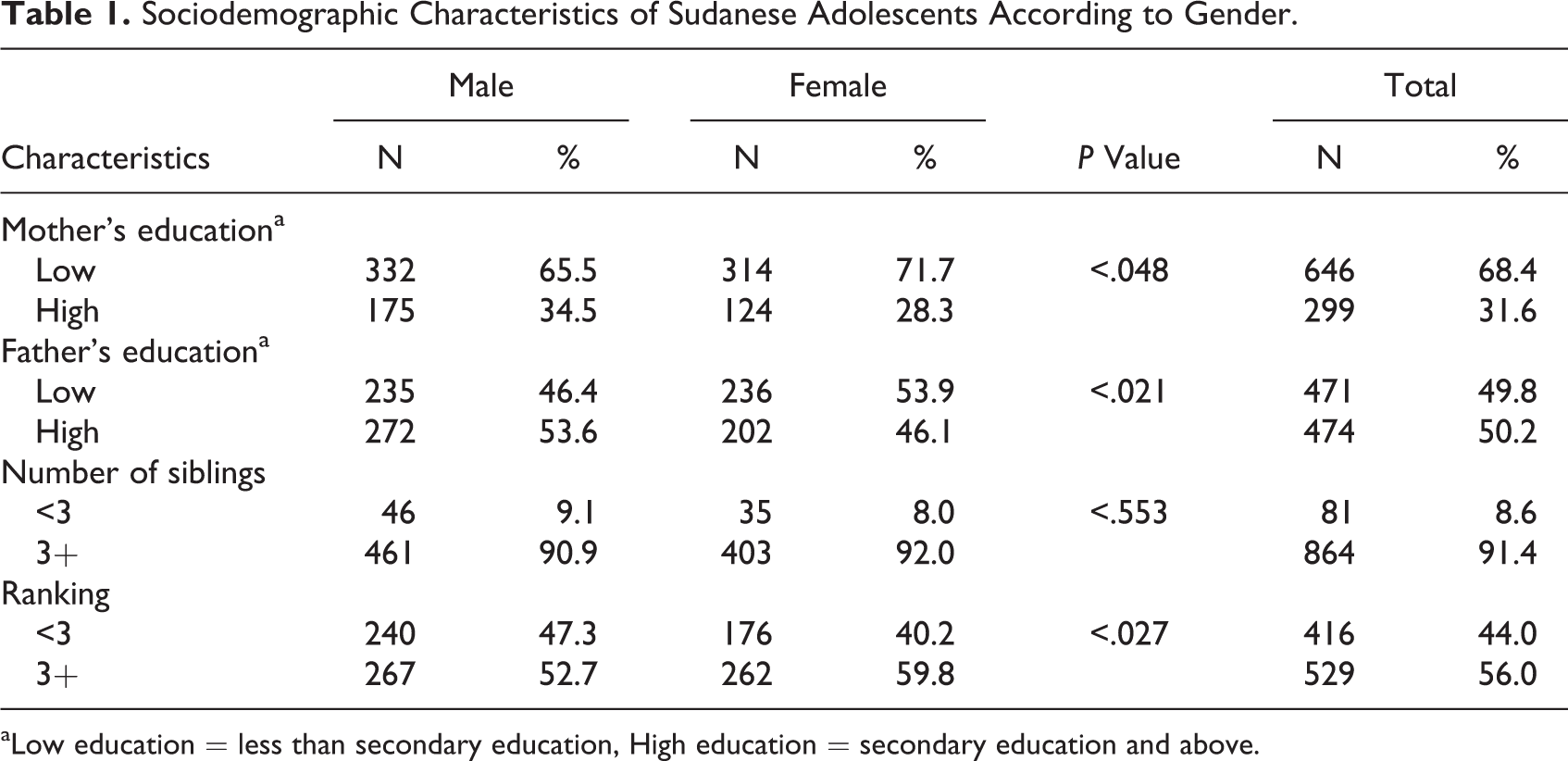
aLow education = less than secondary education, High education = secondary education and above.
Means for age, weight, height, BMI, and prevalence of obesity among Sudanese adolescents according to gender are given in Table 2. There was no significant difference in mean age between genders. Males were significantly (P < .001) taller than females (means 165.1 cm and 159.7 cm, respectively). However, there was no significant difference between genders in relation to mean weight. The mean for BMI was higher for females (19.0 ± 4.7) than males (17.8± 4.6) (P < .001). In general, the total prevalence of overweight (7.5%) and obesity (3.1) was relatively low with higher prevalence of both overweight and obesity among females than males (P < .265).
Means for Age, Weight, Height, BMI, and Prevalence of Obesity Among Sudanese Adolescents According to Gender.
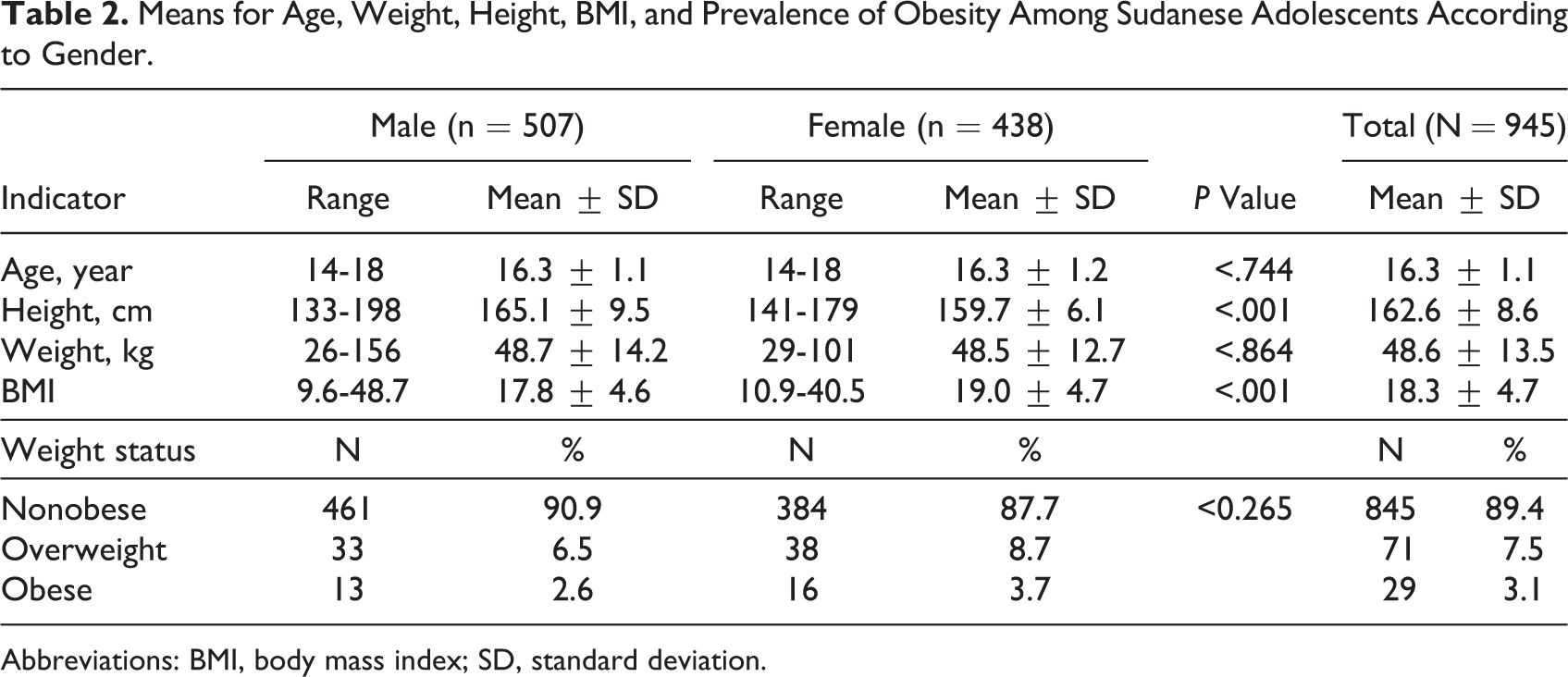
Abbreviations: BMI, body mass index; SD, standard deviation.
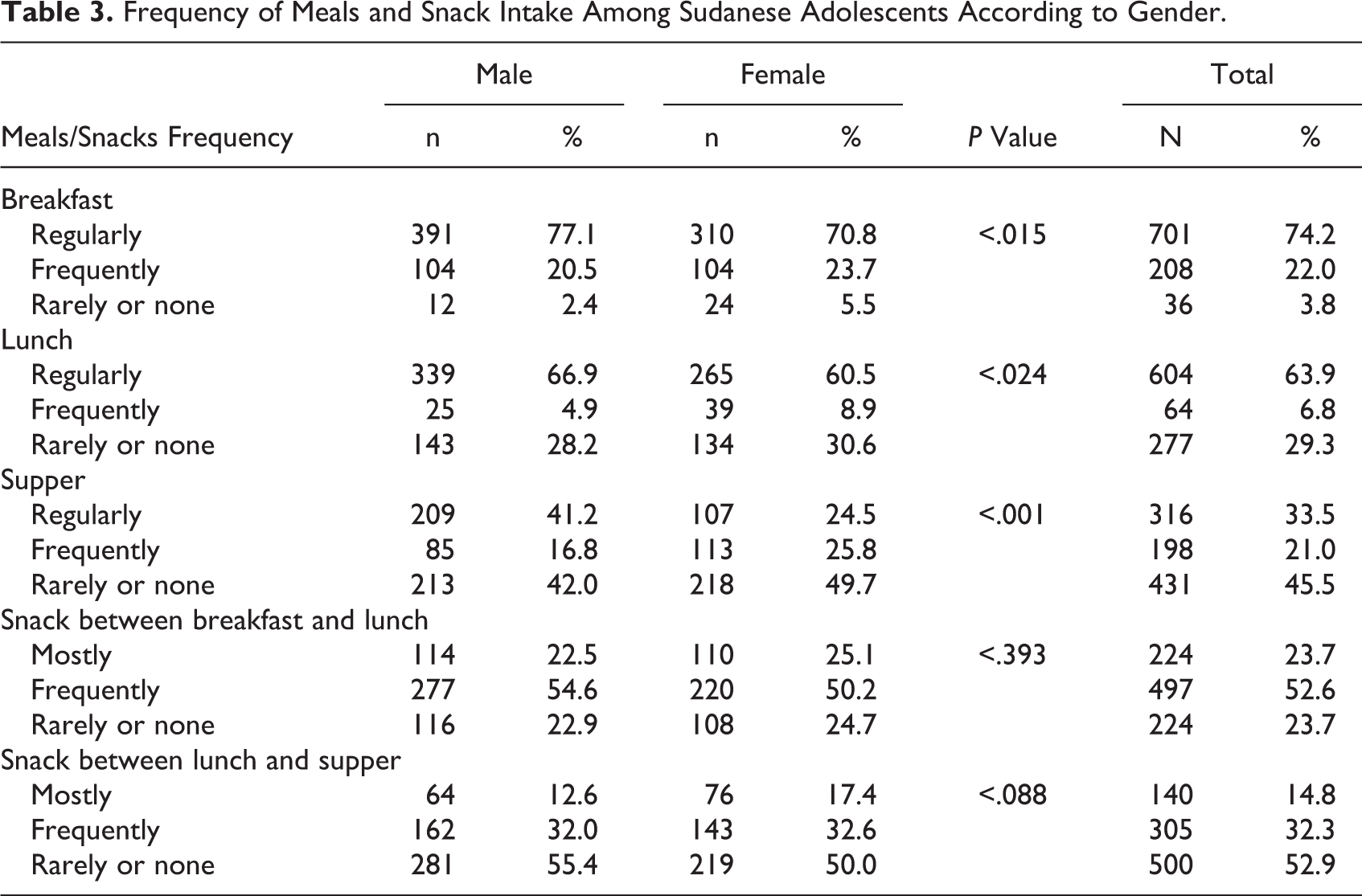
Frequency of meals and snack intake among Sudanese adolescents according to gender is presented in Table 3. Breakfast, lunch, and supper were significantly more regularly consumed by males than females. Of males, 77.1% regularly consumed breakfast compared with 70.8% of females (P < .015). There were no significant differences between genders in morning and afternoon snacking. Of the total participants, 23.7% and 14.8% regularly consumed foods during morning and afternoon snacking time, respectively.
Frequency of Meals and Snack Intake Among Sudanese Adolescents According to Gender.
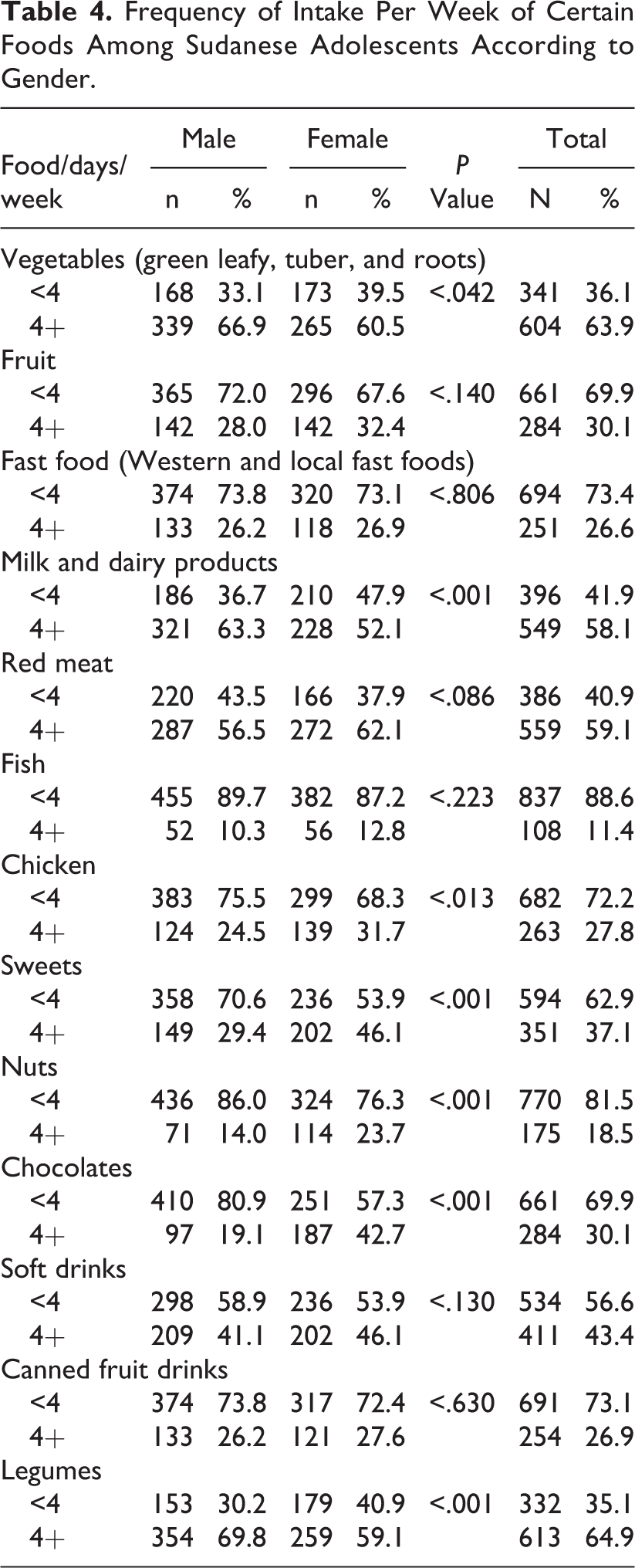
Frequency per week of intake of certain foods among Sudanese adolescents according to gender is included in Table 4. Vegetables were significantly (P < .042) consumed more than 3 days/week by males (66.9%) than females (60.5%). However, the intake of fruit was lower than vegetables, as 28% and 32.4% of males and females, respectively, consumed fruit more than 3 days/week (p < 0.140). Less than one third of students (26.6%) consumed fast food more than 3 days/week. Males were more likely to consume dairy products than females (63.3% of males and 52.1% of females consumed dairy products more than 3 days/week, P < .001). Females were more likely to consume chicken (p < 0.013), sweets, nuts, chocolate, and legumes (P < .001 for all) than males.
Frequency of Intake Per Week of Certain Foods Among Sudanese Adolescents According to Gender.
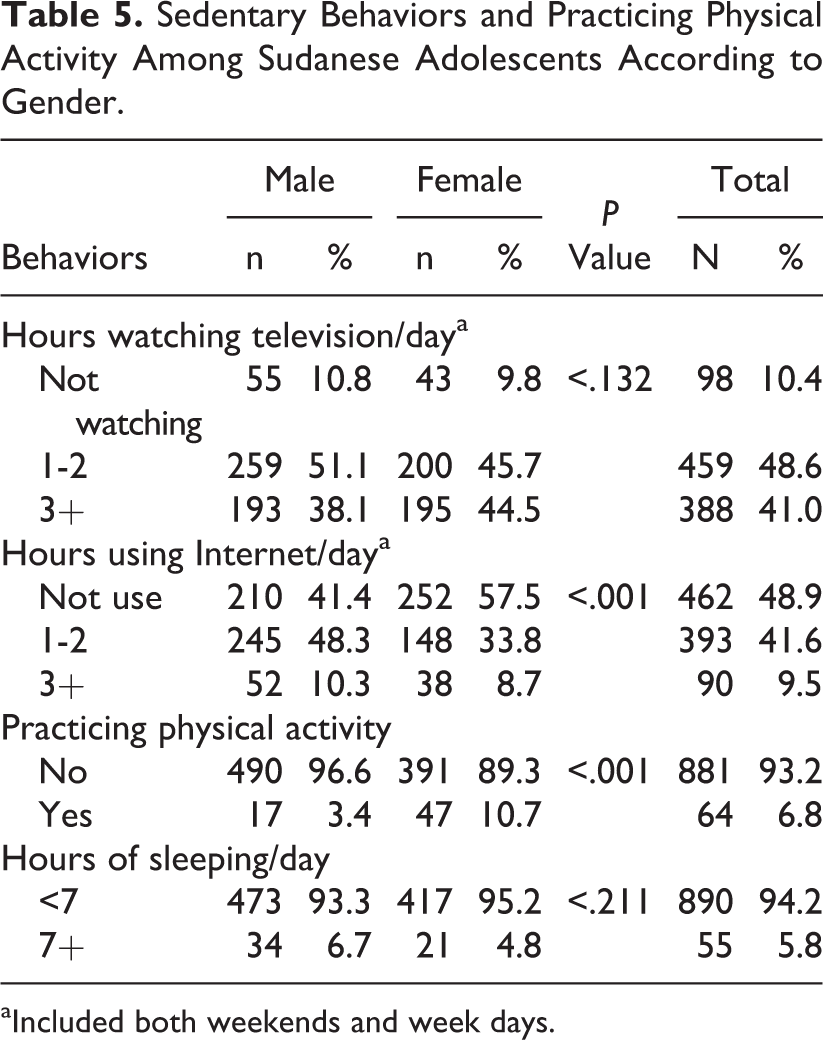
Sedentary behaviors and practicing physical activity among Sudanese adolescents according to gender are given in Table 5. Watching television for more than 2 hours per day was more prevalent among females (44.5%) than males (38.1%), but the difference was not statistically significant (P < .132). Of females, 57.5% did not use the Internet, compared with 41.4% of males (P < .001). Only 6.8% of the adolescents practiced physical activity. The short duration of sleep (<7 hours/day) was very high among adolescents (94.2%).
Sedentary Behaviors and Practicing Physical Activity Among Sudanese Adolescents According to Gender.
aIncluded both weekends and week days.
Discussion
Although undernutrition and infectious diseases remain the major health problems in many developing countries, noncommunicable diseases associated with diet and lifestyle have been rising during the last 2 decades. 10 Sudan is likely facing the paradox of 2 disease patterns that associated with food insecurity and infectious diseases, such as severe malnutrition and micronutrient deficiencies, as well as that associated with lifestyle and unhealthy dietary habits, such as diabetes, hypertension, cardiovascular disease, and obesity. 11 In Khartoum State, Sudan, an alarmingly high prevalence of overweight and obesity has been reported among schoolchildren, as more than 9% of them were obese and 10.3% were overweight. 5 However, our study showed a lower prevalence than the previous study, as only 3.1% of adolescents were obese and 7.5% were overweight.
An association between meal skipping and overweight among schoolchildren has been documented. 12 Breakfast was consumed daily by a relatively high proportion of studied participants (77.1% and 70.8% of males and females, respectively). These percentages are higher than those reported among a similar age-group in Arab countries. 13 It is well indicated that regular intake of breakfast can potentially reduce the risk of obesity and chronic diseases. 14 It seems from the current study that snacking between meals is not a common practice among Sudanese adolescents. There are 2 contrasting findings in the literature regarding the health effect of snacking, it contributes valuable micronutrients to the diet and in contrast, it contributes extra energy but few nutrients, which in turn leads to overweight. 15
Vegetables were more frequently consumed than fruit by Sudanese adolescents (63.9% and 30.1% of adolescents, respectively, consumed vegetables and fruit for more than 3 days per week). The relatively high consumption of vegetables may be due to the fact that many types of vegetables are included in traditional Sudanese dishes. The low intake of fruit among our sample is similar to that reported in the same age-group in Iraq (35%) 16 and Morocco (27%) 17 but higher than that in Jordan (22%) 18 and Saudi Arabia (13%). 19 There is convincing evidence that regular consumption of fruit and vegetables reduces the risk of obesity and all cause mortality, especially cardiovascular disease. 20,21
The consumption of dairy products by Sudanese adolescents is relatively higher than that reported in their counterparts in Arab countries 13 but still below the dietary requirement, as about half (59%) of the adolescents consumed dairy products for more than 3 days per week. Regular intake of dairy products was found to be negatively associated with obesity. 22 On the other hand, there is growing prevalence of dietary habits linked with Westernization, such as the consumption of fast food and sugar-sweetened drinks. Of Sudanese male and female adolescents, 26.6% ate fast food more than 3 days per week. This finding is higher than that practiced by their counterparts in Iraq (female only), 16 Jordan (female only), 18 and Morocco 17 but very close to that practiced in Bahrain 8 and Saudi Arabia. 19 Furthermore, the consumption of sugar-sweetened drinks, especially soft drinks among Sudanese adolescents, was relatively high (43%). This prevalence is lower than that consumed by a similar age-group in Bahrain, 8 Iraq, 16 Jordan, 18 and Saudi Arabia 19 but very close to that consumed in Morocco. 17 There is growing evidence that high intake of fast food 23 and sugar-sweetened drinks 24 are risk factors for obesity and other diet-related chronic diseases.
Sedentary behaviors characterized by long duration of television viewing and Internet use, as well as inactivity, are risk factors for several chronic diseases. 25,26 It was found that watching television for more than 2 hours per day is associated with obesity and its comorbidities. 27 The current study showed that a relatively large proportion of males (38%) and females (44.5%) watch television for more than 2 hours per day. Furthermore, the very low proportion (6.8%) of practicing physical activity among the sample studied is an additional risk factor for chronic diseases. This proportion is the lowest in the Arab countries for the same age-group. 13 It is well documented that regular physical activity is a protective factor against several chronic diseases. 28
The very high prevalence of short duration of sleeping (less than 7 hours per day) among Sudanese adolescents (94%) is another burden for the occurrence of obesity. This prevalence is the highest compared with that reported in Arab countries for the same age-group. 13 Worldwide studies show a consistent increased risk of obesity for short duration of sleeping in children and adults. 29
The study has some limitations. First, the questionnaire is self-reported and, therefore, is dependent upon the students’ recall. Second, the cross-sectional design of the present study just indicates association between the study variables and does not infer any causality from the current findings. Third, the sample included 1 geographical area and therefore is not necessary represented whole Sudan.
In conclusion, although poor dietary habits due to inadequate nutrients intake is the main public health problem in Sudan, indicators from the current study have showed that Westernized dietary habits such as low intake of fruit, dairy products and legumes, and high intake of fast food and sugar-sweetened drinks are prevalent among urban Sudanese adolescents. Moreover, the sedentary habits, low physical activity, and short duration of sleeping were remarkably prevalent among these individuals. Such a situation is alarming as it is providing ground for the occurrence of diet-related chronic diseases in adulthood. This will create a double burden on the budget and activities of the health authority. Establishing a program to reduce the prevalence of these risk factors should be given a high priority. Carrying out more comprehensive studies on the risk factors associated with chronic noncommunicable diseases is highly recommended. We hope that this study provides useful baseline information for further studies.
Footnotes
Declaration of Conflicting Interests
The author(s) declared no potential conflicts of interest with respect to the research, authorship, and/or publication of this article.
Funding
The author(s) received no financial support for the research, authorship, and/or publication of this article.