



Abstract
Following the 2008 Wenchuan earthquake, the Chinese government instituted an infant and young and child nutrition program that included promotion of in-home fortification of complementary food with ying yang bao (YYB), a soy-based powder containing iron, 2.5 mg as iron-EDTA and 5 mg as ferrous fumarate, and other micronutrients. Ying yang bao was provided to participating families in 8 poor rural counties in Sichuan, Shaanxi, and Gansu provinces by the Ministry of Health. We assessed hemoglobin levels among infants and young children (IYC) aged 6 to 23 months at baseline in May 2010 (n = 1290) and during follow-up in November 2010 (n = 1142), May 2011 (n = 1118), and November 2011 (n = 1040), using the Hemocue method. Interviewers collected basic demographic information and child feeding practices from the children’s caretakers. Altitude-adjusted hemoglobin level averaged 10.8 g/dL, and total anemia prevalence was 49.5% at baseline. Average hemoglobin was 11.3 g/dL at 6 months, 11.6 g/dL at 12 months, and 11.7 g/dL at 18 months after introduction of YYB. Moderate anemia (hemoglobin: 70-99 g/dL) decreased from 20.3% at baseline to 7.5%, 5.8%, and 7.3% after 6, 12, and 18 months of home fortification, respectively (P < .001), whereas mild anemia (hemoglobin: 100-110 g/dL) decreased from 29.0% to 16.7%, 18.1%, and 15.4%, respectively (P < .001). Among infants aged 6 to 23 months, 95% had regularly been fed YYB during the observation period. Regression analysis showed that the duration of YYB consumption and number of sachets consumed per week correlated positively with hemoglobin levels and negatively with anemia rates. Home food fortification with YYB is feasible and effective for nutrition promotion among IYC in high-risk regions of China.
Keywords
Introduction
Adequate nutrition is essential in the first 2 years of life for child survival, growth, and development. Nonexclusive breast-feeding and complementary feeding practices are major causes of malnutrition, vitamin, and mineral deficiencies including nutritional anemia among infants and young children (IYC). 1 Children aged 6 to 23 months need to be fed nutrient-rich complementary food along with breast-feeding. However, in many low-income settings, the availability and affordability of nutrient-rich complementary food are limited, and even improved complementary food recipes fall short of iron and zinc. 2 Poor feeding practices are common in many rural areas of China where poverty and poor education remain prevalent. 3,4 Home fortification of food using multiple micronutrient powders (MNPs) has been shown to reduce anemia and iron deficiency in children aged 6 to 23 months, and in 2011, World Health Organization (WHO) issued guidelines on its use for home fortification of foods consumed by infants and children aged 6 to 23 months. 5,6 In China, a domestically produced, soybean powder-based micronutrient supplement called ying yang bao (YYB; “nutrient sachet” in Chinese) has been shown to have significant effects on anemia, stunting, and cognitive development among IYC aged 6 to 23 months in poor rural families. 7,8 Because it provides additional macronutrient and micronutrient nutrition, YYB was recommended for use in poor rural areas to improve IYC nutrition (IYCN).
The 2008 Wenchuan earthquake in China’s central Sichuan, Gansu, and Shaanxi provinces had serious impact on child nutrition within the affected areas. The existing tenuous nutritional status of IYC in these and similar regions 9 was exacerbated by domestic upheaval, disrupted food security, and loss of income. In 2010 to 2011, The United Nations Children’s Fund (UNICEF) and the United States Centers for Disease Control (US CDC) supported the Institute for Nutrition and Food Safety (INFS) at China CDC and local government authorities to provide YYB to approximately 30 000 IYC aged 6 to 23 months in 8 earthquake-affected counties in these 3 provinces for a period of 18 months. We used a pre–post survey design to assess the effect of the YYB program on hemoglobin levels and the prevalence of anemia. We also examined the association of YYB consumption with hemoglobin levels and the prevalence of anemia.
Materials and Methods
Study Design
The government health departments of Sichuan, Gansu, and Shaanxi provinces implemented the project with technical assistance from the INFS, China CDC, US CDC, and UNICEF. The UNICEF provided the entire YYB required for the 18-month intervention for free. Qingdao Biomate Company (Qingdao City, Shandong Province, China) supplied the YYB after a careful bidding and quality assurance process overseen by UNICEF. The nutrient content of the YYB product (Table 1) is based on China’s national standard GB/T 22570-2008 for complementary food supplements and YYB composition. 10,11
Nutrient Composition of YYB.
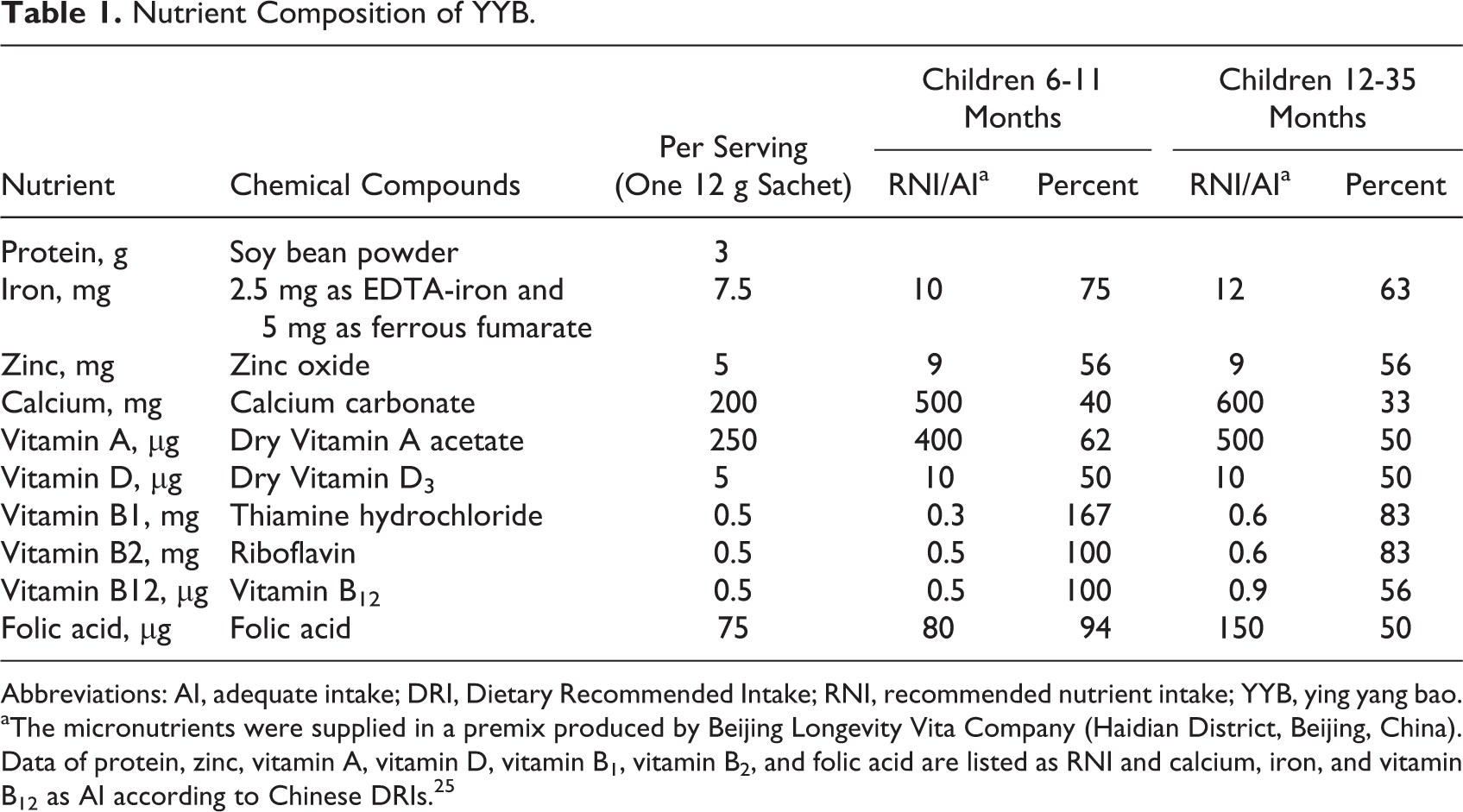
Abbreviations: AI, adequate intake; DRI, Dietary Recommended Intake; RNI, recommended nutrient intake; YYB, ying yang bao.
aThe micronutrients were supplied in a premix produced by Beijing Longevity Vita Company (Haidian District, Beijing, China). Data of protein, zinc, vitamin A, vitamin D, vitamin B1, vitamin B2, and folic acid are listed as RNI and calcium, iron, and vitamin B12 as AI according to Chinese DRIs. 25
All IYC aged 6 to 23 months in the 8 project counties (5 in Sichuan, 2 in Gansu, and 1 in Shaanxi) received a box of 30 sachets of YYB each month via a distribution system involving subsidized health staff from counties, townships, and villages. The manufacturer transported YYB to the maternal and child health (MCH) center in each county. Each MCH center delivered the YYB to township health clinics, where village doctors would then come to pick up the YYB sachets and deliver them to families at village clinics. Records were maintained of receipt and delivery at each step. All IYC aged 6 to 23 months received free supplies of YYB each month, except that the first distribution excluded those aged 18 to 23 months to ensure each participating child had consumed YYB for at least 6 months when the first follow-up survey was conducted. A nutrition education program was also conducted at village level to encourage exclusive breast-feeding until 6 months of age and continued breast-feeding until at least 24 months of age and to promote appropriate complementary feeding practices. Study personnel from the CDCs also trained doctors and nurses in township and village clinics on the relevant YYB guideline and related nutrition information. Caregivers with children aged 6 to 23 months were instructed by these trained village doctors to add 1 sachet per day to their child’s food. Two colored cartoon brochures of a YYB manual and an infant feeding guide were provided, giving detailed information on how to use YYB and how to feed IYC. In addition, detailed illustration on how to use YYB is on the box.
Sampling Methods
The surveys were conducted in 4 of the 8 intervention counties selected randomly. A total of 1080 infants per survey (ie, at baseline and follow-up surveys) were theoretically estimated to be adequate to detect a 30% decrease in the baseline anemia rate, with 80% power, 95% confidence intervals (CIs), a design effect of 2.5, and 10% nonresponse. Among the 4 surveyed counties, 2 were from Sichuan province, 1 from Gansu province, and 1 from Shaanxi province. For all surveys, a 3-stage cluster sampling design was used. First, across the 4 counties, 30 townships were randomly selected with probability proportional to size (PPS) for the baseline survey, and these townships were then included in the subsequent 6-month, 12-month, and 18-month surveys. Second, in each selected township, 5 villages were randomly selected again with PPS sampling, and these same villages were surveyed in all subsequent surveys. Finally, during the follow-up surveys at 6, 12, and 18 months, 36 eligible children in each of the groups of 5 villages were randomly selected by the local CDC from updated village lists of children aged 6 to 23 months. If for any reason the selected participant could not participate, the next infant on the name list was selected and so on, until 36 IYC from within the group of 5 villages per township had been surveyed. A sample should be excluded if severe anemia or other clinical diseases were found, and clinical treatment should be suggested to the caretakers. At the baseline survey, village lists were not available and IYCs were recruited by village doctors based on their knowledge of the local community. For each survey, village doctors distributed relevant information to each selected child’s household. After voluntarily providing consent, caretakers brought their infants to the township clinic or a large village clinic for the survey. Although not a cohort, it was possible for IYC to be sampled in more than 1 survey.
Survey Indicators and Data Collection
The survey commenced with interviewing each selected child’s caretaker. A questionnaire was designed to assess general household information, selected breast-feeding practices, and information on YYB consumption during the week preceding the survey. Health status, height, and weight were checked and measured, and results will be described in other reports. Blood samples were obtained by finger prick, and hemoglobin was measured using HemoCue 201 (Ängelholm, Sweden). Anemia was classified according to WHO criteria for children aged 6 to 59 months, 12 with hemoglobin concentration of 10 to 11 g/dL classified as mild, 7 to 9.9 g/dL as moderate, and <7 g/dL as severe anemia. Since the project area is mountainous, hemoglobin values were adjusted for altitude of residence at the time of data collection, according to standard recommendations. 13 All interviews and measurements were conducted by trained staff from the local CDC or China CDC, at a central point in each of the surveyed villages. Surveys were conducted in May and November in each of 2010 and 2011.
In the 3 follow-up surveys, caretakers were asked about quantities of YYB received and used. We also recorded the detailed dates upon which each family received YYB and surveyed the number of boxes of YYB (each having 30 sachets) received by each child since enrollment in the project. These data were used to determine the duration of YYB feeding for each infant. Caretakers were also asked to report the number of YYB sachets consumed by the child in the past week. In addition, the number of sachets remaining in the home was compared to the number of empty sachets that caretakers brought to the village clinic to cross-check YYB consumption.
Data Management and Statistical Analysis
EpiData software (Windows version 3.1; EpiData, Denmark) was used to enter and manage the raw data. For all variables, item nonresponse was less than 1%, therefore, IYC with missing values are excluded from the data analysis. Infants and young children were divided into 3 age-groups for some analyses: 6 to 11 months, 12 to 17 months, and 18 to 23 months. P values for differences in mean averages between subgroups for continuous variables were estimated using analysis of variance, accounting for the cluster sampling. The χ2 test was used to assess the association of categorical variables. Pearson correlation was applied to describe relationships between factors including YYB feeding duration and frequency, the initial age of the infant, and hemoglobin level. Hemoglobin concentration and other variables were analyzed with multiple linear regression, and collinearity diagnostics were calculated. Variables included duration of YYB consumption in months, frequency of consumption expressed as average sachets consumed per week, the age in months at which the child first started consuming YYB, and changes in average hemoglobin level at the beginning of YYB feeding and in the follow-up surveys. All data from the 4 surveys were merged into 1 database. SPSS 17.0 (IBM, New York) was used for the data analysis.
Ethical Considerations
The project and survey protocols were approved by the Ethics Committee of INFS, China CDC. Written consent was signed by caretakers. The surveys were exempted from review by the Institutional Review Board of the US CDC as they were considered public health practice.
Results
General Information and Selected Feeding Practice Indicators
General information pertaining to the surveyed IYC is listed in Table 2. The size of the age-groups surveyed differed across each of the 4 (baseline and 3 follow-up) surveys.
Number and Demographic Characteristics of Surveyed Infants and Young Children.a
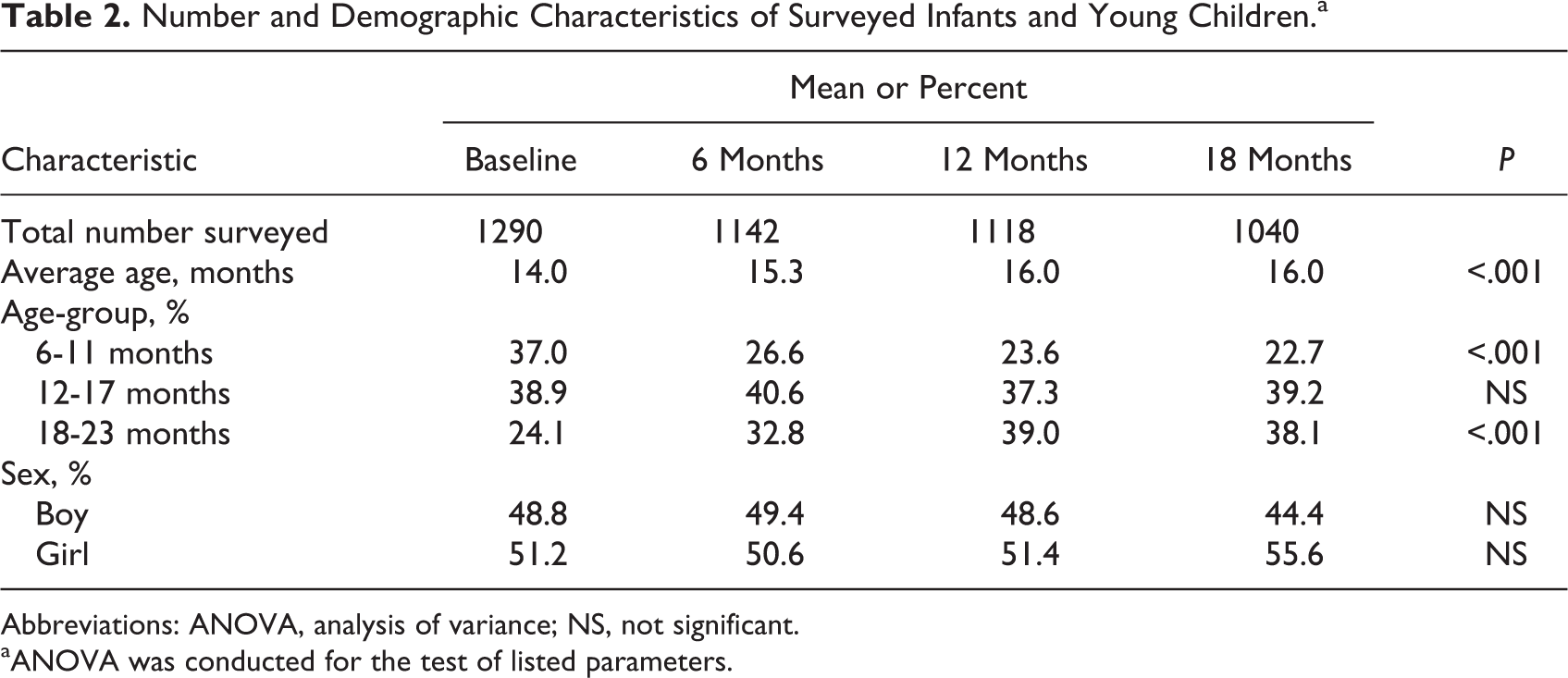
Abbreviations: ANOVA, analysis of variance; NS, not significant.
aANOVA was conducted for the test of listed parameters.
Ying Yang Bao Consumption
Despite logistic difficulties, YYB was efficiently delivered to the households in the mountainous counties through village clinics by village doctors. The distribution system from manufacturer to MCH hospitals, then township clinics, then to village doctors guaranteed the receipt of YYB by households with IYC. Table 3 lists the survey data on numbers of infants receiving YYB among those who were eligible and the consumption of YYB as a proportion of the amount recommended (1 sachet per day). Ying yang bao consumption in the preceding week averaged 4.7 to 5.2 sachets in the 3 postbaseline surveys, suggesting both high coverage of and compliance with YYB. Information on the method used to prepare YYB was asked during the last 2 surveys only. In the 12- and 18-month surveys, 77.2% and 72.0% (P > .05) of children consumed YYB that had been diluted in water even if this was not part of the instructions given to caregivers. The percentage of children who received YYB blended into complementary foods such as porridge and noodles increased from 45.6% to 59.2% (P < .05) and those who received YYB mixed with soup increased from 12.8% to 27.5% (P < .05).
YYB Distribution and Consumption.
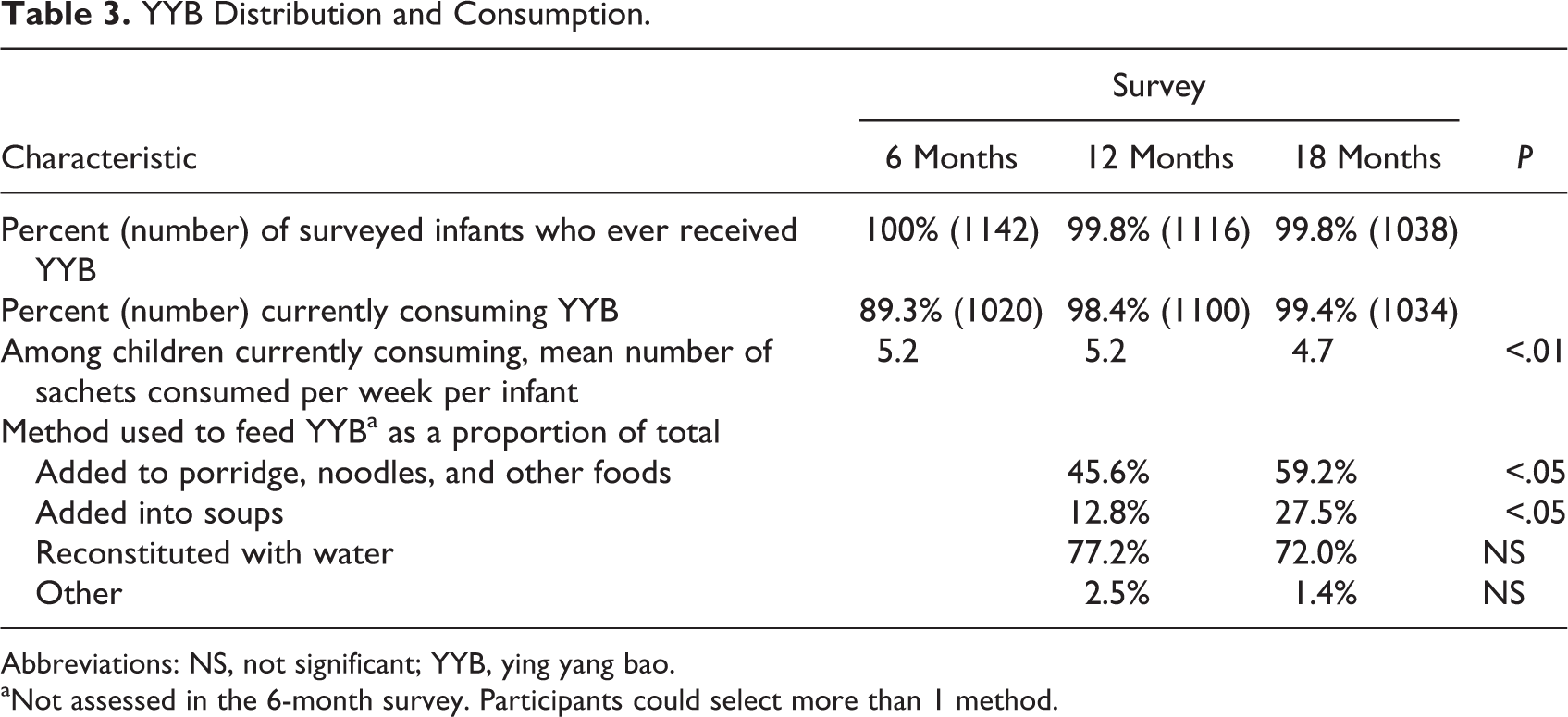
Abbreviations: NS, not significant; YYB, ying yang bao.
aNot assessed in the 6-month survey. Participants could select more than 1 method.
Hemoglobin and Anemia
The data in Table 4 show a significant increase in hemoglobin levels after introduction of YYB in all 6- to 23–month-old infants surveyed. Hemoglobin averaged 10.8 g/dL at baseline and 11.3, 11.6, and 11.7 g/dL after 6, 12, and 18 months of YYB consumption, respectively. There are no differences in mean hemoglobin concentration by age-group (data not shown) and, in general, no increase in mean hemoglobin concentration beyond 6 months after commencing YYB consumption (Table 4). The prevalence of moderate anemia decreased from 20.3% at baseline to 7.5%, 5.8%, and 7.3%, whereas mild anemia decreased from 29.0% to 16.7%, 18.1%, and 15.4% in the 6-, 12-, and 18-month surveys, respectively (data not shown). The proportion of infants with anemia declined by more than half after commencing the intervention but did not decline beyond 6 months after commencing consumption of YYB.
Hemoglobin Levels and Anemia Prevalence After Introduction of YYB, by Age-Group.
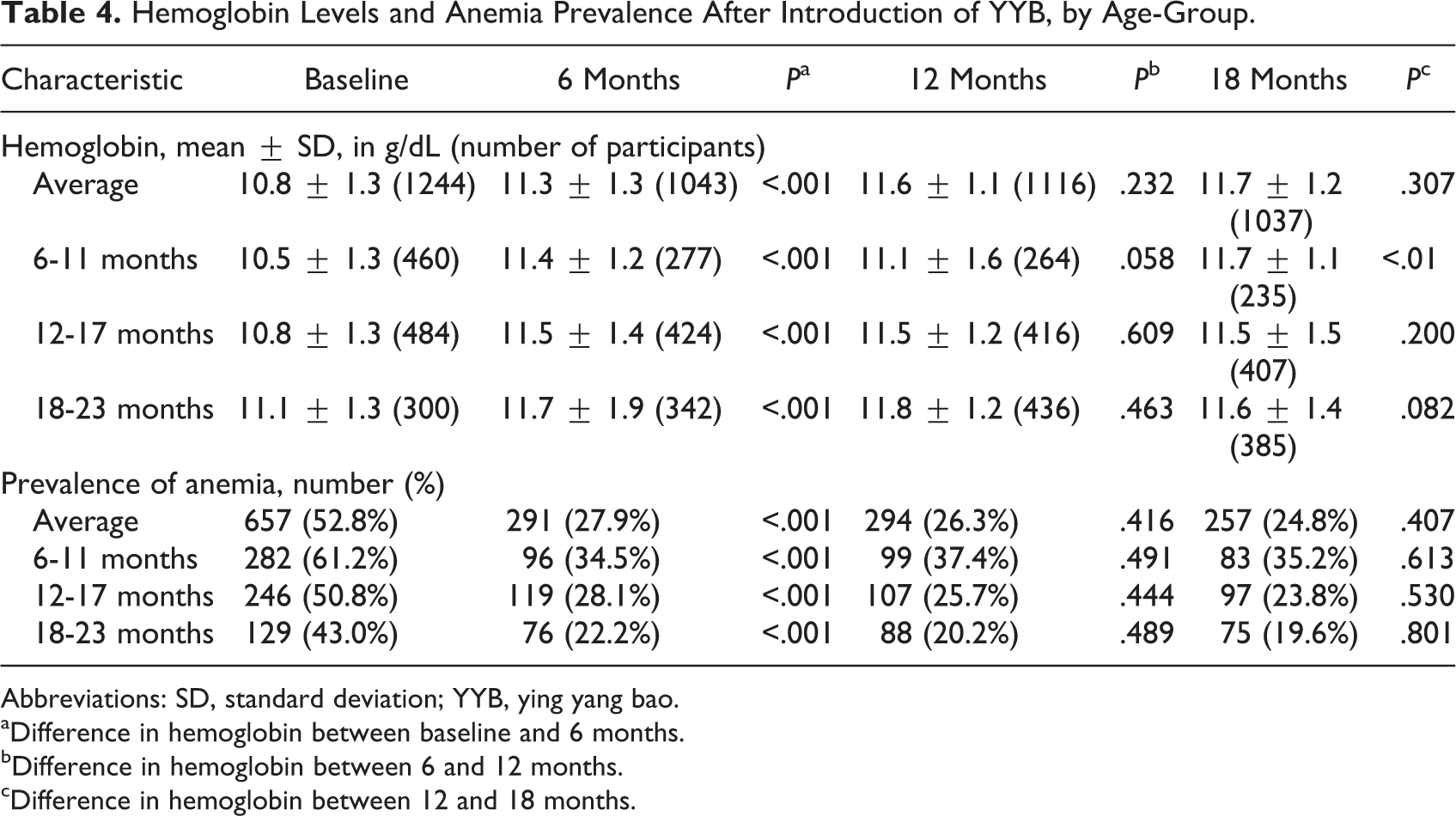
Abbreviations: SD, standard deviation; YYB, ying yang bao.
aDifference in hemoglobin between baseline and 6 months.
bDifference in hemoglobin between 6 and 12 months.
cDifference in hemoglobin between 12 and 18 months.
Association of YYB Consumption With Hemoglobin Level
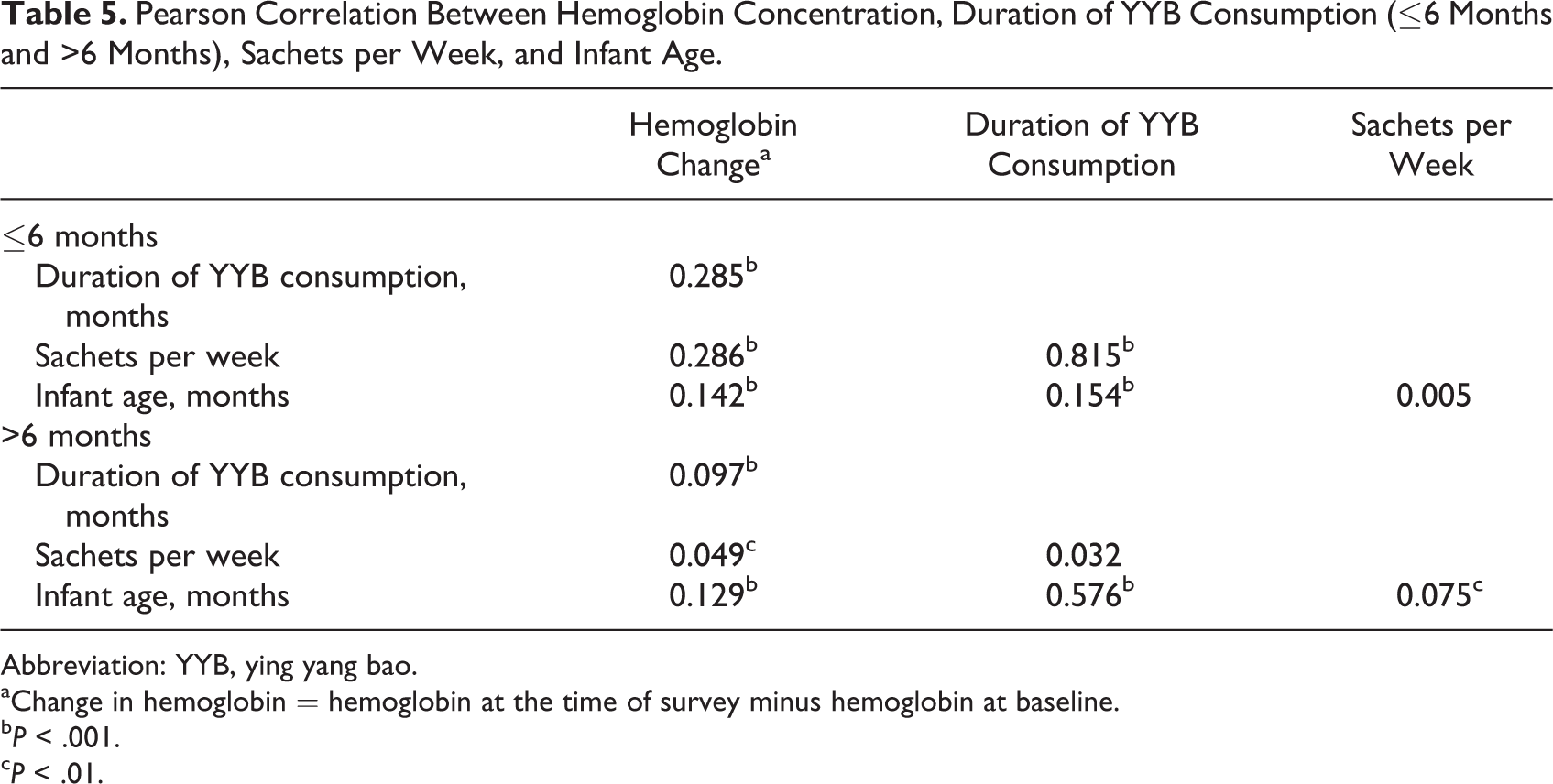
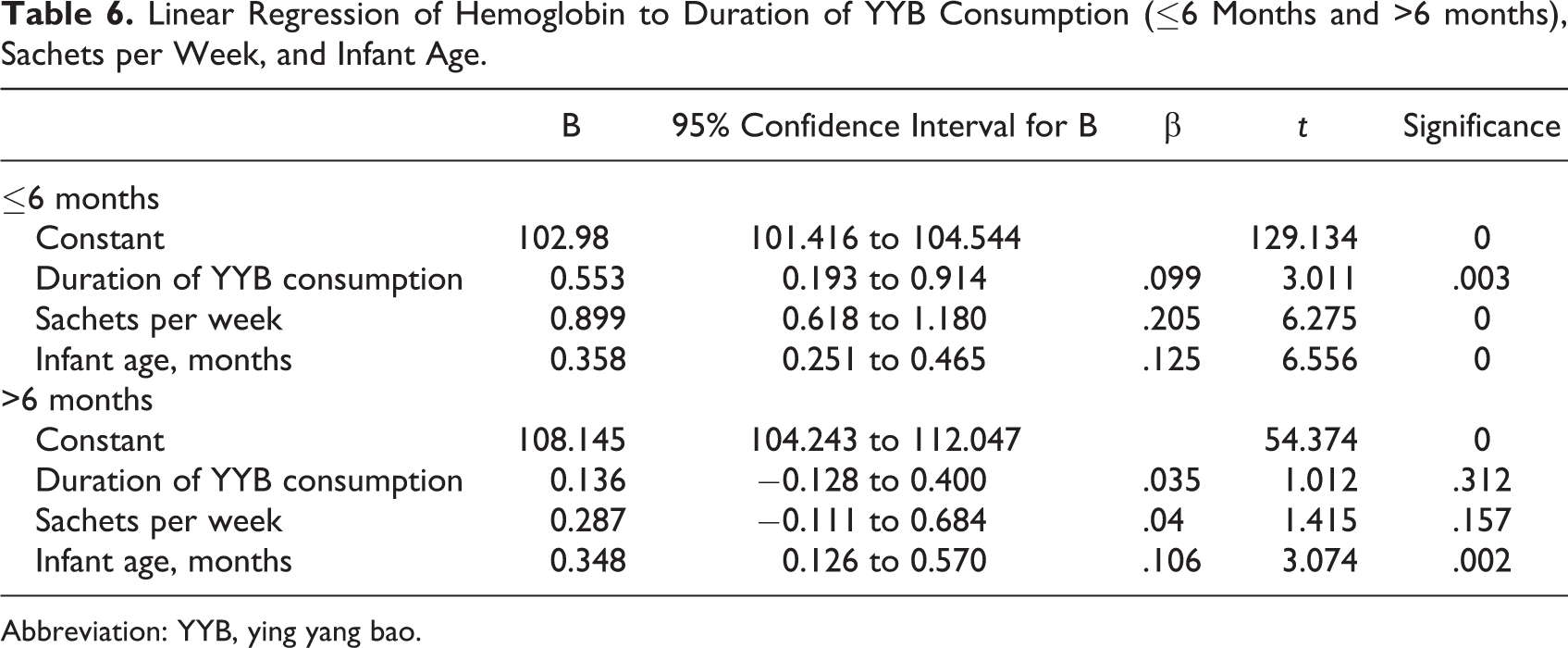
From Table 4, it appears that the benefits are almost incurred in the first 6 months, after which continued consumption of YYB maintains hemoglobin levels. Therefore, regressions for those who have had YYB consumption for less than 6 months and those who have had it for more than 6 months were run separately. Table 5 lists the coefficients of correlation between infant hemoglobin and duration of YYB consumption (months), sachets consumed per infant per week, and age (months) when the infant began consuming YYB. Hemoglobin was correlated with each variable included and showed a linear relationship with collinearity. Collinearity diagnostics showed that the condition index of all variables was below 10, and eigenvalue of all variables was close to 0, indicating that the regression model was not substantively affected by this collinearity. The regression analysis showed that hemoglobin was positively influenced by months of YYB consumption, sachets per week, and infant age (Table 6).
Pearson Correlation Between Hemoglobin Concentration, Duration of YYB Consumption (≤6 Months and >6 Months), Sachets per Week, and Infant Age.
Abbreviation: YYB, ying yang bao.
aChange in hemoglobin = hemoglobin at the time of survey minus hemoglobin at baseline.
bP < .001.
cP < .01.
Linear Regression of Hemoglobin to Duration of YYB Consumption (≤6 Months and >6 months), Sachets per Week, and Infant Age.
Abbreviation: YYB, ying yang bao.
Discussion
Iron deficiency anemia (IDA) is a major global public health problem influencing survival, growth, and development and therefore the life course of those affected. Ying yang bao, a newly developed soybean powder-based micronutrient supplement for IYC, has been shown to reduce prevalence of IDA and improve cognitive development in efficacy studies in Gansu province. 8,14,15 The current study confirms the effect of consumption of YYB on anemia rates among IYC in a poor mountainous region of Western China as a nutrition intervention project.
The use of MNP has been well studied. Micronutrient powder is similar to YYB but without a food (protein) base. A systematic review 6 was conducted to assess the safety and effects of MNP fortification of food consumed by children younger than 2 years. The review included 8 high-quality trials (n = 3748 children) conducted in various countries: 6 compared daily provision of MNP versus no intervention or placebo and 2 compared the same with the use of daily iron drops. The review concluded that home food fortification with MNP reduced anemia by 31% (average relative risk [RR]: 0.69, 95% CI: 0.60-0.78, 6 studies) and iron deficiency by 51% (RR: 0.49, 95% CI: 0.35-0.67, 4 studies), when compared with no intervention or a placebo. In this study, we found reduction in anemia among IYC consuming YYB from 52.8% to 27.9% for 6 months and that this reduction was sustained with continued consumption up to age 23 months.
Over half of the participating infants were anemic at the beginning of the study. The high level of anemia at baseline is likely related to several risk factors including poor economic status, inadequate dietary intake, and common illnesses, all of which were probably aggravated following the earthquake. 16 -18 The observed anemia prevalence and related risk factors are consistent with other recent data from western China. 3,4 The high YYB coverage and compliance indicate the acceptability of the intervention to the population and are crucial to the reliability of the data and results and to the likely acceptability of the intervention to caregivers. Ying yang bao was fed mainly by reconstitution with water or added to home-cooked complementary foods, indicating it is practical for caregivers to provide IYC and that instructions provided by the village doctors were well understood. Water reconstitution was not the preferred recommendation, but it seemed more acceptable to the IYC and was convenient for the caregivers. Lessons learned from formative research across 6 countries showed that acceptability, compliance, and willingness to continue using MNP are very high where caregivers are well informed and given simple, adaptable options in local circumstances. 19
Data in this observation showed a significant increase in hemoglobin levels and decrease in anemia rates, suggesting the effect of this population-based YYB intervention on IDA control and prevention. Months of YYB intervention, sachets of YYB consumed each week, and initial age were each found significantly related to hemoglobin level after the intervention. 20,21 We acknowledge that hemoglobin level does not differentiate types of anemia, but only nutritional anemia should respond to YYB. 22,23 Further studies should be undertaken to evaluate the impact of YYB consumption on iron status and to differentiate its impact on IDA and other types of anemia. However, the major cause of anemia in the study area is known to be iron deficiency. 24
There are several limitations and potential sources of bias in this study. First, there were differences in the numbers of participants and age distribution among the surveys and a nonsignificantly lower number of boys who are known to have a higher risk of anemia among IYC. 25,26 The main reasons for this variability in sample demography were likely to be population movement (a major phenomenon in rural China), family visits at the time of the survey, and distance of households from the survey locations. The lower number of boys would reduce the overall risk of anemia in the sample, underestimating the influence of the intervention. None of the other factors are definitely related to infant nutrition status, so we consider them to be a limited source of bias. Second, we are unable to draw any conclusions on the possibility of a secular change in the studied population of IYC, as there was no control group. However, secular influences on IDA (such as dramatically improved dietary intake) would not usually cause the observed dramatic change in anemia rates within 6 months. Third, we have only demonstrated an impact of 6-month YYB consumption. There were no further reductions in anemia or improvements in hemoglobin beyond this duration, so although we can confirm that the benefit was sustained with continued consumption, we cannot confirm that prolonged home food fortification is imperative. However, the first 24 months of life are critical for nutritional status, 27,28 and the risk of poor dietary intake is well established in such areas of rural China, so it seems very reasonable to continue the intervention up to at least 24 months of age. Finally, the sample for the baseline survey was not selected randomly, introducing the possibility of bias according to which IYC were known to and selected by the village doctors. Our belief is that families well known to village doctors are more likely to have attended for immunization and well-baby checks, which are established programs in rural China, and may have had a lower risk of anemia. This would have biased the results against an impact of the intervention.
This study suggest that home food fortification with YYB is a public health strategy for reducing anemia in children aged 6 to 23 months in poor rural areas of China. However, it should not be introduced as a stand-alone intervention. Ying yang bao needs to be part of an improved IYCN strategy which promotes continued breast-feeding for at least 2 years, age-appropriate, diverse and frequent complementary food, hand washing with soap and hygienic preparation of food, and active feeding. A comprehensive IYCN strategy is essential to reduce undernutrition and improve child survival and development. Population knowledge on IYCN should be improved in terms of food diversity, feeding frequency and amount, and appropriate food types.
Footnotes
Acknowledgments
The authors are deeply indebted to Dr. Zuguo Mei and Mary Serdula from the US CDC for their support at all stages of this survey and analysis. The authors also thank Ms Lilian Selenje of UNICEF for her support in establishing the project and Dr Bradley A. Woodruff for his work on the survey design, critical reading of the manuscript, and comments. The authors are grateful to the contributions from the staff involved in the study for making this survey possible. They are from Sichuan province CDC; the CDCs of Wenchuan, Qingchuan, and Pengzhou counties; the Mother and Child Care Center of Li County; Shaanxi province CDC; the CDC of Kang county; Gansu province CDC; and Ningxiang county CDC.
Declaration of Conflicting Interests
The author(s) declared no potential conflicts of interest with respect to the research, authorship, and/or publication of this article.
Funding
The author(s) disclosed receipt of the following financial support for the research, authorship, and/or publication of this article: The work was supported by the Ministry of Health, UNICEF, and US CDC.