




Abstract
Background:
Unlocking the agricultural potential of Africa offers a genuine opportunity to address malnutrition and drive development of the continent.
Objective:
Using Senegal as a case study, to identify gaps and opportunities to strengthen agricultural policies with nutrition-sensitive approaches.
Methods:
We carried out a systematic analysis of 13 policy documents that related to food production, agriculture, food security, or nutrition. Next, we collected data during a participatory analysis with 32 national stakeholders and in-depth interviews with 15 national experts of technical directorates of the different ministries that deal with agriculture and food production.
Results:
The current agricultural context has various elements that are considered to enhance its nutrition sensitivity. On average, 8.3 of the 17 Food and Agriculture Organization guiding principles for agriculture programming for nutrition were included in the policies reviewed. Ensuring food security and increasing dietary diversity were considered to be the principal objectives of agricultural policies. Although there was considerable agreement that agriculture can contribute to nutrition, current agricultural programs generally do not target communities on the basis of their nutritional vulnerability. Agricultural programs were reported to have specific components to target female beneficiaries but were generally not used as delivery platforms for nutritional interventions.
Conclusions:
The findings of this study indicate the need for a coherent policy environment across the food system that aligns recommendations at the national level with local action on the ground. In addition, specific activities are needed to develop a shared understanding of nutrition and public health nutrition within the agricultural community in Senegal.
Introduction
Despite substantial economic progress, malnutrition rates have remained persistently high in Africa. 1 In addition to this, various African countries are confronted with an increase in diet-related noncommunicable diseases. 2 This is unfortunate, as poor nutrition is an important cause of premature death 3 and decreased economic development. 4 The potential of Africa to feed its population and improve nutrition is vast. 5 However, agriculture in Africa has not received proper attention for decades, and agricultural productivity is still far from international standards to ensure food security. 6 Unlocking the agricultural potential of the continent offers a genuine opportunity to address malnutrition and drive development.
Various studies are being conducted to elucidate the potential of agriculture for improved nutrition 7 , and there is no lack of conceptual models in this regard. 8 Ruel et al. 9 recently summarized the knowledge of how agriculture can contribute to better nutrition and proposed key pathways for this purpose. Despite this wealth of knowledge, experiences of how countries deal with the integration of agriculture and nutrition remain scarce. This is unfortunate, as many countries struggle with similar issues and face shared challenges. 10
Senegal is an interesting case study to develop nutrition-sensitive agricultural programs and policies. Despite promising achievements in the reduction of childhood malnutrition 11,12 , the country faces persistent high rates of malnutrition and is confronted with an increasing incidence of diet-related noncommunicable diseases in pockets of society. 13 Nutrition has received the highest political attention in Senegal for more than a decade 14 , and the country has successfully established a high-level dialogue for concerted action with various stakeholders in nutrition. 15 In 2001, the country established a formal central coordination structure for nutrition action, called the Cell Against Malnutrition (CAM), situated under the Prime Minister’s office.
Senegal’s recent commitment to address nutrition through multisectoral action is significant. The country signed on to the Scaling Up Nutrition (SUN) movement in 2011 16 and recently pledged substantial funds for nutrition, in particular through the involvement of the agricultural sectors. 17 After the implementation and evaluation of the 2001 national policy on nutrition 18 , the country is currently initiating the development of a multisectoral strategic plan for nutrition.
This study was carried out as part of an assessment of the nutrition sensitivity of food and agricultural policies in eight countries (Brazil, Malawi, Mozambique, Nepal, Senegal, Sierra Leone, South Africa, and Thailand) undertaken by the United Nations System Standing Committee on Nutrition. A summary of the findings across the countries was published earlier. 19 The present study aims to guide the development of nutrition-sensitive agriculture in Senegal and to contribute to the discussion on nutrition-sensitive agriculture globally. Specifically, its objectives were to review how food and agricultural policies intended to have an impact on nutrition in the country, and to identify gaps and opportunities to strengthen agricultural policies with nutrition-sensitive approaches. In addition, it presents a pragmatic approach to the assessment and identification of policy options for nutrition-sensitive agriculture in general.
Materials and Methods
The present study combined various methods. National nutrition and agricultural policies were evaluated for their nutrition sensitivity during a desk review. The fieldwork in Senegal was conducted in May 2013 and was organized in three stages. First, nutrition–agriculture linkages in Senegal were conceptualized during a participatory causal analysis workshop. Second, the different pathways identified in the model were explored in detail through in-depth interviews with selected workshop participants. Third, we appraised the nutrition training received by staff working in the three ministries involved in agriculture (the Ministry of Agriculture and Rural Equipment, the Ministry of Livestock, and the Ministry of Fisheries and Maritime Affairs). In the present study, agriculture refers to the whole sector of primary food production, including fisheries and horticulture.
Policy Analysis
We reviewed policy documents of Senegal related to agriculture, food security, and nutrition for their nutrition sensitivity. Policy documents are considered adequate and objective resources that reflect the prevailing thinking around nutrition at the national level in a country and have been used for benchmarking of policy issues previously. 20,21
Policy documents were acquired from Senegalese experts of the CAM and the ministries related to agriculture, a global database on the implementation of nutrition action 22 , and a comprehensive Internet search. The set of documents was verified and agreed to by technical experts from the ministries in charge of agriculture. There were no language restrictions, and all relevant documents obtained were used.
All policy documents were scored to assess the level of nutrition sensitivity of the current policy context. A draft of the Food and Agriculture Organization (FAO) guiding principles on agriculture programming for nutrition
23
provided the basis for development of the scoring grid. The 17 principles were used
Guiding Principles on Agriculture Programming for Nutrition Used to Analyze Policy Documents.
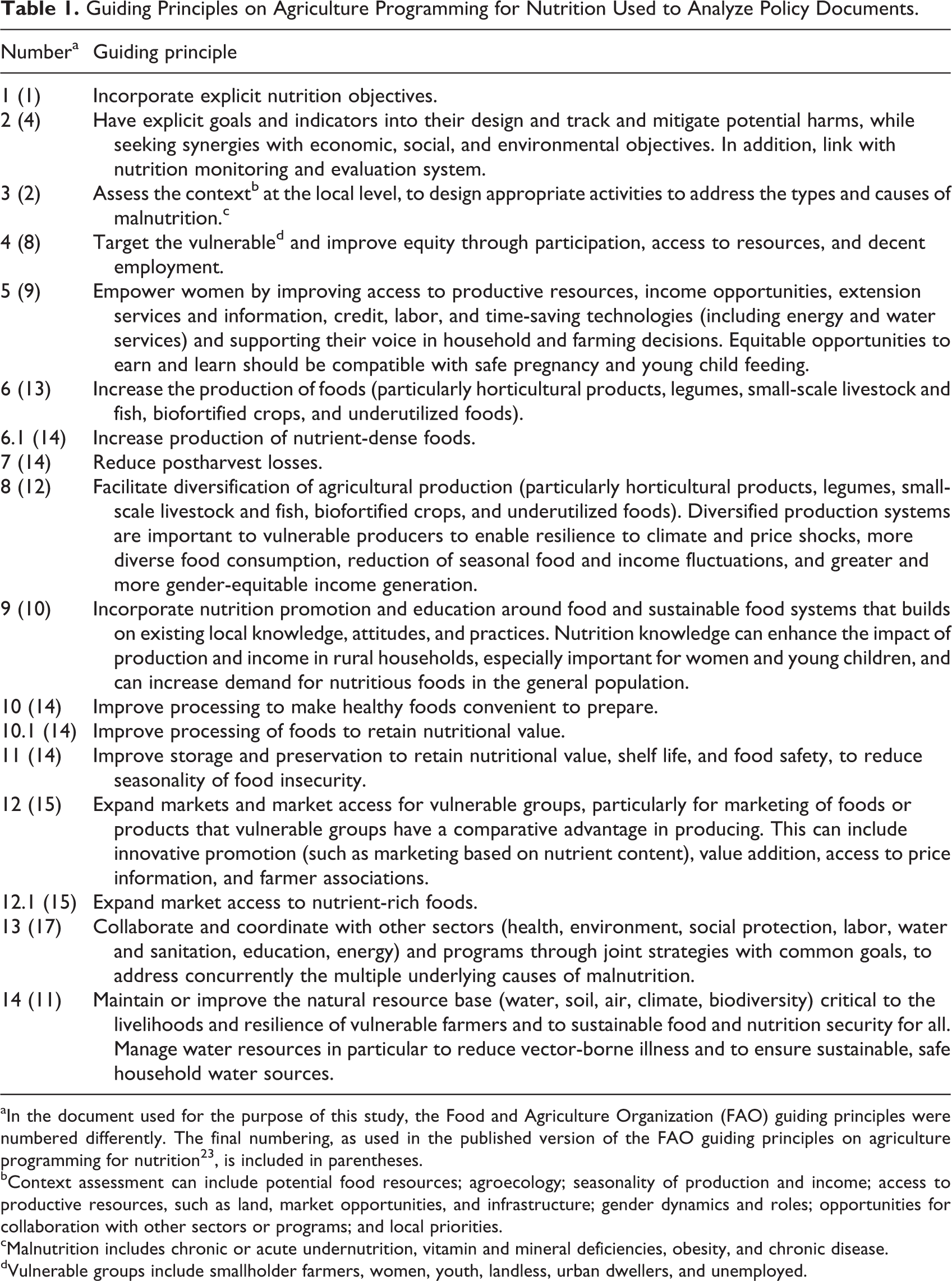
aIn the document used for the purpose of this study, the Food and Agriculture Organization (FAO) guiding principles were numbered differently. The final numbering, as used in the published version of the FAO guiding principles on agriculture programming for nutrition 23 , is included in parentheses.
bContext assessment can include potential food resources; agroecology; seasonality of production and income; access to productive resources, such as land, market opportunities, and infrastructure; gender dynamics and roles; opportunities for collaboration with other sectors or programs; and local priorities.
cMalnutrition includes chronic or acute undernutrition, vitamin and mineral deficiencies, obesity, and chronic disease.
dVulnerable groups include smallholder farmers, women, youth, landless, urban dwellers, and unemployed.
List of Policy Documents Reviewed.
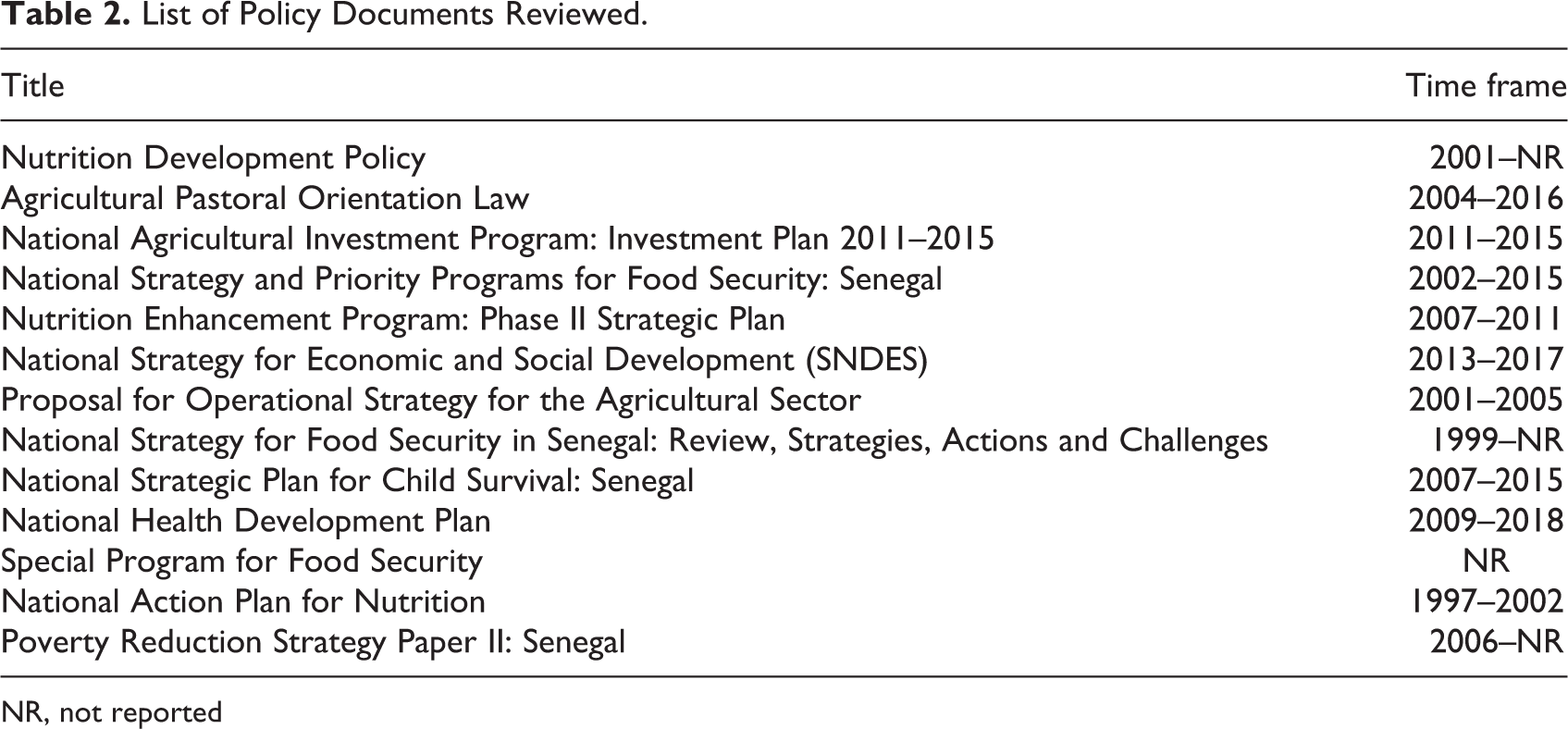
NR, not reported
Causal Model Analysis
Since existing conceptual models linking agriculture and nutrition fail to shed light on factors that prevail in a specific setting, we built a causal model to define the determinants of nutrition status for Senegal. The causal model is a well-established method for the identification of contextual determinants of complex issues such as nutrition. 25,26
The model was built during a one-day workshop in Dakar. Thirty-two stakeholders from relevant governmental agencies and international stakeholders in nutrition and agriculture (Appendix Table, available online) participated. An experienced facilitator moderated the discussions. The aims of the workshop were clarified to the workshop participants. They were to assess current perceptions and views on pathways through which agriculture affects nutrition status in Senegal, to develop a common understanding of nutrition–agriculture linkages in Senegal to enable later stages of data collection, and to get in touch with potential respondents for the in-depth interviews. To set the scene and enable mutual understanding, the meeting started with a presentation of the current nutritional issues in Senegal. The causal model was constructed in small working groups, and the final model was presented and discussed in plenary session.
In-depth Interviews
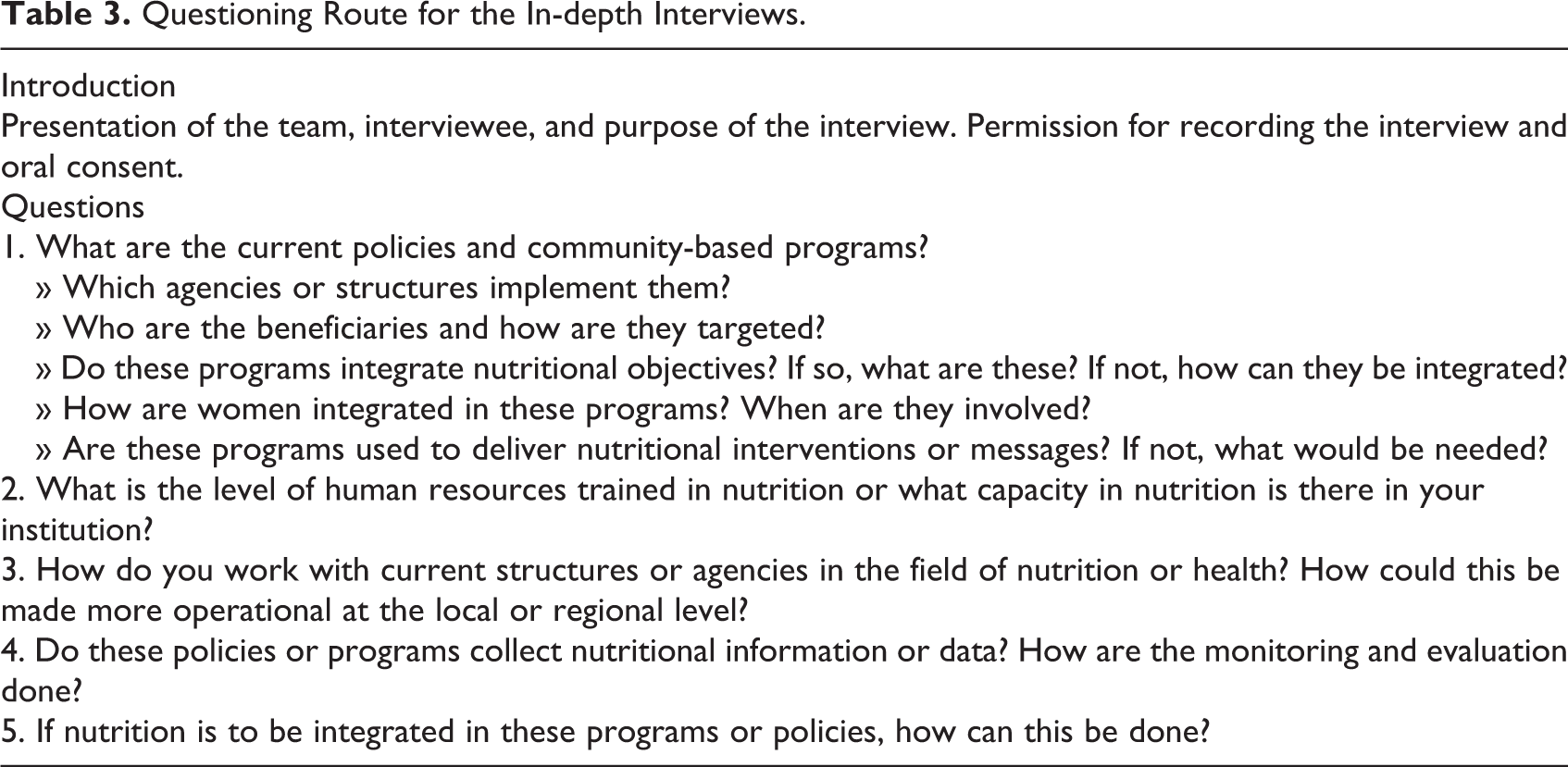
After the workshop, we conducted 15 in-depth interviews to assess the nutrition sensitivity of implemented agricultural programs. The respondents (principally from governmental agencies, ministries involved in agriculture, and United Nations agencies) were selected from the list of workshop participants, based on their technical expertise related to the different agricultural determinants of nutrition status of the causal analysis. In each of the interviews, four major ways by which agricultural programs can improve nutrition, as suggested by Ruel et al. 9 , were addressed: to what extent the existing agricultural interventions target beneficiary populations on the basis of nutrition vulnerability; how current agricultural programs identify nutrition goals or include nutrition indicators; how current agricultural programs engage and target women in terms of well-being, empowerment, and livelihoods; and how agricultural programs are used as vehicles to deliver nutrition interventions. The questioning route for the interviews is included as Table 3. Except for two telephone interviews, all interviews were conducted face-to-face. Oral consent was obtained from the respondents, and the interviews were recorded to allow revision and transcription of answers. Two researchers analyzed the transcripts manually for key themes that occurred frequently.
Questioning Route for the In-depth Interviews.
Assessment of Nutrition Capacity of Governmental Agencies Involved in Agriculture
We asked the respondents what technical capacity existed in their organizations in terms of formal training in nutrition received. In addition, a scoping exercise was performed to identify the training programs in nutrition in Senegal, using a review of secondary material obtained from the interviewees and an Internet search.
Results
Policy Analysis
On average, the policy documents contained 8.3 (49%) of the 17 characteristics considered to enhance the nutrition sensitivity of agricultural programs (Figure 1). The highest-scoring policies were related to either food security or nutrition. Almost all policy documents contained objectives or strategies to improve diets or nutritional status or described a monitoring and evaluation system with nutritional or dietary indicators to some extent.
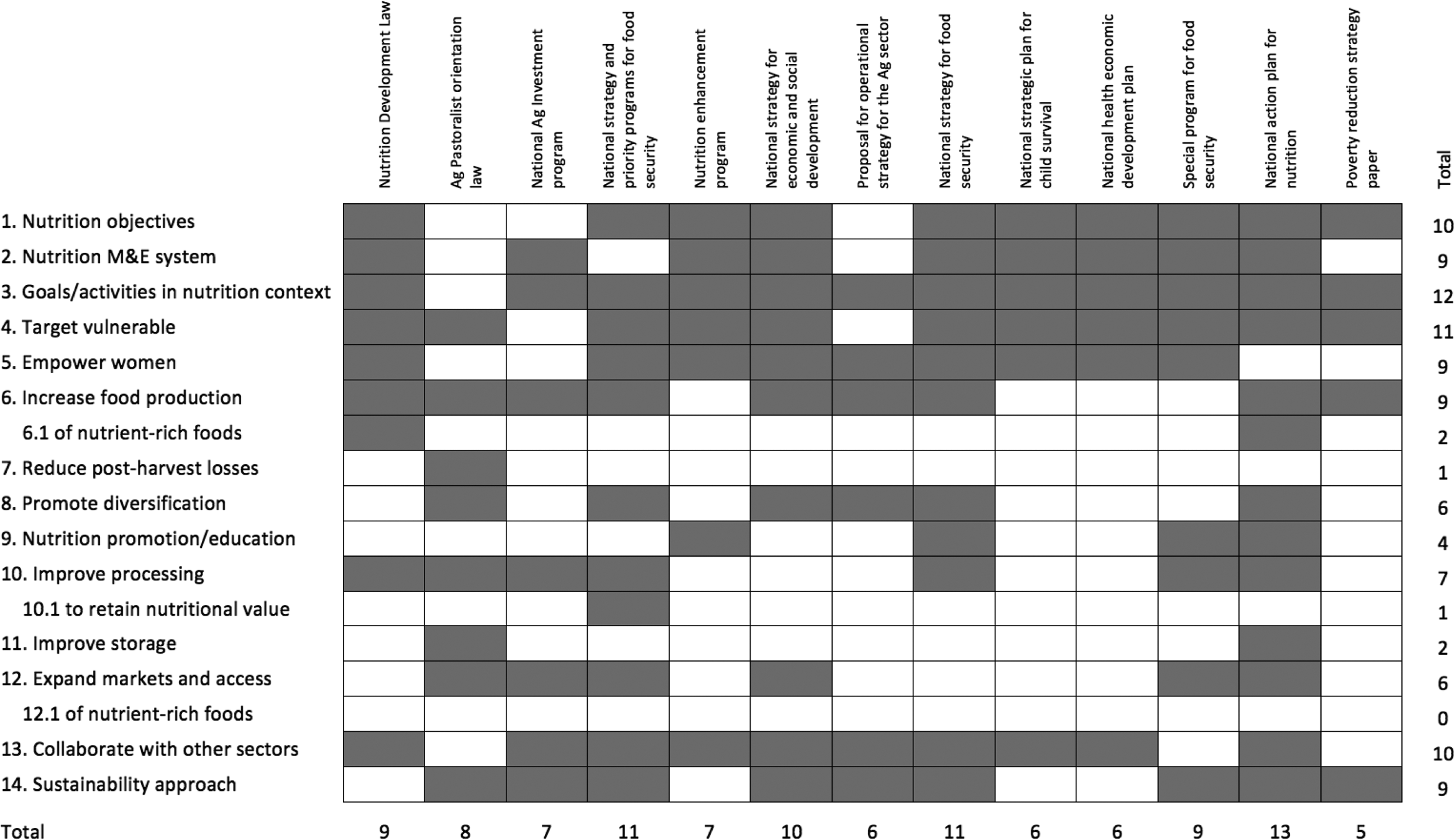
Nutrition-sensitive characteristics of national food and agricultural policy documents (n = 13) in Senegal. The Y-axis lists the FAO guiding principles for agriculture programming for nutrition.
23
The X-axis contains the policy documents reviewed. Dark cells indicate the presence of the guiding principles in the policy documents, and white cells indicate the absence of these guiding principles.
Items that related to postharvest handling, storage, and marketing of agricultural produce were less frequently included in the policy documents. In particular, activities to expand market access of nutrient-rich foods were absent.
In its current form, the Agricultural Pastoral Orientation Law contains no specific nutritional goals and principally considers nutrition from a food security and sovereignty perspective. This is significant, as the Agricultural Pastoral Orientation Law serves as a legal framework for the development and implementation of sectoral policies or programs in fisheries, agriculture, and pastoral development.
Causal Model Analysis
There was a general consensus that agriculture should contribute to tackling both undernutrition and overweight or obesity. During the construction of the causal model, the participants decided to explore determinants of food intake, since other direct determinants, such as health status and genotype, were considered outside the scope of their work. Figure 2 presents a simplified version of the causal model. The full model is available as Appendix Figure 1, available online.
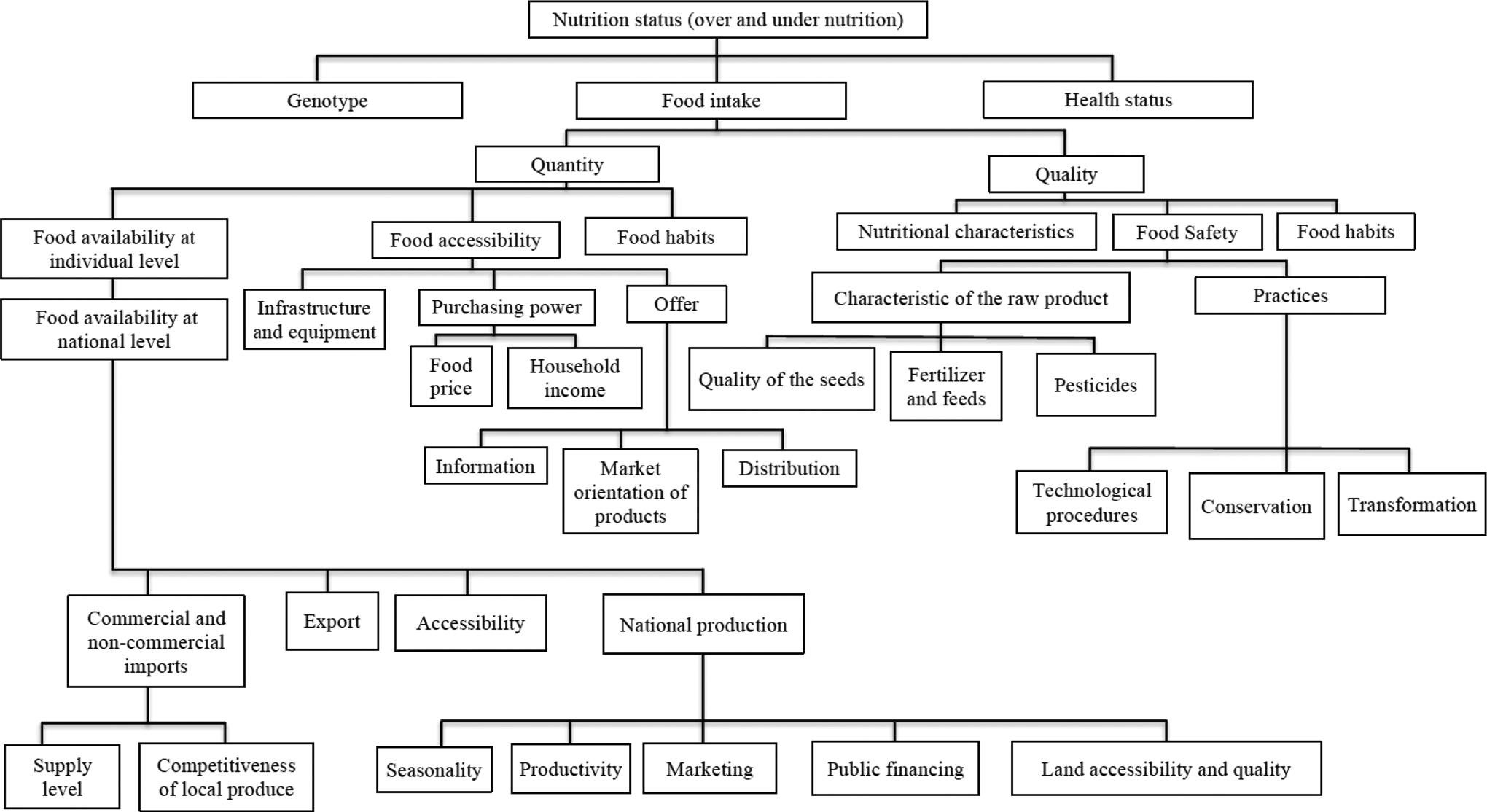
Conceptual linkages of agriculture with nutrition in Senegal (simplified causal model).
The participants identified the determinants of nutrition status that related to their technical agricultural expertise and mandate. Specifically, they noted how selection of varieties, increasing food availability, postharvest processing, diffusion of new technologies, improvement of primary transformation, and distribution of agricultural products were conceptually linked to nutrition status.
However, the analysis showed how the participants mainly perceived their contributions to the improvement of nutrition to be related to the increase of food supply and diversity. It focused less on social or cultural aspects of food habits, such as practices, perceptions, and community participation or empowerment. In addition, the participants decided not to explore the link between food availability at the individual and national levels (Figure 2). Although most participants were comfortable identifying conceptual links between the various determinants of malnutrition, linking national or regional food availability with individual or household food availability was considered challenging and remained unaddressed.
In-depth Interviews
The interviewees agreed that the current agricultural programs generally do not target local communities or populations on the basis of nutritional vulnerability or nutritional profile. Only in a few programs, such as those by CAM, are interventions primarily directed towards nutritionally vulnerable groups or geographic areas with the poorest nutritional indicators.
The respondents noted that the current agricultural programs in which they were involved had no explicit nutritional goals and as such did not include nutritional indicators. The main objective of these programs is to ensure availability of food, with some basic processing after harvest.
In addition, the public health dimension of nutrition was largely ignored. Most of the respondents stated that they incorporated nutrition in their programs, as they worked with food scientists for primary transformation of agricultural produce, produced the food that people ate, or looked at problems of food safety, such as
In general, agricultural programs were reported to have specific components to target female beneficiaries. The legal framework for this is stipulated in the Agricultural Pastoral Orientation Law, which explicitly recognizes all those involved in agriculture as professionals. These professionals consequently benefit from some form of social protection and are free to unite and organize themselves. The law further includes specific articles that deal with gender and specifies the equality of men and women in agricultural exploitation activities. It stresses the need for programs to implement additional actions and increases the opportunities for female agriculture professionals to engage in agriculture.
The interviewees reported that the current agricultural programs generally do not deliver nutritional interventions. Only some agricultural extension activities were accompanied by nutrition education. The respondents acknowledged that nutrition education was quite unstructured and was mainly done in an ad hoc and informal way. They acknowledged that the nutrition education component in agricultural extension was weak and that they generally lacked the necessary nutrition knowledge to develop such programs.
An interesting delivery platform for capacity-building in nutrition is the National Agency for Rural Agricultural Counselling (ANCAR). 27 ANCAR is a national organization with a mandate to diffuse new knowledge or technology to the communities. ANCAR can also deliver relevant knowledge and information to producers through its national network of rural councils.
Assessment of Nutrition Capacity at Governmental Agencies Involved in Agriculture
Since 2009, an MSc in nutrition has been offered
The agricultural experts at the government agencies generally acknowledged that they lacked knowledge of nutrition. Although the respondents noted that they had received a basic course in nutrition during their training in agriculture, this knowledge was perceived as inadequate and outdated. The current capacity in nutrition at the different ministries involved in agriculture was perceived to be restricted to animal nutrition or food science. The interviewees suggested that a specialized course or a brief training in nutrition would be helpful and of interest. For expertise in human nutrition, the agricultural staff reported that they turned to the Ministry of Health and Social Action.
Discussion
This study aims to guide the development of nutrition-sensitive agriculture and nutrition policy. Using Senegal as a case study, it reviews how agricultural policies aim to affect the nutrition status of the population and identifies gaps and opportunities to strengthen agricultural policies with nutrition-sensitive approaches. Although various policy documents contain nutritional objectives, nutrition has been poorly integrated in the implementation of agricultural programs in Senegal. Strategies for empowerment of women, increasing production, diversification of agricultural produce, collaboration between sectors, and sustainable use of natural resources were present in the policies. The reduction of postharvest losses, organization of nutrition education and promotion, improvement of storage, and expansion of markets and market access are areas that offer considerable scope for improvement. Although they are clearly relevant for policy documents that deal with agriculture or nutrition, these strategies were largely absent in the policy documents reviewed.
Our assessment showed a substantial scope and willingness for engagement of the agricultural experts to improve nutrition in Senegal. There was a large consensus among the interviewees and workshop participants that agriculture can and needs to tackle both undernutrition and overweight/obesity. Senegal’s commitment to foster nutrition-sensitive agriculture 17 is expected to result in an inclusive process to enable discussion, consensus, and shared understanding of the nutrition and agricultural sectors in the country.
Of the different key pathways for agricultural policies to contribute to nutrition, however, the engagement of women was the only one that is currently mainstreamed in agricultural policies. The legal basis for the engagement of women is in place, and the respondents generally agreed to abide by it.
Technical experts from agricultural ministries clearly recognized that agricultural interventions should be tailored to the nutritional profile of the target population. Current programs do not have nutritional goals and are not monitored using nutritional indicators. Incorporating nutritional objectives and indicators in agricultural programs is clearly a challenge. It will require joint planning, monitoring, and evaluation by the different ministries involved in agriculture and health. Agricultural interventions need to develop feedback mechanisms that stimulate and monitor maximal nutrition or public health benefits from increased production of crops or revenue generated from them. Nutritional surveillance sites are a promising idea but will require careful planning to avoid previous failures. Indeed, decades of experience have shown how nutrition surveillance systems are often reduced to administrative data-collection exercises and fail to generate timely information for action. 30
Currently, agricultural programs are not used as delivery platforms for nutrition education. It is clear, however, that suitable structures and delivery platforms are available for this purpose. Mobilizing these structures for nutrition would enable a tailored approach to the communities and enhance the nutrition sensitivity of agricultural extension activities. To achieve this, however, specific training packages need to be developed. Tentative findings from this study indicate how such training needs to focus on the market access of nutrient-rich varieties, food preservation activities, and reduction of postharvest losses for nutritional benefits.
An additional pathway to improve nutrition through agriculture emerged from the interviews. The selection of seeds and varieties is done on the basis of commercial indicators only, such as yield, pest resistance, and appearance. It is well known that the variation in micronutrient content of different varieties is high and offers the promise of addressing micronutrient deficiencies. Promoting varieties on the basis of micronutrient composition of the crops is therefore considered a viable strategy to address micronutrient deficiencies and promote local foods. Such an approach, however, will entail prioritizing different varieties using multiple criteria (e.g.,
The administrative organization of the government of Senegal, as in most countries 31 , requires specific efforts to facilitate coordinated efforts between nutrition and agriculture. The CAM, appropriately situated at the highest policy level, can facilitate the dialogue between the agricultural and health sectors. To develop effective nutrition-sensitive approaches, however, more will be needed. A sustained dialogue between both sectors is compulsory and needs to be both visionary and results-oriented. Such dialogue should result in a shared vision on various fronts of the policy process, from inception, to implementation, to evaluation under the auspices of the highest political levels. To date, the CAM mainly coordinates national activities to reduce undernutrition in Senegal. Although it is situated centrally in the Prime Minister’s office, its coordination capacities need to be strengthened to ensure policy coherence with the ministries concerned. The role of agriculture in the prevention of malnutrition needs to be recognized in the Agricultural Pastoral Orientation Law. The upcoming revision of the law provides a window of opportunity to integrate nutritional objectives and commitments and consolidate nutrition–agriculture linkages in Senegal.
Specific efforts are needed to upgrade knowledge and understanding of agriculture professionals regarding nutrition. Nutrition is not well enough understood by the various professionals at the different ministries dealing with agriculture to enable dialogue and effective collaboration with the nutrition sector. A better understanding of nutrition needs to be fostered, and nutrition requires mainstreaming at the peripheral levels of implementation and integration into agricultural extension activities.
Action at various levels is needed in this regard. First, the nutrition component of the curriculum of agricultural sciences follows the traditional format of a basic course in nutrition. Now that knowledge of nutrition-sensitive approaches in agriculture is being developed, it is an opportune time to update this course with these elements. Rather than a course in human nutrition, it seems more reasonable to tailor it to specific competencies and capacities needed for nutrition-sensitive agriculture, as described previously by Gillespie and Margetts. 32 The options for in-service training for staff working in agriculture deserve consideration. Currently, short-term specialization courses for agricultural experts in nutrition have been organized in Benin on a yearly basis since 1992. 33,34 Secondly, adequate capacity at the appropriate governance levels needs to be ensured. Developing nutrition-sensitive programs at the national level in Senegal will require conceptual thinking about nutrition during the conceptualization phase of policies and programs. Nutrition needs fostering not only at the executive levels but also at the appropriate policy-making levels (i.e., cabinets) to ensure the inclusion of nutrition in the development and evaluation of all relevant national programs.
A strength of this study is the comprehensive assessment of the policy landscape using documentary analysis, conceptual thinking, and in-depth interviews. In addition, Senegal’s commitment and experiences in the fight against malnutrition provide a unique backdrop for our assessment. Lastly, this study is a timely contribution to the current literature. Various countries have pledged substantial commitments to develop nutrition-sensitive approaches and are likely to benefit from this analysis. Our assessment, however, was limited to the national level, and we did not assess implementation of programs or perceptions at the regional or community levels. The latter will be more opportune when the nutrition-sensitive agricultural strategies are rolled out.
Conclusions
The analysis of the policy environment in the agricultural sector indicates substantial attention to food security and production but much less attention to nutrition in Senegal. There are important opportunities for the agricultural sector to promote nutrition, in particular in the area of processing and postharvest handling and provision of nutrition education by agricultural extension services. The findings of this study indicate the need for a coherent policy environment across the food system that aligns recommendations for each level with local action on the ground.
Perhaps the most compelling finding of this study is the vast misunderstanding of what nutrition is within the agricultural sector. Most actors in the agricultural sector did not acknowledge the health dimension of nutrition and looked at nutrition from the point of view of ensuring a sufficient and diverse food supply. If the development of nutrition-sensitive agriculture is to gain traction, the development of a shared understanding of the full scope of nutrition within the agricultural community will require additional consideration.
Footnotes
Authors’ Contributions
Jessica Fanzo, Lina Mahy, and Marzella Wüstefeld conceived the study; Carl Lachat, Eunice Nago, and Abdoulaye Ka collected the data; Carl Lachat, Eunice Nago, Harm Vermeylen, and Patrick Kolsteren analyzed the data; Carl Lachat wrote the first draft; all authors interpreted the data and contributed to writing the article.
Declaration of Conflicting Interests
The author(s) declared no potential conflicts of interest with respect to the research, authorship, and/or publication of this article.
Funding
The author(s) disclosed receipt of the following financial support for the research, authorship, and/or publication of this article: This study was commissioned by the United Nations System Standing Committee on Nutrition (UNSCN) and funded by the German Federal Ministry of Food and Agriculture (former BMELV Bundesministerium für Ernährung, Landwirtschaft und Verbrauchersschutz, now BMEL). The funder was not involved in the design of the study; collection, analysis, or interpretation of the data; writing of the report; or the decision to submit the article for publication.

References
Supplementary Material
Please find the following supplemental material available below.
For Open Access articles published under a Creative Commons License, all supplemental material carries the same license as the article it is associated with.
For non-Open Access articles published, all supplemental material carries a non-exclusive license, and permission requests for re-use of supplemental material or any part of supplemental material shall be sent directly to the copyright owner as specified in the copyright notice associated with the article.
