



Abstract
Sexual decision making is often grounded in social scripts that can be detrimental to women's healthy relationships and sexual development during the transition to college. Little is known about the malleable decision-making processes and drinking behaviors that influence sexual behaviors from day-to-day. We examined whether women were more likely to engage in sexual behaviors on days they had higher intentions and willingness to engage in sex or drink alcohol. We also explored interactions between sex- and alcohol-related decision constructs. Eighty-two first-year college women completed 14 days of ecological momentary assessment, reporting on alcohol- and sex-related intentions and willingness (3x daily) and daily drinking and sexual behaviors. We found partial support for our hypotheses: intentions and willingness to have sex were positively associated with sex behaviors, but the willingness to drink was negatively associated with sex behaviors. Heavy drinking was associated with sexual behavior, even when women indicated no prior willingness to engage in sexual behavior on those days. Findings highlight the need to address event-level variability in sexual decision making, with a particular focus on how alcohol impacts these processes. Further, the robust association between sexual intentions and behavior suggests intention setting may be a particularly useful sexual empowerment education tool.
Keywords
Sexual decision making is often grounded in sexual scripts (Gagnon & Simon, 1973; Paul, 2022) that can be detrimental for a healthy relationship and sexual development—especially during the transition to college when students have less personal experience from which to draw. Young women navigate these sexual scripts while also being influenced by traditional gender roles (“the woman as a gatekeeper”), potential reputational damage (Ford, 2020), and increased risk for related harms (e.g., sexual violence), more so than their male peers (Wade, 2021). Over the past decade, college-level sexuality education programs have shifted toward a feminist-informed approach (Manning-Ouellette & Shikongo-Asino, 2022; Peterson, 2010). For example, emancipatory or empowerment education aims to disrupt the heteronormative sexual script in which women are both submissive and the sexual gatekeepers and men are aggressors (Rossetto & Tollison, 2017), encouraging women to explore their own desires (Balanko, 2002). In the current study, we aimed to contribute to this sex-positive shift by addressing two critical gaps. First, sexual empowerment programs encourage women to contemplate their sexual desires in a safe and guarded space; however, researchers suggest how women think they will behave in a sexual context may not be congruent with how they actually behave at the moment (Sheeran & Webb, 2016; Woodzicka & LaFrance, 2001). Despite the shift toward a more empowered sexual script women can use to plan or think about future behaviors, women may still face a fear of engaging in behavior that defies old scripts or perceives the social cost of doing so to be too high (e.g., backlash in response to sexual assertiveness; Klein et al., 2019). Second, sexual scripts in the college environment are inextricably intertwined with social drinking scripts (Hunt et al., 2022; Thorpe, 2019). For example, various social scripts link alcohol to the initiation or enhancement of sexual experiences (George, 2019), suggesting women should drink to facilitate or enjoy sex. These same scripts are interpreted differently by men (e.g., men may perceive a woman who is drinking as more sexually available or interested), potentially placing women at increased risk to be targeted for unwanted or forced sexual experiences (Abbey, 2002; George & Stoner, 2000). Although daily diary studies indicate women experience increased odds of having sex on drinking days (Patrick et al., 2015), little is known about alcohol's role in decision making leading up to sexual events or how those processes vary from one event to the next. To inform educational and intervention efforts that aim to enhance positive sexual experiences (sexual empowerment) and minimize negative sexual risk for first-year women, our goal was to elucidate malleable decision-making processes and drinking behaviors that influence sexual behavior from day-to-day.
A Dual-Process Model of Decision Making
Several theoretical frameworks explore students’ decisions to engage in various risky and health-promoting behaviors (Glanz et al., 2015). Studies examining decisions to engage in risky sexual behaviors and protective behaviors during and after drinking have shown the benefit of using a dual-process approach (e.g., Hultgren et al., 2018; Scaglione et al., 2022; Wicki et al., 2018). This approach includes both a planned or reasoned pathway that functions through behavioral intentions (Fishbein & Ajzen, 2010) and a socially and emotionally reactive pathway that functions through behavioral willingness (Gibbons et al., 2020). Intention involves setting a deliberate goal to engage in a behavior, whereas willingness involves an openness to engage in a behavior if the social conditions support it (Gibbons et al., 2020). Longitudinal studies examining alcohol-related decision making in college students demonstrate that intentions and willingness tend to be correlated; however, when examined simultaneously, they have unique effects on behavioral outcomes (Hultgren et al., 2015, 2018). Both intentions and willingness to “hook up” or have casual sex have been positively associated with engaging in sexual behavior in studies of adolescents and young adults (e.g., Buhi & Goodson, 2007; Fielder et al., 2013; Garcia & Reiber, 2008; Gerrard et al., 2006; Sizemore & Olmstead, 2017). Intentions and willingness to drink have also been associated with increased drinking (Davies et al., 2017; Lewis et al., 2020; Stevens et al., 2021) and identified as valuable targets in interventions for young adults (Gerrard et al., 2006).
In the current study, we aimed to expand the literature on alcohol- and sex-related decision making in several ways. First, researchers examining decision-making processes tend to examine associations between intentions and willingness measured at one-time point, with behavioral outcomes measured a month to several months later (e.g., Hultgren et al., 2018). Other researchers have examined event-level sexual decision making, but they often include retrospective recall of single events (e.g., most recent sexual encounter; Brown & Vanable, 2007) or occur in an experimental alcohol administration setting, where they may lack ecological validity (Scott-Sheldon et al., 2016). Although these approaches provide valuable information about typical behavior, they do not account for variability in decision making or changes in the social environment that might influence sexual behavior from day to day. More recent studies examining decisions to drink (Lewis et al., 2020) and decisions to use protective behavioral strategies to minimize sexual risk on drinking days (Scaglione et al., 2022) have demonstrated the utility of daily event-level methods in understanding more nuanced decision-making processes by capturing variability within and across days and in closer proximity to individual events. This work has extended traditional longitudinal methods, showing intentions to be more stable and willingness to be more variable predictors across events (Scaglione et al., 2022). Of the studies that have implemented an event-level approach to elucidate sexual behavior, the focus has primarily been on associations between drinking and risky sexual behavior (Patrick et al., 2015; Scaglione et al., 2014) or drinking and condom use (i.e., a proxy for risk associated with unplanned sex; see Leigh, 2002; Leigh et al., 2008). By comparison, less research has focused on the malleable decision-making processes in the context of sexual scripts that could be targeted via prevention efforts to enhance positive sexual outcomes or reduce sexual risk. Further, no prior work has accounted for the possibility that decisions to drink and decisions to have sex may happen concurrently, and often within the context of a drinking event.
Enhancing Understanding through Event-Level Behavioral Assessment
Ecological momentary assessment (EMA) is an event-level methodology that allows for repeated measurement of events, experiences, or behaviors as they occur in real time and in participants’ natural environments (Shiffman, 2009; Shiffman et al., 2008), thus it has high ecological validity relative to other methods (Wray et al., 2014). Researchers can use this approach to effectively examine situational factors that impact sexual outcomes on a given day and may be of utility in unpacking the complex associations between drinking and decisions to engage in sexual behaviors. For example, findings from two recent EMA studies demonstrated college-age women were more likely to engage in casual sex on drinking holidays (i.e., St. Patrick's Day, Halloween; Wesche et al., 2018) and the likelihood of engaging in sex on a given day was positively associated with the level of intoxication (Simons et al., 2018).
The EMA approach provides a method to examine the answers to more nuanced process-based questions, such as: (1) Does the influence of decision-theoretical constructs (intentions and willingness) on sexual behavior vary across days? (2) Do alcohol-related decisions affect sex-related decisions and behaviors? and (3) How do decision constructs impact sexual behavior at various levels of alcohol consumption? Answers to these questions could provide insight into factors that increase risk on a given day and inform the optimal timing and theoretical targets for sexual empowerment interventions. Observed variability in the influence of intentions on sexual behavior from one day to the next might suggest the need for more global interventions that encourage women to consistently plan for what behaviors they might engage in when they go out. Alternatively, if the event-level associations between decision constructs and sexual behavior are only significant on nondrinking days, perhaps because alcohol impedes the process of following through on initial planning, then a more targeted intervention approach might be necessary to increase active decision making or planning on drinking days specifically.
The Current Study
In the current study, we used a 14-day EMA protocol to extend the research on alcohol and sexual decision making at the event level. We examined associations between decision making constructs (alcohol/sexual intentions, alcohol/sexual willingness) and sexual behavior outcomes (whether they engaged in sexual behavior on a given day) in first-year college women (Aim 1). To isolate the effects of event-level decision making, we examined associations controlling for event-level alcohol consumption, day of the week, and between-person differences in decision making (e.g., individuals’ average levels of intentions and willingness to drink and have sex). Based on global theories of behavior change (Gibbons et al., 2020) and prior event-level assessments of intentions and willingness (Scaglione et al., 2022), we hypothesized women would be more likely to engage in sexual behavior on days when they had greater intentions and were more willing to do so, and that intentions would be a stronger predictor across study days (H1). Consistent with prior literature suggesting students are more likely to have sex on drinking days (Patrick et al., 2015) and social scripts suggesting women may use alcohol to facilitate sexual encounters (George, 2019), we also hypothesized women would be more likely to engage in sexual behavior on days when they had greater intentions and willingness to drink (controlling for their intentions and willingness to have sex; H2). Finally, we hypothesized there would be significant event-level interaction effects (Aim 2). Due to the physiological and cognitive effects of alcohol, we expected event-level associations between sexual decision making and sexual behavior would be weaker on the days women had stronger intentions and willingness to drink and on days when they consumed more alcohol (H3). Findings from the current study will help inform education and prevention programs by further elucidating alcohol's complex role in the social and sexual scripts that may influence decision making.
Method
Recruitment
We selected a random sample of 750 women from the university registrar's database of incoming students at a large, public northeastern university. Students received mailed pre-notification and email invitation letters describing the study and containing a URL for the brief web-based screening survey. Approximately 58% (n = 436) completed the screening, resulting in a response rate comparable to other studies using similar methods in a first-year college sample (e.g., Hultgren et al., 2018). Over half of the enrolled students met eligibility criteria (54%; n = 235; i.e., having at least a 4G network smartphone and reporting consuming 4 or more drinks on at least one occasion in the past month). We invited eligible students to complete the baseline assessment, and we paid them US$15 for their time. Participants also earned a US$5 bonus for completing the survey within 3 days of the email invitation.
EMA Study Procedures
We randomly selected two-thirds of the baseline participants (n = 156) for the EMA study; we assigned the remaining third to a separate study. Students invited to the EMA study proceeded to an online scheduling tool and signed up for a required in-person training on the mobile phone application used for daily data collection (Snap Mobile) and the study protocol. Training also included information on how to measure and count standardized drinks using the National Institute on Alcohol Abuse and Alcoholism (NIAAA, 2002) definition and graphic images. At the end of each training, participants completed a trial survey and a procedural knowledge test on how and when to complete the EMA surveys. Study staff then reviewed answers and discussed incorrect answers with the group (see Hultgren et al., 2020). Trained research assistants also observed and coded each training session for fidelity to ensure consistency in training over time and across participants. Approximately 54% of invited women (n = 84; 19% of all screened participants) attended training and enrolled in the EMA study. Compared to the women who did not enroll in the study, EMA participants did not significantly differ (all ps > 0.05) on age, race/ethnicity, baseline drinking behaviors (typical weekly drinking, past month peak intoxication), or baseline sexual history (number of partners, age at first sexual encounter).
In the current research, we used an event- and signal-contingent 14-day EMA protocol. Each morning, participants completed a brief survey of the previous day's drinking and sexual experiences. Each morning survey ended with participants’ first prospective assessments of intentions and willingness to drink and engage in sexual behavior on that day. Two additional momentary assessments of intentions and willingness occurred randomly between 2:00 p.m. and 6:00 p.m. and between 7:00 p.m. and 11:00 p.m. each day. We sent text message reminders to complete daily diaries at 9:00 a.m. on weekdays and at 10:00 a.m. on weekends, with a final reminder sent daily at 12:30 p.m. indicating the survey would close at 1:00 p.m.; we sent reminders for the afternoon and evening momentary assessments 30 min before each survey period closed. Women received US$30 for EMA participation, with a US$20 bonus if they achieved at least 90% compliance on the daily morning assessments. To further encourage EMA compliance, participants received lottery entries for each survey they completed; we randomly selected five lottery winners who received prizes ranging from US$50 to US$250. Using these procedures, we achieved high compliance across all three daily assessments: 92%, 81%, and 84%, respectively. The university's Institutional Review Board reviewed and approved all study procedures.
Participants
The final sample included 82 participants who provided at least one day of morning recall data during the 14-day assessment period with corresponding momentary data from the prior day (two participants were lost to attrition on study Day 2). The mean age of the sample was 18.07 years (SD = 0.26). Most participants identified as White (84.1%) and heterosexual (98.8%); all but one participant lived on campus, many intended to join intramural/club sports (58.5%) or sororities (39.0%) in their first semester, and 31.7% reported being in a committed relationship. At baseline, most students reported having had sexual intercourse (75.6%), with an average age of first intercourse occurring at age 17 (SD = 1.08) and a lifetime history of 2.61 (SD = 1.82) partners. Participants also reported consuming an average of 8.22 (SD = 5.86) drinks per week, and an average of 7.46 (SD = 5.24) drinks on their heaviest drinking occasion in the past 30 days.
Measures
Sexual Behavior
Within their daily waking recall assessments, we asked participants “Did you ‘hook up’ or engage in any sexual activity yesterday/last night?” (1 = Yes; 0 = No). If yes, participants also indicated what type(s) of sexual behaviors they engaged in. To be inclusive of student experiences, we defined “sexual activity” to include intimate hugging/cuddling, kissing, sexual touching, oral sex, and vaginal or anal sexual intercourse. To provide additional context around these events, participants also reported whether their partner was someone they had been sexually intimate with in the past (1 = Yes; 0 = No), and how intoxicated they and their partner were at the time of the event (two separate items; response options ranged from 1 [completely sober] to 7 [extremely drunk]).
Drinking Behavior
On days women reported drinking via their waking recall assessments, they indicated the number of drinks they consumed the prior day on a fixed response scale ranging from 1 to 11+ drinks. The fixed response option was selected to minimize data entry errors due to mobile phone response (e.g., typos resulting from a small screen), and we established 11+ as the daily upper limit based on initial pilot testing.
Behavior-Specific Intentions
Each of the three daily momentary assessments asked participants about the activities they intended to engage in later that day. We asked the participants, “Do you have plans/intend to drink later?” (1 = Yes; 0 = No), and if affirmed, we asked them to indicate how many drinks they intended to have (Range: 1–11+). We assessed sexual intentions using a single item: “Do you intend to ‘hook up’ or engage in any sexual activity today/tonight?” (1 = Yes; 0 = No).
Behavior-Specific Willingness
Like intentions, we asked participants three times each day, “Should the opportunity arise, how willing are you to drink today/tonight?” (1 = not at all willing; 5 = completely willing). If they indicated any willingness to drink, it triggered an immediate follow-up question asking, “how many drinks are you willing to have?” (Response range: 1–11+). Next, participants indicated whether they were willing to “hook up” or engage in any sexual activity that day/night, should they have the opportunity to do so (1 = Yes; 0 = No).
Analytic Strategy
Aim 1
We used multilevel logistic regression modeling in Stata 16 (StataCorp, 2019) to examine associations between alcohol- and sex-related decision making constructs and the odds of engaging in sexual activity (H1 and H2). We first fit an unconditional mean model (intraclass correlation = 0.24), which confirmed the nested data structure of events-within-participants required a multilevel analytic framework to account for both within- and between-person variance in sexual activity. We then fit a multilevel logistic regression model with willingness and intentions to drink and willingness and intentions to engage in sexual activity as covariates. We addressed missing data using full-information maximum likelihood estimation. In addition to variable-level significance, we also assessed comparative model fit using the Bayesian information criterion (BIC) and the likelihood ratio test (LRT) when including additional covariates; lower values indicated better model fit (see Dziak et al., 2020).
Because we assessed predictor variables at a lower level (within-day) than the outcome variables (between-day/within-person), we aggregated the lower-level data (repeated assessments within a day) for analytical purposes. We measured participants’ event-level (Level 1) sexual decision making via the daily number of random prompts in which a participant indicated willingness or intentions to engage in any sexual activity that day to reflect the within-day variability (or stability) in these constructs. Thus, daily measures of intentions and willingness to engage in sex ranged from 0 to 3, with higher values indicating stronger or more consistent intentions/willingness within a given day. Given the high momentary assessment compliance rates, most participant days had multiple completed assessments, suggesting the summed number of times a participant was willing/intending to have sex within a day offered a suitable proxy for the magnitude of each predictor while retaining our measured within-day variability. To assess event-level decision making related to alcohol, we averaged the number of drinks that participants were willing and intending to drink across all random prompts that participants submitted for each day (imputing zeros for occasions when they indicated no intentions or willingness to drink that day). As our hypotheses were focused on event-level decisions, we controlled for participant-level (Level 2) averages of these constructs in all models.
We included a covariate measuring the number of drinks that participants consumed each day, as reported in the subsequent day's daily diary entry. We also incorporated a dichotomous covariate indicating the day of the week in each model to control for the effects of the “social weekend,” during which college students are more likely to drink in greater amounts (0 = Sunday through Wednesday, 1 = Thursday through Saturday; Finlay et al., 2012).
Aim 2
To assess the extent to which alcohol decision processes and alcohol consumption influenced sexual decision processes, we examined event-level interactions between decision-making constructs (e.g., alcohol willingness x sexual willingness) and the effects of alcohol consumption on sexual decision making (e.g., alcohol consumption × sexual willingness; H3). We added Level 1 interaction terms to our baseline model iteratively, again controlling for participant-level (Level 2) averages of drinking and decision constructs in all models. We used both BIC and LRT criteria to determine whether the more complex models with interaction terms resulted in better incremental model fit.
Across models, we considered individual effects to be significant if the 95% confidence interval around the odds ratio estimate did not include the value of 1. Intervals below 1 indicated negative associations; intervals above 1 indicated positive associations. The secondary use of data precluded a priori power analyses. Consistent with our prior work (e.g., Hultgren et al., 2020; Scaglione et al., 2022), and based on model parameters (L1 and L2 sample size, ICC, and p-value), at .80 power, we expected to be able to detect even small Level 1 direct effects (d < .20; Arend & Schäfer, 2019). We did not pre-register this study's design and analyses with an open science site; however, all data, analysis code, and research materials are available upon request by emailing the corresponding author.
Results
A total of 84 participants reported their momentary willingness and intentions to drink and engage in sexual activity in at least one random prompt assessment. Of these participants, 82 provided corresponding reports of their previous night's engagement in sexual activity and alcohol consumption, resulting in 1,034 paired observations of participants’ momentary decision-making constructs and their resulting sexual and drinking behaviors as reported the following day. Participants had between 4 and 14 matched days of assessments (M = 12.61, SD = 2.10). The number of days on which participants reported engaging in sexual activity ranged from 0 to 9 (M = 1.57, SD = 1.80), with activities ranging from kissing to sexual intercourse; no one reported sexual events that included only hugging/cuddling. Three participants (3.7%) reported their first intercourse experience during the study, and about 22% (n = 18) still had not engaged in sexual intercourse at the conclusion of the study. About half (51%) of reported sexual events occurred with a new partner (i.e., someone with whom they had not previously been sexually intimate). Participants reported between 0 and 6 drinking days (M = 2.40, SD = 1.78) and consumed an average of 5.09 drinks on drinking days (SD = 2.54). Notably, participants consumed a significantly higher number of drinks on days they engaged in sexual behavior with a new partner (M = 5.22, SD = 0.76) relative to the days they had sex with an established partner (M = 4.60, SD = 1.70), t(65.60) = −2.28, p = 0.03.
Aim 1: Event-level Associations Between Decision-Making Constructs and Sexual Behavior
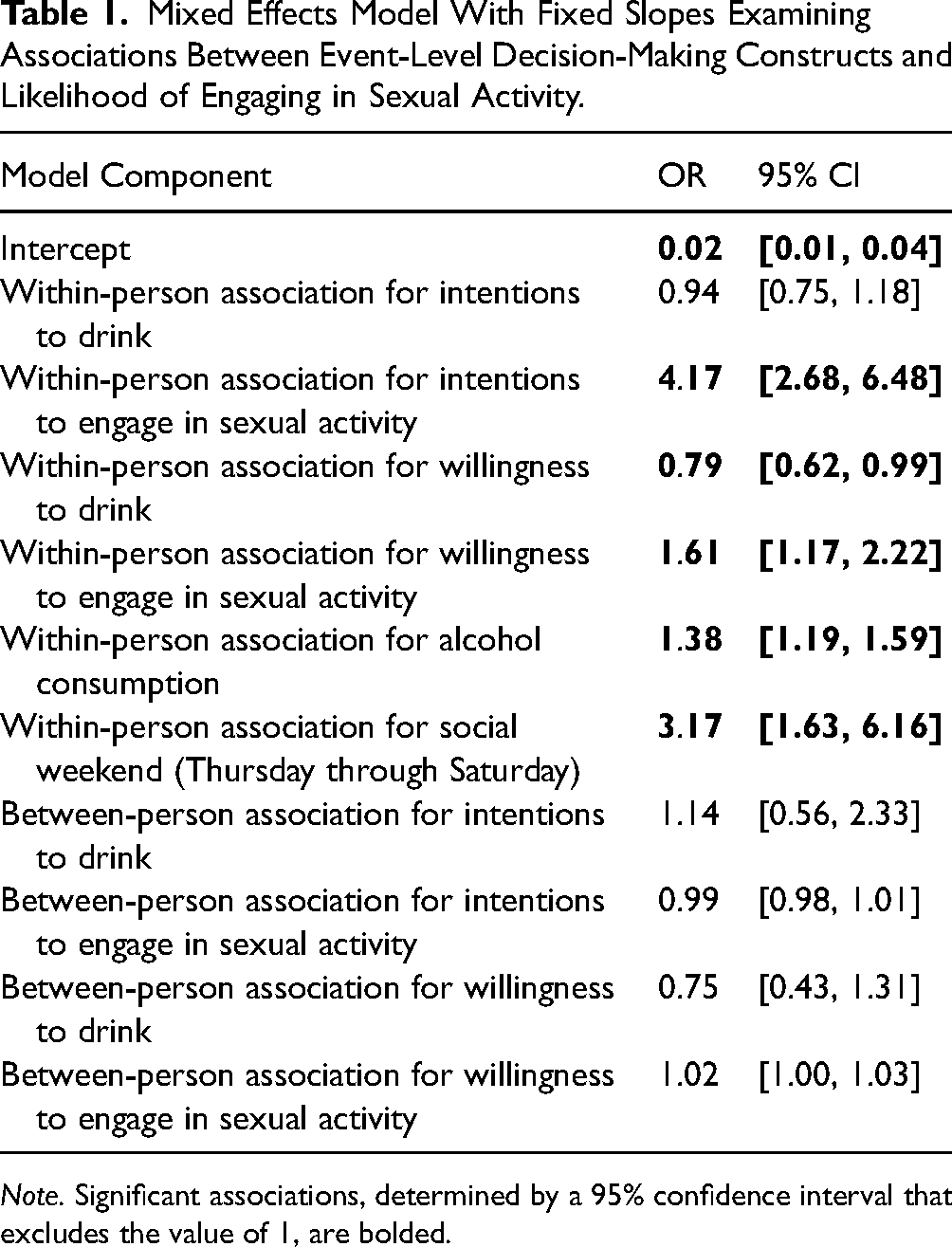
Results for the baseline multilevel model are in Table 1. We determined that both BIC and LRT identified the model with random intercepts and fixed slopes as the best-fitting model. We included Level 1 intentions, willingness, and alcohol consumption in the model in their raw forms, as their reference values of zero had a meaningful interpretation for the model intercept (i.e., the odds of engaging in sexual activity given the absence of intentions and willingness to drink and engage in sexual activity and no alcohol consumption). 1 We grand mean centered the Level 2 covariates to model the intercept given participants’ average intentions and willingness to drink and engage in sexual activity relative to the sample average on those constructs. We found significant positive within-person associations between both intentions (OR = 4.17, 95% CI [2.68, 6.48]) and willingness (OR = 1.61, 95% CI [1.17, 2.22]) to engage in sexual activity and the odds of engaging in sexual activity. Thus, the stronger their intentions and willingness to engage in sexual behavior on a given day, the more likely they were to do so [H1]. We also found a negative within-person association between willingness to drink and sexual activity (OR = 0.79, 95% CI [0.62, 0.99]) suggesting women had lower odds of engaging in sexual activity on days they were more willing to drink [H2]. Participants were also over three times more likely to engage in sexual activity during the social weekend (Thursday–Saturday) relative to other days of the week (OR = 3.17, 95% CI [1.63, 6.16]), and their odds of engaging in sexual activity on a given day increased with each additional drink they consumed (OR = 1.38, 95% CI [1.19, 1.59]). At Level 2, higher average willingness to engage in sexual activity was associated with a slight increase in the odds of sexual activity at the event level (OR = 1.02, 95% CI [1.00, 1.03]); no other between-person decision-making characteristics were significantly associated with variation in the odds of engaging in sexual activity on a given day.
Mixed Effects Model With Fixed Slopes Examining Associations Between Event-Level Decision-Making Constructs and Likelihood of Engaging in Sexual Activity.
Note. Significant associations, determined by a 95% confidence interval that excludes the value of 1, are bolded.
Aim 2: Examining Alcohol as a Moderator of Event-Level Decision Making
Iterative model comparisons revealed the random intercepts, fixed slopes model with two within-person interaction terms (alcohol consumption × intentions and willingness to engage in sexual behavior) as the best fit for evaluating event-level interactions between decision-making constructs and alcohol consumption [H3]. The resulting odds ratios changed slightly, but the addition of these interaction terms did not alter the significance of the main effects from the baseline (Aim 1) model. Participants again had greater odds of engaging in sexual activity on days they intended to (OR = 4.34, 95% CI [2.60, 7.25]) or were willing to (OR = 1.96, 95% CI [1.35, 2.85]) engage in sexual activity, on days they drank more (OR = 1.55 per drink, 95% CI [1.31, 1.84]), and on days of the social weekend (OR = 3.24, 95% CI [1.64, 6.42]). Greater willingness to drink remained associated with lower odds of engaging in sexual activity [OR = 0.77, 95% CI [0.61, 0.97].
We found a significant interaction of within-person willingness to engage in sexual activity and daily alcohol consumption (OR = 0.92, 95% CI [0.85, 0.99]). Figure 1 depicts this interaction, plotting marginal effects for four levels of alcohol consumption: no drinking, average drinking (the sample mean), below-average drinking (M – 1 SD), and above-average drinking (M + 1 SD). While the unstandardized simple slopes of willingness to engage in sexual activity on the probability of engaging in sexual activity were significant for no drinking (b = 0.03, p < 0.01) and below-average drinking (b = 0.04, p < 0.01), they were not significant for average drinking or above-average drinking (p > 0.05). Thus, on days participants consumed fewer drinks and on days they abstained from drinking entirely, increased willingness to engage in sexual activity was associated with greater odds of engaging in sexual activity. This effect, however, diminished as drinking increased to average and above-average levels, suggesting that, as alcohol consumption increases, the odds of engaging in sexual activity become more independent of willingness to do so. We did not observe this same moderating effect of alcohol on the marginal influence of participants’ intentions to engage in sexual behavior (OR = 0.95, 95% CI [0.85, 1.07]), suggesting the effect of intentions on sexual behavior remains consistently strong regardless of alcohol consumption.
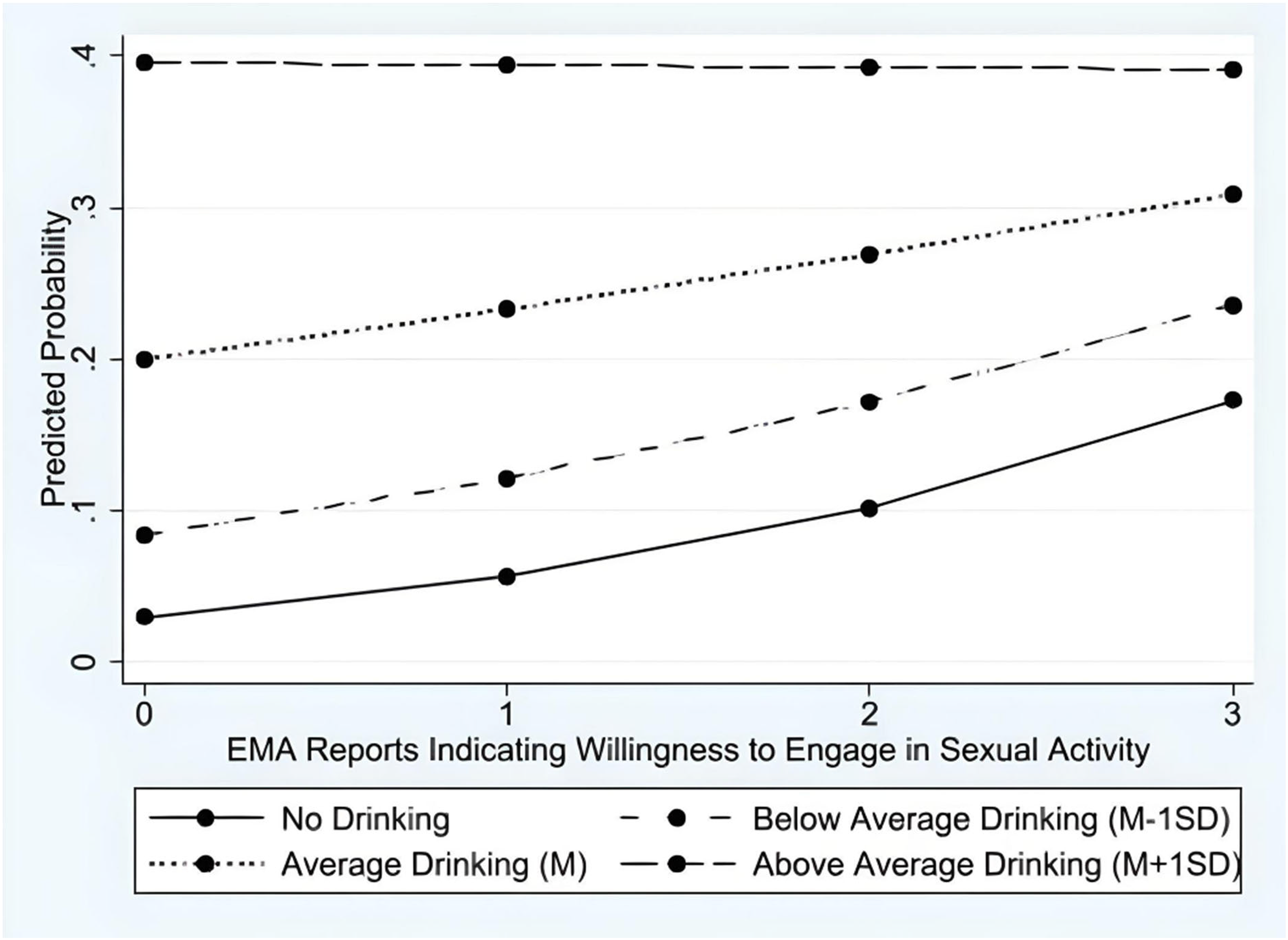
Within-Person Association Between Willingness to Engage in Sexual Activity and Odds of Engaging in Sexual Activity at Varying Levels of Alcohol Consumption.
Discussion
In the current study, we used EMA to examine event-level associations between sexual behavior, planned and reactive decision-making processes, and alcohol consumption in first-semester college women. We found partial support for our Aim 1 hypothesis. In full support of H1 and consistent with established theories of behavioral decision making (e.g., Fishbein & Ajzen, 2010; Gibbons et al., 2020), women were more likely to engage in sexual behavior on the days they had planned or were more willing to do so—even after controlling for alcohol consumption and between-person variability in sexual intentions and willingness. Women's likelihood of engaging in sexual behavior increased four-fold on days when their intentions to do so were higher, potentially contradicting the notion that alcohol may impede the ability to follow through on prior intentions. However, additional research is needed to examine the conditions under which sex may have occurred: just because they had intentions to engage in sex earlier in the day does not guarantee they had the sex they had previously planned. For example, whether sexual behaviors occurred with the intended partner, whether the specific sexual behaviors women planned to engage in were the behaviors they actually engaged in, and what role alcohol played in that congruence, or lack thereof, might influence how women evaluate a given sexual experience, especially in the context of underlying sexual scripts. The association between willingness and sexual behavior, while positive and significant, warrants further investigation. Given the socially reactive nature of willingness (Gibbons et al., 2020), it is likely the influence of willingness on sexual behavior may vary depending on where and with whom women are drinking or socializing on a given day (i.e., when a socially acceptable partner is present or the perceived cost of engaging in sexual behavior is low).
Contrary to the notion that students may intentionally consume alcohol to initiate or enhance sexual experiences (Cooper et al., 1994; Elliott et al., 2021), after accounting for sexual decision constructs, intentions to drink were not associated with engaging in sexual behavior, and willingness to drink was associated with decreased odds of engaging in sexual behavior on a given day [H2]. While it is possible this finding is a result of the pharmacological effects of alcohol, potentially rendering women (or their partners who may also be drinking) physically unable to have sex after drinking (Peugh & Belenko, 2001), exploratory event-level interactions showed that these associations were consistent at all levels of intoxication, including on nondrinking days. It is also plausible findings reflect greater availability of alcohol relative to the ready availability of a sexual partner. Alternatively, instead of planning to drink to facilitate sex, the observed associations could be reflective of competing goals: drinking versus sex. It is possible our findings capture an upstream process of alcohol myopia, which suggests intoxicated women will focus on the more proximal priority and not on the more distal (Cooper, 2002; Steele & Josephs, 1990). In the context of a drinking or social event, if willingness to drink is higher than one's intentions and willingness for sexual behavior, the more proximal priority might be drinking, not sex. Using EMA to understand this mechanism at the event level may highlight a nuance that is not accounted for when we examine students’ typical behaviors over time, or perhaps it highlights a discrepancy between how women think about sexual encounters and their actual decisions and behaviors in the moment (Sheeran & Webb, 2016; Woodzicka & LaFrance, 2001). Additional research examining associations between motives for drinking and sex, partner availability, and sexual behavior outcomes, might further elucidate these mechanisms.
In the second aim of this study, we explored interactions between event-level decision-making processes and drinking behavior. We found partial support for H3, which stated that event-level associations between sexual decision making and sexual behavior would be weaker on the days women had stronger intentions and willingness to drink and on days when they consumed more alcohol. The association between intentions to have sex and sexual behavior was robust and unaffected by students’ alcohol intentions, willingness, or consumption. Alcohol-related decision processes also did not affect the association between sexual willingness and the likelihood of engaging in sexual behavior; however, alcohol consumption did. The likelihood of engaging in sexual behavior increased as willingness to engage in sex increased, but only at low and moderate levels of alcohol consumption. Figure 1 shows, however, at the highest levels of consumption, women's likelihood of engaging in sexual behavior was higher on days they indicated no prior willingness for sex, relative to days when they indicated sexual willingness but had consumed fewer drinks or did not drink at all. Notably, we observed this pattern at the event-level average number of drinks (M = 5.1) and at one standard deviation above the mean (M + 1 SD = 7.7), suggesting that women are regularly engaging in heavy episodic drinking (e.g., 4+ drinks in one sitting; Hingson et al., 2017), and that doing so may increase their risk for engaging in sexual activity on days when they had not indicated any prior willingness to do so.
This study is among the first to include an examination of these nuanced processes in near real time, and there are several possible explanations for this association that warrant further investigation. First, it is plausible findings reflect a mechanism of “hooking up” (i.e., engaging in casual sex with no expectations of a relationship)—the dominant alcohol-involved sexual script among college students (Wade, 2017). Because our EMA protocol assessed sexual willingness for the last time on a given day between 7 p.m. and 11 p.m., it is possible their willingness changed during a social event that occurred after that window—for example, someone of sexual interest arrived at a party and their willingness to engage in sexual behavior increased in that moment. Our findings may also be capturing a potential window of sexual assault, where women engage in sexual behavior despite a lack of willingness to do so, either through coercion or an impaired ability to consent or stop what was happening (Abbey, 2002; Yeater et al., 2022b). Previous researchers have demonstrated the potential to reduce sexual assault by reducing alcohol (e.g., Gilmore et al., 2015) or hooking up (Testa et al., 2020); however, additional work is needed to parse these experiences and inform the most appropriate prevention approach. Enhancing the EMA protocol to include assessments during drinking events could provide insight leading up to a sexual encounter (see Hultgren et al., 2020); however, women may be less inclined to provide data during or immediately following a sexual encounter. The addition of biosensors that assess alcohol intoxication and heart rate during the event, combined with morning-after evaluations of reported sexual experiences, may help fill this gap with a minimal added burden to participants.
Practice Implications
Researchers and practitioners could use findings from the current study to enhance sexuality education and sexual assault risk reduction empowerment programs aimed at high school and college women. For example, findings suggest women are likely to follow through on their sexual intentions—having sex when they intend to, and not having sex when they do not intend to. However, women may be hesitant to think about or communicate their sexual intentions or desires due to societal norms and sexual scripts that convey it is “wrong” or “inappropriate” for women to have their own desires (Gavey, 2005). To combat this, high school and university curricula might integrate an emancipatory sexuality education approach (Schraag, 1989), which encourages “free choices” and exploration of personal sexual desires, often challenging traditional sexual roles which suggest women should acquiesce to their partner's desires. Similarly, prevention efforts aimed at reducing the likelihood women will experience unplanned or unwanted sex might capitalize on the robust nature of sexual intentions by empowering women to set and assertively communicate personal intentions and boundaries around sex—a strategy often used in sexual assault risk reduction programs (see Orchowski & Gidycz, 2018). Health educators and prevention specialists might consider combining emancipatory sexuality education with sexual assault risk reduction to help women define the sex they want and to effectively resist the sex they do not want. This approach has been rigorously evaluated and has achieved significant positive effects among college women across Canada (Senn et al., 2015).
Findings from the current study also underscore the importance of integrating alcohol into conversations around sexual decision making. It may be beneficial for clinicians and educators to help women understand that they may increase their likelihood of having unwanted sexual experiences (e.g., regretted or forced sex) at certain levels of alcohol consumption. While the current study showed significantly increased odds of sexual behavior at five to seven drinks among women who reported no prior willingness to engage in sexual behavior that day, previous work shows that even among lighter drinkers, their risk for negative sexual outcomes increases on days when they drink more than their typical amount (Scaglione et al., 2014). Messaging around this topic should make it clear that while alcohol increases sexual risk, alcohol does not cause sexual assault: perpetrators do (Lorenz & Ullman, 2016). Further, programs aimed at men or potential perpetrators should highlight that just because a woman is drinking does not mean she is willing to have sex—directly refuting a well-documented misperception (see Abbey, 2002).
Limitations and Future Research Directions
This study's limitations provide several directions for future research. The current study was a secondary analysis of a more comprehensive assessment of alcohol-related sexual risk in first-year college women, necessarily limiting the sample to first-year women drinkers. The observed decision-making processes may differ for older students, other gender identities, or those who engage in different drinking patterns (abstainers, light, moderate, and heavy). The sample was also primarily White and heterosexual; recent studies have demonstrated disparities in sexual risk among racial, sexual, and gender minority groups, issuing a call for more specialized and inclusive prevention efforts (Mosley et al., 2021; Taggart et al., 2019). Although model parameters suggested sufficient power to detect small effect sizes, we recognize the addition of each fixed effect (individual predictors and interactions) reduced power and increased our minimal detectable effect size (Arend & Schafer, 2019). We were also underpowered to examine cross-level interactions (e.g., the impact of between-person differences on event-level decision processes) in this study. Taken together, these sample limitations suggest findings would be strengthened by replication and examination of cross-level interactions in a larger, more diverse sample. Second, we focused primarily on alcohol's role in sexual decision making; prior work has also identified the situational context and prior sexual behavior (i.e., cultural and interpersonal sexual scripts; Gagnon & Simon, 1973) as key predictors of hooking up and negative sexual experiences (Fielder et al., 2013; Scaglione et al., 2014; Yeater et al., 2022a). Additional research is needed to examine both between-person differences (e.g., prior sexual experiences) and event-level characteristics of the drinking and social environment (i.e., situational triggers) that may impact sexual decisions, especially willingness, on a given day. Related, nearly one-third of our sample reported being in a committed relationship at baseline; however, our data also showed that 51% of sexual events occurred with new partners, suggesting dating and sexual partners may have changed frequently throughout the study, and precluding the inclusion of baseline relationship status as a covariate in the current models. Future studies would benefit from assessing relationship status within the EMA protocol, as shifts in relationship status may influence both drinking and sexual decision making on a given day (Blumenstock & Papp, 2021) or whether sex occurs with a new or existing partner (Hone et al., 2020). Finally, we grounded our measurement of decision-making constructs in well-established behavior change theory, with a focus on specific behavioral outcomes (e.g., the number of drinks). Recent literature suggests young adults may not necessarily have an intended number of drinks in mind for a given night, and that their intentions may instead be related to a target intoxication level (Stevens et al., 2021). Although our prior work has found these constructs to be highly correlated at the event level (Hultgren et al., 2020), further exploration of alternative measures of event-level decision constructs is warranted.
Conclusion
We examined alcohol's role in event-level sexual decision making to further inform sexuality education and sexual risk prevention programs with an eye toward sexual empowerment. We found a robust association between sexual intentions and behavioral outcomes, highlighting the utility of behavioral intentions in intervention efforts to reduce the negative consequences associated with unplanned sex (e.g., condomless sex, STIs, unplanned pregnancy). We observed significant variability in event-level decision-making processes that may be more reactive to the social environment (i.e., a function of willingness). Whereas sexual behavior was more likely to occur on days women were more willing to have sex, women also engaged in more sexual behavior on days they engaged in heavy drinking—regardless of their willingness to do so. Additional event-level research is needed to better understand the circumstances around sexual experiences that may have occurred when one was previously unwilling, as well as how women evaluate those experiences, so that we can better inform prevention of potential negative outcomes.
Footnotes
Author Note
This research was supported by NIAAA grant F31AA022274 awarded to Nichole M. Scaglione while at Pennsylvania State University. The authors would also like to thank Dr. Liana Hone for her review and feedback on early drafts of this paper and Dr. Taylor Graves-Boswell for editing
Declaration of Conflicting Interests
The author(s) declared no potential conflicts of interest with respect to the research, authorship, and/or publication of this article.
Funding
The author(s) disclosed receipt of the following financial support for the research, authorship, and/or publication of this article: This work was supported by National Institute on Alcohol Abuse and Alcoholism (grant number F31AA022274).
