



Abstract
Across many cultures, women are evaluated based on their appearance, with narrow societal beauty ideals as the standard against which they are judged and, eventually, judge themselves. Women who internalize the beauty ideal are more likely to consider cosmetic surgery. Dissonance-based interventions targeting thin-ideal internalization are effective at preventing eating disorders and associated risk factors. In this study, we evaluated an online dissonance-based intervention targeting beauty-ideal internalization to reduce favorable attitudes toward cosmetic surgery among Chinese women. Chinese women who were dissatisfied with their appearance and who were considering cosmetic surgery were randomized to the intervention (n = 127, Mage = 35.49) or to the educational brochure control condition (n = 98, Mage = 32.97). Beauty-ideal internalization, favorable attitudes toward cosmetic surgery, facial appearance concerns, body satisfaction, and body appreciation were assessed at pretest, posttest, and 4-week follow-up. Intention-to-treat analyses showed that the intervention reduced beauty-ideal internalization and favorable attitudes toward cosmetic surgery at posttest, with small-to-medium effect sizes; however, effects were not sustained at follow-up. No effects were found for facial appearance concerns, body satisfaction, and body appreciation. This study provides preliminary evidence for the short-term efficacy of the dissonance-based intervention for reducing beauty-ideal internalization and favorable attitudes toward cosmetic surgery, and points to valuable directions for improvement. Additional online materials for this article are available on PWQ's website at http://journals.sagepub.com/doi/suppl/10.1177/03616843231183946.
Despite the potential risks (e.g., nerve damage, blood clots) and anesthesia-induced complications associated with cosmetic surgery (Mayo Clinic Staff, 2019), the global demand for cosmetic surgery—an elective medical practice for aesthetic purposes—continues to increase drastically (International Society of Aesthetic Plastic Surgery, 2020). Cross-cultural findings have suggested that undergoing cosmetic surgery may be related to pre- and postoperative symptoms of psychopathology (e.g., depression, body dysmorphic disorder; Milothridis et al., 2016; Wang et al., 2020) and can be addictive (Kim & Cho Chung, 2014), signaling the potential role of psychological health in undergoing cosmetic surgery.
Globally, approximately 90% of cosmetic surgery patients are women (ISAPS, 2020) and, compared to men, they are more susceptible to developing negative body image (e.g., Keel et al., 2007). Women's greater susceptibility to negative body image and other mental and physical health risks can be understood within the framework of objectification theory (Fredrickson & Roberts, 1997), which posits that girls and women across cultures are frequently evaluated and valued based predominantly on their appearance. Consequently, girls and women learn to evaluate and value themselves based on their appearance, too. Notably, the “yard stick” that many girls and women use to evaluate their appearance is the sociocultural beauty ideal, which dictates what an ideal woman looks like and, moreover, that beauty is important for success and happiness in life. The tendency to adopt these ideals as one's own is referred to as beauty-ideal internalization and plays a determining role in negative body image and the pursuit of cosmetic surgery (e.g., Menzel et al., 2011). Namely, the perceived gap between one's actual versus ideal appearance can result in negative body image, which can motivate women to align their appearance with the beauty ideal via cosmetic surgery (Wu, Mulkens, et al., 2022).
Among all countries, China provides a unique context for conducting research focused on women's demand for cosmetic surgery. Namely, the Chinese cosmetic surgery market is expanding at a dramatic rate and topped the world in 2018 (SoYoung, 2019); it is also underregulated (e.g., ∼86% of cosmetic institutions were not legally registered; Zhu & Wang, 2020), and medical drugs and materials are often uncertified (Sun & Zhang, 2021). The chaos of the market can increase the risks associated with undergoing cosmetic surgery, with more than 20,000 lawsuits filed by Chinese cosmetic surgery consumers each year due to surgical accidents (Zhu & Wang, 2020). Further, Chinese cosmetic surgery patients are predominantly young women and adolescent girls (Liu, 2019) who are more susceptible to body image problems but are not yet physically or psychologically matured and thus, are exposed to greater surgical risks (e.g., interfering with natural physical development, being less capable of understanding and/or coping with surgery-related risks; Ashikali et al., 2016). These findings underscore the importance of intervening in Chinese demand for cosmetic surgery.
In line with objectification theory (Fredrickson & Roberts, 1997), recent qualitative and quantitative studies show that beauty-ideal internalization is a key motive for Chinese women to consider undergoing cosmetic surgery (Wu, Alleva, et al., 2022; Wu, Mulkens, et al., 2022), and Chinese women are taught to view physical attractiveness as “capital” that can be traded for socioeconomic resources (e.g., Wen, 2013; Wu, Mulkens, et al., 2022). To illustrate, within marriage and job markets, prettier Chinese women tend to have a greater chance of marrying a successful man in terms of social status and financial capability (Wen, 2013; Wu, Mulkens, et al., 2022); in the workplace, beautiful Chinese women enjoy benefits in recruitment and promotion (e.g., Niu, Liu, & Hirudayaraj, 2021), and beauty is often listed as a requirement in formal job advertisements (Niu, Baker, et al., 2021). Social media are also powerful channels that promote beauty-ideal internalization and cosmetic surgery among Chinese women (e.g., Wen, 2021; Wu, Mulkens, et al., 2022) and globally (Bonell et al., 2021)—particularly via exposure to cosmetic surgery advertisements and vicarious cosmetic surgery (e.g., seeing peers or celebrities who have undergone cosmetic surgery). Namely, social media often present cosmetic surgery as the “solution” and as a “medical treatment” to help women to attain the idealized and “normal” appearance. However, in fact, most of such information is for marketing purposes, which disseminates beauty ideals defined and even created by the cosmetic surgery market and encourages women to undergo cosmetic surgery to attain these very ideals (see Bonell et al., 2021, for a discussion).
Given the growing popularity of cosmetic surgery, as well as its potential risks, in the present study, we aimed to test and develop the first intervention to reduce favorable attitudes to cosmetic surgery, particularly among women in China. We proposed that Chinese women's favorable attitudes toward cosmetic surgery could be mitigated (and body image could be improved) by actively challenging the beauty ideal, including the perceived benefits associated with cosmetic surgery.
The eBody Project
Along this line of thought, we selected the eBody Project (Stice et al., 2012) as a promising intervention for the purpose of this study. The eBody Project is the online version of the Body Project (e.g., Stice et al., 2000), which is underpinned by the tripartite influence model (Thompson et al., 1999) and cognitive dissonance theory (Festinger, 1957). Similar to objectification theory (Fredrickson & Roberts, 1997), the tripartite influence model (Thompson et al., 1999) highlights beauty-ideal internalization, including the overemphasis of the importance of physical appearance, as a key factor that contributes to negative body image. Within the context of eating disorders, the Body Project targets thin-ideal internalization as a means to reduce negative body image and disordered eating. Cognitive dissonance theory (Festinger, 1957) also underpins the working mechanisms of the Body Project. This theory proposes that individuals experience psychological discomfort (i.e., dissonance) when their attitudes, beliefs, and/or behaviors conflict with one another; to reduce this discomfort, individuals may adjust their attitudes, beliefs, and/or behaviors to achieve consistency (Vaidis & Bran, 2019). Building on these principles, the Body Project involves verbal, written, and behavioral exercises to induce cognitive dissonance by challenging the thin ideal (e.g., having participants write a letter to a child, explaining why they should not pursue the thin ideal; Stice et al., 2000). As described above, the eBody Project is an online variant of the Body Project. It consists of six modules and requires approximately 240 min to complete (Stice et al., 2012). It has been effective in reducing eating disorders risk factors and symptoms among both Western and Chinese women, with small to medium effect sizes (Luo et al., 2021; Stice et al., 2020), and effects for some factors are even sustained at 4-year follow-up (Stice et al., 2020).
In this study, we adapted the eBody Project to target beauty-ideal internalization more broadly (compared to thin-ideal internalization specifically) and favorable attitudes toward cosmetic surgery, which had never been done before. Further, we expected the intervention to impact two facets of body image: body satisfaction and facial appearance concerns. Of note, the inclusion of facial appearance concerns was novel within the context of the eBody Project and was based on the following findings. First, the beauty of facial features is more emphasized than body characteristics (e.g., shape) in Asian beauty ideals (e.g., Jackson & Chen, 2015), which may socialize Chinese women to pay greater attention to the appearance of their face compared to their body and translate into the greater popularity of procedures on the face than the body (e.g., SoYoung, 2019). Second, recent quantitative research shows that facial appearance concerns positively correlate with, and are a top predictor of, Chinese women's cosmetic surgery consideration (Wu et al., 2020; Wu, Alleva, et al., 2022).
Of note, some exercises in the (e)Body Project are designed to encourage the recognition and acceptance of appearance diversity, which should encourage women to appreciate their own unique beauty and to develop a more positive body image (Tylka & Wood-Barcalow, 2015). Hence, we also explored whether the present intervention would affect a main facet of positive body image: body appreciation, defined as “unconditional approval and respect for the body” (Avalos & Tylka, 2006, p. 486). Indeed, a face-to-face dissonance-based intervention led to increased body appreciation among adolescent and adult women (Halliwell & Diedrichs, 2019), and the eBody Project led to increased body appreciation among young Chinese women (Luo et al., 2021). Therefore, it is reasonable to expect that the present intervention could improve body appreciation, as well.
Yet, though cross-cultural findings show that body appreciation is inversely associated with beauty-ideal internalization, negative body image, and favorable attitudes toward cosmetic surgery (e.g., Farshidfar et al., 2013; Swami et al., 2012; Tylka & Wood-Barcalow, 2015), recent quantitative and qualitative studies show that Chinese women with greater levels of body appreciation may be more likely to consider undergoing cosmetic surgery (Wu, Alleva, et al., 2022; Wu, Mulkens, et al., 2022). This discrepancy could result from Chinese women's conceptualizing body appreciation differently compared to the original Western meaning (Wu, Mulkens, et al., 2022). Namely, Chinese women described that body appreciation would involve loving and paying attention to their body to an exaggerated degree, which would involve cosmetic surgery as a means to perfect their body. In contrast, the emphasis on unconditional acceptance and respect of one's body (Avalos & Tylka, 2006) in the original Western conceptualization was overlooked (see Wu, Alleva, et al., 2022, for detailed discussion). Given these mixed findings concerning body appreciation and attitudes toward cosmetic surgery among Chinese women, we aimed to explore whether the present intervention would affect body appreciation, without presumption about which direction this influence would take.
The Present Study
In this study, we assessed the efficacy of a brief online dissonance-based intervention on lowering Chinese women's beauty-ideal internalization and favorable attitudes toward cosmetic surgery at two time points—directly after completing the entire intervention (i.e., posttest) and after one month of competing the intervention (i.e., 4-week follow-up). We also expected that the intervention would reduce facial appearance concerns and body dissatisfaction, and explored whether the intervention could affect body appreciation.
Method
Participants
Sample size calculations indicated that approximately 160 participants would be needed, assuming a small to medium effect size (e.g., Stice et al., 2020), a two-sided significance level of 5%, and 80% power. We oversampled to guard against potential attrition. The final sample comprised 225 Chinese women (nintervention = 127, ncontrol = 98) aged between 18 and 59 years. Of note, randomization resulted in uneven allocation to groups; this happened by chance. Demographic characteristics are presented in Table 1. Participant flow through the study is presented in Figure 1. To increase cognitive dissonance, participation was entirely voluntary, and participants were not given any (monetary) reward for completing the study (otherwise, participation could have been attributed to the reward, rather than to their own volition). Further, at the start of each session, participants were asked to indicate their voluntary commitment (e.g., “Are you ready to participate in today's session?”).
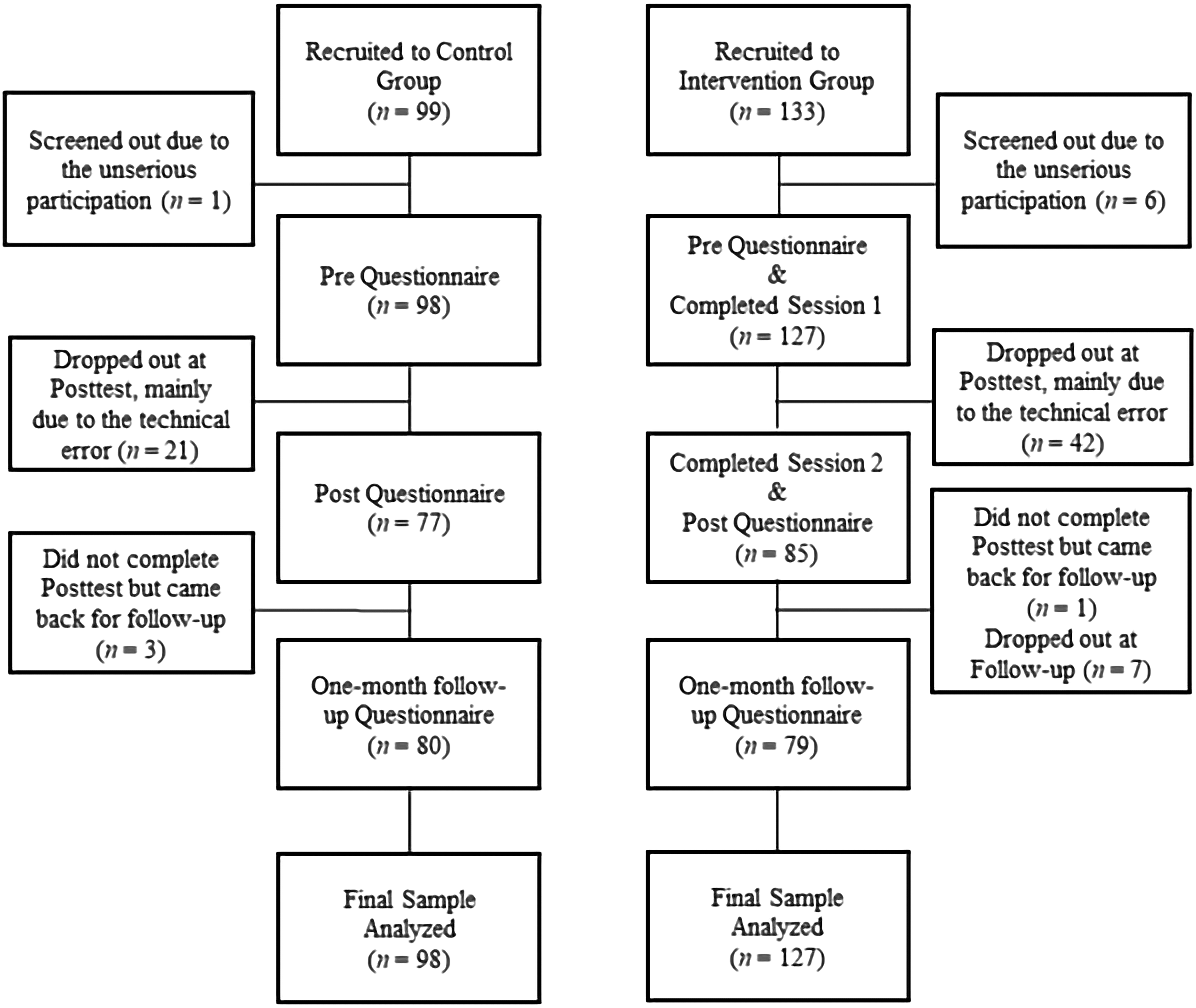
Consort Flowchart Showing Participant Movement Throughout Study.
Participants’ Demographic Characteristics.
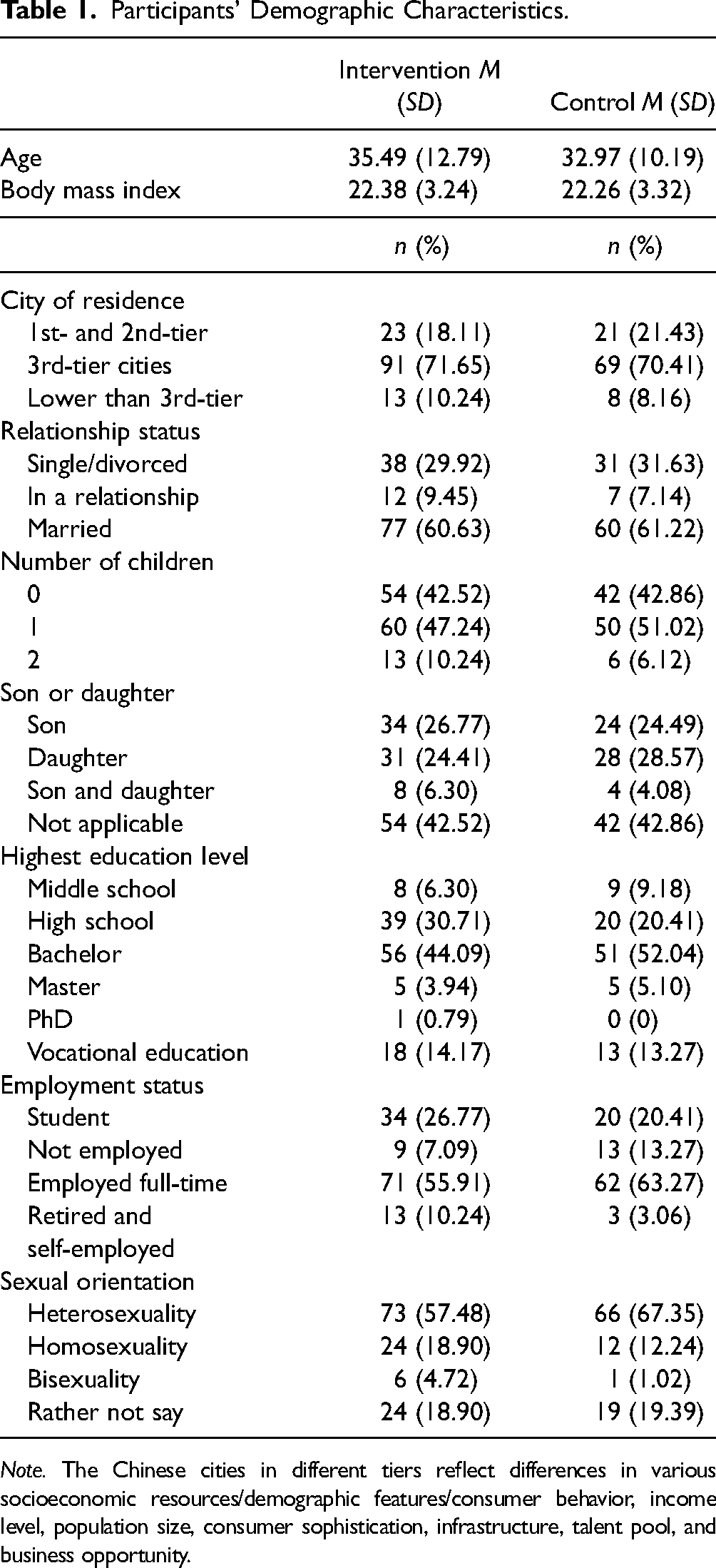
Note. The Chinese cities in different tiers reflect differences in various socioeconomic resources/demographic features/consumer behavior, income level, population size, consumer sophistication, infrastructure, talent pool, and business opportunity.
Measures
Beauty-Ideal Internalization
Beauty-ideal internalization was assessed with the 15-item Beauty-Ideal Internalization Subscale of the Sociocultural Attitudes Toward Appearance Questionnaire-4-Revised (Stice et al., 2020), which has been translated in Chinese and validated among Chinese adults (Wu et al., 2020). The items (e.g., “It is important to me to be attractive”) capture three dimensions—the internalization of thinness, muscularity, and general attractiveness—and are rated from 1 (definitely disagree) to 5 (definitely agree); higher mean scores indicate higher levels of beauty-ideal internalization. Satisfactory psychometric properties were demonstrated among Western and Chinese women across the age span (e.g., Schaefer et al., 2017; Wu et al., 2020). Cronbach's alphas for the items of this scale, and for the following scales, at each time point, are presented in Table 3.
Attitudes Toward Cosmetic Surgery
Attitudes toward cosmetic surgery were measured with the 15-item Acceptance of Cosmetic Surgery Scale (Henderson-King & Henderson-King, 2005), which has been translated and validated in Chinese (Wu et al., 2020). Items (e.g., “In the future, I could end up having some kind of cosmetic surgery”) are rated from 1 (strongly disagree) to 7 (strongly agree); higher mean scores indicate higher levels of favorable attitudes toward cosmetic surgery. The scale has been used among Western and Chinese adults across the age span with satisfactory reliability and validity (e.g., Nerini et al., 2019; Wu, Alleva, et al., 2022).
Facial Appearance Concerns
Participants’ thoughts and feelings about their facial appearance were measured by the 11-item Facial Appearance Concerns Subscale of the Negative Physical Self Scale, which was originally developed in Chinese (Chen et al., 2006). Items (e.g., “I am ashamed about my facial appearance”) are rated from 1 (not like me at all) to 5 (always like me); higher mean scores indicate higher levels of facial appearance concerns. Satisfactory reliability and validity were supported among Chinese women across the age span (e.g., Wu et al., 2020; Wu, Alleva, et al., 2022).
Body Satisfaction
The 7-item Appearance Evaluation Subscale of the Multidimensional Body-Self Relations Questionnaire (MBSRQ; Cash, 2000) was used to assess how satisfied the participants were with their appearance. Items (e.g., “Most people would consider me good-looking”) are rated from 1 (definitely disagree) to 5 (definitely agree); after reverse coding two items, higher mean scores indicate higher levels of body satisfaction. Satisfactory reliability and validity were evidenced among Western and Chinese adults across the age span (e.g., Chen et al., 2010).
Body Appreciation
Body appreciation was assessed with the 10-item Body Appreciation Scale-2 (Tylka & Wood-Barcalow, 2015), which has been translated and validated in Chinese (Swami et al., 2016). Items (e.g., “I am attentive to my body's needs”) are rated from 1 (strongly disagree) to 5 (strongly agree); higher mean scores indicate higher levels of body appreciation. In addition to Western populations (e.g., Tylka & Wood-Barcalow, 2015), satisfactory reliability and validity have been well-supported among Chinese women across the age span (e.g., Swami et al., 2016; Wu, Alleva, et al., 2022; Wu, Mulkens et al., 2022).
Procedure
This project was approved by the ethics review committee at Maastricht University (reference number: 234_32_02_2021) and was preregistered on AsPredicted ([protocol #58025, see https://aspredicted.org/9f4jr.pdf). Participants were recruited via advertisements on WeChat and Weibo, and via snowball sampling. Women were eligible to participate if they were Chinese, ≥18 years old, self-identified as feeling dissatisfied with their appearance, and were considering undergoing cosmetic surgery. The research system randomly assigned participants to either the intervention or control condition with a 1:1 allocation ratio. Participants were informed they would be randomly allocated to one of two conditions that aimed to improve how they felt about their body, but they were not given any details about the content of the conditions until after randomization.
Participation involved three sessions, and randomization was done by SOTO, a software developed by Maastricht University for online research. Initially, participation links were also sent through SOTO, but a technical error caused most emails to be blocked from NetEase and QQ email accounts that are commonly used in China. Hence, the researchers thereafter sent the participation links manually and each participant was given a unique participation code.
Participants completed the electronic consent form, demographic items, and pretest questionnaires before receiving tasks based on their assigned condition (specified below). At the end of this session, intervention participants received suggested homework exercises and control participants were encouraged to reread the educational brochure in their own time. One week later, intervention participants completed the remaining tasks, followed by the posttest questionnaires. Participants in the control condition completed the posttest questionnaires only. All participants completed the follow-up questionnaires after one month. Questionnaire completion took approximately 10–15 min per session, with additional time required for corresponding tasks (specified below).
Conditions
Dissonance-Based Intervention Condition
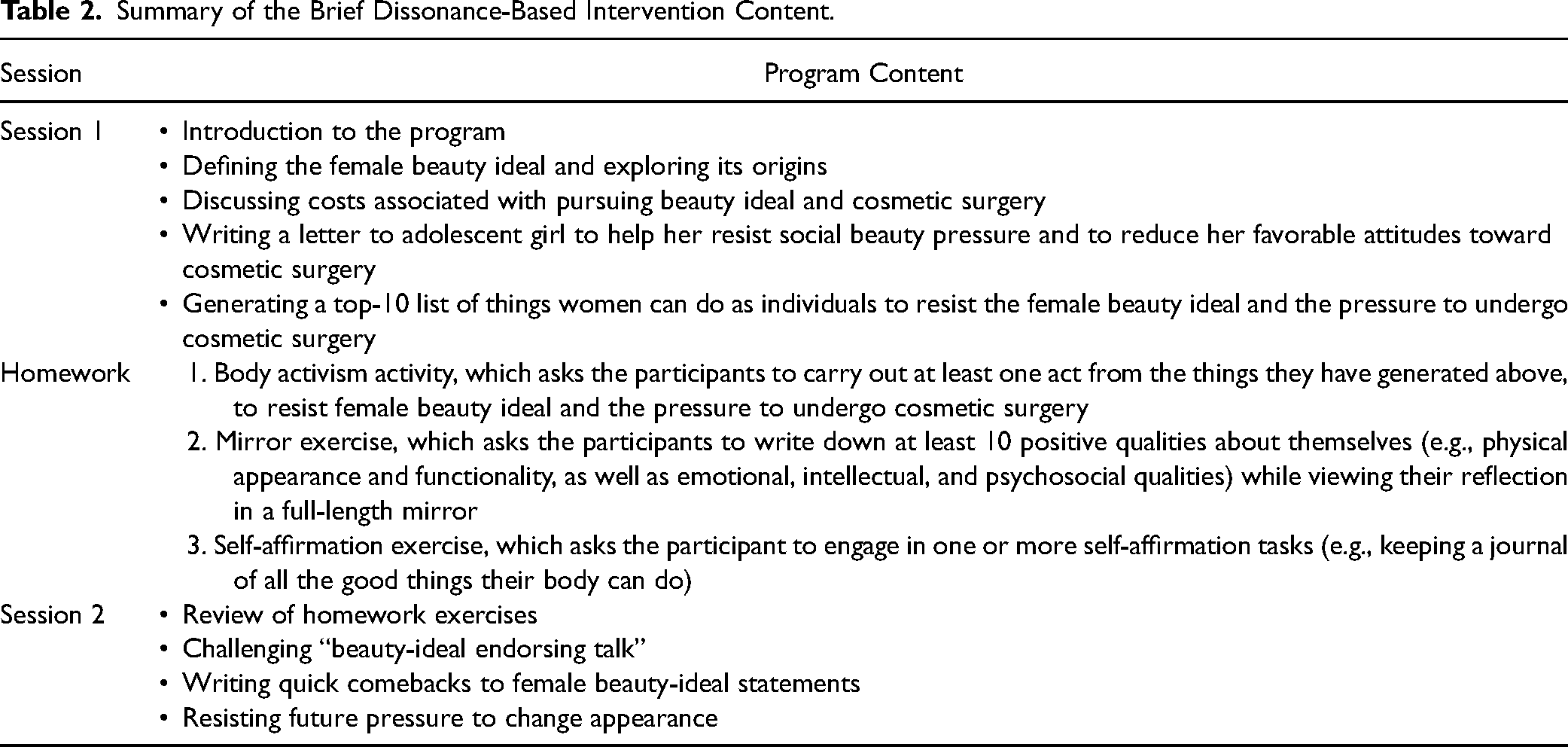
The present intervention was adapted based on the original and the Chinese versions of the eBody Project under permission (Luo et al., 2021; Stice et al., 2012); it comprised two sessions and participants completed the intervention individually. Each session required engagement in written exercises and encouraged behavioral activities designed to induce dissonance about pursuing the beauty ideal, increase self-appreciation, view one's appearance positively (Stice et al., 2014), and have a more thorough consideration concerning undergoing cosmetic procedures. Besides adapting the thin-ideal oriented items to be more broadly beauty-ideal oriented, we included items specifically about cosmetic surgery (e.g., “What are the costs/downsides of undergoing cosmetic surgery for the individual woman?”). Both sessions were developed to be completed within 45 min. Between sessions, participants were encouraged to complete homework exercises to practice and strengthen what they learned (see Table 2 for a summary of the intervention content).
Summary of the Brief Dissonance-Based Intervention Content.
The present adaptation of the intervention was initially developed in English and then translated into Mandarin Chinese by the first author, with the help from one more bilingual Mandarin-English speaker who had been involved in another online dissonance-based intervention study among Chinese women. After translation, the intervention was piloted on four Chinese women to check whether the instructions were clear and to invite feedback and additional suggestions. In addition to slight adjustment to the wording of some sentences, no other changes were deemed necessary based on the pilot.
Brochure Control Condition
An English-to-Mandarin back-translation of a three-page education brochure was used as a control intervention (cf. Stice et al., 2020). Two pages contained information defining positive and negative body image, correlates of negative body image, and 10 steps for achieving a more positive body image, which was produced by the National Eating Disorders Association, in line with Body Project literature (e.g., Luo et al., 2021; Stice et al., 2012, 2013). The decision of focusing on negative body image in the control condition was made based on the relationship between negative body image and favorable attitudes toward cosmetic surgery (see Sarwer, 2019, for a review). Of note, specific words in the original brochure with respect to body image were adjusted from a more eating disorders-oriented to a more cosmetic surgery-oriented perspective (e.g., shape to appearance, dieting to beauty enhancement). We also created an extra page that contained a definition of cosmetic surgery and its potential health-related risks. The intervention program and education brochure are available in the online supplemental materials.
Statistical Analyses
Data Screening and Preparation
All outcome variables were assessed for normality, outliers, and pretest equivalence between conditions using SPSS 25.0. Any value above or below the mean ± 3SD was seen as a univariate outlier and replaced with the boundary value identified (i.e., ±3SD the mean; Field, 2009). Pretest equivalence on outcome measures was assessed using t-tests. In addition, the correlations between the pretest measures were examined.
Intervention Effects
Intervention effects were analyzed using multilevel mixed models in STATA 15.0, which account for nested data structures and are recommended for designs including repeated measures within individuals. Preliminary modeling tested whether the introduction of a random intercept at the individual level improved model fit using likelihood-ratio tests, which were significant for all outcomes (ps < .001). Intraclass correlation coefficients (ICC) at the individual level ranged from .39 to .65, indicating the need to account for individual variation and validating the use of mixed models. As the pretest was intended to be modeled as a covariate, only two data points were available for each participant and therefore not appropriate to explore random slopes. Final models, therefore, included a random intercept at the individual level and fixed effects for Condition (control = 0, experimental = 1), Time (posttest = 0, follow-up = 1), Condition × Time interaction, and pretest outcome score as a grand-mean centered covariate. Post hoc pairwise comparisons were conducted to assess between-group differences at posttest and follow-up.
Missing data. To undertake intent-to-treat analysis, we assessed frequency and patterns of missing data. Missing data ranged from 1.8 to 4.4% at pretest, with attrition rising to 28% at posttest and 29.3% at follow-up. Little's missing completely at random (MCAR) test was nonsignificant, χ2 (223) = 74.0009, p = .668, and a series of t-tests examining pretest predictors of missingness across outcomes at posttest and follow-up showed no significant relationships. We, therefore, deemed data to be suitable for multiple imputations. We imputed 100 datasets using the Markov Chain Monte Carlo (MCMC) procedure and included all demographic and outcome variables, and condition, in the imputation model. Intervention models were run separately for each outcome using imputed datasets, with results reflecting pooled estimates.
Effect sizes. The magnitude of between-group differences was calculated using Cohen's d effect sizes, where the mean difference was divided by the pooled standard deviation; d = 0.20, 0.50, and 0.80 represent small, medium, and large effect sizes, respectively (Cohen, 2013).
Results
Descriptive statistics for outcome variables at pretest by condition are presented in Table 3. No difference between conditions was found on any outcome variable at pretest. Correlations between pretest measures are presented in the online supplemental materials. Attitudes toward cosmetic surgery were correlated with beauty-ideal internalization (r = .37, p < .001) and facial appearance concerns (r = .42, p < .001); they were not significantly associated with body satisfaction (r = −.08, p = .24) and were (weakly) inversely associated with body appreciation (r = −.16, p < .05).
Pretest Measures, by Condition, and Cronbach's Alphas at Pretest, Posttest, and Follow-up.
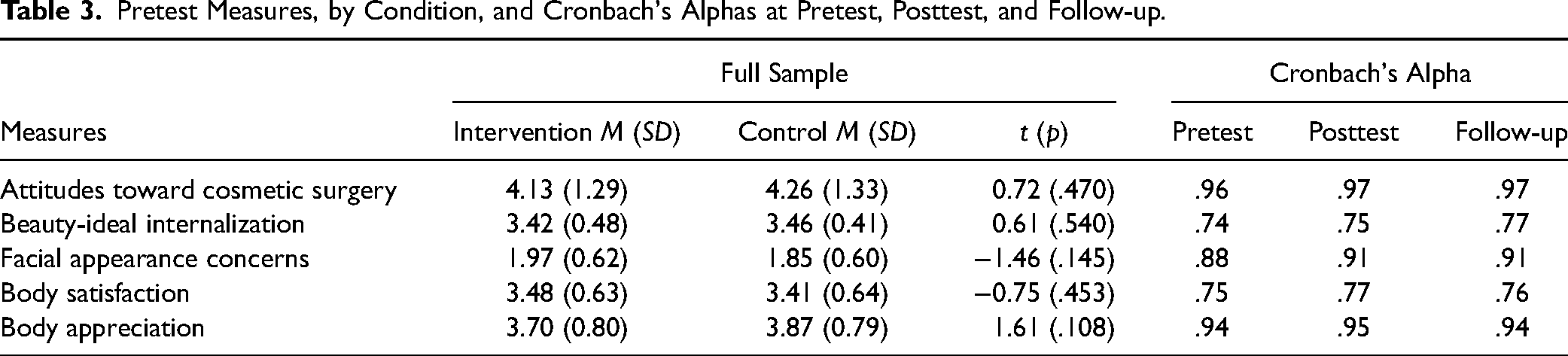
Table 4 displays the model coefficients from the main analyses for all outcomes, representing fixed effects of Condition, Time, and the interaction between Condition and Time. Table 5 displays the adjusted means and standard errors for each outcome by Condition and Time, with between-group pairwise comparisons and associated Cohen's d effect sizes.
Model Coefficients for Fixed Effects of Condition, Time, and Condition × Time Interaction.
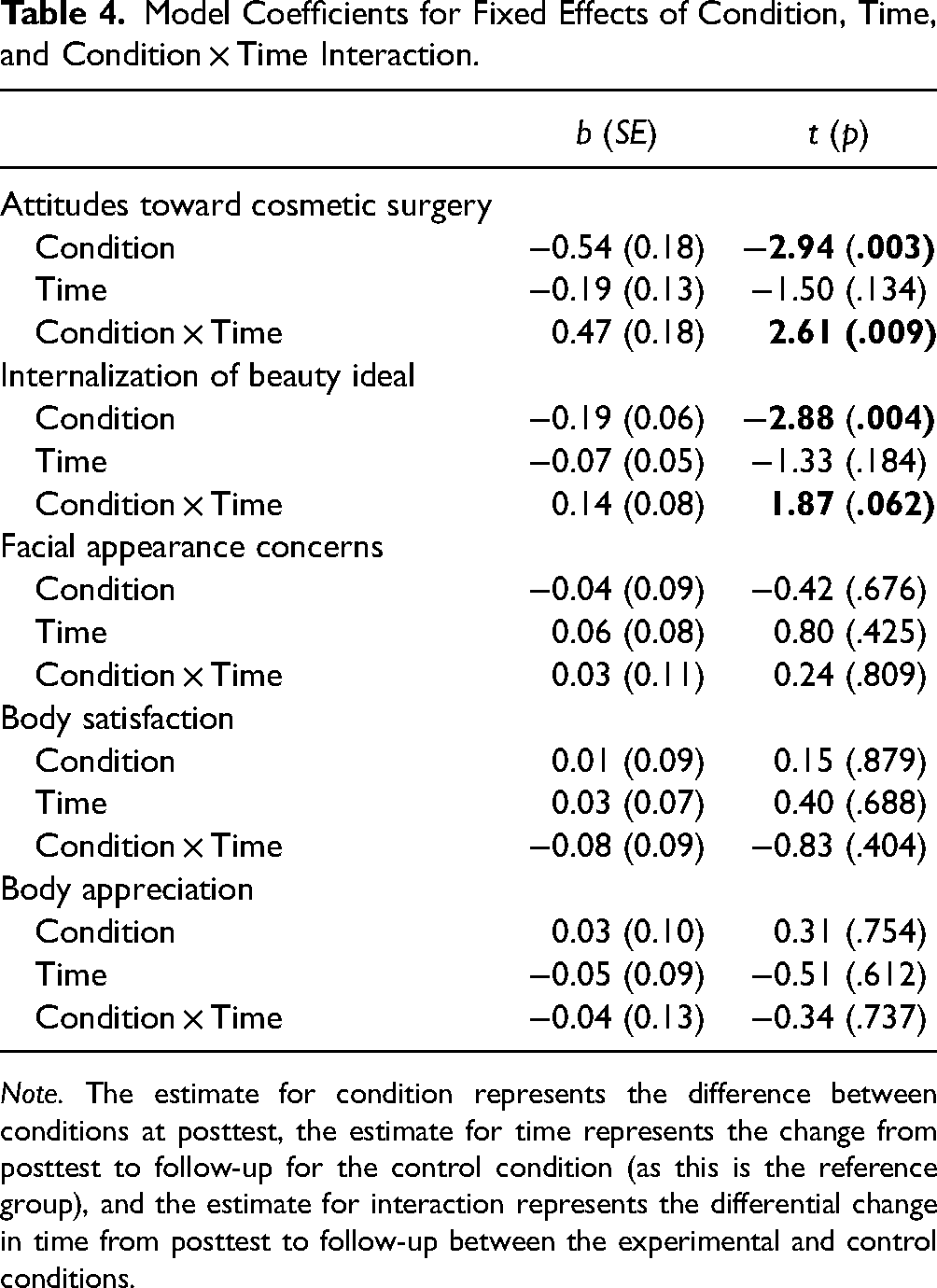
Note. The estimate for condition represents the difference between conditions at posttest, the estimate for time represents the change from posttest to follow-up for the control condition (as this is the reference group), and the estimate for interaction represents the differential change in time from posttest to follow-up between the experimental and control conditions.
Adjusted Means and Standard Errors for each Outcome by Condition and Time, with Between-Group Pairwise Comparisons and Associated Cohen's d Effect Sizes.
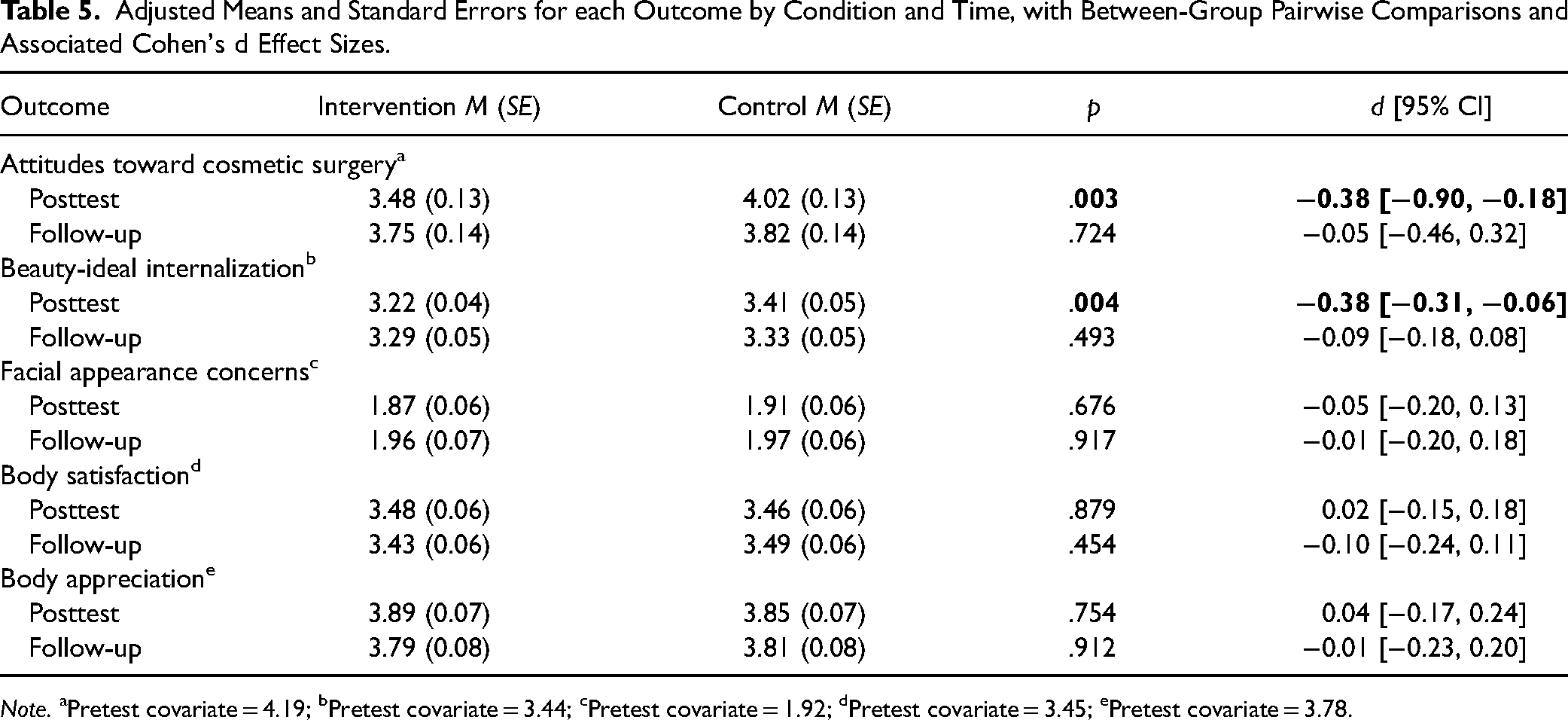
Note. aPretest covariate = 4.19; bPretest covariate = 3.44; cPretest covariate = 1.92; dPretest covariate = 3.45; ePretest covariate = 3.78.
Based on Table 4, we see that the effect of Condition was observed on attitudes toward cosmetic surgery (p = .003) and beauty-ideal internalization (p = .004) at posttest. This indicates differences between the intervention and control at posttest. Then, we observe significant Condition × Time interactions for attitudes toward cosmetic surgery (p = .009) and beauty-ideal internalization (p = .062, marginally significant). This demonstrated that the effect of Condition observed at posttest did not sustain over time for attitudes toward cosmetic surgery and beauty-ideal internalization. Specifically, based on the pairwise comparisons reported in Table 5, we see that participants in the intervention condition experienced significantly lower scores on attitudes toward cosmetic surgery at posttest (p = .003; Cohen's d = −0.38), but differences between conditions were nonsignificant at follow-up (p = .724; Cohen's d = −0.05). Similarly, with respect to beauty-ideal internalization, we see that participants in the intervention condition experienced significantly lower scores at posttest (p = .004; Cohen's d = −0.38), but differences between conditions were nonsignificant at follow-up (p = .493; Cohen's d = −0.09).
No significant effects were observed for the remaining outcome variables of facial appearance concerns, body satisfaction, and body appreciation. Thus, contrary to our expectations, there were no changes on these outcome variables among participants in the intervention condition (nor among participants in the control condition) at posttest and/or at follow-up.
Discussion
Across cultures, girls and women are taught to value themselves based on their appearance, with sociocultural beauty ideals as the “yard stick” against which to compare themselves (Fredrickson & Roberts, 1997). Those who internalize the beauty ideal are often more motivated to consider undergoing cosmetic surgery (e.g., Menzel et al., 2011), and this finding holds cross-culturally, including among Chinese women (e.g., Wu, Alleva, et al., 2022; Wu, Mulkens et al., 2022). In this study, we aimed to reduce Chinese women's favorable attitudes toward cosmetic surgery through implementing an intervention that targeted beauty-ideal internalization. The results revealed that women who took part in the intervention reported lower levels of beauty-ideal internalization and lower levels of favorable attitudes toward cosmetic surgery, with effect sizes in the small to medium range. However, these effects were not sustained at follow-up. Further, the intervention did not lead to changes in facial appearance concerns, body satisfaction, and body appreciation, which were our secondary outcomes.
Overall, it is promising to see immediate reductions in beauty-ideal internalization and favorable attitudes toward cosmetic surgery at posttest, particularly considering the brevity of the intervention and the popularity of cosmetic surgery in China. The effect sizes at posttest were similar to the effect sizes obtained from other studies, including the Chinese study that examined the effectiveness of the (e)Body Project on preventing eating disorders (Luo et al., 2021; Stice et al., 2020). However, it is disappointing that the effects were not sustained at follow-up, which may be related to the following reasons. First, longer and more frequent sessions may be needed to produce stronger and more sustainable intervention effects. Jankowski et al. (2017) have suggested that dissonance-based body image interventions should be 4–6 h in length to produce long-term effects. The absence of longer-term effects of the intervention may also be related to the online delivery mode. Online dissonance-based interventions tend to produce weaker effects in terms of sustainability and effect sizes (Stice et al., 2020), potentially because engaging in dissonance exercises in front of other people enhances the experienced dissonance and thus the potential benefits. As online interventions outperform in-person interventions in terms of dissemination (e.g., accessible to wider populations), interventionists will need to weigh the advantages and disadvantages of each mode of delivery.
Two other potential reasons for the absence of longer-term effects relate to the societal context of the intervention. Namely, Chinese women have described being constantly reminded of the importance of looking beautiful and being exposed to cosmetic surgery information in their daily lives, for example, on social media and via direct encouragement and vicarious cosmetic surgery exposure from family and peers (Wu, Mulkens, et al., 2022). Frequent exposure to such pressures may reinforce the beauty ideal and cosmetic surgery as an acceptable “solution” to an unsatisfactory appearance and life (Bonell et al., 2021). Similarly, media and cosmetic surgery companies do not (adequately) acknowledge the potential risks of cosmetic surgery. As such, women may not feel intrinsically motivated to change their attitudes toward cosmetic surgery, and may feel less skeptical of cosmetic surgery and its potential risks (Bonell et al., 2021). Applied to this study, exposure to cosmetic surgery information and pressures between posttest and follow-up might have weakened the intervention effects. Future versions of the intervention must consider strategies to help women maintain the improvements they have made, even in the face of these pressures. Importantly, these points underscore the need for system-level changes (in addition to individual-level strategies) that lead to accurate portrayals of cosmetic surgery risks and minimize appearance-based pressures. These changes are likely to take considerable time and effort to implement and will be met with resistance (as cosmetic surgery is profit-driven and sometimes government-supported; Bonell et al., 2021).
Aside from the absence of longer-term effects, it is also important to highlight the absence of effects for facial appearance concerns, body satisfaction, and body appreciation. This is puzzling in light of the relations between these variables and beauty-ideal internalization and favorable attitudes toward cosmetic surgery (e.g., Swami et al., 2012; Wu, Alleva, et al., 2022). It could be that more time is required to induce changes on these outcomes, especially if changes in these outcomes are driven by changes in beauty-ideal internalization first. As suggested by Atkinson and Diedrichs (2021) after finding no intervention effects on various aspects of body image, change in these outcomes may take longer and require repeated engagement in the intervention. It could also be that the intervention was centered more on increasing resistance to external appearance pressure instead of improving body image directly. Regarding body appreciation, the absence of intervention effects for this outcome could be related to the nuanced relationship between body appreciation and attitudes toward cosmetic surgery among Chinese women, whereby some Chinese women have described that cosmetic surgery could be a means to express that they value their body, and thus want it to be the “best” it can be (Wu, Mulkens, et al., 2022). Future research that explores these relationships more in-depth would be valuable.
Suggestions for Intervention Improvement
Importantly, this study provides only preliminary support for the present intervention. There are several potential improvements that can be made to the intervention, which could then be tested in future research. First, the intervention could be refined to induce stronger dissonance, which may be particularly important for people who endorse higher collective values (e.g., Chinese, Korean), who tend to sacrifice personal uniqueness for group uniformity (e.g., Hofstede et al., 2010), and who are inclined to conform to others’ appearance via cosmetic surgery (Farshidfar et al., 2013). Stronger dissonance could be induced via, for example, incorporating items that aim to untie socioeconomic benefits and life satisfaction with female beauty given that believing beautiful women can gain more socioeconomic benefits is an essential motive for Chinese women to internalize the beauty ideal and undergo cosmetic surgery (Wu, Mulkens, et al., 2022). We recognize, however, that this may be challenging in light of the tangible benefits that Chinese women receive when they are perceived to be more beautiful (e.g., Niu, Baker, et al., 2021).
Second, the intervention could be adapted and delivered in a collective manner; for example, in the presence of family, peers, and partners, who are important sources of appearance pressure and contribute to women's favorable attitudes toward cosmetic surgery (e.g., Brown et al., 2007; Wu, Mulkens, et al., 2022). Third, when its efficacy is more firmly established, it could be delivered in parallel with other well-developed body image interventions or, at least, could incorporate elements of those interventions. For instance, Expand Your Horizon (Alleva et al., 2015)—developed to improve women's body image via training them to appreciate their body functionality—can be delivered along with our intervention. This could be helpful in light of how cosmetic surgery can compromise the health and functions of one's body, in favor of “improving” one's appearance. Learning to appreciate one's body functionality could help to counteract this perspective and thus discourage cosmetic surgery.
Our intervention could also be delivered along with more explicitly feminist intervention techniques, which aim to help women to reject objectifying messages by relocating their focus of life away from the body entirely (e.g., toward relationships, hobbies; Chrisler et al., 2012). By encouraging women to acquire their sense of self from developing other personal traits that are more adaptive and sustainable, the association between self-worth and appearance may be weakened (Brumberg, 2000). Women can also be encouraged to focus on their intrinsic, long-term goals (e.g., self-actualization) and to work toward these goals. Overall, as suggested, body image interventions should aim to lead women to have a broader view of life (e.g., Holmqvist Gattario & Frisén, 2019; Piran & Mafrici, 2012), to increase their sense of empowerment and enable them to resist appearance pressures and preoccupation.
Limitations
This study has several limitations. First, 28.0% of participants dropped out after pretest and a few more after posttest. The main reason for the attrition concerned a technical error, whereby emails from the online research system were blocked from NetEase and QQ accounts. Though the researchers reacted instantly by sending participation links manually, the error had already induced a high attrition rate. Nevertheless, literature shows that online interventions usually have higher attrition rates compared to in-person interventions (e.g., Eysenbach, 2005). Second, there was a difference in the number of participants allocated to each condition, which occurred by chance due to randomization. Future research could ensure more equal sample sizes across conditions. Third, inherent to online interventions, it is difficult to know how serious participants were while engaging in the intervention. However, according to their responses to the written exercises and questions, we judged that the majority of participants did make a considerable effort to complete the intervention seriously. Fourth, participants in the control group received a less time-intensive intervention compared to participants in the experimental group. Though former studies on the Body Project have used the educational brochure for their control group (e.g., Luo et al., 2021; Stice et al., 2012), future research could explore whether the present effects are replicable when other, more time-intensive active control programs are used.
Another limitation concerns the potential cross-cultural difference in communication style preferences, which may also affect the intervention effects. Namely, the (e)Body Project was developed among and mostly implemented to Western populations, who are more used to expressing true opinions and feelings overtly. Hence, many items in the intervention ask participants to directly critique the beauty ideal and to express appreciation for themselves. In contrast, people living in more collectivistic Asian cultures prefer indirect expressions, limited self-disclosure, presenting modesty, and “saving face” (e.g., Cheng et al., 2010; Matusitz & Spear, 2015). Therefore, it may be challenging for Chinese women to complete some of the tasks to show appreciation and positive self-appraisal, which could impact intervention effects. Nevertheless, exercises that emphasize helping each other (e.g., writing a letter to a girl who is considering undergoing cosmetic surgery) may be in line with collectivism. Researchers may consider and test how differences in communication styles could affect individuals’ responses to body image interventions and, accordingly, adapt the intervention to meet the communication preferences of the target population.
An additional limitation is that we did not include questions asking about what cosmetic procedures participants were interested in and whether any resources had already been invested. We also did not assess (other) behavioral outcomes, such as having had consultations at cosmetic surgery clinics. Future research should consider including such questions and examine whether and how these factors may affect the intervention effects or change based on the intervention. Last, facial appearance concerns were expected to be reduced via the intervention given the top popularity of facial procedures, the central emphasis of facial appearance in Chinese beauty ideals (Jackson & Chen, 2015), and their prominent role in Chinese's women's consideration of cosmetic surgery (Wu, Alleva, et al., 2022). However, there was no item in the intervention targeting facial appearance ideals and facial procedures. Future refinements of the intervention should include such items to holistically target beauty-ideal internalization, favorable attitudes toward cosmetic surgery, and body image among Chinese women.
Implications and Future Directions
To the best of our knowledge, this is the first intervention that targets favorable attitudes toward cosmetic surgery. Finding posttest intervention effects on beauty-ideal internalization and favorable attitudes toward cosmetic surgery is promising. Yet, these findings are preliminary and more work is needed to improve the intervention and its effects. Discussions concerning the less satisfactory findings (e.g., effects did not sustain at follow-up) provide potential starting points.
Once the intervention can be improved upon, it will be valuable to disseminate it to a larger population. Even though cosmetic surgery presents potential health risks, women may feel compelled to undergo cosmetic surgery to be treated equally by society in the different realms of their life (e.g., family, career; Wu, Mulkens, et al., 2022). Hence, to only help a small group of women to resist beauty-ideal internalization and the pressure to undergo cosmetic surgery is not sufficient to shake the foundation of sexual objectification (Fredrickson & Roberts, 1997) and to achieve real social justice that does not depend on damaging an otherwise intact body. Therefore, body image professionals should work on advancing interventions and disseminating them to a larger population to induce a bigger social impact. Advocacy is also needed at government and policy levels for greater protection and promotion of girls and women's health.
Further, given that adolescent girls, who make up a large percentage of Chinese cosmetic surgery seekers despite their physical and psychological sensitivity, are susceptible to negative body image, appearance pressures, and self-objectification (see Voelker et al., 2015, for an overview of the significance of body image development during adolescence), an eventual strengthened intervention should be implemented among Chinese adolescent girls in the future. Similarly, an increase in Chinese men's demand for cosmetic surgery has been observed in recent years (e.g., Wen, 2021), and it is likely that future cosmetic surgery marketing will increasingly target male consumers. Given that beauty-ideal internalization is also a main motive for Chinese men to undergo cosmetic surgery (Wen, 2021) and the effectiveness of dissonance-based body image interventions has been supported among men (e.g., Jankowski et al., 2017), the present intervention could be helpful to men as well (pending adaptation to men's gendered experiences regarding cosmetic surgery, beauty ideals, and body image). Finally, it will also be valuable to test theoretical models within the context of the intervention (e.g., examining beauty-ideal internalization as a mediator of intervention effects on body image over time), which could shed more light on the working mechanisms of the intervention and how it could be improved.
Conclusion
This study aimed to examine the efficacy of a brief cognitive dissonance-based body image intervention on beauty-ideal internalization, favorable attitudes toward cosmetic surgery, and associated outcomes. Overall, the findings are promising, and show reductions in the two main targets of the intervention—beauty-ideal internalization and favorable attitudes toward cosmetic surgery. However, the intervention produced only short-term effects, and there were no effects on the secondary outcomes. As such, future research is needed to continue to improve upon this intervention.
The intention of developing this intervention is not to forbid women from managing their appearance, but to help them to reflect on whether cosmetic surgery is a necessity and to, at least, make them feel it is not necessary to medically modify their otherwise healthy body (Henderson-King & Brooks, 2009). From the perspective of feminist psychology, some frameworks view appearance enhancement via cosmetic surgery as a means to empower women to seize control of their lives in an appearance-focused society and to improve their sense of self and (social) capital (Davis, 2003; Heggenstaller et al., 2018). At the same time, other frameworks, including objectification theory (Fredrickson & Roberts, 1997), would argue that self-worth and capital that is gained via appearance requires constant and substantial investment and is ultimately fleeting, and thus does not offer women true power and equity; it may also serve to uphold systems of gender inequity and the societal objectification of girls and women. It is hoped that future researchers and practitioners can be inspired by our findings and endeavor to continue advancing body image interventions to help the public to develop a healthier body image, both in China and beyond.
Supplemental Material
sj-docx-1-pwq-10.1177_03616843231183946 - Supplemental material for A Brief Online Cognitive Dissonance-Based Intervention to Reduce Consideration of Cosmetic Surgery and Improve Body Image Among Chinese Women
Supplemental material, sj-docx-1-pwq-10.1177_03616843231183946 for A Brief Online Cognitive Dissonance-Based Intervention to Reduce Consideration of Cosmetic Surgery and Improve Body Image Among Chinese Women by Yi Wu, Sandra Mulkens, Melissa J. Atkinson and Jessica M. Alleva in Psychology of Women Quarterly
Footnotes
Declaration of Conflicting Interests
The author(s) declared no potential conflicts of interest with respect to the research, authorship, and/or publication of this article.
Funding
The author(s) disclosed receipt of the following financial support for the research, authorship, and/or publication of this article: This research was supported by a grant from the Chinese Scholarship Council.

Supplemental material
Supplemental material for this article is available online.
References
Supplementary Material
Please find the following supplemental material available below.
For Open Access articles published under a Creative Commons License, all supplemental material carries the same license as the article it is associated with.
For non-Open Access articles published, all supplemental material carries a non-exclusive license, and permission requests for re-use of supplemental material or any part of supplemental material shall be sent directly to the copyright owner as specified in the copyright notice associated with the article.
