




Abstract
In four studies, we tested whether higher trait self-objectification was associated with more strategic and less authentic self-presentation on social media among cisgender women, and whether these links could be attributed to heightened approval motivation among those having higher levels of self-objectification. Study 1 (N = 167, Mage = 27.05) and Study 2 (N = 149, Mage = 29.87), using self-reported measures, found that self-objectification was positively associated with strategic self-presentation on Tinder and Facebook. Study 3 (N = 202, Mage = 28.07) replicated and extended the first two studies, using self-reported behavioral indicators of strategic self-presentation. The first three studies were conducted on Prolific with a nationwide sample of female participants. Study 4 (Mage = 21.87) was a real-time behavioral study conducted on Zoom with 102 female U.K. university students using a tool by which actual photo editing was measured. The results confirmed a positive association between trait self-objectification and strategic self-presentation. Mediation analyses suggest that this relation may be attributed to a heightened approval motivation among those who self-objectify. Social media users and policy makers should be made aware of the potential downstream consequences associated with the frequent use of social media self-presentational techniques discussed in this research.
There are approximately 3.5 billion active social media users worldwide, comprising approximately 45% of the world's population (Mohsin, 2020). Much of daily life occurs on social media; users spend an estimated average of 3 h every day on social media platforms (Gilsenan, 2019). As social media becomes progressively integrated into individuals’ social lives (Hall et al., 2019), it is increasingly important to study how it might reinforce gender norms and shape women's behaviors.
A growing body of research has documented that the use of social networking sites is linked to women's self-sexualization and self-objectification (e.g., Boursier et al., 2020; Lee & Lee, 2021; Seekis et al., 2020). Studies examining people's self-presentation on social networking sites have found that, compared to men, women experience more social pressure about their physical appearance, report more self-presentational concerns (Haferkamp et al., 2012; Kapidzic & Herring, 2015; Sorokowski et al., 2015), and feel a stronger need to conform to the gender and beauty norms that are related to being seen as attractive (Chua & Chang, 2016; Manago et al., 2008).
Why are women particularly affected by this “toxic” aspect of social media culture? The answer may lie within the tenets of objectification theory (Fredrickson & Roberts, 1997). Although sexual objectification is one of many forms of gender oppression, it is arguably the core form that hosts many others, ranging from workplace discrimination to sexual abuse (Gervais & Eagan, 2017). Objectification theory proposes that women who live in objectifying cultures are socialized to prioritize hegemonic femininity norms that emphasize beauty, appearance, pleasing others, and sexual appeal (Fredrickson & Roberts, 1997). These gender norms that women experience in their face-to-face encounters may carry over to the online world and continue to influence their behaviors there. Among all the potential consequences of self-objectification (such as body shame and appearance anxiety), the pressure for self-objectifying women to prioritize their appearances and please others may manifest in the effort women exert in constructing their online self-presentation. Social media platforms permit users to choose whether to intentionally misrepresent themselves to deliver the desired self-image (strategic self-presentation) or accurate information about themselves (authentic self-presentation; Toma et al., 2008). We draw on objectification theory in this project to examine the relation between cisgender women's strategic self-presentation on social networking sites and a potential pair of key variables: self-objectification (the tendency to see oneself as a physical, often sexualized, object; Fredrickson & Roberts, 1997) and approval motivation (the motivation to seek others’ approval).
Self-Presentation and Social Media
Self-presentation is an important aspect of interpersonal relationship-building, especially during the initial stages (Ellison et al., 2006; Toma et al., 2008). Goffman (1956) conceptualized self-presentation as the strategic activities that are involved in packaging and editing the self and related efforts to deliberately convey a favorable impression to others. The process of self-presentation involves making decisions about what information to disclose and how to disclose it. During this process, strategic communication, including deception, frequently arises when an individual seeks to appear likable to other people (Schlenker, 2012; Schlenker & Pontari, 2000). Research has found that favorable self-presentation is a prevalent motive underlying strategic or deceptive communication (DePaulo et al., 2003; Feldman et al., 2002).
Goffman's (1956) work on impression management and self-presentation was originally developed in the context of face-to-face interactions. With the ubiquity of social media, an increasing number of researchers have adapted Goffman's self-presentation theories to examine computer-mediated self-presentation. For example, Manago et al. (2008) adopted the self-presentation theory to explore how emerging adults experience social network sites. They used a focus group method and found that college students used the social media platform Myspace (the first social network to reach a global audience) to explore their personal, social, and gender identities; engaging in social comparison; and expressing idealized aspects of the selves they wished to become.
Compared to offline communications, online interactions rely more on static cues, such as biography and photos, than dynamic ones, such as facial expressions and tones of voice, to form impressions (Walther, 1996). Research data show that 92 million selfies were taken every day across all devices in 2022 (Broz, 2022). A random sampling survey indicated that, of people who take selfies, approximately 40% post their selfies online one to three times per day or more, and more than 25% post them more than three times per day (Balakrishnan & Griffiths, 2018). This characteristic of online interaction can make the importance of adopting self-presentation strategies especially prominent in the online context. On one hand, people rely heavily on the information that other users have selectively shared to get to know each other online. On the other hand, this self-presentational information is more tailored than that in face-to-face interactions because individuals can easily revise the information they disclose (Fox & Vendemia, 2016; Ward, 2016). Indeed, prior research on self-presentation in the context of social networking sites has found that social media users actively engage in impression management and self-presentational behaviors online, for example, by choosing their preferred photo style and deciding how much personal information to disclose (Chae, 2017; Ward, 2016). Furthermore, research has found that the need for approval, in the form of “likes” or comments, is a strong and consistent predictor of social media strategic self-presentation behaviors, such as editing profile information (Utz et al., 2012; Ramsey & Horan, 2018). Online social interaction has now become an important way for people to establish rapport and active self-presentation is an important tool to seek approval from others during online social interactions.
Self-Objectification
Objectification theory may provide an explanation to understand the strategic self-presentational behaviors that are associated with social media use. Fredrickson and Roberts (1997) argued that sexual objectification comprises the experience of being minimized into a physical body or its parts and being evaluated based on one's instrumentality to others (Fredrickson & Roberts, 1997). Furthermore, research has shown that repeated exposure to societal norms prioritizing or emphasizing women's appearances, combined with objectifying interpersonal interactions, can lead some women to internalize an observer's view of themselves and reappraise their value based on their appearance, a process known as self-objectification (Fredrickson & Roberts, 1997; McKinley & Hyde, 1996).
Self-objectification can manifest as either a state or a trait. State self-objectification is understood as a person's temporary experience of being preoccupied with their appearance, triggered or heightened by environmental cues (Carrotte & Anderson, 2018). In contrast, trait self-objectification describes a relatively consistent tendency to self-objectify. This project examines self-objectification as a trait, rather than as a state.
Recognizing the consequences of self-objectification in women may assist in understanding when and how women's mental and social well-being can be improved or protected. Much of the existing research examining self-objectification focuses on its negative intrapersonal (i.e., within-person) associations among women. For example, self-objectification is linked to women's mental health problems (e.g., depression symptoms; Tiggemann & Slater, 2015) and affect (e.g., exposure to sexual objectification reduces the level of positive emotions; Koval et al., 2019) and is also found to reduce women's cognitive performance (Quinn et al., 2006b).
Considerably less research has examined how self-objectification shapes women's interpersonal (i.e., between-persons) motivations. However, it is plausible that self-objectification may influence women's interpersonal motivations, given that a woman's sense of self can shift from an agentic, subjective sense to an objectified one (Quinn et al., 2006a). Fredrickson et al. (1998) have found that self-objectifying women may also focus on observable body attributes that can be seen by others, wondering, “How do I look, and how does that please others?” rather than focusing on their own perspective, such as “What am I capable of?” or “How do I feel?” Women who self-objectify may, thus, act more “object-like” during interpersonal interactions to fulfill others’ expectations of them, for example, by spending less time talking to men during social interactions (Saguy et al., 2010). In addition, a recent study reported that self-objectification is linked to increased approval motivation in women (Chen et al., 2022), which includes a tendency to seek positive responses from others (Hebert et al., 1997; Rudolph et al., 2005) and concern about “what others say” (p. 920) about them (Karaşar & Baytemir, 2018). It seems likely, then, that self-objectification may drive women to act more in line with expected gender norms as a way to seek social approval. This approval motivation may shape self-objectifying women's online and in-person behavior.
Self-Objectification and Online Self-Presentation
How might self-objectification among women, and the approval motivation it may engender, relate to social media behavior? One domain in which these phenomena may be expressed is how people present themselves on social media, either physically through profile pictures or through biographies.
Studies have found consistent evidence that self-objectification is positively associated with selfie-editing behaviors, which reflect strategic self-presentation (Chen et al., 2022; Fox et al., 2021; Salomon & Brown, 2020; Wang et al., 2021). For example, Caso et al. (2020) found a positive correlation between self-objectification and the frequency of posting and editing selfies. Similarly, Lamp et al. (2019) found that self-objectification is associated with photo manipulation and feelings of disingenuousness online in their study using self-reported measures of self-objectification and past selfie behaviors. However, none of these existing studies empirically tested the underlying mechanisms linking self-objectification and self-presentational behaviors.
Our research aimed to address this gap in the literature on self-presentation and self-objectification by examining the underlying mechanisms that link these two constructs in the context of online interaction. Specifically, on one hand, women who are high in trait self-objectification may act in line with gender expectations to gain others’ approval. On the other hand, the evidence indicates that the need for approval is a strong and consistent predictor of strategic self-presentation behaviors on social media. Therefore, deriving support from objectification theory and the previous empirical evidence, we proposed that approval motivation is the mediating variable that links self-objectification and strategic self-presentational behaviors on social media. We explored this link among different social media users across four studies and tested different measures of strategic self-presentation.
Current Research
In this series of studies, we examined the relations between women's trait of self-objectification and both strategic and authentic self-presentation on social media and the potential mediating role of approval motivation in these links. We controlled for age in all of our analyses given the association between different forms of social media use and different age groups (Chou et al., 2009). Controlling for age can eliminate the potential confounding effect of age.
In this article, we avoided equating “strategy” with “lying;” instead, we used “strategic self-presentation” to refer to the extent to which women actively used tools intended to market their “best” selves rather than providing completely candid self-presentations online (Heino et al., 2005). We used the phrase “authentic self-presentation” to refer to the extent to which women presented their real selves in ways that encompass genuine, unaltered information, which appears to be motivated by internal attributes (Michikyan et al., 2015).
We hypothesized that:
H1: Trait self-objectification would be positively associated with strategic self-presentation on social media.
H2: Trait self-objectification would be negatively associated with authentic self-presentation on social media.
H3: The relations between self-objectification and both strategic and authentic self-presentation would be mediated by approval motivation.
Different social media platforms may inspire different self-presentation goals. Amid the wide variety of social media platforms, the self-presentation pressures may be particularly salient in dating contexts (Ward, 2016). Research into online dating platforms has found that online daters are motivated to monitor the impression that they create to appear likable to others (Toma et al., 2008). Thus, they intentionally use strategic impression management, such as changing profile photos or biography text to elicit better responses (Ward, 2016) or creating a profile that helps them make a positive impression on others (Gibbs et al., 2006). Therefore, we first tested our hypotheses on users of Tinder, a dating-focused social app, and then generalized to less-specialized social media platforms. Accordingly, Study 1 tested the association between trait self-objectification and strategic self-presentation on Tinder profiles and, if present, whether this association was mediated by approval motivation. Study 2 attempted to replicate Study 1 among Facebook users as Facebook is a social media platform with a more general purpose. Study 3, which considered users across various social networking platforms, extended the findings from Studies 1 and 2 with measures of past photo-manipulation behaviors. Finally, Study 4 consisted of a lab-based experiment conducted via Zoom due to the COVID-19 pandemic, wherein we mimicked social media conditions and observed the extent to which participants modified their photographs.
Study 1
In Study 1, we tested whether higher trait self-objectification among women was associated with higher strategic self-presentation (H1) and lower authentic self-presentation (H2) in a social media context and whether this association might be mediated by a need for approval (H3). We tested these associations among female Tinder users. We selected Tinder because it is the most popular dating app worldwide, with approximately 6.2 million annual subscribers in 2020 when we conducted this study (Iqbal, 2021).
Method
Participants and Procedure
We recruited 212 women through the online crowdsourcing platform Prolific, which generates high-quality online data (Peer et al., 2017). We set gender screening criteria to “birth sex was assigned to female and who self-identified as women” on Prolific and applied the same criteria across all four studies. We indicated via the Prolific study description that this study would recruit Tinder users only. Additionally, at the beginning of the survey, we asked participants the screening question, “Are you a Tinder user?” Participants who answered “no” were excluded from the data analysis; 45 participants were excluded as they were not Tinder users, resulting in a final sample of 167 participants (Mage = 27.05, SD = 8.79, range = 18–68 years). Fritz and MacKinnon (2007) recommended a minimum sample size of 148 to be able to detect a small-to-medium effect size of 0.26 for simple mediation with 80% power. According to Fritz and MacKinnon (2007), the sample size of the current study afforded us to detect an effect size of small to medium. This medium effect size corresponds to a standardized regression coefficient of 0.26 for both the direct effect of the independent variable on the mediator and for the direct effect of the mediator on the outcome with an indirect effect of approximately 0.068. The participants were ethnically diverse, with 66% identifying as White, 20% as Asian, 11% as Latina, 2% as Black, and 1% as multiple ethnicities. Participants’ nationalities were also diverse, with 26% from the United States (U.S.), 25% from the United Kingdom (U.K.), 10% from Canada, 8% from Portugal, 7% from Mexico, and 24% from other countries. Participants received £0.60 ($0.70) in exchange for their participation.
Measures
Trait Self-Objectification. We used the body surveillance subscale from the Objectified Body Consciousness Scale (OBCS; McKinley & Hyde, 1996) to assess trait self-objectification. The body surveillance subscale of the OBCS contains eight items; for example, “I often worry about whether the clothes I am wearing make me look good.” Participants rated these items on a 7-point Likert scale from 1 (strongly disagree) to 7 (strongly agree). McKinley and Hyde (1996) reported high internal consistency (α = .89) and good test–retest reliability at 2 weeks (r = .79) for scores on this scale. The structural validity of the rating procedure was supported by exploratory and confirmatory factor analyses (Dakanalis et al., 2017). The OBCS was originally developed with ethnically diverse American (predominantly European American) undergraduate women who were 17 – 39 years old. Convergent validity was demonstrated via a positive correlation with public self-consciousness in a study conducted with predominantly Australian participants (Seekis et al., 2020), which also demonstrated the scale's cross-national validity. A study conducted in a southeastern British university used a sample aged 18 – 49 years old (Calogero & Pina, 2011), demonstrating the scale's utility for age-diverse samples. Our sample's scores were averaged, with higher scores indicating greater trait self-objectification. 1
Approval Motivation. We assessed approval motivation via the revised Martin Larsen Approval Motivation Scale (Martin, 1984). Participants rated 20 statements on a 5-point Likert scale from 1 (totally disagree) to 5 (totally agree); for example, “I change my opinion (or the way I do things) in order to please someone else.” These scores were also averaged, with higher scores indicating more approval motivation. Supporting reliability, Martin (1984) reported αs of .74, .64, and .75 across three samples (Martin, 1984). In addition, construct validity was supported by its negative association with global and social self-esteem, and structural validity was supported by exploratory and confirmatory factor analyses. This scale was originally developed with U.S. participants, but has been widely used to test participants of different nationalities (e.g., the United Kingdom, Neave et al., 2020; Japan, Takao et al., 2009). The scale has also been used on participants from diverse age groups (Neave et al., 2020).
Strategic Self-Presentation. We assessed strategic self-presentation with the False Self-deception subscale adapted from the Self-Presentation on Facebook Questionnaire (SPFBQ; Michikyan et al., 2014), reworded to refer to Tinder rather than Facebook. Participants rated four statements such as, “I sometimes try to be someone other than my true self on Tinder,” on a scale ranging from 0 (strongly disagree) to 100 (strongly agree). These items’ scores were then summed. Higher scores indicated more strategic self-presentation on Tinder. Michikyan et al. (2015) provided support for structural validity (via principal components factor analysis) for scores on SPFBQ and reliability (α = .79) for the Self-deception subscale. In addition, concurrent validity was supported by positive associations between the False Self-deception subscale and measures of self-esteem and Erikson's psychosocial stages. The SPFBQ has been used with age-diverse (Ranzini & Lutz, 2017) and nation-diverse (Jackson & Luchner, 2018) samples.
Authentic Self-Presentation. We assessed authentic self-presentation with the Real-self subscale adapted from the SPFBQ (Michikyan et al., 2014), reworded to refer to Tinder rather than Facebook. Participants rated four statements, such as “The way I present myself on Tinder is how I am in real life,” on a scale ranging from 0 (strongly disagree) to 100 (strongly agree). These items’ scores were then summed. Higher scores indicated more authentic self-presentation on Tinder. Michikyan et al. (2015) reported an α = .79 for scores on this subscale and showed support for concurrent validity by its positive associations between the Real-self subscale and measures of self-esteem and Erikson's psychosocial stages.
Results
In Table 1, we present descriptive statistics, internal consistency reliabilities, and correlations between the main variables. The results include a significant positive correlation between self-objectification and strategic self-presentation and a significant negative correlation between self-objectification and authentic self-presentation.
Study 1: Descriptives and Bivariate Correlations of Main Variables.
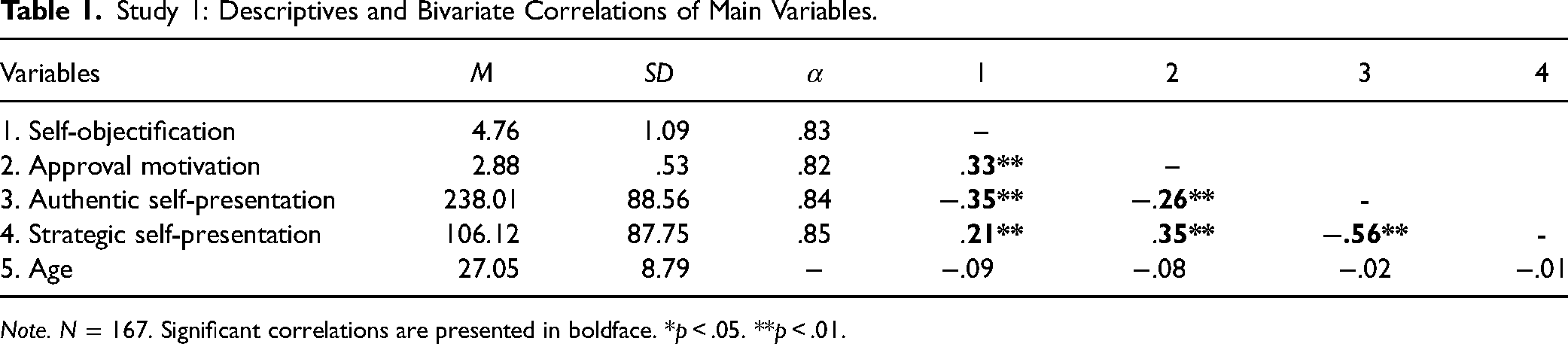
Note. N = 167. Significant correlations are presented in boldface. *p < .05. **p < .01.
We used Hayes' (2017) PROCESS macro (Model 4) to test our simple mediation models. We dummy-coded ethnicity as 1 (White) and 0 (ethnic/racial minorities) and entered ethnicity as a second potential covariate in addition to age. The same level of significance was found when the results were controlled for age and ethnicity. The results with both age and ethnicity as covariates are presented in the Supplemental Materials. The results presented in the manuscript only included age as a covariate.
Our first mediation analyses indicated that approval motivation mediated the relation between self-objectification and strategic self-presentation. Bootstrap analysis showed that the mean indirect (unstandardized) effect was 8.32 (SE = 2.40) and the 95% bias-corrected confidence interval for the size of the indirect effect was [3.81, 13.27]. The standardized indirect effect was .10 (SE = .03) and the 95% bias-corrected confidence interval for the size of the indirect effect was [0.05, 0.17]. The result suggested a significant indirect effect as it also excluded 0 (MacKinnon et al., 2007; Shrout & Bolger, 2002).
Performing the same analysis with authentic self-presentation as the outcome variable indicated that approval motivation mediated the relation between self-objectification and authentic self-presentation. Bootstrap analysis showed that the mean indirect (unstandardized) effect was − 4.51 (SE = 2.19) and the 95% bias-corrected confidence interval for the size of the indirect effect was [− 9.02, − 0.46]. The standardized indirect effect was −.06 (SE = .03) and the 95% bias-corrected confidence interval for the size of the indirect effect was [− 0.11, − 0.01]. The result suggested a significant indirect effect as it also excluded 0 (MacKinnon et al., 2007; Shrout & Bolger, 2002). Figure 1 presents the pathways for this mediation model.
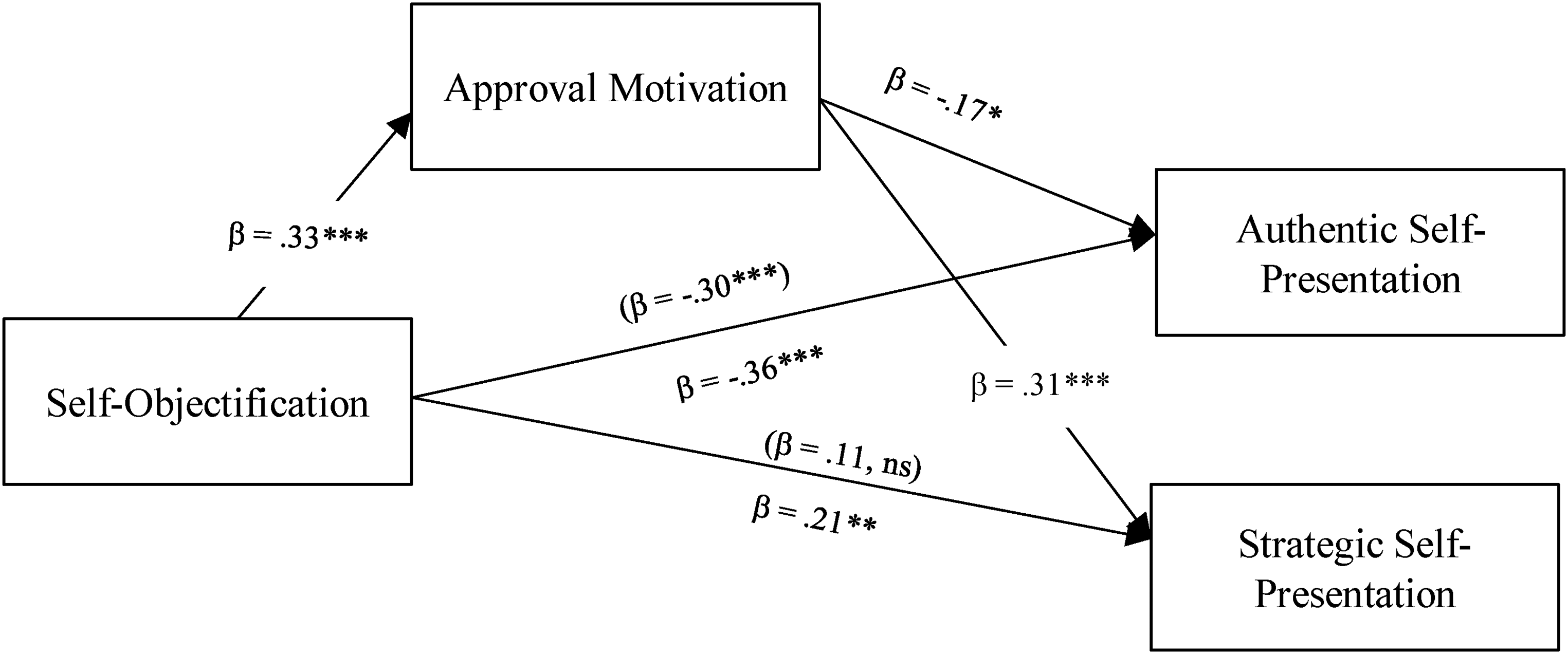
Approval Motivation Mediates the Link Between Self-Objectification and Strategic/Authentic Self-Presentation in Study 1.
Discussion
The two mediation analyses we conducted affirm that, after controlling for age, self-objectification was positively associated with strategic self-presentation, and this correlation was mediated by an increased approval motivation. Conversely, self-objectification was negatively associated with authentic self-presentation, which was also mediated by approval motivation. These results support H1 and H2: higher trait self-objectification is associated with more strategic self-presentation and less authentic self-presentation among female Tinder users, regardless of age. In addition, consistent with H3, approval motivation mediated the associations of self-objectification with authentic and strategic self-presentation, respectively.
Study 2
Our first study tested whether self-objectification was positively associated with strategic self-presentation (H1) and negatively associated with authentic self-presentation (H2) and whether those associations were mediated by approval motivation (H3) among Tinder users. Study 1's findings supported all three hypotheses. In the second study, we sought to re-test all three with a broader sample. Instead of focusing on dating-oriented social media, we examined Facebook users for a more general perspective on a widely used social networking site. According to Statista (Dixon, 2022), Facebook is the largest social networking site worldwide, with roughly 2.91 billion users as of 2022.
Method
Participants and Procedure
The participants for this study were 150 women recruited through Prolific. As in Study 1, we indicated in the study description that only Facebook users were eligible to participate in this study, and we included a screening question for this requirement at the beginning of the online survey. One participant was excluded for not being a Facebook user, resulting in a final sample of 149 participants (Mage = 29.87, SD = 10.67, range = 18 – 62 years). Fritz and MacKinnon (2007) recommended a minimum sample size of 148 to be able to detect a small-to-medium effect size of 0.26 for simple mediation with 80% power. According to Fritz and MacKinnon (2007), the sample size of the current study afforded us to detect an effect size of small to medium. This effect size corresponds to a standardized regression coefficient of 0.26 for both the direct effect of the independent variable on the mediator and for the direct effect of the mediator on the outcome with an indirect effect of approximately 0.068. The participants were predominantly White (85%), with 5% identifying as Asian, 4% as multiple ethnicities, 3% as Black, 3% as Latina, and 1% as Arab. By nationality, 34% of the participants were from the United Kingdom, 18% from the United States, 13% from Portugal, 5% from Canada, 5% from Italy, and 25% from other countries. Participants received £0.60 ($0.70) in exchange for their participation.
Measures
The measures used were identical to Study 1, except for updating the wording of the self-presentation questionnaire from Tinder to Facebook, reverting it to its original configuration (Michikyan et al., 2014).
Results
Table 2 presents descriptive statistics, internal consistency reliabilities, and correlations between the main variables. As in Study 1, we ran a mediation analysis using the PROCESS macro by Hayes (2017; Model 4). We tested whether the association between self-objectification and strategic self-presentation in women was mediated by approval motivation. Our mediation analyses indicated that approval motivation mediated the relation between self-objectification and strategic self-presentation. Bootstrap analysis showed that the mean indirect (unstandardized) effect was 6.14 (SE = 2.67) and the 95% bias-corrected confidence interval for the size of the indirect effect was [1.80, 12.12]. The standardized indirect effect was .11 (SE = .05) and the 95% bias-corrected confidence interval for the size of the indirect effect was [0.03, 0.21]. The result suggested a significant indirect effect because it excluded 0 (MacKinnon et al., 2007; Shrout & Bolger, 2002). For a visual depiction, see Figure 2.
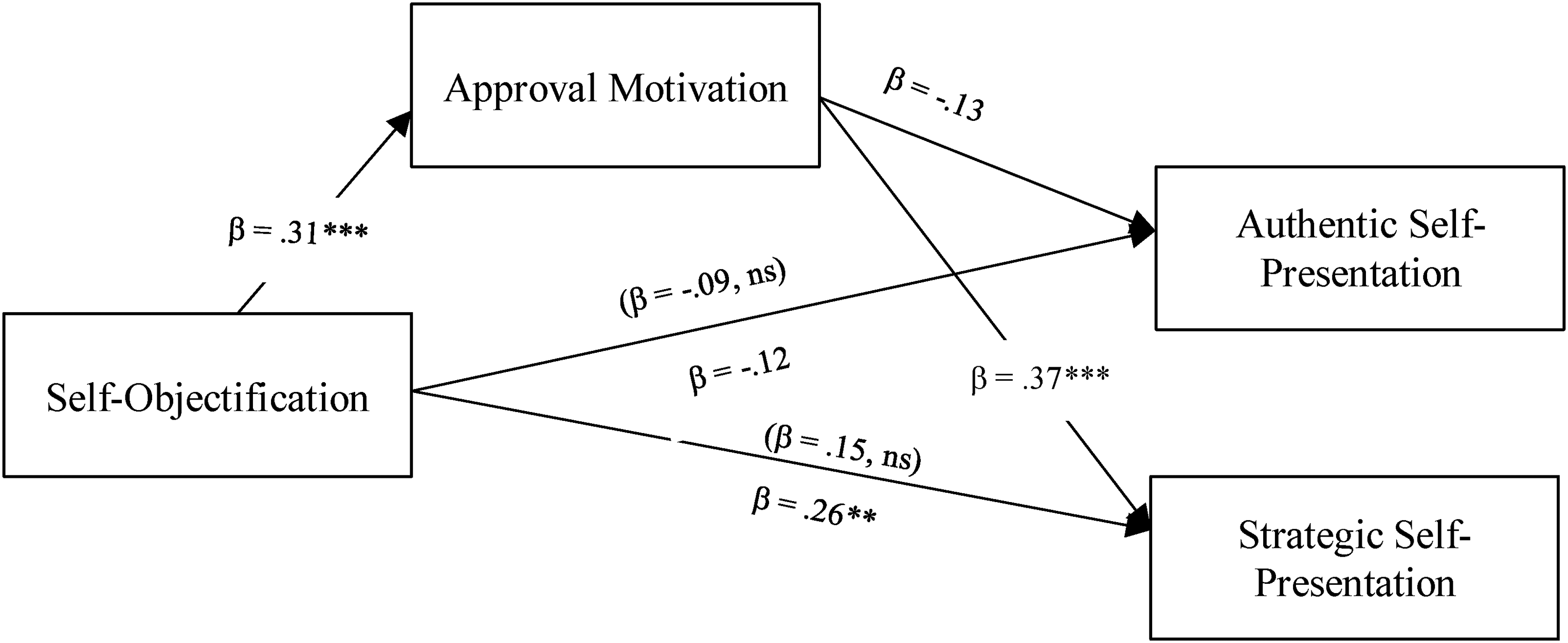
Approval Motivation Mediates the Link Between Self-Objectification and Strategic/Authentic Self-Presentation in Study 2.
Study 2: Descriptives and Bivariate Correlations of Main Variables.
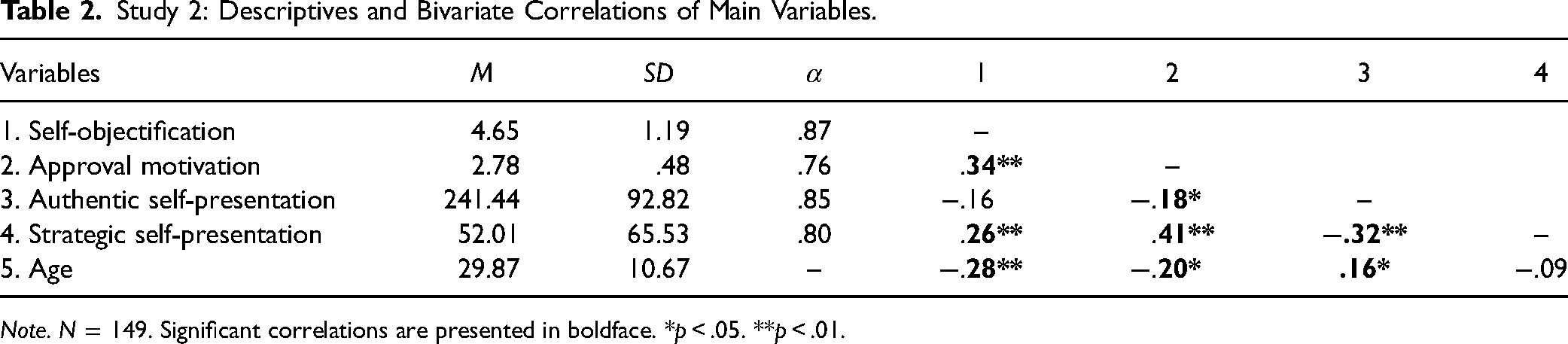
Note. N = 149. Significant correlations are presented in boldface. *p < .05. **p < .01.
We also examined whether the association between trait self-objectification and authentic self-presentation in women was mediated by approval motivation. Unlike Study 1, the mediation model between self-objectification, approval motivation, and authentic self-presentation was not affirmed. Bootstrap analysis showed that the mean indirect (unstandardized) effect was −3.09 (SE = 2.24) and the 95% bias-corrected confidence interval for the size of the indirect effect was [−7.79, 1.20]. The standardized indirect effect was −.04 (SE = .03) and the 95% bias-corrected confidence interval for the size of the indirect effect was [−0.10, 0.01]. Because it included 0, it suggests a non-significant indirect effect (MacKinnon et al., 2007; Shrout & Bolger, 2002).
Discussion
We replicated the correlations between trait self-objectification and strategic self-presentation, as well as the mediating role of approval motivation in these relations, in line with H1 and H3. However, we did not find the same effect regarding authentic self-presentation (H2) as in Study 1. Combined, Studies 1 and 2 suggest that the impact of self-objectification is increased by approval motivation, particularly through the use of strategic self-presentation. However, self-objectification may undermine authentic self-presentation in more context-dependent or less pronounced ways.
Study 3
Study 3 served two purposes. First, we re-examined the associations between self-objectification and self-presentation investigated in Studies 1 and 2, in light of the difference across them regarding the results for authentic, though not strategic, self-presentation. Thus, Study 3 served to confirm whether this association might occur for both forms of self-presentation, or only for strategic self-presentation. Second, to complement the types of strategic self-presentation that we measured in Studies 1 and 2, we added measures of past self-presentation behaviors, specifically, people's use of three photo-editing tools: crop and cut, photographic filters, and Photoshop or other apps (Fox & Rooney, 2015; Fox & Vendemia, 2016). We examined the users of a variety of social networks in this study.
Those who engage in self-presentation behavior frequently may do so, in part, because they are generally more active on social media. Accordingly, if people with high self-objectification happen to be more active on social media, then this heightened activity and the resulting association between self-objectification and strategic self-presentation behaviors might merely reflect their frequent social media use. Therefore, we added measures of social media activity, including time spent on social media and the number of photos taken and posted on social media within a given time frame, and investigated whether these correlated with self-objectification.
Method
Participants and Procedure
The participants included 202 women recruited online in 2020 through Prolific Academic (Mage = 28.07, SD = 9.64, range = 18–72 years). Fritz and MacKinnon (2007) recommended a minimum sample size of 148 to be able to detect a small-to-medium effect size of 0.26 for simple mediation with 80% power. According to Fritz and MacKinnon (2007), the sample size of the current study afforded us to detect an effect size of small to medium. This effect size corresponds to a standardized regression coefficient of 0.26 for both the direct effect of the independent variable on the mediator and for the direct effect of the mediator on the outcome with an indirect effect of approximately 0.068. In our sample 64.9% of participants identified as White, 13.9% as Asian, 11.9% as Latina, 4.5% as Black, 4.5% as multiple ethnicities, and 0.5% as Arab. Their nationalities were diverse, with 23% from the United Kingdom, 12% from the United States, 12% from Portugal, 11% from Canada, 6% from Mexico, and 36% from other countries. Participants received £1 ($1.16) for taking part in the study.
Measures
As in Studies 1 and 2, participants first completed the self-objectification measures (body surveillance subscale; McKinley & Hyde, 1996); the approval motivation measure (Martin, 1984), and the authentic versus strategic self-presentation on social networking sites measure using the adapted SPFBQ (Michikyan et al., 2014). All of the wording referring to “Facebook” was adapted to the more general “social network sites.” Then, participants answered questions about their past social media behaviors.
Time Spent on Social Media. Participants estimated the time they spent each day on social media sites by answering a one-item question: “Please estimate how much time you spend on social network sites every day” (Fox & Rooney, 2015; Fox & Vendemia, 2016).
Selfie Posting Behaviors. Participants’ selfie-posting behaviors were assessed with one item: “Please indicate how many pictures you have taken of yourself and posted on social network sites in the past week” (Fox & Rooney, 2015; Fox & Vendemia, 2016).
Photo Posting Behaviors. Participants’ photo posting behaviors were assessed with one item: “Please indicate how many pictures you have taken and posted on social network sites in the past week” (Fox & Rooney, 2015; Fox & Vendemia, 2016).
Photo-Editing Behaviors. We assessed participants’ photo-editing behaviors by asking, “How frequently do you use the following techniques to make you look better in pictures you post on social media?” Participants reported their use of three techniques to improve appearances: cropping or cutting parts of oneself out of pictures, using photographic filters, and using Photoshop or other picture editing software or applications (Fox & Rooney, 2015; Veldhuis et al., 2020). Participants responded on a 5-point Likert scale from 1 (never) to 5 (often). All three techniques were positively correlated with the strategic self-presentation scale, supporting the convergent validity of the scores for this measure. The frequencies of use for the three photo-editing techniques were averaged as an indicator of using photo-editing techniques in general. The internal consistency for the current sample was α = .66.
Results
Correlation Between Variables
Table 3 presents descriptive statistics, internal consistency reliabilities, and correlations between the main variables. Importantly, trait self-objectification was positively correlated with the frequency of using two photo-editing techniques (crop and cut, photographic filters). Approval motivation was positively correlated with the frequency of using all three photo-editing techniques. Strategic self-presentation was also positively correlated with each of the three techniques. These results suggest that, as predicted, photo editing—a behavioral measure for strategic self-presentation—is more prevalent among women with high self-objectification and approval motivation.
Study 3: Descriptives and Bivariate Correlations of Main Variables.
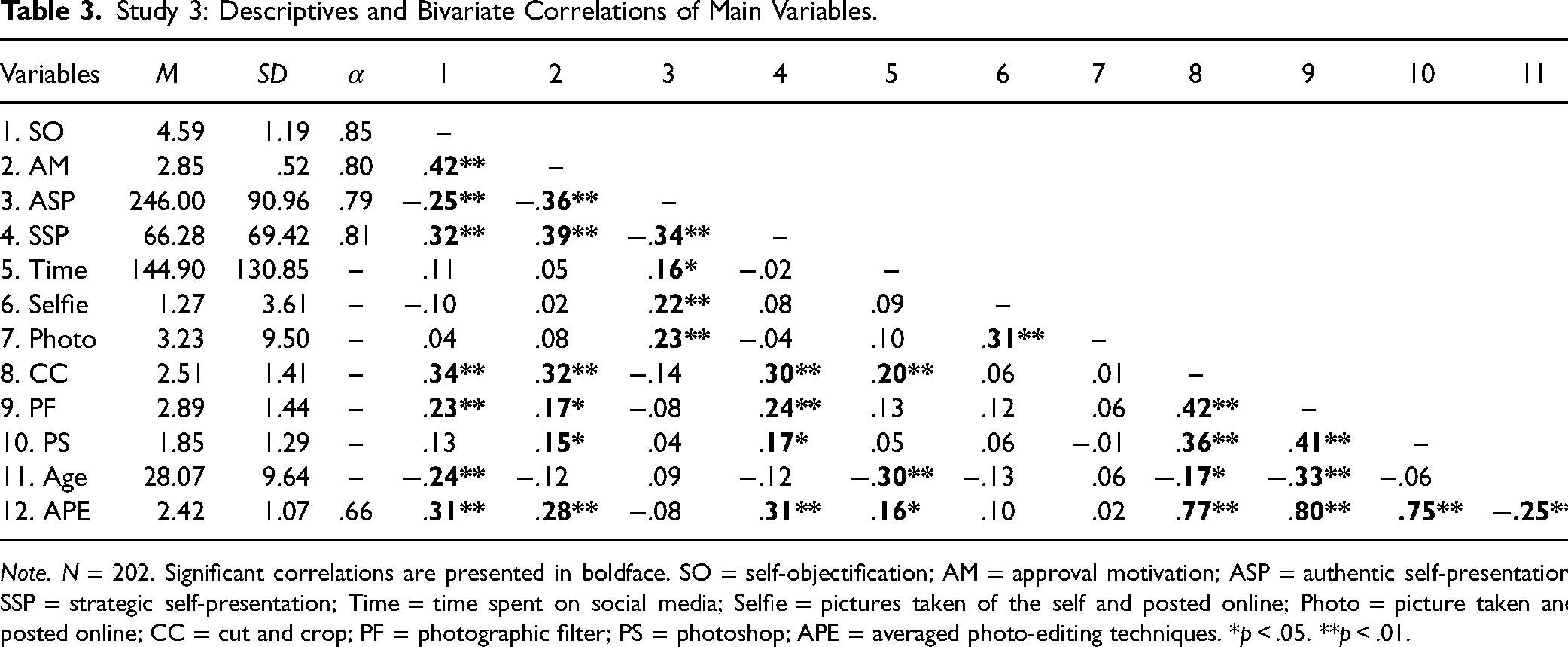
Note. N = 202. Significant correlations are presented in boldface. SO = self-objectification; AM = approval motivation; ASP = authentic self-presentation; SSP = strategic self-presentation; Time = time spent on social media; Selfie = pictures taken of the self and posted online; Photo = picture taken and posted online; CC = cut and crop; PF = photographic filter; PS = photoshop; APE = averaged photo-editing techniques. *p < .05. **p < .01.
Trait self-objectification was not correlated with the time spent on social network sites, selfies taken and posted online, or pictures taken and posted online. Thus, the aforementioned correlations between self-objectification and photo-editing behaviors cannot be attributed to a link between self-objectification and overall social media use.
Mediating Role of Approval Motivation
As in Studies 1 and 2, we tested whether the association between self-objectification and strategic self-presentation in women was mediated by approval motivation. The mediation analysis indicated that approval motivation mediated the relation between self-objectification and strategic self-presentation. Bootstrap analysis showed that the mean indirect (unstandardized) effect was 7.60 (SE = 2.18) and the 95% bias-corrected confidence interval for the size of the indirect effect was [3.69, 12.23]. The standardized mean indirect effect was .13 (SE = .04) and the 95% bias-corrected confidence interval for the size of the indirect effect was [0.06, 0.21]. The result suggested a significant indirect effect as it excluded 0 (MacKinnon et al., 2007; Shrout & Bolger, 2002). For a visual depiction, see Figure 3.
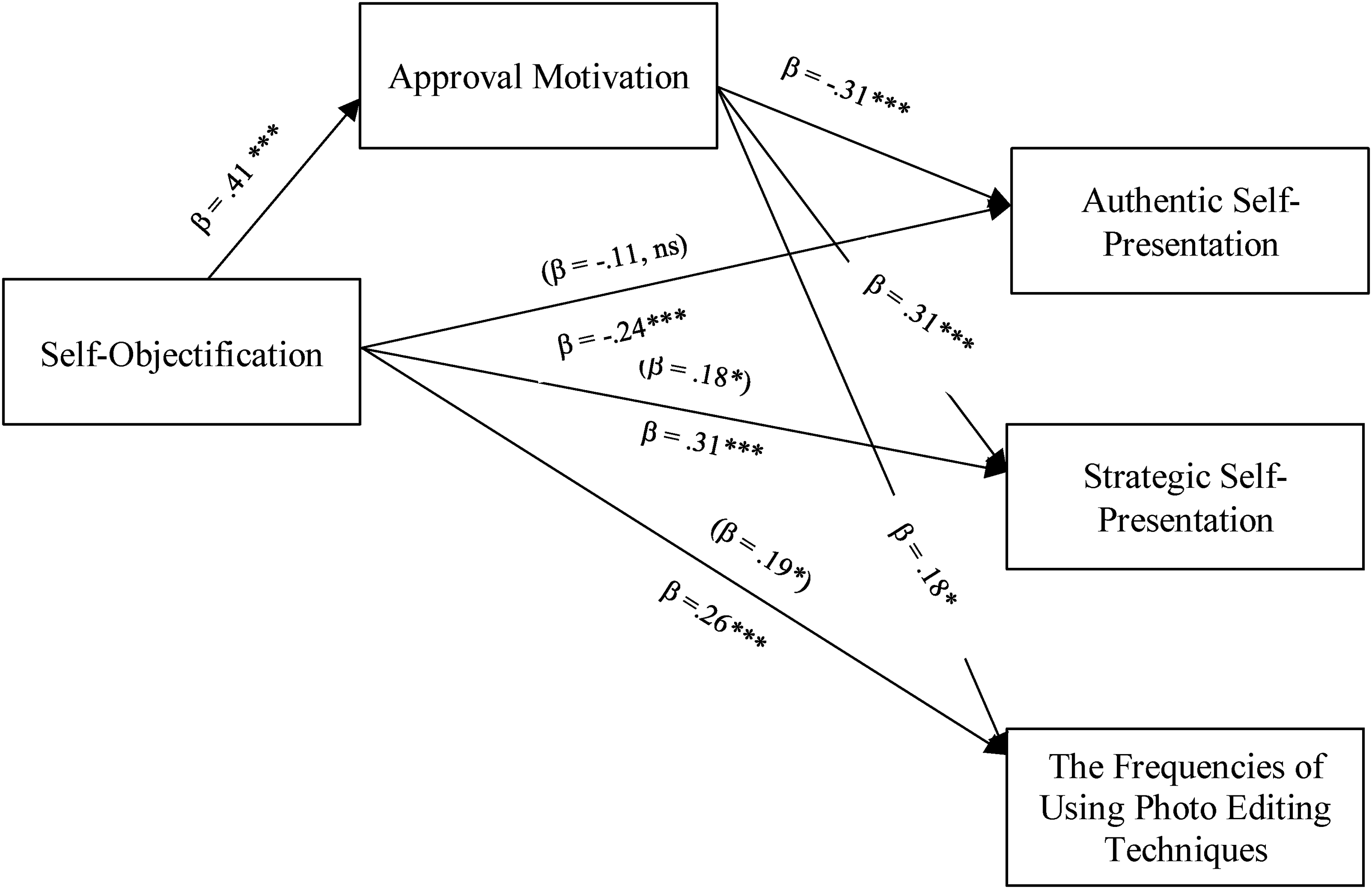
Approval Motivation Mediates the Link Between Self-Objectification and Strategic Self-Presentation, Authentic Self-Presentation and the Frequencies of Using Photo Editing Techniques in Study 3.
We conducted a second mediation analysis to examine whether approval motivation mediated the relation between trait self-objectification and the frequencies of using photo-editing techniques. The frequencies of use for the three photo-editing techniques were averaged as an indicator of using photo-editing techniques in general and entered as the dependent variable. The mediation analysis indicated that approval motivation mediated the link between self-objectification and using photo-editing software. Bootstrap analysis showed that the mean indirect (unstandardized) effect was .07 (SE = .03) and the 95% bias-corrected confidence interval for the size of the indirect effect was [0.01, 0.13]. The standardized mean indirect effect was .07 (SE = .03) and the 95% bias-corrected confidence interval for the size of the indirect effect was [0.01, 0.15]. Result suggested a significant indirect effect because it excluded 0 (MacKinnon et al., 2007; Shrout & Bolger, 2002).
We also tested whether the same mediating effect of approval motivation appeared in the association between self-objectification and women's authentic self-presentation scale results. The results of this analysis showed that approval motivation mediated the association between self-objectification and authentic self-presentation. Bootstrap analysis showed that the mean indirect (unstandardized) effect was −9.79 (SE = 2.56) and the 95% bias-corrected confidence interval for the size of the indirect effect was [− 15.05, − 5.02]. The standardized mean indirect effect was −.13 (SE = .03) and the 95% bias-corrected confidence interval for the size of the indirect effect was [−.19, −.07], suggesting a significant indirect effect because it excluded 0 (MacKinnon et al., 2007; Shrout & Bolger, 2002).
Discussion
These results supported our hypotheses that trait self-objectification was positively correlated with actual strategic self-presentation behaviors, such as past selfie-editing behaviors, on social media (H1), and that this relation was mediated by approval motivation (H3). We also replicated Study 1's finding that approval motivation mediates the association between trait self-objectification and authentic self-presentation (H2).
Study 4
Study 4 was originally designed as a lab study but was conducted online due to the COVID-19 pandemic. We sought to replicate the mediation we found in Studies 1–3 with a real-time behavioral measure in a social media context. Instead of using self-report scale measures for women's strategic self-presentational behaviors, we asked participants to take actual selfies and edit them during the study.
Method
Participants
A total of 111 women students were recruited from King's College London and the University of Essex. Two participants were excluded for failing to complete the online survey, and seven more were excluded for missing behavioral data. Thus, 102 (Mage = 21.87, SD = 6.06, range = 18–63 years) valid participants remained for this study. Fritz and MacKinnon (2007) recommended a minimum sample size of 71 to be able to detect a medium effect size of 0.39 for simple mediation with 80% power. According to Fritz and MacKinnon (2007), the sample size of the current study afforded us to detect a medium effect size. This effect size corresponds to a standardized regression coefficient of 0.39 for both the direct effect of the independent variable on the mediator and for the direct effect of the mediator on the outcome with an indirect effect of approximately 0.152. Our sample contained 61% White, 20% Asian, 9% multiple ethnicities, 7% Black, 3% Arab, and 1% Latina respondents.
Procedure
Multiple sessions were conducted with three to five participants each. For each session, participants gathered in a Zoom chatroom and were welcomed by the researcher. During the first part of the study, participants were provided with a questionnaire link and instructed to finish the questionnaire individually in virtual breakout rooms. In the questionnaire, participants completed the self-objectification measure (body surveillance subscale; McKinley & Hyde, 1996), the approval motivation measure (Martin, 1984), and the authentic versus strategic self-presentation on social networking sites measure using the adapted SPFBQ (Michikyan et al., 2014). All of the wording referring to Facebook was adapted to the more general “social network sites.” Then, participants answered questions about their past social media photo-editing behaviors. Lastly, participants completed demographic questions and were asked to guess the study's purpose.
After participants finished the survey, they left the breakout rooms and rejoined the main session. During the second part of the study, participants were instructed to take and edit three selfies to serve as new profile pictures for a social media platform. Participants finished the selfie-taking and editing task in individual breakout rooms again, to prevent others from observing them taking and editing the pictures. The researcher joined each breakout room to record the number of changes that participants made. After these breakout sessions, participants rejoined the main session, where they were provided with the debriefing document and thanked for their participation before the Zoom session ended. The participants received college course credits or a £5 ($5.80) voucher for their participation.
Measures
Selfie-Editing Behaviors. We used a novel behavioral task to measure participants’ strategic self-presentation. Participants were instructed to take and edit three selfies as new profile pictures for a social media platform. The instructions provided were: Please imagine that you are going to take a headshot as your new profile picture for an online social platform. This profile picture will be the first thing that people see when they are going through your profile, so it is very important for forming a first impression.
Please take three selfies of yourself. The first one is a standard passport-style frontal headshot, the second one is still a front headshot, but you can make any facial expressions you like. For the third one, it does not have to be a frontal headshot. You can use any facial expression or any pose you like.
Now with a smartphone, we can easily edit the photos that we take, such as cropping the photo, flipping the photo, adding a filter to it, or adjusting the exposure, contrast, brightness, etc. So, after you take three headshot photos of yourself, please use as many or as few of these functions on your phone as you like to modify all three headshots.
After each participant finished editing their photos, the researcher joined the individual breakout session, and participants were asked to show the researcher the before-and-after selfies on their phones; this occurred only through the webcam and was not recorded. They were then asked to describe every change they made to each of their three photos to the researcher. The researcher then calculated the number of edits each participant had made. The total count of edits for all three photos was then summed and averaged as a behavioral indicator of strategic self-presentation. We asked participants to take three different styles of photos to more accurately capture their photo-editing habits. For more consistent edit counts, we also limited participants to the standard editing functions (which are quite similar across phones of different brands) that were native to their phones, rather than allowing the use of other apps they might have access to.
The validity of this selfie-editing behavioral measure was supported by its positive correlation with all three past selfie-editing behavior measures (cut and crop, photo filters, and Photoshop), its positive correlation with the strategic self-presentation measure, and its negative correlation with the authentic self-presentation measure.
Results
In Table 4, we present descriptive statistics, internal consistency reliabilities, and correlations between the main variables. The behavioral measure was positively correlated with approval motivation and social media self-presentation, as well as people's past selfie-editing behaviors.
Study 4: Descriptives and Bivariate Correlations of Main Variables.
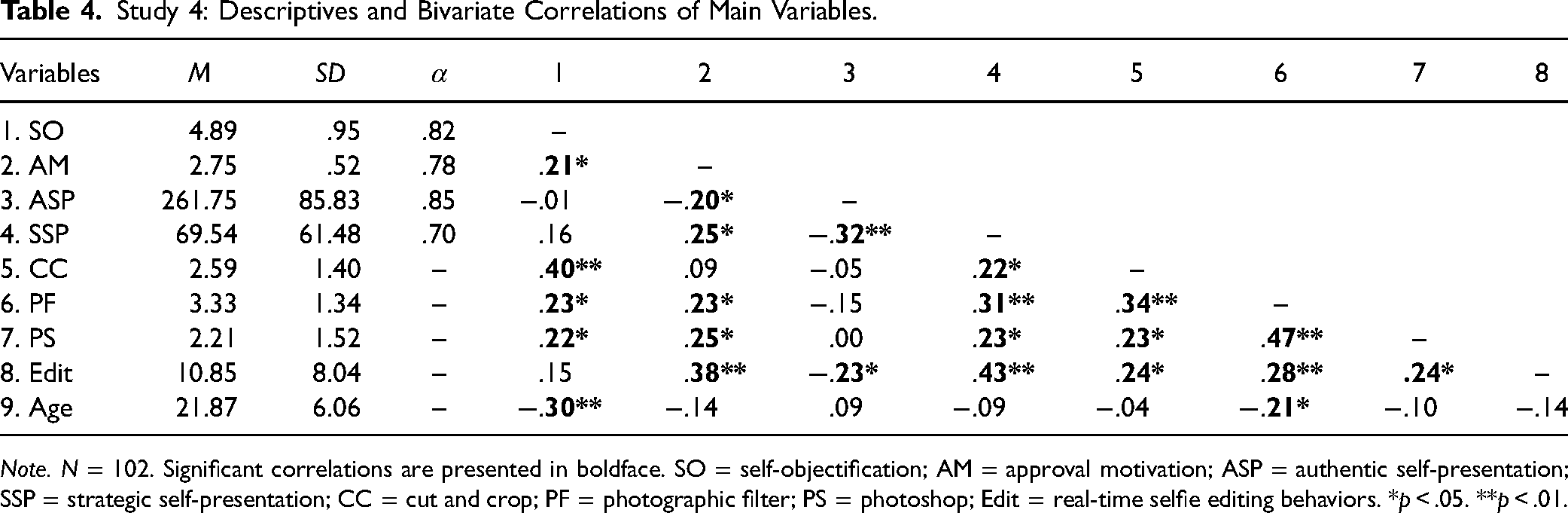
Note. N = 102. Significant correlations are presented in boldface. SO = self-objectification; AM = approval motivation; ASP = authentic self-presentation; SSP = strategic self-presentation; CC = cut and crop; PF = photographic filter; PS = photoshop; Edit = real-time selfie editing behaviors. *p < .05. **p < .01.
We tested whether the association between self-objectification and women's strategic self-presentation, as measured by their real-time selfie-editing behavior, was mediated by approval motivation. Bootstrap analysis showed that the mean indirect (unstandardized) effect was .55 (SE = .41) and the 95% bias-corrected confidence interval for the size of the indirect effect was [−0.21, 1.44]. The standardized indirect effect was .07 (SE = .05) and the 95% bias-corrected confidence interval for the size of the indirect effect was [−0.03, 0.16]. Because it included 0, it suggests a non-significant indirect effect (MacKinnon et al., 2007; Shrout & Bolger, 2002). See Figure 4.
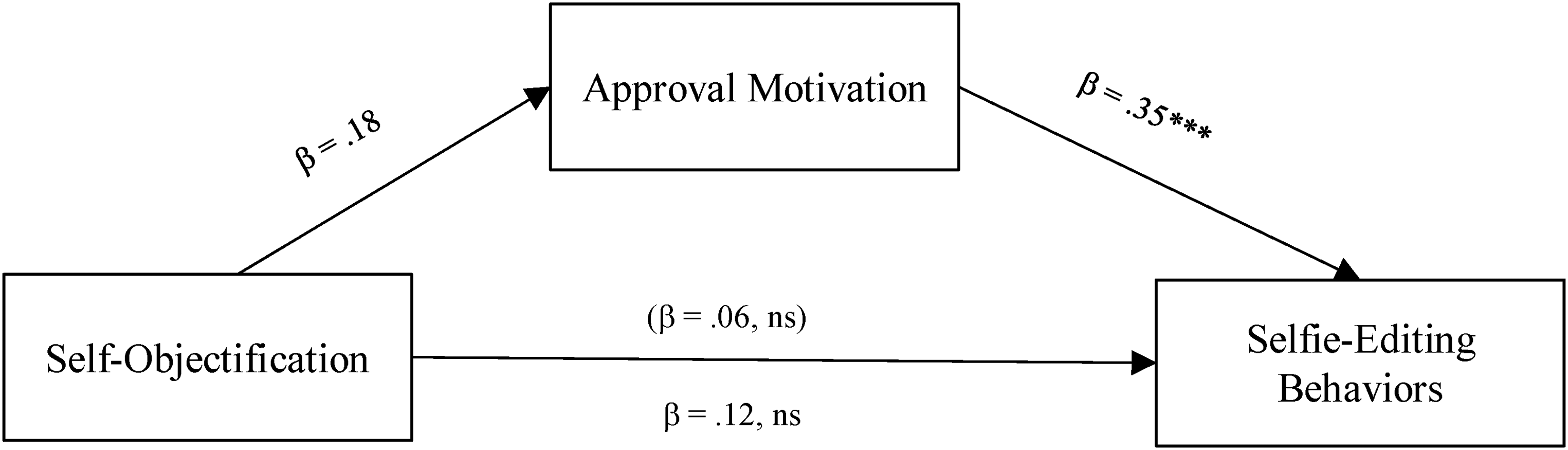
Approval Motivation Mediates the Link Between Self-Objectification and Selfie-Editing Behaviors in Study 4.
Discussion
In Study 4, we asked participants to edit selfies, providing a real-life behavioral measure of strategic self-presentation on social media and complementing the self-reported measures in the first three studies. Although the mediation was not statistically significant, we did find a positive correlation between the behavioral measure and approval motivation and social media self-presentation, as well as people's past selfie-editing behaviors.
General Discussion
These studies are the first to provide empirical evidence for the relations between self-objectification, approval motivation, and strategic self-presentation in an online context. Our findings across the first three studies supported the proposition that trait self-objectification is positively linked to strategic self-presentation behaviors on various social media platforms (H1). The results of Studies 1–3 also supported the hypothesis that the need for approval mediates the relation between trait self-objectification and strategic self-presentation on social media (H3).
Users of all age groups and various social media platforms were recruited. Our results indicated that the links we found did not differ across social media platforms that serve different purposes, from dating-focused (Tinder) to more general-use (Facebook). Moreover, we included age and ethnicity as potential covariates and found that neither confounded our findings. Altogether, this suggests that our results are not biased toward a particular age group or ethnicity of social networking user.
Scholars have previously approached strategic self-presentation behaviors on social media mainly through self-report scales (e.g., Fox & Rooney, 2015; Fox & Vendemia, 2016) or diary reports (e.g., Hancock et al., 2004; Whitty et al., 2012). To improve the validity of these measurements, we used three different measures for strategic self-presentation in our studies: a social media self-presentation questionnaire (Studies 1–4), past photo-editing behavior (Study 3), and a real-time behavioral measure (Study 4). Across all of these measures, we found that self-objectification was associated with strategic self-presentation. Through social media self-presentation questionnaires and past photo-editing behavior, we found that this association was statistically mediated by participants’ approval motivation.
In addition to measuring strategic self-presentation, we included a measure of authentic self-presentation to examine whether more deliberately edited self-presentation would equate to less authentic self-presentation. The results across the four studies were mixed. In Studies 1 and 3, we found that trait self-objectification was negatively associated with authentic self-presentation and that this relation was mediated by approval motivation. In Studies 2 and 4, however, no such effect was detected, contrary to Hypothesis 2.
Thus, the results indicate that strategic, edited self-presentation is not entirely opposite from authentic self-presentation. This result may be explained by the different motives behind authentic and strategic self-presentation. According to Ranzini and Lutz (2017), a relational motive, such as the desire to build a long or stable connection with others, represents an incentive for more authentic self-presentation but does not affect strategic self-presentation. A self-validation motive drives both less authentic and more strategic self-presentation. Perhaps, when a self-objectifying woman feels the need for other people's approval, her attention is focused on selectively or strategically modifying her self-presentation to improve her appearance to others, which is more directly related to strategic self-presentation (Lamp et al., 2019). A more long-term and stable relational goal may not be the main concern of a self-objectifying woman who wishes to impress others and gain approval; instead, she will be preoccupied with the evaluation from the instant impression. Further research is needed to investigate this uncertainty regarding self-objectification and authentic self-presentation.
Self-objectification has been well established as relating to selfie-editing behaviors on social media (Caso et al., 2020; Lamp et al., 2019; Veldhuis et al., 2020). Our series of studies contributes to this growing field by identifying an important mediating variable that bridges the relations between self-objectification and edited self-presentational behaviors: approval motivation. This finding is consistent with previous research on the motives for selfie-related behaviors on social media, which has found that these behaviors are linked to the desire for positive social feedback and concern about the number of comments and “likes” people receive (Ramsey & Horan, 2018; Utz et al., 2012).
Our finding also affirms self-objectification research on interpersonal interactions. Saguy et al. (2010) found that self-objectifying women constrain their social presence by talking less during cross-sex interactions. Researchers have also found that self-objectification is connected to lower sexual assertiveness among women, including such behaviors as using less protection during sex and decreased refusal of unwanted advances (Franz et al., 2016; Impett et al., 2006). Saguy et al. (2010) explained their findings by suggesting that self-objectifying women may try to appear more aligned with traditionally feminine roles in interactions (e.g., by being agreeable and submissive; Rudman & Glick, 2001). Viewed from an approval-seeking perspective, this finding may reflect women's attempt to act according to their perceptions of others’ preferences (Chen et al., 2022). Thus, these findings enrich the literature on self-objectification and its interpersonal consequences by showing how self-objectifying women are driven by their need for social approval to present more socially desirable selves in social media activities.
Practice Implications
Selfie-related behaviors, such as spending time taking selfies and editing them, are not always associated with adverse psychological and behavioral outcomes to women. These behaviors have become a common daily practice, especially among younger women (Dhir et al., 2016). During selfie-related behaviors, women are motivated to present the best possible version of themselves to others, and they tend to be happier with their edited selfies than with the originals (Tiggemann et al., 2020). However, research has shown a relation between engaging in selfie manipulation behaviors before posting on social media and adverse consequences, such as greater internalization of thin-ideals (Cohen et al., 2017), body dissatisfaction (McLean et al., 2015; Tiggemann et al., 2020), and depression symptoms (Lamp et al., 2019), among others. Social media may comprise a new forum in which body anxiety and body image concerns accumulate and spread. Our research has uncovered another potentially adverse psychological process, approval motivation, underlying selfie-editing behaviors. Women who are active social media users should be made aware of the potentially detrimental effects of investing too much effort in taking and posting selfies. Photo modification applications and social media sites should explicitly address these concerns.
Limitations and Directions for Future Research
This research has some limitations. First, in the final study, we did not replicate the mediation model with our novel behavioral measure as expected, despite replicating the correlations. Although the validity of this measure is supported by its positive correlation with other self-report selfie-editing behavior measures, some adjustments could be made to improve its accuracy. For example, we did not consider the nature of the edits when we counted them. A slight lighting adjustment versus a modification such as smoothing the skin may relate to self-objectification and strategic self-presentation at different levels. The lack of consistency control for the photo edits’ intensity could account for our failure to find the hypothesized mediation. Further work is needed to refine the behavioral photo-editing measure.
Second, the cross-sectional nature of the current studies does not reveal whether highly self-objectifying women edit their selfies more than other women, or whether more photo-editing behaviors increase body surveillance and, thus, self-objectification. Specifically, while our tests of mediation can help evaluate whether a theorized process is consistent with cross-sectional data, mediation analysis in itself is not a test of causal relations. The relation between self-objectification and strategic self-presentational behaviors might also be a circular process. Some recent experiments suggest that taking and posting a selfie increases self-objectification more than taking a control photo (Fox et al., 2021; Salomon & Brown, 2020; Xiao et al., 2021), but no experiment has tested the reverse. Future research could test whether experimentally elicited self-objectification also increases selfie-editing behaviors.
Third, we examined only one mediation in our studies. Other variables that are also highly relevant to self-objectification and selfie behaviors, such as appearance anxiety and body shame, could further explain the link between self-objectification and strategic self-presentation. Researchers should continue to explore these other potential mediation roles. Fourth, when examining strategic self-presentation, we focused exclusively on the pictorial element of social media profiles. Future studies should also examine how self-objectifying women tend to present themselves in other areas of social media, such as within self-introductory written content that they post.
This study is also limited in scope to women's strategic self-presentation behaviors in response to general audiences. Past research on self-objectification has shown that women react differently to a male versus a female gaze. For example, Calogero (2004) found that women anticipating a male gaze experienced greater body shame and anxiety than when they anticipated a female gaze. Thus, future studies might consider whether women's intention to engage in strategic self-presentation varies when male or female audiences are involved.
We used the body surveillance subscale from the OBCS (McKinley & Hyde, 1996) as a measure of trait self-objectification. Despite the wide use of the OBCS to measure self-objectification, there is concern over whether self-objectification and body surveillance are identical constructs (Lindner & Tantleff-Dunn, 2017). Lindner and Tantleff-Dunn (2017) proposed the self-objectification beliefs and behaviors scale (SOBBS) as a new measure of self-objectification intended to capture a broader range of women's self-objectification experiences. The new SOBBS scale addresses some limitations of the OBCS, and future studies might consider using the SOBBS as a measure of self-objectification instead. Finally, we used exclusively cisgender samples in our studies. Future researchers might consider expanding the research scope to include also transgender women to see if they have similar or different self-presentation strategies.
Conclusion
Social media platforms offer a new forum for human interactions, as well as new opportunities to experience appearance anxiety. For women, in particular, online settings create intense pressures surrounding self-presentation. Across a set of studies, we have shown that women with high-trait self-objectification are more likely to engage in strategic self-presentation behaviors, such as adjusting or editing their photos before posting them on social media, during their online interactions than women with low-trait self-objectification. Furthermore, we have found that this tendency toward strategic self-presentation seems to arise from an increased need for others’ approval. Social media users and policy makers should be made aware of the potential negative consequences associated with excessive use of social media strategic self-presentation.
Supplemental Material
sj-docx-1-pwq-10.1177_03616843221143751 - Supplemental material for Women's Self-Objectification and Strategic Self-Presentation on Social Media
Supplemental material, sj-docx-1-pwq-10.1177_03616843221143751 for Women's Self-Objectification and Strategic Self-Presentation on Social Media by Shilei Chen, Wijnand A. P. van Tilburg and Patrick J. Leman in Psychology of Women Quarterly
Footnotes
Authors' Note
All data and materials of the project can be viewed at  . No studies in this manuscript were preregistered. This research was supported in part by the Henry Lester Trust awarded to the first author. All procedures performed in studies involving human participants were in accordance with the ethical standards of the institutional research committee and with the 1964 Helsinki declaration and its later amendments or comparable ethical standards. Our studies received ethical approval from the King's College London Research Ethics Office (registration number MRSP-19/20-17814). Informed consent was obtained from all individual participants included in the studies. The authors declare that there are no potential conflicts of interest with respect to the research, authorship, and/or publication of this article. All authors consented to the submission of this manuscript.
Declaration of Conflicting Interests
The author(s) declared no potential conflicts of interest with respect to the research, authorship, and/or publication of this article.
Funding
The author(s) disclosed receipt of the following financial support for the research, authorship, and/or publication of this article: The author(s) received financial support from Henry Lester Trust for the research.
Supplemental Material
Supplemental material for this article is available online.
Notes
References
Supplementary Material
Please find the following supplemental material available below.
For Open Access articles published under a Creative Commons License, all supplemental material carries the same license as the article it is associated with.
For non-Open Access articles published, all supplemental material carries a non-exclusive license, and permission requests for re-use of supplemental material or any part of supplemental material shall be sent directly to the copyright owner as specified in the copyright notice associated with the article.
